
Politics
Politics Home Article | Time to talk tax: the cumulative burden on business

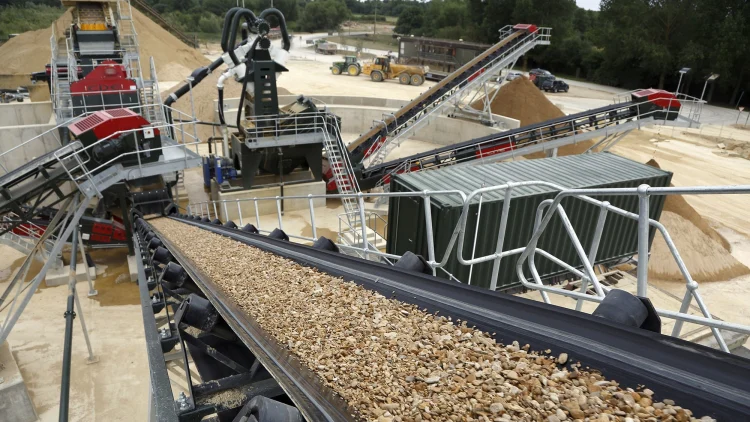

New analysis from the Mineral Products Association shows the tax burden on essential minerals producers has significantly increased, but has the weight become too much to bear?
With the UK tax burden at historic highs and demand for materials at historic lows, the mineral products sector is at risk of a business confidence and investment crisis. Substantial tax increases and increasing regulatory costs, set against the backdrop of low construction activity and demand, increase the sector’s concern about remaining competitive.
Mineral products are the foundation of the UK’s built environment. Our materials – aggregates, concrete, asphalt, cement, lime and a wide range of other minerals – are essential for the delivery of homes, buildings and infrastructure, and critical to other industries – steel, glass, ceramics, paper, chemicals, pharmaceuticals and food production. This range of activity in our sector exposes us to multiple layers of taxation and cost.
Until 2022, the tax burden on business was broadly stable compared to the previous five years. However, rapid-fire changes since then are resulting in significantly higher costs, with the combined tax burden expected to have risen by just under 30 per cent (26-29 per cent) since that time. For many of our members, in a time of sustained market weakness, this weight is becoming intolerable.
The largest tax burden increase has been in business rates, up 58 per cent compared to 2021/22. As with other businesses, rates are a significant fixed cost for industrial sites. Recent revaluations and changes to the multipliers structure have led to significant increases in liabilities for minerals products sites.
Cement works face the largest increase in their rates, at approximately £38,000 per plant. This is at a time when cement production is at its lowest since 1950, and low sales are being undercut by cheap and carbon-intensive foreign imports. Cement, the main ingredient in concrete, is vital for delivering the government’s growth and infrastructure plans, as well as achieving their industrial ambitions.
The sector has also endured hefty rises in more specific taxes that fewer sectors are exposed to. With heavy plant and vehicles for transportation being essential, the combined effect of the end of red diesel and the scheduled removal of the 5ppl duty cut has resulted in a significant rise in fuel costs. With an effective duty rate change of 54 per cent per litre, this will cost the industry £48m in extra duty a year.
Increased costs without market improvements are a direct threat to the long-term viability of mineral products businesses. They are facing the difficult decisions that could result in a permanent reduction in the capacity of the UK to supply itself with essential construction materials. Not only will we lose production capacity in minerals, but we will also lose sites and jobs. That will hamper economic recovery in the short term and growth and investment into the future.
Businesses in our sector directly employ 89,000 people and support 3.4m jobs in the supply chain. The pressure from a rising tax burden threatens these jobs, deters investment and could even undermine the future supply of essential domestic minerals. This will all affect the wider UK economy.
While rapid tax increases impact all industries, the burden on the mineral products sector will have a lasting effect on the country’s infrastructure and housebuilding goals. Caught under the combined weight of an increasing tax burden and falling demand for materials, our foundational industry needs reinforcement to ensure we can meet future material demand from domestic sources.

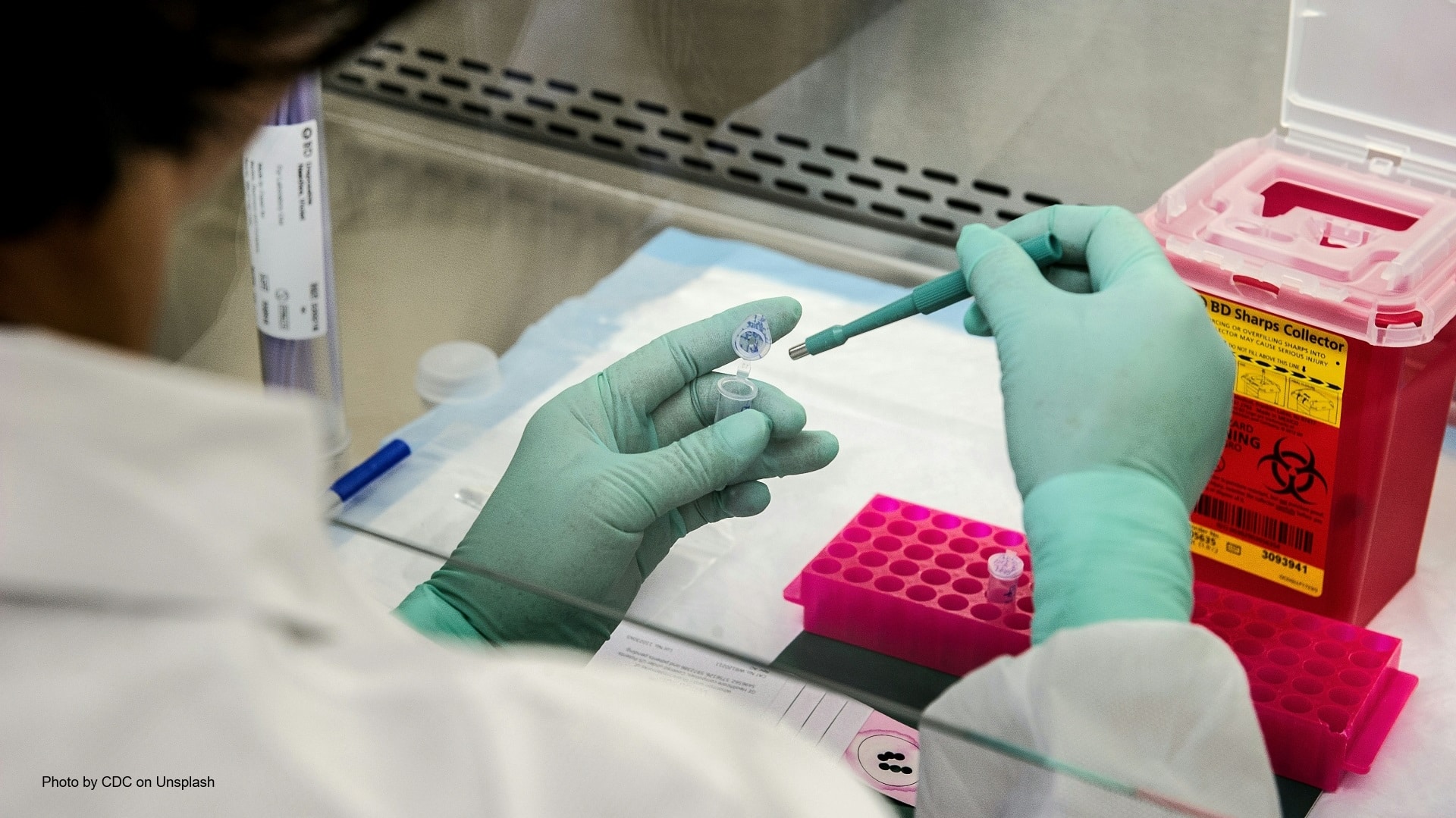
Chloe Alexander argues that changes to the regulation of chemicals show some of the obstacles facing the government in delivering a coherent policy of closer regulatory alignment with the EU.
After years of weak, sclerotic post-Brexit chemical regulation, environmental and public health NGOs were relieved when last year the government committed to a sensible, but significant, shift back towards aligning with EU regulatory protections – still the highest standard globally.
An informal, ‘catch-up’ process has started for reviewing and potentially adding the EU’s ‘Substances of Very High Concern’ list, with a package of broader reforms expected at a later stage, alongside dynamic alignment in some areas under the UK-EU ‘SPS’ deal
But as a UKICE report set out earlier this year, this policy of voluntary alignment faces significant challenges – from the fact it cuts across different departmental competencies to limited resources for deciding where to align. Another problem making a consistent approach difficult is that many of these decisions were delegated to arms-length public bodies, with limited accountability.
This is especially noticeable in new secondary legislation which takes forward changes to chemicals policy which the Health and Safety Executive (HSE) was – unusually – given responsibility for during the EU withdrawal process (having been assigned the role of chemicals regulator). This includes changes to the process for classifying substances as hazardous.
Many thousands of known and suspected harmful chemicals are used in a wide variety of industrial processes and consumer products, and identifying which of them are hazardous is essential for managing their risks and keeping people and the environment safe. Once a substance is classified as hazardous (e.g. carcinogenic or mutagenic) it triggers a range of regulatory protections in areas ranging from worker safety to transportation.
These changes were first developed by HSE under a deregulatory programme of work, initiated by the previous government under the Retained EU Law Act 2023 to make it easier to amend, repeal or replace retained EU laws. They then found a vehicle in a Treasury pro-growth initiative last year and are being taken forward using powers in the Act just before they are about to expire.
The changes remove a statutory obligation on HSE to respond to all new substances classified as hazardous in the EU within a legal timeframe, while giving it delegated powers to choose which substances it will consider for hazard classification and to adopt classifications from other jurisdictions. As most jurisdictions have weaker safety standards than the UK or EU, this risks lowering standards.
A consultation response from HSE said it would restrict its focus exclusively to decisions made by the EU and ‘continue to align with these standards, with divergence occurring only in exceptional circumstances’. But this policy is not reflected in the SI and the exceptional circumstances in which divergence may be considered necessary were later defined very broadly, including wide-ranging economic and industrial considerations.
It will also be difficult to monitor divergence as HSE will no longer be obliged to consider all new EU hazard classifications and will not need to explain any exclusions. A ‘pick and choose’ regulation where the UK accepts some EU hazard classifications and not others is vulnerable to backdoor lobbying, which could mean lower levels of protection compared to the EU and create regulatory uncertainty.
There have also been delays to incorporating six new EU hazard classifications, with only a commitment to consider incorporation over the next year. These classifications already apply in Northern Ireland, and the government last year committed to consult on a consistent chemicals regime across the whole of the UK to safeguard the internal market – but is yet to do so.
The new EU measures include new classifications for endocrine (or hormone) disruptors (EDCs) and persistence, and have been followed by regulations for better protecting consumers and the environment from exposure to substances with these properties. For example, recent EU legislation automatically bans substances classified as endocrine disruptors from toys or in food packaging, that act on warnings from scientists to reduce exposure to EDCs, which are associated with the development of ADHD, certain cancers, obesity and infertility.
It has been HSE’s long-standing position that the UK should not adopt the new EU restrictions unless they are adopted globally – at the UN Globally Harmonised System (GHS) of Classification and Labelling of Chemicals. This is partly due to a viewpoint that these changes should achieve global consensus first, but as industry sometimes jokes, GHS is neither global nor harmonised across territories nor a (mandatory) system.
HSE also takes a less protective approach than the EU to restricting ‘PFAS’ substances, which are harmful to human and environmental health and used in a wide range of everyday goods and industrial processes. HSE’s Director recently described itself as taking “a slightly different philosophical approach” to the EU, based on building up restrictions “more slowly or gradually”, although the lead Defra official was more hopeful about matching the EU’s more comprehensive approach (which is itself yet to be finalised), saying “we may well end up in the same position, but we are too early to say that just yet”.
A divergence in philosophy has also been evident in some of HSE’s other decision-making. For example, it has taken a more light-touch approach than the EU to the industrial use of substances on the ‘authorisation list’, e.g. chromium trioxide, a carcinogenic chemical linked to increased risk of lung and throat cancer. This points to a wider problem identified by the Office for Environmental Protection about a lack of coherence of chemicals policy across government, particularly identifying “fragmented efforts and unclear alignment between agencies such as HSE and Defra”.
In recent days, concern has been expressed about democratic scrutiny of decisions to adopt EU single market rules. But there also needs to be transparency around decisions not to adopt EU regulatory protections, that should be supported by evidence against stringent criteria and open to challenge. Such a framework is essential for upholding our environmental and public health protections, to ensure accountability and guard against undue influence.
By Chloe Alexander, Policy & Advocacy Lead (Chemicals), Wildlife and Countryside Link


Donald Trump’s wife Melania has doubled down on her weird speech earlier in April 2026 that put his co-crimes with serial child-rapist and Israeli spy Jeffrey Epstein squarely back in the spotlight – by sabotaging hubby.
Melania Trump: what now?
Donald Trump had already said six weeks ago he would attend the White House’s annual press correspondents’ dinner – an event he has previously avoided. But he was put into a tight spot when the organisers announced the event will honour Wall Street Journal (WSJ) journalists for their coverage of sick letters sent to Epstein by Trump and others.
Trump is trying to sue the paper for a ridiculous $10bn, a tactic he has frequently used to silence critical media or force a withdrawal. A US judge kicked Trump’s case out of court on 13 April 2026, but Trump’s lawyers have said he plans to come back with a revised case.
The White House Correspondents’ Association (WHCA) award puts Trump in a bind. The sitting president is expected to shake the hands of the award’s winners and Trump was expected to pull out under some pretext. However, Melania Trump has now publicly announced that she will be attending the event.

Melania Trump is widely thought to despise her oafish husband, with whom a sworn FBI witness said she was set up by Epstein. If true, she has certainly found an interesting and potentially entertaining way to stick the knife in and give it a sharp twist for good measure.
Featured image via the Canary
By Skwawkbox


The Daily Mail has attacked Zack Polanski’s Green Party as “authoritarian”. But considering that’s bullshit, and in light of the Mail‘s long record of cheerleading for fascism, the Mail may be doing its elitist cause more harm than good.
Tabloid desperation and Green anti-authoritarianism
The Daily Mail had desperately picked up on a podcast comment from Polanski. The Green leader was discussing how to bring people together despite the dedication of some right-wingers to endlessly pushing toxic rhetoric. And he asked:
Do we think we can change their minds? Or is it a case of building a society that doesn’t include them?
The rag suggested this meant Polanski was planning to shun all right-wingers from society. And it got some far-right figures from Reform and the Conservatives to call him ‘authoritarian’ to help enrage its readers.
There was no substance to the propaganda, of course.
The Green are the most libertarian of all political parties in the UK.
But don’t let facts get in the way https://t.co/PI22iPR0Fz pic.twitter.com/mpUdV2Kneq
— Harry Eccles (@Heccles94) April 20, 2026
If anything, the ridiculous assertion actually encourages people to reflect on just how anti-authoritarian the Greens are.
In reality, the Green Party has:
- Consistently criticised the authoritarian crackdown on civil liberties and protest freedoms by Tory-Labour governments in recent months and years. In fact, it has pledged to reverse this erosion of rights if it gets into power.
- Promised not just to “always defend our democratic and human rights, uphold the rule of law and tackle political corruption”, but to “push for the UK to become a modern, functional and more representative democracy“. To do this, it would work for a “proportional voting system”, get rid of the House of Lords, let 16-year-olds vote, and give UK nations the right to “make their own decisions about their relationship with the rest of the United Kingdom”.
- Outlined in its core values a commitment to “personal freedom”, “voluntary co-operation”, and working to increase democratic participation by strengthening the decentralisation of decision-making.
- Internal party democracy, with all the challenges that come with it.
- Spoken up for international democracy and against “the rise of authoritarian regimes”, advocating a British foreign policy focusing on “shared commitments to democracy, peace, global solidarity and the protection of human rights”.
Wealthy Daily Mail propagandists again boosting far-right authoritarians
For people like Daily Mail columnist Sarah Vine, though, Polanski is basically Hitler.
The thing is, when you remember how the Mail once shouted “Hurrah for the Blackshirts“, you would expect it to support Polanski if that was actually true.
Says the paper that once published this: https://t.co/OVNOnK2Rqw pic.twitter.com/puhE05rUxd
— Ed Sykes (@OsoSabioUK) April 20, 2026
This cheerleading for the violently antisemitic fascists of the blackshirts came from Harold Harmsworth, 1st Viscount Rothermere. He was the pro-fascist owner of the Daily Mail when it was the world’s “best-selling newspaper”. And the paper remains in the family today.
But now, the rag is backing the far-right authoritarians of Reform UK (though an official endorsement hasn’t come yet). This is the party that has:
- Worked like a “private company” with a tiny group of people around racist bigot Nigel Farage running the show. Former Reform councillors have called Farage’s unaccountable control “autocratic“. Similar to warmongering imperialist Donald Trump and other demagogues, Farage is all about the ego.
- Backed Trump’s reckless and misanthropic assault on international law, despite widespread public opposition.
- Suggested copying Trump’s brutally aggressive deportation and mass detention campaign.
- “No meaningful internal democracy“, as even insiders have admitted.
- Repeatedly questioned election results on false grounds.
- Tried to silence opponents.
- Pledged to do away with human rights and equality legislation, in part to protect UK service personnel from prosecution.
While Reform doesn’t like people calling it far-right, it clearly is. Just as Margaret Thatcher began the transfer of power from ordinary people to a wealthy few, Reform’s neo-Thatcherites want to take that even further. And they absolutely will ignore ordinary people’s views and interests to serve their powerful donors.
The Daily Mail has no interest in combatting authoritarianism. Quite the opposite. It craves it, and has dedicated many decades to the cause. But by trying to put the ‘authoritarian’ label on the most anti-authoritarian mainstream party out there, it really has scored a pretty embarrassing own goal.
Featured image via the Canary
By Ed Sykes

6 min read
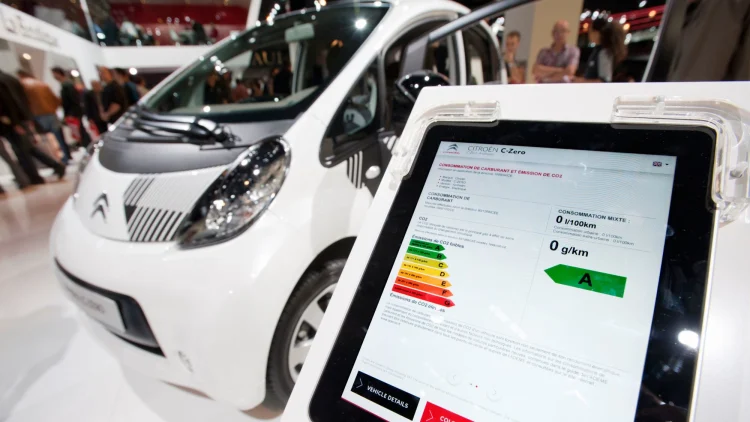
Last month, the House of Commons’ Transport Select Committee kicked off its inquiry into supercharging the Electric Vehicle transition.
The timing could hardly be more fitting. As the crisis in the Middle East drives up prices at the petrol pumps, growing numbers of motorists are contemplating going electric – with every EV on the road helping to shield its owner from rising energy prices and bolster the UK’s energy security.
For motorists in my constituency of Camborne, Redruth & Hayle– as well as for the more than the one in ten of my constituents who rely on heating oil to keep their warms home – the war in Iran has created immediate, and very painful, consequences. The RAC Foundation has estimated that since the war began the cost of petrol has jumped by 12 pence per litre and diesel by 25 pence – with British motorists forking out an additional £300 million to keep their cars on the road in less than a month. We are experiencing the second great energy supply shock this decade, Britons are learning all over again how our dependence on imported fossil fuels leaves us acutely vulnerable to global forces beyond our control.
The conflict in the Middle East is vindicating this Labour government’s commitment to getting the UK off the fossil fuels rollercoaster and onto homegrown renewables. And it’s also proving why the Government was right to resist the Conservatives’ calls last year to scrap the Zero Emissions Vehicle (ZEV) mandate, as well as the 2030 ban on the sale of new petrol and diesel cars.
In fact, the war in Iran lends new urgency to the UK’s Electric Vehicle transition. It’s really quite simple: no matter where the fuel that powers your car was dug up – whether in the North Sea or the Middle East – its price will always be dictated by global markets. That means, in times of war or crisis, British motorists are left paying the price for decisions made in Trump’s White House and Putin’s Kremlin. Every EV we get on the road – increasingly powered by homegrown British renewables – is therefore a vital step forwards in reducing our dependence on oil, and establishing the UK’s long-term energy security. And the more of these EVs that we can build in the UK, with batteries put together in Somerset using lithium mined in Cornwall and processed on Teesside, the better for all the jobs and communities that our car industry sustains.
The EV transition is especially important for those motorists who were hit hardest by the last energy transition. Outside London, around eight in ten households own a car. And while we often wrongly characterise car ownership as a sign of affluence, in much of Cornwall, the opposite is true: here, in rural areas where public transport is now limited, cars are a vital lifeline, helping to connect some of our most vulnerable communities with essential public services and economic opportunities. It’s these drivers who have been hit hardest by soaring prices on our petrol forecourts – and who stand to benefit the most from ditching their petrol and diesel cars and going electric.
For many of these drivers, EVs are becoming an increasingly attractive and affordable alternative to petrol and diesel cars. The Government’s Zero Emission Vehicle (ZEV) Mandate is driving down the costs of new EVs, as manufacturers compete to sell more EVs to hit their EV sales targets. Meanwhile, EVs coming into the used car market are reaching price parity with their petrol and diesel competitors, with second-hand EV sales increasing by 48 per cent in 2025.
And as more renewables come online, and with ongoing geopolitical tensions all but certain to continue to drive instability in international energy markets, the lifetime savings that come with driving an EV will only continue to grow. Before the conflict in Iran began, a typical EV driver was already saving on average £850 a year charging an EV over fuelling a petrol car. With petrol passing 1.50 a litre, those savings have jumped to over £1000 a year. Were a barrel of oil to hit $120, petrol could hit £1.70, those savings would increase to almost £1,200 a year. If oil were to hit $150 a barrel, petrol could pass £1.90, and the savings that can come from running an EV would jump to almost £1400.
Clearly, the government’s efforts to support the EV transition are working. Manufacturers are defying the naysayers by hitting their EV targets under the ZEV mandate in every year of the scheme’s existence, and 2025 marking a record year for EV sales – with nearly one in four cars sold being electric. This is why I feel that the calls we’re hearing from some quarters for the ZEV Mandate to be weakened are so ill-timed. With Autotrader reporting an 28 percent increase in EV enquiries, and Octopus Electric Vehicles reporting an 89 per cent increase in orders, interest in EVs has increased significantly since the conflict in Iran began – a conflict that has made it abundantly clear that the UK needs to make the switch away from cars that are powered by foreign oil, to cars that are powered by domestic renewables. Now is the moment to accelerate the UK’s EV transition, not to slow it down.
But it’s also clear that if we’re protecting British motorists from global volatility in the long-term, there’s more that we need to do. That includes making it easier for people in terraced houses to charge their vehicles from home, building out the country’s EV charging infrastructure, particularly in rural areas, and looking at how to ensure that drivers who rely on public chargers get a fair deal.
We also need to see more concerted efforts to tackle what the Department for Transport has described as the “concerted campaign of misinformation” surrounding the EV transition. In 2024, the House of Lords’ Environment and Climate Change Committee identified misinformation as being a key barrier to EV uptake and called on the government to show “commensurate urgency” in “tackling misinformation and raising awareness about the benefits of EVs with the public”. More than two years on, as the Commons Transport Select Committee heard this week, misinformation continues to be concerningly widespread.
Knowing that you have all the facts to hand is essential before committing to a major purchase like a car. But as, new polling published this month has found, the majority of drivers of non-EVs scored just two or less out of ten in an EV knowledge test – with, for instance, almost half of respondents wrongly believing that EVs are more likely to catch fire than petrol or diesel cars when in fact the opposite is true. Unsurprisingly, the polling found that those with such a poor understanding of EVs are significantly less likely to want their next car to be an EV than those who scored well. That’s the result of this “campaign of misinformation” at work.
It’s sobering that so many people are now worse off because misleading information put them off switching to EVs. The more government, the media and industry act together to tackle this and improve public understanding, the better.
Politics
The House | Our rural communities are being hollowed out by the existential threat of depopulation


Gairloch looking toward Strath Bay, North-West Highlands of Scotland (Alamy)

4 min read
Britain, like every developed country, has a problem: an ageing population and declining birth rate.
My constituency of Inverness, Skye and West Ross-shire, is an extreme example of what is happening across our island.
In the Highlands and Islands, youth emigration and rural depopulation are nothing less than an existential threat. Every year there’s worse news about plummeting school rolls, struggling local services, and communities growing older and older. Between 2001 and 2024, the Highlands saw the population aged 75 and over increase by 78 per cent, placing a massive burden on struggling social care provision.
Meanwhile, schools like Mallaig High School have seen pupil numbers fall from 147 pupils in 2005 to just 100 today, a 32 per cent drop, and in Gairloch there’s been a 47 per cent decrease. Availability of Stem teachers is limited, and these subjects are what the better-paying employers want. The families are leaving, looking for higher-paid work and available housing, and our young people are unable to see a future locally.
I believe that rural communities are considered as an afterthought, not helped by the fact that decision makers – in my case, Highland Council, the Scottish government and the UK government – are concentrated in Inverness, Edinburgh and London, far removed from rural realities. Funding pots are focused on population centres. I recently spoke to communities who felt abandoned because decision makers at CalMac had decided from behind a desk 150 miles south that their ferry services weren’t important enough to be classed as “lifeline”.
The cost of living only deepens the challenge. In remote Scotland, a Scottish affairs committee inquiry found the cost of living was estimated to be up to 30 per cent higher than in urban areas. Fuel poverty affects around 33 per cent of households, one of the highest rates anywhere in the UK. Housing shortages make it even harder for young people and families to stay or settle. As a result of the lack of working-age people, employers across the Highlands cannot recruit for essential roles in care, hospitality and other sectors that underpin the west coast economy.
Immigration policy is also part of the problem. Controls set at Westminster fail to reflect the acute labour shortages facing rural communities. Areas that need workers, whether in social care, tourism or local services, are too often unable to get the people required to sustain them.
There are also the missed opportunities. The Highlands sits at the heart of the UK’s renewable energy potential, yet communities see little benefit in terms of local jobs or long-term economic gain. The SNP cut college provision and apprenticeship pathways by £100m, adding to the shortfall of education and training pathways that have would allowed local young people to enter these industries and stop the rural brain-drain.
This trajectory doesn’t have to be inevitable. The Faroe Islands, which I visited with the Scottish Affairs Committee recently, offers a powerful counter example. With a population of around 55,000, they have maintained a stable population by investing in connectivity and education, paying higher average wages, and ensuring that people have a reason to stay.
That contrast should prompt serious reflection. In the Highlands, the opposite is too often true. A lack of housing, shortage of NHS staff, unreliable ferry services, and inadequate infrastructure are all making it harder to live and work in these communities.
Demographic change on this scale cannot be ignored. Without action, we risk hollowing out communities that have existed for generations. But with the right policies – targeted investment in skills, better infrastructure, action on housing, and embracing a migrant policy where there are labour shortages – we can turn the tide before it’s too late.
Angus MacDonald is Liberal Democrat MP for Inverness, Skye and West Ross-shire
Politics
The House | As the first MP to be deepfaked, I say we must do more to protect our democracy from AI harm



3 min read
Imagine discovering that your face, your voice, or your image has been used online by a third party, without your consent, to seriously misrepresent you. Not a misunderstanding.
Not a parody. A fabricated version of you – saying things you never said, doing things you never did, appearing in content you never agreed to.
AI deepfake technology means this is no longer the realm of science fiction – it is already happening. As the first MP to be the target of a deepfake political disinformation attack, I’ve seen first-hand the disruption it can cause our democracy.
In 2022, as minister for AI and the Intellectual Property Office, I rejected tech sector lobbying for broad text and data mining freedoms after hearing from the APPG for the Creative Industries. Without safeguards, such changes would have undermined the rights of musicians, writers and artists in a sector worth £146bn a year. If the UK is to lead in both AI and the creative industries, the burden must be on AI to show it can coexist – an unchecked ‘free-for-all’ serves neither.
I therefore welcome the government’s recent proposal to revisit digital copyright law, and its recognition that policy “must support prosperity for all UK citizens”. But this is not only about prosperity. It is also about ensuring AI is not used to undermine our democracy, security, society or fundamental rights.
Having spent 30 years in technology and innovation, and as the founder of one of the UK’s earliest AI drug discovery companies in 2001, I fully recognise the transformative potential to deliver enormous economic and public service benefits.
The UK already has the third-largest AI sector globally and the largest in Europe, and the Organisation for Economic Co-operation and Development estimates that AI adoption could increase UK productivity growth by around £55bn a year. But harnessing innovation requires regulation. As I set out in the 2021 prime minister’s Taskforce on Innovation, Growth and Regulatory Reform, the UK as a trusted regulator has a chance to lead in setting appropriate regulatory standards in new markets from AI to fusion energy and space debris.
With the rapid dissemination of deepfake tools allowing someone’s identity to be stolen and misused by anyone, we should establish a fundamental right to identity protection in the digital age.
Recent evidence from the Science, Innovation and Technology Select Committee highlighted the scale of the challenge. When questioned, the big tech platforms showed little sense of responsibility for protecting UK values, democratic norms or citizens’ rights. By allowing US and Chinese tech dominance – controlled by a small group with limited accountability – we risk outsourcing digital sovereignty and undermining UK values, conventions and laws.
Other countries are beginning to act. Denmark has proposed strengthening protections over individuals’ likenesses in its copyright framework. In the US, some states are proposing new laws to prevent the unauthorised use of AI-generated digital replicas.
The tech industry is pushing back with a new pro-AI group, Innovation Council Action, supporting candidates and policies in US elections that oppose AI regulation. They have the support of Donald Trump’s adviser David Sacks, and plan to spend at least $100m on backing candidates. This comes on top of nearly $325m already raised by other pro-AI organisations and individuals.
Parliament now faces a choice: lightly regulate AI, or set clear, values-based rules to prevent it undermining our democracy, society and economy. Legislating to protect UK citizens, society, economy and democracy from the widespread abuse of identity theft is a good place to start.


In the latest instalment of Reform’s performative posturing on immigration, the far-right populist party has pledged to review all asylum claims from the last five years. They’re claiming that a Reform government would deport anyone who claimed asylum after arriving in the UK on a visa.
We’ll leave aside for a moment the absolutely dire racism and xenophobia of any Reform ‘promise’. That’s basically a given at this point.
Rather, this proposal is bloody ridiculous on a purely practical level – and it illustrates one of the many (many) massive problems with these authoritarian jerks.
Time and again, Reform have showed that it can’t handle even the basics of public finance. Now, they’ve come out with a completely un-costed, eye-wateringly complex pledge that would break the immigration system.
A further 400,000 imaginary deportations from Reform
Under Reform’s latest ridiculous proposal, around 400,000 would be eligible for deportation. According to the BBC’s reporting, the reviews would target anyone who has asylum status, has overstayed a visa, or is from “a country deemed safe by a Reform-led government”.
This would be on top of the 600,000 deportations over 5 years that Reform previously pledged. The majority of this figure would be made up of people who arrived on small boats – a crisis which was itself caused by Nigel Farage and the other Leavers’ half-baked Brexit.
In order to carry out its draconian immigrant bashing, Reform have stated that they would withdraw the UK from the European Convention on Human Rights (ECHR).
To be clear, the ECHR does very little to prevent any member state from deporting people, except in exceptional circumstances like a risk of torture. However, what the ECHR does do is protect our basic human rights, including the right to life, freedom of thought, and ability to vote – which shows where Reform’s priorities lie.
Zia Yusuf
In a typically rambling Twitter post, Zia Yusuf laid out some further ‘details’ of his party’s proposals. Yusuf calls himself the ‘shadow home secretary’, although Reform is 108 seats short of granting him that particular title.
Given that he doesn’t even know his own job, it’s unsurprising that the announcement was similarly half-baked:
Anyone who broke into the country illegally, or came in on a visa and overstayed to claim asylum (which is almost all of them) will have their status revoked and be deported.
This is an addition to all those currently in Britain illegally.
For years now, Britain has been suffering from a real-time invasion.
We barely even know where to start with this one. There’s the “broke in” phrasing, as though Dover has fucking double-glazing all round it. “Real-time invasion” also gets an honorable mention – as opposed to what exactly?
Then there’s the threat to remove anyone who arrived illegally, in addition to “all those currently in Britain illegally.” That’s typical Reform-brand efficiency for you.
Yusuf also stated that Reform would follow the US example of building “modular” detention facilities to hold 22,500 people before deportation. To be clear, the US facilities are concentration camps in all but name.
As of the most recent data from mid-2024, the UK’s immigration detention capacity stood at around 2,200 spaces. Even then, the government has been forced to use spaces like hotels, which weren’t built for purpose.
Reform, however, believes it can expand that capacity by ten times within 18 months. This is the same party that can’t even manage the logistics of local government, or their own tax returns.
The asylum caseload
Context is important here. Reform are proposing to review thousands of asylum cases, when the review system itself is well past breaking point.
For example, Labour recently stated that it would review asylum seekers’ status once every 30 months. Like Reform, they also stated that this would apply retrospectively for the last 5 years. However, research from the Refugee Council stated that this would be “unworkable and extremely costly”:
the Home Office would be required to conduct between 1.66 million and 1.9 million reviews of refugee status over the first decade. This would result in a total cost of between £1.1 billion and £1.27 billion, depending on how many people lose their protection at review.
The backlog of asylum cases has quadrupled since 2014. The most recent figures from December 2025 show that 48,700 people were still waiting for an initial decision. Likewise, a March 2026 government briefing stated that:
As of June 2024, the total ‘work in progress’ asylum caseload, which includes cases awaiting an appeal outcome and unsuccessful applicants subject to removal from the UK, consisted of 224,700 cases. Of these, 39% of cases were awaiting an initial decision and 61% had received an initial refusal and were awaiting some kind of further action.
In part, this is because applicants are waiting longer for an initial decision on their case. However, the UK government has also stated that the number of ‘removal actions’ (deportations) is also causing the number to spike.
‘Impractical farce’ from Reform
Given this dire context, it’s no wonder that the Lib Dems have already branded Reform’s pledge an “impractical farce”. Even the Tories called it a copy of their own policy “but without the detail”. For once, we’ve got to agree there – same racism, but with even less pretense to basic basic financial literacy.
Reform’s naked racism, xenophobia and bigotry is reason enough to dismiss any of their posturing immigration policies.
However, with the relentless focus on the fact that they’re a party of bottom-feeding scum, it’s easy to overlook the fact that they’re also pathetic failures of politicians who couldn’t even run a fucking church fête.
Any reporting which fails to ask Reform ‘How do you plan to pay for this rubbish?’ is collusion, at this point.
Featured image via the Canary
Politics
Politics Home | Illegal operators now account for almost half of all UK gambling advertising spend, with that share set to become the majority within two years



As MPs gather this week to debate gambling advertising, the real issue is not how much advertising there is, but who is behind it
Britain is now on course to reach a tipping point where illegal operators overtake licensed firms in advertising spend, fundamentally reshaping what consumers see.
New independent analysis from WARC, the global marketing intelligence firm, reveals that unregulated firms now account for close to half of all UK gambling advertising spend, and on current trends are set to become the majority within two years. WARC is also the source of the widely cited near £2bn gambling advertising figure used in media coverage, providing a consistent and authoritative picture of the market.
According to WARC, the total UK advertising market is forecast to reach £1.9bn by October 2026. But that figure masks what is really happening.
Licensed operators are reducing their advertising, with spend expected to fall by 9.2 per cent this year to £1.1bn. Meanwhile, the harmful unregulated sector is expanding rapidly, with spend projected to grow by 32 per cent and exceed £1bn within two years.
On current trends, by 2028, unregulated and illegal betting and gaming advertising is expected to account for the majority of total spend, overtaking licensed operators. This should serve as a wake-up call to policymakers across the House. Just a few years ago, licensed operators accounted for more than 80 per cent of gambling advertising spend. That share has now fallen to just over half and is projected to drop below 50 per cent within the next two years.
The direction of travel is clear: regulated firms are scaling back their advertising, while the harmful black market grows rapidly. That should give policymakers pause.
Advertising is simply how operators compete for customers. The real issue is whether that competition is happening within the regulated market or being captured by the illegal black market. Within the regulated market, there are enforceable standards: age verification, safer gambling tools, self-exclusion schemes, and clear accountability.
But the regulated sector is under increasing pressure. New tax changes, which make Britain one of the most heavily taxed betting and gaming jurisdictions in the world, and the current proposed financial risk assessment regime are adding cost and complexity.
That pressure is set to increase further. The industry has already committed to removing betting sponsors from the front of Premier League shirts from next season, a step we support as part of raising standards. But as visible, regulated advertising reduces, demand does not disappear. It shifts into less regulated channels, where illegal operators are already growing rapidly. This is already visible in football, with only 3 of the 11 Premier League front-of-shirt betting sponsors holding a full UK Gambling Commission licence.
That shift is happening across the advertising landscape, but it is most visible in digital channels, where unregulated operators are particularly active and enforcement is most challenging.
WARC’s analysis shows digital channels now dominate gambling advertising, with search and online display accounting for the largest share of spend.
Online and social media are more likely to reach under-18s than traditional broadcast media, making those protections harder to apply in practice.
Unregulated operators are not bound by UK standards. They do not carry out the same age checks or safer gambling measures, contribute to tax, sport or research, and often operate outside the reach of UK enforcement.
By contrast, the regulated betting and gaming sector supports 109,000 jobs, contributes £6.8bn to the UK economy and raises £4bn in tax each year. It is a significant British industry, generating growth, investment and employment across the country.
Yet the harmful black market is becoming an increasingly visible part of the advertising landscape.
The question is not simply whether there should be less advertising, but whether it is being driven by the regulated market or the illegal one.
Focusing on licensed operators is the wrong approach. It will not reduce advertising and risks driving further growth in the illegal market.
If current trends continue, Britain will soon reach a point where most gambling advertising no longer comes from within the regulated system.
That is not a safer market. It is one where consumers are exposed to operators with no safeguards, no accountability, and no protections.
The government must now go further and faster, building on its new black market taskforce and £26m in additional funding to the Gambling Commission to tackle it, to clamp down on illegal operators flooding advertising channels before they overwhelm the regulated market.
Leicestershire – Narborough & Whetstone
Reform UK 1,033 (33.0 per cent, -9.3 on 2025) Conservatives 927 (29.6 per cent, +5.1) Green Party 884 (28.2 per cent, +13.4) Lib Dems 134 (4.3 per cent, -3.6) Labour 124 (4.0 per cent, -4.8) Advance UK 28 (0.9 per cent, +0.9)
Reform UK hold
Northumberland – Cramlington South West
Conservatives 278 (34.2 per cent, +9.0 on 2025) Reform UK 212 (26.1 per cent, -13.3) Labour 187 (23.0 per cent, -5.8) Green Party 116 (14.3 per cent, +14.3) Independent 13(1.6 per cent, +1.6) Lib Dems 7 (0.9 per cent, +0.9)
Conservatives gain from Reform UK
Forthcoming contests
April 22nd
- Salford – Barton and Winton. (Labour held)
April 23rd
- Cornwall – Newquay Porth & Tretherras. (Reform UK held)
April 30th
- Malvern Hills – Tenbury. (Conservative held)
May 21st
- Dorset – Bridport. (Lib Dems held)
- Fylde – Kirkham. (Independent held)
- Lancaster – Castle. (Green Party held)
- Malvern Hills – Alfrick, Leigh & Rushwick – (Malvern Hills Independent held)
June 25th
- Aberdeen – George St/Harbour. (Lib Dem held)

After Louis Theroux’s latest documentary sparked a whole lot of conversation (and concern) over the growing popularity of ideologies shared by certain manosphere influencers, a parent has opened up about the subtle signs she noticed her sons were being influenced by such views years ago.
For those who haven’t come across the term, the manosphere is “a collection of websites, social media accounts and forums dedicated to men’s issues, from health and fitness to dating and men’s rights”, according to Robert Lawson, associate professor in sociolinguistics at Birmingham City University.
Yet it’s increasingly become associated with more extreme views – particularly anti-women and anti-feminist sentiments, as seen in Theroux’s documentary.
The impact of this kind of content is concerning – and parents and teachers are seeing it trickle down to school-age children. Not only can it impact the mental health of boys and men, per UN Women, but it amplifies harmful sexist stereotypes, teaches dangerous social and dating behaviour, and makes both digital and real-life spaces more hostile for women and girls.
Mandy Hickson, a former fast jet pilot who is now a motivational speaker, began to notice subtle changes in her two sons, then in their mid-teens, seven years ago “before figures like Andrew Tate [a self-proclaimed misogynist influencer] were widely known”.

In an Instagram post, she noted their language, tone and the way they spoke about women gradually changed.
“We started to notice a shift in attitude rather than behaviour initially, with small comments that didn’t quite align with the values we’d brought them up with,” she tells HuffPost UK.
“For example, despite growing up in a home where both my husband and I worked equally and shared parenting responsibilities, they began questioning why I would ‘want’ to work at all.“
There were comments suggesting that a woman’s role should be at home, and that men should be the providers. This was particularly surprising given they had grown up seeing a strong female role model in me as a former fast jet pilot.”
At the same time, their views on success and self-worth were also shifting.
“They began making quite extreme statements about money and status,” says Hickson. “For example, suggesting that if they reached a certain age and didn’t have significant financial success or material markers like expensive cars, they would see themselves as failures.
“That kind of black and white thinking felt very out of character.”
What did she do to address this?
It wasn’t a case of simply shutting the conversation down. “It would have been easy to challenge or dismiss those views outright, but instead we tried to stay curious,” Hickson explains.
“We asked questions like ‘Where have you heard that?’ or ‘Why do you think that matters?’, creating space for discussion rather than confrontation.”
The couple also made a conscious effort to reinforce their own values – around respect, partnership, and the idea that success isn’t one dimensional – through everyday conversations. “It wasn’t about lecturing, but about consistently offering a broader perspective,” she adds.
Experts generally agree lecturing teenagers is not an effective strategy, and listening without judgment is often the key to getting them to open up.
Hickson notes she also began supporting her sons in develop critical thinking skills, particularly in terms of questioning the content they were consuming.
“Rather than banning platforms or individuals outright, we talked about how algorithms work, how certain voices can be amplified, and why extreme views often gain traction,” she says.
“That seemed to help them step back and question what they were seeing.”
She advises parents to look for small shifts in language and attitudes (some boys might start referring to girls as ‘females’, for example), not just behaviour.
- Stay open and curious rather than immediately critical.
- Keep communication lines open, even when what you’re hearing is uncomfortable.
- Help your children question what they’re consuming, rather than simply trying to control it.
- Model the values you want them to hold, because that consistency really matters over time.
“It’s not a quick fix, and I don’t think any parent gets it perfectly right, but staying engaged and present in those conversations is key,” she adds.
In her Instagram reel, she also suggested boys need to actively be shown positive male role models because otherwise “the algorithm will show them something else”.
“This isn’t about blaming boys, it’s about paying attention,” she ended. “Because I’ve seen how quickly it can happen and how quietly it can grow.”

Broken-down train blocks Cambridgeshire railway lines

Celestica: Once Standardization Sets In, This Would Be A Risky Play

European banks pick Fireblocks for regulated euro stablecoin project

Manchester United reach agreement with Casemiro over contract clause amid transfer speculation

Steven Gerrard disagrees with Gary Neville over ‘shock’ Chelsea and Arsenal claim | Football

US brings back mandatory military draft registration

How to Build Wealth | Smart Loans & Asset Planning | Telugu Podcast | CFP Ram Prasad | Part – 1

LIVE TRADING BTC GOLD | 14/04/2026 |#crypto #livetrading #btc #forex #forextrading

Did the Federal Reserve Just Open the Door to Bitcoin?
-

 NewsBeat7 days ago
Trump and Pope Leo: Behind their disagreement over Iran war
-

 News Videos6 days ago
Secure crypto trading starts with an FIU-registered
-

 Fashion4 days ago
Weekend Open Thread: Theodora Dress
-

 Sports4 days ago
NWFL Suspends Two Players Over Post-Match Clash in Ado-Ekiti
-

 Politics4 days ago
Palestine barred from entering Canada for FIFA Congress
-

 Business2 days ago
Powerball Result April 18, 2026: No Jackpot Winner in Powerball Draw: $75 Million Rolls Over
-

 Crypto World3 days ago
Russia Pushes Bill to Criminalize Unregistered Crypto Services
-

 Politics12 hours ago
Gary Stevenson delivers timely reminder to register to vote as deadline TODAY
-
 Business4 days ago
Creo Medical agree sale of its manufacturing operation
-

 Politics2 days ago
Zack Polanski demands ‘council homes not luxury flats for foreign investors’
-

 Tech2 days ago
Auto Enthusiast Scores Running Tesla Model 3 for Two Grand and Turns It Into Bare-Bones Go-Kart
-

 Tech5 days ago
‘Avatar: Aang, The Last Airbender’ Leaked Online. Some Fans Say Paramount Deserves the Fallout
-

 Crypto World3 days ago
Russia Introduces Bill To Criminalize Unregistered Crypto Services
-

 Tech6 days ago
Microsoft adds Windows protections for malicious Remote Desktop files
-
 Entertainment6 days ago
Dave Portnoy Slams Dianna Russini: ‘Makes Zero Sense’
-

 Crypto World6 days ago
X Launches New Cashtag Feature for Stocks and Crypto: X
-

 Sports7 days ago
Younger Than Sachin Tendulkar: Vaibhav Sooryavanshi Set To Make Historic India Debut
-

 Entertainment6 days ago
Prince Carter Brings Fans Front Row and Backstage at Boys 4 Life Tour
-

 Sports5 days ago
British climbers complete new route in Swiss Alps
-
 Crypto World6 days ago
Paxos Labs Raises $12M to Launch Crypto Yield and Lending Platform
You must be logged in to post a comment Login