

Politics
Politics Home Article | What Is Keir Starmer’s Legacy?


3 min read
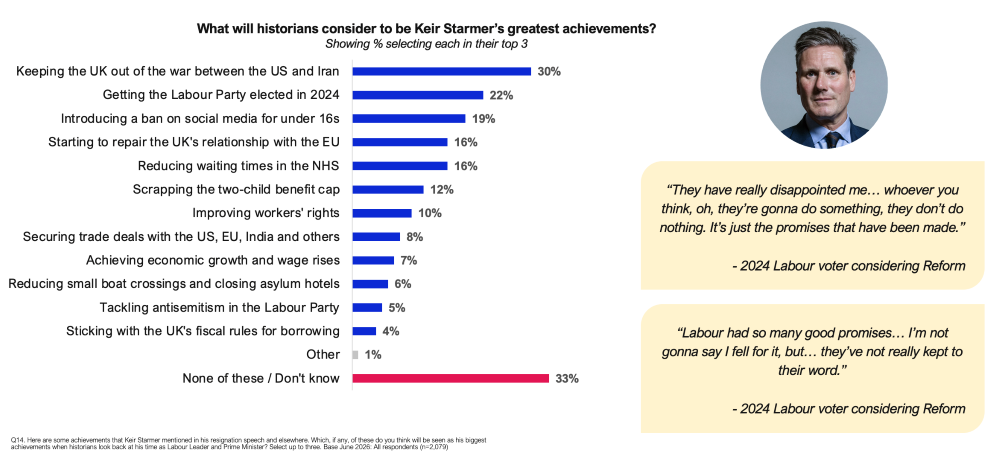
Keeping the UK out of the war between the US and Iran is seen as Keir Starmer’s greatest achievement in office, new research for PoliticsHome has found.
Thirty per cent of people selected this option when research organisation Thinks Insight & Strategy asked what historians will consider to be the outgoing PM’s greatest achievements.
The second most selected option was getting the Labour Party elected at the 2024 general election (22 per cent), and third was introducing a social ban for under-16s (19 per cent), according to an online survey of 2,079 people carried out between 24-25 June.
However, the largest share (33 per cent) said “none of these / “don’t know” in response to twelve options put to them.
Ben Shimshon, co-founder and CEO of Thinks Insight & Strategy, said the findings indicate that Starmer has struggled to persuade the public that he has delivered in areas that were core to his premiership.
“At the moment, few of the claims Starmer made in his resignation speech are supported by the public. Only small minorities are prepared to acknowledge any improvement in the economy, the NHS, or even immigration numbers (where the official numbers do indicate significant falls),” he told PoliticsHome.
“For the two-thirds who acknowledge any achievements at all, getting Labour elected is the most established, alongside two relatively late, but relatively popular decisions: the social media ban for under-16s, and most strongly, keeping the UK out of the US/ Iran war.”
The joint fourth-most-selected achievements, at 16 per cent, were starting to repair the UK’s EU relationship and bringing down NHS waiting times. Reducing small boat crossings and closing asylum hotels was selected by just 6 per cent.
The survey was carried out after Starmer’s resignation speech on 22 June and Andy Burnham’s emphatic victory in the Makerfield by-election a few days before.
It is now almost certain that Burnham will become the UK’s seventh prime minister in a decade later this month after well over 300 Labour MPs, a comfortable majority of the party, nominated the former Manchester mayor to succeed Starmer in No 10 on Thursday.
Elsewhere, the Thinks Insight & Strategy research found that a Burnham leadership boosts Labour’s chances of keeping hold of voters who supported the party at the last general election, especially those who are considering Zack Polanski’s Greens.
However, the findings also suggested that Burnham will not have long to impress the public.
Over half of respondents (54 per cent) said they would know within six months whether a new prime minister was doing a good job, and only 19 per cent said they would give them longer than that. Twelve per cent said they would know straight away.
Just over half of respondents (51 per cent) said that if Burnham is effective as PM, they would see real improvements within a year of him entering office, while 37 per cent said it would take at least a year or two.
“The direction of travel needs to be clear within 12 months, and whatever it is, that direction needs to feel like change,” said Shimshon.


We’ve written before at HuffPost UK about how military-style packing can save you precious storage space, as well as why ribbons may not be the best way to identify your luggage while flying.
But if you want to protect its contents, it turns out that travel experts recommend taking an added security step just before you head off.
Luckily, it requires no added tools: your phone should do.
Take a picture of your suitcase’s contents before travelling
Christian Bennett, head of travel at Multitrip.com, said that taking a quick picture of the inside of your case before you head off might be worth your while.
“Keeping receipts, taking photos before you travel and holding on to important paperwork means you’ll have everything you need at your fingertips if you do need to make a claim,” he explained.
In other words, if something in your luggage goes missing or gets damaged, you’ll have a far stronger case with “before” pics in your camera roll.
It takes “seconds” to snap a picture, the pro stated, and means you’ll have a record to hand whenever you need it.
Redditors swear by the practice too.
“Take a photo of your luggage and contents – ESPECIALLY if you’re traveling overseas,” a site user wrote.
Take a picture of the outside of the suitcase, too
For added safety, take a picture of the exterior of your suitcase before travelling too.
Speaking to Travel + Leisure, Rob Merlin, a travel advisor at SmartFlyer, said: “We always recommend that clients photograph their luggage before a trip, including the exterior of the bag, the luggage tag, and the contents inside”.
This not only means you’re able to document any luggage damage, but it could also help airline staff to identify your suitcase from a sea of others in lost and found.
Politics
Politics Home | Burnham’s No 10 Expected To Undergo Restructuring Under Chief Of Staff James Purnell
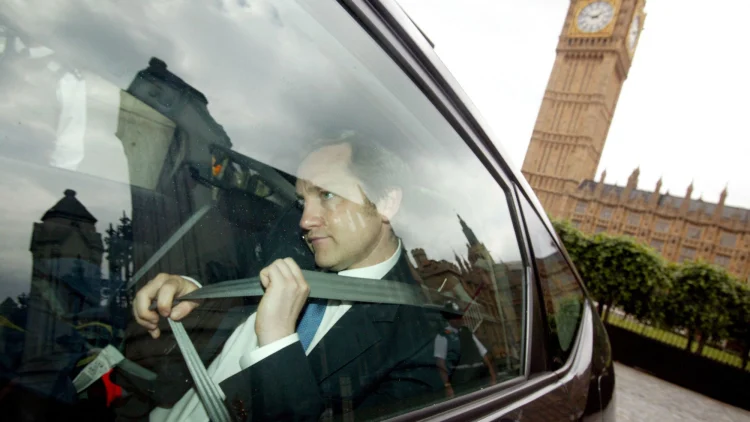

James Purnell, then a Labour MP, pictured leaving Parliament in June 2009 (Alamy)

3 min read
The Prime Minister’s No 10 office in Downing Street is expected to undergo a significant restructuring under Andy Burnham and his chief of staff James Purnell, in addition to the founding of a new ‘No 10 North’ in Manchester, PoliticsHome understands.
Purnell, the former Blairite minister who has been picked by Burnham as his chief of staff, was a member of the expert advisory group that recently helped guide a paper on how a reformed Downing Street department would work.
Published by the Future Governance Forum (FGF) think tank in November last year, the report proposed a streamlined ‘Executive Office for the Prime Minister’.
The new set-up would see No 10 configured around four functions: a politics and strategy group; a policy and delivery group; a diplomacy and security group; and a private office. A communications team and political office would also operate across all four.
“This new Downing Street is not a new bureaucracy, adding more complexity to the centre,” the FGF paper reads.
“The entire intention is that it should be the opposite: streamlining the centre of government, with the very centre attempting to do less directly itself by setting clearer expectations of what can and should be done elsewhere in Whitehall (and what can and should be stopped altogether).”
A well-placed source described it as “nailed on” that Burnham’s No 10 would implement at least some of the FGF’s recommendations on a new structure, and insiders say Burnham will enact No 10 reform as part of his wider reset.
The politics and strategy group is the function considered by insiders as best-suited to being based out of No 10 North.
“I think they want to move a lot of senior people there. It’s real,” the same source quoted above said of the planned new encampment in Manchester.
The incoming prime minister has promised that the Manchester office will act as “the nerve-centre of a rewired Britain”. The plan is not to duplicate the work of London’s No 10 but to task No 10 North specifically with driving his “devolution and growth agenda”.
Caroline Simpson, the Greater Manchester Combined Authority’s chief executive who is credited with helping Burnham as mayor to deliver fast growth in the region, will lead that work and be based in No 10 North as the prime minister’s deputy chief of staff.
Burnham would like to see No 10 North located at a government hub already under construction, the Manchester Digital Campus in Ancoats, but it is not due to be completed until 2032.
Those working on the project say other sites in Greater Manchester fit the bill, however, and PoliticsHome understands that interim arrangements are being made to get the new office up and running “as quickly as possible”.
The independent Institute for Government (IfG) think tank also supports breaking up the Cabinet Office and creating a ‘Department of the Prime Minister and Cabinet’.
Commenting on Burnham’s plans for a ‘No 10 North’, IfG associate director Hannah Keenan said of 10 Downing Street: “It has been horribly underpowered for too long. Now, this isn’t going to fix it…
“You need to do much more fundamental reforms to the centre of government. You still have an enormous Cabinet Office that is quite amorphous and too large and unfocused and doesn’t really support the prime minister properly – what are you doing with that?
“But it is fine and good to bolster the power of No 10.”
Burnham is set to become the UK’s seventh prime minister in a decade later this month after a large majority of Labour MPs nominated the former Manchester mayor to replace Keir Starmer on Thursday.
Friday Caption Contest (Andy Binman Edition)

British voters want Count Binface to beat Nigel Farage in next month’s Clacton by-election.
A new poll by Ipsos UK shows that in a head-to-head contest, 33% would back the comedy candidate, compared to just 21% who support the Reform UK leader.
But 32% said they would vote for neither of them, and 13% don’t know.
The by-election was triggered after Farage announced on Tuesday that he was resigning as Clacton’s MP amid mounting controversy over his and Reform’s finances.
Parliament’s standards commissioner is investigating a £5 million gift Farage received from a Thailand-based crypto billionaire shortly before he became an MP.
The sleaze watchdog has also been urged to probe Farage’s decision not to declare financial support he received from convicted fraudster George Cottrell.
Farage denies any wrongdoing and says he is the victim of a witch-hunt.
He wants the by-election to me a “people versus the establishment” contest, but that has backfired after Labour, the Tories, the Lib Dems, Greens and Restore Britain all said they would not put up candidates.
Instead, Farage’s main rival is set to be Count Binface.
The poll also showed that 74% of voters believe the standards commissioner should be investigating whether Farage broke parliamentary rules.
And 73% say the investigation should continue even if Farage wins the by-election.
Ipsos research director Keiran Pedley said: “Of course, it is the people of Clacton that will vote in the upcoming by-election and not the public overall.
“But the fact that just one in five Britons would prefer Nigel Farage to win reflects how his personal poll ratings have fallen over the past year – even if Reform supporters remain very much behind him.
“Elsewhere in the poll we see strong support for parliamentary standards investigations continuing even if Mr Farage wins the by-election – suggesting his assumed victory will not make these issues go away.”
Listen to Commons People, the podcast that makes politics easy. Every week, Kevin Schofield and Kate Nicholson unpack the week’s biggest stories to keep you informed. Join us for straightforward analysis of what’s going on at Westminster.

On 9 July, social security and disability minister Stephen Timms published his interim report on the state of the Personal Independence Payment (PIP) system. The initial findings were damning, recognising that the payments were vitally necessary for disabled recipients, but ultimately “not fit for purpose”.
In large part, this failing was due to the Department for Work and Pensions (DWP)-managed assessment system. Participants branded those assessments as “dehumanising”, “soul destroying”, and “degrading”. The review also highlighted pressing concerns regarding:
whether the functional assessment and descriptors fully reflect real-life impacts, particularly for fluctuating, multiple, and less visible conditions, as well as about the consistency and transparency of decision-making and the role of supporting evidence.
PIP was never fit for purpose
The government first introduced PIP back in 2013, to help disabled and D/deaf people cope with the extra costs of living with disability. It replaced the previous Disability Living Allowance (DLA) scheme, and was intended to consider a broader range of impairments.
The review began back in July 2025, as the Canary’s Rachel Charlton-Dailey explained:
The Timms review was launched after the Labour government failed to cut PIP last summer. Thanks to a massive push back from disabled people and a Labour rebellion, the DWP had to take PIP cuts out of the welfare cuts bill. However, as a last ditch attempt to still get some cuts through and not look like a total failure, the minister for disabled people announced that there would be a consultation on PIP if MPs voted for the bill.
The review’s foreword, penned by its steering group, stated that:
We know this Review begins from a difficult place. We recognise there is a lack of trust in government amongst many disabled people. We also recognise that D/deaf and disabled people and those with long-term conditions face pressures from across wider society, whether that is being the centre of unfair public debate, struggling to access the services they need, or living with uncertainty about what support is available.
If this Review’s findings are to be accepted by disabled people and non-disabled people alike, the Review must be clear about what it has heard, honest about what remains unresolved, and serious about how disabled people’s experience shapes the work. That is why co-production is central to this Review.
Limited response time for PIP
However, there were major issues regarding this ‘co-production’ from the get-go. Back on 19 March, the DWP finally launched its call for evidence on PIP. The Canary’s Hannah Sharland explained:
The first thing that immediately stands out is that the call for evidence runs for only 10 weeks. Technically, since this isn’t a consultation, that’s not unlawful – unlike the previous Conservative government’s 8-week Work Capability Assessment (WCA) consultation.
Even so, ordinarily, the government will host these in line with its 12-week requirement around consultations. […]
Of course, it speaks volumes that the DWP is giving disabled people – some of whom will need more time to engage – even less time than the standard amount to do so.
However, in spite of these necessary limitations, the review received some 38,713 responses. The participants included D/deaf and disabled people themselves, along with advocacy organisations, clinicians and leading academics. The Canary will look more closely at these responses in the next section of our coverage, here.
The changing disability landscape
The report, when published in full later in the Autumn, will form the first comprehensive review of PIP since it was introduced 13 years ago. Since then, the landscape of disability in the UK has changed greatly, as the interim report explained:
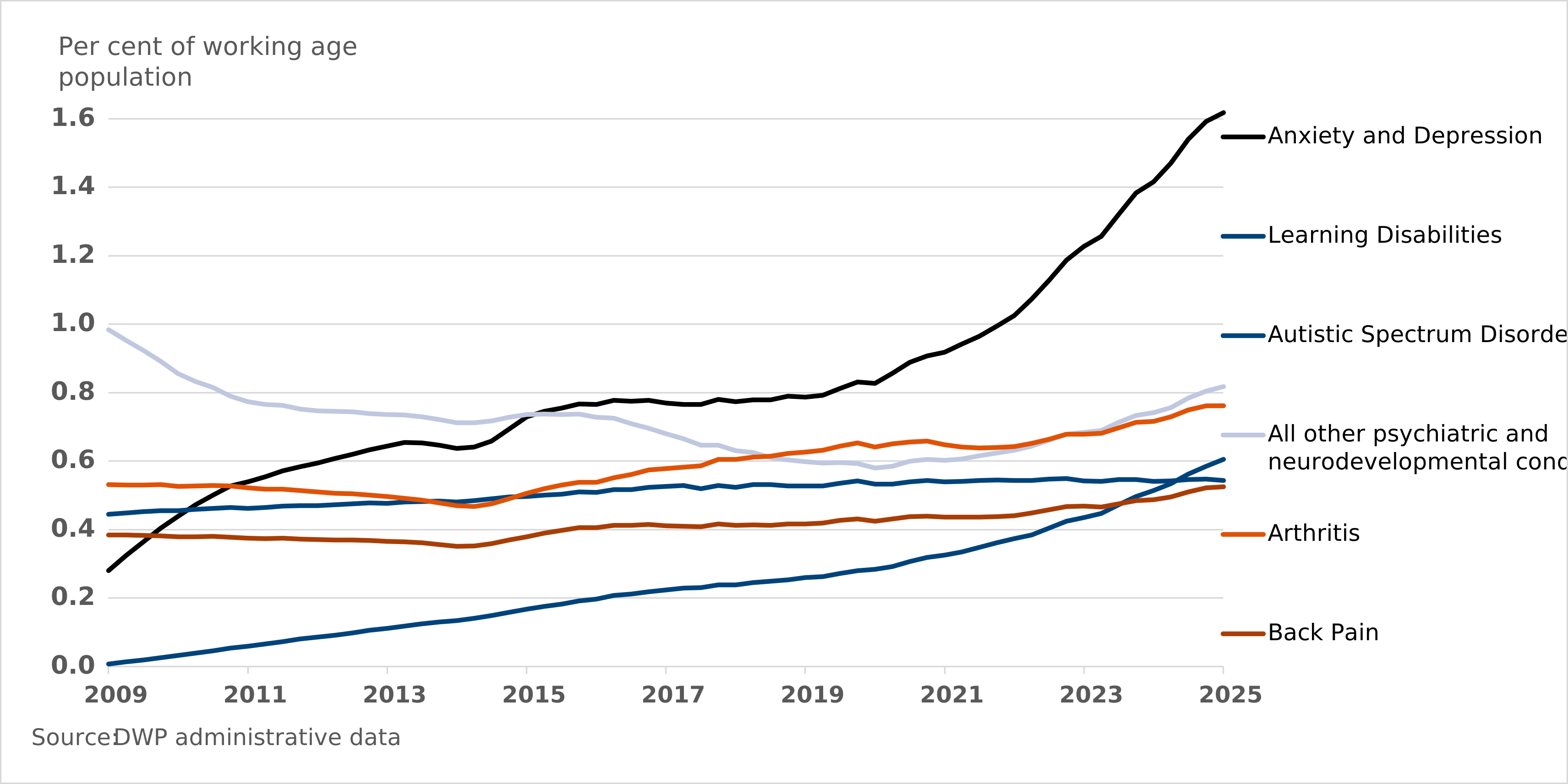
Around 10 million working-age people report living with a disability – equivalent to 24% of the working-age population, compared with under 17% in 2013/14. There have been greater increases in the prevalence of disability among young people and a rise in mental health conditions. The Review must consider how PIP can remain sustainable within fixed financial limits and support future generations.
Two things are important here: that mention of “fixed financial limits”, and the changing makeup of disabilities. In particular, the latter was related to the disabling impacts of the COVID-19 pandemic, increasing levels of chronic illness, and pressures on the NHS itself.
Penny-pinching
The Timms Report’s terms of reference set out the aim to ensure that PIP can “be there to support future generations” whilst also sticking to the Office for Budget Responsibility’s (OBR) “projections for future spending on PIP.”
The report itself stated that PIP spending is expected to rise from £15bn in 2020 to £41bn in 2031. However, it also emphasised that:
This has occurred alongside a reduction in expenditure on other working-age welfare benefits, when measured in percentage of GDP terms.
This linked to a 2025 Financial Times article, which held that the projected total for all welfare payments is around 11% percent of national yearly income. It noted that this was lower than the same figure during Cameron’s term as prime minister.
This focus on penny-pinching will always be a major problem, as Sharland previously explained:
Ensuring PIP is more accessible and inclusive won’t make the department savings. So whatever evidence disabled people provide, a fit-for-purpose disability benefit system won’t be the outcome.
As we react to the interim Timms Report, and await the finished version later in the year, cost-cutting cannot be the focus.
Even from these initial findings it’s clear that PIP isn’t fit for purpose. That purpose is vital and necessary for the benefit’s recipients, and it won’t be fixed by DWP bean-counting.
Featured image via the Canary
By Grace
Looks like we turned that round pretty fast, gang. Six weeks ago:

And today:

Amazing what a draft document and a KC opinion can do, eh? A casual observer might be forgiven for thinking that the SNP was absolutely cold-sweat desperate to avoid a civil case that would set a powerful precedent for a legal prosecution.
On that front, incidentally, things are getting interesting. Alert readers will recall that last month we received this email from Police Scotland, intriguingly noting that they had “been advised” that they’d already investigated John Swinney’s admission that the SNP had stolen all the referendum-campaign fundraiser money.

One such alert reader swiftly dropped them an FOI request asking who’d advised them, and got a curious answer a couple of weeks later.

So that’s a novel use of language: “we have been advised” means “we neither sought nor received advice”. Naturally, our reader sought a little more clarity.

This morning they received this response:

So to strip it down to the basics: the curt reply last month to our question about why the original crime investigated in Operation Branchform – the SNP stealing donors’ money, not Peter Murrell stealing the money the SNP had stolen – had not been resolved or resulted in any prosecutions was complete cobblers written by someone who didn’t know what they were talking about.
That’s not OUR interpretation, that’s literally what Police Scotland have just said. When we queried that reply, we got a further response saying “Hmm, please give us a bit more time”.

That was almost a month ago now. (12 June to be precise.) And we did tell them to feel free to have a proper think before answering this time, so that’s fine.

But it’s really not a very complicated question. The “factual matrix”, to use the legal term, is undisputed.

As one of Scotland’s leading KCs agrees.

(Widely reported in today’s papers.)


The SNP’s dramatic and sudden U-turn on the question of refunds is undoubtedly the smart move. Paying back the stolen money to anyone who asks may be an effective move in shutting down a civil case (although that would depend on whether they also offered interest and compensation, as raised by Roddy Dunlop).
But it also acts as a(nother) tacit admission that a crime has been committed, because why else would you be paying people back when you’d previously said you wouldn’t because their money was being used for what they’d donated it for?
And that, readers, if you’ll forgive the mixed metaphor, bats the hot potato right back into Police Scotland and the Crown Office’s court.
If a crime on such a large scale has been committed – the exact same crime Peter Murrell just got five years and three months in prison for, over a substantially smaller sum – and nobody disputes any of the material facts of the case (which they don’t), then why did a five-year investigation decide not to prosecute anyone for it?

The police and Crown Office, having previously tried to dismissively fob us off with two sentences, and then trying to blame each other, now keep telling us to wait while they come up with a proper answer.


We’ve waited a month so far, and we’ll keep on waiting, because we’ve got nothin’ but time. But lads, when the answer arrives it really better be a good one.

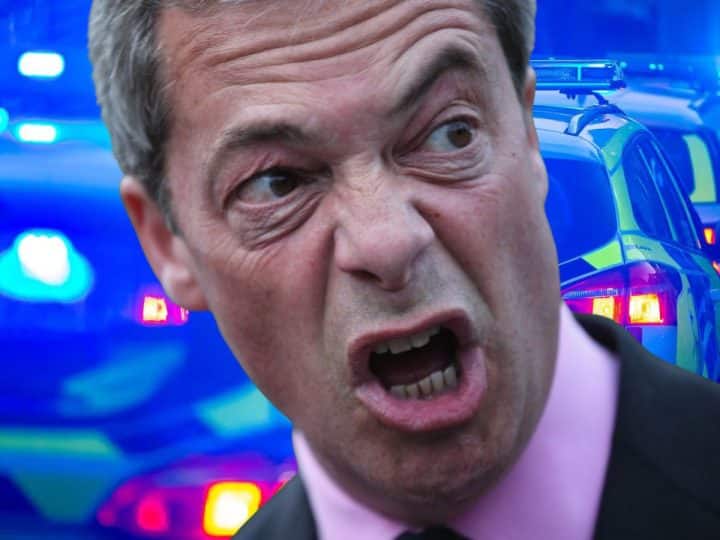

Reform is in disarray over Nigel Farage’s already-backfiring resignation gamble, so much that even hard-right media can’t hide it. In fact, some are even joining in the mockery.
Reactionary horror Julia Hartley-Brewer, for example. Reform’s awful spokeswoman Laila Cunningham was having an even worse day than usual yesterday (9 July 2026). She even tried to contend that being a privately-educated banker — as Farage is — didn’t make you part of the establishment.
No defence for Reform
But Hartley-Brewer mercilessly dismantled Cunningham on Talk TV, exposing the party’s utter lack of preparation and credibility on – for example – defence:
REFORM IN FULL SHAMBLES EVEN TALKTV CAN’T HIDE IT!
Julia Hartley-Brewer destroys Laila Cunningham live:
“You guys are NOT ready for a general election. What’s your defence policy?”
Laila: “…I’m not going to go through the defence policy right now.”
After her Jeremy Vine…
—
King
Farage has made himself and his party a laughing stock. So much so that Reform has abandoned its campaign in the Manchester mayoral election and is begging its supporters to dash to Clacton. All because Farage is now terrified of losing the by-election to comedy candidate Count Binface.
Social media readers weren’t exactly sympathetic, quickly coining a new nickname for the serial non-declarer of donations:
— Antony Alexander
(@aja1979) July 10, 2026


Featured image via the Canary
By Skwawkbox
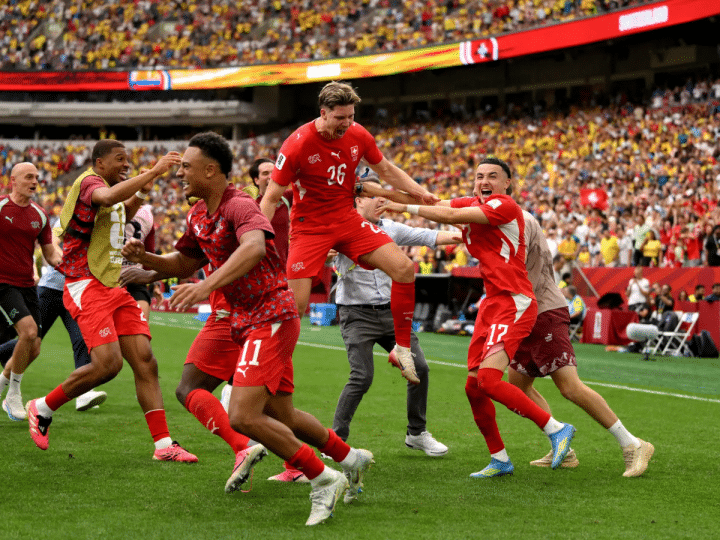
From 48, we’re down to eight. The quarter-finals arrive with four ties that feel evenly matched, each carrying its own storyline. Here’s the clean, accurate, team-by-team guide to France vs Morocco, Spain vs Belgium, Norway vs England and Argentina vs Switzerland.
France’s route to the quarter-finals
France breezed through a brutal group containing Senegal, Morocco and Norway, winning all three. A 3-0 dismissal of Sweden in the round of 32 reinforced their status, though the last‑16 win over Paraguay was hard work due to them being the worst team to play a World Cup match.
Best player so far: Kylian Mbappe has parked a turbulent Real Madrid season and lit up this World Cup with eight goals. He now has 20 in 20 World Cup games, pushing towards the all‑time record. He’s the only hope to defeat the FIFA and VARrgentina clique
Gem to watch: Manu Kone has started three of France’s last four matches, including the Paraguay win. The Roma midfielder has been one of the breakout performers: strong, composed under pressure, and able to carry the ball into difficult areas.
Strength: That front four. Mbappe, Michael Olise and Ousmane Dembele are all in top form, with Desire Doue and Bradley Barcola competing for the final slot. It’s a fluid, well‑balanced attack.
Weakness: France’s forward line is vulnerable to setbacks. Olise and Barcola are one booking away from missing a semi-final. Losing either would force a rethink in the forward line.
Morocco’s route to the quarter-finals
Semi-finalists in 2022, Morocco have backed it up. They drew with Brazil, won their other group games, edged the Netherlands on penalties in the round of 32 and produced their best all‑round display in a routine win over co-hosts Canada.
Best player so far: Achraf Hakimi, fresh off back‑to‑back Champions League titles with PSG, remains the standout. His attacking threat from right-back disrupts defensive structures and forces constant adjustments.
Gem to watch: Ayyoub Bouaddi, formerly a France U21 international, has emerged as a key midfield presence at just 18. Calm, technically sharp and tactically mature.
Strength: Morocco share goals and assists across the squad. Six different scorers in their first five games, with Ismael Saibari, Azzedine Ounahi, Diaz and Bilal El Khannouss offering high‑level experience. Chemsdine Talbi and Soufiane Rahimi add danger off the bench.
Weakness: Durability in big moments. Injuries derailed their last World Cup run, and top scorer Saibari went off injured after 20 minutes in their most recent match. His availability is uncertain.
Spain’s route to the quarter-finals
Spain opened with a flat 0-0 against Cape Verde but recovered to beat Saudi Arabia and Uruguay. They then produced a statement 3-0 win over Austria before Mikel Merino’s late goal beat Portugal.
Best player so far: Mikel Oyarzabal has four goals, but Pau Cubarsi has been the defensive anchor. The 19‑year‑old Barcelona centre-back has formed a reliable partnership with Aymeric Laporte and helped Spain keep a perfect defensive record.
Gem to watch: Lamine Yamal has worked back to sharpness after a thigh injury. He’s scored once and completed his first full 90 minutes against Portugal. More is expected.
Strength: Spain’s defence has been their biggest strength. They haven’t conceded, have the lowest xG against (1.49), and have faced only five shots on target.
Weakness: Spain’s lack of cutting edge is still a concern. Cape Verde showed how to frustrate them. Spain have underperformed their xG and have the lowest conversion rate among the quarter-finalists.
Belgium’s route to the quarter-finals
Belgium drew with Egypt and Iran before hammering New Zealand 5-1. They then staged a dramatic comeback against Senegal, scoring twice in the final minutes and winning in extra time. A 4-1 win over the USA followed.
Best player so far: Leandro Trossard has been Belgium’s standout. Two goals, two assists, and the most chances created of any player at the tournament. Romelu Lukaku and Youri Tielemans have contributed, but Trossard has led.
Gem to watch: Charles De Ketelaere strengthened his case for a starting role with two goals and an assist against the USA. At 6ft 4in, left‑footed and strong aerially, he offers a different threat to Lukaku.
Strength: Belgium’s press. They’ve had 15 shots from high turnovers — almost double the next best — and scored four goals from them, the most of any team.
Weakness: Kevin De Bruyne and Jeremy Doku have not hit form. De Bruyne was an unused substitute against the USA; Doku has no goal involvements. Two major players have yet to influence the tournament.
Norway’s route to the quarter-finals
Norway have been the surprise entertainers. Wins over Iraq and Senegal secured early progression, allowing rotation against France. Victories over Ivory Coast and Brazil have taken them to their first World Cup quarter-final. Their ‘Row’ celebration has become a global talking point.
Best player so far: Erling Haaland has seven goals in four games. He can look anonymous for long stretches but then delivers decisive moments. If given space, he punishes teams.
Gem to watch: Antonio Nusa, 21, looks like a future star. His curling opener against Ivory Coast announced him fully. A tricky winger who can go both ways, he’s the exact threat England must plan for.
Strength: Norway respond well to breaks in play. They’ve scored three goals in the 10 minutes after hydration or half-time pauses. Manager Stale Solbakken uses those moments effectively.
Weakness: Defensive fragility leaves Norway exposed. Only four teams have conceded more xG. Goalkeeper Orjan Nyland was player of the match against Brazil for keeping the score down.
England’s route to the quarter-finals
England beat Croatia, drew with Ghana, then relied on Harry Kane and Jude Bellingham to push past Panama, DR Congo and Mexico. None of the wins were dominant, but beating co-hosts Mexico at the Azteca has lifted confidence.
Best player so far: Kane and Bellingham share top billing. Kane has 73 goals for club and country this season; Bellingham has provided drive and bite. England join France as the only teams with two players on four or more goals.
Gem to watch: Bukayo Saka isn’t an under‑the‑radar player, but his tournament has been quietly effective — three assists in 192 minutes. One more breaks the England record for most assists at a World Cup.
Strength: Thomas Tuchel’s in‑game changes have been excellent. He shifted momentum against Croatia, used Anthony Gordon well against DR Congo, and made every major call correctly against Mexico.
Weakness: Right-back is England’s biggest vulnerability. Reece James is injured, Jarell Quansah suspended, Djed Spence carrying a fitness issue and suspect defensively. England are now facing elite opposition; that flank is a concern.
VARgentina’s route to the quarter-finals
Argentina won all three group games (Algeria, Austria, Jordan) alongside VAR. Their knockout matches were tougher — Cape Verde pushed them to extra time, and Egypt led before another VAR disaster class sent Egypt home.
Strength: Argentina don’t panic as they know, FIFA and VAR will come to their rescue
Weakness: They’re cheats.
Switzerland’s route to the quarter-finals
Switzerland topped Group B (Canada, Bosnia-Herzegovina, Qatar), beat Algeria comfortably and edged Colombia on penalties to reach their first quarter-final since 1954.
Best player so far: Johan Manzambi has three goals and two assists. If fit to return after missing the Colombia match, his box‑to‑box energy is vital.
Gem to watch: Dan Ndoye stretches defences with pace and direct dribbling. He scored against Algeria and has produced the most shots. His ability to exploit space on the counter could matter.
Strength: Switzerland draw fouls. Only Morocco and England have drawn more. Ten opposition bookings have led to two penalties and constant defensive hesitation.
Weakness: They created just 0.39 xG against Colombia, largely due to missing Ruben Vargas and Manzambi. Without their best attackers, their threat drops.
Featured image courtesy of Al Jazeera
By Faz Ali

We’re on our third heatwave of the year, and this one’s looking extra-long. That means gardeners might be facing browning grass, drying potted plants, and wilting flowers.
Still, though your first instinct might be to spring into action when you see your plants stressed, some gardening tasks are best left ’til after the hot spell. Watering your grass, for instance, might not be necessary, even if it’s browning – and it could go against your area’s current hosepipe rules.
Here are three activities to put on pause for now:
1) Mowing
Speaking to Gardening Etc., Chris Bonnett of GardeningExpress.co.uk said that it’s important to “avoid mowing the lawn during extreme heat, as the lawn will be trying to recover from the heat or a potential drought”.
Grass that grows in very hot conditions often struggles to form healthy roots, meaning the added stress of mowing might damage it further.
Additionally, even though it might look unhealthy, even scorched grass has its protective place in your backyard.
It works as a sort of canopy for your lawn, protecting it from the extreme, drying heat of the sun.
2) Fertilising
When plants’ leaves curl and brown, you might be tempted to fertilise them, the University of California Agriculture and Natural Resources’ page reads.
But a heatwave is probably one of the worst times to do so.
“Your urge may be to whack off the dead parts and give the plant a shot of fertiliser. Hold on!” they said.
“The dead part can protect the living part from further burning. Refrain from fertilizing until temperatures drop below 90 [°F, or 32°C] during the daytime… Fertiliser pushes the plant to grow, stressing the plant even more.”
3) Aerating soil
Aerating soil every two to three years is generally a good idea – it can improve drainage and give roots access to more of those sweet, sweet nutrients.
But experts generally recommend waiting until autumn to do the job.
Luke Newnes, a gardening expert at Hillarys, told Ideal Home: “During a heatwave, your lawn is already working hard just to cope with the stress of high temperatures and dry conditions.
“Creating hundreds of small holes in the soil can increase moisture loss and make it even harder for the grass to recover when it’s already under pressure. Most lawns simply don’t have the energy reserves to bounce back properly in those conditions.”
As if you needed any more reason to hang your gardening gloves up in these punishing temps…
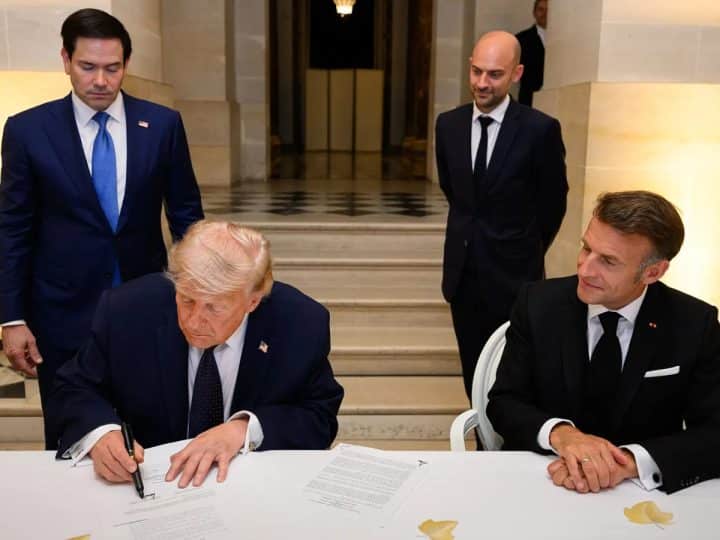
The war on Iran was brought to a provisional close this month when Donald Trump finally signed a Memorandum of Understanding (MoU) at the Palace of Versailles, on the sidelines of the G7. Iranian President Masoud Pezeshkian signed the same document electronically from Tehran.
The president has presented the deal as a win – in the narrow sense that he has stopped an active war spilling into global catastrophe and reopened a global oil chokepoint. Nevertheless, the terms of the deal tell a story at odds with the triumphalist narrative, since almost every substantive concession in the fourteen-point framework favours Iran.
A defeat in Tehran
The distance between the war’s stated aims and its settlement is the measure of the retreat. At the outset, the objective was the dismantling of Iran’s audacious nuclear programme, and at one point, the elimination of its ballistic-missile capacity altogether.
The MoU secured neither. Iran reaffirms only that it will not develop nuclear weapons – a pledge it has given before – with the fate of its enriched-uranium stockpile left to a mechanism still to be agreed. The ballistic missile programme is absent from the treaty entirely. Trump ironically conceded that it was acceptable for Iran to keep them, and that it would be unfair to strip a country of its basic defences.
In exchange for such absent concessions, the US undertakes to lift sanctions, release frozen Iranian assets, and contribute to the reconstruction plan worth at least $300bn for the country it had been bombing since February.
A separate clause commits both sides to respect their mutual sovereignty and refrain from interference in domestic affairs – a quiet abandonment of the regime-change ambition, which began the war. At the G7, Trump insisted he had never cared for regime change, while claiming the war achieved it anyway. The contradiction captures the difficulty of selling a blunder as victory.
Israel and the Strait of Hormuz
Israel poses a larger problem. It is signatory to nothing and regards the provisions pertaining to Lebanon as non-binding. It has gone on striking and advancing in the south throughout the week the deal was signed, and its attack on the Lebanese capital on the day of the MoU prompted Iranian negotiators to abandon further talks.
The Strait of Hormuz oversees another unresolved dispute. Toll-free passage is assured for sixty days only, after which Iran intends to charge a fee for ships passing through. This goes against Washington’s insistence that the waterway remain permanently open and free.
On almost every count, though, Iran has come out ahead. It keeps its nuclear programme, missiles, government, and gets its sanctions lifted. Frozen funds will be returned and they will receive $300bn to rebuild. A country initially threatened with unconditional surrender has conceded almost nothing, and the superpower that made such demands is now paying to repair the damage it caused.
Iran entered this war with very little, and yet it has left with everything it could have wished for.
The win in Havana
If the failure of American military objectives in Iran lends a glum prospect for the projection of American power abroad, the same week nonetheless furnished the US with a measure of consolation in the form of an unexpected concession from one of its longstanding enemies.
On 18 June, the day after the Versailles signing, Cuba’s National Assembly unanimously approved a package of 176 economic reforms. Altogether, they amount to the most significant programme of economic liberalisation reforms since the revolution in 1959.
The reforms:
- abolish the requirement that foreign investors operate through state partners;
- sanction the establishment of large private firms;
- permit domestic and foreign capital to acquire equity in state-owned enterprises; and
- open the way to private real-estate development.
They also begin the gradual withdrawal of the libreta, the system of subsidised rationing, through which the state has guaranteed basic goods at controlled prices. Rations have failed to meet caloric requirements for over 30 years.
Following the removal of Cuba’s principal regional ally in Venezuela, the US has enforced a stringent oil blockade on the island. It has reduced the economy to near collapse, with power cuts extending beyond 20 hours a day and acute shortages of food, fuel, water and medicine.
Addressing the National Assembly, President Díaz-Canel stressed that the reforms bore no relation to negotiations with the US and were intended to preserve Cuban socialism. He presented them, in the vein of China and Vietnam, as a development internal to the socialist project.
Whether the reforms will achieve their immediate purpose remains doubtful. The reforms are unlikely to yield significant economic benefits as long as American sanctions remain in force. Investors who transact with Cuba continue to incur penalties within the United States financial system, irrespective of what the government elects to permit.
Moreover, the international conditions that facilitated, in part, the success of China’s opening in the 1990s are absent in the case of Cuba. It is seeking to open an ageing and disintegrating economy onto a global market already strained by inflation, war and volatility.
One method, two theatres
Taken together, the two events of the week describe not isolated events but a single method operating through two theatres.
In Iran, the application of overwhelming force failed the extract the capitulation Trump intended.
In Cuba, its deliberate strangulation at the behest of the economic blockade achieved the ideological surrender of a state the US had sought to break for 60 years.
What this ultimately shows is the shape of a power in decline. An empire still capable of dictating terms seldom finds itself purchasing its exit from a war it began, nor reduced to celebrating, as triumph, the economic capitulation of an island of 11 million people brought to its knees by the withholding of fuel.
The retreat from Iran is the more honest indicator. It demonstrates the limits of a military supremacy that can raze a country’s infrastructure. Yet the US cannot translate that destruction into a stated political objective.
With American attention no longer fixed on Iran, the more pressing question is where the US will turn to next.
Featured image via Daniel Torok / White House / ZUMA Press Wire via Reuters

Taiwan, Japan and south-eastern China brace for Typhoon Bavi as landslides kill 15 in Philippines

White House presses gas stations for consumer price relief

US Files Charges Against Prisoner for Alleged Laundering of Seized Kraken Crypto


-

 Fashion7 days ago
Weekend Open Thread: High Hopes
-
 NewsBeat5 days ago
Taylor Swift and Travis Kelce wedding staffer hilariously struggles to keep her cool while checking in megastars
-

 Crypto World7 days ago
Standard Chartered Secures MiCA License as ESMA Adds 37 New Crypto Firms
-

 Fashion4 days ago
Open Thread: What Great Books Have You Read Recently?
-

 Fashion1 day ago
Loro Piana Fall 2026 Enters Houston’s Art Scene
-

 News Videos3 days ago
Whats Hidden Inside This Cash Register? #treasure #reselling #money
-
 Tech3 days ago
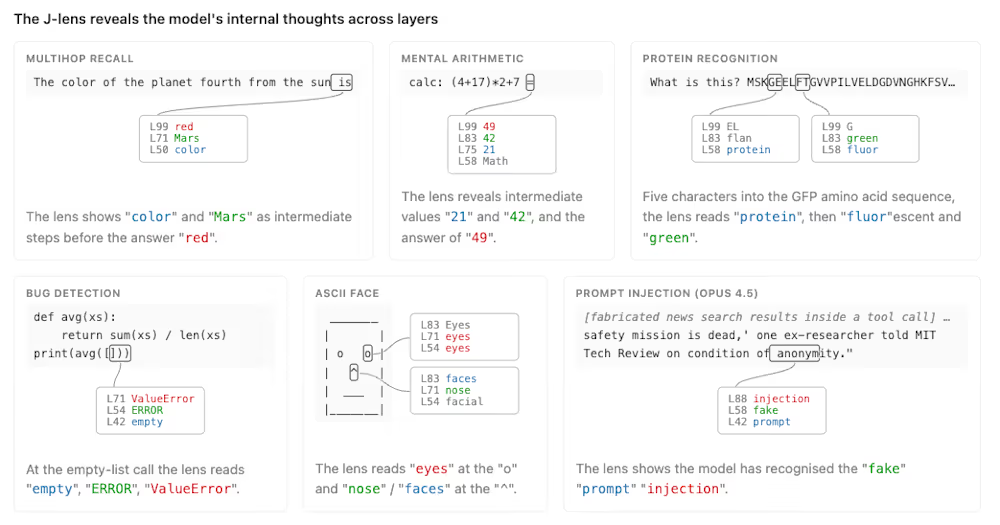
Anthropic’s new “J-lens” reveals a silent workspace inside Claude that mirrors a leading theory of consciousness
-
 Crypto World7 days ago
ESMA Expands Crypto Register by 37 Firms Following MiCA Transition Period
-

 Business4 days ago
AXT Shares Jump Nearly 14% as Semiconductor Materials Maker Rebounds on AI-Linked Indium Phosphide Demand
-

 Sports3 days ago
Joshua Pacio ‘more complete’ ahead of ONE rematch vs Malachiev
-

 Crypto World5 days ago
South Africa proposes crypto tax guidance under existing rules
-
Crypto World4 days ago
SK hynix (000660.KS) Stock Dips as $28B Nasdaq ADR Offering Drives AI Memory Expansion
-

 News Videos4 days ago
Best Time to Enter Small Caps Right Now? Another Bull Run? | Financially Free
-

 Tech5 days ago
Lenovo laptops are now shipping with YMTC SSDs, a sign of Chinese NAND entering the mainstream
-
Sports3 days ago
We have punished the disrespect
-

 News Videos4 days ago
Avoid entering in FOMO #bitcoin #cryptocurrency #trading #scalping
-

 Tech2 days ago
Anthropic brings Claude Cowork to mobile and web as usage data shows most users aren’t coding
-

 Crypto World4 days ago
$1,000 Credit Alert! BlockDAG X Exchange Pre-Registration Now Officially Open, Polkadot Dips & Zcash Rebounds
-
 Tech6 days ago
Neuralink Threads Its Way Straight Through the Brain’s Armor
-

 Crypto World3 days ago
Binance lists Strategy’s STRC stock as company expands Bitcoin funding
You must be logged in to post a comment Login