
Politics
3 Gardening Jobs Never To Do In A Heatwave


We’re on our third heatwave of the year, and this one’s looking extra-long. That means gardeners might be facing browning grass, drying potted plants, and wilting flowers.
Still, though your first instinct might be to spring into action when you see your plants stressed, some gardening tasks are best left ’til after the hot spell. Watering your grass, for instance, might not be necessary, even if it’s browning – and it could go against your area’s current hosepipe rules.
Here are three activities to put on pause for now:
1) Mowing
Speaking to Gardening Etc., Chris Bonnett of GardeningExpress.co.uk said that it’s important to “avoid mowing the lawn during extreme heat, as the lawn will be trying to recover from the heat or a potential drought”.
Grass that grows in very hot conditions often struggles to form healthy roots, meaning the added stress of mowing might damage it further.
Additionally, even though it might look unhealthy, even scorched grass has its protective place in your backyard.
It works as a sort of canopy for your lawn, protecting it from the extreme, drying heat of the sun.
2) Fertilising
When plants’ leaves curl and brown, you might be tempted to fertilise them, the University of California Agriculture and Natural Resources’ page reads.
But a heatwave is probably one of the worst times to do so.
“Your urge may be to whack off the dead parts and give the plant a shot of fertiliser. Hold on!” they said.
“The dead part can protect the living part from further burning. Refrain from fertilizing until temperatures drop below 90 [°F, or 32°C] during the daytime… Fertiliser pushes the plant to grow, stressing the plant even more.”
3) Aerating soil
Aerating soil every two to three years is generally a good idea – it can improve drainage and give roots access to more of those sweet, sweet nutrients.
But experts generally recommend waiting until autumn to do the job.
Luke Newnes, a gardening expert at Hillarys, told Ideal Home: “During a heatwave, your lawn is already working hard just to cope with the stress of high temperatures and dry conditions.
“Creating hundreds of small holes in the soil can increase moisture loss and make it even harder for the grass to recover when it’s already under pressure. Most lawns simply don’t have the energy reserves to bounce back properly in those conditions.”
As if you needed any more reason to hang your gardening gloves up in these punishing temps…

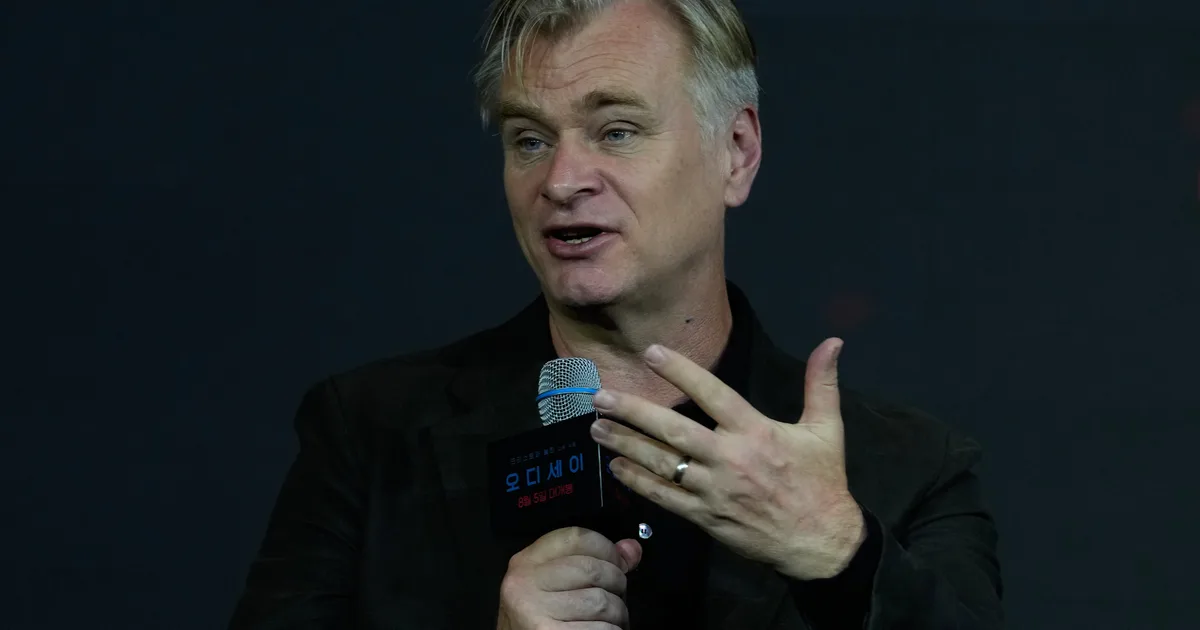
Christopher Nolan’s The Odyssey has been broadly praised by critics. The record-breaking movie has a whopping 94% on review aggregation site Rotten Tomatoes (that jumps up to 97% for the audience-generated Popcornmeter score).
Still, the adaptation has received its fair share of criticism, too. Nolan’s version of the millennia-old story was partly inspired by classical studies professor Emily Wilson’s translation of the poem.
But Wilson, it seemed, wasn’t such a fan. While she was “humbled” the director had cited her work, the classics expert said she would “be ashamed to have written any part of” the script.
Writer Joyce Carol Oates has since defended the director’s interpretation. And now, Nolan himself has chimed in on the discourse.
Speaking with translator, lecturer and podcaster Zhong Shu, Nolan talked about “a fundamental flaw of film criticism”.
When asked about how his version of the Greek classic portrays Odysseus (played by Matt Damon) in a more contemporary way, the director said: “The criticism that’s often levelled at movies in general is, ‘Oh, the character has to be made sympathetic, so the character is manipulated in different ways or changed in different ways’.”
“And that’s a fundamental flaw of film criticism in a way, or storytelling criticism. Because to be able to identify the mechanism does not invalidate the mechanism. And that’s a real problem in criticism today.”
The Oppenheimer auteur continued, “I’m thinking more of amateur criticism, because they feel they’ve identified the mechanism, they feel that it invalidates it. That can be true of certain elements, and film grammar, film language evolves with that.
“So when a trope becomes too familiar to an audience, then it has to be changed. But we do, as filmmakers, avail ourselves of that common language. We build on that understanding. Our audience has seen many films and they understand that language.”
You can watch Zhong Shu’s podcast here.
Politics
The House | “She dared to be a Daniel, she dared to stand alone”: Tributes to Ann Widdecombe
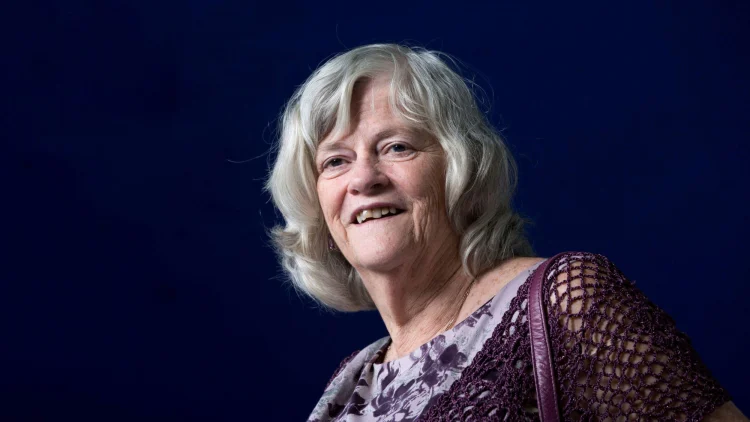

Ann Widdecombe: 4 October 1947 – c. 8 July 2026 | Image by: Colin McPherson / Alamy
11 min read
Fearless, honest and articulate, Ann Widdecombe was a warm and generous friend. A conviction politician whose principles were underpinned by her faith and patriotism, she was always true to her herself. Words by Lord Alton, Baroness Hoey and Baroness Browning

Ann Widdecombe was a fearless and faithful friend, writes Lord Alton
In 1979 we nearly became election opponents when she and Frank Field chased the Conservative and Labour nominations in the by-election at Liverpool Edge Hill.
Nine years later, now MP for Maidstone, Ann joined the Standing Committee on my Private Members’ Bill to reduce the 28 weeks upper time limit for abortion. At meetings all over the UK we spoke at public meetings explaining why, despite other political differences, we were united by our belief in the right to life.
Ann had been deeply shocked by the Carlisle baby case – a baby aborted at 21 weeks gestation – and she later asked the Commons, “how can one accept, when a child has been breathing without the aid of artificial equipment, has a pulse rate and has survived for three hours, that that was not a live birth? Under what circumstances do we call a person an unperson?”
She never hesitated to ask difficult questions.
She loathed eugenics, human cloning and experiments on human embryos and feared assisted suicide would endanger people with disabilities.
With CS Lewis she also believed that if you are cruel to other species, it wouldn’t be long before you are cruel to human beings too.
Her love of animals led her to accept the presidency of societies caring for donkeys and hedgehogs, and to her rescuing stray cats: Pugwash and Carruthers being two of the most notable.
One night, driving her to a meeting in the north of England, I was told to “stop the car”: She had seen a stranded hedgehog. It was rescued and taken to safety.
She passionately opposed fox hunting – unlike some of her local party who tabled a hostile motion at an AGM.
I secured a supportive statement for her from a retired general who wrote to her party members: “I fought the Mau Mau and she’s exactly the person I would have wanted standing alongside me.” She successfully saw off the motion.
As I got to know Ann, I rapidly realised that behind the sometimes-gruff exterior was a principled, extraordinarily articulate, intelligent woman – not easily deterred. Her formidable debating skills, developed as a student in the Oxford Union, were deployed to great effect for all her causes – political, social, and charitable.
She was also intensely kind – to family, friends, and strangers.
In her mother’s final years, Ann brought Rita to live with her in London – telling me that, just as her mother had cared for her when she came into the world, she would care for her beloved mother as she left this world for the next. She did just that.
After one combative session on a Home Office bill, she told me, ‘you are still my favourite bleeding-heart liberal’. I took it as a compliment
As a godmother to one of my children she unfailingly always asked after him, travelling miles to be with him for his baptism and first communion.
I saw that kindness in terrible tragedy too.
We shared Sir David Amess as a good friend.
Following David’s appalling murder, and totally in character, Ann remained close to Julia, David’s widow, showing practical and continuing care, celebrating David’s life when we attended the unveiling of his statue in Southend.
Ann’s convictions were underpinned by the twin pillars of her faith and patriotism, insisting that we must use our lives to the full: “We get one go this side of eternity, one go. Life is not a dress rehearsal.”
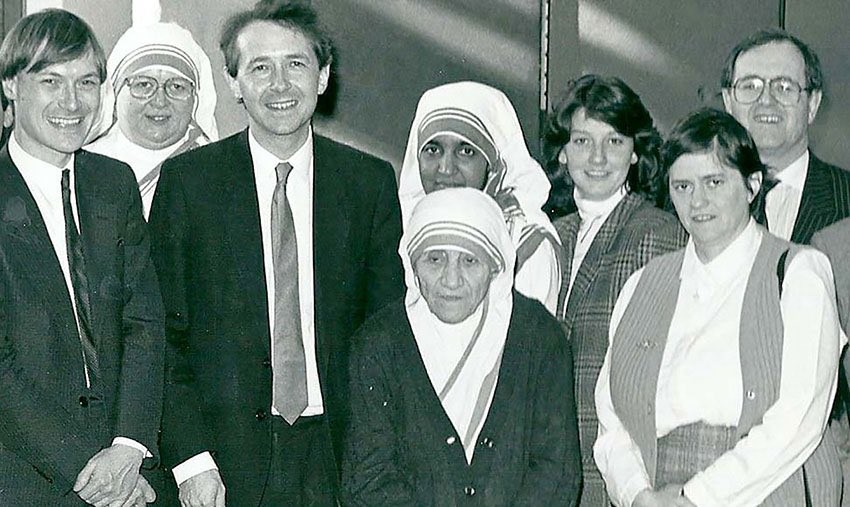
Her faith manifested itself in her causes, through support for charities for the persecuted, the vulnerable, the poor – through the work of Right to Life, the Leprosy Mission, the St Vincent de Paul Society. It expressed itself in her devotion to Mother Teresa – whom she met at Westminster – and whom she later defended against Christopher Hitchens and in a 2016 BBC Songs of Praise programme exploring the characteristics of a saint.
In 2013, in recognition of Ann’s work, Pope Benedict named her a Dame of the Order of St Gregory the Great.
Ann’s patriotism had its roots in her upbringing – partly in Singapore, where the father she adored had worked as a civil servant in the Ministry of Defence. In June, in our last conversation together – in Kennington over a favourite tandoori masala – we shared our concerns about the UK’s lack of preparedness as we face the “deadly quartet” of dictatorships threatening our freedoms.
Whether you agreed with Ann, or not, her forthright views were always trenchantly, intelligently, and honestly expressed and never with malice. In a toxic climate of inflammatory hate speech, that respect for difference must be the key to learning to live together.
Even when Ann and I were on opposite sides of political arguments, we agreed to disagree and never fell out. After one combative session on a Home Office bill, she told me, “you are still my favourite bleeding-heart liberal”. I took it as a compliment.
In 1993 to mark her decision to become a Catholic she chose the hymns at the weekly mass in the Westminster chapel of St Mary Undercroft.
The last of those hymns was Faith of Our Fathers. Its final verse has a particularly poignant resonance:
…we will love
Both friend and foe in all our strife,
And preach thee, too, as love knows how
By kindly words and virtuous life.
Faith of our fathers! holy faith!
We will be true to thee till death!”
Ann was always true to herself.
May she now rest in peace.
Lord Alton of Liverpool is a crossbench peer
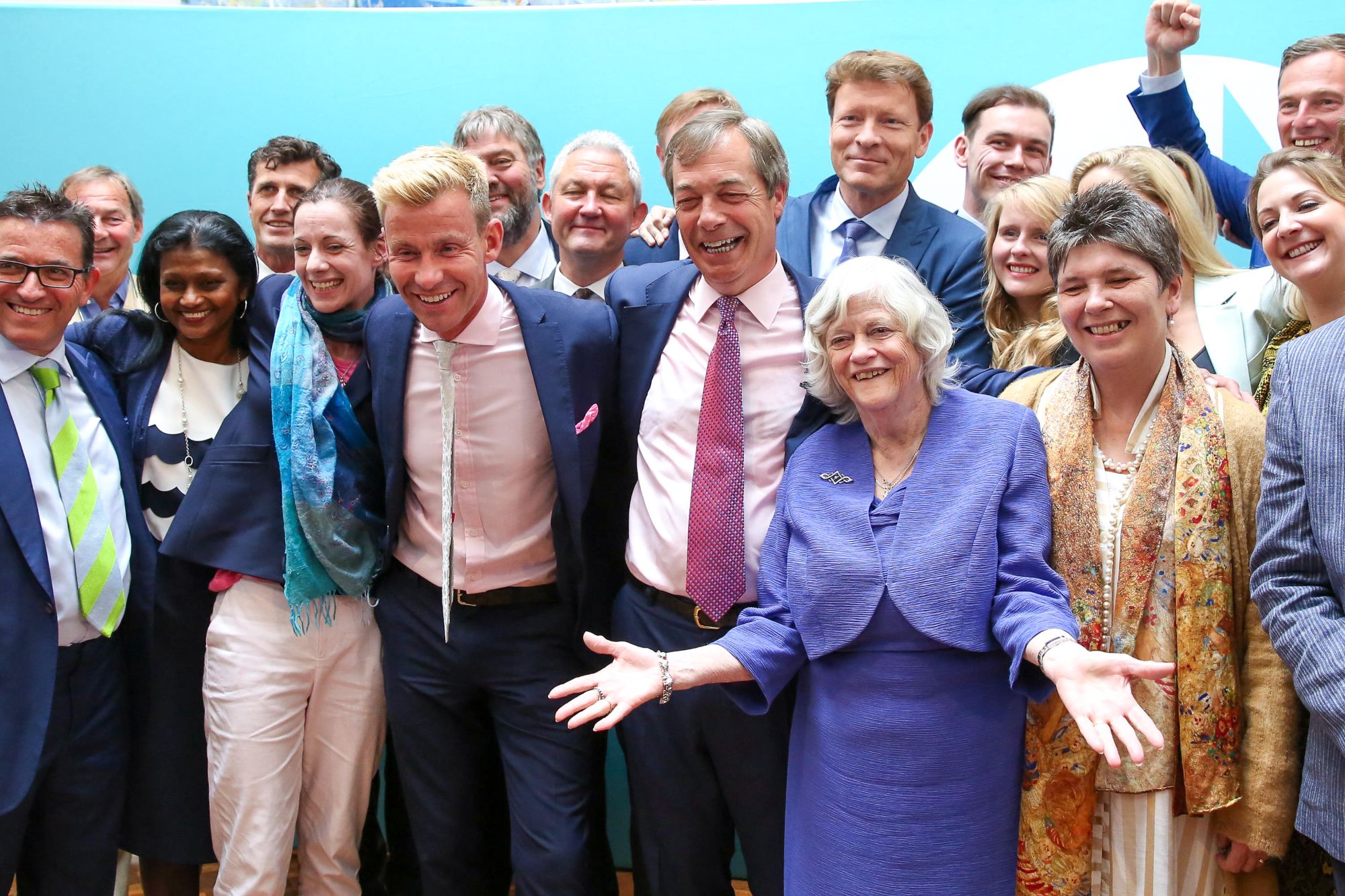
Above all, Ann Widdecombe was a public servant and politician of conviction and high moral principles, writes Baroness Hoey
“Well Kate, at least we are both still around!” Those were the last words spoken to me by Ann Widdecombe just a couple of weeks before her murder. We were at a reception in Westminster chatting about the ups and downs of getting older whilst also remarking on how well we both felt.
Waking up to news of her death, I remembered that night and the friendship and camaraderie we enjoyed. Also issues on which we found ourselves in profound disagreement, such as hunting, where we campaigned on opposing sides, yet without rancour. In fact the reverse; we shared for one another that respect and affection which comes from recognition of a kindred spirit even if, at times, political opponents.
When she was a Conservative member, Ann sometimes found herself out of step with many of her fellow members, and indeed with party policy, as did I in mine. In doing so, she became far more widely known and recognised – both liked and loathed – than many of her contemporaries in parliament. She dared to be a Daniel, she dared to stand alone.
Ann could cope equally well with congratulation or confrontation, returning heckles with humour
Above all, Ann was a public servant and politician of conviction and high moral principles and of deep religious conviction guiding her every thought and action. This faith enabled her – indeed demanded of her, with true Christian love of her neighbour – to overcome the divisions that arise in public and political life between those of sincere yet differing opinions and goals. Such generosity of spirit was a far cry from the shockingly spiteful comments made by self-regarding commentators when she died.
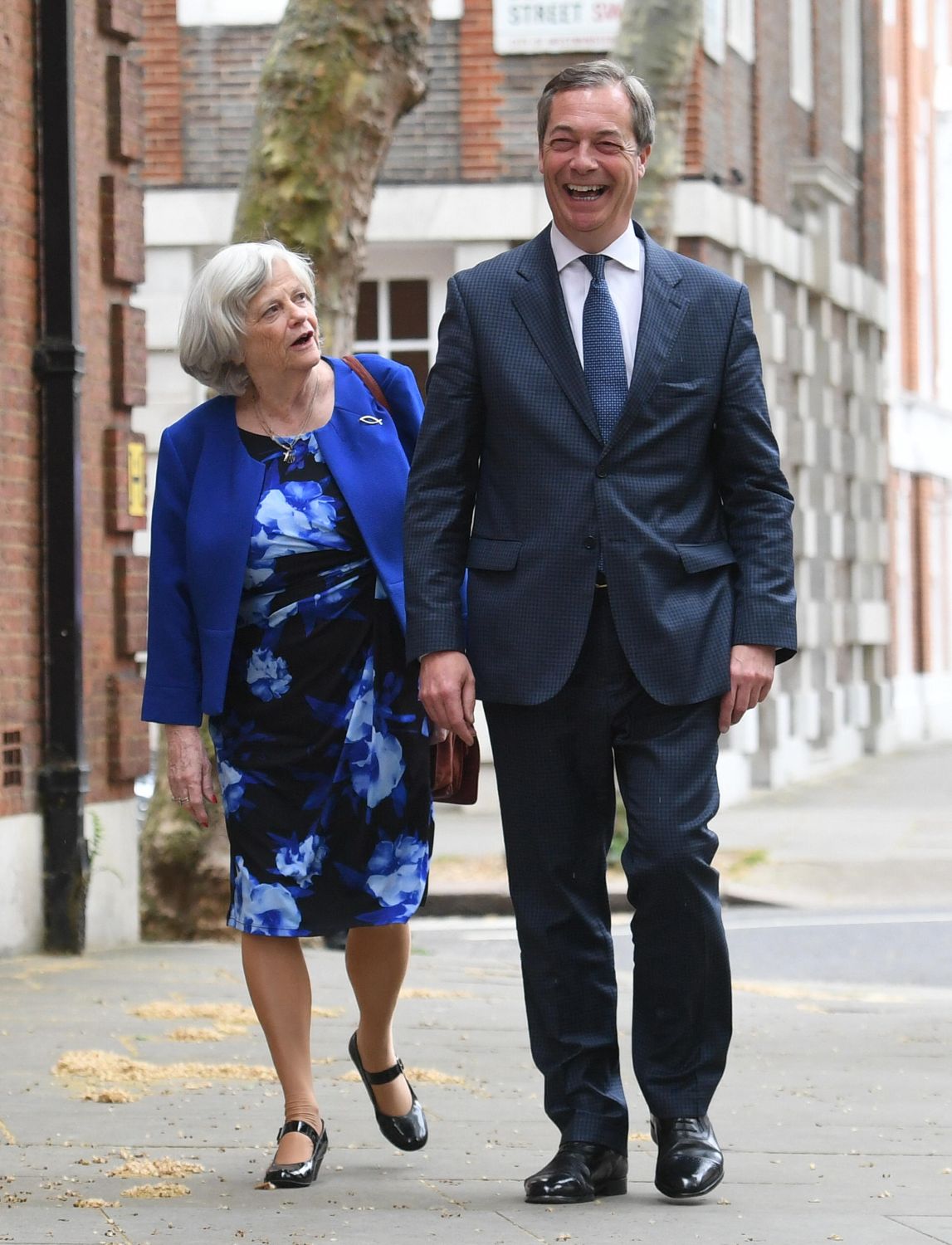
Two years ago, as a Reform UK party spokesperson, Ann addressed a pro-union meeting at Dromore Orange Hall in County Down. Speaking against the post-Brexit
Northern Ireland Protocol, she declared to a rousing reception from the audience: “I’m Ann Widdecombe, I’m a Roman Catholic and I’m in an Orange hall.” The audience rose to their feet as one. Earlier we had toured the Titanic exhibition and talked about her dedication to Reform UK and her respect and indeed love for Nigel Farage.
Ann could cope equally well with congratulation or confrontation, returning heckles with humour. She was steely yet kind, warmed by wit and a roustabout spirit. That is why so many of the public loved her and now mourn her, as will those of us privileged to have known her more closely. Our sense of loss is magnified by the terrible cruelty of her murder.
Sadly Ann is now no longer around but millions who admired her and shared her values will carry forward her battle for the nation she loved.
Baroness Hoey is a non-affiliated peer
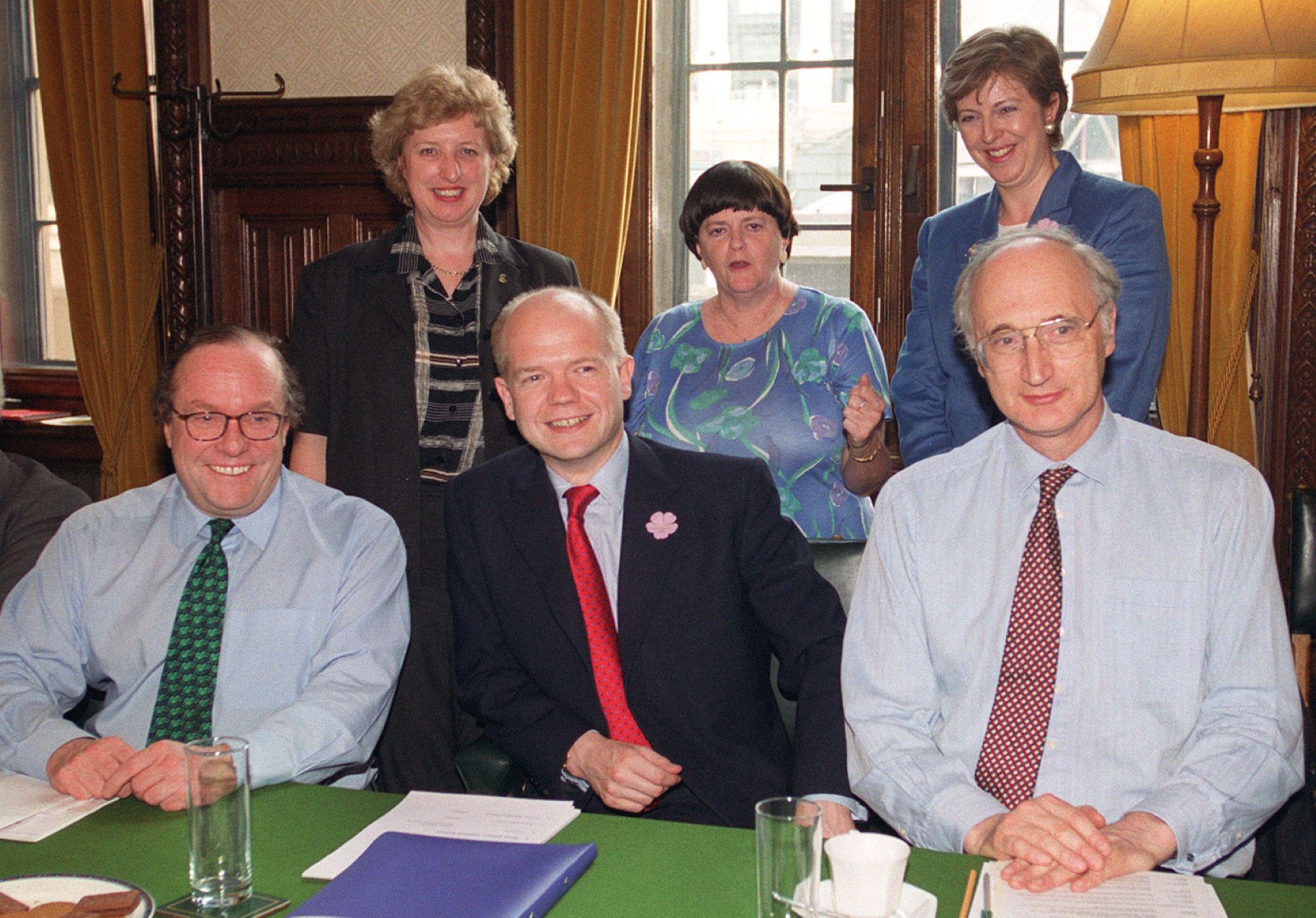
Ann Widdecombe and I did not always agree – but I recall fondly that we laughed a lot, writes Baroness Browning
In June 1983 Ann Widdecombe made her second unsuccessful attempt to win a seat in a general election, this time in Plymouth Devonport fighting against David Owen of the SDP Alliance.
Keen to support a woman candidate, this was where I first met Ann. As soon as the election was over Ann returned to London where her doctor confirmed that she had been campaigning while suffering from pneumonia.
We became friends. Ann was ahead of me in the quest to become an MP. She had done battle in both Burnley and Plymouth Devonport, I was looking to fight my first seat.
There were no training courses or mentors for candidates in those days and we agreed to work together: Ann now determined to find a ‘safe’ seat and me wanting a first attempt.
We also found we had things in common. Ann was a speaker for Women for Defence. I was a speaker for Peace Through Nato. Both organisations debated with CND and others opposed to nuclear deterrence. We debated around the country and on one occasion in Ireland, at the Tipperary Peace Festival, Monsignor Bruce Kent challenged us to debate back home. We hired the Drum Theatre in Plymouth for a public debate, which we won.
There were no training courses or mentors for candidates in those days and we agreed to work together… I learned a lot from Ann
I learned a lot from Ann who encouraged me to produce press releases and press conferences in the days before the internet.
We did not always agree; Ann held strong views on most subjects but I recall fondly that we laughed a lot. Ann had a good sense of humour. After one debate in Exeter a lady I knew from the Conservative Party asked me if we would come and give a talk in Budleigh Salterton. She said she would consult her committee. I heard nothing but seeing her some weeks later she said, “Oh my dear, I did consult the committee but I am afraid they thought you and Ann are ‘too fast’ for Budleigh Salterton.” An expression I had always considered to have certain connotations. We roared with laughter.
As we approached the 1987 election we started applying for constituencies, sometimes being interviewed for the same seat.
All was well. Ann won her Maidstone seat in 1987 and took her seat in Parliament. I unsuccessfully fought Crewe and Nantwich, later joining Ann in Parliament in 1992 representing my home seat of Tiverton.
We served together in the John Major government as ministers and in William Hague’s shadow cabinet.
They were great times: it is how I will remember Ann.
Baroness Browning is a Conservative peer
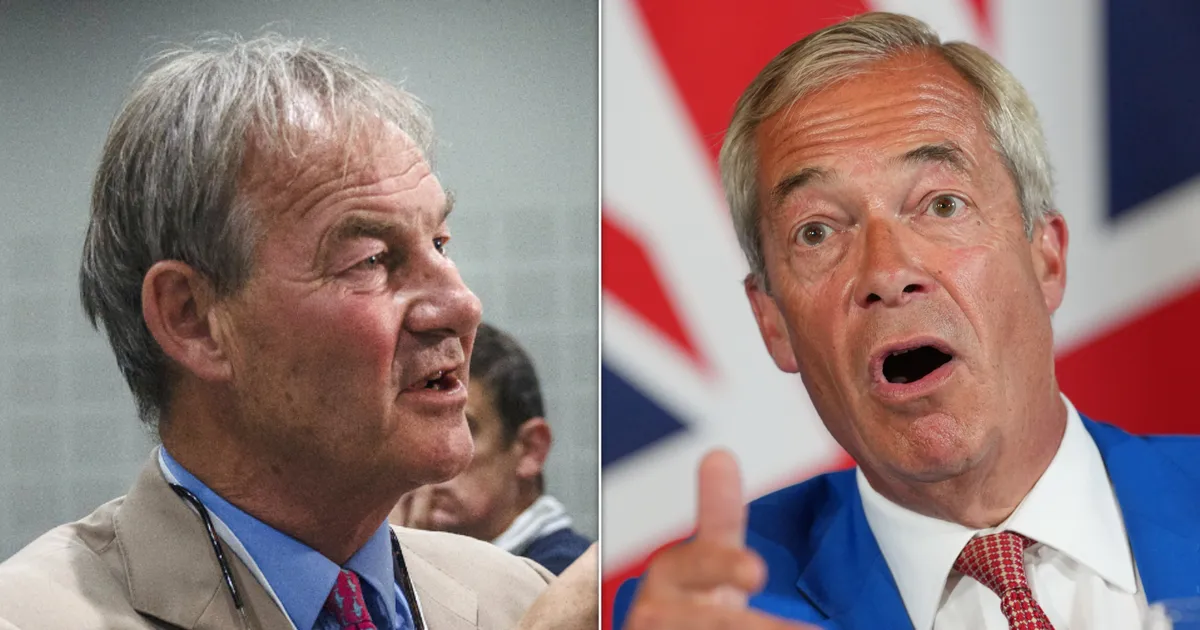
Rupert Lowe has accused Nigel Farage of “outright lying” about their private conversations.
The Restore Britain leader publicly offered to form an alliance with Reform UK on Sunday in a bid to unite the right.
Farage insisted he has responded to the offer “with an open mind”, telling reporters at a press conference on Monday: “I did actually reach out back yesterday to him. I did say ‘look should we have a call’.
“I haven’t heard back yet so I don’t know what the sincerity of this is.”
He claimed: “It seemed to me that he was sort of more than anything putting out this gesture saying ‘look I am the good guy – Nigel’s the bad guy’. Well that is not the case.”
But Lowe hit back on social media with a screenshot of what appears to be their message exchange.
The MP for Great Yarmouth said: “I do not want to make private conversations public, but Farage has just done so at a national press conference. He just stated he said to me yesterday ‘Shall we have a call?’.
“Sadly, that is just a lie. Yesterday at 10.30 Nigel messaged me, saying the following three words. ‘Will call later’. The evidence is below. I have received no call. Senior Reform figures then went public to rubbish my offer.”
“The offer remains open to Nigel and Reform. Although outright lying about our private conversations does not help that,” Lowe said.
He continued: “For Restore Britain, it will always be country before party – ahead of any personal differences or past disagreements we have. Every single time. The country is more important, and I will always put it ahead of my own interests.”
Lowe was elected as a Reform MP back in 2024 before falling out with Farage and being kicked out of the party.
He then set up his far-right splinter group, Restore Britain, which split support for Reform in both the Makerfield by-election and the Greater Manchester mayoral by-election.
His offer to work together came after Reform lost its lead in the opinion polls for the first time in over a year.
Farage also triggered a by-election in his own constituency of Clacton last month amid heightened scrutiny over his finances.
A probe into a £5 million donation Farage failed to declare to parliament when he won a seat in the 2024 general election is on pause right now but will resume if he wins his seat back.
All major parties have refused to field a candidate in the Clacton contest, calling it a political stunt, meaning the Reform leader’s main opponent is comedy candidate Count Binface.
Listen to Commons People, the podcast that makes politics easy. Every week, Kevin Schofield and Kate Nicholson unpack the week’s biggest stories to keep you informed. Join us for straightforward analysis of what’s going on at Westminster.

We hope you love the products we recommend! All of them were independently selected by our editors. Just so you know, HuffPost UK may collect a share of sales or other compensation from the links on this page if you decide to shop from them. Oh, and FYI — prices are accurate and items in stock as of time of publication.
I have an awful affliction – and I know I’m not alone. My thigh chafe has gotten out of control.
As much as I love frolicking around in dresses and skirts in summer, the constant pain between my legs is an unfortunate drawback.
Nobody wants to have to spend hours each evening moisturising their thighs – so a few years ago I finally had enough, and went a little out of left field.
As a shopping writer, I have a lot of lube lying around (seriously – enough to start my own slip ’n slide park) so I looked at it one fateful day and thought: what the hell, sure.
Carefully choosing a silicone lube that I knew didn’t stain, I rubbed it between my legs and it was complete bliss. No, not in the way you’re thinking.
Instead, it completely stopped my thigh chafe. Even on the hottest of days, silicone lube is still my hack for not ending the day looking like someone’s tried to set fire to my loins.
Thanks to the fact a silicone lube doesn’t dry out by itself, it can withstand plenty of sweating and, crucially, rubbing.
Only once you’ve washed it off with plenty of soap and water will it disappear, and that’s perfect for me because it lasts the whole day long.
The key to a good silicone lube for heat rash is finding a non-greasy one, as you won’t want to stain your gorgeous summer clothes.
So you don’t have any sudden needs to run to the dry cleaners, I’ve done the leg work for you (literally).
It goes without saying that once you have a silicone lube you really like, you can also use it for other things, too…
Just don’t use it with a silicone sex toy as that will degrade the surface and make it less safe to use over time. Enjoyyy.

First came the news that Netflix is working on a The Inbetweeners reunion movie.
And the happy updates keep coming – the streamer will also add 371 episodes of zombie thriller The Walking Dead, and a range of spin-offs, to its UK site in 2027.
That’s part of a new deal between Netflix and AMC Global Media that’ll last for five years (though it could be renewed). Netflix has been the home of The Walking Dead since 2011.
But this arrangement will see them add the original show and its related titles to their UK, Italy, Australia, and New Zealand catalogues, too (it’ll be released co-exclusively with AMC+).
They’ll come out at different dates according to location, based on where each region’s current streaming deals expire.
Alongside The Walking Dead, Netflix will also add the following offshoots:
- Fear the Walking Dead,
- The Walking Dead: Daryl Dixon,
- The Walking Dead: Dead City,
- The Walking Dead: The Ones Who Live,
- The Walking Dead: World Beyond, and
- Tales of The Walking Dead.
In all, this amounts to 371 bingeable episodes.
Lori Conkling, Vice President of Licensing at Netflix, said: “Audiences have discovered and loved The Walking Dead on Netflix for nearly 15 years and the show continues to attract new fans. We’re excited to partner with AMC Global Media to continue to expand that access to more audiences around the world and bring the entirety of The Walking Dead Universe to Netflix.”

And Kristin Dolan, CEO of AMC Global Media, added: “We are thrilled to expand our long-time partnership with Netflix around The Walking Dead.
“This deal creates a global destination for this universe – all shows, all episodes – making the franchise more accessible than ever to fans around the world… Netflix has been an important partner in making The Walking Dead one of the most successful franchises in the history of entertainment. This agreement is a fantastic result for our companies, for the fans and for this timeless IP.”
Here’s looking forward to a massive binge-watch…
One thing about me is I have an irresistible penchant for listening to albums on repeat.
Call it obsessive, but every few months I’ll discover (or often, rediscover) an album that I love, and listen to it over and over until I get bored of it.
When Olivia Rodrigo dropped her third album You Look Pretty Sad For A Girl So In Love earlier this summer, that quickly became my go-to album.
No matter what I’m doing – at the gym, in the office, and while I’m cooking – I can’t stop listening to it.
So, naturally, when I heard LEGO had collabed with Olivia herself to create an Editions collection, I knew I had to have it.
Honestly, I couldn’t think of a better way to spend my evening than listening to the album and being the first person to get their hands messy putting together the matching LEGO set.
Because yes, I might be 26, but I’ve never stopped being a fan – and I’m not ashamed.
The collection is made up of five pieces: the Dual Guitar, Secret Storage, Concert Moon, Vinyl, and Flower Bouquet.
If life was fair, I would have got all of them. Unfortunately, my flat isn’t big enough to accommodate five different Olivia Rodrigo LEGO sets – nor are my flatmates accepting enough – so I went for the guitar.
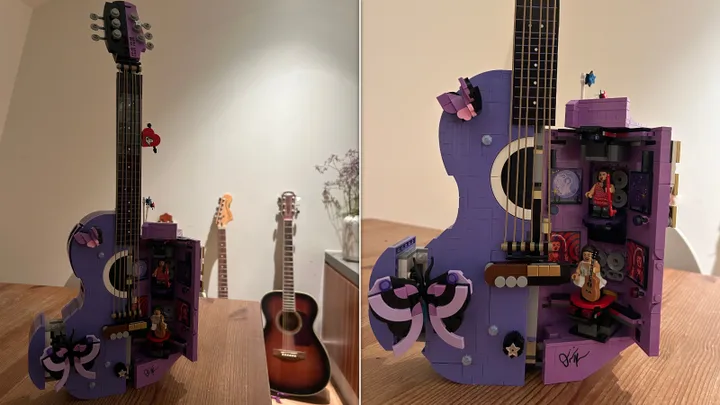
Made up of 1,228 pieces, the set comes with two Olivia figurines that sit inside a guitar that is also home to her dressing room and a stage.
The entire thing comes in Olivia’s signature purple and black, with one half making an electric guitar and the other an acoustic, and is anointed with butterflies, stars, and sparkles.
Reader, I must admit I had a great time building this set. It took me around seven hours (or 11 album listens) to complete over the course of several evenings.

The set truly comes with everything a fan could hope for, which makes it the perfect birthday (or, dare I mention Christmas?) gift for a teenage girl or boy.
As well as making a literal guitar set with strings (that were extremely fiddly to assemble) it has all the makings of incredible merch.
Inside the dressing room ‘trust your Guts’ is written in lipstick on the mirror that sits behind a lipstick, chair, and ice cream Olivia is in the middle of eating.
The front of the guitar has a LEGO brick with Olivia’s signature on it, while the stage is surrounded by photos and Easter eggs for what the artist has coming next.
If you’re worried you won’t be able to build it, don’t worry, because you can follow along with the LEGO® Builder app that has digital instructions and a 3D digital model to make sure you’re getting it right.
Overall, it was a fairly relaxing process putting this together. There were a couple of tricky parts – including assembling the two halves of the guitar and getting the strings clicked into place (top tip: make sure they’re all pointing in the same direction).
But considering it’s a collection item you’ll want to keep on display forever (or should I say u+me=<3?) the effort is totally worth it; I can’t stop looking at all the cute details on the outside.
Not to mention it comes in at £109, which for a 50cm LEGO set is extremely reasonable – and we have high expectations!

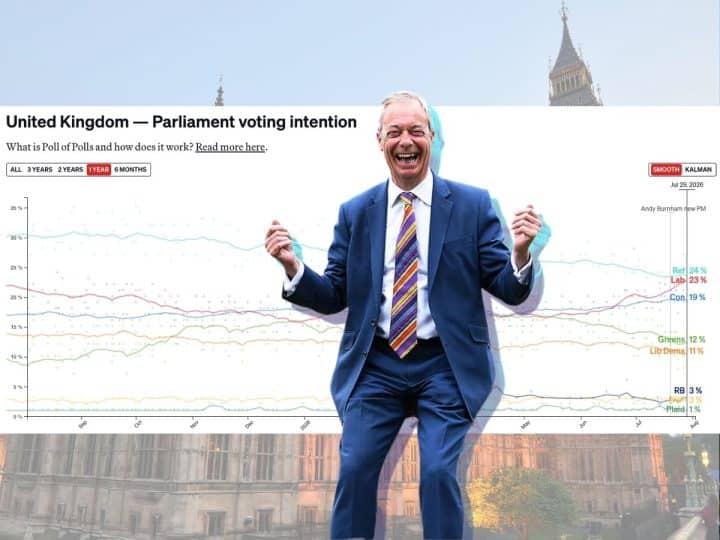

Reform UK has suffered a significant dent to its polling over the past 12 months. Emerging polls suggest this problem could be getting worse too, especially the polls relating to Nigel Farage’s personal approval. This has got the party bigwigs in a panic, apparently.
HODGES: Reform chiefs are thinking the unthinkable over Farage polls https://t.co/iqxu7fu5Cz
— Reform UK Exposed
 (@reformexposed) August 2, 2026
Reform UK crashes back down to Earth
As demonstrated by Politico’s Poll of Polls, which “aggregates data from multiple sources to give a more accurate picture”, Reform held 30% of the vote share a year ago but just 24% today.


Reform has somewhat levelled off, but the latest polls suggest the party’s biggest issue right now is Labour’s growing support.
— Seats — Poll: Opinium, 29 July (+/- vs 17 July) pic.twitter.com/XCDwCUoHTy
— Stats for Lefties
 BREAKING | Labour surge to 4pt lead
 Lab: 27% ( +5 )
 Ref: 23% ( – )
 Con: 17% ( -3 )
 Lib: 12% ( +1 )
 Grn: 12% ( -2 )
Lab: 267 Ref: 153 Lib: 79 Con: 48
Grn: 12% ( -2 )
Lab: 267 Ref: 153 Lib: 79 Con: 48 SNP: 48 Grn: 14
 Plaid: 11

 (@LeftieStats) August 1, 2026
As we’ve said elsewhere, we’re not confident Burnham can maintain this momentum in the long run. If he can keep this up for a few months, though, he could establish a significant lead over Reform. Given Farage’s many ongoing scandals, there’s no reason to think his party’s own polling won’t dip further too.
Speaking of Farage, look at what’s happening to his personal approval:
Approval Ratings (NET)
Andy Burnham: 16% Via: Opinium — PollCheck (@poll_checker) August 1, 2026
Kemi Badenoch: 1% (-2)
Ed Davey: 1% (+3)
Zack Polanski: -20% (-5)
Nigel Farage: -24% (+2)
Field Work: 29 – 31 July changes w/ 15 – 17 July pic.twitter.com/hJtsR5kOKx
Dissent from within the party
Given the obvious decline, it’s no surprise that senior Reform members are apparently not happy. As one told the Mail’s Dan Hodges:
There’s no way Nigel puts this behind him now. The five million quid isn’t going to go away. George Cottrell isn’t going away. I don’t understand what he was thinking. But it doesn’t matter. I don’t see how we move on from it.
If you’ve not been living under a rock, you’ll know the Canary reported the following on the topic:
Farage accepted the £5m gift from Harborne – a crypto billionaire – in 2024. At the time, he’d said he wouldn’t run in the general election, but this changed after he received the £5m. The problem is that after he became an MP, he was supposed to declare any ‘registrable benefits’ from the previous 12 months. Farage did not declare the £5m, and now it looks like he was purposefully trying to hide it.
George Cottrell, meanwhile, is a different crypto pusher, and one who’s made numerous dubious donations to Reform UK and Farage. He’s also an aristocrat known for calling Farage “Daddy” — make of that what you will!
Fraudster sent mum £2m before she made suspect Reform donation
Another Reformer told Hodges:
The Clacton stunt was madness. He’s totally marginalised himself and the party. Recess is the moment we traditionally capitalise. But we’re nowhere. We’re just talking to ourselves.
The Clacton by-election is actually being praised by the Tories according to Hodges, as one told him:
Because of the broadcasting rules on by-elections, there are now limits on how much coverage he’s allowed. That’s given us the space to control the agenda. Look at the coverage Chris [Philp, the Tory home affairs spokesman] has been getting on small boats. That’s Farage’s issue. And we’ve been running rings round him.’
It really is depressing that UK ‘politics’ is now just middle-aged men pointing at boats and asking, “Spare a vote, mate?”
None of this is actually going to improve the country, anyway. Sadly, the worse things get, the easier it is to trick people into believing that the poorest among us are the ones stealing all the wealth.
Treachery
In another fun section in Hodges’ piece, the Mail’s man writes:
As for Farage’s inner circle, long-standing suspicion has turned into a concrete belief there is a traitor in their midst. According to one source: ‘Someone is out to get Nigel. The stuff people are getting on the finances is too detailed. We’ve got a rat on the inside.’
The result is the number of people trusted to make decisions has shrunk to a tiny core of acolytes. Which in turn has added to the party’s dysfunctionality.
‘Nigel should be devolving decision-making,’ one former ally told me, ‘but instead everything’s becoming more centralised and secretive. It’s unsustainable.’
Who could have guessed that opening the door to Tory defectors would lead to the sort of in-fighting and dysfunction which plagued the former party of government? We can’t prove that the traitor is Robert Jenrick, but what we’re seeing is functionally identical to the sort of treachery he subjected Kemi Badenoch to.
Perhaps Farage & Co were always smart enough to freeze Jenrick out of the inner core? Regardless, someone is betraying Farage’s trust, and the man has a seemingly endless supply of skeletons in the closet.
It seems like things can certainly get worse for Reform. Given the previous 12 months, it seems like things can only get worse. This is something to be hopeful about, even while recognising that Labour is failing to offer the significant change this country needs.
Featured image via Getty Images
By Willem Moore


On Sunday, Restore Britain leader, Rupert Lowe, published a public appeal to Nigel Farage, of Reform UK. The message was superficially a request for the two parties to work together. It didn’t take a genius to spot that Lowe was actually trying to put himself in the driving seat, though.
While this obvious ploy was apparent to most, it seemingly wasn’t apparent to many Reform UK supporters. As such, Farage has had to reply, and he did so with a mealy-mouthed response which has been interpreted very differently by different people.
The next election will be an existential fight to save the country we love, a mission I have now been fighting for over 30 years.
After two national election victories in as many years, many people now recognise that it will be a binary choice between Reform UK and Labour. With…
— Nigel Farage (@Nigel_Farage) August 2, 2026
Farage and Lowe rivalry explained
Rupert Lowe was once part of Reform, but the party suspended him after a series of falling outs. Lowe would later found Restore Britain, a party which many commentators believed was exclusively an online phenomenon. Surprising many, the Makerfield by-election showed that Restore Britain could turn Facebook likes into votes.
Changes w/ 2024 — Politics UK (@PolitlcsUK) June 19, 2026
 BREAKING: Andy Burnham has won the Makerfield by-election
LAB: 24,937 (+6,725) – 54.8% REF: 15,696 (+2,893) – 34.5%
BREAKING: Andy Burnham has won the Makerfield by-election
LAB: 24,937 (+6,725) – 54.8% REF: 15,696 (+2,893) – 34.5% RES: 3,111 (NEW) – 6.8% CON: 997 (-3,382) – 2.2% GRN: 308 (-1,468) – 0.7%
 LD: 163 (-2,572) – 0.4%
58.75% turnout
The same happened in the Greater Manchester mayor race (Restore at 9%).
Gr. Manchester result (+/- vs May local elections):
In May's local elections, Labour lost to Reform across the region by a 7pt margin. Tonight they WON by 26pts. pic.twitter.com/q1EPljiDzI
— Stats for Lefties
Lab: 47% ( +24 ) Ref: 21% ( -10 ) Grn: 12% ( -7 ) Res: 9% ( +9 ) Con: 8% ( -3 ) Lib: 3% ( -7 )
(@LeftieStats) July 31, 2026
Res: 9% ( +9 ) Con: 8% ( -3 ) Lib: 3% ( -7 )
(@LeftieStats) July 31, 2026
You’ll note the percentages for Restore Britain aren’t massive. They are impressive for a brand new party, though. And more importantly than that, they show that Lowe can ensure Reform loses even if Restore doesn’t win.
The further right = Restore Britain
Restore Britain is full of open white nationalists who want to ethnically cleanse the UK. This will make it pretty much impossible for Reform and Restore to work together.
Farage’s response wasn’t a clear refusal to work with Lowe because it didn’t actually mention him or Restore Britain. Reading between the lines, though, Farage was saying that the only realistic option for Restore Britain voters is to switch to Reform. As such, we were surprised to see some outlets suggesting otherwise.
"I understand Reform UK will need the support of people from other parties, as well as millions who have never voted before. That is the broad coalition I am building"
— Politics UK (@PolitlcsUK) August 2, 2026
BREAKING: Nigel Farage suggests he's open to working with Restore Britain after Rupert Lowe's request
As we’ll demonstrate, Farage really does not seem to be open to this.
What Farage’s reply to Lowe means
Farage’s response began as follows (emphasis added):
The next election will be an existential fight to save the country we love, a mission I have now been fighting for over 30 years.
After two national election victories in as many years, many people now recognise that it will be a binary choice between Reform UK and Labour.
With the prospect of an early general election increasingly likely, it is natural that people from across the political spectrum are considering which side of that fight they intend to be on. Patriotic voters believe in many of the same things, but only one party truly has the possibility of delivering change.
Clearly, Farage is saying that Reform and Labour are the uniparty now, and that supporting Restore is pointless.
Have to say, whatever you think of him, Rupert Lowe has done up Nigel Farage like a kipper. Farage wants to tell Lowe where to shove it. But is scared he’s currently too weak to tell him to shove it. So is trying to push him away without looking like he’s pushing him away.
— (((Dan Hodges))) (@DPJHodges) August 2, 2026
Farage continued:
To deliver that change, I understand Reform UK will need the support of people from other parties, as well as millions who have never voted before. That is the broad coalition I am building.
In other words, people who support other parties should defect to Reform.
Farage went on:
Over the last 18 months, I have demonstrated that our movement will always be open to anyone who shares our commitment to restoring Britain’s borders, rebuilding our economy, renewing our democracy and putting the British people first.
My previous history in politics has also shown that I am always prepared to put country before party, as I did in 2019. But I will never turn my back on my team.
Farage is alluding to the fact that he welcomed in ex-Tories — something Lowe has criticised him for. It’s also likely a reference to the fact that some of these politicians are Black and Asian. For reference, this is how ex-Tories Suella Braverman and Nadhim Zahawi responded to Farage’s message:
Agree — Suella Braverman (@SuellaBraverman) August 2, 2026
 https://t.co/QwvAZ3ObtQ
Important & a must read. — Nadhim Zahawi (@nadhimzahawi) August 2, 2026
 https://t.co/JsnTJ8GAb9
And this is how prominent Restore Britain member, Steve Laws, described Reform’s Zia Yusuf two days ago:
Invader trying to sneak past the military in Cueta. pic.twitter.com/0yjPwl5b0x
— Steve Laws
 (@Steve_Laws_) August 1, 2026
Reform would have to give politicians like Yusuf the boot to win back Restore Britain voters, and Farage clearly isn’t willing to do that. And as one Farage supporter noted online:
For those saying Farage is wrong not to accept Lowe's offer I say this.
If the owner of a smaller less successful business said to me our organisations should work together, but on their terms, and that I would have to sack my management team, my response would be fuck off. — Knights Templar "Non Nobis Domine"
 (@x_browsing40115) August 2, 2026
Other people’s responses
Some of the worst people in the world are falling out over all this. The below exchange is between Restore-supporting Dan Wootton and Reform ally, Alex Phillips:
"Tory backers". — Dan Wootton (@danwootton) August 2, 2026
Names please.
If you had them it would be a good piece of original journalism, rather than lots of vague mud slinging.
The terminally clueless Lucy Connolly seems to think that Lowe’s offer was genuine:
Oh my gosh, there is a god There is not one single word I disagree with in this video, it actually made me emotional. County before party, our children MUST come first You all know how much I respect and… https://t.co/yq859iiaJm
— Lucy Connolly (@LucyTCWife) August 2, 2026

 @reformparty_uk @Nigel_Farage @TiceRichard @LeeAndersonMP_
However @RupertLowe10 your comments about ex Tories don’t sit well. So @SuellaBraverman @RobertJenrick @LeeAndersonMP_ have to stay. And you have to play nice You can off the jab pusher though — Lucy Connolly (@LucyTCWife) August 2, 2026
You are yourself an ex Tory and still one of the good guys.


Connolly also had a hard time deciphering Farage’s message:
So is this a I’m prepared to sit down with Rupert and discuss or an absolutely not?
I can’t decide — Lucy Connolly (@LucyTCWife) August 2, 2026
https://t.co/BwffQ4KtQJ
Say what you will about Connolly, but she is a good bellwether for what your average Reform/ Restore voter is thinking. Laurence Fox is another who lacks the ability to read between the lines:
Good news.
He’s accepted the first principle.
Hopefully he will update his view on mass deportations to avoid demographic collapse.
Mr. Farage should play his part in uniting the right.
It’s not a one man job. No more tall poppies.
Build a big tent.
All patriots welcome. https://t.co/tb0v0zDtes
— Laurence Fox (@LozzaFox) August 2, 2026
The fact that Farage is too weak to give an outright ‘no’ is being seen as a victory by some Restore members:
The fact that Farage's response to Rupert Lowe's offer to make amends and work together was not an immediate "No" (as some in Reform's orbit urged) is significant.
Despite the enmity between the two men, both recognise the current situation is regrettable and unsustainable.… https://t.co/QQOWVXxdoY — Connor Tomlinson (@Con_Tomlinson) August 2, 2026
Commenter Jim Cognito observed the following:
If you really want to know Nigel Farage thinks of Rupert Lowe's offer, don't listen to what he says publicly.
He's in a position of weakness.
Read what he gets his useful idiots & attack dogs, like Raheem Kassam & Darren Grimes to say.
— Jim Cognito (@JimCognito2016) August 2, 2026
Speaking of Raheem Kassam, here’s what he’s saying (as highlighted by Restore member, Carl Benjamin):
He's just given the entire game away. Because of Reform's enmity towards Rupert, they will not work with Restore, no matter what happens to the country. pic.twitter.com/PR3sEUiqWN
— Carl Benjamin
(@Sargon_of_Akkad) August 2, 2026
Chaos continues
This chaos and in-fighting is exactly what you should want if you oppose Reform and Restore. Restore Britain clearly has the potential to keep Farage out of office. The two parties being at each other’s throats is only going to amplify that potential.
In other words: let them fight.
Featured image via the Times
By Willem Moore

There are a lot of problems with this summer. The World Cup is over, the climate is a nightmare and I can’t seem to escape ‘hot honey’ everywhere I go. The most irritating thing, though, is the FLIES that are living in my home rent-free.
I am so tired of it and I have tried what I thought was everything to get rid of them. The current nightmare wave of flies in the UK is ridiculously resilient. They don’t care about washing up liquid, about the handy little vinegar traps, the sticky traps, the CLOSED WINDOWS?!
I know that I’m not alone. In fact, back in May, we spoke to entomologist Professor Richard Wall from the University of Bristol who shared that the weather is very likely to blame as flies do breed faster when it’s hotter.
I have found a solution for flies in the home, though
This isn’t a pleasant solution and as a big sensitive gal, it did take some getting used to. However, it is very effective and I can now get through my home without seeing flies or ducking from my cats as they (poorly) attempt to chase flies.
It’s an electric fly swatter. Sitting in the corner of my living room, it attracts and instantly kills the flies as they come into our home. It can be picked up and used like a manual swatter but works just as well staying in the spot it’s in.
EnviroBug explains: “Electric fly swatters have fantastic benefits. For instance, they offer instant results, which other products cannot. Sprays, traps and repellents can take several hours or days, but a swatter is effective as soon as you hit the insect.
“They are also chemical-free, ideal for use around food such as in the kitchen, around the BBQ or on a picnic. And because they are portable, you can use them at home, on the move and holiday. You can also use the same device in the kitchen and outside in the garden or park.”
However, if you have a real infestation, you do need to do a little more.
What to do with a house fly infestation
First of all, you have my deepest sympathies.
Secondly, it may be time to reach out to pest control. British Pest Control Association (BPCA) is a not-for-profit organisation representing, supporting and assuring 700+ member companies and the pest management sector.
Visit their website to find your local pest control and truly, good luck.

The Mineral Products Association’s new Chief Executive has written an open letter to the new Chancellor of the Exchequer, highlighting new sales data published today
Dear Mr Healey,
Many congratulations on your appointment as Chancellor of the Exchequer. I wish you every success in tackling the serious challenges facing our country.
No growth, low confidence
First and foremost of these is the lack of growth in the economy, especially in construction. Our UK industry, which supplies essential construction and industrial minerals and materials, has suffered four years’ decline in sales. This matters. The most recent data, published today, shows that the decline is not only continuing but that the material supply chain for housing is entering a real crisis point. Domestic cement production is at 1950s levels, and ready-mixed concrete sales from our members at levels last seen in the 1960s.
Given the scale of this continuing decline, industrial capacity is now being lost. Plants are being mothballed, drivers being taken off the road as trucks idle and people are being made redundant. There is currently no confidence to invest in people, sites or equipment for the future. This has to change.
In the first half of 2026 an already depressed situation deteriorated further. Ready-mixed concrete sales fell by 9.3 per cent, sand and gravel was down 8.1 per cent, and mortar 5.1 per cent lower compared to the same period in the previous year. Mortar is a particularly reliable measure for the current health of the housing supply chain as a wholly domestic supply of a product that cannot be stockpiled.
New towns, roads, hospitals, advanced manufacturing sites, and defence, energy and water infrastructure all rely on millions of tonnes of concrete, aggregates, cement, asphalt and mortar supplied by our industry. Without Mineral Products Association members, nothing promised to be built in your manifesto or in the Infrastructure Pipeline can be delivered. This is why this long-term decline is so concerning; we fear we will lose the capacity that will be needed when the demand comes back. If this does come to pass, aspirations of delivering housing or infrastructure in the future will become even harder to deliver.
As you look towards your first Budget, it is essential that our industry can have confidence that capital budgets will be protected and that the work they have planned as businesses will actually happen, especially after recent road project cancellations.
Rising tax burden and sluggish regulation
This four-year decline in demand has been accompanied by four years of increased taxes, from Chancellors of both major parties. The tax burden on our members has risen by around 26 per cent in that period, including the removal of red diesel, employer NICs, aggregates levy re-indexation, and two rounds of business rates increases.
The last round of business rate increases included the new higher rate multiplier, which, contrary to the political presentation, did not only apply to online retail warehouses but also hit cement and asphalt plants and quarries. I urge you to ensure that the cost of supporting selected sectors, as announced last week, does not fall on productive businesses that are already facing a rising tax burden.
This surging tax burden is exacerbated by a slow, unresponsive regulatory system. We note that the efforts to get the Building Safety Regulator performing are beginning to show some improvement after a very poor start. However, the performance of longer-established regulators such as the Environment Agency is, in combination with a slow and unpredictable mineral planning system, a serious bar to investment. Your predecessor was on the right lines when she challenged major regulators to show how they contribute to growth; there is far more that can be done here to make the UK an attractive and competitive investment proposition.
Our essential domestic industry is struggling. Falling sales, high tax, sluggish regulation and low confidence is a combination for stagnation and decline. Sites are being closed and once closed, they will not be reopened. The people losing their jobs – good, productive and high-skilled jobs often in rural areas – may not be able to stay in the industry if it shrinks permanently. We would also struggle to serve the country to the full, making it harder to deliver infrastructure, homes and workplaces with domestic mineral resources when demand eventually returns. The scale of this is such that it cannot be readily replaced by imports, even ignoring the grave impact on jobs and communities such an approach would lead to.
A way forward: reindustrialisation
“Re-industrialising Britain, using public procurement to back British industry.”
– Prime Minister Andy Burnham’s speech on taking office
Hearing the new Prime Minister talk of ‘reindustrialisation’ is very welcome. However, we are currently experiencing the very opposite: ‘deindustrialisation’ as demand falls and operational sites close. Reversing this and securing the sovereign capacity to supply the foundational materials of the economy must be a priority.
This means tackling specific things holding us back such as the UK’s uncompetitively high industrial energy costs and the sclerotic planning and regulatory environment. But it also needs government to drive the market forward and restore confidence. Measures to do this could include financial support to get housebuilding going, improved delivery on infrastructure, as well as incentives for private investment.
As we look ahead to your first Budget, I would like to urge you to focus on inspiring confidence to invest. To help sustain the essential domestic mineral products industry we need support for housebuilding now, as well as greater confidence in the delivery of infrastructure going forward. With this we can look to the reindustrialisation of our sector and truly deliver for the UK.
Yours sincerely,
Paul Adeleke
Chief Executive,
Mineral Products Association

Alienware 27 QD-OLED (AW2726DM) Review: A $350 Winner

Met Office forecasts highs of 28C for York amid heat alert

NDIS support services provider 4lifeskills calls in administrators


-

 Business5 days ago
Why Trees Belong on the Risk Register
-

 Fashion3 days ago
Weekend Open Thread: Wit & Wisdom
-

 Politics3 days ago
Meta enters AI-training agreement with far-right ‘propaganda rag’ Newsmax
-
 Entertainment6 days ago
‘Stargate’ Creator’s New Sci-Fi Series Returns for Season 3 Tomorrow
-

 Crypto World2 days ago
MicroStrategy Post-Earnings CLARITY Act Push Could Add New Catalyst for Its Stock
-

 Politics6 days ago
The Part of the Electric Transition Nobody Wants to Discuss
-

 Business5 days ago
Major shareholder moves on Canyon
-

 Crypto World2 days ago
XRP Ledger v3.3.0 brings five institutional features
-

 News Videos4 days ago
Bitcoin Enters the 3rd Stage of the Bear Market
-

 Crypto World6 days ago
Kraken Enables Retail Access to Jersey Mike’s IPO via Tokenized Shares
-

 Tech7 days ago
New macOS Sequoia & Sonoma security updates for older Macs
-

 Politics4 days ago
Luke Littler’s dominance sparks GOAT debate
-

 News Videos6 days ago
Claude: Build Financial Dashboards in Minutes (2026)
-

 Business6 days ago
Johnson & Johnson agrees to $5.5B settlement over talc cancer claims
-

 Sports4 days ago
Seema Kaliramna Wins Discus Throw Bronze, Takes India’s CWG Medals Tally To 17
-

 Crypto World1 day ago
Crypto PAC spending tops $2M in Michigan House race
-

 Business3 days ago
Trump Announces Hamas Disarmament Agreement as Iran Strikes Kuwait Air Base and US Attacks Pause Overnight
-

 Tech5 days ago
Gemini can now summarize the messiest comment threads in Google Docs
-

 Crypto World3 days ago
New York sues Kalshi over prediction market gambling
-

 Tech1 day ago
ESET tracks rise in malicious AI skills and adaptable malware
You must be logged in to post a comment Login