
Politics
Politics Home | “The World Cup Should Not Be For Sale”: Growing Political Anger Over FIFA Sell Off Plan



FIFA president Gianni Infantino has given FIFA members until September to accept the plans or lose funding. (Alamy)

5 min read
There is growing cross-party anger in British politics over a highly controversial plan by the head of the world’s most senior football body to sell stakes in the World Cup to private investors.
The shadow culture secretary and head of the All-Party Parliamentary Group on Football have both told PoliticsHome that Gianni Infantino should no longer lead FIFA.
Earlier this week, The Financial Times reported that FIFA President Infantino wants to sell off stakes in its competitions via associates of US President Donald Trump. According to the report, the move would be led by Joshua Kushner, brother of Jared Kushner, who is married to Trump’s daughter, Ivanka Trump, and could raise $20bn from private investors.
The story escalated on Wednesday when Infantino wrote to all 211 member associations of FIFA, presenting them with an ultimatum of accepting the proposals and each receiving $40m in additional funding by September as a result, or failing to offer support and receiving instead recieving a significantly smaller amount.
UEFA, which represents football in Europe, has reacted furiously to the proposals, warning that “FIFA cannot continue to use our sport to enrich themselves and their friends”.
In its latest statement on Wednesday, UEFA said that “having held discussions with many stakeholders across the game, UEFA knows there is significant and growing opposition to FIFA’s scheme. FIFA cannot continue to use our sport to enrich themselves and their friends.
“We can grow the game correctly. It’s time to prioritise associations, clubs, leagues, players and fans.”
UEFA member nations are set to meet this week to discuss how to respond to the move, including the possibility of a European boycott of the World Cup.
On Tuesday night, Prime Minister Andy Burnham, an avid football fan, publicly criticised the Infantino plan, putting the UK government on a collision course with the world’s most powerful footballing body.
In a statement, he said: “Football does not belong to investors. It belongs to the people who fill the stands and who stand on the touchline week in, week out, rain or shine.
“The World Cup is not a product. It is the greatest competition in world sport, and it was never anyone’s to sell. Dress the deal up however you like. Once you have sold a piece of it, you have sold out.
“Football belongs to the fans. It always has, and it always will.”
Figures across the political spectrum have joined the chorus of outrage on Wednesday.
Caroline Dinenage, Conservative MP and chair of the Culture, Media and Sport Committee, likened the Infantino plan to the “ill-advised” attempt by elite clubs in 2021 to set up a breakaway European Super League, in which teams would have been guaranteed spots regardless of domestic performance. The plan quickly fell apart following widespread backlash among fans and senior figures in the game.
“These plans worry me, and I think they set the future of international football on a trajectory that fans will find deeply troubling,” said Dinenage, who added that her committee would “certainly” discuss it when Parliament returns in September.
Richard Parker, Labour mayor of the West Midlands, told PoliticsHome the World Cup “doesn’t belong to private investors” and praised the Prime Minister for his condemnation of FIFA, saying he was “absolutely right to speak out”.
“Villa Park [home stadium of Aston Villa] hosted the World Cup in 1966, and in two years’ time it’ll be welcoming international football again for the Euros. So people here in the West Midlands have a real stake in this,” said Parker.
“I’d say to Gianni Infantino: come to Birmingham. Stand on the Holte End on a matchday and see what football actually means to people. It’s families going to the game together. It’s a grandad taking his granddaughter to her first match. It’s local kids dreaming that one day they might pull on the shirt themselves.”
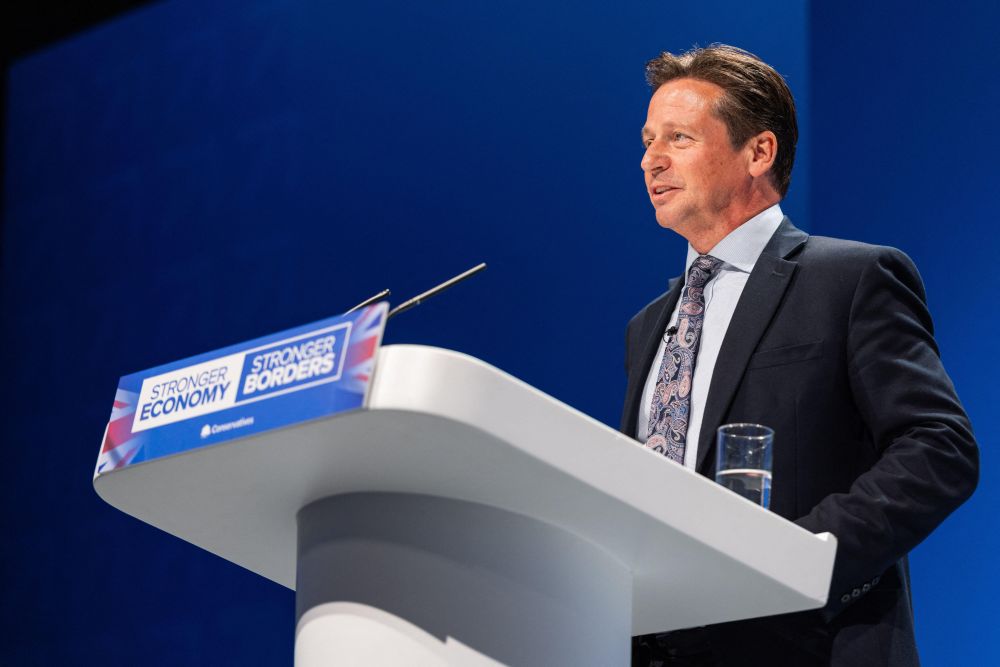
The shadow culture secretary, Tory MP Nigel Huddleston, said he had lost confidence in Infantino to continue leading FIFA, saying that this episode is the latest case “that calls into question his judgement and his ability to do the right job”.
The FIFA President came under intense pressure during the recent tournament after it emerged that Trump had asked him to look again at a red card given to US player Folarin Balogun before FIFA decided to reverse the subsequent ban.
Clive Betts, Labour MP for Sheffield South East and chair of the APPG on Football, endorsed UEFA’s “hard line stance” as the World Cup is reliant on participation by European countries.
“That’s where the resources are, that’s where the money is, and that’s where the heart of the essence of the game is around the world,” said Betts.
He also said he hoped that football bodies in the UK get fully behind UEFA, and like Huddlestone said, he no longer has confidence in Infantino to lead FIFA.



Palantir is an American company which makes spy and military tech. Some of this technology has been used by Israel to carry out its genocide. And as such, it’s no wonder a significant portion of the population don’t want the UK to have anything to do with the company.
How are Palantir responding to this, you ask? Currently by labelling the majority of Britons a “noisy minority”:
65% of the British public want the NHS to drop its contract with Palantir.
They try to paint us an a minority – when it is Palantir who are swimming against the tide of public opinion. https://t.co/kzBIR4Chk3 — Zack Polanski (@ZackPolanski) July 29, 2026
Oh, and in case you’re wondering, yes, Louis Mosley is the grandson of the notorious British fascist Sir Oswald Mosley, sixth baronet. While we don’t think you should blame individuals for the sins of their fathers, we do believe in class politics, and this is a clear example of how such politics can replicate and mutate over successive generations.
“Noisy minority” (Palantir claims)
In the interview above, Palantir CEO Mosley said:
There is a lot of noise about us. It does come from, I would say, a minority. It’s a specific end of the political spectrum… It’s a noisy minority. It’s people like Zach Polanski. They have a big issue with the way in which our software is used thousands of miles away in other countries, specifically America and Israel.
We’re not sure that the genocide being “thousands of miles away” does anything to negate the horror of the genocide, honestly. Mosley continued:
My view, and by the way, I’m very happy to debate that. I will defend it. But when it comes to the NHS, my view is what matters is” can the NHS control the data when it’s using Palantir? Is patient data safe if it’s using Palantir? And secondly, are the Palantir tools working? The answer to both those questions is a categorical yes.
Okay, so our problems are:
- Will giving Palantir contracts inevitably mean more money for a company which is happy to support a genocide?
- Could anyone possibly trust the weasel words of such a company?
The answer to the first question is a categorical yes: the answer to the second is a categorical no.
Mosley went into more detail about how NHS patient data is supposedly safe, but this does nothing to address the issues above. The more that support for Israel drops, the more people will want Palantir gone too. And the same will be true for all the politicians who inflicted Palantir upon us:
The % of Green voters who back Israel is… 0%
Via @YouGov, 29-30 Jul (+/- vs 23 Jun) pic.twitter.com/epOVw0u2ut
— Stats for Lefties
 NEW | Support for Palestine in Britain has risen to its highest-ever level, with Greens most supportive.
 Palestine – 37% (+7)
 Israel – 15% (-2)

 (@LeftieStats) August 8, 2025
History repeats itself
Oswald Mosley wanted to repress a targeted minority as his friend Adolf Hitler did; Louis Mosley and his company repress a different targeted minority by selling Benjamin Netanyahu tech solutions. Same shit, different era.
Featured image via the Canary
By Willem Moore


Data centres are getting a bad reputation for how much energy and water they use (something particularly problematic for AI data centres). The reputation these data centres have will likely only get worse too, because Trump is seemingly giving them permission to create acid rain:
The Trump administration has exempted data centers from acid rain regulations, removing caps on sulfur dioxide and nitrogen oxides. pic.twitter.com/2rPzFptVwy
— FactPost (@factpostnews) July 29, 2026
When it rains
Acid rain was a commonly discussed problem in the late 20th century. It’s spoken about less now because scientists were successful at identifying the problem and formulating a solution. As the BBC reported in 2019:
At its worst, acid rain stripped forests bare in Europe, wiped lakes clear of life in parts of Canada and the US, and harmed human health and crops in China where the problem persists. Looking back today, there is little argument that the cause was sulphur dioxide and nitrogen oxides emitted by fossil fuel combustion by cars and industrial facilities like smelters and coal-burning utilities. When combined with water and oxygen in the atmosphere, these air pollutants chemically transform into sulphuric and nitric acid. Acidic droplets in clouds then fall as rain, snow or hail.
The BBC concluded:
In the fight Hurley helped to lead against acid rain, this meant talking to coal workers at sportsmen’s shows, engaging them in conversations about clean water for fishing salmon, and going for walks in war cemeteries where acidity was ruining the limestone of gravestones.
Though aspects of its legacy remain, solutions to the acid rain problem moved forward, in North America at least, because it became a non-partisan issue. Hurley reflects that “a broad spectrum of people came to believe that it was important to protect natural resources – our forests, our northern lakes and the fish they contain – resources that belong to everyone”.
The problem is that it’s pretty much impossible to have a ‘non-partisan’ issue today. If rich people can profit, legions of right-wing lobbyists and political operators will find a way of making it partisan. And this is why countries are now backsliding on issues we’d previously solved.
Trump loosens restrictions
In an announcement posted on 27 July, the United States Environmental Protection Agency said:
This month, U.S. Environmental Protection Agency (EPA) issued guidance clarifying that the Clean Air Act (CAA) Acid Rain Program (ARP) does not apply to power generation facilities that are not connected to a public electricity grid, commonly referred to as “islanded” power generation facilities. The guidance expands opportunities for companies to develop and operate islanded power generation facilities for data centers.
For clarity, some of these data centres use so much electricity that they require their own power generation facilities. Now, said facilities will be able to get away with producing the sort of pollution that leads to acid rain — no thanks to Trump.
The move from the Trump regime will be challenged, as environmental attorney Mike Levin has said:
EPA is trying to create this exemption while avoiding Congress. But agencies cannot rewrite statutes by memo. If Congress intended to exempt privately dedicated power plants from the Acid Rain Program, we would have written legislation to do so. We most certainly have not.
EPA is attempting to narrow a law Congress enacted without Congress’s approval. Courts should reject it, and Congress should make clear that clean air protections apply based on pollution, not on who buys the electricity.
Our kids deserve clean air more than data centers deserve a special loophole.
Getting worse
It’s important to note that there’s already a considerable backlash to data centres, with backlash in communities all over the country:
Despite the efforts of Trump and others, the reaction to data centres is actually non-partisan too — or it is right now, anyway.
Over time, lobbyists may convince people that these dirty, water-draining abominations are actually good for them. Alternatively, the AI industry could completely collapse in on itself, leaving many of these tech warehouses as empty blights on the land.
Featured image via the Canary
By Willem Moore


Irish anti-genocide activists have boldly occupied the Department of Sport’s headquarters in Dublin. The campaigners did so in opposition to the Football Association of Ireland’s (FAI) disgraceful decision to proceed with fixtures against apartheid ‘Israel’, the illegitimate land theft project occupying historic Palestine.
In a statement, League of Ireland Fans for Palestine, a key player in the Stop The Game campaign, said:
[The action] is part of a continuing protest which will intensify until these two shameful fixtures have been stopped.
The Government has placed pressure on the FAI, who are also culpable, to fulfil these fixtures. Taoiseach Micheal Martin was one of the first to demand that the FAI play these games. Ireland is a part of the International Criminal Court and as such should not be engaging in sportswashing genocide. We are failing in our moral, humanitarian and legal obligations as a country in playing these games.
Garda threatens 12 months in jail for peaceful pro-Palestine protest
In footage seen by the Canary, a Garda inspector tells protestors they are committing criminal trespass, on the absurd basis the peaceful protest was “putting people in fear”. Trespass is ordinarily a civil matter in which the police do not intervene. One quick-witted activist replies:
I’m in fear, I’ve got 20 guards stood around me.
The inspector goes on to threaten those present with a ridiculous €1000 fine and 12 months imprisonment, alongside punishment for “failure to comply with a direction”. He suggests the latter could warrant a six month prison term and a €500 penalty. Garda goons eventually manhandled the protestors from the premises.
The Stop The Game effort began with awareness raising and less bold, conventional protests. However, it has escalated its efforts as the Irish government and FAI have doubled-down on proceeding with the potentially illegal Nations League games.
Protesters have disrupted an Ireland vs Qatar match with tennis balls, temporarily halting play. They have ensured FAI officials have to face the consequences of their despicable conniving, by confronting FAI president Paul Cooke as he left a meeting in which the governing body voted to fulfil the matches. They have even got on top of the FAI HQ, saying they:
… will do WHATEVER IT TAKES to ensure no sport with gen0cidal baby-slaughterers.
Irish state intervenes in sport when it’s convenient
The activists have now taken their efforts to the government department that pumps millions of euros into FAI coffers. RTÉ quote a Department of Sport spokeswoman who said:
It is important to note that National Governing Bodies of sport, such as the FAI, are independent, autonomous bodies responsible for the governance of their own sports, including the organisation of sporting fixtures, whether in domestic or international competitions.
The Government and Sport Ireland have no role in the organisation of such fixtures.
In reality the government has previously been happy to intervene when it suited the state to do so. Most relevantly, Bertie Ahern’s government intervened in 1999 to deny entry visas for players from what was then Yugoslavia, because of atrocities being carried out by the nation’s government.
That was a rather easier decision politically, knowing the US hegemon and most Western powers backed the destruction of Slobodan Milošević’s regime. The state also intervened in FAI affairs during a governance crisis at the sporting body in 2019.
Yet now Micheál Martin’s Zionist mob refuses to intervene in the most morally straightforward case imaginable – whether to play a football match against the world’s most lawless entity, so-called ‘Israel’.
Undeterred, the Stop the Game heroes will host a media event on Thursday July 30 to rally an already supportive public further around their efforts. Present will be Margaret Connolly, sister of Irish president Catherine. Margaret was among those on board the Global Sumud Flotilla earlier this year. Israeli Occupation Forces (IOF) kidnapped, raped and tortured the activists, and prevented them from reaching Gaza.
Joining Connolly will be former Ireland rugby and British and Irish Lions scrum half John Robbie. Stop the Game say in 1981 Robbie:
…toured apartheid South Africa with the Ireland rugby team, a decision he deeply regrets.
He is expected to:
…directly address the Irish football team as someone who knows what it is like to take the field against his conscience.
For now it is in the hands of the craven FAI and the criminal US bootlicker Micheál Martin to cease this historic humiliation. Ultimately, however, it may fall to the players to ensure they don’t follow John Robbie, and be haunted for the rest of their lives by a decision to sportwash genocide.
Featured image via the Canary
Politics
A majority of MAGA supporters would still vote for a Republican candidate despite a scandal
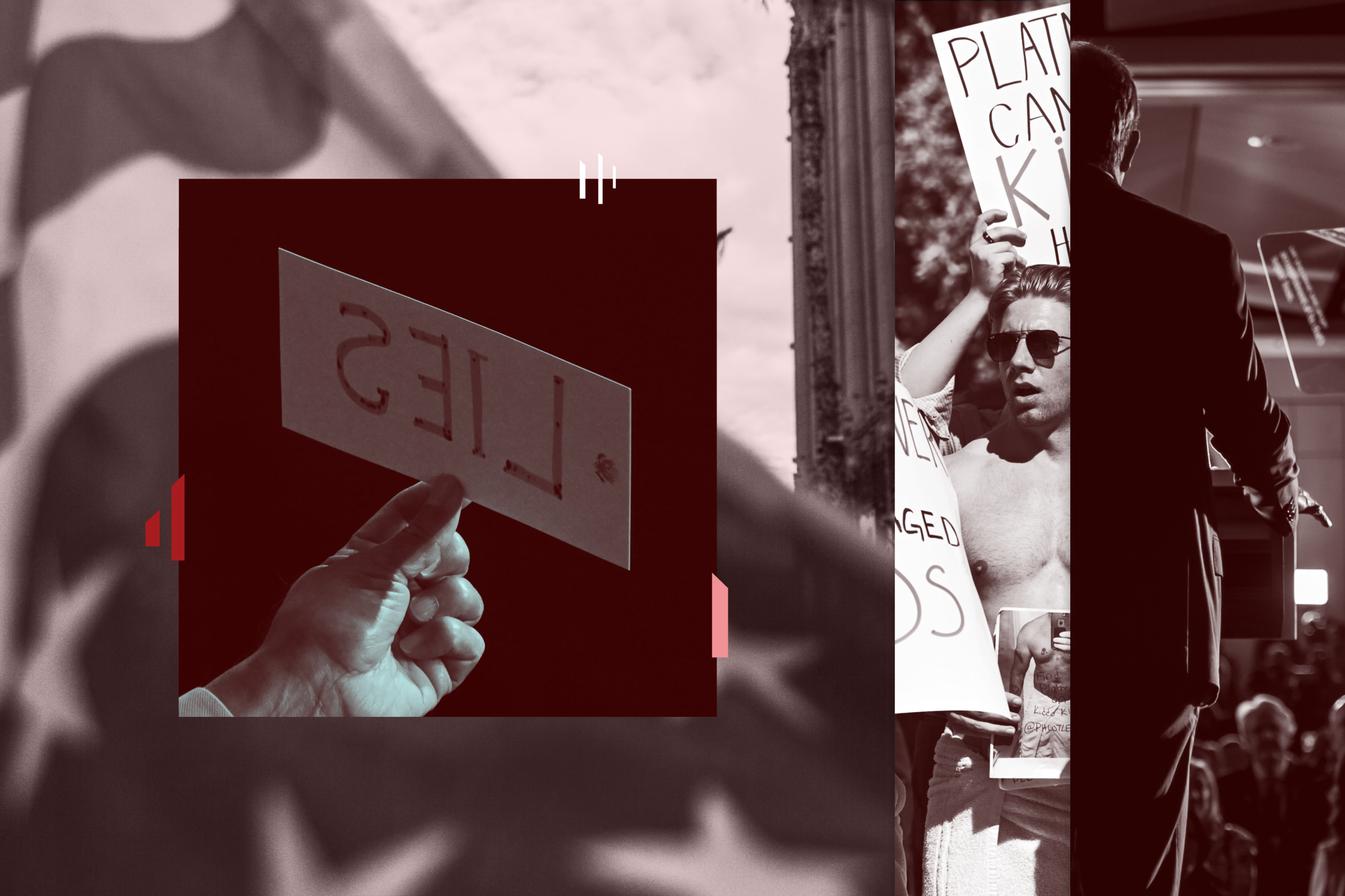

Americans are largely tolerant of scandals among politicians. But nobody is more willing to stick by an embattled candidate than a MAGA voter.
The POLITICO Poll finds President Donald Trump’s MAGA supporters are the most loyal of any group of voters — with majorities saying they would stick by GOP candidates confronted with an array of scandals, from a DUI conviction or accepting lobbyist gifts to more serious accusations including domestic violence, sexual assault and antisemitic social media posts.
Two-thirds of self-identified MAGA Trump voters say they would continue supporting a GOP candidate accused of sexual assault — 13 percentage points higher than the share of Trump 2024 voters writ large, which include those who do not identify as MAGA. By comparison, 40 percent of voters who backed former Vice President Kamala Harris in 2024 would continue backing a Democratic candidate accused of sexual assault.
Seventy-two percent of MAGA Trump voters say they would stick with a GOP candidate accused of domestic violence, more than 10 percentage points higher than the overall share of Trump 2024 voters who would back a GOP candidate (61 percent). Thirty-nine percent of Harris voters say they’d stick with a Democrat accused of domestic violence.
Scandal in American politics is not new, but the poll results help underscore how Trump has helped reshape partisan loyalty. Across every hypothetical scandal tested, MAGA Trump voters were more loyal than the rest of the electorate.
The president has displayed a remarkable ability to withstand controversy himself, from the Access Hollywood tape to his four criminal indictments, and a willingness to back other MAGA-aligned candidates, boosting them to victory even if they have past controversies. Three of four of Trump’s criminal cases were thrown out or dropped once he returned to the White House, while the fourth, his conviction in the Manhattan hush money case, is under appeal.
That’s true in some of the most pivotal races of the 2026 midterm cycle, which has been defined by scandal on both sides of the aisle: Democrats stood by Graham Platner in Maine’s Senate race throughout a series of scandals until abandoning him following a sexual assault allegation, which he denies. The GOP has rallied behind embattled Texas Attorney General Ken Paxton. Republican voters in Arizona also recently selected former Arizona sheriff Mark Lamb as their nominee in a House race amid allegations of sexual misconduct and abuse of power. Lamb has denied the allegations.
In both cases, Trump was a decisive factor propelling them across the finish line.
“Scandal doesn’t mean what it did 15 years ago. The rules have changed, and Republican voters know it,” said longtime Republican strategist Ford O’Connell. “Republicans, particularly MAGA voters, have learned that Queensberry rules don’t win in modern politics. Today it’s a full-contact fight, more UFC than civics class, and anything goes.”
Americans on both sides are willing to tolerate scandals — up to a point.
The POLITICO Poll, conducted by independent U.K.-based polling firm Public First, tested a dozen hypothetical scandals and found near-majorities of voters across the political spectrum would stand by candidates with DUI convictions or accused of using tax loopholes, concealing a terminal illness or exaggerating their military service.
None of the hypothetical scandals caused MAGA voters to abandon a GOP candidate, with majorities across every scenario tested saying they would stick with the candidate, including through accusations of domestic violence or sexual assault. Trump’s 2024 voting coalition as a whole was also generally more likely to continue voting for the GOP candidate, even after a scandal, with the exception of when a candidate made antisemitic comments.
Harris 2024 voters, however, drew a line. Facing some scandals, such as a Democratic candidate accepting gifts from lobbyists or accused of domestic violence or sexual assault, more Harris voters would either stay home or vote Republican than stick with their party’s nominee.
That dynamic has played out on the campaign trail. In Maine, Platner weathered months of controversy, including over past Reddit posts and a tattoo that resembled a Nazi symbol, and only dropped out of the race after POLITICO’s report that a woman said he forced her to have sex with him, an allegation he denies.
“In hindsight, knowing what we know now, the Reddit posts alone probably should have been enough …. The tattoo should have been enough. The initial New York Times story on troubling behavior should have been enough,” former top Platner adviser Morris Katz recently told the New York Times.
The survey also found that principled opposition to scandal shifts when voters face practical realities.
To test those considerations, the survey presented respondents with candidates from different parties — and found a significant partisan gap. Democrats were slightly more willing to say that Republicans should drop out than Democratic candidates should, to the tune of about a five-point difference. But across nearly all scenarios, Republican voters were significantly more likely to say the Democrat should drop out over the same scandal than the Republican should.
For example, 71 percent of Republicans said a Democratic candidate accused of sexual assault should drop out of the race. Asked the same question about a Republican candidate, that fell to 52 percent.
“For most voters, scandal is one ingredient among many in a partisan calculation, it is no longer a standalone verdict,” said Brandon Rottinghaus, a political science professor at the University of Houston who has researched political scandal.
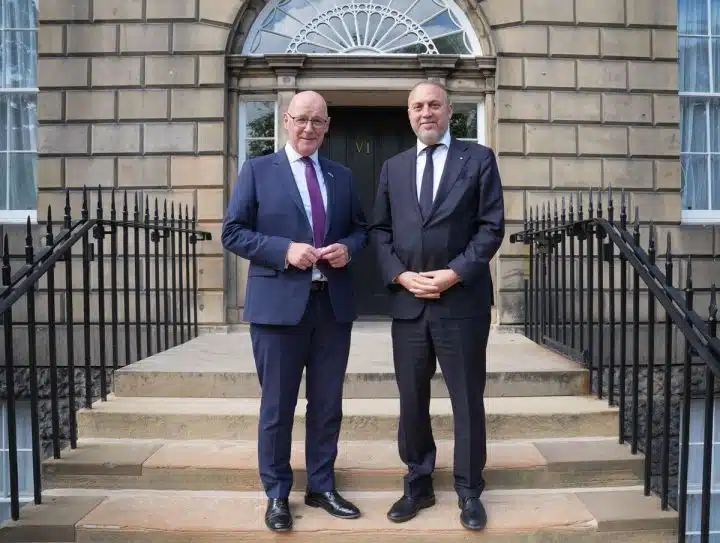

The First Minister of Scotland, SNP leader John Swinney, has announced an aid package of £500,000 to Palestinians. Swinney stated online that the aid fund aims to:
support access to food, healthcare, clean water and shelter.
The funding will come in addition to £600,000 already provided last year. This has reportedly assisted over two million Palestinians in Gaza and the West Bank. In times of an unprecedented genocide, in Gaza and beyond, any amount of such valuable aid is desperately needed.
First Minister @JohnSwinney met Palestinian Ambassador to the UK Dr Husam Zomlot and discussed the situation in Gaza and the West Bank.
During the meeting, the First Minister announced a further £500,000 funding to support access to food, healthcare, clean water and shelter. pic.twitter.com/tIZAsd6zhx — First Minister (@ScotGovFM) July 27, 2026
SNP’s aid pledges
While any help is no doubt appreciated, more than £53bn is needed to rebuild “only part of what was destroyed” amid Israel’s genocide in Gaza. Still, that must start somewhere. Where better than from another small, sympathetic nation ruled from beyond its borders?
The ongoing “wide-scale military operation” across the West Bank, ordered by Israeli Prime Minister Benjamin Netanyahu, intensified on 26 July. Settlers are marauding through villages and attacking Palestinians, according to Al Jazeera. Hundreds of civilians have been murdered by settler militias and IOF alike.
Swinney told Scottish paper the National:
In Gaza and the West Bank, civilians are still being killed by Israeli forces, families are still living in fear, and millions of people are still in urgent need of humanitarian support. The UN warns that the Israeli military has intensified its attacks in Gaza in recent days, killing and injuring dozens of Palestinians – including women and children.
This additional £500,000 contribution reflects the Scottish Government’s continued commitment to helping people affected by this humanitarian crisis.
Through the Occupied Palestinian Territory Humanitarian Fund, the extra financial support that I am announcing today will help deliver vital assistance including food, healthcare, clean water, shelter and protection services, reaching people most in need while supporting local organisations working on the ground.
Burnham ‘not willing to consider’ Scottish independence referendum
‘Proud’ Scotland pulls weight internationally
Scotland’s government appears committed to helping nations desperately in need of aid assistance.
The present SNP government is committed to increasing Scotland’s International Development Fund by 25% over the course of this Parliament.
In addition to its £500,000 and £600,000 aid commitments to Palestine, Scotland’s government pledged a quarter of a million to assist Venezuela following the nation’s disaster earthquakes. The double earthquakes took at least 5,270 lives and possibly dozens of thousands more remain unaccounted for.
Funding from the Scottish Government of £250,000 was given to the Disasters Emergency Committee (DEC). Again, it is to support access to shelter, food, water and medical care in the worst affected areas.
Alongside aid funding to Venezuela, the Scottish Fire and Rescue Services (SFRS) sent three firefighters to assist the South American nation. They served as part of the UK’s international search-and-rescue response, which includes staff from 14 different fire services.
International Development Minister Simita Kumar said that Scotland owns a historic, “proud tradition” of standing with other communities in their “darkest hour”. She stated:
My heart goes out to everyone in Venezuela who has lost their loved ones or their home in the wake of these devastating earthquakes. The scale of suffering is immense, and I am deeply concerned for everyone caught up in the crisis, including the hundreds of thousands of children who most urgently need support.
Scotland has a proud tradition of standing with communities in their darkest hours and will play its part in supporting the international humanitarian effort in Venezuela. This funding will help get vital assistance to those who need it most.
The ‘interim’ Venezuelan President Delcy Rodriguez awarded Cuban rescue servicemen and women for their efforts. Meanwhile, US SOUTHCOM withdrew its troops, and there was great discontent over the presence of a Zionist emergency contingent on Venezuelan soil. In relation to the Israeli presence, formally expelled from Venezuela since Hugo Chavez’s rule, one Chavista movement leader stated:
Venezuela does not need that humanitarian aid. Simply lifting the sanctions and unfreezing our resources would be enough. We do not need handouts from anyone. Venezuela has sufficient resources.
Venezuela remains sanctioned internationally, is being brazenly robbed of its oil revenue by US corporations, and still has £2bn of its gold reserves locked away in the Bank of England.
‘Alarming’ London pulls back internationally
In this context, the UK government has been rolling back its international aid budget. This is despite its repeated decision to continuously enable illegal wars and genocide — typically at Zionists’ behest.
What international aid cuts began under the Sunak-Tory government continued, worsened even, under the Starmer-Labour government. As with warmongering, Burnham doesn’t seem set to change track.
The UK government is still taking what Oxfam describes as a “sledgehammer” to overseas aid. It already cut from 0.7% of Gross National Income (GNI) to 0.5%. Now it plans to further cut it to 0.3% by 2027…
Kumar, the same Scottish minister, slammed in particular the confirmed 90% cut to the UK’s aid budget for Malawi. Kumar labelled the unexplained aid cut an “alarming” move. She has said:
The newly published UK aid allocations are deeply concerning. The scale of the reductions now confirmed for Malawi is particularly alarming.
A cut of almost 90% over three years represents a fundamental change in the UK’s development relationship with one of Scotland’s longest-standing international partners. Similar reductions are planned for Rwanda and Zambia.
At a time when these countries continue to face significant economic, social and climate-related challenges, cuts of this scale risk undermining hard-won progress and will be felt most acutely by vulnerable communities.
We strongly urge the UK Government to reconsider the scale of these reductions and to set out clearly how it intends to maintain meaningful support for countries facing significant development challenges.
To make matters worse, the UK government still refuses to inform the Scottish government about whether its airports might be facilitating illegal US-Zionist bombings. No amount of aid can fix that…
Westminster won’t admit Scotland’s involvement in illegal Iran war
Featured image via the Canary


The Democratic Party’s fight over Israel is returning to where it began. Jewish Democrats are warning the results could push them out of the party entirely.
In Michigan, where grassroots anger over the Biden administration’s approach to the war in Gaza gave rise to the “uncommitted” movement in 2024, the American Israel Public Affairs Committee’s main super PAC, United Democracy Project, has spent a record $30 million — more than double its next-highest spend ever, according to AdImpact data — to keep progressive and staunch Israel critic Abdul El-Sayed from defeating pro-Israel Rep. Haley Stevens in the state’s hotly contested Democratic Senate primary.
And in Missouri, AIPAC is spending $2 million to block Israel-critical Cori Bush’s comeback bid. This comes after the group uncorked $9 million last cycle to unseat her.
“There’s a high level of discomfort in the Jewish community,” said Sam Lauter, founding member of Democratic Majority for Israel, which has endorsed Stevens and Bush’s opponent, Rep. Wesley Bell (D-Mo.), but hasn’t spent money on advertising.
If El-Sayed and Bush score victories, he said, “it does mean that my community is going to have to reassess how we’re approaching this battle, reassess our role in the party itself.”
Tuesday’s primaries represent a fork-in-the-road moment for pro-Israel Democrats. Groups like AIPAC and DMFI have waded into Democratic primaries this cycle with mixed results. Progressives have scored wins in New York, New Jersey, Colorado, Pennsylvania and Illinois in part by capitalizing on voters’ negative attitudes toward Israel, in some cases toppling longtime incumbents who were more Israel-friendly, while also falling short in some races.
Michigan and Missouri mark one of progressives’ last opportunities to cement a foothold in the party ahead of November. If Stevens and Bell lose on Tuesday, some Jewish Democrats worry their defeats could represent a tipping point for the Democratic Party, completely reshuffling the political landscape ahead of a general-election fight in which both chambers of Congress hang in the balance — and rendering many pro-Israel Democrats politically orphaned.
“It makes it very uncomfortable for elected Jewish Democrats like myself to wonder, when every other thing is about, you know, Israel and Jews, what’s my place in this party?” said Michigan state Rep. Noah Arbit, founder of the Michigan Democratic Jewish Caucus. “Can I see myself in this party? Can I continue to feel comfortable being elected on the Democratic Party line?”
Patrick Dorton, a spokesperson for United Democracy Project, insisted pro-Israel Democrats “are here to stay.”
“We are not going to let pro-Israel voices in the Democratic Party be silenced,” he said. “We are going to make sure that pro-Israel voices are heard in the primary process, this year and in the future.”
The race for Michigan Senate and Missouri’s 1st District quickly turned into referendums on the party’s once unwavering support for the longtime U.S. ally and AIPAC’s highly controversial interventions in Democratic primaries. Bush’s campaign has accused Bell of “abandoning” Missourians and “jetting off to Israel with AIPAC,” while El-Sayed has attacked Stevens for aligning herself“with AIPAC and Republicans to continue to fund a war machine.”
Bush’s campaign did not respond to a request for comment. In a statement, El-Sayed campaign spokesperson Roxie Richner said the campaign has sought to unify Michigan residents “from all walks of life — across ages, races and faiths — around getting money out of politics, money back in pockets, and Medicare for All.”
Both races are a callback to earlier fights over Israel that have divided the Democratic Party and that accelerated in the wake of the Israel-Hamas war. Nearly 60 percent of Democrats believe the party is too supportive of Israel, an AP-NORC survey from June found, an increase from 45 percent of Democrats who felt similarly in January 2024.
Bell’s primary win over Bush in 2024 was one of AIPAC’s biggest wins last cycle. Israel-critical Democrats in Michigan, meanwhile, hammered Biden and later Vice President Kamala Harris for not prioritizing Gaza in their campaigns.
“That felt like people were upset with the war in Gaza,” Andy Schor, mayor of Lansing, Michigan, and one of the highest-ranking Jewish elected officials in the state. “Now it feels like these candidates are anti-Israel.”
Richner countered that El-Sayed “has continuously emphasized the importance of differentiating between criticisms of the Israeli government and Judaism and the Jewish people.”
“He understands that the fights against antisemitism and islamophobia are intertwined, and as Michigan’s next U.S. Senator, will work to stamp both out,” she said in a statement.
The Michigan race also marks a unique litmus test for pro-Israel Democrats in a purple state that is poised to have an outsized role in selecting the party’s next presidential nominee and, eventually, the next occupant of the White House. The Democratic National Committee put forward a proposal earlier this month to make Michigan one of six early contests in 2028.
Dennis Bernard, the Jewish Federation of North America’s national chair of government relations, said an El-Sayed victory would be the most compelling evidence yet that “there is a strong anti-Israel, antisemitic streak within the Democratic Party, and it’s growing, and it’s growing outside of just hard blue states.” Bernard, who has historically supported politicians on both sides of the aisle, is backing Stevens in Tuesday’s primary.
Still, Michigan’s Senate race has divided the Jewish community. Some leading Jewish activists are backing El-Sayed — including progressive former Rep. Andy Levin, who lost a primary to Stevens in 2022 that was a proxy war between rival pro-Israel groups J Street and AIPAC.
“I think that Abdul El-Sayed feels that he has an opportunity and a responsibility to be a leader in the United States of the movement for Palestinian rights, and so he modulates his politics around this very carefully,” Levin said.
Arbit, the Michigan state representative, said he’s resigned to Israel’s diminishing relevance in the party ahead of the next presidential primary, regardless of how Tuesday’s primaries play out.
“I find it very hard to imagine that we’re going to have a candidate who is quote-unquote pro-Israel. I don’t know how that works,” he said of the 2028 presidential primary. “I just think the party grassroots is so poisoned against the state of Israel.”
Shia Kapos contributed reporting.
Politics
The House | If Burnham is serious about the cost of living, he must act boldly on food prices


Supermarket in 2026 (Alamy)
4 min read
Andy Burnham has promised “a cost of living government” as he enters office. Along with energy bills, rising food prices are one of the main ways households have felt the impact of inflation most acutely.
In April of this year, over 90 per cent of those who reported an increase in their cost of living cited food being more expensive as one of the reasons. Prices for food and non-alcoholic drinks have risen 38 per cent since 2020, a greater increase than overall inflation (31 per cent), and some experts think we could see this become a 50 per cent cumulative increase by the end of this year thanks to the war in Iran.
Food inflation is not just a result of geopolitical shocks disrupting supply chains and raising energy costs. It’s also driven by more persistent factors like climate change – with the UK losing the equivalent of a year’s supply of bread for every person due to the impact of extreme weather on domestic wheat harvests. This means the government’s task is not just to help people with the present crisis but also to tackle long-term problems in our food system to bring prices down.
One policy that would have the greatest immediate impact is targeted income support. Higher food prices are felt most acutely by the poorest households, who spend a greater proportion of their income on essentials. Recent research from the Joseph Rowntree Foundation found that five in six low-income households on Universal Credit struggle with food and bills. They propose an “Essentials Guarantee” – an uplift in benefits that would eradicate this issue.
Another option to combat food poverty is ramping up public provision of free and low-cost meals. This should include universal free school meals to help the 3.8 million children who currently live in food insecure households, but schools are not the only setting where meals could be publicly provided. An economic adviser to Burnham recently supported calls for a National Food Service, a network of community kitchens and diners providing free meals, and the Autonomy Institute has suggested that local authorities could repurpose “dark kitchens” (which cook for delivery platforms rather than a front-of-house restaurant) as community-owned kitchens cooking affordable food.
In the longer-term, the government needs to ensure our domestic food system is more resilient and produces more of what we consume. The UK currently imports around 40 per cent of its food, though this rises to around 50 per cent of vegetables and 80 per cent of fruit. These longer supply chains are more vulnerable to the effects of global shocks, with countries like Italy and Spain which produce more of their own food seeing lower price rises after Russia’s invasion of Ukraine than the UK did.
Government support for local agriculture should focus on transitioning to more ecological and climate-resilient practices, including moving away from fossil-fuel based fertilisers. It should also seek to diversify the ownership of food production and retail. Rather than the rising number of environmentally destructive “megafarms”, we need more community and co-operative ownership of land, more grants for small-scale urban farming, as well as community-owned bakeries and food markets.
The four largest food and drink retailers in the UK (Tesco, Sainsbury’s, Asda and Aldi) control two-thirds of the grocery market. While a Competition and Markets Authority investigation didn’t find evidence that this level of market power has led to excessive price rises for consumers, the imbalance of power between supermarkets and food producers can lead to supply chain unfairness that threatens the sustainability of UK agriculture.
Andy Burnham has signalled from his first days as Prime Minister that his economic strategy will involve finding ways to put money in people’s pockets now while also developing a long-term plan to transform the UK. His approach to the food system should be no different.
People need help to weather periods of crisis, but long-term trends are also putting upward pressure on prices that cannot be left unchecked. The government has trailed plans to help people afford their utility bills – now they need a bold plan to help people afford their food shop too.
Eleanor Shearer is a senior research fellow at Common Wealth think tank
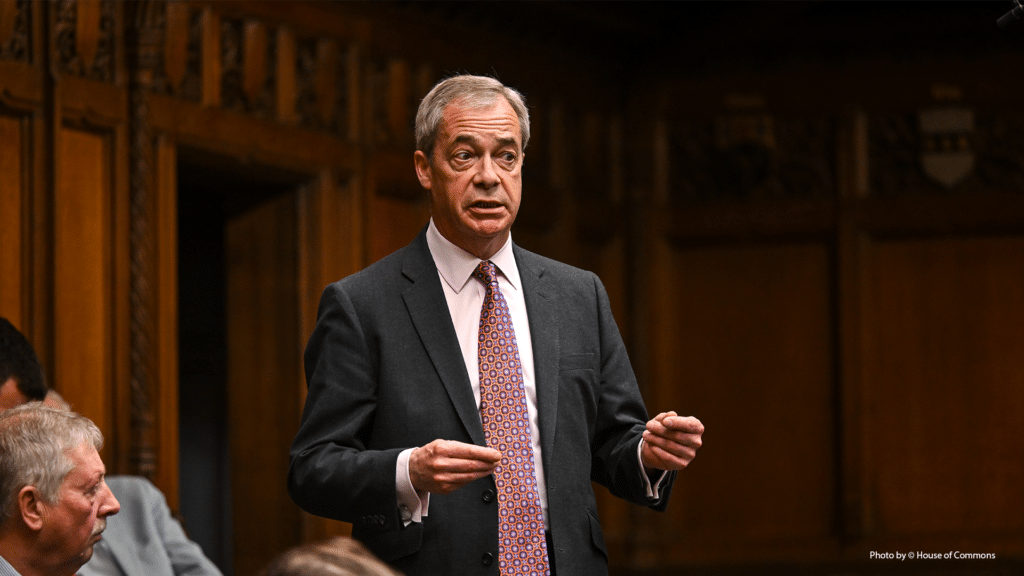
Ben Worthy and Laura Richards-Gray make the case that in triggering the by-election in Clacton, Nigel Farage sparked a conflict which he hoped he could control. They argue his gamble has not paid off since he has not been able to do so.
Nigel Farage’s decision to call a by-election has been pored over in detail. In an attempt to stymie an investigation into his finances, the Reform leader once again tried to place himself several moves ahead. Yet what was intended as a strategic masterstroke has now become a pointless by-election against someone in a bin. And one that has triggered a renewed bout of scrutiny of Farage’s finances.
Inspired by David Karpf’s account of about his public spat with a Republican politician, one way to look at Farage’s decision is through the lens of the logic of conflict (and having a fight). Back in the 1960s E.E. Schattschneider wrote a short book which challenged then conventional views of pluralism in a democracy. Put simply, he argued that democracy was all about conflict. Which fights get dragged into the open or kept out of sight, and how they unfolded, determined how democracies work.
Every conflict, Schattschneider argued, was decided by three things: who was involved, what the fight was about, and how long it lasted. Whoever could control these things would win.
In setting up his Clacton clash, Farage deliberately triggered a conflict which he hoped he could control. Behind his decision were a series of assumptions. First, that the by-election would involve all the major political parties. Second that this would lead to a ‘people versus the establishment by-election’. Finally, he seems to have believed that calling the by-election would bring the numerous Parliamentary investigations to a halt, and make the people of Clacton ‘the judges of my actions’.
All three assumptions have been proven wrong. Farage lost control of who was involved, when the major parties pulled out. He is now not facing the ‘establishment’ but instead Count Binface, Laurence Fox and Mr Fishfinger. He is fighting thin air and silliness. The public in general support Binface over Farage, perhaps swayed by his promises of capping of croissant prices at £1 and a return to 99 flakes costing 99p.
Consequently Farage could not control what the fight was about. Polling shows, as this headline put it, ‘Brits aren’t buying Farage’s anti-establishment crusade’. Rather, the fight is likely to be about Farage and his money. Ever since it was revealed in April that he was given £5 million by a crypto billionaire, this issue has dominated discussion. As Will Jennings commented ‘Raising the salience of your personal financial scandals is a bold move’.
The media are already raising questions and digging into different aspects of Farage’s financial dealings. There are now two separate Parliamentary investigations (on hold but very much not stopped) as well as possible investigations from the National Crime Agency and the Met Police.
And it has had an effect. A majority of voters see Farage as sleazy. Perhaps more worrying from his point of view, fewer than half of Reform UK voters (40%) think he has been honest, while only 22% think he has been dishonest and 39% are unsure.
Importantly, Farage’s gamble in Clacton is part of a wider conflict – Reform’s battle to replace the Conservatives. Polling suggests Reform may have hit a ceiling, and they have certainly been under-performing in by-elections. Its rise is neither as solid nor inevitable as it looks. By focusing on his conflict Clacton, Farage is neglecting the broader battle.
One of the secrets of Farage’s success has been to challenge the rules of the game and dictate the narrative. In this instance, he has lost control of the conflict.
By Dr Ben Worthy, Lecturer in Politics, Birkbeck, University of London and Dr Laura Richards-Gray, Senior Lecturer in British Politics, Birbeck, University of London.

spiked is funded by readers like you. Only 0.1% of regular readers currently support us. If just 1% did, we could grow our team and step up the fight for free speech and democracy.
Become a spiked supporter and enjoy unlimited, ad-free access, bonus content and exclusive events – while helping to keep independent journalism alive.
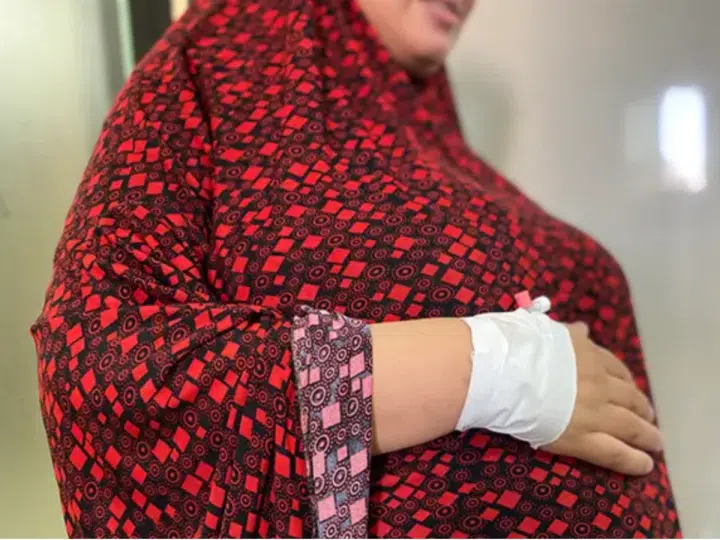

The destruction of Gaza’s healthcare system has placed reproductive health under unprecedented threat. Israel has decimated hospitals and healthcare infrastructure, and restricted access to reproductive and maternal care. This has left Palestinian women without the support they need to sustain life.
The war on reproductive health has been allowed to continue under the farcical “ceasefire” announced in October 2025. Meanwhile, women have nowhere to turn.
Reproductive violence
Pregnant women are moving between overcrowded shelters, sleeping in tents, or damaged buildings. Nothing is guaranteed, not even their next meal or when they may go into labour, and epidurals are largely unavailable. Ultimately, there is no safe pregnancy in Gaza.
The very few maternity wards that exist are overwhelmed; tackling dwindling fuel supplies and severe medicine shortages. Even basic items such as laboratory equipment and surgical tools are absent. These are withheld by the occupation whose punitive mindset dictates what enters the Gaza Strip.
The situation has become indescribably difficult for pregnant women. They are increasingly vulnerable in the face of circumstances far beyond their control. Women who should be receiving routine antenatal care are barely able to survive. In addition, they can barely access a maternity ward on foot or by vehicle.
Describing the macabre situation, a new report, Pregnancy Under Siege, states:
the line between survivable and lethal has been erased by deprivation.
The Palestinian Return Centre (PRC)-commissioned report added that complications which are entirely treatable are now becoming fatal. This is because there is no possibility of treatment.
4,000 miscarriages in just six months
The first six months of 2026 witnessed 4,000 miscarriages and the destruction of 1,825 health facilities. Hospitals have been brought to their knees. Only 20 of 37 hospitals remain partially functional, Medical Aid for Palestinians (MAP) has reported.
Pregnancies are risky enough without a live-streamed genocide. Making matters worse, Israel has targeted roads leading to and from hospitals. Moreover, ambulances are repeatedly targeted despite their protected status under international law.
Travelling to hospitals has become a life-threatening risk under such violence, daily and unrelenting. Many women are going into labour without skilled medical assistance, and routine pregnancy monitoring has largely disappeared for expectant mothers.
Without early diagnosis, conditions that are normally manageable can claim both the mother and baby’s life.
Cesarean sections make up half of all deliveries
Almost half of all deliveries in Gaza are now by caesarean section. This is exceptionally high is compounded by the fact that women are arriving at hospital dangerously late. Often, they arrive in critical condition if at all.
The challenges rarely end with delivery. Women recovering from c-sections are often discharged within hours because hospitals urgently need beds, Amnesty International has found. Many return to overcrowded camps with no privacy, limited access to clean water or postnatal care. As a result, the risk of infection and other complications increases.
Newborns also face severe risks. Around 70 percent are born prematurely or underweight, placing enormous pressure on hospitals already struggling with shortages of incubators, oxygen supplies and specialist equipment. Persistent shortages of medicines and repeated disruptions to essential services further undermine their chances of survival.
The dangers are not only physical. The PRC report warns that the psychological toll of Israel’s actions in Gaza may have lifelong consequences for both mothers and their children.
Constant fear of air strikes, repeated displacement and the trauma of losing loved ones place extraordinary psychological strain on pregnant women. Research has consistently linked prolonged maternal stress with higher risks of miscarriage, premature birth and restricted foetal growth. These are outcomes that Gaza’s healthcare workers confront daily.
60 percent of Gaza’s pregnant women are anaemic
Gaza’s humanitarian crisis, intentionally manufactured by the Israeli occupation, has left pregnant women severely malnourished. Almost 60 percent have developed anaemia due to poor nutrition. This is further exacerbated by worsening health conditions and a lack of supplements.
According to the latest Integrated Food Security Phase Classification (IPC) analysis, Gaza remains at critical risk of famine, with around 25,000 pregnant and breastfeeding women expected to require urgent nutritional support.
Recent UN figures show that 1.9 million of Gaza’s 2.1 million people are displaced and exposed to ongoing health and environmental risks. Up to 70 percent of the population cannot access even six litres of water a day. As part of its well-planned genocidal campaign against Palestinians in Gaza, the Israeli occupation has damaged or destroyed nearly 90 percent of water and sanitation infrastructure. This has left families reliant on small quantities of contaminated or untreated water.
Widespread environmental contamination, the spread of disease and the lack of clean water are now major concerns. For those who are pregnant, dehydration and poor sanitation increase the risk of urinary tract infections, kidney complications and other serious illnesses.
So much for ‘special protections’ under international law
International humanitarian law affords special protection to pregnant women and infants during armed conflict. So why are the reproductive rights of Gaza’s female population being systematically disregarded? They aren’t treated humanely, and Israel actively deprives them of the care they need.
The impunity stinks. Hospitals have been destroyed, newborns have died from preventable causes, and pregnant women have been denied life saving care, with little meaningful accountability.
When hospitals are reduced to rubble, ambulances cannot reach women in labour, and food, water and medicine are withheld, it is not only Palestinians who are under attack—it is the principles of international law itself.
The evidence points to a war on reproductive health, one in which accountability remains painfully absent.
Featured image via the UNFP / Canary
By Charlie Jaay

Same Day Flower Delivery UK: Best Last-Minute Gifts For August Birthdays & New Parents
Enterprise Products beats second quarter earnings estimates

Robinhood Reports Record Quarter as Crypto Revenue Drops 38%

Renter of Home in Anne Heche Crash Denies Settlement With Son

No Jackpot Winner as $257 Million Prize Rolls Over to $269 Million Monday Draw

Weekend Open Thread: Staud – Corporette.com

ANNO 1800 BEST PASSIVE MONEY MAKER!! #anno1800 #anno1800gameplay #gaming #citybuilder #money

$300,000 Of Debt To “Flee Trump’s America” | Financial Audit

what’s your favourite dream place #travel #tourism #enjoy #life #happy #money #friends #viral
-

 Fashion6 days ago
Weekend Open Thread: Brooks Brothers
-
 Sports4 days ago
Commonwealth Games boxing: Jadumani Singh seals dominant 5-0 win over Pakistan’s Sumama Rehman to enter quarter-finals | Commonwealth Games News
-

 Business14 hours ago
Why Trees Belong on the Risk Register
-

 Tech3 days ago
Intel is reversing course and bringing hyper-threading back to its server chips
-

 Politics3 days ago
Luke Littler dismantles Gerwyn Price to retain title in Blackpool
-

 Crypto World5 days ago
Ripple bought a bank in pieces. The $4 billion audit
-

 Politics2 days ago
The Part of the Electric Transition Nobody Wants to Discuss
-
 Entertainment6 days ago
A New Post-Apocalyptic Gundam Anime Series Blasts Into SDCC
-

 News Videos4 days ago
BITCOIN JUST ENTERED THIS CRITICAL ZONE…
-

 Fashion6 days ago
16 Dresses for the High Summer Event
-

 Sports6 days ago
2026 3M Open leaderboard: Scottie Scheffler finds putter in Round 1, sits three back
-

 News Videos7 days ago
The Peugeot Family: How 200 Years of an “Old Money” Dynasty Died in A Boardroom
-

 Business1 day ago
Major shareholder moves on Canyon
-

 Crypto World4 days ago
XRP Ledger adds $2.6B as RWA inflows rank second
-

 Politics4 days ago
Spain sweeps the board at 2026 World Cup with individual awards
-

 Crypto World7 days ago
Uniswap (UNI) pushes deeper into tokenized RWAs with permissioned trading pools
-
 Entertainment2 days ago
‘Stargate’ Creator’s New Sci-Fi Series Returns for Season 3 Tomorrow
-

 Tech5 days ago
Anthropic launches Claude Opus 5, a cheaper AI model for coding, agents and enterprise workflows
-

 Entertainment4 days ago
Sara Gilson Killed By Husband After Viral “Pedophile” TikTok Video
-

 Crypto World1 day ago
Kraken Enables Retail Access to Jersey Mike’s IPO via Tokenized Shares
You must be logged in to post a comment Login