Connect with us
DAPA Banner
DAPA Coin
DAPA
COIN PAYMENT ASSET
PRIVACY · BLOCKDAG · HOMOMORPHIC ENCRYPTION · RUST
ElGamal Encrypted MINE DAPA
🚫 GENESIS SOLD OUT
DAPAPAY COMING

Politics

Reform MP Accidentally Promotes Right-Wing Rivals

Published

on

Reform MP Accidentally Promotes Right-Wing Rivals
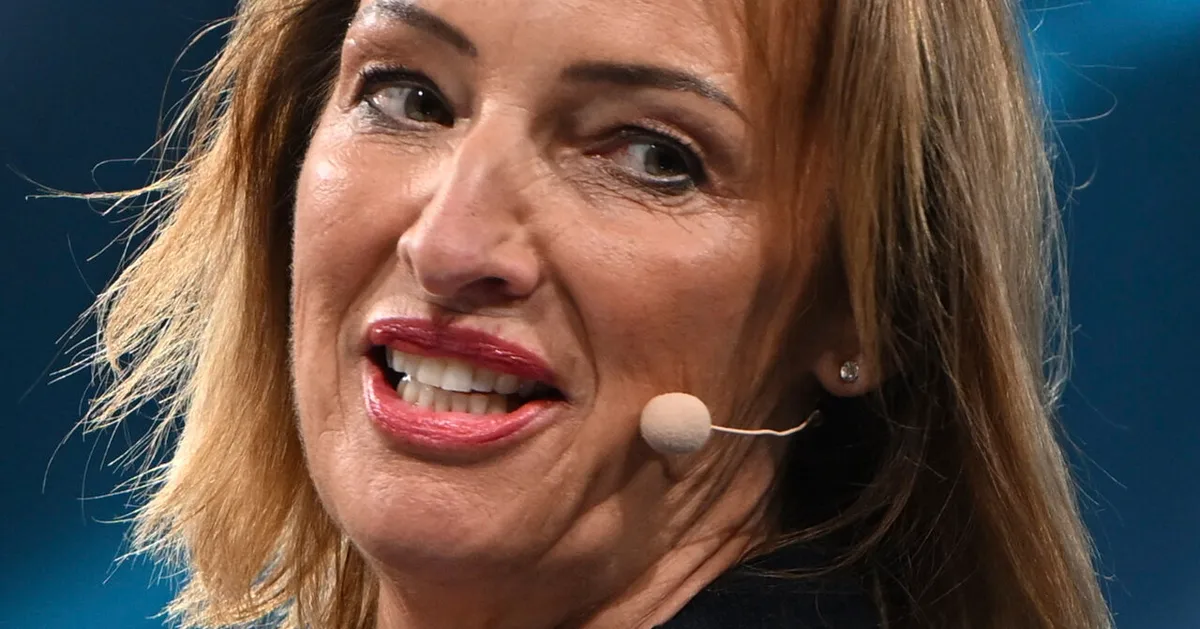
Sarah Pochin has been caught in a humiliating slip-up after accidentally promoting Reform UK’s right-wing rivals.

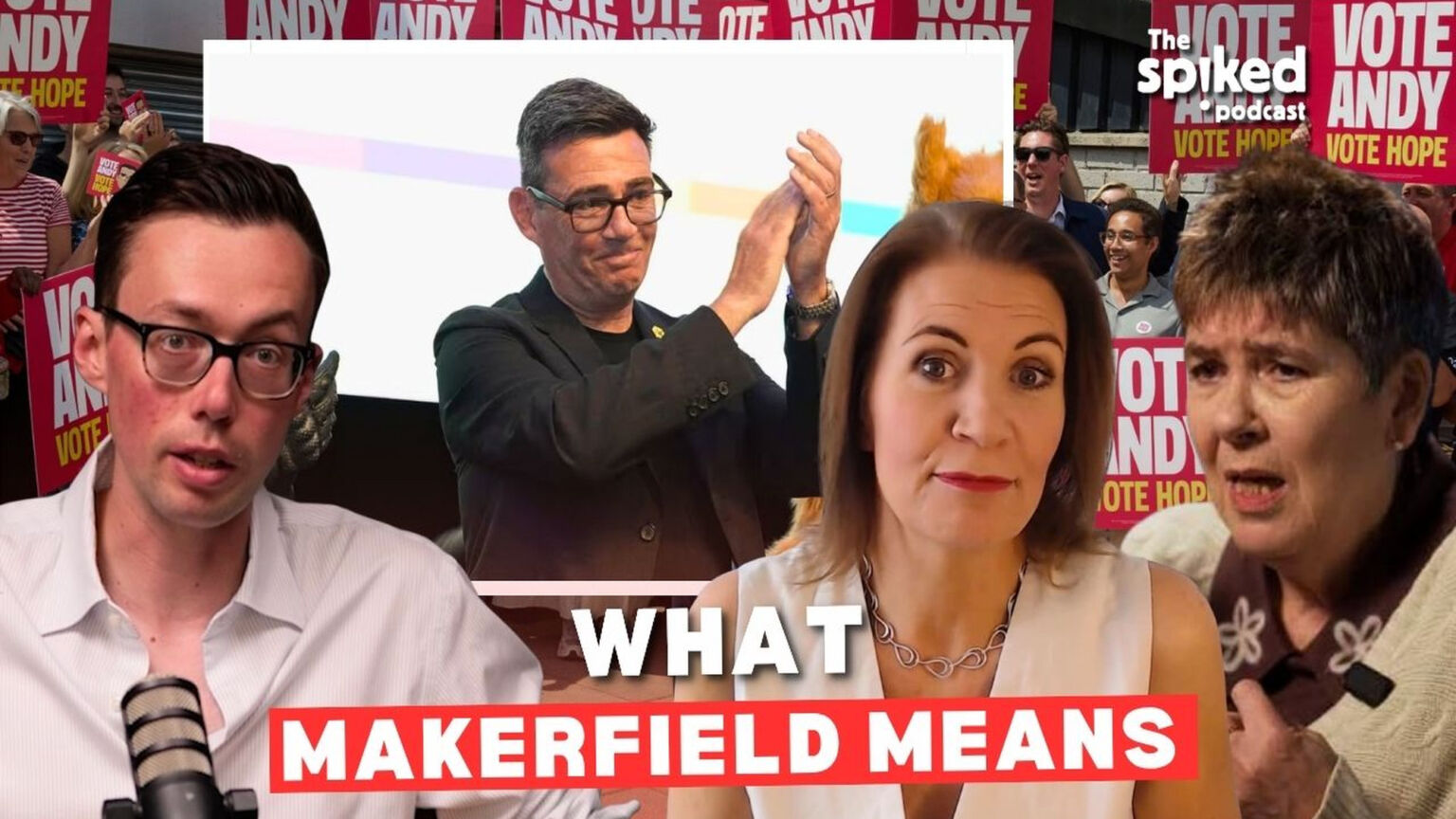
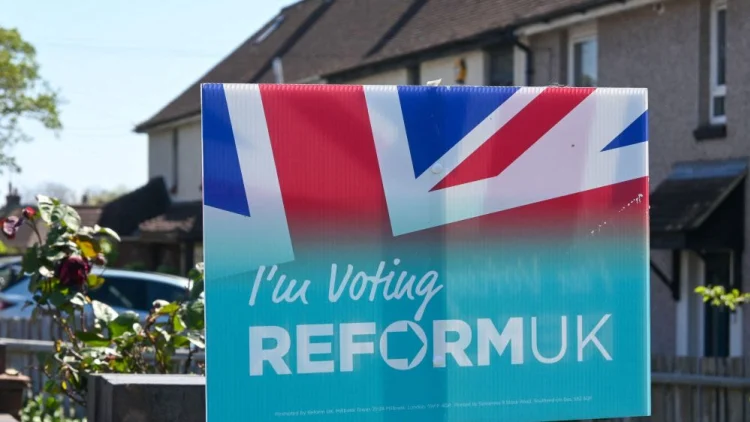
The Runcorn and Helsby MP was discussing the Makerfield by-election which is set to be a two-horse race between Reform UK and Labour.

It’s a seismic contest as Labour candidate, Greater Manchester mayor Andy Burnham, intends to topple Keir Starmer as prime minister if he wins the seat.

One early poll from Survation for the Sunday Times found Burnham is on track to win with 43% of the vote, while Reform candidate Robert Kenyon will win 40%.

Advertisement

A further 7% of the vote looks like it will go towards Restore Britain, a splinter right-wing group led by ex-Reform MP Rupert Lowe.

That has sparked speculation that the right-wing vote will be split when the Makerfield electorate head to the ballot box.

So it was unfortunate that Pochin had a bit of Freudian slip when she told TALK: “There’s so much going on with this by-election, it’s probably the most important by-election in British history almost, that we’re part of.

“And yes, it is a two-horse race between Restore – I’m sorry! Oh god!

Advertisement

“Between Reform and, oh god,” she laughed. “I’ll be sacked for saying that! Reform and Labour, that’s of no doubt.”

Reform UK declined to comment when approached on the rise of Restore.

Sarah Pochin(Reform MP) slips up & says the Makerfield by-election is between Restore & Labour.

“I’ll be sacked for saying that.” pic.twitter.com/GHO3cF3SGL

— Haggis_UK 🇬🇧 🇪🇺 (@Haggis_UK) May 26, 2026

Advertisement

Pochin’s comments come during a troublesome time for Reform UK.

Party leader Nigel Farage is currently facing scrutiny for failing to declare a £5 million donation from a crypto billionaire shortly before running for parliament.

He has denied any allegations of wrongdoing.

Meanwhile, the party’s home affairs spokesperson Zia Yusuf started a row with Reform’s Treasury spokesperson Robert Jenrick on X over their deportation policies.

Advertisement

Subscribe to Commons People, the podcast that makes politics easy. Every week, Kevin Schofield and Kate Nicholson unpack the week’s biggest stories to keep you informed. Join us for straightforward analysis of what’s going on at Westminster.

Source link

Advertisement
Continue Reading
Click to comment

You must be logged in to post a comment Login

Leave a Reply

Politics

The Great HS2 Racket

Published

on

The Great HS2 Racket

The Department for Transport this month delivered yet more humiliating news on the HS2 railway, the high-speed rail project that first broke ground in 2011. Transport Secretary Heidi Alexander explained to the House of Commons that completion of the line, now reduced to a single route between London and Birmingham, can cost between £87.7bn and £102.7bn, against an original 2012 estimate of around £33bn.

The first trains are announced not to run until, at the earliest, 2036, and full operation has fallen somewhere between 2040 and 2043, with no confirmation given that deadlines may not change further. In the interests of saving money, the high-speed trains will be slower, at only 320km/h, rather than the originally promised 360km/h.

As previous Canary coverage of Britain’s outsourcing state has set out, the temptation is to read this as a story about incompetence. To do so presumes good intentions frustrated by bad management, when the truth is that this outcome was written into the structure of the project from the beginning through the infrastructure contracts themselves.

The contract model

The story of HS2 has been one of continuous failure, and a key demonstration of the incapacity of the modern British state to execute large-scale infrastructure under the immense weight of its immobile bureaucratic machinery. Contrary to endless ministerial briefings about complex engineering challenges, Britain has not forgotten how to build railways.

Advertisement

As Mark Wild – the chief executive of HS2 Ltd brought in to reset the project – set out in his assessment to the Transport Secretary, the contracts operate on a ‘cost-plus’ basis, whereby contractors were paid whatever they spent with little penalty for overshooting. The Institution of Civil Engineers described the resulting arrangement as an “imbalance of power” tilted toward the construction firms. The Guardian‘s financial editor put it more plainly, noting that the companies:

rang rings around the department and its arm’s-length body.

Almost the entire long-term downside risk sat with HS2 Ltd, the public body, rather than with the firms responsible for delivery.

The consequences naturally followed from that design. Freed from the risk of their own overruns, contractors chased short-term construction schedules and juggled multiple contracts at once, in tandem with engineering problems and unforeseen difficulties that were billed back to the public. Concrete was poured and tunnels were dug before planning consent would be secured and blueprints finalised, forcing mid-construction redesign to adhere to local regulations, halting work and leaving expensive plant and labour idle.

There was, in short, no party to the contract with both the power and the reason to keep costs down. The public had the reason but not the power; the contractors had the power but not the reason.

Advertisement

The State as a conduit

HS2 is only the largest example of a much broader pattern. It is the clearest available illustration of a model that has governed British infrastructure since the 1990s, under which an asset-deprived state exists to funnel public funds into the hands of private capital for the continuation of fickle-profit margins, thereby absorbing risks and reaping the rewards.

Where the state nationalises, the form of nationalisation is such that it rarely means the public taking command of an asset and running it in the public interest. Rather, it means the public takes the liabilities, debts and long-term risks, while day-to-day operations, and the profit that flows from them, remains contracted to private firms.

The same logic recurs across the public sector. The railways, even after nominal return to public ownership, still run on private operators, private maintenance firms and rolling stock leased from private financiers, with the state underwriting the structure and absorbing the losses. The PFI deals struck under New Labour saddled the NHS with decades of repayments for hospitals, which it will end up paying several times over, long after the firms that built them banked the return. However the arrangement is dressed up, from one part of the public realm to the next, it works to the same end: sparing private firms the consequences of their own failures and socialising the costs to the people that fund them.

Allegations of outright fraud now hang over the HS2 supply chain. HS2 Ltd has referred a subcontractor to HMRC over claims that workers were misclassified and inflated rates charged. But the fraud, real as it may be, is the smaller scandal. The larger one is entirely legal, and describes a state that has stripped itself of the capacity to be the prime mover of the economy, contracting its capacity to build to the private sector at a price it cannot negotiate.

Advertisement

More workable models exist

Workable models have been shown to exist. France’s maîtrise d’ouvrage tradition keeps the public legally in command of its own projects and Italy’s contratto di rete binds multiple firms into a single transparent framework with shared risks and obligations. The barrier has never been knowing how to do this differently; it is that too many powerful people have grown comfortable with it being done badly.

The same financial logic that made HS2 a vehicle for private extraction and criminal enterprise is hardwired into the basic operation of the state. Any government that seriously proposed a plan to claw back public control over money, to build through capable public bodies rather than rent that capacity back from the market, would be met by a run on the pound, a spike in gilt yields and a familiar invocation of the spectre of Liz Truss.

The country deserves a full accounting of where the money has gone. That means a thorough investigation into the nature of HS2 contracts, the naming and holding to account of the politicians and contractors responsible, and an argument the political class has so far refused to have – namely, the wholesale overhaul of UK public contract law toward a system that is fair, transparent and flexible.

Featured image via Christopher Furlong/Getty Images

Advertisement

By Rares Cocilnau

Source link

Continue Reading

Politics

Top 10 Best Rhinoplasty Surgeon in Turkey 2026

Published

on

Top 10 Best Rhinoplasty Surgeon in Turkey 2026

Turkey is one of the most popular rhinoplasty locations on a global scale. The country hosts hundreds (if not thousands) of international patients every year. The reason why is pretty clear. They offer a combination of world class medical knowledge, operate using the latest technology, and they have a rich history of success in facial aesthetics. 

For a whole lot of people, the journey toward a more balanced facial profile begins here, because patients seeking a nose job in Turkey now have more options than ever before.

However, the sheer volume of available clinics can make selecting the right one a pretty daunting process. As you probably know, choosing the right rhinoplasty surgeon is the single most important decision you can make as a patient. 

That’s why we created this ranking list. We want to give you a fully transparent guide to finding the best rhinoplasty surgeon in Turkey for 2026.

Advertisement

Why Turkey Is a Global Hotspot for Rhinoplasty

The main reason why Turkey is still a leading destination for rhinoplasty in 2026 is, basically, the fact that their experts have a ton of procedural experience. They handle a much, much higher volume of nasal surgeries per year compared to Western Europe or North America. Turkish surgeons often get a career’s worth of experience in half the time.

This high demand simply leads to rapid innovation. Top clinics in Istanbul, which is the primary hub for rhinoplasty surgery, now utilize advanced techniques such as 3D imaging for pre operative planning and Piezo (ultrasonic) technology. 

These innovations lead to more precise modifications to the nasal structure without the trauma that’s typically associated with traditional methods. 

Furthermore, quality is strictly regulated here. Top facilities have to keep their JCI accreditation and Ministry of Health authorization when it comes to quality benchmarks, which, in fact, rival any Western institution, and all that at a fraction of the cost compared to the UK or USA.

Advertisement

How We Selected the Top 10 Rhinoplasty Surgeons

We want to make sure that this list serves as a reliable editorial resource, and so, we went with a transparent methodology to evaluate leading rhinoplasty surgeons currently practicing in Turkey. We checked each of them based on a strict set of quality benchmarks:

  • Years of experience and the total volume of successful rhinoplasty procedures performed;
  • The quality, consistency, and natural appearance of their before and after gallery;
  • International board certifications and active memberships in prestigious global aesthetic societies;
  • Verified patient reviews and testimonials from independent platforms;
  • Specialization in complex cases, such as revision surgery or ethnic rhinoplasty;
  • Adherence to international safety standards and the use of an advanced surgical technique like Piezo or 3D imaging and post operative care.

Top 10 Best Rhinoplasty Surgeons in Turkey 2026

Check out our overview of the leading specialists who are currently defining the standards of nasal surgery in Turkey.

#1 Dr. Ufuk Durgun – Cosmedica Aesthetic

Dr. Ufuk Durgun is a rhinoplasty surgeon with a whole lot of experience in the aesthetic and functional aspects of human nasal anatomy. His international patient base spans over 40 countries. Also, he is a distinguished member of the American Society of Plastic Surgeons (ASPS) and the Turkish Society of Plastic Reconstructive and Aesthetic Surgeons (TPCD). 

But he is not only an expert in the operating room. His work is published in academic publications pretty frequently, and he also hosts lectures. All this proves his professional authority in plastic surgery.

His clinic is Cosmedica Aesthetic, where he uses Piezo ultrasonic rhinoplasty, which is a cutting edge surgical technique that uses ultrasonic energy to reshape bone and cartilage. This lends to great precision, and the result is great for the patient: less tissue trauma and a faster recovery. 

Advertisement

His clinic uses 3D imaging for pre operative planning so that the results align with the patient’s unique facial features.

Cosmedica Aesthetic offers comprehensive care, all inclusive packages that cover hospital stays, luxury hotel accommodations, airport transfers, 24/7 patient support, and post operative care. 

It doesn’t matter if you need a primary procedure, or if you are searching for “revision rhinoplasty Turkey,” or “nose tip correction Turkey.” He’ll be there for you. 

All this makes him a top choice in 2026 (and beyond) for facial harmony.

Advertisement

#2 Dr. Suleyman Tas (Istanbul) 

He is a specialist in closed atraumatic rhinoplasty with over 15 years of experience, and recognized for his international fellowship training and contributions to European aesthetic societies.

#3 Dr. Muhammet Dilber (Istanbul) 

This doctor focuses on advanced rhinoplasty procedures, and he has a solid reputation for natural looking results and long term structural stability.

#4 Dr. Hasan Duygulu (Istanbul) 

This man specializes in facial plastic surgery with a heavy focus on complex nasal surgeries, and he is known for a detailed approach to tip refinement and ethnic rhinoplasty.

#5 Dr. Ozan Balık (Istanbul) 

This doctor is certified by the National Board of Medical Examiners. He can do Reverse-B rhinoplasty techniques and uses digital simulation tools.

Advertisement

#6 Dr. Yunus Kaplan (Istanbul) 

He is an expert in high volume nasal reconstruction and aesthetic surgery, and the medical community says good things about his precision in treating dorsal humps and septal deviations.

#7 Dr. Seçkin Ulusoy (Istanbul) 

He is an expert in ENT and facial plastic surgery, focusing on a clear balance between breathing function and facial aesthetics.

#8 Dr. Murat Songu (Izmir) 

He is a leading academic and surgeon specializing in revision surgery and pediatric nasal cases. He is a recipient of numerous national surgical awards.

#9 Dr. Mehmet Emre Dinç (Istanbul) 

This man is an Associate Professor who graduated from Istanbul University. His focus is on Piezo technology and structural rhinoplasty.

Advertisement

#10 Dr. Bora Ok (Istanbul) 

This doctor specializes in ethnic rhinoplasty and gender affirming rhinoplasty with a focus on keeping the patient’s unique facial features.

Types of Rhinoplasty Procedures in Turkey

Here’s a brief overview of the different types of procedures to help you pick one that’s right for you.

  • Primary rhinoplasty is the initial surgery to reshape the nose for aesthetic or functional goals;
  • Revision rhinoplasty is a corrective surgery for patients who have had unsatisfactory results from a previous procedure;
  • Ultrasonic/Piezo rhinoplasty uses ultrasonic energy to reshape the bone and cartilage, resulting in less bruising and faster healing;
  • Ethnic rhinoplasty is an approach that enhances the nose while carefully preserving the patient’s ethnic facial features and nasal anatomy;
  • Functional rhinoplasty includes septoplasty to correct breathing issues and appearance;
  • Nose reconstruction is one of the more advanced techniques for complex cases involving significant structural rebuilding of the nasal structure.

Rhinoplasty Cost in Turkey (Updated 2026)

The average cost of an all inclusive package in Turkey typically is between €2,500 and €5,000. The price ultimately depends on several factors, like: 

  • Years of experience; 
  • The clinic’s international accreditation levels;
  • The complexity of the case (specifically whether it is a primary or revision surgery);
  • The techniques used.

Here’s a quick price comparison table.

Country Procedure Type Avg. Price Range (Approx.)
Turkey Primary / Revision €2,500 – €5,000
UK Primary / Revision €7,000 – €12,000
USA Primary / Revision €8,000 – €15,000

Top clinics provide all inclusive packages to simplify the experience for international guests. These generally include pre operative tests, the surgery and anesthesia, a hospital stay of 3 to 4 nights, luxury hotel accommodation, airport transfers, necessary medication, and 24/7 patient support.

What Results You Can Expect

Here’s what a typical healing timeline looks like:

Advertisement
  • During the first 7 days, you can expect swelling and bruising, and the nasal splint will be in place during this week; 
  • Weeks 2 or 4 is when most visible bruising starts disappear, and you can return to your social life;
  • After 3 to 6 months, the residual swelling will continue to subside, and the refined shape of the nose will become clear; 
  • After about 12 months, the final result will be fully visible.

Now, you need to understand that there is a difference between natural and dramatic results. It all depends on your facial harmony and your unique facial features. It also depends on the type of procedure (whether you went for tip refinement, bridge shaping, or nostril adjustment).

Also, it’s important that you understand the potential risks of plastic surgery. Temporary swelling and breathing changes are common during healing. There are also some rare risks like asymmetry or the need for revision surgery, but if you choose a qualified surgeon who provides a regular check and post operative care, you don’t have to worry about that.

How to Choose the Right Rhinoplasty Surgeon in Turkey

Here’s a practical checklist to help you pick the right rhinoplasty surgeon:

  • Board certification in plastic and reconstructive surgery; 
  • Portfolio consistency with a quality before and after gallery with different nose types;
  • Years of experience with your specific nasal anatomy and procedure type;  
  • Verified reviews on independent platforms; 
  • Clinic accreditations like JCI or Ministry of Health authorization; 
  • 3D imaging and digital simulation for planning;
  • Transparent post operative care plan and clear communication.

Conclusion

So, as we learned, Turkey is a leading destination for rhinoplasty and facial aesthetics in 2026, and picking the right rhinoplasty surgeon depends on their credentials, techniques, safety protocols, and aftercare. Cosmedica Aesthetic and Dr. Ufuk Durgun stand out as a natural first choice for patients seeking care in 2026, with elite credentials and an all inclusive approach that prioritizes safety. 

Explore your options and book a free consultation with your chosen surgeon.

By Nathan Spears

Advertisement

Source link

Continue Reading

Politics

New York Mayor Mamdani successfully recovered $9m in unpaid fines from Amazon

Published

on

New York Mayor Mamdani successfully recovered $9m in unpaid fines from Amazon

New York Mayor Zohran Mamdani, alongside the City’s Commissioners in the Department of Finance (DOF) and the Department of Environmental Protection (DEP), has announced that his administration has managed to recover over $9m in previously unpaid fines.

These fines came from idling violations committed by Bezos’ delivery vehicles and third-party contractors, and despite the Amazon’s $2 trillion valuation, the company has ignored them – until now.

This serves as a timely reminder that authorities can hold dominant corporations accountable and make them pay up accordingly when political will exists.

Advertisement

Mamdani: “No company – no matter how large or powerful – is above the law”

This huge sum recovered from billionaire Jeff Bezos’ Amazon was due as a result of New York City’s anti-idling laws, which were introduced to tackle air pollution. These laws subsequently made it illegal for most vehicles to keep the engine running whilst idle for more than three minutes. In turn, this would then improve public health and also work to improve action against climate change.

Speaking about the lack of accountability amongst billionaires compared to ordinary, hard-working people, Mamdani said:

Advertisement

Amazon is worth $2 trillion. Yet, it did not deign to pay the millions of dollars it racked up in unpaid fines as its trucks illegally polluted our air and forced New Yorkers to breathe in their exhaust. We are going to collect every dollar they owe the people of this city.

These laws exist for a reason: cleaner air, healthier communities, and a city where corporations are held to the same standard as everyone else.

Today we are making clear that no company – no matter how large or powerful – is above the law.

Richard Lee, Commissioner for the DOF, showed his support for holding companies accountable, saying:

As part of the Mayor’s directive to ensure fairness, collaboration, and accountability in our agency’s service to New Yorkers, the Department of Finance is committed to collecting debts owed to the city and supporting enforcement efforts that protect New Yorkers’ quality of life.

The successful collection effort led by DOF Deputy Commissioner Annette Hill and her team, demonstrates the effectiveness of this administration working collaboratively with companies to ensure compliance, holding entities accountable for meeting their financial obligations to the City, and assisting companies like Amazon to prevent accumulating debt.

Advertisement

Similarly, Lisa Garcia – Commissioner for the DEP – applauded the Mamdani administration’s successful efforts to confront one of the “worst idling offenders in the city”, stating:

I applaud Mayor Mamdani and the Department of Finance for securing more than $9 million in illegal idling fines from Amazon, which has long been among the top worst idling offenders in the city.

Through the Citizens Air Complaint Program, New Yorkers can report idling with a video upload – helping us cut air pollution and improve quality of life.

Adding a particular poignancy to this news is the fact that it followed Jeff Bezos’ public criticisms of Mamdani’s moves to tax wealth to better fund education.

Contrary to establishment politicians who bend to big money and corporations, Mamdani did not back down and made it clear that society should hold everyone to the same standards, rather than continually burdening the 99% while letting the super-rich escape accountability.

Advertisement

Advertisement

Citizen-led justice

New Yorkers can make anonymous reports about idling vehicles by calling 311, filing an online complaint, or participating in the NYC Department of Environmental Protection’s Citizens Air Complaint Program.

As a result, this gives ordinary citizens a powerful tool to take action in their local communities and helps ensure they apply accountability without fear or favour, with citizen-led justice as an underlying principle.

Needless to say, this issue is likely also a problem in the UK, where Amazon operates heavily. It will be interesting to see whether UK leaders consider introducing a similar policy. However, that would require them to be willing to make sure that extreme wealth does not shield powerful actors from accountability while they accumulate more wealth at the expense of our society and the environment.

Nevertheless, we won’t be holding our breath.

Advertisement

Featured image via Justin Sullivan/Getty Images

By Maddison Wheeldon

Source link

Advertisement
Continue Reading

Politics

Pep Guardiola leaves Manchester City after 10 special years

Published

on

guardiola

guardiola

Pep Guardiola’s final match at the Etihad felt like a punctuation mark rather than a spectacle. He chose a day that honoured staff, academy graduates, and long‑serving players, rather than chasing one last headline.

The tone was controlled, personal and unmistakably Guardiola: detail‑driven, human‑centred and low on theatrics.

The farewell

Manchester City fielded an experimental side and the result mattered less than the people on the pitch. That selection underlined a simple point: Guardiola treated the club as a project of stewardship, not a stage for self‑promotion. The final day was about the club’s story and the people who helped write it.

There were embraces in the tunnel, visible emotion from players, and a stadium that recognised a decade of change. Guardiola’s walk around the pitch, the nods to staff and the quiet exchanges with former players felt like the real currency of his exit – relationships, not rhetoric.

Advertisement

Pep is Palestinian

In the months before his farewell at City, Guardiola used public platforms to speak about the humanitarian crisis in Gaza and to express solidarity with Palestinian civilians. He appeared at a charity event in Barcelona wearing a Palestinian keffiyeh and spoke about the suffering of children in Gaza.

He also told reporters he would continue to “stand up” for Palestine and to speak out about civilian suffering, framing his comments in humanitarian terms rather than as a policy prescription. Those remarks were made in a pre‑match news conference and were widely shared across social media platforms.

Beyond trophies and records, Guardiola’s legacy is institutional: a coaching culture, an academy pathway, and a tactical blueprint that reshaped how City and many rivals prepare and play. He leaves a club with deep structures aligned to a clear footballing identity.

Influence beyond the Etihad

Guardiola’s tactical influence extends beyond City’s trophy cabinet. His approach to space, pressing, and ball circulation has been studied and copied. Coaches across Europe have borrowed elements of his methods; clubs have restructured training and recruitment to mirror the systems he favoured.

Advertisement

That diffusion of ideas is part of his legacy: a coach who didn’t just win, but who altered how the game is played and prepared at the highest level.

At the same time, Guardiola’s tenure exposed the limits of any single approach. Opponents found ways to counter his teams, and the Premier League’s competitive balance meant that dominance required constant renewal. Guardiola’s willingness to adapt, to rotate, to experiment, to recalibrate was as important as his tactical orthodoxy.

What next for City and Guardiola

For Manchester City, the immediate task is continuity. The club has planned for life after Guardiola, and the structures he helped build should smooth the transition. The challenge will be maintaining the standards he set without simply trying to replicate his exact methods. City’s next manager will inherit a club with deep resources, a strong academy, and a clear identity. The question is how they will make it their own.

For Guardiola, the break is a rare one. After nearly two decades of continuous management, he has chosen to step away. Whether he returns to management in the near future is uncertain. What is clear is that he leaves with options and with a record that will make him a sought-after figure in world football.

Advertisement

The end of an era

Guardiola’s exit is best read as the close of a chapter that combined relentless professional standards with visible personal convictions. The final day was emblematic: modest in spectacle, rich in human detail, and framed by a manager who used his platform to call attention to suffering beyond football. The next chapter for City will test whether those standards and that sense of responsibility endure without the man who set them.

Featured image via Getty/Lewis Storey

By Faz Ali

Source link

Advertisement
Continue Reading

Politics

Activists respond to protest report and plan urgent meeting

Published

on

Police arrest older activist

Police arrest older activist

Activists have responded to a new report showing the extent of state and corporate crackdown on protest. And they’ll be discussing the implications at a central London meeting later on Tuesday 26 May.

As Abi Perrin has written for the Canary:

This report focuses on multiple responses to protest it describes as “grossly disproportionate”. This includes harsh sentences and “indiscriminate” use of remand – sending protesters to prison for many months before their cases are heard in court.

The report, Britain’s Political Prisoners, was co-published by researchers at the Centre for Climate Crime and Climate Justice at Queen Mary University of London and Defend Our Juries.

It found that repression especially targeted activists taking direct action against climate breakdown and the destruction of Gaza. Perrin adds:

Advertisement

It details evidence that the UK ministers have been under pressure from both the Israeli government and arms company Elbit to treat Palestine-related protests harshly. It also points to the influence of fossil fuel industry funded think tanks in the crackdown on climate protests.

Key findings from the report show that:

  • The average detention period was 28 weeks, equivalent to more than six months.
  • One in three protesters (34%) were jailed for six months or more.
  • One in five (21%) were imprisoned for more than a year.
  • In 60% of cases, final sentences were more lenient than the time already spent in custody on remand.
  • The most common category of offence leading to imprisonment was contempt of court, accounting for 40% of recorded cases.
  • Conspiracy offences accounted for 17% of cases analysed.

Pre-emptive punishment of activists

The report argues that the growing use of contempt of court proceedings and conspiracy charges has enabled courts to impose custodial sentences in ways that can limit access to jury trials and expand pre-emptive forms of punishment.

The analysis also found that Palestine solidarity activists experienced particularly lengthy periods of remand detention, with 60% held for longer than six months before sentencing.

Professor David Whyte of Centre for Climate Crime and Climate Justice at Queen Mary said:

This report documents a remarkable shift in how protest is being policed and punished in Britain. Our findings show the routine use of remand exceeding statutory time limits.

Exceptionally high levels of contempt proceedings and custodial sentencing in response to acts of civil disobedience and direct action show that the courts are progressively degrading the right to protest.

Advertisement

Tim Crosland of Defend Our Juries said:

This report strips away the illusion that the UK remains committed to democratic principles. It reveals that peaceful protesters are being jailed in ever increasing numbers, under pressure from the oil and arms industries, the Israeli government and their lobbyists.

Most shocking of all is the finding concerning the use of remand. In the majority of cases, final sentences are more lenient than time already spent in custody before people have been convicted of anything. It would be dishonest to present this as anything other than punishment without trial.

Zoë Blackler, founding director of radical events space Kairos, said:

In the face of this clampdown on the right to peaceful protest we need to come together in solidarity and defiance. Kairos exists to inspire imaginative thinking in response to the extreme challenges we face.

We encourage anyone shocked by the imprisonment of climate and anti-war protesters to join us on Tuesday evening in developing a strategic vision for how to resist.

Advertisement

To coincide with the launch of the report, central London events space Kairos is hosting an event at 6.30pm on Tuesday 26 May. It’ll discuss strategic ways forward for the climate and anti-war movements in the light of these revelations.

The event will include a series of short presentations by:

  • Professor David Whyte of the Centre for Climate Crime and Climate Justice at Queen Mary University of London.
  • Tim Crosland of Defend Our Juries.
  • Huda Ammori, lead applicant in the judicial review against the government’s proscription of Palestinian solidarity (via video link).
  • Amy Pritchard, previously jailed climate protester.
  • Athene Dilke of the Public and Commercial Services Union.
  • Guy Zilberman, author of the report.

After the presentations there’ll be an open mic session, supper and discussion.

Journalists can attend a briefing on the report at Kairos, 84 Tottenham Court Road, London W1T 4TG from 5pm.

Featured image via Dan Kitwood / Getty Images

Advertisement

By The Canary

Source link

Continue Reading

Politics

Declassified UK letter demands Brits who served in Israel’s genocide held to account

Published

on

Declassified UK letter demands Brits who served in Israel’s genocide held to account

Our friends at investigative outlet Declassified UK are demanding Brits who served in Israel’s genocidal war machine are held to account. And their new open letter, addressed to home secretary Shabana Mahmood and  foreign secretary Yvette Cooper, outlines exactly how to do so.

2000 Brits served in the IOF

The letter was written with International Centre of Justice for Palestinians (ICJP). ICJP have fought a long battle against the genocide themselves.

Declassified said on 26 May that many prominent figures had already signed the letter:

Our campaign letter has already been signed by over 60 prominent figures – from lawyers and genocide scholars to military veterans and politicians.

They include human rights lawyer Michael Mansfield, genocide scholar Martin Shaw, former British army general Charlie Herbert, anti-apartheid campaigner Andrew Feinstein, Green party leader Zack Polanski, and the Mother of the House of Commons, Diane Abbott MP.

Advertisement

Declassified reported in February 2026 that over two thousand Brits has served in the Israeli military during the genocide. Yet the UK police announced on 5 May they would not arrest those involved.

The Declassified letter opens:

We, the undersigned, are politicians, lawyers, campaigners, human rights defenders, journalists, and concerned members of the public who believe the public interest is best served by monitoring the entry of British-Israeli dual national citizens into the UK and investigating potential links to war crimes, in cases where they have served in the Israel Defence Forces (IDF).

Adding:

Such concerns are well-founded given extensive documentation of war crimes, crimes against humanity and genocide perpetrated by the IDF since October 2023.

Recommendations for accountability

The document makes two recommendations, firstly:

Advertisement

Implement a disclosure requirement regarding service in the Israeli military, subjecting travellers with Israeli travel documents or arriving from an origin of Tel Aviv airport to potential secondary screening at ports of entry under domestic war crimes inadmissibility rules and/or adjusted visa policies.

And secondly:

Conduct robust, impartial and independent investigations and prosecutions at national or international levels, in compliance with the obligation to ensure accountability for the most serious crimes under international law, to ensure justice for all victims and the prevention of future crimes.

Declassified have repeatedly exposed British collusion with Israel’s genocidaires. This includes spy flights, training military personnel and secretive arms shipments.

The outlet said:

The UK government’s failure to collect data on the movements of potential Israeli war criminals raises serious concerns. Individuals who have returned from fighting in Gaza may now be living alongside us and working in public institutions such as hospitals, the police, and schools.

Adding:

Advertisement

Nobody wants to live next to a potential war criminal – not least members of the Palestinian community in the UK who have family or friends who have been subjected to war crimes.

Israeli politicians under investigation for war crimes

Declassified reminded the two ministers that senior Israeli politicians like Benyamin Netanyahu were under investigation for war crimes. And that:

the International Court of Justice (ICJ) found “plausible” evidence that genocide has taken place in Gaza, and the UN Commission of Inquiry (UN COI) concluded that “Israel has committed genocide in the Gaza strip” and that “the Israeli authorities have committed the crime against humanity of extermination in the Gaza Strip”.

The authors added:

In light of the opinions of the ICC, the ICJ and the UN COI, the UK government must immediately implement the above measures in order to ensure sufficient scrutiny of IDF soldiers returning to the UK, in the interests of international and domestic law, transparency, and public safety.

The police refusal to pursue potential war criminals, coupled with British government collusion with Israel, are an abject disgrace. The current inaction speaks to the degree to which Palestinian life is disregarded. That might be acceptable to the UK establishment, but it is not acceptable to the Canary, Declassified and many others.  Add your name to the letter here.

Featured image via Joel Carillet / Getty Images

Advertisement

By Joe Glenton

Source link

Continue Reading

Politics

What heatwave coverage misses about danger and injustice

Published

on

What heatwave coverage misses about danger and injustice

UK temperatures this week have hit 34.8℃ – by far the highest ever recorded in May. Whilst this made for an enjoyable bank holiday for some, the way we talk about heatwaves often misses the true extent of the danger and who is most at risk from it. As climate impacts intensify, we remain unprepared for the extreme heat that lies ahead.

Heat warnings

Europe is heating up particularly fast as the climate crisis accelerates. Temperatures here are rising more than twice as quickly as the global average. And whilst the overall temperature increases may look small, they have a massive impact on how often and how severely we experience extreme heat.

A stable climate is now a thing of the past, and this month’s erratic UK weather is an example of how this can play out: May started off warmer than average, experienced a cool period, then launched into the record-obliterating heatwave we are now witnessing.

The impacts of heatwaves across this continent are already devastating, with over 60,000 heat-related deaths estimated in 2024 and severe impacts on our ability to grow food.

Advertisement

Professor Hannah Cloke of the University of Reading explains why the current unseasonable heat is so dangerous to food production:

A prolonged spell of heat and dry weather at this stage of the growing season brings real concern. Many crops are at a critical point of development and sustained high temperatures, combined with a lack of rainfall, can cause stress, reduce yields and in some cases cause irreversible damage.

This can be disastrous for farmers, and filters through to all of us through food shortages and price inflation: climate impacts are already thought to be the biggest driver of rising food bills in the UK.

Extreme heat and injustice

Most of us will have experienced the unpleasant effects of dehydration, exhaustion or irritability when we have been unable to – or have chosen not to – avoid the heat. But for many in the UK, the impacts go far beyond discomfort. Health conditions and disabilities make people significantly more vulnerable.

Both mental and physical health factor here, as psychiatric registrar Dr Amelia Cussans told me:

Advertisement

Extreme heat impacts upon both the body and the mind. People living with mental health conditions often experience worsening symptoms during heatwaves. Many people will also experience a worsening of side effects from their psychiatric medications, which in turn interferes with the body’s ability to regulate temperature.

The effects can be extremely serious, as Dr Cussans explains:

This makes everyday coping much harder. During heat waves, A&Es see a spike in mental health-related admissions. Sadly, there is also a documented rise in suicides.

Whether it’s because your home isn’t built to deal with the heat or you have little choice but to work in sweltering conditions, extreme heat disproportionately harms people with the least access to cool spaces. Hence heatwaves both expose and deepen inequalities in wealth and power.

The global injustice is stark, with the most catastrophic heat impacts hitting the countries least responsible for driving them. For anyone recuperating from heatstroke or disrupted sleep after the bank holiday, it might be especially sobering to imagine how the blistering 50℃ heatwaves across West Africa and the Indian subcontinent must feel.

Connecting the dots

The enormity of the threats posed by heatwaves is not reflected in how we generally talk about them. Media coverage rarely references how much worse they’ll become, how poorly prepared the UK is, nor the inequalities at play. Even where health risks and climate warnings are part of the story, images of happy people flocking to the beach (or of dogs wearing sunglasses) can undermine these messages.

Advertisement

We need a media, and a wider culture, that connects the dots. For as long as we focus on simply reporting – or even enjoying – heatwaves without putting them in the context of climate breakdown, we can only expect them to become even more frequent, even more deadly and even more unfair.

Featured image via Ritesh Shukla/Getty Images

By Abi Perrin

Source link

Advertisement
Continue Reading

Politics

Farage’s sugar daddy to sue Reform defector

Published

on

Nigel Farage and Ben Habib

Nigel Farage and Ben Habib

On 13 May, we reported that Nigel Farage was suing Reform UK defector Ben Habib. He’s doing so because Habib accused Farage of conspiring with Boris Johnson and an offshore crypto billionaire to rig the 2019 election. Now, Chris Harborne – the billionaire in question – has also announced his intent to sue Habib:

Reform sue-K

Habib was once the co-deputy leader of Reform. When he left, he made it clear that his problem with Reform was Farage and how he runs the party:

It’s worth noting that Habib has the same awful opinions as Farage; he just doesn’t like being micromanaged by him.

The comments from Habib, which landed him in trouble, are as follows:

I have never said this publicly before, but … now that we’ve discovered five million quid went to Farage in 2024, I am obliged to disclose the million quid, which I believe went to Farage in late 2022 as well. And that smacks to me of a deal.

The 2019 general election was sewn up between Nigel Farage, Christopher Harborne and Boris Johnson. And it was a monetary deal. That’s how I see it.

Advertisement

Farage responded:

My lawyers have formally written to Ben Habib.

They demanded an immediate apology and public retraction for the baseless allegations he made today.

I do not take legal action often. But I will not accept slander & politically motivated smears after winning a national election.

While some have reported Habib said Harborne gave Farage and Johnson £1m each in 2019, Habib actually said these payments came later. He did, however, describe 2019 as a “monetary deal”. And this is important, because Reform UK (then the Brexit Party) stood down to give Johnson and the Tories a better shot at winning.

Advertisement

Habib has responded to the latest legal case by stating:

No one can bully me.

Foreign interference

Christopher Harborne – the man now suing Habib – is a longtime funder of Farage. This recently attracted headlines because we learned Farage had accepted a £5m ‘gift’ from the man – allegedly to pay for his security – which Farage neglected to declare:

This is all causing problems for Farage, with the BBC’s Victoria Derbyshire highlighting the following (paraphrased by Alonso Gurmendi):

1) Farage says he won’t run
2) crypto billionaire pays him £5mill
3) Farage U-turns and runs
4) Farage hides the donation
5) Farage announces if he wins the election he will slash capital gains tax for crypto firms

The BBC has since said Farage is ducking them. This is a shocking turn of events, because Farage was previously the most-interviewed man in British politics. He was also holding regular press conferences. Now, Farage is mostly appearing via pre-recorded videos like the following:

Advertisement

Excuses

Farage’s most recent excuse is claiming the Russians hacked his phone. According to him, only four people knew about the £5m gift. The problem is no one cares how the info got out, and Farage has failed to provide evidence for this alleged hack.

Advertisement

On the same day he said no one can bully him, Habib shared the following message from podcaster David Henry Headley:

Nigel, you’re missing the point.

I don’t care who hacked your phone. The real story is that you’ll happily take money from almost anyone.

Spare us the “man of the people” routine.

You’re a grifter, and people can see it.

Advertisement

Farage and Harborne can sue Habib if they like, but in doing so they’re going to draw more attention to the suspicious £5m gift. And as Maddison Wheeldon reported for the Canary:

Nigel Farage could finally face his comeuppance as the Parliamentary Standards Commissioner launches one investigation, while a further probe may follow after a complaint from the Conservatives.

Following reports and widespread coverage of Farage taking a ‘gift’ of £5m from foreign-based crypto-billionaire Christopher Harborne, which he failed to declare, the commissioner is now finally investigating the Reform UK leader for breaching the code of conduct.

In other words, we encourage both men to launch as many legal cases as they can.

Featured image via Ryan Jenkinson (Getty Images) / Christopher Furlong (Getty Images)

Advertisement

By Willem Moore

Source link

Advertisement
Continue Reading

Politics

Greens Reject Calls To Stand Aside For Andy Burnham In Makerfield By-Election

Published

on

Greens Reject Calls To Stand Aside For Andy Burnham In Makerfield By-Election

The Green Party has rejected calls to step aside in the Makerfield by-election to make way for Labour’s Andy Burnham.

The Times reported on Sunday that senior Green figures signed a statement calling for colleagues to consider not splitting the left-wing vote in the crunch by-election.

The Greater Manchester mayor, Burnham, is hoping to challenge Keir Starmer’s leadership if he manages to win over the constituency.

In a statement – also signed by former Green leader Jonathan Bartley – party figures told current leader Zack Polanski: “In all reality this is not a seat Greens can win.

Advertisement

“It will be a straight fight between Labour and Reform. But it’s no ordinary by-election. Labour’s candidate, Andy Burnham, is looking to return to Westminster to lead in parliament.”

The letter said the Greens should consider doing a deal with Burnham if he pledges to put proportional representation in Labour’s next general election manifesto – if he becomes the next party leader.

However, the party told HuffPost UK it has no intentions of stepping aside for the Greater Manchester mayor, as it unveiled its new candidate, Sarah Wakefield.

She was elected as the councillor for Deansgate in the local elections earlier this month.

Advertisement

A Green Party spokesperson said: “We have announced a superb candidate in Sarah Wakefield and will be campaigning to take the fight to Reform and challenge their dangerous politics, including plans to sell off the NHS.

“We will continue to ask which version of Andy Burnham is going to show up.

“U-turns on fiscal rules, settled immigration status, Proportional Representation and public ownership suggest he’s not leaning in the direction we’d like to see.”

Asked if there was a chance for any kind of agreement with Labour over Makerfield, a party source said: “None.”

Advertisement

The party’s last by-election candidate Chris Kennedy stood down after less than 12 hours over family reasons.

Shortly after that news broke, The Times reported Kennedy had previously shared social media posts describing an attack on Jewish ambulances in north London as a “false flag” operation.

An Instagram video described the attack as “total bullshit to keep the false flag flying” and included an image where parts of the word “Jewish” had been blacked out.

A Survation poll for The Sunday Times put the Greens in fifth place in the Makerfield by-election, on just 3%.

Advertisement

Burnham was ahead of 43% while Reform UK’s Robert Kenyon was on 40%.

Restore Britain’s Rebecca Shepherd trailed behind on 7%, while the Lib Dems sit on 4% and the Tories’ Michael Winstanley on just 2%.

Subscribe to Commons People, the podcast that makes politics easy. Every week, Kevin Schofield and Kate Nicholson unpack the week’s biggest stories to keep you informed. Join us for straightforward analysis of what’s going on at Westminster.

Advertisement

Source link

Continue Reading

Politics

The Duke of Norfolk is set to host a dinner for Reform donors at Arundel Castle

Published

on

The Duke of Norfolk is set to host a dinner for Reform donors at Arundel Castle

On 29 May, Edward Fitzalan-Howard – the Duke of Norfolk – will host Reform UK donors for lunch at Arundel Castle. Because, you know, nothing says ‘man of the people’ like hobnobbing with the aristocracy in your Duke mate’s 11th-century family fort.

Of course, Fitzalan-Howard isn’t the only member of the UK’s aristos who’s been getting pally with Farage of late. Strap in, folks – we’re taking a quick tour of Britain’s ‘noble-born’ bigots, and there’s more double-barreled names than you can shake a stick at.

Farage’s host, the Duke of Norfolk

Fitzalan-Howard himself fits in great alongside the rest of Reform’s assorted, undeserving toffs. He’s an unaffiliated crossbench peer, and one of the last generation to inherit a seat in the Lords.

In spite of the UK (finally) having eliminated hereditary peerages, Fitzalan-Howard won a concession to keep his ceremonial role because he’s useful for organising the bigwigs’ parties. However, he no longer gets to sit in the House of Lords. (We shed a tear, we really do.)

Advertisement

In response to questioning by the Financial TimesFitzalan-Howard insisted that he’s not a Reform supporter. In fact, he’s also hosting a party for the Tories in June, with the stated aim of drawing attention to insect collapse and other environmental causes.

He told the Financial Times that, in the news outlet’s phrasing, he’d:

be interested in supporting any party that championed protection of nature.

We guess Fitzalan-Howard must have missed Reform’s climate-change denialism and support for fracking. That’s before we get to the party’s repeated attacks on the global effort to limit carbon emissions to ‘Net Zero’. Do you think maybe his castle doesn’t take newspaper deliveries?

In any case, Farage is scheduled to speak at the luncheon at Arundel on 29 May. Let’s hope he doesn’t mention plans to scrap EU-legacy protections for the UK’s fragile ecosystem, hey?

Advertisement

A who’s whom of Reform donors

OK, so that’s Fitzalan-Howard out the way. What about the rest of the gentry who’re keeping Farage in their families’ pockets?

First up, Fiona Cottrell is the daughter of the third Baron Manton. She’s donated £750,000 to Reform over the last couple of years.

Oh, and her son, ‘Posh George’ Cottrell, happens to be Farage’s far-right-hand man. As to the the exact nature of his work as a political aide, one Reform staffer told the Spectator that:

There is one rule: don’t ask what George does.

Not that this really matters, given that Posh George is:

Advertisement

ever-present, well-connected and willing to spend large amounts of money.

Next up, Frederick Hatton Fermor-Hesketh – of the Hesketh baronetcy, don’t you know – gave Farage’s party £11,500 last October.

Likewise, Robin Birley – son of Lady Annabel Goldsmith, nee Vane-Tempest-Stewart – donated £25,000 to Reform. He also puts on events for the far-right party at one of his Mayfair clubs.

Last but not least, Claudia Caroline Harmsworth – the Viscountess Rothermere – handed Reform some £50,000. Harmsworth’s husband, Jonathan Harold Esmond Vere Harmsworth, owns the Daily Mail, the i Newspaper, and the Metro. Nothing to see there, we’re sure.

Voice of which people, exactly?

Christ, try saying those names five times fast. Include their titles too, if you fancy a real challenge.

Advertisement

Reform UK loves to sell itself as the ‘voice of the people’. Well, they’re certainly the voice of some people – particularly, it seems, if they have claims to a baronetcy, a lordship, maybe even a castle or two.

But Farage poses with a pint and a cigarette in the pub, so he’s definitely on the side of the ordinary worker, right?

Featured image via Getty Images / Traveladventure

By Alex/Rose Cocker

Advertisement

Source link

Continue Reading

Trending

Copyright © 2025