Far-right Reform UK have re-hashed a failed plan to use the navy to stop channel migrants. The scheme was tried and discredited years ago, yet leading Reform figures are trying to promote it. Another day, another batshit fascist idea. And they even based it on recent events in Morocco.
The Guardian reported on 3 July that Farage had claimed:
his party would launch the “largest military operation in the English Channel since world war two” to prevent small boat crossings.
Needless to say, Farage and co are currently under the hammer about massive, shady donations. Internal crises are usually when dubious UK politicians start invoking A) racism and B) World War Two.
Advertisement
The Royal Navy is there to protect this country from invasion and that is what I intend to use it for. pic.twitter.com/jbvTUTEzZR
Ever cynical, Farage cited a recent incident in Ceuta, Morocco:
Pointing to unrest at the Spain-Morocco border, he said the Royal Navy would be sent to the Channel to intercept all dinghies carrying asylum seekers should his party win power at the next general election.
You can read about that incident, which saw tens of thousands of migrants enter the Spanish colony, right here.
Advertisement
Naturally, Farage gave this a ridiculous name: “Operation Fortress”.
Operation Fortress? More like Operation Dumbass
For their party, the UK military seem to have absolutely no intention of basing what they do on an opinion Nige has pulled out of his arse.
that navy offshore patrol vessels (OPVs), instead of the Border Force’s fleet of five cutters and six patrol ships, would “close on and shadow” dinghies in the Channel.
an incredible waste of a military asset, to do a Border Force or ferrying job with a specialist warship.
In fact, the navy HAS been called in before. The result was a failure. The Guardiansaid:
In 2022, Boris Johnson’s government launched Operation Isotrope, which the then home secretary, Priti Patel, said would attempt to make crossing the Channel “unviable”.
A tentative plan for “pushbacks” – where ships are used to force small boats to turn around back towards France – was abandoned after concerns from military figures that it would be impractical, dangerous, and leave naval officers open to legal action.
One problem is that maritime law demands people in need are rescued from the water, and the rescuers must not “create conditions for putting them in distress.”
the French government would be expected to accept the returned asylum seekers, claiming he had spoken to unnamed French politicians about the plans.
He presented no evidence he had spoken to anyone.
Reform: war with France anyone?
Actual experts did not seem to agree that Farage’s plan could work. Oxford University’s Migration Observatory researcher Peter Walsh said:
If the UK returned asylum seekers to France without its permission, one plausible scenario is that this would have major diplomatic consequences, prompting France to suspend existing cooperation such as intelligence sharing and beach patrols in northern France.
The [French] government would clearly not expect a key ally such as the UK to infringe on territory or waters without consent.
Once again Reform UK have managed to look like weird racists and massive grifters at the same time. Funny that. The correct response to channel crossings is a mix of proper safe routes and a genuine response to the crises which cause people to flee to the UK. Like with the rest of the UK’s problems, Reform have nothing to offer.
Last Friday, at the White House Correspondents’ Dinner, Trump wore his signature red cap, this time reading “Trump 2028,”, announcing his intention to run for president for a fourth time, which would break the USA’s two-term constitutional limit. He also insisted he had already won three elections, continuing to deny he lost the 2020 election to Biden.
Trump is going to be president in ’28, and people ought to just get accommodated with that.
When pressed for details, he offered only the following statement:
at the appropriate time, we’ll lay out what the plan is, but there is a plan.
In 2025, when Zelensky explained in a public meeting with Trump that Ukrainian law makes wartime elections difficult, Trump laughed and said:
So you’re saying if we happen to be in a war with somebody, no more elections?
This is how the 21st-century right normalises anti-institutional politics: performing it as a joke first.
Trump didn’t invent the impulse to break institutions, but he has innovated doing it with a wink, and now European radical-right figures are running the same play.
Advertisement
Meme as Method
Twentieth-century fascism performed solemnity, which allowed for it to be satirised by figures like Chaplin. Contemporary reactionaries instead beat satirists to the punch by pre-emptively satirising themselves.
Trump’s White House, for instance, reworked the viral travel-ad meme into “When ICE books you a one-way Jet2 holiday to deportation,” soundtracked over people being loaded onto a removal flight. The situation becomes laughably ridiculous – whether you think the meme is funny or absurd.
The meme then becomes the method. Whether entertained or outraged, it becomes almost impossible to tackle the situation with the due solemn discourse. ICE’s transgressions against American institutions are then scrolled past.
ICE’s constitutional violations
For example, the Fourth Amendment stipulates law enforcement need judges to issue warrants before entering people’s homes, but a DHS memo told agents they can enter homes to make arrests using “administrative warrants” signed by ICE’s own supervisors. Footage of these violations has since spread across social media.
Advertisement
Ohio State law professor Ric Simmons claimed the practice is “essentially authorizing a violation of fundamental rights we’ve had as Americans since the Bill of Rights was passed” in 1791 for citizens and non-citizens alike. The material for the meme is then fundamental violations of century-old legal rights, proving how unconservative the radical-right has become.
Of course, pointing out constitutional violations seems stuffy, humourless, and is a lot harder to fit into meme-format. The pearl-clutching critic then embodies the solemnity of the dysfunctional establishment, which is exactly what the right’s transgressive joke was designed to short-circuit.
Who is ‘in’ on the joke?
There’s a deeper social implication to refusing the joke too. If you laugh, you’re in. Objecting means you’re out.
Humour efficiently and implicitly delineates the in-group and out-group, who the joke is for and who it is against, who will go along with things and who will resist. That is the exact frame and information necessary for far-right politics. The left’s universalist politics cannot quite replicate that same tactic without undermining its own values.
Advertisement
The right also builds broad-based solidarity through this practice. Nearly everyone has told an off-colour joke and been corrected for it. When a politician gets hammered for “just a joke,” plenty hear an echo of that same telling-off, and side with the joker against what looks like the same finger-wagging authority.
American Wrongs for the European Right
The European right is replicating the Trumpian play. Rupert Lowe, leader of Restore Britain, offers the clearest case of the joke as cover. In a leaked recording, Lowe commented on a camera:
In days gone by, you’d call it a Jewish camera because it’s so small.
When Lowe received backlash, he trotted out the routine defence:
The British people have no idea that this is happening.
Presumably, of course, the British people who are Jewish, who eat kosher meat, are very aware this is happening. Here then, Lowe might be delineating Jews, whether British or not, as an out-group that the “British” in-group should no longer tolerate. His leaked joke then disguised a belief he would later state openly.
German humour, extra dry
Maximilian Krah, a leading figure in Germany’s far-right party AfD, replicates this posture on Al Jazeera‘s Head to Head with Mehdi Hasan. Throughout the interview, Hasan was trying to nail Krah on whether the AfD is an extremist organisation or not.
The stakes behind that label come from a German intelligence agency classifying the party as extremist. If accepted, the designation would open the door to surveillance powers, affect its state funding and the party’s standing before elections. For now, those consequences are suspended as a Cologne court has paused that classification pending appeal.
With respect to this situation, Hasan pressed Krah on whether the AfD was committed to remigration – a fringe far-right concept of ethnic cleansing via mass deportation. To do so, Hasan brought up a statement by Krah’s AfD colleague Björn Höcke – who has been twice convicted for using a banned Nazi slogan – suggesting that Germany could lose “20 to 30% fewer people” without problem.
Advertisement
When asked how you’d get there without deporting people with German citizenship, which arithmetically would have to happen for that kind of drop, Krah laughed it off:
I don’t know. He’s a sports teacher, not a math teacher. Ask him.
The joke meant the crowd laughed, Krah never answered the question, and Hasan had to move on.
Hasan built his name on an interviewing style that has caught out plenty of public figures, but Krah’s slippery posture helped him avoid answering questions that might incriminate his party in German courts.
The Sinner Who Repenteth
Lowe and Krah are still practicing their material out of office, and for their followers it’s still just fun. Nick Fuentes, the young online right’s closest thing to a spokesperson in Trump’s America, indicates how those followers might react when these far-right humourists get into power.
Advertisement
In a Channel 5 interview with Andrew Callaghan, Fuentes described how his white supremacist edgelording prior to Trump’s second term was a reaction to an America where, according to him, anybody “to the right of John McCain” got “no-platformed, censored, banned.” Now, however, Fuentes has dropped that posture, admitting:
Now that my kind of humor has become mainstream and popular, I don’t even think that’s funny anymore.
Fascist humour turns out to be a phase. Once the position it was smuggling in has arrived, there seems to be nothing left to laugh at anymore.
The Your Party (YP) exodus continues in the wake of the several suspensions and Jeremy Corbyn having rejected the no-confidence vote in the central executive committee (CEC) chairperson and secretary.
Noor Jahan Begum has resigned as YP’s elected spokesperson citing “serious concerns” over the party’s standards and legal compliance.
In a resignation statement dating back to about three weeks ago, but which just leaked, Begum wrote:
Dear All,
I am saddened to inform you that, with immediate effect, I have resigned from my position as a member of the Officers Group.
Advertisement
I was elected to serve as your spokesperson, and I accepted that responsibility with high hopes for what we could achieve together.
Over recent months, a number of serious concerns relating to legal, compliance, data protection, governance, liability, insurance, and organisational standards have been repeatedly raised. In my view, these concerns have too often been ignored or dismissed. I have also found the culture, lack of effective leadership, and perceived double standards to be deeply disappointing.
Noor Jahan Begum’s Your Party profile picture.
On 12 July, I supported a vote of no confidence in the Chair, Secretary, and Membership Officer. That motion was passed by a clear majority. The subsequent refusal to recognise the outcome of that vote, together with continued manoeuvring, negative briefings, and pressure to disregard the democratic will of members, has further eroded my confidence in the current leadership.
Although I have resigned from the Officers Group, I remain committed to this party, its members, and the values that brought us together. As a CEC member, I continue to believe our party has enormous potential—but only if we are prepared to uphold transparency, accountability, and democratic principles.
I therefore call on all members of the CEC to move swiftly to elect a new Officers Group that can provide the leadership needed to unite the organisation and enable it to achieve its full potential.
Advertisement
It is clear that the current status quo is failing to provide the leadership, direction, and progress that our members deserve.
Thank you.
Kind Regards
Noor
Your Party red flags
No-confidence votes in the CEC’s chair, secretary and membership officer were carried unanimously or near-unanimously by outraged CEC members.
Advertisement
However, Corby, YP’s parliamentary leader, rejected the outcome. Chairperson Jenn Forbes then told the CEC that the vote had been invalid and the unwanted officers simply stuck to their seats.
CEC members told Skwawkbox that the committee has been reduced to a puppet status with figures close to Corbyn issuing instructions they are expected to rubber-stamp. One quipped, bitterly, that:
There are red flags everywhere, but not socialist ones.
Anti-Zionism is a legally ‘protected belief’ under UK equality law, a tribunal reiterated in the case of Professor David Miller, who was dismissed by Bristol University after an Israel lobby pressure campaign.
The university’s own lawyers had twice found there was no evidence of antisemitism against Miller. His landmark 2024 tribunal victory against the university set the legal precedent that anti-Zionist beliefs are legally protected.
The university appealed to the Employment Appeal Tribunal (EAT), which confirmed this morning that the precedent is legally binding.
Anti-Zionism is now a protected philosophical belief under the Equality Act 2010. Full stop.
The Employment Appeal Tribunal finally handed down its judgment this morning. The University of Bristol’s attempt to overturn my 2024 Employment Tribunal victory has been comprehensively dismissed. We won on every single count.
This is a public humiliation for the genocidal Zionist regime, whose assets in Britain bullied the University into sacking me and then dragged them into this futile appeal. Their legal strategy has collapsed. Their pressure campaign has spectacularly backfired.
Advertisement
Thanks to everyone who believed in me and supported me. This is a victory for the whole anti-Zionist movement.
A full statement will follow shortly.
From the River to the Sea
Palestine will be free!
Miller has been a prominent target of the state war on anti-genocide and anti-occupation speech. He has said he will release further information on the decision in the course of the day and you can read the full judgement here.
Coca-Cola Great Britain has unveiled its new ‘Counter Cultures’ campaign, which celebrates the generations of families behind the pubs, cafés, takeaways, manufacturing sites and local businesses that help make, distribute and serve Coca-Cola every day.
Building on last year’s ‘Bosses campaign’, which recognised the role of independent convenience retailers, ‘Counter Cultures’ shines a spotlight on the local businesses that continue to create jobs, develop skills and support communities across Great Britain.
The stories of each business involved in the campaign, which will launch on social media channels, and large scale murals in Leeds, Birmingham, Wakefield and Manchester, speak to generations of families who have helped make, distribute and serve Coca-Cola, while also being at the heart of their local communities.
At the centre of the campaign is a hero film, connecting Coca-Cola’s Wakefield manufacturing site with local businesses, tracing the journey from production to the community counters where Coca-Cola products are served.
Advertisement
New research from Coca-Cola Great Britain to support the launch of ‘Counter Cultures’ shows that Britain’s family businesses could be well placed to attract the next generation of talent.
The research found growing support for vocational careers among both younger and older generations. Seven in ten (70%) adults now say they would encourage younger family members to pursue a vocational career, while almost half (47%) of millennials say they would choose that route if they were starting their careers again.
Among Gen Z, the trend is already taking shape. Nearly three in five (58%) are considering vocational career opportunities, while more than half (52%) would consider following in the footsteps of a family member by joining a family business or learning a trade that runs in their family.
Advertisement
The findings highlight a growing opportunity for independent retailers many of whom have traditionally provided practical career pathways and passed skills from one generation to the next.
And they reflect growing interest in vocational careers among younger people, highlighting the important role retailers continue to play in developing place-based skills and creating long-term career opportunities.
Half of adults (50%) believe giving more young people the choice to stay in, or return to, the communities they grew up in would have a positive impact on both local communities and local economies.
Celebrating the businesses at the heart of local communities
Advertisement
One business featured in the campaign is Ocean Fish Bar in Monk Bretton, a family-run business owned by Pindy Kaur and Bill Singh. Open for more than 25 years, the business has grown around family tradition, with the next generation continuing to support the business behind the scenes, reflecting the growing interest among younger people in following family career paths.
Pindy Kaur, co-owner of Ocean Fish Bar, said: “Ocean Fish Bar has always been a family business. We opened in Barnsley more than 25 years ago after following in my brother-in-law’s footsteps, and our children grew up around the shop too – they still support us behind the scenes today. Over the years, our customers have become part of our story. People come in for their usual order, stay for a chat and know they’ll see a familiar, friendly face. That’s what makes a local business so special.”
Across Great Britain, the Coca-Cola system supports more than 31,000 jobs and works with thousands of independent retailers, hospitality businesses and wholesalers. Producing 97% of the diverse portfolio of Coca-Cola drinks sold in Great Britain, Coca-Cola Europacific Partners (CCEP) supports customers across the country through a dedicated team of 750 field sales representatives, while also investing in future talent through more than 100 apprenticeships, including 65 early-career roles.
An Vermeulen, Vice President and General Manager at Coca-Cola Europacific Partners GB, said: “Strong local communities are the beating heart of Great Britain, and as a company that employs thousands of people who make and deliver our products to customers across the country every day, we’re proud to be a part of that.
Advertisement
“Working with customers in every corner of the country gives us a close connection to the local retailers, pubs, cafés and other independent businesses where, for generations, people have taken their first steps into the world of work, building skills, confidence and careers and our research brings to life just how important these kind of businesses are.
“That’s why we’ve created Counter Cultures, to celebrate businesses and families like Pindy and Bill Singh at Ocean Fish Bar, recognising the vital role they continue to play in creating jobs, strengthening local communities and supporting Britain’s high streets. Like us, these are businesses that are rooted in their local communities, and together we have a unique opportunity to inspire young people, develop future skills and create careers that span generations.”
As part of the initiative, each business involved will receive a five-figure sum to support a local initiative or cause of their choosing, reinforcing Coca-Cola’s commitment to supporting the local causes it serves.
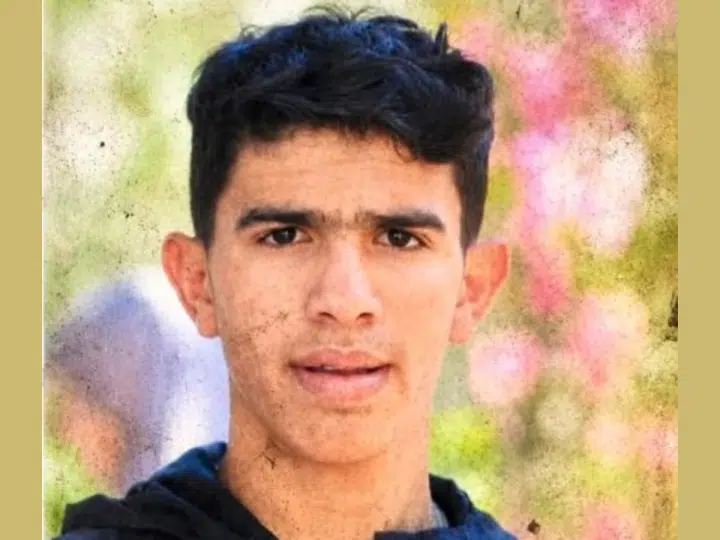
15 year old Mohammad Suleiman Hamed, was detained by genocidal Israel. Because he suffered no previous health conditions, his family was surprised by a call from Physicians for Human Rights, informing them their son would undergo surgery in the hospital. Hamed is now unconscious, on life support in the intensive care unit of the “Israeli” Shaare Zedek Medical Centre, in occupied Jerusalem.
In April he contracted scabies. Due to intentional denial of medical treatment his condition deteriorated significantly. By July, he developed a severe fever and was transferred to the prison clinic. Examinations showed he had developed a urinary tract infection, and was suffering from high levels of blood sugar.
According to the Palestinian Prisoners Society (PPS), Hamed was transferred to the “Israel’s” Shaare Zedek Medical Centre on 20 July. This is because Ramla Prison Clinic had refused to admit him because he had scabies. Despite his serious condition, occupation prison authorities returned him to Ofer Prison, where he was given antibiotics. He stayed there for four days, but his condition continued to deteriorate.
Advertisement
Spreading infection
Hamed was then transferred back to Shaare Zedek Medical Centre, where examinations found the infection had spread to several organs, including his heart and brain. On 27 July, the 15 year old underwent open-heart surgery, without his parents present, and suffered neurological damage. Several parts of his body were affected, including his right foot, which doctors say may require amputation.
The Palestinian Prisoners’ Club is urging international bodies to intervene and ensure medical care for Palestinian detainees in Israeli prison.
15-year-old detainee underwent open-heart surgery while in Israeli custody without his family's permission.
Since 30 July, following intervention from Physicians for Human Rights, family visits have been permitted for Hamed. This comes after occupation authorities decided to release him, because of his extremely critical condition. According to the PPS, they did this to evade any responsibility for their crimes. Hamed remains unconscious in the intensive care unit, and doctors are waiting for him to stabilise before they can assess the extent of damage caused to his body.
Mohammed Hamed’s case is not unique. It is one of the thousands faced by Palestinian political prisoners. In March 2025, 17 year old Walid Ahmad became the first Palestinian under the age of 18 to be martyred by the occupation in its prison system. He had scabies, and likely died from extreme malnutrition caused by starvation. He was arrested during a night time raid on his home in Silwad, and spent six months in detention without charge or trial.
Advertisement
Walid Ahmad died after just six months in detention
Ahmad also had no prior health issues before his arrest on 30 September 2024. He lost consciousness while in Megiddo Prison, on 22 March 2025, and was declared dead when he was transferred to the prison clinic. He had been denied family and lawyer visits.
It's been reported that an Israeli court ruled Walid Ahmad, a Palestinian child who died while detained in an Israeli prison, was 'likely starved'. He was held for six months without charge.
Sadly, such ill-treatment is not unusual. It is unconscionable that any child should be… pic.twitter.com/6bTuLXVkK2
Malek Hani Jibril, 30, is also from the town of Tuqu. He was shot and arrested by Israeli occupation forces (IOF) at the “300” military checkpoint in July. Subsequent surgery resulted in the amputation of his right foot. He remains in detention.
Prisoners fear requesting treatment
Israeli occupation authorities have systematically targeted Palestinian political prisoners by starving and torturing them, and denying them healthcare until they reach critical or irreversible stages. They are then released in an attempt to evade legal and criminal responsibility for the abuses they have committed against them. This has led to an unprecedented spread of diseases and injuries among them.
There are huge challenges when it comes to monitoring the health conditions of prisoners and obtaining their medical files. Not only is this due to inaction and procedures imposed by the “Israeli” authorities. It is also down to the reluctance of many prisoners to request treatment, due to fear of being subjected to further attacks and abuse.
Advertisement
The PPS says limb amputations have become one of the most serious issues currently being experienced by prisoners. Many detainees are shot before being arrested, which can then lead to amputation. In addition, some Palestinians have experienced a limb amputation and are then arrested later on. They too are deprived of the necessary healthcare and medical support to meet their basic needs inside prison.
More than 100 Palestinian prisoners have been killed in “Israeli” custody since October 2023. The occupation currently holds approximately 9400 Palestinian prisoners, including 350 Palestinian children.
The NHS’s contract with Palantir is controversial for a number of reasons – not least because the US spy-tech company is supporting Israel’s genocide. Another issue with the contract is that the technology Palantir provides may not actually produce any benefits. And as the Financial Times (FT) are now reporting, the NHS is having to change how it evaluates Palantir’s effectiveness in response to wide-ranging criticisms:
As reported by the FT, the NHS has been using disputed metrics to measure the success of the Palantir Federated Data Platform (FDP) which is designed to link different data sets:
Emails obtained by the FT via a freedom of information request show the health service intends to modify how it calculates two of its headline figures about the performance of the Federated Data Platform in the next quarterly update, more than a year after the data was first published.
Hospitals using the FDP have claimed to have:
delivered 110,000 additional operations and that they have registered a 15 per cent reduction in discharge delays.
One criticism of the figure is that the figure could be explained by the seasonal variation. This is because the figures relate to the six months after the FDP’s adoption.
Advertisement
The FT have previously uncovered errors in a “key underlying dataset”. This ultimately led to an investigation from the UK statistics watchdog.
Politicians commenting on the latest development include Ben Coleman (Labour MP / House of Commons Health and Social Care Select Committee):
It’s shocking that the NHS published claims about Palantir’s positive impact on patients even after its own staff raised concerns about the methodology being used.
Next March, Palantir’s contract comes to an end unless the government extends it — and given growing questions about Palantir’s effectiveness, can an extension really be justified?
Martin Wrigley (Liberal Democrat / House of Commons Health and Social Care Select Committee) also spoke out:
Advertisement
I have been calling for these numbers to be independently verified for some time now, and this is evidence that we cannot rely on them.
It is time to replace Palantir in the NHS and to seriously question their presence in the rest of the UK government.
“Say no”
The Good Law Project have a petition calling for the government to end its contract with Palantir. The petition is approaching 100,000 signatures, and it reads:
NHS England is rolling out software to run our health records from Palantir – a US spy-tech firm that has supported mass deportation in the US and enabled genocide in Gaza.
One of Palantir’s founders is also openly against the NHS. Peter Thiel claimed it “makes people sick” and said that the British people love the NHS because we’re suffering from Stockholm syndrome.
We can’t let a company like this take control of our healthcare system.
Advertisement
But we can fight back right now. We’ve set up a simple tool so you can find out if your local NHS trust has started using the software, and then send an email demanding they say no to Palantir.
With the government putting NHS trusts under pressure to adopt the software, we need to act right now. If you want to keep Palantir out of our NHS, send an email to your local trust and James Murray, secretary of state for health.
Drop Palantir
Ministers have the option to trigger a break clause with Palantir in 2027. It’s vital that they take advantage of this, to protect the reputation of the NHS. It will also show that Britons will not tolerate companies that back genocide.
Prime Minister Andy Burnham has outlined a range of areas he would like to see greater spending in. (Alamy)
4 min read
Andy Burnham has set out some major ambitions for government since entering office. Experts look at how he could pay for them.
Advertisement
The new Prime Minister was keen to hit the ground running when he succeeded Keir Starmer in No 10 last month, promising quick action to help people cope with cost-of-living pressures. He announced that he would take VAT off electricity bills, cap bus fares at £2, and reduce business rates for pubs and restaurants.
When it comes to longer-term policy, Burnham has promised to end rough sleeping and reform adult social care. His vision for the latter, bringing it more in line with NHS provision, is estimated to cost billions of pounds of additional spending every year. The new PM is also under pressure to increase defence spending in response to global security threats.
At the same time, the PM has pledged to stick to the government’s fiscal rules and 2024 manifesto pledges not to raise income tax, national insurance and VAT.
Advertisement
This has raised questions about how Burnham will fund his plans for government.
Many details will not be confirmed until Wednesday, 28 October, when Chancellor John Healey delivers the first Budget of the Burnham Labour government. Healey, who resigned as defence secretary during the final weeks of the Starmer government over defence spending, has said that the Autumn Budget will be “built on fiscal discipline”.
What are Burnham’s options?
Carsten Jung, leader of the economy team at the Institute for Public Policy Research think tank (IPPR), argued that Burnham and Healey have inherited a better economic picture than Starmer and former chancellor Rachel Reeves faced.
Advertisement
“Rachel Reeves, for all of her strategic mistakes, really fixed the public finances,” said Jung.
“What she inherited from Jeremy Hunt [her Tory chancellor predecessor] was unsustainable. It was based on cuts to departmental spending which weren’t sustainable. So she went to the painful exercise of increasing taxes to fix that.
“What Andy Burnham inherits is a much better funded state, and he also has headroom against the fiscal rules he inherited, which makes it less dire.”
However, he said that borrowing money to fund government spending could be riskier for Burnham than it was for Starmer due to “jittery” markets and a more precarious global picture. The Bank of England recently warned that it may be forced to raise interest rates later this year if the US war with Iran escalates, which in turn would make borrowing more expensive.
Advertisement
Jung said that one option available to the government is to increase tax on wealth to bring it closer to tax on earnings, highlighting capital gains tax.
As things stand, people are charged either 18 per cent or 24 per cent on profit they make when selling, gifting or disposing of an asset that has increased in value, such as a second home. Burnham could increase Treasury revenues by aligning capital gains tax rates with income tax bands of 20, 40 and 45 per cent.
Elsewhere, examples of pro-growth policies according to Jung include the Treasury investing more in “leading industries” in the UK as well as “boosting entrepreneurship” while closing tax loopholes.
Isabel Stockton, researcher at the Institute for Fiscal Studies (IFS), said Burnham’s ambitions can be split into two categories: those that are less fiscally challenging, such as the cost-of-living measures he announced in his first few days in office, and policies with greater economic implications, like defence spending and adult social care.
Advertisement
Stockton agreed with Jung that borrowing more money would be “difficult” and “risky” for Burnham as it could push the new government close to breaching its fiscal rules, leaving him with two broad options: raising tax and cutting spending elsewhere.
Burnham has already said that the country must get “really serious” about reducing welfare spending to fund priorities like greater defence spending.
Stockton also suggested that the Labour government explore using the National Wealth Fund as a way of boosting spending power – it was launched under Starmer in 2024 to “mobilise billions of pounds of investment” in UK “clean energy and growth industries”.
However, NWF is still funded by taxation and borrowing, and is run by the Treasury – meaning the challenges around scrutiny on tax and spend remain.
Stockton told PoliticsHome the limitations Starmer’s government faced on taxation, spending, and spending cuts continue to exist, and remain challenging for Burnham’s government.
“With any new government, it can make different choices, but it is going to be facing essentially the same constraints, especially given that he [Burnham] says he’s committed to the existing fiscal rules,” said Stockton.
“He says he’s committed to the Labour manifesto on tax, so that rules out quite a few things already. That means that the decisions are going to be difficult.”
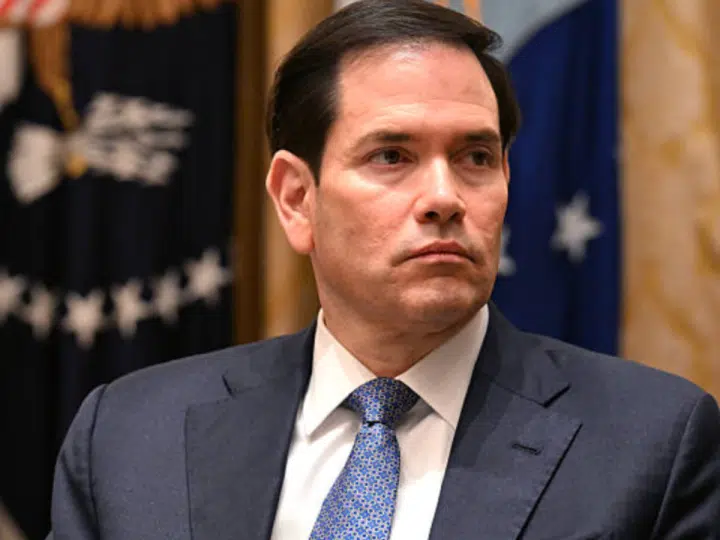
Marco Rubio, Secretary of State for the USA, earlier this year at the Munich Security Conference called for the “return to brutal Western colonialism.” This explicit messaging from the Western ruling elite about its plans for the Global South should be unifying masses in countries like India more than it has.
Notably, protests in India are breaking out against the neo-liberal government everywhere and startlingly have also spread to the urban middle class.
Surbhi Kesar, who teaches at SOAS, called the participation of the “urban aspirational classes” as “striking,” given their unfamiliarity with engagement with public causes and sustained interaction with people from different social locations.
But it reflects that the Indian post-1990s liberalisation-led growth is failing even those who benefited the most from it.
Advertisement
Marco Rubio comments juxtaposed with cockroach protests
The Gen Z protests, led by the ‘Cockroach Janta Party,’ have captured the media limelight. The name comes from India’s Chief Justice, who in May dismissed unemployed youth as “cockroaches” – an insult the protesters have embraced.
However, simmering beneath this surface-level attention has been widespread unrest fueled by unrelenting violence against Muslims and other minorities, the infamous ‘bulldozer raj,’ resource grabbing by government cronies (such as the Adani Group) to benefit US corporations like Google, and ongoing farmers’ protests.
Arundhati Roy, writing from Delhi, captured the moment:
The cockroaches are out and about. The farmers have begun marching to Delhi once more, this time to protest the India-US trade deal – the death warrant the government of India has slavishly agreed to sign on their behalf.
The challenge now is to connect these disparate protests into a unified struggle against this broader recolonization project that Rubio talked about.
Advertisement
Education as unifying factor
The student movement was successful, leading the education minister to resign. But they are still strong in their demands and have the power of mobilizing young people.
We therefore make a promise: We will remain on the ground and continue to build movements for the revocation of NEP 2020 and against the privatisation and destruction of public education. We will struggle for an equal, socially just, publicly funded and democratic education system; for quality education as a right, not a privilege purchased by those who can afford it.
Education has been a pathway for upward mobility in India. And, Kesar explained that families in India have continued to invest heavily in education, including on professional degrees whose costs can exceed the annual expenditure of poorer households, even while graduate employment has failed to expand at the same pace.
Unemployment, however, now is close to 40% among graduates aged 15–25, and around 20% among those aged 25–29.
The neoliberal corporate capital growth model, which mainly benefits the Western ruling elite is showing its limits to even please the Indian upper classes.
US imperialism
Writing in Middle East Critique, Prabhat Patnaik argues that the recolonization of the Global South, as envisioned by the Trump administration will take the form of unequal trade treaties that impose captive markets on nations like India requiring them to import specific quantities of US goods while offering nothing in return.
Advertisement
According to Patnaik, the U.S.-India trade deal being negotiated is a mechanism of recolonization – reducing India to a “captive market” for U.S. goods through asymmetric tariffs and quantitative import targets, a structure “even worse than the colonial situation” under Britain.
Alongside the unequal treaties will be outright seizure of strategic resources from Venezuela to Iran, all to revive a stagnant American empire at the expense of the Global South’s hard-won sovereignty.
Rubio speech is a blueprint
Rubio made colonization explicit in his speech – this speech should be studied by all organisers of movements in India and other Global South countries to fully understand what it faces and how Western allies view them. .
He invoked “Western civilization” multiple times, a coded summons to a shared imperial project, while simultaneously demonizing immigration from the Global South.
Advertisement
Rubio’s words leave no room for ambiguity: the West seeks “competition for market share,” the “reclaiming” of industrial dominance, the securing of “critical minerals not vulnerable to extortion,” the “restoration” of a “new Western century,”
He dismisses the very existence of non-Western nations as a threat to “the survival of our civilization itself,” describing their people as an “unprecedented wave of mass migration that threatens the cohesion of our societies.”
Rubio criticizes concern for the planet as a “climate cult” that must be appeased no longer.
He lashes out at “strongly worded resolutions” and “abstractions of international law,” boasting instead of “14 bombs dropped with precision from American B-2 bombers” and “American Special Forces” in Iran and Venezuela respectively.
Advertisement
Finally, he openly longs for the era “before 1945” when “the West had been expanding – its missionaries, its pilgrims, its soldiers, its explorers pouring out from its shores to cross oceans, settle new continents, build vast empires extending out across the globe.”
Rubio is openly longing for an era before the political decolonization wave of the 1940s-60s.
Recolonization
According to Patnaik, recolonization that Rubio is seeking serves two purposes simultaneously – it “counters the stagnation of the US economy by increasing the level of activity and employment through a rise in net exports,” and it “reduces the current account deficit of the US and thus contributes toward a strengthening of the dollar.”
Both problems facing US imperialism are thus addressed without disturbing “the hegemony of international finance capital.”
The Global South, however, will not surrender the gains of economic decolonization without a struggle. True, the monopoly bourgeoisie of the South, and even certain segments of the urban middle class that would like its progeny to emigrate to and settle in the metropolis would not join this struggle and might even be complicit in the imperialist project; and they may not only be ‘spared’ the adverse effects of recolonization, but even made beneficiaries of it.
But the peasants, the petty producers, the small capitalists, the workers, and the agricultural laborers, all those who remain committed to the idea of decolonization and who would also be the victims of recolonization, would resist such recolonization.
According to Patnaik, while the monopoly bourgeoisie and certain segments of the urban middle class may be complicit in or even benefit from recolonization, the peasants, petty producers, workers, and agricultural laborers – those who have the most to lose – will resist.
Yet the protests sweeping India today – from students and farmers to the urban unemployed- suggest that even among those Patnaik identifies as potential beneficiaries, the failure of the neoliberal model is generating cracks, making a unified struggle against recolonization not just necessary but increasingly possible.
The battle to become the country’s next progressive leader in the mold of Bernie Sanders is heating up ahead of Democrats’ direction-defining Michigan Senate primary.
Nowhere is the jockeying and strategy unfolding behind the scenes more pronounced than between Democratic Reps. Alexandria Ocasio-Cortez of New York and Ro Khanna of California, who have taken disparate approaches to the midterms as they build out their political brands. Khanna’s go-everywhere mentality versus Ocasio-Cortez’s more selective involvement in key races this cycle will test their political acumen and relationships, potentially setting them up for a 2028 presidential race that could decide who will inherit the movement.
In much of Sanders’ inner circle, who comes next is pretty obvious, even as the wider progressive movement continues to clash over the answer.
“It’s always been clear that AOC is the heir,” one person close to Sanders who’s been involved in such conversations with him for years, granted anonymity to share their understanding of the private discussions. “Always.”
Advertisement
Yet within the broader Sanders coalition, there is plenty of behind-the-scenes posturing — and outright bickering — over who will ultimately take over for the Vermont senator. Khanna’s allies say Ocasio-Cortez is playing it too safe to be the next standard-bearer, with some prominent left-wing leaders irked by her sparing endorsement strategy.
Ocasio-Cortez’s and Khanna’s diverging paths are on full display in Michigan, where Democrats’ most contentious Senate primary is coming to a head Tuesday in a critical battleground that will have outsized importance in selecting Democrats’ next presidential nominee.
Both representatives and Sanders have backed Abdul El-Sayed, a progressive former public health official who has surged in polls against establishment-backed Rep. Haley Stevens as he consolidates support among the left.
But only Ocasio-Cortez has appeared alongside Sanders in stumping for El-Sayed, with the two holding a joint rally in Lansing, Michigan, last month. Ocasio-Cortez and Sanders are featured prominently in one of El-Sayed’s closing television ads, in a key sign of who the campaign thinks can best help push him over the finish line.
Sanders and Khanna do maintain a relationship — the California representative was a national co-chair of Sanders’ 2020 presidential bid — but there’s doubt within the Vermont independent’s orbit over how successful a Khanna presidential run would be or whether he’s best positioned to inherit the progressive throne, should Ocasio-Cortez choose not to run for president in 2028.
“Ro is basically already running, but not many are taking him too seriously as the movement’s next leader,” said another operative close to Sanders, granted anonymity to speak candidly.
In an interview, Khanna brushed off the notion that there’s a single heir to the Vermont senator’s progressive movement. “I believe that Sanders is going to have many successors over decades, and the key is to build a majoritarian progressivism that can win across the country,” he said.
Advertisement
Asked whether an Ocasio-Cortez presidential bid would change his calculus, he answered flatly: “No.” His decision, he says, will come “around Thanksgiving.”
A representative for Ocasio-Cortez declined to comment. Sanders, for his part, is trying to rise above the jockeying.
“The presidential election is in 2 years and 3 months,” Sanders said in a statement. “Let’s focus now on how we resolve the urgent issues facing our country. There is plenty of time to worry about possible presidential candidates.”
Why Sanders world sees AOC as the successor
Sanders, 84, and Ocasio-Cortez, 36, share a deeply personal bond their advisers say transcends politics but remains rooted in their shared ideals. They talk directly about key policy, political ideas and candidates to boost, and they even coordinated their endorsements around a group of New York democratic socialists and progressives who ultimately won House seats.
Advertisement
The two also share a circle of advisers, including Faiz Shakir and Mike Casca. Casca, a former long-time Sanders aide, now serves as Ocasio-Cortez’s chief of staff and plays a major role in shaping policy and political strategy. Shakir is an adviser to Sanders and executive director of More Perfect Union, a progressive nonprofit media organization.
“I’m sure there are a lot of people who are interested in being the next Bernie Sanders, I think he’d be less inclined to give them his endorsement” over Ocasio-Cortez, said a third person close to Sanders, who’s been involved in the conversations around his political and policy strategy for years, granted anonymity to discuss them.
Sanders and Ocasio-Cortez have approached the midterms differently. The Vermont independent has worked to expand his endorsement roster and his presence on the campaign trail this year, which his allies see as an effort to cultivate a lasting generation of progressive leaders to carry on his movement. He often endorses early, acting as a validator for left-leaning candidates’ campaigns and platforms, while Ocasio-Cortez has been serving as more of a closer.
It’s a strategic shift for the New York Democrat, who used to get involved in races earlier — a calculus advisers say is a recognition of her ability to mobilize certain voting blocs, like communities of color and working-class voters, late in the game.
Advertisement
They don’t coordinate on every contest, but they have joined forces in several races — including El-Sayed’s Michigan Senate race and Sam Forstag’s House primary in Montana. Ocasio-Cortez called Sanders as soon as she decided to endorse El-Sayed and they immediately began planning a rally for him, according to a person familiar with the discussions and granted anonymity to describe the private conversations.
Earlier this year, Sanders and Ocasio-Cortez together also developed the leading progressive push to address artificial intelligence. Sanders was the first member of Congress to call for an AI moratorium, and he helped shape Ocasio-Cortez’s stance. The pair unveiled joint legislation in March to ban the rapid build up of data center construction.
Months later, the issue is now cutting across progressive and conservative voting blocs, is a preeminent policy issue on Capitol Hill and is at the heart of dozens of midterm races and even early 2028 presidential talk.
“Congresswoman Alexandria Ocasio-Cortez and I understand what is at stake,” Sanders said as he introduced the AI moratorium bill alongside the New York Democrat this spring in the Senate.
Advertisement
Progressive candidates whose campaigns have received nods from both Ocasio-Cortez and Khanna say they are both key validators who carry different appeal.
Khanna has risen in prominence because of his push to release files on Jeffrey Epstein. And Ocasio-Cortez brings the kind of star power and nationalized spotlight that campaigns say is invaluable for growing candidates’ exposure, particularly among younger progressive voters who can be trickier to turn out.
“AOC’s very popular, she has a lot of grassroots support … all across the country,” said Adam Hamawy, who was endorsed by both representatives in his New Jersey House primary this spring. “Ro Khanna has not just progressives, but he’s had a strong stance against corruption. … There’s a lot of overlap but each of them have specific things that come together to paint a wider picture than if I just had one.”
Don’t count Ro out yet
Not everyone around Sanders is sold on Ocasio-Cortez as the heir apparent. Khanna allies argue he’s the one who has been putting in the work — and sticking his neck out for the progressive movement — by backing primary challengers to incumbents, getting out front on issues like the Epstein files, and recently traveling to the West Bank.
Advertisement
“People who are supporting her are supporting her more as a brand,” said one Khanna ally and Sanders world operative, granted anonymity to discuss private conversations. “What does it mean to work with her? What does it mean for her to pass a bill? I don’t know her theory of change.”
There is fear Ocasio-Cortez is “weirdly isolating herself” over the years ahead of a 2028 decision, the operative added. “I could not tell you who AOC’s advisers are at this point [beyond Casca]. If you’re thinking of running for president, you want to be in an expansive, elevated, exciting space, not in a controlled environment.”
Ocasio-Cortez has been significantly more selective in her endorsements than either Khanna or Sanders, backing left-wing candidates across several competitive House primaries but steering clear of some of the messiest contests on the map, including Maine Senate and Wisconsin’s imploding gubernatorial primary.
That approach has drawn consternation from some on the left who say she’s playing it too safe given her political cachet, particularly as she declines to join other progressives in endorsing against incumbents — notably in her own backyard — even though that’s how she won her seat in 2018.
Advertisement
“Who cares about your win-loss ratio? What I care about is, are you trying to help fellow progressives or aren’t you?” said Cenk Uygur, a Khanna supporter who founded the progressive online network “The Young Turks” and Justice Democrats.
“AOC cares so much about her colleagues, and her colleagues are establishment Democrats. I don’t care about them. In fact, I’m opposed to them,” Uygur added. “I want them challenged in primaries.”
Khanna has worked to keep his own close ties to Sanders and his circle.
Jeff Weaver, Sanders’ 2016 campaign manager, now serves as a senior adviser to Khanna as he’s pushing to be a high-profile progressive leader and laying the framework for a possible 2028 presidential run.
Advertisement
“No two candidates are equal,” Weaver said. “But I think Ro Khanna has the chance to do what Bernie did, which is to have appeal beyond the Democratic base.”
Khanna has spent years trying to build the kind of early-state infrastructure a presidential campaign requires, traveling to early primary and battleground states to lay the organizational groundwork for a potential run. Since 2021, he has been working to assemble steering committees of 75 to 100 people in New Hampshire and Nevada, with another being built in South Carolina, while working with local political power players, according to Shannon Jackson, another longtime Sanders operative who is now consulting for Khanna.
Over the last week, the California representative has been on what he is calling an “new economic patriotism tour” through Pennsylvania, holding events in counties Trump carried like Erie, Luzerne and Cambria “There is a great desire for a bold, progressive vision that is going to call out an unfair and rigged political and economic system,” he told POLITICO. But the test, Khanna argued, is making that vision work “not just in the Bay Area, not just in Michigan, not just in progressive areas, but in places like Pennsylvania.”
Khanna has endorsed dozens of candidates up and down the ballot this year, wading into some of the most fraught Democratic House, Senate and gubernatorial primaries in the country.
Advertisement
That widespread involvement has produced a mixed track record with some high-profile losses, including Graham Platner’s disgraced exit from Maine’s Senate primary and Tom Steyer’s expensive loss in the California governor’s race. In the case of Platner, Khanna and Sanders endorsed the Maine progressive, while Ocasio-Cortez, notably, stayed out of the race altogether.
Khanna also has backed candidates against the Democratic Congressional Campaign Committee and establishment. For example, Khanna-endorsed progressive Matt Dunlap in Maine’s 2nd Congressional District successfully defeated the DCCC’s preferred candidate.
“There’s a difference between being a progressive in policies and being a progressive in action,” said Uygur. “And action requires you challenging the system, challenging the establishment. On those grounds, it’s not close. Ro Khanna is head and shoulders above every other Democrat.”
The video sent the Israel lobby into apoplexy as it tried – of course – to cast Israelis as, you’ve guessed it, the victims.
Advertisement
Notwithstanding issues with US food production, Jews are safe in fast food chains – unlike Palestinians trying to eat amid Israel’s starvation siege of Gaza, where they are likely to be bombed or shot.
Solidarity with Ariana at Breinigsville Burger King. If the company has any spine and principles, she’ll be promoted.



























 Business6 days ago
 Fashion4 days ago
 Politics4 days ago

 Crypto World3 days ago
 Politics6 days ago
 Business6 days ago
 Crypto World3 days ago
 News Videos5 days ago
 Crypto World7 days ago
 Politics5 days ago
 Sports4 days ago
 News Videos7 days ago
 Crypto World2 days ago
 Crypto World3 days ago
 Business7 days ago
 Business4 days ago
 Politics2 days ago
 Tech6 days ago
 Tech2 days ago
You must be logged in to post a comment Login