
Politics
Romantasy Baby Name Inspiration For Your New Addition


The recent news that Sarah J Maas is bringing out two new books in her hugely popular A Court of Thorns and Roses (ACOTAR) series, which follows the journey of Feyre Archeron as she journeys into the alluring yet deadly world of the Fae, left a lot of fans practically bursting with excitement.
Across social media, influencers and avid book readers are already sharing the missed Easter eggs they’ve spotted in the Great ACOTAR Re-read ahead of the sixth book’s release.
Meanwhile Rebecca Yarros’ Fourth Wing, another best-selling fantasy series following the journey of Violet Sorrengail as she strives to become a dragon rider, is heading to Prime Video.
Romantasy – an amalgamation of the romance and fantasy genres – is as popular as ever. So popular, in fact, that baby naming experts are noticing more people are naming their children after the characters in their favourite series.
“Parents often look to their passions when choosing a baby name; it’s a great way to find something that truly feels special to them and sparks an instant connection,” SJ Strum, BabyCentre’s baby naming expert and author of Baby Name Envy, told HuffPost UK.
“The aesthetic of romantasy is rich and blends fairytale, whimsical landscapes with true love, making the names poetic and dreamy. With people always on the search for a unique name with deep meaning, this trend sparked by Sarah J Maas isn’t going anywhere soon.”
Romantasy-inspired names are typically ethereal with powerful meanings
Pamela Redmond, creator of baby name inspiration website Nameberry, told us she’s seen “a huge increase in interest in romantasy names”.
The site has created a new popularity prediction tool that applies an academic predictive model to both government and its own data to make scientifically-based predictions on the popularity trajectory of names between now and 2040.
“Many Romantasy names are taking off now for babies. Cassian’s contemporary use is completely due to ACOTAR. Azriel is another name whose popularity makes no sense except seen in the context of ACOTAR,” said Redmond.
“Two of the hottest girl names in our projections are Violet and Elaine. We’re predicting Violet to be in the Top 10 of 2040, where it’s never ranked before. And Elaine is the name we’re seeing rising the furthest to make the Top 100 of 2040 – over 200 places in the US charts.”
Rhys is also rising in popularity, reaching its highest point ever in the US, rising to 412th place in 2025, up more than 50 points compared to last year.
And even the name Feyre, a moniker invented by Maas for her lead character, was given to 21 baby girls in the US last year and has ranked on Nameberry’s own Top 1000 of names, attracting lots of interest from readers.
“The Romantasy genre is so vast and so popular that it’s had a huge influence on names in general,” she added.
What’s the appeal? Well, Strum notes that romantasy names “have an ethereal style; think lots of syllables, pretty vowels and powerful meanings”.
Using BabyCentre data, she suggested the name Cassian has risen 1,075 places since A Court Of Thornes and Roses came out, and Azriel has gone up 1,425 spots in the baby name charts.
“Aelin entered the UK baby name charts for the first time ever inspired by the Queen of Terrasen in the popular Throne Of Glass series with Rowan and Dorian from the same series rapidly rising,” Strum added.
Aside from your favourite book characters, here’s the baby name expert’s pick of some of the best romantasy-themed monikers for new parents to consider…
Romantasy baby name inspiration
For the boys…
“Emrys has all the rugged romance of a hero in a fantastic realm. It’s also the druid name of magician Merlin giving it a deep footing for any romantasy fan.”
“Valens is a word meaning strength and vitality and with Valentine becoming linked to love it is the perfect vibe for this trend.”
Meaning: Dark haired warrior.
“An outdoorsy name that has main character energy.”
“Angels frequent the pages of many romantasy books and Malakai has a whimsical sound with a touch of edge.”
“Great romantasy characters balance strength and vulnerability – and the softness of Larkin with it’s graceful birdlike feel, matched with it’s meaning, place it firmly into one of the courts of ACOTAR.”
“Evocative of hunting in a magical woodland; Fletcher is a wearable and playful romantasy aesthetic name.”
“Hamlin is a name full of heart and courage. I love it’s homely meaning and dash of charm.”
Meaning: Warrior of life.
“A gorgeous boy name packed with character.”
For the girls…
“A fairytale name always has an intriguing sound and Welsh Rosenwyn is a compound name that’s whimsy without being timid.”
“Originally from Greek Mythology, it’s like Evelyn and Daphne elevated into a fierce romantasy heroine fighting for good.”
Meaning: From the raven’s fortress.
“A fortress feels both like a prison and a place of security; themes throughout Sarah J Maas’s books. Roxbury has spirit and an enigmatic sound.”
“A little bit fairy with a stylish twist – Ferryn is soft without being frilly and would befit any romantasy-inspired name list.”
Meaning: Beautiful princess.
“Welsh names always create such strong and unique sounds and Delith has warrior princess all over it.”
“I adore this angel inspired name right out of a fairytale; it seems sweet but the prettiness of the name could be deceiving.”
“A nature name inspired by Elm Trees which in folklore are associated with a passageway to the underworld. A dramatic, stunning girl name.”
Meaning: Dark challenger.
“Romantasy novels take us on epic journeys and challenges and this surname as a first name takes us on that adventure.”

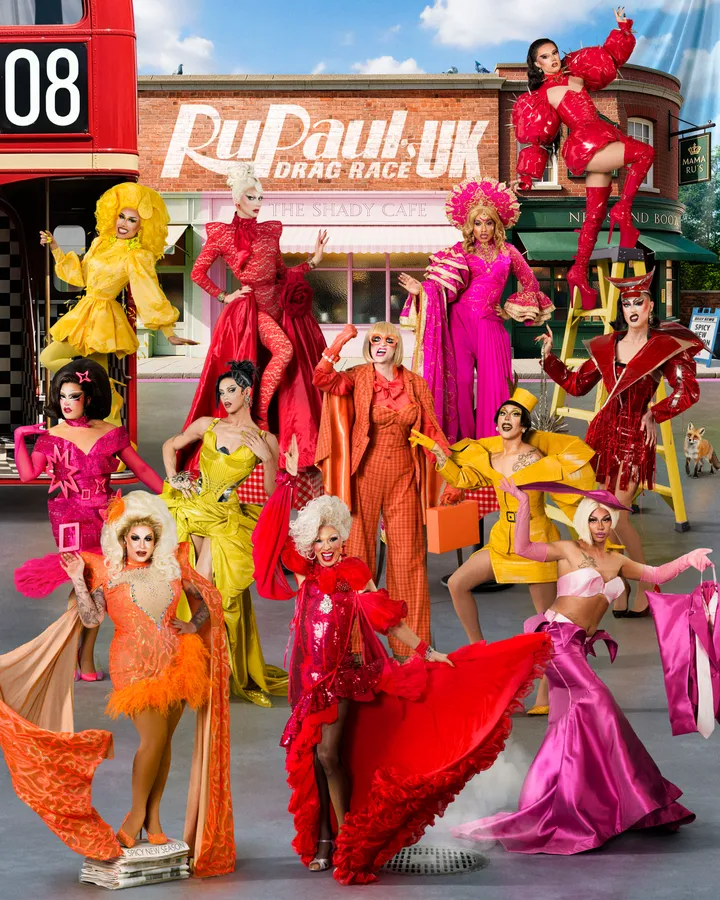
The BBC has confirmed that the current season of RuPaul’s Drag Race UK will be the last with the corporation.
On Wednesday night, the broadcaster confirmed that Drag Race UK had been axed after eight seasons (as well as three iterations of its international RuPaul’s Drag Race UK vs The World format).
“As the BBC continues to navigate significant financial pressures and deliver the savings required of us, we have had to make some very difficult choices, none of which have been taken lightly,” a BBC rep said.
The spokesperson added that the BBC was “proud” of “this groundbreaking show”, before thanking host and head judge RuPaul, production company World Of Wonder and “everyone involved, both on and off screen”.
Drag Race UK launched in 2019, with RuPaul and his right-hand woman Michelle Visage judging queens from around the country alongside Alan Carr, Graham Norton and a crop of rotating guest judges.
Over the last eight years, it has helped boost the profiles of queens like Baga Chipz, La Voix, Tayce, Bimini, Tia Kofi, Victoria Scone and the late The Vivienne, who won the inaugural series.

BBC/World of Wonder/Nick Strasburg
The news of the BBC pulling the show comes after the announcement that it would no longer be moving forward with the LGBTQ+ dating shows I Kissed A Boy and I Kissed A Girl.
Fortunately, while Drag Race UK will no longer be airing on the BBC, World Of Wonder intends to continue the franchise, beginning with the first ever UK-specific All Stars series, which is expected to debut on the streaming service Wow Presents Plus next year.
“Start your engines, All Stars!” World Of Wonder said. “Drag Race UK All Stars series premiere coming in autumn 2027 EXCLUSIVELY on Wow Presents Plus!
“Hot off the heels of the iconic season eight premiere, a new era of Drag Race UK is on the way! Starting next fall, RuPaul’s Drag Race UK is heading to its new home on Wow Presents Plus with the series premiere of RuPaul’s Drag Race UK All Stars!
“This her-storic season will be available virtually globally on Wow Presents Plus and, for the first time, in the UK where members will also be able to stream all eight past seasons of RuPaul’s Drag Race UK plus all three seasons of RuPaul’s Drag Race UK vs The World!”
Drag Race UK began airing its eighth season last week, with new episodes premiering on BBC iPlayer every Thursday evening.
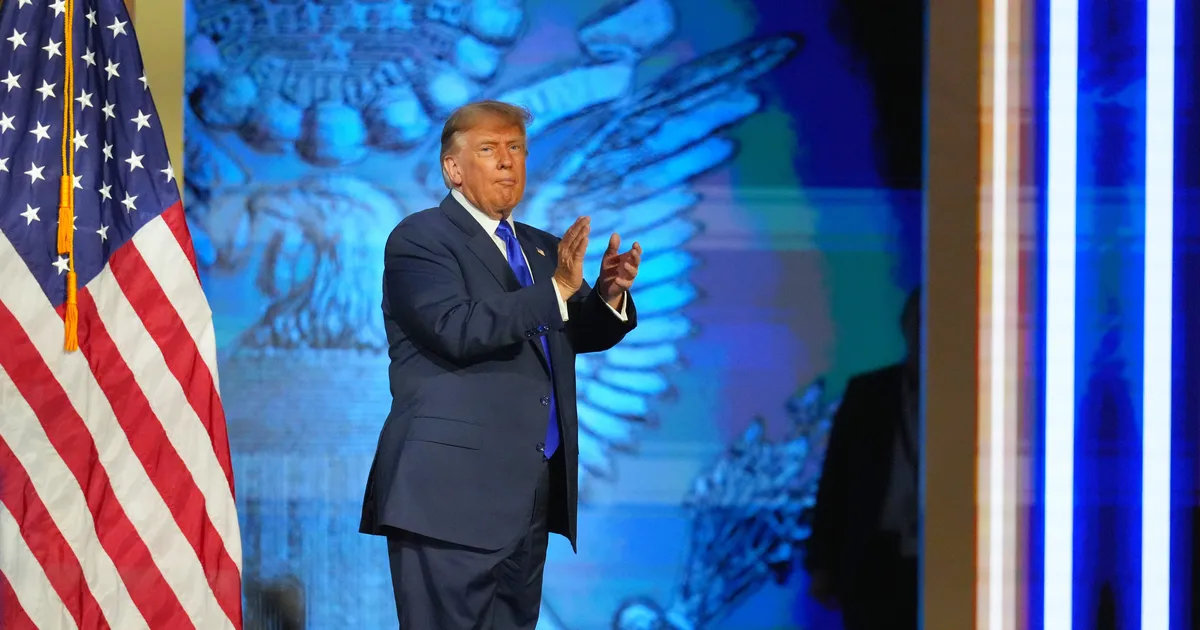
Donald Trump has been mocked online after suggesting the Strait of Hormuz in Iran should be renamed after himself.
The US president made the bizarre proposal during as rambling, two-hour address to the Republican Party’s so-called “midterm convention” in Dallas.
“I think we should call the Hormuz Strait the Trump Strait,” he said. “I should get something out of it. The Trump Strait.”
As his supporters applauded, Trump added: “Ladies and gentlemen, I’ll have an announcement. We’ll call it the Trump Strait, and I’m sure the Iranian leadership will be thrilled with that.”
The Strait, which used to help transport one-fifth of the world’s oil and natural gas supplies, has been effectively closed by Iran since the war began with a wave of American and Israeli attacks at the end of February.
At the time, Trump said the conflict would only last up to six weeks, but there remains no end in sight.
The president has repeatedly claimed the Strait is either open or controlled by the US, but it remains all-but closed to international shipping, pushing up the global price of oil.
Trump’s suggestion that it should not be called after himself triggered an angry backlash on social media.
Elsewhere in his speech, Trump also claimed that if the Republicans win November’s midterm elections, every American will be sent a cheque for $5,000.
“If the Republicans win, you win with us, and you get $5,000, it will be called the Trump dividend,” he said.
Listen to Commons People, the podcast that makes politics easy. Every week, Kevin Schofield and Kate Nicholson unpack the week’s biggest stories to keep you informed. Join us for straightforward analysis of what’s going on at Westminster.
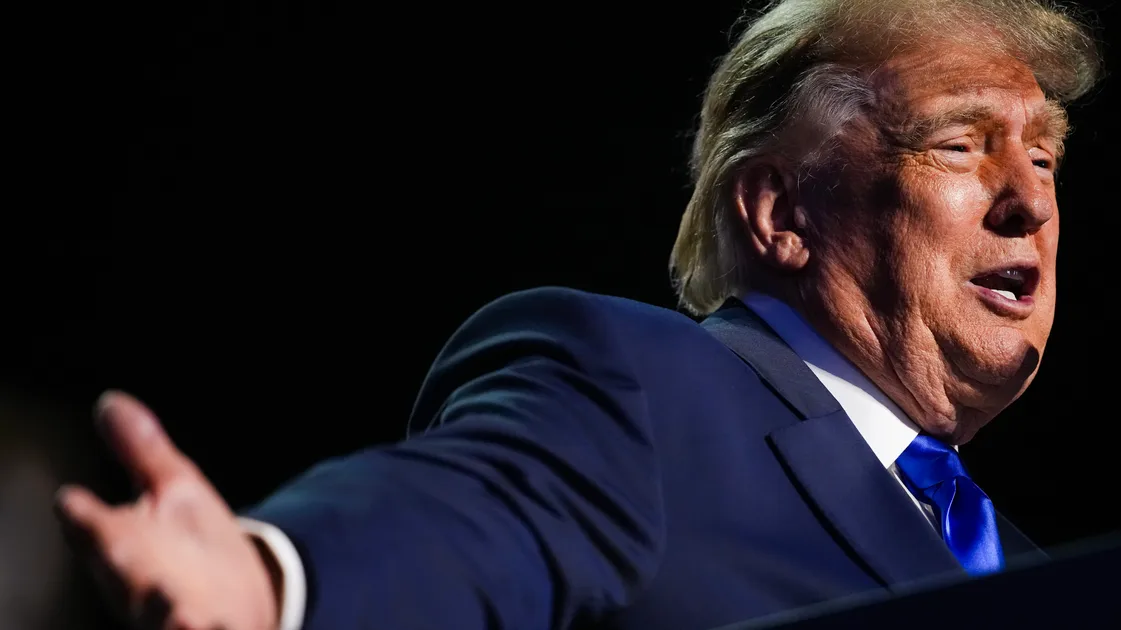
With his party facing electoral disaster, President Donald Trump delivered a lengthy, muddled “midterm convention” speech in which he begged his supporters to vote in November — and preposterously claimed that he will send $5,000 checks to every adult citizen in the US if Republicans hold onto Congress.
It’s not the first time in his second term Trump has claimed Americans will receive free money from his administration, even though a president doesn’t have the authority to send out such payments without congressional authorisation. The promise seemed to be an act of desperation.
“If the Republicans win, you win with us, and you get $5,000, it will be called the Trump dividend,” Trump said at the Republican Party’s “midterm convention” ahead of November’s elections.
The White House did not respond to a request for comment on the president’s proposal, essentially a voter bribe that could cost than $1 trillion. Not that Congress would ever approve it.
The president’s party typically does badly in midterm elections, and Republicans face considerable obstacles in their quest to hold the House and Senate, thanks especially to stubborn inflation worsened by Trump’s tariffs and his war in Iran, which has driven record-high gas prices.
Trump acknowledged the historical pattern on Wednesday. His promise to pay Republican voters, delivered during a nearly two-hour rambling speech, seemed like an effort to beat the polls and defy history.
“If the Republicans win the House of Representatives and the United States Senate, both of them, because of our economic, tremendous economic success, like in history, we’ve never had anything like what’s happening, but because of our tremendous strength and success economically, economically, I will issue a dividend to every adult citizen in the United States of America for $5,000,” Trump said.
The president repeatedly suggested last year he would send out direct payments, which both his and Joe Biden’s administration did in response to the economic fallout from the coronavirus pandemic.
The payments, authorised by Congress, were wildly popular and likely contributed to a record surge in inflation in 2022.
In a November Truth Social post, Trump claimed that tariff revenue had made America rich.
“A dividend of at least $2000 a person (not including high income people!) will be paid to everyone,” Trump wrote.
“We’re going to be issuing dividends later on, somewhere prior to, you know, probably the middle of next year, a little bit later than that,” Trump said in the Oval Office that month. “Thousands of dollars for individuals of moderate income, middle income.”
Republicans on Capitol Hill panned the idea at the time. The money never materialised.
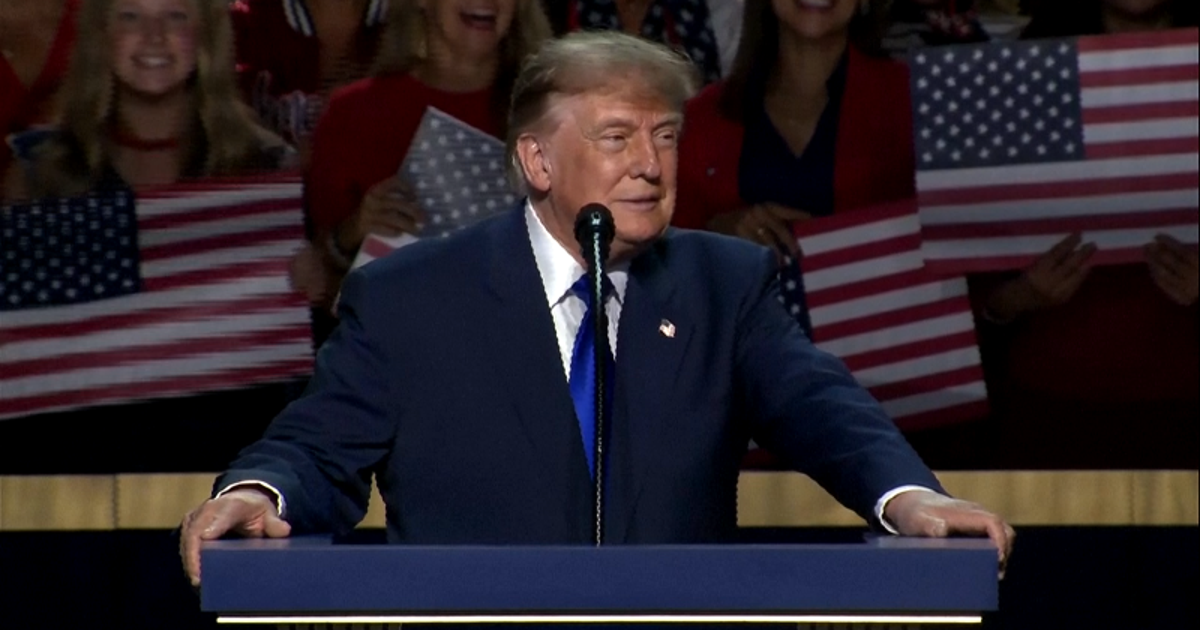
Speaking at Wednesday’s midterm convention ― as though he were accepting his party’s nomination for an election where he’s not even on the ballot ― Trump urged voters to remember the money and join him in his fantasy.
“So please, I ask you this as maybe more important even than the Trump dividend ― please pretend that I’m running and get out and vote on November 3rd or sooner,” Trump said.
Listen to Commons People, the podcast that makes politics easy. Every week, Kevin Schofield and Kate Nicholson unpack the week’s biggest stories to keep you informed. Join us for straightforward analysis of what’s going on at Westminster.
!function(n){if(!window.cnx){window.cnx={},window.cnx.cmd=[];var t=n.createElement(‘iframe’);t.display=’none’,t.onload=function(){var n=t.contentWindow.document,c=n.createElement(‘script’);c.src=”//cd.connatix.com/connatix.player.js”,c.setAttribute(‘async’,’1′),c.setAttribute(‘type’,’text/javascript’),n.body.appendChild(c)},n.head.appendChild(t)}}(document);(new Image()).src=”https://capi.connatix.com/tr/si?token=19654b65-409c-4b38-90db-80cbdea02cf4″;cnx.cmd.push(function(){cnx({“playerId”:”19654b65-409c-4b38-90db-80cbdea02cf4″,”mediaId”:”a5950aaf-84eb-485c-9f1b-3bd05a9a3246″}).render(“6aa22dc2e4b06fbaa80f1447”);});
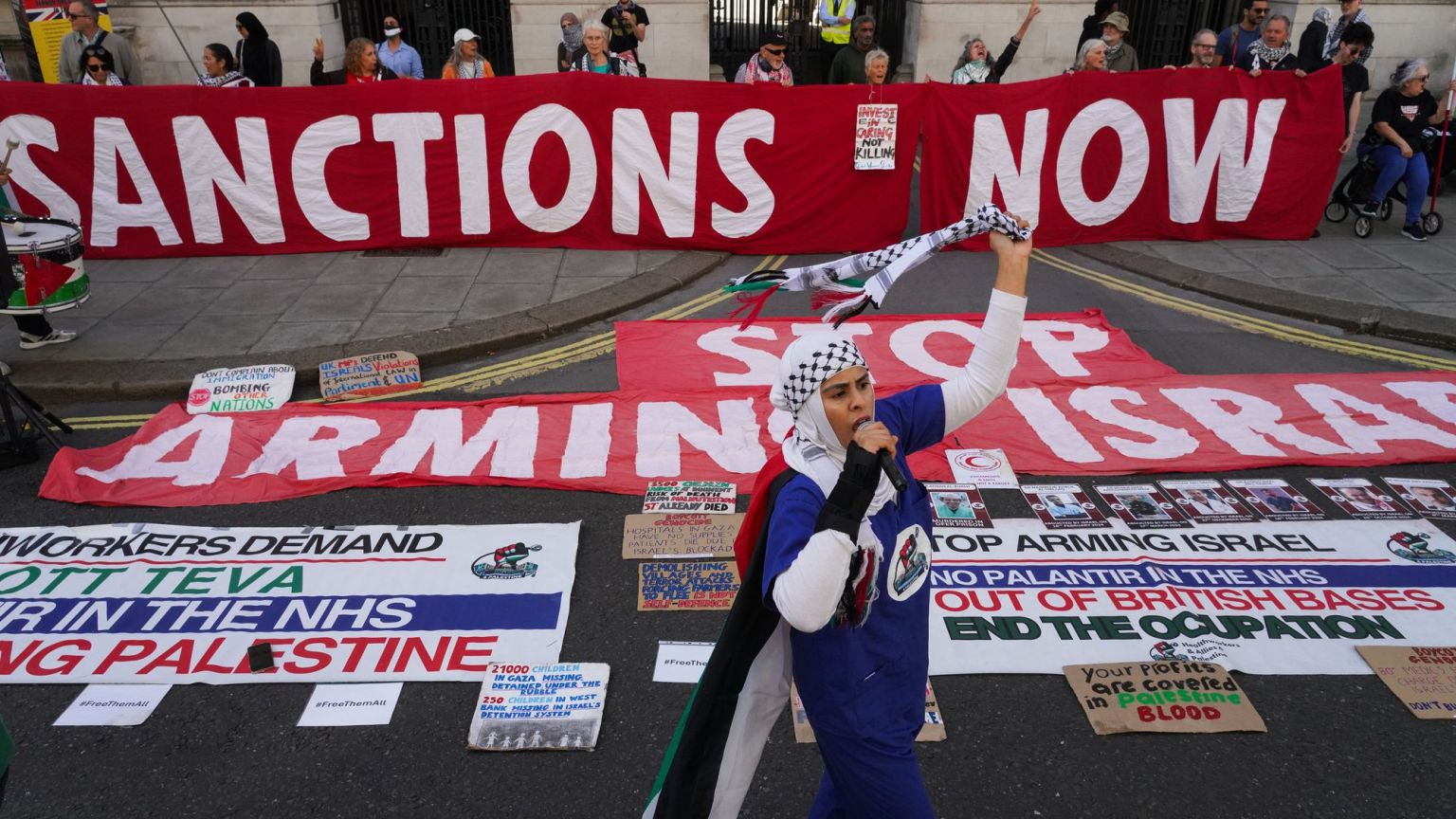
If it wasn’t for Israel, if it wasn’t for that monstrous, marauding state, there’d be peace in the Middle East. This is the Great Lie of Israelophobia. It’s the truthless, venomous current powering the global loathing for the Jewish State. You hear it on the street, on campuses, in mosques: that peace demands the muzzling, if not the outright destruction, of the bloodthirsty Jewish nation. Yesterday, staggeringly, we heard a version of this lie from the foreign secretary of the United Kingdom.
For me, this was the most striking thing about Ed Miliband’s statement to parliament: his propagation of the falsehood that the Jewish State is the prime barrier to a two-state solution and something like peace. With its war in Gaza, which Miliband said was unjustified in its barbarity, and its green-lighting of yet more settlements in the West Bank / Judea and Samaria, Israel has nuked the possibility of peace, he said. It has created ‘a set of facts on the ground’ that have made ‘the two-state solution unviable’. MPs giddily murmured their approval.
Contrast this with how he spoke about Hamas. He condemned Hamas, of course. All politicians engage in a spot of anti-Hamas throat-clearing before piling on the real monster of the Middle East: Israel. Hamas is a ‘terrorist’ outfit, he said. It caused Israel and Jews great ‘trauma’ with its attacks of 7 October 2023. The violence of that day was ‘vile’. And it must now ‘decommission its weapons’.
Spot the difference? Hamas is a pain in the arse, but Israel is the true menace to future peace. Hamas causes trauma, but Israel creates ‘facts on the ground’ that make peace and equality all but impossible. Hamas, in this twisted telling, becomes a bit-part player, albeit a ‘vile’ one, in a horror story authored by a murderous, expansionist Jewish State that is well and truly off its leash. And that’s why, said Miliband, we are rolling out a stringent package of sanctions against the Israeli settlements: to tame Israel’s ‘expansionist’ lunacy that creates ‘facts’ which torch all hopes of peace.
What Miliband said wasn’t only untrue – it was the public execution of truth. He didn’t only spread misinformation – he also inverted reality itself, depicting the seekers of peace as the destroyers of peace, and the Islamofascists who truly jeopardise our civilisation as mere causers of trauma. Like the keffiyeh mob, only in more moderate language, he infantilised Hamas and monstered Israel, presenting the former as a pest but the latter as a threat to all that is decent. It is one of the most misleading speeches a modern politician has given.
The very war that Miliband so stingingly condemned – the Israel-Hamas War – was born not from Israel’s hatred of peace but from Hamas’s. It is well established that Hamas’s carnival of Nazi-like violence on 7 October was designed to destroy not only Jewish life but also the Abraham Accords. These are the accords initiated by Donald Trump and signed in Washington, DC, in September 2020, with the aim of bringing about ‘normalisation’ between Arab states and Israel. The UAE and Bahrain recognised Israel for the first time. Sudan and Morocco followed. Then something extraordinary was reported: Saudi Arabia was considering signing up, too.
It would have been a region-changing development. More than that: a global quake. But it infuriated Hamas’s masters in Tehran, the theocratic freaks devoted to the fascistic annihilation of the Jewish homeland. Internal Hamas documents confirm that the October pogrom was in part designed to ‘thwart the Saudi kingdom’s process of normalisation’. Other documents gloat that Hamas’s savagery during the Second Intifada – when a thousand Jews were shot, stabbed and burnt to death – had helped to stall the Arab Peace Initiative, which Iran also hated.
It is misinformation on steroids to depict a war that sprang from the brutish Islamist instinct to frustrate ‘normalisation’ in the Middle East as proof of Israel’s hostility to peace. The Gaza conflict is the bloody handiwork of an Islamic Republic that fears all peace deals with Israel because they undermine its own genocidal dream of destroying Israel. Israel relentlessly pursued the repairing of relationships with the Arab world as Iran and its armies of anti-Semites – Hamas, Hezbollah, the Houthis – plotted the violent thwarting of those relationships. Anyone who looks back on the past three years of war and says it was caused by the obstinacy and lunacy of the Jewish State is either a liar or a fool. Or both.
As to Miliband’s claim that Israel is the author of a ‘set of facts’ that make a two-state solution ‘unviable’ – what is he smoking? As Jon Mendelsohn says at the Spectator, numerous offers of a Palestinian state have been made since the start of the so-called peace-process era in 1993, but all crashed against the ‘rejectionist architecture’ of Iranian theocracy and its proxy manifestations. Hamas has reiterated time and again its ‘rejection of the two-state solution’, and even the dogs in the street know why: because it desires the Nazi-like erasure of Israel and the expulsion of Jews from the Holy Land. Palestinian Authority incompetence in the West Bank alongside Islamist genocidalism in Gaza did far more to thwart two-state peace than Israel did. It is an act of neocolonial infantilisation, of imperious pity for Arabs, to refuse to acknowledge their contribution to the conflicts of the region. Do you think they are children?
What else might have made two states ‘unviable’? What about 7 October itself? Did that historic atrocity, a pogrom of the like we hadn’t seen since the Nazis, not also lay waste to that old political vision? Certainly many people will think it unreasonable, or at the very least impractical, to ask the seven million Jews of Israel to live next to a state that would have people in it who carried out a Hitleresque assault on the Jewish people with the aim of destroying the Jewish nation. ‘We will repeat 7 October again and again’, Hamas has said. Only the most hopeless dunce would wonder why Israelis aren’t super-keen right now on having a two-state solution.
The anti-Israel mania has long been fuelled by a double bigotry. The bigotry of seeing the Jewish State as uniquely wicked and the bigotry of seeing Arabs as fundamentally blameless. The Jews become the demonic authors of war, the Arabs their wide-eyed victims. One side is monstered, the other robbed of agency. Kipling notoriously described the non-West as being ‘half devil, half child’ – such imperial hubris finds expression today in the treatment of the Jews of Israel as devilish barbarians and their foes as child-like innocents. The Big Lie of Israel-hate.
It’s one thing to see bourgeois pricks in keffiyehs hawk such half-truths and calumnies about Israel. But the foreign secretary? Miliband brought shame on Britain with his fallacious fingering of Israel as the block to peace. This is the low-information appeasement of Islamo-voters at home, with little to no regard for truth or, indeed, peace. Our government has burnt global diplomacy at the altar of domestic sectarianism. It is sickening.
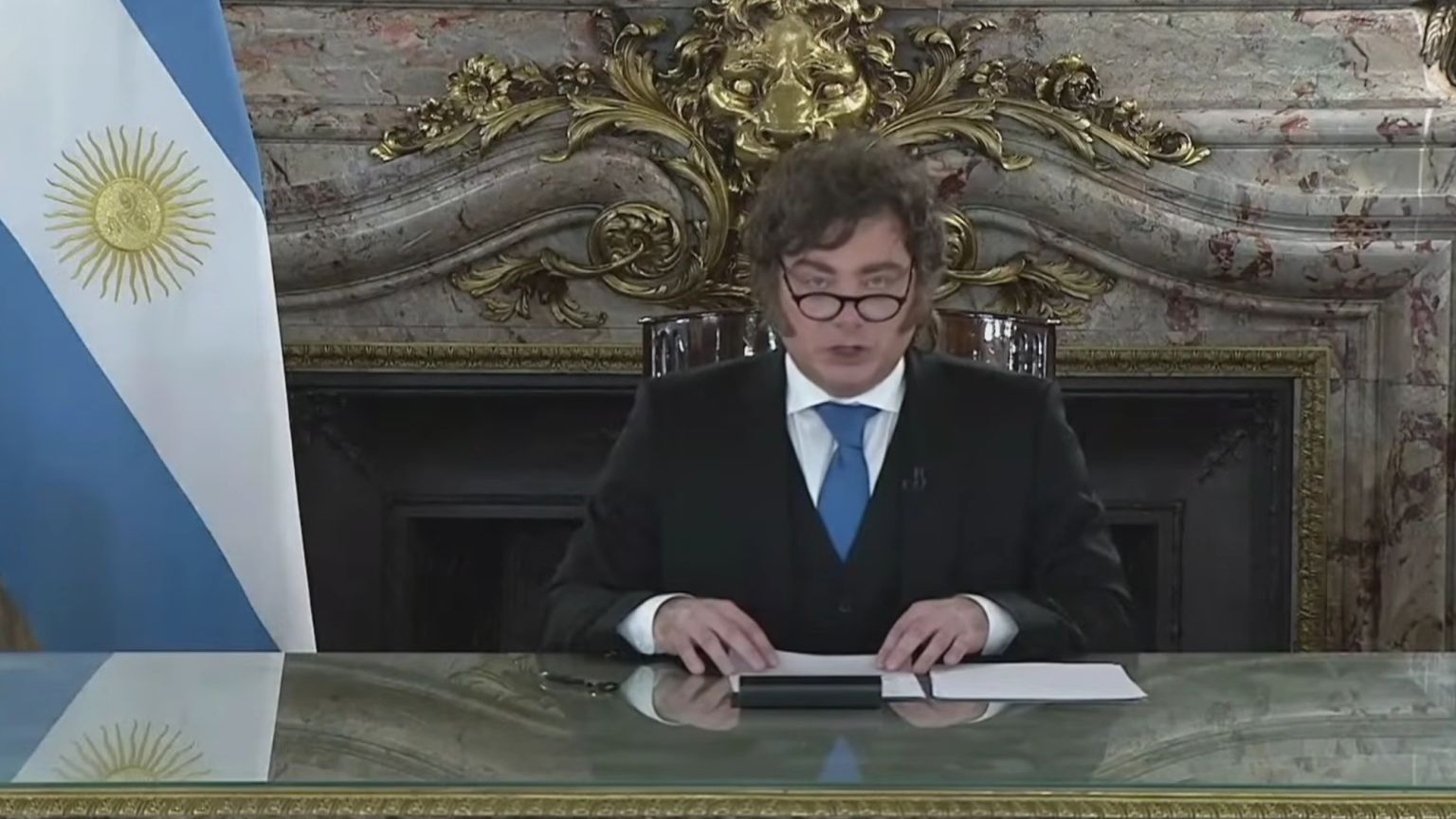
Argentine president Javier Milei finally went there. Addressing the nation last week, he reasserted Argentina’s claim on Las Malvinas – known to the rest of us as the Falkland Islands, the British Overseas Territory 300 miles off the coast of mainland Argentina.
‘The Malvinas are Argentine, historically and legally… there’s no debate about that’, Milei said of this remote South Atlantic archipelago, which was seized by Britain from a then newly independent Argentina in 1833. He was not threatening an invasion, like that undertaken by Argentina’s vicious right-wing military junta in 1982 – a move that led to war with Britain. Rather, he was threatening sanctions against any companies engaged in ‘oil-extraction initiatives’ in the North Falkland Basin.
The embrace of the cause of the Malvinas is something of an about-turn for this proud libertarian. Over the past two decades or so, his left-leaning predecessors all rhetorically exploited the Falklands issue as a righteous, anti-imperial cause of the Global South – and they were backed by their Latin American allies on the left, such as Venezuela’s Hugo Chávez and Bolivia’s Evo Morales. But the right-wing Milei was different. An avowed fan of British prime minister Margaret Thatcher (one of ‘the great leaders in the history of humanity’ as he put it in 2023), he used to downplay the significance of the Falklands War. In fact, he even echoed the British line that it was up to the 3,000-plus Falkland Islanders themselves to determine their own future, although he hoped that they might ‘one day decide to vote for us’.
So what’s changed? Why is Milei now eyeing up the Falklands?
Partly, there are domestic factors at play. Milei’s popularity ratings have plunged over the past year. His chainsawing cuts to state spending have brought sky-high inflation down to more manageable levels, but unemployment is still rising amid continuing economic struggles. So, with national elections now just over a year away, it seems Milei has pivoted to a rally-round-the-flag cause that has long proved popular among the Argentine public.
There is also a more material consideration in the shape of the vast, untapped oil fields in the seas around the islands. Indeed, Milei used his state address to announce sanctions on the firms planning to drill in the Sea Lion field – the Israeli company Navitas and its British partner, Rockhopper. Largely, one would surmise, because his administration wants Argentine companies in on the action, too.
Arguably, however, it is the geopolitical context that has done most to embolden Milei’s government, helping to turn this familiar Argentine flex into a major international flashpoint.
After all, his predecessors made similar statements, but these could comfortably be ignored. Milei’s intervention, however, arrives amid an increasingly violent rebalancing of global power, in which longstanding, postwar alliances and institutions are being pulled apart at the seams. This is partly what Milei meant in his national address, when he talked about the ‘winds of change’ blowing around the world favouring an Argentine claim on the Falklands.
The decay of NATO, in particular, is relevant here. Washington has long been irritated by European allies’ relative lack of investment in their own military and defence capabilities. What were once just cracks in this decades-old alliance have threatened to become ruptures since both Russia’s invasion of Ukraine and, above all, the US-Israel war in Iran. In both cases, the White House has felt that Europe is not pulling its weight. Indeed, it now seems that Britain’s failure to support the Trump White House in its assault on the Islamic Republic has prompted the US to explicitly cast doubt on the UK’s claim on the Falkland Islands.
In April, just over a month into the US’s Iranian venture, an internal Pentagon email, seen by Reuters, suggested the White House was considering withdrawing its formal recognition of Britain’s administration of the Falklands. This clearly sent a message to Milei, a Trump ally. Prior to this, any assertion of Argentine power – legal, military or otherwise – towards the Falklands would have risked damaging relations with the US. But no more. From that point on, the Malvinas have potentially been on the table for Argentina in a way they’ve not been for decades.
And then, just a few days before Milei addressed the nation last week, Trump told GB News that Britain was ‘not there to help me’ in Iran, before he brought up the Falklands, claiming that he doubted Britain would be capable of defending the islands in 2026 in the way it could in 1982. You didn’t have to be a Trumpographer to understand what The Donald was getting at – namely, that the UK will have to defend its claim on the Falklands without US support. Little wonder that when Milei said that the global ‘winds of change’ were behind Argentina’s sails, he explicitly cited ‘President Trump’s [declaration] that the US is re-evaluating its historic position in relation to the Malvinas’.
Milei’s national address also touched on another key factor that has helped reignite the Falklands row: the weakness and disorientation of the British state. Indeed, it is doubtful whether Britain has either the means or the will to defend these distant islands any more.
After all, Britain’s military strength is widely known to be at an all-time low. Its army is depleted, and its navy diminished – a worrying reality revealed to the entire world in March when Britain had to rely on French naval forces to defend a British airbase on Cyprus from a Hezbollah drone strike. And there’s little sign that the UK’s new government is committed to reversing this military decline.
But Britain’s weakness goes deeper than defence capabilities. It is intellectual and ideological, too. Britain is a nation whose political class is imbued with identitarian ideology and has little sense of the national interest, preferring instead to cleave to globalist institutions.
After all, Milei has already seen Britain try to relinquish its sovereignty over another of its overseas territories: the Chagos Islands in the Indian Ocean. The largest of the islands, Diego Garcia, hosts a critical joint UK-US airbase. Yet even this hasn’t stopped the UK government from trying to hand over the islands to Mauritius, a close ally of China, while paying billions to the Mauritians for the pleasure, all supposedly in the name of satisfying ‘international law’.
UK foreign secretary Ed Miliband has said of the Falklands that ‘the Islands are British and will remain so’. But his defiance is not very convincing. After all, this is a politician saturated in the globalist, legalistic thinking of New Labour.
Deeper still, there is now a profound indifference among the British public towards the status of a set of islands that are thousands of miles away. A YouGov poll in 2023 asked Brits how upset they’d be if the Falkland Islands stopped being British. Nearly half said ‘It wouldn’t bother me either way’. Among the young, the indifference is endemic, which is hardly surprising given they’ve grown up in a cultural and educational climate dominated by anti-Westernism and the ideology of decolonisation. According to a recent Telegraph poll, just 10 per cent of 18- to 24-year-olds want to keep the Falklands British.
None of this is to suggest that Argentina is actually about to make good on its claim on the Falklands. Milei’s focus is, for now, solely on the oil-drilling licences. Besides, the islands are actually far better able to defend themselves today than they were in 1982, with a garrison of 1,500 troops, backed by a state-of-the-art air-defence system, several fighter jets and a small naval force. And Argentina is far, far weaker militarily than it was under the rule of the junta.
But the Falklands row is not going away. Western fragmentation and Britain’s weakness have effectively advanced Argentina’s geographical and historical claim on the territory in a way that Javier Milei could never manage by himself. The future of these distant islands has rarely been as uncertain.
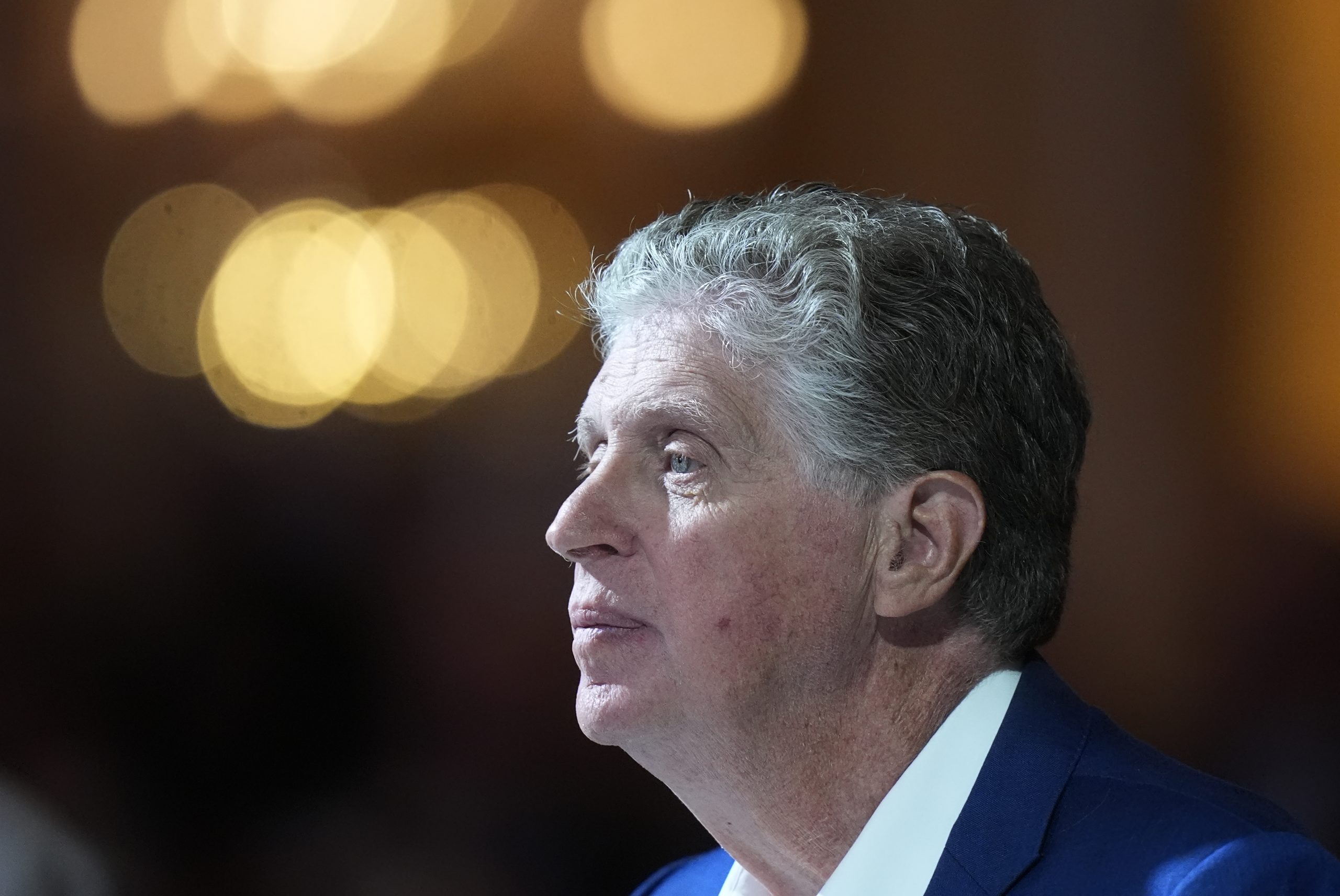

Rhode Island Democratic Gov. Dan McKee became the first governor in eight years in the U.S. to lose a primary, falling on Wednesday to former CVS executive Helena Foulkes and becoming the latest victim of a rough year for incumbents.
McKee’s campaign was bogged down by the botched handling of a years-long project to rebuild the Washington Bridge, which transports more than 70,000 drivers through Providence each day. The project has suffered from delays, cost overruns and disputes between state officials and former contractors that have raised questions about transparency and accountability for the project.
Foulkes spent much of the primary hammering McKee over his handling of the bridge project — a strategy that ultimately proved successful.
McKee had partially closed the bridge in 2023, and estimated at the time that it would fully reopen this summer. But last year, he said the bridge likely won’t be completed until 2028. Construction began in June.
Throughout his campaign, McKee continued to insist that the bridge project was handled well. He told The New York Times in August that “people are going to realize we did the right thing.”
The last incumbent governor to lose a primary was Kansas Gov. Jeff Colyer in 2018. McKee’s loss Wednesday adds to the substantial list of Democratic incumbents ousted in primary challenges, though this race didn’t feature the same generational and ideological contrasts as other primaries that have felled Democrats this cycle. Foulkes and McKee, both baby boomers, both ran center-left campaigns.
Foulkes’ victory adds a chapter to her family’s long political lineage. Her grandfather, Thomas J. Dodd, and her uncle, Chris Dodd, were both senators from Connecticut. She worked as an executive at CVS for over 25 years before launching a 2022 run for governor.
McKee won that round, but she got the final word on Wednesday.
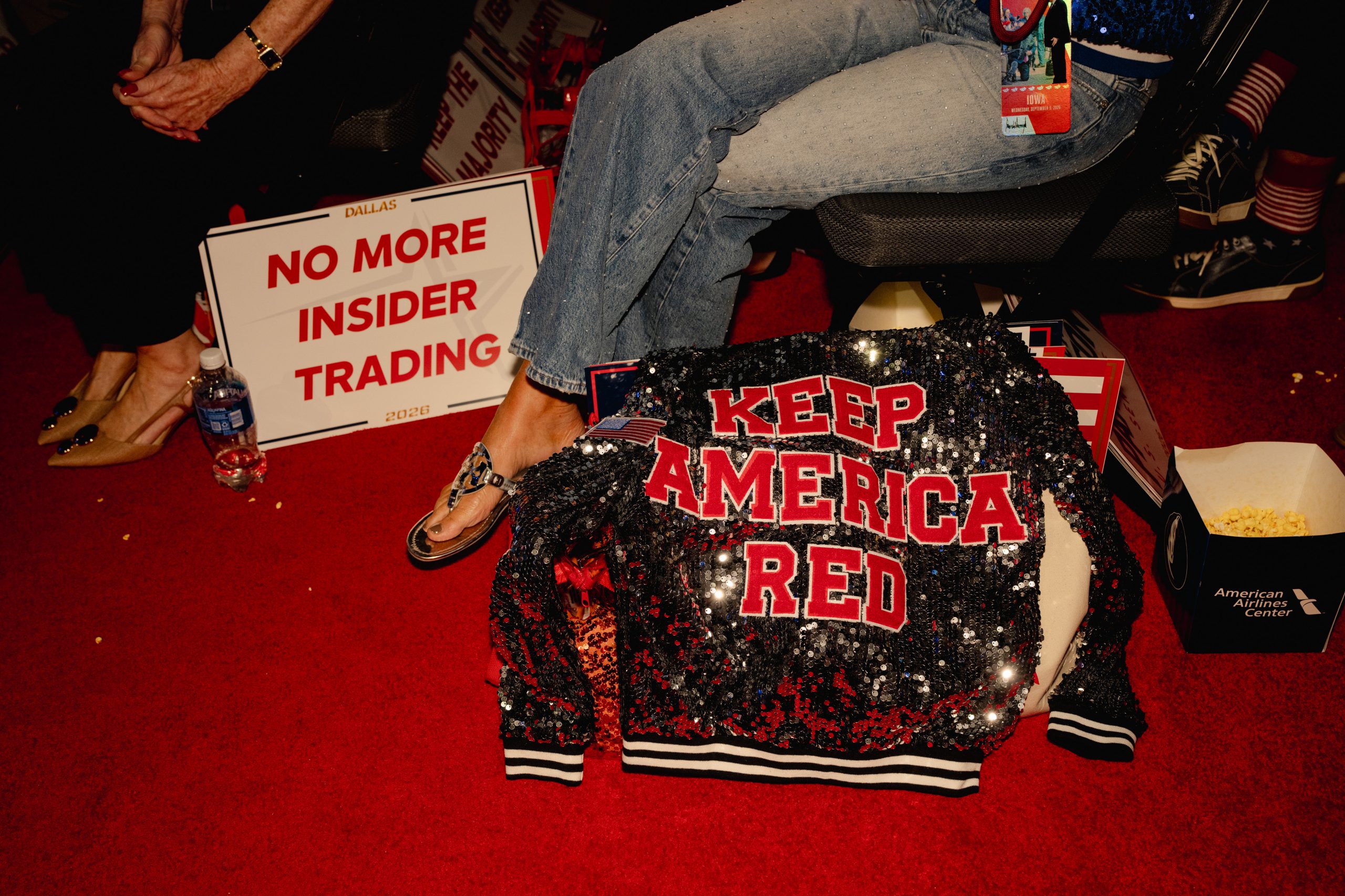

DALLAS — Republicans are panicking that President Donald Trump’s policies are drowning out their cost-of-living message — and that it may be too close to the election to fix it.
GOP lawmakers and candidates woke up in Texas on Wednesday to an alarming reality: Trump deepening his trade war with Canada as oil hit $100 per barrel, following new military strikes against Iran.
Publicly, Republicans plan to downplay their latest woes — or blame the Democrats. But several of them at the midterm convention this week are privately strategizing with GOP leaders and Trump administration officials to shore up vulnerable candidates in battlegrounds and in states the president won by double digits in 2024.
Vice President JD Vance is scheduled to address a breakfast Thursday with the delegations from Pennsylvania, Ohio, Michigan and Wisconsin, where Republicans are eager to hear how he will navigate the party’s economic woes, according to three people with direct knowledge of the matter, granted anonymity to share private plans. Others are pushing to use the convention to reclaim the cost of living issue that’s haunting Republicans after it buoyed them two years ago, planning to argue in their speeches that their party can still be trusted to bring down prices.
In a closed-door meeting Wednesday, a group of top senators and candidates in tough races — including Sen. Jon Husted (R-Ohio), North Carolina Senate nominee Michael Whatley and Georgia Republican Senate nominee Rep. Mike Collins — huddled with leaders from the Senate GOP-aligned super PAC met to discuss a battleground map increasingly under pressure as the party tries to fend off voters’ ire around the economy.
“You can’t hide the fact of what the price of gasoline is, we know that,” Collins told POLITICO in an interview after the closed-door meeting, as he reiterated his support for Trump’s efforts to neutralize Iran as a nuclear threat, arguing that the U.S. has long been at war with Iran but “we’re putting an end to it with this president.”
Many Republicans didn’t want to talk about economic concerns amid the party at the American Airlines Center in Dallas, where MAGA hats cost $47 (a discount from the $55 online) and water went for $8 a bottle.
“We are going the wrong direction,” said one GOP lawmaker attending the convention granted anonymity, like others in this story, to speak candidly of the spiraling economic indicators and the challenges they were creating. “We don’t have a lot of time left.”
Senior Republicans are quietly dismayed about the pileup of Trump economic moves that have rattled voters and key industries in their states — including the worsening trade war with Canada that threatens the auto and farm sectors in the Midwest, his step to import more foreign beef ahead of the midterms that’s infuriated ranchers and farmers from Texas to Iowa, along with spiking oil prices amid the war in Iran that are cutting across the map.
“We’re putting Iowa in play,” one frustrated senior House Republican said on the sidelines of the convention of the Senate map. “We’re putting Texas in play. They shouldn’t be.”
The one advantage they have: money. Battleground Republicans and GOP leaders have been itching for Trump to unleash his massive war chest to help them fend off Democratic attacks over voters’ concerns about gas and everyday costs among the ongoing war. Trump’s orbit started to make good on its promises Wednesday morning, doling out millions in spending for key Senate races through an affiliated Super PAC known as No Going Back PAC Inc., two people with direct knowledge of the matter confirmed.
But Republicans know that campaign funds can’t solve everything.
“We got to talk about the issues that people are dealing with. Families can’t afford their house, they can’t afford the food, they can’t afford health care, they can’t afford child care,” Sen. Rick Scott (R-Fla.) said in an interview in the convention hall.
He placed most of the onus on Congress to tackle those issues and cut spending, but admitted Trump’s war with Iran had economic consequences.
“We have higher gas prices now as a result of the president trying to keep us safe as a result of what Iran wants to do,” Scott said. “So that’s hopefully a short-term problem that he’s going to deal with by destroying the regime.”
In a statement, White House spokesperson Olivia Wales argued that Democrats “created the affordability crisis.”
“President Trump has spent every day in office working to undo their mess and lower costs for working families by signing the largest middle class tax cuts in history, lowering the cost of prescription drugs, permanently expanding the child tax credit, fueling wage growth, and reshoring American manufacturing to create more high paying jobs,” Wales said.
Natalie Baldassarre, a spokesperson for the RNC, similarly blamed Democrats for surging prices, adding that “Republicans are cutting taxes, lowering drug prices, and putting money back in families’ pockets.”
Several Republicans plan to use their convention addresses to blame their Democratic opponents for voters’ price pains and argue it’s Republicans who are putting more money in Americans’ pockets — like Mike LiPetri, who’s running to unseat Democratic Rep. Tom Suozzi in New York. Others plan to paint a rosier picture of the economy than many voters say is the case right now.
That’s been a hard message for Republicans to sell. An August POLITICO Poll shows that a 34% plurality of Americans hold Trump fully responsible for the state of the current U.S. economy, compared with just 17% who say the same for former President Joe Biden.
And the very real time crunch — with less than two months until the November election — was a tangible pressure throughout the day in Dallas, as Republican lawmakers, battleground candidates and party officials gathered for what was planned to be a grand event to celebrate GOP accomplishments and drive turnout.
“Look, I think obviously we want to continue to drive down costs, whether it’s energy, whether it is housing, whether it is groceries,” Rep. Mike Lawler (R-N.Y.), one of the most at-risk House Republicans in November, said in an interview. “We’re seeing, you know, obviously continued volatility in the oil markets, and we want to bring that down.”
Lawler, who is speaking at the convention Thursday night, touted Trump’s deal over Venezuela oil and largely blamed policy moves by New York Democrats for his state’s higher energy costs.
Trump told reporters Wednesday that oil prices are set to drop amid the ongoing U.S. conflict with Iran — but not until after the midterms, which is much later than those anxious Republicans would hope.
Some GOP hopefuls point to the overall goal to dismantle Iran’s nuclear capabilities as a necessary national security posture. The uptick in oil prices, therefore, is a short-term consequence for a greater long-term foreign policy success.
“We [have] to be patient with the fluctuations, especially with oil and what’s happening in the Gulf now,” said Marty O’Donnell, the Republican looking to unseat Democratic Rep. Susie Lee from her Las Vegas seat.
And the Republicans assembled in Dallas were the ones most likely to support the president — plenty of other lawmakers, including members running in tough races, stayed away, as did some rank-and-file Republicans.
“We have to hope that in six weeks the price per barrel goes down because it’s a big deal,” said one Georgia-based Republican strategist who is not attending the Dallas convention. “The Dems have been beating the daylights out of us on that for a while now.”
A GOP county chair in a region with House races that have been made more competitive by Trump’s unpopularity echoed those concerns.
“There’s no other commodity that when you drive down the street, you see the price,” said the county chair who also wasn’t in Dallas. “I know what gas costs because it’s on a fucking billboard on every intersection, and I’m forced to see it. It’s the most visible indicator of the economy, where we stand.”
And while Republicans are hoping that Trump can get his party’s economic messaging on track in his convention keynote address Thursday, some aren’t holding their breath for a major breakthrough.
“Maybe, maybe, maybe, maybe, maybe the president delivers a coherent speech that is clear, that is direct, that is policy oriented, that is forward-looking, and they can cut that up in social media and post that up all over the place,” said the GOP county chair. “Will he do that? Absolutely not.”
Mia McCarthy contributed to this report.
Politics
Politics Home | TUC Head Urges Government To Reject Choice Between Defence Spending And Public Services
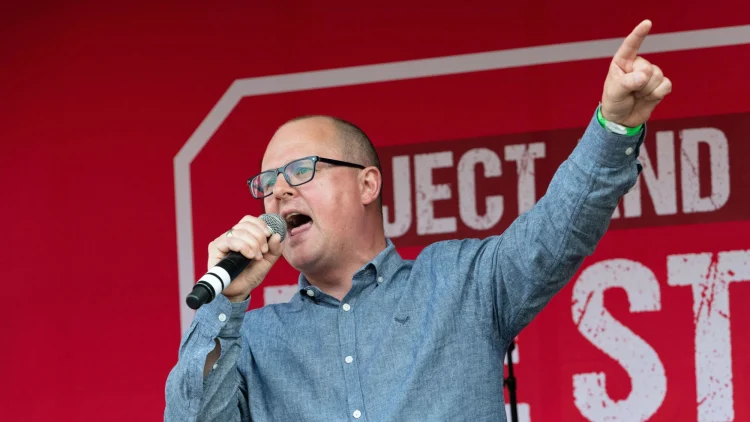

Paul Nowak, general secretary of the Trades Union Congress, addressing a rally in 2023 (Alamy)

6 min read
Paul Nowak, general secretary of the Trades Union Congress (TUC), has urged the government to “reject the right-wing argument” that there is a choice to be made between increasing defence spending and investing in public services.
Speaking ahead of the TUC conference that begins on Sunday, Nowak told PoliticsHome: “We should fundamentally reject the right-wing argument that somehow it is a choice between investing in our national and collective security, and investing in our schools and hospitals and infrastructure. I just reject that choice out of hand.”
Andy Burnham told MPs at Prime Minister’s Questions on Wednesday: “Yes, we do everything to support our national security, but it can’t come at the expense of social security.”
Although the Prime Minister restated the government’s commitment to defence as “absolute”, his comments were criticised by the Conservatives, who accused him of “prioritising the ballooning benefits bill over our national security”.
The TUC passed a “Wages not weapons” motion at its conference last year, which opposed immediate rises in defence spending and noted that “in the current political context, ever-higher expenditure on arms will inevitably mean less money for our education, health, and councils, and the green transition”.
Asked whether he had since been lobbying the government not to increase defence spend, Nowak replied: “That wasn’t what we agreed last year, and I, the TUC, we are not going to campaign on ‘this is the right level of spending on defence’. I’m not a defence expert.”
Trade unions including the University and College Union (UCU), which proposed the motion at TUC last year, would like to see a clearer position against government increases to military budgets.
UCU general secretary Jo Grady said: “TUC policy is clear and we will be looking to reaffirm that this year via the unions movement’s democratic processes. We would then expect the TUC to fully support the democratic will of the movement.”
In a wide-ranging interview, Nowak – who is from Merseyside – welcomed Burnham as Prime Minister, joking: “I’m always keen to see Evertonians in positions of power… We’re finally getting the recognition on the international stage that we deserve.”
He said that under Keir Starmer’s leadership trade unions had a “sense” of “being managed as political stakeholders” by the government, but with Burnham at the helm he hoped “unions feel that this is a government that sees them as legitimate partners”.
Nowak warned Burnham against calling a general election before the Employment Rights Act changes are implemented, however.
The union leader described himself as “pretty agnostic” about the possibility of an early snap election, but added: “Do I think that the public is champing at the bit for another general election? I really don’t…
“It’ll be down to Andy Burnham as Prime Minister and his government to think, ‘Have we got enough room for manoeuvre within the manifesto commitments that we’ve got?’
“I certainly think on things like employment rights, for example, there is still a huge amount of unfinished business, and what I wouldn’t want to see is that business remaining unfinished because we had an early general election.”
Nowak said he wanted the Employment Rights Act to be implemented “further and faster”, flagging that “the first big test for the government” will be on guaranteed hours for workers.
“It would be an absolute travesty if we ended up in the situation where people, for example, on nine-hour contracts are excluded from the scope of the guaranteed hours provision,” he said.
“There will be some employers who are just addicted to one-sided flexibility… and they are going to fight tooth and nail against proper right-guaranteed hours. I think the Prime Minister’s got to be prepared to face them down.”
The TUC general secretary said the other “unfinished business” included “the biggest wave of public sector insourcing”, “the fair pay agreement in social care” and “the school support staff negotiating body”.
He added that the unions are “serious about Employment Rights Act Two” – the demand for a second instalment of the workers’ rights legislation already passed – which he specified should include measures on corporate governance.
“It’s bizarre that 19 European countries have some sort of provision for workers on boards, but we don’t,” he said.
Speaking to PoliticsHome, Nowak also urged Chancellor John Healey ahead of the Budget to give himself “more flexibility to invest in our infrastructure and in public services because we are desperately going to need it”.
The TUC head advised that the bank surcharge should be increased, saying: “If you put it up to 35 per cent – which is the level the Tories put the windfall tax on the energy companies at the height of the energy price spikes – that generates £60bn over the next four years.”
While refusing to “prejudge” the upcoming TUC conference debate on changing the fiscal rules, he called on the government to reform the Office for Budget Responsibility (OBR), describing the watchdog as being “established by George Osborne as a tool of austerity”.
“I want the remit of the OBR reviewed. I think at the moment it’s acting as a break on growth rather than a driver of growth,” he said.
Nowak also criticised the National Wealth Fund’s aim to break even by 2031, saying: “Infrastructure investments don’t pay off in three or four years, or even five years, or sometimes 10 years… You’ve got to take a much longer-term view.”
And he said the government should ensure that when it takes a stake in a company through GB Energy or the National Wealth Fund, it is counted as a public sector asset – enabling more investment.
The TUC general secretary backed further action on the water industry, including putting Thames Water into special administration.
“Why the hell are we rewarding big outsourcing companies with hundreds of millions of pounds in dividends each and every year when they are failing to deliver our basic public services?” Nowak asked.
“I think especially Thames Water should be placed into a special administrative regime. I am absolutely convinced that that not a single pound of taxpayers’ money or bill payers’ money should be spent on rewarding Thames water shareholders and senior management for continued failure.
“You’ve got to put in place safeguards for the taxpayer, you’ve got to put in place safeguards for the people reliant on Thames Water services, and you’ve got to put in safeguards for the workforce as well because there’s big issues about pensions and pay. But I don’t think anyone thinks that we should bail them out with another single pound.”
New Environment Secretary Angela Eagle recently said the move would be more complicated than assumed by some activists, saying: “Whatever people think of Thames at the moment, it isn’t technically insolvent.”
!function(n){if(!window.cnx){window.cnx={},window.cnx.cmd=[];var t=n.createElement(‘iframe’);t.display=’none’,t.onload=function(){var n=t.contentWindow.document,c=n.createElement(‘script’);c.src=”//cd.connatix.com/connatix.player.js”,c.setAttribute(‘async’,’1′),c.setAttribute(‘type’,’text/javascript’),n.body.appendChild(c)},n.head.appendChild(t)}}(document);(new Image()).src=”https://capi.connatix.com/tr/si?token=19654b65-409c-4b38-90db-80cbdea02cf4″;cnx.cmd.push(function(){cnx({“playerId”:”19654b65-409c-4b38-90db-80cbdea02cf4″,”mediaId”:”d92c0ad2-6f4c-4f79-b5dc-04b2016eba80″}).render(“6aa1d962e4b086ecc55fc98c”);});
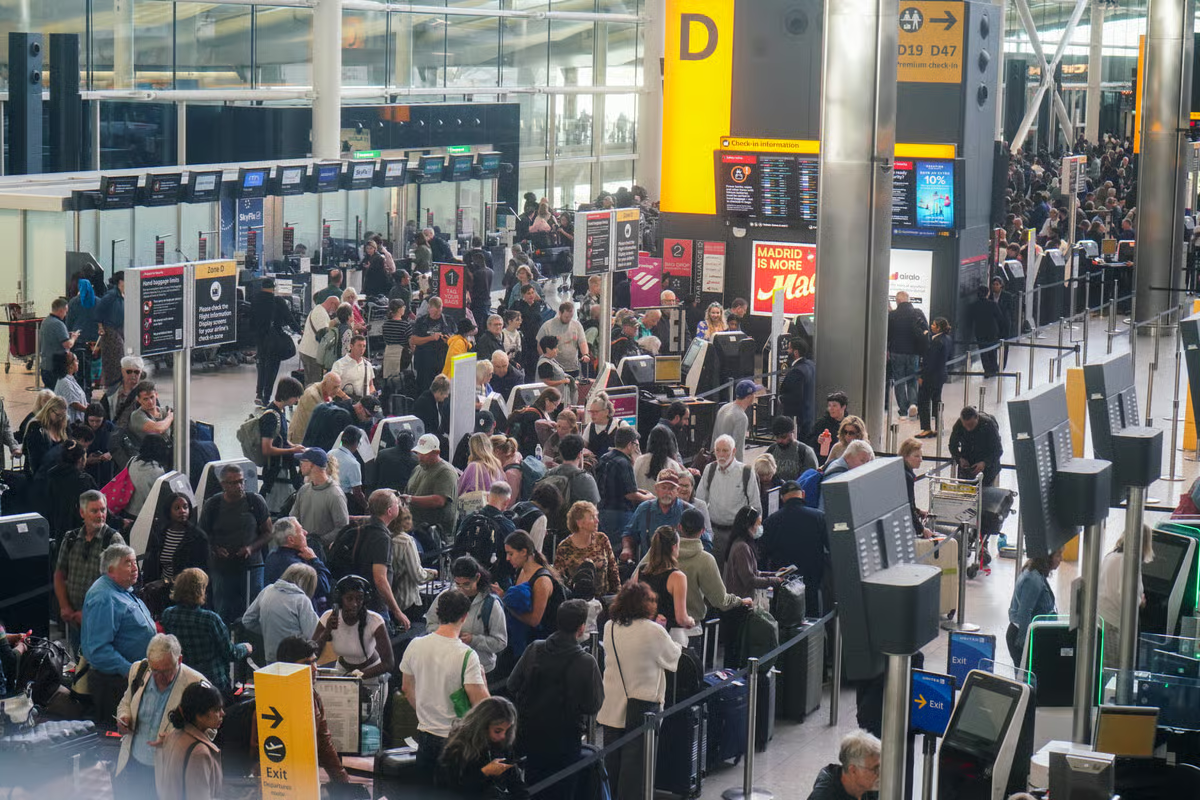
Heathrow and Gatwick delays LIVE: Dozens more London flights cancelled as disruption stretches into third day
Grab Holdings in talks to buy majority stake in Singapore BNPL firm Atome – report

Unicoin takes Uniswap to court over UNI trademark dispute


-
 Crypto World1 day ago
Bitcoin price risks $76K drop as $78K support weakens
-
 Tech2 days ago
Memory prices are slowing because buyers ran out of money
-
 Crypto World1 day ago
Ethereum price stalls below $2,500 as ADX drops to 11
-

 Crypto World2 days ago
Robinhood Stock: How To Take Advantage With Reduced Risk
-

 NewsBeat1 day ago
What went right this week: an ‘historic’ fall in violent crime, plus more
-
 Crypto World23 hours ago
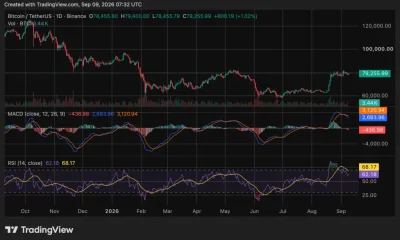
Bitcoin price holds near $79K as cycle drawdowns narrow
-
 Sports2 days ago
Phones confiscated, players sent home: Pakistan’s England tour turmoil revives memories of Mohammad Amir, Salman Butt and Mohammad Asif’s 2010 Lord’s spot-fixing scandal | Cricket News
-

 NewsBeat2 days ago
England up in reading, maths and science rankings as Scotland and Wales dip
-
 Crypto World2 days ago
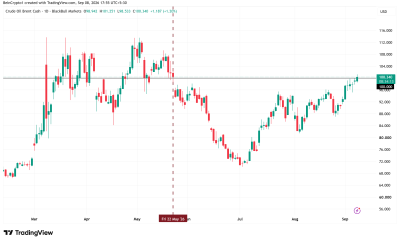
Brent Crude Oil Moves Above $100 for the First Time in 3 Months
-
 Business1 day ago
Meta debuts long-awaited personal AI agent, Muse
-
 Crypto World7 hours ago
Bitcoin price risks $70K if $78K neckline breaks
-

 Crypto World2 days ago
Visa expands stablecoin card network to 160 programs
-

 Business2 days ago
Egyptian TV Presenter Sarah Khalifa, 11 Others Sentenced To Death In Major Drug Trafficking Case In Cairo
-
 Tech2 days ago
Strong Password Policy and Password Manager Guide
-
 Crypto World2 days ago
Intel Stock Jumps 9% on Chip Price Hike Report, US Stake Gains $36 Billion
-

 Crypto World2 days ago
Pump Fun and Kraken delete Hunter Biden $LAPTOP promotion
-
 Tech1 day ago
Meta debuts its Muse AI agent. Will consumers trust it?
-

 Entertainment1 day ago
Big Brother Spoilers: Dee SPINS & HUSTLES Votes – Yash Questions the Pact
-

 Business1 day ago
ServiceTitan, Inc. (TTAN) Q2 2027 Earnings Call Transcript
-
 Tech2 days ago
Google’s revived nuclear power plant gets $1.9B loan from US government
You must be logged in to post a comment Login