
Politics
Scottish Greens unveil plans on midwife training and household repair scheme

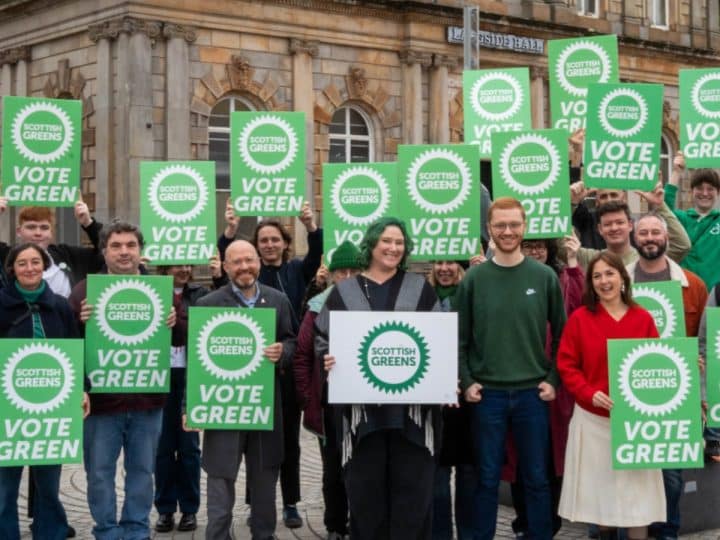

The Scottish Greens have been laying out policy plans ahead of the Holyrood elections on 7 May. The party is hoping for a “breakthrough” result.
They’ve pledged action to make maternity care safer for women, babies and staff. The Greens would introduce earn-as-you-learn routes to bring more people into the midwife profession and ensure that financial barriers don’t put off those who want to train.
And as part of plans to cut the cost of living and protect the environment, the Scottish Greens will introduce a Scottish Repair Voucher scheme. This would allow people to get a discount on repairing household goods at participating manufacturers and retailers.
Safer maternity services
Earn-as-you-learn midwife training is part of a range of measures. These will also include minimum safe staffing levels on all maternity and labour wards.
The Scottish Greens say the changes are vital to ease pressure on overstretched maternity services. And they would ensure women and families get the safe, high-quality care they deserve throughout pregnancy, labour and the postnatal period.
Scottish Greens co-leader Gillian Mackay said:
Too many women and families are being let down by a maternity system that is under enormous strain while midwives are being asked to do more and more in overstretched services. That is not fair on them or on the people relying on their care.
For far too long, staff have been carrying the burden of workforce shortages, rising pressure and a system that is too often stretched beyond safe limits. That has real consequences for the quality of care, for staff wellbeing and for the confidence families should be able to have in maternity services.
Dignity, safety and making sure every family gets the care they deserve at one of the most important moments in their lives is crucial. Women should know that when they need care, the right staff will be there, with the time and capacity to support them properly.
That is why the Scottish Greens are committed to introducing minimum safe staffing levels on all maternity and labour wards and expanding the midwife workforce by creating accessible earn-as-you-learn routes into midwifery.
Because, if we are serious about fixing the staffing crisis, we need to remove the barriers that prevent more people from taking up training in the profession in the first place.
On 7 May, people have a chance to vote for the Scottish Greens who will demand better for women’s health, better for maternity care and better for the staff who keep these services going.
Greens to introduce Scottish Repair Voucher scheme
A coalition of charities and waste management groups launched the UK’s first repair voucher pilot scheme in North London in 2025. It allowed residents to get up to 50% off the cost of repairs at participating businesses.
Similar schemes have already proven successful in other European countries, including Austria, France and Germany.
This is part of a package of measures that the party is proposing to reduce waste and save people money. This would include a requirement on some product manufacturers to take back used products, such as mattresses and textiles, at the end of their life.
Mackay said:
If we’re serious about tackling the cost-of-living crisis and the climate crisis, then we have to make it cheaper and easier for people to do the right thing. Our repair voucher scheme will make it cheaper to repair the things we already own rather than buying them again as new.
It is a simple and straightforward way of putting money back into people’s pockets. By covering part of the cost of fixing everyday items, we can help households to stretch their budgets and avoid unnecessary big purchases.
The benefits are wider, as it will also help us to cut waste while supporting local repair businesses. It’s a win for households struggling with the cost of living, and a win for the small businesses rooted in our communities.
These kinds of schemes are already common across Europe and are already helping to support people through the cost of living crisis while reducing waste and protecting our planet. It’s time to do the same in Scotland.
Featured image via the Canary
By The Canary

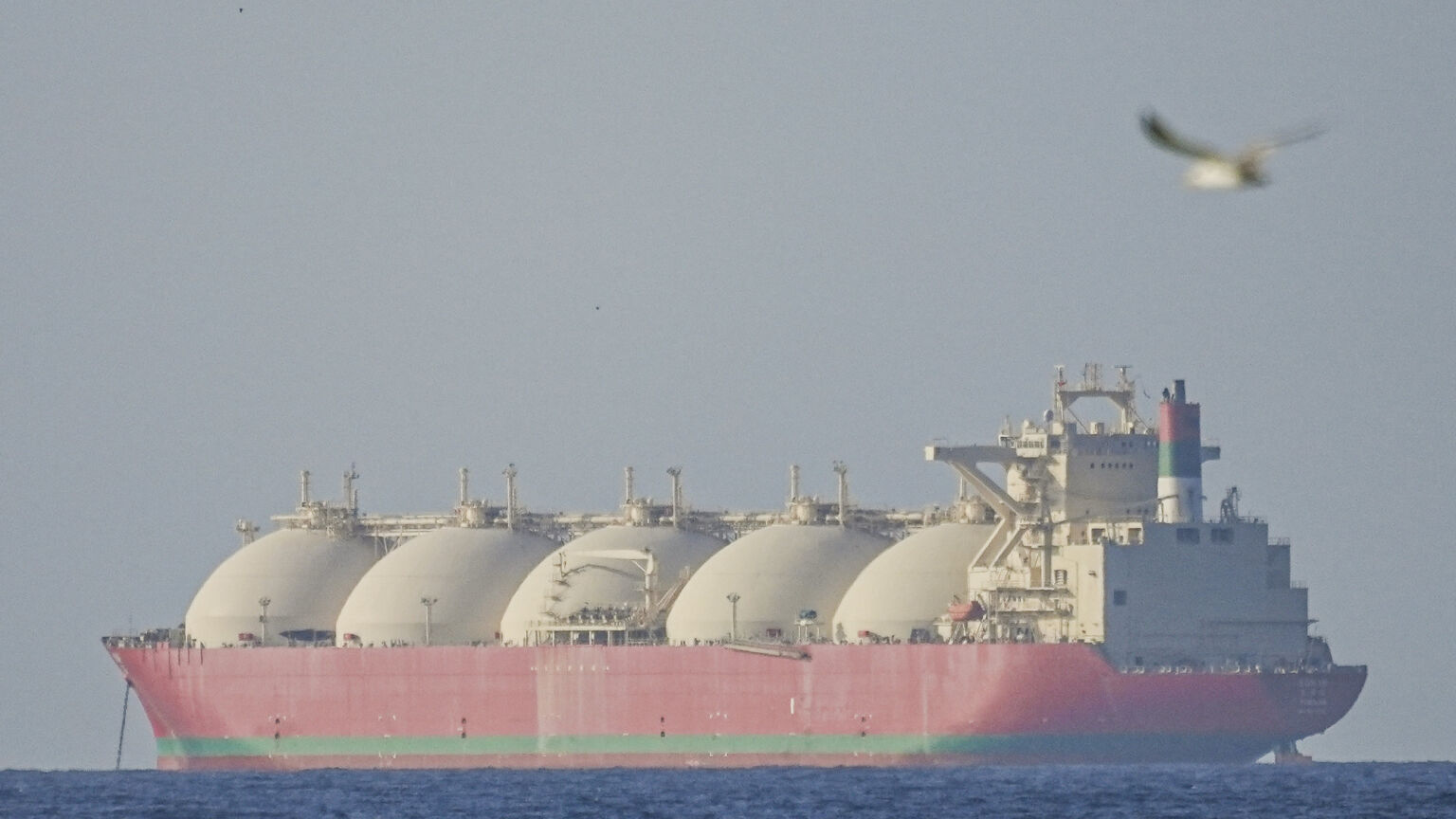
Whatever one thinks of the current war in Iran, allowing the fundamentally unstable Islamic Republic power over the world economy is truly a fool’s errand. In many ways, Iran’s attempt to control the Strait of Hormuz and the Red Sea is playing out in waters long shaped by piracy and imperial rivalry.
Rather than seek to placate the potentates, crowned or turbaned, the West should instead focus on making the Gulf irrelevant again. Since the days of the Silk Road, where the area played a critical role as a link between Asia and Europe, few in the period of European ascendancy worried much about these territories – that is, until they discovered huge pools of energy there a century ago. Since then, these countries have, at different times, disrupted global commerce and promoted forms of largely Islamist militancy throughout the world. Even Dubai, arguably the most enlightened of the Gulf monarchies, may not be able to thrive long-term in its awful neighborhood.
This is a lesson we should have learned during the oil embargo after the 1973 Yom Kippur War. The Saudi-led effort drove most of the capitalist world into a deep recession. The embargo hit hard because the energy business had swung, in economist Tyler Goodspeed’s words, from ‘a Gulf of Mexico oil market to a Persian Gulf-centric one’. That trend now shows signs of reversing, even if doing so may hurt the Trump family’s financial interests in the region.
To be sure, it will take years, not months, to unwind this primacy. But both the need and the means are clear. Most significant is the US transition from a mega-consumer of energy to the world’s largest producer of oil and gas – giving it the kind of leverage that did not exist in 1973. This shift predates Trump. Fracking boomed under President Obama. President Biden, facing inflation-driven political pressure, expanded drilling in the Gulf of Mexico and Alaska and approved a new LNG plant in Louisiana aimed largely at supplying Europe.
Energy abundance has already made the US far less vulnerable to disruptions in Hormuz, and the boom may only be beginning. Estimates suggest public lands may contain nearly 30 billion barrels of oil and 391.6 trillion cubic feet of gas – enough to supply the US for years. States such as Texas, Louisiana, Oklahoma, North Dakota and Pennsylvania could even benefit if shipping shifts from the Persian Gulf to the Gulf of Mexico. A proposed Alaskan pipeline could also prove vital for Asian markets.
America’s surge forms part of a broader push to develop new energy fields. Advances in fracking, horizontal drilling and geological surveying are turning multiple regions into potential energy superpowers. Canada, once wedded to anti-fossil fuel policies, now aspires to that status, as prime minister Mark Carney suggests. With the world’s fourth-largest oil reserves, it is seeking pipelines to reach Asian customers.
Perhaps the most promising developments are in South America. Venezuela’s vast oil reserves – the largest in the world – could lead to renewed production following the US toppling of Nicolás Maduro, opening the door to US oil companies after years of mismanagement. Mexico, another potential energy powerhouse, has begun embracing fracking to reduce dependence on US imports.
Right next door to Venezuela, Guyana is home to huge oil and gas deposits, putting it in the top 20 in terms of reserves, surpassing Norway. Maduro threatened to seize these fields, but now with him gone, US oil companies can exploit a potentially huge energy cornucopia. Together, what Foreign Affairs calls the ‘Americas quintet’ – the US, Argentina, Brazil, Canada and Guyana – may yet erode the Middle East’s oil dominance.
Then there’s Africa. The UN projects its population could rival Asia’s by 2100, and this booming population will need power. European NGOs like to pressure African leaders to go with solar and wind, which critics, such as Austin Williams on spiked, have described as ‘neo-colonialism gone green’. This advice is clearly being rejected by governments in Senegal, Nigeria and South Africa – and increasingly in Ghana, Tanzania, Uganda and Mozambique – which are instead pursuing fossil-fuel development.
Demand from India will further support this trend. Like many African nations, India prioritises energy access over emissions targets. Advisers to prime minister Narendra Modi have openly criticised what they call ‘Western carbon imperialism’. In such contexts, even coal is often seen as preferable to the health risks of burning biomass fuels.
Some, including South Korea’s president, think current energy shortages will accelerate the shift to renewables; others claim that China will be the winner in the post-fossil-fuel future. Yet, as Mark Mills of the Manhattan Institute notes, global oil consumption has risen by 30 per cent over the past quarter of a century. In the words of one former Net Zero campaigner, writing in the Free Press, the movement’s passion has run up against ‘the inconvenience of reality’.
Barring a massive disruption, fossil-fuel energy will remain critical through the next few decades. Trillions have been spent on green energy over the past 20 years, notes energy entrepreneur and investor Brian Gitt, yet the percentage of global power generated by fossil fuel has barely declined – from 86 to 81 per cent since 2010. The bulk of greenhouse-gas reductions have come from substituting natural gas for coal.
Efforts to ban fossil fuels prematurely, particularly without nuclear power, have proven disastrous. California illustrates the risks: once responsible for 40 per cent of US oil production, it now accounts for just two per cent and relies heavily on imported energy. The result has been higher prices, increased electricity imports and mounting strain on households and industry.
With energy costs among the highest in the US, California faces growing pressure not only on consumers but also on its tech sector, where energy-intensive AI development is expanding rapidly. Companies may ultimately look elsewhere for more reliable and affordable power. Governor Gavin Newsom likes to blame Trump – who else? – and the evil oil companies for the high prices, but more than half the price is the result of state regulations. The state excise tax on gas is now the highest in the US.
Australia, another nominally energy-rich country, with vast supplies of coal, is performing a similar act of economic seppuku. Its Net Zero obsession has meant a forced transition to renewables, resulting in higher prices and deindustrialisation. Once a winner in the energy wars, Australia is purposely undermining its own prosperity.
By far the most consequential and damaging policy agenda comes from Europe. The decision by the EU and the UK to embrace foolishly concocted green policies, including in some places the phase-out of nuclear power, while restricting domestic fossil-fuel production has increased dependence on external suppliers and left the region vulnerable to disruption.
As energy analyst Robert Bryce notes, this is despite the continent’s untapped fossil-fuel reserves. According to the European Parliament, Europe holds substantial shale-gas reserves, yet seven European countries have decided to ban fracking. Britain also has enormous oil and gas reserves that, as spiked has reported, it refuses to use.
The current German energy minister has acknowledged the problem with this approach. She said this month ‘that by ignoring costs’, the so-called energy transition will ruin the country ‘it claims to save’.
As for the rest of the economy, the outlook is also bleak. Energy prices are so high that Germany’s long-admired industrial base is threatened, as they are across the continent. Just recently, McKinsey suggested that Volkswagen shut down eight of its 10 German plants, due in part to energy prices. High energy prices have shifted more production to places like the US. Today, the states of Alabama and Mississippi now produce more vehicles annually than Italy or the UK. By some accounts, Brits are now, on average, poorer than Mississippians.
Rather than reducing their nations’ reliance on the Gulf for energy, British and European leaders seem resigned to their dependency. The rot here comes from the top, including academics who continue to claim renewables are cheaper than fossil fuels. European elite opinion, epitomised by The Economist and the Financial Times, seems more interested in criticising the US than protecting the continent’s basic interests.
This means that, increasingly, Europe and Britain will be leaving their futures in the hands of some of the most reactionary regimes on Earth. The Islamic Republic of Iran is the current focus, for obvious reasons. But other regimes in the region, such as Saudi Arabia, Oman and terror sponsor Qatar, are all autocracies and embrace varied forms of Islamic supremacism.
Rather than try to score points against the US, other Western powers need to wake up to the need to develop their own energy supplies. Even if Trump manages to secure the Strait of Hormuz, we can expect disruptions in the future from the Gulf. A better option lies in making the Gulf irrelevant again, not by turning back the clock, but by ensuring it no longer holds such sway over the global economy.
Joel Kotkin is a spiked columnist, a presidential fellow in Urban Studies at Chapman University in Orange, California, and a senior research fellow at the University of Texas’ Civitas Institute. Find him on Substack here.
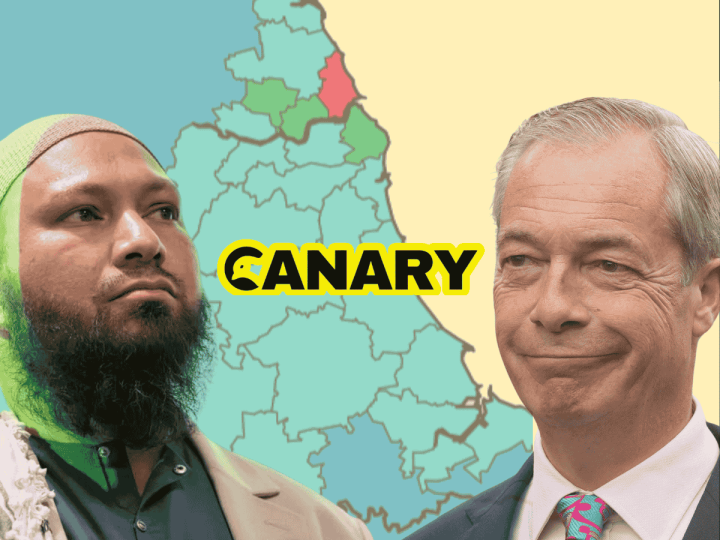

Mothin Ali stood in the Gurdwara Siri Guru Singh Sabha on Saturday 18 April and did what every political leader should do. Despite turning up pale-faced and poorly, the Green Party co-leader fought through it and delivered one hell of a speech. It was a stunning masterclass in the politics of hope that hit the right notes in the North East of England, an area struggling to survive.
But whilst Ali was pushing through illness to offer the North East a lifeline, the room he spoke to was only three-quarters full. This is the reality of the area in 2026. A region where politics is just another empty word.
The North East urgently needs a politics of hope, but the politics of hate is so much louder. Reform UK fills the void, and it fucking sucks.
The North East: UK’s industrial heartland is a political vacuum
The North East is a fucking sad place. Once upon a time it was the home of the Labour Party. It’s where the Durham Miners Association and the trade unions dominated. The skyline of steelworks and the mining communities forged the area into the impenetrable ‘Red Wall’.
For a century, the people of the north-east built the world, forged the railways and we were the source of the UK’s economic growth. The heavy industries of the Tyne, Wear and Tees dominated the world. But today, that history is weaponised by Nigel Farage and Reform UK.
Whilst the Green’s were rallying in a room, Farage was filling the Sunderland Arena on Thursday 26 March. He filled that arena with his hate-filled politics of division that thrives when people feel abandoned.
Farage and Tice haven’t just turned up for a photo op. They have occupied the North East entirely. This year we have seen these arseholes touring Sunderland, Durham and Teesside and it’s working. Farage has even said he’ll try to bring Trump to Teesside. Their presence is slowly chipping away at the ‘Red Wall’, and they’re rapidly turning this part of the map a sickening shade of light blue.
The disgusting physical presence of Reform leadership is a stark contrast to the Green leadership. Polanski has spent most of this year in the south of England and London. Once again, the North is a footnote in politics. The politics of hope and change doesn’t seem to reach the area which really needs it the most.
Reform is full of shit, but shit sticks
Reform UK is projected to pretty much clean house in the North East. Farage is promising a ‘breath of fresh air,’ yet it’s tainted with the smell of bullshit. But in truth, the snake-oil salesman would impoverish the North East even more.
Reform’s ‘Contract with the People’ contains nothing but hollow promises that would ruin the region’s future.
Farage wants to scrap all £10 billion of renewable energy subsidies. The North East could potentially gain £1.9 billion and create up to 27,000 new jobs by 2050. The area is earmarked to head the Green revolution in the UK, to regain its status as a powerhouse of industry. And yet Reform has got the sheep voting for the wolf it seems.
Reform’s new model for the NHS also spells a death sentence for these voters. Moving towards an ‘insurance-based’ system in a region with some of the highest health inequalities and chronic conditions will be a death sentence for so many. In a place where 21% of all the population lives in poverty, how the fuck are they meant to afford private healthcare? People are going to die if the Red Wall turns blue.
And whilst Reform screams about cutting taxes, the councils they lead like Worcestershire, have seen tax hikes as high as nearly 9%. In a place like Middlesbrough that’s money which could go towards feeding a hungry child.
Being the voice of the voiceless
Despite the room not reaching capacity, Ali’s performance in Newcastle was stunning. He didn’t just stick to the same, tired old script that most leaders do. He spoke directly to the structural issues that fuel the fire of Farage.
Using the quickly-put together stage to target the ‘Red Tory’ policies of Labour and pushing the narrative that the North East is being forced to choose between two versions of the same old establishment neglect, Ali hammered that the Greens are the only viable alternative for voters who feel betrayed. That the battle is now Greens vs Reform — and the Greens need money to help make it happen.
His speech was grounded in the region’s reality. Ali claimed that the Green party is now a national force and not just London-centric. However, this is something that’s getting harder to believe when the region hasn’t seen Polanski at all in 2026.
Ali is calling for a campaign built on grassroots door-knocking and canvassing to reach 28,000 voters across nine councils. It can be done; the passion was evident in those watching him. But how can the Green party call for this kind of commitment when the leadership seems to forget that the North East exists.
If they turn it around, if they gain footing in the region, it would be an incredible powerhouse for change. But just like every other political party, the area seems to be invisible, and therefore, its potential is lost.
The North East of England needs action, not words
The Greens hold the policies which can revive the North East. They’re calling for an annual £5 billion increase in local government funding and a £29 billion plan to insulate homes. The old mill houses that dominate the North East really fucking need that.
But I have one thing to say to the Greens: The North East is sick of being talked at. Ali’s word were fucking wonderful but they remain empty. When the Greens are polling at 18% nationally, neglecting the one area that is ripe for a green industrial revolution seems like a massive oversight.
The North East doesn’t need more photo ops. It needs a party of hope which will fill arenas and actually fight to turn the ‘Red Wall’ Green. If the Green Party doesn’t fill this political void, the hatred and bullshit of Reform will continue to win.
The upcoming May general election is a battle for the soul of the North. So, will the Green’s show up and save it or will the population vote to shoot themselves in the foot through pure, political neglect?
Featured image via the Canary
By Antifabot


Eli Hazan has reportedly just moved from running communications for Benjamin Netahyahu’s extremist Likud party to direct Netanyahu’s own press office. He’s well qualified for the position, even admitting to supporters that he “fabricat[es] fake news” for propaganda purposes.
Speaking in Hebrew, Hazan claimed Israel needs to be (even) more like Trump in its shameless dishonesty.
The only issue with Hazan’s comment is the idea that Israel isn’t already at least as mendacious as Trump.
From making up claims of Palestinians raping women and beheading babies to denials of bombing hospitals, to then making up claims of Hamas bases to justify bombing the hospitals, to smearing journalists as terrorists and murdering them with their families, Israel is a ‘dab hand’ at lies. Not to mention the whole “most moral army in the world” nonsense.
It could teach even the US liar-in-chief a trick or two. Israel is so dishonest it even has to pass laws to ban its own citizens from mentioning how its Gaza atrocity propaganda fell apart like a cheap suit.
So there’s no surprise at all that Netanyahu’s PR chief admits he made stuff up. Just that he treats it as if it’s a new or derived phenomenon.
Featured image via Wikimedia Commons
By Skwawkbox

Experts think that having a close network of loved ones as we age might protect us from dementia risk.
But a new study has found that while loneliness can impair your memory as you age, that might not translate into full-blown dementia.
Published in Ageing and Mental Health, the research concluded that, “Loneliness is associated with lower initial memory performance in older adults but does not accelerate the decline in memory function over time”.
How does loneliness affect memory?
In this research, scientists looked at data from the Survey of Health, Ageing and Retirement in Europe (SHARE) programme.
This involved 10,217 individuals over 65. They were asked to self-report their levels of loneliness and were given memory tests over a six-year period.
“Participants with high loneliness at baseline demonstrated significantly lower immediate and delayed recall scores than those with low or average loneliness,” the research reads.
But years into the study, lonelier people didn’t see the memory decline you’d expect with something like dementia. The changes appeared to be more short-term than that.
Lead study author Dr Luis Carlos Venegas-Sanabria said, “The finding that loneliness significantly impacted memory, but not the speed of decline in memory over time was a surprising outcome.
“It suggests that loneliness may play a more prominent role in the initial state of memory than in its progressive decline.”
Calling the results of previous studies about dementia risk and loneliness “inconsistent,” the study said its results “could reinforce the idea that loneliness cannot necessarily be considered a risk factor for dementia”.
Loneliness is a growing problem
The researchers say that loneliness is a growing problem, affecting anywhere from 14-16% of older adults.
And while their study suggests it might not necessarily be a dementia risk, they add that it “underscores the importance of addressing loneliness as a significant factor in the context of cognitive performance in older adults”.
Though in this study, it didn’t appear to lead to longer-term decline, loneliness still affected the cognitive abilities of older people in the short term.

In the UK, it’s sadly common for politicians to make promises they have no intention of keeping. Usually, however, they at least promise things they could plausibly achieve. This is not the case with what some would-be Reform councillors are promising:
Local election leaflets based on pretty much everything that the local council doesn't do – who would have thought it,,,,, pic.twitter.com/U0Ndt64yWv
— dave lawrence

 (@dave43law) April 20, 2026
What can Reform do for you?
The full post is from the Facebook page Reform Are Not Your Friends. We’re going to have a look to see if we can confirm their analysis:
1⃣ “Put Londoners first for social housing”
Reality: That’s set by central government and the Mayor of London. Watford isn’t in London.
Just because Watford isn’t in London, that doesn’t mean they can’t prioritise Londoners. It would be a strange thing to do, obviously, but would it be any stranger than this?
By @jjgjourno https://t.co/9QcUFD66yt
— Canary (@TheCanaryUK) October 24, 2025
 NEW – Reform-led Nottinghamshire County Council are set to piss away £75k on flags while 22% of local children live in poverty
2⃣ “Oppose housing illegal immigrants in hotels”
To be completely fair, councils can “oppose” local migrant hotels. Whether it will make any difference is another matter entirely.
There are good reasons to oppose the policy of boxing migrants in hotels (as opposed to allowing them to live and work in communities). Reform aren’t making that argument, though; they’re just punching down, because they’re bullies.
3⃣ “Support our struggling high streets”
Reality: This is one of the few things the council actually can influence. Local investment, planning, events.
Good on Reform for getting one right!
4⃣ “End ULEZ and the war on drivers”
I.e. Reform have lost the war on drivers.
Embarrassing, honestly.
It’s also embarrassing that Reform is yet another party which refuses to acknowledge the benefits of cycling and mass public transport:
Even if you never use public transit, it helps make your drive easier. Buses & trains remove cars from the street. pic.twitter.com/p7t0XV23Tc
— Andy Boenau (@Boenau) April 13, 2026
If you’re a diehard motorist, you should want as many people on buses and bikes as possible.
Unless you’re actually a diehard ‘sitting in traffic’ person, obviously, in which case carry on.
5⃣ “Crack down on anti-social behaviour”
Councils do cover things which fall under the blanket of ‘anti-social behaviour’ (graffiti, fly-tipping, etc). At the same time, candidate Mark Dixon doesn’t clarify how he’ll fix these issues; he just says he’ll magically save money elsewhere.
As we’ve seen with the Reform-run councils, these savings keep failing to materialise. In fact, Reform have actually increased spending in some instances – including on their own pay packets.
Absolute shower
All in all, it looks like Dixon doesn’t know what he’s running for. And as they say, where there is no vision, there is no gold.
Oh wait, actually, that’s wrong isn’t it; this is the actual phrase:
Yes it's real
And yes I'm crying — dave lawrence
 pic.twitter.com/OFO9CxCODS
(@dave43law) April 19, 2026
pic.twitter.com/OFO9CxCODS
(@dave43law) April 19, 2026
What’s going on with these Reform candidates?
Featured image via Virrage (via Canva)
By Willem Moore
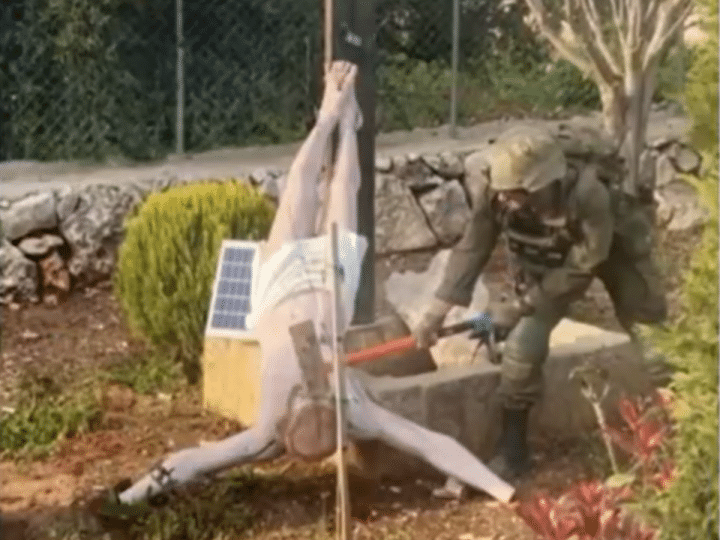

The BBC has, yet again, tried to provide cover for Israeli criminality and mitigate damage to its already appalling reputation.
Support among the misguided ‘Christian’ right for the US-Israel war on Iran had already been rocked by Trump’s self-indulgent post of himself as Jesus. Images of an Israeli soldier attacking a statue of the crucified Jesus during Israel’s illegal invasion of Lebanon are doing more damage still, so the BBC did its best to cover and fudge, as commentator Saul Staniforth noted.
#BBCNews: “Can I ask you specifically about this image thats come to light of an IDF soldier allegedly striking a statue of Jesus”
allegedly, adverb, used to convey that something is claimed to be the case or have taken place, although there is no proof.
There’s a photo! pic.twitter.com/n8vswBs4yb
— Saul Staniforth (@SaulStaniforth) April 20, 2026
BBC journo: ‘allegedly’. Israel: ‘No, it’s real actually’
The presenter’s attempted obfuscation that the image only “allegedly” showed the attack was made even more ridiculous by the fact that the Israeli regime has already admitted it’s real. More ridiculous still by the fact that the correspondent mentioned this. But the BBC is no stranger to self-humiliation for propaganda purposes, particularly regarding Israel.
The ‘Christian’ right, particularly but not exclusively in the US, supports Israel because of a twisted theology that claims Jesus can only return with ‘Israel’ back on land it has stolen from the Palestinians.
Israeli contempt for Christians is well established, such as their spitting on Christian pilgrims. Extremist Israeli ‘security’ minister, Itamar Ben-Gvir, defended this practice as ‘tradition’.
The ‘Christian nationalist’ right has been happy to suck up this humiliation and ignore Israel’s slaughter of Christians and the destruction of churches in Gaza. However, images of Zionist US president, Donald Trump, depicting himself as Jesus as he does Israel’s prime minister, Benjamin Netanyahu’s war bidding — and now of an IOF soldier attacking a statue of the suffering Christ with a sledgehammer — threaten that Pavlovian support.
A worried Netanyahu condemned it and said the IOF is investigating — marking its own homework as ever while the scandal dies down.
Never fear, though. The BBC will always do its best to deflect and defuse for the occupiers.
Featured image via BBC News
By Skwawkbox

!function(n){if(!window.cnx){window.cnx={},window.cnx.cmd=[];var t=n.createElement(‘iframe’);t.display=’none’,t.onload=function(){var n=t.contentWindow.document,c=n.createElement(‘script’);c.src=”//cd.connatix.com/connatix.player.js”,c.setAttribute(‘async’,’1′),c.setAttribute(‘type’,’text/javascript’),n.body.appendChild(c)},n.head.appendChild(t)}}(document);(new Image()).src=”https://capi.connatix.com/tr/si?token=19654b65-409c-4b38-90db-80cbdea02cf4″;cnx.cmd.push(function(){cnx({“playerId”:”19654b65-409c-4b38-90db-80cbdea02cf4″,”mediaId”:”79183ff1-7e83-494f-bd99-94ce0d77cd77″}).render(“69e6512ae4b0b6f552bb3b56”);});

!function(n){if(!window.cnx){window.cnx={},window.cnx.cmd=[];var t=n.createElement(‘iframe’);t.display=’none’,t.onload=function(){var n=t.contentWindow.document,c=n.createElement(‘script’);c.src=”//cd.connatix.com/connatix.player.js”,c.setAttribute(‘async’,’1′),c.setAttribute(‘type’,’text/javascript’),n.body.appendChild(c)},n.head.appendChild(t)}}(document);(new Image()).src=”https://capi.connatix.com/tr/si?token=19654b65-409c-4b38-90db-80cbdea02cf4″;cnx.cmd.push(function(){cnx({“playerId”:”19654b65-409c-4b38-90db-80cbdea02cf4″,”mediaId”:”285f6daf-e766-4c59-97f4-506cd638efbf”}).render(“69e65129e4b09c81bf19a4c2”);});


A global accounting giant and an economic forecasting firm say the war in Iran could see 250,000 people lose their jobs in 2027. The math is simple: the ruling class wages war and makes money, and workers carry the costs. Professional services giant Deloitte and economic forecasters at EY Item Club delivered their warning on 20 April.
Iran: economic blowback
The Guardian reported:
The EY Item Club also expects unemployment to hit 5.8% by the middle of 2027, up from the current five-year high of 5.2%, with almost 250,000 more people losing their jobs because of the crisis in the Middle East.
Adding:
If the forecast is correct, that would increase the number of jobseekers from 1.87 million now to more than 2.1 million.
Meanwhile, EY Item Club economist Matt Swannell said:
Spiralling energy costs and disruption to supply chains will push the UK to the brink of a technical recession in the middle of this year.
Consumers’ spending power will be squeezed, while more expensive financing arrangements and a less certain global economic backdrop will pour cold water on companies’ investment plans.
Deloitte’s head economist Ian Stewart told the Guardian:
Finance leaders are coping with high levels of external uncertainty and their focus is on managing risks from geopolitics, rising energy prices and higher financing costs,” said Ian Stewart, the chief economist at Deloitte UK.
‘Cost control’ = job cuts
The newspaper reported:
When asked about the consequences of adverse geopolitical developments over the next three years, the top three concerns among CFOs were energy costs (61%), inflation and interest rates (61%) and an increase in cyber-attacks (60%).
Stewart said:
Rarely in the last 16 years have UK CFOs been more focused on cost control than today.
He said the current “challenging environment”:
is prompting CFOs to scale back expectations for margins and sharpen their focus on cost reduction and cash conservation.
Adding:
The immediate priority for finance leaders is to strengthen balance sheets in the face of external headwinds.
Let’s translate this into plain English…
The foreign policy decisions – notably around Iran – of Trump and Starmer are coming home to roost. And the victims of any downturn aren’t going to be millionaires and billionaires. Hard-pressed workers will be hit to “strengthen balance sheets” in the “face” of “external headwinds”. That is to say, their jobs could be cut to keep the bank accounts of the wealthy swollen.
Any sensible political party would push against this. But none of the big parties is likely to…
People say British mainstream politicians are impossible to tell apart. That charge is essentially true. The fact is they all align on having an aggressive foreign policy and a commitment to free market capitalism.
Some would say foreign policy doesn’t figure in domestic elections – especially council elections. But these are not normal times. Faced with rising fascism, there are few electoral alternatives to the brutal free market capitalism and forever wars which produce it. Yet they do exist. Local council elections are on 7 May 2026. You can find out about eligibility, ID requirements and register to vote here.
Featured image via the Canary
By Joe Glenton

The EU’s new Entry/Exit System (EES) has fully kicked into place for UK passengers after its October rollout.
It’s a biometric system (including a photo and/or fingerprints) that registers non-EU nationals every time they make a short stay in Schengen countries.
The EU’s site says it’s designed to eventually replace passport stamps and offer a more “efficient” version of EU check-ins. But so far, there have been early hiccups: EES has been blamed for border delays that left passengers behind and “hours-long queues”.
In response, airlines like TUI, Jet2, and easyJet have shared advice.
Which countries are affected by the EES system?
The Schengen countries involved are:
- Austria,
- Belgium,
- Bulgaria,
- Croatia,
- Czechia,
- Denmark,
- Estonia,
- Finland,
- France,
- Germany,
- Greece,
- Hungary,
- Iceland,
- Italy,
- Latvia,
- Liechtenstein,
- Lithuania,
- Luxembourg,
- Malta,
- Netherlands,
- Norway,
- Poland,
- Portugal,
- Romania,
- Slovakia,
- Slovenia,
- Spain,
- Sweden, and
- Switzerland.
The Republic of Ireland and Cyprus are excluded from EES systems as they’re not Schengen countries.
What advice have airlines given to UK travellers for EES checkins?
The advice so far includes:
British Airways
Their site reads, “You should allow extra time to register your biometric details, such as fingerprints and a photo, the first time you enter the EU. There is no cost for EES registration, and your digital record will last three years before you need to register again.”
And responding to an X post by a passenger, the company added: “We ask customers travelling on our European short-haul flights to be there two hours prior to departure. It would be three hours if you’re travelling on a long-haul flight and one if you’re travelling on a domestic flight within the UK.”
TUI
In a travel alert, they said: “At some airports, you might still find longer queues, particularly at busy travel periods.”
They added, “To help your journey run as smoothly as possible, please allow a little extra time when passing through border control. Keep any essential medication in your hand luggage in case of delays, and when departing the EU, head straight to passport control after dropping your bags to avoid hold‑ups. Bringing some extra water for comfort is also a good idea.”
Jet 2
The company shared, “There may be longer wait times at Border Control at some EU Airports, especially at busy times. Once you start your EES registration, it should take around 1-2 minutes per person to complete.
“There may be longer wait times than usual when you arrive in destination and before your flight back to the UK. Unfortunately, this is outside of our control. But remember, there’s nothing you can prep before you travel.”
The airline added, “You’ll also need to pass through EES when leaving the EU in the same way you do on arrival. Depending on how busy the airport is, this may result in longer wait times at passport control before boarding your flight to the UK. After checking in for your flight, please head straight to security and passport control in order to arrive at your gate in plenty of time.”
easyJet
The airline pointed out that while kids under 12 are exempt from fingerprinting, passengers “may experience longer waiting times on arrival, so allow extra time and factor this in when planning onward travel, including trains, taxis, or flight transfers”.
Plan your journey, arrive early, use Bag Drop as soon as possible if you’re availing of the service, get through security as fast as possible, and “be aware that there may be further checks at passport control after security and before reaching your gate,” they said.
Ryanair
They warned that queues might be longer as airports adjust to the system.
“Have your passport ready and follow EES signs,” they wrote.
“We recommend arriving at the airport with extra time to allow for these additional checks, especially during busy travel periods.”
Motability cuts mileage allowance in half as DWP responds to disabled drivers

Blue Origin rocket grounded after satellite 'mishap'

Sentient team-linked wallet shifts $11.5m SENT into fresh address



-

 NewsBeat6 days ago
Trump and Pope Leo: Behind their disagreement over Iran war
-

 Fashion3 days ago
Weekend Open Thread: Theodora Dress
-

 Crypto World7 days ago
SEC Signals Exemption for Crypto Interfaces From Broker Registration
-

 News Videos6 days ago
Secure crypto trading starts with an FIU-registered
-

 Sports3 days ago
NWFL Suspends Two Players Over Post-Match Clash in Ado-Ekiti
-

 Crypto World7 days ago
SEC Proposes Certain Crypto Interfaces Don’t Need to Register as Brokers
-

 Business1 day ago
Powerball Result April 18, 2026: No Jackpot Winner in Powerball Draw: $75 Million Rolls Over
-

 Crypto World3 days ago
Russia Pushes Bill to Criminalize Unregistered Crypto Services
-

 Politics3 days ago
Palestine barred from entering Canada for FIFA Congress
-
 Business4 days ago
Creo Medical agree sale of its manufacturing operation
-

 Politics1 day ago
Zack Polanski demands ‘council homes not luxury flats for foreign investors’
-
 Entertainment7 days ago
Brand New Day’ Footage Reveals the Devastating Impact of ‘Now Way Home’
-

 Crypto World3 days ago
Russia Introduces Bill To Criminalize Unregistered Crypto Services
-

 Tech6 days ago
Microsoft adds Windows protections for malicious Remote Desktop files
-
 Entertainment7 days ago
Karol G’s ‘Ultra Raunchy’ Coachella Set Gave ‘Satanic Vibes’
-

 Entertainment7 days ago
How Babylon 5 Turned Brief Side Story Into Emotional Masterpiece
-

 Tech5 days ago
‘Avatar: Aang, The Last Airbender’ Leaked Online. Some Fans Say Paramount Deserves the Fallout
-

 Tech2 days ago
Auto Enthusiast Scores Running Tesla Model 3 for Two Grand and Turns It Into Bare-Bones Go-Kart
-
 Tech7 days ago
What was the first ransomware attack to demand payment in Bitcoin?
-

 Business7 days ago
Intuitive Machines Stock Climbs 2.4% as $180M NASA Lunar Contract and $900M Revenue Outlook Fuel Momentum
You must be logged in to post a comment Login