

Politics
Stranger Things’ Gaten Matarazzo Confirmed For West End Rent Revival


Stranger Things star Gaten Matarazzo is poised to make his West End debut in a new revival of Rent.
On Monday morning, it was announced that Gaten will play Mark Cohen in the new production, a role previously portrayed on stage by the likes of Anthony Rapp, Oliver Thornton and Neil Patrick Harris.
The new production coincides with Rent’s 30th anniversary, and will run at the Duke of York’s Theatre from 26 September.
Director Luke Sheppard enthused: “This is Rent in the hands of a new generation of performers who love and adore this piece, and with Gaten Matarazzo playing Mark, it promises to be a thrilling experience.”
Rent centres around a group of struggling artists in New York’s East Village, and is loosely based on the Puccini opera La Bohème.
Telling the story of a year in the group’s lives, the show explores themes including sexuality, addiction and HIV, and has become renowned for its soundtrack, including musical theatre staples Seasons Of Love, La Vie Bohème and Take Me Or Leave Me.

Phil Bray/Sony/Kobal/Shutterstock
Producers Chris Harper and Sonia Friedman said they were “absolutely delighted to be bringing Rent back to the West End”, noting: “Jonathan Larson’s musical remains as powerful and resonant as ever, and Luke has found a way to honour its legacy while making it feel thrillingly fresh for today’s audiences.
“We cannot wait to share this production and all that we have planned for it. It promises to be a truly special theatrical event.”
More casting announcements will be announced in due course, with tickets for the production now on sale.
Gaten is best known for his performance as Dustin Henderson in the hit Netflix sci-fi drama, a role he began playing when he was still in his early teens.
However, he actually began his career as a child actor on Broadway, in the casts of Priscilla Queen Of The Desert and Les Misérables.
Since his rise to fame in Stranger Things, the 23-year-old has also continued to act on stage in Broadway productions of shows including Dear Evan Hansen and Sweeney Todd.
He is also due to appear in the new Lin-Manuel Miranda movie adaptation of the musical Octet, alongside the likes of Rachel Zegler, Jonathan Groff, Sheryl Lee Ralph, Amanda Seyfried and Tramell Tillman.

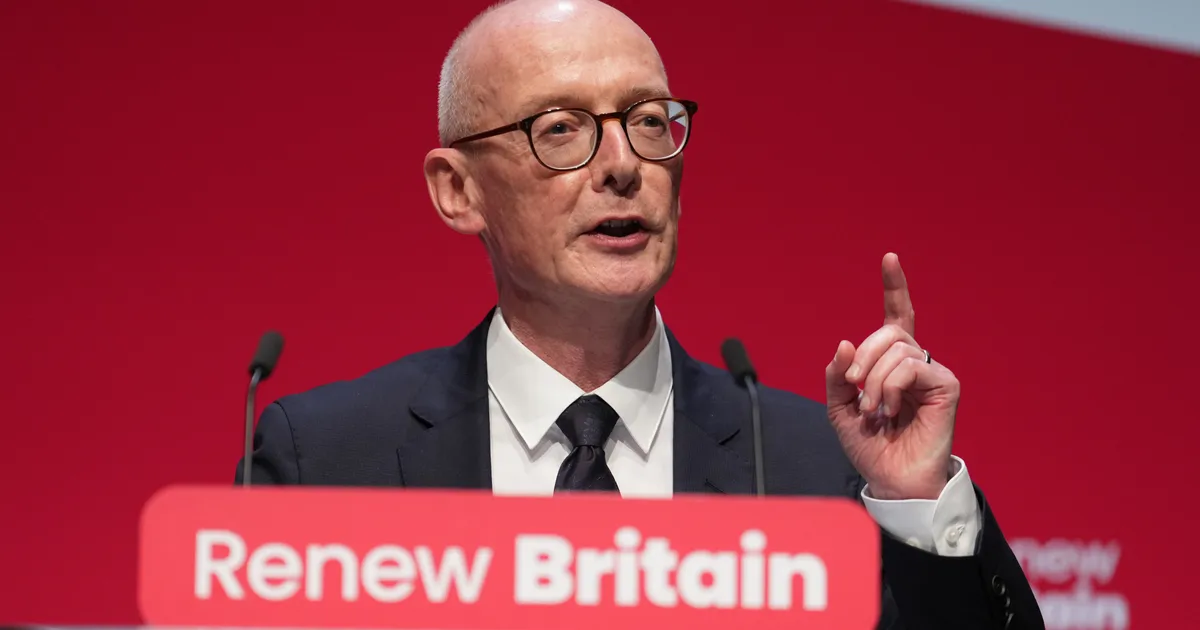
Labour MPs want Pat McFadden to be the next chancellor to stop Ed Miliband getting the job, HuffPost UK has learned.
They believe the energy secretary, who has widely-tipped to replace Rachel Reeves once Andy Burnham becomes prime minister, would be “a disaster” in the role.
Miliband is a close ally of the former mayor of Greater Manchester, who is expected to become PM on July 20.
Who he chooses to be chancellor is seen as the key decision Burnham will have to make as he appoints his first cabinet.
Miliband is seen as the frontrunner, but support McFadden, the work and pensions secretary, is growing among Labour MPs.
One said: “Pat is the ultimate safe pair of hands and would be an excellent choice as chancellor.
“Andy becoming prime minister is bound to give us a bit of a bounce in the polls, but making Ed the chancellor would just destroy that because he is such a divisive figure.”
Glasgow-born McFadden was a minister in both Tony Blair and Gordon Brown’s governments, and has been a key figure in Keir Starmer’s cabinet since Labour’s general election victory in 2024.
One former Labour minister said: “Pat as chancellor would be like a Scottish bank manager in the mould of [former Labour leader] John Smith and Alistair Darling. He’s just what the country needs.”
Another MP said Miliband’s well-known opposition to opening up new oil fields in the North Sea would kill off any hopes of a Scottish Labour revival.
The backbencher told HuffPost UK said: “There’s growing support amongst MPs for Pat McFadden, no doubt about it.”
“Making Ed chancellor would be a disaster,” one MP said. “He’s a Marmite politician who completely divides opinion, which is the last thing the government needs.
“How would it look to the public if the guy they rejected as prime minister in 2015 was given the second most important job in government?”
Sharon Graham, general secretary of the Unite union, has also spoken out against Miliband.
She said: “Ed only seems to be interested in one side of the equation, rushing Britain to net zero with almost no thought for jobs, skills and national security.”
The GMB union, which has thousands of members in the North Sea oil industry, are also opposed to Miliband becoming chancellor.
But he has won the support of other union leaders.
Andrea Egan, general secretary of Union, said: “We need a chancellor who will rewire the economy and properly invest to improve the lives of the majority.
“Of those reported to be in the running, only Ed Miliband could enact the kinds of policies trade unions and our members urgently need.”
Other names in the frame to replace Rachel Reeves include Shabana Mahmood, Wes Streeting and Yvette Cooper.
Listen to Commons People, the podcast that makes politics easy. Every week, Kevin Schofield and Kate Nicholson unpack the week’s biggest stories to keep you informed. Join us for straightforward analysis of what’s going on at Westminster.

Vladimir Putin will see that the UK’s defence spending proposals is not fully funded and is all “smoke and mirrors”, according to a former Nato commander.
Keir Starmer unveiled the long-awaited Defence Investment Plan (DIP) on Tuesday, just three weeks before he set to officially step down as prime minister.
While he announced an extra £15 billion would be spent on defence by 2030, chancellor Rachel Reeves admitted that only two-thirds of that sum (£10.3bn) had been identified.
The remaining £4.7bn needed will have to be found at the next Budget in the autumn – when Andy Burnham is expected to be in No.10.
Sir Richard Shirreff, former Nato commander who served as deputy Supreme Allied Commander Europe, tore into the DIP on BBC Radio 4′s Today programme.
He said: “The enemy has a vote here. The enemy, as in Putin, will be watching what is going on.
“When he sees that this is smoke and mirrors, that it is not being properly funded, then it sends a message of weakness.
“It sends a message of opportunity for our enemies and quite frankly it sends an appalling message to our allies in Nato.”
Starmer had been scrambling to find more money for defence before heading to his last Nato summit as leader on July 7.
He managed to find an extra £1.5bn more in recent weeks after John Healey quit as Starmer’s defence secretary over funding concerns.
But the DIP does not explain how the government intends to reach its target of 3.5% of gross domestic product (GDP) on defence by 2035.
Nato allies also pledged last year to reach 5% of national income on combined national security by the mid-2030s, with 1.5% going on defence-related areas like resilience and security.
The split target is meant to placate US president Donald Trump who has been pressuring for Nato allies to spend more on defence so they relied less on America.
Listen to Commons People, the podcast that makes politics easy. Every week, Kevin Schofield and Kate Nicholson unpack the week’s biggest stories to keep you informed. Join us for straightforward analysis of what’s going on at Westminster.
Politics
Politics Home | How consumer-led flexibility can benefit households and our future energy system


(Credit: Adobe Stock)
Smart meters can help households cut electricity bills while supporting a cleaner, more resilient energy system. Sara Higham, Director of Corporate Affairs for Smart Energy GB, emphasises all types of households could benefit, with the right support and options available
Consumer-led flexibility can help households lower their electricity bills by using power at times when it is cheaper, while also supporting a more efficient, resilient and secure energy system.
For example, the government highlights that electric vehicle users could save £332 a year, by charging their cars on a time-of-use tariff.1
How do households get involved?
Households can get involved by shifting when they use electricity, for example by running a washing machine at times when renewable energy, such as wind or solar, is abundant or when overall demand is lower.
Smart meters are a key enabler. Without one, suppliers cannot see when electricity is being used and so cannot reward households for shifting demand. Broadly, suppliers do this in two ways:
- Time of use tariffs: which offer cheaper electricity at off-peak times, often overnight, at weekends and sometimes during the day.
- Flexible reward schemes: which sit alongside a normal tariff and offer free or cheaper electricity at certain times, or reward households for reducing demand when the electricity system is under pressure.
Many households are already taking part in consumer-led flexibility, and many more may be able to benefit if the right options and support are in place.
Why is this important?
Consumer-led flexibility can play an important role in building a more efficient, resilient and secure electricity system, while also helping households reduce their energy bills.
As Great Britain relies more on renewable electricity, supply becomes more variable. At the same time, demand for electricity is expected to rise as more households switch to electric vehicles and low-carbon heating.
Shifting electricity use to times when renewable power is more abundant can help reduce waste, ease pressure on the grid at peak times and make better use of low-carbon energy. This can lower system costs overall, while also giving households more opportunities to save money through flexible tariffs and reward schemes.
At a time when many households continue to feel pressure on their finances, these savings can make a real difference.
What about vulnerable households?
Consumers must be at the heart of the future energy system, and it is important that no one is left behind, particularly those in vulnerable circumstances. Our latest report looks at how consumers in vulnerable circumstances can, and in some cases already are, benefiting from consumer-led flexibility. It highlights conditions that might support further take-up such as:
- Financial protections
- Predictable savings windows
- User-governed automation
- Simple tariffs and billing
- Timely communications that can be revisited
- Advice and support from trusted intermediaries
Ultimately, consumer-led flexibility has the potential to help lower household energy bills and support a more efficient energy system. Making that system more inclusive will help ensure that all households can make informed choices about whether and how to take part and can share in the benefits where it is suitable for them.
Want to learn more about consumer led flexibility? Click here to watch Smart Energy GB’s video, which brings together industry experts to explain how smart meters support consumer-led flexibility and how households can benefit.
Reference
- DESNZ; New smart appliance standards will help consumers save on bills. April 2025

In London, it’s almost impossible to date without speaking therapy. Attachment styles come up on first dates. Arguments are framed as ‘boundary violations’. Compatibility becomes a question of emotional availability.
I’ve lost count of the number of dates where an ex was described as ‘avoidant’ before I’d even learned what music the other person liked.
When I refer to “therapy-speak”, I don’t mean therapy itself or careful psychological practice. I mean the growing vocabulary of terms like gaslighting, narcissist, holding space and doing the work that has moved from consulting rooms into dating apps, podcasts and social media.
Some of this shift reflects real progress. Mental health language has helped many people name patterns that once stayed buried under shame and given them permission to expect emotional safety in relationships.
But as that vocabulary spreads globally through social media and dating culture, it also carries cultural assumptions that don’t always travel with it.
Many popular Western psychological frameworks prioritise autonomy, privacy and boundaries. Those ideas can be valuable, but they also emerged within particular Western traditions and don’t always translate cleanly into cultures organised around family interdependence.
What my Sri Lankan upbringing made me notice
I grew up Sri Lankan, and one of the biggest differences I noticed living in London is how private relationships are expected to be.
In my community, problems were rarely treated as something that existed purely between two people. They were spoken about: aunties asked questions, friends offered blunt opinions, cousins challenged your version of events.
I’ll be the first to admit it isn’t always comfortable. But love was never just a two-person project, it existed within a network.
I remember the first time an ex-boyfriend told me he had a boundary around being offered advice. He was struggling financially. I responded instinctively and began suggesting practical ways to help.
He gently explained that unsolicited advice made him feel worse and that he needed space to process things alone.
If I were struggling financially, my family would sit me down and map out 10 possible solutions. They wouldn’t ask whether I’d consented to input. That’s what they perceive to be love.
What struck me was we were speaking the same words, but different cultural languages of love.
In urban Britain, saying “I have a boundary” is widely understood as emotionally literate and self-respecting. But in collectivist cultures, that phrasing can feel distancing, even rejecting.
The meaning shifts depending on the cultural grammar of care.
Love exists inside culture
Not all relational frameworks start from the idea that the individual is the central unit of wellbeing. In Māori culture in Aotearoa New Zealand, for example, the concept of whanaungatanga emphasises kinship, relationships and collective responsibility.
Yet many therapeutic models prioritise individuation and autonomy. And while those values can be important, they aren’t the only way to define healthy love.
Psychologists have raised concerns about the casual expansion of clinical language in everyday conversation. Research on “concept creep”, coined by psychologist Nick Haslam in 2016, suggests that harm-related language can gradually broaden, sometimes stretching to cover behaviours that fall within ordinary human imperfection.
When diagnostic terms are treated as universal, they can also override cultural context. A family stepping in can be reframed as enmeshment. Direct advice can be interpreted as emotional unsafety. Close involvement may be labelled ‘unhealthy’ simply because it doesn’t centre independence.
Dating is already a negotiation between two worldviews. When therapy language is applied without cultural sensitivity, things can get sticky.
None of this is an argument against therapy. It’s an argument for recognising that therapeutic language is culturally situated.
A person can be fluent in psychological terminology and still misunderstand the cultural logic of someone else’s behaviour.
For many of us, love unfolds inside migration histories, extended families and inherited expectations about duty and care. Those traditions deserve to be understood on their own terms, not automatically translated through the language of Western psychology.
If we want healthier relationships across cultures, we may need to slow down before we diagnose and to ask what support, privacy and care mean in someone else’s world – because the way we speak about love shapes the way we practise it.

The UK’s landmark Tobacco and Vapes Act, which became law in April this year (and has since been buried by a typically, and very modern, frenetic news cycle), was hailed as a triumph for public health. By permanently phasing out the legal sale of cigarettes to anyone born on or after 1 January 2009, it promises to create the world’s first ‘smoke-free generation’.
It’s difficult (though not impossible) to object to this from a medical perspective. Smoking remains one of the leading preventable causes of death in Britain. Fewer smokers will mean fewer cancer patients, fewer heart attacks, fewer loved ones losing family members prematurely and, in theory, less of a burden on the NHS. Put like that, it all seems pretty admirable.
But it’s important to look beyond the medical perspective to what this legislation represents. It is, perhaps, the clearest expression yet of the creeping sanitisation of Britain that has been underway over the past two to three decades.
Sanitisation is an entirely sensible principle in the right context. We sanitise hospitals to prevent infection. We sanitise kitchens to stop disease. But increasingly, the instinct to sanitise has escaped those settings and begun to shape everyday life itself. More and more, our politics is driven by the assumption that unhealthy pleasures should not merely be discouraged, but gradually engineered out of existence altogether.
I’m not trying to defend cigarettes – but they don’t really deserve it, do they? The ban is significant because it asks a different question from previous tobacco legislation. Successive governments raised duties, banned advertising and introduced plain packaging in order to reduce smoking. The new law goes a step further, though. It envisages a future in which smoking simply ceases to exist as a legal choice for successive generations of adults.
This is incredible. Whether you support the outcome or not, it reflects a new understanding of the relationship between citizen and state. Government is no longer content to inform us of the risks involved with smoking, or even to nudge us towards better choices through ruinous taxation on proscribed goods. It is now outright deciding more and more how we should be allowed to lead our lives.
Tobacco proscription is far from an isolated case. Scotland introduced minimum-unit pricing for alcohol. Sugar is taxed in soft drinks. Junk-food advertising faces ever-tighter restrictions. And supermarkets are told where sweets may be displayed.
Each measure taken by itself may seem pretty sensible – alcoholism, for instance, has historically been high in Scotland. But taken together, they reveal a broader philosophy. Health is no longer simply one consideration among many. It has become the guiding principle for policymakers, the main lens through which they view ordinary life.
Look at the steady ratcheting-up of alcohol taxation and pricing. Defenders will understandably point to the health benefits of pricing people out of excessive drinking. However, there have been massive social costs that are rarely spoken about.
Meeting friends at the pub has become prohibitively expensive for many people, accelerating the decline of an institution that has long been one of Britain’s great social levellers. As pubs close, high streets lose yet another reason for people to gather, while more socialising retreats into the private home – or disappears altogether. At a time when loneliness, anxiety and depression are widely recognised as defining features of modern life, it seems oddly self-defeating to make one of our oldest and most accessible forms of community ever more difficult to afford.
This carries consequences beyond public health. A civilisation cannot be measured solely by reductions in smoking prevalence, obesity or alcohol consumption. Human beings should not be treated as optimisation projects. We are soulful creatures, dancing animals, as Kurt Vonnegut put it. So let us dance! Or, at least, don’t dare to stand in the way as we do so. We need the unexpected, the excessive and the gloriously imperfect. Because some of the things that make life so rich and enjoyable (and at times simply bearable) are, by definition, a little indulgent. A long evening in the pub with friends is unlikely to impress a public-health policymaker. Yet these things endure because they bring people together, create memories – they feed our souls.
Public-health analysis is exceptionally good at measuring costs to the NHS or years of life gained. It is much less capable of measuring the value of conviviality, ritual, celebration or simple pleasure. What metric would you use to measure the value of lingering over another pint with friends; or standing outside smoking with a couple of co-workers, released for a moment from the day’s mundanity; or of sitting in your garden with a nice Scotch and a cheeky smoke at the end of the day. There is no real calculation for what is lost when life becomes incrementally cleaner, safer and more carefully managed.
The danger is not that Britain suddenly becomes joyless. This kind of sanitisation can be a subtler thing. Many interventions might appear modest and reasonable (though I wouldn’t describe the Tobacco and Vapes Act as either), and many restrictions are introduced in pursuit of a worthy objective. But they accumulate over time. Life’s rough edges are smoothed away.
And where does this health-policymaking logic ultimately lead? If the government sees its principal role as maximising healthy life expectancy, there will always be another habit to discourage, another risk factor to regulate and another pleasure whose costs can be quantified. Leaving your house can be risky, you know (if memory serves, there was a time in the not-so-distant past when we were indeed banned from doing that).
None of this is an argument against reducing smoking or informing people about genuine risks. But there is a profound difference between helping adults make informed decisions and gradually deciding which decisions adults ought no longer to be permitted to make at all.
The smoke-free generation may well prove healthier than those who came before it. Lung cancer and heart disease will probably fall; younger generations will probably, on average, be more athletically capable than us oldies. But the legislation also marks another step in a broader cultural journey, one in which Britain increasingly seeks to sanitise everyday life. The question is not whether we will become physically healthier – or, at least, less ill. We almost certainly will. It is whether, in our pursuit of longer lives, we are slowly forgetting what makes life rich enough to be worth prolonging in the first place.
James Dixon is a Glasgow-based novelist, poet and playwright.
Politics
Democratic socialist Melat Kiros topples a nearly 30-year incumbent to win Colorado House primary
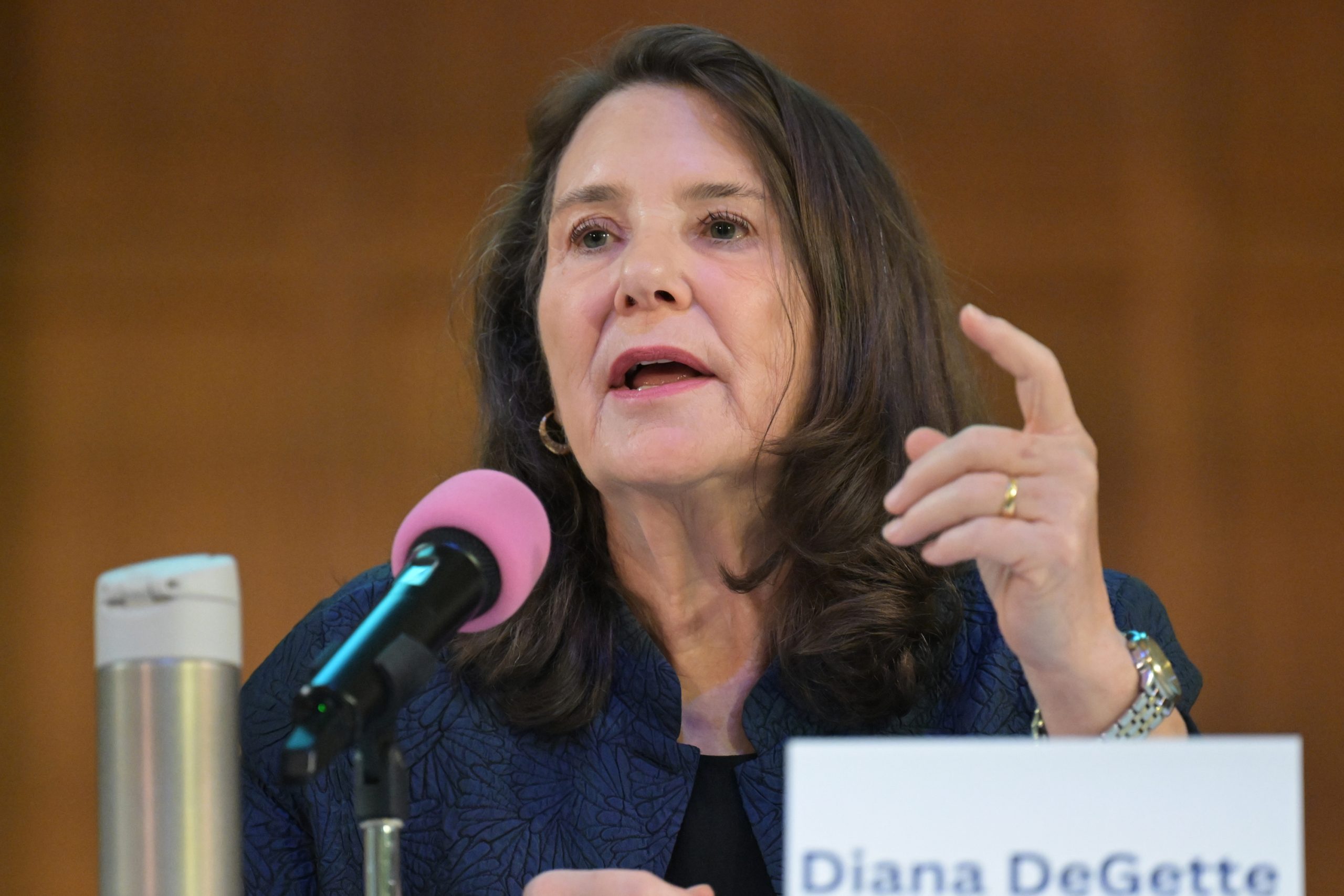

Democratic socialist Melat Kiros defeated 15-term Colorado Rep. Diana DeGette on Tuesday, delivering one of the biggest shocks of the Democratic primary season amid a growing streak of wins for the insurgent left.
Kiros’ win in the contest for Colorado’s 1st District topples a 68-year-old representative who had held the seat since before her 29-year-old challenger was born.
It’s a victory that echoes Rep. Alexandria Ocasio-Cortez’s (D-N.Y.) stunning 2018 upset over 10-term incumbent Joe Crowley in New York, and delivers democratic socialists fresh momentum.
DeGette’s loss, after representing the district since 1997, seemed unthinkable in the state just months ago, but Kiros rode the same anti-incumbent wave that swept through New York’s Democratic primaries last week, where Reps. Adriano Espaillat and Dan Goldman were ousted in a dramatic show of the left’s growing strength.
The defeat is a stunning one for the Democratic establishment, though warning signs had been building for months inside DeGette’s campaign, with allies privately acknowledging the race was tightening and the representative’s team spending weeks urging national Democrats and allied groups to come to her aid.
Kiros launched her campaign nearly a year ago, framing it from the outset as a generational reckoning with the Democratic establishment. She cast DeGette, a longtime progressive who served as an impeachment manager against President Donald Trump, as a corporate-backed incumbent who was out of step with her constituents, and called for a new era of progressive leadership in Congress.
Kiros’ campaign drew major outside support from progressive leaders, including endorsements from Sen. Bernie Sanders and the Working Families Party, as well as backing from the candidates who upended New York’s Democratic delegation last week.
Her win marks the seventh primary victory this cycle for Justice Democrats, the progressive group that recruited and backed her, making 2026 the organization’s most successful primary year to date.
“We are so proud to be sending Colorado’s first Justice Democrat to Congress,” said Alexandra Rojas, executive director of Justice Democrats. “Melat built a movement that inspired Denverites to remember they themselves have the power to transform what kind of Democratic Party they want to be represented by. Melat and our candidates continue winning this cycle because Democratic voters are finally getting leaders acting on their demands.”
Down the final stretch of the campaign, DeGette’s allies scrambled to hold off Kiros’ rise, with outside groups pouring roughly $2.3 million into the race over the final month, including $1.3 million in the race’s final days. DeGette’s side held a nearly three-to-one spending advantage down the stretch.
DeGette also secured last-minute endorsement videos from Rep. Pramila Jayapal (D-Wash.), a former chair of the Congressional Progressive Caucus, and progressive Rep. Jamie Raskin (D-Md.), who like DeGette was a manager of Trump’s impeachments. Still, that wasn’t enough to help her keep her seat.
The new class of hard-left members of Congress could prove a tough group to wrangle for House Minority Leader Hakeem Jeffries (D-N.Y.), particularly if Democrats win a narrow majority in the House this fall.
“If the day comes to vote and he continues taking corporate PAC money, I won’t be voting for him,” Kiros said in an interview prior to Tuesday’s win.
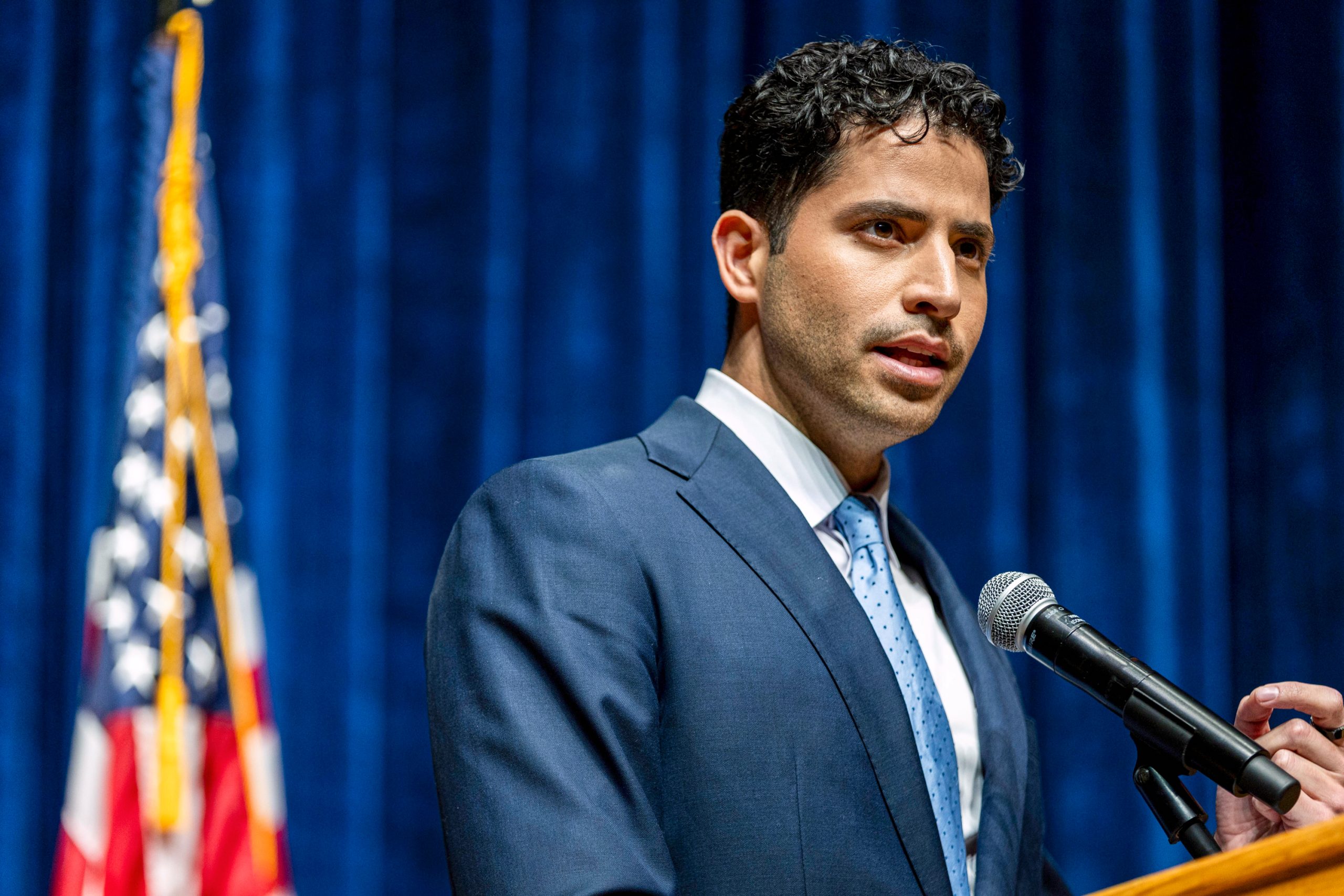

Progressive state Rep. Manny Rutinel will take on GOP Rep. Gabe Evans this fall, setting up a contentious general election in one of Democrats’ top pickup targets — and giving Republicans the candidate they hoped to face.
Rutinel defeated the more-moderate former state Rep. Shannon Bird in Tuesday’s primary for Colorado’s 8th District, bolstered by big spending from his campaign and its allies, including prominent Latino groups that see Rutinel as the best candidate to court the key voting bloc back to Democrats. The district is 40 percent Latino.
But Republicans believe they have a better chance at beating Rutinel than they would have Bird in the battleground seat. They’ve boosted pictures of the progressive rallying alongside democratic socialist New York City Mayor Zohran Mamdani and are quickly recycling statements from Bird’s allies who said Rutinel would be unable to win in November.
Rutinel has softened his positions on some of the left’s top issues, including his previous support for Medicare for All and opposition to fracking.
The primary was defined by the Democratic Party’s ongoing ideological civil war. While Bird racked up endorsements from moderate establishment Democratic groups, like EMILYs List and the centrist Blue Dogs, Rutinel was able to capitalize on a committee vote Bird took as a state legislator that he argued didn’t do enough to stand up to Immigration and Customs Enforcement officers.
Democrats remain bullish they can flip the district, which President Donald Trump won by less than a 2-point margin in 2024. Democrats’ top House super PAC has already reserved millions of dollars in ads ahead of November.
Meanwhile, Evans, a freshman Republican who flipped the district for his party in 2024, has stockpiled $3.4 million for the general election as Democrats duked it out in the primary.


The Supreme Court struck down limits on coordinated spending between candidates and political parties on Tuesday, a win for Republicans that will fundamentally change how tens of millions of dollars are spent in congressional elections.
The decision will have an almost immediate impact on the midterms. Removing the limit on coordinated spending effectively gives candidates direct control over a far greater amount of money being spent on their races. It is also likely to increase the flood of political advertising that hits the airwaves each fall.
The 6-3 decision, which divided the court along its usual ideological lines, held that the limits violate the First Amendment.
The decision is a blow to Democrats, who argued that eliminating the limit on coordination would put more power into the hands of large donors who can cut bigger checks to party committees than to candidates. Republicans tend to get more money from large donors, while Democrats have been more reliant on small-dollar donors.
Justice Brett Kavanaugh, writing for the majority, called the limits a “severe infringement on First Amendment-protected political speech.” He also argued the ruling eliminating the limits could bolster political parties generally.
“To uphold the political-party coordinated-expenditure limits here could therefore help consign political parties to continued second-tier status as compared to outside groups,” Kavanaugh wrote. “Weakened political parties distort the political system.”
President Donald Trump hailed the ruling allowing parties to spend unlimited amounts in coordination with individual campaigns.
“The Supreme Court just took restrictions off political spending!” Trump wrote on Truth Social. “A BIG WIN FOR REPUBLICANS and, more importantly, The First Amendment!”
The National Republican Senatorial Committee brought the case seeking to overturn the limits in 2022 alongside now-Vice President J.D. Vance’s Senate campaign. Trump’s Justice Department declined to defend the law in court, while Democratic groups intervened to oppose the lawsuit.
“By striking down these unconstitutional caps on coordinated spending, the Court has restored core political speech and ensured parties can compete on a level playing field,” NRSC Chair Tim Scott (R-S.C.) and National Republican Congressional Committee Chair Richard Hudson (R-N.C.) said in a joint statement. “We are ready to fully support our candidates and put them in the strongest possible position to win in 2026 and beyond.”
Democrats, who are already staring down substantial disadvantage in party fundraising this midterm cycle and are worried that the ruling will only amplify the impact of that disparity, were quick to deride the decision Tuesday.
“Today’s ruling is a win for billionaire donors and special interests who want more influence over the GOP agenda and an invitation for corruption,” Democratic Senatorial Campaign Committee Chair Kirsten Gillibrand, Democratic Congressional Campaign Committee Chair Suzan DelBene and Democratic National Committee Chair Ken Martin said in a joint statement.
The ruling strengthens the parties themselves, allowing them to directly support their preferred candidates in a way that could empower their roles in the political ecosystem — and potentially weaken the influence of super PACs. Party committees on both sides have been preparing for the possibility for months and the decision is likely to have an immediate impact on campaign spending ahead of the November midterms.
Previously, coordinated spending between candidates and party committees, such as the NRCC or the DCCC, was capped, with the specific amounts depending on the size of the district or state. Those limits no longer apply.
That significantly alters the campaign finance landscape because parties can accept far larger donations than individual candidates — $44,300 per year for national party committees compared with $3,500 per cycle for candidates. Removing the limit on coordinated spending effectively gives candidates the ability to control a far greater sum of money that is being spent on their race.
That could also substantially change the makeup of political advertising on television, because candidates get far lower rates on TV ads than other groups. If their coordinated efforts with campaigns get the similarly low rate, they would have far more cash to tap to flood the airwaves, while super PACs will still have to pay a higher rate. As a result, campaigns might spend more of their budget on TV advertising, while super PACs may be more likely to pick up other campaigning costs, such as mailers and digital advertising.
Democrats have largely had the advantage in candidate fundraising, which has generally given them a leg up in battlegrounds when candidate fundraising was the most important. But NRSC has slightly more cash on hand than the DSCC, according to recent campaign finance reports, while the Republican National Committee has wildly outraised the DNC. Those party funds could now give the GOP the financial advantage in key states.
The court’s decision additionally eliminates the need for parties to mount their own independent expenditure arms, where they have traditionally spent tens of millions of dollars.
The decision is the latest in a series of blows the high court has dealt to campaign finance regulation over the past two decades. The 2010 Citizens United and Speechnow.org decisions enabled the rise of super PACs with no limit on donations. In 2014, the court struck down aggregate limits on individual donations. And in 2022, it struck down limits on candidates using donor funds to repay personal loans they had made to their campaigns.
“Today’s decision follows a string of disastrous campaign finance rulings from the Roberts Court that began with Citizens United,” Michael Beckel, director of money-in-politics reform at Issue One, said in a statement. “By eliminating the limits that have long governed how much money parties can spend in coordination with candidates, the Supreme Court has further empowered wealthy donors and special interests with outsized influence in elections.”

Singer Gracie Abrams has opened up about her relationship with actor Paul Mescal in an interview with The New York Times’ Popcast.
Rumours that the pair were dating began in 2024. They have since been photographed together at this year’s Bafta Awards, which some called their first “hard launch”.
They were also seen at the 2026 Golden Globes and the most recent Oscars.
The singer, whose partner helped to write song Imaginary Friend for her upcoming album Daughter From Hell, was asked whether the collaboration might invite more prying into their previously private relationship.
“I don’t like the feeling of hiding,” she shared on the podcast.
That’s not to say she doesn’t want to maintain some boundaries – “I also love privacy where it feels like the right thing,” she stated.
On the topic of public scrutiny about her private life, she said: “I always try to assume the absolute worst-case scenario of everything, and then anything else is pleasant”.
After all, she continued: “If you know how happy your experience was making something or how much you learned about yourself or your partner or whatever the thing is, it’s like, no amount of hate or trolling or whatever could take that away.”
She described her relationship as “a part of my life that brings me so much peace and joy… I’m not going to pretend like that’s not true, but I also think it’s not like an open-door policy.”
She added that working with partner Paul on an album wasn’t as huge a leap for the couple as some might expect.
“That was so fun to write together… That wasn’t some groundbreaking event for us”, she said on the episode.
“We have a very creative home with friends who are so good at what they do and everyone feels happy to share that with one another.”
Daughter From Hell will be released on July 17. You can watch the full Popcast interview here.

If you’re looking for something to fill the void between now and September’s very promising-looking Sense and Sensibility release, it might be time to give an underappreciated Lady Susan adaptation a go.
As a committed Austen fan, my top two on-screen period versions have long been the basically-perfect 1995 BBC Pride and Prejudice series and 2016′s Love And Friendship.
But while I think a lot of fans are with me on the BBC take, I’ve seen a lot less buzz around Whit Stillman’s masterpiece – despite its 96% Rotten Tomatoes score and multiple awards.
Perhaps that’s because the wild late-teens writing it’s based on is rarely read, though that, too, should be rectified IMO.
The Love and Friendship movie is based on Lady Susan. I’m not really sure why it’s got the name; there is a story by Austen called Love and Friendship, but though it also features grasping, scheming women, the movie’s plot is clearly based on the “little-known novella”.
Still, the only thing that matters is our Suze. Played by Kate Beckinsale, she’s a ruthless, conniving, cruel and self-serving manipulator – who gets absolutely everything she’s ever wanted.
The Regency marriage market, after all, had all of those traits too.
The book (well, epistolary novella) comes from the young, cynical mind of an Austen who isn’t as concerned about mass-market appeal as she is making her friends and family laugh. The movie feels similar.

You will not swoon as Sir James Martin (Tom Bennett) brainlessly squawks the words “Church” and “Hill” around a terrified teen. Your knees won’t buckle when Susan’s friend, Alicia (Chloë Sevigny) sneaks around her older husband (Stephen Fry).
Nor will you sigh longingly when you watch the recently-widowed Lady Susan backstab her way to that sweetest of lovers: solvency.
But you will howl laughing at the absurdity of all of this – the brutal weaponisation of manners, gentlemanly duty, and less-than-gentlemanly urges.
That’s because at her heart, Austen knows love is stupidly simple and very complex. It’s the silliest and most serious topic in the world, and in both her and Stillman’s hands, it becomes the funniest, too.
Love and Friendship is available on Disney+.

Bitcoin ETFs had their worst month ever in June, shedding $4.5 billion

Labour MPs Support Pat McFadden As New Chancellor

What We Learned as Mexico Stormed Into the World Cup Last 16





-

 Fashion5 days ago
Weekend Open Thread: Staud – Corporette.com
-

 Politics5 days ago
The House | Manchesterism won’t survive the painful trade-offs unless it gets citizens on board
-

 Crypto World1 day ago
Strategy authorizes up to $1.25B in Bitcoin sales under new capital plan
-

 Politics5 days ago
Potential 2028er World Cup attendee leaderboard
-

 Business5 days ago
Asia stock markets slide as tech shares slump
-

 News Videos3 days ago
MAJOR BITCOIN & MARKET UPDATE!!!! (MUST WATCH ASAP!!!)
-

 Tech5 days ago
A Look At A Gaggle Of Transputer Boards
-
 Crypto World6 days ago
Dell (DELL) Shares Tumble Over 5% Following Analyst Downgrade to Hold
-

 Crypto World4 days ago
Coinbase, Circle Deepen Crypto Stock Losses Despite Resilient S&P 500
-

 Business1 day ago
Australia treasurer says alleged access of prime minister’s bank data ’incredibly concerning’
-

 Crypto World4 days ago
Kraken's xStocks Opens Bending Spoons IPO Registration to EEA Retail
-

 Sports4 days ago
FIH Pro League: India defeat Pakistan 7-1, register biggest win of campaign | Other Sports News
-

 Crypto World5 days ago
Bitcoin Sparks $600M Hourly Liquidations With $65,000 Set To Become Resistance
-

 Tech3 days ago
Bluekit phishing kit adopts browser-in-the-middle for login theft
-

 Tech4 days ago
Russian hackers now target Signal backup recovery keys
-
 Crypto World5 days ago
Hyperliquid Named on Singapore MAS Investor Alert Register
-

 Crypto World6 days ago
Ripple and SBI launch RLUSD in Japan after JFSA approval
-

 Crypto World5 days ago
RTX holders must register wallets before token distribution begins
-
 Business2 days ago
The AI boom won’t burst all at once. It will pop in ‘rolling bubbles’: Macquarie
-

 Tech1 day ago
Anonymous researcher drops 0-day ‘exploitarium’ repo
You must be logged in to post a comment Login