
Politics
Sydney Sweeney Advert Backlash Addressed By Olympian Amy Hunt Again


Olympian Amy Hunt has opened up about why she was so disappointed by Sydney Sweeney’s controversial new advert.
Amy is one of several female athletes to have spoken out against Sydney’s ad campaign for the betting brand Novig, which many have suggested “sexualises” women’s sports.
Speaking to the BBC after completing the Ultimate Championship over the weekend, the silver medallist said: “Sydney Sweeney, this is what women in sport look like.”
On Tuesday, she then addressed the matter on Good Morning Britain, claiming: “When we’re trying to provide role models for young people and young women in sport, we really want to show that it’s about what your body can do, not so much what it looks like.”

Amy continued: “When we see the stats [saying] 64% of young girls drop out of exercise and sport before they reach the age of 16, we don’t need to place any kind of barrier whatsoever in their way in terms of providing the opportunity and the empowerment for them to still exercise – whatever that looks like, professional, or kind of just going to do a ParkRun with your friends.
“So, it’s about empowering young girls and young women and young people to show that you really can just get out there and you don’t have to worry what you look like, you don’t have to worry about what you’re wearing.”
However, she added: “The reaction has almost outweighed the moment because the first thing I saw was all of the positive compilations of women in sport. It’s actually kind of moved. It’s separated itself from from the moment entirely.
“And it’s not anything personal against that actress. It’s more the kind of intention, and it’s just moved into a completely different spin now, where we’re able to kind of have all these different things celebrating women’s sport.”
In Sydney’s new ad, she’s seen posing nude, save for various bits of sporting equipment, while claiming: “Novig is just sports. So, they wanted to show… just sports.”
Although Sydney has not yet commented publicly on the backlash, she did appear to reference it in a string of Instagram story posts shared on Sunday night.
The Emmy nominee posted a string of nude photo-shoots participated in by leading sporting figures, including Serena Williams, Caroline Wozniacki, Megan Rapinoe, Rob Gronkowski, Karl-Anthony Towns and Jason Kelce.
HuffPost UK has contacted Sydney Sweeney and Novig for comment.
Of course, this is not the first time Sydney has landed herself at the centre of controversy over an advert.
Last year, she found herself in hot water over a very different ad campaign, when it was suggested that a promo video for American Eagle she’d appeared in had mirrored the language of white supremacists and eugenicists.
Sydney later said she had been left “surprised by the reaction” to the clothing advert, after spending months mostly swerving questions about the media storm, while the fashion brand insisted their promo clip had been “about the jeans” and nothing more.
“We’ll continue to celebrate how everyone wears their American Eagle jeans with confidence, their way,” they insisted. “Great jeans look good on everyone.”

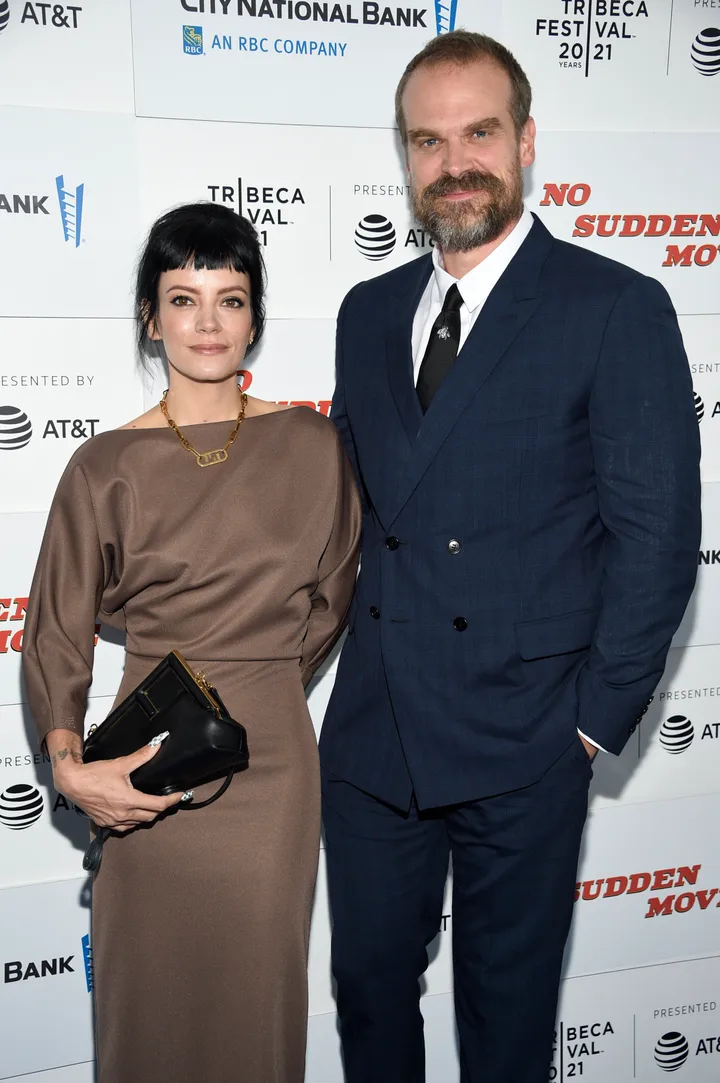
Lily Allen has responded to her ex-husband David Harbour’s recent take on her hit album West End Girl.
The British singer has previously described her latest release – which came out in October 2025 – as a work of “autofiction”, inspired by “what went on” towards the end of her marriage to the Stranger Things actor, albeit with some artistic licence applied.
Earlier this year, David broke his silence on his ex-wife’s album in a June interview with Variety.
“It is the privilege of every artist to use their experience to create art,” he responded when asked about West End Girl.”
“And so, I respect her for doing that,” the Black Widow actor continued, although he also stated: “I don’t think I could say it’s all true.”
“Stories are complex,” he noted. “And that’s why I say I respect her creation of art to channel her experience. [But] it wasn’t my experience.”
During a new interview with The Cut published on Monday, Lily responded to her ex’s comments about her candid songwriting.
When asked if she had “any reaction to his reaction to your art”, Lily admitted: “I think that was a generous thing for him to say.”
She also highlighted the critical acclaim he recently received for his drama, DTF St. Louis, for which he recently won an Emmy.
“He’s having a real moment of success as well, right?” she pointed out. “He’s been nominated for an Emmy, and it’s great.”
“We’re all doing our own thing, and we’re all doing what we’re supposed to do. If there’s one thing I know about David Harbour, it’s that he’s an excellent actor,” she added.

Lily and David were married for four years before splitting in December 2024.
Due to Lily’s candid songwriting, West End Girl generated lots of debate and online speculation about exactly what inspired it – which the Brit Award winner has insisted is something she doesn’t mind.
“If I feel really strongly about something, then great, because I will use it for my art and I will write about it. The rest of it is noise,” she said when asked about the fan response.
However, some of the rumours which came from her songwriting did frustrate the singer.
“People really filled in the blanks of the phone call at the beginning of the album, and that is interesting to me,” she stated, maintaining she “left it blank for a reason”.
She continued: “Also a lot of people have incorrectly interpreted the lyric ‘Why are we here talking about vasectomies’. I’m not going to explain to you what it actually means or why I added it in there. But it’s truly a fucked-up lyric.”
Lily is currently touring the US with her West End Girl tour.
Earlier in the run, the show sparked some debate online, due to the fact that Lily’s performance clocked in at under an hour, and only included songs from West End Girl, with no audience interaction.
“I am essentially acting out a past version of myself. And I’m really committed to telling that story. Like, I don’t talk to the audience. The show is very much behind a fourth wall,” she told The Cut of her current show.
However, it should be noted that fans generally received the show well, with HuffPost UK declaring the tour to be “an ambitious high-point in Lily’s 20-year career”.

4 min read
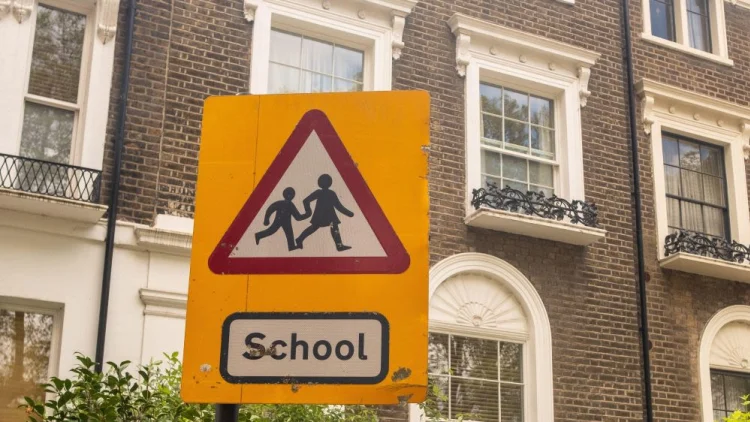
Local authorities have the knowledge and expertise to manage falling pupil numbers, but government backing will be crucial to help limit the disruption of school closures for families and staff.
What does a major capital city with no children look like? It’s a question policymakers in London are reckoning with.
The figures are stark. Reception pupil numbers have fallen in the capital since 2016, while Year 7 numbers have been declining since 2019. Around 90 schools have closed or merged in London over the last five years – and the decline shows no sign of slowing.
The birthrate is falling faster here than anywhere else in the country. London was also the only English region to see its population decline last year, according to recent Office for National Statistics figures. Outside the Covid pandemic, it was the first time London’s population had declined since the 1980s.
People’s decisions to leave or not have children in the capital are varied, but London’s affordability crisis is well known. On average, rent takes up around half of a worker’s income, while the housing ladder can feel impenetrable for first-time buyers. Coupled with soaring everyday costs, it’s no wonder many feel they cannot put down roots here.
Fewer children mean fewer pupils. For state schools, which are funded by government on a per-pupil basis, this can ultimately mean closures.
It’s easy to get lost in the numbers. But falling pupil numbers and school closures affect children, parents, staff and entire communities. I’ve seen how disorientating closures can be, leaving children and families feeling displaced and staff facing redundancy.
I’ve also seen the dedication of borough and school colleagues across London in supporting families and staff through these challenging experiences.
Local authorities have proved resourceful in using their existing powers to respond to falling pupil numbers.
For schools facing closure, mergers are often a solution and, with the right support, can help children integrate fully into their new school.
When St Mary’s CofE Primary School closed in Hackney last year, many pupils transferred to nearby St Matthias CofE Primary School. Before enrolling, St Mary’s children attended playtimes, lunchtimes and “meet the teacher” sessions at St Matthias, allowing friendships to form naturally. This phased transition was crucial to helping pupils and families adjust.
Falling pupil numbers have also left schools with empty classrooms and buildings. Boroughs are finding new uses for this space. In Hammersmith and Fulham, the council leased spare space to private and community organisations, generating more than £100,000 a year for one host school.
Rising demand for special educational needs and disabilities (SEND) provision means surplus space can also create opportunities. In Bexley, 122 new SEND places across nine local schools have been created, saving an estimated £8m by reducing reliance on costly out-of-area placements.
In Croydon, spare capacity now supports a unit helping asylum-seeking children settle into mainstream education.
These examples show what boroughs can achieve. But the closure process remains unnecessarily bureaucratic, unbalanced and opaque for families. Consultations for local-authority maintained schools can take up to six months, prolonging uncertainty. Conversely, families at academies are only notified once a closure decision has been made, leaving little opportunity to have their say.
London Councils, representing all London boroughs, is calling on the Department for Education to equalise the closure process across all school types, creating a more consistent, efficient and fairer system.
Councils should also have greater powers to decide how surplus school premises are used, avoiding unnecessary government approval delays and reducing the time buildings remain empty.
This is an opportunity for government to meaningfully deliver on its mission to rewire the state. Councils have the relationships and expertise to manage falling pupil numbers and resulting mergers or closures. Trusting them is central to what devolution can look like in practice.
Falling pupil numbers are here to stay. The response must be compassionate and collaborative, with children, parents and staff at its heart.
Una O’Halloran is the Labour leader of Islington Council and London Councils’ Executive Member for Children and Education
This is what it looks like, if you’ve ever wondered.

It’s the police’s own version of a seven-hour “no comment” interview.
Let’s just remind ourselves of that letter of 20 August, because it was a pretty significant and serious piece of professional correspondence to have been tossed away in three sentences.

To which the response of Police Scotland – a public service paid for by, and theoretically answerable to, the people of Scotland – is essentially “Meh, whatever”. The sheer lack of respect, the lazy contempt, not for Wings or even our lawyer but for the electorate who pay their wages, is frankly nauseating. They couldn’t even be bothered to deliver it within the 14 days.
The reply leaves pretty much no option but to go ahead with applying for the judicial review, which our legal team is now working on. It’s a complicated process of several stages but we’ll keep you posted as it develops. (We may need to call on you for some support, but that remains to be seen.)
The one thing that’s certain is that Scotland deserves better than this, and if nobody but us is going to act to make that happen, then so be it.

Politics
Politics Home Article | How civil society partnership can deliver the new government’s agenda
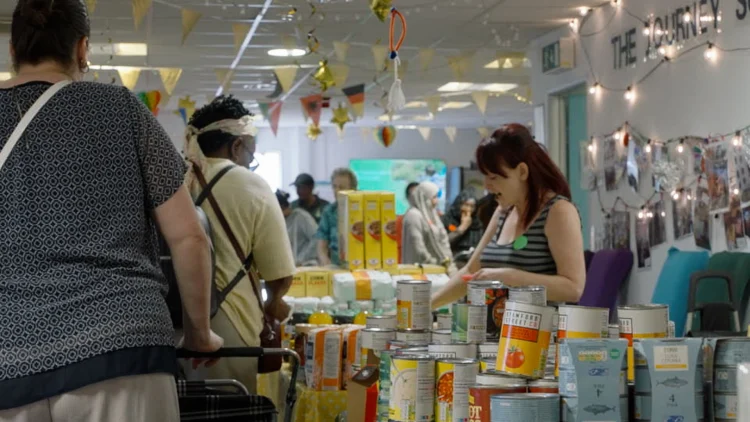

Bonny Downs Community Association, in London, has been helping their local area since 1998

The government’s ambition to put more power in the hands of local communities will depend on the strength of civil society. Indeed, as Jack Wakefield, Head of Policy at Social Investment Business, shows, investment in civil society will be vital for the government to deliver its commitment to tackle the country’s most pressing challenges head on.
“We all have charities in our constituencies that are doing the most amazing work” said Andy Burnham as he set out the ‘Direction of Government’ during his first day in the Commons as Prime Minister. He continued, “My agenda is all about putting power in the hands of people at the community level, so that they can drive changes that are right for them.”
Civil society is critical in the shift towards greater local control and decision making in public services. Since entering office, ministers have rightly recognised that voluntary, community, faith, charity and social enterprise organisations (VCSEs) have the expertise, local knowledge and trusted relationships needed to tackle some of the country’s most pressing social challenges. As the government pursues devolution and greater public power, it is right that VCSEs are seen as central to these ambitions. They strengthen communities, foster belonging and provide vital neighbourhood services, often remaining when others have withdrawn.
Investing in the buildings from which these organisations operate is therefore critical to delivering the government’s ambitions. These community assets are essential infrastructure, yet many face high energy costs and poor energy efficiency. The Warm Homes Fund presents an opportunity to address this, helping community buildings become warmer, more efficient and more financially sustainable, strengthening the places and public services communities depend on.
Locally led change
The sector’s greatest strength lies in its deep roots within local communities. Government research found that more than 75 per cent of VCSE organisations deliver services in the communities where they are based, giving them an unrivalled understanding of local needs, and challenges. This close connection enables them to respond quickly, tailor services to local circumstances and engage people who might otherwise fall through the cracks of traditional provision.
As a result, VCSE organisations play a vital role in supporting some of the most vulnerable people in society. Across homelessness, employability, health and social care, disability support and countless other areas, they provide trusted services that are rooted in lived experience and long-standing community relationships.
Evidence clearly shows that investing in community organisations can generate significant returns for both society and the economy, too. Research by Social Investment Business on the Futurebuilders Fund found a clear relationship between investment in voluntary organisations and improved local outcomes. Areas receiving over £3 million of investment recorded Gross Value Added (GVA) levels 42 per cent higher than comparable areas without investment, while levels of deprivation improved by 12 per cent. Even smaller investments generated measurable benefits, with areas receiving more than £500,000 experiencing GVA growth 14 per cent higher than comparable communities.
These findings reinforce a simple but important principle: investment in civil society is not merely a social good, it is an investment in economic growth, prevention and resilience. Strong community organisations can help address problems early, reducing pressure on public services and limiting the need for more costly interventions later.
At the heart of communities
At the heart of this success are community buildings. Community centres, village halls, faith buildings, youth hubs and multi-purpose facilities provide the physical foundation from which civil society operates. Their value extends far beyond the activities they host. They act as neighbourhood anchors, bringing people together, creating a sense of place and providing some of the few genuinely accessible and inclusive spaces remaining in many communities. In many deprived areas, they are among the last shared civic spaces where residents can connect, access support and participate in community life.
Yet the long-term sustainability of community buildings is at risk. Research from Social Investment Business suggests that rising asset disposals from local authorities is associated with increased charity closures, and the rising pressure of energy costs and low energy efficiency is putting charity budgets under severe strain. Indeed, community spaces are some of the least efficient buildings in the country, with bills surging by 12 per cent since the start of the Iran war. When a community building closes, the consequences extend far beyond the loss of a physical asset. Services disappear, volunteers are lost, social connections weaken and residents can be left without vital sources of support.
Civil society is central to the government’s ambitions to end homelessness, improve outcomes empower local communities, and renew public services. To harness this potential fully, we must support not only the organisations themselves but also the infrastructure they depend on. Investing in them is therefore not an optional extra. It is a necessary condition for delivering stronger communities, more effective public services and sustainable local growth. The Warm Homes Fund provides an oven-ready route to strengthening the viability and sustainability of these buildings for the next generation.

3 min read
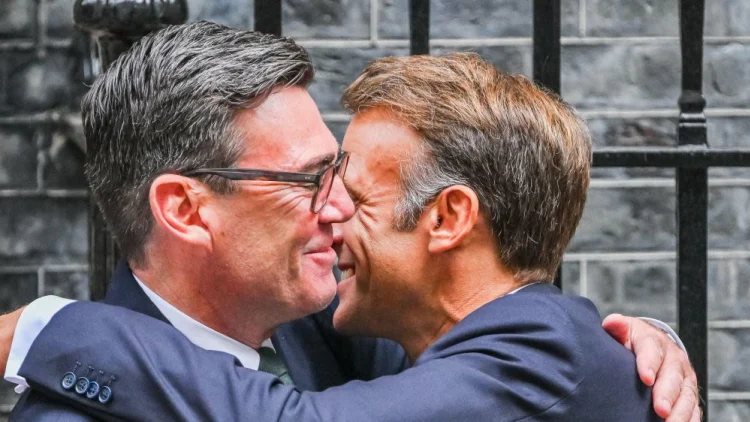
As Andy Burnham’s honeymoon summer draws to a close, Labour MPs are staring down the barrel of some truly perilous fiscal choices in the coming weeks.
As the hard deadline of the 28 October Budget approaches, despite a recent uptick in the opinion polls, the spectre of another fall in support cannot be ruled out.
Enter our latest research, which finds that a Labour manifesto commitment to full European Union membership would secure the most support from across the electoral coalition voters the Prime Minister must persuade to back him at the next general election.
The public have repeatedly made clear that they support far stronger ties with our closest allies and partners in the EU, on everything from trade to travel and defence, and will resoundingly reward parties who take the plunge.
This week, fresh polling by YouGov, commissioned by Best for Britain, and endorsed by former Labour leader, Lord Neil Kinnock, Burnham’s long-time mentor, and ex-European Commission vice president, both quantifies that support and makes the next step wholly unambiguous.
Committing to rejoining the EU in Labour’s next manifesto is vital for the party’s chances at the next general election.
Our research shows that it would significantly boost enthusiasm and inclination to vote for the party by a full 7 per cent across all voters in Great Britain (10K+ GB adults). British Future’s recent research added to the evidence base that the public wants the government to go beyond Keir Starmer’s ‘red lines’ on Europe. Our findings, based on clear data, take it further. It’s there in black and white – and red all over.
There’s another reason that now is the time for bold action.
As Kinnock rightly highlights, “increasing numbers of people across Britain already know [this] to be the patriotic course”. On Monday, when the first ministers of the UK’s three devolved nations, including Plaid Cymru leader Rhun ap Iorwerth, signed a memorandum at Cardiff Castle, including the powerful commitment that “the future of their nations belong in the European Union”, the son of Tredegar made the unifying case. The argument for repairing the unnecessary damage caused by Brexit, for every person across all four nations of the UK. Not only that, but for Labour to lead the way, as both “public opinion and world realities make this advance essential”. Hear, hear.
What’s more, the irrefutable growth case has also been set out in an independent econometric study by Frontier Economics, demonstrating that restoring our membership of the world’s largest, and our nearest, trading bloc can deliver a £92bn boost to the UK’s GDP, at the barest minimum, concentrated in the former industrial and manufacturing heartlands Burnham’s roots lie so deeply within. This is a route that can no longer be avoided, overlooked, or ignored.
The siren calls – from crypto-cash funded populism and identity-driven nationalism – are all too real. The risks of dwindling public consent following a Budget feeding frenzy, coupled with emptying arms stores and public services running on fumes, are equally so.
But with a fair wind, for once, behind them, and an open goal in front, Burnham’s team must recognise that a narrow window of opportunity exists. A natural, likeable ‘every bloke’ with the necessary deftness to carry the country through a course correction occupies the highest office in the land, and is winning hearts and minds. A clear and conclusive path forward does exist which addresses both the political and economic conundrums the PM is confronted with, and can begin to right the wrongs of the past decade.
It requires only bravery to reap its rewards.
Tom Brufatto is Director of Policy and Research at Best for Britain
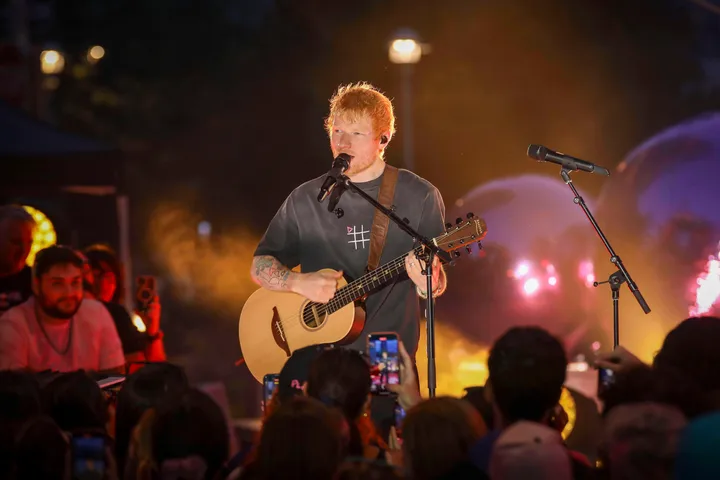
Macklemore has spoken out for the first time since being dropped from Ed Sheeran’s current US tour due to comments he made on stage in support of Palestine.
Earlier this month, the Grammy-winning rapper voiced his solidarity with Palestine amid the ongoing conflict in the Middle East on stage in New Jersey, while serving as Ed’s opening act.
“A big part of the reason why I wanted to do this tour in the first place is so I could stand up in stadiums like this and say two words that are very near and dear to my heart: ‘free Palestine’,” he told the crowd at the time. “I said, ‘free Palestine!’.
“I want those words to be loud and clear, so that people all the way in Gaza, to the occupied West Bank, know that we have not forgotten about them.”
When footage from this speech began doing the rounds online, it was met with a divided reaction, with the singer Pink resharing a graphic calling for Macklemore to apologise, and the Israeli American Council setting up a petition calling for the Thrift Store singer’s removal from the tour.
On Monday night, it was confirmed that Macklemore would no longer be appearing as Ed’s opening act effective immediately, with the musician speaking out shortly afterwards in a lengthy Instagram statement.
“I’m not sure how to start this. So I’m going to speak from the heart and share the truth,” he began. “Ed Sheeran and his team have made the decision to remove me from The Loop tour. But before I get into it, I want to say something that should be obvious. In this moment, I think it matters.”
He wrote: “I am not a victim. Ed Sheeran is not a victim. Pink is not a victim. We have careers, money, opportunities, safety and audiences around the world. Whatever consequences any of us face for what we say, we get to go home to our families.
“The victims are the Palestinian people. The men, women and children who have been killed, starved, displaced and forced to live through unimaginable violence. More than 20,000 children have been killed in Gaza alone. People are being killed today, and people will be killed tomorrow. I want to make sure that as I tell this story, we don’t lose sight of that.”

Macklemore continued: “Ed is my friend. I’ve known him for 13 years. We’ve shared late nights, studio sessions and stages. He has this infectious magic about him that I’ve grown to love. I consider him a brother. And because of that, we’ve had some difficult conversations this past week. The type of talks rooted in love and respect for one another that still end in a place of fundamental disagreement.
“Nothing I’m writing here is out of spite or because I want to tear down his character. But as I told Ed multiple times on the phone, our friendship can’t change my responsibility to tell the truth about what happened.
“Last Monday, in the middle of all the media attention surrounding Pink and what I said [on stage], Ed told me that Robert Kraft called him. We were scheduled to play Gillette Stadium later this month, which is owned by the Kraft Group. Ed told me that Kraft said I would not be allowed to perform in his stadium.
“Ed also told me that Kraft had rallied some of the other stadium owners and collectively they gave him an ultimatum: if Macklemore stays on the tour, you will not be allowed to play in our venues. Ed was in a fucked up position. He knew it. His typical apolitical stance was being challenged in a way it never had been before.
“He told me that the words ‘Free Palestine’ and the image of the Palestinian flag were hurtful to a lot of people he spoke with. I told him that if those words were more offensive than tens of thousands of Palestinian children being killed by Israel, then there was a fundamental disconnect between where those people stood and where I stood. But he couldn’t get past his public facing, ‘I don’t take sides’. And I get why people don’t. Taking a side can cost you. Money, brand deals, sponsorships, festivals, private shows, relationships and access. I’ve lost all of those things.
“But there is no neutral position between the oppressor and the oppressed. When one side has the bombs and bottomless financial and military support from America, refusing to take a side doesn’t leave you in the middle.
“What I said at MetLife I have been saying on stages around the world for almost three years. So why is it an issue now? Because now I’m sharing a stage with one of the biggest artists in the world, in some of the biggest stadiums in America. At a certain level of exposure, ‘Free Palestine’ becomes too much of a risk. If I kept doing the shows, saying ‘Free Palestine’, with Ed implicitly supporting it, the crowd getting loud and showing undeniable support for Palestinian liberation, what artist might speak out next? The stage becomes resistance.
“Maybe that’s why this time it became so important to silence me. And one of the most effective ways to enforce that silence has been to weaponise the accusation of antisemitism.”
“Antisemitism is real,” Macklemore continued. “And that is exactly why the word matters too much to be used as a shield against criticism of the Israeli state. When criticising Israel, opposing Zionism or saying ‘Free Palestine’ gets conflated with hatred of Jewish people, it doesn’t protect Jewish people. It protects Israel from accountability.”
He then insisted: “I hope this isn’t the end of my relationship with Ed. Thirteen years of friendship doesn’t disappear because of one painful disagreement.
“I hope we both continue listening, studying what is happening in Palestine and wrestling with what neutrality means in a moment like this. My door will always be open to continuing that conversation.”
Read Macklemore’s full statement below:
HuffPost UK contacted Ed Sheeran’s team on Monday evening but did not receive a response.
Robert Kraft told Rolling Stone that Macklemore’s removal from Ed Sheeran’s tour was based on “recent actions, material shared from the stage during Ed Sheeran’s shows in New Jersey, and a broader history of antisemitic rhetoric and imagery that we believe has been deeply offensive and hurtful to the Jewish community”.
In 2014, Macklemore performed in an outfit that led many critics to claim was inspired by antisemitic tropes and imagery. The rapper later apologised, insisting this had not been his intention.
“I would welcome the opportunity to sit down with Macklemore and discuss the facts, because ultimately our goal is the same – peace for all people, an end to suffering, and an end to all hate,” Kraft added in his latest statement.
“This decision is not about diminishing the suffering of innocent Palestinians or denying anyone the right to advocate on their behalf. Their pain and loss are real.”
Ed’s Loop Tour – in support of his 2025 album Play – continues on Saturday night in Philadelphia.

We’ve written before at HuffPost UK about the surprising things your nails can tell you about your health.
Horizontal ridges, dark lines, and brittle or “spoon-shaped” talons can sometimes reveal conditions like uncontrolled diabetes and anaemia.
But researchers have reviewed another red flag that shows up on the lunulae (those half-moon-shaped white semi-circles at the base of your nails) first.
It “may reflect both systemic disease activity or local pathology such as subungual tumour,” the researchers say, though the cause remains “unclear”.
Red lunulae have been associated with a range of health conditions
A review of case studies, published in The American Journal of the Medical Sciences, has suggested that red lunulae could be a sign of various health conditions.
“The lunula, the half-moon-shaped visible portion of the distal matrix most apparent in the thumbs, is typically white in appearance and contributes to the shape of the nail plate. Abnormal coloration of the lunula may signify an underlying disease,” researchers wrote.
While “rare”, they added, red lunulae was first described in the 1950s and has since been spotted in other isolated cases.
When noticed, the symptom has been linked to a broad range of conditions, including:
- rheumatoid arthritis,
- liver cirrhosis,
- heart failure,
- alopecia areata (an autoimmune condition leading to patchy hair loss),
- lupus,
- dermatomyositis (a rare autoimmune disease linked to weaker muscles and skin rashes),
- lymphoma,
- psoriasis,
- carbon monoxide poisoning,
- twenty-nail dystrophy (a condition affecting all toenails and fingernails, making them appear brittle), and
- lymphogranuloma venereum (an STI caused by strains of chlamydia bacteria).

Zay Nyi Nyi via Getty Images
Does that mean I definitely have one of these conditions if I have red lunulae?
The researchers said we still don’t know the mechanism behind the symptom. We’ve only found a link and not a cause.
Red lunulae have been associated with heart failure for decades, while other research suggests nail colour changes might be linked to connective tissue disorders too.
The paper reads: “Upon examination, if the clinician decides that a patient meets the criterion for presenting with true red lunulae, a general medical examination should be performed.
“It is important to keep in mind the possible systemic diseases previously seen tied to red lunulae while evaluating the patient.”
As part of our Policy Landscape 2026 report, Nicola McEwen considers the state of the political debate and the immediate and long-term challenges that need to be confronted when it comes to devolution in the UK.
Prime Minister Andy Burnham has made it his mission to “take power out of Westminster and carry it into every postcode in the country”. But it is not clear the ‘devolution revolution’ will extend beyond England’s borders.
Of course, one might think there is less need to progress devolution to Scotland, Wales and Northern Ireland, because they already have far more autonomy from Westminster than English regions. But Scotland and Wales are nations, not regions. And following the elections in May, the Prime Minister must now face three First Ministers from nationalist parties whose ultimate goal is political independence or, in the case of Sinn Fein’s Michelle O’Neil (whose responsibilities in office are shared with the DUP’s Deputy First Minister), to secure Irish unity.
Both the SNP and Plaid Cymru were elected on manifesto commitments to increase self-government. Both emerged triumphant in contests that witnessed Labour’s continued decline in Scotland and its decimation in Wales. Ignoring their calls for further powers whilst championing devolution in England risks destabilising the Union itself.
There have been long-standing calls, including from successive independent constitutional commissions, to devolve further competences to the Senedd, most notably over policing and justice. Plaid Cymru’s manifesto reiterated these calls, alongside the devolution of powers over the Crown Estate, rail, port regulation, Air Passenger Duty, social security and some aspects of energy policy.
The SNP manifesto called for the devolution of energy policy, employment law, further fiscal autonomy, a Scottish visa scheme, and legislative competence for an independence referendum. These calls have the backing of the Scottish Green Party, whose 15 MSPs join the 57 SNP MSPs in the largest pro-independence majority to date in the Scottish Parliament.
But the Westminster parliament is the legal custodian of the Scotland and Wales Acts and of the future of the Union. The Prime Minister has already informally rejected a second independence referendum. Neither he nor the Secretary of State for Scotland, Douglas Alexander – whose relationship with the Scottish Government can best be described as grim – have responded positively to the other devolution demands. Secretary of State for Wales, Stephen Kinnock, professed himself unconvinced of the need for further devolution, suggesting that devolution could destabilise policing and the Crown Estate.
Both the SNP and Plaid Cymru focused on the cost-of-living crisis in the May elections, reflecting voter priorities. Constitutional battles may thus be seen as an unwelcome distraction from an electorate who want their governments to work together to get things done. Nonetheless, championing devolution in England while snubbing calls for devolution in Scotland and Wales does not bode well for intergovernmental relations.
Labour entered office in 2024 with a commitment to respect devolution and ‘reset’ the UK government’s relationship with the devolved governments, following a deterioration of intergovernmental relations under the Conservatives against the backdrop of Brexit.
This included bringing forward a statutory review of the 2020 UK Internal Market Act, legislation enacted despite considerable opposition from, and without the consent of, the devolved legislatures. The Act was intended to facilitate frictionless trade across the UK after Brexit. Exclusions from its ‘Market Access Principles’ can be sought, without guarantee of being granted, bringing complexity and uncertainty to the legislative process. Without such exclusions, some rules drawn up by devolved governments would not apply to goods and services from other parts of the UK, making it more difficult to realise policy goals. The Act also allowed the UK government to spend directly in devolved policy areas, bypassing the established system of territorial finance and often bypassing the devolved governments. The statutory review committed to environmental and public health benefits being evaluated alongside the economic costs of regulatory divergence in weighing up exclusion requests. But this is unfinished business for the devolved institutions, and there remains a lack of clarity about how, and by whom, these additional criteria will be considered.
The Labour government also promised to restore the Sewel convention – the process of securing consent from the devolved legislatures before enacting legislation in the Westminster Parliament on devolved matters. Long a pragmatic tool for coordinating legislation across governments, this was an important symbol of the authority of the devolved institutions within a constitutional framework otherwise founded upon the undiluted sovereignty of the Westminster parliament. But that symbolism was somewhat undermined during the Brexit process when withheld consent was largely ignored by the UK parliament. It was further undermined when the UK Supreme Court confirmed that the Sewel Convention, which was written into the Scotland and Wales Acts, has no legal effect.
These outstanding issues should be in the Prime Minister’s in-tray. If not, he will surely confront them in intergovernmental forums. Meaningful discussions over further devolution to Scotland and Wales may also be hard to dismiss while championing devolution in England. Such discussions may come with pressure on devolved governments to devolve powers to Scottish and Welsh regions, but devolution within Scotland, Wales or indeed Northern Ireland would ultimately be a matter for the devolved institutions themselves. Over the longer term, simply rejecting calls for an independence referendum may not be enough, especially if support for independence increases. There is an opportunity now to consider, dispassionately, what would constitute and trigger a legitimate process for determining the future of these islands.
The Prime Minister is undoubtedly committed to devolution. He may well prove to have a transformative impact on the governance of England. But to be an effective Prime Minister of the United Kingdom requires understanding and carefully managing the complex set of territorial relationships and identities between the nations of these islands.
By Nicola McEwen, Professor of Public Policy and Governance, University of Glasgow Centre for Public Policy.
A Reform UK government could stop trade unions giving money to the Labour Party, Nigel Farage has warned.
He said he would be prepared to take the drastic step if the government forces Reform to hand back £72 million it has received from two crypto billionaired.
Ben Delo and Christopher Harborne gave the party £36m each at the weekend.
Delo has moved back to the UK from Hong Kong, while Thailand-based Harborne is now registered to vote in Hampshire.
But ministers want to toughen up a new law going through parliament so that donors previously based overseas must prove they are committed to living in the UK long-term.
If Delo and Harborne fall foul of the new rules, the cash they have given Reform would need to be repaid.
Writing in the Telegraph, Farage said he would look to retaliate by ending the unions’ historic funding of the Labour Party if he becomes prime minister.
He said: “The Unite union alone has given the Labour party over £50m over the course of the last few years. They’ve got the Employment Rights Act, not to mention big pay rises for bus drivers. If anybody is giving money to do political bidding, it’s the trade unions.
“So I would just warn the Labour party here and now: If you try and ban our donors, we in government would certainly ban funding from the trade unions. I don’t want to go down that route. But it’s something we would be prepared to do.
“Once again, let me be clear. Neither Ben Delo nor Christopher Harborne will be getting membership of the House of Lords. They won’t be getting favours, they won’t be influencing policy. It isn’t happening. Because unlike the uniparty we are not for sale.”
Business secretary Jonathan Reynolds hit back by insisting trade union donations are different to those from billionaires.
He said: “When we talk about union donations, that is not one entity. That is tens of thousands of ordinary people choosing to make that donation, and it’s banded up and given from the union. But it’s very easy to opt out of that.
“I honestly think to take these kind of mega, ultra crypto Reform donors and compare them to voluntary associations of working people choosing to give some money to the political system, I don’t think the two things are comparable.”
Listen to Commons People, the podcast that makes politics easy. Every week, Kevin Schofield and Kate Nicholson unpack the week’s biggest stories to keep you informed. Join us for straightforward analysis of what’s going on at Westminster.

Taylor Swift wasn’t even at this year’s Emmys, but she still managed to deliver one of the night’s stand-out moments.
At this year’s TV awards, the Grammy winner was actually nominated for five awards thanks to her Eras Tour special The Final Show.
In a nod to this, during the ceremony, host Mariska Hargitay and her Law & Order co-stars took part in a pre-recorded sketch, where they tried to decipher whether or not the I Knew You Were Trouble singer would be making an appearance on the night.
Towards the end of the segment, Taylor was able to show off her acting chops when she joined Mariska in the skit, playing up to her own reputation (see what we did there?) for scattering Easter eggs in all of her work by commenting: “Not everything is a clue.”
“It is to the Swifties,” Mariska fired back.
At the end of the skit, the team reasoned that Taylor would not be at the Emmys because her “husband has a work thing”.
This was, in fact, true, with Taylor missing Monday night’s ceremony to cheer on her husband Travis Kelce at the Kansas City Chiefs game at the Arrowhead Stadium.

Mariska and Taylor have crossed paths numerous times in the past, most notably in the singer’s 2015 music video for her hit Bad Blood.
One of Taylor’s cats is also named Olivia Benson, after Mariska’s long-standing Law & Order character (the feline even made a cameo in the comedy skit shown during the Emmys broadcast on Monday evening).
Widow’s Bay was the big winner at the 2026 Emmys, making history with its 14 wins, while the Eras Tour special failed to come out on top in any of its categories, losing out to the recent Muppet Show revival and Bad Bunny’s Super Bowl Halftime Show.
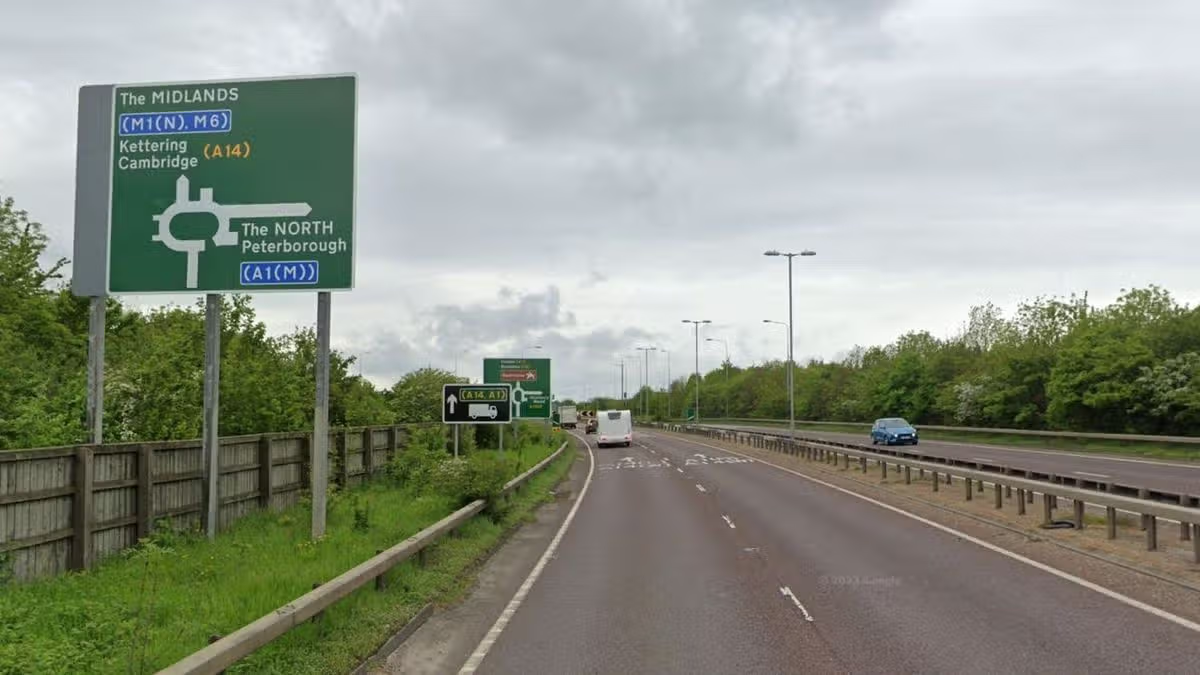
Locals not confident A141 upgrades will solve congestion issues

What Actually Separates a Good WordPress Development Agency From the Rest

UnitedHealth: Fundamentals Are Healing, Now the Chart Must Agree



-

 Fashion4 days ago
Weekend Open Thread – Corporette.com
-

 Business5 days ago
Micron Stock Climbs Above $1,031 as AI Memory Crunch and a $50 Billion Outlook Fuel the Rally
-

 Tech2 days ago
The Latest Weird Thing to Play Doom Is the Mapped-Out Brain of a Fruit Fly
-

 Business6 days ago
AMD Stock Climbs After Management Lifts 2027 Data Center Outlook Toward $70 Billion in AI Sales
-

 Crypto World7 days ago
Robinhood Stock: How To Take Advantage With Reduced Risk
-

 Crypto World7 days ago
Bitcoin price risks $76K drop as $78K support weakens
-

 Crypto World4 days ago
XAG/USD: Silver’s Short-Term Rally Meets Its Moment of Truth
-

 Crypto World5 days ago
2 Chip Stocks Broke Out This Week. Neither Was Nvidia
-

 Business4 days ago
10 Most-Streamed Songs On Spotify In 2026 So Far, Led By Ella Langley’s Dominant Run On The Charts This Year
-

 Crypto World7 days ago
Ethereum price stalls below $2,500 as ADX drops to 11
-

 NewsBeat7 days ago
England up in reading, maths and science rankings as Scotland and Wales dip
-

 Tech5 days ago
Battery life is the only iPhone 18 Pro and iPhone Duo upgrade I care about. Apple didn’t disappoint
-

 Crypto World5 days ago
OKX launches 10x OpenAI, Anthropic X-Perps in Europe
-

 Crypto World7 days ago
Intel Stock Jumps 9% on Chip Price Hike Report, US Stake Gains $36 Billion
-

 Crypto World6 days ago
Pi Network ships Protocol 27 on a network with 14 million users and zero DeFi
-

 Crypto World4 days ago
Diesel Tops $6 a Gallon for the First Time as 28 States Set Records
-

 Tech6 days ago
Apple Watch Ultra 4 vs Watch Ultra 3: Should you really spend another $799?
-

 Crypto World7 days ago
CLARITY Act runs out of calendar as crypto regulation stalls
-

 News Videos4 days ago
Facing Financial Fears
-

 Crypto World6 days ago
Bitcoin price risks $70K if $78K neckline breaks
You must be logged in to post a comment Login