

Politics
The House Article | Edtech Wars: Meet The Mums Fighting Screens In Classrooms



(David Fuentes/Alamy)

14 min read
As consensus grows around the need for social media and smartphone restrictions for under-16s, Sienna Rodgers reports that campaigner mums across the country are now bringing the fight to edtech
For Bridget Phillipson, Britain’s embrace of edtech – educational technology – is exciting.
“I’m so proud that the UK is an edtech powerhouse,” the Education Secretary declared in a speech in January. Announcing a £23m expansion of the government’s edtech pilot programme, she continued: “AI can deliver the biggest leap forward for learning in centuries – perhaps even since the invention of the printing press”.
As the Department for Education boasts that it is “heralding a digital revolution in education”, £187m has been put into a ‘TechFirst’ skills programme to bring AI into the classroom and a commitment has been made to roll out AI tutoring in schools for disadvantaged pupils.
For an increasingly vocal group of parents, however, edtech is an unwelcome development in their children’s education – one that is being foisted on them, both at school and at home, without their consent. They suspect that the government’s enthusiasm for edtech is based on the push for economic growth via tech investment, but believe that children’s education and attainment is being harmed in a way that will do little good for our economy in the long term.
Those parents have recently scored victories in other areas of education policy. The government has agreed, ahead of the results of its consultation on a ban, to put restrictions on the social media use of under-16s. And in March, it released new guidance urging parents to limit the screen time of under-5s – avoiding it altogether under two years, and no more than one hour a day for children aged two to five.
“Parents of young children are facing a constant battle with screens,” the press release unveiling the guidance empathetically states. Yet the guidance, while putting the onus on parents, does not apply to education settings – even though many parents complain that edtech is making that constant struggle over screen time harder.
“The next battlefield is in education,” confirms Arabella Skinner, policy director at Health Professionals for Safer Screens. She is delighted by the screen time guidance but says: “There is no point doing any of this work unless they look at it holistically across the whole day.”
Her group comprises thousands of concerned health professionals from paediatricians, psychiatrists and psychologists to speech and language, occupational and physical therapists, plus ophthalmologists, opticians, audiologists and hundreds of GPs.
“The conversation has been around the mental health of a 15-year-old – that’s where it got stuck,” she says, when in fact resulting health problems extend much further, in both age and conditions. One A&E consultant in her group recalls a child presenting with swollen legs: “You think it’s kidney failure. Turns out he’d been sitting for a week, pretty much, playing games, 17 hours a day with his legs up.”
Skinner is training health professionals to spot such signs, and wants questions around digital devices to become standard: “In the same way you ask people about how much alcohol they have, we should be thinking about asking about their screen time.”
“We came in here more worried about teens. We are now more worried about early years,” she adds. Recent research findings are stark.
The latest report by the 1001 Critical Days Foundation – an organisation founded by Andrea Leadsom to emphasise the importance of the period from pregnancy to two years old – found that more than two-thirds of under-2s use screens. According to their data, nearly 20 per cent of infants aged four to 11 months watch them for over an hour a day.
Ofcom data has identified that 98 per cent of British two-year-olds are watching TV or online videos, on average for more than two hours a day. And early years charity Kindred Squared found that 28 per cent of UK children starting primary school do not know how to use a book – with many attempting to swipe or tap on them, as they would on a tablet.
Education minister Baroness Smith has argued in the Lords that, when it comes to digital devices, “it is important not to conflate personal and educational use”. The contention of edtech advocates is that children must be taught digital literacy.
But critics question what skills young children are really building when they scroll YouTube shorts or play games on the iPad. Many of these apps look less like genuine learning and more like limbic capitalism – the term coined by historian David Courtwright to refer to products that exploit the brain’s pleasure centre to maximise profit through dopamine hits.
The House put out a call in one of the many WhatsApp groups for parents concerned about screens to hear first-hand experiences of edtech; a flood of eager responses soon came.
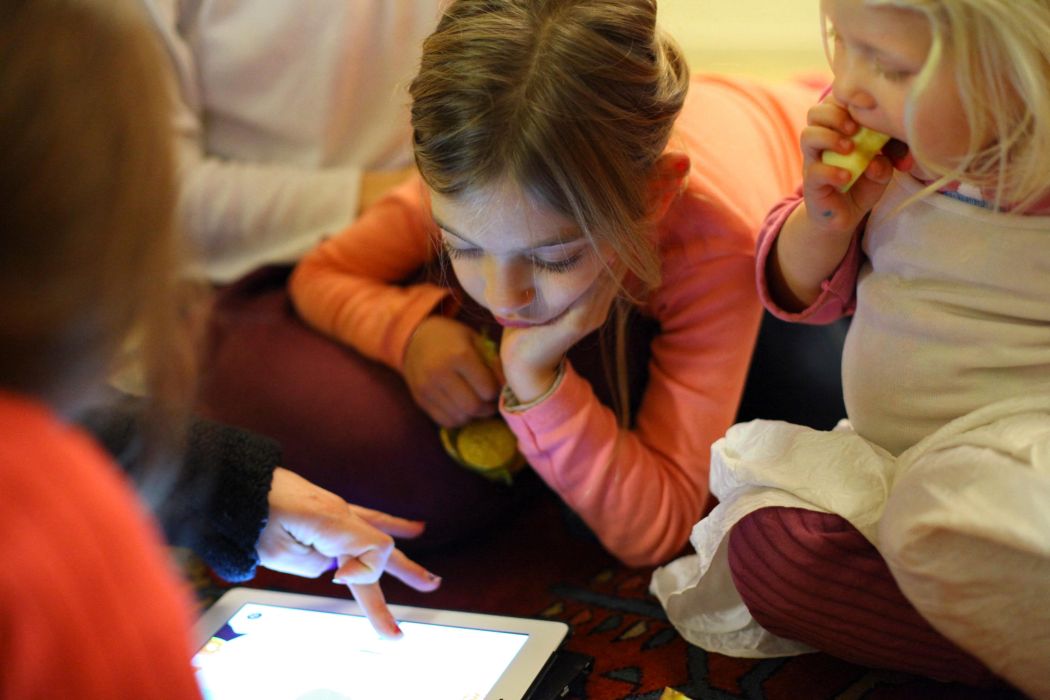
Ex-childminder Dimitriya, a mum of three girls who lives in the North West, recalls her eldest daughter coming back from school in reception – when the children are aged four to five – with a QR code for her maths homework. It linked to NumBots, a learning platform dedicated to addition and subtraction. The game allows users to choose a character and rewards them with stars when they answer questions correctly and quickly enough.
“We’ve experienced anger issues with our daughter that we haven’t seen before. She started throwing and hitting and screaming,” says Dimitriya. The behaviour left them confused. “Do we have a child that’s just naturally competitive and we haven’t noticed up until this moment, or is it something to do with the platform and what she’s experiencing?” they wondered. “I believe that it’s the platform – it’s the gamification of the learning process.”
She also noticed – as this House writer has found while visiting local state schools – that reception classrooms feature big interactive boards. “Massive tablets, basically,” she says. “I have tried to understand how long exactly they spend on that thing – nobody can tell me.”
At the start of every school year, Dimitriya now explains to the teachers that they have no one-to-one devices at home, and her kids won’t be using the apps for homework. Despite other parents at the school reporting similar stories, such as kids breaking iPads when they can’t do the required number of maths equations in 50 seconds, the school is pushing back.
“We’ve been told that if we don’t sign the user agreement for next year, our children will be left out from their computing lessons,” she reports. The headteacher has been firm: “She basically said to us, ‘If you don’t like the school and what we’re doing, you can leave.’” Unable to find schools nearby that take a screen-free approach, she is now seriously considering homeschooling.
Annaliese, a former primary school teacher who used to work for Westminster think tanks and now campaigns against smartphones in schools, has children of primary school and preschool ages.
“My main concern is that they are highly addictive,” she says of the homework apps. “You give the kids the device, and they’re doing this fun game, and they might be meant to do 10 minutes of it, but getting that device off them afterwards is incredibly difficult.”
Her children were told to use Times Table Rock Stars, another popular app promoted by schools but aimed at those aged six and above, for their maths homework. It similarly offers avatars and users are encouraged to collect virtual coins, allowing them to personalise their characters.
“It was with great trepidation that I would give over the laptop to do Times Table Rock Stars, because I knew that whilst the requirement was to do 10 minutes, it was going to take an hour out of that afternoon to wrangle that device off the child and then to put up with the inevitable tantrum meltdown afterwards,” says Annaliese.
It was not only behavioural consequences that worried her but also their effectiveness in terms of learning.
“I noticed that, with my daughter, she might actually be doing quite well with her times tables on an app, but if I asked her orally, she’d find it really difficult. It’s almost like she couldn’t transfer the learning into a different context. And it was at that point that I opted out of her using it.
“I created the analogue alternative, which was literally just to print out the Times Table Rock Stars worksheets and get her to do those with a timer that I bought for a fiver, and she’s doing really well.”
Kifah has encountered problems at an earlier age still. She is based in Scotland, where the use of edtech is even more intense than in England as a result of direct mandates by councils.
You think it’s kidney failure. Turns out he’d been sitting for a week, pretty much, playing games
When Kifah’s son started nursery part-time, she found he became disoriented and overstimulated. “We couldn’t work out for a really long time why he was so distressed; why he was so violent and dysregulated,” she says. Then she discovered they were handing iPads to the kids daily.
“I had asked them not to use screens with him, so I was in shock, obviously. I approached them, and their argument was that the council would withhold funding if they did not have technology as part of their curriculum. I said, ‘But he’s two?!’” Kifah recalls.
“We withdrew him, and all these behaviours stopped.” But at the next early years setting, she found they refused to stop showing them YouTube Kids. Next, she tried an outdoor nursery – but again found that council policy meant they had to use tech, so were giving her son a phone on which to select songs to play.
“It’s really been quite upsetting for us and really difficult. We’re trying to give our child the best start in life. A lot of what we do is evidence-based in our home, and we’re just getting told, ‘Well, this is how it’s done now.’ And that’s not really evidence,” she says. “We’re a one-income family now, which we never, ever expected to be.”
While Sweden, Denmark, Madrid and Los Angeles are rolling back digital learning, there has been a major push in Scotland for all primary and secondary pupils to have one-to-one devices. This has led to safeguarding problems, with pupils bypassing safety filters on school iPads to access violent and sexual content.
Politicians on the left often focus on equitable access to digital tools – and yet ironically, there is anecdotal evidence that parents who can afford fees are turning to private schools (such as the famous Heritage School in Cambridge) for screen-free education.
Private schools are not forced to undertake the reception baseline assessment, for example, to which the government introduced a digital element in 2025. This is the mandatory test that all reception pupils – aged four – must take in their first six weeks, designed to measure student progress between the start and end of primary school.
Dr Mandy Pierlejewski, a nursery and reception teacher turned academic, led a team that carried out a study on the assessment – first, looking at two schools in 2024; then, three schools in 2025, when a touchscreen aspect was brought in. Filming pupils from behind to preserve anonymity, they analysed their body language and found signs of stress in some of the 2024 children and every one of the 17 children studied last year when they were given a tablet for a 20-minute test.
“A lot of the children didn’t have the digital literacy they needed to complete that test,” she recalls. “Not all children, for instance, realise that you could diagonally drag and drop.” The test asked the four-year-olds to move three pictures into boxes above, in the correct order, to make a story. Many got it wrong – but not because they didn’t understand sequencing.
“Some children really didn’t have the digital skills needed at all. They were tapping on things multiple times. Some of them kept shutting the iPad down by pressing the Home button, and they had to be all started up again.”
In 2024, the maths questions involved moving concrete materials. For subtraction, they were presented with six little plastic bears, told to take two away, then asked how many were left.
The 2025 digital version was more abstract: presented with a picture on the screen of a tree with four leaves on, the teacher says “three leaves fall to the floor – how many leaves are left?” Of the 17 children the study watched, 16 incorrectly counted “1, 2, 3, 4”, not realising they had to move three leaves on the screen themselves before counting.
“The last thing they heard was, ‘how many leaves are left on the tree?’, so they just counted all the leaves. Now, for 16 out of 17 children to get that wrong, there is something wrong with that question,” Pierlejewski says. “I teach primary school teachers mathematical development.
We’ve experienced anger issues with our daughter that we haven’t seen before. She started throwing and hitting and screaming
You start with concrete materials, then you proceed to pictorial representations of the concrete thing, then you move to abstract. It has to go in that order, because that’s how children’s brains develop.”
She predicts that the latest cohort’s results will be worse than previous years. There is no mention of testing digital skills – the assessment is still supposed to be focused on numeracy and literacy only – yet Pierlejewski’s study suggests otherwise. It raises questions about the purpose of edtech and whether it is being used with intention.
Skinner, of Health Professionals for Safer Screens, concludes: “They need to separate educational technology that frees up teachers’ time to be able to teach – because nothing is better than a teacher who’s inspired and delivering it – versus technology that is in front of the student, and takes them away from proper teaching.”
SafeScreens co-founder Jane Rowland, who provides resources to help parents fighting schools to opt out, argues: “What parents are repeatedly being told by schools is ‘we’re preparing the children for a digital workplace’, which, to me, is just nonsense. A digital workplace doesn’t use gamified applications for their employees.”
She is asking government to pause edtech, conduct a review and establish certification for platforms that are shown to be educationally beneficial for children.
Her demands are echoed by the Conservatives, who put forward amendments to the Schools Bill to protect pen-and-paper exams, give parents the right to opt out of screen-based homework, and ensure children would not be required to complete the reception baseline assessment on screens. Although ministers have agreed to introduce a legal ban on smartphones in schools and deliver age restrictions on social media, they have not so far changed course on edtech.
“The government really need to get a grip on the screen creep happening in our classrooms,” shadow education secretary Laura Trott tells The House. “When it comes to screens in schools, we should be guided by the evidence. Research shows that writing by hand supports memory and deeper learning in a way that screens simply don’t.”
“We need to pause and review the evidence before driving any more technology into our schools,” she adds. “We need to end this uncontrolled experiment on our children. Until there is clear evidence that screens improve learning, the focus should be back on books, not devices.”
A Department for Education spokesperson said: “Technology plays an important role in broad, rich learning experiences in classrooms across the country, and it is essential that children learn to use technology confidently and safely, so they can gain the skills they’ll need as they move through life.
“Equally, we understand concerns about excessive screen time and that unmonitored or unlimited personal use can carry risks and recognise that we must get the balance right.
That’s why we are supporting children and young people to develop healthy relationships with technology, including through our new guidance to help families build good screen habits from a young age, banning mobile phones in schools and consulting on the next measures on online safety for children.”


The post Why so many young women fall for trans ideology appeared first on spiked.
Politics
Security discussions intensify over potential challenges to the biggest World Cup in history


Security discussions are intensifying as the 2026 World Cup approaches, amid preparations to host the largest edition in the tournament’s history, featuring 48 teams and 104 matches spread across 16 cities in the United States, Canada and Mexico.
Although there are no official warnings regarding specific threats or intelligence suggesting imminent attacks, recent Western security reports and studies have highlighted the scale of the challenges the global event may face, with the tournament considered a potential target for a wide range of security risks, ranging from terrorism and violent extremism to cyberattacks and threats linked to drones.
World Cup security under the microscope
In a recent study entitled “The Terrorist Threat to the 2026 World Cup”, the Center for Strategic and International Studies (CSIS) considered that the tournament represents an attractive target for those seeking to achieve widespread media impact, given the global audience that World Cup matches attract.
The report noted that potential threats are not limited to any specific group, but encompass a wide spectrum of security risks, including transnational jihadist groups, local extremists, entities backed by hostile states, and criminal organisations.
In this context, the report listed ISIS and its affiliates among the groups that continue to attract the attention of security agencies, citing previous incidents linked to the targeting of major sporting events or attempts to exploit them to generate global media coverage.
Concerns are not confined to the stadiums
One of the key points highlighted by the study is that the most likely scenario does not involve targeting the stadiums themselves, but rather the potential for less fortified targets to be at risk, such as fan zones, transport, hotels and public gatherings surrounding the matches.
The report also noted that the threat posed by ‘lone wolves’ and individuals who espouse extremist ideas without direct organisational links remains one of the scenarios that most concerns security agencies during major sporting events.
The challenge goes beyond traditional security concerns
For its part, The Guardian argued that the security challenge surrounding the 2026 World Cup is not limited to traditional security concerns, but is also linked to the tournament’s expanded scope, the multiple host cities and the unprecedented logistical and security challenges that accompany this.
The report noted that having three countries host the tournament and the competition spanning almost an entire continent requires high levels of coordination between security and intelligence agencies, at a time when concerns are mounting regarding cyberattacks, drones and attempts to disrupt tournament-related infrastructure.
The newspaper noted that security experts view transport hubs, airports and fan zones as the most sensitive locations during the tournament, compared to the stadiums, which will be subject to strict, multi-layered security measures.
World Cup — Security capabilities in the face of threats
The assessments contained in the Centre for Strategic and International Studies (CSIS) study conclude that dealing with potential threats associated with the 2026 World Cup is based on the United States’ accumulated experience in managing major events, and advanced security capabilities that include counter-terrorism systems and the protection of large-scale events.
A report in The Guardian also concludes that the expanded scope of the tournament and the multiple host cities necessitate a higher level of security coordination between the three countries, and underscore the need for complex arrangements to address a wide range of risks, including terrorist threats, cyberattacks, drones and crowd control.
Featured image via Francisco Vega/Getty Images
By Alaa Shamali


Algeria — After years of ups and downs, marked by both successes and failures, the Algerian national team returns to the 2026 World Cup with a twofold ambition: to restore its standing amongst the African elite on the one hand, and to prove that the current generation is capable of writing a new chapter to match what the Desert Warriors achieved at the 2014 World Cup in Brazil on the other.
Algeria, which dazzled the world over a decade ago when it reached the quarter-finals and played a historic match against Germany, has since experienced contrasting phases. From winning the 2019 Africa Cup of Nations to the painful absence from the 2022 World Cup, and finally returning to the world stage for the 2026 edition.
Today, the Algerian national team enters the tournament knowing that mere qualification is no longer enough for fans accustomed to dreaming big, and that the real challenge lies in transforming immense individual potential into a collective achievement on the world’s biggest football stage.
A blend of European experience and Algerian identity
The Algerian national team boasts one of the most talent-rich squads in Africa. The core of the team consists of players competing at the highest levels in Europe, giving them considerable experience in handling big matches and high-pressure situations.
Riyad Mahrez leads the attack with his wealth of experience, whilst Amine Gouiri is one of the team’s key attacking weapons thanks to his ability to play in multiple positions. Nabil Bentaleb also provides the team with crucial balance in midfield, whilst Rayan Aït-Nouri stands out as one of the key players capable of making a difference on the flanks thanks to his attacking and defensive abilities.
However, Algeria’s strength lies not only in the names, but in the variety of options. The national team boasts a large number of players capable of playing in more than one position, which gives the coaching staff great flexibility in dealing with various scenarios throughout the tournament.
From individual skills to tactical balance
In recent years, the Algerian national team has evolved from a side that relied primarily on individual skills to a more tactically balanced unit. It has become capable of combining possession and build-up play on the one hand, with quick transitions and direct attacks on the other.
One of the team’s key strengths lies in its ability to exploit the flanks, whether through Mahrez, Aït Nouri or the attacking full-backs, which provides Algeria with a variety of attacking options. Furthermore, the presence of players with excellent passing ability and movement between the lines allows the team to dictate the tempo against opponents who prefer to sit back defensively.
Conversely, the main challenge remains maintaining focus and discipline during big matches, an issue that has cost the team dearly in some previous tournaments despite their clear technical superiority.
Algeria — From progressing past the group stage to the bigger dream
While Algeria’s realistic goal is to reach the knockout stages, the ambition within the squad appears to be greater than that. The current squad believes it can go far if it manages to progress from the group stage with confidence.
The Desert Warriors possess the qualities to compete against teams of varying styles, whether those relying on physical strength or those favouring possession. Moreover, the breadth of talent provides the coaching staff with important options for managing the long matches throughout the tournament.
However, the path to a new achievement will not be easy, as the differences between teams at the World Cup are often decided by small details, not just the quality of the players.
A chance to redefine the current generation in Algeria
The 2026 edition represents an exceptional opportunity for a number of Algerian stars to leave a historic mark on the nation’s footballing record. The 2014 generation remains firmly etched in the fans’ memories, whilst the 2019 Africa Cup of Nations title remains one of the most significant milestones in modern Algerian football.
As for the current generation, it has a rare opportunity to forge its own story, free from comparisons. If it succeeds in reaching the later stages, it will not only restore Algeria’s prestige on the world stage, but may also pave the way for one of the finest African performances in World Cup history.
Ultimately, the Algerian national team is not entering the 2026 World Cup as a guest or an underdog, but as a side possessing the talent, experience and ambition to make it one of the leading contenders to steal the limelight, and perhaps to rewrite a new chapter in the history that began in Brazil twelve years ago.
Featured image via Simone Arveda/Getty Images
By Alaa Shamali


Cruising from the UK is a genuinely brilliant way to explore Europe without the faff of airports and long-haul travel. That said, the experience changes quite dramatically depending on when you go, the same port can feel completely different in July versus October. If you’re based near London, cruises from Tilbury put a surprising range of destinations within easy reach, whether you fancy the Mediterranean or the fjords. Getting to grips with the seasons before you book can make a real difference to what you get out of it.
Spring Cruises: Fresh Beginnings and Mild Weather
Spring is quietly one of the best times to cruise, particularly if you’re not keen on baking heat or jostling through crowded streets. Mediterranean ports like Barcelona, Marseille, and Rome are warming up nicely by April and May, but without the suffocating temperatures that arrive in July. You can actually wander around and enjoy yourself rather than retreating into the nearest air-conditioned café.
Northern Europe comes into its own in spring too. Norway, Denmark, and the Netherlands shake off winter and the daylight hours start stretching out in a very satisfying way. The Norwegian fjords in late spring are something else entirely, you get snow still clinging to the peaks whilst the valley floors are lush and green. It’s the sort of scenery that makes you put your phone down and just look.
Summer Cruises: Peak Season and Vibrant Destinations
Summer is when cruising really hits its stride, especially around the Mediterranean. The weather is reliably warm, the days are long, and everywhere feels alive. Santorini, Dubrovnik, Valencia, these places are genuinely wonderful in summer, though you won’t be the only one who’s figured that out.
The Baltic and Scandinavia are arguably at their very best during these months. Stockholm, Copenhagen, and other northern cities benefit enormously from the long daylight hours, you can explore well into the evening and still have plenty of light. Shorter UK coastal cruises from ports like Tilbury are also worth considering in summer, particularly if you just want a few days away without too much planning involved.
One honest word of warning: summer is expensive and busy. If you’re flexible on timing, you might find spring or autumn gives you a better experience for considerably less money. But if school holidays dictate when you travel, summer is still a fantastic option, just book early.
Autumn Cruises: Mild Temperatures and Cultural Experiences
There’s a strong argument that autumn is the best kept secret in cruising. Southern Europe stays pleasantly warm well into October, and somewhere like Lisbon, Malaga, or Nice on a mild autumn afternoon is hard to beat. The fierce heat has gone, the queues have thinned out, and the whole thing feels a bit more human.
What autumn also brings is culture. Local festivals, food events, and seasonal markets are far more common at this time of year, giving you a much more genuine sense of the places you’re visiting rather than just the tourist-facing version. Northern European ports go quieter too, which makes exploring on foot considerably more enjoyable, you can actually get into a museum without queuing for forty minutes.
For anyone departing from Tilbury in autumn, the range of accessible European ports remains wide, and you’ll often find the overall pace of the trip more relaxed than it would be in peak season.
Winter Cruises: Warm Escapes and Festive Journeys
Winter cruising tends to divide people, but for those who try it, it often becomes a firm favourite. The appeal is straightforward, while the UK is grey and cold, the Canary Islands and Madeira are sitting at a very comfortable 20°C or so. You can walk coastal paths, eat outside, and generally feel like a functioning human being rather than someone waiting for spring.
The ships themselves are quieter in winter too. Restaurants, excursions, and onboard activities all feel more spacious and less rushed. And if you time it right, a Christmas or New Year sailing through European ports can be genuinely magical, many cities lay on incredible festive markets and celebrations that are worth the trip alone. Sailing from UK ports like Tilbury in winter means you skip the airport chaos and get straight to the good part.
Planning Your Seasonal Cruise
The honest truth is there’s no single best time, it entirely depends on what you want from the trip. Northern European destinations make most sense between late spring and early summer, whilst the Mediterranean can be enjoyed year-round depending on your preference for heat. If budget and crowd levels matter to you, shoulder seasons are almost always the smarter choice.
A few practical things worth bearing in mind:
- Look up local events before you go: autumn and winter especially throw up some wonderful cultural celebrations that can completely transform a port stop into something memorable.
- Pack for the season properly: layers are your friend in spring and autumn; lightweight kit works for summer Mediterranean sailings. Decent walking shoes are non-negotiable whatever time of year you travel.
- Book excursions ahead of time: some attractions only operate seasonally, and popular tours fill up quickly even outside of peak months.
- Consider off-peak or shorter sailings: a four or five night cruise in the shoulder season can be more enjoyable than a fortnight in August at twice the price.
Conclusion
Seasonal planning really does pay off when it comes to cruising from the UK. Each time of year brings something genuinely different, summer’s energy, autumn’s quieter charm, winter’s warm escapism, spring’s fresh start. None of them is wrong; they just suit different kinds of travellers and different moods.
Leaving from somewhere like Tilbury keeps things practical, with straightforward access to a broad spread of European itineraries across all four seasons. The key is simply being honest with yourself about what you want, great weather, fewer crowds, cultural depth, or just a proper break, and then matching the season to that. Get that right and the trip tends to look after itself.


A legal battle by campaigners against the UK government over changes it has made to the UK’s drug price control system is moving to the courts, following a formal exchange with the government’s lawyers.
In its response to a pre-action letter, the government sought to justify the way changes, which will end the independence of NICE (National Institute for Health and Care Excellence) from ministerial control, have been made.
But the campaigners and their lawyers remain convinced it has acted unlawfully and have moved to get court permission for a full judicial review.
Patient-led campaign group Just Treatment, and social justice organisation, Global Justice Now, are taking the government to court, alongside their lawyers, Leigh Day, over the introduction of new regulations used to enact a central pillar of the US-UK trade deal on pharmaceuticals. The groups are crowdfunding to see the case through and cover the full legal and court costs.
A statutory instrument, which passed into law in April, gives ministers direct control over the key cost effectiveness threshold NICE uses to determine which medicines are made routinely available on the NHS.
Dancing to Trump’s tune
This change was required to enable the government to deliver on the promises made to Donald Trump under the trade deal on pharmaceuticals announced in December 2025.
It is part of a package of changes that commits the UK to dramatically increasing spending on patented medicines by the NHS over the next ten years.
But in a letter to the government (available here) last month campaigners set out why the changes are unlawful, and asked the government to revoke the legislation or face a court battle on the changes.
The campaigners believe that the changes effectively end NICE’s independence from political interference, leaving drug price setting subject to political lobbying by Big Pharma corporations and the US government.
They say this poses an existential risk to the UK’s careful framework of safeguards designed to protect patients and the NHS from the excessive pricing demands of the industry.
Changes the government has committed to under the Trump deal are estimated to cost the NHS billions of pounds a year by 2035, and have been widely criticised by health experts.
In its response the government stuck firm to its view that it has acted lawfully. Campaigners and their lawyers have now filed papers with the courts, seeking permission to have a court hearing so a judge can rule on the matter.
Diarmaid McDonald, director of Just Treatment, said:
It is extremely disappointing, but sadly not surprising, that the government has refused to admit the mistake they made in trying to bypass parliamentary scrutiny in order to push these changes through.
Throughout this process the government has listened to the US government and drug company lobbyists instead of NHS patients, staff, MPs, or independent experts.
We can’t allow them to put so many lives, and our publicly funded health system, at risk to inflate industry’s profits and Trump’s ego.
While we hope the courts force the government to reverse this unlawful and undemocratic change, the entire deal requires much greater interrogation.
When this deal places so many lives at risk we have to ask why the demands of the pharmaceutical industry were met, and what the implications of their monopoly power are for our democracy, economy, and health.
Nick Dearden, director of Global Justice Now, said:
The government has shown it won’t stand up to Trump in order to protect our NHS, so we are taking matters into our own hands.
We won’t stand by and allow the NHS to be weakened simply in order to further inflate the profits of an industry that cares more about the interests of their shareholders than those of ordinary people.
The government has pushed through these measures without so much as a debate in parliament: so we are left with no other choice but to fight this in the courts.
Rowan Smith, lawyer at Leigh Day, said:
Our clients are deeply concerned about the impact the UK’s pharmaceuticals trade deal with the US could have on the price and availability of drugs and medicines.
They argue that new powers giving the health secretary direction over NICE in matters regarding cost effectiveness risk undermining an important and globally recognised health body, and could materially impact what drugs and medicines are available on the NHS.
Drug price setting tied up in legislative knots
Parliamentarians have been trying to force a public debate on these changes, but the mechanism the government used to enact them, known as a negative statutory instrument, is designed to make that kind of independent scrutiny almost impossible.
Nonetheless MPs and peers from Labour, Conservatives, SNP, Lib Dems, Greens, and Plaid Cymru – as well as two cross party committees – have raised concerns.
NICE was established to be independent of ministerial control, but the deal the UK signed with Trump included commitments to increase the cost-effectiveness thresholds it uses to determine if medicines are deemed to be good value for money and so made available for use on the NHS.
That required the government to legislate to give itself the power to force that change on NICE, and it has already used it to adjust the thresholds.
But, the legal filing asserts that the intention of the changes directly contradicts the primary legislation being amended, and therefore should only be made using a new primary legislative process.
Featured image via Getty Images
By The Canary
Sometimes you have to wait a while for people to catch up.

But patience is everything, readers.

All things, we hope, come to those who wait.
The SNP tried all sorts of excuses. First up, in February 2020, immediately after Wings had broken the story that “hundreds of thousands of pounds from two supposedly “ringfenced” fundraisers for independence have instead vanished into the hungry maw of the party’s seat-winning machine” was a simple, classic flat denial: “it’s categorically not true”. The very suggestion was “utter nonsense”.

But since it WAS true – and obviously true, all anyone had to do was take the briefest look at the accounts and notice the startling absence of £482,000 that should have been there – that one couldn’t last.
In October of the same year, after the SNP’s accounts were published and we returned to the story, the party treasurer tried something slightly subtler: the money was still there, but it was invisible, and anyone saying otherwise was a conspiracy theorist.


That one was just too silly to survive very long, so in early 2021 they came up with a wizard wheeze: to prove they had the money, they were going to spend it, despite the fact that there was no second referendum to campaign for.


More pertinently, as Wings immediately pointed out, the cunning scheme was rendered somewhat implausible by the fact that everyone could see they didn’t have the money to spend, and were in fact just planning to re-label their normal spending as being from the indy fund in order to pretend they’d used it for its intended purpose.
The plan duly collapsed catastrophically as the head of the “taskforce” resigned in the same week as the treasurer stood down in protest at not being allowed to see the books so that he could do his job.

(Biagi enigmatically described the role as the “worst job ever” before being abruptly silenced by being given a mysteriously non-specific sinecure as a “Chief Of Staff” in the House Of Commons, and was later rewarded with a lucrative but low-profile job – paying anywhere between £80,000 and £116,000 – as a Special Adviser to the First Minister, which he still holds.)

So in June 2021 they gave up on trying to be clever and went back to straight-up denial: there was simply NO missing money.

John Swinney was clear: specifically asked if the money had been diverted to other purposes, he replied “Not to my knowledge, no”.

But once again, the denials were inconvenienced by the unhelpful fact that the money visibly and stubbornly continued to be very much missing from the party accounts. So in June 2022, they tried admitting to having spent some of it – specifically around £52,000, or less than 8%.

But that wasn’t very credible either, so a couple of months later they briefly tried upping the figure to £253,000 (while intriguingly also increasing the total that had been raised and ring-fenced by £70,000), and insisted there was still £488,000 available.

But there wasn’t. The party’s actual bank balance was £343,000 lower than that, so nobody but the super-gullible was buying it.
Then in 2023, just days after Nicola Sturgeon’s shock resignation as First Minister, they suddenly pivoted back to straight denial for a third time, hiding behind the need to avoid commenting on a live police investigation (a favourite trick of John Swinney’s, ironically).


As far as we can recall (do please correct us in the comments if we’ve missed any further twists) that continued to be the official SNP position until today, when the poor suffering cat was finally released from the bag.


It has taken the SNP almost six and a half years to finally grudgingly admit what was indisputably obvious in 2020 to anyone with functioning eyes. And Swinney, who was either Deputy First Minister or actual First Minister for almost all of that time, can’t pretend that he didn’t understand the question.

He knows what “ring-fenced” money is and what can and can’t be done with it.

He knows fine well that more than just SNP supporters donated to the fund.
So he can neither morally nor legally use the money for general “SNP objectives”, which might be directly opposed to their interests (eg advancing the SNP cause in a general election against the parties those people might support).
Not to mention the rather more serious matter, which is that his admission today unavoidably implicates him (and the rest of the SNP leadership since 2017) in direct, deliberate criminal fraud against thousands of ordinary Scots.

Because even if – and this is a VERY big stretch indeed – the SNP didn’t initially intend to spend the ring-fenced money on something else, they knew full well that they weren’t allowed to help themselves to it later. Either way, this is severely criminal activity.
If you or we, readers, swiped an SSPCA collecting tin from a shop counter with 50 quid in it, we’d find ourselves hauled up in front of a beak in double-quick time, but apparently if you heist 700 grand (and then let your CEO spend it on robot lawnmowers) you’re fine.
There has as yet been no sort of explanation forthcoming from either Police Scotland or the Crown Office for the mystery of why after five years of investigation nobody has been charged with the crime that actually triggered Operation Branchform (which then branched off into a separate embezzlement inquiry).
We have prima facie evidence that a crime has been committed (money has been obtained under demonstrably false pretences). We have the suspects to hand. We have the motive (the SNP was skint and needed the money). We have an admission from the suspects that the stolen items have been disposed of (spent). Even in a country as hopelessly, abjectly corrupt as Scotland, that ought to be sufficient to see someone in a dock.
At a very minimum, this fund should lead to John Swinney’s early retirement. But he was not the prime mover in this sleazy business, and nor are mere resignations remotely enough to satisfy the demands of justice.

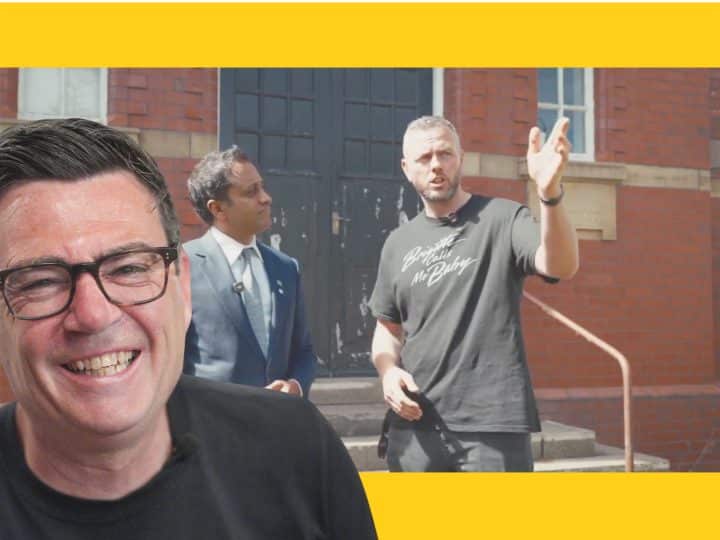

Robert Kenyon is Reform UK’s candidate in the Makerfield by-election. In aid of this, he and Zia Yusuf vowed to save a local library on 2 June. As it turns out, though, Labour had already saved this particular library:
Hi @RobKenyonReform, Ashton Library was already saved thanks to the Labour MP Josh Simons (you might of heard of him) and Councillors.
Being that you’ve not bothered to even sign the paperwork for being a councillor, let alone attending your first meeting, it’s no surprise you… pic.twitter.com/kHFkM7zaNi
— Reform Party UK Exposed
 (@reformexposed) June 2, 2026
The Makerfield saviour
In his video with Zia Yusuf, Kenyon says the following when asked what happened to the library:
So I think, I believe it’s got dry rot in the roof, and it’s going to cost a lot of money to put right. Like I say, Labour have looked after – the Labour Council have been in charge of looking after this library for a long time – and now they’re campaigning to save it, and, you know, It’s kind of, I don’t know, maybe it’s lack of maintenance or whatever that’s caused this issue.
A lesser man would have learned the answer to this before recording the video, but not Robert Kenyon. Kenyon also said:
They’ve obviously not prioritised Ashton Library until it’s got too late and now they’re rallying around to try and save it.
We’re no fans of Labour, but did something else happen in Britain over the past two decades which led to the underfunding of local authorities and the mass-closures of public libraries? Something that rhymes with ‘Tory driven austerity’, maybe? And wasn’t Zia Yusuf a Tory up until very recently? And weren’t most senior Reform politicians Tories up until very recently?
• Nigel Farage – ex Tory, now Reform. Reform UK are just the Tories that jumped ship. Establishment through and through. https://t.co/hTHrjFmrPT
— Carter (@carterp0well) March 24, 2025
• Richard Tice – ex Tory, now Reform.
• Lee Anderson – ex Tory, now Reform.
• Zia Yusuf – ex Tory, now Reform.
• Sarah Pochin – ex Tory, now Reform.
This isn’t to say Labour is doing enough to reverse the effects of austerity, of course. But let’s not pretend a bunch turquoise Tories are going to undo a policy they spent over a decade supporting.
Back to the library, Greater Manchester mayor Andy Burnham had this to say:
Yep. It’s almost funny. @RobKenyonReform never came to 1 meeting on Ashton Library. Me, cllrs and residents worked backsides off to save it.
In politics, berating ppl on socials doesn’t get stuff done.
He’s local, angry, but no plan to actually DO anything. Like… https://t.co/hlazx46Z9b — Josh Simons (@joshsimonsmp) June 2, 2026
This isn’t a great look for Kenyon, given that Burnham is his main rival in the Makerfield by-election. To be fair to Kenyon, though, he’s not had a library these past two years, so his booksmarts must have diminished.
Before you go thinking this is a Burnham endorsement, by the way, we’ve got problems with him too:
- Burnham ‘to support’ Mahmood’s racist immigration changes.
- Burnham is silent on wealth taxes – not a promising sign from potential PM.
- Andy Burnham’s role with Iain Duncan Smith’s think tank just shows he’s more of the same.
- Burnham WON’T back proportional representation this parliament.
- Shapeshifting Burnham ditches trans rights to panic-grab Reform votes.
- Burnham slammed for saying he won’t renationalise Thames Water.
Part timers
If you’re worried Kenyon might get in trouble for not showing up to fulfil his responsibilities as a councillor, don’t be. After all, his boss Nigel Farage has an even worse record:
Never on the team sheet.
Farage has missed 77 consecutive Parliamentary votes – failing to inform constituents why he hasn't shown up to vote throughout the course of April and May.
Where is Farage? pic.twitter.com/cjoYKh0L7x
— The Green Party (@TheGreenParty) June 2, 2026
It’s more dire than this looks too. There have been 525 votes in this parliament, and Farage has shown up to just 169. At 32%, this means he’s shown up for less than a third of the votes he should have done. Do you think you could get away with missing seven days out of every ten at work?
Despite this, Farage and his party pretend to be the party of people who actually get up and go to work in the morning:
My party is the party of alarm clock Britain.
— Nigel Farage MP (@Nigel_Farage) November 3, 2025
Maybe ‘Alarm Clock Britain’ is the name of a real ale they serve at his local?
Zia Yusuf’s parliamentary record, meanwhile, is perfect. And the reason it’s perfect is because he’s not a parliamentarian, despite his claims to the contrary:
Mate, this is embarrassing.
You are literally not the shadow Home Secretary.
You’re not even an elected politician. pic.twitter.com/CZiPgk5YX9
— Harry Eccles (@Heccles94) June 1, 2026
Reform — Worse to come
The library video isn’t the only one that’s making Kenyon look clueless:
This might be the worst performance from a political candidate I have ever seen in my life. pic.twitter.com/Kku1RecFJ0
— Ali Milani (@AliMilaniUK) June 2, 2026
As bad as the above is, we think things are going to get even worse later this week:
Join Question Time for a Makerfield By-Election Special
On the panel: Andy Burnham, Michael Winstanley, Jake Austin, Sarah Wakefield, and Robert Kenyon Thurs 4th June at 9pm on @BBCiPlayer, @BBCSounds, and the @BBCNews channel
Apply now: https://t.co/3ivO2BXgl1 #bbcqt pic.twitter.com/f9v8N13CYc
— BBC Question Time (@bbcquestiontime) June 2, 2026
If things do go badly, Kenyon can always just record a video claiming they went well. That’s the benefit of being full of hot air; you can literally just say anything.
Featured image via Christopher Furlong (Getty Media)
By Willem Moore
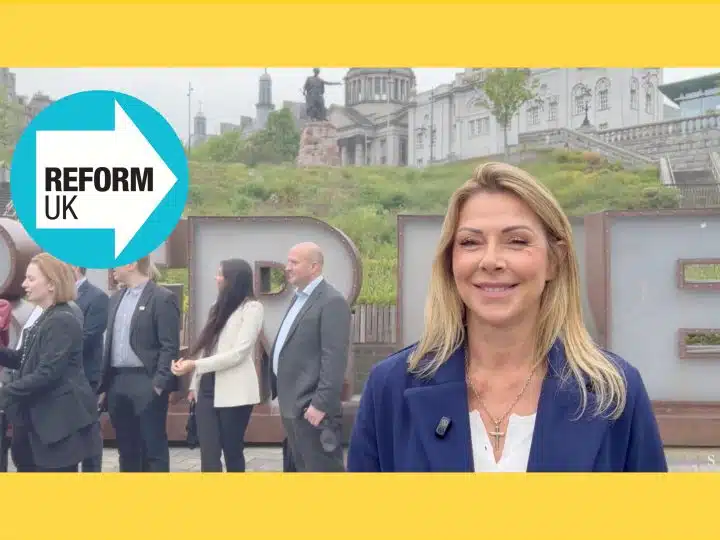

Reform UK’s candidate in the Aberdeenshire South by-election is Jo Hart. And as you’d expect for a Reform candidate, she has some opinions that fall outside the mainstream:
Fair enough
In a video posted online by the Scotsman, an interviewer puts the following to Hart:
I wanted to ask about some of your past comments on social media. You’ve obviously had a certain amount of scrutiny about this. You called Hollywood actors Satanic worshipping trash. You made comments that appeared to suggest that 5G masks had negative health impacts. You called the Royal family benefit scroungers. ‘Fuck the Royals. Make Lizzie the last’. Do you regret these comments?
Hart laughed before responding:
Well, first off, let’s address the Royal one. That was a post that was shared and my actual sentiment was about was it appropriate to be spending money on the Jubilee right now after COVID when so many professional people were queuing at food banks? And the post that I shared was a public post and so it was taken totally out of context.
We suspect she could drum up some support with stuff like this — especially in Scotland, which isn’t known for its fealty to the crown.
Hart continued:
Then when it comes to the whole Satanic worship thing, you know, having banter with your friends, you know, you can then refer to things like Epstein Files and everything. So, I mean, let’s just have banter. It’s just a flippant comment.
We hate to say it, but we’re not going to pull her up here either. There are certainly enough celebrities with connections to Epstein and the like to warrant such “banter”. There are also many celebrities who are demonic themselves, like Kevin Spacey or the guy who wanted to eat people.
5G
With the next part of Hart’s response, we get to something we can criticise:
And with 5G, there’s not much research being done on that in a very long time about the effects of 5G on health. So I think that’s an area that could be looked into a little bit more as well.
In response, the interviewer asked:
So you think 5G masts do potentially have negative impacts on health?
Hart responded:
We don’t know what the long-term effects are, so I think we need to just look into it a little bit more.
The thing is, we actually have researched this already. As Full Fact reported:
The ICNIRP says: ‘‘A considerable amount of research has been conducted on the relationship between RF EMFs [radiofrequency electromagnetic fields] and health outcomes such as headaches, concentration difficulty, sleep quality, cognitive function, cardiovascular effects, etc. This research has not shown any such health effects.’’
The UK Health Security Agency (UKHSA) also monitors for evidence of any health effects caused by electromagnetic fields including radio frequencies. It states that “the overall exposure is expected to remain low relative to guidelines and, as such, there should be no consequences for public health”.
Additionally, this technology has not been shown to increase the risk of cancer and non-ionising radiation does not damage DNA.
Trust no one (specially if they’re Reform)
People should be mistrustful of new technologies and the corporations pushing them. For a good example of this, you should watch the Veritasium documentary on Asbestos, which documents the companies that covered up its ill effects:
If the asbestos thing happened today, the general public wouldn’t just have suspicions; there’d be widespread knowledge of the impacts. That’s because the internet allows us to share our experiences and diagnoses in a fashion which was impossible in days gone by.
For an example of a modern company doing what it can to cover up negative health effects, you should look to something like AI companies burying stories about ‘AI psychosis‘:
When a teenage boy told ChatGPT about his suicide plans, it said: “I won’t try to talk you out of your feelings.” His family is suing after ChatGPT actively discouraged him from seeking help, offered to help him write a suicide note and even advised him on his noose setup. pic.twitter.com/pRijpY1jYV
— Angela Yang (@Angela_Y_Yang) August 26, 2025
So yes, we do need politicians who are suspicious, but we also need politicians who know when to stop being suspicious. And Jo Hart does not appear to be such a politician.
Featured image via The Scotsman
By Willem Moore
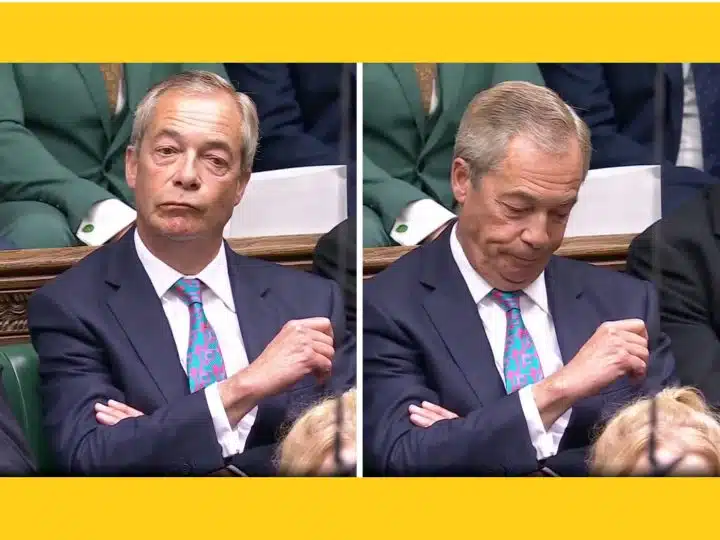

On 2 June, Nigel Farage made a special announcement in which he argued that white people are the real victims of racism in the UK. The speech was in response to the murder of Henry Nowak, whose murderer Vickrum Digwa had just been sentenced.
Farage promoted a message of hate despite Nowak’s family requesting politicians not use the murder to promote division. Farage is still trying to push division, but given the Nazi rally which followed his first speech, he’s now squirming when he does so:
Starmer: "His response has been to appeal for rage. That’s his response to a father who lost his son & asked for this not to happen… it shows exactly who he is" #PMQs pic.twitter.com/cLGAGBHkIu — Politics UK (@PolitlcsUK) June 3, 2026
 WATCH: Nigel Farage is repeatedly heckled by MPs as he calls on Keir Starmer to end "two-tier policing"
Farage — Hate monger
In the clip above, Farage says:
In the horrendous circumstances of Henry Novak’s death, can I urge the Prime Minister to consider this? It is now clear to growing millions in this country that we’re living under two-tier policing. The instructions that are given to police officers from police bosses are clear and written down in ink. It says you must treat different ethnic groups in different ways.
The police at the scene handcuffed a laid-out Nowak despite his claims to have been stabbed. His attacker, meanwhile, argued that he was the one to have been assaulted. A regular person encountering this scene could have been forgiven for believing Digwa, as Nowak appeared drunk, and most attackers would have fled the scene rather than lying about their victim’s injuries. These officers could and should have done more, though, and they certainly should have confirmed if Nowak had sustained injuries before handcuffing him.
The fact that these police were inept, however, is not a sign that the British police are institutionally racist against white people. The available evidence we have shows the precise opposite, in fact. Many UK police officers are certainly incompetent and / or malicious, but cherry picking this one case to push a white supremacist narrative is just evil.
Farage finished:
That, apart from the upset and the anger at the circumstances of his death, the anger that you saw spilling out in Southampton last night, and which is in danger of getting considerably worse if the public lose trust in being treated fairly by the police. Can he take some action, end this divisive practice of two-tier policing and make sure that all British citizens are treated the same?
Squirming
Responding to Farage, PM Keir Starmer said:
Mr Speaker, I don’t believe there’s two-tier policing in this country. I’m really shocked that he pretends to have respect for Henry’s family and then acts in this way. They are a grieving family…
A grieving family have asked us not to respond in the way that the leader of Reform has responded. They’ve asked us not to. They have lost their son in the most appalling circumstance. They make a simple plea of us as human beings to please not exploit that. That is their plea to us.
Farage had looked impassioned when he spoke, but he squirmed as he got his answer, as well he should.
Starmer continued:
We all need to reflect on those words of Henry’s father. My response, and the response of others, to be fair, has been focused on the lessons to be learned so we can deliver justice. His response has been to appeal for rage. Rage.
Starmer was referencing when Farage advised his followers to ignore the wishes of Nowak’s family:
Nigel Farage says he will write to request a review of the sentence of Henry Nowak’s killer to toughen it up.
Adds:
“Henry Nowak’s family have responded to his murder with dignity.
“I suggest the rest of us respond with pure cold hard rage.”
— Kate Ferguson (@kateferguson4) June 2, 2026
This “rage” would bubble over in Southampton later that day:
Dozens of bricks being thrown pic.twitter.com/VwPXkfZlmR
— Taj Ali (@Taj_Ali1) June 2, 2026
Opportunism
Starmer finished:
That’s his response to a father who’s lost his son and asked for that not to happen. Exploiting this tragedy to create grievance and division… would be wrong in any circumstances, but to do it when the family are expressly saying, please don’t, is unforgivable. It shows exactly who he is.
While we rarely agree with Starmer, it’s undoubtedly true that we’re seeing more of Farage’s true self every day. Let’s hope this violent posh boy never gets his hands on the reins of power.
Featured image via Politics UK
By Willem Moore


The UK government has released more emails from Peter Mandelson when he was ambassador to the US. Among them are two that show Mandelson was trying to create closer links between the UK government and the dubious US tech company, Palantir.
And seems Mandelson attended this event with Louis Mosley, boss of Palantir UK and his client at Global Counsel. Noteworthy as we were told that mitigations on Mandelson’s appointment included no one-on-one meetings with former clients. pic.twitter.com/q5G722DKDk
— Ethan Shone (@EJShone93) June 1, 2026
Mandelson…
Palantir is a defence contractor that’s involved in many ongoing atrocities around the world.
Its ongoing contracts includes mass surveillance, Israel’s genocide in Gaza, and Trump’s Immigration and Customs Enforcement (ICE) activities. Oh, and for some reason it’s also involved in the NHS, a service that’s designed to save people’s lives not to spy on/ murder them.
Palantir’s involvement in the NHS has attracted significant controversy, which is why MPs debated our partnership with the US tech abomination in April.
In 2023, Palantir walked away with a seven-year NHS contract without competition, Yanar Alkayat wrote for the Canary.
(The same kind of mates’ rates for the £240 million Ministry of Defence deal). Data handling, trust and transparency are the major concerns.
MPs speaking out included Iqbal Mohamed, who said:
If it looks evil, if it smells evil and if it behaves evil, then it is evil.
The UK government’s unseemly and secretive ties with Palantir don’t end with the newly unearthed emails. Starmer had off-the-books meetings with the murderous tech company earlier this year.
There is no public record of the Palantir briefing attended by Keir Starmer and Peter Mandelson in February 2025 despite the Ministerial Code requiring Starmer to publish details of meetings with external organisations
No 10 says the event was not a meeting and did not require… — Politics UK (@PolitlcsUK) April 25, 2026
Green Party leader, Zack Polanski, highlighted the following in response to the revelations:
'He was not allowed unsupervised access to former clients’
Is that why Keir Starmer had to accompany Mandelson to their secret meeting with Palantir? https://t.co/okv96wnhDk
— Zack Polanski (@ZackPolanski) April 18, 2026
This is the problem with the revolving door between politics and corporations. No matter how many rules and regulations you introduce, these crooked operators simply contort themselves around them.
Follow the money
Speaking to the Canary, independent MP, Jeremy Corbyn, said the following about the influence of money and corporations on the UK:
The Donaldson debate today in Parliament is going to be interesting and I’ll certainly be there giving my views on his behaviour and the way in which wealth, power, money connections end up influencing decisively Labour and British politics. But the real issue is actually much wider and much deeper.
There needs to be an independent public inquiry into the influence of money, of connections, of how decisions are made and what influence they have on parties and on government. Parliament is in no position to undertake that inquiry because MPs are so involved in it all, with money being donated to campaigns, to running MPs’ offices, to supporting putative ministers and later on ministers themselves.
So we need a big clean-up on politics. That means getting the money out of it — getting the involvement out of it.
Palantir is an example of this. Palantir was introduced into the system by Mandelson and others, now deeply lodged into the civil service systems and now claiming that they are the saviors of our National Health Service. Sorry, no.
We need publicly owned, publicly run and publicly accountable data systems within our National Health Service, not owned by an American-based company called Palantir.
View this post on Instagram
The latest Mandelson emails are interesting, but they don’t tell us much we didn’t already know about Mandelson. And importantly, they don’t tell us anything Starmer didn’t know about Mandelson when he hired him as ambassador to the US.
Featured image via Leon Neal/ Getty Images
By Willem Moore

Norms issued to estimate District Domestic Product
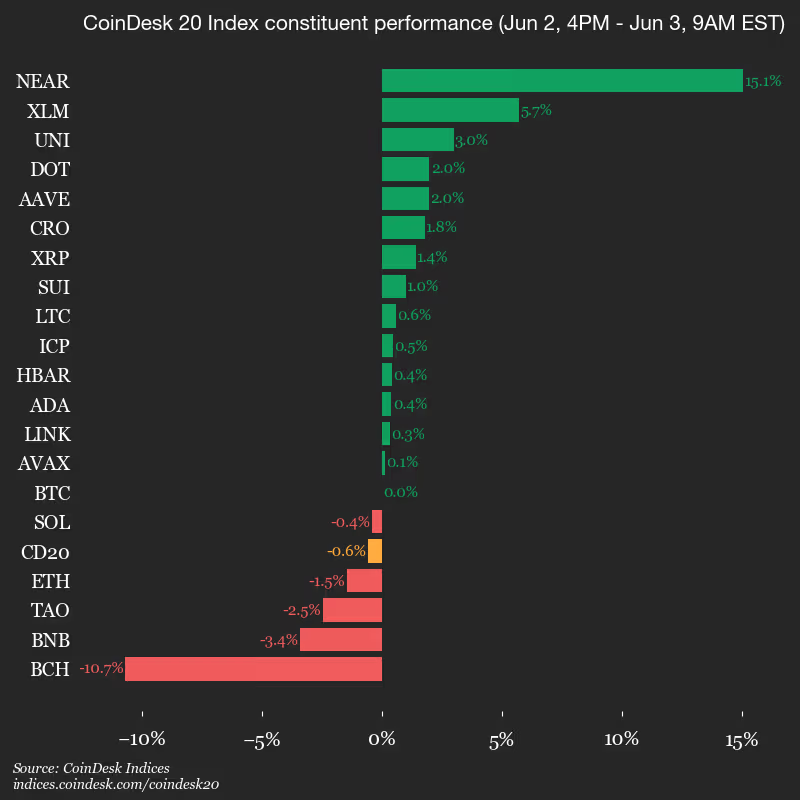
Bitcoin Cash (BCH) falls 10.7%, leading index lower

Why so many young women fall for trans ideology



-

 Tech6 days ago
Waymo dominates autonomous vehicle registrations as Tesla trails behind
-

 News Videos5 days ago
This is BROKEN! INSANE 5x MONEY CAR WASH WEEK! The NEW GTA Online UPDATE Today! (GTA5 New Update)
-
 Tech4 days ago
SpaceX just won a second Golden Dome contract. This one is $4.16 billion.
-

 News Videos5 days ago
SHE IS KILLING XRP!!! WATCH URGENT AND ACT FAST
-

 Business2 days ago
Jade Biosciences, Inc. (JBIO) Discusses Positive Interim Results From JADE101 Phase I Healthy Volunteer Study and Development Plans Transcript
-
 NewsBeat5 days ago
FIRST NIGHT REVIEW: Take That bring the Circus back to life in spectacular sun-soaked style
-
 Crypto World5 days ago
CFTC Has Approved the First Regulated Bitcoin Perpetual Contract in the U.S.
-

 Business4 days ago
Is the Spurs Phenom Already Better Than Prime Diesel?
-
 NewsBeat5 days ago
Novak Djokovic v Joao Fonseca LIVE: French Open latest scores and results after Jannik Sinner’s shocking collapse
-
 Crypto World5 days ago
Snowflake (SNOW) Stock Rallies on Strong Q1 Results and AI Product Growth
-
 Entertainment5 days ago
Weak ‘Supergirl’ Box Office Tracking Amid Milly Alcock Backlash
-

 Business4 days ago
Demand Conditions Improve In Chemicals Sector In April 2026
-

 Crypto World5 days ago
MicroStrategy Moves $30 Million in BTC to Coinbase Prime: Is the Bitcoin Sell-Off Already Here?
-

 Politics4 days ago
The House | Inside Andy Burnham’s Makerfield Campaign: “Nobody Thinks This Is In The Bag”
-

 Tech5 days ago
This Week In Security: Ubiquiti Fixes, And FreeBSD Joins The Club You Don’t Want To Join
-
 Entertainment4 days ago
One of the Greatest Sitcoms of All Time Shoots Up Apple TV’s Charts 11 Years Later
-

 Entertainment5 days ago
Maddox Jolie-Pitt Legally Requests to Drop Brad’s Surname
-
 Crypto World1 day ago
Seagate (STX) Stock Surges to Record High on AI Boom and Legal Settlement
-
 Entertainment4 days ago
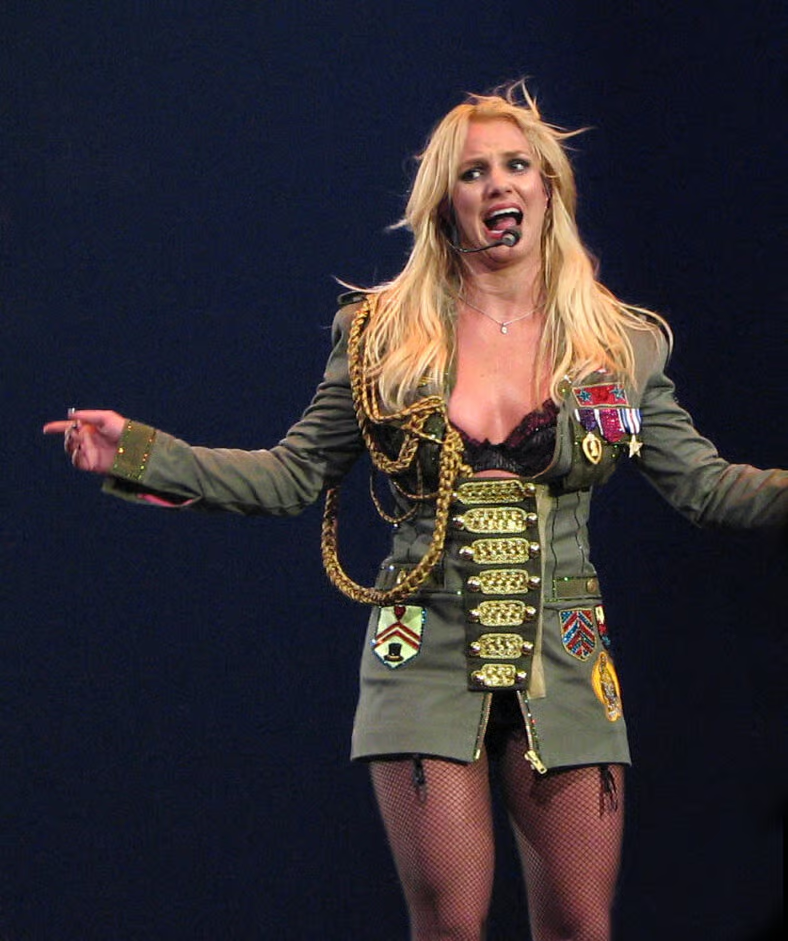
Britney Spears Shares Troubling Update After Hard Year
-
 Entertainment5 days ago
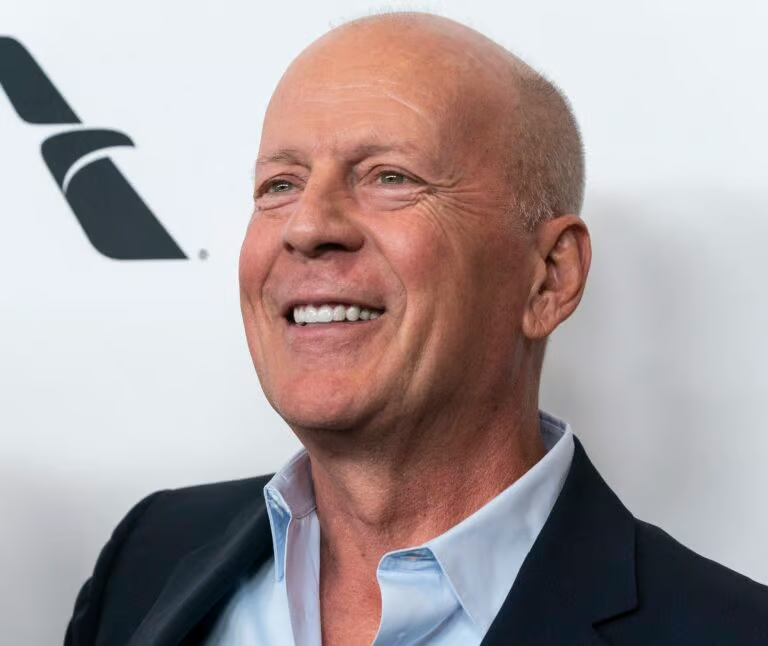
Bruce Willis’ Generosity Resurfaces Amid His Dementia
You must be logged in to post a comment Login