All online services – not just social media platforms – that use harmful features and functionalities should be banned from access to children.
Advertisement
The government is due to respond to the consultation on banning social media for under-16s. But the Westminster debate feels a million miles from the reality of young people’s lives.
I’m touring the country to promote my Big Future survey. I’ve held discussions with children in schools, hospitals and youth clubs from Carlisle to Birmingham to Leicester.
Many young people tell me they don’t want to be banned from social media. Digital spaces are where they learn, connect and play.
One of my young ambassadors, Annabel, recently told an event that she found a community on Instagram after she lost her leg. She is now the star striker for England Women’s amputee football team.
Advertisement
She said: “I use my social media to show children that there is life after diagnosis. Even if you’ve lost a leg or lost a limb, you can still live life to the best of your ability and have so much fun and that’s actually led to many children and parents reaching out to me online.”
But then they start to tell me about the negatives.
Young people recognise that the platforms and services are addictive.
Advertisement
My recent representative poll of UK teenagers aged 13 to 17 showed 26 per cent want to spend less time scrolling online. They turn off notifications, delete one or more accounts and use apps or tech to block or limit access. But they tell me it doesn’t work, and they want our help.
Others describe seeing things they don’t want to see. My research on pornography shows that more than a quarter (27 per cent) of young people who had seen pornography said they had seen it online by 11. One child seeing porn is one too many.
Strangers are also approaching children online. My polling shows that among teenagers who play video games, 51 per cent said yes to ‘While playing video games, has someone you didn’t know ever sent you a message or chat?’ We know that gaming platforms, where children go to play, are places where serious grooming offences occur.
However bad we think it is, it is often far worse.
Advertisement
Young people fixated on violence, often with no ideology, have become one of the fastest-growing concerns of counter terrorism police. Senior police officers have told me about the growing harm of online community groups grooming and exploiting often vulnerable children to self-harm.
The UK has passed the Online Safety Act. Ofcom has enforcement cases open and is taking action against some online services that flout UK law. I want to see them continue to work for the UK to be the safest place for children to be online.
I am also pleased to be working with the Department for Education on screen use guidance. Children and adults alike want clear, trustworthy information and advice on screens. But guidance alone isn’t enough.
The harm from technology companies’ unconditional and unfettered access to children is clear. Young people are challenging us to do better.
Advertisement
That is why I want to reset the debate. It is not about ‘banning children’. Children have done nothing wrong. It is about banning powerful technology companies from accessing and harming our children.
I have been calling for all online services – not just social media platforms, but gaming sites and any platforms that make use of harmful features and functionalities – to be banned from accessing children, until they can prove that they are designed in a way that will protect children’s safety and wellbeing.
This will mean drawing up a list of all the features that make online services risky for children, because they increase the risk of addiction, seeing harmful content, or being contacted by strangers.
That list will need to include persuasive design features like autoplay, infinite scrolling and popularity metrics (the “like” button and count, for instance) as well as features that allow users to share their location and livestream.
Advertisement
Any service using these features and functionalities should not be allowed to access children until they remove those features or genuinely mitigate the harms they cause. If and when online services prove, using a robust risk assessment system, that they are safe, the age limit can be removed.
I believe this restriction must apply equally to all children – that means until they turn 18. Because if we are genuinely seeking to safeguard children from harm, we cannot allow 16- and 17-year-olds to have lesser protection.
Childhood is changing rapidly. As I enter my sixth and final year as Children’s Commissioner, I know that the best policy is one where children’s voices are heard loudly and clearly.
I am glad that the government is acknowledging the gravity of the harm children face. I will be scrutinising the plans with care to ensure that they genuinely cover the greatest risks, can be robustly enforced, and truly make children safer.
Advertisement
Dame Rachel de Souza is the Children’s Commissioner for England
When Bosnian refugees started arriving in Utica, New York, in the mid-1990s, it was a down-on-its-heels Rust Belt city that had seen its population crater by roughly a third from a mid-century peak of just over 100,000 residents.
“I thought I came to another war zone when I came here,” said Hanka Grabovica, who arrived in the Mohawk Valley city in 2001 when she was 16 years old, citing the prevalence of boarded-up buildings and garbage on the streets. “Utica was pretty bad back then.”
Grabovica was part of a wave of Bosnian refugees who settled in Utica after fleeing the brutal war in their native country — and its messy aftermath — that followed the breakup of Yugoslavia. Exact figures are tough to pin down, but it’s believed that about 6,000 Bosnians now live in Utica — or nearly 10 percent of the total population.
The city’s unlikely emergence as an epicenter of Bosnian American culture will probably never be more prominently on display than on Friday afternoon when Bosnia and Herzegovina faces Canada on the second day of the World Cup. It’s just the second time that Bosnia has qualified for the tournament since it became an independent country in 1992.
Advertisement
The dramatic and unlikely way that the country punched its ticket to North America — knocking off four-time World Cup champion Italy via penalty kicks in a one-match playoff — has heightened the delirium among Bosnians from Sarajevo to St. Louis (the largest enclave of Bosnians in the U.S.) to Utica ahead of Friday’s 3 p.m. kickoff.
“Seeing this national team progress to the World Cup is definitely something amazing,” said Sandro Sehic, secretary of the Bosnian American Community Association of Utica, noting that many ethnic Serbians and Croatians who live in the country still refuse to play for the national team owing to lingering tensions from the war. “Bosnia is still struggling politically, socially. There are still so many problems that are still affecting the country.”
The arrival of the Bosnians in Utica has been followed by waves of other immigrants — most notably a large influx of Karen refugees originally from Burma — that have helped revitalize the city. East Utica, once primarily an enclave of Italian Americans, has become a center of the Bosnian community. Last November, a traditional Bosnian fountain called a sebilj — modeled after a famous fountain in Sarajevo — was unveiled in the neighborhood as a symbol of their importance to the city.
“We were very, very fortunate that the Bosnians have claimed this as their home because they reconstructed some parts of our city,” said Rob Palmieri, who served as Utica’s mayor from 2012 to 2024. “It has been a wonderful blend bringing the city back to vibrancy.”
Advertisement
The current mayor, Mike Galime, points to Two Brothers Cafe & Pizzeria as emblematic of the entrepreneurial spirit Bosnians have brought to the city. The restaurant serves up pizza slices (of course), but also Bosnian specialties like burek (meat pies) and cevapi (grilled sausages).
“It’s like a perfect, perfect example of that melting pot,” Galime said.
The main viewing party in Utica for Friday’s match, sponsored by the Bosnian American Community Association, is taking place at the 72 Tavern & Grill, a 5,000-plus square-foot restaurant that boasts 18 TVs. But there’s widespread agreement that the game will be ubiquitous in Utica on Friday afternoon.
“You’re not going to find too many of the Bosnians working that day,” said Palmieri, a Democrat. “They’re all going to be glued to TVs.”
Advertisement
“The buzz is insane,” added Galime, a Republican. “It’s like a once-in-a-lifetime thing.”
Grabovica, who is president of the Bosnian American Community Association, pointed out that many residents — even adults — have become obsessed with collecting stickers commemorating World Cup countries and players.
“It’s crazy what these Bosnians are doing,” she said.
Over the course of his career, Steven Spielberg has directed every genre possible, from action blockbusters to musicals and powerful war films.
However, there is one film franchise that’s always eluded him.
Speaking on the podcast The Rest Is Entertainment, the Oscar-winning filmmaker revealed that he was turned down not once but twice by the producers of the James Bond film.
When they asked if he regretted not ever directing a 007 movie, Spielberg explained that he had previously approached the former Bond producer Albert “Cubby” Broccoli about working on the franchise – only to be rejected.
Advertisement
“I’d always wanted to make a James Bond film from the day I saw Dr No,” the Saving Private Ryan director explained.
“So, I called Cubby Broccoli after Jaws and I volunteered. I said, ‘if you need a director, I would love to direct one’. And he said no. And he moved on.”
Sean Connery in the very first James Bond film, Dr No
Danjaq/Eon/Ua/Kobal/Shutterstock
Broccoli, who died in 1996, then made contact with Spielberg again in 1977, after the success of Close Encounters Of The Third Kind, to request permission to use part of the film’s iconic musical theme in a Bond movie.
Spielberg recalled: “Cubby called me again after Close Encounters came out – and that was a big hit – and said, ‘we’d like to use the five notes in Moonraker’. And I said, ‘I’ll make you a deal. I’ll give you permission to use the five notes if you let me direct a Bond film’. And he said, ‘nope’. But I gave him the five notes anyway.”
Advertisement
In good news for film fans, that second Bond rejection led to Spielberg working on Raiders Of The Lost Ark.
When he told George Lucas about his failure to land the Bond gig, the Star Wars filmmaker proposed they work on Indiana Jones together. “That’s how I got that job,” he explained.
Harrison Ford in Raiders Of The Lost Ark
Lucasfilm Ltd/Paramount/Kobal/Shutterstock
Spielberg also admitted he’s still not sure why the Bond producer never hired him for the franchise, but did joke: “If they ever asked me to make a Bond film now, my answer would be: you can’t afford me.”
Morocco have suffered a significant setback just days before the start of their 2026 World Cup campaign, with defender Nayef Akrad and winger Abdel Samad Al-Zalzouli both ruled out through injury.
Unfit to play
The Moroccan Football Federation, in coordination with FIFA, have confirmed that both star players will miss the tournament. The team have called up Marwan Saadane and Amine Sebaï as replacements ahead of their Group C opener against Brazil.
Akrad’s absence is a major blow to Morocco’s defensive structure. A key figure in the run to the 2022 World Cup semi-finals, he had been included in the squad in the hope he would recover in time, but medical assessments ruled him out of their plans.
Rough start for Morocco
Al-Zalzouli’s withdrawal further weakens the squad’s attacking options. The winger sustained a knee injury during a friendly match against Norway, forcing him out at a crucial stage of Morocco’s preparations and leaving the coaching staff short of experienced alternatives.
Advertisement
The double setback also deprives Morocco of valuable tournament experience, with both players having played important roles in Morocco’s recent international progress.
Their replacements now face a difficult task. Saadane brings solid club experience, while Sebaï is still relatively new to the Morocco senior setup.
Attention now turns to Morocco’s demanding World Cup opener against Brazil, one of the tournament favourites, as the Atlas Lions look to navigate an even tougher start to their campaign.
Torcuil Crichton MP, the Labour MP for the Western Isles, has hit back at campaigners opposing the annual guga hunt.
He accused protesters of “attention-seeking behaviour” and “virtue-signalling”. In response, campaigners accused Crichton of “dismissive and belittling rhetoric”, saying he’s:
Supporters say it’s an important cultural tradition, but campaigners say it’s cruel and needs banning.
Advertisement
Former Gaelic broadcaster Crichton poked fun at campaigners’ language skills, saying:
Until now I have hesitated to comment on what its own organisers pronounce as the campaign to ‘Abolish the goo-ga hunt’. It struck me as another one of these boring examples of attention-seeking behaviour, enabled by social media and fuelled by a lack of real purpose in life.
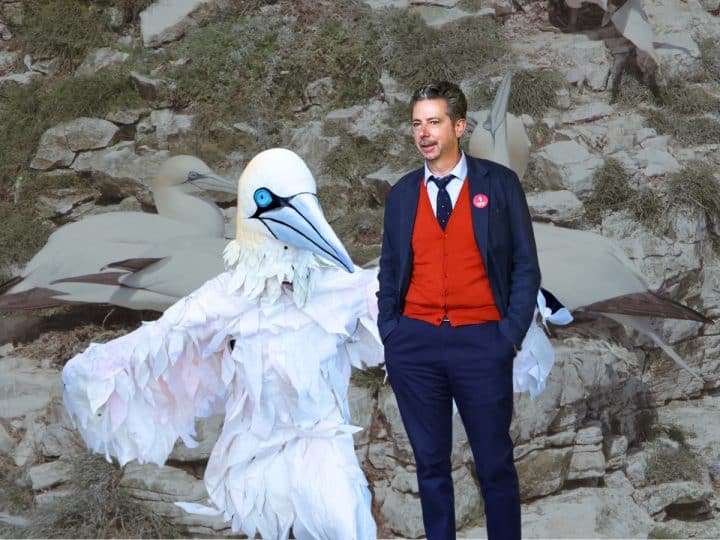
The ‘goo-ga’ campaign does fall into the virtue-signalling camp of activism and to prove their commitment someone undertook a sweat-drenched election campaign in a penguin suit (he didn’t look anything like a gannet) and was willing to put others at risk by climbing onto the roof of a public building.
The MP, who won election to the Na h-Eileanan an Iar constituency in 2024, added:
The guga harvest is an essential part of the history, culture and identity of Ness. It is conducted with due reverence to sustainability and importantly to what it means to the continuation of the living tradition of the islands.
Crichton’s comments referenced Protect the Wild’s recent Scottish parliament election campaign, during which the organisation’s founder stood as a giant gannet to protest the guga hunt. Responding, Devon Docherty, Scottish campaigns manager at Protect the Wild, said:
Advertisement
We suggest Mr Crichton might want to take a trip to Specsavers if he thought our tailor-made gannet costume was a penguin.
Unfortunately, a man so busy looking down his nose at wildlife campaigners appears to have lost sight of the people he was elected to represent, many of whom oppose the guga hunt, but are afraid to speak out because of exactly the kind of dismissive, belittling rhetoric his statement exemplifies.
Docherty said the MP’s comments were out of step with the Labour Party’s commitments to animal welfare and their recent action to end fox hunting:
He would also be wise to look at the history and stated values of his own party. After all, defenders of fox hunting relied on exactly the same arguments used in favour of the guga hunt: tradition, culture, heritage and rural identity. Labour rightly rejected them then. Why accept them now?
She added:
The guga hunt is indeed part of the history of Ness. But that is exactly where it should stay, because the mass slaughter of native wildlife clearly has no place in Scotland’s future.
Ageing doesn’t always mean decline, particularly if you don’t expect it to. One study involving more than 11,000 participants found that almost half improved either their physical or mental capacity after their 65th birthday; people who improved on one or both metrics were likelier to have a positive view of ageing.
But what about personality?
A paper published in the journal Communications Psychology put 165 adults (a younger set in their 20s, and another group aged between 60 and 80) through an eight-week training course designed to help them handle stress and social situations.
They found what study author Professor Dr Cornelia Wrzus called a “striking and unexpected result” among the older cohort.
Advertisement
Over-60s seemed just as able to change their personalities as younger people
Participants were given personality tests before and at various stages after their training.
These aimed to find out about traits like emotional stability and extraversion.
Both groups performed better on these scores after the eight-week intervention, including a year after it ended.
Advertisement
“Investigations [on personality changes] frequently focus on young adults between the ages of 18 and 30,” Prof Wrzus said.
But after looking at the results of this study, the professor said her team found that the average change in behaviour barely varied between the age groups.
This was a “striking and unexpected result, since it seems more difficult for older adults to learn something new, like a foreign language or a musical instrument,” Prof Wrzus said.
Older people were more engaged in the study
Advertisement
The researchers also asked the participants to describe how intensively they practiced the tasks given to them during the training course.
They found that 60+-year-olds typically engaged more enthusiastically with things like coursework and at-home tasks, perhaps explaining the “unexpected” outcomes.
“Our study results somewhat contradict the adage that ‘you can’t teach an old dog new tricks’. That is good news for aging populations,” Prof Wrzus stated.
“When people are sufficiently motivated, they maintain the ability to change and learn new things.”
Last month, it was widely reported that Tom had been fired from the Paramount+ crime drama after the second season wrapped, after allegedly clashing with producers.
According to a “source” quoted in The Hollywood Reporter in May, Tom had also “refused to come out of his trailer for hours at a time”, leaving his co-stars waiting for him so they could shoot.
However, Dame Helen has now insisted that there is no bad blood between herself and her co-star.
Advertisement
“As long as what’s on the screen is fantastic, I’m totally chilled with whatever, however anyone gets there,” she told Deadline.
Dame Helen said she would work with the Inception actor in a “heartbeat”, but did admit they had “different” creative “processes”.
“I love Tom. I think he’s the most amazing actor. I’ve always loved him on screen and different actors have different processes. I’ve learned over the years that some people get things fast and other people took time,” the Oscar winner said.
She added: “He’s got the kindest heart… I think he’s absolutely remarkable. So my support of him is genuine and heartfelt.”
Advertisement
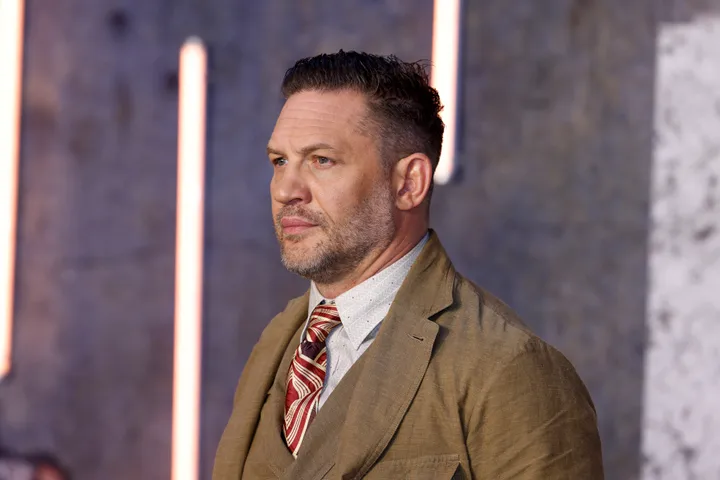
Tom Hardy at the premiere of his film Havoc last year
Millie Turner/Invision/AP
When asked if she thought Tom would return to MobLand, Dame Helen said she hoped it would happen.
She explained: “When you have these sort of very powerful artistic people working together, the creative process is very challenging and people can get their knickers in a twist, as we say.
“But yes, we will go forward, absolutely, and it’ll be even better.”
This isn’t the first time Dame Helen has shown Tom her support. Last month, shortly after articles in the press about Tom’s alleged on-set behaviour were published, she posted an Instagram photo of him alongside the caption: “Love you now and always.”
Advertisement
Following the initial rumours of Tom being axed, Variety later suggested that he had, in fact, not been fired and that “the door is not closed for season three and things are being worked through creatively”.
HuffPost UK contacted Paramount+ for comment last month, but did not receive a response.
MobLand returns to Paramount+ for its second season later this year.
Keir Starmer’s Labour party is trying to push a bill through Parliament that amounts to legalising bribery.
Hollow corpse stuffed with cash
Clause 60 of the Representation of the People bill will remove caps on political donations and de-couple donations from companies’ UK taxable profits. Starmer has already pulled murky political tricks to mask its passage so far. He is ignoring almost all the recommendations of Labour’s own already-weak ‘Rycroft Review‘ into foreign political interference. UK state-corporate media are ignoring the bill.
World Cup history is awash with politics — and politicians — intruding on the soccer.
For almost a century, leaders ranging from Italian dictator Benito Mussolini to Argentine military junta boss Jorge Videla to French President Jacques Chirac have sought to score political points from the tournament.
This year’s competition is also not the first to be overshadowed by conflict. North Korea tried to upstage the event in 2002 with a bloody naval assault on South Korea, and the Falklands War between Britain and Argentina loomed over the 1982 World Cup.
In 1934, Mussolini viewed a World Cup victory as a way to symbolize Italian might. Brazilian dictator Emílio Médici said that the 1970 triumph was testament to his country’s greatness. Memories of the Falklands provided fraught context to England’s clash with Argentina in 1986, one of the most famous games in the tournament’s history.
Advertisement
In more recent times, Chirac cast himself as a big fan of the all-conquering, racially diverse French national team in 1998. Vladimir Putin exploited the 2018 tournament to project Russian soft power, while Gulf petromonarchy Qatar used the 2022 edition as part of a major nation-building project.
And this year, it’s the the politics of MAGA — an ongoing foreign war and domestic immigration crackdown — that are coming back to bite soccer’s governing body FIFA.
Our first letter was answered/dismissed by “Service Adviser 1989847”, so this reply to our second one, while it doesn’t say much, definitely feels like a step up.
Our KC has offered all possible assistance to the Cyber and Fraud Unit in relation to the matter, and we’ll keep you posted with any developments, readers.
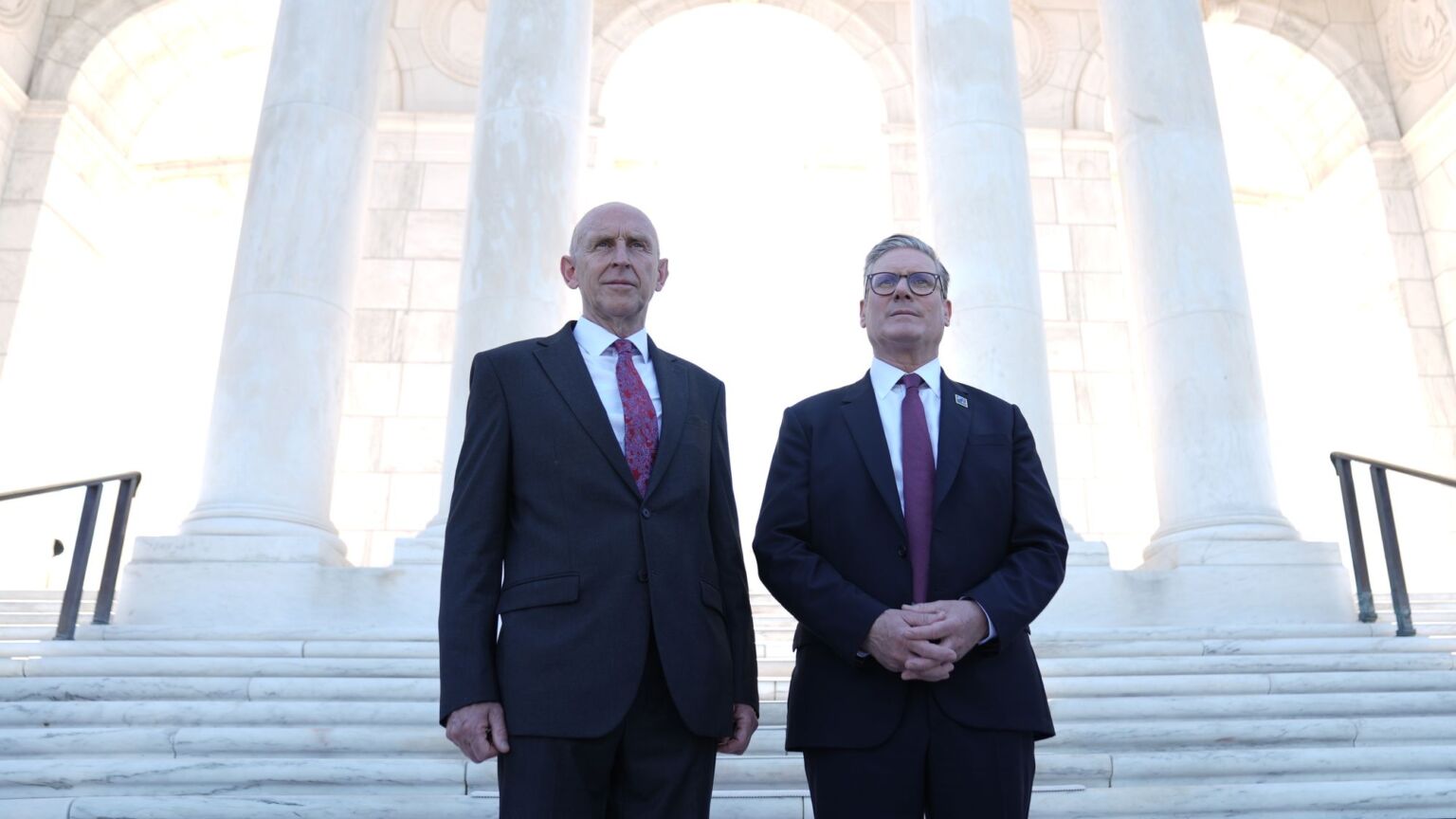
John Healey has done something unfashionable for a politician in our times: he has resigned, not over a sex scandal, a briefing war or a manufactured media row, but over a matter of substance. The now former UK defence secretary says the government will not properly fund the defence of the realm. He is correct, and he deserves commendation for upholding such high principles.
Healey’s resignation is an indictment of Keir Starmer’s government. The Defence Investment Plan (DIP) was meant to be the moment when Starmer’s solemn talk about a dangerous world would be turned into hard commitments: defined funding for ships, missiles, drones, air defence, munitions stockpiles, personnel and industrial capacity. Instead, Healey says he was shown a settlement that would limit spending to just 2.68 per cent of GDP by 2030, short of the three per cent he judged necessary, and a mere 0.08 percentage-point increase over four years.
There is no mystery about why the money is missing. Starmer and chancellor Rachel Reeves bottled welfare reform. Last year, facing a Labour backbench revolt, the government gutted its planned savings from sickness and disability benefits of £5 billion annually. The u-turn meant the reforms would no longer save taxpayers any money and had shredded the margin Reeves needed to meet her fiscal rules.
This is the basic arithmetic of government. You cannot fund a swollen welfare state, an unreformed NHS, Net Zero, debt interestand national defence all at once. In the real world, priorities must be set. Labour has chosen welfare dependency over military readiness. It has chosen to appease backbenchers over the first responsibility of any government – to protect its people.
Advertisement
Starmer is not solely to blame for this sorry state of affairs. Britain’s armed forces have been hollowed out over many years. The Cameron-Osborne austerity settlement began a long era of strategic negligence. The 2010 Strategic Defence and Security Review cut defence spending by eight per cent. A military that cannot sustain combat is nothing more than an advertising campaign masquerading as an army. And that is what we are left with.
The Ajax tank farce is emblematic of the sickness. The programme was supposed to deliver a modern, armoured reconnaissance vehicle. Instead, it has become a monument to defence dysfunction – years late, billions wasted, the tanks plagued by defects so serious soldiers were harmed in training. Ajax was expected to enter service in 2017. The tanks are now expected to be operational – at best – by 2028.
Advertisement
The Ministry of Defence excels at producing acronyms, reviews and procurement frameworks, yet struggles to deliver fighting power at speed and scale. A 2023 Defence Committee report on the procurement system described it as bureaucratic, slow, poorly accountable and in need of comprehensive reform. Britain has talented officials, engineers and service personnel. It lacks a governing class willing to make hard choices, enforce accountability and accept that defence exists to deter enemies and, if necessary, win wars.
The delayed DIP has turned that failure into a national humiliation. The Public Accounts Committee warned this week that the delay had undermined Britain’s credibility with allies and weakened its ability to deter adversaries.
Advertisement
It will take far more than speeches to make forces combat-ready. Defence companies cannot invest on the basis of ministerial mood music – they need hard commitments. Our NATO allies cannot plan around such vagueness, either.
This is why Healey deserves respect for his resignation. He did not fix the system. He did not reverse the hollowing out. He presided over part of the drift. Yet when finally confronted with an underfunded plan, he refused to front it. So too has Al Carns, the armed forces minister. In his resignation statement – made on the same day as Healey’s – Carns said: ‘We ask soldiers to fight for this country. In return, we owe them the kit to do the job.’
The chief of the defence staff and his subordinate generals, admirals and air marshals should follow suit. Leadership demands accountability, and senior leadership in the Ministry of Defence should take Healey’s example as a lesson; otherwise, nothing will change.
Advertisement
Britain’s defence establishment now faces a brutal question: does the state still believe national defence is its first duty? At present, the answer is not good. The armed forces are too small, too thinly resourced and procurement is poor.
John Healey’s departure has exposed the truth. Britain lacks a Ministry of Defence, a Treasury, or a defence policy worthy of the threats we face.
Andrew Fox is a retired Parachute Regiment officer, a senior fellow at the Henry Jackson Society, and co-host of The Brink podcast.



















































You must be logged in to post a comment Login