

Politics
The House Article | What Britain can learn from Australia’s under-16 social media ban


3 min read
The new Australian law has shifted the Overton window.
A week before Australia’s social media ban took effect, a year 10 student told Sky News: “When I’m on social media, and I’m feeling sad, my whole feed turns sad, and then I just feel more sad… It feels like so much more effort to go tell my parents something than to pick up my phone.”
This is an issue not just faced by Australian children, but by young people all over the world, including those in Britain.
When Australia legislated a social media minimum age, the expert community was divided. Some argued platforms were a lifeline for lonely teenagers. Others insisted there was no ‘causal’ proof of harm. Parliament acted anyway, treating this as a public-health and child-development issue rather than a question of teenage willpower or parental failure.
That reframing is what the UK now urgently needs. Harmful design – algorithmic amplification of emotion, infinite scroll, engagement-maximising feeds – is a central driver of distress, self-preoccupation and loneliness during critical windows of adolescent brain development. The problem lies in systems built to maximise engagement, not in a lack of self-control among 13- and 14-year-olds.
Australia’s Social Media Minimum Age Act requires age-restricted platforms to take reasonable steps to prevent under-16s from holding accounts. Crucially, penalties fall on platforms, not children or parents. By early 2026, millions of under-16 accounts had been deactivated or restricted, confirming that platforms can detect and act on child users when legally compelled to do so.
Independent polling of 12–15-year-olds by the Molly Rose Foundation tells a sobering story: three in five who previously held accounts still have access, and most describe sidestepping the ban as ‘easy’. This is not evidence that minimum-age laws are a mistake. It is evidence that the platforms are not complying with the law. It is a failure of industry implementation, not policy.
Even so, the law has catalysed real system change. Schools have stopped automatically providing YouTube accounts through school Google setups. Parents are beginning to delay access. Medical practitioners report modest improvements in sleep, physical activity and mental health concerns. Children are being redirected toward helplines, school-moderated communities and sports facilities. This is exactly the kind of systemic shift the law was designed to encourage, a shift that is happening despite imperfect enforcement, not because of perfect enforcement.
There are three lessons that the UK can learn from Westminster. First, legislate despite expert disagreement. Australia’s law shifted the global Overton window, and platforms’ internal documents are now catching up with what parents and young people already felt.
Second, treat enforcement as a separate, sustained project. If platforms under-deliver, that is not an argument against minimum-age protections, but an argument for stronger sanctions, better-resourced regulators, and independent audits.
Third, plan from day one for a multi-layered public-health strategy, not a single silver bullet. That means clear platform duties of care, independent evaluation of school-based programmes, professional development for educators, and public campaigns that speak to adolescents in their own language using autonomy, authenticity, and real connection. It also means supporting parents to change their own habits, so that phone calls and direct messages remain the default while addictive design is pushed further out of early adolescence.
Digital environments that amplify emotions, erode face-to-face relationships, and deepen loneliness in youth should not be an acceptable norm. Australia has shown that law can pull the pendulum back. Britain now has the opportunity to go further, but only if it pairs legislation with the cultural change and enforcement muscle to make it stick.
Dr Danielle Einstein is a clinical psychologist and author who helped shape Australia’s under-16 social media ban

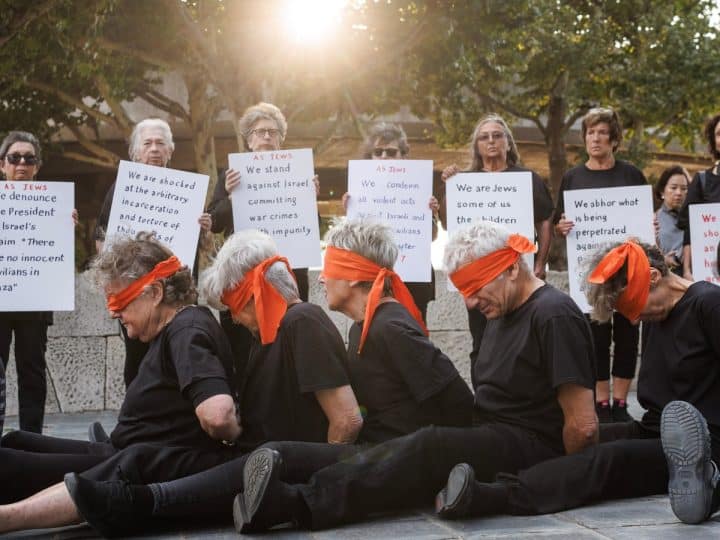
Jewish Peaceniks UK will erect a large tent on London’s Southbank from 1pm on Thursday 11 June. The tent will bear messages concerning the children of Gaza. And a main banner will read: GAZA’S CHILDREN STILL IN HELL.
Attached on either side of the tent will be washing lines with children’s clothes and tea towels. On them will be messages to the public and to the UK government.
Some of the children’s clothes will be bloodied, small trousers will have a leg cut off to indicate amputation.
Inside the tent will be photo images of children from Gaza and a soundscape of the poignant things they have been saying to their families. Gazan theatre artist Hossam Madhoun has collected these. Here are some examples:
- Do children who have their legs amputated grow new legs?
- Do the Israeli pilots who bomb children have children?
- When a missile hits us, do we feel pain or die immediately?
Approximately 10,750 Gazan children have sustained life-changing injuries and 3,800 Gazan children are currently still waiting for a medical evacuation (World Health Organisation May 2026).
In 2025 the UK government pledged to allow 300 children to come here for medical treatment. To date no more than 50 child patients have arrived.
Visitors to the tent will be able to sign a postcard to prime minister Keir Starmer. It urges him to allow entry of a much more significant number of the most seriously injured children. Jewish Peaceniks UK hopes to deliver this by hand to 10 Downing Street.
The group will confirm the exact location of the tent on 10 June.
Jewish Peaceniks UK
Jewish Peaceniks UK is a grassroots organisation of older Jewish women – mothers, grandmothers and great-grandmothers – who curate events to highlight what is being perpetrated against the Palestinian population in Gaza and beyond.
A key part of its mission as a Jewish group is to communicate to the UK public that condemning Israel for its crimes against humanity and its ongoing genocide is not antisemitic.
Some of the group are children of parents persecuted by the Nazi regime, who are particularly devastated to be witnessing acts of dehumanisation and genocide being perpetrated by a Jewish state created in the wake of the Holocaust.
Since September 2023 Jewish Peaceniks UK has mounted four public actions, the first a silent performance piece on the Southbank illustrating the abuse of Palestinian prisoners. And the group has raised £10,000 for Medical Aid for Palestinians and two other charities through film screening events.
Featured image via Dan Kitwood / Getty Images
By The Canary

Wings has today sent the following letter to the named recipients.
—————————————————————————–
The Chief Constable
Police Scotland
5 Fettes Avenue
Edinburgh
EH4 1RB
Crown Office and Procurator Fiscal Service
25 Chambers Street
Edinburgh
EH1 1LA
4 June 2026
.
Dear Chief Constable and Crown Office,
RE: REQUEST FOR CRIMINAL INVESTIGATION — ALLEGED
MISAPPROPRIATION OF RING-FENCED POLITICAL DONATIONS
I write to request that Police Scotland/COPFS open a criminal investigation into the alleged misappropriation of funds donated to the Scottish National Party (SNP) on the basis that those funds would be held and applied for a specific, designated purpose.
THE FACTS
Between 14 March 2017 and the summer of 2020, the SNP solicited donations from the public, representing — expressly and repeatedly — that the funds raised would be ring-fenced and applied exclusively for the purposes of a future independence referendum campaign.
Those representations were made through two dedicated websites (ref.scot and yes.scot), direct mail, press statements, social media, a video from the then-First Minister, Nicola Sturgeon, and so on, and were a material inducement to donors. The SNP insisted in 2017 that this money would “only be used for the specific purpose of a referendum campaign”.
It is now clear — and, given public pronouncements by the current First Minister over the last few days, not seriously disputed — that the funds so raised, totalling in excess of £600,000, were not applied for that purpose (ie a referendum campaign).
They were instead used as, to quote the current First Minister, “part of the ongoing activities of the Scottish National Party”. It goes without saying, I should have thought, that there is a material difference between a referendum campaign (which might be the aim of many people, regardless of political affiliation) and “the ongoing activities of the SNP”.
GROUNDS FOR INVESTIGATION
I respectfully submit that the following offences fall to be considered:
- Fraud (Scots common law)
If those responsible knew, at the time of soliciting donations, that the ring-fencing representation was false or that they did not intend to honour it, then the donations were obtained by fraud. The elements — a false pretence, made to induce a practical result, which did so induce — are plainly engaged. It is clear that a false representation of present intention will suffice for fraud: Richards v H. M. Advocate 1971 JC 29.
- Theft by Appropriation
Even if the original intention to ring-fence was genuine, the subsequent deliberate decision to divert the funds for an unauthorised purpose may constitute theft by appropriation under Scots law. The donors’ proprietary interest in the application of their money to the stated purpose survived donation. The decision to override that interest without donors’ consent constitutes the necessary appropriation.
The law is clear that “the appropriation of goods by the person to whom they have been entrusted for a limited and specified purpose constitutes theft”: see O’Brien v Strathern 1922 JC 55. It does not matter if the appropriation is temporary (ie it is no defence to say that the ring-fenced funds will be paid back): as soon as appropriation occurred, the crime was complete. A repentant thief who returns stolen property remains a thief, liable to be convicted as such: Carmichael v Black 1992 SLT 897.
- Embezzlement
I am not here talking about the actions of Mr Murrell, which have been fully aired of late. Rather, I am talking about the disposal of the “ring-fenced” funds, which can now clearly be seen to have been used for purposes other than those for which they were donated.
Scots law is clear that the ingathering of funds for an express purpose will result in the creation of a trust consisting of those funds. In the very recent case of Harper Macleod LLP [2026] CSIH 26, the Court cited with approval the comments of Lord Deas in Connell v Ferguson (1857) 19D 482 at 487:
“Where parties join in a subscription to effect a particular object, and place the money subscribed in the hands of certain persons to carry out that object, I think the quasi trust, thereby created, is for the alternative purpose of either carrying out the object of the subscription, or, if that cannot be done, of paying back the money.”
Those responsible for the custody and management of donated funds thus occupied a position of trust in relation to the donors. If there was a deliberate and dishonest decision to apply trust funds to an unauthorised purpose, that constitutes fraudulent breach of trust, which in turns amounts to the offence of embezzlement under Scots common law: see Moore v HMA [2010] HCJAC 26.
The same case shows that, once more, even temporary appropriation will suffice (as the fact that some of the money had been repaid in that case was held not to amount to a defence).
- False or Misleading Statements
If, following the decision to divert the funds, responsible persons continued publicly to represent that the ring-fence remained intact, those continuing representations may themselves constitute fraud by false pretence, with the relevant mens rea attaching at the point each such representation was made.
STATEMENT OF JOHN SWINNEY, FIRST MINISTER OF SCOTLAND, 3 JUNE 2026
Yesterday, 3 June 2026, Mr John Swinney, leader of the Scottish National Party and First Minister, publicly confirmed for the first time that the ring-fenced referendum funds had been applied to the general ongoing activities of the party.
Swinney says £660,000 independence fund used on SNP ‘objectives’
This admission post-dates the conclusion of the prosecution of Mr Peter Murrell and constitutes new evidence directly bearing on the questions posed above.
I draw particular attention to the distinction between Mr Murrell’s personal embezzlement — which has been the subject of prosecution — and the separate question of whether those responsible for SNP party finances deliberately and dishonestly applied the ring-fenced donations to purposes outwith the stated purpose, without donors’ knowledge or consent.
Mr Swinney’s statement yesterday confirms the latter occurred. Whether it was dishonest, and who bears criminal responsibility, is a matter for investigation.
.
KEY EVIDENTIAL QUESTIONS
I respectfully draw the following matters to investigators’ attention as central to any inquiry:
— The precise date on which a decision was made to apply the funds otherwise than for the ring-fenced purpose, and who made that decision;
— Whether any public statements affirming the ring-fence continued to be made after that decision was taken;
— The party’s accounting records for the relevant period, and how the funds were recorded and categorised;
— Any internal communications — emails, messages, minutes — bearing on the decision to divert.
.
I appreciate that the question of if and when criminal intent crystallised is a matter for investigation and, ultimately, for the Crown. However, the public facts as presently known are sufficient, in my submission, to warrant a formal investigation.
If I were to “crowdfund” money on the basis that I needed it to pay for legal expenses to defend a claim which I said was threatened against me, that would be fraud if there was, in fact, no such threatened claim. And if there was such a threatened claim which, once crowdfunding was complete, was then abandoned, it would have been theft (certainly) or embezzlement (probably) if I had then used the money to go on holiday.
The situation of the SNP is no different from that imagined scenario. Police Scotland would have no difficulty in investigating me in such circumstances, and by parity of reasoning they should have no such difficulty here.
I should be grateful if you would acknowledge receipt of this letter and advise me of the reference number assigned to this complaint.
Yours etc
Rev. Stuart Campbell


Over 2-3 June, Microsoft workers with No Azure for Apartheid have led protests and disruptions on land, sea, and air, of the flagship annual Build conference. It’s the third year in a row that they’ve protested Microsoft’s participation in the ongoing genocide against the Palestinian people.
The disruptions protested the sale of cloud and AI technologies to the Israeli military and government to fuel occupation, apartheid, and genocide in Palestine and the war in Iran and Lebanon.
On Tuesday 2 June, the first day of the conference, protesters held a rally and speaker programme starting at 8am Pacific Time, outside of Fort Mason, where the conference was taking place. Participants at the rally chanted and chalked messages calling for a Free Palestine and for Microsoft to cut ties with Israel.
Later, starting at 11am, a plane commissioned by No Azure for Apartheid and Eko Movement began circling above the venue, trailing a banner that read “MSFT powers genocide.” The plane flew for two hours, visible to conference attendees.
A group of protesters reconvened at a public hill adjacent to the venue at 12.30pm, where they hoisted a banner reading “Microsoft powers genocide” and “cut ties with Israel now.” Protesters chanted “Microsoft you can’t hide, we charge you with genocide” and “say it loud, say it clear, Microsoft is a war profiteer.”
On Wednesday 3 June, the second day of the conference, No Azure for Apartheid and community members took to the water in kayaks to once again disrupt the conference. At around 8.15am, protesters in kayaks waved Palestinian flags and were heard throughout the venue chanting “Microsoft have some shame.” The kayaks paddled away starting at 9am, chanting “Microsoft you will learn, in our millions we’ll return!”
Microsoft’s violent security
Consistent with past actions, Microsoft security responded with violence, intimidation, and repression. On 2 June, while holding a banner calling out Microsoft’s crimes overlooking Fort Mason, former Microsoft worker Patrick Fort, who resigned in protest in November 2025 after disrupting the keynote speech at Microsoft’s Ignite conference, was approached then shoved by Microsoft security.
Despite being the ones to assault Patrick, security falsely claimed to police that the protesters initiated physical contact. Patrick was detained following these lies, but was later released after it became clear the security account was false. Protesters then continued hoisting their banner and chanting.
Meanwhile, on 3 June, as former Microsoft worker Abdo Mohamed, who got the sack in October 2024 for organising a vigil for Palestine, was giving a speech on the water, Microsoft attempted to drown him out by raising the volume of the music playing in the outdoor venue.
This did not stop conference attendees from taking notice of the protest on the water, with many capturing photos and videos.
Despite both silencing attempts, workers with No Azure for Apartheid made it clear that no violence or repression will intimidate them or stop them from protesting Microsoft.
Repeated protests against Microsoft Build
Protests targeting Microsoft for its complicity in genocide expanded beyond San Francisco. At Microsoft’s headquarters in Redmond, Washington, street art appeared at the NE 40th St exit off of SR 520 headed east, reading “FREE PALI” and “MSFT: DROP ISRL”.
The recent protests on June 2-3 are the latest in a series of actions spanning two years. Microsoft workers are leading the campaign to pressure Microsoft to cancel its contracts with the Israeli military, including conference disruptions and employee protests.
No Azure for Apartheid is continuing its unrelenting pressure on Microsoft to permanently cut all ties with the Israeli military by protesting Build for the third year in a row.
During last year’s Build, held over four days in Seattle, No Azure for Apartheid organised protests every single day of the conference, including disrupting Microsoft CEO Satya Nadella’s keynote address and holding a march through downtown Seattle to the Seattle Convention Center.
This year, Microsoft has chosen to move Build to San Francisco and shorten the conference to two days.
Featured image via the Canary
By The Canary
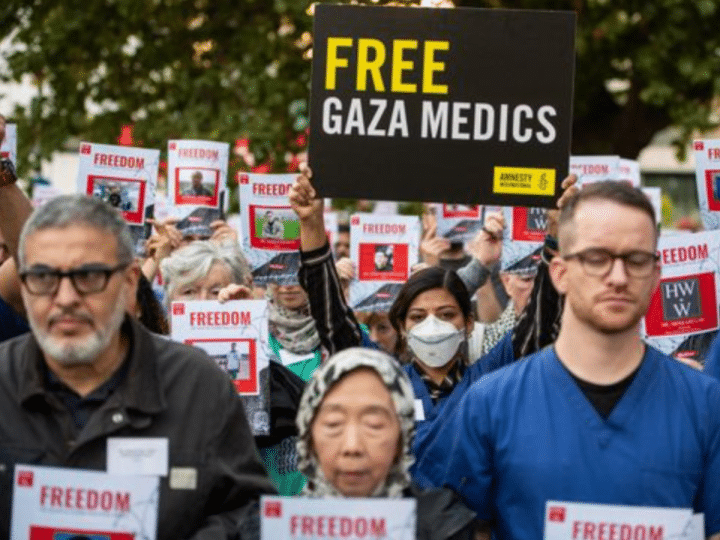
In an alleged attempt to prevent antisemitism, a new review conducted by the government’s independent adviser Lord Mann has made several recommendations to the NHS.
This potential censorship attempt raises concerns about our personal freedoms, including people’s right to show support for Palestinians. For instance, one of those recommendations is to ban NHS staff from wearing ‘political’ badges such as those linked to pro-Palestinian advocacy.
However, these badges are arguably not political, but an expression of basic humanity. They signal the wearer’s objection to mass killing and Israel’s ongoing genocide in Gaza. That campaign has mutilated, murdered and maimed hundreds of thousands of Palestinian men, women and children.
Furthermore, among countless rights abuses and flagrant war crimes committed by Israel with British made bombs and bullets, Zionist military forces bombed numerous hospitals in Gaza.
Surely NHS staff have an inherent right to stand by the abuses against Gaza’s health workers… Many Palestinian health workers have been held hostage by the Israeli occupation forces (IOF) under politicised charges.
As is typical, this recommendation has been applauded by right-wing pundits, who now want to also see rainbow lanyards banned also.
NHS staff should be banned from wearing pro-Palestinian badges, report recommends.
Good. About time. When did ANYONE think it was acceptable for NHS staff to wear ANY political insignia while at work? While we're at it, can we ban rainbow lanyards too? https://t.co/romwTCuxWB — Julia Hartley-Brewer (@JuliaHB1) June 4, 2026
Uniforms to be banned at protests
According to the review and its supporters, NHS workers having a small pin on their uniform symbolising their solidarity with the suffering of Palestinians is antisemitic. Apparently, this practice puts Jewish people off from accessing healthcare.
One Jewish A&E doctor has told the BBC that seeing colleagues wearing these badges made her uncomfortable, saying:
The public should have trust in healthcare professionals and if you express political opinions, it can undermine that trust.
However, it’s hard to understand how having a problem with the illegal bombardment and brutalisation of Palestinian people can detract from an NHS doctor’s ability to be trusted. The reality is decision makers in the NHS can’t be trusted, and have persecuted doctors who have stood in opposition to genocide.
Standing against human rights abuses makes a person, especially a doctor, far more trustworthy. Yet some continue to whine that wearing a pin should be a sackable offence.
All staff working in the public sector should be banned from wearing any form of political badge or lanyard. It should be a sackable offence.https://t.co/uCsY3qN6Il
— Hadrian (@HadrianAD122) June 4, 2026
NHS clampdown threatens staff freedom
Moreover, Lord Mann’s review recommends banning NHS staff from wearing their uniforms at protests. It has become clear that this proposal seeks to distance the NHS from any public opposition to Israel’s actions in Gaza. The ban would prevent our own healthcare workers from visibly associating their professional identity with ‘political,’ humanitarian causes.
From that perspective, the recommendation does not simply impose workplace neutrality; it seeks to prioritise the comfort of those who support or defend Zionist Israel and its genocide. This is done over the ability of NHS staff to express solidarity with Palestinians and draw attention to the tens of thousands of deaths. The policy also ignores the ever-worsening humanitarian crisis in Gaza.
Nevertheless, these proposals appear to influence beyond healthcare workers and their right to express opposition to Israel’s actions in Gaza. In addition, discussions since about extending similar restrictions to other workplaces and public-facing services suggest a broader, sinister effort. This effort aims to limit visible political expression among UK citizens.
But history shows that censorship rarely arrives all at once. Instead, the powers that be introduce restrictions incrementally, normalising each new limitation before advancing on to the next. It surely then follows that Lord Mann’s review risks laying the groundwork for further attacks on our freedom of speech and expression in the UK.
New guidelines proposed for NHS England say staff shouldn’t wear political badges/symbols. That's a recommendation from Lord Mann whose led a review to tackle antisemitism. So whether you work at the NHS, a bank or a cafe – should you be allowed to take your politics into work? pic.twitter.com/EsjQoDN5fC
— BBC Radio Scotland (@BBCRadioScot) June 4, 2026
A race to the bottom
The UK heath secretary James Murray has stated that the government would accept the recommendations in full:
I know that Jewish people – and everyone experiencing discrimination – need action not words.
Together with NHS England, we will waste no time in setting these recommendations in motion to build a health service that lives up to its values.
A spokesperson for the Jewish Medical Association has welcomed the recommendations, saying:
We would support the banning of political symbols including flags and symbols of any country. We wouldn’t want it to be discriminatory in any way.
Finally, the chief executive of NHS England has also accepted Lord Mann’s recommendations, telling the BBC:
We accept all of the recommendations in Lord Mann’s review and as a leadership community, we will act swiftly to implement them.
The NHS at its best is a place of compassion, care and unity – not conflict – and there is unacceptable antisemitism and racism in the NHS, faced by both our staff and our patients and we must root this out.
Of course, society must absolutely condemn and guard against antisemitism. It remains a dangerous, hateful form of prejudice affecting Jewish communities across the country. As a result, the emerging hierarchy of racism in the UK has tended to give it disproportionate attention. It has been labelled prematurely with little evidence to support, weaponised to shutdown criticism of Israel.
At a time when Muslims, Jews and Christians — alongside non-faith people — stand in solidarity against the oppression and genocide enforced by Israel on Palestinians, moves to ban symbols which speak to humanity runs counter to progressive principles.
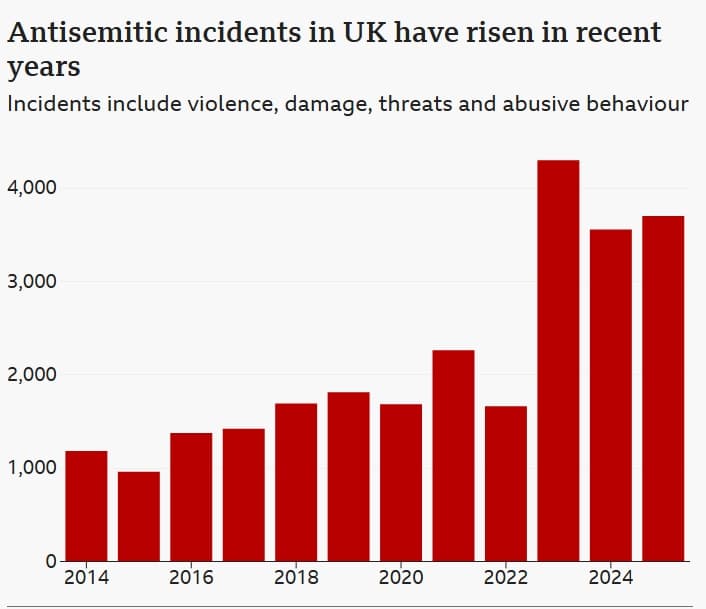
Source: Community Security Trust
Simultaneous to the rise in antisemitism in the UK cited by the BBC, which has seen an almost 200% rise at times since 2023 – when the genocide started – there has also been a 377% increase in Islamophobic incidents. Alarmingly, the Muslim community in the UK represents 45% of all recorded religious hate crimes.
Freedoms under threat — this is only the start
Therefore, this surely highlights how the conflation of Zionism with Judaism has increased the prevalence of antisemitism arguably by Zionist design. For instance, some more ignorant Britons have shown they do not distinguish between the murderous actions of Israel and its insistence that it represents ‘all Jews’.
Further, the astronomical increase in Islamophobic incidents – often resulting in rape, violence or even murder – underscores how dangerous it is to treat genocide as if it is a debatable, disputable political issue. The reality is that Zionism is a danger to us all. This includes Jewish people.
The sustained participation of many Jewish people in peace protests in London and across the country provides further evidence of this distinction. After all, many Jewish people do not see pro-Palestinian activism as a threat. Instead, they view opposition to Zionism as essential to their own safety and freedoms.
Freedoms which appear to be under great threat right now in the UK, as it seeks to provide comfort for Zionists – rather than solidarity and remedial efforts to stop the mass murder of innocent men, women, children and babies.
Featured image via Thomas Krych / ZUMA Press Wire
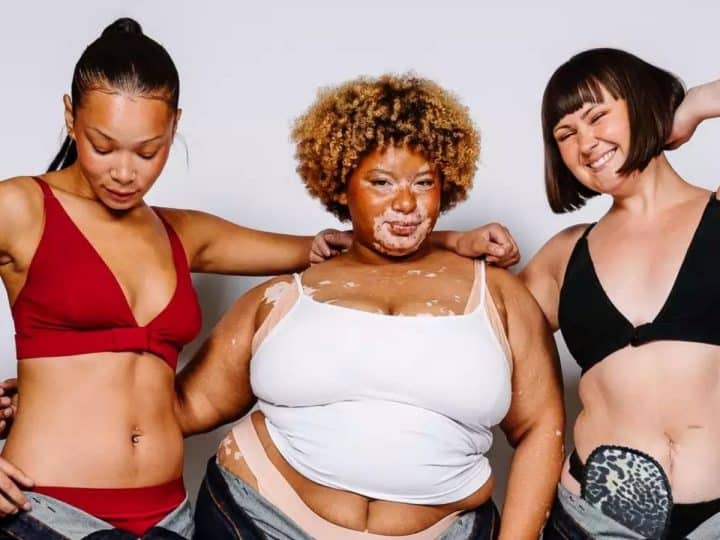
Disabled models will travel the runway at Aviva Studios on Saturday 27 June 2026 ahead of Disability Pride Month.
The most inclusive fashion show that’s ever been staged in Manchester is coming to the city ahead of Disability Awareness Month.
Sixteen models – female, non binary and male – will travel down a specially constructed runway at Manchester’s Aviva Studios.
Aged from 20s-50s, every model is disabled, neurodivergent or chronically ill and all will wear adaptive fashion designs from a young, ambitious Manchester label. Manchester Metropolitan University fashion graduate Ellie Brown founded RECONDITION in 2025.
Brown’s eyes opened to how unaccommodating fashion can be in 2021, when she badly broke her ankle. This resulted in her using a wheelchair for several months. Each garment in RECONDITION’s denim-centred collection has been designed with and for disabled people.
Adaptations built into the label’s inclusive designs include:
- Front pockets on jeans for wheelchair users.
- Ring pull zips for people with reduced dexterity.
- Sleeves with poppers along their full length to help accommodate prosthetic limbs or medical equipment, from feeding tubes to insulin pumps.
Brown’s Manchester city centre based company now works alongside a co-design group who all have varying lived experience of disability. This ensures that her designs truly do the job, whether that’s:
- Accommodating stoma bags.
- Providing comfort and practicality for wheelchair users.
- Offering an easier “on and off” experience for people with reduced grip strength or dexterity.
‘Disability Pride Catwalk’ will show ‘accessible fashion is fashion for all’
Aaliyah Rice, 24, from Bury, Greater Manchester, is one of the models taking part. Diagnosed with ADHD aged 21, the advertising creative signed up after seeing an open casting call on TikTok. She said she thought it would be:
such a fun experience and a chance to meet like-minded people.
Rice added:
Mainstream fashion on a whole is entirely unaccommodating even for an able-bodied person. Things like sizing and fit are generally a nightmare. I can only imagine the extra layer of hell having a physical disability brings to clothes shopping.
My own personal experience is with clothes that give me sensory issues – things like tags, textures and seams that cause me distress and take my focus away from other things.
It makes it more challenging to shop, as most of the clothes that don’t cause me sensory issues aren’t fashionable or stylish and when you don’t feel confident you can’t embrace life the way you want.
I’m a strong believer that accessible fashion is fashion for all.
The label’s first catwalk collection includes the popular dark blue denim Reconditioned Jean, which is already on sale and debuts a number of new adaptive designs. These include a denim miniskirt, a dress, a jumpsuit, a top and a further new cut of jeans.
Research from disability charity Leonard Cheshire found that mainstream fashion in the UK does not meet the needs of three quarters of disabled people.
According to government figures, a quarter of people in the UK have a disability – that’s 16.8 million people. And in state pension aged people, the figure rises to almost half (45%).
Brown says that RECONDITION’s first major catwalk show, called Disability Pride Catwalk: A Space for Each Other, is “part performance, part social commentary”, and will:
reflect on who fashion is for, how access is built (or denied) and what it means to create space collectively.
The purpose-built runway at Aviva Studios features a double height bar, which is inclusive to wheelchair users and people of short stature and acts as a metaphor for how the built environment enables or disables people.
Brown said:
The Disability Pride Catwalk is a safe space for people to celebrate bodies of all kinds whilst enjoying the atmosphere and experience of a runway show.
I also hope the event will provoke useful discussions about how fashion – and society as a whole – can take more accountability for inclusivity.
Disability Pride Catwalk: A Space for Each Other
Saturday 27 June 2026 6-8pm
The Undercroft, Aviva Studios, Water Street, Manchester, M3 4JQ
FREE
Featured image supplied
By The Canary
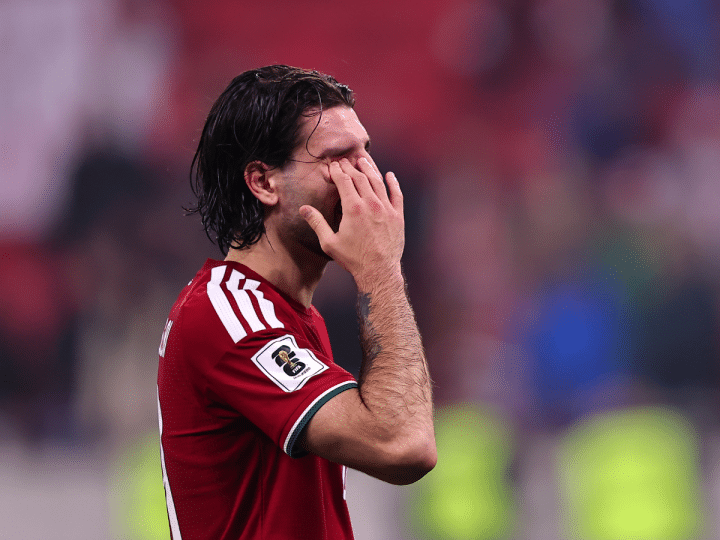
Although the 2026 World Cup will go down in history as the biggest edition ever, featuring 48 teams and co-hosted by the United States, Canada, and Mexico, the tournament’s expanded format has not been enough to guarantee the presence of all the world’s football stars.
Whilst fans prepare to follow an unprecedented edition in terms of the number of teams and matches, qualifiers, injuries and tactical choices have shaped another side of the World Cup: the absence of names that have played a significant part in the game’s landscape in recent years.
Whilst the tournament has opened its doors to new teams and rising stars, it has closed the door on a number of stars who were hoping to write a new chapter in their international careers, or perhaps make a final appearance on the world’s biggest football stage.
World Cup: stars on the outs
Absence from the World Cup is not down to a single reason: some have paid the price for their national team’s failure to qualify, despite their status among the world’s elite players; others have been sidelined by injury at a particularly cruel time; whilst still others find themselves left out due to technical decisions dictated by competition for the limited places in the final squads.
But the outcome remains the same: big stars will be watching the World Cup from the sidelines.
Lewandowski… a last chance lost
At the forefront of the names missing from the finals is Poland’s Robert Lewandowski, the Barcelona striker and one of the most prolific goalscorers of his generation.
The 2026 World Cup represented a precious opportunity for the veteran player to embark on a new global stage, perhaps the last of his international career, but Poland’s failure to reach the finals ended that dream prematurely.
Kvaratskhelia and Szoboszlai… the absence of a new generation
The absences will not be limited to veteran stars, as the World Cup will also miss one of the most exciting players in Europe in recent years, the Georgian Khvicha Kvaratskhelia, after his national team failed to secure a place.
Hungary’s Dominik Szoboszlai, captain of the Hungarian national team and a Liverpool star, will also be absent, meaning the World Cup will lose one of the most prominent midfielders of his generation, a player whose influence in European football has been on the rise.
Italy… the open wound
Perhaps the most painful story remains linked to Italy, which continues to be absent from the World Cup finals, a situation that is hard to fathom given the Azzurri’s history and standing among the game’s elite.
Italy’s absence means a host of star names will be missing from the tournament, led by goalkeeper Gianluigi Donnarumma, one of the world’s finest keepers, thus continuing the crisis of a team that has won the World Cup four times but now finds itself once again on the sidelines.
Nigeria Deprives the World Cup of a Formidable Striking Duo
On the African continent, Nigeria’s failure to qualify has left a clear mark on the list of absentees.
The World Cup will take place without Victor Osimhen, one of the most effective strikers in European football, as well as Ademola Lookman, who has established himself in recent seasons as one of the continent’s leading attacking players.
Their absence deprives the tournament of a duo possessing speed, decisiveness and the ability to make a difference, whilst adding a new chapter to the disappointment of Nigerian fans, who are accustomed to seeing their national team feature regularly at the World Cup.
When injury decides the fate of a dream
The list of absentees was not limited to those who missed out in the qualifiers, as injuries proved a decisive factor in preventing a number of players from taking part in the tournament.
“Al-Kanari” had previously highlighted in a report a list of stars who would be denied a place at the 2026 World Cup due to injury, including Brazil’s Rodrigo, Germany’s Serge Gnabry, the Netherlands’ Xavi Simons, and Frenchman Hugo Ekitike, alongside other names who have faced the harshest scenario a footballer can encounter just a few months before the start of the global event.
These cases confirm that the road to the World Cup does not end with qualification alone, but may be decided by minor physical details capable of ending a dream a player has waited years to realise.
Featured image via Getty/David Balogh
By Alaa Shamali
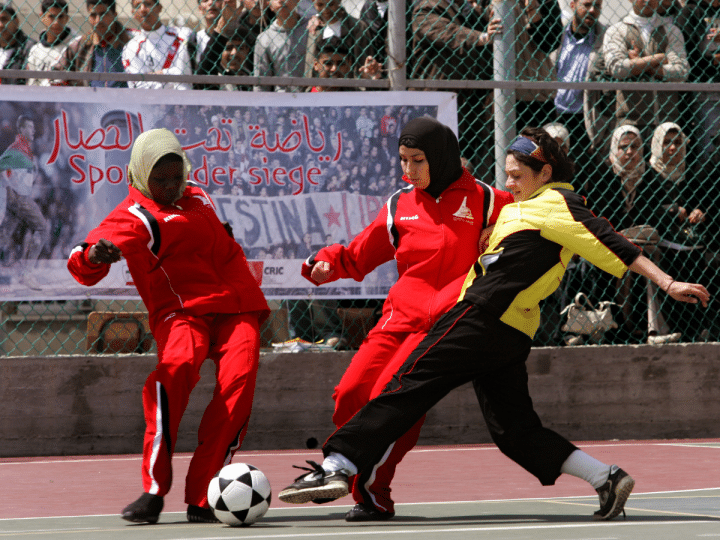
Palestinian footballer Natalie Abu Dayeh wasn’t preparing for a match or a training camp this time. She was sitting at her university homework in the town of Birzeit, north of Ramallah, before Israeli Occupation Forces (IOF) stormed her home and took her into custody, leaving behind the lecture notes and pen she had been writing with just minutes before the raid.
A scene documented by the Palestinian Football Association in an official statement, but it was not the only incident in recent hours. Shortly afterwards, the occupation authorities arrested Palestinian women’s national team player Rand Halawani (20), after summoning her to what is known as the “Tel Beit” police station in occupied Jerusalem.
Palestinian athletes regularly abducted
These two consecutive incidents have brought back into the spotlight Israel’s deliberate targeting of Palestinian athletes, a practice that is not limited to sporting competitions or international matches, but extends to the daily lives of male and female players off the pitch.
The Palestinian Football Association said that Abu Dayya, a player for the women’s national team and a student in the Media Department at Birzeit University, was arrested after her home was raided, whilst Halawani’s arrest came just hours later, indicating the ongoing persecution of Palestinian athletes across the Palestinian territories.
These incidents do not appear to be isolated from a broader context. Earlier, Musab Abu Salem, a player for the Palestine Stars team, was prevented from travelling to Italy to take part in a solidarity match against the Napoli Stars, after the occupation authorities stopped him at the Karama crossing and subjected him to questioning before issuing a decision barring him from leaving the Palestinian territories.
Israel impunity
This follows the genocidal crimes in which Israel targeted all sectors of sport during the war on Gaza, killing over 1,000 people – including players, coaches and referees – and destroying all sports grounds and facilities.
Between arrests and travel bans, Palestinian complaints are mounting regarding the restrictions faced by athletes, whether in terms of movement and travel or participation in international events.
The Palestinian Football Association emphasises that these practices do not target specific individuals so much as they undermine the ability of Palestinian sport to continue and participate in international forums.
Featured image via Getty/Abid Katib
By Alaa Shamali
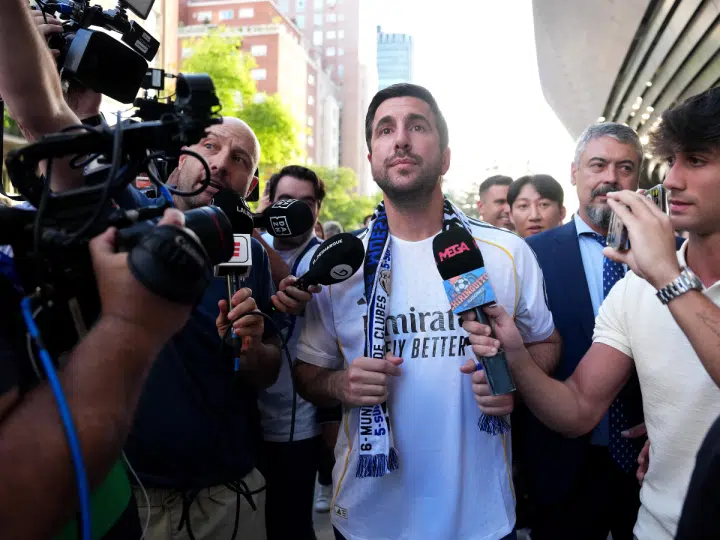
In one of the most dramatic moments of the Real Madrid presidential race, candidate Enrique Riquelme stole the limelight after appearing in a television interview holding up Erling Haaland’s shirt in front of the cameras. The scene quickly became a key talking point in his election campaign, and sparked widespread debate about the scale of the promises being made in the race for the presidency of Real Madrid.
The moment was not merely a visual spectacle; it was accompanied by a direct statement from Riquelme, in which he confirmed that signing Haaland would be one of his priorities should he win the Real Madrid presidency, as part of a vision to attract the elite names in European football to bolster the team’s attacking strength.
Real Madrid chaos
This move placed Haaland’s name at the heart of the election campaign early on, turning him into one of the key talking points in Riquelme’s message to the club’s supporters, in a contest that goes beyond the administrative to a race for the highest sporting ambitions.
In parallel with this, Rodri’s name was also mentioned within the same electoral scenarios; however, the momentum surrounding Haaland remained the most prominent theme in the messages directed at Real Madrid fans throughout the campaign.
However, Manchester City are now said to be considering legal action. A club spokesperson said:
The stories which have emerged from Spain regarding the future of Erling Haaland are untrue.
There is no chance of this happening and there is no contractual clause to enable it.
We are considering legal action for the use of our player image in this context.
The image quickly spread across social media platforms, where followers shared it widely, and it also garnered significant engagement across a number of prominent sports accounts, including the “El Chiringuito” account on x, which helped to increase interest in the comments and turn them into one of the most prominent talking points in the election landscape within Real Madrid.
Featured image via Getty/Angel Martinez
By Alaa Shamali
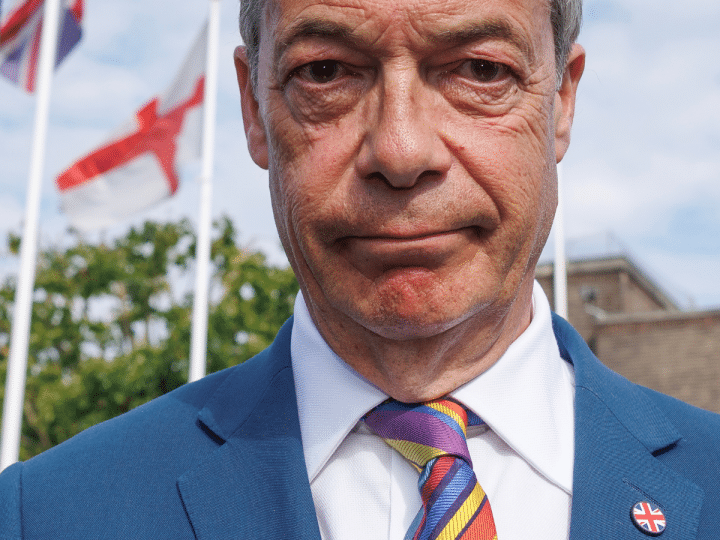
Nigel Farage has recently defended his call for “pure cold rage” in reaction to responding officers’ treatment of murder victim Henry Nowak. Worse still, he’s doubled down on his race-baiting, claiming that there’s worse yet to come.
Meanwhile, the Times has been doing all it can to tow the Reform leader’s party line. The right-wing rag has managed to dig up a Hampshire Police diversity training day questionnaire, reporting on the pigs feeling “pressured” and “controlled”, as if that’s somehow connected to them ignoring Nowak as he bled to death.
Back in the real world, the president of the National Black Police Association has warned that Farage’s rhetoric is in danger of setting policing back decades.
Farage promises ‘just the beginning’
In a Times Radio interview, Farage defended his call for “pure, cold rage”. He argued that:
I used that term very, very deliberately… I suggested that rage was put in a cold way, not a hot way.
What a precise instruction, delivered to charmers destroying a local community by chucking bins around.
And, Farage also claimed that the white riots in Southampton are “just the beginning”. He said:
large numbers of young white males think the police are prejudiced against them.
That would be because the Reform leader told them as much. Farage stood in front of a camera and bleated that Nowak’s treatment was a result of “anti-white prejudice”. He stated, without choking on his words, that the UK is a “two-tier system” that disadvantages white people.
As the Canary previously highlighted, Farage knew that his words would start a riot. Back in 2024, he was one of the figures throwing around the ‘two-tier policing’ rubbish which sparked the white riots during that period of time.
In a similar vein, at the time we also stated that the compliant corporate media aids and abets far-right politicians and hatemongers in stoking up racial tensions in these scenarios. However, what the Times is currently doing is far, far worse.
The Times parrots Farage’s tripe
On 4 June, the Times published an article titled:
Officers in force that failed Nowak ‘pressured’ by diversity course
This followed Farage’s attack line, attempting to blame DEI (diversity, equity and inclusion) initiatives for so-called “anti-white prejudice”. The article reported that:
Police officers in the force that failed Henry Nowak felt “controlled and pressured” during diversity training, it has emerged.
An evaluation of a day-long Hampshire Police course titled Inclusion Matters found that more than one in seven officers experienced pressure “to be certain ways” during the training.
The course covered topics including racism, unconscious bias, privilege and “the importance of being an ally”.
The cops complained that being told about their privilege made them feel pressure to “be a certain way”, did they? Would that ‘certain way’ be ‘less racist’, by any chance?
Note the Times’ feeble attempt at a deception here. The right-wing rag has seized on a questionnaire response to a police diversity training day where a few cops complained. It makes absolutely no mention of when this training took place.
However, the article expects readers to connect that diversity training to officers ignoring a white man saying he’s been stabbed. Even if the training told the pigs to take claims of racialised abuse more seriously, nobody genuinely believes that extends to ‘ignore a white man when he says he can’t breathe’.
But then, the Times isn’t looking for genuine belief. All it needs is its readers’ knee-jerk, unthinking anger. It needs blind hatred directed at the very concept of equality initiatives – just like far-right darling Farage wants.
‘There is a danger of policing going back’
Meanwhile, for those of us still concerned with fact, the police force’s extensive and well-documented history of systematic racism hasn’t gone anywhere. That ‘systematic’ bit is important. It’s a long-lasting, widespread and ongoing pattern, not a single instance of officers getting it badly wrong, as in Henry Nowak’s case.
In fact, the president of the National Black Police Association – chief inspector Andy George – has raised the alarm of Farage’s dangerous race-baiting. George warned that:
There is a danger of policing going back to a time long before Stephen Lawrence’s murder, to the 1960s and 1970s, because of the attacks from the far right which have been growing over the past few years, and which are becoming more mainstream.
Likewise, ex-chief inspector of constabulary Andy Cooke – who stepped down back in April – has stated outright that he saw no evidence of ‘anti-white bias’ during his tenure. Given that he’s a white cop, and a Tory appointee at that, we’re going to believe that he looked for it, too. Cook said:
Throughout my five years at the inspectorate, I found no evidence at all to support any claim there was an anti-white bias in operational policing. […]
This should be a period of time where politicians respect the family’s wishes and do not try to exploit such a tragic and painful situation to boost their political fortunes.
Instead, the former chief inspector accused Farage and his ilk of trying to “boost their political fortunes” by exploiting the Nowak case.
Nowak’s parents stated explicitly they didn’t want their son’s murder to be “used to create further division”. Farage and his lot don’t care. They’re working actively to reverse even fragile steps toward racial equality across the UK, and there’s no line they won’t cross, no cause they won’t exploit, in order to do so.
Featured image via Getty/Dan Kitwood
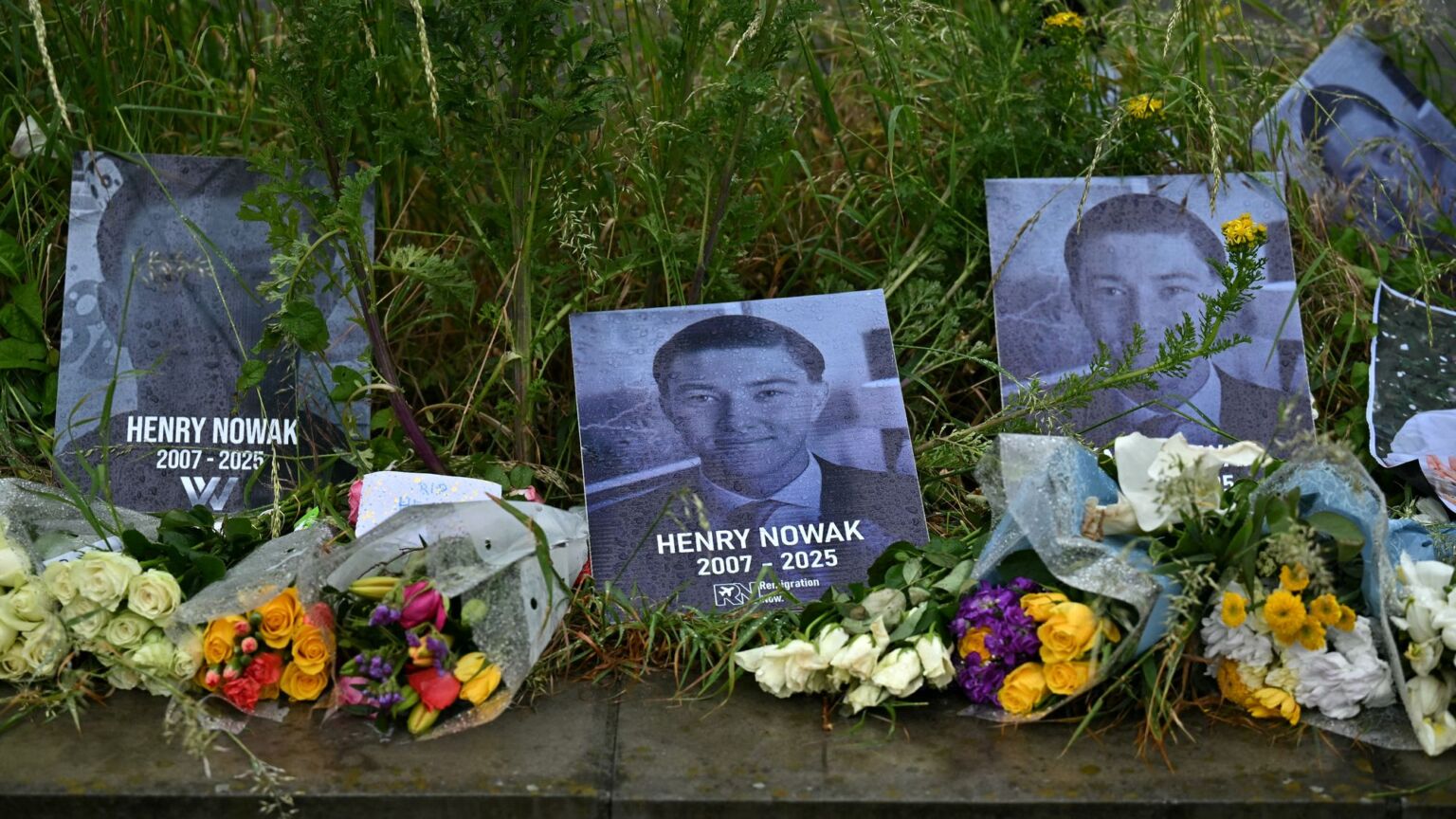
Are you raging over the death of Henry Nowak? Has the horror of that boy’s slaying, the lynching-like savagery of it, incensed you? Did you feel molten fury as you watched the bodycam footage of those lowlife officers dragging Henry across the harsh gravel? Were you consumed by wrath seeing this dying boy be libelled as a racist by his killer? If so, then according to the chattering classes you are tantamount to a fascist. It is you and your febrile emotions that pose the truest threat to the nation, even more so than knife-wielding scum like Vickrum Digwa.
What has happened in Britain over the past 48 hours has been extraordinary. Even as a seasoned critic of the hubris of our rulers, I’ve been shocked by the speed with which they’ve turned this atrocity into yet another soapbox from which to harangue the little people over what we think, what we say, even what we feel. More ink is now being spilled on the ‘problematic’ emotions of the masses than on the cruel killing of young Henry. We live under a regime so morally remote, so far up the fundament of its own self-righteousness, that it frets more over the justified rage of ordinary people than the unjustified destruction of a lad’s life.
It was comments made by Nigel Farage, leader of Reform UK, that tore off the smug set’s veil of concern for Henry to reveal the classist sneer beneath. He called for ‘pure, cold rage’ in response to Henry’s awful, lonely death. Cue rage – ironically – across the faux-liberal establishment. The bourgeois press fizzes with angst over Farage’s words. There are ‘fears’ that the ‘populist right’ will ‘whip up racist resentment’, says the Guardian. Farage’s words will ‘inflame tensions’, blubs the Independent. Every centrist twat’s favourite pod – The News Agents – accuses him of blowing a ‘careful dog whistle’, slyly goading the mob to ‘go and do your thing’.
The commentary drips with the haughtiest dread. You can smell the panic of the establishment at the prospect that the lower orders might pour on to the streets to express an unsanctioned emotion. The ‘dog whistle’ comment captures it beautifully. They view the masses as human hounds dumbly awaiting the coded orders of their demagogic masters. The emotional wasteland that is Keir Starmer, who seems incapable of either rage or joy, called Farage’s remarks ‘unforgivable’. Now is ‘a time for serious work, not rage’, he robotically spluttered.
Pick up a broadsheet or switch on the news and you’d be forgiven for thinking Farage had wielded that knife in Southampton. His ‘violent’ words are triggering the woke classes even more than the violence visited on Henry. The press is awash with handwringing over the barbarous ‘atmosphere’ his comments might conjure up, the ‘lynch mobs’ they might draw on to the streets, the innocents who might get hurt on the back of his ‘stoked anger’. The liberal elites’ fleeting grief for Henry has given way to fabulist fever dreams about the zombie masses that might swarm the streets at the behest of their monstrous controller, Farage.
And now we have Wes Streeting, the former health secretary, accusing Farage of whipping up a 1930s-style vibe. ‘[To] stoke rage… is really dangerous’, he said. ‘It’s not too dramatic to say this has echoes of the 1930s.’ Every time ordinary people push back against the state – every single time – these cowards and snobs play the 1930s card. The vote for Brexit, concerns over mass immigration, rage over the state’s denigration of a dying boy – all of it reminds them of Nazism. It is such rank elitism. That they sniff the spectre of Hitler every time Brits get angry about something says so much more about them than us. Not only do they not trust us – they even see us as brownshirts-in-waiting, easily activated by the dog whistling of some demagogue.
They have no idea of how hateful they sound. Or how hopelessly cloistered. Rage is precisely what millions felt upon viewing that bodycam footage. Fury rippled through my WhatsApp groups on Monday night when it was released. ‘Made me vomit.’ ‘FUCKING HELL.’ ‘A million times worse than I was expecting.’ What is truly inhuman is to not feel rage when reading about this boy being taunted by his killer for 10 minutes before being disbelieved, dragged and arrested as he begged for his life. It isn’t the fury of ordinary people that is scary – it’s the absence of it among our supposed betters. Instead of keeping a check on our emotions they should check themselves for a pulse.
Then there’s the hypocrisy. It is off the charts. The Guardian slams us for feeling rage over Henry, yet it published pieces in the wake of George Floyd’s death saying: ‘We need… rage.’ Cathy Newman of Sky News badgered Reform UK’s Zia Yusuf over Farage’s ‘rage’, yet back then she was delighted that ‘the fury over Floyd’s death’ had been transported ‘to all four corners of the globe’. Owen Jones condemned Farage’s ‘rage’ remarks and implied they had stirred up the idiots who threw bins at cops in Southampton on Tuesday night – yet in 2020 he gushed over the ‘righteous rage’ in response to Floyd’s death.
Rage over a man who died 4,000 miles from Britain? Go for it. Rage over a boy who died right here in England? Don’t even think about it. The reason for this brazen double standard is clear. It’s because the Brits who ‘raged’ over Floyd were primarily bourgeois leftists who obsequiously bent the knee to the ruling-class ideology of identitarianism. Meanwhile, the Brits raging over Nowak’s death include huge numbers of working-class non-Londoners who want to dismantle identitarianism, with its hyper-racialism, anti-whiteness and two-tier policing.
The establishment can handle the sight of Oxbridge keffiyeh-wearers partaking in orgies of performative virtue, whether over ‘racist America’ or ‘evil Israel’. But oiks? Gammon-coloured men draped in the England flag? Those people with their angry criticisms of the neo-racialism of the elites? Absolutely not. They must be demonised, driven from the streets. Only the righteous graduate classes are permitted to vent their moral fury in public places.
The instinct of the elites, always, is to curb populist fury. We saw it after the Manchester Arena bombing of 2017, when we were encouraged to say ‘Don’t look back in anger’ and discouraged from talking about the Islamist menace. We saw it in relation to the rape-gang scandal, when we were sternly told that any use of ‘inflammatory language’ about those mostly Muslim gangs might ‘incite mass violence’. And now we see it after the death of Henry Nowak – that familiar imperious instruction to watch what you say, police how you feel, and, above all else, don’t get angry.
Some are accusing Farage of using the Nowak horror as a weapon in the culture war. In truth, Starmer and the rest of them are using it as a shield. They’re hiding behind the spectre of lynch mobs, and the phantom of the 1930s and even the deep pain of the Nowak family in a desperate bid to avoid the criticism and dissent of ordinary people. It’s not going to work. They are too weak and the populist surge is too strong. Working-class anger won’t be tamed this time.
Brendan O’Neill is spiked’s chief political writer and host of the spiked podcast, The Brendan O’Neill Show. Subscribe to the podcast here. His latest book – After the Pogrom: 7 October, Israel and the Crisis of Civilisation – is available to order on Amazon UK and Amazon US now. And find Brendan on Instagram: @burntoakboy.
ET Alpha Wealth Summit: Rajeev Thakkar of PPFAS MF explains when to hold, when to exit, and why most investors get it wrong

Brent: The Downtrend Begins to Crack
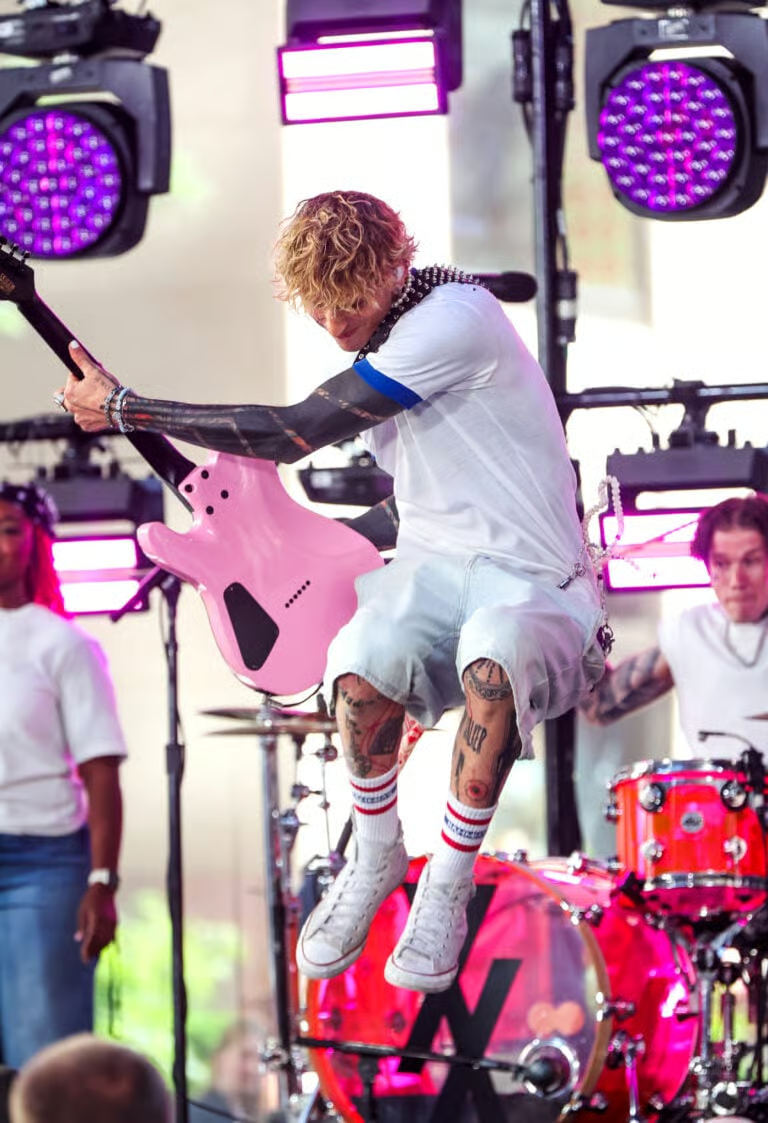
MGK Fans Stunned By What He Did After Guitar Caught Fire



-

 Tech7 days ago
Waymo dominates autonomous vehicle registrations as Tesla trails behind
-

 News Videos6 days ago
This is BROKEN! INSANE 5x MONEY CAR WASH WEEK! The NEW GTA Online UPDATE Today! (GTA5 New Update)
-
 Tech5 days ago
SpaceX just won a second Golden Dome contract. This one is $4.16 billion.
-

 Business3 days ago
Jade Biosciences, Inc. (JBIO) Discusses Positive Interim Results From JADE101 Phase I Healthy Volunteer Study and Development Plans Transcript
-

 News Videos6 days ago
SHE IS KILLING XRP!!! WATCH URGENT AND ACT FAST
-
 NewsBeat6 days ago
FIRST NIGHT REVIEW: Take That bring the Circus back to life in spectacular sun-soaked style
-
 Business5 days ago
Is the Spurs Phenom Already Better Than Prime Diesel?
-
 Crypto World6 days ago
CFTC Has Approved the First Regulated Bitcoin Perpetual Contract in the U.S.
-
 Politics5 days ago
The House | Inside Andy Burnham’s Makerfield Campaign: “Nobody Thinks This Is In The Bag”
-
 Sports2 days ago
French Open 2026 results: Alexander Zverev beats Rafael Jodar and will play Jakub Mensik in semi-finals
-
 NewsBeat6 days ago
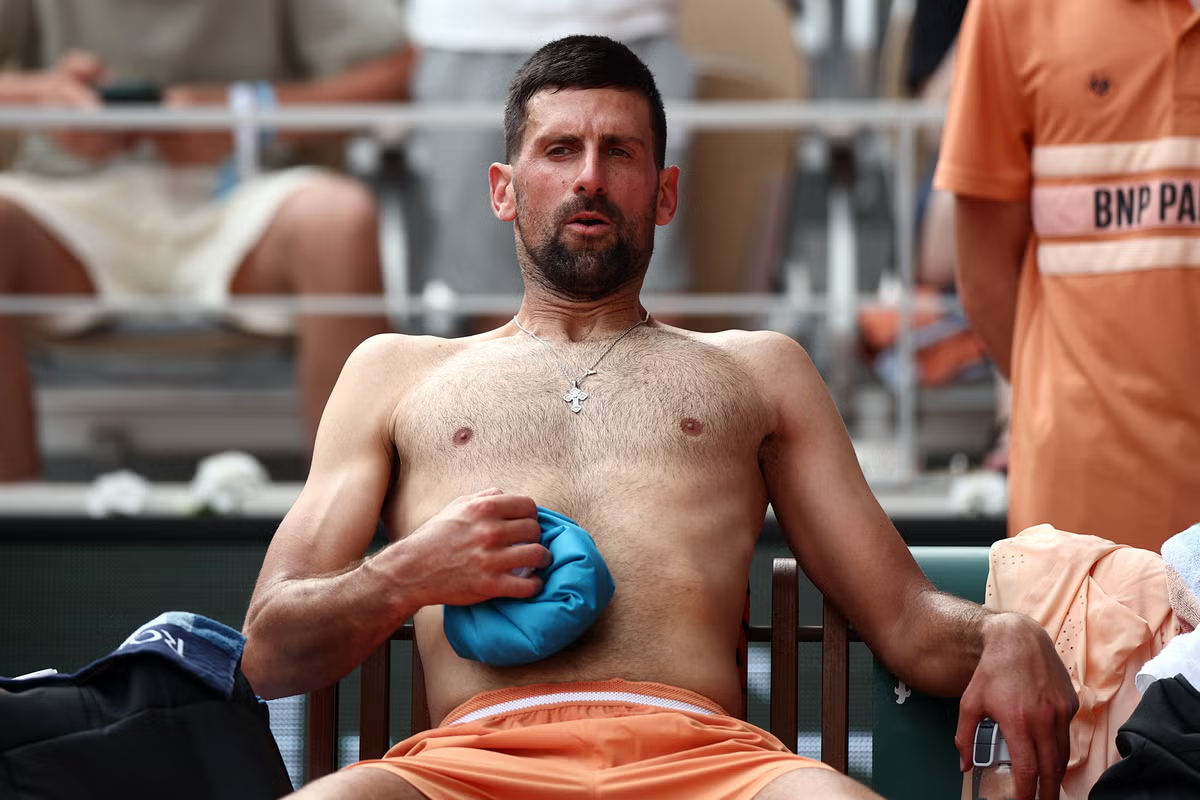
Novak Djokovic v Joao Fonseca LIVE: French Open latest scores and results after Jannik Sinner’s shocking collapse
-
 Entertainment6 days ago
Weak ‘Supergirl’ Box Office Tracking Amid Milly Alcock Backlash
-

 Tech2 days ago
CryZENx Releases Fresh Playable Content Deep Inside Jabu-Jabu for His Ocarina of Time Remake
-
 Crypto World6 days ago
Snowflake (SNOW) Stock Rallies on Strong Q1 Results and AI Product Growth
-
 Entertainment6 days ago
Maddox Jolie-Pitt Legally Requests to Drop Brad’s Surname
-

 Business5 days ago
Demand Conditions Improve In Chemicals Sector In April 2026
-
 Entertainment5 days ago
One of the Greatest Sitcoms of All Time Shoots Up Apple TV’s Charts 11 Years Later
-
 Crypto World6 days ago
MicroStrategy Moves $30 Million in BTC to Coinbase Prime: Is the Bitcoin Sell-Off Already Here?
-

 Tech6 days ago
This Week In Security: Ubiquiti Fixes, And FreeBSD Joins The Club You Don’t Want To Join
-
 Entertainment6 days ago
Bruce Willis’ Generosity Resurfaces Amid His Dementia
You must be logged in to post a comment Login