

Politics
The House | Can The Building Safety Regulator Cast Off Its ‘Bottleneck’ Reputation?



Former London Fire Commissioner Lord Roe is said to have made significant improvements to the way the Building Safety Regulator works (Collage by Antonello Sticca)

8 min read
The Building Safety Regulator is under new leadership. Will it succeed in fixing a broken system? Noah Vickers reports
England’s Building Safety Regulator did not get off to the best of starts. Created under the last government’s Building Safety Act of 2022, the BSR was designed to prevent a tragedy like the Grenfell Tower fire from ever happening again.
As well as overseeing the remediation of existing buildings, all new-build developments which qualify as ‘higher-risk’ at the planning stage are referred to the regulator for approval, and if they fail to pass muster, are sent back for changes to be made. The definition of ‘higher-risk’ means any block of flats taller than 18 metres, or seven storeys, comes under the BSR’s purview.
But soon after the regulator’s establishment, it quickly struggled with the volume of applications it was receiving, and delays mounted – while developers complained about opaque processes and poor communication.
In December 2025, the House of Lords’ Industry and Regulators Committee published a scathing report warning that the BSR’s “unacceptable” delays were having “a worrying impact on the delivery of new housing”.
The committee’s inquiry had opened in June, but by the time they published their report six months later, evidence had already begun to emerge that the BSR was getting its act together under new leadership. Experts across the construction sector tell The House that the regulator has made significant progress in how it deals with applications, while cautioning that there remains some work to be done.
The BSR grants approval for new buildings at three ‘gateways’. Gateway 1 comes before planning permission, where the local council is required to seek the BSR’s views on any higher-risk building. At Gateway 2, the BSR reviews the design before construction can begin, and at Gateway 3, the building is assessed again at the post-construction, pre-occupation phase.
Gateway 2 had become especially notorious in the last couple of years as a key “bottleneck” for new high-rise housing projects. While a Gateway 2 decision is meant to be issued within 12 weeks, by the summer of 2025, the average waiting time for approval had grown to just over 51 weeks.
In June 2025, former London fire commissioner Andy Roe – now Lord Roe – was appointed as the BSR’s chair. He was joined by his former deputy commissioner Charlie Pugsley, who took up the role of chief executive, and John Palmer, a former Ministry of Housing, Communities and Local Government (MHCLG) official, who was made operations director.
“Those three individuals have just transformed the engagement of the BSR with industry and other key stakeholders in a really professional way,” says Neil Jefferson, CEO of the Home Builders Federation. “The people we see now who represent the BSR have instilled more confidence in the industry overall.”
The new personnel arrived just months before the BSR in January moved from being part of the Health and Safety Executive to becoming a standalone, arms-length body under MHCLG. It will eventually merge into a ‘single construction regulator’ to cover all aspects of the built environment, as recommended by the Grenfell Inquiry.
It was a bit of a black box before, and under Andy’s leadership that’s definitely changed
But beyond those administrative changes, improvements in the regulator’s communication style with developers and contractors have been welcomed across the sector.
“They’re talking to us much more sensibly and constructively, and not being quite as hands-off,” says Ian McDermott, chair of the G15 group of London housing associations.
“It was a bit of a black box before, and under Andy’s leadership that’s definitely changed. There’s much more engagement. We are talking through problems in a way that we simply didn’t do before, but there’s still quite a lot of work to be done.”
Median waiting times for Gateway 2 decisions are still taking longer than 12 weeks, though are substantially down from where they were, with the latest data showing approval taking 22 weeks and rejection taking 17 weeks. A backlog of legacy cases has however been largely cleared and a rising proportion of applications are being approved. In the 12 weeks to 30 March, the approval rate for validated applications climbed to 61 per cent, up from 33 per cent in the 12 weeks to 25 February.
Labour MP Mike Reader, who just six months ago helped lead a Westminster Hall debate warning that the BSR was “widely regarded as actively hindering the construction of new homes”, says he is “really impressed with how quickly it’s been turned around”.
But he warns: “There will be some cultural work needed still within the BSR. You don’t [suddenly] achieve cultural change in an organisation, in the mindsets of people from ‘Computer says no’ to ‘Not quite there, but this is how we can help you improve’ – that will still come… It’s not there yet, is what I’ve heard.”
It’s a concern echoed by Stephanie Pollitt, programme director for housing at BusinessLDN, who says that efforts now need to be taken to ensure that Gateway 3 does not become a new pinch-point over the coming months.
The frustration at Gateway 2 was partly due to a lack of clarity and transparency over what constituted a good application for validation, she says, adding: “I think we need to learn from those mistakes and make sure that doesn’t fall foul at Gateway 3 as well.”
Jefferson agrees: “The level of resource that’s in the BSR at the moment is wholly focused on Gateway 2, so when we get the first developments at Gateway 3 coming through, there are some concerns that there could be delays in getting buildings signed off on site, which creates cashflow problems for developers in many ways.
“I think there’s more confidence under the new leadership that we can tackle Gateway 3 together than there would have been previously, so that’s definitely a positive, but we’ve got a lot of learning to do together on Gateway 3.”
Ensuring that the regulator is properly resourced presents another challenge. The government had pledged to hire 100 additional staff into the BSR by the end of 2025, but minister Samantha Dixon has revealed that while 115 new posts were “approved”, only 83 new staff members have been “onboarded”.
Boosting the regulator’s workflow may also require other improvements beyond manpower alone.
“The BSR was set up with inadequate IT systems for document management – it was just completely overrun,” says Jefferson. “I wouldn’t say that that’s necessarily been solved yet, but it’s certainly been recognised as an issue.”
Andy and his team are receiving applications from developers which are timed to come in before the levy hits
Jefferson warns too that Roe’s work to improve the BSR could soon be put at risk by the government’s plan to introduce the Building Safety Levy in October. The levy, which was delayed from October last year, will be charged on all new residential developments of 10 or more units, with the funds used to help pay for cladding remediation and other safety repairs.
“We would welcome a further delay because of the economic conditions for development at the moment. It’s really unwelcome that this is coming in,” says Jefferson, who points out that the government already has £2.6bn in its Building Safety Fund to spend.
“It means that Andy and his team are receiving applications from developers which are timed to come in before the levy hits. Those applicants will be looking for acceptance of those projects before October, which will create a spike in his workload and make it difficult for him to prioritise his work.”
Anthony Breach, policy director at the Centre for Cities think tank, meanwhile says questions may still need to be asked about whether the 18m height limit should be increased – potentially to 30m or 50m – to reduce the scope of the BSR’s work and speed up developments.
In its Phase 2 report, the Grenfell Inquiry concluded: “We do not think that to define a building as ‘higher risk’ by reference only to its height is satisfactory, being essentially arbitrary in nature,” and recommended that the definition be reviewed. After a review last year, the BSR found there was “insufficient evidence” to change the definition, which was supported by MHCLG.
“The 18m threshold is very low, it doesn’t really have any basis in fire safety,” says Breach. “The result is, the mid-rise buildings that the government – separately, in its economic strategy – is stressing as very important to improve housing affordability, transport efficiency, the productivity of the national economy, that type of building is now just much more difficult, expensive, risky to build than it would be in a system where the BSR’s scope was defined more clearly on fire risk.”
A BSR spokesperson said the regulator has introduced a new system of account managers to enable “regular dialogue between applicants and the BSR” as well as a new “complex case category of application”, saying this is “quite clearly the opposite of a ‘computer says no’ approach”. The recent move to become a non-departmental public body will also see “investment in our technology and in our people’s skills”, they said.
They added: “We are continuing to work with the sector to build upon the existing guidance to provide further clarity around what a good [application] looks like which will help reduce invalidations and rejections.
“We have seen some high quality applications pass quickly through the system and are encouraging developers to share best practice. New-build approval rates are increasing month on month and we have a shared objective with the sector to drive up approval rates.”
MHCLG, meanwhile confirmed that having already delayed the Building Safety Levy by a year to give developers time to prepare for it, “no further changes” are now planned to its implementation.


What Kids Are Carrying is a HuffPost UK series focusing on how the nation’s youngest generation is *really* feeling right now – and how parents and caregivers can support them.
When I reached out to therapists and counsellors about the themes that cropped up most in therapy among kids in 2025, one common thread was the impact of being neurodivergent.
If someone is neurodivergent, their brain “diverges from what is considered typical”, according to SEN psychotherapist Gee Eltringham. This can encompass ADHD, autism, dyslexia, dyspraxia and Tourette’s syndrome.
Belinda Gidman-Rowse, a mental health practitioner and school counsellor in a primary school in Devon, sees around 50 children between the ages of eight and 11 each school term. She notes that a “significant proportion” are navigating either diagnosed or undiagnosed ADHD and/or autism.
Counselling Directory member and therapist Debbie Keenan is also supporting neurodivergent children while they await diagnosis – “this period is often filled with uncertainty, anxiety, and confusion,” she explains.
“Many children already experience challenges such as feeling different, struggling with emotions, or finding school and social situations overwhelming.”
NHS waiting times for diagnosis can vary massively – kids may have to wait months or even years for support from specialist services, forcing parents to find strategies to help their child cope in the meantime, or pay to go private.
In schools, special educational needs (SEN) support can be patchy and hard-won.
Therapists are noticing two key themes in particular when neurodivergent children need mental health support.
1. A lot of neurodivergent children are dealing with low self-esteem
While there can be a range of specific issues brought to therapy by neurodivergent children, Counselling Directory member Belinda Gidman-Rowse, has noticed a recurring theme.
“With all the children I see, there is often a pervasive narrative of being either ‘too much’ or ‘not enough’ which really impacts their self-esteem and sense of belonging in the world,” she says, “which is really sad to see.”
Some children will come to her wanting to make sense of their diagnosis – what it means for them, how others see them, and how they fit in to their school and home life.
“There can be a real sensitivity to feeling ‘different’ along with fears of being judged, excluded, or labelled in ways that don’t feel kind or accurate,” she explains.
On top of this, children can get stuck in cycles where their distress is expressed through behaviour, which is then met with punishment or frustration from adults – it’s something Gidman-Rowse notes can deepen the underlying overwhelm rather than resolve it.
“Over time, if these experiences aren’t understood, they can affect self-esteem quite deeply and, in more serious cases, increase vulnerability to things like self-harm as a coping strategy for dealing with overwhelming feelings,” she adds.
2. They might need extra support with keeping focused, managing emotions or navigating social situations
Another major element of what brings these children to therapy is the day-to-day impact of being neurodivergent.
Gidman-Rowse says for children with ADHD, this might look like difficulties focusing in class, frustration with learning, or challenges managing big emotions – “particularly anger, which can be heightened when they feel misunderstood or frequently corrected”.
Children might have explosive anger outbursts which caregivers describe as “coming out of nowhere”, and “going from 0-60”, says the counsellor.
“This can be incredibly challenging for families and teachers alike, and for the child themselves, who often feels out of control, and then ashamed or confused afterwards – they are aware that it is damaging their relationships but they feel unable to manage it.”
For children with autism, themes in therapy often centre around friendships and social situations, as there can be challenges in reading social cues and difficulties communicating their feelings and needs to others.
What can parents do to help?
The key advice seems to be: remain present, calm, caring and essentially become your child’s anchor to help them weather the various storms they may encounter.
Curiosity is key. “Approaching a child with curiosity rather than correction – for example, asking, ‘What’s feeling hard right now?’– can open up the conversation,” says Gidman-Rowse, while validating their emotions (for example, saying “that sounds really overwhelming!”) helps a child feel seen.
Gently helping them name what they’re feeling can also support regulation, says the counsellor, though some children might also need visual tools to do this (a feelings chart which you can print out and stick to your fridge might help).
If your child is awaiting a diagnosis, offering support and small changes at home can help steady them in the meantime. These include:
- Reducing demands on your child’s already stretched system by breaking tasks into smaller steps.
- Understanding triggers, such as sensory overload, changes in routine, or social demands, so you can anticipate them and reduce distress.
- Offering consistent, calm guidance in times of transition during the day.
- Giving them time and space to decompress after the school day to help reduce the intensity of meltdowns.
- Engaging in co-operative, two-way communication with your school teachers and SENCo.
- Seeking therapeutic support with a neurodiversity-affirming therapist.
Therapist Debbie Keenan says it’s “important to recognise and celebrate a child’s strengths while also acknowledging their challenges without judgement”.
For kids with ADHD, offering simple instructions followed by praise can help build “I can do it” feelings, instead of negative self-talk. Recognising your child’s efforts, even if things don’t go to plan, and prioritising one-to-one time together can also help boost self-esteem, according to Connect children’s services.
Social rejection, bullying and communication challenges are just some of the factors which can contribute towards low self-esteem in autistic kids, notes Autism Parenting Magazine.
As such, for parents, focusing on a child’s strengths, encouraging special interests, using positive reinforcement and providing opportunities for success can all help improve how they feel about themselves.
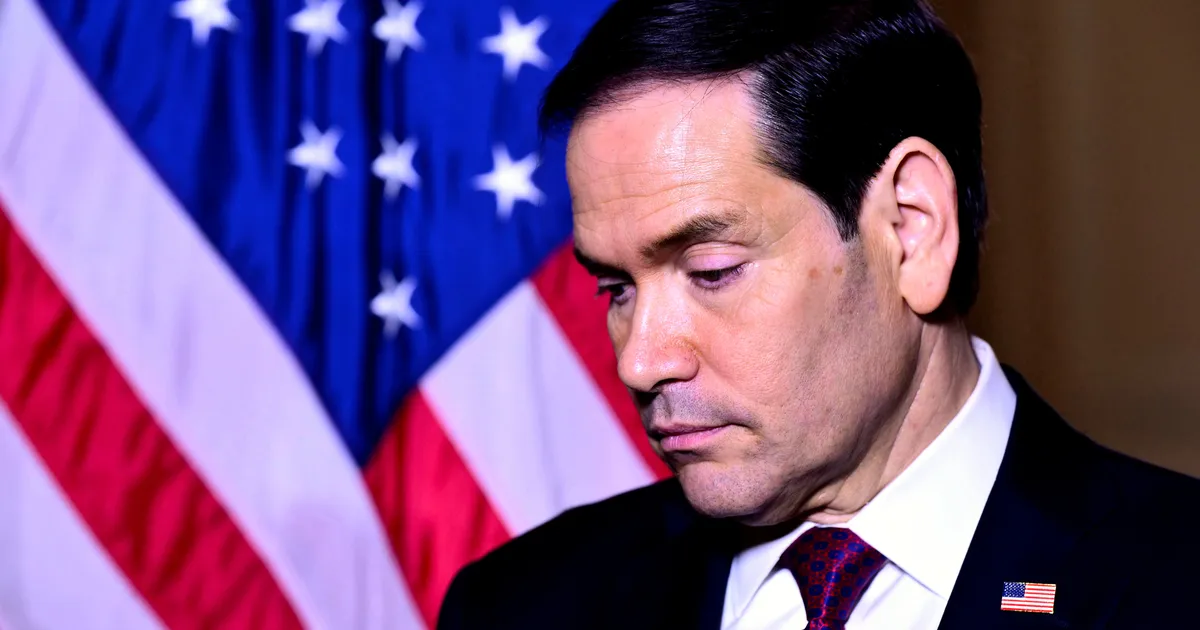
Marco Rubio has revealed Donald Trump’s latest goal for the Iran war is to effectively undo the last three months of chaos.
The US president chose to work with Israel to bomb Iran at the end of February after international negotiations over capping Tehran’s ability to build a nuclear weapon stalled.
Iran hit back by targeting US military bases across the Middle East and effectively closing the major oil shipping lane, the Strait of Hormuz.
That has sent the price of oil up, increasing the cost of living around the world.
The US tried to impose its own blockade on the Strait in retaliation, while also continuing to bomb Iran, but to no avail.
Tehran also claims to have collected tolls from commercial vessels who want free travel through the waterway, though the US denies it.
Iran previously suggested tankers would have to pay $2 million to cross the Middle Eastern waterway – a huge cost which would trickle down to consumers.
Meanwhile, questions over exactly what America is trying to achieve with the war continues.
As the cost of the war continues to grow, the White House is desperately looking for an off-ramp.
US secretary of state Rubio tried to explain what Washington was doing to the press this week – but only added to the confusion as to why the war even started.
He said: “As President Trump said and as the facts clearly bear out, the United States holds all the cards.
“There is no scenario here where if they decide to join a ladder of escalation, they end up getting the last say.
“It’s for the Strait to be open, back to the way it was. It’s for anyone to use it, no mines in the water, nobody paying tolls.
“That’s what we have to get back to and that’s the goal here.”
Subscribe to Commons People, the podcast that makes politics easy. Every week, Kevin Schofield and Kate Nicholson unpack the week’s biggest stories to keep you informed. Join us for straightforward analysis of what’s going on at Westminster.

We’ve written before about how the sounds singers hear in their earpieces differ from what you’d expect.
But the rockstar revelations don’t stop there ― if (like me) you’ve always wondered what a singer is meant to do if they feel the urge to go mid-show, unfortunately, we’ve found some answers.
In a revolting but riveting video, TikTokker and pop culture lover John Joseph revealed how celebs handle the “if you gotta go…” problem.
Responding to another TikTokker’s comment which read “If Taylor can hold it, so can I,” the creator said, “Well, that’s because Taylor [Swift] is most likely not holding it during her three-hour show.”
They went on to explain that the singer’s Era’s tour set was three hours long, and while he “doesn’t know if this is Taylor’s tactic, there is such a thing called a pee bucket.”
A what now?
I regret to inform you that it’s exactly what you think it is. Again, there’s no proof Taylor uses one ― but other celebs and singers have gone on record for having used one in the past.
“You see, at most concerts, there are two different dressing rooms for the artist,” Joseph shared. There’s “the one that they get ready in,” which “usually has a bathroom connected to it.”
But then, there’s the second makeshift dressing room (also known as a trap) which is “usually under the stage so that artists can do their quick change” and refresh their hair and makeup without being seen.
This is usually closer to the action than the singers’ fully-kitted dressing rooms, so, Joseph warns, it’s a likely spot for a pee bucket.
Who’s admitted to using these?
Katy Perry, the Jonas brothers, Kelly Clarkson, and even Kendall Jenner have admitted to using the makeshift loo.
“You walk on stage feeling like Mary Poppins but really you’ve just had your skin zipped, peed in a bucket and been dry-heaving over the trash can,” Katy told The Sun.
While in Kelly’s case, the bucket was actually a trash can backstage rather than a bucket under the stage, it was used for even more ~nefarious~ purposes than peeing after she ate some dodgy food.
“Well, I’ll tell you right now, there was one time – it wasn’t pee, my friend,” she revealed on The Kelly Clarkson Show
“I got some kind of wrecked up from some kind of food. We were in an arena – and I shouldn’t tell this story, but like I said, my man, I don’t have a filter. I had to run backstage to my quick-change. I grabbed this poor trash can, and boy, I destroyed it. It was bad,” she shared.
Well, that’s changed how I view concerts forever…


Labour has announced it may nationalise British Steel following a ‘public interest test’. That’s after the Greens came second in the local elections when it comes to national vote share. The Green party received 18% compared to Reform’s 26% and Labour’s 17%.
Nationalising UK steel
Clement Attlee’s 1945 Labour government brought steel into public ownership, along with 20% of the economy. But Margaret Thatcher privatised steel in 1988.
The industry has issues nowadays, notably high energy costs and old infrastructure. Public ownership would deliver lower borrowing costs to invest in infrastructure, failing the use of debt free fiat currency.
Further, a government could deliver cheaper energy costs for steel through a publicly owned Green New Deal. Renewables are cheaper, while public ownership removes profit from an essential. And a Green New Deal stops inflationary pressure from volatile international markets.
What’s more, electric powered furnaces are established.
Labour: Public ownership is entirely possible…
Campaign group We Own It said:
So this government can nationalise. And they can do it quickly
Public ownership of steel brings about the question of why utilities cannot be nationalised.
We Own it also said:
Why, then, are we not announcing emergency legislation to bring our water into public ownership?
Labour claims that nationalising water would cost too much, at £90bn. But the privatised water industry funded that research. Ewan McGaughey, professor of law at King’s College London, has claimed that bringing the water industry into public ownership would actually cost nothing.
Indeed, we had water in public ownership in the 1800s. That’s how far neoliberalism—the ideology of privatisation, austerity and deregulation—has taken us into the past.
And it is ideology because public ownership of an essential is by definition more efficient than wasting money in profit. Whereas, management can be inefficient in either the public or private sector.
But it appears that Labour is feeling the pressure from the Greens and may bring about some nationalisations. All the more reason for the Greens to keep campaigning.
Featured image via Unsplash / the Canary
By James Wright
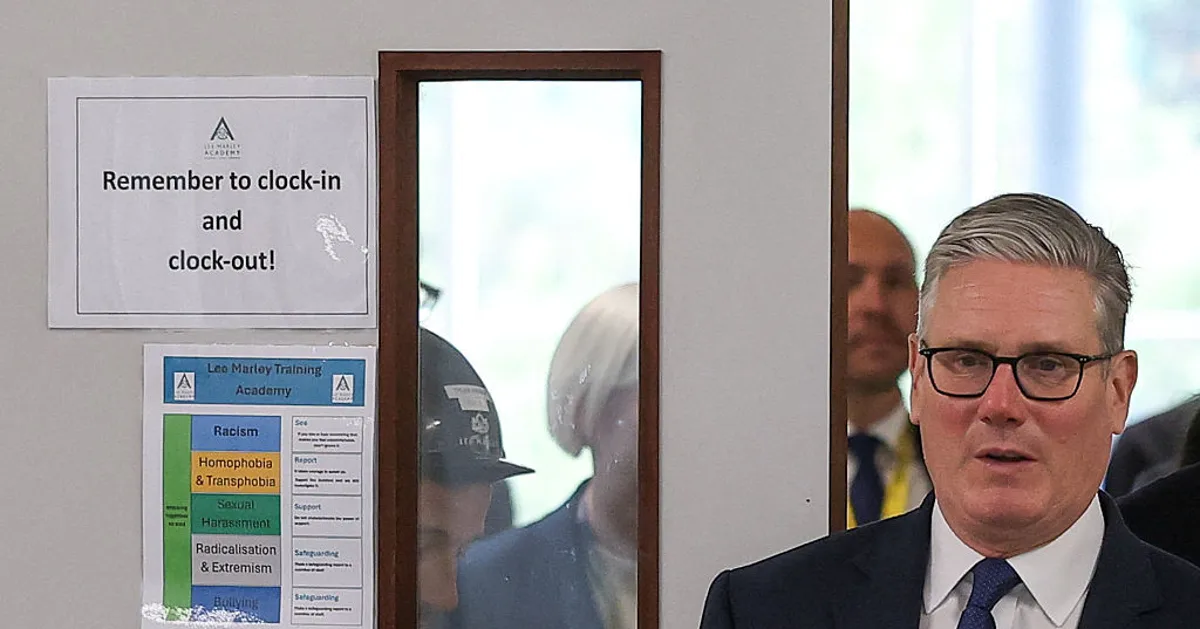
Keir Starmer is tonight locked in a Mexican stand-off with his Labour leadership rivals after refusing to quit despite four ministers so far resigning in a bid to force him out.
The prime minister told his cabinet to “get on with governing” rather than plotting his downfall.
“The past 48 hours have been destabilising for government and that has a real economic cost for our country and for families,” Starmer told them at the weekly cabinet meeting
“The Labour Party has a process for challenging a leader and that has not been triggered.”
Starmer made his remarks and then said there would be no discussion of the leadership issue or the fallout from last week’s elections, when Labour were humiliated in England, Scotland and Wales.
Dozens of Labour MPs have now called on the PM to set out a timetable for his departure.
Junior ministers Jess Phillips, Miatta Fahnbulleh, Alex Davies-Jones and Zubir Ahmed also resigned after deciding they could no longer serve in Starmer’s government.
However, cabinet loyalists Steve Reed, Pat McFadden, Liz Kendal and Peter Kyle put on a dramatic display of support for the prime minister.
Leaving 10 Downing Street after this morning’s cabinet meeting, they took the unusual step of addressing the waiting media to say they were backing the PM.
Meanwhile, leadership hopefuls Wes Streeting and Andy Burnham remained tight-lipped as they weighed up their options.
It is understood Streeting, the health secretary, tried to speak to Starmer after the cabinet meeting but was rebuffed.
A government source said: “Keir said in cabinet that he won’t discuss the elections or his leadership, and that he will only speak to cabinet ministers about that individually. Then after the meeting he refused to see cabinet ministers individually.”
Burnham, the mayor of Greater Manchester, travelled to London but it is still unclear if he has identified a seat to stand in to give him the chance of becoming an MP again.
Despite speculation that a Labour MP in a safe seat has agreed to stand down for him, no announcement is thought to be imminent.
Amid all the turmoil, tomorrow’s King’s Speech will set out the Starmer government’s plans for the parliamentary year ahead.
But it remains highly unlikely that he will be prime minister long enough to deliver it.
Subscribe to Commons People, the podcast that makes politics easy. Every week, Kevin Schofield and Kate Nicholson unpack the week’s biggest stories to keep you informed. Join us for straightforward analysis of what’s going on at Westminster.

‘It’s nice isn’t it. The quiet.’
These were the words tweeted by political writer Andrew Scott – aka Otto English – shortly after Keir Starmer’s election as UK prime minister in 2024. In the centrist imagination, Labour’s return to power represented a long-awaited return to ‘normalcy’ after 14 years of chaos at the hands of Brexiteers and Conservatives. Like hobbits being delivered from the fires of Mordor, the people of Britain were finally back in the Shire.
Scott’s statement sounds utterly preposterous now, as Starmer’s premiership disintegrates in the wake of last week’s disastrous local elections. So far, three of his ministers have resigned. At the time of writing, 89 MPs have called on him to step down.
In fact, those now widely mocked remarks went out of date barely a few months after Starmer came to power. Such talk of ‘quiet’ seemed risible when three little girls were murdered in Southport, sparking riots across the UK. Indeed, summer 2024 shaped up to be the biggest wave of unrest the nation had experienced in more than a decade. What followed was a series of unprecedented crackdowns on civil liberties and on free speech.
Public anger has repeatedly boiled over during Starmer’s tenure, as the PM has sought to gaslight the nation over everything from the rape gangs to the never-ending outrages linked to illegal immigration. If the 2024 election had in fact ushered in a period of peace and quiet, this was certainly over well before the rest of us could take stock.
Scott, of course, was not the only member of the media class to wildly overestimate Keir Starmer. Labour’s victory prompted a nauseating stream of gushing from the media establishment. The arrival of this mediocre, personality-free PM was treated as akin to the second coming of Christ.
‘After years of personality-driven and chaotic, shallow politics coverage across much of the media’, intoned Channel 4 News presenter Krishnan Guru-Murthy, ‘we now have a government with [a] massive majority, widespread internal agreement and no likelihood of massive instability anytime soon’. Appearing on Question Time on the day after the General Election, ex-BBC man Andrew Marr insisted: ‘For the first time in many of our lives, Britain actually looks like a little haven of peace and stability.’
‘This is how serious government behaves’, sighed i paper columnist Ian Dunt, one day after Starmer took office, adding that:
‘Know-nothings have been replaced by people with expertise. Ignorance has been replaced by specialism. Incomprehension has been replaced by deep domain knowledge.’
Such statements seem more than a little jarring in light of recent events, as Starmer – the most unpopular prime minister in UK history, no less – is defending his premiership with the passion of a wet flannel. Whatever his ‘expertise’, ‘specialism’ or ‘domain’ knowledge may have been, none of it seems to have helped him in the job.
Boldest among Starmer’s early cheerleaders was surely The Times’ Caitlin Moran, who reported gleefully that the PM’s ‘competency’ had ‘turbocharged [her] arousal levels’. ‘All my friends were watching these arrivals as if we were watching Magic Mike Live’, she wrote of Starmer’s first Cabinet appointments. ‘We were rubbing our thighs.’ Each to their own, I suppose. Many of us will be similarly tingly about seeing the back of the man.
There is a reason why Brits have grown increasingly weary of mainstream journalism in recent years, especially since Brexit. Contrasting the premature Starmer-gasm of the liberal establishment to the howls of anguish that followed the 2016 Leave vote should go some way to explaining things. For centrist media types, Starmer represented a win for the sensible, the moral-minded, the people who ‘know better’. As such, any journalistic duty to scrutinise his policies or his capabilities went out of the window. Instead, we got smug hand-rubbing at the prospect of sticking it to the thicko Brexiteers.
Let’s hope the media aren’t as quick to pull out the pom-poms for whichever lacklustre Labour apparatchik next ends up in Downing Street. But I wouldn’t hold my breath.
Georgina Mumford is a content producer at spiked.

So this is how technocracy ends – not with a bang but with the whimpering of one of its chief proponents as he hunkers down, hiding from the judgement of the people. This is the vision we now have of Keir Starmer: alone, reviled, skulking in his bunker at Downing Street. He’s a dead man blathering, talking about staying the course even though the people and much of his party would rather he didn’t. He’s ‘resolute’, say his dwindling band of apologists, but to the rest of us it just looks like pathological vanity.
These are extraordinary events. Following last week’s local and devolved elections – in which Labour lost vast swathes of territory to Reform UK and others – the heat has been on Sir Keir. As if it wasn’t humiliating enough to lose council seats across England, and control of the Senedd in Wales, and four seats in the Scottish parliament, polls now suggest 70 per cent of Brits view Starmer ‘unfavourably’. Things feel so parlous for Labour that you find yourself wondering who the hell the 30 per cent are – what have they smoked?
Knives are being sharpened. Scores of Labour MPs have called on Starmer to set out a timetable for his vacation of Downing Street. Party aides have resigned. In a highly rare act with at least a faint whiff of political principle, Jess Phillips, Labour’s safeguarding minister, has resigned. Even the home secretary, Shabana Mahmood, thinks Sir Keir needs to set out a plan for slinging his hook. Yet in his echo chamber of one, cloth-eared to criticism, he clings on.
The reason being given by his half-hearted backers is that the last thing Britain needs is the ‘chaos’ of a Labour leadership election and the ‘disorder’ of a potential General Election. So he’s only being stubborn to save us from yet more mayhem. There’s a deep streak of anti-democracy in this cosplaying as a modern-day Louis XV, staying put to stave off the ‘deluge’ that would inevitably follow his departure. Picking a new party leader is not chaos. An early General Election is not bedlam. It’s democracy. If Starmer’s only justification for staying is that the devil you know is better than a democratic process you can’t predict, then he really does need to bugger off.
He is now the physical embodiment of the technocratic philosophy, which is to insulate politics from the grubby reach of the masses. His bunker mentality is managerialism repeated as farce. The only thing that might save his skin is the moral cowardice of the knackered party he leads. Limp as it is, the pro-Starmer wing of Labour is an inglorious exercise in arse-covering – these MPs know working-class voters are biting at the bit to replace them with someone from Reform. They rally around a deeply unpopular PM to avoid facing the demos. They prefer the safety of stasis to the horror of public decision-making.
One doesn’t know whether to laugh or cry reading about the apparent showdown at the Cabinet meeting this morning. Henry Zeffman at the BBC says Starmer’s message to his ministers was essentially ‘Come and have a go if you think you’re hard enough’. But it was ‘directed at one person’ in particular, says Zeffman – Wes Streeting, the health secretary, who’s said to be behind much of the anti-Starmer plotting. Can you think of anything lamer than a clash for the throne between the tweedle dee and tweedle dum of technocracy?
What an ignominious end to the historic English taste for intrigue. The country that gave the world regicides and revolutions and factional spats of real depth now gives it Starmer vs Streeting. A contest between the two wettest men in British politics, almost as if Starmer had gone back in time to scrap with his younger, plumper self. It’s Shakespearean skullduggery but completely bereft of character, poetry or substance. It’s proof that Labour’s problems extend far beyond Sir Keir. This is a party without vision, without shame, and without serious contenders. Putting a ‘fresh’ face in Downing Street would be the political equivalent of buffing a turd.
Some are now saying they feel sorry for Starmer. He’s getting too much flak, back off, say media saps. Nah, you’re all right. I think I’ll save my concern for the pensioners he forced to choose between heating and eating, and the victims of the rape gangs whose gruelling ordeal he called a ‘far-right bandwagon’, and the young women abused by illegal arrivals that he did nothing to stop, and the Jewish communities who’ve been beleagured by hate on his watch. Just go, Sir Keir – feel sorry for yourself on your own dime.
Brendan O’Neill is spiked’s chief political writer and host of the spiked podcast, The Brendan O’Neill Show. Subscribe to the podcast here. His latest book – After the Pogrom: 7 October, Israel and the Crisis of Civilisation – is available to order on Amazon UK and Amazon US now. And find Brendan on Instagram: @burntoakboy.


The European Union (EU) has agreed to impose sanctions on illegal Israeli settlers in the occupied West Bank.
This comes after Hungary’s new government lifted the country’s veto, which Viktor Orban, the former Prime Minister, had imposed.
According to the Peace Now settlement watchdog, the organisations the EU will sanction are: Amana, HaShomer Yosh, Regavim, and Nachala. Alongside these organisations, the EU is also sanctioning three settlers who lead these groups – Avichai Suissa, Meir Deutsch, and Daniela Weiss.
Weiss is already sanctioned by the UK and is known as the “godmother” of the settler movement.
The US sanctioned Suissa in 2024; however, Donald Trump removed them from the sanctions list.
All four organisations, and their respective leaders, are collectively responsible for the dispossession, expulsion and murder of Palestinians. Additionally, the organisations work to promote ‘settlements’ in both the West Bank and in Gaza, organising groups and openly boasting about the establishment of new illegal outposts.
West Bank settlers
As expected, Gideon Saar, Israel’s Foreign Minister, slammed the decision.
He would, though, given that he previously lived in both ‘Mitzpe Ramon’ and ‘Sde Boker’, both of which are illegal Israeli settlements in the Negev desert in Occupied Palestine.
Similarly, Ben-Gvir, a seasoned war criminal, claimed the EU was “antisemitic”. Again, he himself is an illegal settler-terrorist. He lives in the occupied West Bank and is known for his extremist views and actions. He has numerous criminal convictions, including eight for offences related to racism, and has promoted racist ideologies against Arabs. Ben Gvir is also arming settlers and calling for the execution of Palestinian prisoners.
In Israel, the rot starts at the top.
An illegal terrorist state
Since Israel launched its genocide on Gaza, illegal settlers have murdered more than 1,000 people in the West Bank.
However, occupation and stealing Palestinian land are a core part of Israeli government policy.
In December 2022, in a post on X, Benjamin Netanyahu stated:
These are the basic lines of the national government under my leadership:
The Jewish people has an exclusive and indisputable right to all spaces of the Land of Israel. The government will promote and develop settlement in all parts of the Land of Israel—in the Galilee, in the Negev, in the Golan, in Judea and Samaria.
There are currently more than 737,000 illegal Israeli settlers living in the West Bank and East Jerusalem. They have the full backing of the state – both ideologically and materially. They are armed by the government and protected by the IOF and the Israeli police.
As the Canary previously reported:
These settlers only aim is to force Palestinians off their land, so their colonial settlements can be built there instead, and they do this by storming villages and terrorising residents, burning homes, killing livestock, and destroying crops and trees.
Currently, Israel is perpetrating its biggest expansion of Jewish settlements in decades across the West Bank and East Jerusalem.
Settlements are illegal under international law.
Article 49 of the Geneva Convention states:
The Occupying Power shall not deport or transfer parts of its own civilian population into the territory it occupies.
Additionally, the Hague Regulations (1907) prohibit the seizure and destruction of private property. This means that both the building and the expansion of settlements breach international humanitarian law.
Increasing violence
From settlers expelling an entire Palestinian village, to murdering a farmer, harassing Palestinian shepherds, and stopping children from playing football, there is a clear conscious effort among Israeli settlers to cause physical, emotional, and mental suffering to Palestinians.
The systematic attempts to expel Palestinians from their native land are colonialism with a ‘do not touch, antisemitic’ label plastered to them.
Even the former head of Mossad has compared settler violence to the Holocaust, and who are we to argue with such a man?
Featured image via Al Jazeera English/YouTube
By HG

Ian Wright is to be the focus of a new biopic executive produced by Stormzy.
On Tuesday afternoon, it was announced that a film chronicling the football legend’s journey from a South London housing estate to becoming one of British sport’s most recognisable faces was in the works, produced by Stormzy’s #Merky Films production company.
The currently-untitled movie has been written by Tom Wilton, who is also attached to direct.
Ian enthused: “Telling my story in full for the first time feels surreal and, in some ways, a long time coming. There are parts of my life that will be familiar because they’ve been talked about over the years, but this film is the first time we’re bringing it all together.
“Retelling my story to Tom has also made me realise how much Britain has changed from my parents arriving here on the Windrush, what that meant for me and my brothers, and the experiences that will never leave me. I hope it shows how complicated life can be for a young person and the influence people around you can have – good and bad.”
He added: “My story is one that truly shows how the company you keep can break you down and build you up. There are hard-hitting moments but in the end I want it to give people hope and joy.”
An official press release for the project teased: “Ian’s journey begins on the Honor Oak Estate in Brockley, south London, where football is the young boy’s only escape from his tough home life.
“Schoolteacher Sydney Pigden recognises Ian’s struggles and dares him to believe in who he could be. Despite this spark of hope, by his teens, Ian’s dreams of becoming a footballer are falling apart as rejection, oppression and his own internal rage take their toll.
“By the time he is in his early twenties, Ian’s hope has faded, not least because he strives to be the parent he never had. But with his raw talent finally causing a stir, Ian faces a life-altering choice – risk the only security he has ever known, or take one last shot at the big time.”
Stormzy said of the project: “Wrighty’s journey goes far beyond football – it’s about resilience, family and believing in yourself against the odds.
“He’s inspired generations on and off the pitch and we’re so proud to help bring such an important and powerful story to the screen.”
Over the course of his football career, Ian was best known for playing for Arsenal, Crystal Palace and England’s national team.
Since retiring in 2000, he has become a prolific football pundit and TV personality, and was awarded an OBE for services to football and charity in 2023.


The following is a statement from the Peace & Justice Project. It concerns the actions of insurer Allianz relating to pro-Palestine activists.
The Peace & Justice Project condemns Allianz and its abhorrent use of legal intimidation against pro-Palestine activists it alleges targeted the company over its insurance of Israeli weapons manufacturer Elbit Systems in Britain.
Allianz is claiming nearly £300,000 total in a civil suit against two groups of activists it alleges damaged the company through separate Palestine Action protests in Guildford and London in 2024 and 2025.
In December 2025, Allianz had requested a lower sum before tacking on a further £200,000 in symbolic damages which the six activists have branded a “protest licence fee”, raising the total to £289,604 plus legal representative costs.
The increased demand came after activists wrote to Allianz’s lawyers asking them to wait for criminal proceedings to conclude before continuing their civil case.
Renée Eshel, a tutor who is one of the Allianz6, said:
Allianz ordering us to civil courts while our criminal cases are pending indicates they are using intimidatory fear tactics to bully us into submission and to deter future activists from exposing their complicity in war crimes through Israel’s genocide of the Palestinian people.
The defendants cannot afford legal representation in the civil case, where the standard of proof required is lower than in criminal proceedings. The Allianz6’s lives would be torn apart if forced to pay the enormous symbolic damages, with the money taken from savings and future salaries – potentially causing lifelong financial distress, despite Allianz reporting a 2025 operating profit of £15.2bn.
Featured image via the Canary
By The Canary

Hero off-duty London police volunteer catches knifeman who tried to kill woman and toddler

Tata Power Q4 Results: Profit slips 4% YoY to Rs 996 cr, revenue falls 13%

Senate confirms Kevin Warsh to Fed board ahead of expected Chair vote

Manchester United reach agreement with Casemiro over contract clause amid transfer speculation

US brings back mandatory military draft registration

Steven Gerrard disagrees with Gary Neville over ‘shock’ Chelsea and Arsenal claim | Football

Jahvillani – MONEY-POWER-RESPECT | Official Music Video

XRP Ripple Believe IT or NOT, XRP USE CASE ONLY FLARE Delivers, SBI LEADS with XRP CANTON SOLANA ETH

$30,000 XRP BUYBACK WON’T HAPPEN! – DTCC IS JUST ONE XRP SWITCH – BRAD SAYS IT ALL CONNECTS TO XRP!
-
 Crypto World4 days ago
HarrisX Poll Found 52% of Registered Voters Support the CLARITY Act
-

 Fashion4 days ago
Weekend Open Thread: Marianne Dress
-

 Crypto World5 days ago
Upbit adds B3 Korean won pair as Base token gains Korea access
-
 NewsBeat5 days ago
NCP car park operator enters administration putting 340 UK sites at risk of closure
-

 Fashion1 day ago
Coffee Break: Travel Steam Iron
-

 Fashion2 days ago
What to Know Before Buying a Curling Wand or Curling Iron
-

 Tech2 days ago
Auto Enthusiast Carves Functional Two-Stroke Engine from Solid Metal
-

 Politics19 hours ago
What to expect when you’re expecting a budget
-

 Politics3 days ago
Politics Home Article | Starmer Enters The Danger Zone
-
 Business3 days ago
Ignore market noise, India’s long-term story intact, say D-Street bulls Ramesh Damani and Sunil Singhania
-

 Tech1 day ago
GM Agrees To Pay $12.75 Million To Settle California Lawsuit Over Misuse Of Customers’ Driving Data
-

 Crypto World6 days ago
BlackRock CEO Larry Fink Discusses a New Asset Class
-

 Entertainment6 days ago
Sarah Paulson Called Out For Met Gala ‘Hypocrisy’
-

 Entertainment5 days ago
General Hospital: Ric & Ava Bombshell – Ric’s Massive Secret Exposed!
-
 Sports6 days ago
NBA playoff winners and losers: Austin Reaves is not loving Lakers vs. Thunder matchup, but Chet Holmgren is
-

 Entertainment6 days ago
Bold and Beautiful Early Spoilers May 11-15: Steffy Revolted & Liam Overjoyed!
-

 Politics5 days ago
Simon Cowell Says He Was ‘Horrible’ To Susan Boyle During BGT Audition
-

 Crypto World6 days ago
Robinhood says Wall Street is building onchain
-

 Sports5 days ago
UEFA Champions League final schedule, teams, venue, live time and streaming | Football News
-

 Tech7 days ago
Apple and Samsung are dominating smartphone sales so thoroughly that only one other company makes the top 10
You must be logged in to post a comment Login