

Politics
The House | Rishi Sunak On AI: I Wish I’d Spoken To The Country More About The Change Coming

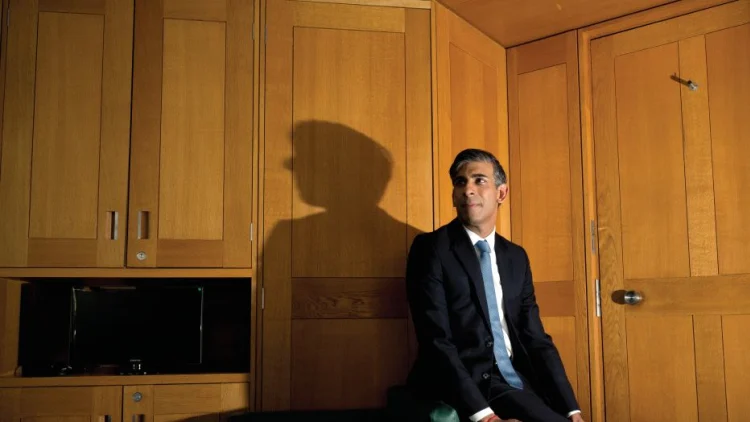
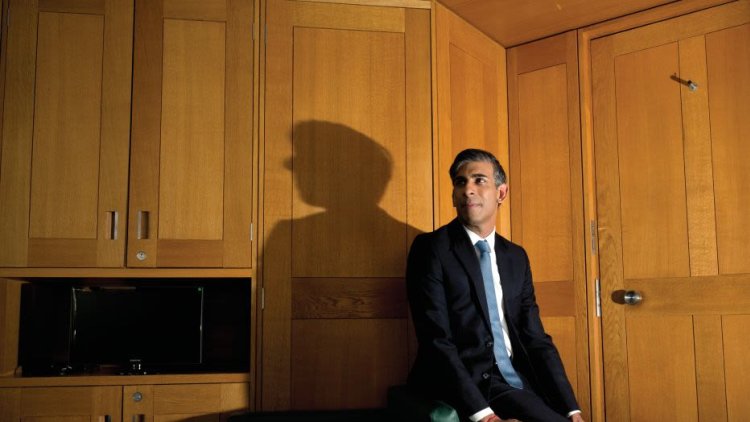
Photography by David Sandison

10 min read
Britain is well-positioned to benefit from the AI revolution, but its workforce may be more exposed than many others. Rishi Sunak tells Francis Elliott how he wishes he had done more to help voters prepare for what is about to come
Rishi Sunak has more time on his hands these days. Not just because he is out of No 10 but also because he is recuperating from a skiing accident caused by ‘showing off’ to his daughters.
In between the pain relief (“a lot of tramadol”) and the physiotherapy, the former prime minister has been building his own AI tool. In will go 20 episodes of his favourite podcasts and post-broadcast social media commentary on them, out will come a short precis that keeps the Richmond MP bang up to date on the issue about which he most cares.
He’s understandably quite chuffed with his new tool, having learned how to build it from a series of free online courses designed to improve AI skills.
“I’m about to turn [this] into something where, instead of having hundreds of pages of transcript, I would just get the three-, four-page, weapons-grade stuff that I need done, completely automatically, every single week.”
This may be peak geek chic, but it is also Sunak practising what he preaches: if you don’t want AI to consume you, you better start consuming AI. The 46-year-old may not have had a mandate or much of a majority as prime minister but, in starting to prepare the UK for the AI revolution, he has emerged with something of a legacy.
Advisory jobs at Anthropic and Microsoft keep him on the frontline of the policy implications of what tech leaders and politicians delicately call “the challenges of the transition” but the rest of us fear is massive, potentially destructive disruption.
Until relatively recently, the consensus had held that AI, like every other so-called general-purpose technology, would in short order create more jobs than it automated. Just as in the 17th century, nobody could conceive of the job as an electrician, so we today cannot comprehend the jobs AI will create.
But Sunak is one of those, like Anthropic boss Dario Amodei, who is – in terms of labour market disruption – starting to shift to a rather less rosy position: that this time it might be different.
“It’s both the breadth and the pace. If you compare in the past, and a nice way to measure it is, how long did it take a technology to get to, say, 100 million users? For electricity, it took about 70 years. Telephone, 50 years. PC, 15. Internet, seven years.
“It took ChatGPT two months. That gives you a sense of how quickly this is [taking place]. Why does that matter? Because history would tell you, these things over time have always worked out, and that new jobs have been created.
“Now, where that might break down is if the disruption is happening so quickly before you get all the new jobs being created. If it just happens so fast, you will get more concentration of job losses first before the new jobs come along.
“The second [factor] is because it is so broad. In the past… general-purpose technologies… would displace employment from a particular area, but there were multiple other opportunities that that person would be able to find work in, that were not disrupted by the same technology.”
He says “this time it’s different” are among the most dangerous words in the English language, but it’s not an implausible outcome. “And certainly not so implausible that a leader should just assume the best.”
Which takes us to Keir Starmer. Sunak gives the Starmer government credit for taking forward the agenda. He recently appeared with David Lammy selling Britain to an audience of AI leaders gathered in Delhi and has met with both Peter Kyle and his successor as tech secretary, Liz Kendall. He says they are broadly doing the right things.
But he clearly thinks Starmer hasn’t the bandwidth or the capacity to make preparing the country for what is to come an absolute priority, and admits he wished he had done more while he was in No 10.
“I wish I had done more on it, and that I’d spoken to the country more about the change that is coming and what it means for us, and how we can make sure it works for the country, how it works for families, how it works for our public services, how it’s going to be good. But also to give people the reassurance that they need, because there’s a lot of anxiety out there about what it means to them.
“You can only have, as prime minister, a handful of personal priorities that you are going to drive through the system that emanate from your office in Downing Street, that the entire system and the entire country knows are your priorities. That is the only real way to change something of this magnitude. This [issue of AI] is, and should be, for the country’s sake, one of those three things.”
Starmer is possessed of a rather different priority at the moment, as Sunak acknowledges.
“The problem with all the drama that we’ve seen in the last week, when these things happen, governments stop governing, essentially, and they start focusing on survival.”
Domestic squalls will pass; the question of how the UK copes with geopolitical and technological dislocations will sustain.
“If you look at the two things that have just changed, we as a country need to make sure that we are prepared for them. It’s a geopolitical environment that has changed, and the fact that we’re on the cusp of this enormous, significant technological revolution, are the two most dominant structural forces out there.”
Does Sunak agree with Nick Clegg, another who found a berth on the US west coast after government, that talk of UK AI sovereignty is “dishonest”? In as far as sovereignty means the UK being entirely independent, Sunak agrees that this is a fiction.
The US and China will continue to exert huge leverage over other nations because of their dominance over the emerging technology. But Sunak says the UK has cards to play and that it needs only to make itself “indispensable” in part of the supply chain to protect itself.
As a Conservative, Sunak is suspicious of the ‘picking winners’ element of the government’s new AI Sovereign fund, but sees the value in putting resources – not just cash but computing power – behind potential capabilities that might, in time, serve as vital national assets.
New hardware innovations – chip-making – are among the start-ups that have been given taxpayers’ cash. Other assets include the AI Safety Institute which seems well-positioned to serve as the world’s premier kitemarking service for Big Tech to show consumers their products won’t do serious damage. (Anthropic recently submitted its new Mythos tool to the ASI for evaluation.)
I wish I had done more on it, and that I’d spoken to the country more about the change that is coming
UK biotech and access to NHS data also mean the country is well-placed to make the most of a coming explosion of new drugs and treatments powered by AI.
These are, Sunak agrees, “reasons to be cheerful”. Even better, he says, is another lesson from the other times the world has been transformed by new technology.
“History tells you that you don’t need to be the place that invents the technology to be the place that benefits the most from it,” starts an enthusiastic Sunak. “I geek out about this all the time.
“The printing press is my favourite example. That’s invented in Germany, in Mainz, the Dutch were the ones that run away with it. But you look at why it’s fascinating, it’s because of a couple of reasons.
“One is they didn’t have censorship laws. So, obviously, if you’re a printing business, you’ve got to have these very stifling laws in Germany, what you could and couldn’t say in print. They didn’t have that in the Netherlands – free for all.
“The second thing is, they didn’t have guilds like the Germans. These old-school trade union closed shop decided [who could and could not operate a press]. And then the third thing is, because there were more advanced financial markets in Amsterdam, the companies could hedge paper costs, right? Which really matter, because they were volatile.
“So, that’s why the Dutch became [the world’s] publisher, right? So, you don’t need to be Beijing, you don’t need to be Silicon Valley. This technology exists. It’s out there. We should be trying to win the race for what I call everyday AI.”
It’s a full-fat free market interpretation from a man who is, after all, paid to keep the regulators at bay. But he is not as aggressive as some Tories on the threat to AI from any EU reset, noting that the Commission itself is trying to unwind some of its early attempts to bring US tech giants to heel and that Starmer has largely followed his own hands-off approach.
Nor is he particularly exercised about the relatively high energy costs making Britain a less attractive place to build data centres – a huge number of which will be needed to power the AI revolution. He does, however, say the government ought not to be “ideological” about letting data centres source their energy from fossil fuel sources.
He sees both sides of the debate about whether to ban under-16s from social media, noting the design challenges of that policy but also its utility in making it easier for parents to set rules.
When these things happen, governments stop governing essentially and they start focusing on survival
Despite the noise around social media, so far the so-called ‘techlash’ in the UK has been muted compared to that which is starting to shape US politics. There is no high-profile equivalent of Bernie Sanders, the Democrat senator leading the campaign against data centres, or Steve Bannon attacking AI from the populist right.
But the fact is that the UK’s economy is dominated by just those sectors that appear to be most vulnerable to labour market disruption.
That AI models can already reliably replicate many, if not most, of the tasks carried out by many so-called knowledge workers has huge potential implications for this country. The upside is an economy that receives an outsize productivity boost – the downside is a white-collar bloodbath so bad it potentially shatters the social contract.
Some AI insiders apparently have started to become profoundly worried about the societal implications of a technology that could turbocharge existing inequalities, concentrating ever more wealth in the hands of a tiny number, while also creating a “permanent underclass”.
Sunak wants political leaders in the West to move fast to reassure voters that they will be helped through the transition. The UK particularly cannot afford to miss out on a change that could at last lift it out of its decline.
There is still plenty of time to ensure that AI augments and does not just automate. Governments can rebalance the tax system to favour labour, he says. Workers, meanwhile, have time to learn the AI skills that will make them more attractive to employers.
“The biggest risk in all of this is if you just put your head in the sand and try to ignore it. The bigger risk is we will get left behind and become less competitive and efficient than other countries,” Sunak warns.
“We happen to have more knowledge workers [than] other countries. I think the bigger risk is we don’t embrace this wholeheartedly and as quickly as others…
“There is currently, in the West, a trust deficit when it comes to AI, for sure. In contrast to places like India, China, the Gulf, Singapore, where positivity and trust around AI is very high, in Western countries here – the US in particular – it’s very low.
“And we do need to change that because if that persists, all these wonderful benefits I think this technology can provide will never get realised because it will either be regulated or banned or just not adopted.
“We have to create an environment where people feel more positive about the technology in order for us as a society to actually get the benefits.”


The UK government has released more emails from Peter Mandelson when he was ambassador to the US. Among them are two that show Mandelson was trying to create closer links between the UK government and the dubious US tech company, Palantir.
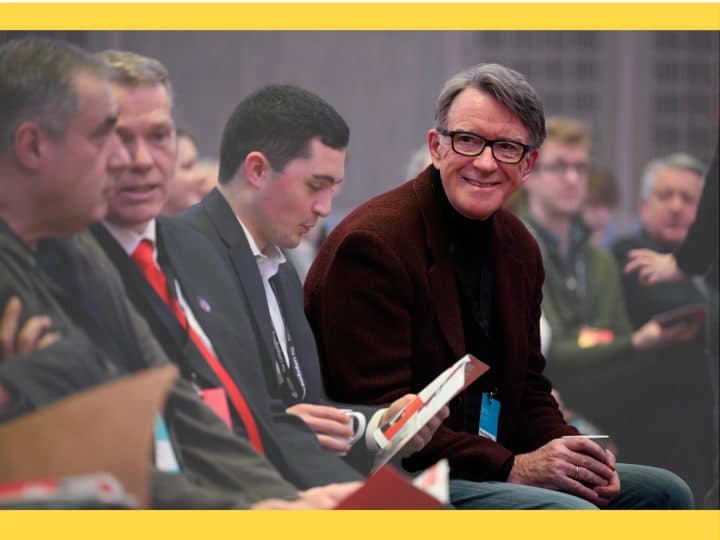
And seems Mandelson attended this event with Louis Mosley, boss of Palantir UK and his client at Global Counsel. Noteworthy as we were told that mitigations on Mandelson’s appointment included no one-on-one meetings with former clients. pic.twitter.com/q5G722DKDk
— Ethan Shone (@EJShone93) June 1, 2026
Mandelson…
Palantir is a defence contractor that’s involved in many ongoing atrocities around the world.
Its ongoing contracts includes mass surveillance, Israel’s genocide in Gaza, and Trump’s Immigration and Customs Enforcement (ICE) activities. Oh, and for some reason it’s also involved in the NHS, a service that’s designed to save people’s lives not to spy on/ murder them.
Palantir’s involvement in the NHS has attracted significant controversy, which is why MPs debated our partnership with the US tech abomination in April.
In 2023, Palantir walked away with a seven-year NHS contract without competition, Yanar Alkayat wrote for the Canary.
(The same kind of mates’ rates for the £240 million Ministry of Defence deal). Data handling, trust and transparency are the major concerns.
MPs speaking out included Iqbal Mohamed, who said:
If it looks evil, if it smells evil and if it behaves evil, then it is evil.
The UK government’s unseemly and secretive ties with Palantir don’t end with the newly unearthed emails. Starmer had off-the-books meetings with the murderous tech company earlier this year.
There is no public record of the Palantir briefing attended by Keir Starmer and Peter Mandelson in February 2025 despite the Ministerial Code requiring Starmer to publish details of meetings with external organisations
No 10 says the event was not a meeting and did not require… — Politics UK (@PolitlcsUK) April 25, 2026
Green Party leader, Zack Polanski, highlighted the following in response to the revelations:
'He was not allowed unsupervised access to former clients’
Is that why Keir Starmer had to accompany Mandelson to their secret meeting with Palantir? https://t.co/okv96wnhDk
— Zack Polanski (@ZackPolanski) April 18, 2026
This is the problem with the revolving door between politics and corporations. No matter how many rules and regulations you introduce, these crooked operators simply contort themselves around them.
Follow the money
Speaking to the Canary, independent MP, Jeremy Corbyn, said the following about the influence of money and corporations on the UK:
The Donaldson debate today in Parliament is going to be interesting and I’ll certainly be there giving my views on his behaviour and the way in which wealth, power, money connections end up influencing decisively Labour and British politics. But the real issue is actually much wider and much deeper.
There needs to be an independent public inquiry into the influence of money, of connections, of how decisions are made and what influence they have on parties and on government. Parliament is in no position to undertake that inquiry because MPs are so involved in it all, with money being donated to campaigns, to running MPs’ offices, to supporting putative ministers and later on ministers themselves.
So we need a big clean-up on politics. That means getting the money out of it — getting the involvement out of it.
Palantir is an example of this. Palantir was introduced into the system by Mandelson and others, now deeply lodged into the civil service systems and now claiming that they are the saviors of our National Health Service. Sorry, no.
We need publicly owned, publicly run and publicly accountable data systems within our National Health Service, not owned by an American-based company called Palantir.
View this post on Instagram
The latest Mandelson emails are interesting, but they don’t tell us much we didn’t already know about Mandelson. And importantly, they don’t tell us anything Starmer didn’t know about Mandelson when he hired him as ambassador to the US.
Featured image via Leon Neal/ Getty Images
By Willem Moore


New polling of Labour Party members shows they overwhelmingly oppose the UK selling arms to Israel. They also want an end to trade with Israel’s illegal settlements.
Over 60% are dissatisfied with the UK government’s response to Israel’s atrocities in the Occupied Palestinian Territories and want it to take stronger action.
This includes an 87% majority backing a ban on trade with illegal settlements, and a 78% majority backing the suspension of all UK arms exports to Israel. The poll also found over two-thirds support suspending the UK-Israel Trade and Partnership Agreement.
The polling, commissioned by Save the Children UK, Christian Aid, and Medical Aid for Palestinians as part of the Ally to Atrocities campaign, found that:
- 87% of Labour Party members support banning trade with illegal Israeli settlements, with 6% opposed.
- 78% support suspending all UK arms exports to Israel, including components for F-35 fighter jets, compared to 14% opposed.
- 68% support suspending the UK-Israel Trade and Partnership agreement, while 16% oppose.
- 62% are dissatisfied with the UK government’s current approach to the occupied Palestinian territory, compared to 19% satisfied.
- 58% say the UK government’s approach is important in their decision about who should lead the Labour Party.
Arms to Israel can’t carry on
The data comes amid continued attacks on Gaza despite the so-called “ceasefire” agreement. Israeli forces have killed 930 Palestinians since 10 October 2025, according to the Ministry of Health in Gaza, while humanitarian access remains heavily restricted.
Gaza’s healthcare system has been pushed beyond breaking point. Hospitals are facing severe shortages of medicines, equipment, and fuel while medical needs continue to soar.
With no hospital fully functioning in Gaza and aid still only trickling into Gaza, children continue to face alarming levels of malnutrition and disease. This is in spite of the humanitarian obligations in the ceasefire agreement.
In the illegally occupied West Bank, Israeli authorities are advancing the long-standing E1 settlement plan. It links a major settlement bloc to East Jerusalem and risks mass forced displacement.
This has long been a red line for successive UK governments. The foreign office last year called the expansion “a flagrant breach of international law”. However, ministers have so far failed to curb the aggressive expansion of these settlements.
Alison Griffin, head of conflict and humanitarian campaigns at Save the Children UK, said:
While children in Gaza continue to be killed, injured, displaced and denied access to the essentials they need to survive, the UK’s response has fallen far short of what it is morally and legally required to do.
The UK cannot claim to support international law while continuing policies that risk enabling violations of it. Nor can it continue to treat the unlawful occupation and illegal settlements as a diplomatic concern rather than a breach of international law requiring consequences.
Families have endured conditions no child should ever face, while political inaction allows the suffering to continue.
The government must suspend all arms exports to Israel, including F-35 components, ban trade with illegal settlements, suspend the UK-Israel Trade and Partnership Agreement, and ensure accountability for all violations of international law.
Children and families cannot afford further delay. We are beyond statements of concern and weak, inadequate action—this moment demands an end to complicity and urgent, concrete steps.
Rohan Talbot, director of advocacy and campaigns at Medical Aid for Palestinians, said:
While Palestinians in Gaza continue to be killed, starved, displaced and denied lifesaving aid, the UK cannot keep responding with empty words while these atrocities continue with total impunity.
Every day without meaningful action means more lives lost, more children pushed into hunger, and hospitals stretched beyond breaking point.
These findings expose a widening gulf between the reality on the ground and the UK government’s response and should serve as a wake-up call for the government to take immediate action.
The government must stop arms transfers to Israel, including parts for F-35 fighter jets, end trade with illegal settlements, and ensure accountability for violations of international law.
The Ally to Atrocities coalition is calling for urgent action from the UK government in response:
- Suspend all arms transfers to Israel, including parts for F-35 fighter jets.
- Ban trade with illegal Israeli settlements in the West Bank.
- Suspend the UK-Israel Trade and Partnership Agreement.
- Hold all perpetrators accountable for violations of international law.
Featured image via Leon Neal / Getty Images
By The Canary


The operators of a Barcelona spa for lesbians have gone viral after denying entry to two US-Israeli women because of Israel’s genocide in Gaza.
The women then tried — antisemitically — to claim that being Zionist and Jewish are the same thing as they attempt to cast themselves as the victims. One also tried to claim she had been pushed.
The argument didn’t wash and staff continued to politely refuse them admission, with a full refund.
Spa team: ‘We don’t condone genocide here’
View this post on Instagram
Always the victims
Israelis have a track record of feigning being the victim of violence to try to criminalise principled opposition to Israel’s crimes. Like in Nice, France, in March.
And in the US last year.
View this post on Instagram
Featured image via Mario Marco/ Getty Images
By Skwawkbox

In July 2024, Mohammed Fahir Amaaz and Muhammad Amaad were involved in a now infamous violent incident at Manchester Airport, in which they were filmed fighting with several police officers. Last week, after a five-week-long trial and nearly 20 hours of deliberations, a jury failed to reach a verdict on whether the two brothers were guilty of assaulting one of the police officers. This is the second time a jury has failed to do so. Rather than pursue the matter, the Crown Prosecution Service confirmed afterwards that the brothers would not face a third trial. Many are understandably outraged.
It’s worth recalling the airport incident in full. On 23 July 2024, Greater Manchester Police responded to reports that Amaaz had assaulted a member of the public, Abdulkareem Ismaeil, at a Manchester Airport Starbucks. Initial – and crucially partial – footage of the police response was quickly circulated online. It showed an officer, PC Zachary Marsden, kicking Amaaz while he was on the ground. This prompted anger from the activist class, and accusations of racism against the police.
Days later, a CCTV clip showing the whole incident was leaked to the media. It revealed that the two suspects had in fact been throwing punches at a male officer and two of his female colleagues. It became clear that serious violence had also been used by the men against police officers.
At the first trial in July 2025, Amaaz, the younger brother, was convicted of common assault against Ismaeil and two counts of actual bodily harm against female police officers, PC Lydia Ward and PC Ellie Cook. The first jury was unable, however, to reach a verdict on both brothers’ charge of causing actual bodily harm to PC Marsden. And now a second has found it equally as difficult.
Prosecuting counsel Paul Greaney KC said that although the count of actual bodily harm was serious and had attracted major public interest, it could not properly be described as one of ‘extreme gravity’. The brothers’ defence lawyers called the trial an ‘orgy of race hatred’.
The defence counsel’s claim that the trial was ‘an orgy of race hatred’ is outrageous. After all, we can all see what the footage shows. The defendants use serious violence against police officers in an airport. This must have been terrifying for those witnessing the incident. It could even have warranted a more ‘grave’ charge against the men. ‘Violent disorder’, perhaps, which carries a maximum sentence of five years in jail – although this charge requires ‘three or more’ people to be involved. Or maybe ‘affray’, which requires a person to ‘use or threaten unlawful violence towards another, with conduct such as would cause a person of reasonable firmness present at the scene to fear for their personal safety’. This would at least have addressed the fear experienced by members of the public confronted by the men’s actions.
Either way, it is frankly ridiculous to claim that Amaaz and Amaad are victims of prejudice, or ‘race hatred’, as their defence lawyer claimed. The juries in these trials clearly took their jobs extremely seriously, approached their task without fear or favour, heard a large amount of evidence and deliberated for many hours. The law requires a jury to reach a unanimous verdict initially, then a majority decision of at least 10 to two, or lower if jurors have been discharged. The fact that they failed to reach verdicts suggests they were split. The idea that the trial process was in any way racially prejudiced against the men is undermined by the careful decisions taken in each trial.
And what of the decision not to seek a third trial on the Marsden allegation? CPS guidance states that there is a ‘very clear presumption and expectation’ against a third trial after two juries have failed to agree. The leading authority is R v Bell [2010] EWCA Crim 3, in which the Court of Appeal said that a second retrial should be confined to a very small number of cases – namely those involving a crime of extreme gravity, and where the evidence that the defendant committed the crime remains very powerful. The CPS said that this case, serious though it was, did not meet that threshold.
Many among the public will disagree. The alleged assault on PC Marsden followed confirmed assaults against another officer and against a member of the public. This is not murder we are talking about, but it is still, when viewed in context, exceptionally serious. The outcry about the decision not to seek a third trial is therefore understandable, despite the CPS guidance.
The whole case leaves a bad taste in the mouth. It feels like these men have got away with a serious crime. Amaaz will be sentenced on 26 June for the assaults against the two female officers and a member of the public. We will have to see what the judge makes of the severity of his crimes.
Luke Gittos is a spiked columnist and author. His most recent book is Human Rights – Illusory Freedom: Why We Should Repeal the Human Rights Act, which is published by Zero Books. Order it here.
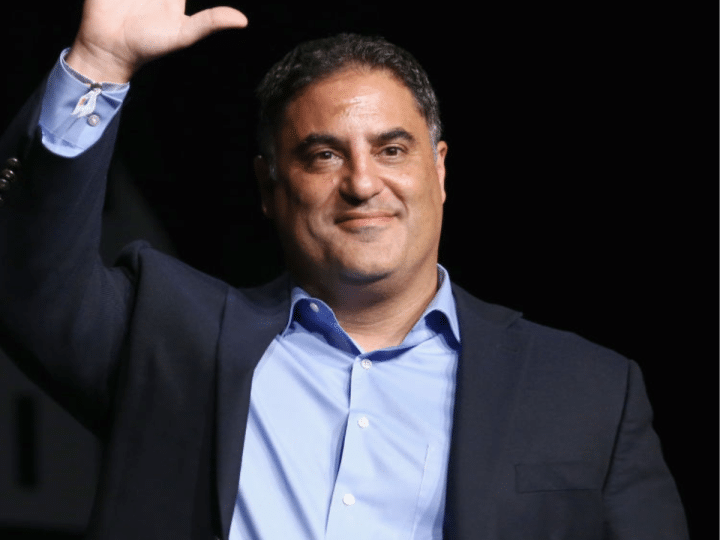

US anti-genocide journalist Cenk Uygur was interviewed on LBC with Shelagh Fogarty this week. The Starmer regime had just cancelled the UK visas of Uygur and fellow commentator Hasan Piker.
Yet Fogarty was determined to ignore the obvious and was seemingly oblivious to how that would backfire. So she told Uygur blithely: “Nobody in this country thinks you can’t criticise Israel”.
Yes, she actually said that out loud.
Fogarty ignores Uygur’s ban for opposing barbarism
Uygur’s response was immediate: “Well I just got banned for it”.
The clip was promptly posted by Green party candidate, Mark Adderley, who knows a thing or two about being attacked and penalised for criticising Israel and its crimes.
View this post on Instagram
Fogarty’s agenda was clear, of course. She was trying to associate properly severe condemnation of Israel with incitement and hate speech against Jews generally, which it plainly is not.
Jews are not Israel, Israel is not all Jews. Suggesting otherwise is antisemitic, but it’s a tactic frequently employed by Israel advocates and apologists. Uygur wasn’t having it and rightly so.
That it comes from Fogarty and LBC is entirely predictable. She has sneered at anti-genocide protesters as juveniles who need to “grow up” and swore at a caller who pointed out Israel is committing genocide.
Nevertheless, being predictable doesn’t make it any more acceptable (or less stupid) to tell someone just banned from the UK for criticising Israel that “nobody” in the UK thinks criticism of Israel is penalised.
Featured image via Rich Polk/Getty Images for Politicon
By Skwawkbox


Residents from the Wyndham & Comber, Brandon 2 and Brandon 3 estates in Southwark will formally launch a new campaign at a public event on 3 June. It’s calling for urgent action on unsafe housing conditions.
The Southwark Group of Tenants Organisations and health justice organisation Medact are supporting the campaign. It highlights the serious health impacts of ongoing housing disrepair. This can include:
- Unreliable heating and hot water.
- Damp.
- Mould.
- Leaks.
- Overheating.
- Structural defects.
The launch event will bring together residents, community organisations, local stakeholders and health advocates to share experiences, present residents’ demands, and discuss solutions to long-standing housing problems affecting the estates.
Residents say poor housing conditions are harming both physical and mental health, particularly for older people, children and those with existing health conditions.
A resident representative said:
We are living in homes that are having a real impact on our health every day. No one should have to deal with repeated loss of heating and hot water, or live with damp and mould that makes people ill. This campaign is about making sure our experiences are heard and acted on.
Southwark residents report repeated heating and hot water breakdowns alongside ongoing disrepair in their homes. Many say these conditions have contributed to respiratory problems, stress, sleep disruption and worsening mental health.
Medact, a health justice organisation working with health professionals and communities, is supporting the campaign as part of its work on the social determinants of health. A Medact representative said:
Housing is a fundamental determinant of health. When homes are not safe, dry, and warm, people’s health suffers. This collaboration brings together lived experience and public health expertise to push for meaningful change.
The event will also include a community social for residents and attendees to connect and build support across the local community.
The campaign is led by tenants and residents from the Wyndham & Comber, Brandon 2 and Brandon 3 estates as part of the Wyndham Heat Network Action Group.
The Southwark Group of Tenants Organisations supports tenant and resident groups across the borough.
Medact is a UK-based health justice organisation that campaigns to tackle unsafe housing.
Poor housing conditions, including damp, mould and inadequate heating, are widely linked to poor health outcomes and health inequalities.
Featured image via the Canary
By The Canary
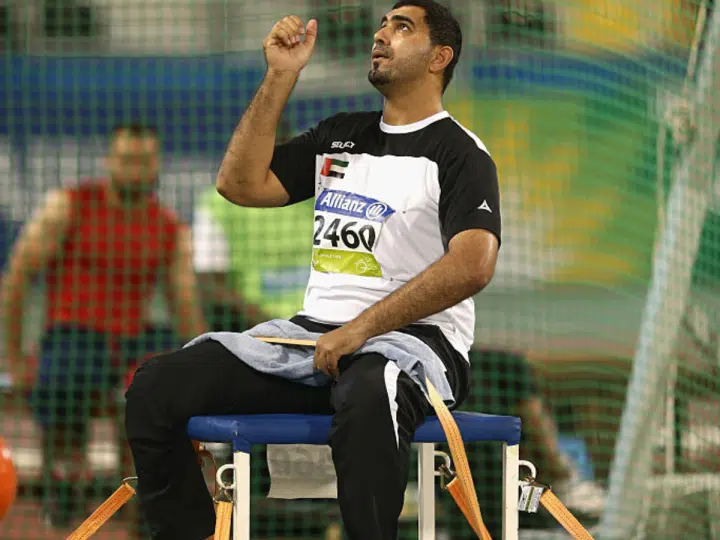

UK Athletics has been fined £350,000 after pleading guilty to corporate manslaughter over the 2017 death of Paralympian Abdullah Hayayei.
Hayayei was killed while training in London ahead of the World Para Athletics Championships.
The case has exposed glaring lapses in event safety and prompted fresh scrutiny of how major sporting bodies manage risk for visiting athletes.
Hayayei, a 36‑year‑old thrower from the United Arab Emirates, had competed at the 2016 Paralympic Games in Rio, and was preparing at the Newham Leisure Centre when a metal throwing cage collapsed on him.
Emergency services pronounced him dead at the scene. The tragedy cut short a promising athletic career and left a community demanding answers about preventable failures.
UK Athletics investigation: What was found?
A joint police and health and safety investigation uncovered a critical defect: the stabilising metal lattice base plates for the discus cage were missing.
That absence left the equipment dangerously unstable. Prosecutors argued the condition of the apparatus amounted to gross negligence in safety management by the organisation responsible for the event.
UK Athletics admitted liability in court, entering a guilty plea to corporate manslaughter in February. The organisation was ordered to pay the fine and an additional £44,000 in court costs.
Separately, the head of sport for the 2017 championships, Keith Davies, pleaded guilty to an offence under the Health and Safety at Work Act and received a community order with 175 hours of unpaid work.
Official response and accountability
The Crown Prosecution Service was blunt in its assessment:
There can be no doubt that UK Athletics were grossly negligent in their safety management, which caused the death of a talented athlete.
Prosecutors said equipment had been left in a “seriously unsafe condition” and that Hayayei’s death was avoidable.
UK Athletics issued a statement expressing deep sorrow and acknowledging failings.
The governing body said it had focused on learning from the incident and strengthening standards and safeguards across the sport. The organisation’s apology stopped short of undoing the harm but signalled a commitment to reform.
Legal and organisational consequences
The fine and criminal conviction mark a significant moment for sports governance in the UK. Corporate manslaughter convictions against sporting bodies are rare and carry reputational as well as financial consequences.
The sentence against Davies underscores that individual managers can also face personal accountability when safety systems fail.
For UK Athletics, the ruling will likely trigger internal reviews, policy overhauls, and tighter oversight of event operations. Insurance costs, supplier contracts, and venue checks are all areas that will come under renewed attention.
The case sets a precedent that event organisers cannot treat safety as a box‑ticking exercise; lapses can lead to criminal liability.
Wider implications for sport and visiting athletes
The death of an international athlete on home soil raises questions about how organisers protect competitors, especially those who travel from abroad and rely on hosts for safe facilities. Visiting athletes often lack local knowledge about venues and depend on organisers to ensure equipment and infrastructure meet standards.
Event hosts must now reckon with the reputational risk of inadequate safety regimes. National federations, local authorities, and venue operators will face pressure to demonstrate robust inspection regimes, clear chains of responsibility, and documented maintenance procedures. The case also highlights the need for transparent reporting and independent checks ahead of major competitions.
The human cost
Beyond legal penalties and policy changes, the human toll remains central. Hayayei’s family and teammates have lost a son, friend, and a competitor.
Financial fines and public statements cannot replace a life. The case is a reminder that safety failures have victims and that accountability must include support for those left behind.
There is also an equality dimension. Smaller federations and athletes from less resourced countries may be disproportionately affected when safety standards slip. Ensuring consistent protections for all competitors, regardless of origin, is a moral as well as legal imperative for international sport.
What should change for UK Athletics?
The ruling points to several practical steps organisers should take to reduce risk:
- Rigorous equipment checks before and during events, with documented sign‑offs
- Clear lines of responsibility so that venue managers, event staff, and governing bodies know who inspects and signs off on safety
- Independent audits for high‑risk apparatus and temporary installations
- Training and accountability for staff and volunteers on safety protocols
- Support mechanisms for athletes and families affected by incidents, including transparent communication and compensation pathways
These measures are not novel, but the Hayayei case shows they must be enforced consistently and treated as non‑negotiable.
The long view for UK Athletics
The fine and convictions close one chapter but open another: a period of reckoning for event safety in athletics. UK Athletics has been punished and publicly shamed, and now the sport faces the task of rebuilding trust.
That will require more than policy changes, it will demand cultural change, investment in safety, and a willingness to accept responsibility when systems fail.
For athletes who travel to compete, the message must be clear: organisers are accountable for their safety. For governing bodies, the lesson is equally stark, negligence has consequences, and the cost of complacency can be a life.
Featured Image via Warren Little/ Getty Images
By Faz Ali


No Man’s Land is a groundbreaking new docu-series from Rosie Turner. It explores what it means to live, love, and survive as a member of the LGBTQ+ community in regions where identity itself can be an act of defiance.
Told through dynamic “postcards” filmed around the world, including Thailand, Finland and Brazil, the series captures queer life in all its colour, complexity and courage.
‘No Man’s Land’ reveals queer resilience
The series follows Turner as she immerses herself in local communities. Each episode explores a country with a complex and evolving relationship with queer rights, from underground love stories and chosen families to activists and allies quietly fighting for change.
No Man’s Land reveals the resilience of queer individuals navigating systems designed to silence them. This series has been researched, produced, directed and shot entirely by a team of queer women.
This isn’t a polished travelogue: it’s raw journalism with a heartbeat, using filmmaking to capture both the unfiltered reality and surprisingly joyful portrait of global queer life.
The first public screening of No Man’s Land will take place at The Arzner, London’s only dedicated LGBTQ+ Cinema. You can watch a trailer on YouTube here.
First Public Screening: Sunday 5 July 2026
Doors open at 3pm | Screening at 4pm
The Arzner Cinema, 10 Bermondsey Square, London SE1 3UN
‘Brazil: The Paradox of Pride’

The Brazil episode explores the contradiction between Brazil’s vibrant queer culture and its ongoing violence and political tension surrounding LGBTQ+ rights.
Set across Rio de Janeiro during Carnaval preparations, Turner investigates how a country celebrated globally for its queer visibility and Pride culture can simultaneously remain one of the most dangerous places in the world for trans people.
The episode explores the intersections of religion, politics, poverty, race and queer identity in modern Brazil.
‘Finland: Allyship in the Arctic Circle’

Set in Rovaniemi on the edge of the Arctic Circle, the Finland episode explores allyship, community-building and queer visibility in one of Europe’s most progressive yet geographically isolated countries for LGBTQ+ rights.
Turner travels through Finnish Lapland meeting LGBTQ+ people and allies working to create safe, visible and connected spaces for queer communities in remote areas where visibility can often feel quieter and harder won.
The episode explores themes including trans healthcare, allyship, community organising and chosen family.
‘Thailand: The Edge of Freedom’

Set against the backdrop of Bangkok’s vibrant queer nightlife and Thailand’s recent legalisation of same-sex marriage, the Thailand episode examines the tension between the country’s progressive global image and the more complex realities experienced by LGBTQ+ people on the ground.
Turner journeys through Bangkok’s queer district, from Silom Soi 4 to The Stranger Bar, gaining intimate backstage access, in dressing rooms and during live performances. Through these spaces, the episode explores queer joy, performance culture and chosen family within the city’s nightlife scene.
Along the way, Turner meets activists, venue owners, educators and organisers who are challenging and reshaping conversations around sexuality, gender and queer visibility in modern Thailand.
The episode also delves into wider issues including sex tourism, censorship, sex education, and the gap between growing visibility and meaningful legal protection for LGBTQ+ communities.
Featured image and other images via No Man’s Land
By The Canary


A laughably tiny group of far-right dickheads failed to spark a civilian uprising in Darlington.
Organisers expected crowds to flock to the town centre after months of aggressive online campaigning. Instead their ridiculous AI-produced flyer, filled with face-painted lions and flags, attracted less than 10 people to the Joseph Pease statue.
Shoppers completely ignored the ignorant display of ‘patriotism’.

Darlington subjected to paper trail of hate
The failed rally follows months of aggressive online campaigning from local far-right figures in Darlington — who are not pleasant people.
The main instigator, David Haji Abbot, has spent months going on massive online tirades. Most of them would be quite funny if they weren’t so racist. Abbot introduces his racist rants while talking about worthy issues like housing, and insults anyone who doesn’t agree.
But he doesn’t just keep it in his echo chamber. To the annoyance of likely everyone in Darlington, Abbot constantly takes his ‘activism’ to the streets.
Abbot has actively financed a flag campaign, which I think he believes is a way of marking his territory.
A handwritten ledger from August 2025 shows he crowdfunded about £157 from 18 contributors. Receipts show he then went on to use the money to buy 30 large St Georges’ flags for £149.70 to shove on public infrastructure.

The unauthorised flag campaign has altered the local landscape and people aren’t happy. This movement has encouraged widespread antisocial behaviour. Crude red crosses have been painted on bollards, causing health and safety nightmares for Darlington Borough Council.
Hitting the legal wall
Eventually, the law quickly caught up with Abbot when he was served a severe legal warning from Darlington Council in January. Posting the letter on his own Facebook, Abbot went on a tirade of racist bullshit again.
The letter from the council revealed that climbing lampposts posed a severe public safety issue, obviously. It also told Abbot how the cost to remove and store flags are placed on local tax payers.
To top it all off, the letter revealed that utility workers were facing threats and intimidation from Abbot’s supporters. Simply for doing their job.
Then Abbot received a call from the police on 6 March for a Community Protection Notice Warning. Once again, Abbot documented this all on his very open Facebook profile.
Authorities ordered this rat to stop his behaviour immediately, especially in regards to his online tirades.
PC Whitfield allegedly noted that Abbot was sanctioned for his online hate-filled content that incited violence and disorder. Honestly, you want to take a look at Abbot’s socials. They are a total cesspit of ranting racism and insults.
The dude has terrorised a local Darlington Facebook group up until today, when he was kicked out for good. His replies were full of racism and ableism, leading to a permanent ban.
Democracy wins in Darlington
Abbot tried to maintain a laughably respectable façade after this. He wrote a formal complaint to Green Party councillor, Matthew Snedker. Abbot does this frequently. Almost feels like he has some kind of schoolboy crush to me given the number of times he contacts Snedker.
That complaint was about minor political fly-posting. Abbot also tried to use the Freedom of Information Act to prove Darlo backed his actions, which backfired massively.
The official data humiliated Abbot when the council revealed it had received 146 complaints demanding the England flags around Darlington to be removed. Only six people wrote to support them. So, 96% of responding residents rejected Abbot’s shitty flag campaign.
Abbot’s agitation also targets vulnerable groups. He regularly uses transphobic rhetoric online and even rocked up to a council meeting wearing a Union Jack suit when councillors debated single-sex spaces.
He looked ridiculous as Darlington Borough Council rejected the policy, dealing another blow for his far-right agenda for the town.
I was there, and after facing aggression from Abbot’s gang in the gallery, it was hilarious to see them so sad when their motion was batted down.

Abbot’s never worn a mask to slip
It was hilarious to see that all Abbot could muster after months of online campaigning was a measly handful of supporters. Wrapped in Temu Union Jacks and plastering the street in juvenile slogans, it was a huge turn-off for the people of Darlington.
These demonstrators used tired phrases like “Save our Kids” to try to trick passersby into joining them. It didn’t work. The population of the town rejects Abbot’s politics of hate and his ridiculous flags.
Although he initially claimed he was happy with the turnout, it appears when he slept on it, Abbot wasn’t happy at all. He launched into a furious rant the next day.
His online meltdown was delicious as he completely broke his police warning. Dropping the fake concern for Darlington’s heritage, he went back to his white nationalist rubbish to demand deportations again.
But guess what? Abbot has already publicised another march next month with another AI poster. This time there’s less face-painted lions and more boats. It appears he’s changing tact this time.
The complete collapse of the rally last weekend proves one thing though. Digital manipulation cannot defeat real community solidarity. As these weird online trolls go back to their caves to lick their wounds and regroup, antifascists are keeping an eye on their next move.
Featured images via Facebook
By Antifabot


Every minute of every day there are numerous Israeli settler attacks against Palestinians taking place somewhere in the occupied West Bank.
Many attacks involve direct violence, but settlers also intimidate, steal and destroy land and property.
Their purpose, by whatever means possible, is to steal Palestinian land for the Zionist’s colonial project of a “Greater Israel”, in the occupied Palestinian territory. And they have the full support and protection of the occupation’s police, military and government.
Here are just a few of the recent attacks on Palestinians by these illegal settlers…
Israeli settlers terrorise towns and villages
On 19 May, settlers and the occupation’s military stormed Madama, a town south of Nablus. They entered an area classified as ‘Area B’ under the Oslo Accords and vandalised property.
The following day, they destroyed parts of the town’s electrical network, including electricity poles.

A few days later, Israeli occupation soldiers raided the village, forcing shop owners to close their businesses.
No access for medics and ambulances
On 30 May, in the early morning, there was a coordinated attack.
Armed settlers assaulted residents with clubs and live ammunition, and targeted their homes. The occupation’s soldiers fired live bullets and tear gas, while the settlers attacked residents. They prevented ambulances from reaching injured people, as commonly happens. Dozens of sheep were also stolen.
The Palestinian Red Crescent Society reported that the attack hospitalised at least seven Palestinians. They were beaten with clubs, hit on the head with rocks, and shot at.
The settler attack in Madama was just one of several taking place in the Nablus district that day.
Settlers also raided the Jabal Bir Quza area in the town of Beita, in south Nablus. Video footage shows them wielding clubs and throwing rocks at a house. They also smashed the windows of several cars.
The moment Israeli settlers launched an attack on the Jabal Bir Quza area in the town of Beita, south of Nablus, vandalizing and setting residents’ property on fire. pic.twitter.com/mHcl4tA2uL
— Ramy Abdu| رامي عبده (@RamAbdu) May 30, 2026
Israeli settlers carried out another attack on the Bir Quza area of Beita, south of Nablus in the occupied West Bank. Dr. Rabee Shourfa, Deputy Mayor of Beita, described the damage inflicted on residents property during the raid. pic.twitter.com/B6ETz7aaeh
— Government Communication Center (@pal_gcc_en) May 31, 2026
Settlers from the same outpost attack again
Then, in the evening, the settlers targeted Palestinian-registered vehicles on the road between Beita and Awarta.
They sprayed adults and children with pepper spray, and attacked homes in Ras al-Ein, in the village of Qusra.
One resident was stabbed while trying to defend his home before being taken to hospital with moderate injuries. This resident was the cousin of Amir Odeh, 28, who was shot in the chest and killed in the same area in March by settlers from the same outpost.
When Amir’s father, Mutasem, went to his aid, he was beaten unconscious with a stick and stabbed in both legs. Amir was pronounced dead before he arrived at hospital in Nablus.
Northwest of Ramallah, settlers also pushed a car off a slope, near the village of Deir Abu Mashal. Soldiers had chased it while it was on a nearby road. Soon afterwards, the car stopped and parked.
Settlers then beat the driver while he refused to hand over his keys. In retaliation, they pushed his car down a steep slope and left the scene without being stopped by the soldiers.
No action from authorities
Recently, there have also been many arson attacks on Palestinian agricultural land, by both the occupation’s army and settlers.
In Duma, near Nablus, settlers arrived on all-terrain vehicles, which the occupation’s government supplies. They blocked the only village entrance and then burnt olive trees and agricultural produce.
The army was there but did nothing to prevent the attack or arrest the illegal settlers.

A new outpost has now been set up on land belonging to Abu Falah, north-east of Ramallah.
Settlers set fire to agricultural land planted with olives on the outskirts of the village. Several hours later they set fire to the land again, this time next to a chicken shed.
Soldiers did nothing to prevent the crime or help put out the fire.
Abu Falah is the neighbouring village to al Mughayyir, which has also experienced numerous fires over the past weeks. Settlers shot at villagers while they tried to extinguish the flames.
In Saffa, west of Ramallah, Israeli occupation forces set light to land planted with wheat, olive trees and figs. The fire burnt more than 15 hectares of land. When residents and volunteers attempted to extinguish the fires, the occupation opened fire.
Disregard for Oslo accords
The occupied West Bank is divided into three administrative zones — Area A, B and C — according to the Oslo Accords.

In Area A, the Palestinian Authority (PA) officially has full civil and security control. In Area B, the PA must coordinate security with the Israeli occupation, while Area C is under full “Israeli” control. But the occupation wants to control all of the West Bank and steal as much Palestinian land as possible. It is doing this in a variety of ways.
The aim of the occupation is to control all of Area C, significantly expand Israeli occupation settlements there and declare “Israeli” sovereignty over the entire area.
In February this year, the security cabinet officially began the permanent acquisition and registration of title deeds in Area C. The PA has issued deeds and documents for decades to help local communities record their land rights, but the occupation has refused to recognise any of these.
It now says any Palestinian land in Area C lacking formal private ownership documentation from the Israeli occupation registry system — an institution designed to exclude them — belongs to the Israeli occupation government. But displacement, document loss and lack of recognition by Israeli courts, mean few Palestinians have this documentation.
Oslo Accords under threat
Members of the Knesset have also recently introduced legislation to formally scrap the Oslo Accords. They propose to replace the existing framework with full Israeli occupation sovereignty over Palestine. The aim is to block the establishment of a Palestinian state and encourage settlements in Areas A and B.
For decades, settlement outposts were almost exclusively established in Area C, but since October 2023, there has been a shift. There is now a push by the occupation to establish new outposts in Area B and, in some cases, even inside Area A — areas supposedly under at least partial Palestinian control.
Settler outposts extending into Areas A and B, ensure intimidation and settler attacks towards Palestinians do not only occur in Israeli occupation controlled Area C, but throughout the occupied West Bank. The eventual aim of the criminal Zionist regime is to forcibly displace Palestinians from their land, ethnically cleanse the territory, and steal it for themselves.
Featured image via the Canary
By Charlie Jaay

Andoni Iraola: Incoming Liverpool boss will make fans excited again – Danny Murphy

Everything Changes When You Understand Bitcoin

The moorland village near Consett with a 900-year-old church



-

 Tech6 days ago
Waymo dominates autonomous vehicle registrations as Tesla trails behind
-

 News Videos5 days ago
This is BROKEN! INSANE 5x MONEY CAR WASH WEEK! The NEW GTA Online UPDATE Today! (GTA5 New Update)
-
 Tech4 days ago
SpaceX just won a second Golden Dome contract. This one is $4.16 billion.
-

 News Videos5 days ago
SHE IS KILLING XRP!!! WATCH URGENT AND ACT FAST
-

 Business2 days ago
Jade Biosciences, Inc. (JBIO) Discusses Positive Interim Results From JADE101 Phase I Healthy Volunteer Study and Development Plans Transcript
-
 NewsBeat5 days ago
FIRST NIGHT REVIEW: Take That bring the Circus back to life in spectacular sun-soaked style
-
 Crypto World5 days ago
CFTC Has Approved the First Regulated Bitcoin Perpetual Contract in the U.S.
-

 Business4 days ago
Is the Spurs Phenom Already Better Than Prime Diesel?
-
 NewsBeat5 days ago
Novak Djokovic v Joao Fonseca LIVE: French Open latest scores and results after Jannik Sinner’s shocking collapse
-
 Crypto World5 days ago
Snowflake (SNOW) Stock Rallies on Strong Q1 Results and AI Product Growth
-
 Entertainment5 days ago
Weak ‘Supergirl’ Box Office Tracking Amid Milly Alcock Backlash
-

 Business4 days ago
Demand Conditions Improve In Chemicals Sector In April 2026
-
 Crypto World5 days ago
MicroStrategy Moves $30 Million in BTC to Coinbase Prime: Is the Bitcoin Sell-Off Already Here?
-
 Politics4 days ago
The House | Inside Andy Burnham’s Makerfield Campaign: “Nobody Thinks This Is In The Bag”
-

 Tech5 days ago
This Week In Security: Ubiquiti Fixes, And FreeBSD Joins The Club You Don’t Want To Join
-
 Entertainment4 days ago
One of the Greatest Sitcoms of All Time Shoots Up Apple TV’s Charts 11 Years Later
-

 Entertainment5 days ago
Maddox Jolie-Pitt Legally Requests to Drop Brad’s Surname
-
 Crypto World1 day ago
Seagate (STX) Stock Surges to Record High on AI Boom and Legal Settlement
-
 Entertainment4 days ago
Britney Spears Shares Troubling Update After Hard Year
-
 Entertainment5 days ago
Bruce Willis’ Generosity Resurfaces Amid His Dementia
You must be logged in to post a comment Login