

Politics
The King in the North will not save us

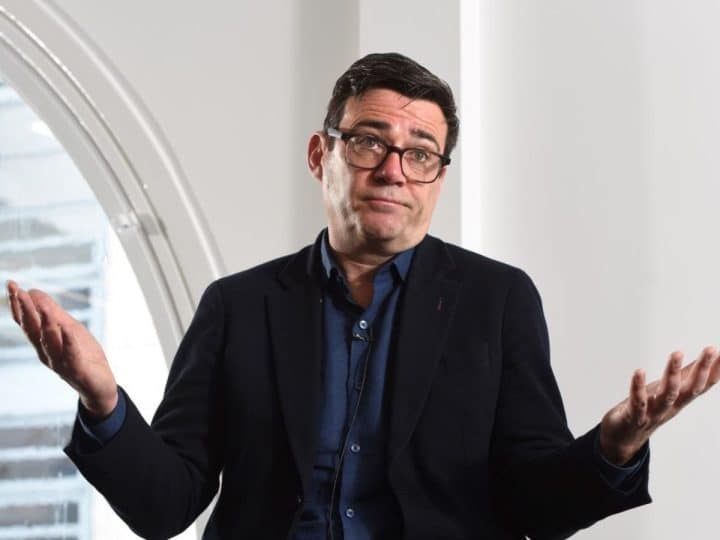

Is the King of the North about to become Prime Minister? Maybe. Will he lead us out of the valley of darkness and into the promised land of milk and honey? I can’t see it.
Full disclosure: I know Andy well. He’s genuinely a nice bloke, and he’s a competent administrator. He is by far the best person to lead the Labour Party from amongst the contenders. And that’s the problem. 411 Labour MPs were returned at the General Election. And they’re having to bring back the king over the water to topple Starmer.
Can there really be no-one amongst the 400 who can deliver social, economic and environmental justice?
A broken party machine
In Majority‘s group chat, I proposed a thought experiment. Imagine I somehow became Labour leader tomorrow. Would I be able to deliver a democratic socialist programme? The overwhelming response was no. John McDonnell or Clive Lewis would fare no better.
The donors, the directorate, the corporate lobbyists who are now Labour MPs, would not allow it. They got a nosebleed when Jeremy Corbyn proposed ending tuition fees.
That was before the Starmer-McSweeney purges. What chance is there for grassroots socialists to organise inside the Labour Party to get socialists selected for Parliament? Or Metro Mayors? Would Andy reverse the expulsions? Change the rules so the NEC can’t block or impose candidates on a factional basis? Neoliberalism is embedded too deeply inside Labour.
Which raises the question: will an Andy Burnham-led Labour government, with minister Wes Streeting, tax wealth and not work? Reverse NHS privatisation? Support the prosecution of Israel for genocide? Reintroduce sectoral collective bargaining? Create a publicly owned zero-carbon energy system? Break up the investment banks from the retail banks? End – not mitigate – child poverty? Will he choose to take on the billionaires? Make Meta, Twitter and TikTok responsible for their content? Implement the Leveson recommendations?
If not, it’s tinkering around the edges with better comms and a more charismatic front man.
Public control or public ownership?
Andy brought the buses under public control in Manchester. Note: control, not ownership. It was the Cameron government that brought in the 2017 Bus Services Act that enables franchising. It’s better than unregulated buses, for sure. But like rail nationalisation, the establishment are happy for rundown, unprofitable sectors to be taxpayer funded on risk-free contracts.
In his recent interview, he said he wanted water and energy under public control. Good. Let’s give him the benefit of the doubt and say he meant public ownership. But what route to public ownership of water? Bail out the shareholders, hand over £100 billion, and make the state take on the debts? Or do it without compensation – strict enforcement of Ofwat standards, force the share price to zero, and use the legal powers to hive off the assets into a debt-free public company?
After all, nationalisation is not always progressive. The National Coal Board was publicly owned throughout the miners’ strike.
An alternative to neoliberalism
I hear people say that stopping Reform is all that matters, and the Greens should stand aside. I have no problem being pragmatic. I worked cross-party for the good of the people of the North East. I worked closely with Andy on transport, devolution and standing up for the North during Covid. He was one of the few Labour politicians who publicly stood by me when the NEC stitched me up. On a personal level, I’d be delighted for him if he becomes Prime Minster.
I don’t believe a Reform government is nailed on in 2029. They’ve have passed their high water mark, and are losing vote share. Personal scandals, bringing in Tories, and incompetence in local government is accumulating. Restore UK is likely to split their vote, too.
Trying to game the electoral system does not cut it for me. The problem’s not Andy. It’s Labour. A party that still has illegal war-starter Tony Blair as a member. Labour Together has not gone – it has simply been rebranded Think Labour.
What is needed is a credible alternative to neoliberalism. The Greens are not there quite yet, at least in the eyes of the public. But they are the closest we’ve got. And they’re winning.
The Green Party
My preferred option is the Green Party become more professional, more serious. Let’s fight and win on the economic arguments. That taxing wealth instead of work would increase public investment. Reversing wealth extraction from utility owners and private equity funds will lower bills. Making the case loud and clear that keeping kids in poverty and adults too ill to work is both a moral and an economic failure. That’s the direction of travel, and it’s starting to work. It’s where I’ll be putting my energies over coming months.
I’ve seen deep inside the Labour Party. There is no one in that cabinet who has any intention of challenging neoliberalism. Half of them are bought and paid for.
Labour MPs are saying the quiet part out loud. It’s not Starmer’s policies. It’s their poll ratings. They voted through Winter Fuel cuts. Voted to arrest peaceful anti-genocide protestors as terrorists. They only acted when their jobs were on the line. Keep out Reform? They’ve aped Reform!
We must abandon the mythology. Andy is not the King of the North who stands between us and the horde of white walkers. He’s one man operating within the confines of a hostile system. There’s no doubt he’s preferable to Starmer or Streeting. But limping centrism on life support is not enough. It’s time to run Britain in the interests of the people who do the work.
Featured image via the Canary

Politics
Lord Ashcroft: Burnham compared to Starmer, should there be an election, and what do we think of Restore Britain?
Lord Ashcroft KCMG PC is an international businessman, philanthropist, author and pollster. For more information on his work, visit lordashcroft.com
My latest poll looks at expectations of Andy Burnham, whether there should be a leadership election, when the next general election should happen, the most important issues facing the country and voters’ attitudes to Restore Britain.
What did Starmer do?

We asked respondents to name, unprompted, anything they can remember the Labour government doing since it was elected in July 2024. Top of the list this month was lifting the two-child benefit cap, very slightly ahead of means-testing the winter fuel allowance, which has dominated recollections for the last eighteen months. Employers’ National Insurance and workers’ rights are next on the list.

Our political map shows which parts of the electorate are most likely to mention different government actions. The two-child benefit cap and the winter fuel allowance both appear close to the centre of the map, showing that they were widely recalled across voter types. The minimum wage, NHS waiting lists, renewable energy, the social media ban and staying out of the Iran war were most likely to be recalled in Labour and Lib Dem-supporting territory, while Israel and disability benefits were most likely to be mentioned close to the Greens’ centre of gravity in the bottom left. Tax, migration, defence and the economy were most likely to be mentioned on the Conservative or Reform-leaning right-hand side of the map.

Since we have asked this question every month since January 2025, we can see the most recalled actions of the Labour government over the last 18 months.
Andy Burnham and the Labour leadership

Overall, voters said they would like to see a contested leadership election by a 50 per cent to 27 per cent. However, 2024 Labour voters said they would like to see Burnham become PM without a leadership election by a 7-point margin, and current Labour leaners by a 26-point margin.

A clear majority said there should be a general election within a year or so of the new PM taking office. Four in ten voters said he or she should call an election as soon as practically possible, with a further 19 per cent saying there should be an election in the next year or so. Just over a quarter, including more than half of 2024 Labour voters and 63 per cent of those currently leaning towards Labour, say there is no need for an early election and the government should continue until 2028 or 2029.

More than four in ten voters said they thought Burnham was more left-wing than Starmer – more than twice the proportion who thought they had similar political views. Current and 2024 Labour voters were more likely than most to see Burnham as being further to the left. Nearly four in ten said they didn’t know whether his political views stood in relation to Starmer’s.

Voters as a whole were more likely to think Burnham would perform about the same as Starmer in each policy area than to think he would do either better or worse. They were more likely to think he would do a better job than a worse job on the economy, the NHS, the cost of living, crime and policing, and running the country in general. They were more likely to think he would do a worse job than a better job on immigration, government borrowing and debt, setting tax rates at the right level, defence, and Britain’s relationships with other countries.

A majority of all voters said the new PM should feel bound by Labour’s 2024 manifesto promises on income tax, National Insurance and VAT. Current and 2024 Labour voters were also more likely than not to take this view.
Most important issues facing Britain

The cost of living was rated the most important issue facing the country, with half of all respondents choosing it in their top three. Among voters as a whole this was followed by immigration and asylum, the NHS and social care, and the economy and jobs. For 2024 Labour voters, the NHS was second after the cost of living, followed by climate change and the environment. Immigration and asylum topped the list for current and 2024 Conservative and Reform UK voters. National security and defence was the second most important issue to 2024 Tories, ahead of the cost of living.

Asked who would do the better job running the economy, 33 per cent of voters said a Labour government, 20 per cent said a Conservative government and 18 per cent said a Reform UK government. Just over two thirds of 2024 Labour voters said a Labour government would do the best job, while 62 per cent of 2024 Conservatives named the Tories (and nearly one in five of them named Reform UK).
Restore Britain

Just over one in ten said they like a lot of what Restore Britain stand for and might well vote for them next time. This included nearly four in ten Reform voters from 2024 and more than a quarter of those currently leaning towards Reform. A further 14 per cent say they probably wouldn’t vote for Restore but they say things that need saying so they’re glad the party is around. Just under four in ten say they don’t like what Restore stand for and would never vote for them. A quarter say they have never heard of Restore Britain. Of those who say they might well vote for Restore Britain, 33 per cent are currently leaning towards Reform, eight per cent towards the Conservatives, and 25 per cent towards another party.

For those interested in Restore Britain, the most appealing factors were that “they have more radical policies on things like migration and repatriation” and “they want to keep Britain British”. Cutting taxes and welfare benefits and forcing other parties to pay attention to important issues were the next biggest attractions.
The political map

Our political map shows how different issues, attributes, personalities and opinions interact with one another. Each point shows where we are most likely to find people with that characteristic or opinion; the closer the plot points are to each other the more closely related they are. Here we see how different kinds of voters see the most important issues facing the country, how soon people would like to see a general election once the new prime minister is installed, and where we are most likely to find different views of Restore Britain.
Leadership ratings, best prime minister and next general election

Equal numbers said they had a favourable view of Kemi Badenoch and Andy Burnham, though Badenoch’s unfavourability score was higher than Burnham’s. Nigel Farage had the next highest positive rating, but with negatives of 63 per cent. In order of net scores, the results were Burnham (-9), Davey (-13), Badenoch (-15), Lowe (-20, but with 42% saying ‘don’t know’), Polanski (-23), Starmer (-39), Farage (-41).

When we asked who would make the better prime minister, Burnham led Badenoch by eight points. 2024 Labour and Conservative voters were equally likely to choose their respective party leaders. Last month, Badenoch led Starmer by one point (32 per cent to 31 per cent).

Given a choice between Burnham and Farage, voters as a whole chose Burnham by a 26-point margin. Last month, Starmer led Farage by 18 points.

Offered a choice between Burnham, Badenoch and Farage, voters chose Starmer over Badenoch by an 18-point margin (compared to Starmer’s 14-point lead last month) with Farage third on 17 per cent. More than seven in ten Labour voters preferred Burnham (compared to 65 per cent who preferred Starmer last month).

Andy Burnham has taken over from Nigel Farage as the leader voters consider most likely to be PM after the next general election. 33 per cent named Burnham, with 20 per cent naming Farage (down from 27 per cent) last month. Just under two thirds of those currently intending to vote Reform thought Farage would be PM (down from 74 per cent last month), while 65 per cent of Labour leaners expect Burnham to be PM (more than three times the proportion who last month expected Starmer still to have the job).
We ask people how likely they are to vote for each party at the next election, rather than which party they would pick in a hypothetical election tomorrow. Those who voted Labour in 2024 put their chances of doing so again at the next election at an average of 48/100. They put their chances of voting Green at 25/100. Those who switched to Labour in 2024 put their chances of voting for the party again next time at 36/100, and those who switched from the Conservatives to Labour in 2024 put their chances of voting Labour again next time at an average of 30/100.
Looking at those more likely than not to vote for a particular party (those whose highest likelihood of voting for one party was at least 50/100), this implies vote shares of Reform UK 21 per cent, Conservative 21 per cent, Labour 21 per cent, Green 17 per cent, Lib Dems 9 per cent, Others 10 per cent.
Full data tables at LordAshcroftPolls.com
The post Lord Ashcroft: Burnham compared to Starmer, should there be an election, and what do we think of Restore Britain? appeared first on Conservative Home.
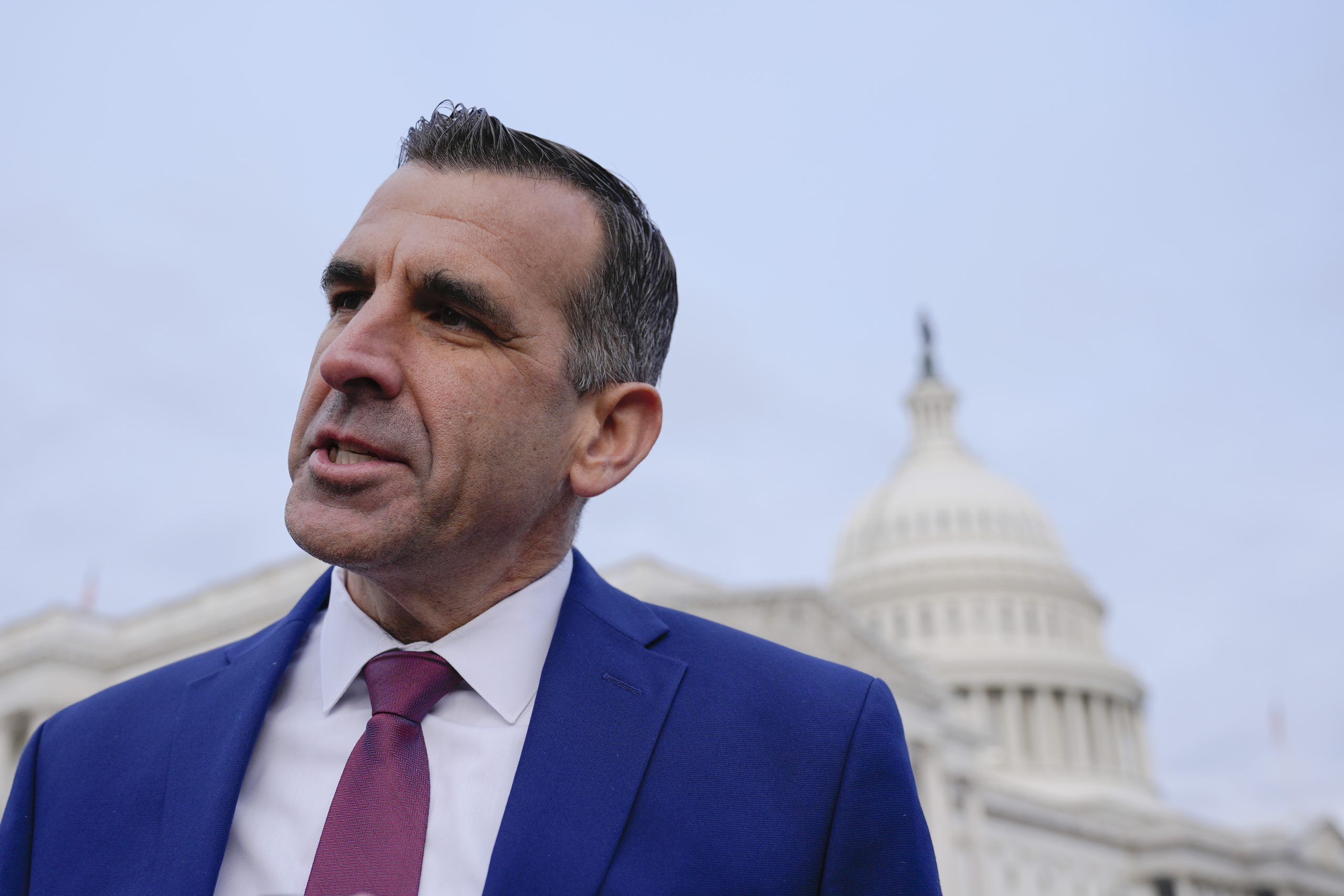

Sam Liccardo said he “groaned excessively” when the U.S. national team’s Folarin Balogun was given a red card.
Yet the Silicon Valley representative objected after President Donald Trump pressed FIFA to review the play at issue, before the world soccer organization suspended the penalty and allowed the U.S.’ lead scorer to play in today’s knockout round match against Belgium.
“We can’t win this way,” Liccardo, a Democrat, wrote on social media. “I won’t cheer FIFA’s capitulation to power.”
Few other American politicians have expressed a similar sentiment, perhaps wary that they’ll be viewed as rooting against their own country’s success. But Liccardo joined a chorus of international officials who took issue with the pressure campaign that culminated in Balogun’s return to the pitch, while stressing that the “right outcome” had been reached despite what he viewed as foul play by FIFA leadership.
“The fact that we should see this outcome after this corruption summit between FIFA and Donald Trump accentuates the distaste for many,” he told POLITICO in an interview just over an hour before the U.S.-Belgium match.
This interview has been edited for length and clarity.
Were you at the match where the red card was issued in Santa Clara?
I was not, I’m ashamed to say. It’s slightly outside my district, and a few thousand dollars outside my tax bracket. … I watched on television and cheered wildly for the U.S. team, and groaned excessively when Balogun got his red card.
Democrats have accused President Trump of a lot of instances of corruption throughout his second term, so why speak out on this particular incident?
Well, I think in your question there’s an implication, and it’s a fair one, which is: Far be it from me to suggest that FIFA could ever be corrupt. But at least we could say that for once it was Americans that benefited from the corruption, not the Qataris or the Russians.
Look, I root for the U.S. men’s team every time they take the field, and, like virtually everyone else watching that game, I felt Balogun was treated very unfairly. That being said, since 1962, FIFA has never allowed a player to appear at a World Cup game after receiving a red card in the game immediately following. The intervention of a head of state — in what should be an international celebration of sports that should be above politics and beyond it — is troubling. And the fact that we should see this outcome after this corruption summit between FIFA and Donald Trump accentuates the distaste for many. [FIFA has repeatedly asserted that Trump’s call for a review had no impact on its decision, and Trump said the same today, while confirming he had asked for another look at the play.]
Do you think your constituents feel the same way?
People feel all kinds of different ways, and I don’t blame anyone for saying, “Hey, this is the right outcome.” That’s fine. I’m simply saying it’s the right outcome for the wrong reasons. And it’s hard to blame you global fans of the sport for having hard feelings.
Like, you said, a lot of people probably feel that this was the right outcome. Has that made this at all a tricky situation for Democrats to address politically?
No, because politicians shouldn’t address this. It’s not my problem to solve, and it’s certainly not Donald Trump’s problem to solve. So, I don’t have any problems. I’m a spectator, like everybody else. I’m simply saying we all want an umpire that calls balls and strikes, and we know that umpires get it wrong plenty of times. We just don’t want somebody bribing the umpire to get us a ball rather than a strike.
You’re a bystander in some ways, but this is also not your first time encountering FIFA. In addition to being a co-chair of the World Cup Caucus, you were the mayor of San Jose when the city was participating in the bidding process to host that tournament. Didn’t you and some of the other Bay Area mayors even go on a tour with FIFA officials of Levi’s Stadium a few years ago?
Yeah, I think we were at the stadium, and then we went to San Francisco. That’s what you do when you’re the mayor of the largest city in the region and you want the World Cup to come to your region.
So, when you say that FIFA is a corrupt organization, has that always been your view, or did this particular incident kind of drive you there?
It’s the view of the Department of Justice that indicted them for more than $150 million in bribes in 2015, it’s the view of lots of other folks who are concerned about how the Qataris ended up with the World Cup. We can go on and on. It’s not my view that matters here. The point is this: Nobody wants to see the head of state of any country calling an international sports organization to get a better call. That’s not the way sports should work.
The Olympics are coming to California in 2028. Should Democrats be trying to guard against Trump exerting influence once again to aid the host country in that international competition?
No, elected officials should be refraining from getting engaged in international sports competitions, the area where people don’t want politics. So it’s not about what we do or don’t do. It’s not about us standing up to Trump or not standing up to Trump. It’s about the fact that we should want international sports competitions to be free of political influence.
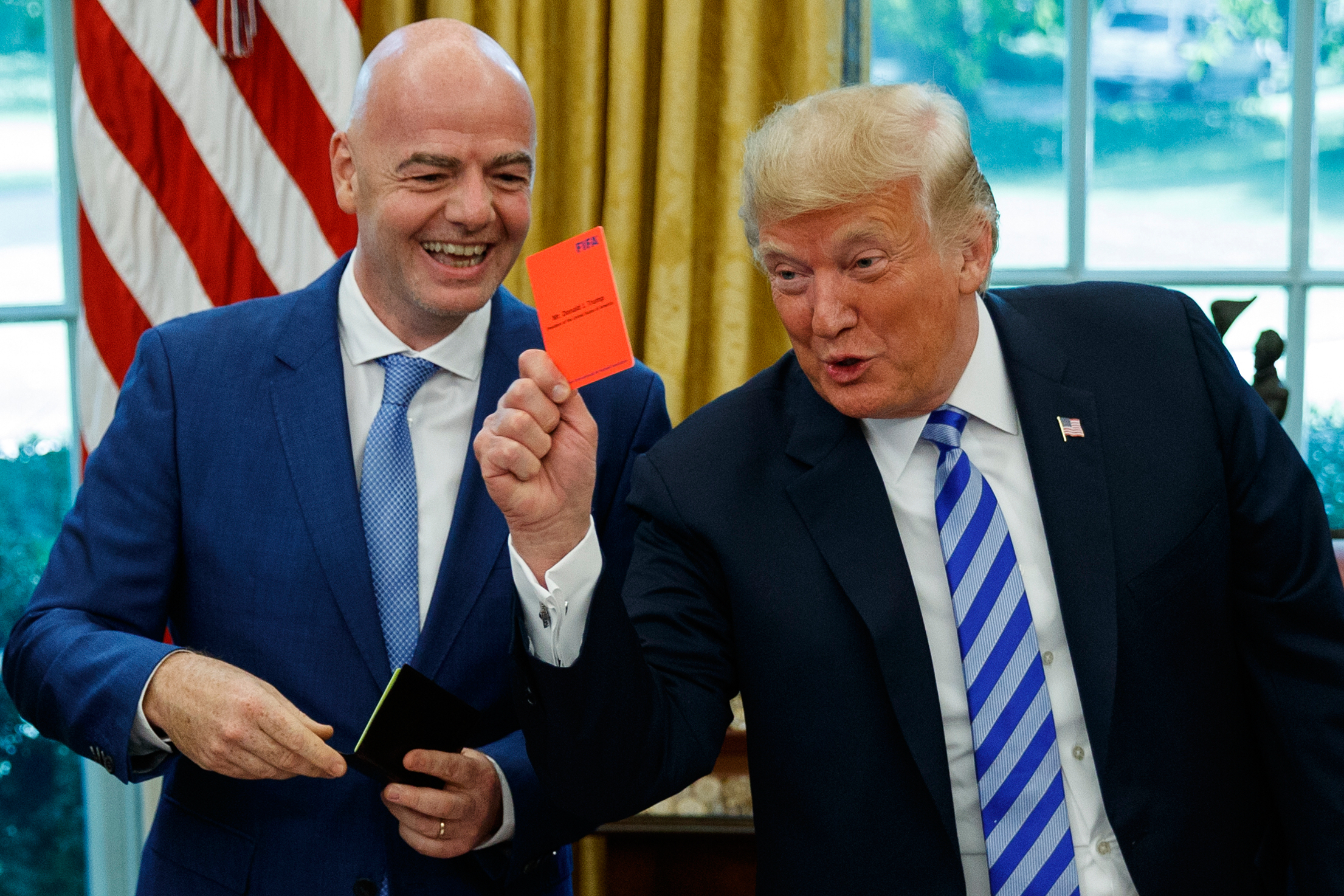

President Donald Trump said earlier Monday that he didn’t know what a red card was before last Wednesday’s U.S.-Bosnia match.
But FIFA President Gianni Infantino actually gave him a lesson on soccer’s disciplinary system during a 2018 Oval Office meeting after the United States secured the right to co-host the 2026 World Cup.
During the visit, which followed the successful United Bid, Infantino explained the sport’s use of yellow and red cards before pulling one of each out from a case.
“In soccer we have referees and they have cards: yellow cards and red cards,” Infantino told Trump. “Yellow card is a warning, and when you want to kick out someone, a red card. Like this!”
Trump appeared amused by the demonstration.
“I like that,” he said picking up the red card and holding it up. “Thank you.”
Infantino then joked that the cards might come in handy beyond the soccer field.
“That could be used for, I don’t know, the next media session,” he said.
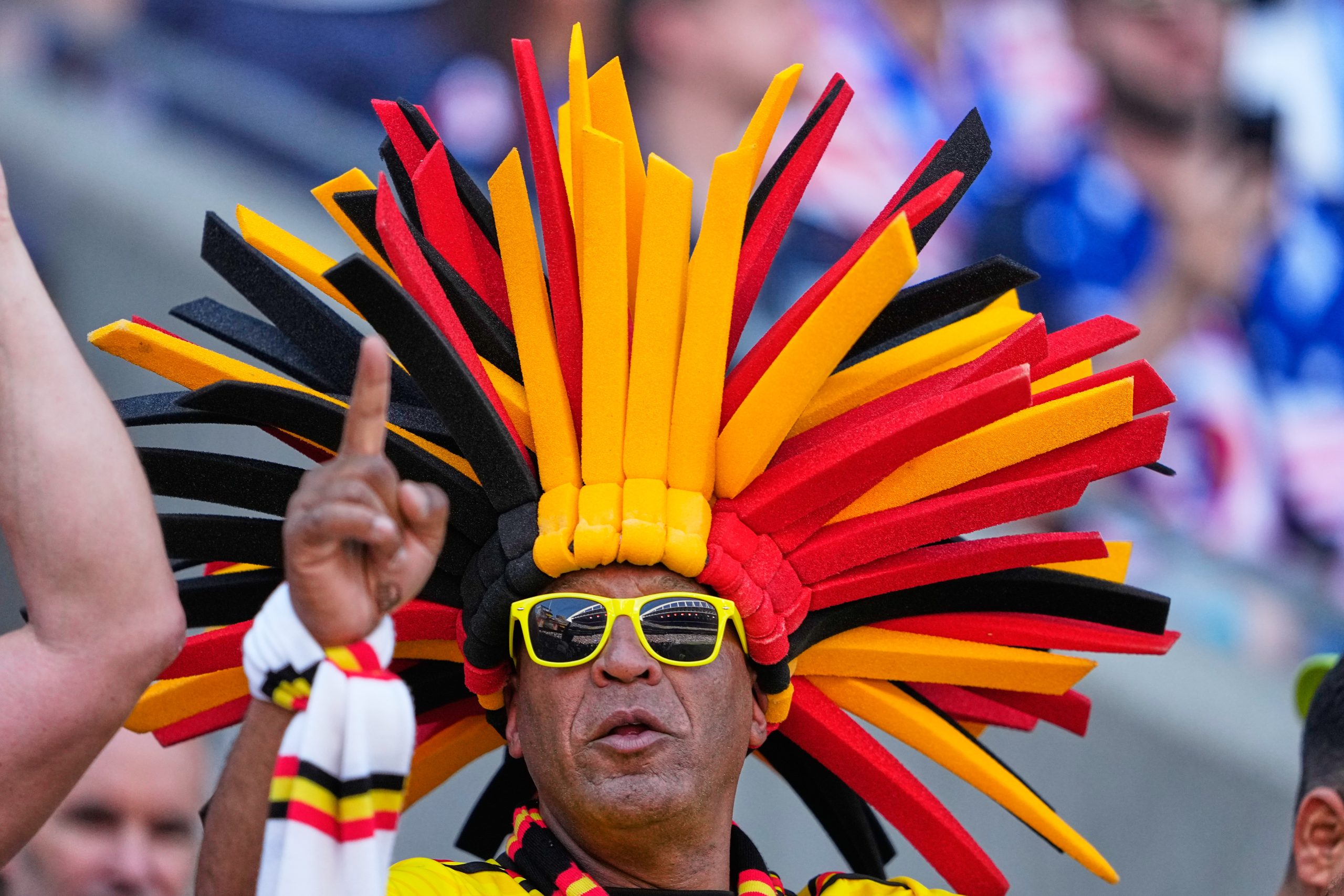

The news that Folarin Balogun would be eligible to suit up against Belgium Monday night was met with near-universal celebration across the country.
Just don’t ask the Belgian fans living here.
POLITICO caught up with several of them at the Belgian embassy’s watch party at Wunder Garten, a trendy bar in Washington’s NoMa neighbourhood.,
“I had to keep up my vomiting,” said Johan Hamels, an Ottawa resident from Leuven in D.C. on a business trip. “Rules are rules. Every team is briefed by FIFA. And for every game, it’s in one of their slides. That you get a red card, you’re off next time.”
Balogun was given a red card in the Americans’ Round of 32 matchup last week against Bosnia and Herzegovina, which typically carries a suspension for the following game. But FIFA suspended his ban on Sunday.
Critics have charged that the White House pressured FIFA into making the switch. European politicians have slammed Balogun’s inclusion, and the Royal Belgian Football Association formally challenged FIFA’s reversal on Monday morning.
And while FIFA insists the ruling had nothing to do with politics, President Donald Trump is taking credit for getting Balogun back on the field.
“I’m Belgian,” said Win Van Dijck, a native of Brussels who has lived in the U.S. for the last five years. “So I appreciate surrealism. But it’s just too much.”
It’s another example of Trump pulling the strings in a tournament that has increasingly strayed into the political arena, they say.
“Having it reversed based on a call from the American God is a little bit lack of workmanship. And it’s sad for the kids here because that’s what they see as an example,” said Brigitte, a retiree who came to the U.S. in 1984.
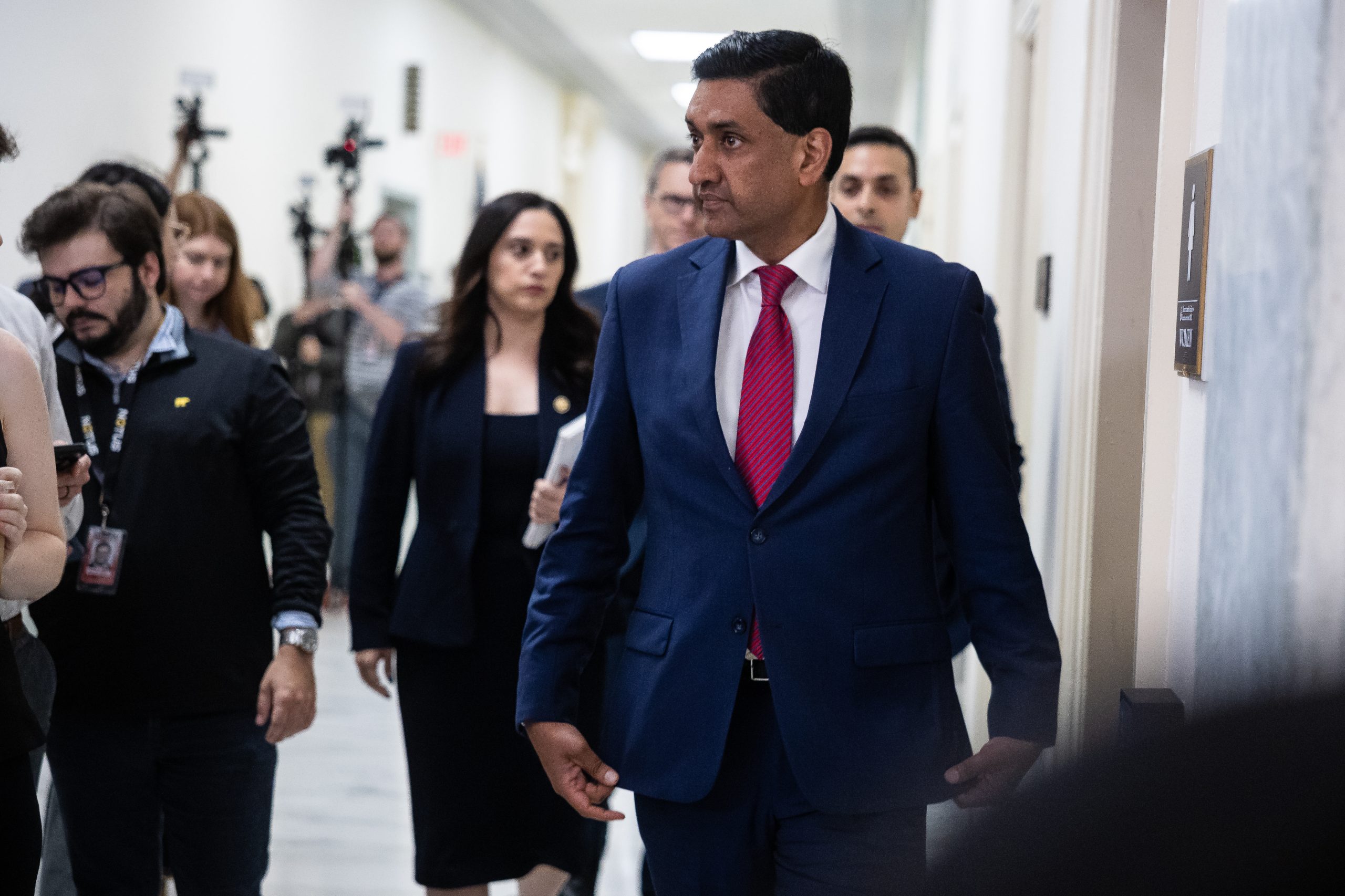

Rep. Ro Khanna and Sen. Ruben Gallego rescinded their support of Graham Platner on Monday, with Khanna additionally calling for the Democratic nominee to drop out of the Maine Senate race.
It’s a significant reversal from two formerly staunch Democratic defenders of Platner, following a POLITICO report that a woman who dated Platner said he forced her to have sex with him five years ago.
Platner has denied the allegations, but he also posted on social media that he was “taking the time to reflect on the best path forward” for his candidacy.
“I’ve been very clear that sexual assault or violence against women is a red line,” Khanna (D-Calif.) said on X. “These allegations are very serious and credible. Graham Platner should drop out from the race. I am withdrawing my endorsement.”
In his own social media post, Gallego (D-Ariz.) called the allegations “troubling and deeply serious” while announcing he would no longer back the progressive oysterman.
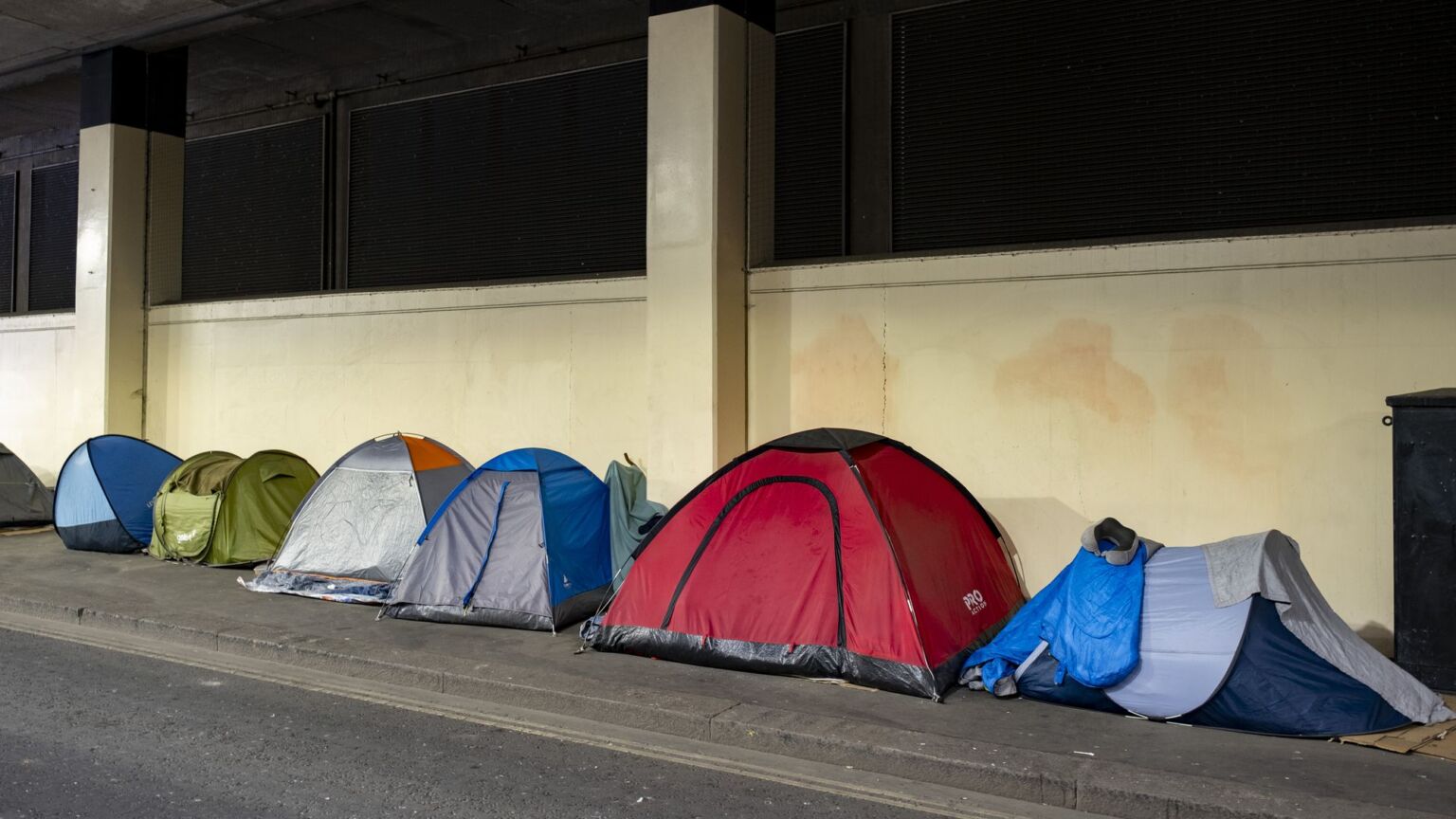
A 200-year-old relic of the Georgian era has finally been buried. Labour’s recent decision to repeal the 1824 Vagrancy Act means that rough sleeping and begging have officially been decriminalised across England and Wales.
Predictably, the commentary pages have been filled with back-slapping. Campaigners are calling it a ‘watershed moment’ for human rights, while ministers assure us we are shifting ‘from punishment to prevention’.
But let’s be honest, decriminalising vagrancy doesn’t address the actual problem of homelessness. No one walks down a high street in modern Britain and feels comfortable with what they see. Passing row after row of tents on Euston Road, or seeing people huddled in sleeping bags in the Tube stations, is deeply unsettling.
It looks like a fundamental breakdown of civilisation. Most heartbreakingly of all, a massive number of those forced on to the pavement are veterans – people who risked everything to serve this country, only to be left entirely abandoned on our streets.
Is scrapping a law really the right step? If we just decriminalise the reality of our broken streets without fixing the cause, are we actually helping anyone? Or is the state just legalising squalor, abdicating its responsibility and walking away?
The state of our streets is a sign that the foundational social contract has been shredded. Celebrating a minor legislative tweak while people – especially those who served in the armed forces – are left to deteriorate in public view isn’t compassion in any meaningful sense.
The truth is that repealing the Vagrancy Act is purely symbolic. It is a hollow victory for a prime minister desperately searching for a legacy.
Worse still, while the government is busy removing an archaic policing penalty with one hand, it has done the bare minimum to tackle the most significant cause of homelessness – namely, the complete lack of new homes, caused largely by planning laws.
For young people today, housing is not only expensive, it is unattainable. We are told to work hard, get a degree and contribute to society. Yet substantial chunks of our salary end up on rent, essentially going toward funding someone else’s retirement.
The dream of ever owning a home, and having the stability required to start a family, has been pushed into our late thirties – if it’s achievable at all. When you rob young people of the ability to build a stable life, you destroy the very foundations of a society. You create a rootless, anxious generation. And, for those at the absolute margins of society without that family safety net, that lack of housing supply can ultimately lead to a sleeping bag on a pavement.
This desperate situation is a direct consequence of the state’s failed planning laws. For decades, the 1990 Town and Country Planning Act has acted as a rigid barrier to development. By effectively giving local NIMBYs veto powers over new housing developments, the government has made building even basic accommodation impossibly expensive, across vast swathes of the country.
Labour’s Planning and Infrastructure Act 2025 doesn’t go nearly far enough. Despite being hailed by the government as a solution to the housing crisis, little – if anything – has changed. Rents have continued to skyrocket and the most vulnerable individuals continue to be squeezed into the bottom rung of society.
The mainstream solution is always the same: demand more state interventions, heavy-handed rental caps or endless bureaucratic schemes.
But it was the state that got us into this mess. The current planning system functions primarily as a state-enforced wealth transfer, protecting the asset values of wealthy, older homeowners at the direct expense of everyone else’s independence.
Until we address the fact that the state has made building roofs over our heads incredibly difficult, decriminalising rough sleeping is completely pointless. If you want to demonstrate true compassion, the answer isn’t about stopping the police from moving rough sleepers on so they are out of sight. It means tearing down the red tape that stops homes from being built in the first place.
Samiksha Bhattacharjee is the head of Ladies of Liberty Alliance UK and the president of the University College London Libertarian Society. You can find more of her work at Samiksha’s State of the Debate.


FIFA President Gianni Infantino on Monday defended his organization’s decision to defer U.S. striker Folarin Balogun’s one-game suspension ahead of the Monday World Cup match between the U.S. and Belgium.
“FIFA’s judicial bodies are independent,” Infantino said in a statement posted on X. “I read the decisions of the FIFA Disciplinary Committee when they are issued. Sometimes I am surprised by them. Sometimes I agree with them, and sometimes I disagree. What I always do, however, is respect those decisions and the autonomy of the bodies that make them.”
On Sunday, FIFA announced that its disciplinary committee suspended the red card that Balogun received during the U.S. game against Bosnia and Herzegovina. U.S. President Donald Trump said Monday that he had called Infantino to lobby for the suspension to be lifted, though the president insisted that “all I did was ask for a review,” and “I didn’t say that you have to do this.”
Infantino acknowledged discussing Balogun’s suspension with Trump but said he explained the “ongoing legal process involving FIFA’s independent judicial bodies” to the U.S. president.
Infantino added that “respect for independent institutions and the rule of law is what protects the integrity of our competitions and the credibility of FIFA at all times.”
UEFA, European football’s governing body, said in a statement Monday that FIFA’s decision was “incomprehensible and unjustifiable.”


A high-ranking Dallas police commander met with Egyptian World Cup officials over the weekend to smooth over relations after an altercation between the team’s staff and a city officer.
Deputy Chief Osama Ismail, who speaks Arabic, met and exchanged gifts Saturday with Egypt head coach Hossam Hassan, his brother and team manager Ibrahim Hassan, team captain Mohamed Salah and others, the department said in a statement on social media.
“We understand one conversation can make a difference and respect is demonstrated through actions,” the statement said.
The team — and the Dallas police — made international headlines Thursday night when a Dallas officer was caught on video shouting at and shoving Ibrahim Hassan and other team staffers in the lobby of the team hotel.
Egypt went on to beat Australia in Dallas on Friday. Hossam Hassan said at the postgame press conference that he was satisfied with the police response, adding, “We have nothing to follow up in that regard.”
Politics
Trump confirms he called FIFA head but says he didn’t influence overturning Balogun's red card
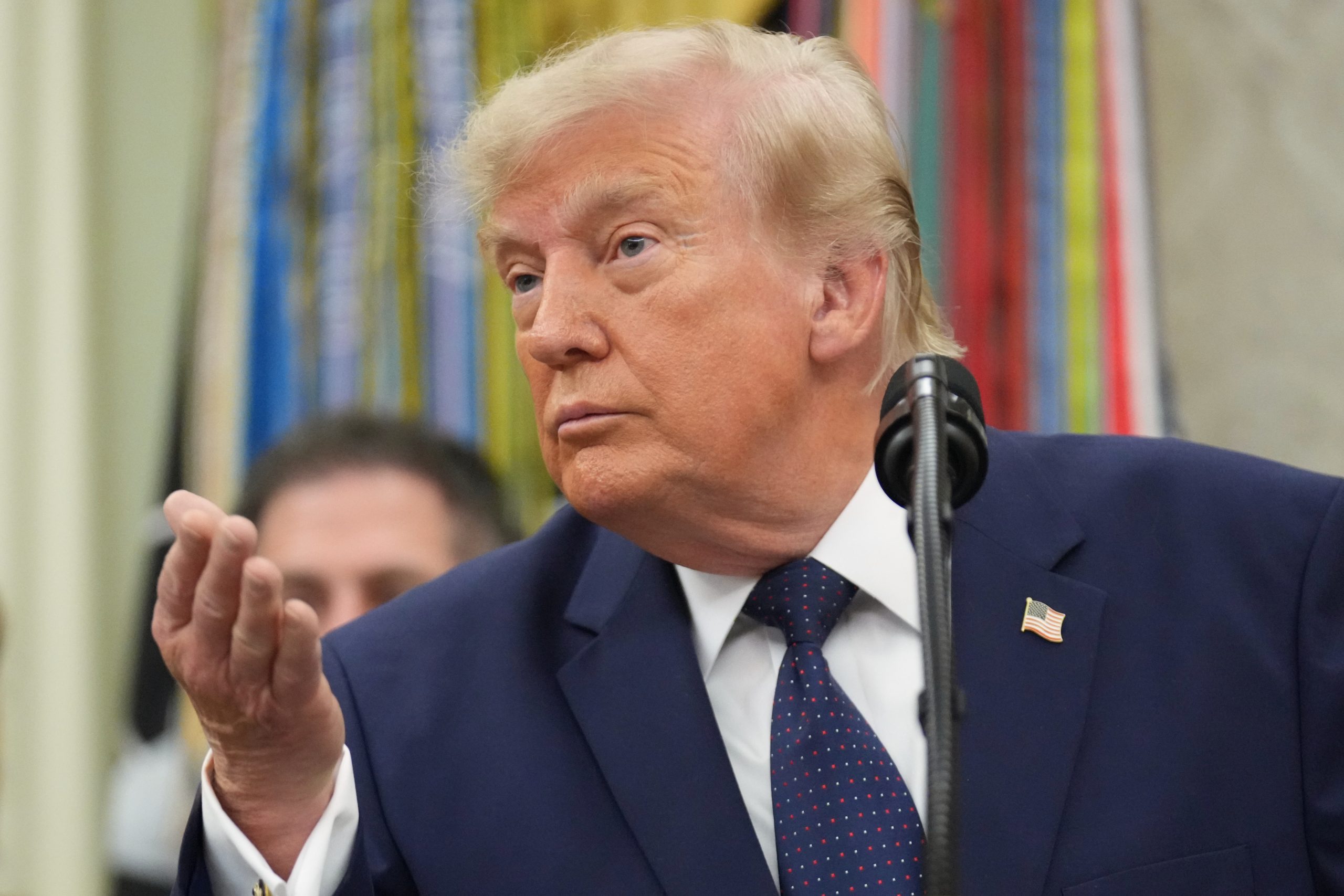

President Donald Trump said Monday that he asked FIFA President Gianni Infantino to review the red card issued against a star American soccer player ahead of a monumental last-16 game, but emphasized that he did not unduly influence the controversial decision.
The ruling by the international soccer governing body to suspend a red card issued against American Folarin Balogun during its knockout tilt against Bosnia and Herzegovina sparked concerns over the president’s potential influence over the decision. POLITICO reported Sunday that Trump had called Infantino regarding the red card, which the president subsequently confirmed Monday.
“Yes, I asked for a review by FIFA,” Trump told reporters gathered in the Oval Office.
However, the president rebuffed the idea that his talks with Infantino influenced the decision, even as the FIFA president has cozied up to Trump during his second term — showering him in compliments and creating a new “peace prize” that he awarded Trump ahead of the tournament.
“All I did was ask for a review,” Trump said. “I didn’t say that you have to do this.”
The comments come after a slate of other nations’ soccer federations panned the decision, with the European Commission demanding “fair play and transparent competition” in sports. Belgian officials, whose country will play against the U.S. today, expressed intense consternations and have formally challenged the ruling.
Trump on Monday described his reaction to the initial game call as confused. He characterized the collision between Balogun and Tarik Muharemović as the two players being “sort of entangled” and, upon learning that a red card would bar Balogun from suiting up for the U.S.’s match against Belgium, thought it was “unfair.”
“It is one thing to penalize somebody for the game,” Trump said. “But how do you penalize him for a game that hasn’t been played yet? It’s very unfair, you can’t do that.”
The president took the opportunity to celebrate the success of the World Cup— which has high attendance across its venues and strong viewership — and said Balogun’s red card would have been a “big stain” on the tournament had it been upheld.
The president on Monday cast suspicions on the referee who delivered the red card to Balogun, Brazilian official Raphael Claus, calling him “a little bit suspect, if you check his past.”
Asked by a reporter if he had spoken with the Belgian prime minister, Trump said he hadn’t but would be open to it. Belgium’s foreign minister told POLITICO that the decision “raises many questions,” its soccer federation issued a livid statement in the aftermath of the decision and subsequently challenged Balogun’s eligibilityahead of the match.
“I will tell you this,” Trump continued. “The people of Belgium, if they win the game, they can be very proud.”
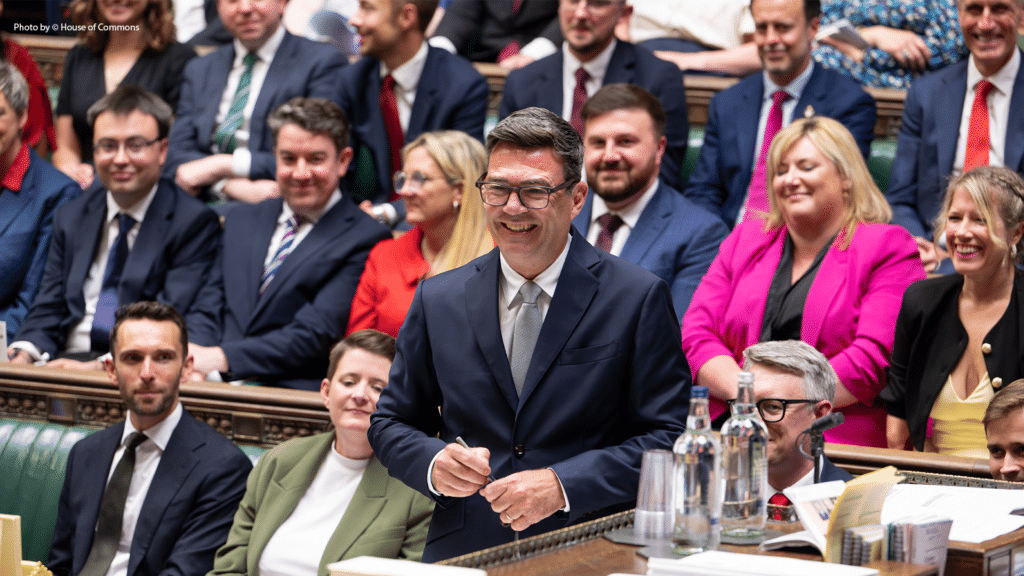
Jill Rutter reflects on how Andy Burnham should approach governing as he prepares to take over from Keir Starmer later this month.
Morgan McSweeney has now admitted that Labour was unprepared for power in 2024.
They had, realistically assessed, two years to plan – the period from when it was clear that Boris Johnson was vulnerable and Labour could form the next government. Keir Starmer had by then ‘changed the Labour party’. His focus was on winning the election. Policy was refracted through the lens of not getting in the way of winning – not setting strong foundations for the governing project. When there was a trade-off between winning or governing, winning won. It did not help that Keir Starmer seems to find it easier to focus on working his way through the immediate problem in front of him, rather than setting any clear long-term vision.
Andy Burnham has weeks rather than years. He has the benefit that he may be able to avoid an election, but Keir Starmer appears to have decided to enjoy his summer break rather than let his usurper have the time he wanted to plan.
He has already made some big calls. Successive Prime Ministers have made a mess of the structure and people in No.10. Burnham has brought in a close former cabinet colleague to head his No.10 with the appointment of James Purnell as Chief of Staff. That looks like a good start to have someone who will be able to speak authoritatively for the PM, has run organisations, knows him well enough to challenge him when he is getting things wrong and will have credibility with the Labour MPs. So far so good.
We also know, in terms of structures, that he wants to build up No.10 as a strong centre able to lead the government. That too was missing from Starmer’s passive No.10. It also looks as though he has persuaded Jonathan Powell to stay on as his national security adviser – a guarantee of continuity and a good way of compensating for Burnham’s lack of foreign and defence experience.
The most eye-catching proposal is to base some of No.10 in Manchester – No.10 North. That could just be a gesture – but it could also make a lot of sense if Andy Burnham decides he is going to live at home and work out of Manchester a couple of days a week. A prime ministerial presence is essential to signal that this is a real change rather than performance art.
One question will be how to decide how this will work in practice. Will it simply be the base for the No.10 team leading on economic and devolution strategy? Or will core private office and policy unit and comms teams have members permanently based in Manchester as well as London? That would offer new career options for civil servants who choose to base themselves in Manchester (not so much if you are in Darlington, Bristol or Wolverhampton), allow Burnham to bring in allies who have worked closely with him at Greater Manchester Combined Authority and have no desire to shift south, and reduce the need for people to spend their lives on Avanti West Coast.
Getting the structures right matters – but then Burnham needs to decide what to do. This is not a change of the sort we saw in 2024. Andy Burnham is taking over mid-term. The government already has Labour ministers who have been doing the job for almost a year or more. It has a legislative programme announced in the King’s Speech in May. In many areas it has announced reforms that are in train – people may not see change yet, but that is in part at least because in most cases change takes time.
The key choice for Burnham is continuity versus change. He has made clear that there are some areas where he wants change. There he needs to make clear what the purpose of that change is, appoint people he is convinced share that view and help them drive it through. Some of those big themes are coming through already – devolution; council housebuilding; skills policy – though in all of these he needs to be absolutely clear where devolution and local choice wins and where he wants to control centrally.
Governments are usually elected on the basis of comprehensive manifestos – which the civil service crawls through before election day. They may be picking up hints from Burnham speeches now – but a couple of policy speeches and a few sassy TikTtok videos do not make clear how Andy Burnham wants to go forward on the whole range of issues where Prime Ministers need to have views.
There are lots of other areas where change is in progress, but potentially suffering from blight as its not clear what Burnham wants. So an urgent task for the new No.10 will be to review the portfolio of current policies and programmes that the government is pursuing and decide what to do.
The first option is to proceed on the current timetable. The second is to speed up or slow down and potentially tweak where there are reservations about some aspects of the policy and make it reflect the priorities of the new government. The third, where the new government wants to do something very different, is to stop the change in its tracks and ask for new ideas.
Similar principles apply to ministerial change. There will be some eye-catching new appointments. But there is a good case for prizing continuity as far as possible – a mistake Gordon Brown made when he came in in 2007 and embarked on what looked like change for change’s sake. A mantra of change where necessary, continuity where possible would enable the Burnham government to hit the ground running and start being able to point to concrete achievements which we assume he will be able to communicate better than his predecessor.
And then he can turn to the event that will define his premiership, as it did for Keir Starmer: his government’s first Budget.
By Jill Rutter, Senior Fellow at the Institute for Government.

Ripple executive says crypto is no fringe issue in Washington

Belgium mock Donald Trump after knocking USA out of World Cup: ‘Overturn this’

watchOS 27 beta 3 brings Siri AI to the Apple Watch


-

 Fashion4 days ago
Weekend Open Thread: High Hopes
-

 Politics4 days ago
The House | “Reframing the debate from a binary discussion of winners and losers”: Yuan Yang reviews ‘We Are Not Machines’
-

 Fashion14 hours ago
Open Thread: What Great Books Have You Read Recently?
-
 NewsBeat2 days ago
Taylor Swift and Travis Kelce wedding staffer hilariously struggles to keep her cool while checking in megastars
-

 News Videos7 days ago
How to Build INSANE Live Financial Dashboards With Claude
-
 Crypto World6 days ago
Airdrop Registration Becomes Key Focus For Remittix As RTX Launch Updates Approach
-

 Sports6 days ago
Broncos roster: OL Ben Powers (No. 74) entering final year of contract
-

 Crypto World5 days ago
Binance stock trading tops $1B in first month after launch
-

 NewsBeat6 days ago
Presenter Caroline Flack’s brother Paul Flack dies aged 55
-

 Crypto World5 days ago
Alibaba-affiliate Ant Group enters the humanoid robot market with 12 deals
-

 Crypto World4 days ago
Standard Chartered Secures MiCA License as ESMA Adds 37 New Crypto Firms
-

 Crypto World2 days ago
South Africa proposes crypto tax guidance under existing rules
-

 News Videos15 hours ago
Best Time to Enter Small Caps Right Now? Another Bull Run? | Financially Free
-

 Business5 days ago
Meta Platforms Stock Jumps 7% Today as Bloomberg Reports Company Plans to Enter the Cloud Business
-
 NewsBeat5 days ago
New exhibition reflects five decades of movement between island of Ireland and GB
-

 Tech2 days ago
Lenovo laptops are now shipping with YMTC SSDs, a sign of Chinese NAND entering the mainstream
-

 Business4 days ago
What a 10 Percent Drop Means for Buyers, Sellers and Renters
-

 Crypto World4 days ago
Binance Re-Enters Philippines As EU MiCA Rules Restrict Access
-

 News Videos18 hours ago
Avoid entering in FOMO #bitcoin #cryptocurrency #trading #scalping
-

 Crypto World4 days ago
Alibaba bans Claude Code over alleged backdoor security concerns
You must be logged in to post a comment Login