





Connect with us
DAPA Banner
DAPA Coin
DAPA
COIN PAYMENT ASSET
PRIVACY · BLOCKDAG · HOMOMORPHIC ENCRYPTION · RUST
ElGamal Encrypted MINE DAPA
🚫 GENESIS SOLD OUT
DAPAPAY COMING

Business

Dubai International Airport Is Open Today and Operating Normally After Months of Regional Disruptions

Published

on

Dubai International Airport

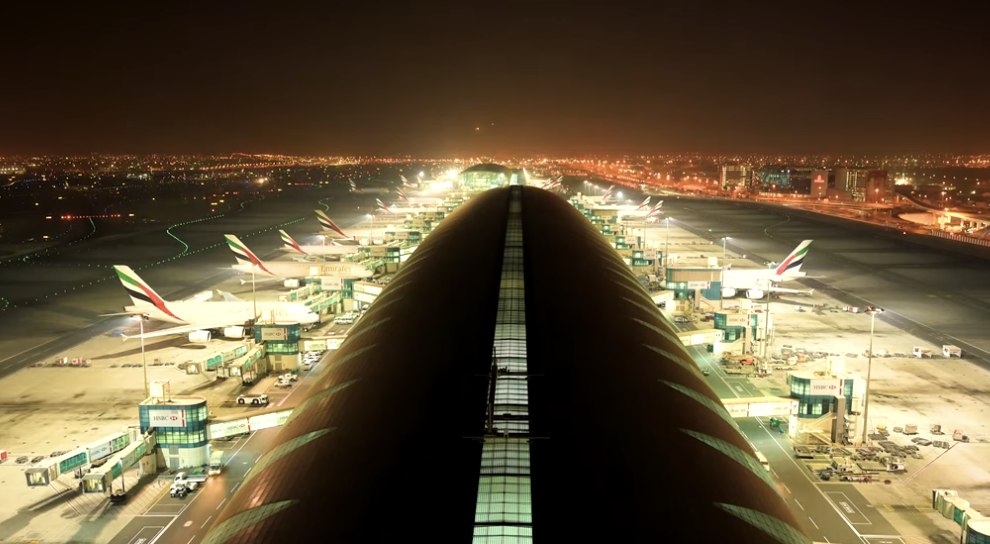
DUBAI — Dubai International Airport is open and operating normally today, with flights moving through all three of its terminals and real-time tracking data showing low delay levels across arrivals and departures, according to Dubai Airports’ flight information system and independent monitoring services.

The airport, known by its code DXB and recognized as the world’s busiest international aviation hub by passenger volume, is now fully functional after navigating one of the most disruptive periods in its history. That disruption was triggered by the outbreak of the U.S.-Iran conflict earlier this year, which caused intermittent airspace restrictions, flight suspensions and widespread rerouting across the broader Gulf region for several months.

Throughout the height of the crisis, Emirates and flydubai, the two primary airlines operating out of Dubai, continued flying and served as the backbone of connectivity through DXB even as capacity from many foreign carriers collapsed. At various points during the disruption, the airport maintained more than 220 combined daily departures between the two airlines, even as numerous international carriers suspended or significantly reduced their own Dubai routes in response to regional security concerns. Dubai Airports issued a standing advisory throughout the disruption period urging passengers to confirm departure times directly with their airlines before heading to the airport, guidance that remained in place for much of the crisis.

The path back to normal operations accelerated following a tentative ceasefire between the United States and Iran that took effect in early April, which triggered a series of successive airline reinstatements over the following weeks. British Airways, one of the more prominent European carriers to scale back its Dubai service during the crisis, announced it would resume flights to the city starting July 1, though initially at a reduced scale of one daily flight compared with the three daily flights it had operated before the disruption began. That announcement was widely regarded as the clearest signal yet from a major European carrier regarding what the post-crisis landscape for Gulf air travel would look like going forward.

Advertisement

The disruption period itself unfolded in stages over several months. Regional tensions escalated sharply in early June, when Iran launched missiles and drones at Kuwait and Bahrain, both of which host U.S. military bases, following a U.S. strike near the Strait of Hormuz. That escalation resulted in a terminal at Kuwait International Airport being struck and several people being wounded, forcing flight suspensions across Kuwait even as Dubai’s airport continued operating throughout the same period. At the time, UAE airspace remained open even as the broader security situation across the Gulf deteriorated, though Dubai Airports had not ruled out the possibility of further disruption depending on how the conflict evolved.

European aviation regulators played a significant role in shaping the pace of the recovery for international carriers. The European Union Aviation Safety Agency’s conflict zone advisory for the Middle East and Persian Gulf region remained in force for an extended period, with revisions gradually softening the recommended guidance for airlines regulated by the agency from advising against Gulf travel entirely to recommending carriers exercise caution. Until that bulletin was fully lifted, most European carriers were unable to resume Gulf routes regardless of their own individual assessments of the security situation, a regulatory reality that delayed the return of airlines such as KLM, Lufthansa and Air France even as demand for Dubai travel began recovering.

By early July, however, the recovery had become firmly established. Dubai International Airport has now been able to consistently maintain full operational status since the diplomatic de-escalation of the U.S.-Iran conflict allowed regional airspace to normalize over the preceding several weeks. Major airlines, particularly Emirates and flydubai, have resumed their normal flight schedules, with travelers arriving from destinations across Europe, South Asia and the United States now proceeding largely as scheduled according to current flight information.

The broader context surrounding Dubai’s recovery underscores the scale of what the airport navigated during the disruption. DXB welcomed a record 95.2 million passengers in 2025, becoming the busiest airport in the world by international passenger volume for the first time. Dubai’s broader tourism sector also continued growing even amid the aviation disruptions earlier this year, with the emirate recording 19.59 million international arrivals, a 5 percent increase over the prior year and marking the third consecutive year of record visitor arrivals. Hotel occupancy in the city has also remained strong, with rates around 80 percent supporting a robust meetings, incentive travel, conference and exhibition market that continues to draw international business travelers to the region.

Advertisement

Dubai Airports has also continued investing in the physical infrastructure of the facility even amid the disruption. The organization recently completed a major expansion of the bridge connecting to Terminal 1, a project intended to increase road access capacity and improve overall passenger flow ahead of the peak summer travel season, which typically brings a significant surge in visitors to the region.

Despite the return to normal operations, Dubai Airports and aviation analysts continue to advise travelers to confirm flight details directly with their airlines before heading to the airport, given the fluid nature of the regional security situation that characterized much of the earlier disruption period. While current conditions reflect a full return to normal operations across all three DXB terminals, the broader Gulf region’s recent history of rapidly shifting airspace restrictions means that travelers with itineraries connecting through Dubai or other regional hubs are generally encouraged to remain attentive to airline advisories in the days leading up to their travel.

For now, Dubai International Airport’s return to full operational capacity marks the conclusion of a challenging chapter for one of the world’s most critical aviation hubs, with the facility once again processing hundreds of flights daily and serving as a central connecting point for travelers moving between Europe, Asia, Africa and North America, much as it did before the regional disruptions of earlier this year began affecting operations across the Gulf.

Advertisement
Continue Reading
Click to comment

You must be logged in to post a comment Login

Leave a Reply

Business

BTS Fans Protest in Chile After Government Blocks Sold-Out Concerts at Santiago’s National Stadium This Week

Published

on

BTS.

SANTIAGO, Chile — Hundreds of BTS fans took to the streets of the Chilean capital Sunday to protest a government decision blocking the K-pop group’s three sold-out concerts scheduled for October at Santiago’s Estadio Nacional, a dispute that has drawn political criticism and prompted authorities to reopen discussions over the venue.

Chile’s National Sports Institute, known by its Spanish acronym IND and responsible for approving use of the national stadium, rejected the group’s request to hold its “Arirang” world tour concerts at the venue on October 14, 16 and 17. Officials cited technical concerns, saying the tour’s elaborate 360-degree stage setup would place a load of roughly 600 tons on the stadium’s playing field, potentially damaging the surface and disrupting other sporting events scheduled at the venue afterward. The institute also raised concerns about the mitigation plan submitted by concert promoter DG Medios, saying it failed to meet the technical standards required to protect the stadium’s field and infrastructure.

Sports Minister Natalia Duco, a former Olympian, addressed the decision in an interview with Chilean broadcaster 24 Horas, explaining that the promoter’s proposal did not adequately safeguard the country’s main sports venue. Duco also said the decision does not represent a permanent cancellation of the concerts, proposing alternative locations including the esplanade at National Stadium Park and Cerrillos Park. However, neither of those alternative sites is capable of accommodating the more than 48,000 attendees expected at each show, a fact that effectively left fans with no clear indication of when or where the concerts might actually take place.

All three shows had already sold out, with an additional October 14 date added after tickets for the original October 16 and 17 performances sold out quickly in April. That sellout status, combined with the abrupt nature of the rejection, fueled significant frustration among fans who had already made travel and financial plans around the concerts.

Advertisement

On Sunday, hundreds of members of BTS’ fandom, known as Army, marched through Santiago toward La Moneda, Chile’s presidential palace, wearing purple outfits and carrying purple balloons while singing the group’s songs. Protesters held signs reading messages such as “BTS to the National Stadium,” and demonstrations were reported to have taken place simultaneously in 11 cities across the country, according to reporting from StarNews.

Fan Juan Bugueño, speaking to reporters at the protest, expressed frustration with the government’s handling of the situation, saying, “We want answers from the government and the Minister of Sports.” Another protester, identified only as Francisca, described the emotional weight of the situation, saying the concert represented years of saved money and a long-awaited dream now at risk of being taken away.

The controversy has also drawn political attention beyond the fan community itself. Alejandro Bernales, a member of Chile’s Freedom Party, criticized the decision publicly, arguing that blocking the BTS concerts carries negative consequences for Chile’s economy and international image. Opposition politicians and some fans have accused the government of using the technical explanation to divert public attention from unrelated domestic political issues, though officials have maintained the decision was based solely on protecting the stadium’s infrastructure rather than any political consideration.

Following the weekend demonstrations, the Chilean government appeared to soften its position. Officials indicated they were now reviewing the matter based on what they described as new technical information, suggesting the door remains open for the concerts to eventually proceed at the National Stadium if a workable solution can be reached between the government and concert organizers. Some reports have also noted that the National Sports Institute has separately requested an additional payment of roughly 1.9 billion won, or approximately $1.4 million, beyond the standard stadium rental fee, intended to support national sports programs, a detail that has added further complexity to the ongoing negotiations.

Advertisement

Fans and some commentators have suggested potential compromises that could address the stadium’s concerns while still allowing the concerts to proceed, including having the concert organizer fully restore the stadium’s grass field following the performances. Whether such a proposal would satisfy the National Sports Institute’s technical requirements remains unclear, and no final resolution had been announced as of the latest reporting.

The dispute comes as BTS continues an extensive global stadium tour featuring the same 360-degree stage configuration at the center of the Chilean controversy. The tour spans 34 cities worldwide and is scheduled to continue through Europe before moving to North America in August. At the time the Chilean dispute unfolded, the group was performing back-to-back shows in London at Tottenham Hotspur Stadium, continuing a run of major stadium performances that have accompanied the release of the group’s “Arirang” album and associated world tour.

Neither HYBE nor BigHit Music, the entertainment companies that oversee BTS’ activities, had issued a formal public statement addressing the Chilean venue dispute as of the most recent reporting, according to Manila Bulletin, which noted it had reached out to both companies for comment without receiving a response.

The episode has also generated significant attention within South Korea itself, with fans and social media users there expressing solidarity with Chilean supporters of the group, many of whom had already purchased tickets, booked travel and made other arrangements months in advance of the scheduled shows. Some Korean fans have questioned how officials could revoke stadium approval after all three performances had already sold out, given that ticket sales had proceeded for months without any prior indication that the venue’s approval remained unresolved.

Advertisement

With Chilean authorities now indicating a willingness to revisit the decision based on new technical information, the ultimate outcome of the dispute remains uncertain. Fans in Santiago and around the world continue to await further updates on whether the October concerts will proceed as originally planned at the National Stadium, be relocated to an alternative venue, or face further delays as officials and concert organizers work to resolve the underlying technical and logistical concerns that triggered the initial rejection.

Continue Reading

Business

OpenAI’s Codex Coding Tool Reportedly Down for Some Users as Outage Reports Spike Overnight

Published

on

OpenAI

OpenAI‘s Codex, the company’s AI-powered coding assistant, was reportedly experiencing connectivity and access issues for some users early Tuesday, with outage tracking services and user reports pointing to intermittent disruptions affecting the tool’s desktop application and related services.

According to outage tracking site StatusGator, 21 user-submitted reports of problems with Codex were logged over a 24-hour period ending Monday evening, with the platform describing OpenAI as experiencing a partial outage at the time. The social media account Status Is Down flagged the issue early Tuesday morning, asking followers whether they were affected and using the hashtags #OpenAI, #OpenAIDown, #Codex and #CodexDown as reports of the disruption circulated online.

Multiple users also reported problems directly on OpenAI’s GitHub issue tracker for the Codex project throughout the day Monday and into Tuesday. Several issues logged by developers described connectivity problems affecting the Codex desktop application, including disconnection errors related to networking and endpoint connectivity, as well as separate issues involving the tool’s integration with Model Context Protocol servers, a framework Codex uses to connect with external tools and data sources. Additional reports cited problems with tool-calling functionality and issues specific to the Codex application running on Windows systems.

OpenAI’s official status page acknowledged ongoing issues tied to its systems, though the company’s most recent public update focused specifically on disruptions affecting FedRAMP workspaces, a designation for cloud environments that meet federal government security compliance standards. According to that update, OpenAI said core functionality had been restored following an earlier disruption, but noted continuing issues affecting Codex, workspace analytics, conversation search, the ability to search for custom GPTs, ChatGPT user invites, and the Compliance Logs Platform download feature specifically within FedRAMP-designated environments. The company said it was continuing to work on resolving those remaining issues and would provide further updates as more information became available.

Advertisement

The disruption adds to what has been a bumpy stretch for Codex’s reliability in recent weeks. According to outage history compiled by StatusGator, OpenAI has logged a series of warning-level service disruptions on nearly a daily basis over the past several weeks, including periods of degraded service lasting anywhere from several hours to a full day at a time between late June and early July. One previously resolved incident specifically affecting Codex and related FedRAMP services lasted approximately five hours and 48 minutes, beginning in the early morning hours of July 1.

Codex has also experienced a range of other technical issues in recent months unrelated to Tuesday’s reported disruption. According to incident logs maintained by monitoring service IncidentHub, Codex has dealt with several previously resolved issues over the past few weeks, including a period in late June when usage limits within Codex appeared to deplete faster than expected, along with earlier incidents involving access token errors, a “Selected Model is at Capacity” error message, elevated error rates specifically affecting the GPT 5.5 model within Codex, and increased latency during a process the company refers to as Codex compaction.

OpenAI has periodically addressed broader Codex-related errors through its own developer community forum in the past, acknowledging increases in error rates and confirming that engineering teams were actively working to resolve underlying issues as quickly as possible. The company has generally directed users to its official status page for real-time updates during periods of degraded service, a practice that appeared to continue during Tuesday’s reported disruption.

Codex, first introduced by OpenAI as an AI coding tool designed to help developers write, debug and manage code through natural language prompts, has become an increasingly central part of the company’s broader product lineup as demand for AI-assisted software development tools has grown across the technology industry. The tool is available both through a web interface and as a downloadable desktop application, with additional integrations available through command-line interfaces used by many professional software developers.

Advertisement

Outage tracking services generally caution that reported issue counts reflect self-submitted user data and public signals such as social media activity, meaning the true scope of any given disruption can sometimes differ from the volume of individual reports logged at a particular time. Even so, the combination of user reports on GitHub, social media posts flagging the outage, and OpenAI’s own acknowledgment of ongoing technical issues within certain workspace environments suggested that at least some portion of Codex’s user base was experiencing meaningful disruption to the service as of early Tuesday.

For affected users, common troubleshooting steps recommended by technical support resources typically include checking OpenAI’s official status page for the most current information, verifying internet connectivity, restarting the Codex application, and, where relevant, checking whether an issue is isolated to a specific integration such as an MCP server connection rather than reflecting a broader outage of the underlying service. Developers experiencing persistent issues are generally encouraged to file detailed reports through OpenAI’s GitHub repository, where the company’s engineering team can track and triage individual bug reports alongside broader service-wide disruptions.

As of Tuesday morning, OpenAI had not issued a comprehensive public statement addressing the full scope, cause or expected resolution timeline for the reported Codex disruptions occurring outside the FedRAMP environment specifically referenced in its most recent status update. The company’s history of frequent, relatively short-duration service warnings over the preceding weeks suggests that intermittent disruptions of this kind have become a recurring, if generally short-lived, feature of Codex’s operation as OpenAI continues to scale the tool’s usage among a growing base of developers relying on it for day-to-day coding tasks.

Users experiencing ongoing problems with Codex are encouraged to monitor OpenAI’s official status page at status.openai.com for the most current information, as the company works through what appears to be a mix of both newly reported connectivity issues and previously acknowledged, more narrowly scoped disruptions affecting specific workspace configurations. Given the pattern of past incidents, similar disruptions affecting Codex have historically been resolved within a period ranging from several hours to roughly a day, though OpenAI has not provided a specific timeline for full resolution of Tuesday’s reported issues as of this report.

Advertisement
Continue Reading

Business

Managing Risk in Volatile Markets: Lessons From Crypto Trading

Published

on

Managing Risk in Volatile Markets: Lessons From Crypto Trading

In volatile markets, the gap between people who last and people who blow up rarely comes down to who picks the best opportunities.

It comes down to how they handle risk. Cryptocurrency — one of the most volatile asset classes in existence — makes this lesson unusually clear: traders who ignore risk management tend to disappear quickly, while those who respect it survive long enough to let good decisions compound. The principles behind that discipline are not unique to crypto. They apply to any investor, founder, or business managing exposure to an uncertain market.

Survival comes before being right

The first job of any serious market participant is not to make money — it is to avoid catastrophic loss. The mathematics are unforgiving: a 50% loss requires a 100% gain just to break even, and a 90% loss requires a tenfold return. This asymmetry is why experienced traders treat capital preservation as the foundation of everything else. Good risk management isn’t about predicting the future; it’s about making sure that being wrong — which happens to everyone — never ends the game. In a market that can move 10% or 20% in a single day, that mindset is not optional.

Position sizing: the quiet core of the discipline

If risk management has one most important habit, it is position sizing — deciding how much of your capital to put behind any single idea. The professional approach is to define, in advance, the maximum you are willing to lose on one position, commonly one to two percent of your account, and then let that figure determine the size of the trade. It is a subtle inversion of how beginners think: instead of asking “how much could I make,” you start with “how much can I afford to lose.” Tools such as a position size calculator make this straightforward, translating your risk tolerance and stop distance into a precise position size. Done consistently, it ensures no single mistake can do lasting damage.

Define your downside before you enter

Alongside sizing, disciplined traders decide their exit before they enter. A predefined stop-loss caps a loss at a level you chose calmly, rather than one forced on you in a panic. This matters even more when leverage is involved: borrowing to amplify a position amplifies the losses just as fast, and can turn ordinary volatility into a threat to your entire stake. Whatever the instrument, knowing your worst-case outcome in advance is what separates calculated risk from gambling.

Advertisement

The lessons travel well beyond crypto

Strip away the jargon and these principles describe sound financial management anywhere. Don’t concentrate everything in one bet. Keep reserves for when conditions turn. Size your exposure to what you can afford to lose, not to what you hope to gain. And treat emotional discipline — resisting the urge to chase gains or to freeze in a downturn — as a skill worth practising. Crypto simply teaches these lessons faster, and more painfully, than most markets, because its swings leave so little room for error. For any business owner or investor weighing an uncertain opportunity, the first question worth asking is not how much there is to win, but how much there is to lose — and whether the balance sheet could withstand it.

Volatility isn’t going away, in crypto or anywhere else. But it is survivable, and even useful, for those who put risk first. The market participants who endure are not the ones who never lose; they are the ones who make sure a loss is never fatal. That is a lesson worth borrowing, whatever you invest in.

Disclaimer: This article is for informational purposes only and does not constitute financial advice. All investing and trading carries risk, including the loss of capital; always do your own research.

Advertisement

Continue Reading

Business

Ciena: Successfully Riding The AI-Powered Wave

Published

on

Ciena: Successfully Riding The AI-Powered Wave

Ciena: Successfully Riding The AI-Powered Wave

Continue Reading

Business

Bernstein initiates SpaceX stock coverage with Outperform rating

Published

on


Bernstein initiates SpaceX stock coverage with Outperform rating

Continue Reading

Business

Allen Caratti case drags on

Published

on

Allen Caratti case drags on

The Commonwealth’s dispute with Allen Caratti over charges of financial deception continues in court, with the property developer calling in former attorney-general Christian Porter as his lawyer.

Continue Reading

Business

Major changes to Bristol Temple Island deal needed amid rising costs

Published

on

Business Live

Plans for affordable housing at the site are being halved in a blow to the city council

How the Temple Island development could look
Picture: Legal and General
Free to use for all LDRS partners

How the Temple Island development could look(Image: Local Democracy Reporting Service / Legal and General)

A deal for a landmark Bristol development featuring hundreds of new homes, office blocks reaching up to 19 storeys, and a hotel and conference centre close to Temple Meads station is set to become considerably more costly for the city council.

Advertisement

The local authority has already pledged £32m to remediate the derelict former diesel rail depot at Temple Island — previously earmarked for an arena and known as Arena Island before being scrapped by then-mayor Marvin Rees — and lay the groundwork for construction.

It has taken four years to decontaminate the site ahead of developer Legal & General overhauling the land with a £350m investment, which is expected to take roughly a decade to complete.

However, a Bristol City Council report now reveals the agreement signed with L&G in 2022 — which pledged that 40 per cent of the 520 homes would be designated as affordable and included the council guaranteeing office rent to the financial firm for 40 years, estimated at £2m annually — is no longer financially viable.

The report states that both elements have shifted considerably against the council’s interests, meaning it will be forced to absorb additional costs to keep the project, part of the broader Temple Quarter and St Philips regeneration scheme, on course.

Advertisement

The report, due to be ratified by the strategy and resources committee on Monday, July 13, confirmed that land value had fallen sharply owing to a 35 per cent rise in construction costs since 2022 and the introduction of new safety regulations. Yet simultaneously, demand and pricing for Grade A office space in central Bristol has climbed steeply.

All of this means that without a fresh agreement, the 2022 deal would be incapable of delivering the development.

The committee is therefore being asked to halve the proportion of affordable homes from 40 per cent to 20 per cent — a figure that became apparent months before L&G secured planning permission in April — though even this reduction is contingent on a grant from Homes England.

The council, which will sublet the offices, will also be required to pay a higher guaranteed rental income to L&G — a figure that is either unknown, yet to be agreed upon by officers under delegated authority, or not available to the public.

Advertisement

The report said: “As the prevailing rents for Grade A office space have increased significantly since 2022, it is proposed that the rental guarantee is now valued proportionately higher so that it can still contribute to the development viability.”

It noted that the figures were commercially sensitive and were contained within an exempt report.

The report said: “The proposed lease arrangement creates a long-term revenue commitment for the council.

“There is a risk that income generated from office occupiers may be insufficient to meet lease payments to L&G due to void periods, slower-than-anticipated occupation, market rent fluctuations, rent-free incentives, operating costs or wider market changes.

Advertisement

“This may create a revenue budget pressure, particularly during the early years of occupation.”

Finance officers stated: “Finance supports the principle of the proposed variation as a pragmatic route to progressing the scheme in current market conditions.

“However, members should be clear that the decision creates a long-term revenue exposure for the council and that the financial position will require active monitoring and management over the life of the lease.”

Advertisement
Continue Reading

Business

Netflix: Don't Overlook The Structural Threat Of Microdramas

Published

on

Netflix: Don't Overlook The Structural Threat Of Microdramas

Netflix: Don't Overlook The Structural Threat Of Microdramas

Continue Reading

Business

Asia stocks fall as AI valuation fears overshadow Samsung’s blockbuster earnings

Published

on


Asia stocks fall as AI valuation fears overshadow Samsung’s blockbuster earnings

Continue Reading

Business

Great Western Mining reports tungsten results from Nevada project

Published

on


Great Western Mining reports tungsten results from Nevada project

Continue Reading

Trending

Copyright © 2025