
Politics
The lie at the heart of Starmer’s ‘Brexit reset’

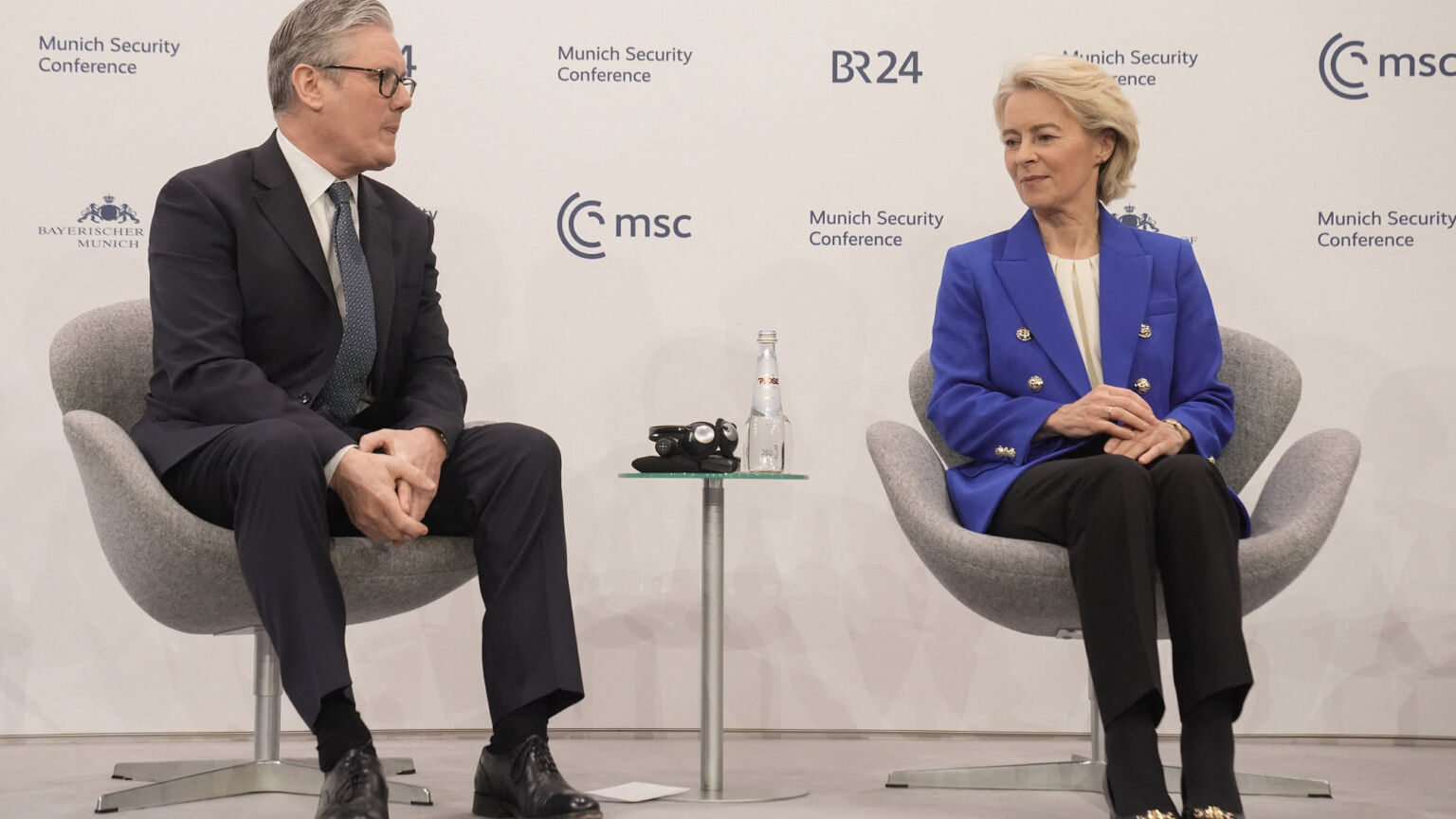
Keir Starmer is making no secret of the fact that his ‘Brexit reset’ is part of a longer-term plan to move the UK closer to the EU. Speaking at the Munich Security Conference last week, he said ‘We are not the Britain of the Brexit years anymore’. The so-called dynamic alignment being proposed by Starmer means committing to put EU regulations into UK law, without our elected representatives having any say on them.
Underpinning this policy is the assumption that Brexit continues to cause catastrophic losses to the UK economy. In particular, it seems to have become an article of faith among many politicians and commentators that Brexit has been disastrous for UK trade. There is just one problem with this claim: it is not true.
Last Thursday, UK trade data for 2025 were published, meaning we now have 10 years of data since the EU referendum and five years’ worth since Britain left the Customs Union.
The Office for Budget Responsibility (OBR) has consistently argued, even as recently as November 2025, that Brexit would cause a four per cent hit to UK productivity, based on the assumption that leaving the EU would cause total trade (imports plus exports) to be 15 per cent lower than if we had stayed in. So what do the latest trade data tell us about the OBR’s assumption?
All sides should acknowledge that working out the counterfactual of remaining in the EU is not easy. In the first place, it is not clear what is the best reference point for measuring any Brexit effect. One option is to use 2015, the year before the referendum. Another would be 2019, the year before we officially left the EU in January 2020. Perhaps when looking at trade, it would be better to use 2020 as the starting point, given we only left the EU Customs Union in January 2021. The difficulty there is that global trade in 2020 was significantly affected by Covid.
However, whatever starting point we use, the latest data show that total UK trade has actually increased since 2015, even allowing for inflation. Now you might expect trade to increase over time as the economy gets bigger. In fact, UK trade in real terms has grown faster than GDP. And this is true for both imports and exports.
Between 2015 and 2025, total UK exports in real terms increased by 23 per cent, compared to GDP growth of just 14.4 per cent. Since 2019, exports are 6.9 per cent up while GDP increased by just 5.2 per cent. And the 2025 data reveal exports have increased by two per cent since 2024 compared to a 1.3 per cent growth in GDP.
Might UK trade have increased even more had we stayed in the EU? If we look behind the total figures, we can see that exports in goods to the EU have dropped since Brexit. But that fall has been more than compensated by increases in services trade, particularly to non-EU countries.
In terms of establishing a causal impact from Brexit, it’s important to remember that we have maintained tariff- and quota-free trade in goods with the EU, under the terms of the UK-EU Trade and Cooperation Agreement. It is, however, true that some non-tariff barriers have increased, such as administrative checks for goods at the border. Thus, it is likely that some of the fall in goods exports to the EU is indeed due to Brexit. But we need to be cautious even on this point, as a number of factors unrelated to Brexit have contributed to the decline in UK goods exports.
High energy prices and carbon taxes have led manufacturers, particularly in the chemicals sector, to shift production away from the UK. At the same time, government policy has reduced North Sea oil production. As a result, exports have declined in both of those sectors. Exports to the EU have also been affected by weak demand in key EU countries such as Germany, which only narrowly avoided recession last year. Without doubt, UK goods exports would have decreased in recent years even had we stayed in the EU.
But there is another effect that is less well known. Since leaving the EU, changes in ‘rules of origin’ criteria, used to determine the ‘economic nationality’ of a product, mean that goods produced outside the UK, imported here and then exported to Europe, are now no longer classified as exports (tropical fruits and nuts, for instance, are often imported from the Commonwealth and then re-exported to the EU). In other words, some of the decrease in reported exports to the EU is due to how the data are now measured, rather than any actual reduction in exports. When you consider all of these factors, it is all the more notable that total reported exports have increased so much since Brexit.
And when it comes to services, a sector much more important to UK trade than goods, Brexit was followed by a demonstrable reduction in the OECD’s services-restrictiveness index. In part this is due to the many service-focused trade deals we have made with other countries, including with Australia, India and the 11 countries in the Comprehensive and Progressive Agreement for Trans-Pacific Partnership. Crucially, these trade deals would have been literally impossible had we stayed in the EU. Indeed, even rejoining the Customs Union, as potential Labour leadership contender Wes Streeting and deputy PM David Lammy have both advocated, would mean those post-Brexit trade deals would have to be abandoned.
Overall, the net impact of Brexit on trade is impossible to know for sure. But it seems likely that, if anything, Brexit has resulted in an increase in total trade. Certainly, the OBR’s assumption that Brexit would result in a 15 per cent hit to UK trade is simply implausible in the light of the real data.
And if Brexit hasn’t hit trade, it is hard to see how it could have significantly hit the UK economy. A recent working paper argues that Brexit has meant UK GDP is eight per cent lower than it would otherwise have been. But this outcome is just as inconsistent with the actual data as the OBR’s trade assumption.
In recent years, the UK’s GDP per capita has grown faster than many of our big rivals who stayed in the EU, most notably Germany. The real outlier is the US, where economic growth has far outpaced both the UK and the big EU countries. And the reasons for that divergence are nothing to do with Brexit. Instead, they include the fact that, unlike most of the EU and the UK, the US has largely refused to pursue climate policies that lead to disastrously high energy costs for industry.
If it were true that Britain’s GDP would have been eight per cent higher without Brexit, the implication is that UK economic growth would have leap-frogged the other EU countries and actually rivalled that of the US. Again, this is just implausible.
Given other factors such as Covid, energy prices and the Ukraine war, it is hard to be certain whether the net impact of Brexit on the UK economy so far has been positive or negative. But looking at how well UK trade and GDP has held up relative to our big EU rivals, we can be confident any negative effect has been small at worst.
Starmer’s EU reset has little chance of improving sclerotic economic growth in the UK. Dynamic alignment of food regulations might lead to a small increase in UK exports to the EU, but it will benefit EU farmers more than our own – not least as we import vastly more food than we export to the EU market. And by imposing EU regulations on the whole UK economy, there will also be costs: a higher regulatory burden for UK producers, higher prices for UK consumers as it becomes more difficult for us to import cheaper alternatives to EU products, risks to trade deals with countries like the US and, of course, the democratic deficit from us having to accept EU laws with no say from our elected representatives. Even worse, it seems likely that we will have to pay the EU significant sums of money for the privilege of following its laws. Good job the chancellor has plenty of cash to spare!
Keir Starmer’s policy of tying the UK to the EU’s regulatory orbit is not based on real-world data or on a solid analysis of likely benefits to the UK economy. The PM is blindly following Remainer dogma.
David Paton is professor of industrial economics at Nottingham University Business School. Follow him on X: @CricketWyvern.


Technically, seagulls are not a bird of prey. But try telling that to the snacking tourists on my nearest beach; they start scanning the skies for chip predators, ducking for cover like voles facing the claws of a kestrel.
Some research has found that no matter what lifestyle they lead, seagulls seem programmed to dive-bomb at boxes of fish and chips.
But a new study might have found a surprising answer: painting eyes on chop boxes.
Why does that help?
According to a paper published in Ecology and Evolution, “gulls were slower to approach and less likely to peck a takeaway food box with eye-like stimuli compared to a box without eyes”.
The researchers measured how often herring gulls approached boxes with eyes painted on them with their approach to plain boxes. They were slower to approach the more watchful-seeming containers and pecked them less often.
Overall, the step reduced thefts by as much as 50%. And that reduction remained even after the seagulls had been exposed to takeaway eye boxes multiple times.
Lots of animals are put off by the presence of eye-like markings, the study added.
Previously, the researchers wrote, a similar approach has proven successful in keeping predators from assaulting cattle, preventing birds from gathering in airports, and ensuring seabirds stop foraging near fishing nets.
However, the paper cautioned that responses to the eyes were “highly individual”; not all species of gull may react the same way, and even among herring gulls, about half didn’t seem to care about the change at all.
What else could help?
The University of Exeter has previously found that shouting at seagulls could keep them away from your chips.
And staring at them might work, too (they really don’t seem to like eyes).
Depending on how seriously you take your beachside fish and chips, you could try a painted box, yelling, and intense eye contact trio…

Deep sleep, which should make up about a quarter of your overall sleep, is crucial to feeling rested.
But about a third of adults don’t get enough consistent sleep to enjoy the necessary 120 minutes or so a night.
Speaking to HuffPost UK, psychologist Dr Bijal Chheda of Nos Curare said that’s far from inevitable, however.
She shared seven tips to help train your brain to enjoy deep sleep:
1) Set a strict bedtime and stick to it
Some research suggests that sleep regularity – going to bed and waking up at roughly the same time – might be a better predictor of mortality than even sleep duration.
“Our circadian rhythm, or natural sleep-wake cycle, functions like a finely tuned clock. By going to bed at drastically different times each day, you’re essentially confusing your system,” Dr Chheda said.
“This interferes with the release of sleep hormones like ‘melatonin’, which rise in the evening and drop in the morning. As a result, you may struggle to fall asleep, wake up frequently at night, or feel groggy even after a full night’s rest.”
This could be especially common among those with ADHD, whose circadian rhythms are more likely to make them night owls.
Once you try to set stricter bedtimes, “It may take a few weeks for your body to adjust, but once it does, you’ll notice falling asleep becomes easier,” Dr Chheda said.
2) Avoid caffeine after 2pm
“Caffeine can linger in your system for longer than eight hours, subtly stimulating your brain and central nervous system, even when you don’t feel particularly jittery,” the psychologist said.
“If you find yourself constantly tossing and turning at night, I suggest cutting off caffeine after 2pm to give your body enough time to metabolise it fully. This allows ‘adenosine,’ or the chemical that promotes sleepiness, to do its job without being blocked by any caffeine lingering in your body.”
3) Don’t work or scroll in bed
If you open emails or “doomscroll” in the sheets, you’re likely to “weaken the body’s automatic ‘sleep cue’” when you go to bed to sleep, Dr Chheda warned.
In fact, it might even “rewire your brain to start associating the space with wakefulness rather than rest” – an especially difficult scenario for those with anxiety, she shared, as racing thoughts are likelier to keep them up to begin with,
4) Keep your bedroom cool and dark
We sleep better in cooler rooms. Dr Chheda explained, “Cooler temperatures act as a natural trigger for sleep onset. When your core body temperature cools down, it signals to your brain that it’s nighttime, triggering melatonin release and making you drowsy naturally.
“Meanwhile, darkness reinforces this. Light, especially blue light, suppresses the production of sleep hormones, whereas darkness allows your body to fully transition into rest mode. Therefore, maintain a calm, controlled sleep environment by keeping room temperature at night to around 18 to 20°C.”
5) Create a consistent wind-down routine
For me, it’s reading. However you choose to relax, it’s important to do it at roughly the same time before bed.
“Start by incorporating relaxing activities, such as reading or journaling, to help quiet mental clutter that can keep you awake. Add in a few minutes of stretching or breathing exercises to slow your heart rate and reduce stress levels, helping your body shift into rest mode effortlessly,” Dr Chheda told us.
6) Steer clear of blue light before bed
Sleep expert after sleep expert has shared a similar sentiment to Dr Chheda in the past: “blue light emitted by smartphones and tablets suppresses melatonin production, delaying the onset of sleep,” she said.
“Set a bedtime schedule and aim to put your screen away at least an hour before.”
7) Wake up at the same time, even on weekends
“While sleeping in until noon on the weekends may feel rewarding in the short term, doing this too often can make it harder to fall asleep the following night,” the expert said.
“Waking up at the same hour every day helps regulate your body’s circadian rhythm. A consistent sleep-wake cycle stabilises hormones like cortisol and melatonin, which are responsible for maintaining your internal biological clock.”

I think the clock change made it feel official: spring is finally in full swing.
That means busier backyards, blooming buds, and buzzing bees. But while these are welcome sights for many winter-weary gardeners, they do spell extra work, too.
Here, we thought we’d share some of the jobs to tick off your list this month:
1) Prune any rambling or climbing roses you haven’t already
Yes, technically, March was the best time to get the job done. But don’t worry if you’ve been too busy enjoying the (changeable, elusive) sunshine; you can just about get away with the task at the start of this month, too.
2) Weed, weed, weed
We’re all for keeping some, or all, of your garden wild. But if you’ve got some seedlings or small plants growing, it’s important to keep the area beside them weed-free to ensure they’re not crowded out – manually remove them instead of applying weedkiller to reduce any harm to your garden’s ecosystem.
3) Then, mulch
Applying a layer of mulch to freshly weeded patches can prevent them from facing the same issue again. It helps soil to retain moisture, too.
4) Fill in borders by planting wildflowers
Now’s a great time to get wildflower seeds and hardy annuals in the ground – all the better if they can fill in any gaps in your borders.
You can plant giant sunflowers in a sheltered, sunny spot now, too.
5) Keep aphid populations in check
April is a great time to get ahead of any encroaching aphid populations that would otherwise plague your roses. Look at your flowers and manually remove any little insect gatherings you see before they become a real issue.
6) Repair frost damage and bare patches
Re-sow your garden, using a “penguin shuffle” method, or lay down new turf to hide the damage winter may have done to your garden.
7) Speaking of frost, prepare your plants for some icy conditions
The weather has been all over the place recently. Don’t allow “false spring” to take you for a fool: newly-sown plants benefit from cloches or sheets of fleece, especially where frost is predicted.
8) Add new pond plants, and divide those which have become overgrown
Ponds are key to a thriving ecosystem in your garden. Plant aquatic plants now, and divide any unruly established ones before they grow further.
9) Begin feeding citrus plants
These will need feeding from now until about October. Give them a nitrogen-rich citrus summer feed if you can.
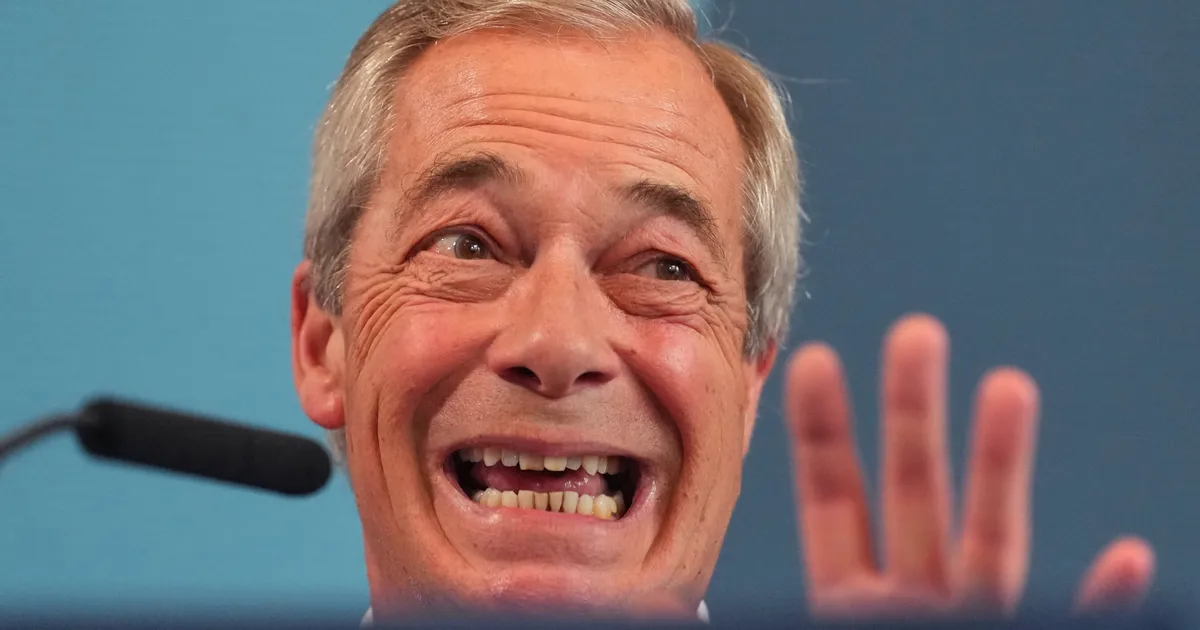
Support for Reform UK has slumped with barely a month to go until crucial elections across the country.
In a major blow for Nigel Farage, two new opinion polls suggest the momentum the right-wing party has enjoyed over the last year is stalling.
A survey for pollsters Norstat for the Sunday Times shows that Reform support has fallen by four points to 15% in Scotland, where the party is in a fight with Labour to come second behind the SNP.
Meanwhile, a poll by Lord Ashcroft for the Mail on Sunday suggests Reform has lost its outright lead across the UK for the first time in more than a year.
It puts the party on 21% alongside the Tories and Greens, with Labour trailing on just 17%.
The findings will alarm Reform bosses, who regularly boast about the party’s poll leads.
Voters in Scotland, England and Wales will go to the polls on May 7 in the biggest test of public opinion since the 2024 general election.
Labour is heading for “a total bloodbath”, according to one polling expert, with the Tories also expected to suffer major losses.
Both Reform and the Greens and on course to make major gains as voters drift away from the two main parties.
Nevertheless, the latest polling suggests the scale of the Reform breakthrough may not be as significant as previously thought.
The party has endured a difficult start to the election campaign, with a succession of candidates either quitting or being dumped.
HuffPost UK also revealed last month how the party is being forced to ask people – including a Lib Dem councillor – to be “paper candidates”, suggesting they are struggling to find enough recruits.
Meanwhile, the party was forced to sack its housing spokesman over comments he made about the Grenfell Tower tragedy.
Simon Dudley, who had been in the post for less than a month, said “everyone dies in the end” and “fires happen” as he claimed there is now too much regulation in the building industry.
Subscribe to Commons People, the podcast that makes politics easy. Every week, Kevin Schofield and Kate Nicholson unpack the week’s biggest stories to keep you informed. Join us for straightforward analysis of what’s going on at Westminster.

There’s no way to predict exactly how long any of us will live or precisely how well we’re ageing, but scientists have created a series of tests they think might give us a rough idea.
It looks, for instance, like the condition of key muscles might be linked to how we’re ageing overall. Your balance and even personality seem to matter, too.
Here are just a few of the science-backed challenges:
1) The sit-to-stand test
A recent study conducted with women aged 63-99 looked at unassisted sit-to-stand chair raises (going from a seated position to standing without leaning on something, as quickly as possible).
Scientists tracked participants’ speed in seconds for five of these raises.
“When it came to chair stands, moving from the slowest time to the fastest time in 6-second increments, researchers saw a 4% lower mortality rate,” the University of Buffalo, whose researchers were involved in the study, said.
A separate 2012 study called the sit-to-stand test a “significant predictor of mortality” among 51-to-80-year-olds.
2) The grip strength test
The same study involving older women found that for every seven extra kilograms of pressure participants could apply to a hand dynamometer in a grip test, they saw a 12% lower mortality risk on average.
It’s far from the only paper to note such a link.
Described by researchers as an “indispensable biomarker for older adults,” weaker grip strength has been linked to an increased likelihood of diabetes, fractures, cognitive decline, depression, and low quality of life.
3) Standing on one leg, nicknamed the “flamingo” test
The amount of time you can stand on one leg serves as a “valid measure of frailty, independence, and fall status and… a useful tool in identifying patients with peripheral neuropathy,” researchers have previously said.
Per the NHS, you should aim to “stand like a flamingo” for:
Even if that’s a walk (or hop) in the park for you, the NHS added, you shouldn’t stand on one leg for more than a minute.
4) The gait speed test
“A slow walk is a problem sign decades before old age,” Professor Terrie Moffit, senior author of a 2019 ageing study, told King’s College London. The trait was linked to faster brain and bodily ageing among participants; their lungs, teeth, and immune systems also aged faster.
A “gait speed” or “four metre” test can help you work out where you stack up. For a four metre test, you’ll need a 10m path, with two metres for the person to speed up to their normal pace and two to decelerate; mark it out and get a timer.
Once you pass the acceleration zone and enter the four metres in the centre, time your walk, ending once you enter the deceleration zone. Then, divide the number of seconds it took you to complete the course by the number of metres you walked.
Less than 0.8m/s is considered a low gait speed, according to the Clinical Oncological Society of Australia.
5) The NHS heart age test
Yes, cholesterol figures and your blood pressure can say a lot about your heart health. But the NHS has created a questionnaire to help you work out the approximate biological age of the organ, too (it’s only suitable for people aged 30-95 without an existing heart condition).
6) Check your instinctive response to questions like “Which country was the first to allow women to vote?” or “What does the word ‘dinosaur’ mean?”
Questions like these were among those asked in a study looking at the link between ageing and curiosity.
Participants were asked how curious they were to hear the answer to the questions; their general curiosity was also assessed.
General curiosity among people who love things like reading broadly and exploring the world – far-reaching, or “trait,” curiosity – “has been shown to relate to better cognitive outcomes,” study author Dr Mary Whatley shared.
But older people tended to have more “state curiosity,” or temporary interest in a specific question or subject, with most people’s trait curiosity declining over time.
4 min read
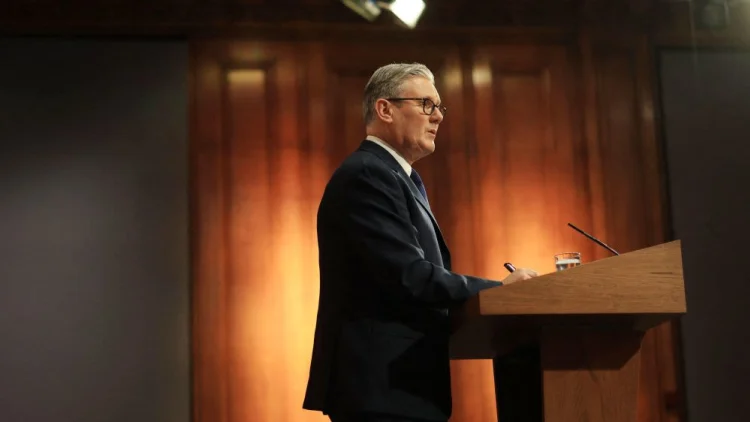
This Labour government must emulate the boldness shown by Gordon Brown nearly two decades ago and convene an International Energy Summit.
Even while staying out, the UK cannot avoid the consequences of the Iran war. Economic pain is rapidly approaching, and a long-threatened era of energy scarcity has begun.
As a government advisor during the financial crash, I was sceptical when Gordon Brown convened G20 world leaders. But he proved the doubters wrong and emerged with a framework for action and an even worse catastrophe averted.
The energy crisis sparked by Donald Trump’s war threatens a crisis as big as the financial crash, and which requires a response of equal magnitude. This is not simply a temporary price spike. Gulf energy underpins the world economy, with Qatar supplying a fifth of the world’s liquefied natural gas and a fifth of all oil and gas passing through the Strait of Hormuz.
For the second time since Russia’s invasion of Ukraine, global dependency on vulnerable fossil fuel supply chains has been brutally exposed. Even if the war stopped tomorrow, experts warn it could take years for things to stabilise. We are entering a new era of global energy insecurity that threatens living standards, economic stability and national security. Hostile powers that control fossil fuels understand the power they hold; economic hardship and public resentment provide ideal conditions for extremist politics to flourish.
The Prime Minister’s announcement that the UK is convening 35 nations to discuss reopening the Strait of Hormuz is a good step forward. But this crisis is global, and Britain must respond globally.
We need an International Energy Summit, convened by Britain with the same boldness as Brown’s summit in 2009. The UK has the credibility to lead the response to this crisis, with deep energy expertise and renewable energy potential. We are also living proof of the stakes, with limited gas storage, declining domestic fossil fuel production and a population that has already endured one energy price shock in recent memory.
We could be convening major global players to secure agreement to stabilise energy markets, safeguard supply chains, coordinate reserves and speed up the shift to renewables. We could also be securing consensus that energy security is global security, and the alternative is a ‘Hunger Games’ world of resource conflict, scarcity and coercion.
We cannot have a dangerous race-to-the-bottom. If the wealthiest countries pay to hoard fossil fuels, we will all pay the price. Our economy depends on supply chains that stretch across countries like Bangladesh, Vietnam and the Philippines. If energy prices push those economies into blackouts or recession, we will quickly feel it here too — through goods shortages, higher prices and economic disruption.
The UK must therefore adopt a war footing to protect the British people — not just immediately, but for the long term. The route to national resilience is reducing our exposure to fossil fuels, because homegrown power cannot be held hostage by dictators, petrostates or erratic American presidents. We must accelerate the move to clean power, with a modern energy system that is decentralised, efficient and flexible. Plug-in domestic solar panels should become as central to strengthening energy security as Anderson shelters were to the 1939-45 war effort, enabling ordinary people to contribute to our shared resilience while also cutting their bills.
But even if we generate more energy at home, Britain will not fully benefit until we break the link between the price of gas and energy bills. Right now, even as fossil fuel usage falls, our bills remain tied to the volatile price of gas, inflicting pain on ordinary billpayers. We must break that link so we can drive down energy costs for households and businesses.
The direction of travel is clear, but the government must be bolder. From our global convening power to tackling our domestic energy crisis, no option should be off the table – even those once dismissed as too radical. This is not simply about bills. It is about security, stability and the enduring necessity of global cooperation in an increasingly fractious world.
Polly Billington is Labour MP for East Thanet


Labour has led every Welsh government since the start of devolution in 1999 (Alamy)

11 min read
Across England, Scotland and Wales, voters will go to the polls on 7 May in what could be one of the most fragmented and unpredictable local and devolved election cycles in recent British politics.
Elections across local councils in England, Holyrood in Scotland, and the Senedd in Wales are taking place on Thursday, 7 May 2026.
Approximately 4,992 councillors will be elected across 136 councils, as well as 6 local authority mayors. Two new councils are also being elected in East and West Surrey, and all 32 London boroughs are holding elections.
The Labour Party is defending more than 2,000 seats, the Conservatives are defending more than 1,000, the Lib Dems around 600, the Greens nearly 200, and Reform around 70 seats.
All seats in both Holyrood, the Scottish Parliament, and the Senedd, the Welsh Parliament, are also being contested.
The scale of these contests creates potential for huge political upheaval across all three nations.
The results are widely expected to further demonstrate the threat posed to the traditional two-party system, Labour and the Conservatives, by insurgent challengers.
Polling expert Lord Robert Hayward told reporters at a recent pre-elections briefing: “I have never known both major parties so uncertain about what they’re going to achieve anywhere in the country, because on one side, you’ve got the Conservatives being hit by Reform and a carryover from their unpopularity in 2024.
“On the Labour side, you’ve got a very unpopular government and an even more unpopular prime minister, and you’ve got the question of the Greens.”
There are suggestions that Keir Starmer’s position could come under renewed pressure if the Labour performance next month is as bad as many in the party fear.
With the elections just over a month away, what are the key contests to look out for?
WALES
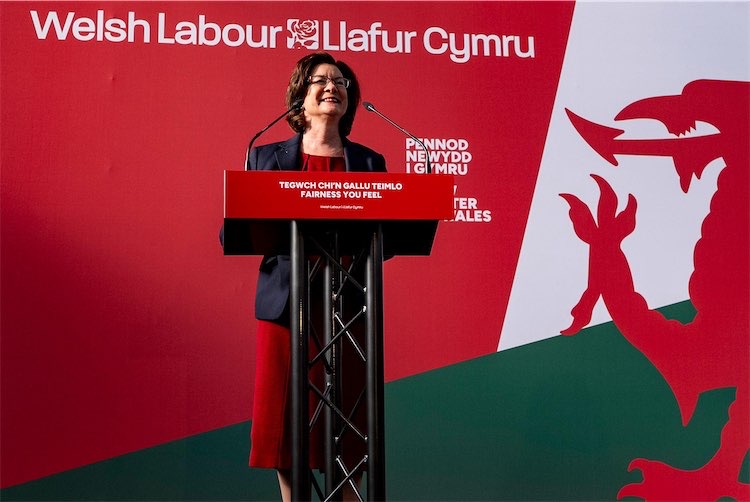
The Senedd elections are likely to be the most disruptive set of elections this May, with Welsh Labour at risk of falling out of government in Wales since the start of devolution in 1999.
The Welsh voting system has also been reformed, and the Senedd’s expansion from 60 to 96 members could make the results even more complex and unpredictable, according to Lord Hayward.
Welsh voters will now cast their ballots under a proportional representation system, including 16 large multi-member constituencies.
Pollsters expect the contest in Wales to be particularly volatile, with polling mostly showing nationalist party Plaid Cymru in the lead, and Reform looking competitive with Labour for the second-largest party.
If no party can form a majority, parties might enter negotiations for a coalition – but Plaid Cymru leader Rhun ap Iorwerth has said he would prefer to form a minority government than enter a coalition with another party.
Key areas to watch:
Senedd constituencies in the South Wales Valleys, such as Pontypridd or Merthyr Tydfil and Rhymney, are traditional Labour heartlands that are now threatened by both Plaid Cymru and Reform UK.
In North Wales, seats such as Fflint Wrecsam and the Vale of Clwyd currently have a mix of Labour, Conservative, and Plaid Cymru – and could be an interesting case study of how far both the Labour and Tory local vote collapses.
Plaid Cymru already performs strongly in constituencies in the west of Wales, but these elections will be an interesting indication of whether Plaid can translate strong polling leads into further domination in their strongest areas.
In Cardiff and other urban areas in the south-east of Wales, this election could signal to what extent the Greens can compete in the urban belt of the country, with some areas seeing a three-way fight between Labour, Plaid and the Greens.
SCOTLAND

In Scotland, the results are less likely to be as disruptive as in Wales, with the incumbent SNP government leading in the polls so far. While the SNP remains on course to emerge as the largest party, the key question is who will emerge as the main opposition, and how fragmented that opposition becomes between Labour, Reform, the Conservatives, and, to a more limited extent, the Green Party and the Lib Dems.
Reform UK is gaining strength in several areas across Scotland and will try to compete with Labour for second place overall.
Professor of politics at Queen Mary University of London, Tim Bale, told PoliticsHome: “The story there is the resilience of the SNP. We know Labour are going to do relatively badly.
“It’s the fact that a party that’s been in government there for so long and lost out quite badly in 2024 at the general election seems to have renewed itself under its new leader, and looks set to carry on governing Scotland. That really is quite a remarkable achievement. There aren’t many places in the world where a party is so predominant.”
In February, Scottish Labour leader Anas Sarwar called on Starmer to resign, in a bid to distance himself and Scottish Labour from the Westminster Labour government.
Like in Wales, the results in Scotland could be complicated by boundary changes and new constituencies and regions, which could produce surprising results and unexpectedly boost smaller parties like the Greens.
Key areas to watch:
The constituencies in the capital, Edinburgh, are largely multi-party marginal seats dominated by Labour, SNP and the Conservative Party. Some of these constituencies were decided by narrow margins in 2021 – in some cases under two percentage points – making them among the most competitive seats in Scotland. These seats could be a key test of where the urban middle-class vote will go in Scotland amid high levels of dissatisfaction with the Labour government in Westminster.
In areas in the North East of Scotland, such as in Aberdeen, the contests have historically been SNP versus the Conservatives. However, with Labour having gained strength and Reform emerging in the polls, there are now likely to be multi-party contests here, with the cost of living and industrial energy policies being the top issues for voters.
The west and central belt of Scotland, including Glasgow, is expected to see the traditional battle play out between the SNP and Labour.
ENGLISH LOCAL COUNCILS
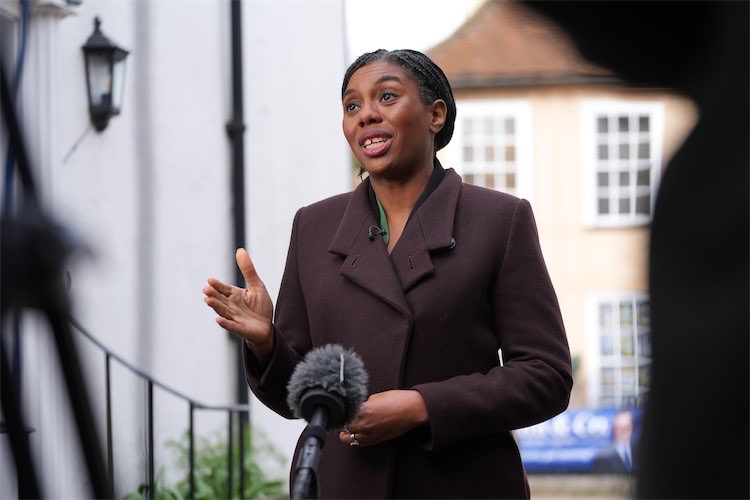
Across England, the council elections are likely to expose the continued fragmentation of party politics.
All five main parties – Labour, the Conservatives, Reform UK, the Liberal Democrats and the Greens – could secure between 10 and 25 per cent of the national vote, making outcomes highly unpredictable under first past the post. The key question will be how far Labour and the Conservatives fall, and whether Reform and the Greens can convert rising support into gains.
Labour has the most to lose, defending more than 2,000 seats, many of them won in 2022, making the incumbents vulnerable. The Local Government Information Unit has predicted a “high churn” from these elections, with a significant turnover of councillors expected.
Professor Bale said Labour is likely to fare the worst, while the Conservatives are also expected to suffer losses. “But they are likely to be able to hide behind what happens to Labour,” he added.
Reform is expected to make gains, but its ability to take control of councils is uncertain, with tactical voting likely to play a significant role. Hayward said voters are increasingly asking campaigners on the doorstep which party is best placed to defeat Reform, with all parties deploying “bar chart” messaging on their campaign material.
There were signs of anti-Reform voting at recent by-elections in Caerphilly and Gorton & Denton.
“If ever you thought that bar charts were a unique operation of primarily the Liberal Democrats until a few months ago, I can guarantee that everybody going will be producing bar charts to say that they are in the best position to defeat Reform,” Hayward said.
However, boundary changes and disrupted election timetables may make it harder for voters to identify leading challengers. Smaller parties, including the Greens and Liberal Democrats, are likely to benefit from vote fragmentation, though the Lib Dems may struggle to translate this into large numbers of new councils.
National issues, particularly the cost of living and migration, are also expected to shape voting behaviour, though their impact remains uncertain. For Reform, the elections will be a key test of whether its polling strength can translate into meaningful local power.
For Labour, there is some hope that Starmer’s approach to the Iran war and refusal to agree to Donald Trump’s demands will give the party a boost on polling day.
Key areas to watch:
The county council contests will be a key test for the Conservative Party, with Essex, Suffolk, Norfolk, Hampshire, and East and West Sussex all considered core Tory heartlands. The Conservatives face a Reform UK insurgency, as well as the Lib Dems in the south. In 2025, the Tory vote in local councils collapsed, and the party will be nervous not to continue the same trend in 2026.
Hampshire stands out as a bellwether council up for election, as it has been Tory-controlled since 1997, and now the Tories face a squeeze from both Reform and the Lib Dems.
The all-out election in Milton Keynes is set to be a full reset due to boundary changes. With Labour having only recently gained full control of the council in 2024, the party needs only to lose a few seats to lose control again, with this contest potentially testing Labour’s durability in towns and suburban areas.
Cambridge is an area where both the Greens and Lib Dems are competitive to challenge Labour’s very small majority on the council, making it likely it will flip to no overall control.
Councils in the north of England, such as Hartlepool, will act as the battleground over which Reform will try to win councils from Labour.
Multiple councils in the south-west of England are likely to be fragmented between Labour, Reform, the Lib Dems and the Green Party.
Lord Hayward said it could be “particularly difficult” for the Lib Dems if they face a squeeze from the Green Party as the alternative progressive party to Labour and the Conservatives.
Last month, PoliticsHome reported concern among Lib Dem figures that some MPs could switch to the Greens amid frustration with the party’s failure to capitalise on the success of the 2024 general election, when it returned a record number of MPs.
LONDON BOROUGHS

Labour could see its vote eroded in its traditional heartlands in the capital, with the insurgence of the Greens in inner London and Reform in the outer boroughs, while the Lib Dems are expected to hold onto their existing boroughs in south-west London.
Key areas to watch:
According to Lord Hayward, some of the key contests in London include:
- Reform target boroughs of Bexley, Bromley, Havering, Barking & Dagenham
- Conservative target boroughs of Barnet, Wandsworth and Westminster
- Harrow and Hillingdon, which are being defended by the Tories
- Newham, Redbridge, Waltham Forest and Tower Hamlets are all boroughs where Gaza and the war in Iran might impact voting along international issues in the local elections
- Camden, Islington, Hackney, and perhaps Lambeth and Southwark are boroughs where the Green Party is likely to be competitive with Labour.
- Kingston, Richmond, and Sutton are all boroughs which the Lib Dems are expected to hold
“Harrow is noticeable now, along with Westminster and Wandsworth, as being one of the very few places where it is purely Conservative versus Labour with a bit of others added on,” Lord Hayward said.
“They are very much the exception now as boroughs, in terms of competition.”
Camden would be a particularly symbolic victory for Zack Polanski’s Greens, as it contains Starmer’s constituency of Holborn and St Pancras.
In Redbridge, the pro-Gaza independents who nearly cost Health Secretary Wes Streeting his seat in the 2024 general election could also make inroads in the local elections. If Labour loses seats in Redbridge, it could cast doubt on Streeting’s suitability as a future leader if he is seen as unlikely to win his own seat at the next general election.
However, Hayward predicted Labour losses in the capital would not amount to a “wipeout”.
“The problem that the two legacy parties actually face is that they genuinely don’t know how many people are going to vote for them,” he said, explaining that smaller parties this time around might encourage people to vote who have not previously voted in local elections.
“Remember, the [Brexit] referendum in 2016 was effectively won by people who didn’t normally vote either.”
It is also possible that the Green Party and independent candidates could work together across London, as well as in other councils across the country – creating the potential for complex local coalitions in the aftermath of 7 May.

Trump has once again threatened to up the ante in his war on Iran. This time, he’s vowed to ‘reign down hell’ if Iran doesn’t re-open the Strait of Hormuz. The problem for Trump is that the constant escalations seem to have worked more in Iran’s favour than America’s:
Donald Trump has posted this on his Truth Social media account saying that Iran has “48 hours before all Hell will reign down on them” if they don’t make a deal and open the Strait of Hormuz. pic.twitter.com/Hz8WssiS64
— Mukhtar (@I_amMukhtar) April 4, 2026
Trump is flailing
Despite Trump claiming he gave Iran 10 days to make a deal, the hostilities have continued:
🗞️ U.S.-Israeli airstrikes hit Shahid Beheshti University in northern Tehran on April 3, targeting the Laser and Plasma Research Institute at its Velenjak campus, according to Iranian Red Crescent and university officials.
The research facility sustained significant damage,… https://t.co/nf0ovanGPN
— Drop Site (@DropSiteNews) April 3, 2026
The big development of the past few days has been that Iran successfully shot down an American fighter jet:
🚨 BREAKING | An Iranian official told Drop Site News that a U.S. F-15 warplane struck by Iranian forces went down over southern Tehran Province, with intense fire reported at the crash site.
The official said the nature of the strike prevented the pilot[s] from ejecting before… https://t.co/iUKD0AqRQQ pic.twitter.com/BI4TzolmZY
— Drop Site (@DropSiteNews) April 3, 2026
On 3 April, Drop Site reported on all the US aircraft incidents which had happened in the prior 24 hours:
▪️ One F-15E Strike Eagle (fighter-bomber): downed; 1 pilot rescued, 1 crew missing, search continues
▪️ Two HH-60W Jolly Green II (combat rescue helicopter) hit by Iran: all crew accounted for, both landed safely
▪️ One A-10 Warthog (close air support jet) crashed into Persian Gulf: pilot rescued
▪️ Another A-10 aircraft hit; made emergency landing with one engine disabled
▪️ F-16 (multirole fighter): declared emergency over Iraq; landed safely
▪️ KC-135 Stratotanker (refueling aircraft): declared emergency over Israel; landed safely
▪️ Iran also claimed it struck and downed another U.S. jet near Qeshm Island yesterday
As this has been going on, the Trump regime has been sacking senior military figures:
It’s likely that experienced generals are telling Hegseth his Iran war plans are unworkable, disastrous, and deadly.
Also, Hegseth is firing a ton of experienced generals right now. https://t.co/I2iKshfjNX
— Chris Murphy 🟧 (@ChrisMurphyCT) April 3, 2026
The same day that Hegseth fires multiple senior army leaders, he announces that individuals “trusted” by the administration will be able to carry arms on base…
On the same day Trump is purging his cabinet…
This is like coup level shit. https://t.co/fopaihE4R3
— Adam Cochran (adamscochran.eth) (@adamscochran) April 3, 2026
It’s also reported that War Secretary Pete Hegseth may be paranoid about potential replacements:
Fox News: Multiple sources tell us the Hegseth firing of Army Chief of Staff Randy George has to do with Hegseth’s rivalry with Army Secretary Dan Driscoll, who is a close ally of JD Vance & was considered on the short list to replace Hegseth at one point pic.twitter.com/lmwqaPN5Sm
— Republicans against Trump (@RpsAgainstTrump) April 4, 2026
The war on Iran has gone so poorly that it’s understandable the war secretary would now fear for his job. Things are so bad dire for Hegseth that Iran is actually mocking him:
An Iranian embassy trolling the Trump administration over Pete Hegseth’s purge of the US military mid-war https://t.co/IrgFxd0x7R
— Mehdi Hasan (@mehdirhasan) April 3, 2026
It’s really not a strong look for a country to start sacking its military officials in the middle of an offensive. America isn’t a strong country, though, is it? It’s a weak country with a military industrial complex to serve.
Human suffering
While the actions of Trump and Hegseth are laughable and buffoonish, it’s important to remember that real people are suffering as a result of these childish men and their tantrums. It’s equally important for us here in Europe to keep up the pressure on our leaders.
This isn’t our war, and we must not allow our leaders to drag us into it.
Featured image via Pixabay (via Canva)

Every day, Reform’s battalion of local election candidates is looking worse and worse. Today, we learned that the party has welcomed a notorious ex-Tory councillor who voiced what can only be described as hardcore, Nazi-grade genocidal intent:
Reform claimed they have the most rigorous candidate vetting in the UK; yet a simple google search of Derek Bullock’s name brings up several news articles about Derek’s racist past.
So is Reform’s vetting process broken, or do they condone Derek Bullock’s call to violence?
— thelefttake (@thelefttake) April 4, 2026
‘Shoot them on the spot’
In March 2020, the Conservatives suspended Bolton councillor Derek Bullock. As the Manchester Evening News reported at the time:
It is alleged that Coun Derek Bullock, who represents Hulton ward on Bolton Council , posted an article from anti-Muslim activist Robert Spencer’s ‘JihadWatch’ on Facebook.
In response to an article about former party chair Baroness Sayeeda Warsi, he reportedly added: “She’s been a cuckoo in the nest!”
In another post, from February 2015, he is shown to have shared a Daily Mail article under the headline ‘Number of Muslim children in England and Wales doubles in a decade’, adding the comment ‘the clock is ticking’.
Despite this, Bullock was actually re-selected to run for the Tories in 2023 (although he was suspended, he remained a councillor). At the time, Labour MP Yasmin Qureshi said:
…culture of Islamophobia which has been found to exist throughout the party
Moreover, this decision shows a lack of commitment to integrity and calls into question his suitability for public office and ability to represent our multicultural town.
— Yasmin Qureshi MP (@YasminQureshiMP) April 5, 2023
In response to the backlash, the Tories re-suspended Bullock, with the Mirror reporting on this truly obscene post from him:
Following the Manchester Arena bombing in 2017, an account in Mr Bullock’s name commented on a news article: “Shoot the P***s on the spot.”
He’s clearly woken up to the fact that he’s not getting back into the Conservative Party. The question is whether Reform will tolerate a councillor who’s expressed an intent to eradicate a sizeable UK minority group.
Reform vetting
The Canary’s Antifabot posted the following:
Hey @reformparty_uk 🙋♀️
I just wanted to know, do you screen your candidates and if you do, is being a total and utter fascist who looks like a nonce a must?
Just so you know, if you do get in, we will absolutely stand up against people like this
Fucking dickhead pic.twitter.com/qz5hP9ZpFd
— 𝔸𝕟𝕥𝕚𝕗𝕒𝔹𝕠𝕥 – AKA The Intolerant Left (@_Wrevolution_) April 4, 2026
As we reported earlier today, there is reason to believe that Reform just isn’t vetting its candidates:
Brett Muscroft is Reform UK’s candidate in Castleford Central & Glasshoughton, Wakefield.
He shows clearly that Reform UK’s vetting is nil for this coming local elections.
His posts on Islam, his support of Tommy Robinson, Enoch Powell and posting far-right and racist content… pic.twitter.com/2kDm9P5DSI
— Reform Party UK Exposed 🇬🇧 (@reformexposed) April 3, 2026
The exposed posts from Brett Muscroft were found on his personal Facebook account. When we looked into it, this account was still public, and was instantly discoverable with a search on Facebook.
This leaves two possibilities:
- Reform isn’t vetting candidates.
- Reform has decided to accept the absolute dregs of humanity.
Either way, we get to the same result.
Featured image via Derek Bennet (Wikimedia)

Animal Justice Project has staged a demonstration in Leicester Square asking people to “Skip the Lamb” over Easter. As the charity highlights, lambs are usually only a few months old when they’re slaughtered:
We’re in Leicester Square today, urging the public to ‘Skip the Lamb’ this Easter.
Joined by dedicated activists and a powerful street stunt featuring a lamb and butcher, we’re challenging passersby to confront the reality behind their choices… and who ultimately pays the… pic.twitter.com/eHD2GhHkBJ
— AnimalJusticeProject (@ajpReact) April 4, 2026
This Easter — Skip the Lamb
In a press release, the group said:
Organised by Animal Justice Project, the demonstration features a powerful visual installation exposing the reality behind lamb consumption. A performer portraying a lamb lies on a table, dressed in a white costume with lamb ears and realistic prosthetic wounds, including a slit throat and severe leg injury. A figure dressed as a butcher appears to cut into the body, while a pile of severed leg props represents the scale of animals killed.
Volunteers are holding placards and distributing leaflets encouraging passers-by to “Skip the Lamb”, while a life-size lamb prop reinforces the connection between animals and the food on people’s plates.
In a video posted to social media, the group showed their activists interacting with the public:
Over 75% of the public are meat-eaters… but what percentage realise they are eating babies?
For many, Easter is a time for eating ‘a leg of lamb’, yet the disconnect is present even in the language.
Eating a lamb’s leg means killing baby animals, sometimes as young as 10… pic.twitter.com/5VzhIMe1sY
— AnimalJusticeProject (@ajpReact) April 4, 2026
Claire Palmer (Animal Justice Project founder) said:
Easter is often seen as a time of renewal and compassion, yet it’s still associated with eating lambs — animals who are only a few months old when they’re killed.
We want people to stop and think. Behind every Easter meal is an animal who wanted to live.
Palmer added:
Traditions can change. And when they involve the lives of young animals, they should.”
Animal Justice Project also provided the following statistics:
- April: 893,336 lambs slaughtered
- June: 1,106,894 lambs slaughtered
- Lambs are typically slaughtered at 4–8 months old
A Change of Heart
Animal Justice Project are simultaneously releasing a new film titled A Change of Heart: From Sheep Farmer to Vegan. The video follows Sivalingam “Kumar” Vasanthakumar — a former sheep farmer. Kumar took his flock to a sanctuary before transitioning to a plant-based livelihood.
As the press release notes:
Previously featured by BBC News, Kumar now grows vegetables and runs a vegan street food business, Kumar’s Dosa Bar, using largely home-grown produce.
. …
“I saw them as individuals,” Kumar says in the film. “Once you see that, you can’t continue as before.”
You can watch A Change of Heart: From Sheep Farmer to Vegan here.
Featured image via Animal Justice Project

Brighthouse Financial (BHF): A Deal-Driven Opportunity, Not A Long-Term Compounder

How To Stop Gulls From Eating Your Chips

After Maria Jose Marin’s emphatic ANWA win, 1 scene told the story


-

 NewsBeat3 days ago
Steven Gerrard disagrees with Gary Neville over ‘shock’ Chelsea and Arsenal claim | Football
-

 Business2 days ago
No Jackpot Winner and $194 Million Prize Rolls Over
-

 Fashion2 days ago
Weekend Open Thread: Spanx – Corporette.com
-
Entertainment6 days ago
Fans slam 'heartbreaking' Barbie Dream Fest convention debacle with 'cardboard cutout' experience
-

 Crypto World4 days ago
Gold Price Prediction: Worst Month in 17 Years fo Save Haven Rock
-

 Tech6 days ago
The Pixel 10a doesn’t have a camera bump, and it’s great
-
Crypto World5 days ago
Dems press CFTC, ethics board on prediction-market insider trades
-

 Tech6 days ago
Avatar Legends: The Fighting Game comes out in July and it looks pretty slick
-

 Business3 days ago
Login and Checkout Issues Spark Merchant Frustration
-

 Sports13 hours ago
India men’s 4x400m and mixed 4x100m relay teams register big progress | Other Sports News
-

 Tech6 days ago
Apple will hide your email address from apps and websites, but not cops
-

 Sports5 days ago
Tallest college basketball player ever, standing at 7-foot-9, entering transfer portal
-

 Tech5 days ago
EE TV is using AI to help you find something to watch
-

 Politics6 days ago
Should Trump Be Scared Strait?
-

 Tech5 days ago
Flipsnack and the shift toward motion-first business content with living visuals
-

 Tech7 days ago
Elon Musk’s last co-founder reportedly leaves xAI
-

 Fashion6 days ago
The Best Spring Trends of 2026
-

 Tech5 days ago
How to back up your iPhone & iPad to your Mac before something goes wrong
-
 Crypto World6 days ago
Bitcoin’s Six-Month Losing Streak: What On-Chain Data Says About the Market’s Next Move
-

 Politics6 days ago
BBC slammed for ignoring author of The Fraud
You must be logged in to post a comment Login