
Politics
The migrant crime wave that shames the British state


For at least the past 20 years, Britain’s political and cultural elites have claimed that immigration has been nothing but a blessing for the nation. They claim it grows the economy. That it makes Britain as a society less insular and more diverse. That it has moral as well as economic benefits.
Among vast swathes of the British public, however, a very different view has taken hold. They have experienced the reality of our increasingly porous borders. They have seen how the importation of cheap labour, far from growing the economy in real (per capita) terms, has merely suppressed wages. They have seen how immigration-fuelled population growth has put even more pressure on struggling public services. And they have witnessed what ‘diversity’ means in practice – the creation of religious and ethnic enclaves, riven with anti-Semitism and intolerance.
There is another reason for people’s concerns and anger over our immigration and asylum system, and it’s one that has come to the fore over the past two or three years. Many increasingly feel that some of those illegally entering Britain, mainly from the Middle East and Africa, pose a distinct threat to the safety of British citizens. It is a view that gains substance with every news report detailing a horrific violent incident or sex attack carried out by someone who shouldn’t have been here in the first place.
The grim cases themselves certainly seem to be mounting up. In May 2025, two Afghan 17-year-olds, Jan Jahanzeb and Israr Niazal, raped a 15-year-old girl in Leamington Spa, Warwickshire. The following month, in the nearby town of Nuneaton, another Afghan, 23-year-old Ahmad Mulakhil, raped a 12-year-old girl. He was living in a taxpayer-funded house in multiple occupation (HMO). Also last year, Khan Agah and Noorullah Ahmhdzai, both from Afghanistan, raped a woman at knifepoint in east London. All of these men had entered Britain illegally and had claimed asylum.
There have been many more reports of brutal attacks carried out by illegal immigrants over the past year or so, which are only now emerging as court trials conclude. One of the most high-profile cases involved three illegal immigrants living in a hotel repurposed for asylum seekers on the south coast. In October last year, Abdulla Ahmadi, Ibrahim Alshafe and Karin Al-Danasurt gang-raped a woman on Brighton beach as she was walking home from a nightclub. In November, three Afghan asylum seekers, Mehrab Safi, Awal Ahmadzai and Salman Habibkheli, groomed and raped a 17-year-old girl in Bristol after plying her with alcohol. Recently, the public learnt that a 33-year-old Eritrean asylum seeker, Bruke Desalagne, had been found guilty of raping an elderly man behind a church in Harrow, north London, in July 2025.
There are lots of other cases like this. And we are only able to read about them because reporting restrictions were lifted. There are likely similar cases progressing through the courts of which we are currently ignorant.
The bleak stories have kept coming. In May, seven Afghan asylum seekers were charged over effectively establishing a grooming gang in Norwich, the alleged victims of which were in their early-to-mid teens. Just last week, a 24-year-old Afghan asylum seeker was charged with raping a 17-year-old girl in Manchester’s Picadilly Gardens.
A seeming relationship between illegal immigration and sex offences is not in any way unique to Britain. Other European countries that have absorbed large numbers of illegal migrants and asylum seekers have endured similar waves of sex crimes. It happened in the German city of Cologne in 2016, when nearly 500 women were assaulted over a single night by roughly 1,000 men from Africa and the Middle East – men who had been granted asylum by Angela Merkel’s infamous ‘wir schaffen das’ invitation of 2015.
Right now, something similar is happening in the Spanish enclave of Ceuta in north Africa. In July, staggering footage of more than 70,000 immigrants flooding across the border from Morocco. Since then, most have either returned or travelled to mainland Spain. But at least 5,000 remain in Ceuta. Now, according to the BBC, prosecutors in Ceuta have recorded 23 sexual assaults since its border was breached – a rate of about one a day. Nine of the sexual assaults have occurred against children. One journalist recently described it as ‘the migrant crisis of 2015 on steroids’.
Britain’s ‘progressive’ elites continue to look the other way of course. They still morally decry the very idea of borders and insist on the right of illegal immigrants to live here. They also claim that any attempt to link the rise in asylum seekers to a seeming rise in sexual crimes is racist. This attitude was on full display last summer during the spate of protests outside ‘migrant hotels’ – hotels that have been given over to hosting asylum seekers. These protests reached their height in Epping, where in July a 14-year-old girl was sexually assaulted by Hadush Kebatu – a small-boat migrant from Ethiopia who had been in Britain for less than a week before carrying out his attack.
Right-thinking politicians attacked the protesters. They dismissed their concerns about the misogynistic cultures prevalent in the countries from which many of the illegal immigrants had come. ‘Which culture doesn’t have patriarchy and misogyny in it?’, asked then Labour frontbencher Jess Phillips at the height of the protests. ‘I’ll tell you the group of people that is most likely to abuse – that is men’, she said.
In September 2025, an open letter was signed by a group of prominent left-wing women, including singer Paloma Faith, and left-wing politicians Diane Abbott and Zarah Sultana. ‘There is no evidence that people seeking refuge are more likely to commit acts of sexual violence’, the letter stated. It said the protests were an attack on ‘refugees, Muslims and migrants’. The following month Green Party leader Zack Polanski claimed that ‘there is absolutely no evidence that the people who are sexually assaulting people are the people claiming asylum’.
The UK government, too, has seemed particularly keen to bury any connection between illegal immigration and crime, especially sex crime. In July, we learnt that the Ministry of Justice was taking legal action to prevent the release of data that might have shown such a link. The right-wing think tank, the Centre for Migration Control, had requested a breakdown on foreign offending in England and Wales from 2018 to 2024 – a request that was even approved by the Information Commissioner. But, citing the cost and the supposed risk of leaking suppressed identities, the state refused to release it. The families of victims of crimes carried out by illegal immigrants – including the relatives of Rhiannon Whyte and Wayne Broadhurst, both of whom were murdered by asylum seekers – have demanded the government publish what it knows.
There are other good reasons to suspect that the government is trying to conceal the truth. When reports first emerged that a young girl had been raped in Nuneaton, police secretly briefed councillors, instructing them not to reveal the suspect’s immigration status. Police media releases also try to regularly exclude the immigration status of perpetrators – as in the case of asylum seeker Sheraz Malik, who raped an 18-year-old in Nottinghamshire in June last year. When the immigration status of an offender happens to slip through the hands of the authorities, there is even evidence that they influence the statements of family members to paint migrants in a particularly positive light. In June, when Stephen Ogilvie was brutally stabbed in Belfast by Hadi Alodid, a 30-year-old asylum seeker from Sudan, the victim’s family praised immigrants for their ‘contribution’ to the UK’s healthcare and hospitality sectors. Looking at all of this together, we are right to suspect that the government is hiding something that it doesn’t want to admit, or to be known, about the cost of immigration and illegal immigration in particular.
Nevertheless, through freedom-of-information requests, some kind of picture is beginning to emerge of the true nature of the problem. The Centre for Migration Control was successful in getting data from police forces and the Home Office covering the first 10 months of 2024. These data, combined with information from the Office of National Statistics, show that foreign nationals were three times more likely to be arrested for sex offences than British citizens. Another freedom-of-information request from the Centre for Migration Control, this time using data from the Ministry of Justice between 2021 and 2023, found that foreigners were convicted of 23 per cent of sex crimes in England and Wales. Based on convictions for 10,000 of the population, Afghans and Eritreans were 20 times – or 2,000 per cent – more likely to be convicted of sexual offences than British citizens.
But getting an accurate picture of the relationship between illegal immigration and sex offences remains difficult, for the simple reason that immigration status is not generally recorded in convictions. As Madeleine Sumption, the director of Oxford University’s Migration Observatory, told the BBC last year: whether or not immigrants (and particularly asylum seekers) are more likely to commit sexual offences can only be inferred by the nationality of the offender. Nonetheless, Sumption said, there were ‘big variations’ in what nationalities were convicted of sexual crimes. ‘It is true that some of those nationalities where most people tend to come through the asylum system’ – she mentioned Afghans, Syrians and Iranians – ‘have the highest rates of convictions overall, and also for sexual offences specifically’.
Ironically, the clearest sign yet that the public is at a disproportionate risk from asylum seekers and illegal immigrants came from the Home Office itself – the very department that continues to fight, tooth and nail to prevent us from knowing the truth. In August, it emerged that the Home Office was handing out information guides to newly arrived asylum seekers. This ‘promotional material’ informed newcomers that ‘both people must say “yes” to sex’, adding that they must not have ‘sex or sexual contact with a child under 16’.
It was a humiliating admission from the government. But it is an admission that, had we connected the dots, or looked a bit closer at what was happening, should never have been necessary. For nearly a decade, the British state has been embarking on a strange and terrifying experiment – absorbing tens of thousands of overwhelmingly young men about whom it knows nothing, through our asylum system, from countries steeped in violence and often misogyny.
Here is what we do know. Since 2018, approximately 200,000 people have entered Britain via small boats. The vast majority – at least 75 per cent – are men over the age of 18. And we know that the vast majority of arrivals come from a small number of countries – in particular, Iran, Afghanistan and Eritrea.
These are countries where you do not want to be a woman. In Eritrea, there is a 90 per cent chance that you will be subjected to some form of female genital mutilation as a girl. In Iran, as we have witnessed in recent years, women’s ‘modesty’ is viciously ‘protected’ by the state – even by murder if necessary. And in Afghanistan, girls are routinely sold by their fathers, domestic violence is legal so long as it breaks no bones nor leaves any ‘visible’ injuries, and women are effectively confined to their homes. Obviously, all of these practices would be against the law in the UK. In a more general sense, we can also say that the culture that has informed such practices is sharply opposed to the equality and sexual freedom that women enjoy in Britain.
That young men from these backgrounds and with these experiences are disproportionately likely to commit sexual crimes is hardly a surprise. But there is another factor that amplifies the risk. Namely, the type of young man to whom a dangerous journey is likely to appeal, and what they might experience as they cross from Asia, through various European countries, before eventually arriving in Britain. On this point, recent evidence from the Leeds Crown Court is instructive.
In August, Ibrahim Albashir was convicted of the attempted murder of a 32-year-old woman at a bus stop in Leeds. The court heard that, in August 2024, Albashir had waited until the woman – who was going home after dinner with friends – was by herself, before attacking her repeatedly with a glass bottle. He was sentenced to 25 years in prison and an indefinite hospital order.
Albashir is a 34-year-old asylum seeker from Sudan. He left his home country when he was 25, first breaking into Libya and then heading to Italy. From Italy, he travelled to France. Then he started drinking alcohol and smoking cannabis. He began to experience bouts of madness and was institutionalised for six months. During his internment, Albashir was diagnosed with paranoid schizophrenia.
At some point, Albashir’s asylum claim was denied by France. But that didn’t matter to him – he proceeded to travel to Calais, and then to Britain. It isn’t clear what, if any, background checks were conducted on Albashir by the authorities when he arrived. We only know that he was sent to a migrant hostel in Birmingham with no supervision. At the hostel, he assaulted a female member of staff before heading to Leeds, where he committed the attempted murder.
This takes us close to an important point. Breaking into a country illegally after a long, dangerous journey through Europe demands a certain type of person. Those embracing this opportunity will be interacting with people smugglers and regularly breaking the law. And when many people like this – overwhelmingly young and male – find themselves living side by side, it is likely to reinforce their worst personality traits.
It isn’t ‘racist’ to state the facts clearly. It doesn’t put you in a league with the ‘far right’ to point out that illegal immigration clearly poses a threat to the public. It isn’t racist to point out that receiving tens of thousands of men, from societies whose values are alien to our own, is likely to cause severe social challenges and worse. Yet too few among our governing class are willing to acknowledge the reality staring so many in the face. Our immigration and especially our asylum system are not fit for purpose. Too many people are illegally entering and remaining in Britain who pose a clear and present danger, especially to women and girls. This can’t go on.

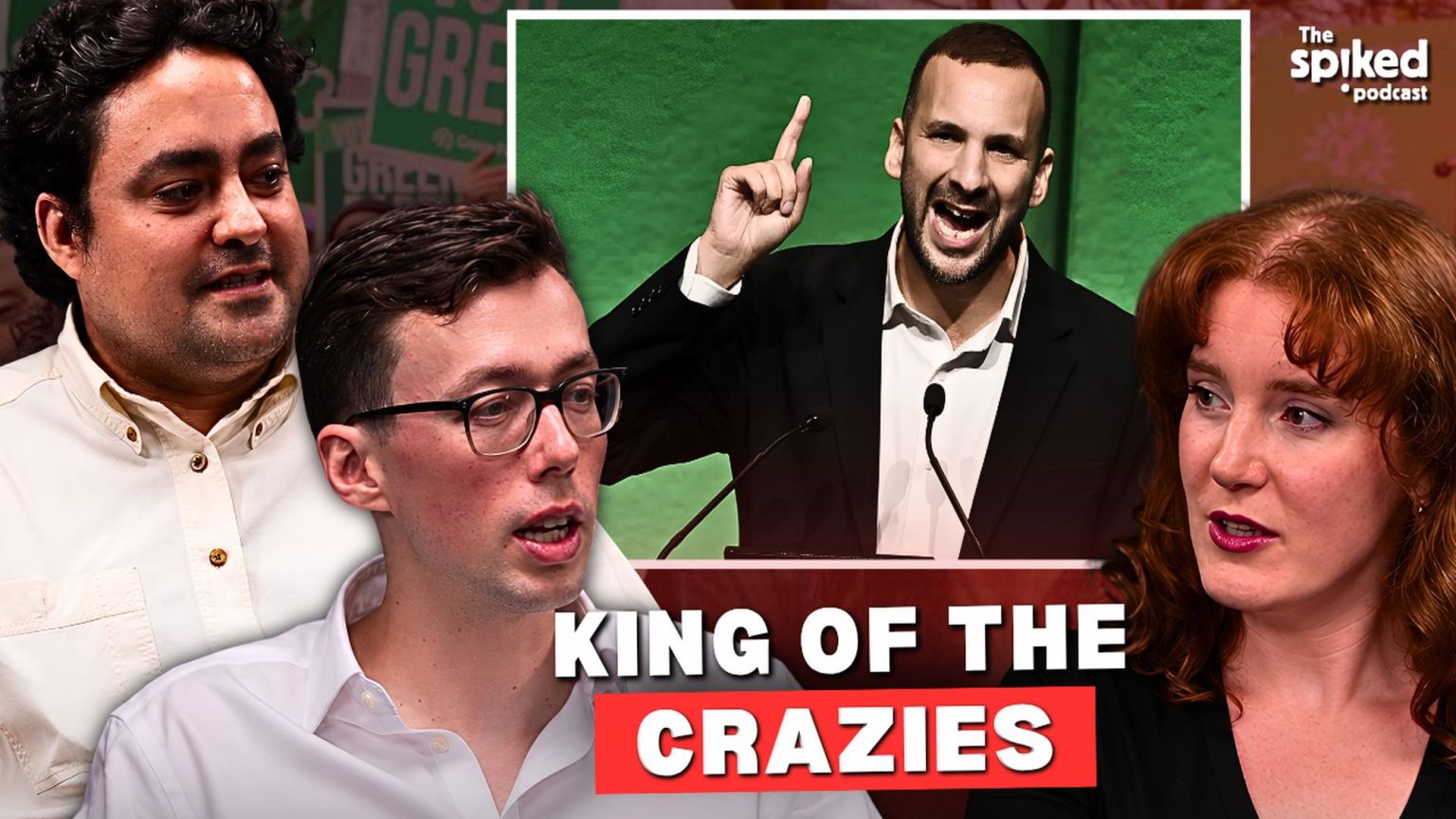
The post Zack Polanski: king of the crazies appeared first on spiked.
!function(n){if(!window.cnx){window.cnx={},window.cnx.cmd=[];var t=n.createElement(‘iframe’);t.display=’none’,t.onload=function(){var n=t.contentWindow.document,c=n.createElement(‘script’);c.src=”//cd.connatix.com/connatix.player.js”,c.setAttribute(‘async’,’1′),c.setAttribute(‘type’,’text/javascript’),n.body.appendChild(c)},n.head.appendChild(t)}}(document);(new Image()).src=”https://capi.connatix.com/tr/si?token=19654b65-409c-4b38-90db-80cbdea02cf4″;cnx.cmd.push(function(){cnx({“playerId”:”19654b65-409c-4b38-90db-80cbdea02cf4″,”mediaId”:”0fae0aa4-3917-4636-b6c5-551b6b14c917″}).render(“6a9b25c5e4b0e51a2d92e87d”);});

4 min read
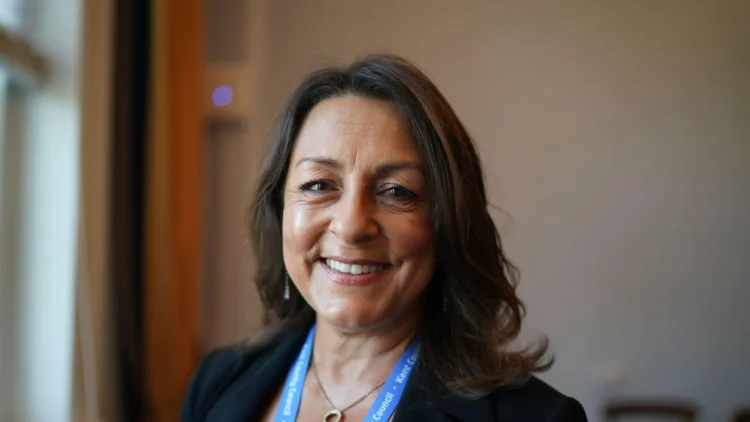
Linden Kemkaran, leader of one of Reform UK’s most high-profile councils, has said that some voters have “taken their eye off the ball” by being “enticed” by Restore Britain.
In an interview with PoliticsHome on the eve of the Reform conference in Birmingham, which started on Thursday, Kemkaran said that people who want a right-wing government will eventually realise that a vote for Restore Britain makes that outcome less likely.
Reform figures were initially dismissive about the threat posed by Rupert Lowe’s hard-right party. However, in recent months, there have been clear signs of Restore Britain hurting Farage by taking votes that otherwise probably would have gone to Reform.
For example, last Thursday, Green candidate Ingrid Dodd secured a surprise victory in a district by-election in Dover, thanks largely to the right-wing vote splitting three ways between Reform, Restore Britain, and the Conservatives. Reform finished second, just 34 votes behind.
At the Markefield by-election in June, Restore Britain got around 7 per cent of the vote. In the end, the scale of Andy Burnham’s victory rendered the combined right-wing vote academic. However, it was further evidence that Lowe’s party is capable of attracting significant levels of support, and prompted Farage to urge Restore Britain supporters to “think again”.
Kemkaran said the Dover result would end up being “very useful” for Reform, and “a very good case in point about what happens when you vote for a protest party, and you don’t vote for the party that’s actually going to do what you want them to do in that area”.
“It was a stark illustration of what happens if you take your eye off the ball and you stop realising that, actually, Reform is the only centre-right party that is in a position to form a centre-right government at this point in time,” she said.
“Restore can’t do it,” she added.
“Some people allowed themselves to be enticed to an alternative reality that they thought might be possible for whatever the things that Restore is promising.”
However, the council leader stressed: “You can never blame the electorate. You’ve always got to look internally as to what you might do differently next time.”
In an interview with The House magazine in the weeks leading up to Reform conference, party chairman Lee Anderson dismissed the threat of Restore Britain and insisted that “decent” people who had moved away from Reform to support Lowe’s party would come back once they realise that they risk making a Labour government more likely.
“Restore Britain just want to stop us from winning. It’s as simple as that,” Anderson said.
He also accused Restore Britain activists of “bullying” Reform campaigners at the recent Makerfield by-election, a claim which a Restore Britain spokesperson said was “nonsense”.
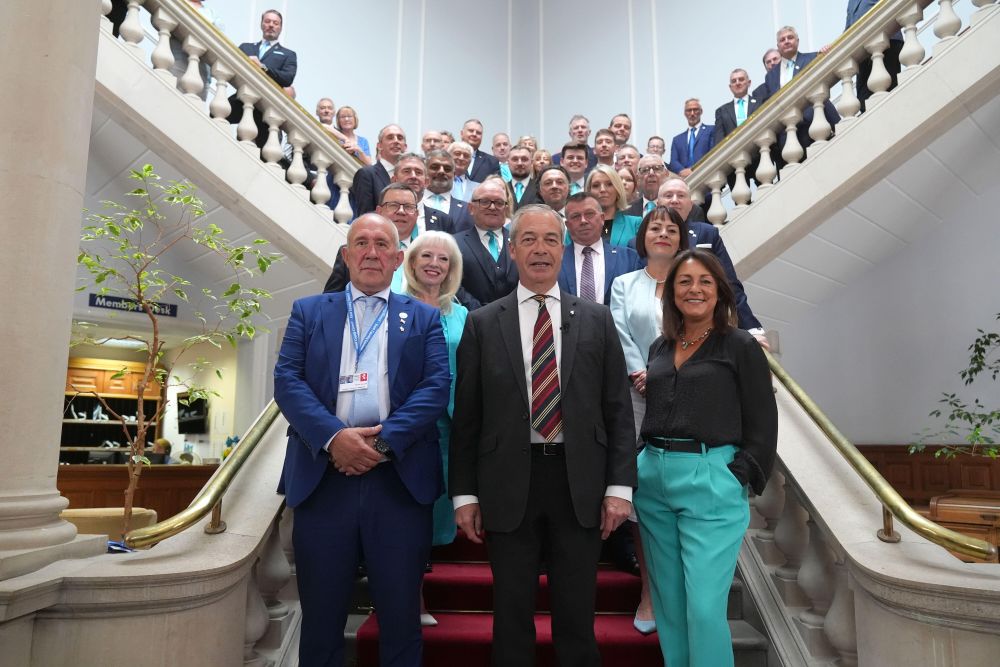
Reflecting on the 18 months she has been council leader in Kent, Kemkaran said she has realised “how difficult it can be to make things happen”.
She became leader having not previously served as a councillor, tasked with leading perhaps the most high-profile local authority won by Farage’s party. Kent was where Reform first piloted its programme of cutting what it describes as wasteful council spending, inspired by Elon Musk’s short-lived Department of Government Efficiency in the US, and Kemkaran has since set up her own version: Department of Local Government Efficiency. Reform’s bid to cut council spending has had to grapple with the financial pressures facing local government.
“I have made things happen,” the Kent leader told PoliticsHome, “but I’m unusually strong-minded and unusually tenacious in getting a grip of an issue very quickly and not being put off when people throw little obstacles in the way.”
Every Monday, Kemkaran joins a meeting with the party’s deputy leader Richard Tice and other Reform council leaders across the country. “It’s an incredibly useful time for us to be able to receive information, to share information, to alert each other to things we might need to be aware of. It’s a really it’s a good way to start the week,” she said.
On the national picture, Kemkaran insisted that Reform can regain momentum after a difficult few months, telling PoliticsHome that the “Burnham bounce” in the opinion polls is actually a “Burnham bubble” that she predicted will “pop any day now”.
“Once our manifesto is written, it’s going to be a huge selling point for the party. It’s going to convince an awful lot of people who are maybe Reform curious… because they’re going to see that we are the right party to fix the horrendous mess this country’s in.
“The other three magic ingredients are timing, luck, and judgment. If we can get those five to coalesce, that’s what we need to happen,” she said.
Kemkaran’s interview with PoliticsHome took place before an undercover investigation aired by Channel 4 on Thursday alleged that senior Reform officials arranged party donations that breached UK electoral rules.
—
Politics
Trump wants the Postal Service to radically overhaul mail voting. But ballots are already going out.
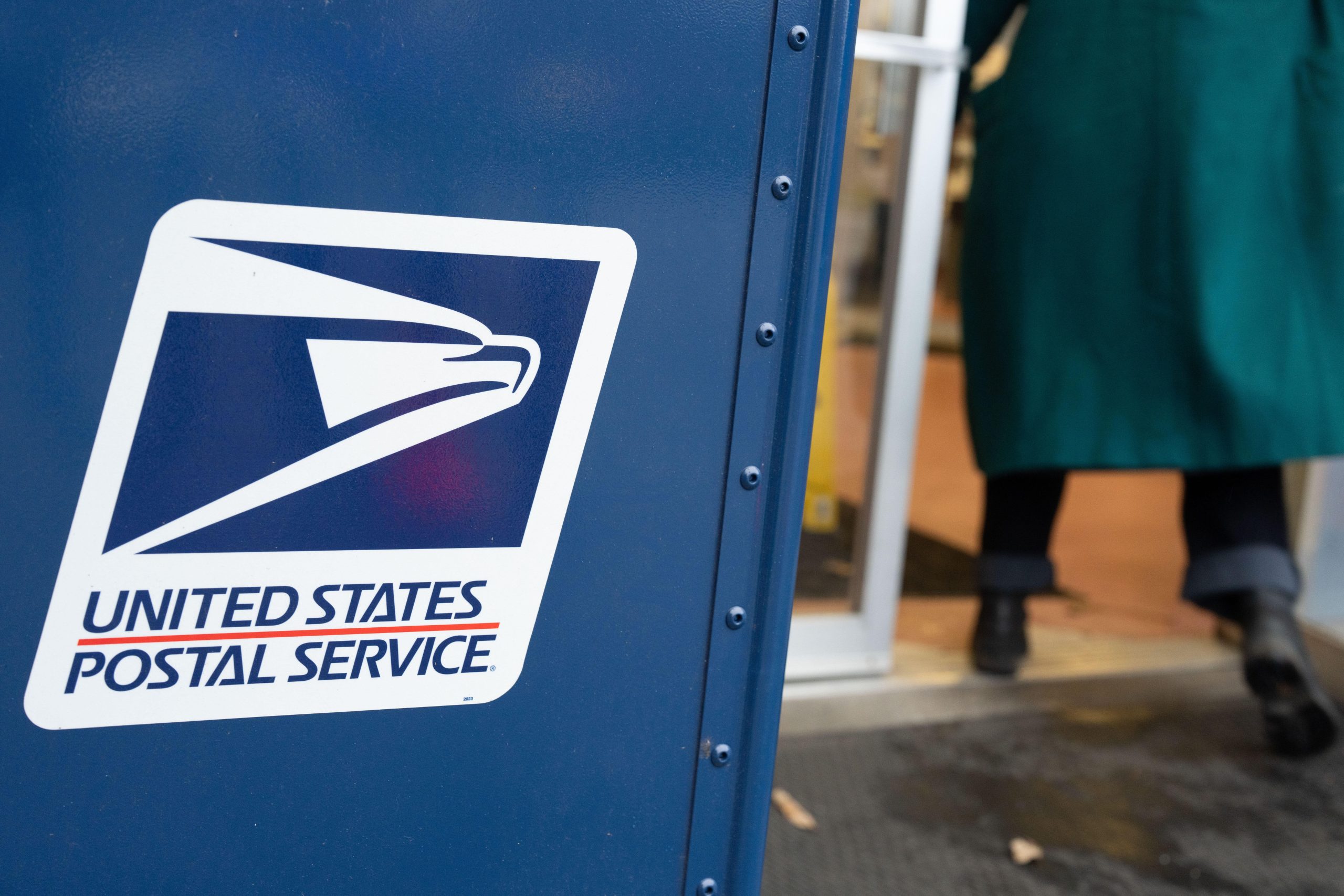

President Donald Trump’s controversial demands for the Postal Service to overhaul and monitor millions of mail ballots hit another snag on Friday, when North Carolina became the first state in the nation to start sending out ballots for the November election.
In March, Trump signed the initial executive order, which aimed to crack down on mail-in voting — which he regularly alleges without evidence is a vector for widespread voter fraud — and assert an unprecedented amount of federal control over the upcoming elections.
Under this order and the subsequent rule drafted by the U.S. Postal Service, the USPS would refuse to deliver ballots to states that failed to provide lists of eligible mail voters or did not adhere to an approved envelope design style.
Since then, the order has faced legal challenges, and it remains paused by a federal judge’s orders. But the Trump administration has asked the Supreme Court to allow the new rule to proceed — something current and former election officials from both parties say would be both a legal nightmare that oversteps the federal government’s traditional role in elections and a logistical one that is happening far too close to the November election to implement even if they agreed with it.
“Why the hell are you rocking the boat this late in the game?” said Stephen Richer, a former Republican recorder of Maricopa County, Arizona, who has clashed with Trump allies for defending the security of the 2020 election.
Still, election officials are trying to project a sense of normalcy for voters, particularly in North Carolina, which serves as a test of whether established local election systems can operate normally amid intensifying federal scrutiny.
“I want to emphasize this point because there has been a lot of outside noise: Our county workers are ready,” Sam Hayes, a longtime Republican lawyer in the state and now executive director of the North Carolina State Board of Elections, said in a Thursday afternoon press conference.
He added, “All we can do is what we’re doing. … It is business as usual as far as I’m concerned.”
Despite the legal challenges, the Trump administration has continued to press the courts to let it proceed. The Trump administration asked the Supreme Court on Thursday to lift an order from a Massachusetts judge which temporarily prevents the USPS from enforcing their rule. It is the second time the Trump administration has asked the Supreme Court to step in, after winning an earlier victory in which the high court dismissed an earlier hold on the rule as premature.
“The uncertainty is coming from a single activist judge who continues to try and obstruct President Trump from implementing commonsense measures to protect the security of mail-in ballots and ensure only Americans vote in American elections,” White House spokesperson Lauren Bis said in a statement. “These safeguards for mail ballots were proposed months ago giving election officials ample time to prepare for the 2026 election.”
The USPS did not immediately respond to requests for comment.
Election officials said that if the rule goes into effect this close to November, it would cause chaos and place added strain on the USPS and election officials. And an anonymous federal whistleblower said in a report circulated earlier this week by Sen. Richard Blumenthal (D-Conn.) that the USPS was moving forward in a “secretive, rushed, chaotic, and fundamentally flawed process” to try to implement the new system ahead of the midterms.
In the coming weeks, states across the country will follow North Carolina’s lead. Nine other states will begin mailing ballots in the next two weeks, according to a tracker from the National Conference of State Legislatures — with the biggest day for mailing coming 45 days before the election in mid-September.
“It would be so outrageous to try to let this go into effect. It’s hard to even imagine,” said Ben Hovland, a senior fellow for democracy at the progressive think tank Center for American Progress and former Democratic commissioner with the Election Assistance Commission who was fired by Trump in July.
He added, “It would be a break-glass moment for our democracy.”
The rule would require meticulous changes to ballot handling and tracking practices that Hovland said are impossible to implement before Election Day in about two months, effectively disenfranchising millions of voters.
“Ballots are printed. Envelopes are printed. You can go on and on with all the practical reasons that show that implementing something like this at this time is not feasible,” he said.
Richer said he doubted the new rules would bring about more security. Even if the USPS received lists from the states, according to the postal service’s final rule, it would not do any additional vetting of the list, Richer said.
“It’s just that the mail ballots have to be on that list, and I don’t see what added value for election integrity that does,” he said.
He added, “It creates a lot of administrative burden, and I think it creates a lot more opportunity for error.”
While a decision looms in the courts, election officials and experts cast doubt on the likelihood of the rules going into effect before November. A more pressing issue, they said, is the confusion and uncertainty surrounding mail-in ballots, which could subvert and change the behaviors of voters.
“It makes things seem messy or difficult, and it can dissuade people from participating or coming out to vote,” Hovland said. “It certainly also helps establish a pretext to make bad faith claims about election results.”
Hovland said that while none of these claims of voter fraud are backed up with facts, they could cause Americans to lose faith in the voting process.
Still, some current officials contended they were well-prepared for whatever happens — and that they’d be able to communicate effectively with voters who have become increasingly buffeted by dramatic rhetoric about the once-unmentioned nuts and bolts of actually running an election.
“There’s always a lot of noise around elections, that’s not going to change, and it can be hard to differentiate that from what’s actually going on on the ground,” said Jason Tyson, director of external affairs for the North Carolina State Board of Elections.
As Election Day approaches, Tyson and election officials said they urge voters to check their registration status and make a plan to vote.
He added, “I think we’ve got a really well-trained, solid staff who are ready, and who have gone through all of the checks and balances and points of contact that we need to do to get to where we are.”
Politics
Politics Home | Nigel Farage Threatens To Flood House Of Lords With Reform Peers To Deliver Policies
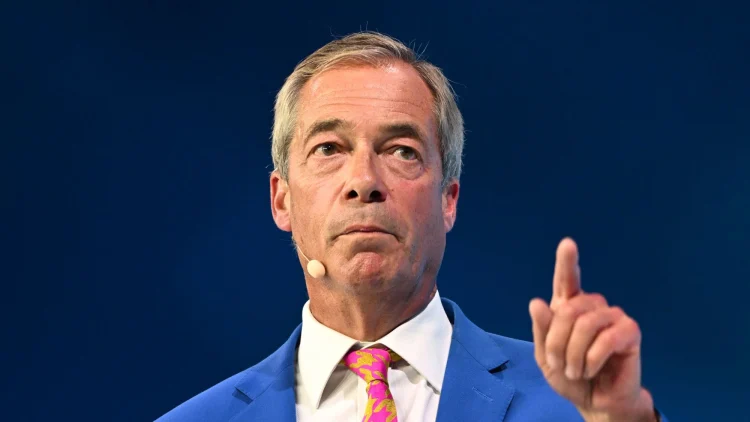
Nigel Farage at the Reform party’s annual conference in Birmingham, September 2026 (AP Photo/Thomas Krych)

2 min read
Nigel Farage has threatened to flood the House of Lords with “hundreds” of Reform UK peers and sack civil servants if necessary to deliver his party’s manifesto.
The Reform leader used his keynote speech at Reform UK’s conference in Birmingham to address sceptics who doubt his party’s ability to deliver on its manifesto after a hypothetical general election win.
He declared that he would be prepared to appoint enough peers to the Lords that Reform would have a majority in the Upper Chamber, or hold a referendum on its composition, if the peers tried to block his party’s legislation.
“We will declare a national emergency. All recess of parliament will be cancelled. Parliament will sit, if necessary, for 24 hours a day, for six days a week, until we pass the necessary legislation,” Farage said.
Reform policies – including stopping the arrival of small boats to the UK, reducing university attendance and cutting taxes on workers and pensioners – would be “explicit”, he added.
“I expect the House of Lords to honour that, as they’ve done with the Salisbury Convention for over a century. But if they don’t, well, we’ll present them with an idea. It’s not a new one – it’s been used before.
“We’ll appoint hundreds of new peers so that we have a majority in the House of Lords. And if that proves difficult, we’ll hold a referendum on the current composition of the House of Lords and they would be swept away by the British public, appalled by them.”
He promised to “remove the ability of judges to lean on outdated conventions” to block policies and warned the Civil Service: “If they try to obstruct us, they’ll be removed from their posts and replaced with people from outside, from the world of business.”
Farage’s speech on Friday also addressed the allegations broadcast by Channel 4 that his party breached political donation rules, which led to two of Farage’s closest allies stepping down this morning pending an internal investigation.
“Reform has broken no law. We take compliance extremely seriously. And ask yourself, why is all of this happening? Anyone got a clue why it’s happening? Because they’re scared of us. That’s why it’s happening,” Farage told Reform conference.
The speech was delayed over security concerns, with Farage telling the BBC the police would not allow him onto the conference stage due to a threat, and the address was interrupted by several protesters who were removed from the hall.

Just over a week since her death at the age of 80, Dolly Parton has landed the highest UK chart placement of her decades-spanning career.
On Friday evening, the Official Charts Company revealed that three of the late country music icon’s classic songs had made it into the Top 10 as fans continue to honour her legacy by revisiting her music.
As of this week, 9 To 5 is now Dolly’s highest-placing song ever in the UK, after reaching at number five.
The track was originally released in 1980 and appeared on the soundtrack of the film of the same name – but, surprisingly, missed the top 40 completely on this side of the Atlantic when it first came out.
Dolly’s previous highest-charting songs had been Jolene and Islands In The Stream, both of which landed at number seven.
Those two tracks continue to make a dent in the charts, with Jolene rising to number six and Islands In The Stream, a collaboration with the late Kenny Rogers, sitting at number nine.
Meanwhile, her greatest hits collections Diamonds & Rhinestones has risen one place to number five on the Official Album Chart, its highest entry yet.
Dolly’s back catalogue has seen a sharp increase in sales and streams since her death at the end of August, with several of her albums and songs returning to charts around the world.
The UK charts were full of momentous achievements this week, with Ella Langley earning her first-ever chart-topping single with Choosin’ Texas.
Her country song debuted at number 78 on the UK charts back in January, before cracking the Top 40 a month later, and finally rising to the Top 10 in July.
Ella replaces Sam Fender and Olivia Dean at number one, ending a run of 10 weeks in the top spot for their duet Rein Me In, which had previously set a new record with 23 non-consecutive weeks in peak position.
Rein Me In is still in the top 10, but has fallen to number seven, its lowest placement since February.
!function(n){if(!window.cnx){window.cnx={},window.cnx.cmd=[];var t=n.createElement(‘iframe’);t.display=’none’,t.onload=function(){var n=t.contentWindow.document,c=n.createElement(‘script’);c.src=”//cd.connatix.com/connatix.player.js”,c.setAttribute(‘async’,’1′),c.setAttribute(‘type’,’text/javascript’),n.body.appendChild(c)},n.head.appendChild(t)}}(document);(new Image()).src=”https://capi.connatix.com/tr/si?token=19654b65-409c-4b38-90db-80cbdea02cf4″;cnx.cmd.push(function(){cnx({“playerId”:”19654b65-409c-4b38-90db-80cbdea02cf4″,”mediaId”:”ae2a41da-2005-4bc4-a7f0-b81ed5a37240″}).render(“6a9aed72e4b0bd4d29d41942”);});
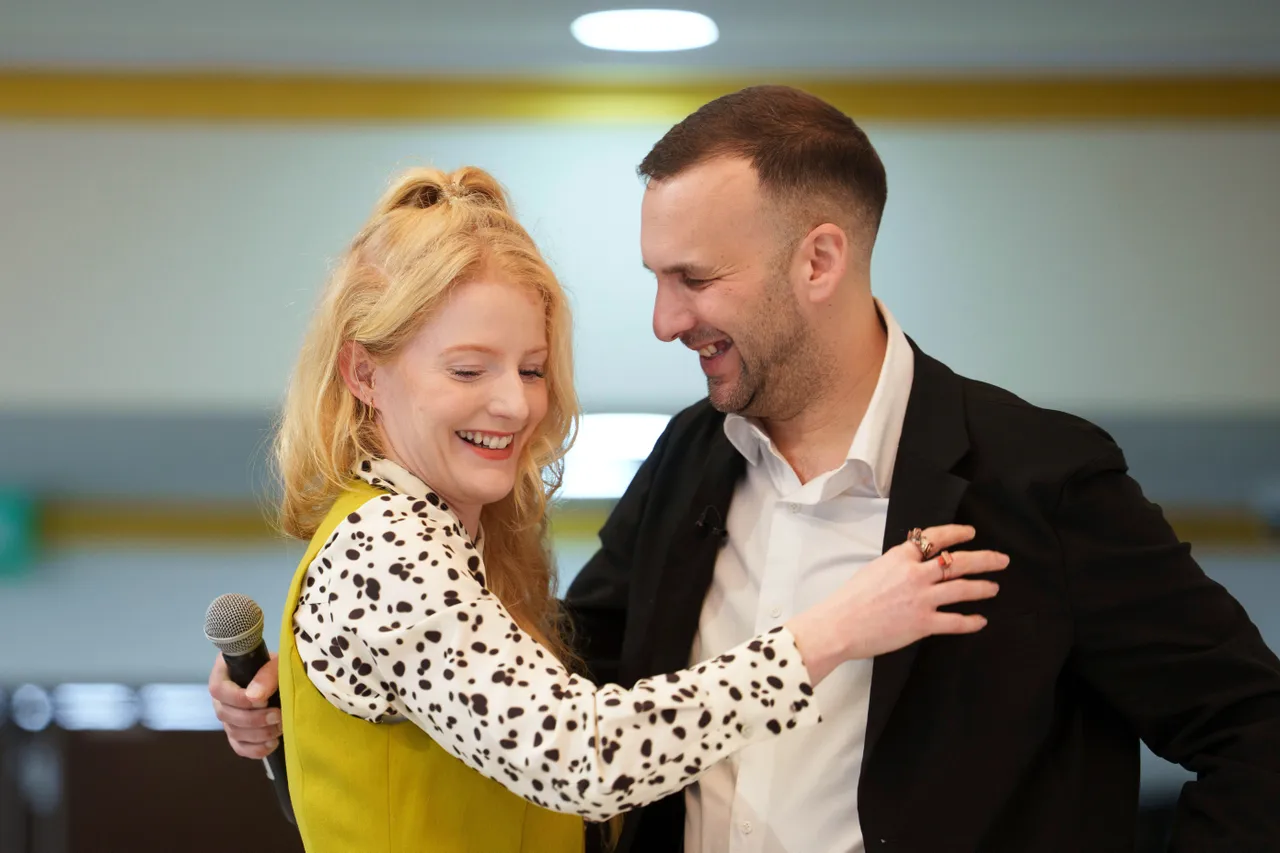
When Keir Starmer dramatically resigned as the MP for Holborn and St Pancras this week, all eyes quickly swivelled to Zack Polanski.
He was elected as Green Party leader just a year ago but he has quickly made a name for himself.
Polanski quadrupled the party’s membership numbers within just six months in the post, led the Greens to victory in the Gorton and Denton by-election and oversaw their best-ever performance in the local elections in May.
A YouGov poll even put them at second place, on 21%, behind Nigel Farage’s Reform UK for a brief stint in March.
But what goes up must come down, as the Greens soon found out.
Polanski attracted intense scrutiny after it emerged he had failed to vote in the local elections and that he had not paid council tax while living on a narrowboat for three years – though he has since been cleared by an ethics inquiry over the latter.
The London Assembly member was then slammed for questioning the police response to the Golders Green attack online and for sharing an Instagram post of a t-shirt featuring a picture of a guillotine and the words: “We’re only making plans for Nigel.”
Some progressives began drifting back to Labour after Keir Starmer was replaced by Andy Burnham in July, too.
The Greens are now down in fourth place on 13% according to YouGov’s latest poll, while Polanski himself has the lowest favourability ratings of all party leaders on 19%.
So it’s worth asking: why is he putting himself forward for a by-election now?
Polanski is still the most high-profile person within the left-wing party and it would a historic victory if the Greens took the seat, making it their first ever London constituency win.
The Green leader has long said he would consider running for parliament if a London seat became available, too.
He wasted no time signalling his desire to be selected by local Green members to be the party candidate for Starmer’s former constituency in the capital this week.
While the decision is not yet set in stone, Polanski is widely expected to be the party’s choice for the crunch vote in a head-to-head with Labour.
As Sky News elections analyst Robert Ford wrote on X, the stakes are high for both parties.
He said: “Greens have chance to turn the tide on recent decline and show Polanski is a winner. Labour have a chance to show that the Burnham bounce is real, consolidate the left in a London heartland seat, and deal a potential knockout blow to Green insurgency.”
He added that Polanski’s decision to join the contest meant it is “no longer just Green vs Lab”.
Ford claimed voters are now being asked: “Would you like the national leader of the Green party or a generic Lab backbencher as your local representative?”

It’s rather precarious, though, especially as the seat is traditionally Labour.
The Greens themselves are trying to put their best foot forward, with one party official telling HuffPost UK they feel “confident” about Polanski’s chances.
Another senior insider shrugged off the idea that it was risky to put the Green leader forward, insisting he would be a “brilliant candidate”.
A third pointed out that the Greens won “lots of traditionally Labour seats” in London back in May during the local elections.
If he is chosen for the seat, he may have also have a slight advantage when it comes to winning over the left-wing votes.
Former independent candidate Andrew Feinstein announced he would not be standing in the by-election, and would instead back the Green leader.
Feinstein secured 19% of the vote in the constituency back in 2024, coming in second place behind Starmer.
If his 7,312 votes and the Greens’ 4,030 votes from the general election had been combined at the time, it would have significantly reduced Labour’s majority – though the party would still win by some margin on 18,884 votes.
Still, as Luke Tryl, the UK director for More in Common, told HuffPost UK if Feinstein’s voters “switch en masse to the Green Party, Polanski will need a much smaller swing to win”.
He said: “The seat’s demographics could help the Greens too: young, diverse, Remain-voting, with lower concern about migration than recent by-elections, it’s strong territory for Polanski, whose approval among 18-24s is almost nine times what it is among the over-75s.
“We know that high-profile candidates – whether it be Burnham in Makerfield or Farage in Clacton – can motivate voters and boost turnout in by-elections.”
Labour is yet to choose its own candidate for the crunch vote.
HuffPost UK was told by one source that it is “a slam dunk” that Camden Council leader and Starmer ally, Sagal Abdi-Wali, will be Labour’s candidate.
The local insider said: “It will be a straight Lab-Green fight, so Polanski has a chance. Sagal will be a strong candidate with cast-iron local credentials and a personal story that will resonate with huge chunks of the electorate.
“Her being Muslim and Somali will limit Polanski’s ability to attract people angry about Gaza.”
However, other party sources insist the candidacy is still up for grabs.
Tryl told HuffPost UK this by-election “will be a fascinating test of what the electoral landscape looks like on the left of British politics”.
He noted Burnham started to unite the left since replacing Starmer, he has “halved the share of 2024 Labour voters defecting to the Greens since the spring”.
A separate YouGov tracker shows 50% of respondents think Burnham is a better PM than Polanski would be, compared to 8% who believe it is vice versa.
Tryl added: “Polanski’s own popularity has tumbled, leaving him the least popular party leader in the country.
“On the raw numbers, that makes Labour look like a safe seat: Holborn and St Pancras isn’t even a top-100 target for the Greens, who’d need a 19-point swing to take it outright.”
But the pollster also observed that “support for Labour has eroded in the seat in recent years”.
“For Labour, this is one of the first real tests of whether Burnham has really managed to unite the left behind Labour again,” Tryl said. “For the Greens, it’s a test of whether Polanski can regain his mojo after a difficult few months.”
Listen to Commons People, the podcast that makes politics easy. Every week, Kevin Schofield and Kate Nicholson unpack the week’s biggest stories to keep you informed. Join us for straightforward analysis of what’s going on at Westminster.
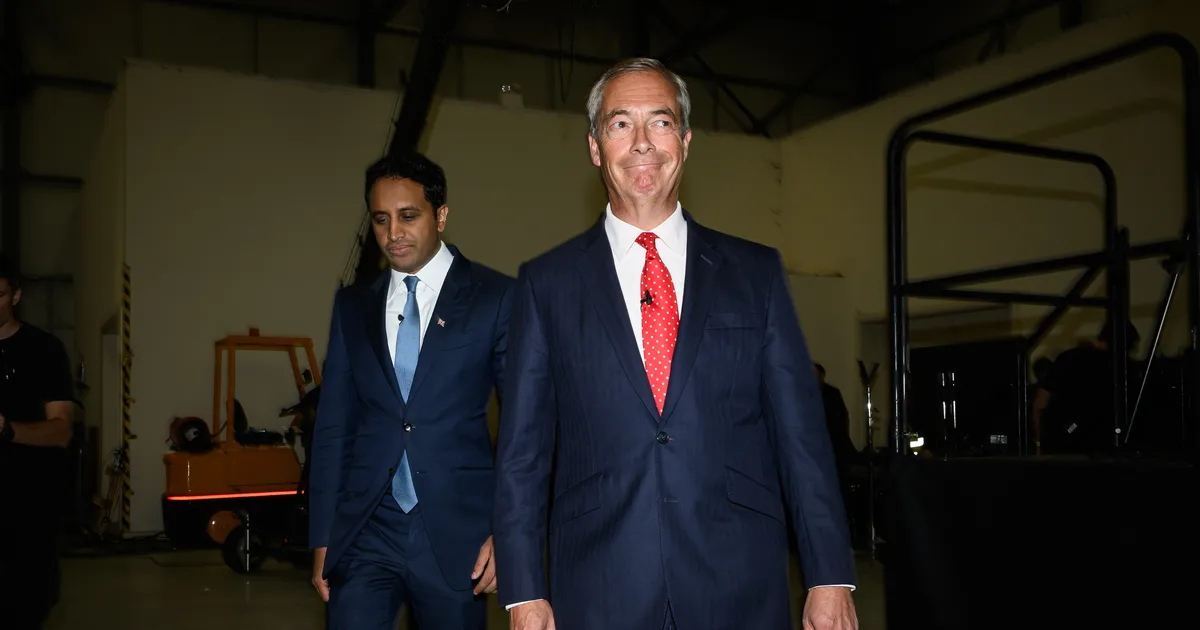
Zia Yusuf has been accused of plotting to replace Nigel Farage amid heightened scrutiny over Reform UK donations.
The party has been reported to the Metropolitan Police after an undercover sting operation accused Reform of accepting foreign funding, which goes against British electoral law.
Investigative journalists from Verbatim accused the party of allegedly taking funding from a US company to commission three supposedly independent polls at £32,500 earlier this year.
Reform’s head of policy James Orr and Farage’s close aide Dan Jukes organised the donation and were unaware the donors were actually undercover reporters.
Jukes has been accused of suggesting a way to work around British electoral law, too, so an American donor could give £500,000 to Reform UK.
Jukes and Orr have stepped down after the report was broadcast by Channel 4 News.
Reform insists it is not guilty of any wrongdoing and called the incident a “hoax”.
Farage has downplayed the concerns about breaching electoral rules, claiming it was “loose pub talk” and “jack-the-lad-dery”.
Amid this serious chaos, Yusuf chose to publish a glossy social media, telling a detailed story about his childhood and life before politics.
“I’ve dedicated my life to serving,” the unelected politician said in the clip.
“I’ve spent my career getting things done, doing hard things in the real world. That’s exactly what I’ll bring to the office of home secretary.
“If you want another career politician doing TikToks about crisps, there’s plenty to choose from. If you want someone who will do whatever it takes to deliver on our promises, vote Reform.”
The clip was published shortly before Yusuf’s major speech in front of the party conference where he told Reform delegates the “fate of this country is down to us”.
It quickly sparked speculation that the Reform politician’s timing may have been strategic.
Former Farage ally Tim Montgomerie, who was recently suspended for publicly criticising the party, said: “The sooner Nigel Farage realises this man is running to replace him as leader, the better.”
Reform UK has been approached for comment.
Plenty of other commentators on social media seemed to think Yusuf might also have his eye on the crown.
Listen to Commons People, the podcast that makes politics easy. Every week, Kevin Schofield and Kate Nicholson unpack the week’s biggest stories to keep you informed. Join us for straightforward analysis of what’s going on at Westminster.
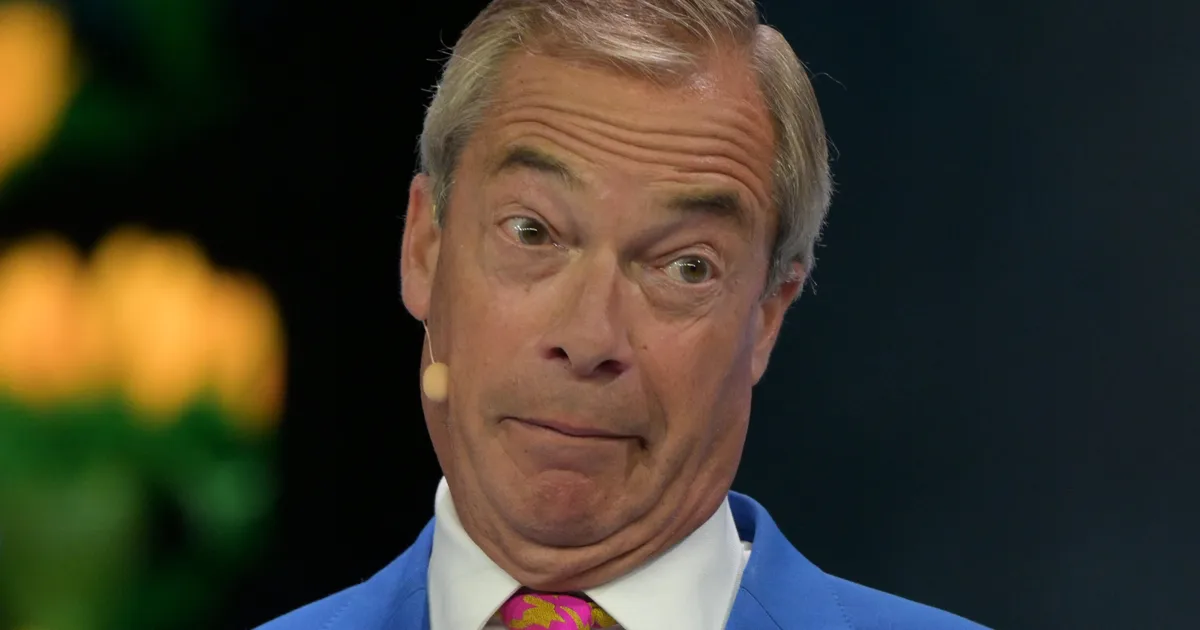
Nigel Farage has played down the accusations that Reform UK has accepted foreign donations and insisted the row stems from “loose pub talk”.
An undercover sting operation conducted by investigative group Verbatim and published in a Channel 4 News documentary has accused two top party aides of accepting US funds for the party.
Verbatim’s undercover reporters claim Reform’s head of policy James Orr and Farage’s close aide Dan Jukes took funding from a US company to commission three supposedly independent polls at £32,500 earlier this year.
British electoral law says political donations can only be made by someone eligible to vote in the UK or a UK-registered company.
The report also says Jukes suggested a way to get around those electoral rules to secure a £500,000 donation from the US to the party.
Reform initially denied any wrongdoing and called the operation a “hoax”. Orr and Jukes then stood down from their party posts on Friday morning.
During a press conference at Reform’s annual get-together in Birmingham, Farage read out a statement defending his party over the accusations.
The party leader denied wrongdoing around the poll and how it was paid for, instead pointing out names of potential other donors were bleeped out in the footage.
Farage said: “What is more problematic is loose pub talk, including a couple of boasts that simply were not true.
“So in the video, when he [Jukes] says we’ve done it with X, we’ve done it with Y – well, the reason Channel 4 haven’t broadcast the names of X and Y is because it isn’t true.
“Donations from the names that were mentioned had not occurred, don’t exist on the old comms site, don’t exist in our accounts.
“And while I’m aware that our people were pushed and pushed and pushed into saying these things, the comments were injudicious at best.
“Neither of these men was authorised to act in that way. Accordingly, they’ve stepped down pending an investigation.”
Reform UK says it is conducting an internal investigation into what happened but denies any wrongdoing.
The Electoral Commission said it is “in touch” with the Metropolitan Police after Channel 4 broadcast, though the police have not opened an investigation at the time of reporting.
Farage also accused the reporters of “entrapment”.
After a question from the BBC, he told the press conference: “Am I annoyed that these people even got to meet me? Yes I am, it should not have happened.
“The two individuals involved are not even part of our fundraising team, so they should have gone through the appropriate channels.
“Checks would have been made and they would never, ever have got to sit down at a table with me.”
Farage continued: “We have not taken an illegal penny in funding, that is important. The loose pub talk, frankly, there was a bit of boasting, a bit of jack-the-lad-dery going on there.
“If it was more serious than that, then I refer you back to the BBC’s question earlier, the names would have been put on to the programme and there would be a hell of a row. They don’t exist. Those donations don’t exist.”
Asked about the way Jukes, his close friend, is involved, Farage said: “I don’t like it at all. I’ve worked with Dan very closely for many years, many, many years, and I described it as loose pub talk, and that’s what it was, because what he said simply wasn’t true.
“He got put into a position and he should never have said what he did. I believe the investigation will find he should never have said one or two of the things that he said.”
The Clacton MP’s comments come after Farage admitted this morning to LBC that he is “not happy” about the row, but insisted: “The party has broken no laws. The party has not taken any dodgy money or anything like that whatsoever.”
Listen to Commons People, the podcast that makes politics easy. Every week, Kevin Schofield and Kate Nicholson unpack the week’s biggest stories to keep you informed. Join us for straightforward analysis of what’s going on at Westminster.

Raoul Pal :”Nobody Will Believe my LATEST PREDICTION for Bitcoin & Ethereum”

My day on the City trading floor that convinced me Britain’s in a death spiral and we face a terrible reckoning… without a dramatic change of course: GUY ADAMS

Cannae Holdings: Intriguing But Not Compelling As NAV Decreases





-
 Crypto World14 hours ago
Bitcoin price stalls near $82K as key resistance holds
-

 Politics14 hours ago
Best Gaming Laptops, CPUs, TVs, And Keyboards To Upgrade Your Set Up For GTA VI
-

 Tech15 hours ago
The Birds Outside, Drawn For You Automatically
-

 Crypto World18 hours ago
IMF Says El Salvador’s Post-Review Bitcoin Purchases Used No Public Funds
-
 Crypto World14 hours ago
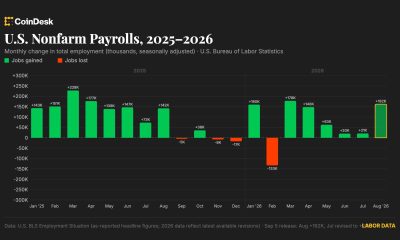
U.S. added stronger than expected 162,000 jobs in August as labor market bounced back
-

 Sports18 hours ago
Alexandre Pato consortium’s Northampton Town investment approved
-

 Sports13 hours ago
Golden Eaglets Drawn in Group B for 2026 WAFU B U17 Championship
-

 Sports19 hours ago
Commanders’ Chig Okonkwo is a top breakout fantasy football candidate
-
 Crypto World13 hours ago
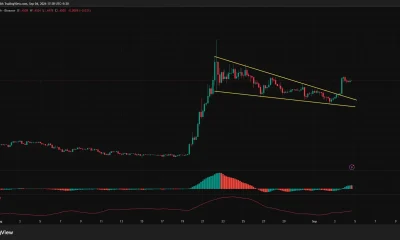
XRP price breaks falling channel as bulls target $1.53
-
 Politics20 hours ago
A new European chapter for Gibraltar
-
 Politics16 hours ago
The House | Bin the lectures, bring gossip and be ready to banter: how the new PM should prepare for his Trump encounter
-

 Politics13 hours ago
How To Avoid Winter Colds: 4 Everyday Habits That Spread Germs, Says Pharmacist
-

 Crypto World13 hours ago
From warning to listing: UK’s largest retail investment platform opens access to crypto ETNs
-

 Tech15 hours ago
A Worthy Android Ereader, With Some Tradeoffs
-

 Crypto World14 hours ago
FinCEN flags $12.7B tied to Southeast Asia crypto investment scams
-

 Politics18 hours ago
33 Cosy Autumn Home Decor Ideas: Blankets, Pumpkin Decorations, And Candles
-

 Crypto World14 hours ago
Trezor Data Breach Impacts 67,000 More US Customers
-

 Sports19 hours ago
Seven wickets in 21 balls: Sri Lanka’s Chamari Athapaththu scripts history with record-breaking spell
-
 Tech13 hours ago
beyerdynamic AVENTHO Y Debuts at IFA 2026 and Makes Wireless Headphones Less Disposable
-

 Tech14 hours ago
How To Edit Claude’s Memory
You must be logged in to post a comment Login