


The East India Company took its dividends in cotton, opium and tea. This one takes them, principally, in tokens generated, prompts served, models fine-tuned on someone else’s data. Behind the inference sits the older ledger – copper and cobalt out of Congo, genomic sequences signed away in Zambian clinics in exchange for tuberculosis drugs that may or may not arrive, aquifers drained to cool data centres.
From the Beverly Hilton, none of this is visible. From East India House on London’s Leadenhall Street, in 1770, the Bengal famine was not visible either. Blame it on the architecture.
Politics
The original Reform revolt – spiked


spiked is funded by readers like you. Only 0.1% of regular readers currently support us. If just 1% did, we could grow our team and step up the fight for free speech and democracy.
Become a spiked supporter and enjoy unlimited, ad-free access, bonus content and exclusive events – while helping to keep independent journalism alive.
Continue Reading
Politics
Burnham’s pathetic ‘both sides’ attitude to Gaza matches his equivocation on everything else

Tomorrow, 18 June, the Makerfield by-election could open a path for Andy Burnham — current mayor of Greater Manchester — to make a bid for the leadership of the Labour Party.
However, given that Labour has lost most of its voters to left-wing, pro-Palestinian parties, it’s worth taking another look at Burnham’s stance on Gaza.
(Spoiler alert: it’s not great)
Labour losing votes on Palestine
Labour’s strategy whilst in government has lent heavily on tacking to the right in a vain attempt to appeal to Reform voters. However, the party actually lost four times as many voters to the Greens at the local elections. In fact, just 46% of Labour’s previous backers remained loyal at the ballot box.
Recent polling from Opinium revealed that a great deal of that shift was down to Labour’s political and material support for Israel, fuelling the genocide in Gaza.
Of the former Labour voters who switched to centrist or left-wing parties, 53% cited the PLP’s stance on Palestine as a factor. Likewise, a massive 74% said that their:
opinion of Labour would improve if the next leader were to adopt a strong position on Palestine, such as imposing sanctions on Israel.
As such, Burnham could potentially win back a not-insignificant voting bloc if he were to steer the Labour Party toward an anti-genocide stance. This would also have the added bonus of bringing the UK into compliance with its duty to prevent genocide, per the 1948 Genocide Convention.
Burnham — ‘Not a gift but a right’
Of course, it would be remiss of us not to mention the context of Burnham’s abysmal record in West Asia. Back in 2003, as Labour MP for Leigh, he voted for Blair’s illegal invasion of Iraq — in spite of his criticisms of the ‘War on Terror’. In the aftermath, he also voted consistently against launching investigations into the Iraq war.
Regarding Palestine, Burnham visited the occupied West Bank back in 2012, in the company of Labour Friends of Palestine and the Middle East. At the time, he called Palestinian statehood:
not a gift to be given but a right to be recognised.
In 2015, Burnham voiced his support for a two-state solution to the Israel-Palestine conflict. To this end, he also reiterated the call for recognition of the Palestinian state, telling the Palestine Solidarity Campaign that:
the appalling loss of life that occurred in Gaza last summer – with 2,131 Palestinians killed, the vast majority of them civilians, and seven Israeli civilians killed by rocket attacks from Gaza, makes the task of achieving a lasting and just peace all the more urgent.
Labour is clear that only a negotiated peace deal will bring the justice and security both sides deserve. That is why the international community must now take concrete steps to strengthen moderate Palestinian opinion. We are clear that Palestinian recognition at the UN would be such a step.
Gee, do we think maybe the lack of ‘moderate’ Palestinian opinion might be related to the 2,000+ mostly-civilian deaths?
Burnham: Friend of Israel
However, Burnham has also been a member of the Labour Friends of Israel since 2015, and called boycott campaigns against the occupying state “spiteful”. Al Jazeera also reported that Israel was at the top of Burnham’s list to visit, had he won his 2015 leadership bid. He described Israel as a:
democracy that has a long history of protecting minorities and promoting civil rights.
When Israel redoubled its war on Palestine in 2023, Burnham — alongside Sadiq Khan and Anas Sarwar — was one of the earlier senior Labour figures to call for a ceasefire “from all sides” (deeply equivocal language again there).
However, he also supported Israel’s ‘right’ to carry out “targeted action within international law”. This ‘targeted action’ was, of course, very clearly far from the actual genocidal actions of the occupying forces.
In July 2025, he issued a plea for Mancunians to donate to UKMed, a charity supporting medical access in Gaza. In a video address, he described the suffering of Palestinians as “beyond words”, adding:
We stand with people in times of need, it’s who we are.
And the genocide?
However, standing with the Palestinians apparently doesn’t extend to recognising the war crimes being carried out against them. In a 4 June Guardian interview, Burnham specifically declined to describe Israel’s actions as genocidal:
I can’t judge things of that enormity from where I am as mayor of Greater Manchester. But I do have concerns about the disproportionate nature of what has happened in terms of the destruction, and there has to be a full process of investigation and accountability.
The UN Independent International Commission of Inquiry on the Occupied Palestinian Territory had issued a report stating that Israel was committing genocide 9 months prior to Burnham’s statement.
In May 2026, Your Party’s Jeremy Corbyn wrote to Burnham, urging him to state publicly that he would back an inquiry. The Manchester mayor did not respond. Corbyn also later launched a petition to pressure Burnham into making a statement to that same effect.
Likewise, when the Palestine Solidarity Campaign asked the Makerfield candidates what they would do to “uphold the rights of Palestinian people”, Burnham stayed silent. Meanwhile, his Green Party counterpart, Sarah Wakefield, was quick to respond:
I unequivocally accept the findings of the UN Independent Commission of Inquiry and numerous other expert bodies that Israel has committed genocide in Gaza. I additionally accept the 2024 ICJ ruling that Israel is guilty of the crime of apartheid against Palestinians.
I fully support a total ban on trade with Israel’s illegal settlements and all other trade that aids or assists Israel’s unlawful presence in the occupied Palestinian territory. I also support comprehensive sanctions on Israel, including a full arms embargo. Without doubt, I support reversing the authoritarian use of public order and anti-terror legislation to suppress protest in support of Palestinian rights.
‘Both sides’ is the wrong side
As the Canary has repeatedly reported, Burnham has consistently failed to voice a credible plan or any real opinions in his Makerfield candidacy. Instead, he’s echoed a distinctly centrist, Starmerite call for non-specific “change”.
However, as we’ve seen quite clearly through Burnham’s pitiful equivocation on Palestine, paying lip-service to both sides too often boils down to tacit support for the wrong side.
If the Labour hopeful cannot learn that lesson, he’ll follow his predecessor into meaningless oblivion — and the UK’s complicity in Israel’s genocide will continue unabated.
Featured image via the Canary
By Grace
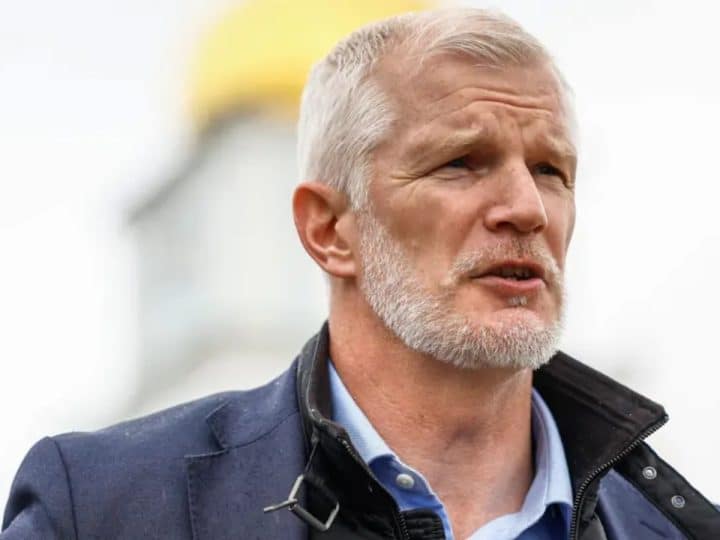
Ex-defence minister Al Carns has condemned the waste and inefficiency of the British war machine. The former commando wants more to be spent on war. He’s wrong, but his latest interview does expose certain grim truths about the UK war machine.
Carns resigned his cabinet post as a junior defence minister on 11 June, citing Starmer’s failings on the so-called Defence Investment Plan (DIP):
We owe those who serve the UK the kit to do the job and the loyalty to stand by them when it's done. We are failing on both.
I’ve spent my whole time in government making that case. Number 10 will not listen, so I am resigning as Minister for the Armed Forces. Letter to the PM… pic.twitter.com/HDCIOcVsA5
— Al Carns (@AlistairCarns) June 11, 2026
Al Carns resigned hours after his boss defence secretary John Healey threw in the towel. Both men were pro-war Starmer loyalists from the right-wing of the Labour Party.
Like many such people, Carns likes to externalise the UK’s problems onto, for example, Russia:
Moscow is probably rubbing its belly. I think it looks at the social division that we’re having in the UK and the amplification through social media as success for its propaganda campaign.
Carns, who has been touted to replace Starmer, is a militarist who wants more money for war. But hidden in his latest Guardian interview are some important truths about the racket we know as the military-industrial complex.
Carns told the Guardian how defence projects are deeply inefficient:
It is unbelievable. You turn a stone over and get another shock – how has that been allowed to go on?
And:
you turn another stone over, and it is just layers of bureaucracy which now cost us more than the product you’re getting itself. I can’t describe the level of inefficiency in the system that we’ve been left with and we’re trying to unpeel. But it’s actually exceptionally difficult to do.
Al Carns is half-right, we do need reform
This is a pretty typical rant about bureaucracy. These sentiments are hardly uncommon among conservative-minded ex-soldiers. And on waste in the war machine, Carns makes some good points:
Take tanks for example – 100 to 200 tanks isn’t the most useful way of spending our money. They were ordered ages ago, and if you cancel them now, that’s sunk cost … that’s cost us £700m.
Well, I think these are the difficult discussions we have to make – the cost of running them is in the hundreds of millions, and so I would rather take that chunk of money … and put it into those innovative systems that we need to buy.
Al Carns called for root and branch reform:
We have the fifth biggest defence budget in the world. Do you think we get a good bang for buck? We need to completely and utterly overhaul our procurement.
We need to make sure a large proportion of the resource and money is spent this side of 2030, to make sure that if we get caught in a geographical confrontation, we’re ready.
Carns is half-right. We do need a massive overhaul and reallocation of war spending. But Carns would allocate cash towards things like AI. In reality, we need to stop handing bags of cash to arms firms full stop, and build actual human security: jobs, healthcare, education, green technology and so on. Carns, a career military officer, might not be able to see that. But we can.
Featured image via the Canary
By Joe Glenton
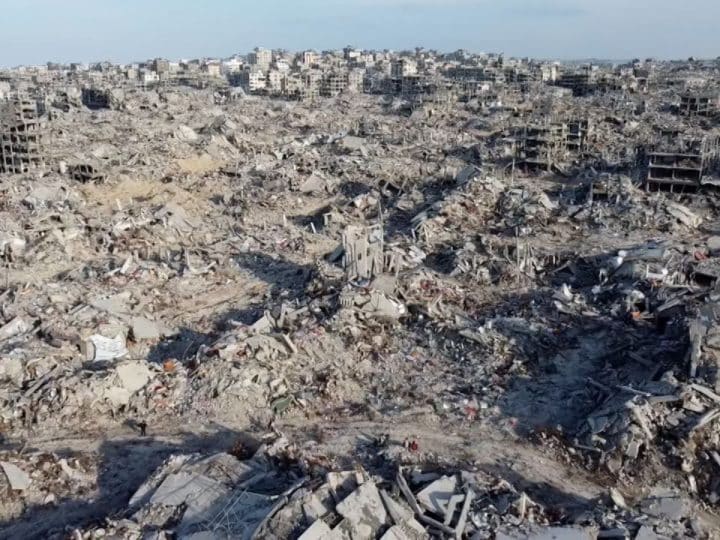
As the number of Palestinians killed in Gaza since the so-called “ceasefire” reaches more than 1,000 and Israel’s military bombardment intensifies, Medical Aid for Palestinians (MAP) warns that Palestinians continue to be killed, starved and driven into ever-shrinking pockets of land.
With the majority of aid crossings closed amid an ongoing malnutrition crisis, today’s grim milestone marks a catastrophic escalation of Israel’s genocide of Palestinians in Gaza.
Nine months after the ceasefire came into effect, Gaza still does not have a single fully functioning hospital, while doctors are increasingly forced to treat patients without access to basic diagnostic tools, equipment, and medicines.
Since the “ceasefire” came into effect on 10 October 2025, Israeli forces have committed more than 3,000 violations, killed at least 1,005 Palestinians and injured 3,157 others, according to the Palestinian Ministry of Heath in Gaza.
Meanwhile, the Israeli military has pushed the “Yellow Line” westward, consolidating control over an estimated 60% of Gaza, well beyond the agreed ceasefire boundaries.
On Friday 12 June, dozens of families in eastern Gaza City were forced to flee after Israeli forces marked a further expansion of the so-called “Yellow Line” by placing yellow cement blocks deeper into the area.
Ceasefire in name only
The failure to enforce the agreement, to hold Israel to account for these violations, has had a devastating human cost to the lives of over two million Palestinians.
Fikr Shalltoot, Gaza director at MAP, said
We mourn as Gaza reaches yet another tragic milestone – a thousand people killed since leaders announced an end to the violence in October. Thousands more people who were told the worst was over are still burying their loved ones.
Since October, what we have witnessed cannot in any way be called a ceasefire. As the bombs continued to fall and Gaza remained under a near-total siege, global leaders convinced themselves a piece of paper could substitute for accountability, for a lifted blockade, for medicine reaching the people who needed it.
And even now, as access into Gaza remains heavily restricted, and aid is weaponised against a starving population, their silence continues.
The “ceasefire” was supposed to offer an opportunity to begin rebuilding Gaza’s health system, which has been left in ruins following two years of systematic destruction. But only 20 of 37 hospitals remain partially functional, and there is not a single fully functioning hospital left.
More than 1,825 health facilities have been damaged or destroyed. 62% of primary healthcare medications were out of stock in April, and the World Health Organisation (WHO) recorded 22 attacks on healthcare facilities in the early months of 2026 alone.
Diagnostic services have also collapsed, with only around two functioning CT scanners serving Gaza’s entire population and many cancer screening and laboratory services no longer available. According to MAP’s team in Gaza, patients are increasingly dying from otherwise treatable conditions because of delays in diagnosis and the lack of essential medical infrastructure.
Sally Saleh, MAP’s head of emergency in Gaza, said:
The consequences of these shortages extend beyond oncology. Even routine conditions such as fractures or postpartum haemorrhage are becoming life-threatening due to delayed diagnosis, lack of imaging, and inadequate laboratory support.
Infections that could normally be diagnosed and treated appropriately are instead managed without proper identification, increasing complications and avoidable harm.
Overall mortality and morbidity rates are rising, including from conditions that would normally be treatable. Many patients are presenting too late or are unable to receive timely diagnosis or appropriate treatment due to the absence of essential medical infrastructure.
The toll on Gaza’s health workers continues to grow. On 15 June, Mohammed Mousa Al Habil, an emergency room nurse at Shifa Hospital, and his six-year-old son Mousa were killed in an Israeli strike while refilling water tanks on the roof of their home in Gaza City.
He is believed to be at least the fifth Palestinian healthcare worker killed since the “ceasefire” agreement came into effect. According to the World Health Organisation, at least 1,700 healthcare workers have been killed in Gaza since October 2023, while a recent UN/EU report found that around 14% of Gaza’s health workforce has been lost.
An overwhelmed healthcare system
Over 43,000 Palestinians are living with life-changing injuries, a quarter of them children, while more than 1,400 people have died waiting for medical evacuation that never came, according to the Palestinian Ministry of Health. And 18,500 critical patients, including 4,000 children, remain trapped inside Gaza with no way out.
The UN and World Bank estimate that rebuilding the health sector will require $10bn. That rebuilding cannot begin while attacks continue and restrictions on the entry of supplies and equipment remain.
Speaking from inside Shifa, once Gaza’s largest hospital, MAP’s medical supervisor, Alaa Al Shurafa, described how conditions have not improved since the ceasefire came into effect:
The current phase is still marked by severe shortages of essential medicines and medical supplies. Chemotherapy drugs in particular remain scarce, as do infection prevention and control materials and many basic medical tools.
We are also facing critical gaps in anaesthetics and antibiotics. As a result, doctors are often forced to work with whatever is available, rather than what is optimal or best for the patient.
While the situation may appear improved from a distance, the reality on the ground tells a very different story, a disheartening one, nothing has changed.
Throughout all of this, MAP’s teams and partners have continued to deliver lifesaving care across Gaza at scale. In the first three months of 2026 alone, they provided more than 540,000 vital healthcare and humanitarian services to a population under siege.
But while Israel’s military bombardment continues and crossings stay sealed, aid organisations cannot rebuild what is still being destroyed.
MAP says world leaders, including the UK government, must act urgently to:
- Demand a permanent ceasefire and an end to Israel’s genocide in Gaza.
- Guarantee full humanitarian access to restore Gaza’s health system, including the immediate release of detained healthcare workers, safe passage for patients and medical staff, and unrestricted entry of aid, fuel, and medical supplies.
- Suspend all arms sales to Israel immediately, including components for F-35 fighter jets, and end all military cooperation.
- Suspend the UK-Israel trade agreement until Israel’s widespread violations of international law are brought to an end.
- Support international accountability mechanisms, including the International Criminal Court, to investigate attacks on healthcare and other serious violations of international law.
Featured image via the Canary
By The Canary
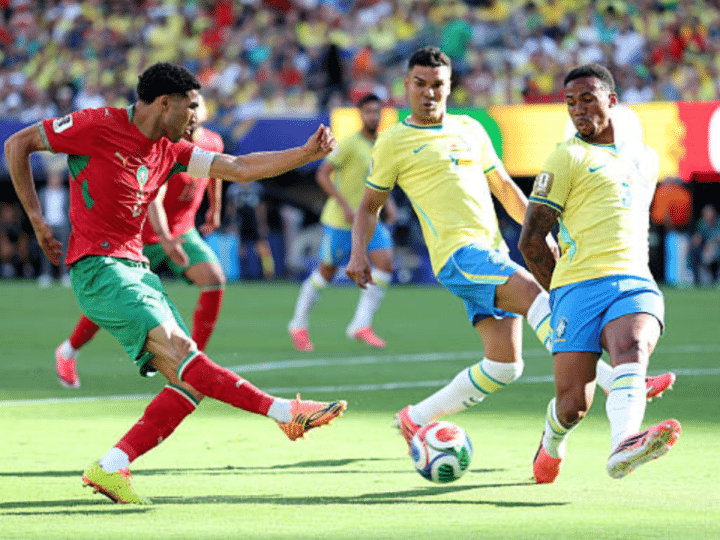
The first round of the 2026 World Cup revealed that Arab football is no longer merely a spectator when it comes to the major powers, but at the same time it showed that the gap with the world’s elite remains evident for some teams.
Amidst results that sparked optimism and others that called for urgent reassessment, the Arab teams presented a mixed picture that held many implications ahead of the tournament’s continuation.
World Cup: strong start
Morocco was the biggest Arab winner and perhaps one of the biggest beneficiaries of the entire opening round. The draw against Brazil was not merely a positive result, but a continuation of an upward trajectory that began at the Qatar World Cup in 2022. The Moroccan team played with the confidence of a side that believes in its ability to take on the big names, and succeeded in imposing its style against one of the most successful teams in history. The point earned by the Atlas Lions may seem ordinary on paper, but in practice it confirmed that Morocco is fast becoming a fixture on the world stage.
The Egyptian national team, for its part, put in a performance that reflected the experience of a side that knows full well how to handle major fixtures. The draw with Belgium did not come about through complete retreat or a purely defensive approach, but rather through a clear balance between tactical discipline and the ability to threaten the opposition. Egypt emerged from the first round with a clear message: they will not be mere passers-by in the tournament.
As for Saudi Arabia, they continued to cement their image as a team capable of surprising everyone at major tournaments. The draw with Uruguay gave the greens a huge morale boost and confirmed that the team possesses the organisation and character to compete with the big names. Most importantly, the result kept their fate in their own hands ahead of the next two matches.
Meanwhile, the Qatari national team succeeded in confirming the progress it has made in recent years. The draw against Switzerland earned Al-Anabi a valuable point and demonstrated a greater ability to cope with pressure compared to the previous edition. The performance was not perfect, but it was enough to confirm that Qatar is now better prepared to take its place on the world stage.
The disappointment of the opening match and the quest for redemption
Despite the 1–4 defeat to Norway, the Iraqi national team was perhaps the Arab side that came away with the greatest morale boost despite losing. The scoreline seemed harsh, but the details of the match told a very different story. Iraq showed attacking courage and clear character at various stages of the match, and managed to hold their own against a side featuring some of Europe’s top stars. Defensive errors cost them dearly, but the performance offered positive signs to build on, particularly as the team appeared capable of creating chances and refusing to give up despite falling behind.
As for Jordan, they faced their first-ever World Cup qualifier against Austria. Despite the defeat, the ‘Al-Nashama’ put in a creditable performance for a side embarking on a new experience at this level. The gap in experience was evident at crucial moments, but their fighting spirit and discipline have given the Jordanian side a foundation from which to build in the coming rounds.
Algeria faced one of the toughest possible tests against Argentina. The 3–0 defeat highlighted the gulf in class against a world champion of exceptional quality, but at the same time it left the Algerian side needing to quickly regain their composure, as the upcoming matches will be even more crucial in determining their fate.
Tunisia’s shock and the sacking of the manager
Meanwhile, Tunisia were the most worrying story of the first round. The heavy 5–1 defeat to Sweden was not merely a stumbling start, but a technical earthquake that prompted the Tunisian Football Federation to act swiftly and make a change to the coaching staff by appointing the Frenchman Hervé Renard.
The decision reflects the scale of the shock caused by the match, but it also reveals a clear desire to salvage the campaign before it is too late. All eyes will be on the reaction of the ‘Eagles of Carthage’ in the second round to see whether the change is capable of putting the team back on track.
With the first round now over, it is fair to say that Morocco has deservedly taken the lead in the Arab scene, whilst Egypt, Saudi Arabia and Qatar have strengthened their chances and demonstrated their ability to compete. Conversely, Tunisia, Algeria, Jordan and Iraq have entered a phase of real testing; the difference, however, is that some defeats have exposed a crisis, whilst others have revealed a project capable of rising to the challenge. Between these two extremes, the second round looks set to paint a clearer picture of the future of the Arab dream at the 2026 World Cup.
Featured image via the Canary
By Alaa Shamali

The world’s richest man’s new company — SpaceX — may have counted many a chicken before they hatched.
China’s chokehold on solar cells and equipment, tungsten, indium, yttrium, and other critical materials should cast doubt on the prowess of American industry, defence and SpaceX alike.
The Washington Post’s recent report on the stalled SpaceX-Suzhou Maxwell negotiations shows that all is not well behind the showmanship of American industrial power under Trump and Musk.
China is quietly expanding its export control regime against the U.S. and American allies, reaching beyond rare earth minerals to pinch choke points that affect key U.S. industries, according to investors, business leaders and supply chain analysts. https://t.co/sq1VJE8LUD
— The Washington Post (@washingtonpost) June 17, 2026
In March 2026, Chinese authorities told Suzhou Maxwell, one of the world’s most advanced producers of solar cell manufacturing equipment, to pause negotiations with Musk’s companies and not to sell them machinery according to the Post.
This is a spectacular roadblock for the company that wants to deploy 100 gigawatts of solar-powered artificial-intelligence data centers into orbit every 12 months by 2030.
Nevertheless, SpaceX’s valuation rose as high as $2.97tn on Tuesday, eclipsing the market value of Amazon and Microsoft of $2.64tn and $2.93tn, according to the Financial Times (FT).
The initial public offering (IPO) of the rocket and AI company has made Musk, who owns just over 40 per cent of it and has a large stake in Tesla, the world’s first trillionaire.
According to Bloomberg:
China dominates the large-scale manufacture of key technologies, including gallium and solar polysilicon, which could be a problem for SpaceX given its contracts with the US military and the strategic logic driving the rise of satellite mega-constellations.
Jim Chanos, the founder of the investment firm Chanos and Company, who predicted the 2001 collapse of Enron, said:
It really does feel very much a ‘don’t look at the man behind the curtain’ situation
It is, isn’t it? A $2.97 trillion valuation built on a supply chain that China controls — and a company that cannot admit it, because to do so would be to admit that the American space age rests on China’s permission.
SpaceX and the US military — Same story
One of the reasons that tungsten prices are soaring currently, according to Gracelin Baskaran, director of the Center for Strategic and International Studies (CSIS), a think tank funded by arms companies among others, is because of the US war on Iran.
She told the former UK intelligence chief Richard Dearlove, in an interview recently that there was a “crucial shortage” of tungsten in the USA, a key raw material for the US military following use of munitions during the war on Iran.
According to Reuters, China dominates the global tungsten market. It imposed new export restrictions on tungsten in 2025 and cut mining quotas for that year. In December 2025, China said only 15 firms would be allowed to export tungsten in 2026–2027.
The U.S. has fired more than 1,000 long-range Tomahawk missiles since the war with Iran began Feb. 28, as well as 1,500 to 2,000 air-defense missiles, including THAAD, Patriot and Standard Missile interceptors, according to U.S. officials cited by the Wall Street Journal.
Completely replacing those stockpiles could take up to six years, officials told the WSJ.
The same bottlenecks are affecting yttrium, which is needed for aircraft engines, and indium, which is needed for lasers and AI data centers.
US strategy mirrors the British Empire
The threat of China is bringing out the worst imperial tendencies of the United States.
Writing in Le Monde, Evgeny Morozov notes that without mentioning the Bengal famine or Plassey, Trump cronies are now boasting about modeling U.S. agencies on the British Empire.
George Kollitides II, the Pentagon’s principal advisor on economic competition, said the quiet part out loud at the Milken Institute conference in May 2026:
The British Empire really modelled it,” pointing to “privatised companies like the East India Company, which were really public-private, government-driven organisations largely built around commerce and economics.
Morozov documents U.S. activities that include:
-
The Pentagon taking equity stakes in private mining firms like MP Materials and Vulcan Elements
-
The Development Finance Corporation investing in Congolese copper and cobalt, and Angola’s Lobito rail corridor
-
The Export-Import Bank locking allied producers into U.S.-centered supply chains through guaranteed offtake contracts
-
Project Vault building a $12 billion strategic stockpile of 60 critical minerals with fixed purchase prices
-
Conditional loans and health aid used as leverage to extract mineral access from countries like Zambia
He says:
Writing in Phenomenal World, scholars Ilias Alami and Thea Riofrancos point to the same imperial logic playing out elsewhere. They note the U.S. invasion of Venezuela and abduction of President Maduro to control its oil industry, the blockade of Cuba, the threats against Greenland, and the war on Iran.
The U.S. is also clamping down on the ability of countries like Zambia to pursue polyalignment the strategy of courting investment from both US and China while refusing to align with either.
This “my way or the highway” strategy is not benign. Venezuela, which holds significant deposits of gold, bauxite, and coltan — all critical minerals, was invaded and its president abducted, with the explicit aim of controlling its oil industry for the benefit of U.S. fossil fuel corporations.
The message to any resource-rich country contemplating polyalignment is unmistakable: defiance invites regime change.
Arsonists playing as firefighters
Both Morozov and Alami and Riofrancos highlight a deeper rot: the people now running U.S. industrial policy are the same ones who profited from its decline.
Morozov traces that the Pentagon’s Economic Defense Unit is staffed by alumni of Cerberus, Apollo, and Cantor Fitzgerald, private equity firms that built empires on the ruins of American manufacturing. For instance, Cerberus ran Chrysler into the ground.
Cantor Fitzgerald, run by Commerce Secretary Lutnick’s sons, backed USA Rare Earths, a company with no proven track record. Donald Trump Jr.’s 1789 Capital invested in Vulcan Elements months before it secured a $620 million Pentagon loan.
Alami and Riofrancos add that this private equity mindset focuses on low-hanging fruit and quick wins, not the long-term planning necessary to rebuild industries in secular decline.
SpaceX cannot build its orbital data centers without Chinese solar equipment. The Pentagon cannot replenish its munitions without Chinese tungsten. The people trying to solve these problems are private equity hacks, boasting about being the East India Company, subjugating the global South again, and using the China bogeyman to justify it all.
Featured image via the Canary
By Nandita Lal
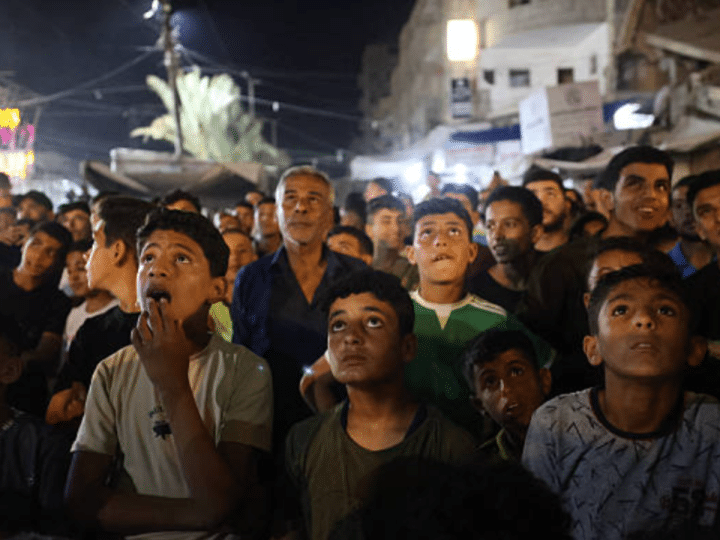
Whilst the world’s attention is focused on stadiums across the United States, Canada and Mexico to follow the 2026 World Cup, Palestinians in the Gaza Strip are experiencing a completely different way of watching the biggest football event on earth, amidst an ongoing war that has left widespread destruction and an unprecedented humanitarian crisis in its wake.
Despite mass displacement, power cuts and a lack of basic services, the World Cup atmosphere has not been absent from the Strip. With the start of the tournament – which features a record number of Arab teams – Palestinians have found various ways to follow the matches and engage with them, in an attempt to cling to some semblance of normal life amidst a reality dictated by the war in every detail.
More than two million Palestinians live within a narrow coastal strip, most of whom are currently residing in displacement tents or in homes and buildings damaged by the war. This has made following a global event on the scale of the World Cup a daily challenge dependent on the availability of electricity, communications and alternative power sources.
From tents to markets… A passion for football defies the war
In the displacement areas scattered across the south and centre of the Gaza Strip, the tents have been transformed into something resembling small stands. Dozens sit in front of modest television screens or simple projectors to watch the matches, whilst others take turns providing the power needed to run the equipment amid an almost complete power cut.
In refugee camps, World Cup matches have become a daily event eagerly awaited by young and old alike, with neighbours, friends, and families gathering around a single screen to support their favourite teams and discuss match results and the stars’ performances.
These scenes were not confined to tents alone; some local markets and cafés that are still open have also seen crowds gathering to watch the key matches. At the Al-Nuseirat market in the centre of the Strip, dozens of people gathered in front of a screen set up specifically to broadcast the matches, whilst video footage from Khan Younis captured scenes of collective celebration following the Egyptian team’s goal against Belgium, with cheers and applause filling the air in a scene that reflected the depth of the Palestinians’ connection to the Arab teams participating in the tournament.
The owners of some cafés also sought to overcome the electricity crisis by providing alternative solutions to ensure the matches could continue to be shown. Some cafés were equipped with backup power lines and extra batteries, allowing broadcasts to continue even after the fuel-powered generators were switched off during the night, so that fans could still follow the tournament’s matches.
The World Cup: a window of escape from the harsh reality in Gaza
For the people of Gaza, following the World Cup is not merely a sporting interest or a passing form of entertainment; rather, it provides a psychological respite amidst the immense pressures that the war has imposed on all aspects of life.
As daily suffering continues – from the loss of homes and loved ones to the difficulty of obtaining basic necessities – the World Cup matches offer Palestinians a few hours to focus on something else. For ninety minutes, conversations shift from news of bombardments and displacement to team line-ups, tactics, goals and results.
Many Palestinians rely on batteries, solar panels and small generators to power their televisions and set-top boxes, whilst others watch the matches on their mobile phones when internet and network conditions allow.
However, watching the matches is not without risk, as Palestinians are aware that being in public gathering places carries constant concerns given Israel’s bloodthirsty tactics. Despite this, many continue to head to cafés, squares and tents set up to screen the matches, clinging to their right to experience moments of normality, even if only for a few hours. For them, neither fear nor the circumstances around them can dampen their passion for football or prevent them from sharing the tournament’s atmosphere with others.
These scenes reflect sport’s ability to offer people a temporary escape from the harshness of reality. Amidst the rubble and tents, cheers still ring out with every Arab goal, and discussions of the game continue to fill displacement camps and shelters – a testament to the fact that the passion for life remains unbroken, despite all the suffering surrounding the Strip.
Whilst the war continues to impose its challenges on the minutiae of daily life, Palestinians carry on pursuing the joy of the 2026 World Cup in their own way, affirming that football is still capable of bringing people together around moments of hope and joy, even in the most suffering places on earth.
Featured image via the Canary
By Alaa Shamali

Lionel Messi has spent two decades bending World Cups to his will, but in Kansas he delivered something special even by his standards: a first World Cup hat-trick, a place alongside Miroslav Klose on 16 all‑time tournament goals, and a performance that felt like a personal highlight reel stitched into Argentina’s opening win. At 38, he is still untouchable. Argentina’s 3-0 victory over Algeria was dominant, but the night belonged entirely to their star No 10.
A masterclass from minute one
Argentina settled instantly, with Enzo Fernández, Alexis Mac Allister and Rodrigo De Paul snapping into midfield control. But everything revolved around Messi, who drifted, dictated and destroyed. His first goal arrived after 17 minutes, shaped beautifully beyond Luca Zidane after De Paul sliced Algeria open with a cutting pass. It was the kind of finish that looked inevitable the moment the ball reached him.
There was controversy soon after. Messi escaped punishment for a clumsy rake down Aïssa Mandi’s calf, a moment that could have changed the tone of the night. Referee Szymon Marciniak gave a foul but no card; VAR didn’t intervene. Algeria protested, but the game rolled on, and Messi rolled with it.
Second-half surge
Argentina tightened their grip after the break. Alexei Mac Allister’s low strike forced a parry, and Messi reacted first, steering home with his right foot, the weaker one, supposedly, to double the lead on 60 minutes. By then, Algeria were stretched, chasing shadows, and Messi was operating in full flow.
His third was the pick of the bunch: a curling, bending, low strike from the edge of the box that kissed the inside of the post. A hat-trick completed in style, a stadium on its feet, and a moment that felt like a closing chapter written by the greatest to ever do it.
He was substituted soon after to a standing ovation from a crowd overwhelmingly draped in sky blue and white. Even Algerian fans applauded. You don’t witness history every day.
The goals came exactly 20 years after Messi’s World Cup debut against Serbia and Montenegro, a match he also scored in. Two decades later, he is still rewriting the record books. He is now the oldest player to score multiple times in a World Cup match, surpassing Roger Milla’s long‑standing mark.
Should he have seen red?
The debate will linger. IFAB rules state a player should be sent off for a tackle that endangers an opponent. Messi’s challenge on Mandi was clumsy and high, but Marciniak judged it careless rather than reckless. VAR did not intervene. Messi stayed on, and the rest is history.
Argentina begin their title defence with authority. Messi begins his final World Cup with a statement. With three goals in game one, the race for the Golden Boot is officially on. The one major World Cup award he has never won.
Messi took six shots, had the joint-most touches in the Algerian box, and still found time to graft. Only De Paul and Fernández made more tackles. He won duels, threaded passes, and worked like a player half his age.
His 200th international cap became a celebration of longevity, brilliance and a footballer still capable of elevating a team and a tournament. If this is the last dance, he’s starting it with fireworks.
A perfect start
Argentina leave Kansas with three points, three goals, and a reminder that their captain remains the sport’s defining force. Algeria were game but outmatched. Messi was simply too much.
A hat-trick, a record equalled, a legend still expanding. The World Cup has its storylines, but it appears Messi is continuing to write his own.
Featured image via Al Jazeera
By Faz Ali
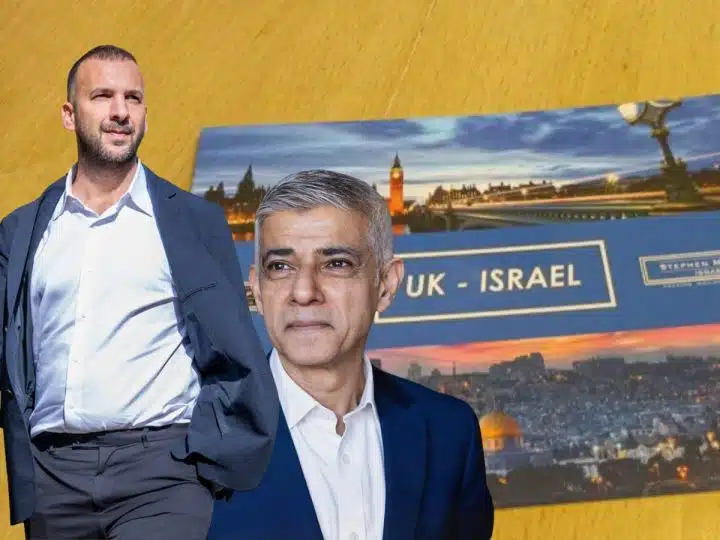
Green leader Zack Polanski has called for ‘immediate escalation’ from Mayor of London Sadiq Khan over clearly “unlawful activity” at the Great Israeli Real Estate event. Jewish anti-Zionists had joined protests outside the London event on 14 June to oppose its attempts to sell land in the illegally occupied Palestinian territories.
Polanski: ‘No impunity for hosts of deplorable Great Israeli Real Estate event’
In a letter to Khan, Polanski insisted that there had already been “substantial evidence ahead of the event” suggesting wrongdoing, and that authorities should have never allowed it to take place. But following the event, he stressed:
It has since come to light that materials handed out at the ‘Great Israeli Real Estate’ event included properties in Ma’ale Adumim and Givat Zeev in the West Bank and Ramat Eshkol and Givat HaMatos in East Jerusalem. [1] These settlements are illegal under international law.
He added that this is something the UK government itself accepts, saying:
The UK Government has repeatedly affirmed that Israeli settlements are illegal under international law.
In 2024, the International Court of Justice clarified that:
Israel’s continued presence in the Occupied Palestinian Territory is illegal
There is now clear evidence that the Great Israeli Real Estate event had unlawful activity at it.
I've written to the Mayor of London to ask what he intends to do about it.
This needs to be escalated immediately. pic.twitter.com/dnFhkP4XXt
— Zack Polanski (@ZackPolanski) June 16, 2026
Edgware United Synagogue hosted the invite-only event. But activists managed to gain access, and they shared images with the media that show the marketing of property in illegal Zionist settlements in Palestine.
REVEALED: Jewish activists @JAZA_UK have shown us material from inside an Israeli property event in London yesterday, which shows that illegal settlements on Palestinian land were on sale in the UK.
Activists gained access to the event, spoke to numerous developers about the… pic.twitter.com/WsJ1hC1GlZ — Declassified UK (@declassifiedUK) June 16, 2026
Looks like the Board Of Deputies should apologize for this denial below and the fake ‘refutation’. https://t.co/lbB5h4r0fe https://t.co/5p3PpL7Xme pic.twitter.com/IojypnmbZP
— Mehdi Hasan (@mehdirhasan) June 16, 2026
Utterly disgraceful: yet again the government of @Keir_Starmer ignores International Law and the @ICJ_org and sides with the oppressor & occupier against the subjugated & occupied https://t.co/kU4yQRU0Uv
— William Dalrymple (@DalrympleWill) June 15, 2026
Considering the increase in Zionist settler terror against Palestinians since Israel’s genocide escalated in 2023, Polanski argued that:
With horrific settler violence against Palestinians on the rise, it’s more important than ever that those involved in hosting this deplorable event in our city are not allowed to act with impunity.
Others agreed that there must be consequences:
There’s a serious case to be made that selling or facilitating sales of property in West Bank settlements amounts to aiding & abetting a war crime (transferring population to an occupied territory), punishable in UK law (ICC Act 2001)@SadiqKhan can’t just shrug this off https://t.co/DLvWNTAKsj
— North Herts Palestine Solidarity Campaign (@NHertsPsc) June 16, 2026
And Scottish Greens co-leader Ross Greer wondered if Khan would have been so permissive if the event had been selling Ukrainian land under Russian occupation:
Imagine for a second that a real estate conference took place in London where Russian occupiers sold stolen Ukrainian land and property.
You have to imagine, because that rightly wouldn't have been allowed. If it's stolen Palestinian land though, that's apparently totally fine. https://t.co/ooPmInhuzu — Ross Greer (@Ross_Greer) June 16, 2026
Colonialism continues with “Anglo-communities” in Palestine
A Jewish Anti-Zionist Action member who got into the event told Al Jazeera that she’d heard no mention of Palestinians. When real estate agents mentioned illegally occupied Palestinian territory, meanwhile, there was talk of:
“Anglo-communities” where English-speaking people from the United States, the UK and South Africa could relocate to.
Amid Israel’s genocide in Gaza and violent rampage throughout the Middle East, she said a “popular selling point” was that real estate prices had fallen and buyers might get a discount.
As Polanski pointed out to Khan:
The Proceeds of Crime Act makes it illegal for promoters and estate agents operating in the UK to facilitate the sale of land acquired through illegal conduct.
He added that:
This needs to be escalated to the Metropolitan Police Service immediately, anything less fails to reflect the seriousness of the situation.
He also pushed Khan on whether police:
will be investigating the unlawful activities that took place on Sunday.
And considering the new evidence of illegality, he asked:
what action will you now take?
Khan had previously expressed his concern about the event. But now, as Polanski argued, Khan must go beyond words and take firm action.
Featured image via the Canary
By Ed Sykes
Politics
Gaza paediatrician to remain in detention after Israeli occupation court dismisses his appeal

The Israeli occupation’s Supreme Court has rejected Dr Hussam Abu Safiya’s appeal against the extension of his detention. No criminal charges have been brought against him.
Dr Abu Safiya has spent more than 500 days under arbitrary detention
Dr Abu Safiya is a Palestinian paediatrician and the director of Kamal Adwan Hospital, in Beit Lahia, Northern Gaza. He was intentionally targeted by the occupation. He was a key source of information on the collapse of Gaza’s healthcare system, consistently providing updates on medical conditions in North Gaza. This was especially true after Israeli occupation forces imposed a siege on the governorate in October 2024.
Despite the loss of his son in October 2024, Dr Abu Safiya continued his work, caring for injured children and documenting the realities faced by healthcare workers and patients in the area. He has been arbitrarily detained since December 2024, when he was abducted by Israeli occupation forces along with other medical staff while on duty, after refusing to abandon his patients.
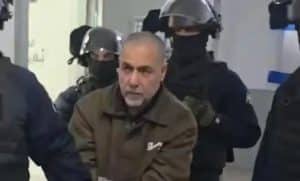
Israeli occupation tortures Gaza paediatrician
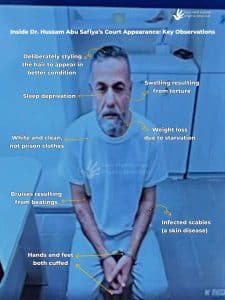
Abu Safiya has suffered ongoing torture and neglect since being detained, and by January 2026, he had lost 40kg because of prolonged food deprivation.
Today, according to his lawyer, Nasser Odeh, Dr Abu Safiya is held in solitary confinement in Nafha Prison. Conditions are degrading and harsh, and his health is deteriorating. He is suffering torture and is showing signs of scabies — a highly contagious skin disease. But he continues to be denied the necessary medical care since his arrest, and his detention files remain secret.
The first image of Abu Safiya since his illegal imprisonment by the Israeli occupation emerged on 10 June. He appeared in Jerusalem’s Supreme Court, via video link. He was shackled and handcuffed, and appeared exhausted, with visible signs of mistreatment and torture.
After his hearing, on 10 June, Abu Safiya said:
I am a paediatrician. I provide medical service and care to patients, the injured, and the vulnerable in the Gaza Strip. I carried out my work in accordance with international law and humanitarian standards. My arrest is unjust and arbitrary, and I demand that the court release me immediately.
Dr Abu Safiya’s continued detention “A profound moral and legal failure”
Abu Safiya remains imprisoned under the “Unlawful Combatant’s Law”, which grants the Israeli occupation’s military sweeping powers. They can detain anyone from Gaza they claim to suspect of engagement in hostilities against “Israel” or who pose a threat to state “security”. Detention is for indefinitely renewable detention periods and no evidence needs to be produced to back up the claims.
The decision to continue his detention has been condemned by a multitude of human rights organisations.
Naji Abbas, Director of the Prisoners and Detainees Department at Physicians for Human Rights Israel has called Abu Safiya’s continued detention a “profound moral and legal failure.” He said:
Dr Abu Safiya’s case is not an isolated one. It illustrates how judicial review proceedings for Palestinian detainees from Gaza have, in practice, become little more than a procedural formality. Every month, hundreds of detention review hearings take place, yet to the best of our knowledge, they have not resulted in the meaningful reconsideration or revocation of detention orders.
‘Israel’s’ treatment of Gaza’s medical workers is illegal under international law
The Palestinian Centre for Prisoners Advocacy is calling for Dr Safiya’s immediate release, and an end to the arbitrary detention of medical and humanitarian personnel by “Israel”. The organisation says it holds the Israeli occupation authorities “fully responsible” for his life and safety.
Doctors and medical personnel have legally binding protections under the Geneva Conventions and International Humanitarian Law. These rules state that medical professionals must be protected in all circumstances. They must also be allowed to treat anyone without discrimination, and never punished for following medical ethics.
Gaza’s healthcare system has been intentionally destroyed by the Israeli occupation, and is at the point of collapse. And the continued detention of Gaza’s doctors such as Abu Safiya, who have no formal charges, prevents any steps towards recovery.
Not unusual — ‘Israel’ has detained and killed scores of medical workers
Since 7 October, 2023, the Israeli occupation forces have:
- killed more than 1570 healthcare workers
- More than 445 healthcare workers have been unlawfully detained
- killed 6 healthcare workers while in detention, and their bodies are being withheld.
5 healthcare workers have also disappeared since 7 October 2023.
Featured image via Amnesty
By Charlie Jaay

Erling Haaland needed less than half an hour of his World Cup debut to do what he always does: score, settle, dominate. His two first‑half goals set Norway on their way to a commanding 4-1 win over Iraq in Boston, a result that puts Ståle Solbakken’s side top of Group I on goal difference.
The Manchester City striker barely had a kick early on, his only sight of goal a towering header that sailed over. But once David Møller Wolfe squared across the six‑yard box on 29 minutes, Haaland arrived on cue to tap home his first World Cup goal. It was his 51st for Norway in just 56 appearances, another absurd number in a career built on them.
Iraq, though, refused to wilt. Aymen Hussein, who endured a difficult arrival in the US earlier this month after being held and questioned for hours, powered in a brilliant header ten minutes later. It was Iraq’s second-ever World Cup goal and their first in four decades.
World Cup: Norway restore control before the break
The equaliser didn’t last long. Just before half-time, Haaland pounced on a weak back-pass from Zaid Tahseen, darting ahead of goalkeeper Jalal Hassan and rolling in his second of the night. Ruthless, instinctive, inevitable.
Norway went into the break with the momentum restored and the sense that more goals were coming, even if the second half never quite matched the first for tempo or jeopardy.
The game drifted for long spells after the restart, the pace dropping to something close to a training session. Iraq carved out half-chances – Hussein twice went close with headers – but Norway always looked the more composed side.
With 14 minutes left, substitute Leo Østigård made sure of the points. He charged unmarked into the box to meet Martin Ødegaard’s corner and thumped a header into the far corner. Simple, direct, decisive.
Norway weren’t done. Deep into stoppage time, Haaland rose for another header at the back post. His effort was drifting goalwards when Hussein, stretching desperately, diverted it over the line for an unfortunate own goal. A harsh end for Iraq’s standout performer, but a fair reflection of Norway’s control.
Haaland’s impact
Haaland finished with just 20 touches, yet shaped the entire match. That’s the paradox of his game, he doesn’t need volume to be devastating. Two goals, involvement in the fourth, constant threat. The World Cup has a new heavyweight, and he looks entirely at home.
At 25, he is already among the favourites for the Golden Boot. With Norway back on the biggest stage for the first time since 1998, he has the platform, and the numbers, to chase down records. Sixteen World Cup goals is the all‑time mark. You wouldn’t rule out a serious tilt.
Meanwhile, Norway’s win puts them top of Group I after France beat Senegal earlier in the day. Solbakken’s side looked sharp, organised and dangerous, with Ødegaard dictating and Haaland finishing. Iraq showed heart and moments of quality, but defensive lapses cost them.
Group I already feels like a battle for second place behind France and Norway. Iraq will need something special to stay alive.
Featured image via the Canary
By Faz Ali

Business34 seconds ago
Expeditors International of Washington, Inc. (EXPD) Discusses U.S. Customs Market Update With Focus on Current Tariff Updates and Trade Actions Transcript

Crypto World2 minutes ago
QCP warns Strategy may sell more Bitcoin to fund dividends
Entertainment2 minutes ago
Spider-Man faces off against the Hulk in “Brand New Day ”trailer: 'Didn't know you could get that big'


-

 Business3 days ago
No Jackpot Winner as $257 Million Prize Rolls Over to $269 Million Monday Draw
-

 Fashion5 days ago
Weekend Open Thread: Tuckernuck – Corporette.com
-

 Crypto World6 days ago
Oppenheimer backs SpaceX as $70 billion retail frenzy builds
-

 Crypto World6 days ago
Markets Rally as SpaceX IPO Looms Amid Iran Tensions and Inflation Surge
-
 Crypto World3 days ago
Zimbabwe Requires Crypto Businesses to Register Annually Under New FIU Regulations
-

 Tech5 days ago
NanoClaw integrates JFrog registries to secure AI agent downloads
-

 Crypto World5 days ago
Bitget enters Argentina’s regulated crypto market through PSAV registration
-

 Tech5 days ago
This Week In Security: Microsoft On Microsoft, Register Your Domains, Linux On ARM, And FreeBSD Joins The File Cache Club
-
 Tech6 days ago
Dutton Ranch star claims they ‘didn’t see any disruption’ on set following Chad Feehan’s exit from Yellowstone spinoff fueled by Taylor Sheridan clash rumors
-

 NewsBeat6 days ago
El Nino has formed in the Pacific and could set records, forecasters say
-

 Politics6 days ago
Politics Home | Healey Resignation Is “Colossal Failure Of Government”, Says Former Labour Defence Secretary
-
 Entertainment6 days ago
Donnie Wahlberg & More Heat Up Las Vegas at Circa’s Barry’s Downtown Prime
-
 Tech6 days ago
Opendoor Ends India Operations, Fueling a Bigger Conversation About AI and Outsourcing
-

 Politics6 days ago
Belfast burns, while Met chief points finger at Iran and Russia
-

 Sports6 days ago
First Time Since 1971: Australia Register Historic Low In ODI Cricket
-

 Business6 days ago
AT&T: Verizon's 27% Outperformance Sets Up A Solid Entry Point
-

 NewsBeat5 days ago
FBI searches office of Ohio voter registration group
-
 Tech6 days ago
Anthropic is spending $150M to embed 1,000 AI fellows inside nonprofits. No degree required.
-
 Politics6 days ago
Modi thanks Trump for wishes as US attacks Indian seafarers
-
 Entertainment6 days ago
‘The Pitt’s Fan-Favorite Doctor Confirms Noah Wyle Gave His Blessing to Return [Exclusive]
You must be logged in to post a comment Login