Connect with us
DAPA Banner
DAPA Coin
DAPA
COIN PAYMENT ASSET
PRIVACY · BLOCKDAG · HOMOMORPHIC ENCRYPTION · RUST
ElGamal Encrypted MINE DAPA
🚫 GENESIS SOLD OUT
DAPAPAY COMING

Politics

The other US-Belgian spat

Published

on

The other US-Belgian spat

BRUSSELS — Even before they face off tomorrow night in Seattle, Belgium and the the United States are already at loggerheads over America’s birthday celebrations.

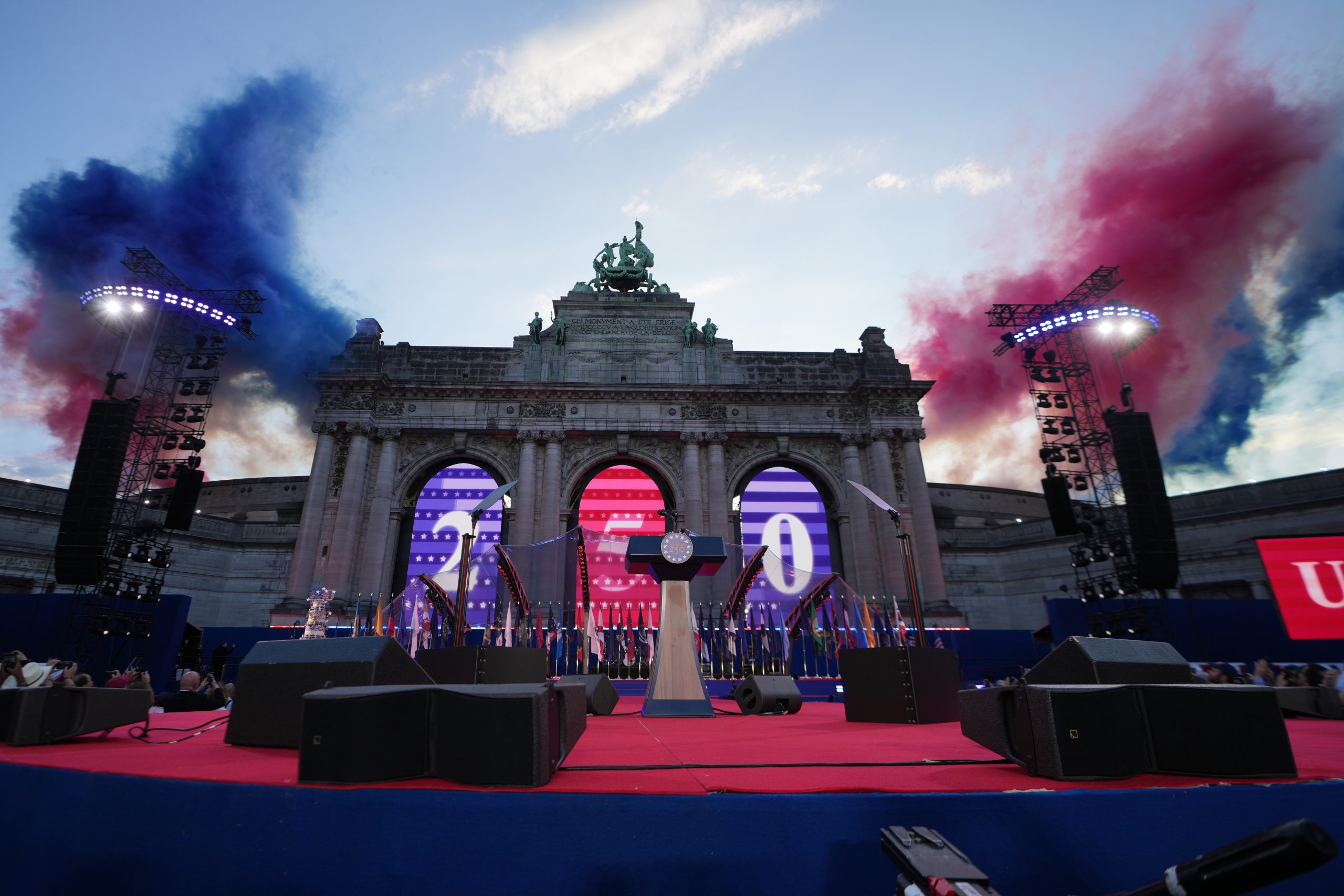
U.S. Ambassador to Belgium Bill White insisted that Brussels’ historic Parc du Cinquantenaire was left spotless after his lavish festivities marking 250 years of American independence, as Belgian authorities probe whether fireworks damaged one of the capital’s historic buildings.

“We are in immediate contact with the Belgian company that was hired to coordinate all event logistics, including the fireworks company,” White wrote on X on Friday. He said the contractor would “remediate where it is required” and insisted that “Cinquantenaire has never looked any cleaner than it was the day after we cleaned up after our event,” posting photographs of the park looking immaculate.

More than 8,800 invited guests attended the June 28 celebration — one of the biggest diplomatic receptions ever staged in Brussels — organized by White, featuring a large fireworks display beneath the triumphal arch and a gala held in Cinquantenaire’s Royal Museum of Art and History building.

Advertisement

The ambassador’s response came after Flemish newspapers De Standaard and Het Nieuwsblad reported that Belgium’s Buildings Agency had opened an investigation into possible damage to the museum.

The Building Authority confirmed that “fireworks debris was found on the roof, and certain limited areas of the roof appear blackened” in a statement to POLITICO, adding that “analyses are still ongoing” before being able to comment on the scope of any repair work.

Belgian Buildings Minister Vanessa Matz has urged caution, saying investigators must first determine whether any damage was caused by the fireworks display or by the severe thunderstorm that swept across Brussels the previous night.The celebration reportedly cost around €5 million, with White raising the money from roughly 220 Belgian and American companies.

Source link

Advertisement
Continue Reading
Click to comment

You must be logged in to post a comment Login

Leave a Reply

Politics

Belgians weigh Folarin Balogun as “darling of the match” in which he didn't play

Published

on

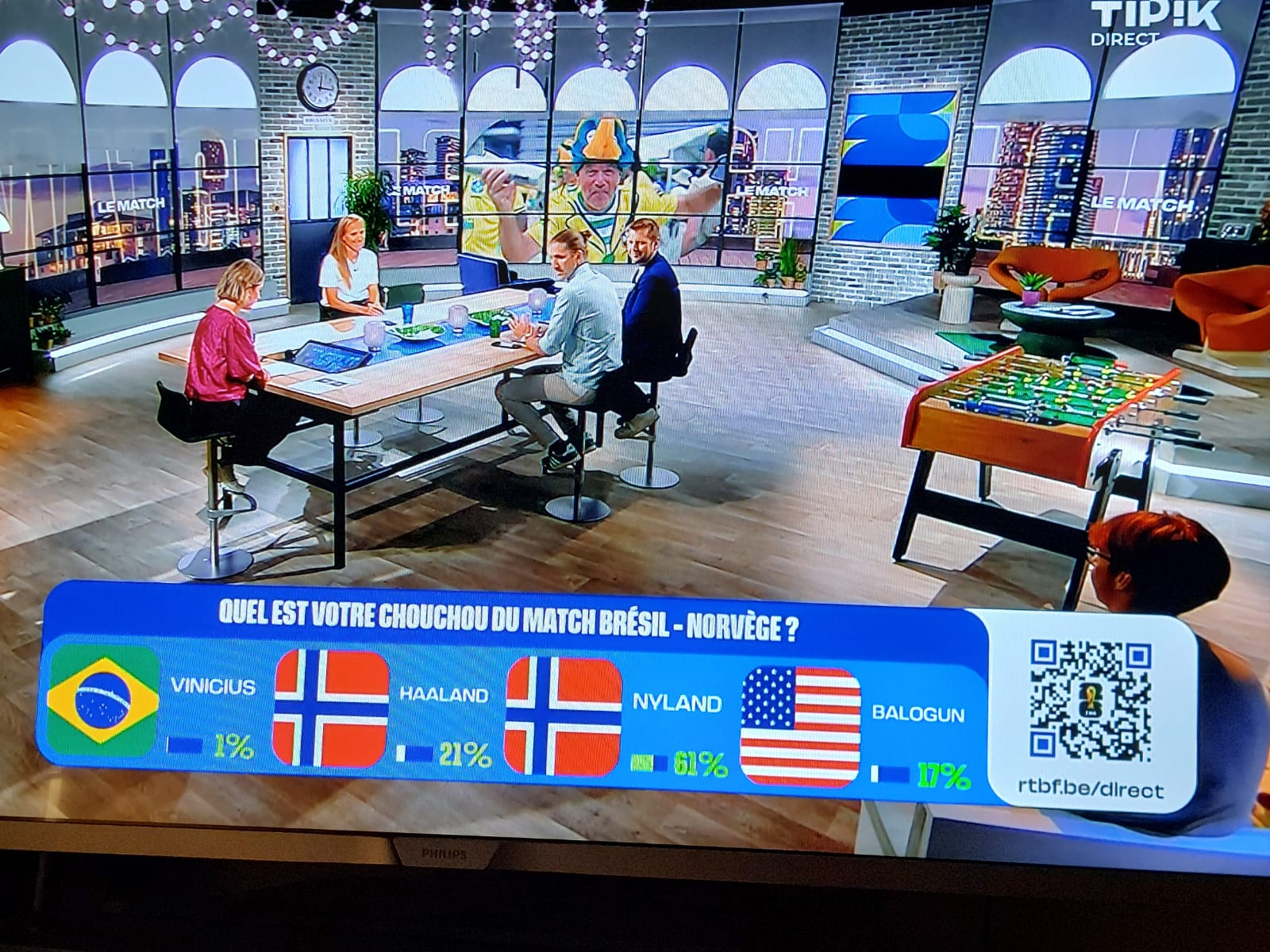
Image from Belgian broadcaster RTBF's coverage of the Norway-Brazil game in which U.S. striker Folarin Balogun was voted player of the match — despite not playing.

BRUSSELS — FIFA’s decision to lift U.S. striker Folarin Balogun’s one-match ban — freeing him up to play against Belgium in Monday’s World Cup round-of-16 match on Monday this week — has not gone down well in the European nation.

Coverage from Belgian national broadcaster RTBF of the match between Brazil and Norway was distracted, with half-time chatter focusing on the FIFA ruling rather than the game that was underway.

After the closing whistle, the broadcaster showed that Balogun had been third choice for “darling of the match” — despite the fact that the U.S. team was more than 2,000 miles away from where the match in question was played. Balogun received 17 percent of the votes submitted by viewers.

Image from Belgian broadcaster RTBF's coverage of the Norway-Brazil game in which U.S. striker Folarin Balogun was voted player of the match — despite not playing.

Players on the MetLife Stadium pitch did claim the top two spots, though. Double goal scorer Erling Haaland placed second behind goalkeeper Ørjan Nyland, as Norway dumped five-time champions Brazil out of the competition.

Advertisement

Source link

Continue Reading

Politics

Inside Lutnick's back channel with FIFA brass

Published

on

Inside Lutnick's back channel with FIFA brass

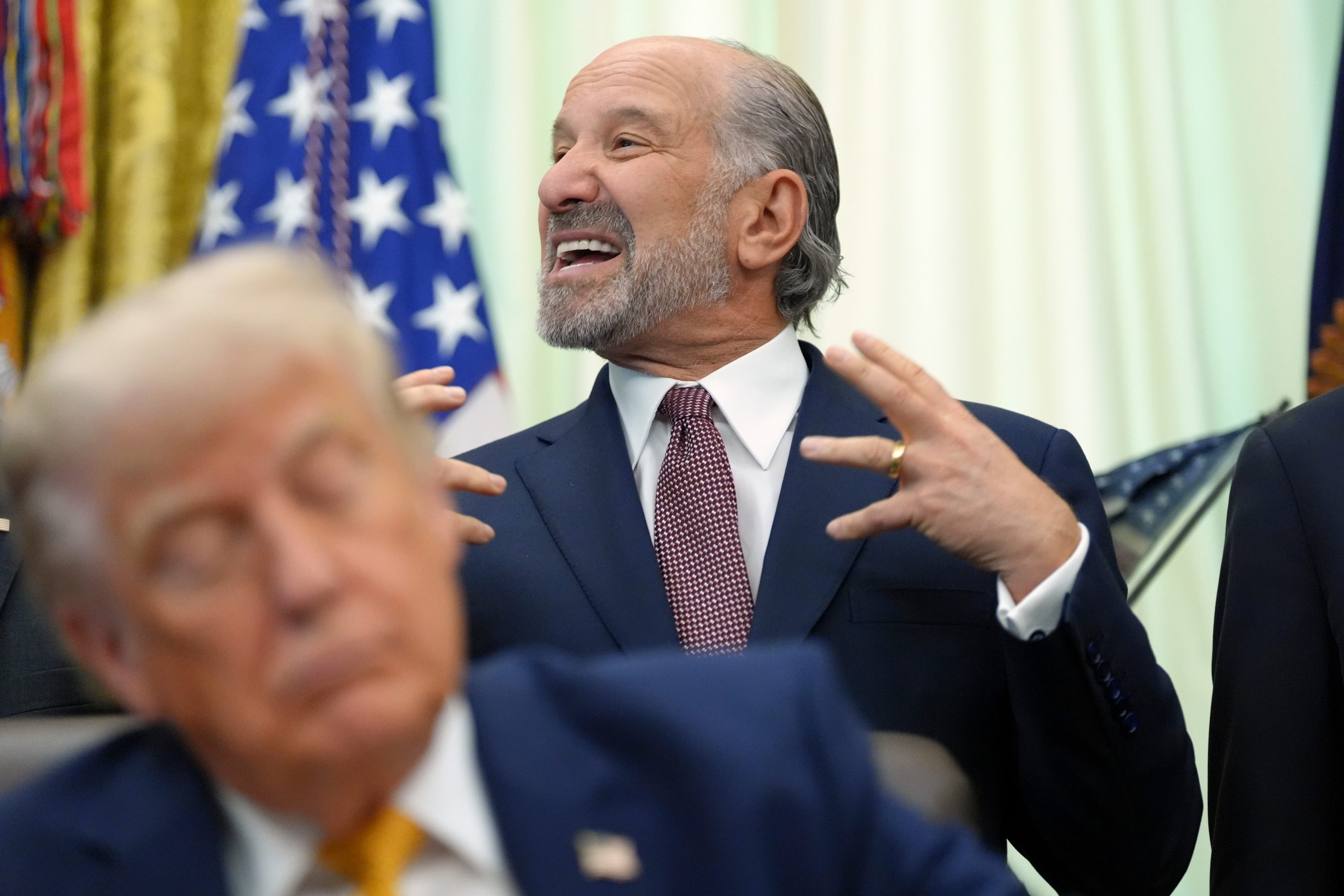
Commerce Secretary Howard Lutnick was involved in behind-the-scenes conversations with FIFA to get U.S. striker Folarin Balogun’s red-card ban suspended, according to two people familiar with the matter granted anonymity to discuss private deliberations.

Lutnick has developed close ties with the leadership of soccer’s governing body. He attended a previously unreported dinner in early June with FIFA President Gianni Infantino, senior adviser Carlos Cordeiro and a small group of roughly half a dozen attendees, according to the two people.

The dinner underscores the unusually close relationship FIFA has cultivated with Trump administration officials beyond President Donald Trump himself. Lutnick, in particular, has developed a personal rapport with Infantino, hosting the FIFA president in his Commerce Department office and sitting beside him at the match between the U.S. and Bosnia and Herzegovina last week where Balogun received the red card.

Source link

Advertisement
Continue Reading

Politics

The ‘anti-Zionists’ are hounding British Israelis through the courts

Published

on

The ‘anti-Zionists’ are hounding British Israelis through the courts

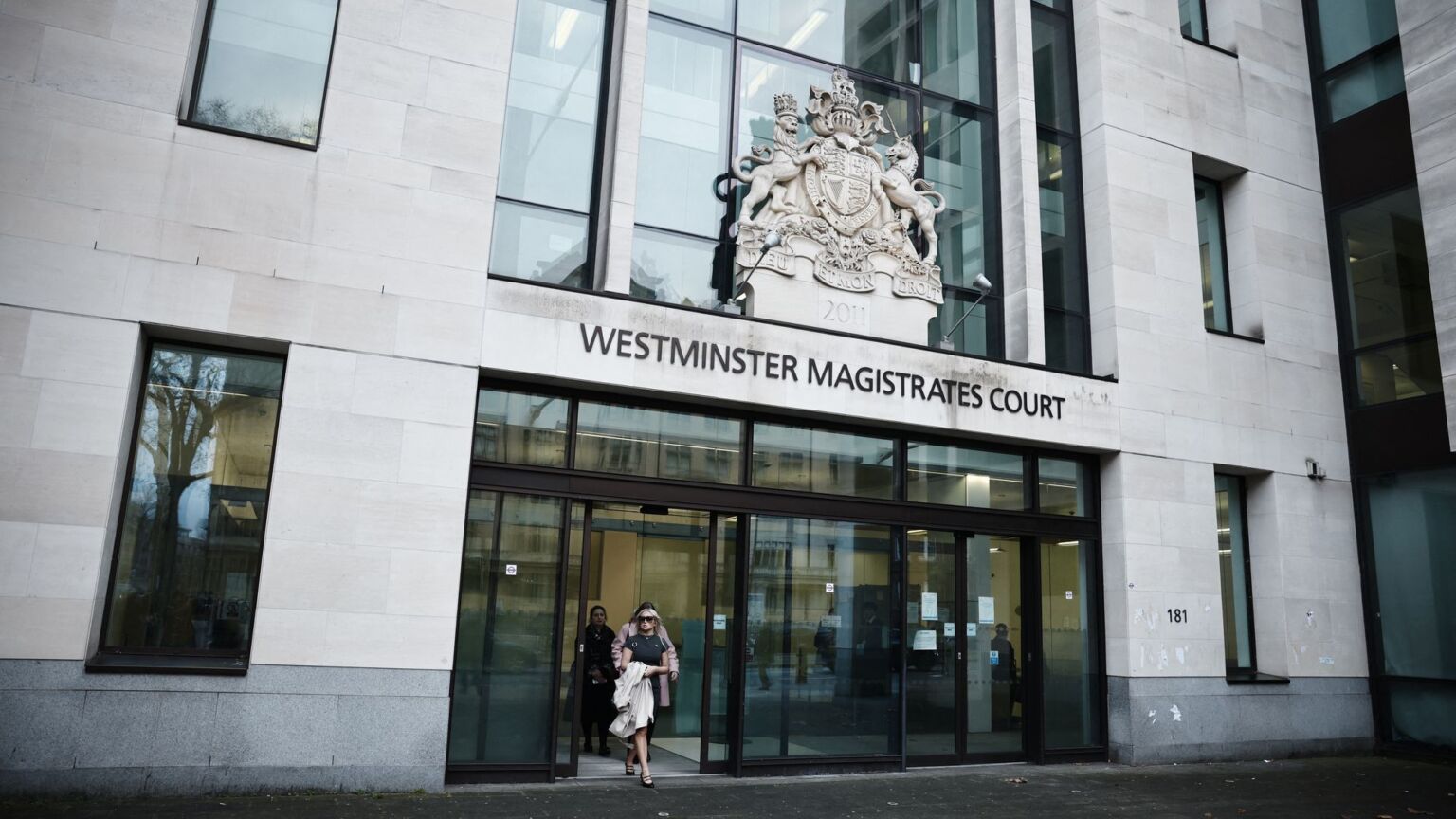
Earlier this month, the chief magistrate at Westminster Magistrates’ Court made an order for costs after a failed private prosecution brought by the International Centre of Justice for Palestinians (ICJP). The ICJP had sought a summons against an unnamed British-Israeli dual national who had served in the Israel Defence Forces (IDF). It relied on the Foreign Enlistment Act 1870, a Victorian statute intended to prevent British subjects acting as ‘mercenaries’ in foreign conflicts and to protect British neutrality.

Reading the court’s judgement, it is clear that this case represented something disturbing. A private prosecution allows individuals or organisations to ask a magistrates’ court to issue a summons for a criminal trial. They can apply with evidence that they say establishes an offence. The court must then decide whether there is any proper basis for issuing the summons.

The proposed defendant was a reservist in the IDF who reported for duty on 8 October 2023, the day after Hamas’s pogrom in southern Israel. In other words, there was no suggestion that he had done anything other than return to service in the armed forces of a country of which he was also a citizen.

Advertisement

The ICJP’s case was characterised by dishonesty and a poor understanding of the law. The ICJP initially requested that the application for a summons be anonymised by the court, only to later publicise the application on its own website. The judge found that this approach to anonymisation ‘may have been calculated to allow ICJP to control the narrative and enhance its public profile’. The judge warned that the courts should not be used to ‘expose individuals for wrongdoing that falls outside the scope of the criminal law’, as was clearly the case here.

The judge found that the Foreign Enlistment Act was never intended to criminalise dual nationals serving in the armed forces of another country of which they are citizens. If it were, this would mean that, say, a dual British-Indian national returning to serve in India’s armed forces could potentially face prosecution on their return to the UK. This is plainly not what the law was intended to achieve – in the words of the magistrate, it would be ‘an absurd extraterritorial overreach of UK legislation’.

Advertisement

Enjoying spiked?

Why not make an instant, one-off donation?

We are funded by you. Thank you!

Advertisement


Please wait…

Advertisement
Advertisement

The application was also based on selective and unreliable material. Unbelievably, one of the witnesses put forward as an ‘expert’ – Dr Mandy Turner – was a member of an ICJP WhatsApp group. This relationship had not been properly disclosed. The magistrate found that Turner was a ‘campaigner and an activist, committed to the political agenda pursued by this prosecution, rather than an independent expert’.

Turner also advanced claims that the court found to be demonstrably false, including the suggestion that Israel was to blame for the explosion at the al-Ahli hospital in Gaza City in October 2023, when a misfired rocket launched by Palestinian Islamic Jihad was actually responsible. The judge found there was no satisfactory explanation for an expert getting such important details wrong, and criticised Turner for ‘promoting an entirely false account’.

Advertisement

There were further disturbing details. The judgement revealed that the ICJP had written to the Metropolitan Police in 2022, inviting its Counter Terrorism Command to ‘open an investigation into British citizens who joined the IDF’. It did not candidly disclose to the court that it had previously made this request. The magistrate found that its failure to do so was ‘at best disingenuous’ and ‘at worst misleading’.

The judgement concluded with the finding that the application had been brought with the ‘dominant motive… to advance a political or ideological agenda’. These are strong, excoriating words from a judge – and they were more than merited.

This application should frighten all of us. The ICJP had clearly tried to criminalise British-Israeli dual nationals – first through calls for police investigations, and then through a private criminal prosecution. The case relied on partisan experts and failed to disclose relevant relationships and history. Had it succeeded, it could have opened the door to a legally sanctioned witch-hunt against British Israelis and other dual nationals.

Advertisement

Private prosecutions are an important safeguard in our justice system. They should not be allowed to become a means of intimidating people, manufacturing public suspicion or pursuing a warped political agenda through the criminal courts.

This case shows how vigilant we must be against overt abuses of the legal system to such sinister, hateful ends. The International Centre of Justice for Palestinians should hang its head in shame.

Luke Gittos is a spiked columnist and author. His most recent book is Human Rights – Illusory Freedom: Why We Should Repeal the Human Rights Act, which is published by Zero Books. Order it here.

Advertisement

Source link

Advertisement
Continue Reading

Politics

Poll: The political right has staked a claim on patriotism across the West

Published

on

President of France's far-right National Rally, Marine Le Pen, attends a ceremony marking the 81st anniversary of Victory in Europe Day, on May 8, 2026.

Patriotism has become partisan.

It doesn’t matter that people across the ideological spectrum are equally likely to say that they themselves are patriotic. New international polling shows that when you ask them about expressions of patriotism, they think those displays are right-coded.

Those results from The POLITICO Poll reveal the extent of right-wing populist parties’ success after years of claiming nationalism as central to their political identities — and growing in power and popularity.

The political parties furthest to the right across several major Western democracies were consistently more associated with national pride than other parties, the poll found. A 29-percent plurality of U.K. adults, for example, said they would expect someone who said they were “proud to be British” to support Nigel Farage’s right-wing populist Reform U.K., 16 points greater than the 13 percent who would expect them to be from the center-right Conservative Party. Similar pluralities said the same in France about Marine Le Pen’s Rassemblement National, or National Rally (30); in Germany about Alternative for Germany, or AfD (35); and in Spain about Vox (29).

Advertisement

In the United States’ two-party system, respondents were 15 points more likely to expect someone who said they were proud to be American to be Republican (38) than Democratic (23).

The findings are the latest sign that these parties — from Donald Trump’s “America First” movement in the United States to the rise of the far right across Europe — are owning the language and symbols of patriotism, including a country’s flag.

Right-wing parties have rapidly gained ground by tapping into voters’ growing concerns over border security and cost of living, and have flexed their power over the last decade, reshaping existing debates over conservatism, sovereignty and national identity. In some cases, they have pushed major political parties, like America’s GOP, further to the right.

But even as the politics of patriotism have shifted toward the right, the poll found that pride in one’s country is essentially nonpartisan.

Advertisement

Majorities of adults across the United States, United Kingdom, France, Germany and Spain all say they are proud of their country. In the U.S., 68 percent of adults — including most Trump 2024 voters and former Vice President Kamala Harris voters — say they are proud to be American.

The June survey, conducted by London-based Public First, shows the challenge for centrist and left-leaning parties that are weighing how to reclaim overt symbols of patriotism — or redefine what patriotism means for them.

Kevin Madden, a longtime GOP communications strategist in Washington, said the findings reflect the rising tide of hyper-partisanship.

“Political polarization is coloring views through a left-right, us-versus-them political lens,” he said. “That lens changes based on whether [people’s] preferred party is in charge or not.”

Advertisement

Far-right parties embrace politics of national pride

Debates over immigration, sovereignty and cultural flashpoints across the West have increasingly turned into fights over what a nation stands for — and who that includes, and who gets to define it.

In the United States, Trump’s “America First” agenda and “Make America Great Again” movement have explicitly made national identity central to Republican messaging. The president has vowed to secure the southern border, conduct widespread deportations and prioritize aggressive trade politics aimed at boosting the U.S. economy.

The POLITICO Poll found that Trump’s rhetoric is very popular among the right in Europe. When asked how they would feel about a candidate who promised to “Make [their country] Great Again,” far-right respondents across the countries — including 70 percent in Reform U.K., 68 percent in France’s National Rally, 66 percent in Germany’s AfD and 77 percent in Spain’s Vox party — said it would make them feel more positive about that candidate.

That comes as those parties have similarly centered campaigns on immigration, borders and cultural identity, presenting themselves as defenders of their nations.

Advertisement

In Germany, expressions of national pride are often viewed through the lens of the country’s Nazi past. For decades after World War II, overt displays of patriotism — including flying the German flag from homes, porches and balconies — were widely regarded as distasteful. This was particularly true on the political left, where patriotism was often considered legitimate only insofar as it was grounded in Germany’s rejection of nationalism and its country’s reckoning with the Holocaust.

But a political movement based on restoring national pride and a sense of past glory has taken root in the far-right AfD party, which actively campaigns to instill patriotism in German youth. In the eastern state of Saxony-Anhalt, where the AfD is far ahead in the polls ahead of a regional election set for September, the party’s platform calls for an end to “the perpetuation of a guilt complex” among Germany’s youth and advocates a renewed “call for patriotism.”

That comes through in The POLITICO Poll, which found that a 44 percent plurality of AfD supporters say that people in Germany aren’t proud enough of the country’s history, significantly greater shares than in other parties. AfD voters were also much more likely than others to say they would think positively of someone who said they were “proud to be German.”

France, too, has been a battleground in the war over patriotism, as Le Pen and her party have centered anti-immigration and French national identity. The Euroskeptic National Rally has become so associated with the French tricolor flag that as the campaign for next year’s presidential election gets underway, leftist candidates are saying they must claw back national symbols from populists who have co-opted them.

Advertisement

President of France's far-right National Rally, Marine Le Pen, attends a ceremony marking the 81st anniversary of Victory in Europe Day, on May 8, 2026.

In the U.K., Prime Minister Keir Starmer’s centrist left Labour Party won a landslide election victory in 2024, partly through a very deliberate strategy of rebranding itself as a patriotic movement. The Union Jack flag was added to every party communication, and members were required to sing the national anthem at Labour’s annual conference. Party bosses focused on 40 percent of the electorate whom they termed “hero voters” — these were usually middle-aged, working-class people who supported Brexit. They were patriotic and proud of Britain, and tended to feel neglected by mainstream politicians.

But after less than a year in power, Starmer’s Labour had lost support among many in this group and fallen below Nigel Farage’s populist nationalist Reform U.K. in the polls. Another year later, his continuing nosedive in popularity — and a Labour wipeout in local elections in May — forced him to resign.

Meanwhile, the far right is gaining more traction. British nationalist activist Tommy Robinson, who has draped his “Unite the Kingdom” marches in flags and pushes anti-Islam views, is widely seen in a negative light by British voters but enjoys notable support among Reform U.K. supporters, Public First polling found earlier this year.

Can the left reclaim patriotism?

For parties on the political left, the problem is not that their voters reject patriotism.

Advertisement

Majorities of adults across the countries surveyed say they are proud of their country, and they are far more likely to respond positively than negatively toward a political candidate who said they loved their country and were proud to live there.

In the United States, for example, a 45 percent plurality of Harris voters said they would feel more positively toward such a candidate. In the U.K., 47 percent of Liberal Democrats and a 53 percent plurality of Labour supporters say they would feel more positively.

The challenge for these parties is that some of the overt symbols of patriotism — such as displaying a national flag, or even owning one — have become more closely associated with conservative parties.

“As much as these results show the political right having success in claiming patriotic language, they also show left parties abandoning a political message that has potential,” said Seb Wride, head of polling at Public First. “This is easier terrain for the left than party leaders think, given the pride we see across the spectrum.”

Advertisement

Across several of the world’s major democracies, there’s a brewing movement underway to try to reclaim patriotism from the far-right parties.

England’s St. George’s flag — a red cross on a white background — has long been used to show support for the national soccer team. It has also been associated with nationalism and racist political movements in the U.K.

But recently, some football fans have taken to displaying the flag with the viral phrase “Football not Farage” — an effort to show their frustration with right-wing politicians co-opting the symbol for their political cause at a time when it is being used to celebrate the nation’s participation in the World Cup.

The flag of the United Kingdom and the flag of St George hang from lamposts in Birmingham, United Kingdom.

In the U.S., Democratic lawmakers and candidates are leaning more deliberately into patriotic themes, even if they emphasize them differently than Republicans do. Rather than focusing on flags and traditional patriotic imagery, many have highlighted their military service and sense of civic duty. A number of Democratic House candidates who are also veterans, for instance, are touting their service and commitment to the country in ads and on campaign websites.

Advertisement

Democratic Rep. Alexandria Ocasio-Cortez, a leading figure in the progressive movement, told TMZ that “we need to be focusing a lot more on how all of us are American,” when asked about the nation’s flag and how it is typically more associated with Republicans.

“America is not whoever is in charge right now. To me, my understanding of our country is all of the great people and movements that are a part of it,” she said, later adding: “The immigrant story is one of the most American stories that we have.”

Tim Ross, Joshua Berlinger, James Angelos and Hanne Cokelaere contributed reporting.

Source link

Advertisement
Continue Reading

Politics

Wings Over Scotland | Search And Replace

Published

on

Here’s a passage from Crown Agent John Logue’s recent BBC interview in which he described the crime for which Peter Murrell was just sentenced to five years and three months in prison. You’ll note that we’ve highlighted a few words and phrases in red.

JOHN LOGUE: I think the best way I can describe it is in some ways this case was no different from embezzlement that people might recognize in their daily lives. If people are a member of a church or a bowling club or a golf club, if someone in that organization has access to money on behalf of the society or the club and takes it and spends it in the local shops, that’s embezzlement.

And in some ways this case was as simple as that because what we were able to prove after the police investigation and after our investigation was that that was what Peter Murrell had done here. He had access to and control of party funds and he used it for his own purposes and that’s the crime of embezzlement. 

And now let’s just swap out those words for some very similar ones.

JOHN LOGUE: I think the best way I can describe it is in some ways this case was no different from embezzlement that people might recognize in their daily lives. If people are a member of [a political party], if someone in that organization has access to money on behalf of [the party] and takes it and spends it [on other stuff it wants], that’s embezzlement.

And in some ways this case was as simple as that because what we were able to prove after the police investigation and after our investigation was that that was what [the SNP] had done here. [They] had access to and control of [ringfenced] funds and [they] used it for [their] own purposes and that’s the crime of embezzlement.

Advertisement

It’s really quite hard to understand why the Crown Office sees the first version as a crime but not the second one, isn’t it, readers? Perhaps their next letter to us will make the difference clear, because to be honest, we’re struggling with it.

Source link

Advertisement
Continue Reading

Politics

Cats Could Help Our Brains Age Better, Researchers Say

Published

on

Cats Could Help Our Brains Age Better, Researchers Say

Owning a pet, be it a cat or a dog, has previously been linked to lower heart disease risk. This is especially true for cat owners aged between 40 and 64.

Our feline friends may also reduce stress and boost our mood.

As if they don’t do enough for us already, researchers from the University of Bath, Auburn College of Veterinary Medicine in the US, and École Nationale Vétérinaire de Toulouse in France have said they might help us to age better too.

Why might cats help us to age better?

Advertisement

Their paper, published in the journal Biology Open, reads: “Pet cats may inform human ageing since humans and cats age similarly and they develop health challenges that mirror those observed in humans”.

Unlike a lot of lab animals, they added, cats tend to live long enough to develop age-related brain changes, like those seen in humans.

And, on the flip side, because they live a lot shorter lives than us, we can study their ageing at a much faster rate than we could in people.

The researchers used a biological model which looked at how multiple species age at a physical level.

Advertisement

They tracked 3,754 data points – like MRI (not CAT, sadly) scans, blood samples, and developmental milestones – gathered across human, cat, and other mammal species.

They found that cat and human brains seem to age remarkably similarly. Both species experience age-related neurodegeneration.

Like us, cats age in bursts. And they reach the equivalent of human old age: a teenage cat is the rough equivalent of a person in their 80s, ageing-wise.

“It was interesting to see that cats show patterns of age-related brain atrophy similar to those observed in humans,” said PhD candidate Brier Rigby Dames, who was involved with the research.

Advertisement

“These findings add to growing evidence that companion animals can provide valuable insights into ageing.”

Cat owners are increasingly requesting more detailed pet scans

Speaking to the University of Bath, the study’s co-author, Dr Ryan Gibson, said that more and more pet owners are sending their cats in for increasingly detailed scans as they age.

This, he said, might provide an exciting opportunity.

Advertisement

“This expanded clinical access creates meaningful opportunities for translational research (research that bridges the gap between scientific findings and healthcare), improving our understanding of aging and neurologic disease in ways that can benefit both feline and human patients,” he said.

For her part, Brier Rigby Dames said: “There’s potential to develop large-scale veterinary health databases for companion animals, analogous to human health databases such as the UK Biobank.

“These kinds of resources could enhance our ability to study ageing and disease using real-world clinical and owner-reported data collected across species.”

Advertisement

Source link

Continue Reading

Politics

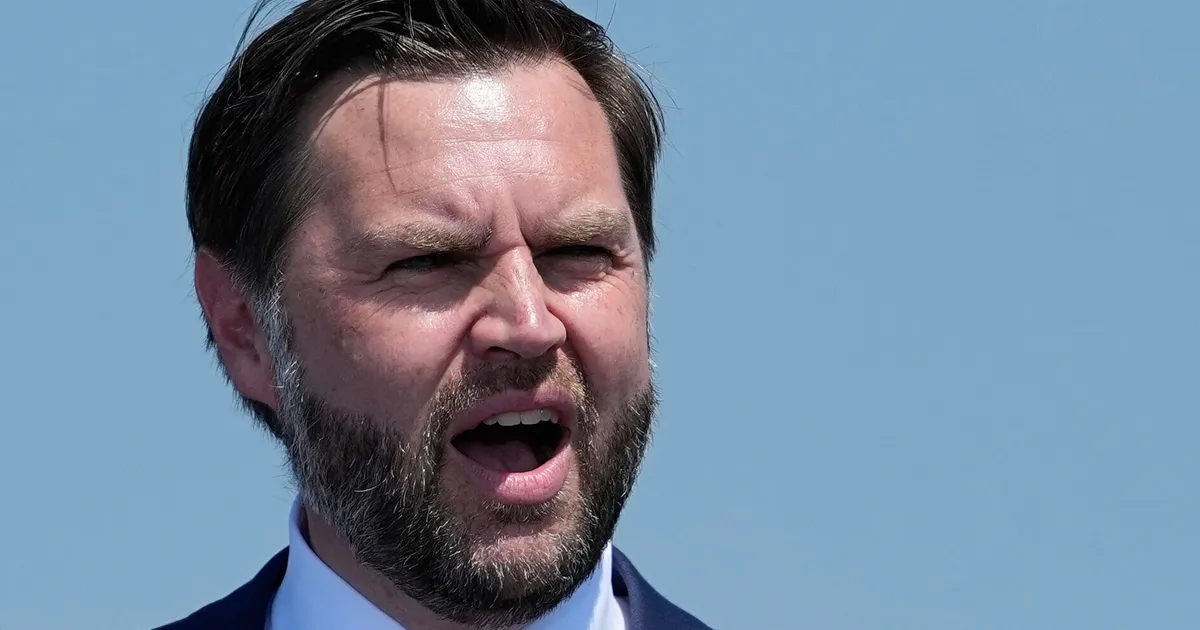
JD Vance Says ‘Something Is Very Broken In British Politics’

Published

on

JD Vance Says 'Something Is Very Broken In British Politics'

JD Vance has declared “something is very broken in British politics” as the UK prepares for its seventh prime minister in just over a decade.

The American vice-president said Britain “can do a lot more than it’s currently doing” to help its voters in a dig at the current prime minister.

Speaking two weeks before Keir Starmer is expected to hand the keys of No.10 over to Andy Burnham, Vance expressed alarm about the high turnover in Downing Street.

He said: “What that says to me is that something is very broken about British politics and that people are really crying out for significant structural change.”

Advertisement

He claimed he did not know much about the former Manchester mayor but added that the UK is “one of our closest and most important allies” and that the US administration would work with any new leader “as successfully as we can.”

Vance continued: “I hope that Andy Burnham – and if not Andy Burnham, somebody else – is able to deliver [change]. Because Britain is such a beautiful country, such an amazing place.”

Speaking on the 250th year of US independence, Vance claimed he is interested in the UK because of “reasons of mutual interest” and expressed hope that “whoever the prime minister is figures out how to get Britain back on track”.

“I also just care about it because Britain feels more culturally familiar to me than any country on Earth, aside from my own,” Vance said.

Advertisement

His words come after Donald Trump was significantly less diplomatic about Burnham.

The US president described him as an “extremely liberal” politician who “probably won’t open up” the North Sea for further oil and gas drilling.

He also called the former Greater Manchester mayor as “the mayor of a town”.

Burnham is yet to say what his approach to the mercurial president would be.

Advertisement

Starmer bent over backwards to forge a strong bond with Trump and even gave him an unprecedented second state visit to the UK.

However the two fell out after the prime minister refused to let the US use UK military bases to launch attacks on Tehran earlier this year.

Listen to Commons People, the podcast that makes politics easy. Every week, Kevin Schofield and Kate Nicholson unpack the week’s biggest stories to keep you informed. Join us for straightforward analysis of what’s going on at Westminster.

Advertisement

Source link

Continue Reading

Politics

Dissatisfaction In Nigel Farage As Reform Leader Climbs In Poll

Published

on

Dissatisfaction In Nigel Farage As Reform Leader Climbs In Poll

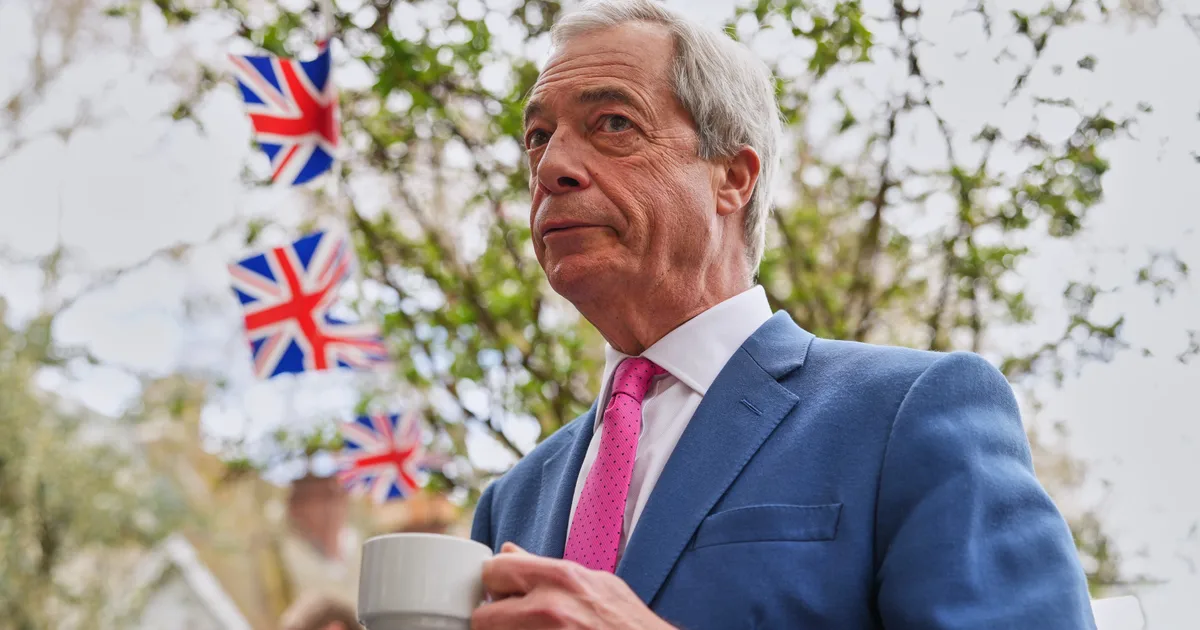
Dissatisfaction in Nigel Farage has increased over the last year amid growing scrutiny over his finances, according to a new poll.

Ipsos found almost two-thirds (63%) of Brits said they are “dissatisfied” with the Reform UK leader in June 2026 compared to 49% in June 2025.

That number far exceeds the number who are still satisfied in Farage – just 26% said they were happy with the Clacton MP this year, compared to 26% in 2025.

The findings come as the Clacton MP is under investigation for not declaring a £5 million donation from a crypto-billionaire shortly before he was sworn into parliament.

Advertisement

He insists he has not broken any parliamentary rules as the lump sum was not used for political purposes.

The Sunday Times has also revealed that Farage did not declare the support he received from convicted criminal George Cottrell prior to his election.

A Reform spokesperson replied: “Contrary to the story’s tone, no parliamentary rules have been broken.”

The party’s Treasury spokesperson Robert Jenrick also insisted on Sky News on Sunday that heightened scrutiny on Farage’s finances has not had an impact on their popularity.

Advertisement

Indeed, pollsters at Ipsos found 26% of Brits would vote for Reform if a general election were held tomorrow.

That means Farage’s party has held onto its comfortable lead in the opinion polls even during the heightened scrutiny.

However, Labour appears to have closed much of the gap behind Reform, and is just two points behind on 24%.

The party’s improvement in the polls comes amid speculation that Andy Burnham is going to take over from Keir Starmer.

Advertisement

Listen to Commons People, the podcast that makes politics easy. Every week, Kevin Schofield and Kate Nicholson unpack the week’s biggest stories to keep you informed. Join us for straightforward analysis of what’s going on at Westminster.

Source link

Advertisement
Continue Reading

Politics

Robert Jenrick Furiously Clashes With Trevor Phillips Over New Farage Allegations

Published

on

Robert Jenrick Furiously Clashes With Trevor Phillips Over New Farage Allegations

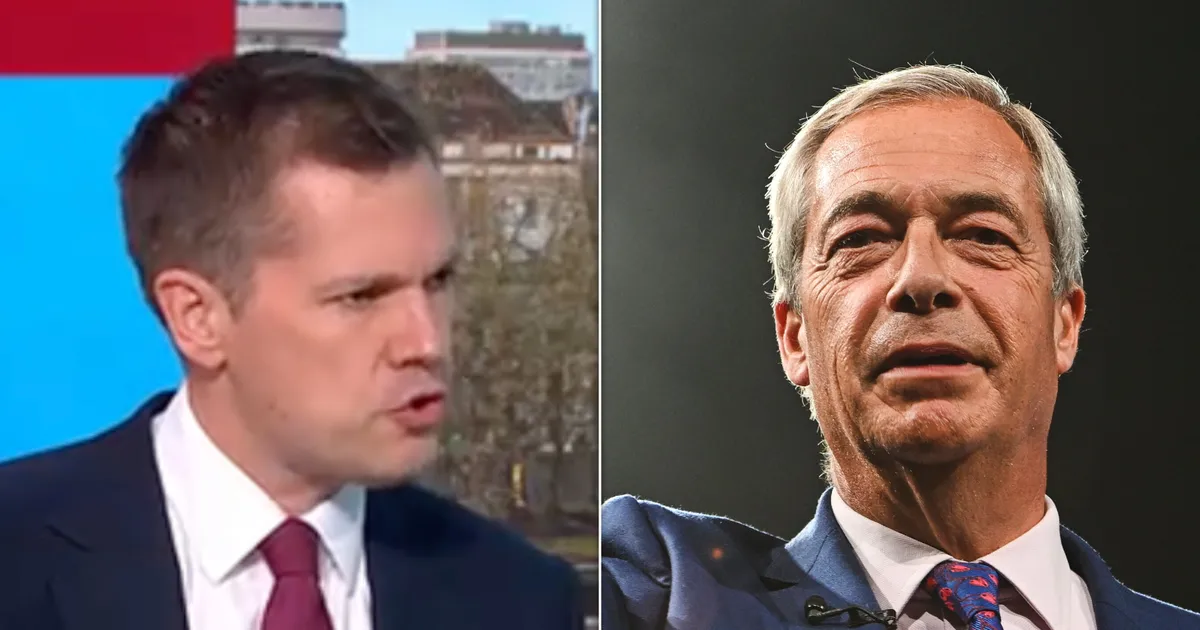
Robert Jenrick locked horns with Sky News’ Trevor Phillips this morning while jumping to Nigel Farage’s defence.

Reform UK’s Treasury spokesperson shrugged off a new report from the Sunday Times, which claims Farage did not declare support from convicted criminal George Cottrell when he became an MP.

The revelation comes while Farage is still under investigation from the parliamentary watchdog for not declaring a £5 million donation from a crypto-billionaire prior to winning his seat in 2024.

The party insists Farage has not broken the rules in either of these scenarios.

Advertisement

But Jenrick furiously collided with Phillips on Sunday when the presenter asked: “Is Nigel Farage now becoming more of a liability than an asset to Reform?”

“Don’t be silly, Trevor,” he said.

Phillips hit back: “You’ve lost half a dozen points [in the polls], you can barely hear a word out of your leader, he’s keeping a low profile.”

“Nigel Farage is keeping a low profile?” Jenrick scoffed. “Nigel Farage is out and about across the country, he was out in America in the last couple of days meeting the US vice-president.”

Advertisement

“To remind you, he’s a British MP!” Phillips replied.

“He’s also someone who is a leading character – likely to be the next prime minister,” Jenrick said.

“You still have to deal with the lingering questions if you like about the character of the party and the leader,” Phillips reminded him.

Jenrick also said “there’s nothing to see here” about the Cottrell revelations, and insisted Farage is “not going anywhere”.

Advertisement

He claimed the media “seem fixated on Nigel” but that technique is “not working” as Reform continues leading in the polls.

“Why not? You just told me he’s going to be the next prime minister,” Phillips said.

After more back and forth, Phillips said he was “astonished” Jenrick thinks it does not matter who Farage associates with and their background.

The Newark MP also denied Reform’s home affairs spokesperson Zia Yusuf had publicly undermined him during a public spat earlier this year.

Advertisement

Jenrick told Sky in May that a foreign national would not be deported “exclusively” if they live in social housing under a Reform government.

But Yusuf replied on X: “Robert’s answer is not Reform policy.

“As the person responsible for our deportation plan I want to ensure people know where we stand: if a foreign national lives in social housing at taxpayer expense, they automatically fail our economic test and will be deported.”

However, Jenrick insisted on Sunday that he and Yusuf are “basically on the same page.”

Advertisement

“No, you’re at different ends of the book. He said you were wrong!” Phillips said.

Jenrick insisted: “No. We’re saying two important things here. We’re saying social housing, which is a precious commodity of which we’ve got too little in this country, should be for British citizens – and that’s what Reform would do.

“Secondly, if you’re in the UK and you’re not a Brit and you’re living in social housing, you will not be able to remain in it because you will not meet the economic test.

“You’ll be given three months to find private accommodation and if you can’t, then I’m afraid you will have to leave the country.”

Advertisement

“So no divisions in the top team? Or, as some cruel people say, he’s bullied you into a tougher position?” The presenter asked.

“No, none at all,” he said, insisting they are a united team.

Listen to Commons People, the podcast that makes politics easy. Every week, Kevin Schofield and Kate Nicholson unpack the week’s biggest stories to keep you informed. Join us for straightforward analysis of what’s going on at Westminster.

Advertisement

Source link

Continue Reading

Politics

75 Minutes Of Running A Week May Lower Cell Age By 12 Years

Published

on

75 Minutes Of Running A Week May Lower Cell Age By 12 Years

You probably already know that running’s pretty good for us – it’s been associated with better heart health, stronger bones, better sleep, and improved mood.

It could even help us to live longer.

But how much running do we need to do to see benefits?

Well, it might be a lot less than you think – one study found that running about 10km a week led to roughly the same health advantages as jogging far longer.

Advertisement

And another paper linked less than an hour and a half’s worth of running a week to a biological age 12 years younger than non-runners.

Our biological age refers to the “wear and tear happening inside the body at a cellular and molecular level,” and is different to the years we’ve lived (chronological age).

How much running lowers your biological age by 12 years?

The research, published in 2023, found that 75 minutes of running or jogging a week was linked to a “biological age difference of approximately 12 years” compared to non-runners.

Advertisement

This appeared to stay true even after lifestyle and medical factors were taken into consideration.

The study looked at 4,458 US adults and measured their biological age by looking at their leukocyte telomeres.

Telomeres are structures that humans have at the ends of our chromosomes, and which keep our cells working better for longer. They tend to shrink when we age.

They have been compared to “the protective plastic caps at the end of shoelaces”. Shorter telomeres are linked to a shorter life.

Advertisement

Leukocyte telomeres are the telomeres at the ends of white blood cell chromosomes.

These have been used to gauge mortality risk in some groups, and are often chosen as a great indicator of biological ageing.

In this study, “The leukocyte telomere length difference between the non-joggers/runners and those who met the [exercise guidelines of 75 minutes of vigorous activity a week] accounted for a biological age difference of approximately 12 years in favor of the runners”.

More research is needed, however

Advertisement

This study didn’t see the same telomere length advantages in runners and joggers who didn’t reach 75 minutes a week.

This “could mean that jogging or running less than 75 min per week is simply not enough work to protect leukocyte telomeres and slow biological ageing,” the paper reads, adding that more research is needed.

Still, they said, “it appears that 75 min of vigorous activity per week achieved via jogging and/or running is a valid recommendation due to the finding that adults in this category had significantly longer telomeres than adults who did not engage in jogging or running”.

Advertisement

Source link

Continue Reading

Trending

Copyright © 2025