

Politics
The Topics That Kids With ADHD And Autism Bring Up Most In Therapy


What Kids Are Carrying is a HuffPost UK series focusing on how the nation’s youngest generation is *really* feeling right now – and how parents and caregivers can support them.
When I reached out to therapists and counsellors about the themes that cropped up most in therapy among kids in 2025, one common thread was the impact of being neurodivergent.
If someone is neurodivergent, their brain “diverges from what is considered typical”, according to SEN psychotherapist Gee Eltringham. This can encompass ADHD, autism, dyslexia, dyspraxia and Tourette’s syndrome.
Belinda Gidman-Rowse, a mental health practitioner and school counsellor in a primary school in Devon, sees around 50 children between the ages of eight and 11 each school term. She notes that a “significant proportion” are navigating either diagnosed or undiagnosed ADHD and/or autism.
Counselling Directory member and therapist Debbie Keenan is also supporting neurodivergent children while they await diagnosis – “this period is often filled with uncertainty, anxiety, and confusion,” she explains.
“Many children already experience challenges such as feeling different, struggling with emotions, or finding school and social situations overwhelming.”
NHS waiting times for diagnosis can vary massively – kids may have to wait months or even years for support from specialist services, forcing parents to find strategies to help their child cope in the meantime, or pay to go private.
In schools, special educational needs (SEN) support can be patchy and hard-won.
Therapists are noticing two key themes in particular when neurodivergent children need mental health support.
1. A lot of neurodivergent children are dealing with low self-esteem
While there can be a range of specific issues brought to therapy by neurodivergent children, Counselling Directory member Belinda Gidman-Rowse, has noticed a recurring theme.
“With all the children I see, there is often a pervasive narrative of being either ‘too much’ or ‘not enough’ which really impacts their self-esteem and sense of belonging in the world,” she says, “which is really sad to see.”
Some children will come to her wanting to make sense of their diagnosis – what it means for them, how others see them, and how they fit in to their school and home life.
“There can be a real sensitivity to feeling ‘different’ along with fears of being judged, excluded, or labelled in ways that don’t feel kind or accurate,” she explains.
On top of this, children can get stuck in cycles where their distress is expressed through behaviour, which is then met with punishment or frustration from adults – it’s something Gidman-Rowse notes can deepen the underlying overwhelm rather than resolve it.
“Over time, if these experiences aren’t understood, they can affect self-esteem quite deeply and, in more serious cases, increase vulnerability to things like self-harm as a coping strategy for dealing with overwhelming feelings,” she adds.
2. They might need extra support with keeping focused, managing emotions or navigating social situations
Another major element of what brings these children to therapy is the day-to-day impact of being neurodivergent.
Gidman-Rowse says for children with ADHD, this might look like difficulties focusing in class, frustration with learning, or challenges managing big emotions – “particularly anger, which can be heightened when they feel misunderstood or frequently corrected”.
Children might have explosive anger outbursts which caregivers describe as “coming out of nowhere”, and “going from 0-60”, says the counsellor.
“This can be incredibly challenging for families and teachers alike, and for the child themselves, who often feels out of control, and then ashamed or confused afterwards – they are aware that it is damaging their relationships but they feel unable to manage it.”
For children with autism, themes in therapy often centre around friendships and social situations, as there can be challenges in reading social cues and difficulties communicating their feelings and needs to others.
What can parents do to help?
The key advice seems to be: remain present, calm, caring and essentially become your child’s anchor to help them weather the various storms they may encounter.
Curiosity is key. “Approaching a child with curiosity rather than correction – for example, asking, ‘What’s feeling hard right now?’– can open up the conversation,” says Gidman-Rowse, while validating their emotions (for example, saying “that sounds really overwhelming!”) helps a child feel seen.
Gently helping them name what they’re feeling can also support regulation, says the counsellor, though some children might also need visual tools to do this (a feelings chart which you can print out and stick to your fridge might help).
If your child is awaiting a diagnosis, offering support and small changes at home can help steady them in the meantime. These include:
- Reducing demands on your child’s already stretched system by breaking tasks into smaller steps.
- Understanding triggers, such as sensory overload, changes in routine, or social demands, so you can anticipate them and reduce distress.
- Offering consistent, calm guidance in times of transition during the day.
- Giving them time and space to decompress after the school day to help reduce the intensity of meltdowns.
- Engaging in co-operative, two-way communication with your school teachers and SENCo.
- Seeking therapeutic support with a neurodiversity-affirming therapist.
Therapist Debbie Keenan says it’s “important to recognise and celebrate a child’s strengths while also acknowledging their challenges without judgement”.
For kids with ADHD, offering simple instructions followed by praise can help build “I can do it” feelings, instead of negative self-talk. Recognising your child’s efforts, even if things don’t go to plan, and prioritising one-to-one time together can also help boost self-esteem, according to Connect children’s services.
Social rejection, bullying and communication challenges are just some of the factors which can contribute towards low self-esteem in autistic kids, notes Autism Parenting Magazine.
As such, for parents, focusing on a child’s strengths, encouraging special interests, using positive reinforcement and providing opportunities for success can all help improve how they feel about themselves.

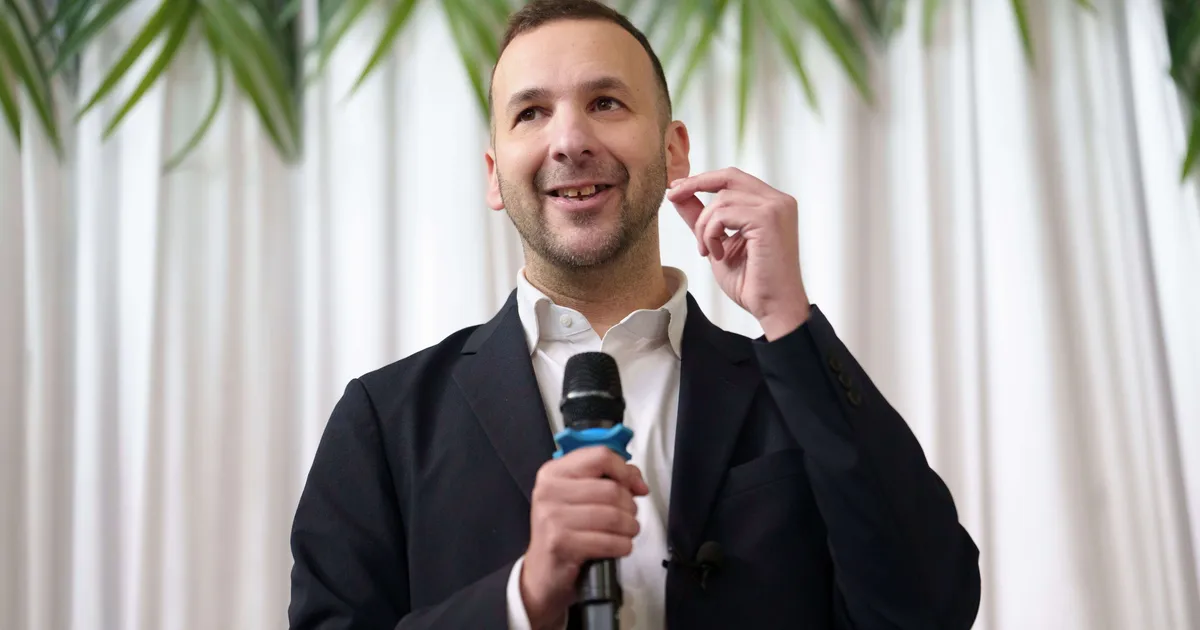
Zack Polanski has admitted that he may have failed to pay the correct council tax while living on a houseboat in London.
The Green Party leader has apologised and “immediately taken steps to pay any council tax he may be found to owe”.
A spokesman for the party had previously claimed that Polanski rented a room at another address where council tax was included in the rent and only stayed on the boat “occasionally”.
Government guidance states that a person may be liable for council tax on a boat if it is their “sole or main” residence.
On Monday night, a Green Party spokesperson said: “Until relatively recently, Zack was living on a houseboat, which came with its own unique practical circumstances and considerations.
“He has immediately taken steps to pay any council tax he may be found to owe. Zack apologises sincerely for the unintentional mistake.”
The spokesperson added: “For security reasons, we do not comment publicly on Zack’s address.
“There have recently been two serious incidents which have been reported to the police and are under investigation.”
The Times last week reported seeing an advertisement for the sale of the boat in which Polanski’s partner wrote: “We are moving to a house and so will sadly be leaving the gorgeous community behind.”
The Daily Mail separately reported that Polanski was registered to vote at a building near the marina where the boat was docked, which he is also said to have used as a mailing address.
Tax lawyer Dan Neidle, founder of Tax Policy Associates, analysed Polanski’s situation this week.
He wrote: “If the boat was in fact Mr Polanski’s ‘sole or main residence’ then he and/or his partner should have registered for, and paid, council tax for those three years.”
Subscribe to Commons People, the podcast that makes politics easy. Every week, Kevin Schofield and Kate Nicholson unpack the week’s biggest stories to keep you informed. Join us for straightforward analysis of what’s going on at Westminster.

Sir Rod Stewart called Donald Trump a “little ratbag” as he congratulated King Charles for subtly criticising the US president last month.
The pop legend said the monarch had put Trump “in his place” in a speech to the US Congress last month.
The king made clear his opposition to Trump’s policies in a range of areas, including on climate change and his criticism of Nato.
In the most pointed section of his address, the king took issue with the president’s repeated claims that the military alliance has never helped America.
He said: “In the immediate aftermath of 9/11, when Nato invoked Article 5 for the first time, and the United Nations Security Council was united in the face of terror, we answered the call together as our people have done so for more than a century, shoulder to shoulder, through two world wars, the Cold War, Afghanistan and moments that have defined our shared security.”
Sir Rod took the opportunity to congratulate the king when the pair met at a King’s Trust celebration at the Royal Albert Hall on Monday night.
He said: “May I say, well done in the Americas. You were superb, absolutely superb, put that little ratbag in his place.”
Trump appeared completely unaware of the king’s low-key criticism.
King Charles appeared to laugh off the remark, and Sir Rod later said: “Exactly, that’s it – it went right over his head, right over his head.”
The King continued the conversation briefly, but it is unclear what he replied.
Sir Rod then turned to Queen Camilla and told her: “I was just congratulating your husband on his wonderful performance in the Americas, so great, so brave, so proud.”
Subscribe to Commons People, the podcast that makes politics easy. Every week, Kevin Schofield and Kate Nicholson unpack the week’s biggest stories to keep you informed. Join us for straightforward analysis of what’s going on at Westminster.

Worry often creeps in gradually rather than all at once. It can start with a passing comment, an incident at school, or a lingering “what if” that occupies a child’s mind longer than it should.
If left unchecked, this worry can envelop a child’s day, much like ivy wrapping around a tree, tightening its grip.
Anxiety can gradually erode a child’s confidence, sense of safety, and overall ability to enjoy life. It can manifest in various ways, from overt signs such as a child refusing to go to school or avoiding social situations, to more subtle expressions like irritability, sudden outbursts, or a façade of exaggerated confidence that conceals deeper unease.
Parents often find themselves navigating the complex landscape of supporting both neurotypical and neurodivergent children, striving to acknowledge their feelings while preventing those feelings from taking complete control.
The challenge lies in understanding how to give children’s worries the attention they deserve without allowing those worries to dominate their lives.
Ignoring anxiety doesn’t make it disappear; it often creates more space for it to grow, becoming louder and more persistent.
Conversely, giving anxiety constant attention can be equally unhelpful, allowing it to seep into everyday activities, especially during mealtimes, school runs, and bedtime when thoughts tend to rush in unfiltered.
Children require not endless discussion nor firm dismissal, but rather structure.
How ‘worry time’ can help
One effective approach I recommend to parents is known as “worry time”. This simple yet structured method helps children process their thoughts without allowing anxiety to spill over into every aspect of their day.
The concept is straightforward: just as a fast-growing plant requires a pot to contain it, worries need a designated space where they can be addressed safely and within limits.
‘Worry time’ is a brief, dedicated period, typically lasting 10 to 20 minutes, ideally scheduled around the same time each day, perhaps after school but well before bedtime.
It is crucial that this time is one-on-one, involving just one parent and one child, free from distractions. No phones, television, or interruptions – just focused presence.
During this time, children are encouraged to express whatever is on their minds. The parent’s role is not to solve problems immediately but to listen attentively. One of the most impactful questions a parent can ask is, “Do you want me to listen, or help you problem-solve?”
What happens the rest of the day matters most
While the designated time itself is important, the real power of ‘worry time’ emerges from how parents engage with worries outside of that period.
Inevitably, concerns will arise at other moments – on the way to school, during dinner, or just as bedtime approaches. Instead of diving into discussions during these moments, parents should acknowledge the child’s feelings but gently defer the conversation back to ‘worry time’.
A simple response could be, “I can see that’s really on your mind. Let’s talk about it in worry time. You could write it down so we don’t forget.”
This approach validates the child’s feelings while reinforcing an important boundary: worry has its place, but it does not need to dominate everything.
Over time, this practice helps children develop the essential skill of recognising their thoughts without feeling overwhelmed by them.
A growing need in a changing world
Many practitioners are witnessing a concerning rise in anxiety among children.
From 2019-2020, there were nearly 99,000 new referrals to NHS mental health services for patients aged 17 or under due to anxiety, a number that surged to over 204,000 in 2023.
As of early 2026, more than 550,000 children are on mental health waiting lists, with many awaiting treatment for over a year.
Whether these trends relate to long-term impacts of disrupted early experiences, increasing social pressures, or the rapid pace of modern life, the reality is stark: more children are struggling to manage the overwhelming volume of information and emotions they encounter daily.
This is particularly true for neurodivergent children, including those with ADHD, who often experience heightened sensory and emotional input. For these children, the world can feel more intense and overwhelming, making structured emotional processing not just beneficial, but essential.
Protecting space for joy
‘Worry time’ is not about eradicating anxiety, which is both unrealistic and undesirable.
Small doses of worry are a natural part of the human experience. Instead, the goal is to contain it – providing enough space for acknowledgment and processing without allowing it to overshadow everything else.
When worry is allowed to spread unchecked, it can constrict a child’s world. However, when it is gently contained within clear boundaries, there is space preserved for joy, connection, laughter, and simply being a child.
By offering children a dedicated space to address their worries, parents can help ensure that anxiety does not overshadow the moments of joy that are so vital to childhood.
Gee Eltringham is a SEN family psychotherapist and founder of twigged, the family membership for ADHD help and support.
Help and support:
- Mind, open Monday to Friday, 9am-6pm on 0300 123 3393.
- Samaritans offers a listening service which is open 24 hours a day, on 116 123 (UK and ROI – this number is FREE to call and will not appear on your phone bill).
- CALM (the Campaign Against Living Miserably) offer a helpline open 5pm-midnight, 365 days a year, on 0800 58 58 58, and a webchat service.
- The Mix is a free support service for people under 25. Call 0808 808 4994 or email help@themix.org.uk
- Rethink Mental Illness offers practical help through its advice line which can be reached on 0808 801 0525 (Monday to Friday 10am-4pm). More info can be found on rethink.org.
!function(n){if(!window.cnx){window.cnx={},window.cnx.cmd=[];var t=n.createElement(‘iframe’);t.display=’none’,t.onload=function(){var n=t.contentWindow.document,c=n.createElement(‘script’);c.src=”//cd.connatix.com/connatix.player.js”,c.setAttribute(‘async’,’1′),c.setAttribute(‘type’,’text/javascript’),n.body.appendChild(c)},n.head.appendChild(t)}}(document);(new Image()).src=”https://capi.connatix.com/tr/si?token=19654b65-409c-4b38-90db-80cbdea02cf4″;cnx.cmd.push(function(){cnx({“playerId”:”19654b65-409c-4b38-90db-80cbdea02cf4″,”mediaId”:”0c2500b0-fe3c-4b47-8c9c-63e44b391de5″}).render(“6a038a68e4b0cdaf88dbe691”);});

Eurovision organisers have addressed recent reports in the press suggesting that Israel could leave the competition in the near future to compete in an upcoming version specifically for countries in Asia.
Current Eurovision rules state that any country whose national broadcaster is part of the European Broadcasting Union (EBU) can compete in the annual song contest, which is why Israel has been part of it since 1973, despite not being in Europe.
Back in March, the EBU announced it was putting together the Eurovision Song Contest Asia, which is due to take place in Thailand towards the end of 2026.
Following the announcement, the Israeli outlet Ynet claimed on Monday that discussions had recently taken place at the EBU about Israel being removed from its currently-held place in the competition moving forward, so that it can take part in Eurovision Asia instead.
The article cited “two sources” who claimed that after the idea was “raised and discussed”, it was met with “partial opposition” from countries who’ve already agreed to take part in Eurovision Asia.

HANNIBAL HANSCHKE/EPA/Shutterstock
An EBU spokesperson said: “Discussions are ongoing with other broadcasters on joining the inaugural event in November.
“No broadcaster that takes part in the Eurovision Song Contest will be taking part in Eurovision Song Contest Asia.
“The event, like the Eurovision Song Contest, will be inclusive and celebrate being United by Music. Decisions on participation are taken by the organisers.”
Countries currently confirmed to be competing in Eurovision Asia in November are Bangladesh, Bhutan, Cambodia, Laos, Malaysia, Nepal, Philippines, South Korea, Thailand and Vietnam.
Last year, the rival competition Intervision was revived by Russia, which has been excluded from Eurovision since 2022 following its invasion of Ukraine, with 22 competing nations from around the world taking part, including China, Cuba, Egypt, Qatar, South Africa and the eventual winners, Vietnam.
Although controversy around Israel’s presence at Eurovision is nothing new, the competition has faced renewed scrutiny in recent years due to the country’s continued involvement.
Back in December, discussions took place among EBU members about whether Israel should be allowed to remain as part of Eurovision, with five nations withdrawing from this year’s contest after it was decided that Israel would be invited back in 2026.
Israeli representative Noam Bettan will perform in the first of the contest’s semi-finals in Basel, Austria on Tuesday night.
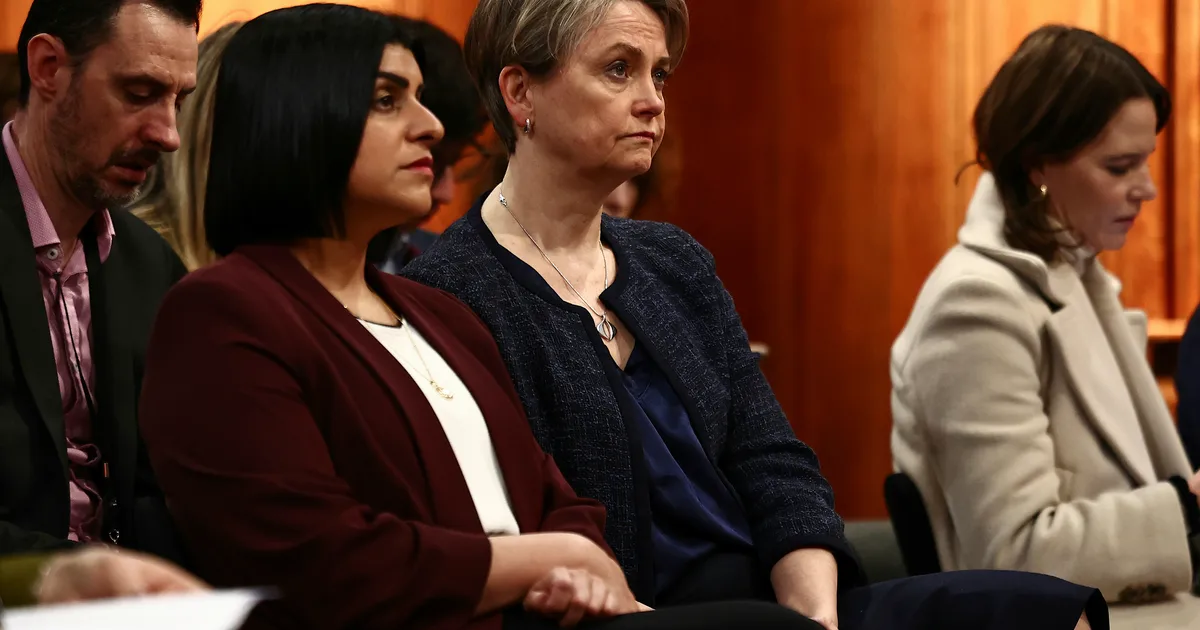
The Labour Party has descended into open warfare as Keir Starmer comes under enormous pressure to quit as prime minister after less than two years in the job.
Supporters of rival candidates turned their fire on health secretary Wes Streeting, who is expected to throw his hat into the ring if the PM announces his resignation.
Starmer will chair his regular weekly meeting of the cabinet this morning, a day after four of them – Shabana Mahmood, Yvette Cooper, John Healey and David Lammy – told him he has to go following Labour’s drubbing in last week’s elections.
Energy secretary Ed Miliband is also understood to have communicated to No.10 that the PM should go.
But loyalists including Steve Reed, Pat McFadden and Richard Hermer have urged the PM not to give in, despite the fact that nearly 80 Labour MPs have also called on him to set out a timetable for his departure from No.10.
Starmer insisted in a make-or-break speech on Monday that he would not “walk away” from Downing Street.
He is understood to have spent last night discussing with key supporters whether he should battle on.
But one Labour source told HuffPost UK: “The game is up. It’ll happen today.”
Soft-left MPs want any contest to be delayed until later in the year to give Andy Burnham the chance to be re-elected and MP so he can take part in it.
They believe that a quick contest benefits Streeting, who they accuse of manufacturing the current crisis.
One told HuffPost UK: “It would be utterly shameless for Wes to plunge the party into chaos. It would prove to the whole country that the only person he is interested in is himself. Now is not the time for a contest.”
Another senior Labour figure said: “Wes has spent six months doing every thing he could to bring down the Labour government while publicly denying it. Now everyone can see him for what he is: a self interested lizard.”
Another Labour source warned that any new prime minister would have to call a general election within months.
They said: “These turkeys are literally voting for a Christmas election. Good luck winning your seat in December Shabana, John, Yvette and Ed.”
A government insider added: “Message to rebels – if you break it you own it. Whatever comes next is their responsibility.”
Darren Jones, the chief secretary to the prime minister and one of Starmer’s key lieutenants, this morning dodged questions about whether he will quit.
He told Times Radio: “As any leader would, he’s talking and listening to those colleagues. I can’t get ahead of what the prime minister may or may not decide.”
Subscribe to Commons People, the podcast that makes politics easy. Every week, Kevin Schofield and Kate Nicholson unpack the week’s biggest stories to keep you informed. Join us for straightforward analysis of what’s going on at Westminster.
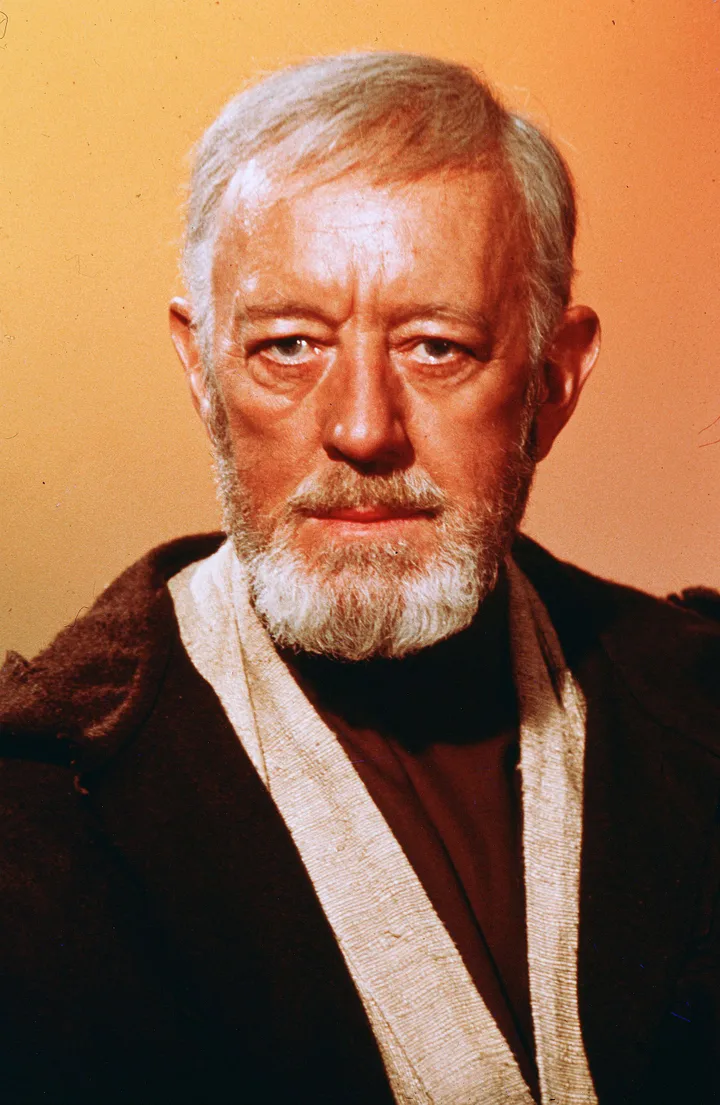
Sir Ian McKellen has said that his decision to speak out on issues surrounding LGBTQ+ community rights wasn’t always met with the most positive of reactions from his peers in the entertainment industry.
During a recent interview with The Guardian, Sir Ian was asked about the “worst piece of advice” that he’d ever been given, and recalled a time around the late 1980s or early 1990s when the late Star Wars actor Sir Alec Guinness invited him out for dinner.
“We chatted about this and that until he brought up the real reason for his invitation,” the Lord Of The Rings star explained.
“He had heard about my work to establish Stonewall – a lobby group to present to the government and the world at large the case for treating UK lesbians and gays equally under the law with the rest of the population.”
Sir Ian continued: “He thought it somewhat unseemly for an actor to dabble in public or political affairs and advised me, sort of pleaded with me, to withdraw. Advice from an older generation, which I didn’t follow.”

Lucasfilm/Fox/Kobal/Shutterstock
Following his death in August 2000, three different biographies alleged that Sir Alec was bisexual, but chose not to come out publicly in his lifetime.
Sir Ian admitted during his Guardian interview that he was reminded of his dinner with the late Oscar winner while watching a production of the show Two Halves Of Guinness, which he described as “a solo show which hints at Sir Alec’s latent bisexuality in a way that would have upset him, I suppose – Zeb Soanes’ immaculate impersonation notwithstanding”.
The six-time Olivier recipient – currently on the promo trail for his new movie The Christophers – came out as gay in 1994, and has continued to speak out on behalf of the LGBTQ+ community since.
In 2024, he told HuffPost UK of the current issues facing transgender people: “When society disregards a minority – and, worse than that, imposes laws and restrictions on their behaviour, which is really unfair – then that’s when society is going off the rails, and we have to attend to it.”


The Tribune Group of more than 100 Labour MPs have called for the prime minister to steer the party back to the left. Meanwhile, 81 MPs have demanded he stand down after Labour came third in the local elections when it comes to national vote share.
Suggested policies
Tribune Labour MPs have said Labour should:
- Introduce free buses for under 25s and universal credit claimers
- Raise capital gains tax
- Proportional property tax instead of stamp duty
- Reformed council tax
- Change government’s fiscal constraints to enable more borrowing
These are generally progressive policies, but they lack the overall economic strategy to significantly change the UK.
Also, encouraging bus use is a greener approach to travel. But why support Labour’s current policy of more expensive fares for the majority of those over 25? Labour rose the Tories’ bus fare cap from £2 to £3.
Further, raising capital gains tax towards the rate for income tax is a positive step. Capital gains is passive income and it doesn’t make sense for it to be lower than taxes on people working. Labour did raise it in its October 2024 budget, but it’s still the lowest in the G7.
Onto the next suggestion, a proportional property tax means that households pay a yearly fixed percentage of their home’s ‘value’ in tax. That’s opposed to the current stamp duty, where people pay a percentage of between 2% and 12% when they are buying a house.
A more robust policy would be to stop treating houses as an asset and for the state to provide them at cost price to the taste of the person or household. Then, the person or household re-pays for the cost of building and designing in affordable monthly payments.
Next, there’s council tax. It isn’t related to income, meaning many households pay more despite earning less. Reforming this would be welcome.
On the government’s fiscal rules, public investment is cheaper than private investment for infrastructure. The private sector pays higher interest and would charge the state or people to make profit. More borrowing, failing the use of debt-free fiat currency, is a better longterm solution.
‘Move left’ isn’t much for Labour
Given Labour is basically a corporate party under its current tragectory, the Tribune Group’s call for a move left may not mean much. But there are some worthwhile policies suggested.
Labour so far cut the winter fuel payment for pensioners then U-turned.
The leadership suspended Labour MPs for voting against the two child benefit cap, then U-turned and reinstated the benefit. The party has administered a huge rise in energy bills.
Any move to the left would be welcome after that.
By James Wright
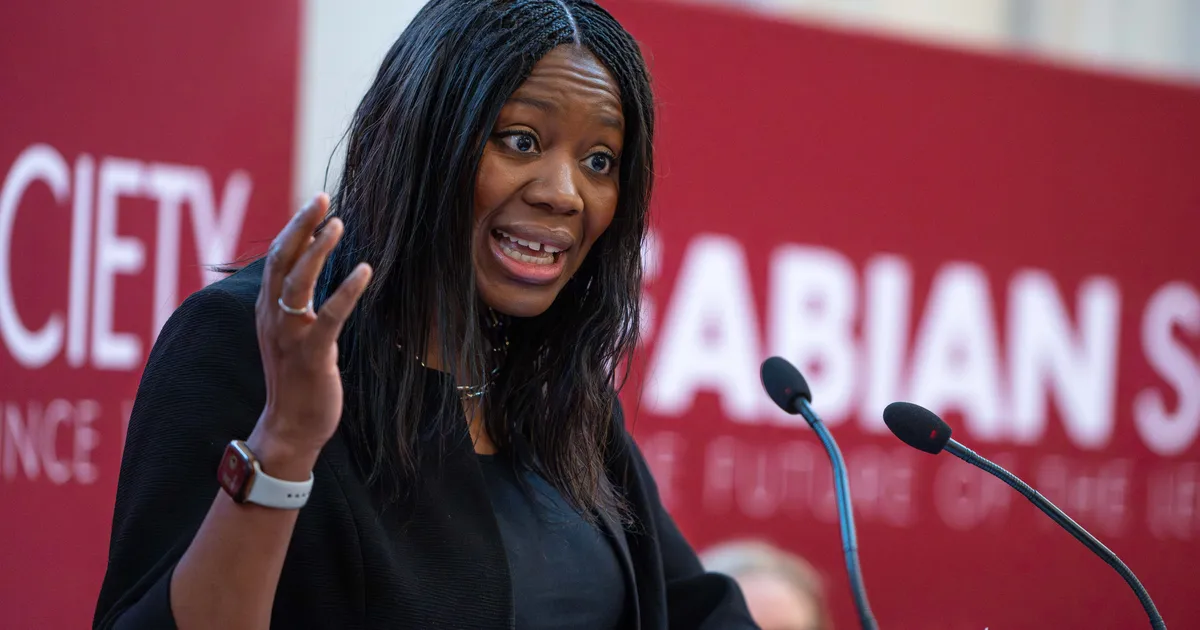
A government minister has resigned and called on Keir Starmer to set out a timetable for his departure.
Miattah Fahnbulleh was the minister for devolution, faith and communities, and has now added to the growing calls for the prime minister to quit.
She told Starmer: “The public does not believe that you can lead this change – and nor do I.”
More than 80 Labour MPs have now called on the prime minister to step down following the party’s drubbing at the elections in England, Scotland and Wales last week.
The prime minister has insisted he will not “walk away” from his job in No.10, and even claimed at the weekend he wants a decade in power.
However, Fahnbulleh has become the first government minister to officially give Starmer the push.
In a letter to the prime minister shared on social media, she said: “We have not acted with the vision, pace and ambition that our mandate for change demands of us. Nor have we governed as Labour Party clear about our values and strong in our convictions.”
She added: “Our country faces enormous challenges and people are crying out for the scale of change that this requires.
“The public does not believe that you can lead this change – and nor do I.
“Therefore I urge you to do the right thing for the country and the Party and set a timetable for an orderly transition so that a new team can deliver the change we promised the country.”
It comes after several senior cabinet ministers reportedly told Starmer to resign in private.
Subscribe to Commons People, the podcast that makes politics easy. Every week, Kevin Schofield and Kate Nicholson unpack the week’s biggest stories to keep you informed. Join us for straightforward analysis of what’s going on at Westminster.
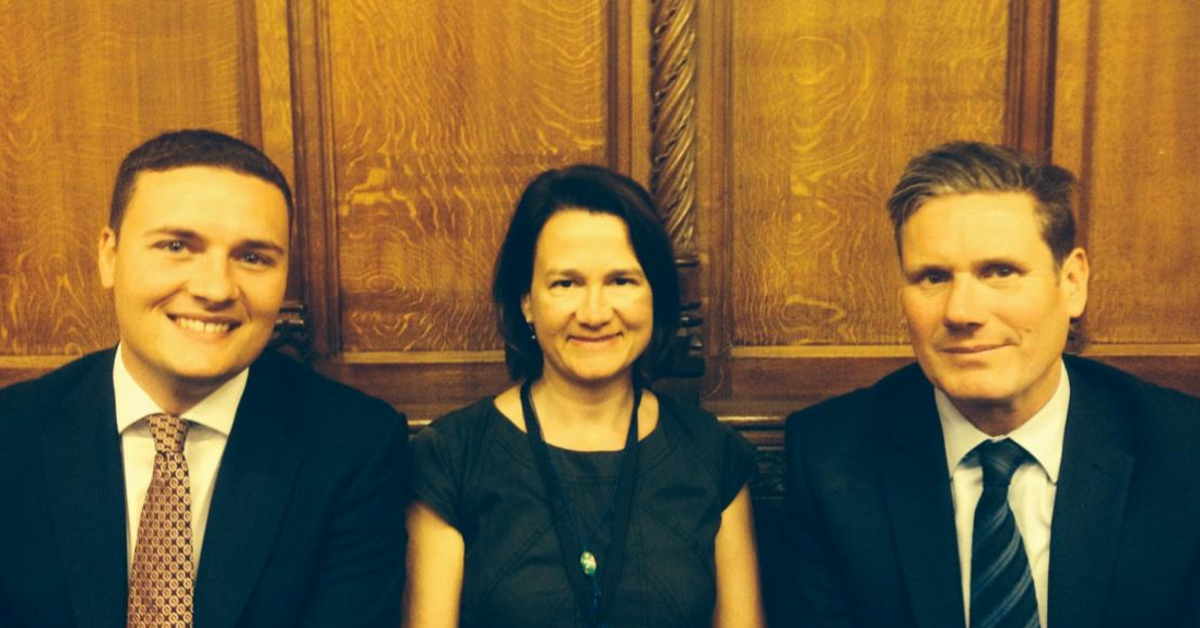
A photo posted by Keir Starmer almost exactly 11 years ago has stunned political pundits after it was unearthed this week.
The prime minister’s job is hanging by a thread as more than 80 MPs call for him to quit following Labour’s drubbing at the elections in England, Scotland and Wales last week.
Catherine West, a former foreign office minister, helped to galvanise the campaign to push Starmer out.
She offered to be a “stalking horse” candidate in a leadership challenge to the prime minister, meaning she would stand against him just to tempt other rivals out of the blocks.
While her bid ultimately failed – as did her subsequent attempt at a no confidence letter – she helped get the ball rolling this week by encouraging MPs to publicly announce they had lost faith in Starmer.
Meanwhile, health secretary Wes Streeting is thought to be one of the frontrunners in the next potential leadership race.
He has made his ambitions to be the next prime minister clear over several months and many of his allies in the Commons have already urged Starmer to resign.
So social media users were stunned when they found a photo of Starmer, Streeting and West together on their first day in the Commons after winning their seats in the 2015 general election.
The now-prime minister shared an image of himself with West and Streeting along with the caption: “Taking our seats for the 1st time.”
The image attracted a huge amount of interest – with many noting just how cruel a game politics can clearly be…
Subscribe to Commons People, the podcast that makes politics easy. Every week, Kevin Schofield and Kate Nicholson unpack the week’s biggest stories to keep you informed. Join us for straightforward analysis of what’s going on at Westminster.

20 Years Later, This Massive Disaster Epic Is Reclaiming the Streaming Spotlight

Zack Polanski Admits Possible Houseboat Council Tax Failure

Terence Crawford responds to accusations that he avoided one man during unbeaten career

Manchester United reach agreement with Casemiro over contract clause amid transfer speculation

US brings back mandatory military draft registration

Steven Gerrard disagrees with Gary Neville over ‘shock’ Chelsea and Arsenal claim | Football


-
 Crypto World4 days ago
HarrisX Poll Found 52% of Registered Voters Support the CLARITY Act
-

 Fashion4 days ago
Weekend Open Thread: Marianne Dress
-

 Crypto World5 days ago
Upbit adds B3 Korean won pair as Base token gains Korea access
-
 NewsBeat6 days ago
NCP car park operator enters administration putting 340 UK sites at risk of closure
-

 Fashion1 day ago
Coffee Break: Travel Steam Iron
-

 Fashion2 days ago
What to Know Before Buying a Curling Wand or Curling Iron
-

 Tech3 days ago
Auto Enthusiast Carves Functional Two-Stroke Engine from Solid Metal
-

 Politics22 hours ago
What to expect when you’re expecting a budget
-

 Politics4 days ago
Politics Home Article | Starmer Enters The Danger Zone
-
 Business3 days ago
Ignore market noise, India’s long-term story intact, say D-Street bulls Ramesh Damani and Sunil Singhania
-

 Tech2 days ago
GM Agrees To Pay $12.75 Million To Settle California Lawsuit Over Misuse Of Customers’ Driving Data
-

 Crypto World6 days ago
BlackRock CEO Larry Fink Discusses a New Asset Class
-

 Entertainment6 days ago
Sarah Paulson Called Out For Met Gala ‘Hypocrisy’
-

 Entertainment5 days ago
General Hospital: Ric & Ava Bombshell – Ric’s Massive Secret Exposed!
-
 Sports6 days ago
NBA playoff winners and losers: Austin Reaves is not loving Lakers vs. Thunder matchup, but Chet Holmgren is
-

 Entertainment6 days ago
Bold and Beautiful Early Spoilers May 11-15: Steffy Revolted & Liam Overjoyed!
-

 Politics5 days ago
Simon Cowell Says He Was ‘Horrible’ To Susan Boyle During BGT Audition
-

 Sports6 days ago
UEFA Champions League final schedule, teams, venue, live time and streaming | Football News
-

 Crypto World6 days ago
Robinhood says Wall Street is building onchain
-

 Tech7 days ago
Apple and Samsung are dominating smartphone sales so thoroughly that only one other company makes the top 10
You must be logged in to post a comment Login