

Politics
‘They’re pretending not to know what a woman is’

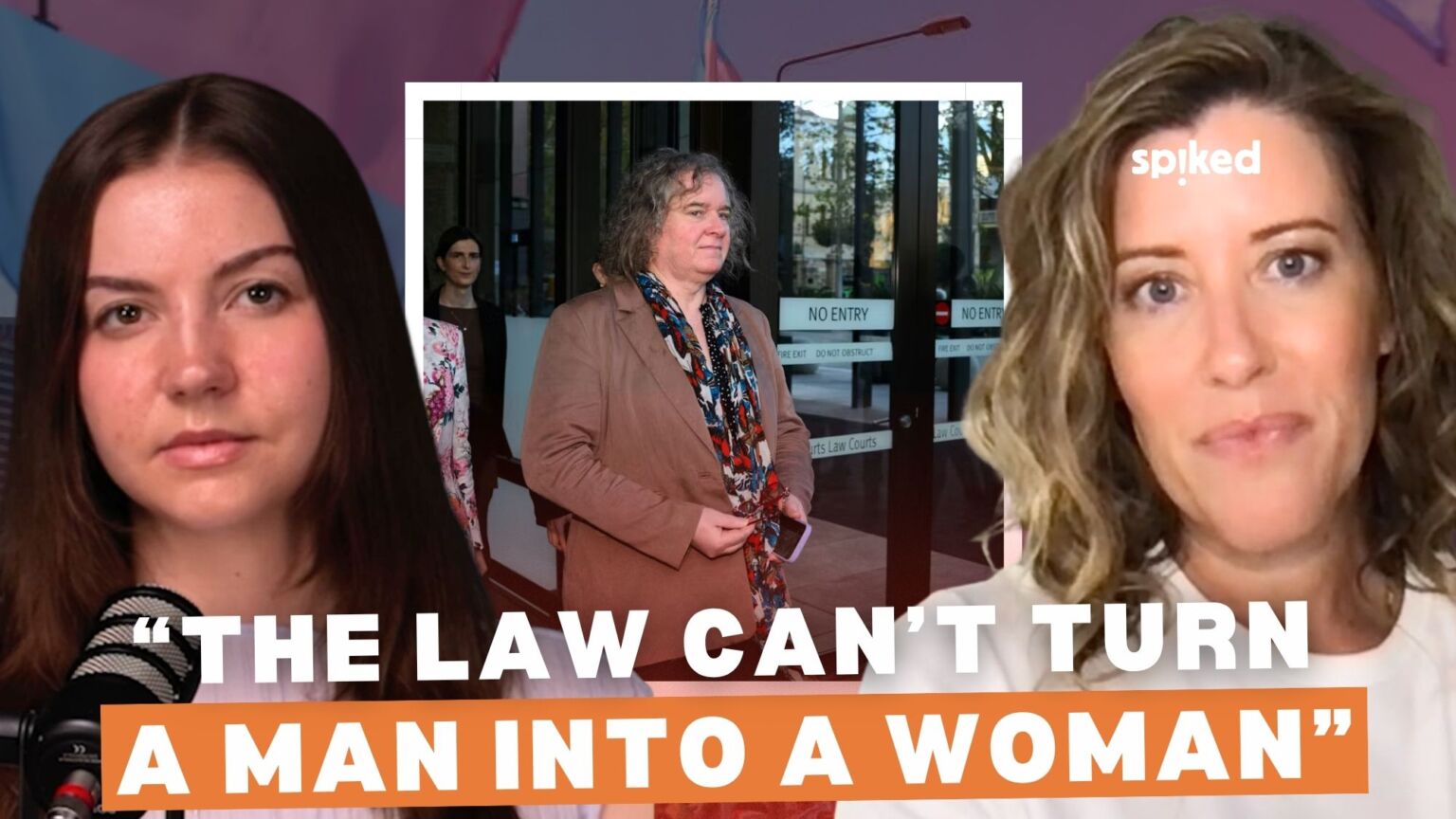
The post ‘They’re <em>pretending</em> not to know what a woman is’ appeared first on spiked.

Breasts are funny old things. Big, small, floppy, lopsided – they’re just part of being a woman. You don’t spend your days admiring them or celebrating them. In fact, you don’t think about them much at all. Until somebody says they might have to take one away. Or both. Then, suddenly, you discover you’re rather attached to them.
That was me this time last year. At 50, after my first routine mammogram, I was diagnosed with breast cancer. The prognosis was good, but my surgeon still had a serious discussion with me about the ‘M’ word. Initially, he wasn’t sure he could remove the cancerous area without removing a whole breast. Thankfully, I didn’t need a mastectomy. But half of one breast had to go – and that was traumatic enough.
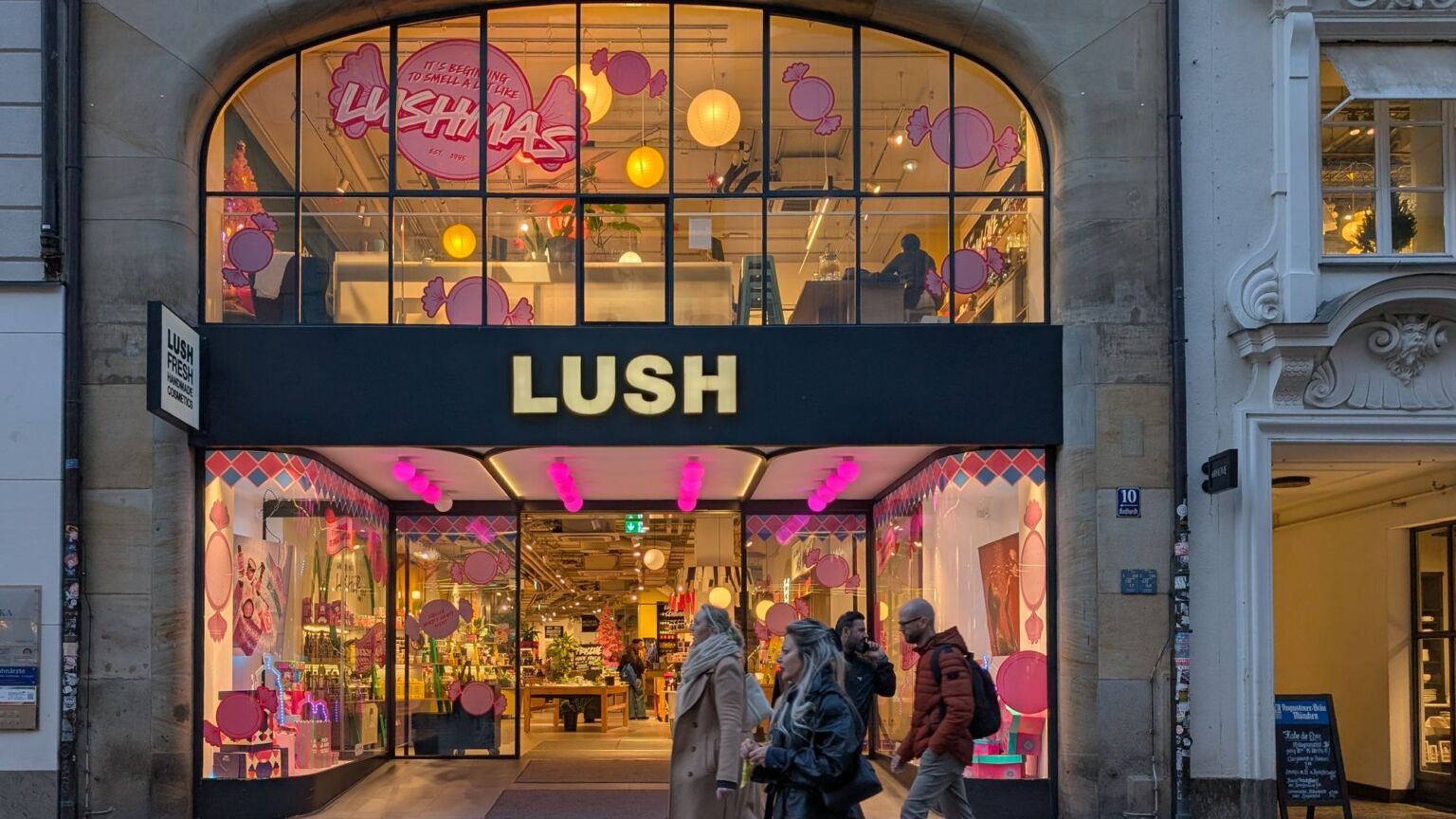
So I was genuinely taken aback when I heard about a window display in the Chelmsford branch of Lush featuring a cartoon tiger bearing mastectomy scars beneath the slogan ‘Proud of my stripes’. It turns out it wasn’t an isolated example. I’ve since been sent images of displays from the Amnesty Bookshop in Kentish Town and Pride campaigns run by local authorities featuring similar imagery.
Which made me wonder – when did the removal of healthy breasts become something to celebrate? For most of my life, a mastectomy was associated with illness, fear and loss. Women celebrated their survival, not the procedure that saved them. Yet somewhere along the line, breast removal itself appears to have become something to applaud.
I’d heard about ‘top surgery’ and seen glossy magazine spreads presenting mastectomy scars as symbols of survival, gender affirmation and bodily autonomy. I’d followed the storyline on the BBC’s hospital drama, Casualty, in which a non-binary character, Sar, was awaiting ‘top surgery’, while another character, Paige, was facing exactly the same operation after discovering she carried the BRCA mutation following her mother’s death from breast cancer. I understood the irony. Two women. Same operation. One called it ‘top surgery’. The other a ‘double mastectomy’.
But until I had breast cancer myself, I don’t think I truly understood the implications of that. Because ‘top surgery’ sounds oddly breezy. Quick and relatively painless – like having your legs or top lip waxed. ‘Mastectomy’, not so much.
Make something sound bright and affirming enough and people can lose sight of what is actually being discussed: the surgical removal of healthy body parts from women experiencing genuine distress. Put like that, it doesn’t sound empowering. It sounds tragic.
And, regardless of the reasons behind it, there is nothing glamorous about breast surgery. I was violently ill after my operation, suffered a severe allergic reaction and later developed an infection. None of which, I gather, is especially uncommon. Breast surgery is pretty hardcore. Nine months on, I still experience pain and stiffness around the surgery site and get random bouts of pain that can take my breath away. And I only had half a breast removed.
The reality is that most women don’t spend their lives wishing their breasts away. And women who lose their breasts through cancer generally want them back. Which is why many undergo gruelling reconstructive surgery to do so.
When I was contemplating my own potential mastectomy, I found myself reading about 12-hour operations, tissue taken from stomachs and thighs, and even women deliberately putting on weight in order to provide enough tissue to rebuild what disease had taken away. That’s why I struggle with the increasingly common claim that so-called top surgery is somehow ‘life-saving’ in the same way that mastectomies are for women with breast cancer or the BRCA mutation.
A woman with breast cancer is trying to survive a potentially life-threatening disease. A woman with the BRCA mutation is trying to prevent one. Neither is undergoing surgery to alleviate psychological distress. Of course psychological distress should be taken seriously. But there is a world of difference between acknowledging that and claiming that healthy breasts must be removed in order to prevent suicide.
The claims that serious surgical interventions prevent suicide among trans-identifying people are deeply misleading. The Cass Review found no good evidence that gender treatments reduce suicide risk. And nor have any comparable studies.
I have absolutely no doubt that women who have elective mastectomies to affirm an identity are unwell. But the idea that women experiencing gender dysphoria will die unless healthy breasts are surgically removed – despite the lack of good evidence – is baffling. The refusal to even entertain alternative ways of helping them is more bewildering still.
Lush, Amnesty International and other companies and organisations need to be challenged over their promotion of ‘top surgery’. They seem all too comfortable presenting imagery associated with breast removal as something empowering and affirming. There is nothing glamorous about breast surgery. It is serious, life-changing stuff. And not something healthy girls and women should ever be encouraged to aspire to.
Janet Murray is a freelance journalist and director of SEEN in Journalism.
 lead image

3 min read
Andy Burnham has comfortably won the Makerfield by-election, taking him a step closer to replacing Keir Starmer as prime minister.
Opinion polls published in the run-up to polling day had indicated a closer contest between Burnham and his closest rival, Reform UK’s Robert Kenyon.
However, Burnham won nearly 55 per cent of the vote in Makerfield, with Kenyon far behind on 34.5 per cent.
Restore Britain’s Rebecca Shepherd came third on nearly seven per cent.
Burnham, who must now resign as mayor of Greater Manchester to take up his role as MP, said his landslide victory was a “loud cry for change”, adding: “I do say to my own party – this is a final chance to change.”
The by-election in the northwest of England has widely been described as one of the most consequential in British political history.
Burnham, a former health secretary, is now expected to launch a bid to replace Starmer in No 10, supported by large numbers of Labour MPs.
The manner of his victory in Makerfield will be used by his supporters as clear evidence that he is Labour’s best chance of taking on Nigel Farage’s Reform and staying in power at the next election.
The Prime Minister has insisted that he will fight any leadership challenge and warned his party that triggering a contest would mean chaos for the country.
Former health secretary Wes Streeting has said that he would enter a Labour leadership contest, as could Al Cairns, the lesser-known Labour MP who resigned as a defence minister last week over defence spending.
The by-election in Makerfield was triggered when the seat’s former MP, Josh Simons, resigned to clear the way for Burnham to return to the House of Commons and allow the Manchester mayor to challenge Starmer for the leadership.
Speaking in Makerfield after his victory was announced in the early hours of Friday morning, Burnham said: “I do say to my own party – this is a final chance to change.
“This is what people said directly to me on the hundreds of doorsteps that I stood on.
We must hear it. We must act upon it, and we must get it right.
“There will be no second chance, but it is a chance now, from this result tonight, to build a new politics based on unity and hope, turning away from the path that takes us to a divided, politics of the kind we’ve seen in the United States.
“We must now take this path and put this country back on the right path, and bring people back together and get things working properly again.”
Breakdown of the results in Makerfield:
Andy Burnham (Labour) – 24,937 (54.82 per cent)
Rob Kenyon (Reform) – 15,696 (34.51 per cent)
Rebecca Shepherd (Restore Britain) – 3,111 (6.84 per cent)
Michael Winstanley (Conservative) – 997 (2.19% per cent)
Sarah Wakefield (Green) – 308 (0.68 per cent)
Jake Austin (Liberal Democrat) – 163 (0.36 per cent)
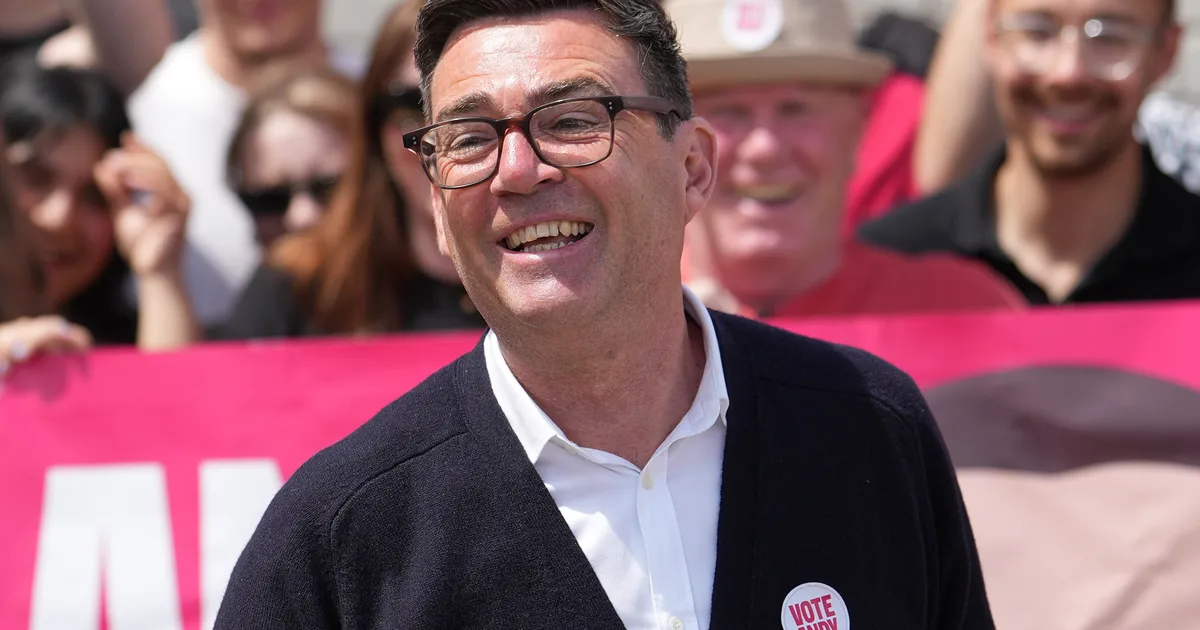
Andy Burnham is on course to be the next prime minister after winning the Makerfield by-election.
The Greater Manchester mayor comfortably saw off the challenge of Reform UK’s Robert Kenyon to become an MP again after a nine-year absence from Westminster.
It means he has taken a major step towards realising his ambition of replacing Keir Starmer as PM.
Burnham admitted two weeks ago that he is ready to challenge Starmer, whose premiership has been hanging by a thread since Labour were thrashed in the local elections on May 7.
Around 100 Labour MPs publicly called for Starmer to stand down, while several ministers – including health secretary Wes Streeting – also resigned in protest at his leadership.
Former minister Josh Simons then triggered the Makerfield by-election by standing down as the constituency’s MP to give Burnham the chance to return to Westminster.
Shortly after 3am on Friday, it was confirmed that Burnham had won with 24,937 votes, Robert Kenyon in second place with 15,696.
His majority of 9,241 is nearly double the 5,399 votes Simons won the seat by in 2024 – a remarkable result given Labour trails well behind Reform in the national polls.
Rebecca Shepherd of the right-wing Restore Britain party, which is led by former Reform MP Rupert Lowe, was third 3,111.
The scale of his victory over Reform, which has led in the national opinion polls for nearly two years, means it is all-but inevitable that he will become PM.
He already has the support of more than enough Labour MPs to challenge Starmer, and the clamour for him to take over will now become irresistible.
Burnham’s victory also means a by-election will be held within weeks to choose the new mayor of Greater Manchester.
Starmer has insisted that Labour’s focus should now turn to holding on to the mayoralty, and has said he will offer Burnham a job in his government.
But sources close to Burnham have said he will reject any post, with his priority taking over from Starmer in No.10.
Earlier this week, Streeting insisted he had enough support to mount a leadership bid.
However, it remains to be seen whether he will end up challenging the PM or standing aside for Burnham.
Starmer has repeatedly insisted that he will stand in any leadership contest, but is likely to come under intense pressure from some cabinet ministers to instead set out a timetable for his departure.
In those circumstances, Burnham supporters would call for their man to take over without the need for a full-blown leadership contest.
However, other leadership hopefuls could throw their hat into the ring, potentially teeing up a summer of uncertainty for the Labour Party.
After being confirmed as the winner, Burnham said it was the “final chance” for Labour to change.
He said: “This is what voters said to me on the hundreds of doorsteps I stood on. We must hear it, we must act upon it and we must get it right. There will be no second chance.
“But it is a chance now to build a new politics based on unity and hope, tyrning sway from he path that takes us to a divided dark politics of the kind we see in the United States.
“We mist now take this path and put this country back on the right path and bring people back together.”
Listen to Commons People, the podcast that makes politics easy. Every week, Kevin Schofield and Kate Nicholson unpack the week’s biggest stories to keep you informed. Join us for straightforward analysis of what’s going on at Westminster.
You probably already know that great sleep is key to better ageing and longevity. Getting at least seven hours a night seems to help us live longer and could even lower our dementia risk.
Speaking to HuffPost UK, Dr Matthew Walker, Neuroscientist and Professor of Neuroscience and Bioengineering at the University of Texas at Dallas, said: “sleep is strongly associated with healthier ageing, and the biology gives us good reasons why, but be wary of anyone selling sleep as a longevity miracle drug”.
Nonetheless, he added “a few rules I’d stand behind” are:
1) Consistency is key
Some research has found that sleep consistency (how well we stick to a sleep schedule) is a better predictor of longevity than sleep duration, or how long we sleep for.
Dr Walker seems to agree with that finding.
“Regularity of sleep timing has emerged as a powerful predictor of long-term health – in some analyses, an even stronger one than total hours slept,” he said.
“Your body runs on a timetable like a railway, and a train that’s punctual every day moves more people than one that’s occasionally faster but never on schedule.”
2) Aim for seven to nine hours’ sleep a night
Most adults need a minimum of seven hours’ sleep a night. In fact, some research suggests this is the optimum sleep time for middle-aged and older adults, though this varies from person to person.
Whatever your natural sleep style, though, “chronic short sleep is linked with cardiovascular disease, metabolic disruption, and impaired immune function,” Dr Walker told us.
“There is no version of ‘I’ll sleep when I’m dead’ that doesn’t make that arrival sooner.′
3) Protect your deep sleep, particularly as you age
Deep sleep should make up about a quarter of your overall sleep, and is key to helping you feel rested.
“Deep non-REM sleep is when the brain runs much of its overnight housekeeping, and it’s also the stage that erodes most with age,” the professor said.
When we get older, he added, defending this is more important through lifestyle changes like a “cool room, no late alcohol, [and getting enough] morning light”.
4) Treat snoring and breathing pauses very, very seriously
“I cannot emphasise this point enough. It may be the most important piece of advice in this list,” Dr Walker stressed.
“Untreated sleep apnoea is a genuine driver of long-term cardiovascular and cognitive risk, and it’s both common and underdiagnosed.”
The NHS says that untreated sleep apnoea could lead to increased stroke and heart disease risk. It may even raise your odds of developing type 2 diabetes.
“If you or your partner notice loud snoring or gasping, get it assessed. This is the one item on this list worth seeing a doctor about,” the expert ended.

People are opening up about the hilariously harsh statements their children – or kids in their family – have shared with them, and it’ll certainly make you feel less alone if you’ve been on the receiving end of such honesty.
Taking to Reddit’s r/Mommit, one mother shared that her eight-year-old child had watched her put on makeup for the first time in a while.
But rather than commenting on the makeup or offering a compliment, they simply remarked: “Oh, are you trying to look like a normal person today?”
The gobsmacked mum shared: “I didn’t know whether to laugh or lie down on the floor.”
And it turns out she’s not the only one to be on the receiving end of a child’s unfiltered thoughts. (My child’s referred to my teeth as “brown” before and I’ve never quite forgotten it.)
Here are some of the best responses when she asked the internet masses to share the “most brutally honest thing” their child had said to them unprompted.

1. My 3 year old: “So, my sister is out of your belly already, why do you still have the hugest most biggest belly, huh?”
2. My 3 year old told an older woman at the store that I had two babies in my belly.
The lady looked at my 4 month old, looked at me and said, “I had my last two really close together too. The biological clock is impossible to fight at the end.”
3. Mine told me I had “long boobies” the other day.
I’m like, yeah and it’s your fault.
4. In the bathtub, 4yo: “why do you have three tummies?”
(Rolls. Yep just my rolls).
5. I was singing once and my daughter goes, “Wow… You have a REALLY bad singing voice.”
6. 4 year old yelled in the public restroom stall “mama! Why you have fur on your bottom!”
7. I was just having a funny conversation with my six year old, telling her that her daddy should get a moustache and shave his chin. She said, ‘but he does have a moustache!’ And I said, ‘yeah but he also has a furry chin.’ And she says, ‘yeah.. but so do you.’
8. My son (6) asked me one time if I could have any wish in the world, if it would be to have less wrinkles on my forehead.
9. My son is extremely articulate and always has been. He was 8 when my younger one was born and a few months into me caring for the new baby he said “mom I don’t care that you’re not glamorous anymore, but I wish you still had energy.”
10. My daughter saw my wedding portrait. Looked at it, and then back at me, and said “what happened?”
11. Them: “Can I use the word ‘fat’?” Me: “yes?” Them: “Why is your tummy fat?”
12. “Mommy why does your face look young but your chest looks like old rotten meat?” 4 year old daughter, cuddling before bed.
13. Was asked if the pores on my face were strawberry seeds.
14. Walking behind me going up the stairs, “Your butt looks like it’s filled with water.”
15. 2.5 [year-old] pointed to my forehead and said “lines!”
16. I just had a breast reduction and we told my 5yo I had surgery to make my boobs smaller. He asked when I was going to have surgery for my tummy.
17. My six-year old son: Mom, why do you have a beard on your legs?
18. “You’re 36, so you won’t be here much longer, you’ll be in heaven soon.”
19. My then 3yo said my teeth were “yellow like corn.”

When I’m pottering about at home or tidying, I often talk to myself.
It’s not unheard of for me to walk into a room and ask myself (aloud) what I’ve walked into said room for. Sometimes I’ll ask myself where I’ve put something I seem to have misplaced. Other times I’ll simply tell myself what I need to do next (much to the amusement of anyone nearby).
While it probably looks a bit odd to onlookers, it turns out self-talk can actually be a beneficial way to boost concentration, task performance and even manage emotions.
And – phew – it’s totally normal.
Talking to yourself (out loud) could improve concentration
Back in 2017, researchers at Bangor University wanted to see whether talking out loud improved control over a task, so they gave 28 participants a set of instructions, asked them to read it either silently or aloud, and measured their concentration and performance on the tasks.
The findings were clear: both concentration and performance levels were improved when task instructions had been read out loud.
Paloma Mari-Beffa, senior lecturer in Neuropsychology and Cognitive Psychology, suggested the benefit “appears to come from simply hearing oneself, as auditory commands seem to be better controllers of behaviour than written ones”.
She added: “Our results demonstrated that, even if we talk to ourselves to gain control during challenging tasks, performance substantially improves when we do it out loud.”
It can help us regulate emotions
Self-talk can also help us navigate anticipation of an event or situation. You’ve seen the films where singers, actors or sports stars stare themselves down in a mirror and give themselves a pep talk ahead of a big concert or a major game.
Research suggests positive self-talk could help with emotional regulation and adapting to challenges.

What psychologists thinks of self-talk
Psychologist Dr Sasha Hall is a fan. She told HuffPost UK: “Self-talk is a healthy strategy that many people use throughout their lives. In fact, we see the foundations of self-talk develop in early childhood when children talk aloud as they play, solve problems and work through challenges.
“Over time, much of this language becomes internalised as an inner voice.”
Dr Emily Crosby, also a psychologist, agrees that it’s “normal” and a tool people can rely on for internal regulation. “For example, talking to yourself can provide a sense of reassurance when feeling dysregulated,” she explained. “It’s almost in replacement of another person who would offer co-regulation by talking.”
As adults, we might speak to ourselves aloud when we’re concentrating, trying to remember something or managing a difficult situation or emotions.
On the latter point, Dr Hall said: “Language helps us organise our experiences. When we put feelings into words, we often gain a greater sense of control over them. Naming emotions can reduce their intensity and make it easier to decide what to do next.
“Talking aloud can also slow down our thinking. Instead of becoming caught up in racing thoughts or worries, we are required to express them in a more structured way. This can support problem-solving and reduce impulsive reactions.”
Self-talk isn’t unusual, then, and can often be a sign that someone is actively organising their thoughts and supporting their own thinking, added Dr Hall.
“It can be a practical and accessible strategy for managing everyday challenges,” she added.
When is self-talk a red flag?
While talking to yourself isn’t usually a cause for concern – as the “vast majority of self-talk is simply part of how people think, regulate emotions and manage tasks” – there can be some red flags that might signal a person needs to seek mental health support, added the expert.
- If someone appears to be responding to voices that they experience as separate from their own thoughts, particularly if those experiences are distressing or affecting day to day functioning.
- If someone is engaging in persistently harsh, critical or distressing self-talk, which can contribute to difficulties with wellbeing and self-esteem.
If you recognise these elements in yourself – or someone you love – it might be worth speaking to a trained mental health professional.
Help and support:
- Mind, open Monday to Friday, 9am-6pm on 0300 123 3393.
- Samaritans offers a listening service which is open 24 hours a day, on 116 123 (UK and ROI – this number is FREE to call and will not appear on your phone bill).
- CALM (the Campaign Against Living Miserably) offer a helpline open 5pm-midnight, 365 days a year, on 0800 58 58 58, and a webchat service.
- The Mix is a free support service for people under 25. Call 0808 808 4994 or email help@themix.org.uk
- Rethink Mental Illness offers practical help through its advice line which can be reached on 0808 801 0525 (Monday to Friday 10am-4pm). More info can be found on rethink.org.

A BBC reporter has said Donald Trump’s deal to end the Iran war could still be scuppered “at the very last moment”.
Thomas Morgan, the corporation’s correspondent in Washington, said the truce was “on a knife edge” and did not guarantee a long-term ceasefire.
He also pointed out that even the US president’s own supporters in America are asking “has it been worth it” nearly four months after the conflict began.
Trump signed a memorandum of understanding to end the war while attending the G7 summit in France on Wednesday.
He said: “I didn’t want to see economic catastrophe. If you kept this going, that could have happened.”
The agreement sees the reopening of the Strait of Hormuz waterway to all international vessels, while Iran could gain access to a $300 billion reconstruction fund if it keeps to its side of the bargain.
But the future of Tehran’s nuclear capability is still to be negotiated over a 60-day period.
On Radio 4′s Today programme, Thomas Morgan said Trump has “been criticised by politicians on both sides of the political spectrum here in the US” over Iran’s nuclear ambitions and the huge reconstruction fund.
He said: “The text is incredibly opaque and vague on who is going to contribute to that. Donald Trump has consistently been saying the US won’t pay a cent towards it, but that’s not how the text reads.
“And when it comes to the Strait of Hormuz … it has reopened now and it’s toll and charge-free for now, but Iranian officials have been reported to say that as soon as this 60-day negotiating period ends, they will want to put a charge on vessels using the Strait.
“That is the reason Donald Trump is being criticised here by both Democrats and Republicans, even close allies of his. Even Senator Ted Cruz in Texas is saying this deal has not been a good deal, and I think the questions will be has this conflict and this truth deal, has it been worth it?”
Morgan warned that it would not take much for the deal to collapse and for the fighting to resume.
He said: “It does feel as though everything around this peace deal is on a knife edge, it’s paper thin, and it could be the smallest thing that could set things off.
“He’s had trouble with trying to keep President Benjamin Netanyahu in check. He seems to be wanting to call the shots as to the conflict between Israel and South Lebanon. That could easily scupper things.
“And after the 60 days, who’s to say they’ll be able to sort everything out.
“As with everything with Donald Trump on the international stage, things could change at the very last moment.”
Listen to Commons People, the podcast that makes politics easy. Every week, Kevin Schofield and Kate Nicholson unpack the week’s biggest stories to keep you informed. Join us for straightforward analysis of what’s going on at Westminster.
It isn’t just the names of the 14 candidates which are on the ballot paper as voters in Makerfield go to the polls today.
The fate of the prime minister is also in the hands of the seat’s 77,000 constituents as they decide who should represent them at Westminster.
That is why the by-election is the most important in British politics in living memory.
It was triggered by sitting MP Josh Simon’s extraordinary decision to voluntarily stand down to give Andy Burnham the chance to become an MP again after a nine year absence.
The Labour mayor of Greater Manchester, who has twice tried and failed to become the party’s leader, has made no secret of his ambition to become prime minister should he see off the challenge of Reform UK’s Robert Kenyon.
Two weeks ago, during a special Makerfield edition of the BBC’s Question Time, he confirmed the worst kept secret in politics by admitting he will join any leadership contest to replace Keir Starmer in No.10.
Wes Streeting – who quit as health secretary in protest at the PM’s leadership after Labour were thrashed in the local elections on May 7 – has already confirmed that he could launch his own bid for the top job within days.
That means that, should Burnham emerge triumphant in the early hours of Friday morning, the clock will start ticking down on Starmer’s exit from Downing Street less than two years after he led Labour to a landslide general election victory.
According to every opinion poll which has been published during the month-long by-election campaign, Burnham is on course to win.
That would obviously be good news for him, as well as a massive relief for the Labour Party in a seat they have held since it was formed more than 40 years ago.
And while Starmer would have to go through the motions of congratulating his leadership rival, he would also know that it would virtually guarantee that he will shortly become a former prime minister.
Labour MPs terrified by the very real threat posed by Reform to their political futures will see in Burnham a potential saviour.
Because be in no doubt, with Nigel Farage’s party continuing to lead in the national opinion polls and the government plumbing new depths of unpopularity, no other Labour candidate could have won the seat.
Quite simply, the clamour in the Parliamentary Labour Party for Burnham to replace Starmer as prime minister will be irresistible.
While Starmer may well be right when he says a Labour leadership election over the summer would mean “chaos” for the country, and is genuine in his determination to fight any challenge, the political reality is that it is a contest he is bound to lose.
Despite Streeting’s insistence that he has the support of enough Labour MPs to throw his own hat into the ring, the most likely outcome would be a coronation for Burnham, possibly even before MPs go on their summer recess next month.
Starmer would much rather Burnham took a job in his government and bided his time.
The vanishingly small chance of that happening was extinguished on Wednesday afternoon when sources in Burnham’s camp made it clear he would reject any such offer.
But the Makerfield result will not just throw up existential questions for the prime minister.
If, as expected, Reform fail for the second by-election in a row following the Green Party’s triumph in Gorton and Denton, Farage will also have a lot of explaining to do.
All things being equal, Makerfield – where two-thirds of voters backed Brexit a decade ago and Reform won all eight council wards on May 7 – should have been a shoo-in for the party.
The choice of “plucky plumber” Robert Kenyon as their candidate was a huge gamble, given what they must surely have known about his social media history. Unless there is a massive upset, it is a gamble which will have failed.
The level of support for Restore Britain, the even more right-wing party led by former Reform MP Rupert Lowe, will also be worth watching.
Anything above 7% will suggest that Farage is facing a growing challenge on his right flank, in much the same way as he inflicted huge damage on the Tories when he himself was leader of Ukip.
Whatever the result, Britain will wake up to a very different political landscape on Friday morning, and things will not be the same again.
Listen to Commons People, the podcast that makes politics easy. Every week, Kevin Schofield and Kate Nicholson unpack the week’s biggest stories to keep you informed. Join us for straightforward analysis of what’s going on at Westminster.

Brooklyn Peltz Beckham has recently released an ad with food delivery company Doordash that some see as a comment on his relationship with his estranged family.
In former posts,The Beckhams’ oldest child alleged the rift came about because of his parents’ “performative” and “controlling” behaviour and attempts to “ruin” his relationship with wife Nicola Peltz Beckham.
Brooklyn’s commercial, which aired during the World Cup, involved the former photographer sitting on a sofa.
He said: “You’re probably wondering why I’m watching the FIFA World Cup 2026 from home. It’s a long story,” before tossing his football tickets onto a table.
“It’s complicated. More soon,” text overlaid on the table read.
Many have taken the ad as a swipe about his family issues.
Speaking to Metro, a source said the advert has “left his family stunned… No one could have predicted he would do something like this. Monetising this situation will be heartbreaking for David and Victoria, especially after his dig at ‘Brand Beckham’ in his statement.”
Earlier this year, Brooklyn had shared a statement on the family rupture which read: “My family values public promotion and endorsements above all else. Brand Beckham comes first.
“Family ‘love’ is decided by how much you post on social media, or how quickly you drop everything to show up and pose for a family photo opp, even if it’s at the expense of our professional obligations.”
Under his DoorDash Instagram post, some site users accused Brooklyn’s commercial as “tasteless,” while others said: “Doesn’t want to be a Beckham but happy to profit from the name”.
Yet another called for him to drop his surname entirely, writing: “No hate just observation… if you hate them so much drop the name and stop profiting from association.”

Google’s long-awaited Home Speaker finally has a release date
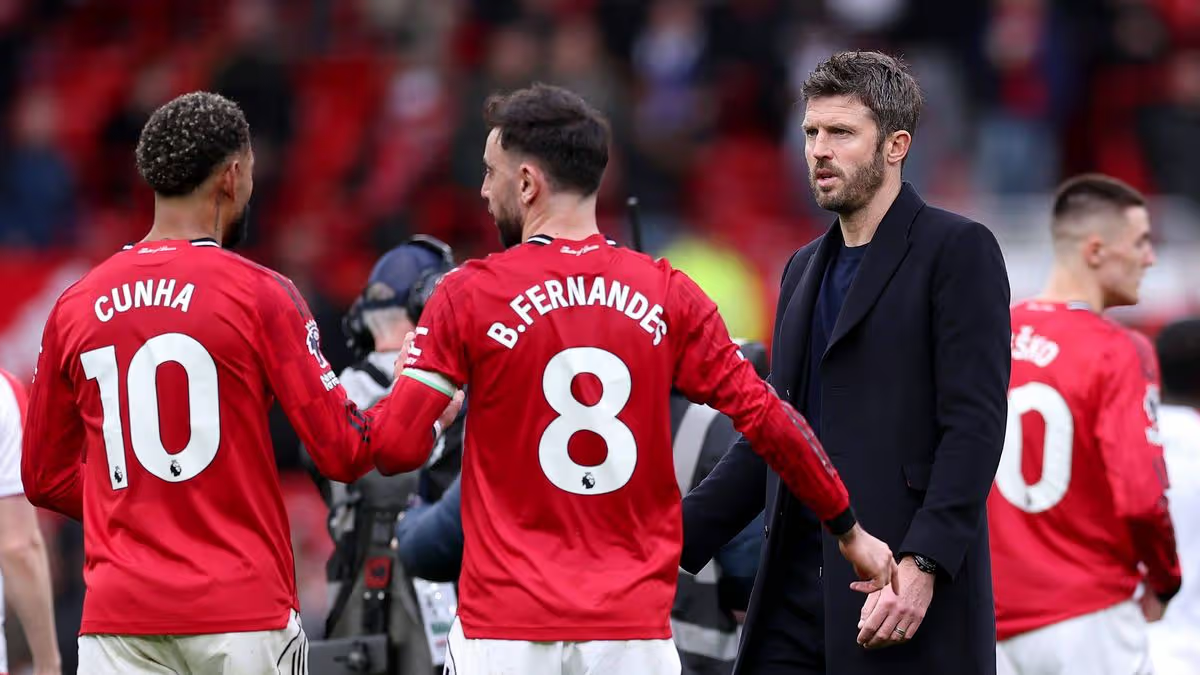
Michael Carrick already has first Man Utd fixture headache with nine stars at risk
German exports to Britain drop 7% since 2016, IW says


-

 Business5 days ago
No Jackpot Winner as $257 Million Prize Rolls Over to $269 Million Monday Draw
-

 Fashion6 days ago
Weekend Open Thread: Tuckernuck – Corporette.com
-
 Crypto World4 days ago
Zimbabwe Requires Crypto Businesses to Register Annually Under New FIU Regulations
-

 Crypto World6 days ago
Bitget enters Argentina’s regulated crypto market through PSAV registration
-

 Tech6 days ago
NanoClaw integrates JFrog registries to secure AI agent downloads
-

 Tech7 days ago
This Week In Security: Microsoft On Microsoft, Register Your Domains, Linux On ARM, And FreeBSD Joins The File Cache Club
-

 NewsBeat6 days ago
FBI searches office of Ohio voter registration group
-
 Entertainment4 days ago
Matt Damon’s Viral Sci-Fi Thriller Has Taken Over HBO Max
-

 Business4 days ago
Anthropic staff to meet White House officials next week, Axios reports
-

 Tech5 days ago
As AI companies race to go public, who else is along for the ride?
-
 Crypto World4 days ago
Bitcoin could crash to $48,000, if this historical pattern is triggered
-

 Politics4 days ago
“Israel’s” ban on ICRC visits ruled illegal, but Knesset moves to stop them permanently
-
Entertainment7 days ago
Ana Navarro unleashes explosive tirade on ex-Trump aide, Disney Channel star in epic on-air fight: 'Have you no shame?'
-
 NewsBeat4 days ago
Warning of disruption as Cardiff Crossrail works to start
-

 News Videos4 days ago
Financial Accounting | Last Day Revision Strategy and Booster | CMA Inter – June 2026
-
 NewsBeat4 days ago
Tributes to former deputy head teacher at Cambridge school among death and funeral notices
-
 Crypto World5 days ago
Market Preview: SpaceX (SPCX) IPO Record, Federal Reserve Meeting, and Iran Nuclear Agreement
-
 NewsBeat4 days ago
what doctors are seeing in ebike crashes
-
 Entertainment4 days ago
Kate Middleton Glare Goes Viral After Kids Booed At Royal Event
-

 Entertainment5 days ago
Deion Sanders Shares Powerful Post After Viral Advice To Deiondra
You must be logged in to post a comment Login