

Politics
Thomas Heald: The Mandelson affair and the lessons it holds for Scotland

Councillor Thomas Heald is a Scottish Conservative councillor for Dunblane and Bridge of Allan, Scottish Conservative and Unionist candidate for Dunfermline and political advisor in the Scottish Parliament.
The controversy surrounding Lord Mandelson matters not because of personality, however objectionable, but because it exposes a recurring flaw in modern politics: the belief that trust can be restored simply by changing the people in charge.
That assumption was central to Keir Starmer’s pitch for office. Labour did not win on ideology or ambition, but on a moral claim that standards, judgement and seriousness would improve because different people were in power. The Mandelson affair tests that claim and suggests that trust cannot be rebuilt by intent alone.
This is not about a single controversy. It reflects a deeper tendency to confuse ethical language with ethical behaviour. Voters are repeatedly told that professionalism and experience will guarantee better outcomes. In practice, systems behave much as they did before.
Conservatives should be honest about our own record. The past decade damaged public confidence. Too often we appeared distracted or insufficiently serious about the responsibilities of office. Any attempt to rebuild trust must begin with acknowledging that failure. An acknowledgement which has quite rightly been at the forefront of Kemi Badenoch’s attempts to rebuild and remodel our party at a UK level.
But Labour’s difficulties point to a wider truth: trust is not restored by tone, presentation or moral claims. It is restored by conduct, particularly when that conduct is inconvenient or politically costly.
This lesson is especially relevant in Scotland.
For nearly two decades, Scottish politics has been dominated by a party that has framed itself as a moral alternative to its opponents. The SNP has claimed higher purpose and greater legitimacy, but long tenure has not produced improved outcomes. Educational standards have declined, public services are under sustained pressure and local government increasingly struggles to maintain basic infrastructure.
Council tax rises while roads and pavements deteriorate. Moral certainty has not translated into competent administration.
This is not unique to Scotland, but Scotland illustrates the danger clearly: when political authority rests on moral posture rather than accountability, standards erode quietly over time.
The Mandelson affair is a reminder that no party is immune to this dynamic. Power breeds defensiveness. Longevity dulls judgement. Promises to “do things differently” collapse unless they are backed by discipline and restraint.
Scottish voters are not hostile to politics, but they have too often been encouraged to substitute moral assertion for evidence of delivery. Repeated appeals to virtue, grievance and intent have been allowed to stand in for measurable improvement in schools, public services and local government. Over time, that has weakened scrutiny and lowered expectations — not because voters are disengaged, but because the political culture has rewarded rhetoric over results.
For Conservatives in Scotland, the implication is straightforward.
Rebuilding trust does not mean competing in the language of virtue. That road has failed repeatedly. Trust is rebuilt locally and incrementally: through competent councils, improved schools, maintained infrastructure, and politicians who explain difficult decisions rather than evade them.
The lesson of the Mandelson affair is not that trust in politics is impossible. It is that trust cannot be asserted, outsourced, or inherited. It is earned through discipline, restraint and visible competence, especially when those in power are tempted to excuse themselves. Scotland has lived for years under a politics that mistakes moral claims for delivery.
Conservatives should resist that temptation entirely. If trust is to be rebuilt, it will not come from saying we are different, but from governing differently, consistently, locally and without pretending that good intentions are a substitute for results.


Emerald Fennell is speaking out about the changes she made to the story of Wuthering Heights as part of her new film.
The Oscar winner’s new adaptation of Emily Brontë’s gothic novel hit cinemas late last week, and while critical reception was initially mixed, fans of the original book have spent the past few days voicing their issues with changes that have been made in this latest iteration.
As is often the case with screen versions of Wuthering Heights, Emerald’s adaptation focusses solely on the first half of the book, but the Saltburn director made a string of other changes, too.
These included the full removal of Cathy’s brother Hindley and more explicitly villainising characters like Nelly and Linton, as well as the decision to make Heathcliff and Isabella’s relationship more consensually submissive than the coercion and abuse outlined in the novel.
Oh, and there’s also a whole lot more sex in the movie, too.
Speaking to Entertainment Weekly, Emerald began by admitting that she started scripting her new film by seeing how much of Wuthering Heights she could remember just from memory, having first encountered the book as a teenager.
“I think the things that I remembered were both real and not real,” she explained. “So there was a certain amount of wish fulfillment in there, and there were whole characters that I’d sort of forgotten or consolidated.”
As a result, the film is more inspired by her “response and interpretation to that book and to the feeling of it” than a faithful adaptation.
“I think, really, I would do a mini series and encompass the whole thing over 10 hours, and it would be beautiful,” she added of the many changes made compared to the source material.
“But if you’re making a movie, and you’ve got to be fairly tight, you’ve got to make those kinds of hard decisions.”

Of course, before the film was even in production, Emerald’s adaptation of Wuthering Heights faced backlash over her casting of Jacob Elordi as Heathcliff, a character who is heavily implied in the book to be a person of colour.
Responding last month to these “whitewashing” accusations, the two-time Bafta recipient said: “The thing is, everyone who loves this book has such a personal connection to it, and so, you can only ever kind of make the movie that you sort of imagined yourself when you read it.
“That’s the great thing about this movie is that it could be made every year and it would still be so moving and so interesting.”
She previously claimed she was first inspired to cast Jacob as Heathcliff after noticing while working with him on Saltburn that he “looked exactly like the illustration of Heathcliff” on the first copy of Wuthering Heights that she read.

Keir Starmer has told the Munich Security Conference that he’ll send the navy’s aircraft carrier group to the Arctic. The move is meant to appease US president Donald Trump who recently threatened to annex Greenland. In his speech on 14 February Starmer said:
I can announce today that the UK will deploy our Carrier Strike Group to the North Atlantic and the High North this year led by HMS Prince of Wales, operating alongside the US, Canada and other NATO allies in a powerful show of our commitment to Euro-Atlantic security.
Starmer also said he would increase the number of Royal Marines in Norway, alongside other measures:
Doubling our deployment of British commandos in the Arctic. Taking control of NATO’s Atlantic and Northern Command in Norfolk, Virginia. And transforming our Royal Navy by striking the biggest warship deal in British history with Norway.
You can listen to the full speech here:
Right on cue, defence minister Al Carns – a former marine and rumoured coup candidate for Labour leadership – appeared 200 miles above the Arctic Circle:
-30°C. 200 miles above the Arctic Circle.
In the strategically vital High North, Britain’s Surveillance and Reconnaissance Squadron train where few others can.
Minister for the Armed Forces, Col @AlistairCarns, joined them in Norway. 🇳🇴
If you can operate here, you can operate… pic.twitter.com/I9Wv61JThg
— Ministry of Defence 🇬🇧 (@DefenceHQ) February 16, 2026
It remains to be seen whether any of this will appease Donald Trump. So far in 2026, Trump has struck Venezuela, threatened various countries, and is amassing naval forces within striking distance of Iran.
Yet being a minion to US authority seems to be Starmer’s default response.
Starmer bowing to US
The US in turning inwards. In line with it’s 2025 National Security Strategy (NSS), the US focus in increasingly on the Western hemisphere. US secretary of state Marco Rubio told the conference Europe has to stand up for itself now:
We want Europe to be strong. We believe that Europe must survive, because the two great wars of the last century serve for us as history’s constant reminder that ultimately, our destiny is and will always be intertwined with yours, because we know because we know that the fate of Europe will never be irrelevant to our own.
He also lamented the imagined civilisational decay described in the NSS:
Controlling who and how many people enter our countries, this is not an expression of xenophobia. It is not hate. It is a fundamental act of national sovereignty… It is an urgent threat to the fabric of our societies and the survival of our civilization itself.
Trump appeared to back off annexing Greenland. Or rather he appeared to back off using force to do so. Speaking at the World Economic Forum (WEF) on 21 January, he said:
We probably won’t get anything unless I decide to use excessive strength and force, where we would be, frankly, unstoppable. But I won’t do that.
I don’t have to use force. I don’t want to use force. I won’t use force. All the United States is asking for is a place called Greenland.
Starmer can’t get a break at the moment. And, in fairness, it’s entirely his own fault. He is under fire at home over disgraced Labour grandee Peter Mandelson’s links to dead child rapist and power broker Jeffrey Epstein. He may not last much longer. Yet on what passes for a UK foreign policy – i.e., sucking up to Donald Trump – he has been remarkably consistent.
Featured image via the Canary

A coalition of Greater Manchester groups has announced a major campaign calling for opposition to Britain First’s upcoming ‘March for Remigration’ in the city.
The far-right fascist party, has previously announced its intention to host the march in Manchester city centre on 21 February 2026.
‘Resist Britain First’
Organisations from across Greater Manchester have launched a campaign, ‘Resist Britain First’, to oppose this march. It’s calling for people and groups across the country to stand together and oppose the march.
A spokespserson for Resist Britain First said:
Britain First’s ‘March for Remigration’ is a racist dogwhistle calling for a white supremacist ethnic cleansing of the United Kingdom by the forced expulsion of non-white people.
Britain First’s previous march led to multiple recorded instances of racism, homophobia, and violence by attendees of the march.
We call on people across the UK to come to Manchester to resist this racism on our streets and show that you do not support this bigotry.
Britain First is led by Paul Golding and Ashlea Simon, both of whom have made horrific racist statements in the past.
Simon once stated that “English people can’t be black” as “English blood is white”. Meanwhile Golding, a former member of the National Front, was convicted for his vile harassment of a mosque. Golding has also previously been accused of sexually assaulting one of the attendees of his marches.
Amongst those that organised Britain First’s last ‘March for Remigration’ in August was Lee Twamley, someone who himself has a conviction for people smuggling.
Golding publicly attended a Remembrance Sunday event at the Cenotaph drunk wearing women’s underwear on his head. Resist Britain First believes that all this information makes it clear that the party’s claim to be ‘Britain First’ is steeped in inconsistencies. They are racist thugs.
This comes against the backdrop of the Gorton and Denton by-election in Greater Manchester. Reform UK is happily amplifying the racist rhetoric of job-slashing Man United owner Jim Ratcliffe.
The full list of Greater Manchester based groups in Resist Britain First includes:
- Young Struggle Manchester.
- RS21 Manchester.
- Manchester Feminist Coalition.
- Greater Manchester Tenants Union, South Branch.
- No Borders Manchester.
- Northern Police Monitoring Project.
- Red Roots Collective.
- Anti-Fascist Action Manchester.
- South Asian Liberation Movement.
- Manchester Trans Liberation Assembly.
- Salford Anti-Fascists.
- Stockport Anti-Fascists.
Featured image Resist Britain First

Simon Bennett puts the current challenges to the rules-based world order such as Russia’s invasion of Ukraine into historical context.
History repeats. In 1991, world leaders talked of the end of the Cold War. Some, like George H.W. Bush, claimed victory. Academic Francis Fukuyama posited the end of history. Such talk proved premature. Putin’s rise to power ended Russia’s experiment with liberal democracy. Stalin and Beria, head of the NKVD, the Soviet Union’s secret police, would feel at home in today’s Russia where press freedoms are curtailed, journalists persecuted, the political system gerrymandered and pacific neighbours such as Georgia and Ukraine invaded. During its war on Ukraine, Russia has kidnapped children, targeted non-military sites, destroyed energy infrastructure so people freeze, denied the developing world Ukrainian wheat and launched misinformation, disinformation and hybrid warfare campaigns against Ukraine’s allies.
The rules-based international order is in retreat as Russia, China and the US assert themselves. Imperialism – a soft power instrument – and colonialism – a hard power instrument – are in vogue. The doctrine of Might is Right is again to the fore. Putin’s war on Ukraine aims first, to recover that country to Moscow’s political orbit and secondly, to provide it a new source of raw materials, both mundane, such as coal, oil, methane and iron ore, and exotic, such as uranium and rare earth oxides (REOs).
Like Putin, Trump is asserting himself, albeit without waging all-out war. Trump’s tactics are subtler: First, hector the target. Denigrate its leaders. Patronise, belittle and misrepresent its people and security situation. If the target refuses to acquiesce, field soft-power instruments such as tariffs. If the target still refuses to acquiesce, threaten to take by force that which is coveted, for example, REOs. Presently, these tactics are being applied to Greenland and its champions.
Trump’s assertion that he wants to federate Greenland for security reasons is disingenuous – a false flag. Trump’s motivation is primarily economic. He covets Greenland’s oil, methane, uranium, nickel, titanium, tungsten, zinc, gold and diamonds. He most assuredly covets Greenland’s REOs. Geographical notes: ‘Estimates suggest that Greenland may have 42 million metric tonnes of rare earth oxides…. To put [that] into perspective… China currently has… 44 million metric tonnes of REOs’. Greenland is a glittering resource prize for any aspirant imperial-colonial power.
In seeking hegemony over Greenland, Trump is employing the imperial-colonial playbook used by European powers in the 18th and 19th centuries. Specifically:
- issue threats to test the subject’s resolve
- absentia a surrender, garrison the territory, possibly with a private army as Britain did India in the C18th through the East India Company
- install a puppet regime.
Given Trump’s ambivalence towards NATO , the fact that Greenland is linked to Denmark, a NATO member, is likely of little consequence to the US president.
Trump’s ambitions for Greenland should come as no surprise to those familiar with American foreign policy, as, like all great powers, the US has always meddled, sometimes with unexpected, if not catastrophic results. Eisenhower instructed the Central Intelligence Agency (CIA) to depose Iran’s elected left-leaning leader, Mohammad Mosaddegh. In this effort the CIA was helped by Britain. Following Guatemalan left-leaning leader Jacob Arbenz Guzman’s seizure of American assets, Eisenhower instructed the CIA to destabilise his regime. During Eisenhower’s presidency the CIA trained Cuban exiles to unseat Fidel Castro. The decapitation plan, actioned in 1961 by Eisenhower’s successor, failed. In 1969, Nixon secretly bombed neutral Cambodia in an effort to disrupt the Ho Chi Minh Trail. In 1970, US troops crossed into Cambodia.
In the 1930s, sociologist Robert K. Merton hypothesised that purposive social action may produce both expected outcomes (‘manifest functions’) and unexpected outcomes (‘latent functions’). Merton called undesirable latent functions ‘latent dysfunctions’. Eisenhower’s intervention in Iran brought Shah Mohammad Reza Pahlavi to power. While Pahlavi’s White Revolution emancipated Iran’s women, his secret police, SAVAK, coached by the CIA, imprisoned, tortured and disappeared thousands of political opponents. Persistent social inequality allied with SAVAK’s repression inspired the Iranian Revolution of 1979 that produced a theocratic regime as, if not more repressive than that fashioned by the Shah. Kennedy’s failed Cuba invasion likely cemented Castro’s hold on power. Nixon’s intervention in Cambodia breathed life into a sociopathic communist cadre known as the Khmer Rouge. The Khmer emptied Cambodia’s cities and murdered anyone considered a threat to its Year Zero movement. Circa three million Cambodians were killed. It is not unreasonable to argue that Iran’s repressive regimes, Castro’s political longevity and Cambodia’s genocidal Year Zero movement were to some degree latent dysfunctions of American imperialism.
Practising strategic empathy, with disinterested geopolitics experts gameplaying outcomes from interventions, can help leaders avoid foreign adventures that risk accruing more costs, for example, loss of life, treasure, reputation and allies’ good will, than benefits.
Strategic empathy and gameplay can help Greenland’s allies scope what might happen to the territory. With an expanding American military at his back, Trump has the option of defying the rules-based international order and taking Greenland by force. Greenland is roughly the size of western Europe. If Trump invades, what is to stop Russia and China, perhaps acting in concert gratis their 2022 ‘no-limits’ friendship pact and numerous subsequent joint military exercises, emulating Trump’s tactics? They, too, could seize Greenlandic territory. Greenland could find itself being carved up by Russia, China and the US in the same way that Africa was carved up by Germany, Belgium, Britain and other powers in the 19th century. Were Greenland to be invaded by America’s geopolitical competitors, where would that leave Trump’s plan to exploit Greenland’s resources and secure the northern border? Further, where would that leave NATO, for decades one of the guarantors of the rules-based international order? If such an event came to pass, it is unlikely Trump, who eschews confrontations that involve putting boots on the ground, would join battle with the Russia-China axis. In this scenario, Trumpian colonialism would have rendered the US less secure. In Merton’s argot, it would have delivered to the US a latent dysfunction.
Decision-support instruments, strategic empathy and gameplay should be at the heart of foreign policy decision-making. Skilfully practiced, the instruments can help leaders first, gameplay third party perceptions and reactions, and secondly, make decisions that see objectives achieved with minimal risk.
By Dr Simon Ashley Bennett, Director of the Civil Safety and Security Unit, University of Leicester.
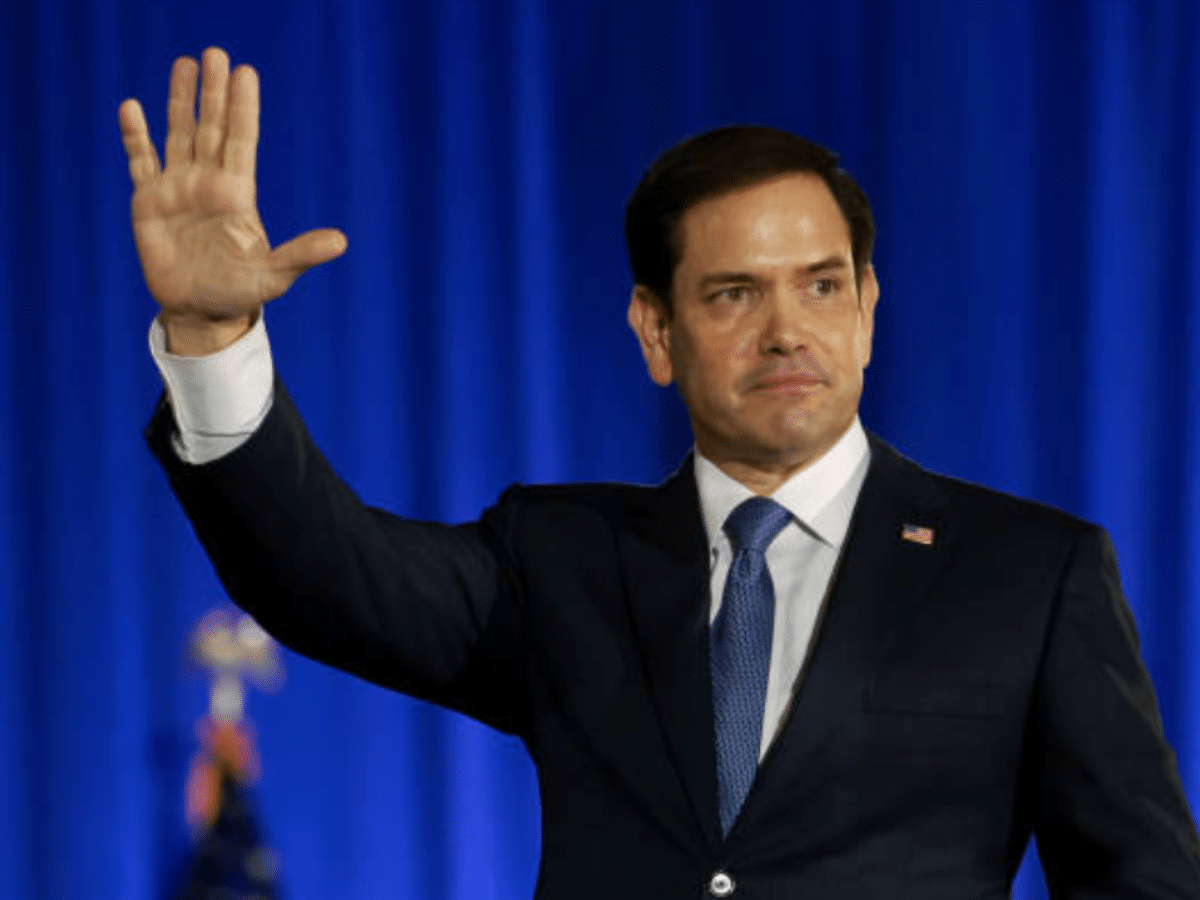
Marco Rubio, the U.S. Secretary of State and a bulwark of the Trump administration, gave a “disquieting” imperialist speech at the Munich Security Conference on Saturday to deflect from the Epstein files fallout.
Journalist Ben Norton called the speech “a blatant call” by the US empire to resuscitate Western colonialism and recolonise the Global South.
This is insane.
US Secretary of State Marco Rubio just gave one of the most explicitly pro-colonialist speeches I have seen in the 21st century.
The US empire wants Europe to help it recolonize the Global South.
Rubio praised Western colonialists for “settl[ing] new… pic.twitter.com/tl4NojNdmP
— Ben Norton (@BenjaminNorton) February 15, 2026
Marco Rubio peddles neocolonialism
Rubio appealed to the UK far-right by explicitly crediting “English settlers” for America’s language, political system, and legal framework. He also appealed to German nationalists by praising “German farmers and craftsmen” for building the American heartland and jokingly upgrading beer quality.
Our story began with an Italian explorer whose adventure into the great unknown to discover a new world brought Christianity to the Americas – and became the legend that defined the imagination of a our pioneer nation. Our first colonies were built by English settlers, to whom we owe not just the language we speak but the whole of our political and legal system. Our frontiers were shaped by Scots-Irish – that proud, hearty clan from the hills of Ulster that gave us Davy Crockett and Mark Twain and Teddy Roosevelt and Neil Armstrong.
Our great midwestern heartland was built by German farmers and craftsmen who transformed empty plains into a global agricultural powerhouse – and by the way, dramatically upgraded the quality of American beer.
The reaction to Rubio’s imperial nostalgia and his thirst for a new wave of colonisation has been swift and daming.
Lebanese-American journalist Rani Khalek damned Rubio for American exceptionalism:
“What the US empire did to Gaza, Venezuela, and currently Cuba is what it wants to do to the entire Global South.” https://t.co/wpQpa7xSNe
— Rania Khalek (@RaniaKhalek) February 15, 2026
Author Joe Guinan warned that the U.S. is building a neo-fascist movement in Europe:
And the National Security Strategy of the United States Government is to promote the rise of allied far right movements in European countries – a neofascist International organized around white supremacy and eugenics. https://t.co/9FIrMiCnGr
— Joe Guinan (@joecguinan) February 15, 2026
Former Indian diplomat Kanwal Sibal stated that the speech was effectively a declaration of war against the non-Western world:
This is effectively a declaration of war against the non- West.
What Rubio is saying is that the world’s pressing matters will be identified by the US, the US will use its power to deal with them and the outcomes will be determined by US national interest.
Very disquieting… https://t.co/nTHiW6DrX4
— Kanwal Sibal (@KanwalSibal) February 14, 2026
Professor Matteo Capasso quipped: “Average proud representative of Rubio’s ‘civilization’ speech in Munich,” tagging a picture of disgraced paedophile Jeffrey Epstein:
Average proud representative of Rubio’s speech civilization in Munich… pic.twitter.com/X1aDSWwovL
— Matteo عمر 马韬 (@capassomat) February 15, 2026
Academic Dan Kervick called for resistance to the growing fascism.
Rubio delivered a fascist supremacist manifesto in the birthplace of the Third Reich and they all rose to cheer.
We must resist.
— Dan Kervick (@DanMKervick) February 15, 2026
UK’s Rubio Also Drumbeats War
Starmer, the UK’s gutless fraud, called the US an “indispensable power” in his Munich speech on the same day.
The US remains an indispensable power. Its contribution to European security over 80 years is unparalleled. And so is our gratitude.
At the same time, we recognise that things are changing. The US National Security Strategy spells out that Europe must take primary responsibility for its own defence. That is the new law.
Starmer’s subordination to the US was clear. He told Europe it must be “ready to fight” and “stand on our own two feet” – not as an independent strategy, but as a response to US demands:
Starmer also appeared to target the UK Green Party’s ambivalence towards NATO. He dismisses those who question NATO or the US alliance as “peddlers of easy answers… on the extremes of left and right” who are “soft on Russia” and “weak on NATO.”
In the 1930s, leaders were too slow to level with the public about the fundamental shift in mindset that was required.
So we must work harder today to build consent for the decisions we must take to keep us safe.
Because if we don’t, the peddlers of easy answers are ready on the extremes of left and right and they will offer their solutions instead.
It’s striking that the different ends of the spectrum share so much. Soft on Russia. Weak on NATO. If not outright opposed. And determined to sacrifice the relationship we need on the altar of their ideology.
How did the right wing respond?
A MAGA fan account celebrated Rubio receiving a standing ovation in Germany after telling Europe to return to Christianity and oppose migration from the Global South:
🚨 HOLY CRAP! Sec. Marco Rubio just got a MASSIVE standing ovation in Germany after he told Europe we need to move back toward Christianity and against 3rd world migration
Marco is CRUSHING it and the whole world sees it! 🔥
We LOVE MARCO. 🇺🇸 pic.twitter.com/PmZFHR5W53
— Eric Daugherty (@EricLDaugh) February 14, 2026
Reform’s mayoral candidate for Hampshire endorsed the Telegraph’s take on the speech, which recommends listening more to Rubio:
‘No one likes to hear foreign politicians telling us what to do, but the reality is we all need to hear more Rubio and less Starmer right now.’
Absolute right and proper.
National pacifism is taking hold of Britain – and our leaders are to blame https://t.co/zYkpEIEiAP
— Chris Parry (@DrChrisParry) February 15, 2026
The lesson – Reform and Labour are both endorsing Rubio’s “fascist supremacist manifesto” lecture. The Western ruling elite is openly baying for a return to its colonial heyday.
Rubio has clearly intended for his speech to signal to those already on the far-right that if they back the US, their colonial ambitions will see fruition. And, his speech purposely misses out one central fact: colonialism never left. The US’ imperial ambitions, from Venezuela to Gaza have been clear to see. Western powers are still extracting resources, dominating cultural production, and wielding the seemingly irrepressible power of unaccountable militaries.
This isn’t just colonial nostalgia. It’s rewriting the very reality of the present; colonialism never left.
Featured image via the Canary
There is one thing above all that Keir Starmer is brilliant at, and that’s throwing colleagues under a bus, and failing to take responsibility himself for things that go wrong. It’s something that means he has very few people around him who are totally loyal to him. They know that at the first whiff of cordite, it is they who he will turn on, and get rid of. It’s why the atmosphere in Downing Street has been so toxic.
Let’s look at the case of Matthew Doyle. He is someone who has served the Labour Party in one capacity or another for much of his adult life. He served both Tony Blair and Gordon Brown for the best part of 15 years, until 2012, when he joined David Miliband’s International Rescue Committee.
In 2021 he was appointed Labour Party Director of Communications by Keir Starmer, and in July 2024 became the Downing Street Director of Comms. It was a job he lasted only 8 months in.
Starmer then awarded him a peerage in December 2025. It then emerged that he had campaigned for a Labour councillor in Scotland, Sean Morton, who, it turned out had been charged with paedophile offences some months prior to standing for re-election. He was charged with the offences in December 2016, so quite why he stood again, only he can know.
In Doyle’s statement resigning the Labour whip last week, he gave a full explanation of what had happened. In the statement he addressed the fact that he had also met Morton in 2019 as he had been warned about Morton’s state of mind. He wrote:
“I want to apologise for my past association with Sean Morton. His offences were vile and I completely condemn the actions for which he was rightly convicted. My thoughts are with the victims and all those impacted by these crimes.
At the point of my campaigning support, Morton repeatedly asserted to all those who knew him his innocence, including initially in court. He later changed his plea in court to guilty. To have not ceased support ahead of a judicial conclusion was a clear error of judgment for which I apologise unreservedly.
Those of us who took him at his word were clearly mistaken. I have never sought to dismiss or diminish the seriousness of the offences for which he was rightly convicted. They are clearly abhorrent and I have never questioned his conviction.
Following his conviction any contact was extremely limited and I have not seen or spoken to him in years. Twice I was at events organised by other people, which he attended, and once I saw him to check on his welfare after concerns were raised through others.
I acted to try to ensure the welfare of a troubled individual whilst fully condemning the crimes for which he has been convicted and being clear that my thoughts are with the victims of his crimes. I am sorry about the mistakes I have made. I will not be taking the Labour whip.
For the avoidance of any doubt, let me conclude where I started. Morton’s crimes were vile and my only concerns are for his victims.”
I ask you this question: Does Matthew Doyle deserve to be thrown under to the wolves for this? Does he deserve the oppropbrium that has been poured on him from Starmer, cabinet ministers and Labour MPs alike. And the opposition for that matter? Does he deserve to have his whole reputation tarnished forever because he campaigned for an officially endorsed Labour candidate? It could hardly be worse if he himself was being accused of paedophilia.
Look at the bit of the statement I have highlighted in bold. Wouldn’t we all do the same in the circumstances? If we were told someone we knew was on the edge? I know I would, regardless of what they had done. It’s called being compassionate. In the Labour Party, it seems compassion is not universally available to all.
In case you all think I am standing up for a political mate, I am not. I’ve had a few encounters over the years with Matthew Doyle, and probably met him only two or three times. He facilitated Keir Starmer appearing at my Edinburgh Fringe show in 2022 and was a pleasure to deal with. I’ve interviewed him on the radio a couple of times but that’s about it. We’ve never met socially.
I just find it stomach-turningly disgraceful that a good man is being hung out to dry in the most awful and public way. Slag me off for saying that if you want to, but frankly, I’d rather stand with Matthew Doyle, than some of the people who are throwing him under a bus with scant regard for his own mental health or wellbeing. They disgust me. And Keir Starmer disgusts me most of all. No loyalty, no sense of decency, but full of political expediency. That, in the end, will be his downfall.
The mob in full cry is an ugly beast.
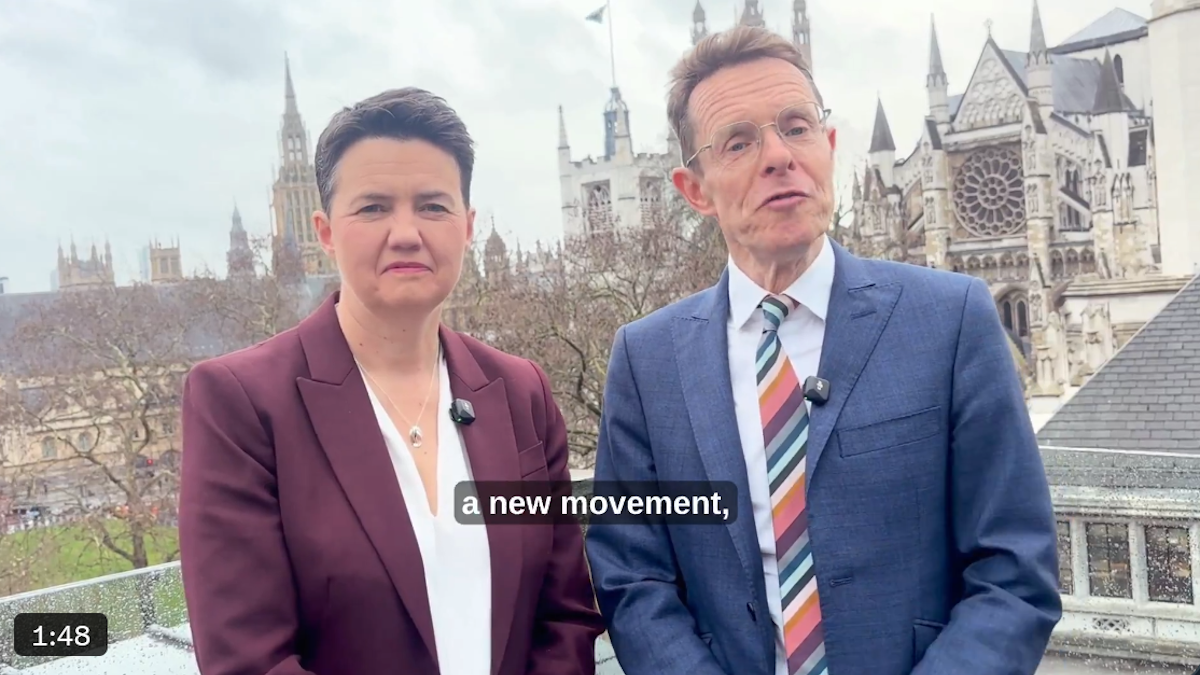
Binyamin Jayson is a writer focusing on UK politics and Conservative thinking.
I would classify myself as a true blue Tory; not turquoise, not orange.
To our right we have divisive populists; to our left, wets in denial. This article sets out why I oppose Prosper UK acting as a pressure group, despite my genuine sympathies with one-nation Conservatism. Like many who have joined Prosper, I am sceptical of Trump, uneasy about culture wars, and deeply opposed to populism that stokes division. But despite this I believe the emergence of Prosper UK, as it currently operates, is profoundly harmful to the Conservative Party.
Our political identity
It took over a year of serious thought for Kemi Badenoch to clearly articulate what the Conservative Party now stands for. That process mattered. You cannot persuade others until you know yourself.
At Conference, she set out a platform of low tax, low intervention, low regulation, lower immigration, and scrapping net zero. These are not radical departures. They are classic Conservative positions, and they are positions around which the party should feel confident rallying.
Some are uncomfortable with the sharper rhetoric on immigration and net zero. I understand that instinct. But rhetoric does not exist in a vacuum. It often reflects reality. And the reality of Britain in the mid-2020s is very different from that of the Cameron years.
The country has changed
Over the last five years, there has been a deep cultural, economic and political shift. To pretend otherwise, is to behave as though we are still living in the politics of the early 2010s, is not just naïve, it is political suicide.
Britain today is not Britain in 2010. The pressures are different. The data is different. The public mood is different. Serious Conservatism means responding to the facts on the ground, not retreating into nostalgia. Kemi’s ideas are not ideological indulgences. They are conservative answers to contemporary problems. And they are correct for the time.
Prosper UK and the centre that no longer exists
The goal of Prosper UK appears to be to drag the Conservative Party back to the “centre” as ConservativeHome columnist David Gauke makes clear today. But the centre has moved. The people pushing this project are stuck in the Cameron years, in denial about how much the political landscape has changed.
Even Labour has hardened its rhetoric on immigration. Not out of conviction, but out of necessity. That alone should tell us something. We do not need Prosper UK to help us discover our uniqueness. We are already distinct from Reform, and we are distinct in ways that matter.
Why we are not Reform
We are more fiscally conservative. Reform has a deeply divided economic base; Conservatives do not. That gives us the unique credibility to deal seriously with welfare reform, taxation, and the size of the state.
We reject identity politics. We judge people on the content of their character, not their skin colour, birthplace or religion. To our left and right are movements that obsess over identity rather than merit. We reject populism. We do not inflame anger to win votes. We do not trade in grievance, toxicity or division. We have a coherent plan to deal with the issues our nation faces.
And crucially, we do not need to prove we are different from Reform by moving leftwards. That is a category error. Our distinction is already clear.
We should stick with clarity not switch to compromise.
We should not abandon our principles to lure back figures like Rory Stewart. Nor should we chase Reform voters by mimicking Reform rhetoric. We are not Liberal Democrats. We are not Reformers. We are Conservatives.
That means believing there has been a climate change while recognising that Britain currently lacks the financial capacity for a full net-zero project. It means recognising immigration can be positive, while admitting that two decades of near-open borders have shattered social cohesion and eroded a national identity.
It means believing in tearing away red tape so businesses can innovate, employ and grow. It means incentivising start-ups through low corporation tax. It means creating an environment where wealth is not driven offshore, but invested at home. It means a small state that actually works. It means tackling inflation and unemployment through making a more suitable environment for businesses. It means confronting Islamism head on. And it means being transparent with the electorate.
That is my Conservatism.
Unity, not psychodrama
Kemi Badenoch has, at last, found her feet. It would be deeply unhelpful if, at precisely this moment, she is forced to fight another internal faction, this time to her left. At Prosper’s launch, Andy Street argued the party needed to communicate a more economy-focused approach. But that is exactly what Kemi has been doing. In recent months, the Conservatives have spoken more about the economy than any other issue, and rightly so.
One-nation Conservatives must understand this: we can be economically focused while also speaking clearly about immigration, net zero, and the failure of certain institutions. These are not contradictions at all.
If Prosper UK works with Kemi; supporting her leadership rather than pressuring her to retreat to an imaginary centre-ground, then I would enthusiastically welcome that. That is how we build a winning coalition.
But if Prosper exists to force policy change, it will alienate members, fracture the party further, and push a second wave of MPs and activists into the arms of Reform.
That would be a gift to our opponents.
It is incumbent on Conservatives to unite behind the values and policies Kemi has set out, and to make the case for them with confidence.
Enough with the psychodrama. Enough with the factions. The country is in a position too precarious to hand over to incompetent delinquents in Reform or incompetent delusionals in Labour.
Britain needs a serious, robust, centre-right voice; one that believes in a small state, strong borders, fiscal discipline, and national cohesion. Let’s unite as Conservatives.
True Conservatives.

5 min read
Disagreement over a proposed duty of candour has held up Keir Starmer’s Hillsborough Law. As the government and campaigners try to find a solution, the legal profession is now warning that the legislation risks delaying justice for victims failed by the state.
Last month, a group of Labour MPs forced the government to withdraw the Public Office (Accountability) Bill — widely known as the Hillsborough Law — from the parliamentary agenda after campaigners complained that its scope was too narrow.
It includes a duty of candour, which obliges public officials to tell the truth and be transparent during investigations into national disasters like Hillsborough.
In 1989, 97 Liverpool fans were crushed to death during a match against Sheffield Wednesday at Hillsborough Stadium in Sheffield. The families of the victims have fought for justice and police prosecutions ever since.
In December, an Independent Office for Police Conduct (IOPC) report said twelve officers would have faced gross misconduct proceedings over their actions in the disaster if they were still serving. The report, which followed a 13-year IOPC investigation, described “fundamental failure” and a “concerted effort” by police to blame fans for what happened on 15 April 1989.
Starmer says the law will be remembered as “one of the great acts of this Labour government”. Those close to the PM say the legislation matters deeply to him. At last year’s Labour Party conference, he was introduced on stage by long-term Hillsborough campaigner, Margaret Aspinall, who lost her 18-year-old son at the disaster.
As things stand, the proposed duty of candour does not extend to the intelligence services, as the government believes that doing so could undermine national security.
Labour MPs and campaigners have warned that this is insufficient and are pushing ministers to look again at the scope.
Anneliese Midgley, Labour MP for Knowsley, who once worked for Starmer, said the Bill couldn’t progress without the confidence of the Hillsborough families. “This is a real red line for many other colleagues and me,” she told PoliticsHome.
“There has got to be heads banged together, it cannot be beyond the wit of so many clever people to get something which is workable.”
At the same time, however, lawyers are warning that the Hillsborough Law, while well-intentioned, could effectively create what they describe as a new legal industry, slowing down justice, rather than speeding it up.
Under the draft Bill, bereaved relatives would qualify for free legal aid at inquests, to ensure that they have the same legal representation as public bodies. Ministers say that wider access, also described as ‘parity of arms’, is essential for fairness and creating a level playing field.
However, government officials privately admit that the cost implications for departments will be significant. They point to the example that coroners’ inquests are funded by local authorities, whose budgets are already under pressure.
The first Hillsborough inquest was the longest in British legal history at the time, lasting more than a year. On that occasion, all families were represented by a single lawyer, whereas the Hillsborough Law would grant legal representation to each victim family.
Michael Wills, who sat on the independent Hillsborough inquiry, believes “there is no way” that the government will work through these questions quickly.
“They [ministers] are going to argue, and then what’s going to happen is the officials will get together quickly, then they’ll argue. Then they’ll go away, they’ll go back to ministers. Then the ministers will meet. Then it will go to the Prime Minister,” he told PoliticsHome.
“How long is this going to take before they even start with the legal aid?”
Others worry about the wider impact the law could have on how Whitehall works.
Oliver Carroll, Legal Director at Bird & Bird, told PoliticsHome he is concerned that by “increasing administrative pressures and the risk of litigation against public bodies”, the legislation will lead to more cautious government decision-making.
Maria Eagle, Labour MP for Liverpool Garston and herself a lawyer, said it would be wrong to view her profession as the key to delivering justice for victims of state-related tragedies like Hillsborough.
“I’m not against people getting legal representation when it matters to them,” she said.
“But the idea that that is what solved Hillsborough is a delusion. The idea that if only there had been more lawyers at an earlier stage, Hillsborough wouldn’t have gone wrong, is just refuted by the facts.
“It wasn’t any legal process that got to the truth of Hillsborough. It was a non-legal process, the Hillsborough independent panel. It was a transparency process that had no lawyers involved. The thing that held up the families getting to the truth was legal actions that went wrong and didn’t work.”
A government spokesperson said: “This Hillsborough disaster will remain in our national consciousness for its tragedy and disgraceful injustice.
“Our legislation will right these wrongs, changing the balance of power so the state can never hide from the people it is supposed to serve, and making the police, intelligence agencies and the whole of government more scrutinised than they have ever been.
“As we have done throughout this process, we are taking the time to get this right — working with families and campaigners to create a Bill that is testament to their decades of campaigning, while never compromising on national security.”


1 min read
Keir Starmer has scrapped plans to postpone dozens of local elections.
MPs were told on Monday that elections in 30 local authorities will now go ahead after having been delayed until 2027.
The government later confirmed the decision, with a Ministry of Housing, Communities and Local Governmentspokesperson saying it was due to legal advice.
“Following legal advice, the government has withdrawn its original decision to postpone 30 local elections in May.
“Providing certainty to councils about their local elections is now the most crucial thing and all local elections will now go ahead in May 2026,” they said.
In a letter seen by PoliticsHome, the government was warned by lawyers that the decision to delay some local elections would be illegal.
Nigel Farage’s Reform UK had launched a legal challenge against the move to delay elections in the 30 areas.
The 7 May elections, which will take place in councils across England, as well as to the Scottish and Welsh parliaments, are expected to be bruising for Starmer’s Labour Party.
More follows…

New TUC analysis reveals that the average woman effectively works for 47 days of the year for free and only starts earning from 15 February compared to the average man. The analysis reveals that the gender pay gap currently stands at 12.8%, the equivalent of £2,548 a year for the average woman worker.
That means that at current rates of progress, it will take 30 years – until 2056 – to close the gender pay gap.
The union body says a number of factors are driving the pay gap – including women having to work part-time to accommodate for extended caring responsibilities throughout their lives, therefore taking a significant pay cut.
The TUC says the government needs to do more if it wants to meet its ambition to close the gender pay gap. More opportunities for people to share caring responsibilities, improved access to flexible working and better access to childcare must all be part of the solution.
Gender pay gap spans across industries
The pay gap persists across different industries, and even in jobs dominated by female workers, such as education and care:
- In health care and social work the earning gap is 12.8%. This means that the average woman effectively works for free for 47 days.
- In education the earning gap is 17%. So the average woman effectively works for free for 62 days.
- In wholesale and retail the earning gap is 10.5%, meaning 38 days that the average woman effectively works for free.
- The longest wait for Women’s Pay Day comes in finance and insurance. The gender pay gap (27.2%) is the equivalent of 99 days, meaning women work for free until 9 April 2026.
Gender pay gap by age
The TUC analysis shows that the gender pay gap affects women throughout their careers, from their first step on the ladder until they take retirement. The pay gap is widest for middle-aged and older women:
- Women aged 40 to 49 have a gender pay gap of 16.2%. So they work 59 days for free until 28 February 2026.
- Women aged between 50 and 59 have the highest pay gap of 19.7% and work the equivalent of 72 days for free, until 13 March 2026.
- Women aged 60 and over have a gender pay gap of 17.7%. They work 65 days of the year for free and effectively start earning from 7 March 2025.
The TUC says the gender pay gap widens as women get older, due to women being more likely than men to take on unpaid caring responsibilities throughout their lives, limited childcare and social care provision, and too few good quality flexible jobs.
Older women take a bigger financial hit for balancing work alongside unpaid caring responsibilities throughout their lives – often looking after children, older relatives, and/or grandchildren.
Need for change
Gender pay gap reporting: the TUC says government plans through the Employment Rights Act to make employers publish action plans to tackle the gender pay gap are welcome. But it says they must be more ambitious and robust to make a real difference.
The union body also says these plans will serve as a blueprint for broader action on forthcoming ethnicity and disability pay gap reporting, which the government has pledged to introduce. And it stresses the importance of getting the framework right from the outset.
Parental leave: the TUC says that the government must ensure the parental leave review delivers increased access to paid parental leave so that mums and dads can share care better.
TUC general secretary Paul Nowak said:
Women have effectively been working for free for the first month and a half of the year compared to men.
Imagine turning up to work every single day and not getting paid. That’s the reality of the gender pay gap. In 2026 that should be unthinkable. With the cost of living still biting hard women simply can’t afford to keep losing out. They deserve their fair share.
The Employment Rights Act is an important step forward for pay parity for women. It will ban exploitative zero hours contracts, which disproportionately hit women and their pay packets. And it will make employers publish action plans for tackling their gender gaps. But these plans must be tough, ambitious and built to deliver real change, otherwise they won’t work.
Let’s be clear – the government needs to turbo-charge its approach, or women will continue to lose out.
Featured image via the Canary

Somerset town and village merger scrapped after insufficient local support

Analyst Warns BTC Price May Fall to $10K as Crypto Bubble Implodes
Olympic figure skater Ilia Malinin speaks out about 'vile online hatred' after falling twice in final


-

 Sports5 days ago
Big Tech enters cricket ecosystem as ICC partners Google ahead of T20 WC | T20 World Cup 2026
-
 Tech6 days ago
SpaceX’s mighty Starship rocket enters final testing for 12th flight
-

 NewsBeat7 days ago
Mia Brookes misses out on Winter Olympics medal in snowboard big air
-

 Crypto World6 days ago
U.S. BTC ETFs register back-to-back inflows for first time in a month
-

 Tech2 days ago
Luxman Enters Its Second Century with the D-100 SACD Player and L-100 Integrated Amplifier
-

 Video3 days ago
The Final Warning: XRP Is Entering The Chaos Zone
-

 Crypto World6 days ago
Blockchain.com wins UK registration nearly four years after abandoning FCA process
-

 Crypto World3 days ago
Bhutan’s Bitcoin sales enter third straight week with $6.7M BTC offload
-
 Crypto World5 days ago
Pippin (PIPPIN) Enters Crypto’s Top 100 Club After Soaring 30% in a Day: More Room for Growth?
-

 Video4 days ago
Prepare: We Are Entering Phase 3 Of The Investing Cycle
-
Sports7 days ago
Kirk Cousins Officially Enters the Vikings’ Offseason Puzzle
-

 Crypto World6 days ago
Ethereum Enters Capitulation Zone as MVRV Turns Negative: Bottom Near?
-
 NewsBeat23 hours ago
The strange Cambridgeshire cemetery that forbade church rectors from entering
-

 Crypto World5 days ago
Crypto Speculation Era Ending As Institutions Enter Market
-

 Business4 days ago
Barbeques Galore Enters Voluntary Administration
-

 Crypto World4 days ago
Ethereum Price Struggles Below $2,000 Despite Entering Buy Zone
-

 Politics6 days ago
Why was a dog-humping paedo treated like a saint?
-
 NewsBeat1 day ago
Man dies after entering floodwater during police pursuit
-

 Crypto World3 days ago
BlackRock Enters DeFi Via UniSwap, Bitcoin Stages Modest Recovery
-

 NewsBeat2 days ago
UK construction company enters administration, records show