

Politics
US drops charges against Israeli whose illegal biolab left neighbours ‘deathly ill’

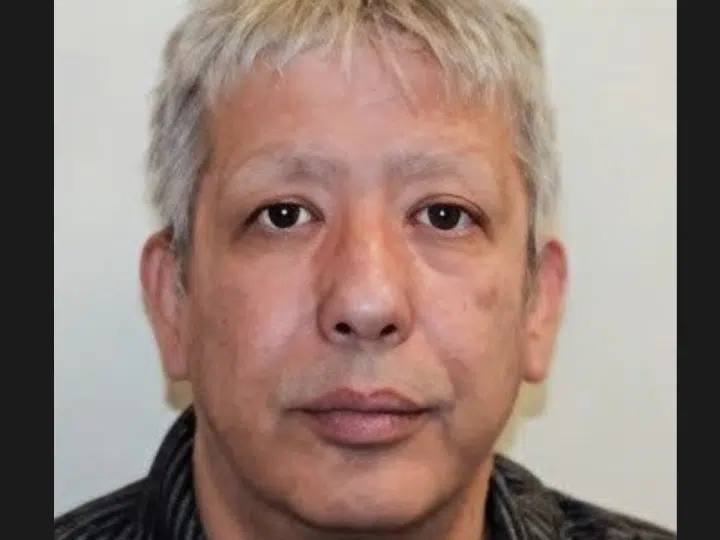

The US government has dropped all federal charges against Ori Solomon, who is now free to leave the US and return to Israel.
Solomon’s hidden, illegal biolab in a rental lock-up left neighbours and the police who entered it “deathly ill”. However, the only charges he now faces relate to illegal waste disposal.
The official story now is that the lab was making unlicensed “medical testing kits”. Those, however, do not commonly make people “deathly ill”.
US operates revolving door of impunity
The US has a track record of turning a blind eye or dropping cases in order to allow Israelis to return to the colony. Notably, senior cyber-spy Tom Alexandrovich was allowed to flee to Israel in 2025 after meeting several US intelligence officials while in custody.
Alexandrovich had been caught in a paedophile sting operation as he arranged to meet a child for sex. The pro-Israel US law official who allowed him to flee has a history of genocidal comments. Israel is harbouring well over 2,000 accused or convicted paedophiles and refuses extradition requests.
It has also assisted a number of accused war criminals to flee back to the colony when they were pursued by justice groups for their crimes in Gaza.
False flags
Solomon’s arrest in February came as Israeli and pro-Israeli mouthpieces raised fears of supposed Iranian chemical or biological attacks on US soil. They attempted to pressure the US into attacking Iran, as it ultimately did.
The occupation has a long and confirmed history of ‘false flag’ attacks for political gain.
Featured image via X/ Las Vegas Locally
By Skwawkbox

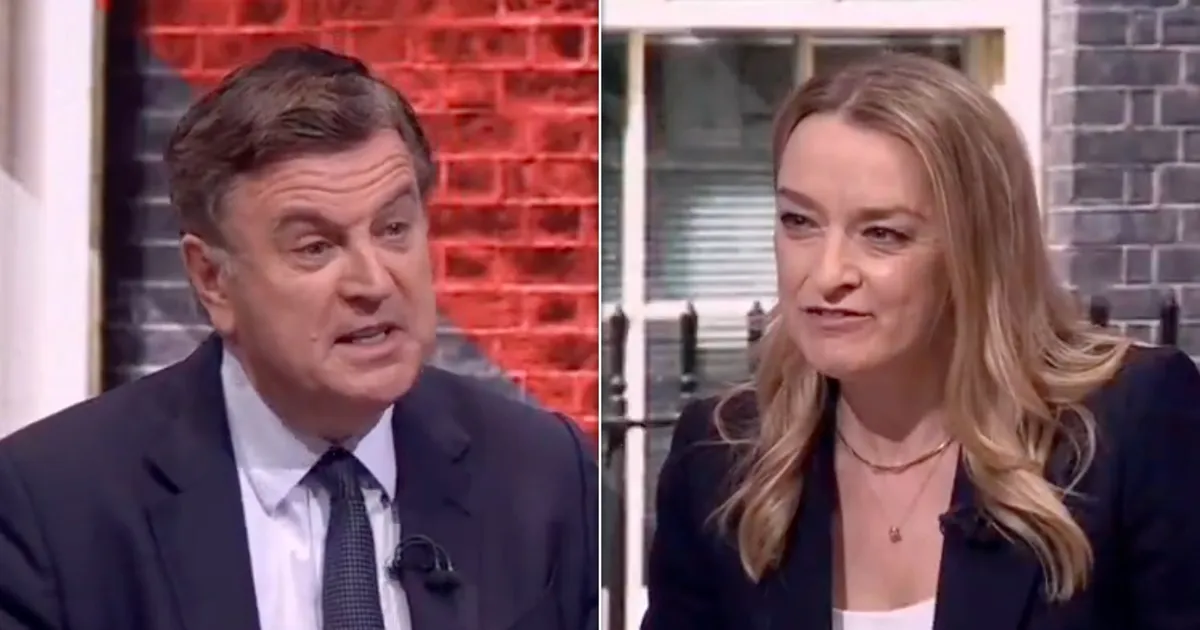
Laura Kuenssberg put a top Conservative under the microscope on Sunday with a brutal reminder of just how poorly the party did in the Makerfield by-election.
Labour’s Andy Burnham secured the north-west seat on Thursday with 54.8% of the vote while Reform UK’s Rob Kenyon came in second, with 34.5%.
The rising far-right group Restore Britain secured 6.8%, equal to 3,111 votes while the Conservatives’ Michael Winstanley came in fourth with just 997 votes – 2.2% of the vote share.
That means the official opposition lost their £500 deposit, as they secured less than 5% of the vote.
On her BBC show, Sunday with Laura Kuenssberg, the presenter asked shadow chancellor Mel Stride to defend the shocking performance.
But the Conservative MP deflected by talking about the Aberdeen South by-election result, where the Tories took a seat from the SNP last Thursday.
“First win in a by-election in Scotland since 1967,” he said. “It shows what good, clear, policy offering can deliver.”
He continued: “In Makerfield, that has been a Labour stronghold for about 100, 120, years. I think the big story was actually the weakness of Reform in the face of that challenge…”
“But in 2019, you got 34% of the vote in Makerfield,” Kuenssberg reminded him. “This time you got 2%.
“In those kinds of parts of the country, that suggests you’ve gone way back.
“A leader like Boris Johnson had a hope in those in kind of constituencies.
“Under Kemi Badenoch, it doesn’t seem like you do.”
He replied: “In 2019, we swept away a number of red wall seats and that was not one of them. That has been historically Labour and solidly Labour for a very long time.”
“So it’s OK that you got 997 voters, then?” Kuenssberg said.
But Stride replied by once again referring to Reform UK’s performance, insisting they were coming down in the polls.
“They’re not surging [in popularity] the way they were last year, but you don’t look competitive yet,” she replied.
Nigel Farage’s party has long tried to position itself as the real opposition to the government by displacing the Conservatives.
But Reform UK struggled to compete against Burnham in Makerfield, making it the third straight by-election loss for the party after separate contests in Gorton and Denton, and Caerphilly.
Listen to Commons People, the podcast that makes politics easy. Every week, Kevin Schofield and Kate Nicholson unpack the week’s biggest stories to keep you informed. Join us for straightforward analysis of what’s going on at Westminster.

The return of warm weather means the return of open-toed shoes, drawing attention to just how your feet look after a long fall and winter.
Beyond pumice stones and at-home foot peel masks, some people choose to focus on the aesthetics of another part of their feet: their toes. Specifically, their toe hair.
The amount of hair on your toes depends on a variety of factors. In rare cases, your toe hair can even offer a peek into your health.
Below, doctors share what you should know about the hair on your toes and how to safely remove it if you choose.
Having hair on your toes is perfectly normal, and just how much you have often depends on genetic factors.
Hair on toes is normal – it’s neither “good” or “bad,” said Dr. Natasha Bhuyan, the vice president of in-office care and national medical director at Amazon One Medical.
“It really just indicates your genetics, your hormones, factors that you often can’t influence,” she said. The amount of hair you have on your toes may also vary depending on your ethnic background.
What “normal” toe hair looks like for one person can look completely different for someone else.
“Everyone’s normal is different, but hair on toes is normal,” said Dr. Michael Richardson, a family medicine doctor in Boston. “Just because you have hair on your toes doesn’t mean that’s abnormal.”

Westend61 via Getty Images
Blood flow issues can cause a loss of toe hair
“Toe hair is not going to be the first sign if something is going wrong,” Richardson said, “but if you’re noticing that it’s less than normal for you, that could be signs of something damaging that area.”
Loss of toe hair could be from contact damage, which can happen if there’s lot of friction against shoes. “I’ll see that in runners, for example,” said Richardson.
“There are instances where the hair on your toes could change because of other factors, like if you’re taking a medication that influences hair growth … steroids can sometimes cause hair growth,” Bhuyan said.
Changes in blood flow can also affect the amount of hair on your toes, which is a concern.
“If there’s decrease in the vasculature, so any damage to the blood vessels – we’ll see this with peripheral artery disease – where the blood is just not circulating as well, the tissue isn’t as healthy and can’t grow hair,” Richardson said.
In the place of hair, the toes will have a smooth, shiny look, Richardson said.
You may also notice issues related to poor circulation, like cold feet or pain when walking, Bhuyan added. This tends to be more common in older adults and smokers.
“But more often than not, toe hair is going to be normal. If you don’t know where to go, it’s always a good idea to talk to your doctor,” Richardson added.
If you do want to remove the hair, keep a few things in mind
If you want to remove the hair on your toes, it’s perfectly safe to do so, as long as you follow the right methodology.
“I would say the safest method to remove hair when it’s sparse … just tweezing it is the best,” said Bhuyan, before adding that the tweezers should be cleaned before doing so.
“Some people will do things like shaving. I think if you do the typical shave with warm water, use a gel, that’s fine, just to minimise ingrown hairs,” Bhuyan noted.
You can also try hair removal creams, but if you do that, do a small patch test first, “because some people can have reactions to hair creams on their skin,” she said. If you want a long-term solution, you could also do laser hair removal or electrolysis.
In the end, it’s OK to remove the hair on your toes; it doesn’t serve a health purpose, Bhuyan said.
Politics
Two-Thirds Of Brits Believe Brexit Has Made Every Issue They Care About Worse, Survey Finds
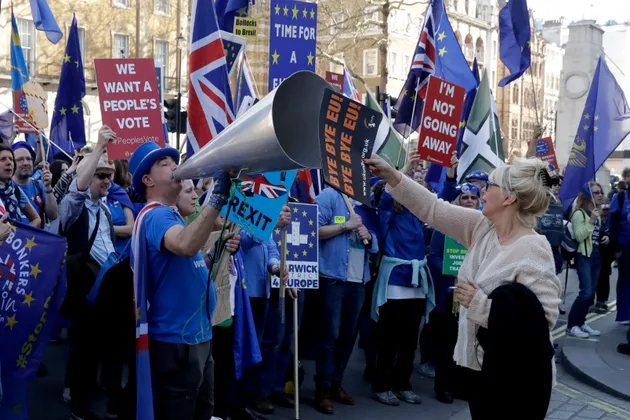
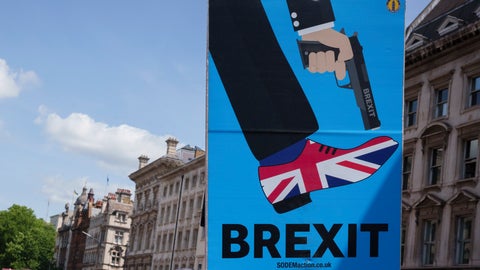
 A supporter of Britain’s departure from the European Union, at right, holds a placard up in front of supporters of remaining in the EU, including Stop Brexit Man, Steve Bray, with his foghorn, outside Parliament in London, Wednesday, Feb. 27, 2019.
Two-thirds of Brits think Brexit has made every single issue they care about worse, a new survey has found.
A poll from YouGov and Mandate Research for the European Council on Foreign Relations (ECFR) has revealed that 66% of the general public think leaving the EU was “negative” for the UK.
They believe leaving the bloc has made issues such as the cost of living,economic growth, opportunities for young people, trade and managing illegal immigration harder.
Three-quarters (75%) of Brits now want a closer relationship with the EU, according to the poll, including 49% of Reform UK voters.
A further 63% of Brits, including a large proportion of Reform UK and 2016 ‘Leave’ voters, would now accept return of freedom of movement in return for a closer trading relationship with the EU.
Even opposition to UK involvement in a European army has decreased, with 43% of respondents supporting the idea.
Almost two-thirds (63%) want the government to focus on improving relations with the EU over links with the US.
Only 66% of Leave voters say they would vote to stay out of the EU in any new referendum.
It’s been almost exactly a decade on from the 2016 referendum on the UK’s membership in the EU.
Hundreds also marched through London on Saturday calling to rejoin the EU.
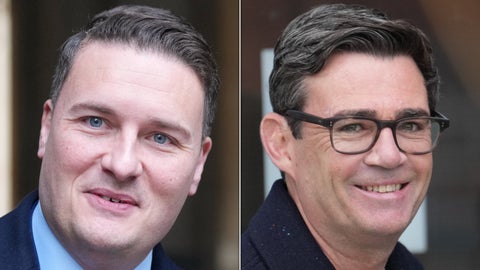
The survey comes as Andy Burnham is expected to challenge Keir Starmer’s leadership in the coming days after winning the Makerfield by-election.
He said last September that he wanted to see the UK back in the EU within his lifetime, but he has since pledged not to “re-run” Brexit arguments.
Co-founder and director of the European Council on Foreign Relations, Mark Leonard, said Brits are realising Brexit has “undermined” the UK’s ability to respond to other pressing issues.
He said: “Ten years ago, Brexit was the insurgent vehicle for a nation rejecting the status quo.
“However, a decade on, Brits realise their hopes for a better life outside the EU are going unfulfilled and that Brexit is undermining the UK’s ability to manage the issues voters care about most.
“This data shows that the vast majority of citizens is open to a closer relationship.
“Rather than refighting the battles of 2016 the government must push or a new relationship with Europe that speaks directly to the everyday concerns of citizens on cost of living, migration and security.
“Rather than talking about red lines we should have a green light to a debate about how Europe can help rebuild the UK and its global influence for the 2030s and 2040s.”
Listen to Commons People, the podcast that makes politics easy. Every week, Kevin Schofield and Kate Nicholson unpack the week’s biggest stories to keep you informed. Join us for straightforward analysis of what’s going on at Westminster.
Related…


Starmer is reportedly considering resigning on Monday (Alamy)
3 min read
A cabinet minister has admitted that Keir Starmer is taking time to think through “the political realities” facing him amid a growing expectation that he will agree to resign.
Business Secretary Peter Kyle said he had a “thoughtful conversation” with the Prime Minister on Friday in which Starmer asked for his view on what his next steps should be.
Speaking on Sunday with Laura Kuenssberg this morning, Kyle also said that he was not going to be “delusional” about the situation Starmer is in, admitting that he did not know “full fact” what the next few days would bring.
Kyle said that the conversation he had had with the PM on Friday was “very thoughtful” and “professional”: “[Starmer] led through a conversation about the challenges our country faces, about the political issues which are unfolding at the moment, and asked my views.”
The cabinet minister did not deny that Starmer could agree to stand down.
Asked by Kuenssberg if it was still the case that Starmer would fight any leadership challenge, as he insisted on Friday, Kyle said the PM was “fighting for our country”.
“He’s also making time this weekend to try and reflect on the political challenges that he faces, our country faces, our party faces.
Asked again if the PM would fight a leadership challenge, Kyle said: “These are decisions for Keir to make, and that’s why I said that he is taking the time, as well as dealing with all the issues that a Prime Minister deals with over a weekend, a very busy weekend, he’s also taking the time to think through what the political realities are today compared to last week, the week before.”
The Observer has reported that Starmer will announce a resignation plan on Monday amid growing pressure from Labour MPs.
The PM has repeatedly insisted he would fight any challenge against his leadership.
However, Andy Burnham’s landslide victory in the Makerfield by-election on Thursday has put greater pressure on Starmer’s position, with large numbers of Labour MPs pushing for Burnham to take over.
Sky News reported this morning that Foreign Secretary Yvette Cooper had told Starmer to stand down. Several cabinet ministers, including former Labour leader Ed Miliband, are also reported to have encouraged Starmer to set out a resignation timetable.
Former minister Jess Phillips told Kuenssberg that it felt like “we have come to the end of the road”.
However, while some in Labour would like to see Burnham become leader unchallenged, PoliticsHome reported on Friday that there are some who remain loyal to Starmer who would put forward their own candidate and trigger a leadership contest if that PM did not stand.
Burnham, who must resign as Manchester mayor now that he is an MP, will arrive in Westminster on Monday and is expected to meet with Labour MPs as part of his push for No 10.
Former defence secretary and Labour peer Lord Hutton told Kuenssberg that it would be important for Starmer’s successor to have a proper plan in place, warning that “personality politics will get you to the end of the day but not to the end of a five-year government.”
Hutton said that Burnham needed to “map out” clearly how he would tackle the issues facing the country, as “the challenges would be the same”.
He also admitted that it would be “a challenge” for Burnham to replace Starmer without going to the polls for a general election.

4 min read
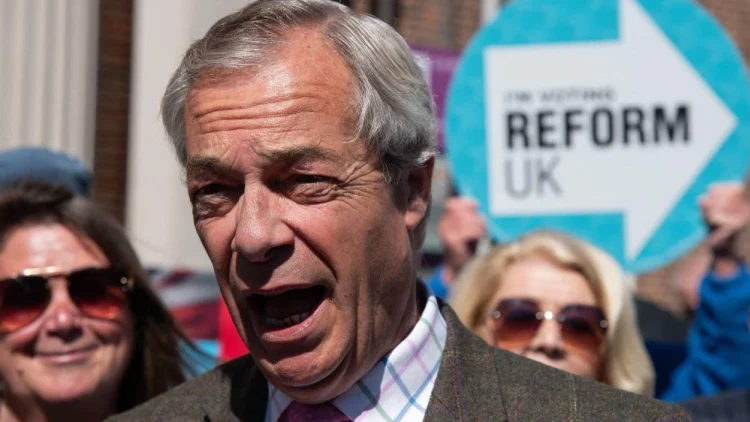
Reform UK is now grappling with the challenges of multi-party politics.
Governments rarely increase their vote share in by-elections. Turnout is usually well below that of a general election, and the stakes are lower. The Makerfield by-election was by all metrics unusual. Commentators speak of voters ‘sending a message’ to an incumbent government through the by-election ballot box. In Makerfield, the message they wished to send seems to be that they were happy to have Andy Burnham not only as their representative, but to effect change in the country’s leadership.
In local elections held in the Makerfield area just a few weeks ago, Reform had won half of the votes cast, and the seat would be high on any target list for the party at a general election (Makerfield is 29th on a list of the most marginal seats where Reform was in second place in 2024). But on Thursday, the party managed only a small increase on its 2024 share – a disappointing result when Reform’s national polling has doubled in the intervening period.
Reform was quick to suggest that the Burnham campaign had capitalised precisely on the ‘anti-Starmer’ sentiment that it had mobilised effectively in the local elections. Polling from Convergent Opinion for Persuasion UK suggests that Reform retained most of its 2024 voters and also won over around 1 in 10 2024 Labour voters.
But it faced two issues that resulted in its performance being below expectations.
Firstly, for the first time, Reform faced a significant challenge on its ‘right’. The newly formed Restore Britain, led by ex-Reform MP Rupert Lowe and whose key policy is the deportation of immigrants, contested its first election outside of Lowe’s home turf in Great Yarmouth.
It was able to secure almost 7 per cent of the vote, drawn almost exclusively from those who had previously voted for Reform. Not sufficient in this instance to cast them as ‘spoilers’, the combined Reform plus Restore vote would still be 10 percentage points short of that won by Labour, but a sign that it could cause problems for Reform where the margins are tighter.
That they [Tory voters] might be willing to vote for Labour in some circumstances is an important yet overlooked factor in an evolving party system
A second – and possibly more important – factor for the prospects of Reform at a general election is that it was unable to gobble up the Conservative vote in its entirety.
Polling suggests around half of the 2024 Conservative vote went to Reform on Thursday, but a small group of Conservative voters were willing to vote for Labour. Data from the British Election Study immediately after the 2024 election showed that around 15 per cent of those who had voted Tory would ‘vote against’ Reform. That they might be willing to vote for Labour in some circumstances is an important yet overlooked factor in an evolving party system.
Analyses of contests at all levels since 2024 have highlighted a ‘block’ structure to voting: Labour, the Liberal Democrats and the Green Party forming a ‘left’ block, and the Conservatives and Reform on the ‘right’.
Those in the ‘left’ block, veterans of tactical voting campaigns, have been comfortable moving between these parties to deny Reform high-profile victories in key by-elections such as Caerphilly and Gorton & Denton. This was again evident in Makerfield, with both the Lib Dem and Green shares of the vote collapsing and costing the parties their deposit.
However, for the time being, the ‘right’ block remains less willing to consolidate around a single party.
And key to the shape of future contests is what happens to the remaining Conservative vote – if it continues to fragment along multiple lines, the smaller fragments (those willing to vote Labour, Lib Dem, Green or simply stay home) will be crucial in shaping the competition between ‘blocks’.
Critically, Reform now faces precisely the same sort of dilemma the Conservatives and Labour have wrestled with in a multi-party system: how to hold on to voters on one flank without losing them on the other. Perhaps an even more thorny problem for a party unable to lean into a unifying position on economic issues.
Often, the significance of a by-election for the direction of politics is only obvious with hindsight. Chesham & Amersham on a similar June day in 2021, revealed key trends in anti-Conservative voting that proved critical to the 2024 election.
While the significance of Makerfield may not need the benefit of hindsight, the lesson to be learned may be that in multi-party politics, there are no easy answers for any political party with ambitions to form a majority government.
Paula Surridge is deputy director at UK in a Changing Europe


Demands are growing for a political reckoning over ticket scams at the World Cup — and beyond.
The National Independent Venue Association and Fan Alliance, organizations representing and advocating for entertainment venues and artists respectively, sent a joint letter to Congress on Thursday, calling on lawmakers to ban speculative and ghost tickets, cases where resellers flog tickets they don’t actually have.
The letter — addressed to Speaker Mike Johnson, Senate Majority Leader John Thune, House Democratic Leader Hakeem Jeffries and Senate Democratic Leader Chuck Schumer — includes nearly two dozen accounts of fans who say they were scammed out of thousands of dollars trying to get tickets to the World Cup, which began last week. The groups are also asking fans to share their own stories with elected officials via the Fix the Tix Fan Action Center that launched last week.
“Every one of these stories erodes the public’s faith that consumers should and will be protected from fraud,” NIVA Executive Director Stephen Parker and Fan Alliance founder Donald Cohen wrote. “We urge Congress to work with us to prevent fraud like this in the future and finally enact ticket resale consumer protections that will protect Americans and ensure affordability.”
The letter flagged fans like Dacy Gillespie, who bought World Cup tickets for her sons on Christmas, only to learn on match day — months later — that the seller couldn’t deliver them. And Skylie Shore, who Parker and Cohen said spent well over $6,000 on tickets to the Scotland-Haiti match on June 13, but was forced to wait outside the stadium because she couldn’t access them as fans marched in on gameday.
“These examples reveal a consistent pattern: consumer deception, speculative ticket sales, and broken-hearted American families at the hands of resale ticketing companies like StubHub,” Parker and Cohen wrote.
In a statement, StubHub spokesperson Jack Sterne said that the platform does not allow speculative ticket sales, and blamed FIFA for users’ difficulty in accessing their tickets.
“We understand that attending the World Cup represents a significant investment in time and money, and we take our responsibility to every fan who books through our platform seriously,” Sterne said in a statement. “Many of the issues fans are facing trace back to the event organizer’s technology infrastructure, newly announced transfer restrictions, and a new app that was launched just a month ago.”
In response, FIFA said in a statement that the organization “can guarantee the validity and delivery of tickets purchased through its official platforms” and that FIFA.com/tickets “is the official ticket sales channel” for the tournament.
NIVA and Fan Alliance are urging congressional leadership to place universal price-gouging limits on ticket resale, enact stringent fines on perpetrators and a violation-reporting mechanism for ticket scams, and require secondary ticketing platforms to produce data on ticket fulfillment and consumer complaints.
The groups are not the only ones monitoring for evidence of shady ticket practices. Missouri Attorney General Catherine Hanaway issued a consumer guidance in advance of the tournament, urging match-goers to beware of fraud and promising to hold offenders accountable. And the FBI in May put out a public service announcement, warning fans against purchasing tickets on copycat websites modeled on FIFA’s.
“With the World Cup coming to Kansas City, excitement is high and, unfortunately, so is the potential for fraud,” Hanaway said in her statement. “Missourians should be able to enjoy this once-in-a-generation event without fear of being deceived. My office will hold accountable anyone who seeks to exploit our families, and we stand ready to assist anyone who encounters suspicious activity.”


While Curaçao’s players were training for their match against in Ecuador, government officials from the World Cup’s smallest-ever competitor hosted a two-day conference in Kansas City to promote it as a destination for American investment.
The Caribbean island of around 158,000 people located just north of Venezuela is a semi-autonomous part of the Kingdom of the Netherlands. It is not quite a country, but since the sporting world is treating it like one this month, the government is hoping foreign investors will give it a fresh look.
“Curaçao is now on an international stage, while we never thought we would be there … we want more people to know about Curaçao and invest,” Roderick Middelhof, Curaçao’s minister of economic development, told POLITICO.
After the team qualified for a World Cup spot last November, Curaçao’s government quickly began discussing how the tournament could showcase the island’s economic potential.
“When we knew that we would be going to the World Cup, the government sat together and said, ‘okay, we need to take advantage of this moment,’” Middelhof said. “It was actually together with other ministers that we thought, ‘okay, let’s organize meetings and show people what Curaçao is now, and what Curaçao will be in a few years with expansion and investment.’”
The Kansas City conference is one of several in World Cup cities organized by the economic-development ministry in parnership with CINEX, an agency that seeks to promote investment opportunities in Curaçao.
The events target companies interested in sectors ranging from energy and logistics to hospitality.
“[We invite] all companies that are interested in our oil sector and also other companies that are interested in international investment, so hotel owners, energy companies. For example, we had TOTAL; Epson was also there at one of the meetings,” Middelhof said.
“At the events we do a presentation about what Curaçao is and what Curaçao has to offer … to put Curaçao in the spotlight … around the World Cup,” he added.
Diversifying the economy beyond tourism is a key objective for the government, according to Middelhof. While tourism remains one of the island’s main economic pillars, he sees significant potential in Curaçao’s deep-water harbor, which could serve as a storage and logistics hub for international cargo, including oil.
“Our port is now really expanding, so the port of Curaçao is ready to provide storage space for other countries; it’s not just about tourism,” he said, adding: “Curaçao now has the chance to not only rely on tourism, we can strive for more … and show Curaçao is open for various businesses.”
Middelhof does acknowledge that the World Cup presents an opportunity to boost and further “stabilize” his country’s tourism sector, particularly as authorities pursue a target of 1 million stay-over visitors annually. Most tourists currently come from the Netherlands, reflecting the countries’ historical ties. However, Curaçao is increasingly looking to broaden its visitor base.
The island is already seeing increased international interest following its World Cup qualification, said Middelhof, pointing to a rise in Google searches and social media engagement.
“Curaçao is, for a little while, on everyone’s mind,” he said.
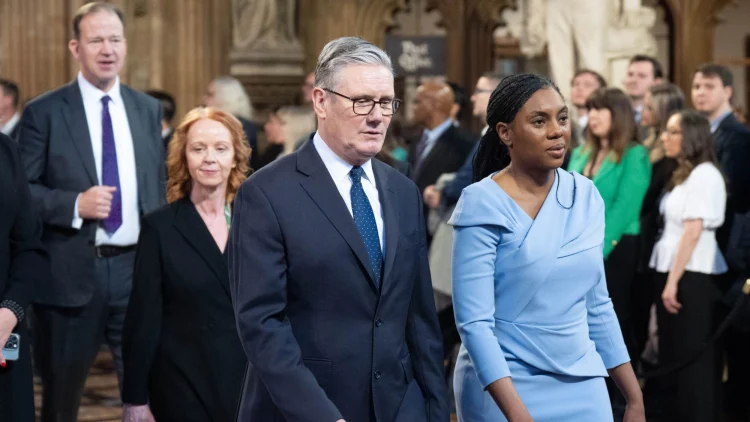

Keir Starmer and Kemi Badenoch, May 2026 (PA Images / Alamy)

5 min read
Both Labour and the Conservatives face existential challenges. Their hangups, obsessions and pathologies help explain why.
Though embattled Prime Minister Keir Starmer promised “change”, recent events are probably not what he had in mind. With the victory of Andy Burnham in the Makerfield by-election, we face the prospect of a seventh prime minister in 10 years.
We know that British political volatility is partly the result of deeper currents. Across Europe, the grand old parties of right and left cede ground to upstart rivals. In the UK, the tectonic plates of politics have been grinding away at the two-party dominance of Conservatives and Labour for decades. In the last 20 years, we have seen the resultant volcanic eruptions: SNP and Plaid Cymru governments, Brexit, and surges for Reform and the Green Party.
We also know, though, that it takes a lot for either of the two main parties to be replaced in Britain, due not least to the voting system. It is nonetheless a live possibility today because of the bungled responses of the Tories and Labour to these challenges.
Why have they got it so wrong? To misquote Tolstoy, each unhappy political party is unhappy in its own way.
Labour’s problem is that long-term changes in its voting base now sit very awkwardly with its sense of collective identity. The party’s activist and elected official class cling to an entrenched historical mythology of Labour as the political wing of the industrial working class. As the Instagram of Al Carns MP recently declared: “Labour was chiselled out of the mines, hammered out of the shipyards, forged in the factories.”
In their heart of hearts, therefore, many Labour figures would prefer a different electorate to the one they have. “We are in danger of becoming a party of the well-off, not working people,” Angela Rayner recently warned. She’s right to worry: both Reform and the Greens are performing more strongly among economically insecure voters than Labour. Crucially, however, the relatively poor of Britain are not homogenous.
Because of this hangup, Labour has reacted to the loss of voters in post-industrial towns by trying to fend off the Reform challenge. These were ‘hero voters’ for Labour strategists in the 2024 election, an attitude that helps us understand the party’s authoritarian turn on immigration in office. The problem, as political scientists have been screaming at Labour for some time, is that these electors have not voted Labour for ages, if ever in many cases, and showed no evidence (even in 2024) of turning to the party in large numbers.
Meanwhile, and predictably, the upshot of Starmer’s hero voter strategy has been a huge loss of liberal-leaning voters in the left bloc – including, crucially, economically precarious workers in the cities – to the Greens. The solution is not as simple as ‘pivot left’: voters are not that coherent. Still, Labour’s internal political culture suffers from hangovers about who the party is ‘of’ as well as ‘for’, and these have prevented a clear analysis of viable electoral strategies.
To misquote Tolstoy, each unhappy political party is unhappy in its own way
The Conservatives have their own fetishes from their past. A certain handbag-wielding prime minister looms large. But theirs are quite different. If Labour is the party that struggles with power, the Conservatives were, at least historically, the party of statecraft par excellence. Power, above all, is key for the Tories, and flexibility to obtain power is no bad thing.
The problem, however, is that this strong will to power, when not checked by other impulses, can prove destructive in the long run. Since the 2010s, the Conservatives have pursued Brexit, much lower immigration and culture war politics with increasing vigour. This was partly due to internal party management issues, but also clearly an attempt to retain power by seeing off the threat from Nigel Farage’s Ukip.
This instinct led to several successful elections, particularly 2015 and 2019. But the choices made in the process (a referendum on EU membership, a hard Brexit) have also gradually alienated large parts of the Conservatives’ electorate: the English middle classes.
The Conservatives in the 20th century drew support from a patchwork of social groups, from backwoodsmen to industrialists. The cliché may have been that the Anglican Church was the Tory party at prayer, but Thatcher’s Chancellor Geoffrey Howe used to quip that the Tories were the National Farmers’ Union at prayer.
Still, it was heavily dependent on clerks, senior civil servants, and the traditional professions. It is therefore surprising just how unconcerned Kemi Badenoch’s party appears to be about its catastrophic losses of the comfortable, southern English middle-classes. In the local elections, Richmond-upon-Thames became a one-party state for the Liberal Democrats, the most dramatic example of the risks of adopting short-term tactics that harm long-term political health.
Both parties, then, have distinct pathologies that have hindered their ability to navigate the treacherous ground of fragmented British politics. But there is one failing that they share: quality of government. Liz Truss was only the extreme example of a wider trend. In the decade since the Brexit referendum, the UK has not only cycled between prime ministers but also supposedly era-defining agendas (‘Levelling Up’, ‘Change’) that were manifestly incoherent and collapsed under pressure. Perhaps relatedly, the quality of legislative scrutiny in parliament appears to have declined.
Post-2008 stagnation, the shocks of the pandemic and the wars in Ukraine and the Middle East are the dominant explanations for the wicked policy challenges facing UK politics. But here, too, the once-dominant parties of Britain might want to look in the mirror.
Dr Colm Murphy is a senior lecturer in British politics at Queen Mary University of London
This really is the most extraordinary statement.

The short version is “We’re going to keep breaking the law every day while we think about whether we want it to apply to us or not”.
And the really depressing thing is that that’s very much par for the course in the world of the Scottish establishment. We already knew that if you’re powerful and/or rich, you can publicly admit a crime and the police and Crown Office will just look the other way.
We knew that the aforementioned Crown Office can preside over a malicious prosecution costing the country tens of millions of pounds and absolutely nobody will face any consequences for it, with those responsible simply carrying on until they walk off into retirement.

We knew that the head of the Crown Office can be found to have maliciously prosecuted someone, yet that person can have no legal redress whatsoever under the Scottish judicial system – a state of affairs which openly breaches European human rights law – and rather than accept a judge’s ruling and fix the law so that the Lord Advocate is no longer above it, the Scottish Government will appeal it to a friendlier judge so that Scotland can remain in breach of European law and justice can be denied.
We knew that the head of the Civil Service can conduct a grotesquely crooked and unfair persecution against an innocent man and not only face no sanctions but have her contract extended.

We knew that those well-connected to the Scottish Government can commit even the most flagrant level of demonstrable, indisputable perjury in a serious criminal trial and see the matter quietly kicked into the long grass indefinitely, even though there is only a single fact to investigate, and it’s already known what the truth of that fact is because it was established in open court.

And we’ve known for many years now that none of this can be challenged because the Crown Office is legally answerable to no-one and its head can simply do whatever the hell he or she likes, because even if they hacked the First Minister to death with an axe live on national television, all anyone could do would be report it to the police who would then pass on the decision about whether to prosecute to… the Crown Office.
But even knowing all THAT, there’s something breathtaking about the Scottish Prison Service being the subject of an excoriating, unequivocal judgment that it is breaking the law, and then breezily announcing that “Sure, judge, like that’s YOUR opinion or whatever, but to be quite frank we’re just going to carry on doing the unlawful thing for as long as we want because who’s gonna stop us? The government? LOLZ! The whole thing was their idea!”
And why wouldn’t they? The Scottish Government has after all spent years, vast amounts of legislative energy and millions and millions of pounds on its policy of putting male rapists in women’s prisons. It’s clearly still committed to that policy, since it fought this case, despite the fact that it was blindingly obvious in the wake of the Supreme Court judgment that it would lose – yet again – to For Women Scotland, who it continues to refuse even the basic courtesy of a discussion despite pledging to do so more than a year and a quarter ago.


Meanwhile it continues to hurl large sums of public money at organisations who spend that money on openly urging people and organisations to break the same law that the Scottish Prison Service has just been found in breach of.

So what are the chances that it’s going to call in the Scottish Prison Service and say “Look, we’ve had a lot of fun but you should probably do what the Supreme Court says now”?
That’s a rhetorical question, obviously.
Our country has been stolen by arrogant gangsters and there appears to be nothing we can do about it.
Our courts are a blunt knife. They’ve got all the guns AND all the badges.


In recent years, young people have become increasingly vocal about what they perceive to be profound injustices in society. Many of us are familiar with scenes of blue-haired trans activists, Black Lives Matter campaigners, pro-Palestinian demonstrators and climate activists – whether at universities or on social media – demanding to be heard at the top of their voices.
Increasingly, these activists aren’t content with howling down their opponents. They are also resorting to violence. We have seen this yet again with the brutal assault on right-wing activist Gregory Moffitt – known online as ‘Young Bob’ – on the streets of Manchester this week.
Young Bob – the self-declared ‘Christian pro-life remigration activist’ – was attacked on Market Street on Monday afternoon, repeatedly kicked and punched until he fell to the ground. The footage is shocking. Three of the alleged perpetrators have been arrested and bailed.
Young Bob had been hosting a debate stand wearing a Restore Britain cap, seated at a table bearing a sign that read: ‘Reform must be more radical. Change my mind.’ It was a nod to the motto of American conservative activist Charlie Kirk who was murdered while speaking at Utah Valley University last year.
Fortunately, Young Bob has recovered – an opportunity not given to Kirk. But the next victim may not be so lucky. Political violence is rising – and, increasingly, it is ‘progressives’ who are responsible for it.
Even before his assault, Young Bob was no stranger to cancel culture. Last month, while hosting a debate at the University of Bristol, as part of his ‘Change My Mind’ tour, he had a tub of curry thrown at him by a disgruntled student.
This exposes the intolerance of those who refuse to engage in open debate. And we must be under no illusions as to where this intolerance leads.
A further incident unfolded when Young Bob visited the London School of Economics last year, at the invitation of the university’s Conservative Association, to speak about the importance of social conservatism in Britain today.
He recounted that attendees were initially engaged – asking questions and taking pictures – until masked protesters barged in, seized materials and used megaphones to drown out the discussion. A classic case of the heckler’s veto.
The ability to debate in good faith has deteriorated sharply in recent years, as cancel culture has embedded itself across university campuses. Students and academics alike have faced abuse, harassment and ostracism for expressing perfectly lawful views.
What happened to Young Bob in Manchester is part of a wider pattern. Intolerance on university campuses is a breeding ground for political violence – a truth underscored, at far greater cost, by the assassination of Kirk.
Last year, a poll by Looking for Growth and Merlin Strategy found that seven in 10 people are concerned about political violence. Worryingly, one in five believe it’s acceptable under some circumstances.
Charlie Kirk’s warning that ‘when people stop talking, that’s when you get violence’ has never felt more apt. Britain is more divided than it has been in a long time. It is no coincidence that this has coincided with a free-speech crisis – most acute in higher education.
It’s time to call out cancel culture for what it is. It’s nothing to do with ‘being kind’. It’s about suppressing speech by any means necessary – including violence.
Max Thompson is the campaigns officer at the Free Speech Union.

Tyson Fury dismisses Oleksandr Usyk’s reason for refusing to face Moses Itauma: “Rubbish!”

Convoy co-founder Dan Lewis exits Microsoft to launch stealth startup aiming to reinvent AI supply chain

financially self elevated


-

 Business7 days ago
No Jackpot Winner as $257 Million Prize Rolls Over to $269 Million Monday Draw
-

 Fashion2 days ago
Weekend Open Thread: Miami – Corporette.com
-
 Crypto World7 days ago
Zimbabwe Requires Crypto Businesses to Register Annually Under New FIU Regulations
-
 Business1 day ago
Wall Street Week Ahead: Investors see Micron earnings as pulse check of AI rally momentum
-
 Entertainment7 days ago
Matt Damon’s Viral Sci-Fi Thriller Has Taken Over HBO Max
-

 Tech7 days ago
As AI companies race to go public, who else is along for the ride?
-

 Crypto World1 day ago
HIVE shares jump as $220M AI deal speeds Bitcoin mining pivot
-

 Business7 days ago
Anthropic staff to meet White House officials next week, Axios reports
-
 Crypto World7 days ago
Bitcoin could crash to $48,000, if this historical pattern is triggered
-
 NewsBeat7 days ago
what doctors are seeing in ebike crashes
-
 NewsBeat7 days ago
Warning of disruption as Cardiff Crossrail works to start
-
 NewsBeat7 days ago
Tributes to former deputy head teacher at Cambridge school among death and funeral notices
-
 Entertainment7 days ago
Kate Middleton Glare Goes Viral After Kids Booed At Royal Event
-

 Politics7 days ago
“Israel’s” ban on ICRC visits ruled illegal, but Knesset moves to stop them permanently
-

 News Videos7 days ago
Financial Accounting | Last Day Revision Strategy and Booster | CMA Inter – June 2026
-

 Crypto World7 days ago
XRP ETFs Outperform As Bitcoin And Ethereum Funds Extend Outflow Trend
-

 Tech7 days ago
Over 400 Arch Linux packages compromised to push rootkit, infostealer
-

 Business7 days ago
Invesco Quality Income Fund Q1 2026 Commentary
-

 NewsBeat7 days ago
Singer Oliver Tree dies aged 32 in helicopter crash in Brazil
-

 Sports7 days ago
Dick Advocaat’s Curacao scores first-ever World Cup goal against Germany
You must be logged in to post a comment Login