
Politics
Vance offers olive branch to pro-Israel Republicans in closed-door speech

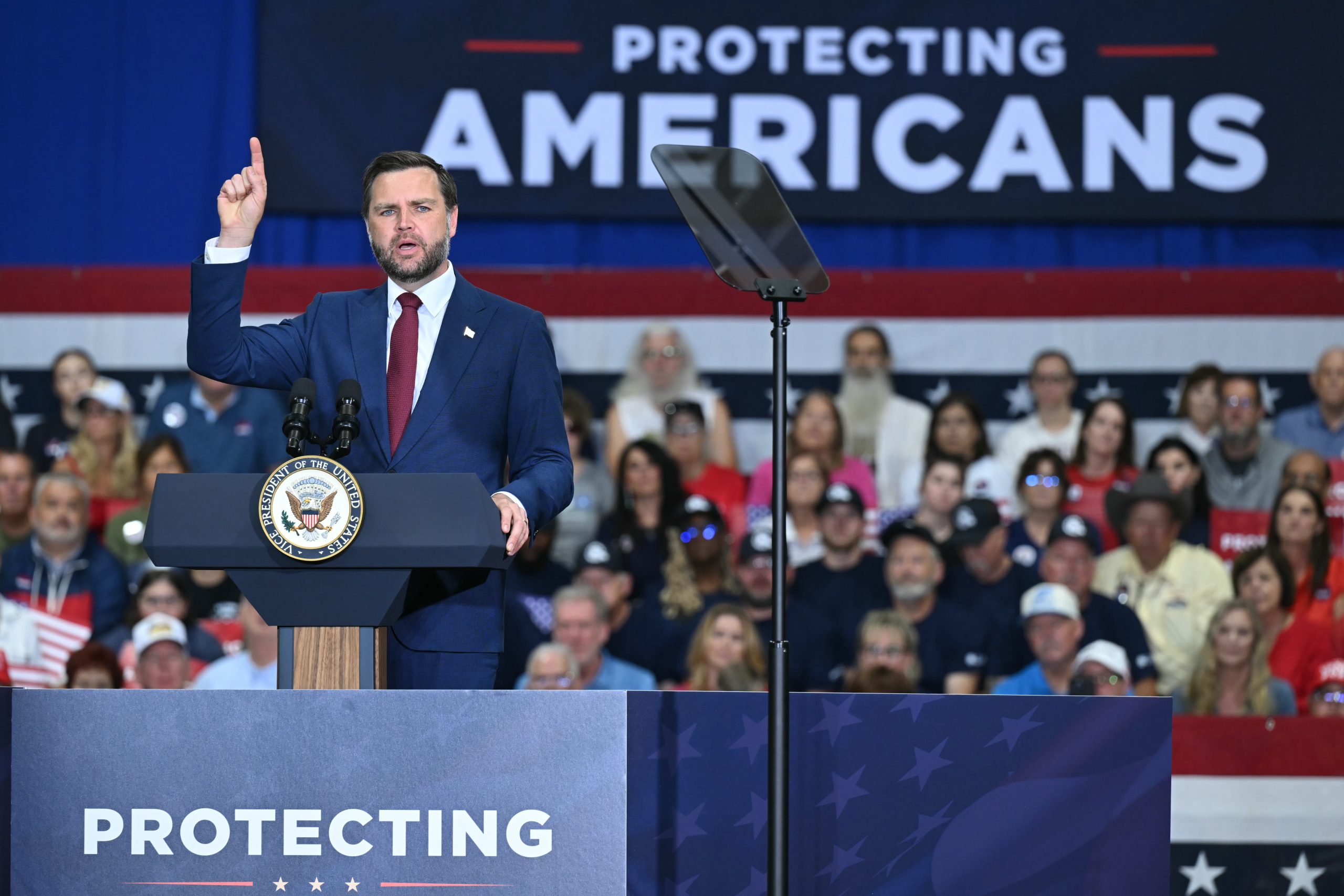

LAS VEGAS — Vice President JD Vance has faced skepticism from some in the Jewish Republican community. He waded directly into the fray Monday — and was met with raucous applause.
In a closed-door appearance at the Republican Jewish Coalition leadership summit, Vance addressed what he called the “elephant in the room”: Israel’s plummeting favorability among young Americans, according to one people in the room for Vance’s speech, granted anonymity to describe an off-record conversation, and audio of the event obtained by POLITICO. Vance also discussed rising antisemitism.
“There is a growing suspicion among, I would call it, under-40s of the U.S.-Israel relationship,” Vance said in a moderated conversation with former Sen. Norm Coleman (R-Minn.), chair of the RJC board. “I think my view is, what we have to do is articulate why this is in the best interest of the United States of America, and actually get out there and talk about the ways in which it is in the best interest of the United States of America.”
Vance noted that Republicans must “talk about the concrete alignment of interest and to hook a relationship on that, rather than something that may have made a lot of sense rhetorically 30 or 40 years ago, but just doesn’t have … the same purchase as it did 30 or 40 years ago because the country is different and because young people are looking at this in a different way.”
Vance’s appearance at the annual RJC confab — hosted at the Venetian Resort, developed by the late GOP megadonor Sheldon Adelson — came as a surprise to many in the pro-Israel community, with which Vance has shared a sometimes tumultuous relationship. Vance, the current frontrunner for the Republican presidential nomination in 2028, will likely need to shore up support from the community to succeed Trump.
The hesitancy toward Vance among some in pro-Israel circles boiled up in recent months over Vance’s dovishness on the Iran war and his criticism of Prime Minister Benjamin Netanyahu’s Israeli government. But other concerns go back further, centered on his longtime relationship with Israel-skeptical pundit Tucker Carlson and the way he’s addressed antisemitic incidents or statements.
Some pro-Israel megadonors, like billionaire hedge fund manager Ken Griffin, have already signaled they’d support Secretary of State Marco Rubio in 2028 over Vance. (Neither Vance nor Rubio have announced whether they’ll seek the presidential nomination, though Rubio has stated he will not run if Vance does.)
But Vance’s speech was met with applause inside the cavernous convention hall where it was delivered, and praise outside of it.
“He hit a home run with the crowd,” Sen. Jim Banks (R-Ind.) told reporters after the speech, noting Vance received “several standing ovations.”
The Jewish community has “a great ‘bullshit detector,’ to understand when they’re being pandered to,” said Matt Brooks, CEO of the RJC. “And I don’t believe that anybody will come away from this meeting thinking that they were pandered to. I think they will come away from this conversation with a sense that the vice president really gets it and gets us.”
Last year, the RJC’s leadership summit was centered on combatting antisemitism within the Republican Party, and leaders took aim at Carlson and others. Vance has been an ally of Carlson’s, and when Coleman asked Vance about podcasters like Carlson, Vance gave a winding answer.
“I recognize a lot of people in this room may disagree with things that Tucker Carlson or Megyn Kelly or Joe Rogan have said,” Vance said, before focusing on Rogan and Fuentes, saying they are “two very, very different categories of people.”
“I think it’s a mistake to sort of say we’re going to write Joe Rogan off because he said something that we don’t like,” he said. “I think the best approach is to actually go in there and talk to him and make the argument as best as you can.”
Vance directly condemned some antisemitic theories like blood libel, saying it is the exact opposite of the Christian gospel. He said that Jew-hatred is “corrosive to the soul.”
And echoing other speakers at the two-day RJC summit, Vance declared that former Rep. Mike Rogers (R-Mich.) is the most important Senate candidate this cycle, and urged those in attendance to support him in his race against Democratic nominee Abdul El-Sayed.
Earlier Monday, Vance rallied alongside Rogers at a Michigan event hosted by MAGA Inc., Trump’s super PAC, before flying to Nevada. His cross-country itinerary signaled his seriousness in courting the Jewish donor community, suggested Robert Schostak, an RJC board member.
“I think it’s great that he’s here. This is not easy,” said Schostak, the former Michigan GOP chair. “He cares about the fight of antisemitism, and the support for Israel. If this was secondary to him, he wouldn’t be here.”
Ari Fleischer, an RJC board member and a former White House press secretary, agreed. “Today is not primary day,” he said. “But I think today was progress day for JD Vance with the Jewish community.”



Andy Burnham has pledged to reform social care (Alamy)
3 min read
Within days of entering No 10, Andy Burnham pledged to end decades of drift and fix Britain’s broken social care system. His government is committed to delivering a “National Care Service” that is fully and sustainably funded.
This is a bold pledge – such reform is likely to be complex, politically contentious, and most of all, expensive. Election campaigns have turned and political careers foundered on similar promises. It is nonetheless encouraging because it presents a chance for genuinely transformative policymaking to restore Britain’s social contract, as I argue in my report for the Social Market Foundation today.
There are a number of potential models for a nationally funded social care system – it could be funded through national taxation like the NHS, or from a dedicated levy; a mandatory social insurance system, like in Japan and Germany; or a system similar to Theresa May’s could draw more heavily on housing wealth. All these would entail raising significant revenue when the tax burden is high and the cost of living is rising, but there are advantages as well.
Any new system must be nationally funded. Currently, old age social care provision is a duty of local authorities, and a major contributor to the parlous state of local government finances. Councils in England spent around £9.2bn from their own budgets on old age social care in 2024-25; that’s 22 per cent of all council tax receipts. These rising statutory costs have forced councils to cut non-essential services to the bone, leaving them less able to respond to local priorities and undermining local democracy.
The burden is not distributed equally or fairly. Nine of the 10 councils spending the smallest proportion of their council tax on old age social care are in London, with the highest-spending authorities concentrated in lower-income parts of the North and Midlands. Though it sounds counterintuitive, a purely national funding system for old age social care would help Burnham deliver on his pledge to put power and resources back in the hands of local communities. Councils would be free to spend the cash they raise on local services, and local councils, rather than central government, could determine spending priorities.
This could allow the PM to finally sort out England’s outdated, inefficient and unfair council tax system. Based on home valuations from 1991, the system has fallen dangerously out of sync with the distribution of wealth. Absurdly, Buckingham Palace incurs a lower council tax bill than a typical three-bedroom semi in Hartlepool. Council tax is deeply unpopular – one study ranked it last among 23 possible tax-raising measures.
The main barrier to council tax reform has been the fear that revaluation will generate a backlash from those required to pay more, particularly in London. Even if most bills were lower, the geographical concentration of “losers” would make for a serious political problem for any government, let alone a Labour administration holding 59 London seats. If, however, old age social care was funded nationally, council tax reform need not be revenue neutral. A reformed local tax system needing to raise £9.2bn less could be more rational and progressive without large swathes of the country paying significantly higher bills.
Our new report examines this possibility, finding that multiple models of council tax reform become more politically feasible in this scenario. Under the most politically feasible model, this social care saving at lower bands could cut the share of households facing higher bills from 35 per cent to just 4 per cent. In London, the number falls from 2.24m to around 670,000.
Rather than undertaking one difficult and politically dangerous reform, Burnham might be better off attempting two simultaneously.
Barney Dowling is a researcher at the Social Market Foundation


Allies of Texas GOP Senate hopeful Ken Paxton are planning a $15 million ad campaign starting Tuesday, the first major ad buy on behalf of Paxton in his battleground matchup with Democrat James Talarico.
Two new ads from Lone Star Liberty PAC, the pro-Paxton super PAC, will air across 18 markets across Texas over the ensuing two weeks. They mark Paxton’s first significant foray on to the airwaves, jolting a campaign that has been clouded by concerns over Talarico’s massive cash advantage and Paxton’s electability.
One of the new ads will lean into Paxton’s record as attorney general, highlighting Texas’ recent agreement with Kellogg’s to remove certain food dyes from cereals and the state’s billion-dollar settlements with Meta and Google over privacy and safety concerns.
“When they come after Texans, he comes after them,” a voiceover says in the ad.
The other new advertisement accuses Talarico of aiding China’s growth at the expense of Texas residents, pointing to the Democrat’s vote against restrictions on Chinese investments, and argues that a Chinese billionaire’s ownership of land near Laughlin Air Force Base presents national security concerns.
“China’s got Talarico. Texas needs Ken Paxton,” the ad says.
“[James Talarico] voted to sell Texas land to China, pushed a Texas Green New Deal that would gut our oil and gas jobs, and stood with criminals over cops as the most pro-criminal member of the Texas House,” Lone Star Liberty spokesperson Sam Cooper said. “That record is too extreme for Texas. Between now and Election Day, voters are going to hear it.”
Talarico’s campaign did not immediately respond to a request for comment.
The multimillion-dollar campaign comes as Republicans look for ways to negate Talarico’s war chest. The latest Federal Election Commission filings from July show Talarico with $21.5 million in the bank, dwarfing Paxton’s $1.8 million in reserves.
That advantage, along with Paxton’s drawn-out primary runoff that forced him to focus on beating Sen. John Cornyn, has allowed Talarico to dominate the general election messaging battle on television. He’s spent $39 million on TV since the March primary, according to data tracking firm AdImpact.
On Saturday, Talarico launched his first negative ad against Paxton, spotlighting his impeachment and labeling him “the most corrupt politician in Texas.”
Although Republicans have traditionally been favored in Texas statewide elections, Democrats are optimistic Talarico can defeat Paxton. A Texas Public Opinion Research poll released Thursday found Talarico leading Paxton — 48 percent to 42 percent.
Concerns about a potential Paxton defeat have prompted some Republicans to implore President Donald Trump to invest some of the gargantuan MAGA Inc. war chest in the Texas race. MAGA Inc. has over $400 million in cash on hand, and Trump publicly pledged to support Paxton financially.

If you ever feel dumb, just remember there are people out there who think Ali G is a pisstake out of the black community. If you ever fret that your grey matter has seen better days, perk yourself up with the reminder that there are folk so stupendously thick, so utterly unburdened by wit, that they think Sacha Baron Cohen’s mockery of white men is an attack on black men. I promise, nothing will make you feel smarter than watching half-wits and arseholes yelp ‘Racism!’ over a caricature of wiggas.
The Ali G controversy really does have it all, doesn’t it? It’s like a singularity of woke, a blinding collision of the dead-eyed literalism and funereal humourlessness of every virtue-draped muppet who calls himself ‘progressive’. No sooner had it been announced that Cohen was resurrecting his best-loved character – well, we loved him in the Nineties, when we weren’t all mentally ill – than ‘the left’ was polishing its pitchforks for a good old-fashioned orgy of censorious hysteria. It’s so 2019!
The thing that stirred the cancel-culture ghouls from their thin slumber is a new movie called Ali G: Who Iz I? It’s a faux-documentary in which we catch up with Ali G mingling with unsuspecting members of the public while spitting black patois and adorned in absurdly outsized ‘ghetto wear’. He sports dreadlocks now and a rastacap. G, of course, is a white dude from the dreary commuter town of Staines in Surrey whose real name is Alistair Leslie Graham and yet who loves putting on a durag and saying ‘Iz it coz I iz black?’. Because it’s a pisstake of tragic white men. Lordy, how many times.
The trailer – which looks great to me, not least because it has comic genius Morgana Robinson as Ali G’s knocked-up girlfriend – has triggered unholy caterwauling among the wit-impaired. It’s being ‘slammed as racist’, reports the Hollywood Reporter. X is a riot of the dumbest people alive accusing Ali G of doing ‘blackface’. These are the same bozos who watch Blazing Saddles – Mel Brooks’ gloriously profane satire on racism – and say: ‘Is this racist?’ No, it isn’t, you’re just very, very dim.
Apparently, the joy-starved literalists who live among us have fired off nearly 40,000 emails to cinemas begging them not to show Cohen’s blasphemous movie. You’re telling me there are tens of thousands of people in my society who are so pathologically vain they think they have the right to annihilate any culture that bruises their porcelain psyches and that I should be worried about a comic doing a Jafaican accent? Nah, you’re all right. People who want to save us from ‘offence’ are infinitely more scary than people who want to expose us to it.
If you watched the trailer for Ali G: Who Iz I? and thought to yourself ‘This is anti-black’, I don’t even know what to say to you. All the targets of the mockumentary ribbing in the trailer are white. That was always the core of Ali G: to milk for laughs the paralysing liberal guilt of stiff white people. He’d ambush establishment figures who were so terrified of appearing uncool or bigoted that they’d nod along to any old gibberish rather than risk calling out an ‘urban’ kid. Blackface? Bollocks. That crude old ‘humour’ was about ridiculing powerless black people; Ali G ridicules our eggshell culture that was built by the powerful.
The Ali G storm speaks to the impossibility of humour in the sterile wastelands of woke. Literalism and fragility are the enemies of comedy. A generation trained to take offence, to unpick every novel, painting, TV show and gag for even the faintest whiff of unwitting bigotry, is never going to be amused by anything. I recently saw a clip of Gen Z’ers being horrified by Little Britain’s Marjorie Dawes as she fails to understand the perfectly understandable Indian woman in a sari in her weight-watchers class. Imagine watching that and thinking it’s mocking Indian women rather than a certain kind of tone-deaf middle-class woman – rarely have I despaired more over the state of our education system.
There’s hypocrisy, too. There always is. The same people who need a lie-down over Ali G will tell you that a 6’2” cock in a frock is literally a woman and you’re Hitler if you say otherwise. They’ll whoop as male comics with estrogen-bloated moobs take to the stage to crack spectacularly unfunny jokes about the struggles of being a woman. ‘Blackface’ bad, womanface good. We’ve also seen radical Muslims raging against Ali G and his ‘racist’ fancy dress. If you don’t mind, I think I’ll get my lectures on sartorial sins from people who don’t shove women into black binbags. Sackface is a far larger problem than blackface.
What could it be about this chap Mr Cohen that Islamists – and their suicidal simps on the silver-spoon left – hate so much? It’s a mystery, isn’t it? Actually, it’s not. That’s the final ingredient in the Ali G storm: anti-Semitism. Spend five seconds on social media and you’ll see green-ink frothing about what a scummy Zionist Cohen is, and how he might even be an agent of Mossad, and how he’s definitely a Muslim-hater because all Zio-Nazis are Muslim-haters, right? I’ve said it before: scratch an Israelophobe, find a fascist.
It’s so clear now: reports of the death of woke were greatly exaggerated. For here it is, noisily re-spawning in a riot of stupidity, hypocrisy, autocracy and racism. Don’t let them win. Go and see Ali G. Laugh with the Jew who makes prigs and bigots lose their shit. Booyakasha.
These are strange days, readers.

It’s getting hard to tell who’s on which side.
To be honest, we’d take George Foulkes’ offer in a heartbeat. It’s not ideal, because there should be no limits on democracy, but the UK government can perfectly lawfully deny another indyref indefinitely anyway (and seem entirely inclined to), so we’d be losing nothing, and according to polling we’d be starting from a winning position.
His tweet was responding to this Daily Record editorial:

…to which the SNP’s army of online dolts have responded with predictable fury despite it being a remarkable concession from the firmly Unionist newspaper. The Record didn’t say the VOTE in the referendum should have to be over 60%, just that sustained polling over that level should be the trigger for the referendum to HAPPEN.
(And since polls have a margin of error and the change option usually falls away on polling day, it would represent our best chance of winning anyway.)
But as Unionists hold out apparent olive branches and (frankly unearned) opportunities for real and measurable progress towards the SNP’s ostensible goal, how is the SNP responding?


With a deafening chorus of “WE CANNAE DAE IT!”
In the last 72 hours, senior SNP figures including the FM have insisted that:
(1) they won’t do a deal with Reform to get a referendum,
(2) that any route that isn’t a referendum won’t work, and
(3) that even if a legislator from the current governing party of the UK comes out and explicitly OFFERS a second referendum, they’re going to put their fingers in their ears, pretend it never happened and just pray that he goes away.
That’s pretty much every possible road towards independence rubbished and closed down. Even uber-loyal idiot comic The National is struggling to grasp it all.


Which is understandable, because it makes no sense. After years of simply stalling on the pursuit of independence, the SNP now appears to be in full headlong retreat, running for the hills as fast as their legs will carry them with the Daily Record and George Foulkes and Reform running after them going “Come back! Don’t you WANT a referendum?”
But the SNP won’t hear a word of it. “Please, please, please don’t let us get what we claim to want”, they wail.
Because these days of unending power, money and status without responsibility ARE their good times, and they don’t want anything to change.

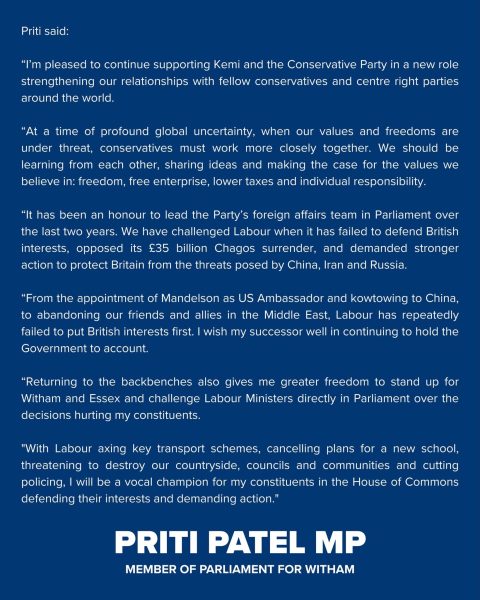
Dame Priti Patel former Home Secretary, and recently shadow Foreign Secretary issued a statement on Sunday 30 August saying she was leaving the shadow cabinet to take up a new role for the Party.
Her statement followed days of speculation about her future in Kemi Badenoch’s top team, and a Telegraph story suggesting that Tom Tugendhat MP will be made shadow Foreign Secretary in any imminent reshuffle Badenoch is about to make.



Republicans and Democrats are fighting over working class voters. Americans don’t believe the rhetoric.
Fifty-five percent of Americans think politicians are just trying to win votes when they say they will help the working class, according to new results from The POLITICO Poll. It’s a view held by majorities of people who voted for President Donald Trump, who voted for Kamala Harris and who self-identify as working class.
Only one in four Americans who self-identify as working-class say politicians genuinely want to help them.
That wariness comes as both parties increasingly see working class voters as key to their winning coalitions. But The POLITICO Poll results show both parties face serious challenges to doing so.
Neither party does particularly well with Americans who identify as working class: 38 percent of them say Democrats best represent them, while 32 percent say Republicans. Americans, broadly, are almost identically split, with a 37 percent plurality saying Democrats best represent the interests of the working class, while 30 percent say Republicans.
Democrats wrestling with how to win back voters who have drifted toward the GOP — as their coalition has grown increasingly dominated by college-educated Americans — are locked in an intraparty battle over which wing of the party, progressives or moderates, best speaks to these voters.
“We’ve struggled with the working class for quite a while and it’s been a combination of being out of touch with working class values on a lot of culture issues and being seen as either not helpful or not helpful enough on economic issues,” said Jim Kessler, executive vice president for policy at the centrist Democratic think tank Third Way.
Sen. Bernie Sanders (I-Vt.), widely considered the leader of the progressive movement, told Playbook’s Will Steakin that progressive Democrats “are speaking to the needs of working families.”
“It is not just traditional Democrats or independents,” he said. “There are a lot of working-class Republicans who understand that there’s something wrong when we are the only major nation on Earth not to guarantee health care to all people.”
Republicans, meanwhile, are trying to hold onto the gains Trump made in 2024 with working class voters — including Black and Latino voters frustrated with the Biden-era economy — at a time when cost of living remains voters’ top concern.
“With the [Iran] war, with gas prices, with cost of food, the working class is not happy with the president, and many who are independents and even some Republicans have said that he’s forgotten about them,” said former Ohio Republican Rep. Jim Renacci.
Who is working class?
Complicating both parties’ efforts to win over these voters is that Americans do not agree on what makes someone working class. Neither do lawmakers and party officials.
When asked whether the term “working class” describes them, a 59 percent majority of Americans broadly say it does, while just 31 percent say it does not, according to the survey conducted by London-based polling firm Public First. But when forced to choose from a list of labels — including wealthy, middle class, lower middle class, working class and poor — just 16 percent of adults say they identify as “working class.”
Americans are also divided over what characteristics define the working class.
Some politicians, including progressive New York City Mayor Zohran Mamdani and Andy Schor, the centrist Democratic mayor of Lansing, Michigan, have argued the definition of working class is expansive — encompassing anyone who needs to work to pay their bills.
“If you’re not making enough money that you don’t have to work, then you’re working class,” said Schor in an interview. “The American Dream is to be able to work hard and get ahead, and people are not getting ahead like they used to, and they’ll look at the folks that they vote for and think, ‘Who can help me to get ahead?’”
The POLITICO Poll illustrates the difficult path for the GOP to solidify its gains with working class Americans as economic concerns continue to be top of mind: More than a third of this group say they are not currently employed. A 35 percent plurality also say Trump, not former President Joe Biden, is fully responsible for the economy and many oppose the war in Iran, which most say has made things more expensive for them.
Half of self-identified working class Americans say Trump has spent too much time focusing on international affairs instead of on domestic issues.
“I think [Republican candidates] just got to tell the truth,” Renacci, the Ohio Republican, said. “You just have to start realizing that those middle class voters are struggling and they’re just looking for somebody who’s going to understand their issues and problems.”
The race for 2026
November will offer a major test of whether each party’s working class pitch is working, carrying implications that extend into 2028.
Candidates in both parties are racing to flex their working class bonafides this cycle, leaning on their biographies to signal ties to these voters. Trump pushed that playbook to extremes in 2024, when he briefly worked the fryer and drive-through window at McDonald’s as part of a campaign swing through Pennsylvania.
Republicans have continued that approach, with candidates and administration officials emphasizing their blue-collar roots on the campaign trail. Vice President JD Vance recently returned to his hometown of Middletown, Ohio, where he spoke at the steel plant where his grandfather worked.
In battleground Georgia, Rep. Mike Collins — the state’s GOP Senate nominee — often touts his background as a trucker. And GOP Sen. Susan Collins has broken with Trump on tariff policy, saying his trade fight with Canada hurts working families and small businesses in Maine, where she’s locked in a competitive battle for reelection.
These efforts come against the backdrop of increasing concerns about the economy, fueled by the ongoing Iran war.
Democrats, meanwhile, are divided over which flank of the party can best appeal to working class voters, a fissure that burst into public view during primary season, when a slate of progressives prevailed in high-profile contests.
“The working class are giving Democrats another look and we better not blow it,” said Kessler of Third Way. “Donald Trump got reelected based on the notion he was going to fight for you, working class men and women, and his first year and a half has been anything but that.”
Some Democrats have made their working class background central to their pitch: Sam Forstag, a union leader and former smokejumper, is running in an open district in western Montana that Trump won by double digits in 2024. Bob Brooks, a firefighter union chief, is challenging GOP Rep. Ryan Mackenzie in Pennsylvania.
But some progressives are still running into limits: In Michigan, one of Democrats’ must-hold seats in November, the state’s divisive Senate primary illustrated that debate in real-time. Progressive Abdul El-Sayed, who won the Democratic nomination, performed best in the state’s wealthiest and most highly educated areas, while moderate Rep. Haley Stevens did better in places with lower average incomes and where fewer votes have college degrees.
Jessie Blaeser contributed to this report.
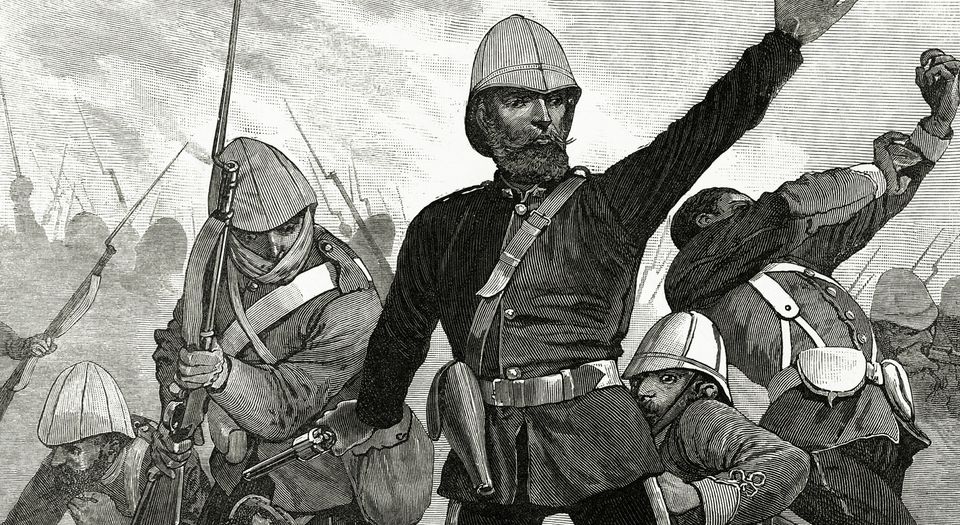
The debate over how we teach the British Empire has become one of the most polarising arguments in modern British education. Some insist the empire was a force for progress – ushering in parliamentary institutions, the rule of law, global trade and modernity. Others emphasise its violence, exploitation and the long shadow it casts over current-day inequalities.
What is striking is not that these views exist, but that arguments about empire increasingly sit within wider disputes about national identity, race, belonging and how Britain understands its past. We ask students to understand one of the most complex forces in world history, yet we are too often urged to present it as a single story.
This is why Parallel Histories, where I am the CEO, is launching a new eBook series on the British Empire. We believe that contested history should be taught as contested. The empire is not a morality tale with a single lesson – it is a vast, contradictory and deeply human story. To teach it responsibly, we must teach it from both perspectives – its architects and its subjects, those exercising power and those living under imperial rule, its beneficiaries and its victims, its triumphs and its traumas. These are competing claims that must be tested against evidence. The task is not to weigh benefits against harms, but to test competing claims about how empire was justified, how it was experienced and how it should be understood today.
The British Empire was never one thing. It was a global system that spanned continents and centuries, shaped by millions of people with competing motives and experiences. To reduce it to either a celebration or an indictment is to flatten the past into propaganda. Students deserve better.
From the imperialist British perspective, the empire was often justified as a civilising mission, a commercial enterprise or a strategic necessity. Many believed they were spreading law, order and modernity. Some saw it as a source of national pride and global influence.
From the perspective of the colonised, the empire could mean dispossession, racial hierarchy, economic exploitation and cultural suppression. It could also mean collaboration, adaptation, resistance and the forging of new identities under pressure.
When students encounter these perspectives side by side, something powerful happens – they begin to think critically. They learn that history is not a set of answers, but a set of arguments. They learn to weigh evidence, question assumptions and recognise bias – including their own. They learn that people in the past, like people today, acted from mixed motives and lived with unintended consequences. They test claims against evidence, look at sources, draw inferences and confront contradictions between different interpretations.
The current debate about the empire often collapses into a tug-of-war between nostalgia and condemnation. But the real problem is not about which side wins – it is that students are rarely shown that there are other sides at all.
When we teach only the positive story, we risk producing students who cannot understand why the empire remains a source of pain and anger in many parts of the world. When we teach only the negative story, we risk producing students who cannot understand why the empire was supported by so many at home and abroad, or why its legacy is still defended today.
In both cases, we produce citizens who are poorly equipped to navigate the complexities of modern Britain – a country whose multicultural fabric, global relationships and political debates are all shaped by imperial history, and shaped by the decisions we the British took after the end of empire. A single story creates fragility. Parallel stories create intellectual resilience.
Our approach is simple but transformative: we present students with competing historical narratives, each grounded in primary sources, and ask them to interrogate both. We do not tell them what to think. We teach them how to think. Students investigate the evidence from one perspective and argue from that position, and then switch to do the same from the alternative contested perspective. The strength of this process is that it requires students to weigh evidence and test conclusions.
In our British Empire programme, students encounter British politicians defending imperial expansion as a moral duty alongside Indian nationalists describing the economic devastation of colonial rule. They read about African leaders negotiating between collaboration and resistance, and Caribbean voices reflecting on slavery, emancipation and identity. British soldiers, missionaries, merchants and administrators explaining their motives in their own words, alongside anti-colonial thinkers articulating visions of freedom and self-determination.
Students then analyse and debate from these perspectives – not to endorse them, but to understand them. They learn that history is constructed, contested and alive. This method does not dilute the truth – it deepens it. It does not avoid controversy – it equips students to handle it. It does not impose a narrative as much as it empowers students to build one.
We live in a moment when public discourse is increasingly polarised, when social media rewards outrage over understanding and when young people are bombarded with simplified narratives about complex issues. Teaching contested history through parallel perspectives is not just an academic exercise – it is a democratic necessity.
When historical judgements become markers of political or cultural allegiance, enquiry becomes harder. Parallel Histories separates scrutiny from allegiance: students argue from one interpretation, switch to the competing interpretation and then reach their own judgement.
If students cannot grapple with the contradictions of the past, how will they grapple with the contradictions of the present? If they cannot understand why people disagree about history, how will they understand why people disagree about politics, identity, or justice today?
The British Empire is not just a chapter in a textbook. It is a living force in our national story. To teach it honestly, we must teach it in full. The question is not whether the British Empire was good or bad. The question is whether we trust students enough to let them decide for themselves.

4 min read
“PR’s time has definitely come – because I think the world we are in now demands a new politics. It demands a new approach.” That was Andy Burnham speaking at Labour Party Conference almost a year ago.
Listening and waiting to speak alongside him in support of electoral reform, I couldn’t agree more: we are at a turning point, and Labour must deliver change before the crunch.
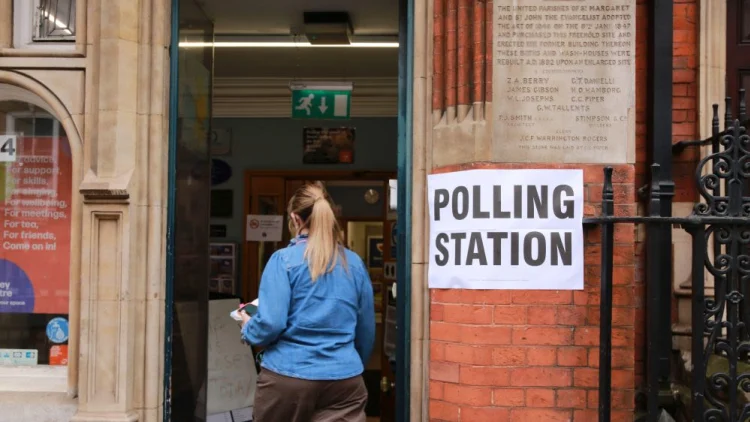
The British public’s trust in democracy is at record lows, with just 12 per cent trusting political parties to put the country first. The UK lags far behind most of our European counterparts – almost all of whom use Proportional Representation (PR) – when it comes to public trust in government. Meanwhile, New Zealand, which switched to PR in the 1990s, has weathered the increasingly dangerous headwinds facing democracies around the world, and now ranks the highest. Across the Atlantic, the USA’s use of First Past the Post (FPTP) offers a vision of the politics we might face if we don’t act now to safeguard our democracy.
If democracy is a problem-solving vehicle, then FPTP is increasingly starting to seem like sand in the engine.
In Westminster, the outdated system has contributed to the instability that has defined our politics in recent years. That should come as no surprise given that, on average, governments last 11 years in countries that use PR and just 7 years in those that use FPTP, Make Votes Matter analysis shows. Prime ministers and ministers also last longer under proportional systems. Simply put, the most stable democracies use PR.
That matters for our policy-making, too. Our country currently faces a multitude of seismic challenges, yet FPTP’s instability makes long-term responses harder. At the same time, the adversarial nature of our winner-takes-all system makes cross-party agreement seem unusual, rather than something to champion. When governments are unable to deliver long-term projects, and businesses lack confidence about the direction of future governments, we all suffer.
It is notable that even some Conservatives such as former prime minister John Major have begun to recognise that FPTP is no longer sustainable.
It is increasingly difficult to avoid the same conclusion when you consider that with every election under FPTP, more and more people are being shut out. In the 1950s, Labour and the Conservatives combined won over 95 per cent of the vote. In 2024, that number was just 58 per cent. Regardless of which parties lead the race, the long-term trend is the same: we are moving towards a multi-party democracy. Electoral reform is now both necessary and inevitable. But what we can control is how we get there.
There are also widespread warnings from academic experts in politics and constitutional law that this system is not sustainable, with over 50 of them writing an open letter to the government earlier this year and Hannah White of the Institute for Government think tank warning: “If casting a vote starts to feel more like participating in a lottery than making a positive and principled decision, then voters are going to become ever more frustrated. This is dangerous.”
The public is ahead of Westminster on this. Fifty-three per cent of people now support electoral reform, up from 27 per cent in 2011. Across Labour, there is widespread support for change. A majority of MPs support setting up a National Commission on Electoral Reform, and I’m proud to be among the almost 100 Labour MPs who have signed Alex Sobel’s amendment to the Representation of the People Bill calling for one.
A National Commission would first examine options for introducing proportional representation to the UK. Then it would recommend a system most suitable for Westminster that both retains a constituency link as a key component for trust and accountability, and protects us from extremism in political discourse. Here we can learn from the modern parliaments Labour has established across the UK. We already use the Additional Member System in London and Scotland, and the Single Transferable Vote in Northern Ireland.
We must not delay. The country needs a political system capable of restoring public trust, boosting business confidence and facing off the threats facing democracies around the world. The Labour movement, which overwhelmingly supports PR, needs to know it can trust its leaders to keep their word.
I hope the Prime Minister will lead this change and change politics for good by launching a National Commission on Electoral Reform within his first 100 days.
Rachel Blake is the Labour MP for Cities of London and Westminster

Something ugly has erupted in Middlesbrough. Nine people are dead after two separate incidents days apart – first a high-speed crash on the weekend, then what appears to be a deliberate arson attack on a family home. Police strongly suspect that both events were gang-related. Around 200 extra officers have been sent to the city to aid investigations and quell the growing sense of anarchy.
And right on cue, the excuses have started. I’ve already seen Labour and Green politicians talking about deprivation and a lack of opportunities for young people. What bloody lack of opportunity?
On Friday, I stood beside the flowers left for PCs Matthew Blades and Tom Clough – two victims of the weekend’s head-on collision. Barely 200 metres away is Boho X – the gleaming, 60,000 square-foot global headquarters of games developer Double Eleven, packed with ambitious young people working in a global industry. Clustered around it are dozens of vibrant small businesses, cashing in on the opportunities the world presents.
Teesside has enormous industrial investment, booming businesses, apprenticeships, great colleges and one of Britain’s biggest digital sectors. But we’re being told that our underclass is violent and criminal because society hasn’t provided enough career options.
Total bollocks. I spent four years as the mayor of Middlesbrough, and many more working with charities in our poorest neighbourhoods. I’ve seen the worst of poverty, addiction and genuinely awful childhoods.
I’ve also seen something our political class avoids acknowledging: people are behaving appallingly because we’ve allowed them to. They discover that breaking the law doesn’t cost them anything, that intimidation works and that police are stretched. Even if they are arrested, the courts are clogged for years ahead and prisons are already full. Then we’re astonished when they become more brazen.
The high-speed crash appears to prove this observation. Four of the five drivers of the car that caused the collision had pleaded guilty to a combined 37 offences. Yet none of them had ever seen the inside of a prison cell.
As mayor, I massively expanded CCTV because residents desperately wanted action against crime. Criminals arrived with industrial grinders and cut down the camera masts, so we strengthened them. So they used vehicles to ram them instead.
This wasn’t a cry for help. It’s contempt for law and disrespect for those who comply. And the people suffering from it aren’t MPs on nice streets or Guardian journalists. They’re cleaners, warehouse workers, bus drivers and their kids. Their lives can be made unbearable. Literally.
I’ve met residents too frightened to talk to me near their own homes. Some were even too scared to contact Crimestoppers anonymously. Where is the national outrage about them?
Instead, whenever criminality becomes impossible to ignore, Britain conducts another national therapy session about the criminal. What happened in his childhood? Was he excluded from school? Do we need another youth club? Stop it.
Of course circumstances matter. I’ve spent years helping homeless people, addicts and ex-offenders, and I’ve seen people turn their lives around. But sympathy or empathy before punishment is wrong. This approach has emboldened the people who are wrecking lives and communities.
The working classes work when they can. They pay taxes and obey the law. And we leave them to watch a minority deal drugs, intimidate neighbours and create chaos around them.
The truly compassionate response is to protect the victim. That means enough police to make getting caught a likely outcome of committing a crime. We need courts that swiftly judge and punish offenders while the crime is still fresh in everyone’s minds. And we need enough prison cells to keep dangerous and prolific criminals locked up.
Prison works for the simplest reason imaginable: it separates a criminal from his victims. He isn’t intimidating his neighbour, burgling someone’s home or recruiting another youngster into dealing drugs.
Here’s the most important thing about what’s happening in Middlesbrough: this isn’t really about Middlesbrough. My hometown isn’t some uniquely dysfunctional hellhole. Most people here are doing exactly what people everywhere do: working, raising families, building businesses and getting on with life. My 83-year-old mother still gets the bus into town and volunteers on the local council estate. She experiences no crime. That’s Middlesbrough, too.
What’s different today is that Middlesbrough has exposed something Britain has preferred not to confront – namely, the nationwide existence of small and poisonous groups, living outside the social rules that everyone else accepts. We’ve indulged them, coddled them and now we’re paying the price.
Don’t blame Middlesbrough. Look at the criminal underclass we’ve allowed to develop across Britain. Stop asking what society failed to give them and start asking why society tolerated them.
Andy Preston was mayor of Middlesbrough from 2019 until 2023.
Politics
Trump’s Arab American allies in Michigan are jumping ship. Mike Rogers could pay the price.


Four days before the 2024 election, Donald Trump declared in Dearborn, Michigan that “the Muslim population” is “liking Trump.” On Election Day, the state’s Arab Americans helped deliver Trump a victory.
Now, they want nothing to do with him — and are souring on the GOP overall.
Many Detroit-area Arab Americans, who swung hard to Trump over the war in Gaza and cost-of-living issues, are now saying they’re fed up with the ongoing war in Iran and slow peace process in Gaza. It’s a shift that could have direct consequences on the battle for Senate control, with former Michigan Rep. Mike Rogers fighting to hold onto Trump’s 2024 gains against Democrat Abdul El-Sayed, a Muslim whose parents are Egyptian immigrants.
Trump’s perceived broken promises — exacerbated by GOP attacks against El-Sayed that some see as Islamophobic and racist — are pushing these voters out of reach for Rogers.
“[Trump] promised to make America great again,” said Albert Abbas, who presented a peace prize to Trump during his 2024 Dearborn visit. “Did he do that? Did he put American interests first? It’s the complete opposite.”
A dip in support from Arab American former Trump voters could hurt Rogers’ path to election in what’s shaping up to be a tough year nationally for the GOP. And it could offset gains he makes in other communities — including with some Jewish voters who are wary of El-Sayed for his harsh criticism of Israel and comments from him and his allies that some see as antisemitic. Both communities matter significantly in close elections, and Michigan has the largest proportion of Arab Americans in the country, with nearly 400,000 living in the state, as well as more than 100,000 Jews.
Michigan Republicans — who, just two years ago, dreamed of building sustainable support among the state’s Arab American population — now see community leaders shifting ranks.
“Once the administration got into the White House, everything we were told kind of flip-flopped,” said Hassan Nehme, who served as the Michigan Republican Party’s vice chair during the 2024 cycle and helped lead outreach to the Arab American community. “We lost all traction. Republicans are kind of dead in the water in the area right now.”
Dearborn-based Imam Husham Al-Husainy backed Trump in 2024 and was slated to offer a benediction at the inauguration but was removed from the program after complaints from pro-Israel conservatives. He said he now backs El-Sayed because Trump recanted on his promise for “no new wars.”
Amer Ghalib, a former Democratic mayor of Muslim-majority Hamtramck, backed Trump in 2024, and was later nominated by Trump to serve as ambassador to Kuwait, though he didn’t get confirmed in the face of bipartisan concerns about a history of allegedly antisemitic remarks. He said Republicans “should be more concerned about losing the long-term trust of the Arab American community than about losing the gains they made in 2024.”
“There is a tremendous work that needs to be done … to address people’s concerns and regain their trust,” Ghalib said.
And Faye Nemer, who leads the Dearborn-based Middle Eastern and North African American Chamber of Commerce, said the midterms will mark a “change in sentiment” in her community toward Republicans.
“Many voters, including myself, are now asking whether the policy promises we received bear any resemblance to the reality that we’re seeing on the ground,” said Nemer.
Rogers has not shied away from branding his opponent as a Muslim extremist. He’s hammered El-Sayed for campaigning with Hasan Piker, a prominent and controversial left-wing influencer who’s drawn accusations of antisemitism, as well as slamming El-Sayed for responding to an attack on a Michigan synagogue earlier this year by condemning it but saying “hurt people hurt people” because members of the attacker’s family had been killed by the Israeli military in Lebanon.
El-Sayed has condemned antisemitism throughout his campaign; in a statement distancing himself from Piker last week, he said “Antisemitism is a scourge, and we need to address it in all its forms”) On Saturday he apologized for his remarks after the synagogue attack,telling a group of Jewish Democrats that he’d “made a mistake” and that “nobody deserves to have their pain trampled on.”
Rogers’ allies have also circulated reports from conservative outlets that seek to link El-Sayed’s father-in-law to the Muslim Brotherhood.
“El-Sayed wants to represent Palestine,” Rogers said at the Michigan GOP convention last week. “I want to represent Michigan.”
Trump has weighed in, too: The week El-Sayed won the Democratic primary, the president told reporters in the Oval Office that the country is seeing “jihadists being elected all over the place.”
The National Republican Senatorial Committee’s first ad of the general election called the Democratic nominee by his full name, Abdulrahman Mohamed El-Sayed.
The NRSC ad will “alienate and distance” potential Arab American supporters, said Nemer.
“I most certainly will not support a candidate that is alienating and vilifying my community,” said Nemer, who met Trump during his 2024 visit to Dearborn. “I was fully prepared to support Mr. Rogers. … But after seeing the direction that he chose to proceed in, that’s given me a lot of pause.”
Nehme, the former state GOP vice chair, said many Arab Americans are drawn to El-Sayed because of his background, even though many are far more socially conservative than the Democratic nominee. “They’re not even really looking at politics anymore,” Nehme said.
During Rogers’ unsuccessful 2024 Senate bid, he acknowledged that his outspoken support for Israel caused some consternation for Muslim voters. That cycle, Trump won Dearborn, a Detroit suburb that is the only Arab-majority city in the U.S., by six points; Rogers ran behind him, losing in the city by two points. It was a significant improvement over 2020, when President Joe Biden and Democratic Sen. Gary Peters each won the city by around 40 points.
Monica Yatooma, who helped the Trump campaign’s outreach to Muslim and Arab American voters in 2024 before launching a failed bid for secretary of state this cycle, said she doubts Republicans can match Trump’s gains in Arab-majority areas in the current environment.
“The only reason [Arab Americans] voted for Trump is because they were voting against [Vice President] Kamala [Harris],” she said. “They weren’t voting for Trump, so they’re not really conservative voters, and there’s no value there for them with Mike Rogers that aligns with their values.”
It is unclear what, if anything, Rogers is doing to reach out to the community. Yatooma and Nehme, both Republicans, said they have seen little outreach from Rogers’ campaign.
“I’m hoping that they pull through and they come out and at least try to address the community,” Nehme said. “But in all actuality, I’m not sure how much good it’s going to do.”
Rogers’ campaign, when asked several questions about his outreach to the Arab American community, said “the Chaldean community has been a strong ally,” referring to a Christian ethnic group with Iraqi heritage whose largest community outside the Middle East resides in the Detroit area. Yatooma, who is Chaldean, said her ethnic community has historically voted for Republicans.
“Mike Rogers welcomes all Michiganders, regardless of faith, socioeconomic status, or background, to our campaign to Get Michigan Working Again,” said Alyssa Brouillet, spokesperson for the Rogers campaign, in a statement. “The same can’t be said about Abdul El-Sayed, who continues to fan the flames of antisemitism, sympathizes with the terrorist attacker who tried to mass murder 140 kids in a Michigan synagogue, and refuses to disavow Hasan Piker, who calls Jews ‘inbred.’”El-Sayed campaign spokesperson Cole Wozniak called attacks invoking El-Sayed’s faith and identity “cheap.”
“Mike Rogers is resorting to cheap attacks to distract from his deep record as a corrupt career politician who has taken millions from Big Pharma,” Wozniak said in a statement. “Michiganders see right through it, and they’re not going to let Mike Rogers distract from the fact he’s spent thirty years in Washington making himself and his billionaire donors richer while selling out working families.”
Without hearing directly from the Rogers campaign or state party leaders, Arab American voters say their community is likely to swing back to the left this election.
Could Rogers “go into Dearborn and have those conversations and fix that?” asked Yatooma. “I think yeah, absolutely. I just don’t know if he’s doing it.”

Starting at 35? Financial Freedom Starts in Your 40s! #shorts

Lionel Messi’s Argentina teammates pay tribute after international retirement: ‘The greatest of all time’

Cornwall businesses want permanent VAT cut, ‘not a gimmick’





-

 Crypto World6 days ago
SpaceX stock could rise 75% to $240, JPMorgan says
-

 Fashion4 days ago
Weekend Open Thread: Maeve – Corporette.com
-

 Crypto World4 days ago
Bitcoin’s 22% rally now needs real demand to outlast Treasury liquidity boost
-

 Crypto World6 days ago
Warsh Jackson Hole keynote puts financial innovation first
-

 Business4 days ago
Salesforce Stock Soars 19% as Blowout Earnings and Agentforce AI Growth Silence Software Skeptics
-

 Crypto World5 days ago
Elon Musk Grok Bot Promise: We Will Make You Whole if AI Loses Your Money
-

 Crypto World6 days ago
Did Trump Just Move SpaceX Stock With One Truth Social Post?
-

 Business4 days ago
Apple Confirms September 9 Keynote and Reveals Its Full Pre-Order Schedule
-

 Business3 days ago
Onto Innovation Stock: AI’s Next Bottleneck Is Yield (NYSE:ONTO)
-
 NewsBeat5 days ago
Lindsay Clancy jury braces for closing arguments as judge tells court: ‘You’ve heard all the evidence’ – Live updates
-

 Business6 days ago
Walmart takes aim at younger shoppers with new fashion brand
-

 Crypto World3 days ago
Bitcoin price tests $82K resistance as Brandt stays long
-

 Business6 days ago
Thailand’s Eastern Economic Corridor Capital City (EECiti): Key Developments and Investment Opportunities
-

 Crypto World5 days ago
NVIDIA revenue hits $96.2B as AI demand doubles
-

 Business4 days ago
iPhone 18 Pro Pre-Orders Could Shift to Saturday as Apple Reportedly Avoids September 11 Anniversary
-

 NewsBeat6 days ago
Trump’s trade truce with China faces test with Iran effort
-
 Crypto World5 days ago
Nvidia Q2 Earnings Reveal $96.2 Billion Beat, So Why Is NVDA Falling?
-

 Tech5 days ago
Claude Cowork gets its own browser that doesn’t touch your tabs, bookmarks, or saved passwords
-
 Tech2 days ago
Hugging Face built a $4.5 billion empire on free AI models. Now Nvidia is buying it for $12.9 billion
-

 Crypto World4 days ago
Truflation calls for Fed rate cut after PCE forecast
You must be logged in to post a comment Login