

Politics
What Is An ‘Alpine Divorce’?


We really wish we didn’t have to talk about “alpine divorces”.
Over the past week, the unusual term has been trending on social media, particularly on Threads. The conversation stems from a TikTok video posted last month by a woman who said she was left alone on a hike after a man who invited her along abandoned her.
We reached out to the woman to verify the claims in the video, which has over 21.8 million views, but did not receive a response before publication. But in a new follow-up video, she said it all went down during a recent hike with a date in the North McCullough Wilderness area of southern Nevada. According to her, her date rushed ahead to beat other hikers to the summit and left her behind to catch up on the trail.
“He said he wanted to run and I remembered thinking, ‘Why are we chasing strangers to the top of the mountain?’” she said in the clip. (Good point!)
In the comments on the original video, women broadened the conversation, saying that having a partner leave you on a hike or any other outdoor outing was a surprisingly common experience. Some claimed that there were whole online support groups filled with women who’ve been abandoned mid-hike by men – an “alpine divorce”, they labelled it.

The eerie-sounding phrase comes from the title of an 1893 short story by Scottish-Canadian writer Robert Barr, about a man who plots to kill his wife while they are traveling in the Swiss Alps.
As women discussed the topic and shared tales of alpine divorce and breakups, they were met with some disbelief in the replies, mostly from men. “Things that never happened for 500,” one guy replied to a Threads post.
Obviously, he’s not a true crime follower. If you pay attention to such stories in the news, you know that things like this – attempted murder through remote abandonment, essentially – sadly happen all the time.
Just last month, an Austrian climber was found guilty of gross negligent manslaughter after his girlfriend – who was said to be “light-years behind him in terms of her climbing abilities” – froze to death on Austria’s highest mountain in 2025.
And then of course there’s Gabby Petito, who died by strangulation in late August 2021 in the Spread Creek Dispersed Camping Area of the Bridger-Teton National Forest in Wyoming. Her remains were found there a month later, with the coroner determining the death was a homicide, perpetrated by her boyfriend Brian Laundrie.
Given the preponderance of actual alpine breakups, is it any wonder why women choose the bear over a man?

Igor Suka via Getty Images
We talked to women who’ve experienced ‘alpine divorces.’
Carol, a 51-year-old from Central Texas, was among the women who shared a story about being left behind, in her case by an ex-boyfriend in college on a slope in Lake Tahoe in 1993.
“My roommate and her friend went off to some of the lower slopes, but my boyfriend dragged me to the very tip-top so he could show off his mad skills,” said Carol, who asked to use her first name only to protect her privacy. (Said ex is now a convicted felon, for an unrelated crime.)
They skied one short bowl run down the back side of the mountain, before Carol got lightheaded from the altitude. (It didn’t help that both were suffering from a hangover.)
“He didn’t want to hassle with getting me back down,” she said. “It would harsh his vibe – he was there to tear up some snow – and I was too winded to find the way down and too disoriented to ski to one of the short lifts to the top where I could get the gondola back down.”
Her boyfriend’s solution? Dig her an “emergency” hole – “think like a seat, not a cave” – and put Carol in it so he skied for the rest of the day.
“I stayed there until a good skier Samaritan came by, got me out of the hole, took me to the gondola, and deposited me at the ski patrol, where I proceeded to faint from dehydration,” she said. They patched me up and took me back to our condo, where I fell asleep. Said boyfriend did not return until late in the evening.”
At 19, she admits she didn’t “understand what an absolute dick move that was,” and the pair didn’t break up for a few more months of other equally awful episodes, she said.
“But now, reading these stories, I immediately see myself in a hole on the back side of a mountain at 19 years old,” Carol said.
Wiser now, she says she’s learned to leave at the very first sign of disrespect or crossed boundaries, to trust her gut, and to take responsibility for her own skill level and safety.
“That starts with being able to detect disrespect and know what our boundaries even are,” she said.

Photographer, Basak Gurbuz Derman via Getty Images
Amelia Ehrens, a British Columbia woman and experienced hiker, said her ex left her behind for 10 days at Kearsarge Pass in the Sierra Nevada while they were hiking the Pacific Crest Trail.
As she explained to HuffPost, when you’re hiking almost every single day for five or six months, it’s not entirely uncommon for hiking partners or groups to split up for the day, or multiple days sometimes.
“That said, on the most dangerous sections of the trail – at high altitude or in snow with sketchy river crossings – you never leave anyone behind if it’s not explicitly agreed upon,” she said.
When she saw “alpine divorce” trending on Threads, she felt terrible knowing she wasn’t alone in being left on a trail.
“Unfortunately, I’m not shocked, though,” she said. “As amazing and wonderful as many hikers are, and the hiking community is in general, it’s definitely a sport that has a lot of ego in it.”
People with an ego sometimes make choices that endanger others, either consciously or not, she told HuffPost.
“There’s immense power in being able to abandon someone in a dangerous or terrifying environment, and for certain types of abusive people, that’s very enticing,” she added.
As her experience in the Sierras reminded her, no relationship is ever worth staying in if you don’t have, at the absolute bare minimum, physical or emotional safety.
Here are some tips for staying safe on hikes with anyone
Human to human, no matter how upset or frustrated you are, it’s never acceptable to leave someone on the trail, said Amanda Neiman, the operations director in North America for Wildland Trekking, an Intrepid Travel company.
To be safe, it’s wise to prepare for any hike as if you’re going alone – even when you’re not, Neiman told HuffPost.
“Plans change. Weather shifts. People leave,” she said. “Confidence comes from knowing you can handle it.”
Start with actual supplies. Don’t rely on your hike partner to pack everything in their backpack: bring snacks, water, a map, even if it’s a screenshot of the map at the trailhead. (Read more about the 10 essentials for hiking here.)
Be sure to pack a basic first aid kit that includes a light – don’t just rely on the flashlight on your phone, which could run out of battery.
“Look at the weather ahead of time to know the appropriate clothing for the hike,” Neiman said. “I personally always hike with a rain shell even if there is no rain in the forecast.”

Evgeny Vasenev via Getty Images
Maybe don’t go on a hike as an early date, either. “Get to know their character first,” said Heather Balogh Rochfort, freelance adventure journalist and host of TrailblazeHER, a YouTube channel for outdoor women.
“Do they care about their goals over people?” she said. “How do they handle your existing disagreements [when you’re] not on an arduous nature walk?”
Like Neiman, Balogh Rochfort’s first tip is to build confidence so you don’t actually need anyone else to get out safely.
“I really believe women should spend more time outside on their own, even if it means starting really small with a tiny, one-mile hike or something,” she said. “Something that lets you prove to yourself, ‘I can do this.’”
When you know deep down inside that you are fully capable of handling a situation, the dynamic completely changes, Balogh Rochfort said.
“You’re not dependent. It’s a powerful shift to go from ‘please don’t leave me’ to, ‘If you leave, I’ll be mad but totally fine.’”
And if someone does ditch you in the end? “Screw them,” she said. “Eat your snacks. Drink your water. And get yourself out with the knowledge that you’ll never let them waste your time again.”


Donald Trump’s illegal war on Iran is distracting from new Epstein file revelations showing testimony from a child victim alleging Trump raped and sexually assaulted her when she was between 13 and 15 years old. Trump’s farcically-named ‘Operation Epic Fury’ has been dubbed ‘Operation Epstein Distraction’ by disgusted service people and anti-war activists.
The latest evidence consists of three 2019 FBI interviews with a female Epstein victim who FBI alleges that Trump sexually and physically assaulted her as a young teenager after the serial child-rapist forced her to pander to Trump. Her main allegation is that the president orally raped her then beat her after she bit him in self-defence.
Trump’s allegations
The allegations are not new. A third party’s evidence of them was found in newly-released Epstein files in January 2023, but the Justice Department has now released additional FBI documents with the victim’s testimony, which had wrongly been marked as duplicates, supposedly because of their similarity to the other evidence. The victim reported that she and others close to her had received threatening calls for years demanding she keep quiet.
Even though the files released so far only amount to around 2% of the total, Trump appears thousands of times. In one witness submission, he was accused of raping a 13-year-old girl who eventually became pregnant — then standing by as the girl’s uncle killed the baby and dumped its body from a bridge into a lake.
Analyst and former Israeli diplomat Shaiel ben-Ephraim told Al Jazeera that Trump’s ‘war as distraction’ tactic is working, at least for now:
[He] really needs a distraction from [Epstein and other domestic issues] in the form of a war. And if you look at searches on Google for the Epstein files, they’ve plummeted since this started. So, at least temporarily, it’s succeeding. It’s taking up Congress’s time and it’s taking up the media’s time.
Many believe that Trump agreed to Israel’s demand for war on Iran because Israeli PM Benjamin Netanyahu must have threatened him with the release of incriminating evidence during Netanyahu’s recent visit to Washington. Epstein was an Israeli spy whose apartment and presumably houses had Israeli cameras and recording equipment installed.
The ‘Epstein class’s first act in the war was to bomb a girls’ school, killing almost 170 children. Murdering children to distract from sex crimes against them. Trump, unsurprisingly, denies any wrongdoing.
Featured image via the Canary

Sexologist comment provided by licensed sexologist, relationship therapist, and author at Passionerad, Sofie Roos.
Last week, sexologist and therapist Sofie Roos shared the issues straight men most often brought up in sex therapy.
And this week, she spoke to us about straight women.
Here, she shared the topics she hears about most frequently:
1) Having a lower sex drive than their partner
“The single most common problem straight women bring up with me is that their sex drive has decreased or is overall low, while their partner is way more interested in being intimate, leading to worries and tension in the relationship,” Roos told us.
She added that women may be more likely to compare their lust levels to their partner’s, and feel their lower desire poses an “issue”.
2) Pain during penetrative sex
Experiencing pain during sex thanks to conditions like vulvodynia, vaginal dryness, or pelvic floor issues is “extremely common” among this group, said Roos.
“What most don’t know is that there’s both a physical and mental part… pain leads to fear, and fear leads to deeper problems,” leaving some in a vicious cycle.
3) Not orgasming during partnered sex
Straight women have long suffered from “the orgasm gap”. The sexologist said this doesn’t seem to be going away.
“Many straight women are having a very hard time orgasming during intimacy with their partner, and they don’t know how to solve it,” she said.
4) Body image issues
“I’ve met countless straight women that are extremely aware of how their own bodies look, smell and feel… they think so much about age, weight and how they are seen that it becomes difficult to just let go and be in the moment,” Roos added.
5) Losing desire thanks to the mental load
In straight relationships, the mental load – or having to think about, keep track of, and remember the endless tasks that keep a household going – still predominantly falls on women’s shoulders.
And the sexologist said that can have a knock-on effect in the bedroom. Doing “all the planning… as well as all the emotional work in the relationship” can “lead to higher stress levels, which makes the body de-prioritise desire”.
6) Not putting their own pleasure first
“I often meet women who describe themselves as having a hard time with setting their sexual needs and boundaries first, as they’ve been taught to be accommodating rather than prioritise what they want and don’t want,” she stated.
So, uh, any advice?
Yes. The sexologist said that accepting shifts in your levels of lust and trying alternative forms of intimacy, like “oral sex, massage, kisses, caresses and more mentally-focused pleasure, such as roleplaying or dirty talk,” may help.
Explore your own desires, perhaps through masturbation, and communicate them with your partner. “As a majority of women can only reach all the way via clitoral stimulation, I also advise focusing more on that, either with your hands, mouth or a sex toy,” the sexologist said.
Remember also that “pain during sex isn’t normal”, so it’s important to seek professional help if you experience it.
And keep in mind that “your sex life isn’t isolated from the rest of the way you live, so try to look at your diet, sleep schedule, exercise habits, how you drink, how you deal with stress and how your relationships are,” she concluded.
Politics
‘Protest gave us the right to Vote’ – Women’s Day suffragette stunt against anti-protest laws
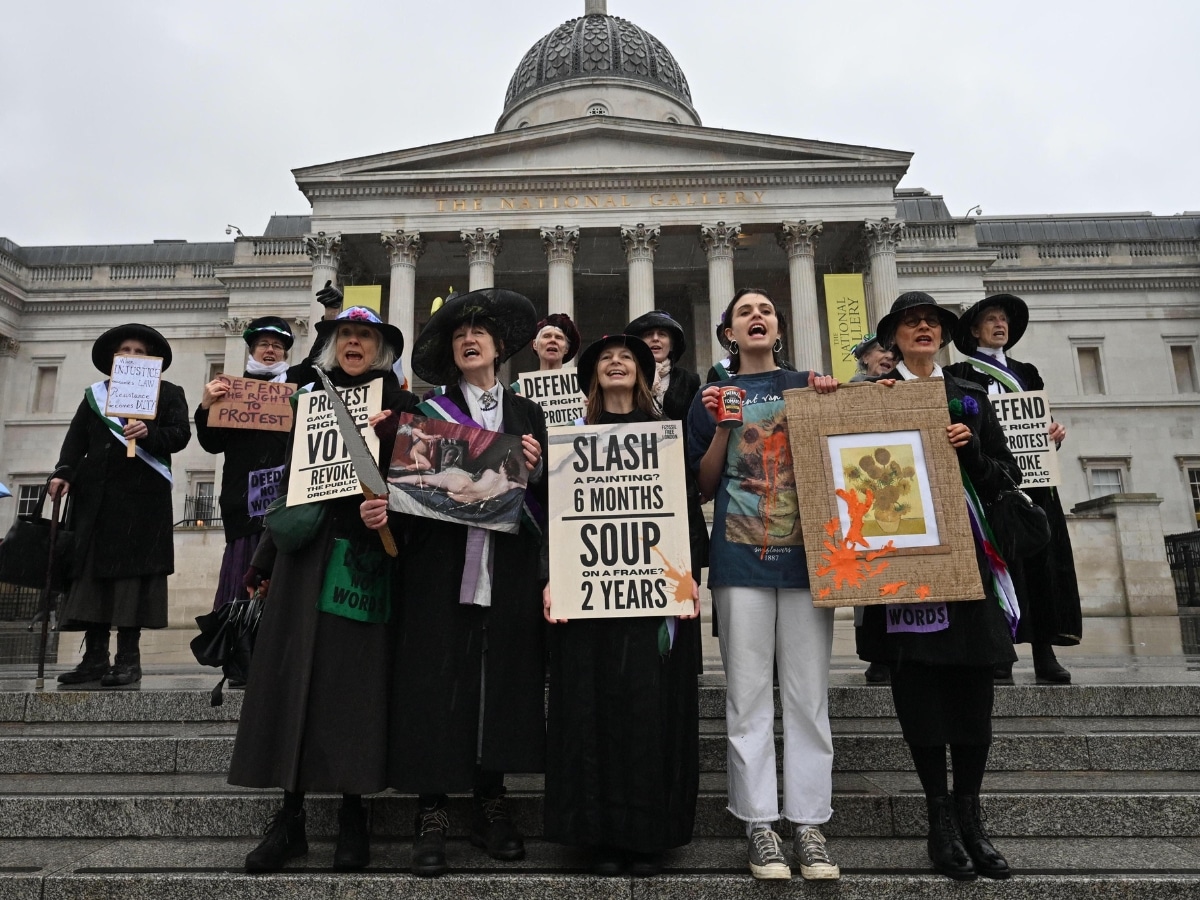
Fossil Free London campaigners protested outside the National Gallery dressed as suffragettes today. The action took place ahead of International Women’s Day on 8 March, drawing attention to the tightening of anti-protest laws.
The group held placards drawing direct comparisons between the jail terms received by climate protesters, and those handed to militant suffragettes in the early twentieth century.
Suffragette protest still echoes today
Phoebe Plummer and Anna Holland, Just Stop Oil activists, received a combined 44 months in prison for throwing soup in the National Gallery. They caused minor damage to the frame of Van Gogh’s Sunflowers painting.
Their action recalled the famous National Gallery protest by militant suffragette Mary Richardson, arrested for slashing Velázquez’s Rokeby Venus. A crime for which she got a considerably shorter sentence of six months in prison.
Successive governments have systematically reduced the right to protest in recent years, with a wave of draconian legislation.
The Police, Crime, Sentencing and Courts Act, 2022 dramatically expanded police powers, including the ability to restrict protests for being too noisy; a vague measure that is at the discretion of officers.
It also shifted the burden of proof onto protesters themselves, making it an offence to breach a police condition, even if a demonstrator could not reasonably have known about it.
The Public Order Act followed this in 2023. It introduced sweeping new criminal offences including “lock on” protests and obstructing major transport works. And it brought in stop and search powers that require no reasonable grounds for suspicion.
These powers came in the same year as the Casey Review. The review described stop and search as a ‘racialised tool’ used by an ‘institutionally racist’ police force.
These same laws have been used to impose disproportionate sentences on non-violent activists. Several Just Stop Oil protesters received multi-year custodial sentences, the longest ever handed out in the UK for non-violent protest.
Robin Wells, Director of Fossil Free London, said:
In 1906 Suffragettes were called criminals, locked up for fighting for their right to vote. Now, they’re rightly celebrated. But their modern counterparts – the women leading the climate movement – face harsher penalties than 1906. Back when it was normal to see women as less than full human beings.
The government uses one hand to erect statues to historic rights advocates, and swipes away the rights those advocates used to achieve their success with the other.
They say we’re in a democracy. Then they make almost all effective protest methods illegal.
The government says they’re acting on climate. Then they approve third runways and subsidies, and hint at waving through carbon bomb oil projects like Rosebank.
We, women campaigners of today, mean to celebrate the Suffragettes by continuing in their fight. Heed our clarion call, the same as our sisters from the past: deeds not words.
Deeds on climate!
Defend people, protect our one home and Stop Rosebank!
Deeds on our right to protest!
Repeal the Public Order Act 2023!
Featured image via Andrea Domeniconi / Fossil Free London

US President Trump has joined Israeli PM Netanyahu in an illegal war of aggression on Iran. Consequently, Trump has proudly stated he should be involved in deciding who the next Iranian leader will be. This comes after the US assassinated Iran’s Supreme Leader Ayatollah Khamenei. Trump has made clear that his ambitions reach beyond the Middle East, as he openly seeks to influence elections across Europe, including in the UK.
UK PM Starmer has received a number of biting put-downs from the US tyrant. Trump’s outbursts have followed after apparent dither and delays in coming to the US’ heel like good little lap dogs. Today, widespread reports suggest that oppressive Trump has made his decision who the next leader of the UK will be as he welcomes Nigel Farage to Mar-a-Lago.
Farage has had no shame in worshipping the policies of the demagogue leader in the US, even pledging to replicate his dangerous policies at home against the interests of the British public.
This signals that Starmer’s days as PM are numbered if the new MAGA world order goes unchallenged. I hardly imagine the British public will soon forgive a party that stood by timidly whilst our hard-fought civil freedoms are stolen from us by a megalomaniac in the US.
#TrumpsPoodle Farage will be going to roll over and get orders from his master #Trump pic.twitter.com/UERb6qTAoy
— Chris 🙃 #FBPE #RejoinEU (@ChrisyDrThomas) March 6, 2026
Trump and the rod for our own back
We have all experienced someone in our lives who demands everything on their terms with precious little patience or self-reflection. Throwing their toys out of the pram when they’re disappointed, leaving us scrambling to calm things down and move forward. Yes, if you’ve raised children especially, you’ll relate to the struggle. But like every parent will know, you don’t play by the rules of a toddler as you only create a rod for your own back.
Starmer and the UK government have willingly and lucratively made a rod for their own backs by bowing down to the US and Israel, and ours will likely follow. After all, their actions are beginning to come back to bite us, as what they legitimise in Iran and Palestine may soon come home to roost in the UK.
However, it won’t be rich politicians that suffer — it will be the British public, especially those without wealth, privilege or power.
‘President Trump’s rhetoric is often intense’
David Lammy says the UK wants ‘the Iranian people to determine their future’ after Trump said he wanted to pick the new leader of Iran
‘That sounds like you believe Trump is wrong but you won’t say it on camera?’, Lammy is asked pic.twitter.com/7y5hL51I4v
— Peter Stefanovic (@PeterStefanovi2) March 6, 2026
David Lammy says citizens should democratically choose their own leaders. Yet he has long been reluctant to challenge the US president, putting more effort instead to keeping Donald Trump happy. For far too long the UK government has been hypocritical in condemning crimes by enemies whilst providing diplomatic cover for crimes committed by the US and Israel. This weakness risks leaving the UK increasingly exposed to even more foreign interference in our democracy.
These latest machinations by the US tyrant signal that our government’s spinelessness in the face of war crimes will undoubtedly cripple our democracy at home.
UK government MUST uphold rule of law and democratic freedoms
We already know what the US is terrified of, as it will strip their power and dominance away. The US saw it as ‘too risky’ when Jeremy Corbyn stood a strong chance of becoming PM. The former leader of the Labour Party achieved huge popular support in 2017 and stood for Prime Minister in the 2019 General Elections. However, a concerted smear campaign by the mainstream media and other public figures destroyed those chances.
This highlights the power and influence the US are able to exercise in the UK. It also forewarns of their ability to succeed and hoodwink the masses into lapping up US interference in our democracy.
Declassified UK’s Matt Kennard confronted this issue on X in 2020, underscoring that this unwelcome meddling is not new:
In June 2019, US Secretary of State Mike Pompeo was recorded saying the quote below.
I never heard one journalist follow up and ask what US “push back” against Corbyn involved.
Imagine if Sergei Lavrov had said something similar. That we are a US vassal state is just accepted. pic.twitter.com/A0FCshs8r1
— Matt Kennard (@kennardmatt) July 21, 2020
There are no red lines for Farage, as was evident in his unqualified support of Trump’s threats to take over Greenland:
One taste of Trump’s posterior is never enough.https://t.co/apQyQMfW85 pic.twitter.com/3Uwk9FQxpb
— Edwin Hayward (@edwinhayward) January 21, 2026
US strength and lawlessness will only mean our weakness and struggle, as this X post pointed out:
The US-Israel war with Iran has driven up oil & gas prices
This is boosting Kremlin revenues for its war on Ukraine
Putin is smiling thanks to Trump & Netanyahu
Higher energy prices will hurt UK consumers already reeling from the cost of living crisishttps://t.co/n3zs35bVzP
— Peter Tatchell (@PeterTatchell) March 4, 2026
When will enough be enough?
The Starmer government must find some courage before it is too late. Men like Trump exploit weakness and thrive on making others vulnerable. That is clear as day. If the Labour Party wants any chance of remaining relevant, it must remember that it was elected to serve the UK — not the US.
When we allow others to break the law against other nations, we invite those same consequences to return and haunt us. By silently watching war crimes unfold, we help set the very precedents that may one day threaten us. We cannot stand by whilst Zionists undermine stability and peace in the Middle East, bombing countries into submission.
Otherwise, we risk leaving ourselves defenceless without the very norms we helped erode.
Featured image via Twitter
I can make potato farls at home (honestly, they’re tastier than shop-bought). And tea loaves are more delicious homemade, too.
But some Irish staples are so, so much better from delis and takeaways, IMO. Chicken fillet rolls, for instance, aren’t meant to be gourmet: I want chalky cheese, heat lamp-warm chicken, and slightly limp baguettes.
The food I miss most while living in the UK, however, is spice bags. The Irish-Chinese takeaway staple can be hard to find here.
So, I asked Chef Kenneth Tyrrell, an executive chef at Burger & Lobster, how to make them at home.
What are spice bags?
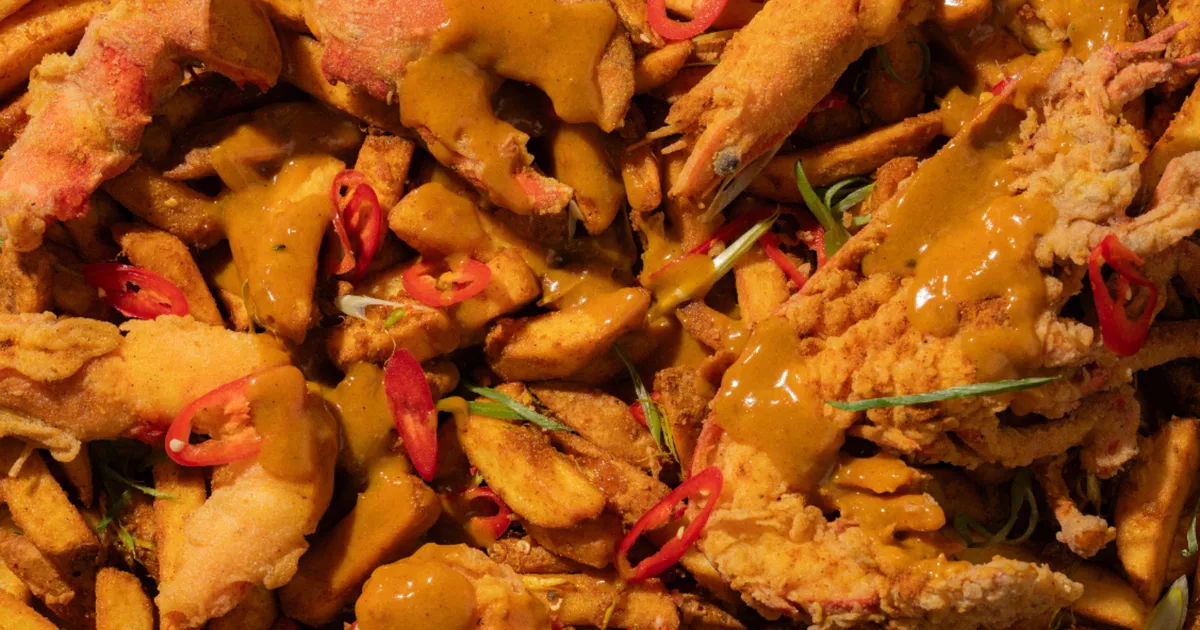
They combine chips, peppers, onion, crispy chicken, and (obviously) spices in a grease-spotted paper bag of perfection.
I associate them most with Dublin – they weren’t much of a big deal in my rural hometown, but when I moved to the capital for uni, it felt like spice bags were everywhere.
Some say spice bags were first made in Dublin takeaway Sunflower, though this origin story is hotly debated.
When attempting my own version, I found the spice blend hardest to recreate.
Experts think they’ve cracked the code with an MSG, onion powder, pepper, garlic powder, five-spice, sugar, and crumbled chicken stock cube combo.
But it changes from place to place. Experiment a little to find your favourite tingly, salty mix.
How can I perfect spice bags at home?
Some things must remain constant: mix chips, spices, something fried and crispy (like chicken), and veggies like onion and peppers together.
But, Chef Tyrell said, you can have some fun with these.
“Customisation is the fun part of spice bags. The classic spice bag is with crispy battered chicken, but get creative with yours – at Burger & Lobster, we’ve added a twist to ours with fried lobster and king prawns,” he said.
Other rules, though, are stricter.
“Make sure the protein, chunky chips, onions and peppers are piping hot before you add your spice to get maximum flavour. I also like to throw in a bit of mango chutney for an added sweetness,” the chef said.
“Chips MUST be super crispy before mixing with everything else. I would cook them for slightly longer than you usually would, as they then retain some crispiness after sitting in a bag with all the other ingredients,” he continued.
And “Don’t eat your spice bag straight away… it always tastes better after you’ve let it sit in the bag for a couple of minutes”.
One last suggestion? The dish is “Best served after a few pints and never wear a white shirt.”

While hot flashes and night sweats are commonly recognised signs of perimenopause, there’s one lesser-known symptom: itchy ears.
Described by many as a deep-seated crawl or tickle in the ear canal that feels impossible to reach, itchy ears are easy to shrug off as a hygiene issue. But experts say it can actually be a natural result of the hormonal ups and downs of perimenopause.
Here’s the lowdown on this often-overlooked symptom:
How Changing Hormones Affect Your Ears And Skin
Oestrogen levels naturally rise and fall throughout each menstrual cycle as a follicle matures and eventually ruptures to release an egg. “[But] during perimenopause, as egg and follicle quality declines, oestrogen production can vary more dramatically from cycle to cycle, depending on the quality of the specific follicle developing that month,” explained Dr. Sandy Chuan, a double board-certified reproductive endocrinologist and obstetrician-gynaecologist at San Diego Fertility Center.
Chuan added that it’s also common to intermittently skip ovulation entirely during this transitional period. “During these anovulatory cycles, or cycles without ovulation, oestrogen levels remain low because no follicle is developing, resulting in minimal oestrogen production.”
And according to Dr. Christine Maren, a board-certified physician and Menopause Society-certified provider, those dramatic swings aren’t the only issue.
“Hormonal shifts in perimenopause often begin with less progesterone. Progesterone is anti-inflammatory and, importantly, stabilises mast cells, which are the immune cells that release histamine,” she said. These chemical messengers regulate inflammation and allergic reactions, like itching, flushing and hives.
Combined with fluctuating levels of oestrogen, the symptoms amplify. “High levels of estrogen … stimulate mast cells and release more histamine,” Maren said. “But on the other hand, low levels of estradiol, which we also see during perimenopause, disrupt immune balance and create more inflammation. The real issue isn’t simply high or low oestrogen; it’s the loss of hormonal balance and immune regulation over time.”
Then there are the changes in the gut microbiome to consider. “By menopause, the diversity of a woman’s gut microbiome has declined and resembles the male gut microbiome,” said Maren, noting that this shift may mean more histamine producers, fewer bacteria that break down histamine and a greater overall histamine load in the body, which can show up as itchy skin or hives.
“Low oestrogen states also affect the barrier function of the gut, which increases inflammation and also plays a role in autoimmune diseases like psoriasis,” Maren said.
The combined shifts in hormones, immune signals and gut health help explain why skin can suddenly become reactive during perimenopause. And those same hormonal changes that make your skin dry and sensitive can also affect your ears.
“Declining oestrogen levels affect the keratinocytes in the skin,” according to Chuan, referring to the primary cells that build the protective barrier shielding your body from environmental damage, infection and moisture loss.
When oestrogen drops, hydration levels, collagen and glycosaminoglycans ― the molecules that help keep skin plump and cushioned ― also decline, leaving a thinner, more vulnerable barrier.
“Ears are already delicate and regularly exposed to elements like weather, earbuds, hearing aids and hair products — creating a perfect storm for irritation,” Chuan said.
Estrogen also affects how the spinal pathways process itch signals. “As hormone levels rise and fall, these pathways can become more or less sensitive, which can change how strong itching feels,” Chuan explained. During hormonal shifts, the same minor irritation might suddenly feel more intense.
There’s another layer to consider. Maren added that age and hormonal shifts can alter the composition of earwax, which helps lubricate the ear canal. “As this protective layer changes, the skin in the ear canal is more likely to feel dry or sensitive,” Maren said.

Everyday Habits That Could Affect Your Itchy Ears
Your daily habits can also influence how your skin and ears feel during perimenopause.
“Poor sleep and increased stress response both cause the release of pro-inflammatory markers, which can impact overall skin barrier function, turnover and healing, contributing to skin dryness and irritation,” said Dr. Catherine Hansen, a board-certified obstetrician-gynaecologist, certified menopause practitioner and chief medical officer at Effica Health.
Food choices matter, too. “Dietary patterns can help to modulate inflammation and improve the skin barrier function,” said Dr. Stacey Silverman Fine, a board-certified obstetrician-gynaecologist at Maven Clinic.
Fine pointed to plant-based diets rich in phytoestrogens to reduce hot flashes and further support skin health through anti-inflammatory effects. Omega-3 fatty acids can also help support the skin barrier function through anti-inflammatory mechanisms, and ensuring adequate vitamin D status may support overall skin health.
How To Tell if Hormones Are Behind Your Itchy Ears And What To Do About It
Timing, patterns and accompanying signs can offer valuable clues about what’s driving the itch.
“Paying attention to triggers is important, especially what makes a symptom like itchy ears better or worse,” Maren said. “Hormone-mediated itchy ears may experience fluctuations during the month, or be associated with other hormonal symptoms such as vaginal dryness, hot flashes, irritability and change in menstrual cycles.”
On the other hand, allergy-related itch tends to come with classic symptoms like a runny nose, sneezing, itchy eyes and a seasonal pattern that flares during high-allergen times of year. Eczema-related itching, meanwhile, usually comes with a clear breakdown of the skin barrier, like flaking, scaling and redness.
Managing hormone-related ear discomfort at home can be simple and effective.
“Gentle ear canal moisturization is the foundation of at-home management,” said Fine, recommending a small amount of petrolatum-based ointment or cream applied to the outer ear canal with a clean finger or cotton swab, while avoiding going too deep, which could disturb earwax or damage the eardrum. “Also, taking short, lukewarm showers helps preserve skin moisture better than prolonged hot water exposure, which strips natural oils and worsens the itching.”
Avoiding common irritants is equally important. Fine noted that hair products that drip into the ear, nickel or reactive-metal earrings, cotton swabs and moisture-trapping earplugs can all worsen itching or disrupt the ear’s natural protective wax layer.
“Dry skin and itching sadly affect more than 50% of women over age 65 and are progressive without treatment. Unlike vasomotor symptoms, like hot flashes, that improve with time, skin symptoms generally worsen with time,” Fine said. “I’d recommend seeking medical treatment if the symptoms are persistent and don’t respond to diet, lifestyle changes or at-home strategies.”

The post Why are British students mourning the ayatollah? appeared first on spiked.

6 min read
When the Ministry of Defence launched a string of reforms targeted at improving its work with small business, they did not stint on the rhetoric.
Ministers championed the founding of the “transformative” Office for Small Business Growth, as part of a key pillar of reforms first touted in the Defence Industrial Review. “The OfSBG will oversee a comprehensive programme of change, ranging from policy and commercial process simplification,” the department’s press release read.
But resignations, a collapse in morale, and spats over what the government considers British have plagued the reforms, with much of the industry in open revolt. One member of an advisory panel that oversaw the reforms viewed the changes quite differently from the government: “All they’ve done, ultimately, is create a website.”
Following Russia’s invasion of Ukraine four years ago, defence policy has returned to the forefront of British politics. The long-broken system of armed forces recruitment has been addressed, numerous reviews on strategy have been considered and, slowly but surely, cumulative spending has increased.
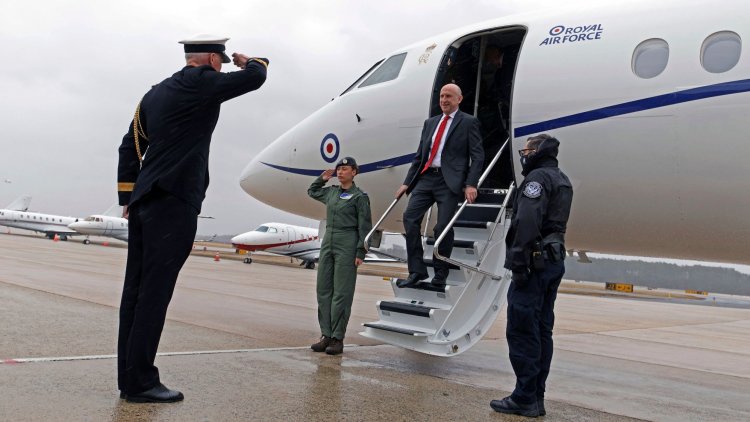
Relations between the defence industry and the MoD are strained, however. For his part, Defence Secretary John Healey has worked to bridge the divide, though his energy is sometimes said to have been misplaced.
While the UK-US alliance has always been hard to separate, a growing number of British businesses are concerned about the looseness of the definition of what makes a business British.
As the MoD announced the next stage of UK’s ‘Project NYX’ in January, a programme to advance unmanned drones to work alongside Apache helicopter systems, defence minister Luke Pollard announced he was working with “leading British industry” on the project.
Yet the support rang hollow among those pushing for more domestic support. Of the seven companies selected, only one was headquartered in Britain, with the others primarily based in the US, New Zealand, France, Portugal and Italy respectively.
Three days after the announcement, Pollard told a defence industry dinner that the only prerequisite to being considered a British company is having a registered British postcode.
The definition, if Pollard is to be taken literally, is a controversial one. It would allow huge foreign defence companies, including Lockheed Martin and Anduril, both recipients of Project NYX funding, to be seen as British simply because they have offices in this country.
To doubters, the problems of a weaker form of protectionism is obvious: British companies excluded from foreign markets but facing a deeper level of competition at home against foreign firms.
PoliticsHome asked the MoD whether the definition given by Pollard – that the only requirement to be considered British is a single postcode – was indeed the government’s definition. The department did not explicitly confirm that but appeared to do so implicitly by pointing to a speech Pollard gave six months ago about ‘British-based’ companies. Little wonder critics label their approach “Britwashing”.
“The Office for Small Business Growth is welcome rhetoric, but rhetoric does not create growth. The issue is not intent, it is delivery,” Rob Taylor, managing director of 4GD, tells PoliticsHome.
“The MoD refuses to pull the hard levers such as meaningful SME set asides, tender weighting and enforceable definitions of what ‘British’ means. Instead, we get flashy new websites and a multitude of working groups while genuine UK firms are outgunned by foreign entities deemed ‘British’ because they rent a postcode.
“Other nations unapologetically back their domestic industry, we dilute ours with semantics. If ministers are serious about sovereignty and growth, they must end Britwashing and use legislation and contract awards, not press releases, to prevent systemic economic self-harm.”
Another chief executive bluntly describes the definition as bringing the MoD into “disrepute”.
While some do see the problem as one of malice, many acknowledge that it is a grim reality companies face. British investment is becoming harder to come by, and investors on the other side of the Atlantic are more than happy to make up the gap. Cynics might also detect the benefits of a wider definition of ‘British’ to the government when it comes to trumpeting the benefits of increased defence spending to the domestic economy and jobs market.
In this context, the battle for smaller defence firms is starker, and contributes to the consternation being prompted by the MoD’s support for large companies.
“The government’s ambitions and rhetoric around supporting SMEs is positive. However, for many businesses, it doesn’t reflect the reality,” an industry source said.
“Calling a team the ‘Office for Small Business Growth’ doesn’t make the government any more pro-enterprise. Until ministers address clogged procurement cycles and stop taxing businesses so harshly, all this does is create more bureaucracy.”
Even some of the business leaders advising the MoD on its small business strategy say the relationships are worsening by the day. A £20m incubator fund to offer accelerated government contracts for firms has been treated with scepticism, and faith overall is waning.
One businessman involved in discussions said the government had done little more than pay “lip service”, with the underlying problems they face unchanged.
As the temperature rose between some of the SMEs and the government, the major consultancy firm Turner and Townsend was brought in to help the MoD formulate the final steps behind the Office for Small Business Growth. Shortly after that, the final design phase meeting between some of the small businesses and the MoD was cancelled at short notice.
“It’s laughable,” one member tells PoliticsHome. “They literally brought in a multinational consultancy to decide what happens to small business providers, after they decided they didn’t like what we had to say.”
Insiders claim that the small businesses were overruled by Turner and Townsend, with many deeply unhappy with the government’s rollout.
“What they’ve done, ultimately, is create a website, and find £20m before the end of the financial year which needs to be spent. It’s 0.1 per cent of what they’ve pledged to spend on this.”
For their part, the government said it did not “recognise” the fact the final meeting had been cancelled. The government also said it was standard to bring in a major consultancy for the final stages of the development of a project, especially for such transformative works.
The Office for Small Business Growth’s industrial lead Ken Turley quit after only three months in the role, frustrated with the attitude of the MoD. Insult was added to injury when department officials claimed the resignation was part of a planned restructure, much to the surprise of Turley’s allies.
Before publication of this article, Turley did not respond to a request for comment.
An MoD spokesperson said his departure was part of a planned restructure: “This government is backing British jobs, British industry and British innovators. Since July 2024, we have signed 1,100 major contracts, with 84 per cent of our annual spend going to British companies.
“Last month we launched a dedicated Defence Office for Small Business Growth to boost opportunities and access, on top of our commitment to increase spending with SMEs by £2.5bn by May 2028. The team is continuing to develop its strategy in close consultation with industry.”
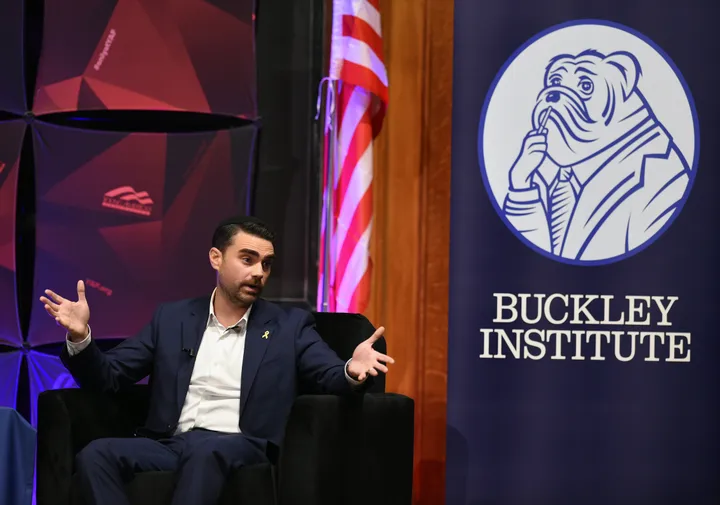
Conservative commentator Ben Shapiro tore into fellow political pundit Piers Morgan for platforming what he described as “America haters” on his show, calling the right-wing Brit the “Jerry Springer of political television” during Wednesday’s episode of his own YouTube series.
The Daily Wire co-founder was left fuming over Morgan’s Tuesday edition of Piers Morgan Uncensored, in which comedian-turned-commentator Dave Smith slammed the US and Israel’s joint attack on Iran and called the US “arguably the worst terrorist organization in the world,” given the number of civilians killed in US military operations over the last 25 years.
Accusing Morgan of making “a mockery of the entire industry by putting on screen whatever dregs are still willing to go on screen,” Shapiro compared the Brit to infamous tabloid talk show host Springer, then blasted Smith as unfunny and ill-informed about foreign policy.

Connecticut Post/Hearst Newspapers via Getty Images
Shapiro, a staunch defender of Israel and its allyship with the US, seethed as he told viewers, “I’m sorry, but you hate the country if you say America is the worst terrorist organisation in the world. You just do.”
“To make that argument, you have to deliberately obscure the difference between actual terrorists – who actually are seeking deliberately to kill innocent people in the name of politics, not collateral damage, deliberately seeking to kill innocent people – and nation-states who are seeking to avoid civilian casualties, often while fighting those actual terrorists,” he continued.
Shapiro then speculated that Smith was probably thrilled to even be mentioned by him, and called the idea of debating “trolls” a waste of time.

Carl Court via Getty Images
Hours after Shapiro’s criticism went live, Morgan shot back a reply in a Thursday morning post on X.
“If people are curious why @benshapiro has suddenly turned on me, this may explain it…” he said while retweeting a January video from his show. “The guy just can’t take anyone criticizing Israel’s govt.”
Prior to their apparent falling-out, Shapiro had made several appearances on Morgan’s show, including for a 2025 debate about Israeli and Palestine.

Comment provided by Helen Pankhurst CBE, a senior adviser at CARE International, women’s rights activist, and professor at Manchester Metropolitan University.
According to a global analysis conducted by CARE International, women’s freedom to speak openly about politics has regressed to levels not seen since 1997.
This is part of a regressive trend that has been ongoing since 2012.
“If nothing changes, an expected 1.74 billion women and girls will be subject to restrictions on their freedom to express their political views by 2050,” the report reads.
Here, we spoke to women’s rights activist and great-granddaughter and granddaughter of leading suffragettes Emmeline and Sylvia Pankhurst (respectively), Helen Pankhurst CBE, about the findings.
“These findings should concern anyone who cares about democracy”
The CARE analysis suggested that women are, on average, less able to discuss politics openly without fear of harassment.
“These findings should concern anyone who cares about democracy,” Pankhurst said.
“When women feel less able to speak openly about politics, it’s a clear warning sign that civic space is shrinking. This isn’t just about confidence; it reflects growing hostility, restrictions and systemic barriers that are pushing women out of public debate.
“If half the population feels silenced, our politics becomes weaker and less representative. Our democracy is weaker for it. It is a warning light.”
In 2025, the United Nations (UN) said that deadly conflicts, financial cuts, and backlash to women’s rights led to “stagnation and regression” of women’s freedoms.
The UK “is not immune” to this “backlash”
In 2024, UN Women said that one in four countries reported “backlash” on hard-won women’s rights.
Pankhurst thinks this rings true.
“Broadly speaking, we are seeing a rollback. After years of slow progress, women’s rights are stagnating or reversing in too many places,” she said.
“The backlash is real, from attacks on reproductive rights to rising online abuse and cuts to funding for women’s organisations.”
The women’s rights activist stressed that the UK “is not immune.
“We’ve seen a deterioration in the tone of political discourse, increasing harassment of women in public life, and policy decisions that risk undermining hard-won gains.
“Progress isn’t inevitable, and it absolutely cannot be taken for granted. Each step forward is hard-won, progress needs to be defended, and much more work is needed to ensure we don’t turn back the tide on our freedoms.”

Ray J Leaves Fans Confused With Dancing Clip Amid Heart Issues

Trump war on Iran branded ‘Epstein Distraction’ post file revelations

Derry Girls star Nicola Coughlan has ‘no interest in body positivity’


-

 Politics4 days ago
Alan Cumming Brands Baftas Ceremony A ‘Triggering S**tshow’
-
Business22 hours ago
Form 8K Entergy Mississippi LLC For: 6 March
-

 Tech6 days ago
Unihertz’s Titan 2 Elite Arrives Just as Physical Keyboards Refuse to Fade Away
-

 NewsBeat7 days ago
Abusive parents will now be treated like sex offenders and placed on a ‘child cruelty register’ | News UK
-

 Fashion19 hours ago
Weekend Open Thread: Ann Taylor
-
 NewsBeat7 days ago
Dubai flights cancelled as Brit told airspace closed ’10 minutes after boarding’
-

 NewsBeat6 days ago
‘Significant’ damage to boarded-up Horden house after fire
-

 Tech2 days ago
Bitwarden adds support for passkey login on Windows 11
-

 Entertainment5 days ago
Baby Gear Guide: Strollers, Car Seats
-
 Sports2 days ago
499 runs and 34 sixes later, India beat England to enter T20 World Cup final | Cricket News
-
 NewsBeat6 days ago
Emirates confirms when flights will resume amid Dubai airport chaos
-
Politics6 days ago
FIFA hypocrisy after Israel murder over 400 Palestinian footballers
-

 NewsBeat5 days ago
Is it acceptable to comment on the appearance of strangers in public? Readers discuss
-

 Tech6 days ago
Viral ad shows aged Musk, Altman, and Bezos using jobless humans to power AI
-

 Fashion6 days ago
On the Scene at the 57th Annual NAACP Image Awards: Teyana Taylor in Black Ashi Studio, Colman Domingo in Yellow Sergio Hudson, Chloe Bailey in Christian Siriano, and More!
-

 Video5 days ago
How to Build Finance Dashboards With AI in Minutes
-

 Business3 days ago
Guthrie Disappearance Enters Fifth Week as Family Visits Memorial
-
 NewsBeat5 days ago
Ukraine-Russia war latest: Belgium releases video showing forces boarding Russian shadow fleet oil tanker
-
 Crypto World6 days ago
US Judge Lets Binance Unregistered Token Class Action Proceed
-

 Crypto World5 days ago
Why Nexo Is Reentering the US After the 2023 Crypto Lending Crackdown