
Politics
Why Are Girls With ADHD Flying Under The Radar?


It’s thought 5% of children have attention deficit hyperactivity disorder (ADHD), with boys more likely to receive a diagnosis than girls.
Yet when girls remain undiagnosed, it can harm their mental health and self-esteem.
Girls with undiagnosed ADHD are “more likely to blame themselves, turning their anger and pain inward”, according to the Child Mind Institute, which noted they’re also more likely to experience depression, anxiety and eating disorders than those without ADHD.
Dr Chris Abbott, chief medical officer at Care ADHD, told HuffPost UK his team regularly witnesses how early recognition can be “utterly life-changing” for girls who have ADHD, as “it reduces shame, helps girls understand how their brain works, and unlocks the right support so they can thrive”.
He noted that population research and reviews suggest ADHD is identified more often in boys in childhood at a ratio of 3:1 (males to females), while the ratio appears to even out in adulthood at 1:1, “which is consistent with the notion that many women are diagnosed later in life”.
So, why are girls more likely to fly under the radar in terms of diagnosis?
There are a few key factors coming into play here, which we’ll break down with the help of experts.
1. There is a gender divide in how ADHD symptoms are expressed
A key piece of the puzzle is that many people still associate ADHD with visibly hyperactive children – perhaps they picture someone who is impulsive or disruptive in class, usually a boy.
Dr Mukesh Kripalani, a consultant psychiatrist for The ADHD Centre, told HuffPost UK: “Traditionally, diagnostic patterns show a distinct gender divide in how ADHD symptoms are expressed. Girls tend to demonstrate more inattentive symptoms and internalise their struggles significantly more than boys, who more frequently exhibit the hyperactive and impulsive behaviours that demand immediate attention from parents and teachers.
“Because boys are more likely to become oppositional, they are identified earlier.”
While girls and boys can present with hyperactivity, Dr Abbott noted that “many girls struggle in ways that are easier to overlook – difficulties with attention, organisation, working memory and time, that can look like daydreaming, forgetfulness, or quietly falling behind”.
“They may be seen as ‘coping’ because they’re not causing problems for others, even when the internal effort to keep up is huge,” he added.
2. Social expectations can play a part
Girls are often raised to be kind, obedient and put others’ needs first. Both experts noted the social expectations we place on girls can also factor into them slipping under the radar for diagnosis, quite simply because they learn to keep quiet and carry on.
“Many girls learn to be ‘good’, stay quiet and blend in, so ADHD is more likely to emerge as a hidden struggle: overwhelm, people-pleasing, perfectionism or anxiety, rather than disruption,” said Dr Abbott.
3. Girls seem to develop sophisticated masking strategies
Both experts highlighted masking – where a person might act in a “socially acceptable” way to fit in with their neurotypical peers – as another factor in why girls slip through the diagnosis net.
“Many girls develop sophisticated strategies here: over-preparing, copying more organised peers, people-pleasing, or suppressing restlessness to meet social expectations,” said Dr Abbott.
“That can create an outward appearance of success, but it often comes at a cost: chronic stress, exhaustion, anxiety and low mood.
“Emerging research in early adolescence suggests higher masking is associated with poorer mental health in neurodivergent girls, reinforcing what many of our clinicians hear in consultations.”
Dr Kripalani added “the drive toward masking and conforming is notably higher in girls”. But telltale signs might begin to emerge over time.
“As these children grow older, the elements of Rejection Sensitive Dysphoria (RSD) often become prominent,” he noted.
RSD is where a person might feel strong emotional pain because of a failure or feeling rejected – as such, their reactions to criticism might be very intense.
Alex Partridge, the host of the ADHD Chatter podcast, previously described it as feeling like “a bull has charged at you and headbutted you in the chest”.
“It can be the smallest of criticisms, but my brain turns it into the most heart-wrenching comment ever uttered or heard,” he added.
4. Girls are likely to be diagnosed with sleep problems or mental health conditions before ADHD
Dr Abbott noted that girls may first present with anxiety, depression, sleep problems, or emotional dysregulation – yet the possibility of ADHD isn’t always explored, particularly if school reports focus on attainment rather than day-to-day functioning.
“In adult services, it’s not uncommon to meet women who’ve been treated for years for ‘mood’ symptoms without anyone stepping back to ask whether untreated ADHD is a driver,” he added.
Dr Kripalani noted that approximately 75% of the time, ADHD presents alongside at least one other mental health challenge.
Studies also consistently show that teachers tend to underrate symptoms in girls, sometimes misattributing their behaviours to primary anxiety or mood disorders.
“Anxiety remains the most common co-occurring condition, presenting a ‘chicken and egg’ clinical dilemma when trying to determine which is the primary driver,” he added.
What needs to change?
Ultimately, better awareness of how girls are impacted – and the signs they might present with – is crucial.
“What would genuinely shift the needle is both practical and achievable: better awareness training in schools and primary care, and clearer SENCO and referral pathways that don’t rely on ‘disruption’ as the signal,” said Dr Abbott.
“It’s important to say this isn’t about blaming parents or schools. Recognition is a shared responsibility across families or carers, schools and the wider system – including the pathways and thresholds that determine who gets referred.”


What in the covfefe is going on?
On Monday, President Donald Trump published an all-caps announcement about the Iran war to his website Truth Social that some critics had a hard time processing due to its brutal assault on the English language.

“I am please to report,” the post began, writing “please” instead of “pleased.”
Trump went on to explain the meat of his announcement, which was that he’s ordered the Pentagon to “postpone any and all military strikes against Iranian power plants and energy infrastructure” for five days, saying the two sides held talks over the weekend.
On Saturday, the president issued Iran an ultimatum — if Tehran didn’t open the Strait of Hormuz, a vital oil shipping route on its southern coast, within 48 hours, the US would “obliterate” the country’s power plants.
But it seems that deadline has now been extended.
“Based on the tenor and tone of these in depth, detailed, and constructive conversations, witch will continue throughout the week,” Trump added in his post Monday, butchering the spelling of the word “which.”

NICHOLAS KAMM via Getty Images
“I have instructed the Department of War to postpone any and all military strikes against Iranian power plants and energy infrastructure for a five day period, subject to the success of the ongoing meetings and discussions,” he said.
The post was deleted minutes later, and a new version, free of any typos or weird grammatical decisions, was published, the Daily Beast reports.
But what makes the switcheroo even more embarrassing is that everyone is now well-aware of Trump’s original post because the State Department and Secretary of State Marco Rubio decided to post Trump’s original post — laden with mistakes — to X instead of the updated one that is free of errors.
Trump publishing posts riddled with typos is nothing new. In 2017, the word “covfefe” became an on-going cultural joke after Trump tweeted his first, “Despite the constant negative press covfefe.”
But what makes this particular post hit differently than the “covfefe” kerfuffle is that “covfefe” was clearly a typo. Misspelling “witch” for “which” conjured up new kinds of fears for many X users.
“This moron was typing in ALL CAPS meaning autocorrect was off,” one X user wrote. “He genuinely thought this was the correct form of ‘Which.’”
“Was this written by someone mentally incompetent?” another X user said.
“Which and witch still beating yall ass,” echoed another X user.
“yeah we’re fucked,” another user bluntly said.
Other social media users opted to quell their concerns in lieu of cracking jokes.
Trump critics on X who could get past the glaring gaffes weren’t exactly buying the actual message behind his Truth Social.
Many were wary of Trump’s claim that he held talks with Iranian leaders over the weekend because Iranian officials have denied any such talks occurred, according to Iranian state media, per The Associated Press.
Some also believe that Trump made the announcement on Monday in an attempt to manipulate the stock market, being that it served to drive down oil prices and jolt stocks.
But because the acronym “TACO” began to trend on X Monday shortly after the president’s announcement — which stands for “Trump Always Chickens Out” — most critics on X, including California Governor Gavin Newsom, apparently think that Trump is terrified of the repercussions of his war, which began in February for pretty flimsy reasons.

President Donald Trump had his famous catchphrase flipped back at him by an Iranian military official who rejected claims the nation was in talks to end the war started by the US and Israel.
As Trump continues to insist the Iranian government is clamouring to negotiate for peace, a representative for the nation’s Islamic Revolutionary Guard Corps’ Khatam Al-Anbiya Central Headquarters denied Trump’s account in a video statement.
In a recording translated by Al Jazeera, Brigadier General Ebrahim Zolfaghar addressed “the enemy forces … who prefer fleeing over standing their ground.”
“Those same masters of consecutive defeats who use the Muslim people of the region as their human shields and see fear in every one of their cells until the time of our strikes arrives so that they may be relieved of their fear even before the impact,” he added, calling their defeat retribution for those who cast “malicious intent on the security of our people.”
Switching to English to zing the US president with the signature line from his reality TV show, “The Apprentice,” Zolfaghar said, “Hey Trump, you’re fired. You’re familiar with this sentence.”
“Thank you for your attention to this matter!” he added, deploying the commander-in-chief’s favourite sign-off on Truth Social posts.
Trump described the situation very differently before boarding Air Force One on Monday. He insisted that talks between top Iranian officials and US diplomats were underway.
Dismissing the Iranian government’s claim that no such negotiations were taking place, Trump told reporters, “Well, they’ll have to get themselves better public relations people.”
“We have had very, very strong talks. We’ll see where they lead,” Trump went on. “We have major points of agreement, I would say almost all points of agreement.”

The UK government never wanted to hold an inquiry into the scandal of the grooming gangs. Keir Starmer accused anyone calling for one of jumping on a ‘far right’ bandwagon. So perhaps it is no surprise that the inquiry the PM belatedly launched last year is going nowhere fast. Several victims advising the fledgling inquiry have resigned, accusing the government of yet another cover-up by attempting to sidestep thorny questions about race and ethnicity. The thousands of mostly white working-class girls, who were abused by predominantly Pakistani Muslim gangs, look set to be denied justice once again.
Julie Bindel – journalist and founder of justice for women – has been investigating the rape gangs for decades. She recently appeared on The Brendan O’Neill Show to discuss the latest attempted cover-up, the horrifying scale of the abuse and the complicity of Britain’s elites. What follows is an edited version of that conversation. Watch the full thing here.
Brendan O’Neill: You’ve been writing about the grooming-gang issue for a long time. What’s your overview of where things stand right now?
Julie Bindel: Since the 1980s, I’ve been dealing with the issue of child sexual abuse. I was asking whether it was institutionalised or endemic, and how the authorities and the criminal-justice system have dealt with that. In particular, I looked at the phenomenon of the street-based rape-gang horrors that are otherwise known as the Pakistani grooming gangs.
We all know – or those that are being honest about it do – that this particular group of men, whether they’re Iraqi Muslim or Pakistani Muslim or anything else, are embedded within a very traditional misogynistic culture. They are clannish with their extended families. This enables them to run big drug cartels, as well as cartels of prostituted and sexually abused girls for their own pleasure.
These men are in an absolute prime position to do this, because there are plenty of excuses for authorities not to deal with it. Firstly, there’s plenty of evidence to suggest that the criminal justice system and public services have never really dealt properly with the issue of abuse against girls – particularly against working-class girls. Secondly, there are so many white liberals within those institutions who are genuinely terrified to be called racist. It will spoil the dinner party atmosphere and it will mean that they have a label on their backs that they do not want. It’s solely about their reputation and convenience.
Regarding the police, however, it’s not that they are terrified of being called racist. What they are really concerned about is that by pointing the finger at men predominantly of a certain background, they might trigger a race riot. They want to avoid mayhem on the streets.
People say it’s complicated. It’s actually not. It’s really straightforward. These are gangs of abusers who have got free rein at the moment, because they’ve tapped into the idiotic progressive left and asked it to defend and support them. This alliance is maintained by throwing out terms such as ‘Islamophobia’, which send white people scrambling to look less racist. This aspect of the problem is quite simple.
That said, it’s not like the police have got a good record in dealing with institutionalised abuse, whether it’s in children’s homes (which many grooming-gang victims are from), or by care-home staff, teachers, Catholic priests, within the BBC – these instances have just been allowed to happen. I think we need to look at that picture as a whole. One of the reasons we have failed the victims of grooming gangs is, first and foremost, because we tend to blame the girls. We will find any excuse to let the perpetrators off the hook.
O’Neill: There’s a tendency to talk about this scandal as if it’s something that happened in the past. But are these gangs really history?
Bindel: Absolutely not. I was utterly furious when Sadiq Khan denied the existence of grooming gangs in London when they’ve been around for as long as I’ve been researching the issue. When he was race-baiting the Conservatives’ Susan Hall at the London Assembly, we all knew what he wanted her to say. He wanted her to specify these perpetrators by race, by ethnicity, by religion. He really is a nasty piece of work. He wanted to discredit her, and he wanted to embarrass anyone who raised the issue going forward.
I think that the police have perhaps disrupted some of the gangs in various towns and cities, but they’ll regroup eventually, because there’s very little consequence for them. They haven’t got the sword of Damocles hanging down on their heads. I think with this cohort of girls in particular, people are choosing not to believe the victims. Worse, they’re actually saying that these girls are responsible. That they egged the men on or were bored of their own potential white boyfriends and wanted to experiment with different men. There is racism involved, but it’s directed towards the girls because the majority are white. They’re called white slags for having sex with brown Muslim men.
O’Neill: How many perpetrators are going unpunished?
Bindel: If you look at our overall national figures for reported rape convictions, it is slightly under one per cent that result in conviction. That’s pretty scary. I’m not suggesting that every single report is accurate. I’m not suggesting that there aren’t sometimes mistakes made or even wilful false reporting, but these cases are very rare. You just have to look at what the complainants go through to understand how extremely rare this is. Every piece of research, including Home Office research, shows how rare it is.
If you look at the figures coming out of Rotherham, there are 1,400 victims that are known of, from over a decade ago. Multiply that at least tenfold. The last thing that we want to do is for people to stop listening to this because of hyperbole and exaggeration, but if you were to take a very conservative estimate, you’re looking at several towns and cities where girls are being abused and targeted by a very similar type of perpetrator. The real number will be well over 100,000 – and that’s a conservative estimate. That is a terrifying number of victims, the vast majority of whom will never see justice. Almost none of them will have counselling or any kind of psychological support. We’re talking about thousands of ruined lives. It is an extraordinary stain on our nation and on the wellbeing of working-class communities.
O’Neill: Do you feel this government will carry out a sufficient inquiry?
Bindel: I don’t rate the government’s record on violence against women and girls at all. It’s long left the working classes behind and the unemployed behind. Labour knows that there’s not much point in schmoozing these people, because many have stopped voting. They don’t have the cultural capital of the Islington set.
I have no faith whatsoever that the Tory Party would be any better. They’ve taken money away from really vital services that address the problem of violence against women and girls. I find myself, for the first time in my entire life, politically homeless. If there was an election tomorrow, I would have to spoil my ballot because I couldn’t vote for any of them.
There are other things I can do though. We mustn’t feel powerless just because we can’t vote for any of these muppets. The inquiry has to go ahead, and it has to be a statutory one, because it’s critical we can compel people to give evidence. If it’s not statutory, then people can just decide if they’re going to be questioned, cross-examined and scrutinised. Councils like Bradford can simply decide to not give over the necessary data or paperwork. We wouldn’t be able to analyse the causes of their failures.
What we can’t do is repeat the mistakes of previous inquiries such as the Independent Inquiry into Child Sexual Abuse, which was very broad and not very useful. Victims of these specific grooming-gang crimes were not heard. We need to look at where the evidence is coming from and listen to people with direct experience. We need to look into areas where victims are saying there is a problem, like Bradford. If we don’t do that then the Home Office will, yet again, commission some absolute plonker academics who are more concerned about claiming their anti-racist badges than carrying out real research into the issue. They will inevitably conclude that this has nothing to do with the Pakistani-Muslim community because – as they would put it – the majority of sexual abuses of children are by white perpetrators. Well, guess what? That’s because 70-odd per cent of the country is white!
If what we get is another round of disbelief and disrespect towards the victims, we’re in trouble. These women and girls will simply fade away if the terms of the inquiry are not ironclad. Most of them cannot sustain yet another complete let-down by this government. We’ve got to force the inquiry to happen, and we’ve got to make sure none of the hotspots for grooming-gang activity escape scrutiny this time.
Julie Bindel was talking to Brendan O’Neill. Watch the full conversation below:
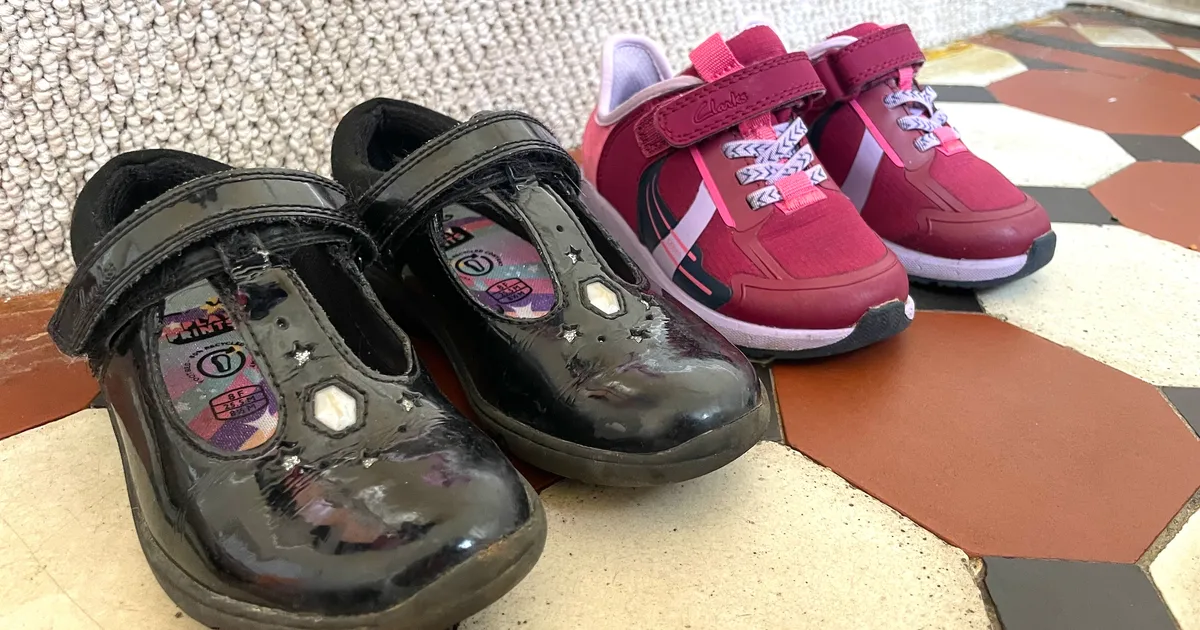
When you’re about to ask your child to get their uniform on for the 60th time in the space of 30 minutes, patience can begin to wear thin.
Each morning in my home there would be battles over getting dressed, brushing hair, cleaning teeth, putting shoes on. It would be a different issue that would trigger huge emotions each time. Meltdowns would occur over the seemingly smallest thing.
I’d be stressed, my kids would be stressed – our emotions would play ping pong, reaching crescendo until one of us finally exploded.
8am would come and go, still not dressed. 8.15am passed and teeth still weren’t cleaned (not for lack of trying, mind you!). 8.20am hurtled past and hair wasn’t brushed or tied back, despite several attempts to do so. Cue, my cries of despair:
“Why aren’t you dressed yet?”
“Can we please stop getting distracted?!?!”
“Shoes on now! We’re going to be late!”
Cortisol levels would be flooding through my body – and theirs. I’d be walking on eggshells because I knew one of my kids was just milliseconds away from having a tantrum over having to wear socks.
8.30am. 8.45am. We were late. Again. Now I was late for work, too.
I knew it wasn’t sustainable, I just didn’t know how to shift out of these morning spirals. I tried sticker charts, visual ‘getting dressed’ charts, timers. Then I read about positive parenting – and I thought, at this point, why not?
What’s positive parenting?
I’ve always tried to look on the bright side, but since becoming a parent and feeling the ginormous weight of responsibility – needing to earn enough; keep them safe; make sure they’re fed, happy and healthy; the list goes on – while also watching my own needs fall by the wayside, I’d be lying if I said I haven’t felt negativity seep in. And that includes my parenting.
Positive parenting is about being mindful of this negativity and trying to keep a lid on it. Per NCT, it’s about focusing on your child’s strengths rather than trying to correct weaknesses: “You recognise, reward and reinforce positive behaviours and impulses. You aim to show empathy and offer warmth and support.”
As the BBC explains, the philosophy “encourages parents to ‘catch their children being good’ and give more positive than negative feedback, instead of focusing on bad behaviour”.
What happened when I tried it
I’d already learned that kids’ cortisol levels naturally peak around 30-45 minutes after waking, which often results in tears, throwing things and storming off in our household.
So, in addition to giving everyone a full hour to get ready in the morning (so there’s less pressuring and rushing on my part, and we’ve factored in time for any big emotions to evacuate the body), I’ve also adopted the personality of what can only be described as a hyperactive (slightly delirious) cheerleader:
“Wow, look how quickly you got your knickers on. Let’s do that again, but with our socks!”
“Let’s keep the momentum going and brush those teeth!”
“Oh my goodness, you tried so hard to get yourself dressed today! I love what you’ve chosen.”
“If we brush our hair in the next five minutes, we’ll have time to ride the bike to school.”
“You were really kind then helping your sister get her shoes on!”
“You’re making so many good choices today!”
It’s not a foolproof method, but I’ve noticed the meltdowns around getting ready are fewer, to the point where we can actually get out of the door on time. Building in extra time for connection – whether that’s sitting and having a chat over breakfast or reading a few pages of a book – also seems to have helped.
Don’t get me wrong, on some mornings no amount of positive spiel can keep the angries at bay (usually towards the end of the week when tiredness has crept in), and on the days when we’re running especially late it can be hard to muster the extra upbeat calls to action and responses.
But for now, at least, it appears to be helping get two under-fives calmly out of the door most mornings. And long may it continue…
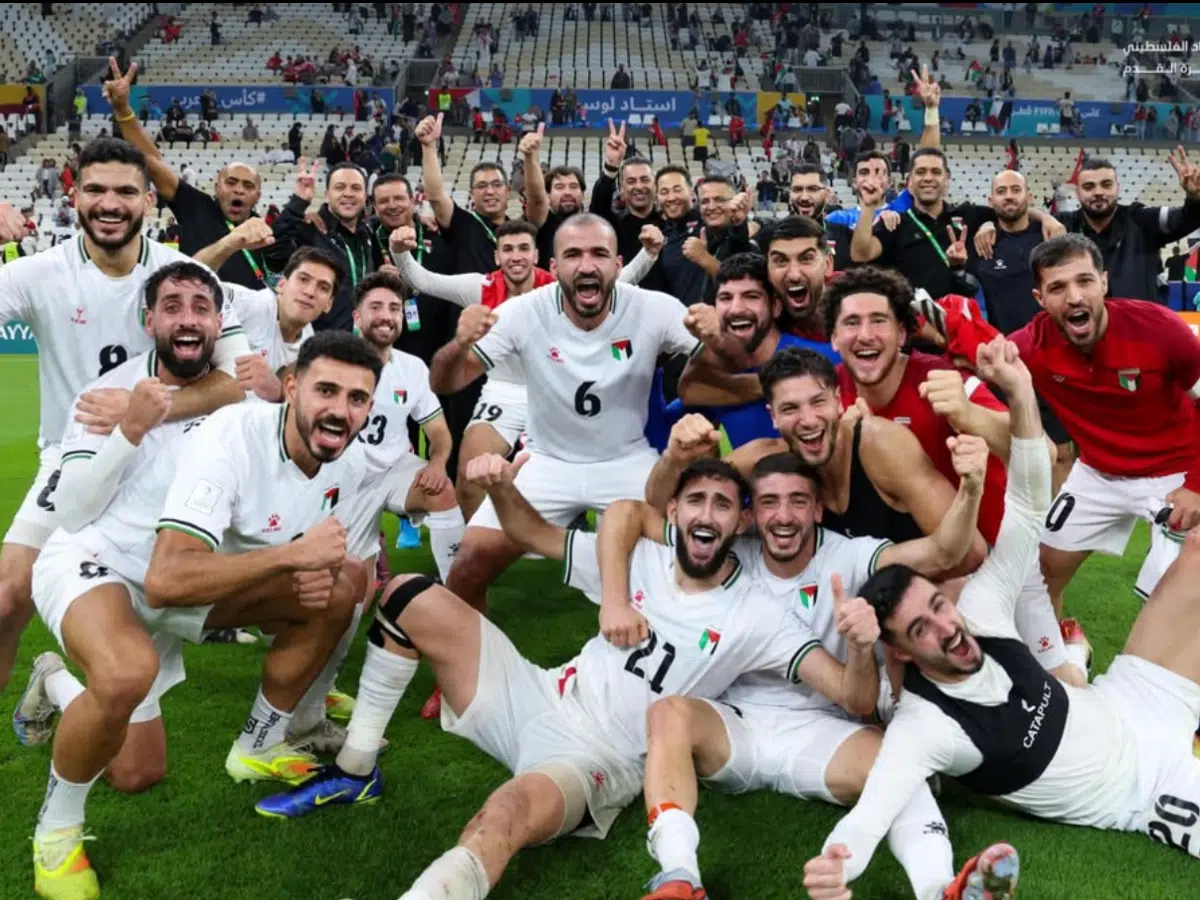
FIFA’s handling of the complaint submitted by the Palestinian Football Association against the Israeli Football Association (IFA) raises serious concerns. Specifically, these concerns focus on its objectivity and its commitment to root out racism in football.
Turning a blind eye to Israeli racism
Despite the gravity of the allegations—discrimination, racist fan behaviour, and Israeli clubs competing in illegal West Bank settlements—the penalties imposed are shockingly light.
On the contentious issue of Israeli clubs operating in illegal settlements, FIFA chose not to take action, citing the “complex and undecided” legal status of the West Bank under international law. This leaves a long-standing issue unresolved, despite years of ongoing discussions within FIFA.
FIFA: Strong words, weak actions
The FIFA Disciplinary Committee was more direct, finding that the IFA had “systematically” violated anti-discrimination and fair play rules. They specifically noted the IFA’s failure to address racism within certain fanbases. Most notably, Beitar Jerusalem FC racist tirades and misbehaviour was highlighted.
Notably, the committee described the IFA’s response as “weak and insufficient.” As a result, such behaviour has been allowed to persist unchecked, and is likely to continue—fine or no fine.
The IFA was issued an official warning, fined a paltry 150,000 Swiss francs, and ordered to implement an anti-discrimination program, including awareness campaigns and behaviour monitoring. However, beyond this “wrist slap,” no serious measures have been taken, despite the severity and ongoing nature of its offences.
FIFA’s double standards
Despite acknowledging the issue, FIFA has chosen not to suspend the team. This has left many fans and teams questioning the federation’s commitment to addressing these violations.
This is especially jarring when compared to FIFA’s swift action against Russia. After Russia’s invasion of Ukraine in 2022, the country’s national team and clubs were banned from all international competitions without delay.
The stark contrast raises troubling questions. While Russia faced immediate, severe sanctions, FIFA’s response to Israel was symbolic at best. This is despite the ongoing discrimination against Palestinians and violations of international football rules.
This disparity highlights FIFA’s reluctance to hold Israel to the same standards as other nations when it comes to racial and political issues.
Featured image courtesy of the Palestinian Football Association

Politicians across the 32 counties—the six counties of north Ireland plus the remaining counties of the Republic of Ireland—have called on governments North and South to follow the decision to ban greyhound racing by Scotland and Wales last week.
Belfast City councillor Anthony Flynn, representing the Green Party, denounced what he described as:
an unregulated industry operating without transparency or accountability.
He continued:
There is no dedicated legislation governing greyhound racing here. There is no official data on injuries or deaths and no proper oversight from DAERA [Department of Agriculture, Environment and Rural Affairs]. We know from other jurisdictions that greyhounds are injured and killed on tracks every year. There is no reason to believe Northern Ireland is any different.
Unlike the Six Counties, Greyhound Racing Ireland (GRI) in the South does keep track of its own brutality, at least partially. The campaign group Ban Blood Sports cites GRI’s figures in which they record that:
…since 2014, at least 4,040 greyhounds suffered injuries and 1,593 were killed.
Track deaths and injuries are commonplace, with greyhounds suffering horrific wounds through falls and collisions during races. Many are euthanised after sustaining these wounds. Moreover, Ban Blood Sports highlights that:
The Greyhound Racing Ireland figures are based on “reported” injuries and deaths, suggesting that the actual number could be even higher. They do not include the greyhounds injured at tracks and later killed elsewhere, or the thousands of greyhounds who are killed every year because they are not fast enough to win races.
A 2019 RTE documentary—Greyhounds Running for Their Lives—revealed the scale of mass murder conducted by the industry. It is likely thousands of greyhounds are slaughtered every year due to being judged insufficiently competitive. All this for so-called ‘sport’, and to boost another shameful industry, the gambling sector.
The government in Dublin has ploughed a staggering €386,806,146 in public money since 2021 into the murderous greyhound racing business. The figure for 2026 is €19.82 million. People Before Profit TD Ruth Coppinger pointed out that only €6 million had been set aside for animal welfare charities.
Racing at speed on oval tracks is dangerous for dogs in extreme weather. They have poor diet, very little enrichment in their lives and very little traceability.
It is not widely supported in our society any more because people have seen the dangers of having a racing industry that is just propped up by the State and is cruel for the animals involved.
She also cited Ireland’s status as “a complete and utter outlier” in a world where the cruel practice is only legal and active in a few countries. Unsurprisingly, it is the Anglophone world showing its customary barbarism, with England, Ireland, Australia and the United States being the outliers in question.
Ireland should be especially ashamed in joining these colonial nations in the torture of animals for entertainment. It does, however, have form in this regard, still allowing similarly cruel sports like fox hunting and hare coursing.
Seemingly content to maintain that disgraceful status, Minister for Agriculture Martin Heydon said:
I do not intend to ban greyhound racing here.
He lamented what he called Coppinger’s:
…dreadful slight on the thousands of people who work in our greyhound racing industry and who love the dogs and care for them greatly.
That’s lovely to hear, but the verifiable facts of mass greyhound murder matter a great deal more than Heydon’s unverifiable psychic insights into the thoughts of workers in a horribly cruel and exploitative industry.
Similarly in the North, the lobby group Greyhound Racing Constituents NI seems upbeat about avoiding a ban. They boasted about their ability to slither into the corridors of power to get their way, saying:
We have been laying the ground work with decision-makers at Stormont over the last year regarding this issue.
If you want to make a small contribution to undermining this smugness and potential corruption, the Green Party has a petition calling for a racing ban.
Further such efforts will be required to match the achievements of Scotland and Wales. Scottish MSPs voted in favour a ban on March 18, bringing in the Prohibition of Greyhound Racing (Scotland) Bill that:
…makes it an offence to allow a greyhound to compete on an oval racetrack in Scotland, with a maximum prison sentence of up to five years and a fine of up to £20,000.
In Wales the previous day, Senedd members also brought in a ban. However, Llyr Gruffydd of Plaid Cymru criticised the legislation for not being comprehensive enough, saying it:
…doesn’t stop the breeding of greyhounds in Wales for racing. It doesn’t stop the training of greyhounds in Wales. For racing, dogs can still be kept in Wales, raced in England.
Despite this, the ban is still facing a legal challenge from the Greyhound Board of Great Britain, which seem intent on keeping Britain generations behind the times in maintaining cruel practices that treat sentient creatures as mere objects for human entertainment.
Featured image via Rásaíocht Con Eireann
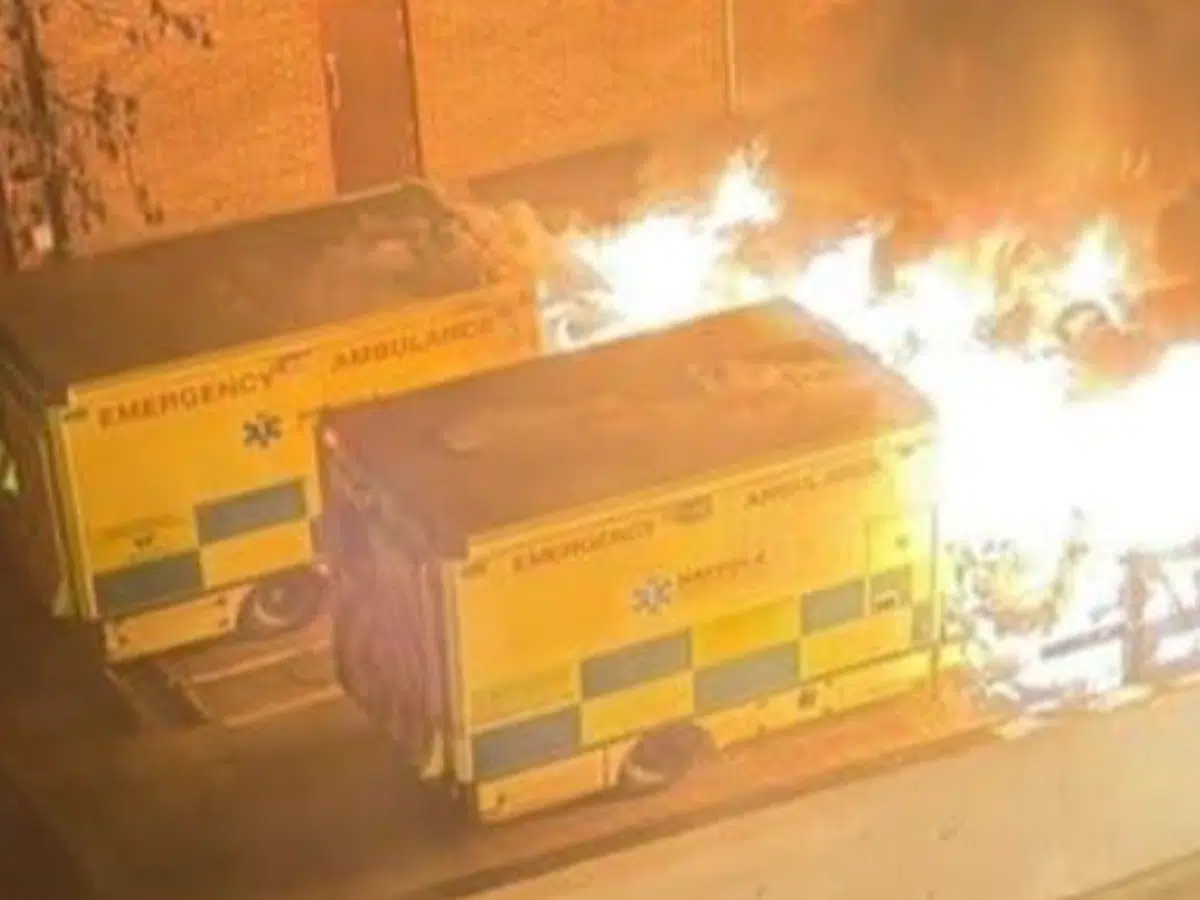
Early on the morning, 23 March, arsonists set fire to four ambulances owned by Jewish charity Hatzola. The incident is being investigated for possible antisemitic motives.
The attack, which occurred in Golders Green, North London, caused several explosions when the fire hit the vehicles’ gas canisters. Thankfully, no one was injured, and all of the fires have now been extinguished.
At around 1:45am, the London Fire Brigade contacted the Met Police with news of the arson. The Met issued a statement three hours later, confirming that they’re treating the attack as an antisemitic hate crime.
Although the attack has not yet been declared a terror incident, counter-terror police are leading the investigation. At the time of writing, no arrests have been made.
CCTV footage shows three black-clad figures approaching one of the ambulances, which catches fire within seconds. Shortly thereafter, the suspects are seen fleeing the scene. Another video shows a sizeable explosion centered on an ambulance.
Met deputy chief superintendent Luke Williams stated that:
We are aware of an online claim from a group taking responsibility for this attack. Establishing the authenticity and accuracy of this claim will be a priority for the investigation team, but it is not something we can confirm at this point.
This likely refers to a group called Harakat Ashab al-Yamin al-Islamiya—’The Islamic Movement of the People of the Right Hand’. The Iran-aligned organisation made an unsubstantiated claim of responsibility on its Telegram channel earlier today.
About Hatzola
Hatzola describes itself as:
a non-profit, volunteer organisation established in 1979 to provide pre-hospital emergency medical response and transportation at no cost, to the North London community.
Hatzola responds to thousands of emergencies every year, from minor injuries to life-threatening conditions. our average response time to life-threatening emergencies is usually within minutes – because we cherish the value of life, and know that those vital minutes can spell the difference between life and death.
Volunteers are trained by medical professionals, and the charity works collaboratively alongside London hospitals and national emergency services. It provides both emergency first response and hospital transfers, among other services.
‘Hatzola’ is the Hebrew word for ‘rescue’. Similar organisations around the world use the name, although the degrees of direct affiliation between the chapters vary. Although the charity itself is Jewish, it offers aid without regard to “race, religion, ethnicity, or ability to pay.”
An appeal to help Hatzola rebuild their fleet of ambulances has already raised over £38,000.
‘No one should feel that we’re not there for them’
Yossi Pincus, a volunteer senior paramedic for North West London Hatzola, stated that antisemitism is an “intrinsic problem nationwide”. He added that:
We are currently running business as usual. We’re still responding and we’re still available for those that need us and no one should feel that we’re not there for them in any different way that we would normally be.
Pincus added that he was grateful to the UK government for its offer to loan four replacement ambulances until the charity can replace its vehicles.
In an address to the House of Commons, home secretary Shabana Mahmood stated that:
This incident comes at a time of soaring antisemitism in our country and today my message to our Jewish community is clear: we stand with you, we will do everything in our power to protect you and we will fight relentlessly to rid our society of antisemitism.
Green party leader Zack Polanski took to social media to offer his solidarity:
Horrified by the antisemitic attack in our city.
Antisemitism is vile and has no place here. Solidarity with the Jewish community in Golders Green — and with our communities across the country who will be feeling this today.
Likewise, Matthew Taylor, interim chief executive of the NHS Confederation and NHS Providers, said:
This appalling attack on Jewish charity ambulances in Golders Green is profoundly disturbing and will no doubt cause enormous distress to Jewish NHS staff and patients.
This incident comes at a time when the NHS workforce is already facing an unacceptable rise in violence, aggression and abuse. While the motives behind these will be varied, the latest NHS Staff Survey reveals that almost one in seven NHS staff experienced physical attacks from patients or the public last year, the highest rate in three years. These findings paint a stark and troubling picture of the pressures and dangers staff encounter while simply trying to care for the public.
No member of staff should fear for their safety at work, and no community should be subjected to what appears to be hate‑motivated attacks on their essential services.
Featured image via the Canary

Independent media platforms operate in a fast-moving digital environment where speed, accessibility, and reliability all shape how content is consumed. For outlets focused on delivering timely reporting and commentary, every technical decision, from page structure to image handling, plays a role in whether audiences stay engaged or leave.
In this context, visual content presents a unique challenge. Images must load quickly without sacrificing clarity, and they must display correctly across a wide range of devices and browsers. To support this balance, many publishing teams rely on tools like webp tool when managing image formats, ensuring that visuals remain compatible without disrupting performance.
The Technical Side of Digital Publishing
While readers primarily engage with headlines and stories, the infrastructure behind digital publishing is equally important. Websites that fail to load quickly or display content properly risk losing credibility and audience trust.
Media-focused platforms often operate with high publishing frequency, which means that workflows must be efficient and repeatable. Image handling becomes a core part of this process, especially when articles rely heavily on visuals to support storytelling.
Technical optimization is not just a background concern, it directly affects how journalism is delivered and experienced.
According to analysis of digital media infrastructure and performance challenges published on The Canary, platform reliability and accessibility remain central to how independent outlets maintain engagement in competitive online environments.
Why Image Formats Matter for Accessibility
Image formats play a critical role in determining how content is displayed across different systems. While newer formats like WebP offer improved compression and faster load times, they are not universally supported in all environments.
For readers using older devices or certain browsers, unsupported image formats can result in missing visuals or broken layouts. In a media context, this can disrupt the narrative and reduce the effectiveness of the content.
Ensuring compatibility is therefore not just a technical consideration, it is an accessibility issue. Readers should be able to engage with content regardless of the device or software they are using.
Managing Performance Without Sacrificing Reach
One of the key challenges for digital publishers is balancing performance optimization with broad accessibility. Highly compressed image formats can improve loading speeds, but they may introduce compatibility limitations.
This creates a need for flexible workflows that allow images to be adapted based on context. Converting images into widely supported formats ensures that content reaches the widest possible audience without technical barriers.
At the same time, maintaining performance standards is essential for retaining readers. Slow-loading pages can significantly reduce engagement, particularly in an era where users expect near-instant access to information.
The Role of Conversion Tools in Editorial Workflows
Image conversion tools have become a practical solution for managing these competing priorities. Instead of manually adjusting each file, teams can automate the process of converting images into the appropriate format.
This is especially valuable in news and opinion publishing, where speed is critical. Articles are often published under tight deadlines, leaving little room for time-consuming technical adjustments.
By integrating conversion tools into their workflows, media teams can ensure that images are optimized and compatible before publication, without slowing down the editorial process.
Supporting High-Volume Publishing Environments
Independent media platforms frequently operate with limited resources while still producing a high volume of content. This makes efficiency a key factor in maintaining consistent output.
Handling large numbers of images manually is not practical in such environments. Automated solutions allow teams to process multiple files quickly, reducing workload and minimizing the risk of errors.
This level of scalability supports continuous publishing without compromising quality, which is essential for maintaining audience engagement over time.
Maintaining Visual Integrity in News Content
Visual accuracy and clarity are particularly important in journalism. Images often serve as supporting evidence, context, or illustration for the stories being told.
Any degradation in image quality or display issues can affect how information is perceived. Blurry or distorted visuals may reduce credibility, while missing images can interrupt the reader’s understanding of the content.
By ensuring that images are properly formatted and displayed, publishers can maintain the integrity of their reporting.
Reducing Technical Friction for Editorial Teams
Editorial teams are typically focused on content creation rather than technical processes. Complex image handling requirements can create friction that slows down production.
Simplified tools help remove these barriers by making image optimization more accessible. With intuitive interfaces and automated processing, even non-technical team members can manage visual assets effectively.
This allows journalists and editors to concentrate on storytelling, while technical systems handle the optimization behind the scenes.
Consistency Across Platforms and Devices
Modern audiences consume content across multiple platforms, including desktops, smartphones, and tablets. Each platform may have different requirements for displaying images.
Ensuring consistency across these environments is essential for maintaining a professional and cohesive presentation. Conversion tools help standardize how images appear, regardless of where they are viewed.
This consistency contributes to a smoother user experience and reinforces the credibility of the publication.
Strengthening Content Delivery in Independent Media
For independent media platforms, maintaining reliable content delivery is a continuous process that involves both editorial and technical considerations. Efficient image handling plays a key role in ensuring that stories are presented clearly and accessibly.
By incorporating structured approaches to image format management, publishers can reduce technical disruptions, support accessibility, and maintain the performance standards expected by modern audiences.

London has long been considered one of the most resilient property markets in the world. Even with rising interest rates, regulatory changes and economic uncertainty in recent years, the city continues to attract investors from the UK and overseas. Its status as a global financial centre, combined with a large population and strong rental demand, means property in London often remains a long-term investment rather than a short-term speculation.
One of the biggest factors supporting the market is demand for rental housing. London draws professionals, international workers and students from across the world. Major universities such as University College London and King’s College London bring tens of thousands of students into the city each year, many of whom need accommodation. At the same time, London’s role as a business hub continues to attract young professionals who prefer renting close to work rather than commuting long distances.
Infrastructure improvements have also played an important role in shaping investment trends. The opening of the Elizabeth Line has dramatically improved travel times across the city, making previously overlooked districts far more accessible. Areas such as Stratford and Woolwich have become increasingly attractive to investors who believe these neighbourhoods will benefit from continued regeneration and rising demand.
Another reason London remains appealing is the ongoing imbalance between housing supply and demand. New housing construction has struggled to keep up with population growth, which helps support both rental prices and long-term property values. While the market may experience periods of slower growth, this structural shortage often provides a level of stability that investors look for.
What Types of Property Perform Best?
When investing in London property, choosing the right type of home can make a significant difference to both rental yield and occupancy rates. Some property types tend to perform more consistently because they appeal to a broader tenant base.
One-bedroom apartments are often the starting point for many investors. They typically require a lower purchase price than larger homes and are relatively easy to rent out. Demand is particularly strong among young professionals and couples who want to live close to business districts or transport hubs. In neighbourhoods near universities, these flats can also appeal to postgraduate or international students who prefer private accommodation.
Two-bedroom apartments are another popular option. Their main advantage is flexibility. A two-bedroom property can be rented to professional sharers, couples who need extra space, or small families. This wider tenant pool can help reduce vacancy periods and may allow landlords to charge higher total rent.
Some experienced investors also consider HMOs (houses in multiple occupation), particularly in areas with large student populations. While these properties can generate higher rental yields, they come with stricter regulations, licensing requirements and more complex management. For many investors, apartments offer a simpler and lower-risk approach.
Location is still one of the most important factors. Business districts such as Canary Wharf continue to attract professionals working in finance and technology, which supports demand for nearby apartments. Regeneration areas with strong transport links are also popular among investors who are looking for long-term growth potential.
Why Many Investors Still Look at London
Despite challenges such as higher mortgage rates and changes to landlord taxation, London’s property market continues to evolve rather than decline. Investors today tend to be more selective, focusing on neighbourhoods with strong transport connections, steady tenant demand and future development plans.
Properties that are well located and realistically priced still tend to rent quickly. Rather than chasing rapid price growth, many investors now prioritise consistent rental income and long-term capital appreciation. For buyers who take a patient approach, London property can still offer stability that is difficult to find in many other markets.
Another Way People Dream of Owning Property
With property prices remaining high in major cities, some people are exploring alternative ways to get onto the property ladder. One option that has gained popularity in recent years is online house competitions, where participants purchase a small entry ticket for a chance to win a house or a large cash prize. While the odds vary depending on the competition, the appeal is obvious: for a relatively small cost, entrants have the opportunity to win a house that might otherwise be far beyond their budget. As more platforms launch these competitions, they are becoming an increasingly talked-about route for people who dream of owning property.
Israel’s openly colonialist assault on Lebanon continues, with the Israeli army destroying another key bridge. The systematic attacks on vital infrastructure have fuelled fears of a full-scale annexation by Israel. The latest strike targeted the Qasmiyeh bridge, along the Litani river, 14km north of Lebanon’s UNESCO world heritage city of Tyre.
Israel has been hitting bridges along the river in an attempt to cordon off the south of Lebanon. And one far-right Israeli politician has even declared the new Israeli border with Lebanon is now the Litani river—around 30km north of the current frontier!
من جسر #القاسمية.. مشاهد خاصة لريد تي في توثق #الدمار
https://t.co/K1UE4PoQNH— Lebanon Debate (@lebanondebate) March 23, 2026
Middle East Eye (MEE) reported:
The Israeli army appeared to destroy the Qasmiyeh Bridge near the city of Tyre, hours after the country’s defence minister, Israel Katz, ordered all crossings over the Litani River and several homes close to the Israeli border to be destroyed.
Israel’s attack has caused mass displacement, drawn wide condemnation for brazen attacks on civilian infrastructure and their means to life.
Suspicious schemes
In theory, Hezbollah breached a US-brokered ‘ceasefire’ with Israel in early March which had held up since their last war in 2024. In practice, the US gave Israel carte blanche to strike Lebanon, which it has done constantly since the deal was struck. During the intervening period, Israel attacked southern Lebanon about 15,400 times.
You can read about the secretive Israel-US ‘side letter’ pact here, as well as our extensive coverage of Israel’s ceasefire breaches and ongoing invasion here.
Israel’s current assault has displaced one in five Lebanese people and repeatedly struck densely populated areas. According to Anadolu Agency:
at least 1,029 people have been killed and 2,786 injured in Israeli attacks since March 2 [2026].
Lebanese prime minister Joseph Aoun described the latest bridge attack as:
an attempt to sever the geographical connection between the southern Litani region and the rest of Lebanese territory.
Adding that it falls:
within suspicious schemes to establish a buffer zone along the Israeli border, solidify the reality of the occupation and seek Israeli expansion within Lebanese territory.
‘Litani is the new Israeli border’
Data journalist Ben van der Merwe has documented seven bridges over the Litani river hit by Israel. This amounts to a systematic effort to cut off southern Lebanon from the rest of the country.
The IDF has now struck seven bridges over the Litani river. Documenting them in this thread.@GeoConfirmed pic.twitter.com/8q7RtkYxw4
— Ben van der Merwe (@_BvdM) March 23, 2026
Israel’s direct attacks on vital civilian infrastructure recall its so-called Dahiyeh Doctrine. The Canary analysed the origins of this genocidal scorched earth approach here. Peace Studies professor Paul Rogers describes the method as:
the deliberate application of “disproportionate force”, such as the destruction of an entire village, if deemed to be the source of rocket fire.
Rogers added:
One graphic description of the result was that “around a thousand Lebanese civilians were killed, a third of them children. Towns and villages were reduced to rubble; bridges, sewage treatment plants, port facilities and electric power plants were crippled or destroyed.”
Human Rights Watch (HRW) has condemned Israel’s assault on 23 March, saying:
Forcible displacement, wanton destruction and attacks deliberately targeting civilians are war crimes.
They added that:
Countries that continue to provide Israel with arms and military aid risk complicity in the Israeli government’s serious violations in Lebanon.
Meanwhile, Israel’s far-right finance minister Bezalel Smotrich made it very clear that the Israeli invasion has colonialist, expansionist aims.
Reuters reported on 23 March:
Smotrich told an Israeli radio program that the military campaign in Lebanon “needs to end with a different reality entirely, both with the Hezbollah decision but also with the change of Israel’s borders.”
Smotrich added:
I say here definitively…in every room and in every discussion, too: the new Israeli border must be the Litani.
Featured image via the Canary

Trump Misspells Basic Words Critics Claim Mental Incompetence

Delve halts demos, Insight Partners scrubs investment post amid ‘fake compliance’ allegations

Cars and homes burnt as Israeli settlers rampage through occupied West Bank | World News


-
 Crypto World3 days ago
NIO (NIO) Stock Plunges 6.5% as Shelf Registration Sparks Dilution Worries
-

 Fashion3 days ago
Weekend Open Thread: Adidas – Corporette.com
-

 Politics3 days ago
Jenni Murray, Long-Serving Woman’s Hour Presenter, Dies Aged 75
-
 Tech7 days ago
Are Split Spacebars the Next Big Gaming Keyboard Trend?
-

 Crypto World2 days ago
Best Crypto to Buy Now: Strategy Just Spent $1.57 Billion on Bitcoin During Fear While Early Investors Quietly Enter Pepeto for 150x Potential
-

 News Videos6 days ago
RBA board divided on rate cut, unusually buoyant share market | Finance Report | ABC NEWS
-

 Crypto World2 days ago
Bitcoin Price News: Bhutan Sells $72 Million in BTC Under Fiscal Pressure, but the Smart Money Entering Pepeto Sees What the Market Does Not
-

 Politics6 days ago
The House | The new register to protect children from their abusers shows Parliament at its best
-

 Tech4 days ago
inKONBINI Lets You Spend Summer Days Behind the Register
-
 Politics7 days ago
Real-time pollution monitoring calls after boy nearly dies
-

 Crypto World6 days ago
Canada’s FINTRAC revokes registrations of 23 crypto MSBs in AML crackdown
-

 Sports18 hours ago
Remo Stars and Kano Pillars Strengthen Survival Hopes in NPFL
-
 NewsBeat5 days ago
Residents in North Lanarkshire reminded to register to vote in Scottish Parliament Election
-

 News Videos6 days ago
PARLIAMENT OF MALAWI – PAC MEETING WITH REGISTRAR OF FINANCIAL ON AMARYLLIS HOTEL – INQUIRY LIVE
-

 Politics4 days ago
Gender equality discussions at UN face pushbacks and US resistance
-

 Business2 days ago
No Winner in March 21 Drawing as Prize Rolls to $133 Million for Next
-

 Business5 days ago
Who Was Alex Pretti? 5 Key Facts About the ICU Nurse Killed by Federal Agents in Minneapolis
-

 Sports17 hours ago
Gary Kirsten Accuses Pakistan Cricket Board Of ‘Interference’, Mohsin Naqvi Responds
-

 Tech1 day ago
Give Your Phone a Huge (and Free) Upgrade by Switching to Another Keyboard
-

 Sports4 days ago
2026 Kentucky Derby horses, odds, futures, preview, date: Expert who nailed 12 Derby-Oaks Doubles enters picks
You must be logged in to post a comment Login