
Politics
Why Does Keir Starmer Think It’s Time For Closer EU Ties?


Keir Starmer reopened a dangerous can of worms this week.
No, not the Peter Mandelson saga, but the UK’s ties with the EU.
While the government says it does not want to undo Brexit – as Labour’s political opponents claim – the prime minister made it clear he “strongly believes the UK’s best interests are in a stronger, closer relationship with Europe” on Monday.
His remarks came after chancellor Rachel Reeves revealed she would be open to working with the EU if it boosts economic growth or helps the UK’s “security and resilience”.
These comments raised eyebrows among critics, especially as MPs will soon vote on the government’s UK-EU reset bill after it’s unveiled in the King’s Speech on May 13.
Acting on the prime minister’s orders, the monarch will set out the government’s plans for the coming parliamentary session.
Labour has long pledged to “reset” Britain’s relationship with the EU after Boris Johnson’s trade deal made it harder to import and export to and from the UK’s nearest neighbours.
Donald Trump’s war in Iran has rocked the international economy by threatening global oil supplies – and raised significant fears about the UK’s depleted defences in the process.
“Nobody I know who voted for Brexit voted to make themselves and their community poorer”
– Steve Reed, housing secretary
The president has also been attacking Britain, even threatening to rip up the UK-US trade deal, after Starmer chose not to join Trump’s offensives against Iran.
So it’s rather timely that the new reset bill will grant the government new powers to align the UK with parts of the EU to make trading with the bloc easier, a move ministers hope will ease cost of living pressures.
But it won’t be plain-sailing for Starmer. While MPs will vote on the overall bill, the “secondary legislation” within the bill will bypass a Commons vote.
That means parliamentarians will not be able to have their say when the government chooses to line up with EU laws around certain trade sectors.
Brexiters will be especially infuriated because, being outside of the EU, the UK cannot even have a say on making these laws anymore.
But ministers are becoming increasingly outspoken in their attacks on Brexit – and evidently happy to take on that fight.
Housing secretary Steve Reed told HuffPost UK: “Brexit – Tory Brexit – led to a collapse in UK exports of one-fifth. We’ve lost jobs, we’ve lost investment, people have lost wages. We need to grow the economy if we want to put money back in people’s pockets, and that’s what we’re going to do.”
He insisted Labour respects the referendum result, while acknowledging that “nobody I know who voted for Brexit voted to make themselves and their community poorer”.
Reed’s sentiments appear to reflect voters’ changing feelings towards Brexit, according to new polling from the More in Common think tank.
It found the Remain camp would win with 65% of the vote if another EU referendum were held today, while just over a quarter would vote Leave.
Meanwhile, Naomi Smith, Chief Executive of Best for Britain, which campaigns to strengthen UK-EU ties, said their polling has similar results.
“Labour is shedding far more of its support to the left than the right,” she said, analysis the party’s vote share ahead of the May elections where the party is expected to lose a shocking number of seats.
“A far closer relationship with Europe – delivered with the urgency the moment demands – is the key policy area uniting the majority of voters Labour is currently hemorrhaging.”
But this pro-EU shift will come at a cost.
Joe Meighan, a policy adviser from the pro-EU think tank the European Movement, said Starmer “needs to confront what it means for Labour’s red lines” if he wants closer ties with the union.
Labour promised in the run-up to the 2024 general election that rejoining the Single Market is a red line.
Meighan said: “No business would decide to distance itself from its best customer. The impact of doing so is written across our entire economy.
“Food and drink exports to the EU were 31% lower in 2025 than in 2019. At least 4% of our GDP has been lost.
“Energy bills are higher, young people are trapped, our international clout has dwindled.”
But, he added: “In this new reality, Labour cannot go on treating its own Brexit red lines as untouchable.“
We look at the risks the government is taking by reviving the Brexit rows in this week’s Commons People, complete with extracts from our interview with Reed:
Subscribe to Commons People, the podcast that makes politics easy. Every week, Kevin Schofield and Kate Nicholson unpack the week’s biggest stories to keep you informed. Join us for straightforward analysis of what’s going on at Westminster.



In a horrifying video from Israel’s illegal war on Lebanon, the invaders called a Lebanese man as he drove with his family. The monsters on the other end of the line gave a man an appalling choice: get out of the car and be killed alone, or die in the car with your family:
View this post on Instagram
Israel is a terror state and the sickest, most malignant society. ‘Most moral army‘ – yeah, right.
Featured image via the Canary
By Skwawkbox


Opponents of Israel’s genocide, apartheid, and land-theft have won a reprieve after the government of France withdrew its proposed ‘Yadan’ law that would have outlawed criticism of Israel. Left and human rights groups had worked and protested for weeks to block the law, which was expected to pass if it reached the French parliament.
However, the win is only temporary. The French government has said it will bring a revised bill by late June that will “fully incorporate” the now-withdrawn version.
France faces critical juncture
Opponents believe that the bill itself is antisemitic, because it equates Jewishness with support for a colony that has committed genocide in Gaza and is continually attacking and stealing land from both the Palestinian people and its neighbours.
The so-called ‘Yadan bill’, which was put forward in late 2024 by French MP Caroline Yadan and backed by France’s Israel lobby, targets what it calls ‘new forms of antisemitism’. However, while clearly worded to try to silence critics, there is no doubt that it intends to classify anti-Zionism and opposition to Israel’s crimes as antisemitism. French PM Sebastien Lecornu has shamelessly described anti-Zionism as the “mask of antisemitism”.
Israel’s supporters are desperate to outlaw resistance to Zionism and its genocidal agenda. UK freedoms of speech and protest are similarly under attack by Keir Starmer and the UK Israel lobby. Under Macron’s illegitimate government, France has assisted Israel in its land-grabs.
Featured image via the Canary
By Skwawkbox

Menopause can bring about a number of mental, physical and emotional changes — including some shifts in your sex life.
Clinically speaking, menopause is reached when you’ve gone 12 straight months without a period, marking the end of one’s reproductive years. The average age of the last menstrual period is 51, according to the American College of Obstetricians and Gynaecologists.
But the transitional phase leading up to menopause, known as perimenopause, typically lasts about four years — though it can be as short as a few months or as long as 10 years. Colloquially, however, many use the word “menopause” as an umbrella term to encompass the whole process.
During perimenopause, which often begins in your mid 40s, levels of hormones like estrogen and progesterone fluctuate. This can lead to irregular periods, hot flashes, insomnia, brain fog, mood swings, vaginal dryness and low libido — all of which can impact one’s sex life directly or indirectly. It’s worth noting that, for some individuals, symptoms may be intense and last a while, and for others they may be more mild and fleeting.
And although certain symptoms like hot flashes tend to dissipate over time, others like vaginal dryness often persist and may even worsen.
The loss of estrogen during menopause can cause the vaginal and vulvar tissue to become thinner, dryer and less stretchy, which can lead to pain during sexual activity, Dr. Stephanie Faubion, director of the Mayo Clinic Center for Women’s Health and medical director of The Menopause Society, told HuffPost.
And while there is a lot of discussion about the challenges of sex after menopause, it may be comforting to know that it’s definitely not all doom and gloom.
“The good news is that most women who had a good sex life before menopause can continue to enjoy a good sex life after menopause,” Faubion said.

Westend61 via Getty Images
In fact, it’s a myth that women stop being sexual once menopause hits, midlife sex coach Sonia Wright told HuffPost.
Menopause “can actually be the beginning of something amazing; even better than sex in your 20s and 30s,” she said. “You get to be a sexual being until the day you leave this world. Postmenopausal sex can be even more intimate, connective, pleasurable and very satisfying.”
If you are struggling with your sexual well-being around menopause, reach out to your health care provider to discuss causes and potential treatment options tailored to your needs. Vaginal lubricants and moisturizers, sex therapy, hormone therapy, and lifestyle changes like incorporating yoga may help.
Below, women share their personal experiences with sex after menopause. Note: Some last names have been omitted to protect their privacy. Responses have been lightly edited for clarity and length.
‘The only thing that changed was knowing what I want from a sexual relationship, and what I will and won’t tolerate.’
“I was around 52 when menopause symptoms started, and it’s now been close to two years postmenopause. When my monthly cycle started to become irregular, I realised menopause was beginning. I did a bit of reading on what to expect, and two of the possible issues I came across were lack or loss of sex drive and vaginal dryness. The worst symptom for me was hot flashes, and I was fortunate that I didn’t need any hormone replacement therapy.
I have always had a relatively high sex drive and sex is important to me, whether in a relationship or not. My sex drive has remained high, and I enjoy a healthy and safe sex life even though I am single. Even though pregnancy is no longer an issue, I always use condoms and get tested for STIs yearly. I have had no issues regarding vaginal dryness and do not need any lubricant for vaginal sex.
For me, the only thing that changed was knowing what I want from a sexual relationship, and what I will and won’t tolerate. Life is too short for bad sex!
What has surprised me is that I find myself attracted to men who are younger than me. I had always dated older. All of my sexual encounters since menopause and becoming single are with younger men ranging in age from 39-50 years of age.” — Kim P., 56, Queensland, Australia
‘I dated a gentleman who made me realise I was still a sexy, vital, vibrant woman.’
“I think I was around 55 when I started going through menopause. I noticed I wasn’t really interested in sex, but I wasn’t sure if it was my circumstances — I was in the middle of a divorce — or ‘The Pause.’ After my yearly gynaecologist visit, where my doctor told me about vaginal atrophy and a few other midlife issues that might arise, I just gave up on sex.
But at age 65, I briefly dated a gentleman who made me realise I was still a sexy, vital, vibrant woman. Sex was fun again! So I’m not sure if it was menopause that made me ‘think’ I no longer was interested in sex/intimacy, or if it was my mind and society. Whatever the case, I’m ready for dating and this next new chapter. Bring it on!” — Brenda B., 67, New York City
‘Now I’m having the best sex of my life.’
“I’ve been postmenopausal for a couple of years at least. Now I’m having the best sex of my life. It’s largely due to the fact that I know exactly what I want. And I feel entitled to say, ‘This is what I want. And this is how I want it.’ And to also say, ‘No, that’s not what I want’ — even if it’s pretty minor. I just know what I want, and I know how to ask for it and to be demanding in a good way.
I had actually very few menopausal challenges, although I started acupuncture early. I’ve done regular acupuncture for probably 20 years now. And my acupuncturist’s goal from the beginning was like, ‘Let’s keep your cycle as regular as we possibly can for as long as we possibly can.’ And I think that was hugely helpful to me: having her support and having her focus on my hormones, to keep them going in the right way. So that’s what I recommend — not necessarily acupuncture — but don’t try to go through menopause solo. Get support, whatever support you can find, that will work for you.
As a sex coach, I’m a huge proponent of masturbation. Because that way, you know your whole body and that really empowers you then to say, ‘This is what really works for me.’ There’s a quality of ‘use it or lose it.’ So if you’re not in a partnership, and you’re not having regular sex and you’re not masturbating, you’re just not ‘juicing your flow,’ basically.
Find the vibrators that work for you. There are so many available right now: vibrators, dildos, combos. I encourage my clients to do “The O 30”: Masturbate 30 days straight, and see what you learn and see what changes in your life.” — Dori Melton, 58, Oakland, California

The Good Brigade via Getty Images
‘My libido actually surged at menopause.’
“I didn’t have expectations about how sex would be after menopause. I had never heard that it might change due to menopause. I think that was positive in that I didn’t internalise stereotypes about inevitable libido changes. My libido actually surged at menopause. But it was also negative in that I had not heard about common postmenopausal physical symptoms such as thinning of vulvar and vaginal tissues, often referred to as a sensation of dryness.
So when I began to experience pain with penetration after menopause, my ignorance resulted in a longer-than-necessary time to diagnosis and treatment after trying various types of lube that did not address the underlying issue. I came to learn that this condition (urogenital atrophy) is very common postmenopause and usually easily treated, but it is under-diagnosed and under-treated. Sometimes considerable self-advocacy is required. In my case, insertable vaginal oestrogen effectively resolved my symptoms and has prevented recurrence of symptoms with ongoing use.
Aside from the temporary physical symptoms I experienced, sex after menopause has mostly been as good and often better than sex prior to menopause. Reasons for this likely include increased sexual confidence; greater experience with sex, relationships and communication; a consistent standard of mutual desire and enthusiasm; some exploration with a variety of interesting partners; and increased privacy as my children have become adults.
In my experience, generally speaking, choice in sex partner(s) can make a tremendous difference in how a woman might experience sex. This is true in any stage of life, though there are some stages and circumstances I believe are particularly fragile, such as early sexual experiences, sex post-childbirth, sex approaching menopause when hormones are erratic, sex postmenopause, and sex during ill health or while processing grief.
I was partnered as I was approaching menopause, and the sexual dynamic became all about my then-partner’s needs and fears. Had we still been together and focused on his needs postmenopause when I experienced pain with penetrative sex, I think I might’ve really struggled with the amount of self-advocacy required to get a diagnosis and treatment. Instead of having to focus on advocating to fulfill someone else’s needs, I was motivated to maintain the pleasurable sex life I’d cultivated for myself.” — Jackie, 54, California

The post The real Keir Starmer scandal appeared first on spiked.


US aerospace company Moog’s UK subsidiary has declined to comment on the seizure of a consignment of military components by Belgian authorities while en route to Israel. According to a statement released by the Walloonian government, the consignment did not bear a declaration that the items were for military use as required by Belgian law and did not have the compulsory ‘transit licence’.
A second UK arms consignment has now also been seized, though the manufacturer of that one has not yet been named. But the UK company involved in the first one has: Moog, specifically its Wolverhampton facility.
Moog: going on for six months
Speaking on condition of anonymity, an industry insider told Skwawkbox that Moog’s shipments had been going on via the Belgian route for at least six months and that it was almost unthinkable that paperwork could be inadvertently completed incorrectly by a company whose business consists of shipping items around the world:
The shipments have been going on for years, but Moog changed its shipping arrangements in July, from FedEx to UPS, which led to the route change. There have been at least nineteen shipments through Belgium since July 2025. They did this at the same time as they were applying for a High Court injunction to stop protest activity at their sites.
Fedex kept on shipping for Moog to other destinations but stopped its Israel shipments. This made Moog change route. Belgium, of course, refuses to ship arms to Israel.
Clearly Moog didn’t declare to the Belgian authorities that the items were for military use. There are other technical descriptions one could use to make it less obvious, and the shipment was consolidated with civilian goods, but Moog was obliged to declare it was ML10 military cargo and they didn’t.
It’s extremely unlikely that Moog could have filled in the paperwork wrongly in error. They would have known about the whole routing before the shipments started, as they are a member of the industry body for arms exports, the Export Group for Aerospace, Defence and Dual-Use (EGADD) – indeed their manager responsible for export control was until recently on EGADD’s Executive Committee.
They would have had to file compliance reports for the Export Control Joint Unit (ECJU) as part of the conditions of their export licence.
Misleading parliament?
Skwawkbox has contacted EGADD for comment. Skwawkbox also contacted Moog. When asked for comment, the Moog employee who took the call said a rapid “No thank you” and hung up.
Who knew what, when, is the key question in this scandal. It appears Moog knew a lot, early – and isn’t happy at being asked about it.
But the knowledge might also extend to Westminster. Clearly, Keir Starmer’s trade minister Chris Bryant is not happy at being asked about it either. Bryant was on 16 April 2026 exposed by Declassified UK misleading Parliament about the shipment and use of such components to Israel.
Bryant knew that Israel can use such parts in its slaughter of Palestinian civilians. Was he – or other government ministers – aware of the illegal routing of Moog and other components to the genocidal IOF? That question remains unanswered.
Featured image via the Canary
By Skwawkbox


Israel has agreed to a 10-day ceasefire in Lebanon, theoretically halting its war of aggression in the south. But we know Israeli ceasefires generally involved quire a lot of firing. And much is unclear about the parameters of the pause, which do not appear to demand Israeli withdrawal.
Al Jazeera reported:
Israel and Lebanon have agreed to a 10-day ceasefire starting at 21:00 GMT today, US President Donald Trump says after speaking to Israeli Prime Minister Benjamin Netanyahu and Lebanese President Joseph Aoun.
However, Hezbollah officials have said the terms of the ceasefire must see Israeli troops removed:
Hezbollah has said the continued presence of Israeli troops on Lebanese territory gives Lebanon and its people “the right to resist”, as it outlined its position on a proposed ceasefire.
In its first public response to the truce, the group said any agreement must not allow Israeli forces freedom of movement inside Lebanon.
Lebanon beseiged
Despite the ceasefire the Lebanese army is telling the millions displaced from the south not to return home:
— Drop Site (@DropSiteNews) April 16, 2026
 Breaking: The Lebanese army is telling civilians not to return yet to southern villages, amid reports of a ceasefire. It says people should wait until the agreement officially takes effect and avoid areas where Israeli forces are still present. https://t.co/TunVrrdg7j
And Iran’s parliamentary speaker Mohammad Bagher Ghalibaf insisted any peace deal must include Lebanon:
Lebanon is an integral part of the comprehensive ceasefire.
Pakistan, which is brokering the deal, sent army chief Asim Munir to Tehran to negotiate. He reportedly said:
I understand the importance of the ceasefire in Lebanon and I will follow it.
Nobody trusts Israel
Cradle Media columnist Mohamad Sweidan explained some of the complexities of the situation on X on 16 April:
According to the information:
– There are Pakistani confirmations to Tehran that Tel Aviv will soon announce a ceasefire in Lebanon.
– If Tel Aviv is telling the truth, this comes after Iran’s insistence on not participating in any round of negotiations before a ceasefire in Lebanon.
– Over the past two days, the Lebanon file has been the focus of Iranian-Pakistani discussions.
– Naturally, the extent of “Israel’s” commitment cannot be trusted, but what is certain is Tehran’s position seeking to stop the war.
In a little while, we will publish all the details of the Iranian-American negotiations on the subject.
Even as the peace deal was being thrashed out, Israel took the chance to bomb the last bridge over the Litani river – a strategically important feature the settler-colonial forces had planned to use as a cordon for the time being:
Israel bombed this morning the Qasmiya Bridge, the last operational crossing remaining over the Litani River. Additional updates this morning are linked below. pic.twitter.com/brALUzBgmm https://t.co/a8MMDsMAID
— Drop Site (@DropSiteNews) April 16, 2026
Mohamad Sweidan pointed to some of the “constants” to keep in mind in regard to the ceasefire:
بعض الثوابت: — Mohamad Hasan Sweidan (@mhmdsweidan) April 16, 2026
– يسعى ترامب إلى إقفال ملف الحرب مع إيران والدفع نحو إنجاح المسار التفاوضي. وفي المقابل، تمسّك الإيرانيون بضرورة التزام “إسرائيل” بالهدنة وتنفيذها فعليًا قبل استكمال المفاوضات، وهو ما دفع ترامب إلى ممارسة ضغوط مباشرة على نتنياهو لإجباره على القبول بها.
– إن قبلت تل…
For example:
Trump is seeking to close the file on the war with Iran and push towards the success of the negotiating track. In return, the Iranians are insisting on the necessity of “Israel” committing to the ceasefire and implementing it in practice before completing the negotiations, which has prompted Trump to exert direct pressure on Netanyahu to force him to accept it.
Sweidan also said the resistance had been central to forcing a deal:
If Tel Aviv accepts the ceasefire, it will be due to the steadfastness of the resistance fighters on the front and the steadfastness of the Iranian negotiators in their position.
And he emphasised that the current deal meant a pause – not a withdrawal:
And naturally, even if Tel Aviv announces its commitment, we should not trust it.
The full text of the ceasefire has now been published by the US State Department:
Following productive direct talks on April 14 between the governments of the Republic of Lebanon (hereinafter “Lebanon”)…
— Drop Site (@DropSiteNews) April 16, 2026
 Just In: The full text of the ceasefire statement agreed to by the Government of Israel and Government of Lebanon, and issued by the US State Department:
As the Canary reported on 16 April, Israeli forces have demolishing 1400 homes in south Lebanon. This is in line with their explicitly genocidal scorched earth Dayiha doctrine. And as we argued in the same article, Israel’s ambitions to colonise Lebanon are unlikely to have dimmed.
Featured image via the Canary
By Joe Glenton
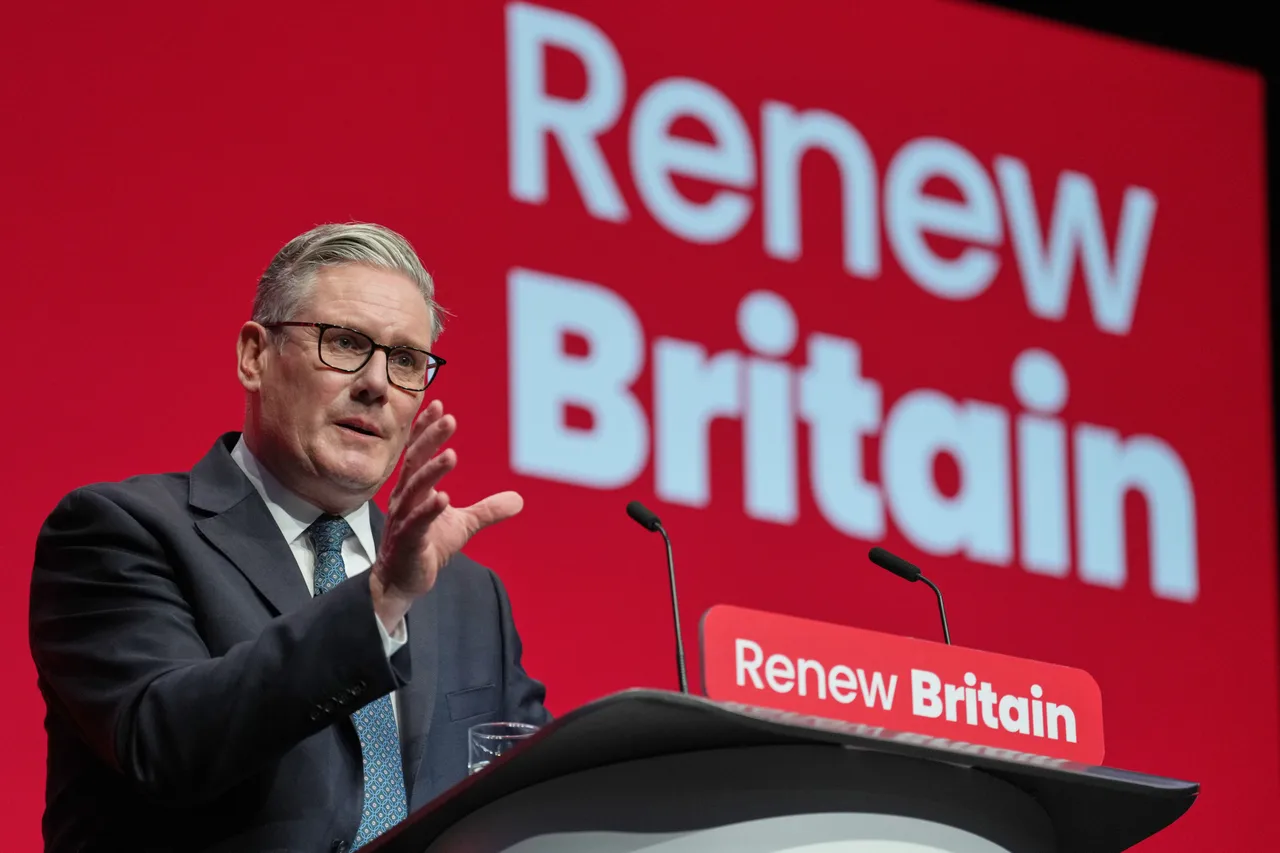
Keir Starmer may be seeing red over the latest Peter Mandelson drama but so are Labour MPs.
Three weeks before the May elections – when voters will choose their candidates for the Scottish and Welsh parliaments along with some English councils and mayoralties – the prime minister has been hit with a fresh revelation about the ex-ambassador.
It appears security vetting officials advised against hiring Mandelson last year but the Foreign Office decided to give him the job as the UK’s attaché to Washington anyway.
The prime minister promptly sacked the Foreign Office’s top civil servant Olly Robbins hours after the Guardian broke the story on Thursday night.
Downing Street said neither Starmer nor other government ministers were not aware until this week that Mandelson, former friend to convicted paedophile Jeffrey Epstein, had not passed vetting.
Starmer told the press he was “furious” that he had not been told ahead of giving Mandelson the plum post.
Meanwhile, his political opponents have accused Starmer of misleading parliament after he previously told MPs “full due process” was followed with Mandelson.
The Liberal Democrats have also reported the prime minister to ethics adviser Laurie Magnus for failing to notify parliament as soon as he knew about the vetting on Tuesday evening.
This is not the first time Starmer has been hit with calls to resign over Mandelson.
He vowed to fight on in February when questions arose over how much the PM knew about Mandelson’s Epstein links before he gave him the top job.
Starmer also dodged questions about whether he had even spoken directly to Mandelson before making him chief diplomat to the US during prime minister’s questions in March.
The eruption of the Iran war, and the public’s support for Starmer’s refusal to be drawn drawn into it, shifted attention away from the crisis around his judgement.
But will he be lucky enough to escape with his job yet again after this latest crisis?
One Labour source told HuffPost UK: “Yeah, he’s fucked.”
Most party insiders speculated that Starmer’s time in office is almost certainly up – it’s not expected to happen this side of the May elections.
Multiple sources claimed even the PM’s internal opponents would want him to stay in post so he could take the fall for what is already expected to be a bloodbath for Labour.
Just before the new Mandelson crisis erupted, James Johnson of JL Partners said early polls suggest it could be “the worst even local election for Labour in England”.
The party is expected to plummet to third place in Wales too, losing control of the entire Senedd for the first time in history.

Savanta’s political research director Chris Hopkins said Starmer expressing his own anger over Mandelson “just isn’t going to wash with voters”.
He told HuffPost UK: “Trust in politicians is at an all-time low and Labour, elected in part off a ‘holier than thou’ election campaign, have been anything but in office.
“They have done nothing to differentiate themselves from the chaos, sleaze and lies of the Conservative Party, so who can blame voters for seeking something completely different now?
“UK politics is no longer a case of ‘better the devil you know’, and voters are more than willing to roll the dice with insurgent parties and relatively unknown quantities when it comes to candidates.”
But not everyone is quite so pessimistic about what this means for Starmer’s future, insisting the blame still sits with officials rather than the prime minister.
A cabinet minister told HuffPost UK: “I don’t think he has lied. It is extraordinary that he wasn’t told vetting [was] not passed, but that’s different from lying or deliberately misleading.”
One Labour insider blamed the process, adding: “It’s the whole system that is totally dysfunctional and all the time we keep blaming it on individuals we’ll keep going round this loop.”
““If the PM did know, then it’s terminal.””
– Labour minister
A source from within the party’s headquarters suggested internal Labour groups do not feel the same “levels of hatred” felt during Jeremy Corbyn’s time in office towards Starmer.
“There is a lot of loyalty to him,” they said. “But just anger at the situation. We all know whoever comes next will be fucked up.”
A different minister said: “It’ll all come down to what he was told and when. Given Olly Robbins has gone, there must’ve been something but we don’t know.”
But they added: “If the PM did know, then it’s terminal.”
Meanwhile a Labour backbencher suggested the current saga “feels like another match to avoid relegation.”
Meanwhile, Maryam Eslamdoust, the general secretary of the Labour affiliated TSSA union, publicly said it was time for a leadership contest.
She said: “Labour is in danger of being irreversibly tainted by this latest installment in the Mandelson scandal and Keir Starmer’s handling of it.”
Her brutal assessment concluded: “At the very least, Keir has lost control by presiding over such reckless conduct.”
His critics seem to think it has become a question of when, not if, Starmer is forced out of office.
Will the prime minister be able to defy the odds and hang onto power?
Subscribe to Commons People, the podcast that makes politics easy. Every week, Kevin Schofield and Kate Nicholson unpack the week’s biggest stories to keep you informed. Join us for straightforward analysis of what’s going on at Westminster.


Organisations specialising in support for neurodivergent employees are advertising their services to people living with myalgic encephalomyelitis (ME) through the Department of Work and Pension’s (DWP) Access to Work scheme. An investigation by the Canary has revealed how they have been treating ME as an ‘acquired’ neurodivergent condition.
Now, the Canary has also uncovered how some are promoting notorious pseudoscientific psychotherapies to get people with ME back to work.
DWP Access to Work: sending people with ME for coaching
As we previously reported:
A person living with ME has approached the Canary to whistleblow over their alarming experience engaging with AtW. Notably, DWP staff administering the scheme had directed them to organisations misrepresenting the condition as a form of neurodivergence.
Further undercover investigation by the Canary has found that the support these organisations offered people with ME may have involved some problematic therapies.
The Canary approached staff at these organisations as an employee with ME seeking prospective support through the Access to Work scheme.
Conversations with them revealed a number of incongruities in their understanding and approach to employees with ME.
Conflicting understanding around ME
A senior employee at No Drama Llamas mentioned the concept of “spoons”. She demonstrated some level of knowledge over the ME patients’ need to pace. People with ME regularly use “spoons” to describe their limited energy/relative wellness budget.
The staff member explained how the organisation provides co-coaching with managers and the employee with ME. This would be to advocate for workplace accommodations.
All this sounded somewhat positive, until they detailed how ME:
comes under our neurodiverse umbrella.
They said that as an organisation, they:
know that it’s not just about the fatigue, it’s about the impact on your working memory and your time management and being organised and your focus and concentration. This is why it comes under the neurodiverse thing, because it impacts your brain in just the same way as me with ADHD and dyspraxia and autism. You’re going to have the same challenges that I have because of the way that your condition affects your cognition and your executive function.
Similarly, a Creased Puddle coach explained that the company views ME as “an acquired neurodivergence” stating that:
when we think about neurodivergence, the conditions people think of [are] Autism, ADHD, dyslexia, tourettes, and these are all conditions that people are born with and will have for the whole of their life. Whereas you weren’t fresh out of the womb with ME, you didn’t have it at all. You’ve developed it over time and you could actually recover.
Again, coaching seemed to centre round learning “strategies” and “workarounds” for addressing ME’s impact on “executive function”.
However, the conversation with Creased Puddle also revealed that coaches would apply controversial psychological therapies in sessions involving people with ME.
When workplace adjustments means adjusting you
On its neurodiversity coaching webpage, it lists the credentials of its coaching team. The Canary noticed that this included Acceptance and Commitment Therapy (ACT) and neuro-linguistic programming (NLP).
ACT has been described as part of the “third wave” of cognitive behavioural therapies (CBT). As MEpedia explains:
ACT assumes that psychological suffering is caused by experiential avoidance of symptoms and hurtful thoughts and feelings.
So, as the NHS puts it, ACT is about learning:
to get ‘unhooked’ from unhelpful thoughts.
Biopsychosocial clinicians have long promoted this “think yourself better” psychotherapy guff for people living with ME. However, the 2021 NICE guidelines finally downgraded the evidence around its efficacy. This was only after years of the promotion of CBT as a cure for ME causing incalculable harm to patients.
As such, it’s obviously concerning that AtW services supporting people with ME may be applying a CBT approach in fresher wrapping.
Meanwhile, NLP is a pseudoscientific psychotherapy that has bounced around since the 1970s. It’s a loose collection of techniques:
designed to alter behaviour by reprogramming unconscious patterns of thought
Put simply, it’s more junk science pushing the idea that ME patients just need to think more positively.
The staff member the Canary spoke to confirmed that this was a possible approach coaches might use for clients with ME. When the Canary asked what this might look like for an employee with ME, they told us that:
It may be something like, for example, you might be telling yourself internally, I’m no good at doing this, this, and this. I never get it right. I always get it wrong. So your coach will kind of challenge the language you’re telling yourself. Because actually, if you’re telling yourself you’re never going to do it, then you’re never going to do it.
Not dismissing its neurological basis?
The Canary contacted these organisations for comment. Genius Within had not responded at the time of publication.
No Drama Llamas refuted the suggestion it classifies ME as a “developmental neurodivergent condition”. It stated that it fully recognises ME:
as a complex, multi-systemic, and acquired neuroimmune condition, as supported by research such as the DecodeME study.
However, it told the Canary that:
while the biological causes of ME/CFS and developmental neurodivergence (like ADHD or Autism) differ, there is a widely recognised and evidence-based overlap in how these conditions present cognitively in the workplace. Emerging clinical literature highlights that neuroinflammation—often mediated by immune and autonomic responses, including Mast Cell Activation—frequently drives cognitive challenges in ME/CFS patients, such as severe executive dysfunction, reduced processing speed, and “brain fog.”
Because of this profound overlap in cognitive impact, our approach utilises the ‘Taxonomy of Neurodiversity’ (Dr Nancy Doyle, BPS) and the concept of a “spiky profile” (an uneven distribution of cognitive strengths and challenges). We are not stating that an ME/CFS patient has a developmental neurodivergence; rather, we recognise that neuroimmune inflammation can chronically or temporarily alter executive functioning. This creates a functional cognitive profile that benefits greatly from similar workplace strategy coaching used for neurodivergent individuals.
Creased Puddle told the Canary that since December 2025, it has stopped offering its services to people living with ME. According to organisation’s PR consultant, this was following an “internal quality review” where it:
made the decision that our offering to Access to Work would only be for individuals whose grant was primarily as a result of challenges related to Autism, ADHD or a Specific Learning Difference and we notified ATW assessors on the 19th December 2025 of this change.
Reflecting a ‘wider systemic problem’
The undercover conversations the Canary had with these organisations gave us the impression that coaches were genuine in their desire to support people with ME. Nevertheless, it was patently clear none were qualified to actually do so.
And of course, it’d be remiss not to recognise that their businesses will of course profit from providing this coaching. The DWP’s AtW scheme is essentially subsidising their services for employers with workers living with ME.
On reading our findings, Sally Callow, founder of ME training organisation Stripy Lightbulb CIC that runs ME-informed sessions for employers and healthcare professionals, told the Canary that:
This situation reflects a wider systemic problem: there is currently no requirement for organisations providing workplace support to have any training or understanding of ME/CFS. Without basic, evidence‑based knowledge of this complex neurological disease, it is unsurprising that some providers are misclassifying M.E./C.F.S. or offering approaches that are inappropriate, but also potentially harmful, for people living with the condition.
Improved M.E./C.F.S. education across government departments, assessment bodies, and commissioned services is essential. A consistent and accurate understanding of the condition would prevent unsuitable referrals and ensure that people with M.E./C.F.S. receive support that aligns with current biomedical evidence rather than assumptions or outdated models.
The investigation raises serious concerns about the types of support available to employees living with ME. In spite of its long delays and numerous accessibility issues, the DWP’s AtW is currently the only scheme for helping chronically ill people returning to or staying in work.
However, it seems that what that support looks like for employees with ME could very well be more gaslighting and psychologising interventions that treat them like malingerers: not the extremely ill and disabled people they really are.
Featured image via the Canary

The post How woke enabled the monster of Southport appeared first on spiked.


There are growing indications that the 2026 World Cup, scheduled to be held in the United States, Mexico, and Canada, is facing a series of challenges even before its official start, amid concerns about transportation costs, logistical procedures, and rising prices in the host cities.
This latest furore comes as fans are still reeling from the extortionate cost of tickets.
Al Jazeera reported that several American cities hosting matches are considering raising public transportation fares on match days, given the expected heavy strain on transportation networks due to the influx of fans.
In New York City, estimates suggest that a round-trip ticket between Manhattan and MetLife Stadium could cost more than $100, compared to less than $13 under normal circumstances—a significant increase reflecting the scale of the operational and security burdens associated with the event.
According to The Athletic, the heavy use of the transportation network during the tournament, which includes eight matches at the same stadium, including the final scheduled for July 19, could raise operating costs to approximately $48 million. This has prompted local authorities to request financial assistance from FIFA.
World Cup inaccessible
In the same vein, New York Governor Kathy Hochwell expressed her dissatisfaction with what she described as “outrageously high” prices, emphasizing the need to ensure the tournament remains “accessible and affordable” for fans.
In Boston, local estimates indicate that round-trip transportation tickets to the stadium could cost as much as $80, nearly four times the usual price, reinforcing concerns that attending the World Cup could become an additional financial burden for fans.
Between infrastructure pressures and high organizational costs, the organizers of the 2026 World Cup face an early test, months before kickoff, to ensure a balance between the success of the global event and its accessibility to fans.
Featured image via the Canary
By Alaa Shamali
Form 6K FORTUNA MINING CORP. For: 17 April

BTC, ETH, XRP, BNB, SOL, DOGE, ADA, BCH, LINK

How The Worst Episode Of Star Trek: The Next Generation Saved The Show


-

 Politics5 days ago
World Cup exit makes Italy enter crisis mode
-

 Business7 days ago
Tesla Model Y Tops China Auto Sales in March 2026 With 39,827 Registrations, Beating Cheaper EVs and Gas Cars
-
 NewsBeat5 days ago
Pep Guardiola and Gary Neville agree over Arsenal title problem that benefits Man City
-

 Crypto World4 days ago
The SEC Conditionalises DeFi Platforms to Be Avoided for Broker Registration
-

 Crypto World4 days ago
SEC Signals Exemption for Crypto Interfaces From Broker Registration
-

 News Videos2 days ago
Secure crypto trading starts with an FIU-registered
-

 Sports10 hours ago
NWFL Suspends Two Players Over Post-Match Clash in Ado-Ekiti
-

 Crypto World4 days ago
SEC Proposes Certain Crypto Interfaces Don’t Need to Register as Brokers
-

 Business6 days ago
Ireland Fuel Protests Enter Day 5 as Blockades Spark Shortages and Government Prepares Support Package
-

 NewsBeat3 days ago
Trump and Pope Leo: Behind their disagreement over Iran war
-

 Crypto World7 days ago
Federal judge blocks Arizona from bringing criminal charges against Kalshi
-
 NewsBeat5 days ago
JD Vance announces ‘no agreement’ with Iran over nuclear weapons fear
-

 Business7 days ago
IMF retains floor for precautionary balances at SDR 20 billion
-
Sports5 days ago
Dexter Lawrence, Stefon Diggs, Trading for De’Von Achane
-

 Business7 days ago
Former Liverpool CEO eviscerates FIFA for World Cup ticket pricing
-
 Crypto World5 days ago
Sei Network Enters Quiet Reset Phase as On-Chain Metrics Signal a Slowdown in 2026
-

 Crypto World4 days ago
Trump whales load up ahead of Mar-a-Lago luncheon.
-
Business7 days ago
Coreweave CSO Venturo sells $5.5m in class a common stock
-
Sports7 days ago
1st-Round WR Enters Vikings Mock Draft Orbit
-
Business4 days ago
Kering slides after Morgan Stanley downgrade, Gucci woes loom
You must be logged in to post a comment Login