
Politics
Why Israel is blocking foreign journalists from entering

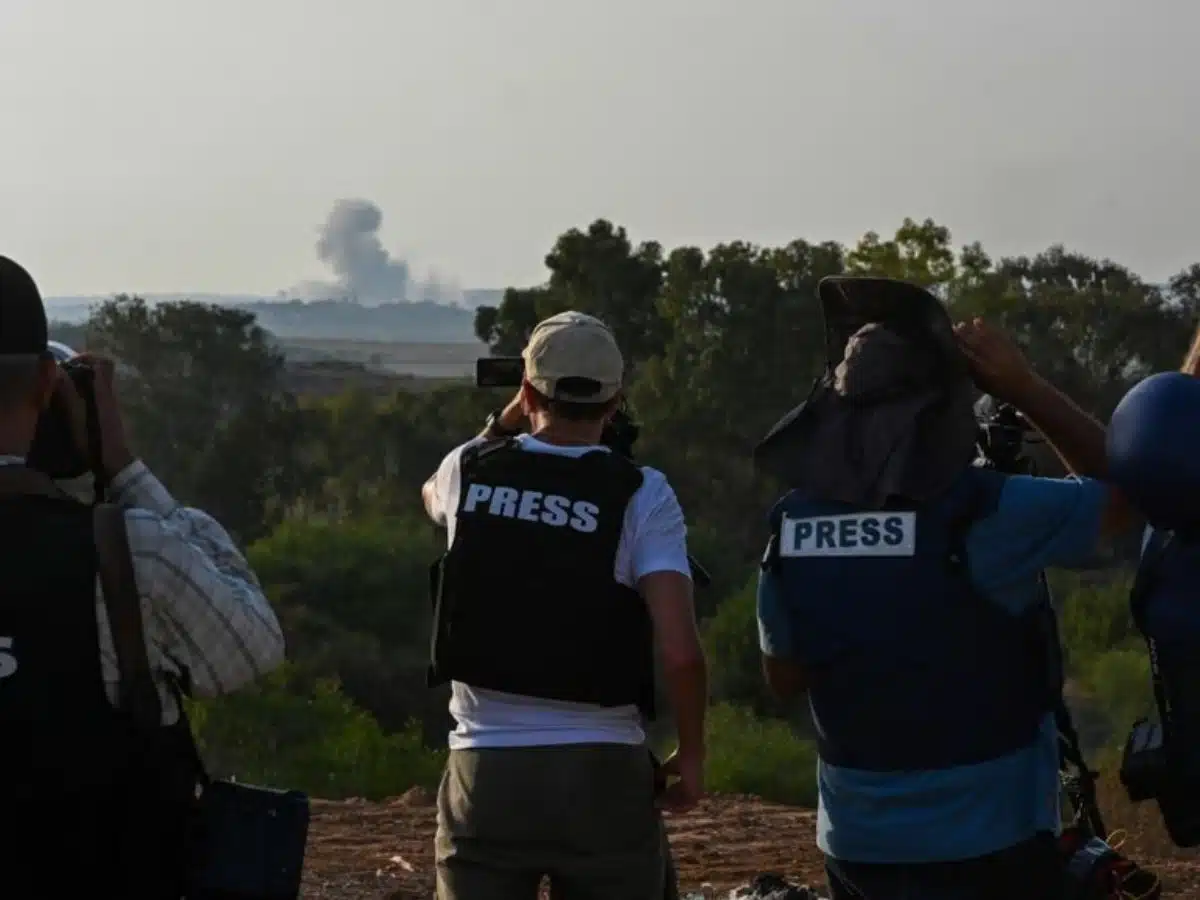
Since the start of the war on Gaza in October 2023, Israel has enforced an unprecedented media blockade. Foreign journalists and international media outlets have been barred from entering the Strip.
This policy has become one of the longest media blackouts in a modern conflict. It raises urgent questions about Israel’s motives and objectives.
Gaza — controlling the narrative and obscuring the truth
The ban on foreign journalists does not appear to be a temporary security measure. Instead, it functions as a systematic policy aimed at controlling the narrative of events in Gaza. Without independent international reporting, official Israeli accounts circulate with little scrutiny. This limits accountability and obscures the scale of destruction and civilian suffering.
In a war that has killed and wounded tens of thousands, the absence of international media has distorted global understanding and weakened factual reporting.
An intentional media vacuum
The ban on foreign journalists coincides with the direct targeting of Palestinian reporters inside Gaza. Together, these actions create a deliberate media vacuum. This severely limits source diversity and restricts reporting to a narrow range of perspectives. It prevents independent investigations based on eyewitness testimony and on-the-ground verification.
Observers argue this vacuum is deliberate, designed to reduce coverage and limit international accountability.
Obstructing documentation and legal accountability
Human rights and press freedom organisations warn that blocking media access hinders documentation of violations against civilians.
Without international journalists present, collecting the visual and forensic evidence needed for legal cases becomes far more difficult. This weakens prospects for accountability in international courts.
The media blackout is therefore seen as a tool to delay justice and entrench impunity. Israel cites security concerns to justify the ban. However, international press organisations—including the Foreign Press Association—say no credible security rationale exists.
The controversy has deepened due to the Israeli Supreme Court repeatedly postponing rulings on petitions demanding media access. These delays rely on classified evidence that cannot be challenged.
Journalists view this as a continuation of the ban under a legal veneer.
Gaza — a clear violation of press freedom
Press unions and human rights groups say the ban violates Article 19 of the Universal Declaration of Human Rights and the International Covenant on Civil and Political Rights.
Both guarantee freedom of expression and the right to receive and impart information without restriction.
Media experts warn that normalising such bans sets a dangerous precedent for future conflicts. With Gaza still closed to foreign journalists, the conflict extends beyond military force into media, legal, and ethical realms. The blackout is not incidental. It is a central mechanism to conceal the war’s consequences and keep cameras away from one of the worst humanitarian disasters of modern times.
As more than 2.4 million Palestinians remain trapped in Gaza, calls are growing to break the blockade. Allowing journalists in is now seen as a moral and professional imperative—to ensure the world sees Gaza without filters or omission.
featured image via EBU

Transport union the RMT will hold a national day of action to tackle the growing threat of assaults across the rail, bus, metro and ferry sectors on 28 April.
The union is stepping up its Action Against Assaults campaign in a bid to:
- Improve the day to day working lives of members.
- Create a safer environment for passengers.
- Ensure employers and the governments in the UK take their responsibilities seriously.
RMT wants to see an end to lone working and low staffing levels. It wants increased funding for and increased presence of the British Transport Police. And, ahead of the devolved elections, it’s aiming to put pressure on politicians in Scotland and Wales.
The union is seeking commitments from Scottish political parties for a bespoke offence of assaulting a transport worker to become law in the next Scottish parliament.
Activities such as leafleting of rail stations, ports and bus depots will take place across the country on Tuesday 28 April. This coincides with International Workers Memorial Day.
Ahead of the day of action, RMT general secretary Eddie Dempsey said:
This campaign is one of the most important the union has ever undertaken and we require significant action to improve the day to day lives of our members who fear being assaulted at work.
Public transport must be a space where passengers feel welcome and our members feel safe.
That needs enforcement both legally and through proper resourcing of authorities like the British Transport Police with safe staffing levels on the transport network.
Only this Easter Bank Holiday, I have had reports of our members being seriously assaulted, all for just doing their jobs professionally and being of significant help to passengers during extremely busy travel environments.
Politicians and employers have responsibility for ensuring our members safety and creating a decent environment for passenger travel.
This day of action will provide the springboard for further political and industrial campaigning until we reach an acceptable situation for our members.
Featured image via the RMT

For the second time in the past few weeks, a heckler has given Nigel Farage the business.
The latest incident took place on the Shetland Islands, and saw Farage labelled a “scrounger” for voicing the idea that the UK needs more rich people in politics:
Reform leader Nigel Farage has been met with protests in Lerwick today on his visit to Shetland.
Read more at https://t.co/DssMwxOiyG pic.twitter.com/125H4TxqCW
— Shetland News (@Shetnews) April 14, 2026
Welcome to Shetland!
In the video above, Farage responds to the man heckling him:
Well, maybe we need some more people in politics to make money and then everybody will be richer. How about that?
What a groundbreaking idea – a party stacked full of rich people – have we tried that before?
Oh no – wait a minute – we just googled ‘party of the rich’, and apparently the UK has something called the ‘Conservative Party’.
According to the 5 seconds of research we just did, said party is stacked full of millionaires, landlords, and hereditary aristocrats. In fact, their last prime minister was worth £651m at the time of the last election.
Strangely, however, this wealthy party of government didn’t make UK citizens any richer. In fact, in-work poverty actually increased under the Tories – as did child poverty.
Odd, isn’t it?
It’s almost like the rich just make life easier for themselves.
Even more strangely, we can see that Farage previously sold Reform UK as an alternative to the Conservative Party. We’re not sure what’s so different about them, because Reform is literally stuffed to the gills with wealthy ex-Tories.
Back to the Shetlands, Farage’s heckler said:
More billionaires in politics? That’s your ideas, more successful billionaires, scroungers like yourself? Scroungers.
Farage looked surprised by the accusation, but he better get used to it.
More and more people are waking up to the fact that the rich are rinsing this country for everything we’ve got.
So yes, they are “scroungers”; and so are the politicians facilitating their money grubbing ways.
Big up this legend, who called Nigel Farage a millionaire scrounger. pic.twitter.com/8bb0PGVlGx
— Mukhtar (@I_amMukhtar) April 14, 2026
The party of the rich
As we’ve reported, Reform are the new party of the rich in terms of donation money.
Like the Independent reported, donors are now abandoning the Tories for Reform:
The latest register of donations, released on Thursday, also showed that more Tory donors are giving money to Reform UK. This included construction equipment firm JCB, which has previously backed the Conservatives but this time gave £200,000 to both Reform and the Tories.
Isabel Goldsmith, the sister of former Tory minister Zak Goldsmith, also gave Reform £100,000.
Former Tory donor and high-profile Reform defector Nick Candy, a property developer, donated £240,000 to the party.
Do you think these wealthy people are donating out of the goodness of their hearts? Or do you think they expect something in return?
Our own Rose Cocker showed the figures for all the parties as of March this year:
£5.5m total puts Reform head and shoulders above any other party in terms of donations. For contrast, the Tories received £4.2m, the Lib Dems took almost £2.2m, and Labour were given £2m. Meanwhile, the Greens received just over £294k.
So why aren’t the rich donating to the Greens?
Almost certainly because they don’t think they’ll get a return on their money.
Writing for the Canary in April this year, James Wright pointed out:
the Green Party branded the Reform head a “performer, a con artist”. They pointed to DeSmog research that shows Farage’s party has accepted £2.3 million from fossil fuel interests, big polluters and climate deniers since 2019.
Harriet Williamson of Novara Media, meanwhile, described Reform as a “handful of oil execs in a trench coat“. In that same piece, she reported:
Reform’s treasurer and billionaire property developer Nick Candy has been busy wooing wealthy offshore donors in low-tax jurisdictions like Monaco, Switzerland and the United Arab Emirates. In fact, in 2024, more than half of the party’s donations – £2.5m – came from those with residences in low-tax countries or business interests in offshore jurisdictions.
This explains Reform’s stance on cheap, clean renewable energy, doesn’t it?
If the US and Israel’s war on Iran has taught us anything, it’s that we need to rapidly go electric to gain energy independence. Reform, meanwhile, want to shackle us to our expensive and dirty past.
Punching bag
Back to the Shetlands, the National carried comment from the Lib Dem candidate Emma Macdonald, who said:
Nigel Farage is welcome to visit Shetland the same as any tourist, but folk here will judge him on what he’s actually done for our islands.
Farage was on the fisheries committee in Brussels for years and barely made an appearance – then when there was a big debate on the fishing industry in the UK Parliament, led by our own MP, not one Reform MP bothered to show up to contribute. Photo calls are the easy part, but Farage has not done much more than that.
In Shetland, we need more than headline visits from party leaders. We need people who will stand up for fishing day in, day out.
Farage is visiting Shetland days after we learned that Russian submarines were taking a look at pipelines and cables in UK waters. Perhaps after Putin’s covert assets failed, he decided to send his most ‘overt’ asset?
Our communities need serious, consistent support, and a strong local voice that understands the reality here in Shetland – not more self-interested politicians who only turn up for the short term.
Farage is just getting bullied all over the place now, isn’t he?
Getting his heckles up
As noted, Farage was also heckled at a recent campaign launch. As far as we can tell, this was the last time they prominently used the ‘Reform Will Fix It’ slogan – a line which mirrors the catchphrase of dead paedophile Jimmy Saville.
🚨 WATCH: Nigel Farage is repeatedly heckled at the launch of Reform UK’s London local election campaign pic.twitter.com/QCshvLKvU0
— Politics UK (@PolitlcsUK) March 28, 2026
So yes, he probably should expect more heckling to come.
Farage has made a career out of division, after all.
He’s certainly got what he wanted, but he isn’t enjoying the results.
Featured image via Shetland News
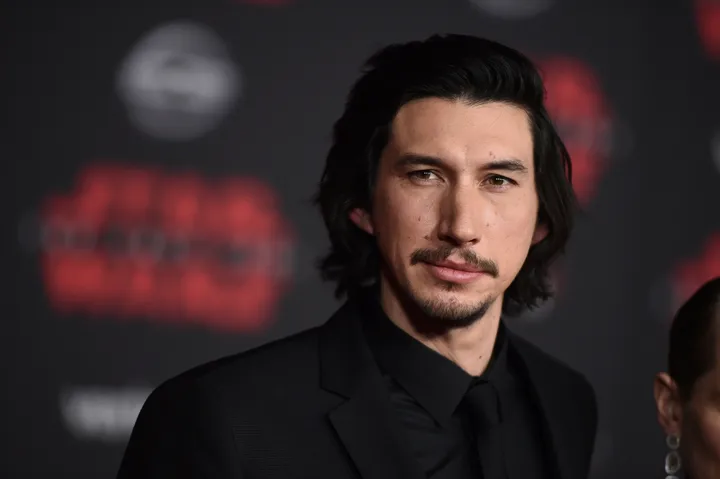
Lena Dunham is reflecting on her somewhat turbulent working relationship with Adam Driver.
The two actors played the on-off couple Hannah and Adam in the hit 2010s comedy Girls, which Lena also wrote and directed most episodes of.
In her new memoir Famesick, the Bafta winner wrote candidly about what life on set with the Star Wars actor was like, recalling that he could be prone to aggressive outbursts.
As reported by Variety, Lena spoke about the first sex scene she and Adam shot together, which she directed, recalling how their “careful blocking went out the window”, resulting in her co-star “hurl[ing] me this way and that” as they filmed.
“Stunned, I couldn’t speak for a moment, unsure of what had happened,” she admitted. “Had I lost directorial authority, allowed the scene to go off the rails, not given proper instructions? Would I be removed from my command post immediately?
“It wasn’t that I felt violated – and I also wouldn’t know if I had, as there was little in my sexual life that I hadn’t allowed to happen, and for no pay. But I felt that something intimate, confusing and primal had played out in a scenario I was meant to control.”
Lena went on to share another memory of working with Adam, in which he “hurled a chair at the wall next to me” in temper when she struggled to recall her lines in a rehearsal.
“Late one night, as we practised lines in my trailer, I found that mine were suddenly gone,” the Too Much star claimed. “I knew I’d written them. I’d known them only minutes before.
“But when I opened my mouth, all that came out was a stammer – until finally, Adam screamed, ‘FUCKING SAY SOMETHING’ and hurled a chair at the wall next to me. ‘WAKE THE FUCK UP,’ he told me. ‘I’M SICK OF WATCHING YOU JUST STARE’.”
She also alleged that he once got so upset about a bad haircut that he punched a hole in his dressing room wall, and once cut off contact with her for three weeks when she tried to show him Girls’ pilot episode (in the past, Adam has made no secret of his disdain for watching himself on screen, and infamously once cut a radio interview short when they tried to play footage from one of his projects).
As Lena put it, she and Adam “fought often” throughout their working relationship, and he could be “short-tempered and verbally aggressive, condescending and physically imposing”, as well as “protective” and “loving”.
HuffPost UK has contacted Adam Driver’s team for comment.

Adam played his namesake, a self-centred struggling actor, in all six seasons of Girls, for which he earned three consecutive Emmy nominations.
In the years since, his most notable performances have included playing the villainous Kylo Ren in the rebooted Star Wars trilogy and Oscar-nominated work in the films BlacKkKlansman and Marriage Story.
Lena, meanwhile, has gone on to helm the comedy Catherine Called Birdy, the first episode of the hit drama Industry and the 2025 Netflix rom-com Too Much, in which she also had a minor acting role.
Politics
The House | “A rollicking read”: Baroness Andrews reviews ‘A Shellshocked Nation: Britain Between the Wars’


London c.1920: ‘Flappers’ dancing the Charleston | Image by: Pictorial Press / Alamy

4 min read
Alwyn Turner’s cultural and political history of the interwar years is full of gems
With a title that conjures an image of stumbling columns of gassed men, “shellshocked” appropriately describes a nation, bewildered and traumatised, suspended between the ‘Great Silence’ of armistice and the drum beat of the coming war.
Adding to the vast canon of political and social history, poetry and novels that have tried to pin down these ‘years of illusion’, Alwyn Turner’s book aims for something different: to “take the temperature of the nation” – albeit mainly an English nation.
The nation he portrays is one seeking distraction – and who could blame them? The three political leaders at the outbreak of war, Herbert Asquith (Liberal), Bonar Law (Conservative) and Arthur Henderson (Labour), all lost sons – two in Law’s case. An estimated 1.75 million women were deemed ‘surplus’ to requirements. Postwar hopes of a better world were quickly and bitterly dashed, while class barriers, paramount in the 1926 General Strike, were as high as ever.
While political history provides the architecture – the first aborted Labour government of 1924, the coalition government of 1931, Edward VIII’s abdication in 1936, Oswald Mosley’s rise to power – the soundtrack is an engaging ‘vox pop’, assembled from an impressive excavation of newspapers, popular songs, cinema and radio.
Turner reveals a world of paradox
Thus, Turner reveals a world of paradox catching the tides of two decades – grief and hedonism; license and repression; distress and wealth; conservatism and communism. Moods change with the decades. The Bolshevik bounders of John Buchan’s novels give way to the “golden age of detective fiction” with the toffs (the character Peter Wimsey par excellence) in charge. Gender issues make the news. In 1921, the House of Lords throws out an amendment to the Criminal Law Amendment Bill to make lesbianism a misdemeanour, arguing that it would “put ideas into women’s heads”. In 1928, DH Lawrence’s Lady Chatterley’s Lover makes a bold entry.
New stories emerge – sometimes bizarrely. Who knew that TS Eliot had ever written an obituary of the music hall singer Marie Lloyd, or that John Reith would ask BBC candidates if they believed the teachings of Jesus Christ? Reading took on a competitive edge. Through an affordable subscription, the Daily Herald furnished two million homes with a set of the complete works of Charles Dickens (we had one at home in Tredegar) at a greatly discounted cost (£1.7s the lot). While the nation felt better together (voluntary and community activities thrived, as did trade unions and political parties), buying on credit, motor cars and the advent of Butlins in 1936 (the first in Skegness opened by aviator Amy Johnson!) widened horizons. By 1930, London had one cinema seat for every 20 people.
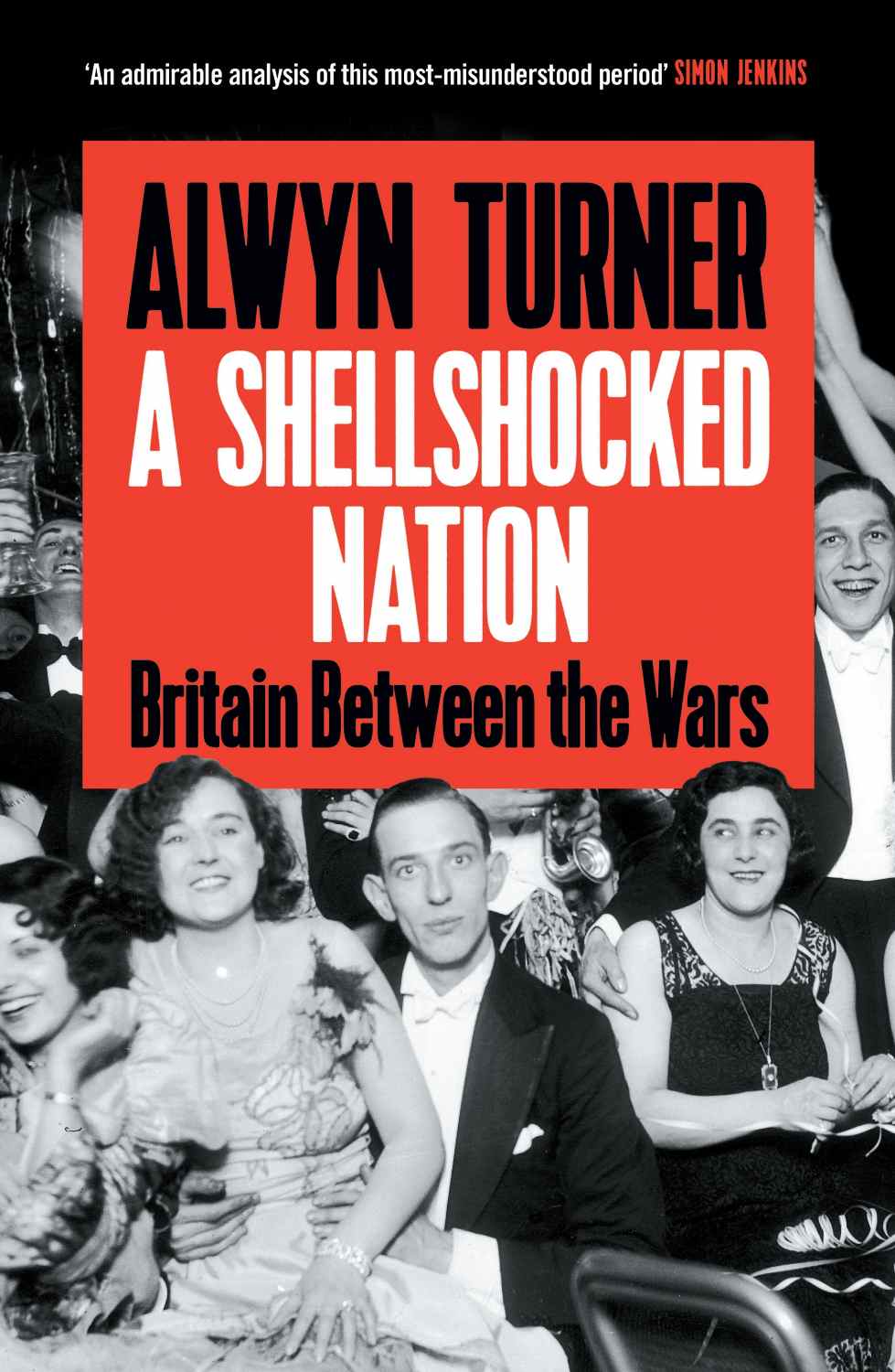 This rollicking read is full of gems which reveal the nation’s tendency not to take things too seriously. The Murder in the Red Barn was a more popular night out at the theatre than an evening in reading Virginia Woolf (modernism in all forms was definitely ‘unBritish’). Walter Greenwood’s Love on the Dole (1933) is parodied by George Formby as Off the Dole (1935). The northern cosiness of Formby and Gracie Fields become the perfect antidote to the screaming reality of Adolf Hitler – derided brilliantly in Richmal Crompton’s Just William series in the book William the Dictator (1938); replicas of Neville Chamberlain’s furled umbrella are even reproduced in toffee.
But when it counts, another spirit surfaces. Time has run out. As Britain stands alone after the fall of France, the Daily Mail writes: “We alone defend the conscience of the world.” As the light faded on those two volatile decades, balanced between promise and despair, the words of Robert Graves a decade earlier, ‘Goodbye to All That’, took on a new and serious intent – a postwar world which had no place for hedonism, committed to the rebuilding of nations and a new world order.
Baroness Andrews is a Labour Peer
A Shellshocked Nation: Britain Between the Wars
By: Alwyn Turner
Publisher: Profile Books
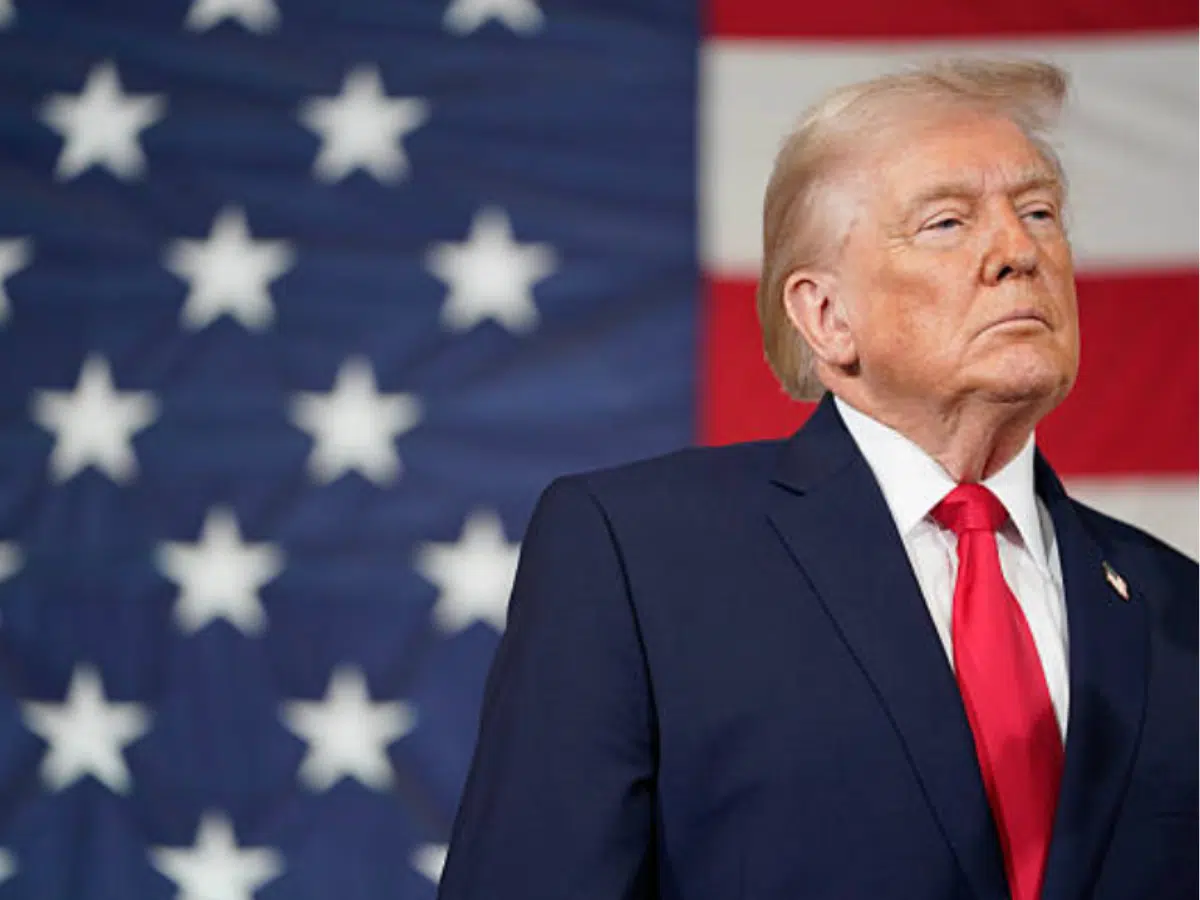
It’s clear at this point, as Donald Trump flounders in his illegal war against Iran, that the US president drastically underestimated his Iranian opponents. How could that happen, given the advice he would have been receiving about Tehran’s capacity to target Gulf oil infrastructure, and close the Strait of Hormuz? There was also the satellite coverage and communications penetration of his opponents that should have informed better judgement by Washington’s war criminal-in-chief.
The answer is probably that Trump is such an Orientalist, Islamophobic, generally racist, white supremacist thug, it left him with no capacity to recognise the competence possessed by Tehran.
Trump’s vile bigoted tirades are legion at this point. He’s railed against “stupid” and “low IQ” Somalis, called Mexicans rapists and ranted about banning all Muslims from entering the United States. He sees a world divided into a civilised section, populated by white northern Europeans, and contrarily, dangerous “shithole countries”.
His comments about Iran’s leaders have been straight out of decades-old anti-Iranian propaganda perpetrated by Western media and politicians. It is one that characterises Tehran (and often Iranians more broadly) as backwards, fundamentally malevolent, and irrational.
Trump deploys classic bigoted Iranian tropes
The mass murderer who has slaughtered over 3,500 Iranians has said the Iranian government “just wanted to practice evil.” He declared he intended:
…to bring them [the Iranian people] back to the Stone Ages where they belong.
He called Ayatollah Ali Khamenei:
…one of the most evil people in history.
Trump has called his rivals in the Iranian government “crazy bastards“. Finally, and needless to say, it takes extreme racism to consider it appropriate to threaten that:
…a whole civilisation will die tonight, never to be brought back again.
This is all entirely in line with the prevailing message about Iran post-revolution that Western audiences have been bombarded with. Our media presents us with little more than so-called “Mad Mullahs” and crowds shouting “death to America”. Some in the West have internalised this narrative to the point where they refuse to believe a colourful coffee shop populated by uncovered young women could possibly be in Tehran.
US and Israeli politicians abuse these fictions as a means of gaining support for war crimes perpetrated against Iranians. This applies in particular to Tehran’s potential to acquire a nuclear bomb. The confections centre around an imagined lunatic state that will start launching off nukes left and right the second it has enough fissile material.
The implication is that they are so irrational they care nothing for their own survival, given the inevitable atomic retaliation that would follow. This too plays into Orientalist tropes about Muslims not valuing their own lives, or those of their families, thus permitting their wholesale slaughter. The US previously applied these same lies to Vietnamese people.
Far from being deranged, Iran has out-thought the US
The reality is that Iran has been a cautious, rational and defensive actor for decades. It has enriched uranium as a bargaining chip, but not gone after full-scale development of nuclear weapons. Tehran has assembled a vast arsenal of drones and ballistic missiles which it has used purely defensively. It has pursued a strategy of forward defence through proxies in Yemen, Lebanon, Iraq, Syria, and Palestine.
Much of the latter were shattered only because almost the entire world has permitted the Zionist entity to pursue genocidal violence against them for over 30 months. However, Iran’s fallback to missiles and Shaheds has proven effective and brought the US to the negotiating table.
Iran has achieved all this despite being under crippling US sanctions that have had a murderous effect on Iranians. Their deaths due to medicine shortages are among the 38 million killed by US coercive measures from 1971-2021. Despite this isolation, and being surrounded by hostile Gulf states hosting the US military, Iranians have at this point comprehensively outmanoeuvred the brutal world hegemony.
Iran has at least been aided in this period by China, another serially underestimated and maligned nation. Western media coverage of China’s impending economic collapse has been a running joke for a generation. China has constantly defied these naysayers to become the world’s industrial powerhouse.
It surpasses the US on numerous measures now, and will likely overtake it soon on life expectancy. Again, bigoted politicians disregard this, and deploy racist stereotypes of devious East Asians, who have only excelled through underhand means.
Iran is currently well on the way to having a network of high speed rail, with Chinese assistance. The US-Israeli contribution to that has been to bomb railway lines. There can be few better examples of two worlds moving in opposite directions than the main representative of a dysfunctional neoliberal order bombing something it cannot build at home. Like a petulant child kicking over the better sandcastle built by another kid, the US is now largely only capable of violence.
US and Britain represent a dying order with no capacity to learn
Yet Western ruling classes retain a remarkable lack of willingness to learn from what emerging nations do right. You’ve heard of Inglorious Basterds fighting to stop genocide – we have Incurious Bastards that commit genocide, while having little interest in what lessons could be taken from the likes of China’s state-led industrial policies. These have accounted for a huge percentage of poverty reduction worldwide.
A ruling order raised on Thatcher’s formulation of TINA – There is No Alternative (to neoliberalism) – are incapable of imagining the self-loathing state they have constructed doing anything useful. Perhaps with some basis in the case of Britain, now successive governments have ensured endless cuts have hugely hollowed out the state’s own knowledge banks and capacity to act.
The obvious riposte to this would be to point out that Iran and China are autocracies, so whatever the economic or infrastructural gains made, they matter little without meaningful political freedoms. That would be a fair point, were it not the case that both living standards and political freedom are receding in the likes of Britain and the USA.
In the case of England and devolved nations, wages have been stagnant for over 15 years as basic services decline, in effect making the majority worse off. What used to be world class public services now barely function. You wait months for an appointment in underfunded health services, then miss it because the dysfunctional privatised postal service couldn’t tell you in time. Meanwhile, police throw people into the back of vans for holding up a sign, or posting an unauthorised tweet.
Britain isn’t a democracy
Britain is a nation with an unelected second chamber. There is an unelected head of state. It has an electoral system where people’s votes don’t count. It is a place where levels of inequality and a system of political donations makes thing closer to ‘one pound, one vote’, rather than ‘one person, one vote’. Work is a largely democracy free zone – people spend the best hours of the day, through the best years of their life in places where they are simply supposed to follow orders, with little opportunity for their own input.
Britain can therefore in no meaningful sense be described as a democracy. The same policies persist year on year, whether its Labour or Tories in power. Eric Li said of the United States:
In America, you can change the political parties but you can’t change policies.
In China, you can’t change the party but you can change policies.
The same applies to Britain. Another memorable Chinese formulation is the notion of the “Kill Line“. This is in reference to the huge number of US citizens who are at:
…the point where a single stroke of bad luck—a $3,000 ambulance ride or a sudden layoff—triggers a terminal collapse into homelessness.
The Kill Line: USA’s massive precariat
At its most horrifying, the Kill Line can be seen in US streets rammed with people struggling against substance abuse, openly injecting and dying in full view of an indifferent ruling class. This too is the inevitable consequence of a society in which democracy has been worn down to the nub. A place where the priorities of the rich leave the majority to suffer. A place where in effect, a tiny number of people dictate policy and the views of most Americans are ignored.
As for the case of so-called ‘Israel’, despite our media referring to it as the “only democracy in the Middle East“, it has never been any such thing. Founded on ethnic cleansing, it has always been an apartheid pseudo-state, getting worse post-1967 and now a rabidly genocidal, deeply ill society. Once upon a time even this abomination had a strong social-democratic character – at least for its Jewish population – but that too has been hollowed out, following the same pattern of its aforementioned Anglophone backers.
Britain, the US, and the Zionist entity have effectively de-developed themselves, and can now merely be content with de-developing the likes of Iran via endless 2000lb bombs. This is virtually the only thing the USA builds anymore.
The so-called democracies have allowed oligarchic parasites to feast on their body politic for so long, all that remains is a husk. It shuffles feebly on in a zombified form that wears its mangled democracy as a kind of hideous mask, concealing the vile reality beneath – that of a brutish creature lurching between authoritarianism at home and imperial violence abroad.
Hollow shells offer only violence
Their citizens are no longer likely to enjoy a good quality of life, though they still fare better than those underneath Western bombs. When the latter people flee their countries, they inevitably seek shelter in the same places from whence those missiles came. The compensation offered to the struggling ‘native’ population is that the newcomers will be treated even more poorly.
Is this sufficient? Is it enough to be shivering in a cramped, damp-filled home, teeth rotting in your skull, because you can’t afford the cost of fuel and there are no dentists anymore, as long as you know someone has it even worse than you? Can one be cheered by a union jack on a lamp post or when told by Nigel Farage that one has the correct amount of melanin in one’s skin? Is it sufficient to know that your country is falling apart, but you can still destroy someone else’s?
Probably not. The wreckage at home and the wreckage abroad may differ in form, but they are two sides of the same coin. Both are the result of a completely unrestrained capitalism allowing a handful of reckless fuckwits to accumulate the wealth and power to determine the fate of billions. Economic and democratic renewal are essential to end this malaise.
Our racist culture deters us from accepting we have something to learn from the likes of Iran or China. Their welcome rise should grant us the humility we desperately need to follow suit.
Featured image via the Canary

Now we know: the Southport massacre was an atrocity foretold. That obscene slaughter of three girls at a Taylor Swift dance class in July 2024 was, in the words of the families’ lawyer, ‘not only predictable’ but ‘preventable’. The moral failures of the killer’s own parents, alongside the institutional failures of the British state, helped to sow the foul seed of that act of evil. This is now a story not only of one young man’s barbarism but of the murderous incompetence of the state itself.
The first report of the Southport Inquiry has been published and it is damning indeed. Axel Rudakubana’s frenzied slaying of Alice da Silva Aguiar, Elsie Dot Stancombe and Bebe King, and his severe injuring of eight other children and two adults, could and should have been prevented, the report says. If his parents and Britain’s protective agencies had done their ‘moral duty’, the toxic threat he posed might have been neutered, and the precious lives of those girls saved.
The 760-page report, the product of nine weeks of inquiry, does not hold back. It lambasts Rudakubana’s parents for withholding information about their son’s purchase of lethal knives and his attempts to make the toxin, ricin. It says they knew he had tried to leave the house the week before the Southport massacre to launch some kind of attack at his old school. Most damningly of all, the report says his parents knew there was ‘empty knife packaging’ in the house on the day Axel took a taxi to Southport, but they failed to inform police. If they had made state agencies aware of their true knowledge of their son’s ominous behaviour, he would ‘undoubtedly have been taken into care or held in custody’, the report says.
They must bear ‘considerable blame’ for what occurred, it decrees. Worse, these moral failures in the home were then compounded by the grotesque failures of the institutions of society. The ‘sheer number of missed opportunities’ to clock Rudakubana’s murderous menace – and do something about it – was ‘striking’, the inquiry said. Body after body seemed almost blasé about this strange young man who was feverishly obsessed with violence and in the grip of demented fantasies about causing catastrophic harm. Their staggering ineptitude essentially aided his atrocity.
As a schoolboy, he was referred to Prevent, the government’s anti-extremism initiative, three times. This was after he was found to have used school computers to search for school shootings and look up images of weapons. He frequently perused ‘degrading, violent and misogynistic material’, which ‘fed… his already unhealthy fascination with violence’. And yet each Prevent referral was prematurely closed. A few questions were asked, a few boxes ticked, and Rudakubana was signed off. The Prevent officials’ dearth of curiosity, their unwillingness to dig deeper, was astonishing.
It speaks, surely, to the corrupting influence of wokeness. Prevent has been a busted flush for years. It long ago lost sight of the chief terror threat we face – Islamism – and instead chased after that smaller menace that the dinner-party set loves to obsess over: the far right. In 2022 it was found that six out of 11 recent terror attacks had been carried out by individuals referred to Prevent. Now we can add Rudakubana – not an Islamist but certainly a twisted individual – to that shaming list of what we might call ‘Prevent graduates’: people who went on to massacre innocents after receiving little more than a shrug from those charged with protecting us from extreme violence.
The police failed, too. Two years before the Southport massacre, when he was 15 years old, Rudakubana was reported missing by his parents. He was found by police on a bus, in possession of a knife. He told them he wanted to stab someone. He also admitted to thinking about poisoning people. Remarkably, the officers just took him home and advised his parents to hide their knives. If he had been arrested, the inquiry says, a search of his home would have been carried out and the ricin seeds he had bought, not to mention the terror manual he had downloaded, would likely have been found. ‘I have no doubt’, said inquiry chair Sir Adrian Fulford, that had ‘sensible steps’ been taken by agencies – like the arrest of this 15-year-old boy with a knife who openly expressed a keen interest in mass violence – then the ‘dreadful’ massacre in Southport ‘would not have happened’.
Think about this: we live in a country where you can get a knock on the door from the boys in blue for saying men aren’t women, yet a runaway boy with a knife and dreams of murder gets a police ride home. We have police forces who dance like arseholes round the Pride flag and carry prayer mats in the back of their vans in case a local Muslim needs to bow to Mecca, and yet they fail to take seriously an armed teen who’d been referred to Prevent when he says he wants to kill someone. This is indisputable proof that the ‘enwokening’ of the machinery of state is not just vexing and inappropriate – it’s lethal, giving us cops more interested in enforcing moral orthodoxy than saving citizens’ souls.
Other agencies failed catastrophically, too. Emails went unanswered by mental-health services. Promised assessments of Rudakubana’s mindset were delayed time after time. Perhaps the psychiatry industry was too busy catering to the fantasy ailments of the bourgeois ‘worried well’ to look into this troubling young man with a history of violent fantasies. His worsening behaviour, which included murderous thoughts about fellow pupils and teachers, were too often ‘excused’ by professionals as mere expressions of his autism. That there was no sole agency to take responsibility for this hyper anti-social teenager is deeply troubling, says the inquiry. Instead, Rudakubana was put on a ‘merry-go-round referral system’, one it was easy for him to step off in order that he might bury himself deeper in his apocalyptic dreaming. Until 29 July 2024, when he did the thing he told people he would do: knifed innocents to death.
This is one of the most damning indictments of the British state of my lifetime. What ought to be the most protected and cherished thing in a civilised society – the life of a child – was sacrificed at the altar of bureaucratic expedience and dead-eyed incuriosity. We already know we live under a state content to let girls be sexually assaulted if it will help to avoid uncomfortable discussions about multiculturalism. Now we know this same state’s depthless incompetence essentially assisted in the murder of three girls. It brings to mind the searing observation of the cultural critic Terry Eagleton – that evil has ‘a natural affinity with the bureaucratic mind’. It is in the barren moral wilderness of back-covering technocracy that the evil among us often spy an opportunity to strike. The Southport horror shames a whole nation.
Brendan O’Neill is spiked’s chief political writer and host of the spiked podcast, The Brendan O’Neill Show. Subscribe to the podcast here. His latest book – After the Pogrom: 7 October, Israel and the Crisis of Civilisation – is available to order on Amazon UK and Amazon US now. And find Brendan on Instagram: @burntoakboy.
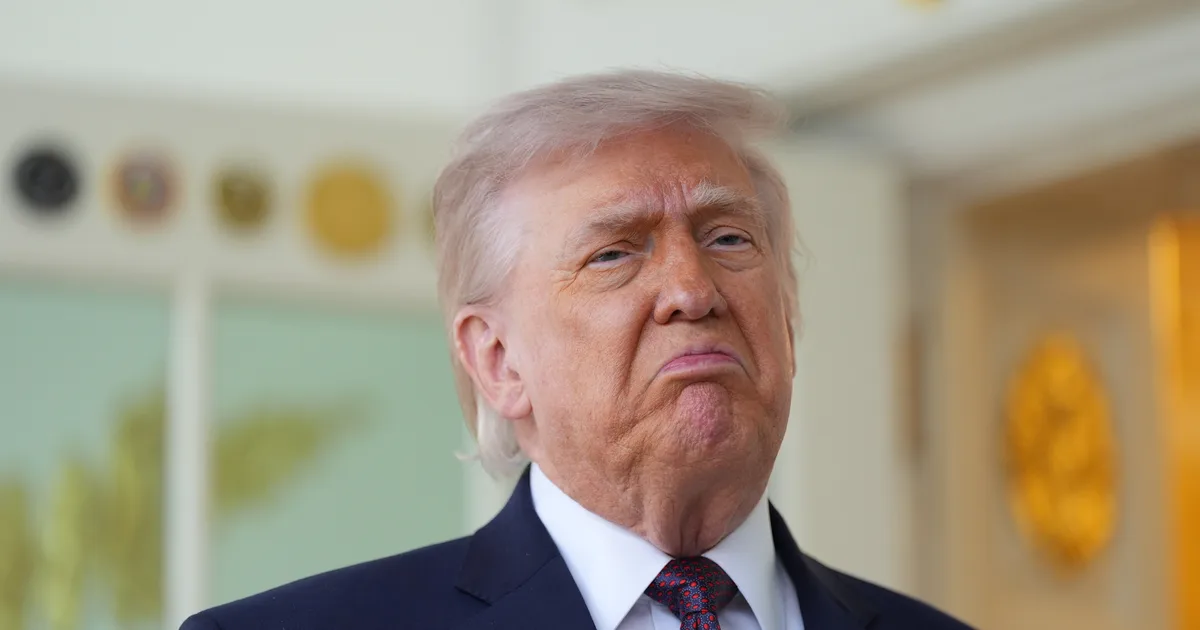
Donald Trump’s decision to go to war with Iran will damage the UK’s economy more than any other major country, experts have warned.
The International Monetary Fund (IMF) said Britain’s gross domestic product (GDP) will grow by just 0.8% in 2026, 0.5% down on their last forecast in January.
That is the biggest downgrade of all the G7 nations, which includes the likes of America, France, Italy and Canada.
By contrast, the IMF said Canada’s GDP is expected to grow by 2.5% this year, a downgrade of just 0.1%.
The war, which began on February 28 when the US and Israel launched missile strikes on Iran, has led to the closure of the vital Strait of Hormuz waterway, sending the price of a barrel of oil soaring.
That has sparked fears of a global recession caused by high inflation and weak economic growth.
Responding to the IMF report, chancellor Rachel Reeves said: “The war in Iran is not our war, but it will come at a cost to the UK. These are not costs I wanted, but they are costs we will have to respond to.
“I have vowed that my economic approach to this crisis will be both responsive to a changing world and responsible in the national interest, keeping inflation and interest rates in check to protect households and businesses.
“We entered this conflict in a stronger position because of the choices this government took to build economic stability, but there is more to do.”
In an interview with the Mirror, Reeves said: “I feel very frustrated and angry that the US went into this war without a clear exit plan, without a clear idea of what they were trying to achieve.”
Liberal Democrat Treasury spokesperson Daisy Cooper said the UK’s economic downgrade is “a damning indictment of Trump’s idiotic war and all those who cheered it on – including Reform and the Conservatives”.
She said: “People in Britain are already feeling the pressure at the pump, and now it’s clear that we’re in line for a huge hit to growth and even higher prices on the shelves.
“Starmer’s latest flurry of stern words directed at the US President are worthless if there is no plan to protect people from Trump’s economic vandalism.”
But Tory shadow chancellor Sir Mel Stride said Reeves’ handling of the economy was to blame for the IMF downgrade.
He said: “Being handed the biggest downgrade in the G7 is a clear verdict on Rachel Reeves’ choices – and she’s got no one to blame but herself.
“Her ‘plan’ to keep costs down has left us with the highest inflation in the G7, with businesses closing and the cost of living skyrocketing.”
Subscribe to Commons People, the podcast that makes politics easy. Every week, Kevin Schofield and Kate Nicholson unpack the week’s biggest stories to keep you informed. Join us for straightforward analysis of what’s going on at Westminster.
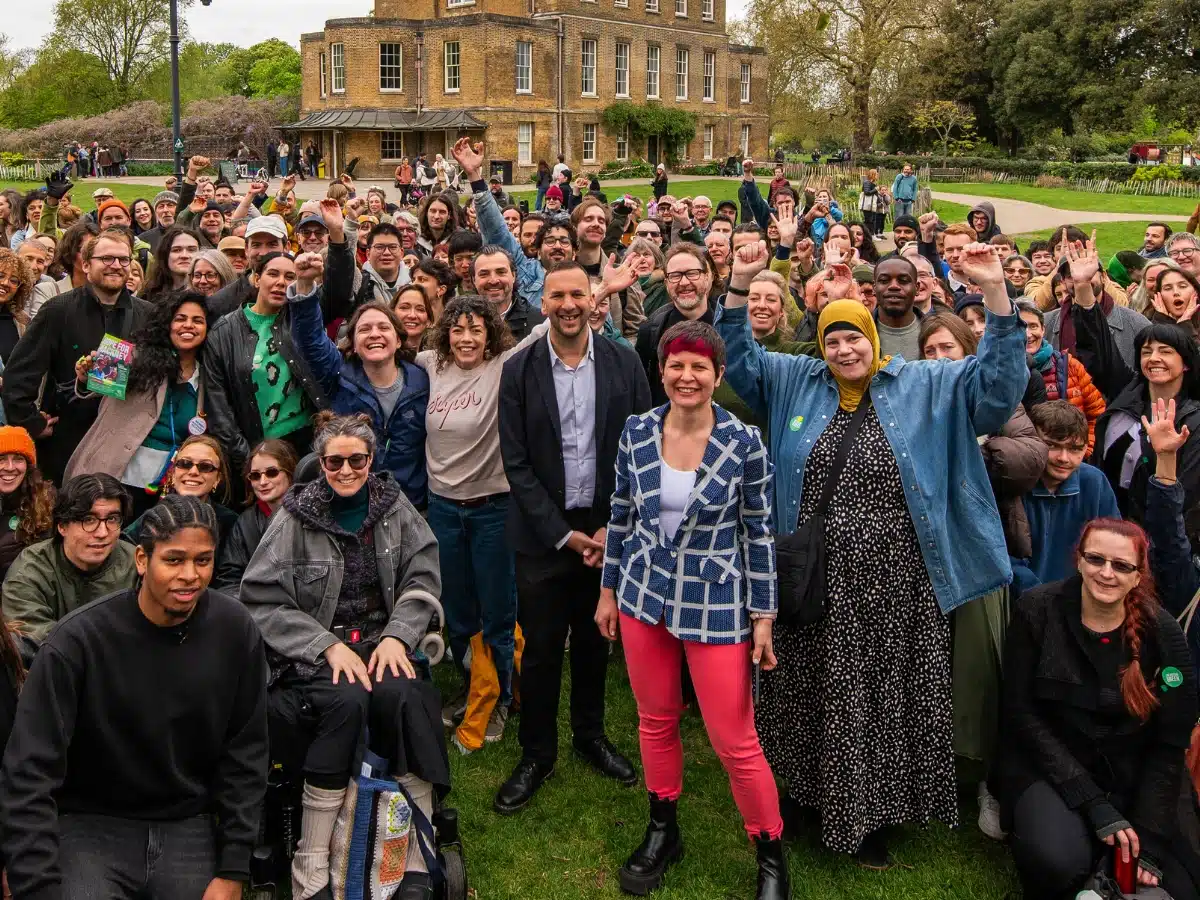
Zoë Garbett, Hackney Greens candidate for mayor of Hackney, has pledged a “community ownership” drive. This is part of her plans to make the borough a more affordable place to live. She said:
Too much of Hackney has been sold off to the highest bidder, not to enrich our community, but to deprive it: of its youth clubs, its cultural centres and its social life. We want to change that, because ‘Who Owns Hackney’ should be all of us, the people of Hackney.
Garbett wants to bring underused land and buildings into community use, working with charities, neighbourhood organisations and small businesses to revitalise them with and for the community:
We will use our compulsory purchase powers and support community groups to use the community right to buy to ensure there are affordable spaces for youth clubs, arts groups, parents groups and anyone else that needs a home to contribute to the life of our borough.
Garbett announced the pledge on Saturday 11 April at the Hackney Green Party’s manifesto launch in Stoke Newington. Along with Green Party leader Zack Polanski, prominent Hackney-based author Gary Younge and local community group leaders, hundreds of volunteers and residents gathered to hear Garbett launch her party’s election platform.
Announcements included:
- Pledges to fix existing council homes and buy-back past council homes to increase housing stock rapidly.
- Adding a road premium for large non-commercial vehicles.
- Commencing council divestment from companies complicit in genocide.
- Greater community ownership of Hackney spaces.
Hackney community spaces under threat
Garbett highlighted examples of community spaces that are under threat due to the combination of gentrification, predatory landlords and a Labour administration too tepid to take them on.
Building landlord Larochette Real Estate closed Ridley Road Indoor Market and evicted the market traders at the end of March. The landlord had previously attempted to redevelop the site for upmarket residential use between 2018 and 2022. The campaign to save the retail space continues.
The Moth Club, an independent live music venue in Hackney, was under threat from a mixed use development that was refused planning permission just weeks ago.
Stoke Newington Town Hall sits empty due to the building’s state of disrepair after council failed to properly care for it, meaning a large scale community space sits unused. This disrepair has meant that the hall was officially placed “at risk” by English Heritage at the end of 2024.
Garbett said Hackney deserves better:
My administration would take on these fights. We may not win them all, but we stand with communities because they deserve better. Hackney deserves better.
Featured image via Matt Payne / Hackney Greens
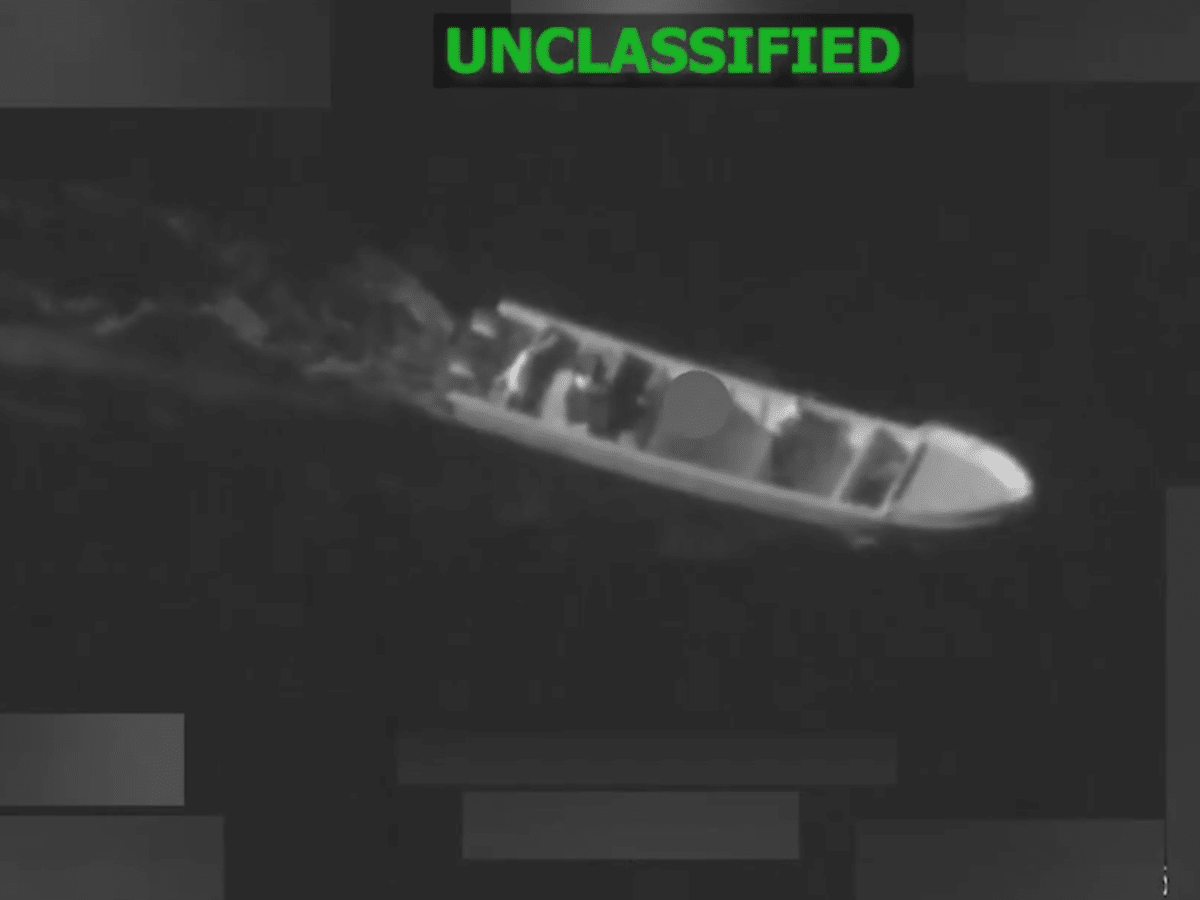
The US military has killed another 5 people in its targeted strikes against so-called ‘narco-terrorists’ in the seas off Latin America. The American dirty war has now claimed over 160 lives since it began in September 2025. The latest victims died in two separate strikes in the eastern Pacific.
The US bombed Caracas, Venezuela, and kidnapped the country’s president on 3 Jan 2026. The attack came after months of military build-up in the region. The US-Israeli attack on Iran has absorbed legacy media focus since – but strikes in the Americas have continued.
Southern Command (SOUTHCOM) is the US military mission in the region. SOUTHCOM confirmed the strikes on 13 April 2026:
Applying total systemic friction on the cartels.
On April 11, at the direction of #SOUTHCOM commander Gen. Francis L. Donovan, Joint Task Force Southern Spear conducted two lethal kinetic strikes on two vessels operated by Designated Terrorist Organizations. Intelligence… pic.twitter.com/sRXTFYCWXu
— U.S. Southern Command (@Southcom) April 12, 2026
SOUTHCOM said:
Two male narco-terrorists were killed, and one narco-terrorist survived the first strike. Three male narco-terrorists were killed during the second strike. Following the engagements, USSOUTHCOM immediately notified U.S. Coast Guard to activate the Search and Rescue system for the survivor. No U.S. military forces were harmed.
The US allegedly killing survivors of a drone strike in the Caribbean on 2 September. Defence secretary Pete Hegseth was accused of giving the orders. The legal NGO Just Security said:
if the media reporting is accurate, this military operation is a “dishonorable strike” that is illegal under international law and the laws of war. This sentiment and logic was echoed by former U.S. military lawyers. The illegal order also runs contrary to longstanding U.S. military doctrine and U.S. Navy Regulations governing the treatment of survivors at sea.
Just Security’s contributors written extensively about the legalities of this new ‘war on drugs’. US operations have recently been expanded onto land and given a chilling new name…
Total Extermination
Operation Total Extermination has already carried out an attack in Ecuador which destroyed farm buildings and reportedly saw workers tortured by US-backed troops.
The American commander for operations in the SOUTHCOM region, General Francis Donovan, said the strikes were only a small part of what the US had planned:
What we’re moving for right now might be an extension of Southern Spear, but really a counter-cartel campaign process that puts total systemic friction across this network. I believe these kinetic [boat] strikes are just one small part of that.
Security forces allegedly detained and beat workers from the dairy farm on 3 March. The workers told the press:
Ecuadorean soldiers arrived by helicopter on March 3, doused several shelters and sheds with gasoline and ignited them after interrogating workers and beating four of them with the butts of their guns.
Three of the workers, who requested anonymity for fear of retaliation by the government, said the soldiers later choked and subjected them to electrical shocks before letting them go.
Ecuador’s right-wing president Daniel Noboa, a Trump ally:
has pushed through ‘urgent’ neoliberal reforms, cutting public spending while clamping down on civil liberties, workers’ rights, and indigenous environmental activism against mining and fossil fuel extraction.
The UK and Ecuador are working together on ‘counter-cartel’ operations. Media focus is on Iran. But Trump’s war against what he claims are cartel smugglers is still underway. Trump still wants hemispheric control. And, as well as Ecuador and Venezuela, the US has long-standing ambitions for Mexico and Cuba.
Featured image via X
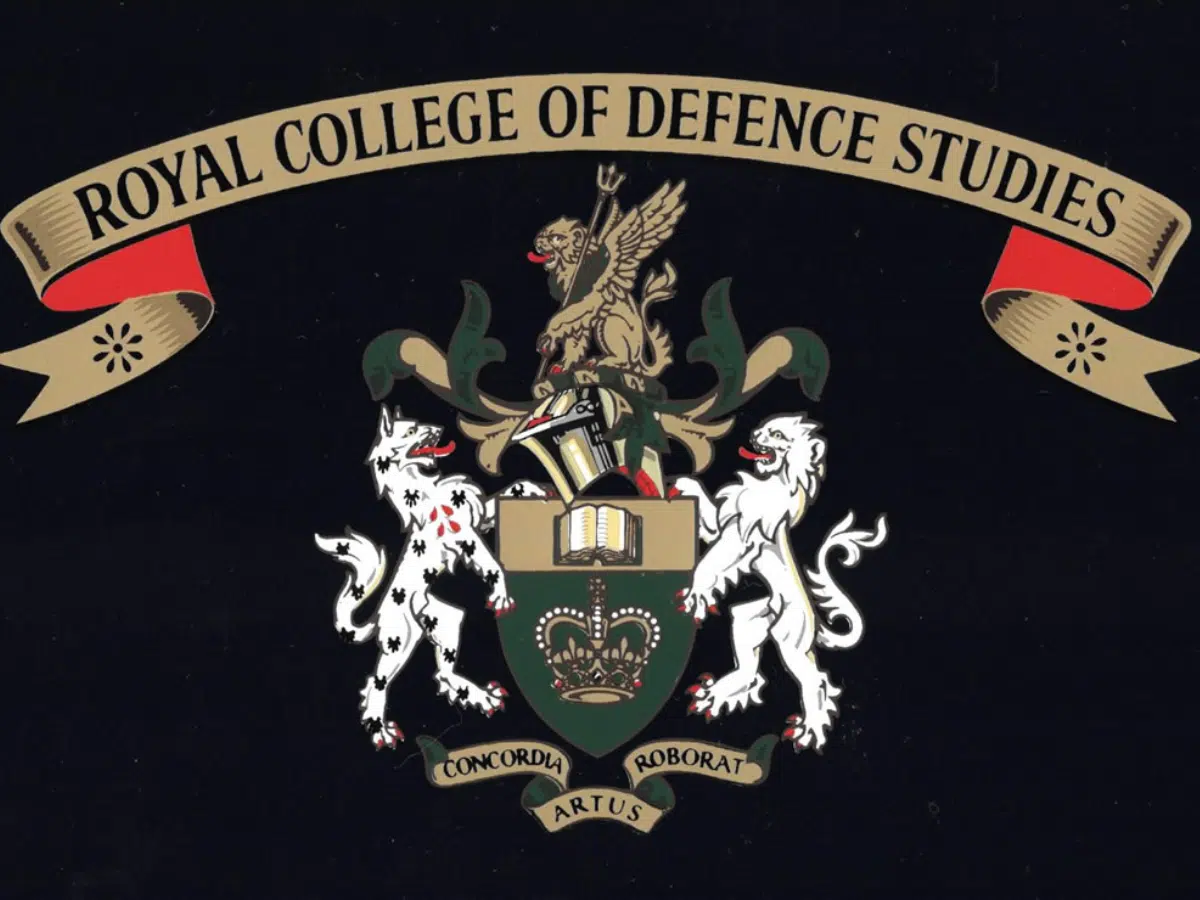
One of the UK’s top military colleges fought to distance itself from a September 2025 government ban on training Israeli officers. The head of the college sought advice, fearing that banning the genocidal settler-colony’s forces would be bad optics. A truly strange perception of what constitutes bad PR…
Al Jazeera gained access to emails which show concerned internal discussions at the Royal College of Defence Studies (RCDS).
The outlet reported on 13 April:
The British government made the decision, which was widely reported in international media, amid a wave of condemnation of Israel’s escalation of the war, calling the planned ground offensive “wrong”.
However:
Previously unreported correspondence shows that the move prompted discussion within the RCDS about potential harm to its reputation as an institution which welcomes students of all backgrounds, leading its head to ask a senior military official to ensure that the public would be aware that the college played no role in the decision.
The head of the college, RCDS commandant George Norton, emailed British general Tom Copinger-Symes for advice just after the ban started in September 2025.
Norton told Copinger-Symes:
that it would “appear to be important” for Jenny Chapman, the UK’s development minister, to highlight that the college does not invite or select participants in its courses, and that invitations were “rather a government-to-government matter”.
Israeli genocide: optics of banning a pariah state
His main worry appears to have been optics, rather than the idea the college might be training the genocidal military personnel of a pariah state. Norton wanted it made clear that the government, not the college, had come up with the ban.
These key pieces of information have been absent from the majority of media portrayal, generating a perception that RCDS itself is deciding which countries to invite or not to invite.
Norton also expressed a concern about making it clear the college was not trying to undermine government policy:
I would be grateful for your support in underlining this position in our public narrative, without of course creating a perception that RCDS (or CSOC) is seeking to undermine government policy.
Copinger-Symes said he would “see what we can do”.
‘Positively engaging’ and ‘diversity’.
Another RCDS staff member, deputy commandant Tamara Jennings, wrote in an email:
I appreciate that while we fall under MOD, we do have a standalone brand and our reputation as a welcoming college that positively wants to engage with all as that diversity and dealing with places we would not always agree with on a topic is exactly what this place is about.
So a story which says RCDS have banned anyone is unhelpful, both in terms of attribution of the decision and the term ‘ban’.
Our colleagues at Declassified UK were first to report the story on 29 July 2025. They said:
At least two Israeli colonels have attended the prestigious Royal College of Defence Studies (RCDS) since 2023.
After weeks of stonewalled inquiries to the Ministry of Defence (MOD), the military was forced to disclose:
that IDF soldiers were studying at the RCDS, admitting that fewer than five officers had trained there in 2023 and 2024.
The MoD did not offer the names and ranks of the officers or provide figures for 2025.
However:
Declassified was able to find details of one Israeli officer who graduated this summer because the RCDS Commandant posted photos of them on his social media accounts.
The UK military is well known for training military personnel from nations on its own human rights watchlists. The latest revelation of such activity came via the NGO Action of Armed Violence on 27 March.
However it is notable that:
Israel does not appear in the dataset, despite the MoD previously confirming that a “limited number” of Israeli personnel have been trained in the UK. No explanation is given for the omission.
That the UK’s top military college was worried that a ban on personnel from a genocidal army would be bad PR is remarkable. And the fact one staff member drew on the language of ‘diversity’ in her complaint about the ban – or its framing in official comms – must be too. Why, one ought to ask, would an educational institution want members of an army which has been carrying out war crimes in attendance anyway?
It’s hard not to think this is same old colonial arrogance, the British military have embodied for centuries. Perhaps in future, they’ll be more careful what they write in their emails…
Featured image via the Canary

RMT pledges action against assaults in national campaign day

McLaughlin: Can SDSU Contend for Playoff Spot in Pac-12?

Huge cover display, multiple colours


-

 Politics4 days ago
US brings back mandatory military draft registration
-
 Sports4 days ago
Man United discover Nico Schlotterbeck transfer fee as defender reaches Dortmund agreement
-

 Fashion4 days ago
Weekend Open Thread: Veronica Beard
-

 Tech7 days ago
How Long Can You Drive With Expired Registration? What Florida Law Says
-

 Politics4 days ago
Malcolm In The Middle OG Turned Down ‘Buckets Of Money’ To Appear In Reboot
-

 Politics2 days ago
World Cup exit makes Italy enter crisis mode
-

 Crypto World5 days ago
Canary Capital Files SEC Registration for PEPE ETF
-

 Business4 days ago
Tesla Model Y Tops China Auto Sales in March 2026 With 39,827 Registrations, Beating Cheaper EVs and Gas Cars
-

 Fashion7 days ago
Let’s Discuss: DEI in 2026
-

 Crypto World21 hours ago
The SEC Conditionalises DeFi Platforms to Be Avoided for Broker Registration
-

 Crypto World6 days ago
Bitcoin recovers as US and Iran Agree a Ceasefire Deal
-

 Crypto World17 hours ago
SEC Signals Exemption for Crypto Interfaces From Broker Registration
-
 NewsBeat2 days ago
Pep Guardiola and Gary Neville agree over Arsenal title problem that benefits Man City
-

 Business4 days ago
OpenAI Halts Stargate UK Data Centre Project Over Energy Costs and Copyright Row
-

 Business3 days ago
Ireland Fuel Protests Enter Day 5 as Blockades Spark Shortages and Government Prepares Support Package
-

 Politics4 days ago
LBC Presenter Mocks Trump Over Iran War Failures
-

 Tech5 days ago
A version of Windows 10 released a decade ago is now eligible for additional security patches
-

 Crypto World4 days ago
Federal judge blocks Arizona from bringing criminal charges against Kalshi
-
 NewsBeat2 days ago
JD Vance announces ‘no agreement’ with Iran over nuclear weapons fear
-

 Business4 days ago
IMF retains floor for precautionary balances at SDR 20 billion
You must be logged in to post a comment Login