
Politics
Why the woke left loves dancing on people’s graves

There’s nothing the digital left loves more than an untimely death. And if it’s a violent one, even better. Charlie Kirk’s body was barely cold before his haters were chortling: ‘Bye, Nazi bitch.’ ‘Good riddance’, tweeted batshit hack Ana Kasparian following the death of US Senator Lindsey Graham. Even the revelation that Tory grand dame turned Reform UK spokeswoman, Ann Widdecombe, had been beaten to death with a hammer was insufficient to stem the glee of the death-laughers. ‘Racist old bitch’, said the madder ones. ‘Bigot’, said the more ‘moderate’ ones.
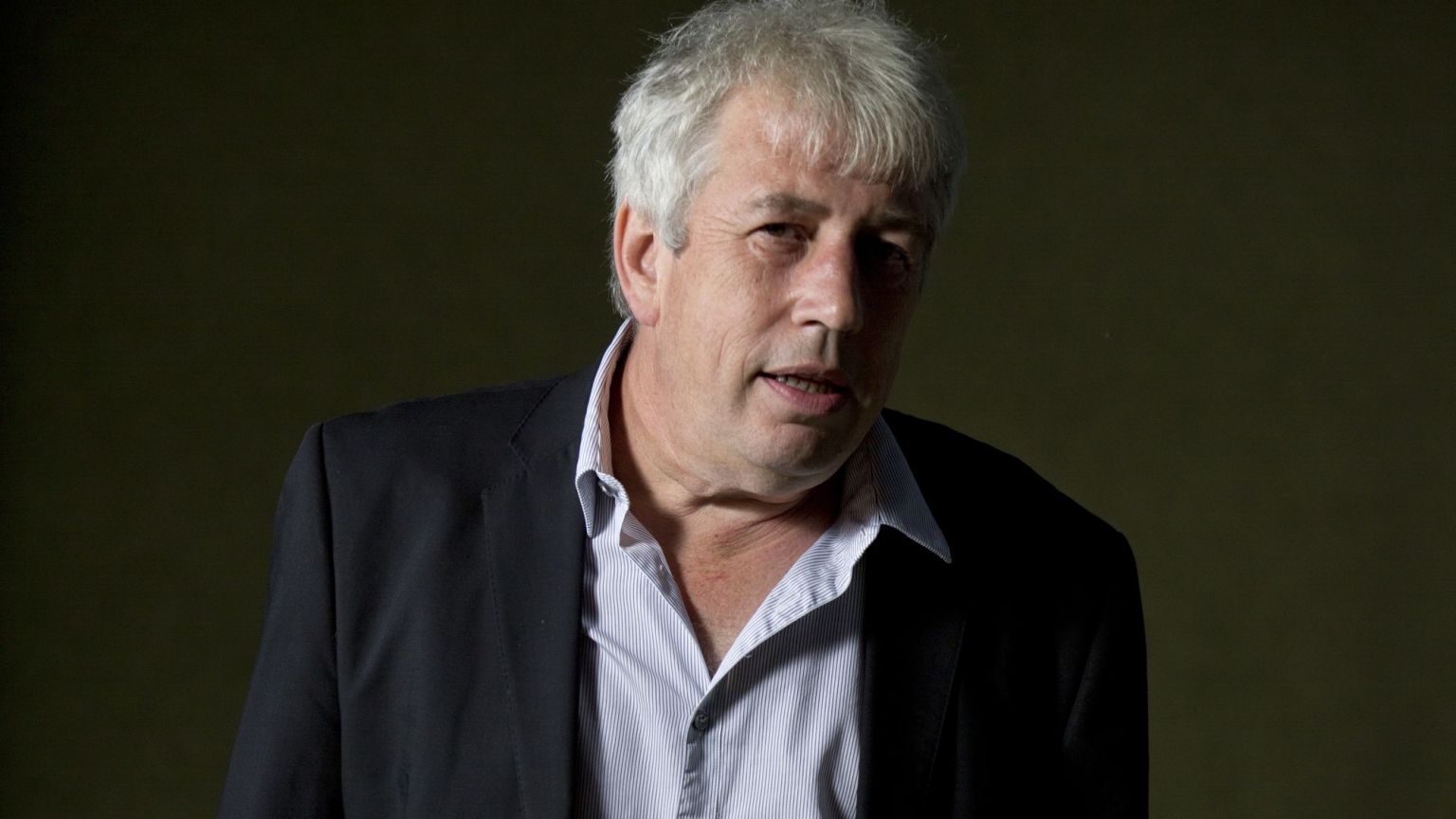
And now the ghouls are coming for Rod Liddle, the brilliant, contrary columnist who died on Sunday at just 66 years of age. Even before his grave is dug, they’re dancing on it. He was a nonce-defender, a racist and a raging ‘Islamophobe’, wail the humourless tossers of the prick left. That none of this is true, and that defaming the freshly dead is about as scuzzy as human behaviour can get, matters not one jot to the Liddle vultures. They’ve got virtue to display, and if they must do it from the soapbox of a beloved writer’s corpse, so be it.
It really has been gross. It’s been particularly bad over on Bluesky. That’s the social-media sewer to which liberals and leftists decamped en masse after X finally permitted women to say ‘he’ about cocks in frocks and the ‘gammon’ masses to say ‘I don’t like mass immigration’. As Joanna Williams reports, Bluesky’s riff-raff-dodging wankers have been posting laughing emojis and images of champagne corks popping. Imagine the depthless narcissism it must require to celebrate a man’s death because he said things you disagree with. ‘Nothing human is alien to me’ and all that, but I do struggle to fathom such industrial-scale self-regard that cheers the sudden passing of a much-loved husband and father because it means you and your piss-weak constitution will be spared his hurty words.
Liddle hate swiftly became the bloodsport of the bourgeois left. It descended into a dark arms race of digital cruelty, each lowlife trying to outdo the other. Don’t forget his ‘galloping racism’ and his ‘repeated defences of paedophilia’, said one author. He ‘relentlessly promoted racism’, said some yapping leftist. He was a ‘bloviating bully’, said a blogger. He wasn’t. If the fainthearts of the coddled middle classes felt bullied by his columns, that’s on them. What’s more, at least he ‘bullied’ people who were alive, and could defend themselves, unlike his own shame-free posthumous persecutors.
Mehdi Hasan joined in. Of course he did. That muppet’s never seen a digital mob he didn’t want to join. ‘The outpouring of love for Rod Liddle’s offensiveness’ is a ‘reminder of how mainstreamed and even encouraged Islamophobia is in UK political and media discourse’, he said. Jesus, the ethno-narcissism. Liddle wasn’t a fan of Islam – get over it. Not everyone has to like your religion. Hasan’s Zeteo published a piece titled: ‘Rod Liddle has died. Here he is in his own words.’ Every quote was cynically yanked out of context in a bid to depict Liddle as a horrible bloke. It was tantamount to misinformation.
It’s the humourlessness of Liddle’s frenzied critics that is most striking. These prissy midwits wouldn’t know a joke if it slapped them in the face. (Calm down, lads, that’s not an incitement to violence – it’s just a saying.) Consider the claim that Liddle was a defender of paedophilia. This stems from a self-mocking column in which he said he could never have been a teacher because he’d have been too tempted to shag the pupils. They never quote from the rest of the column, in which he clearly states that teachers having sexual relationships with pupils is ‘wrong’, ‘imbecilic’ and ‘exploitative’. Why leave that out, liars?
Then there’s the line that gets quoted all the time. It’s from the Spectator. ‘My own view is that there is not nearly enough Islamophobia within the Tory Party’, he wrote. Bigot! Racist! Oh keep your knickers on. He makes it crystal clear in that piece that he’s using the term ‘Islamophobia’ to mean criticism of Islam. People should be permitted, he said, to call Islam an ‘oppressive ideology’ that sometimes grates against the ideals of ‘secular democracy and equal rights’.
The arrogance of people who make up a bullshit term like ‘Islamophobia’ to police and crush criticism of Islam and then clutch their pearls when a writer uses ‘Islamophobia’ to mean criticism of Islam. As Liddle said, having ‘misgivings’ about an ideology is ‘not racism’. Yep. He also said in that column that Boris Johnson was wrong to say women in burqas look like postboxes, because ‘postboxes are bright red’. ‘They look more like Darth Vader.’ Oh shit, a joke. Ready the fainting couch. Call the police.
I know, to explain a joke is to kill it. But what else are we to do in the face of such inane scoldery? All this Liddle hate is proof that university now makes you dumb. A whole new generation has been trained to cherish their self-esteem above all else, including the hard-won right of others to speak freely and blasphemously. The self-idolatry of the credentialled classes has birthed a public realm that is violently allergic to humour. Liddle was a devil to these god-children who prize their own feelings more highly than freedom.
Wokeness has become a death cult. Hundreds of public-sector workers in the US were reprimanded for celebrating the murder of Charlie Kirk. Social-media posts ‘rejoiced’ over the death of Lindsey Graham. Even national-treasure status could not protect Ann Widdecombe from the macabre elation of leftish whackjobs. I hope her death was ‘extremely painful’, said one academic. Add this grave-dancing to the fact that trans activists frequently wish death on ‘TERFs’, and that the keffiyeh classes are horrifically chill about the rape and murder of Jews, and it becomes undeniable: the crazier sections of the left see death as a righteous comeuppance for ‘right-wingers’.
To my mind, this death-chuckling is a cancerous outgrowth of cancel culture itself. An activist class that considers brutish cancellation to be a just punishment for wrongthink will soon look upon that most brutish cancellation of all – death – as something just or funny or at least as an opportunity to remind everyone about the dead person’s horribleness. The shameless glee with which the ‘progressive’ mob speaks ill of the dead is a testament to the savagery of neo-censorship. Convinced they should have the right to glide through life without ever hearing a sore word about their BS trans identity or their daft Islamic beliefs, they come to feel almost relief when a ‘hater’ snuffs it. The cult of narcissism is the midwife to truly cruel ways of thinking.
Brendan O’Neill is spiked’s chief political writer and host of the spiked podcast, The Brendan O’Neill Show. Subscribe to the podcast here. His latest book – After the Pogrom: 7 October, Israel and the Crisis of Civilisation – is available to order on Amazon UK and Amazon US now. And find Brendan on Instagram: @burntoakboy.


Major rail disruption has taken place following an electrical failure in the Manchester Rail Operating Centre communications centre.
National Rail said on its site that the issues began just before 2pm on 6 August and are expected to last “until the end of the day” in the Greater Manchester/north-west of England area.
The BBC reports we don’t yet know what caused the issue, how severe it may be, or how long it will last.
Here’s which train lines may be affected, and what each have said, as of the time of writing:
What has National Rail said?
In a statement, it warned of “major disruption for the rest of the day due to power issues impacting signalling”.
The service added: “Currently no trains can run from Manchester Piccadilly through to Manchester Victoria and Bolton, impacting services right across the North West network.
“Some trains are running south and east of the city towards Stockport, but are also subject to delays.
“As a result, cancellations are expected on rail routes across Greater Manchester until the end of today (Thursday 6 August).”
If you’re travelling by train today, check with National Rail or your train line first.
Which lines have been affected?
Per National Rail, lines affected by the signal issue include:
- Avanti West Coast,
- CrossCountry,
- East Midlands Railway,
- London Northwestern Railway,
- Northern,
- TransPennine Express,
- Transport for Wales.
What have these lines said?
This is what each line has said as of the time of writing. (Advice is subject to change, so check in regularly before travelling.)
TransPennine Express’s site reads: “All trains will be stopped due to a failure of the communication systems on the network”, adding there is “major disruption and no trains or replacement buses are operating, and we strongly advise you not to travel”.
Transport for Wales said “train services between Chester and Liverpool Lime Street are also disrupted” and trains “will not be able to run until the electrical supply has been restored”.
It added: “We have organised buses to run between Liverpool Lime Street and Chester to help you complete your journey, at no extra cost. These will arrive at 15:30 at Chester provided by Patts Coaches and arrive at Liverpool Lime Street at approximately 15:30 provided by Northwich Travel.” These arrangements will last until 6pm.
Northern’s site says there are “major disruptions” across various routes, adding, “due to failure of the electricity supply at Manchester Piccadilly all lines are blocked”. It said this is expected to last until the end of the day.
Esst Midlands’ site said: “There is a failure of the electricity supply around the Manchester Piccadilly area. This is currently disrupting our trains on the Liverpool Lime Street/Nottingham/Norwich routes.” The company added: “Our services are unable to run between Sheffield and Liverpool Lime Street until the end of the day.”
London Northwestern Railway’s site lists “major problems” from services via London Euston, from Euston to Crewe, from Crewe to Stafford, and services via Birmingham New Street.
And Avanti West Coast’s site reads: “This Friday, we’re seeing some short-notice cancellations on our network, so please check your journey before you travel. We’re really sorry if this affects you and your journey, but we’re working hard to make sure we can minimise these cancellations.” Its site has a section to help you find out your live train status.


Former neo-Nazi Joshua Bonehill-Paine has withdrawn as a Tory candidate for the 2027 council elections in Somerset. Far-right candidate are hardly a rarity in UK politics these days. However, reports claim he has now been given an internal Conservative Party role educating people about extremism.
Another Tory misstep
Bonehill-Paine was convicted in 2016 for harassing former Jewish Labour MP Luciana Berger.
The Guardian reported on 5 August:
Joshua Bonehill-Paine said on Wednesday that he had withdrawn from next year’s local elections, and that the Conservative leader had instead asked him to become an adviser to the party’s culture and integration commission, where he will specifically focus on how young men become radicalised.
The outlet added:
Badenoch, who has come under pressure in the last 48 hours from individuals and organisations including the Board of Deputies of British Jews, said she was “sad” that Bonehill-Paine felt he “won’t be given the space to explain his position and represent his community”.
Berger, who is now a baroness in the House of Lords, condemned the move on X:
The decision to welcome this individual as an adviser to the Leader of the Opposition is no better than allowing him to stand as a council candidate. It is a privileged and influential national role. As a victim of this man’s heinous crimes this appointment is an insult.
— Luciana Berger (@lucianaberger) August 5, 2026
The Guardian said:
Both the Board of Deputies and the Jewish Leadership Council (JLC) had turned down the Tory party’s offer of a meeting with the former neo-Nazi, who previously described himself as a “nationalist, fascist, theorist and supporter of white rights” and re-emerged in recent years as the creator of the Crewkerne Gazette, a satirical online account.
A ‘formidable record’ of hate offences
The BBC reported that Bonehill-Paine’s new role:
would focus on advising on how to prevent young men from being radicalised.
According to the corporation, Bonehill-Paine spent:
three years in prison after he was jailed in 2015 for posting antisemitic material ahead of a planned neo-Nazi rally.
He was convicted of racially harassing then-Labour MP Berger the following year.
During sentencing in the 2016 case, Justice Spencer said Bonehill-Paine had enacted:
a cruel campaign of vile racist abuse on the Internet against a Jewish Labour Member of Parliament, Luciana Berger, simply because she is Jewish.
At the age of only 24 you have amassed a formidable record of offences of hate crime using the Internet.
Meanwhile Badenoch tried to spin the story in her favour, saying it was important to engage with reformed fascists:
If we are going to stop extremism and antisemitism, we are going to need help from those people who were part of the problem, but have now changed and are being part of the solution.
A former neo-Nazi seems like an odd choice for a candidate a political party led by a British-Nigerian woman. Or it may be that UK politics is at this stage so decayed and unhinged that we should stop being surprised by these sorts of events.
Either way, Bonehill-Paine has still ended up with an influential job in the Tory party. Just not quite the one he was after…
Featured image via the Canary
By Joe Glenton


We know type A personalities are often described as hard-working, organised, and goal-oriented, while type Bs are seen as more emotionally attuned and easygoing (usually at the expense of motivation and urgency).
But people are increasingly recognising there’s a ‘type C’ personality, which is kind of a mash-up of both.
People who fit into the type C personality bracket might be introverted, non-assertive and passive. They tend to focus on others, sometimes at the expense of themselves, and are typically cooperative.
“Type Cs seem kind, obedient, well-mannered, pragmatic and normative people who are preferred by others in work and social life,” researchers wrote in the International Journal of Business and Management Invention.
They have a great interest in details and are creative. But they might also struggle to control themselves when stressed, find it hard to stand up for themselves, and generally fail to communicate their needs.
So, what’s a ‘type C’ parent?
Over 4,200 parents shared their confessions with Skylight Calendar – and more than one third (35%) said they lean into “type C parenting”. But in the parenting realm, type C looks a little different.
When you’re a parent, perfectionism can feel extremely unattainable. Enter: type C. If you were once a type A who had everything in order, you’re now probably veering into type C territory as the chaos of parenting meets your neat and orderly ways.
ABC News describes type C parents as “juggling the intensity of Type A energy with the messy realities of everyday life”. (I’m starting to think the C stands for ‘chaos’.)
Influencer Ashleigh Surratt popularised the term in a now-viral video where she summed up life as a type C mum. We see her putting toys into neatly labelled tubs and then, in the next breath, turning up to playdates where neither of her kids have shoes.
It’s having high standards, but it’s also acknowledging that sometimes your kids will lick the floor. It’s keeping a tidy house, but having a playroom that looks like a bomb’s exploded.
“Type C: everything is meticulously labelled but there is banana smushed into the car upholstery,” said one of Ashleigh’s followers in the comments section of her video.
Another described type C parenting as: “The shoe racks are immaculate, the drawer bins are organised, the go bags are on point, but the dining room table is an absolute catch all and I don’t remember the last time I washed my kids hair. Also the homework may or may not have food stains on it. Don’t look in my car.”
Therapist Cheryl Groskopf told Good Morning America people who adopt type C parenting are “choosing to loosen up in certain areas – maybe the house isn’t spotless, maybe dinner’s frozen – because you’ve realised that connection matters more than control”.
She added: “You still care. You’re still showing up, just in a way that actually works for your real life.”
How is type C parenting different to burnout?
Sometimes this chaotic way of parenting can look a lot like burnout. But there is a key way to spot the difference. Groskopf said if you can still “show up emotionally” for your family – and you’re still connecting and responding with care (even when it’s messy) – that’s type C.
Whereas “if you feel numb or like you’re disappearing, that’s burnout”, she added.
There are four key signs of parental burnout, according to Dr Emma Svanberg, author of Parenting For Humans.
These include: exhaustion in your parental role (regardless of how much sleep you’re getting), noticing your parenting has changed, feeling fed up with your parental role, and emotionally distancing yourself from your kids.
If you feel like you might be burnt out, Dr Svanberg shared some tips for helping yourself:
- Seek support from friends, family members and neighbours to “bring in a village”.
- Prioritise deep rest – this might look like a hot bath with the lights off, lying in a dark room, or going for a nice massage if that’s something you can afford. It might also look like turning off your phone, reducing your caffeine intake and making sure you’re eating well.
- Lighten your load – if you’ve got a to-do list as long as your arm, it’s time to offload jobs onto your partner or children and only prioritise jobs that are essential.
- Reset the nervous system. According to Healthline, breathing exercises, weighted blankets, hot baths, warm hugs, eating healthy fats (think avocado and nuts), lifting weights and taking a break (when possible) can all help with this.
- If it’s affecting day-to-day life, reach out to your GP, midwife or health visitor about how you’re feeling.
- If you can afford to pay privately for therapy, that might also help.
Related…



The past week has been a rollercoaster for trans rights in the UK. On Friday 31 July, the High Court rejected a legal challenge to the upcoming trial of puberty-blocking medication. That same day, the court also ruled that police don’t have to perform strip searches based on ‘biological sex’.
On 5 August, the Equality and Human Rights Commission’s (EHRC) new transphobic code of practice came into effect. It holds that a trans-inclusive women’s service is “very likely” to be discriminatory on the basis of sex. However, just one day later, the Good Law Project (GLP) has supported a legal challenge against the code.
Puberty blocker trial challenge fails
In spite of the fact that the (already ludicrously transphobic) Cass Review recommended the upcoming Pathways puberty blocker trial for trans youth medicine, transphobes have nevertheless been up in arms against it. Most recently, as GLP explained:
The controversial Bayswater Support Group have teamed up with claimants including Keira Bell, whose legal challenge to young trans healthcare in 2020 was overturned on appeal, following an intervention by Good Law Project. In a case funded by a group with links to the far right, they are asking the High Court for permission to challenge the NHS Pathways trial.
The claimants tried to argue that the medication – widely used throughout the world as part of routine trans care – posed a risk to children. As such, they held that the trial was unlawful.
Instead, Bayswater and its supporters suggested that the puberty blockers be tested on adults. This was, of course, patently ridiculous given that the adults would already have gone through puberty.
On 27 July, GLP announced that both it and trans-led charity Gendered Intelligence would oppose Bayswater’s challenge in court, if necessary. Fortunately, however, a legal battle won’t be necessary in this case. On 31 July, GLP reported:
The court held that the trial was “commissioned by NHS England with conspicuous care”, that the MHRA, the medicines regulator, undertook a “rigorous process” before approving it, and that each child involved in the trial will have been assessed for many months by specialist doctors as likely to receive direct benefit from the treatment.
The judge also noted that the court must be “very cautious” about interfering with medical regulatory decisions.
Gendered Intelligence stated that it was:
glad to hear that clinical trials of safe, effective gender care will be able to continue without interference. We should always put our young people first, and always put healthcare before politics
High Court strip-search ruling
On the same day, 31 July, the High Court also threw out a legal challenge against police strip-search guidance. The challenge, issued by anti-trans pressure group Sex Matters, argued that trans people should always be strip searched by an officer of the trans individual’s sex-assigned-at-birth.
Previous guidance held that officers matching a trans detainee’s gender should perform strip-searches, provided the detainee holds a Gender Recognition Certificate (GRC). However, following the 2025 Supreme Court ruling invalidating trans people’s gender under the Equality Act, the government issued new guidance.
The Police and Criminal Evidence Act 1984 (known as PACE) governs police powers to perform strip searches. Notably, PACE requires that an officer of the same sex as the detainee performs the search.
While the Supreme Court seemingly invalidated trans people’s right to be treated as a member of their assumed sex — i.e. the purpose of a GRC – the newest guidance argued that:
when requested, a strip search of a trans woman should be conducted by a female police officer. But there’s a significant limitation – both the trans detainee and the police officer have to consent to the search.
One might think that this is fairly straightforward. If a trans person requests an officer of their gender, and the officer is fine with it, this is a non-issue. However, Sex Matters objected, as the GLP explained:
They argued that the guidance creates a “shadow regime” attempting to “contract out” of the PACE framework, as established by the legislature.
Justice Lindon, the presiding judge, rejected the campaign group’s premise. He stated that PACE doesn’t forbid consensual searches outside of the statutory requirement, and voiced doubt that PACE was intended to protect officers rather than detainees. Moreover, he added that:
the effect of the ability to consent to a search by a person of the opposite biological sex is to mitigate the distress which the detained transgender person may feel, rather than to increase it
Anti-trans EHRC code challenged
However, the enactment of the EHRC’s new transphobic code of practice on 5 August overshadowed these two relatively-minor legal victories.
Though the code doesn’t carry legal weight in itself, instead offering an interpretation of equalities law, it encourages a nationwide bathroom ban against trans people, and their wholesale exclusion from single-sex services aligned with their lived gender.
As such, Leigh Day solicitors and GLP are supporting a legal challenge against the guidance. The claimants are currently anonymous, though GLP described them as a “trans person and a trans-inclusive organisation”.
Together, they will argue that the EHRC has fundamentally misunderstood the law, and that its code violates human rights. As an opening salvo, Leigh Day has sent a pre-action letter to both the EHRC and government setting out their argument.
GLP explained that:
Trans-inclusive women’s organisations […] are now faced with a stark choice:
- Ban trans women entirely.
- Stop being a women’s service, and open up to all men.
This blanket instruction puts inclusive organisations in an impossible position. […] The guidance lacks nuance, ignores context and pays no attention to the ways women want to run their own spaces and services.
Jess O’Thomson, GLP’s trans rights lead, added that:
This Labour government pushed through its transphobic guidance in the face of opposition from many MPs, including nearly a hundred of its own backbenchers. It’s not just immensely harmful. We think it’s unlawful, and completely against human rights. So this challenge is absolutely essential.
The Canary will report on the legal argument behind the challenge in more detail tomorrow. For now, however, it’s gratifying to see that neither trans people nor their allies have given up the fight just yet — no matter the forces arrayed against them.
Featured image via the Canary
By Grace
Politics
Politics Home | Big Tech Firms Are “Winning In A Big Way” On Online Safety, Warns Jess Phillips
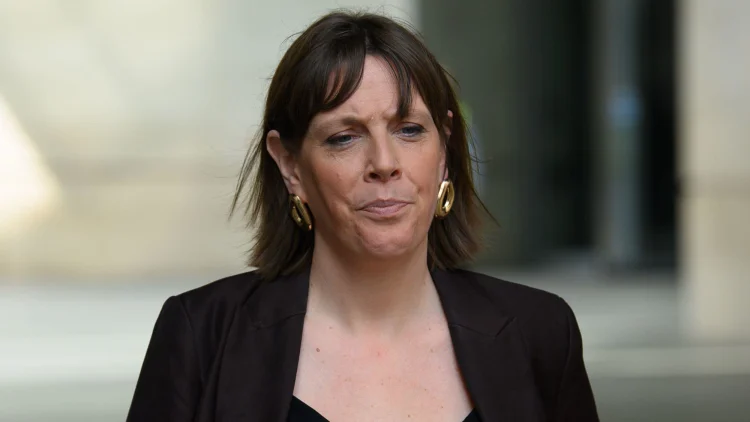
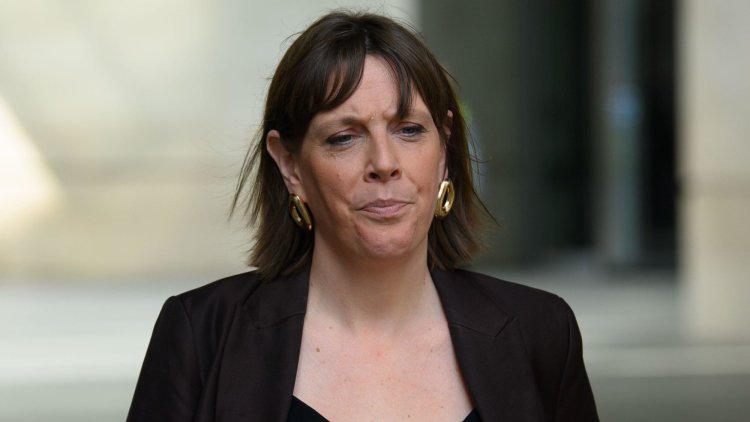
The former safeguarding minister Jess Phillips has warned the big tech firms are winning in the battle over regulation (Alamy)

3 min read
Major tech companies are “winning in a big way” against efforts to make the internet safer for women and children, according to former safeguarding minister Jess Phillips.
Phillips, the Labour MP for Birmingham Yardley, said that during her time in government, parts of Whitehall, including No 10, were reluctant to take action for fear of retaliation by tech giants and the Donald Trump administration.
Speaking on the latest episode of PoliticsHome podcast The Rundown, which will be published on Friday (7 August), Phillips said: “We are too beholden currently in the world to basically five unelected people.”
The Labour MP resigned as a Home Office minister in May, accusing the Keir Starmer administration of not working hard enough to protect women and girls online. Phillips said Starmer was a “decent man” but his reluctance to “have an argument” meant that steps to tackle violence against women and girls (VAWG) were “stalled and delayed”.
In her resignation letter to the then-prime minister, Phillips said that “91 per cent of online child sex abuse is self-generated by children groomed, tricked and exploited into abuse”, and that Google and Apple, the two companies that control the operating systems on almost all smartphones, could quickly and easily install software that would stop them being used by children to take and receive naked pictures.
In June, Starmer gave tech firms a September deadline to make this change, warning that the government would give itself the powers to fine or take criminal action against those that did not comply.
Phillips wants new Prime Minister Andy Burnham to hold them to this, telling the podcast that, as things stand, “tech companies are winning in a big, big way”.
The former minister said there was a divide within Whitehall about how to tackle online safety when she was in government. She described the Home Office as being “hawkish as hell about tech companies”, while No 10 and the now-abolished Department of Science, Innovation and Technology (DSIT) were nervous about being too aggressive.
Phillips recalled “the sense that tech companies and the US would hold us to ransom on all sorts of different things”, adding: “I’ve had it directly said to my face, ‘well, look, they’ll just put trade levies on us if you try and do anything with tech companies’.”
She said Starmer “was always on my side in conversations”, but that she “just started to feel like I was going slowly mad” waiting for the machinery of government to make it happen.
“If you could hear some of the conversations I had to have with people. There are some people who genuinely just think that people taking dick pics is a human right,” Phillips said.
“I had to say to somebody once: ‘You know, you won’t die. It’s not water or shelter’.”
Phillips expressed concern that the government’s Online Safety Act is “woeful for women” in its current form and “20 years behind” where it needs to be to tackle evolving online harms.
“As somebody who was seeking to put down lots of amendments to the Online Safety Act while it was passing through, I’ve never known aggressive lobbying like it,” said the Labour MP. “Every single law firm in the whole of London was basically on retainer to one of the big tech companies so that they couldn’t work for anyone else. That is just anti-democratic.”
The Rundown is presented by Alain Tolhurst, and is produced and edited by Ewan Cameron for Podot
- Click here to listen to the latest episode of The Rundown, or search for ‘PoliticsHome’ wherever you get your podcasts.

We’ve all been buying our pants at M&S for years – but nothing like this.
This week, the high street retailer announced it’s started stocking Ann Summers’ lingerie. And while some might shriek at the kinds of things in the range, here at HuffPost UK we think it’s cause for celebration.
Over the last few years, there’s been a crack down on all things sexual (scandalous!) on social media and in legislation. But in case you missed it, we’re totally pro-sex, and if you wanna flaunt a little babydoll lace set, that’s your prerogative!
While you likely snuck into Ann Summers stores as a teen to try on your first bra, or even a corset if you were feeling daring, buying a sexy two-piece (or crotchless panties, if you care) is now easier than ever.
And it’s about time! With John Lewis stocking sex toys, a category which is growing for them year-on-year, it’s about time we started openly embracing sensuality. As one campaign exclaims: Yes Sex Please, We’re British!


A December 2024 report from Unipol and HEPI confirmed something students already knew but universities were slow to acknowledge: the maximum student loan in England is now less than the average student rent. You read that right. The government’s own financial support package doesn’t cover your highest single cost.
That reality is changing how students choose universities. And if you’re currently deciding where to study, it should change how you think about it too.
The Numbers That Are Actually Driving the Decision
Student rents in university-owned accommodation rose an average of 12% across UK cities between 2021/22 and 2023/24, with private housing used by universities rising 13% over the same period. Those aren’t anomalies. They’re a consistent trend that hasn’t reversed.
London now averages around £13,600 per year for student accommodation alone, according to HESA data from 2024. Split across twelve months, that’s over £1,133 a month on rent before you’ve bought a single meal or paid a transport fare.
And the supply side isn’t catching up. Purpose-built student accommodation in prime locations consistently exceeds 97% occupancy, with many properties in high-demand cities fully booked by spring, months before the September intake. If you’re applying to a London university and you haven’t started your housing search by February, you’re already late.
How Students Are Voting With Their Feet
Here’s the shift that’s happening quietly but clearly. Students are increasingly factoring total cost of living into university choice, not just league table position or course quality.
One in two students reported fears about the student housing shortage in the 2024 National Student Accommodation Survey by Save the Student. That’s not a niche concern. That’s half of all students actively worried about where they’ll live, which is exactly the kind of anxiety that influences where prospective students decide to apply in the first place.
The result is growing interest in regional universities in cities where housing costs are significantly lower. Lincoln, Bolton, and Cardiff consistently appear in affordability comparisons precisely because their total student cost of living sits well below London, Manchester, or Bristol. The degree at the end looks the same on a CV. The debt at the end does not.
The London Premium Is Real and Worth Calculating
Total monthly costs in London run £300 to £500 higher than in most other UK cities, driven by rent that sits 30 to 60% above the national student average, higher transport costs, and higher general spending.
Over three years, that premium compounds to between £10,800 and £18,000 in additional living costs compared to studying somewhere like Sheffield or Nottingham. For many students, that’s the difference between graduating with manageable debt and graduating with debt that follows them for a decade.
The counterintuitive truth: choosing a lower-ranked university in a cheaper city often produces better financial outcomes than choosing a higher-ranked one in London, especially if you’re in a field where the degree classification matters more than the institution name. Law and medicine are exceptions. Most humanities, social sciences, and business degrees are not.
What This Means If You’re Set on London
London’s universities aren’t going to get cheaper. The demand is too high and the housing supply too constrained for that to change in any timeframe relevant to your degree.
So if London is where your course, your career, or your personal circumstances require you to be, the decision isn’t whether to accept the cost. It’s how to manage it as intelligently as possible.
Student apartments in London vary more than most students realise before they start searching. Zone 2 and Zone 3 locations with good Tube access can run £150 to £250 per month cheaper than equivalent rooms in Zone 1, with commutes that add fifteen to twenty minutes to your journey. For most students, that trade-off makes financial sense across a full academic year.
Bills-included accommodation is worth prioritising in London specifically. University halls and PBSA almost always include bills, while shared houses frequently don’t. In a city where energy costs are higher and winter bills spike, an unexpected £80 utility bill on top of already stretched rent is the kind of thing that tips students into arrears. 10% of students were in rent arrears at the time of the Save the Student 2026 survey, up from 7% in 2025, with the average amount owed sitting at £621.
Check amberstudent for verified student apartments in London across different zones and price points. Searching through a platform that lists bills-included options clearly saves you the maths of comparing headline rents that don’t include utilities, which makes genuine cost comparison significantly faster.
The Contract Length Problem Nobody Warns You About
This affects students in every UK city but hits hardest in London, where the base rent is already high.
Most private rental contracts run 51 to 52 weeks. Your academic year runs 38 to 40 weeks. The gap between those two numbers is weeks of rent you pay for a room you’re not living in. In London, at £1,100 per month, ten weeks of unused rent costs you £2,750.
University halls and most PBSA providers offer 40- to 44-week contracts aligned to the academic year. That alignment alone can save you more than the difference in weekly rent between accommodation types. Run the annual total, not the weekly headline, before you sign anything.
The One Comparison Most Students Don’t Make
Before you commit to a university and city, build a simple spreadsheet. Put the annual rent for realistic accommodation in each city you’re considering in one column. Add estimated transport costs. Add average food costs. Then subtract any scholarship or bursary income specific to that institution.
That number, the real annual cost of attending each university, tells you more than any open day ever will. Several institutions in northern England and the Midlands now actively market their lower total cost of attendance as a competitive advantage precisely because students are finally doing this comparison and choosing accordingly.
The universities know the housing crisis is reshaping their intake. Now you know it too, and you can use that information before you make a decision that affects your finances for years after graduation.


No one starts a relationship expecting it to end. When it does, the practical questions arrive fast. Who stays in the home. How the bills get paid. What happens with the children. What you are actually entitled to.
The answers depend far more on your legal status than most people expect, and the gap between what people assume and what the law provides causes real financial harm every year. Understanding where you stand early gives you a far better chance of a fair outcome. Speaking to Family Law Partners or another family law specialist at the outset can help you avoid decisions that are difficult to undo later.
This guide covers the position in England and Wales. Scotland and Northern Ireland have separate family law systems, and some of the rules below work differently there.
Your rights depend on your legal status
There is no such thing as a common law marriage. It does not exist in England and Wales and never has, no matter how long you have lived together, whether you have children, or whether you share a bank account.
This matters because married couples and civil partners have access to a broad set of financial claims when they separate. Cohabiting couples do not. Two people in outwardly identical situations can end up with completely different outcomes purely because one couple signed a marriage register and the other did not.
So the first question to answer is not what feels fair. It is what legal category you fall into.
If you are married or in a civil partnership
Since April 2022, England and Wales has operated a no-fault divorce system. Neither of you has to prove wrongdoing or blame the other. There is a minimum period of 20 weeks between applying and being able to apply for a conditional order, then a further 6 weeks and 1 day before the final order.
Separately from the divorce itself, you have the right to apply for a financial order. That can cover:
- The family home and any other property
- Savings, investments and business interests
- Pensions, including pension sharing orders
- Maintenance for you and for your children
The court works through a list of factors set out in the Matrimonial Causes Act 1973, including the length of the marriage, each person’s income and earning capacity, contributions made to the family, and future needs. The welfare of any child under 18 comes first.
One point is routinely missed. Getting divorced does not, by itself, end your financial claims against each other. Without a financial order approved by the court, a claim can in principle be brought years later. If you want a clean break, it has to be documented properly.
If you are living together
Cohabiting couples are the fastest-growing family type in the UK, with more than 3.5 million cohabiting couple families. The law has not kept pace.
If you separate, you have no automatic right to a share of your partner’s property, savings, income or pension, regardless of how long you were together. What you may have instead:
- A property claim. If you contributed to a home held in your partner’s sole name, you may be able to establish a beneficial interest under the Trusts of Land and Appointment of Trustees Act 1996. These claims turn on evidence of what was agreed and what was paid, and they are harder and more expensive to run than a divorce financial claim.
- Claims for your children. Schedule 1 of the Children Act 1989 allows a parent to seek financial provision for a child, which can include a lump sum or the use of a property until the child reaches adulthood. This is provision for the child, not for you.
- Child maintenance. Available through the Child Maintenance Service regardless of marital status.
If you are currently living together and not planning to marry, a cohabitation agreement or a declaration of trust recording who owns what is far cheaper than litigating the question later.
Your rights as a parent
Parental responsibility gives you a say in major decisions about your child, including schooling, medical treatment and where they live. Mothers have it automatically. Fathers have it if they were married to the mother, or if they are named on the birth certificate for a birth registered from 1 December 2003 onwards.
There is no legal presumption that children’s time should be split equally. The court’s guiding principle is the welfare of the child, and there is a separate presumption that involving both parents benefits the child unless there is a risk of harm.
Most parents never need a court. If you cannot agree, you will usually be required to attend a Mediation Information and Assessment Meeting before you can apply for a child arrangements order. Exemptions apply, including where there has been domestic abuse.
Everything the original guidance says about protecting children still holds. Keep arguments away from them. Do not ask them to take sides. Hold routines, meals and school activities steady where you can. None of that is a legal right, but courts do look at which parent has supported the child’s relationship with the other.
The family home
If you are married or in a civil partnership and the home is in your partner’s sole name, you have home rights. You can occupy the property and you can register a notice against the title at HM Land Registry, which prevents a sale going through without your knowledge. This is worth doing early if you have any concern about it.
If you are not married, your position depends on whether you are on the title and, if not, whether you can establish a beneficial interest. Being on the mortgage, paying towards it or paying for renovations does not automatically give you ownership, though it can form part of the evidence.
Looking Ahead
The end of a relationship is difficult, but it does not have to leave you powerless. Find out which legal category you are in, get advice before you make irreversible decisions, and keep your paperwork in order. Every situation is different, and early advice usually costs far less than fixing a rushed agreement afterwards.
Disclaimer
This article is for general information only and does not constitute legal advice. If you are facing separation or divorce, please seek advice from a qualified family law solicitor about your own circumstances.

Spice Girls star Melanie C celebrated her marriage to husband Chris Dingwall last month in front of her friends and family. But there was one major person from the singer’s life absent from celebrations.
While bandmates Mel B, Geri Halliwell and Emma Bunton were all in attendance, Victoria Beckham was notably absent from the guestlist.
During a new interview on the Australian radio station KIIS 1065, Melanie was asked about the reason for Victoria having missed the ceremony, which took place at Country House Cumbria in the Lake District but
“Victoria was very disappointed to not be there,” the I Turn To You singer insisted, pointing out that “she was with David in New York and it was the football final, the World Cup”.
Indeed, Victoria was pictured that evening attending the 2026 FIFA World Cup third-place game alongside her husband, Sir David Beckham, where they watched England beat France 6-4.
Melanie added that Victoria “tried to get out of” the game, noting that the singer-turned-fashion-designer “isn’t the biggest football fan” (as anyone who saw her looking rather stoic in the crowd earlier in the World Cup can attest).
“She won’t mind me telling you that,” she continued. “But the family were there and David had commitments being an ambassador for Fifa.”
However, the fashion icon managed to be there in spirit, thanks to making a “dream dress” for Melanie’s big day. The bride wore an ivory slip dress with hand-stitched floral lace appliqués, designed by Victoria.
“Of course she made my gorgeous dress, and she was messaging me on the day,” Melanie recalled. “And I actually saw her when I was in Ibiza [after the wedding] so we had a little catch-up. So yeah, we were giving her updates and sending her pictures.”
Victoria also provided the “something borrowed” by lending Melanie a dress for the couple’s earlier legal ceremony in the groom’s native Australia.
She told British Vogue last month how the borrowed dress came about: “I was actually having dinner with Melanie and asked her what she was up to. She very casually told me she was leaving for Australia in two days and getting married!
“When I asked what she was wearing, she mentioned she had actually ordered one of my dresses but that it didn’t quite fit, and she didn’t have time to get it altered before leaving. I happened to have that exact dress in my own wardrobe and offered to lend it to her.”
Melanie told the crew at KIIS that her wedding to her partner of two and a half years was “amazing” and “perfect.”
“My feet haven’t touched the ground, really, because we had a beautiful weekend with all our families and friends,” she told the radio station.
The last time the Spice Girls were together as a five-piece was two years ago, when they delivered an impromptu performance at Victoria’s 50th birthday.
Since then, the group have been together at numerous private and public engagements, although it has never been all five of them.


South Korean police searched the headquarters of the Korea Football Association (KFA) on 6 August as part of a criminal investigation into the appointment of national team manager Hong Myung-bo. This investigation comes a month after the country’s participation in the 2026 World Cup. Investigators are examining allegations of administrative irregularities and unlawful interference in the 2024 hiring process.
The raids follow South Korea’s shock group-stage exit at the 2026 World Cup. This result reignited criticism of Hong’s appointment and intensified public and political demands for accountability. This came after one of the national team’s worst tournament performances.
Inside the criminal investigation
According to Reuters, Seoul Police Financial Crimes Unit is investigating allegations of obstruction of business linked to Hong Myung-bo’s appointment. The inquiry centres on whether the Korea Football Association followed its own rules and coach selection procedures.
Police are now reviewing documents seized from the association’s headquarters to determine whether anyone improperly interfered with the selection committee. In addition, they are checking if anyone breached the approved hiring process in July 2024.
The controversy predates the World Cup
The controversy predates the World Cup. Hong Myung-bo’s appointment drew widespread criticism from the outset after he was selected following a brief meeting with Korea Football Association officials. At the same time, the selection committee was still considering several foreign candidates.
The South Korean Ministry of Culture, Sports and Tourism later found that the association had breached its own procedures when appointing Hong and former coach Jürgen Klinsmann.
While it found no evidence of criminal wrongdoing or grounds to cancel either contract, the current police investigation marks the first criminal inquiry into the appointment process.
The World Cup fall out
South Korea’s group-stage exit at the 2026 World Cup has piled further pressure on the Korea Football Association (KFA).
Tipped as one of the favourites to reach the knockout stages, the team instead suffered an early exit. This prompted Hong Myung-bo’s resignation and triggered a series of parliamentary and administrative inquiries. Those investigations have now escalated into a criminal probe.
No charges have been brought against Hong Myung-bo or any KFA officials, and the association has yet to comment on the police searches.
Investigators are continuing to examine whether the appointment process involved irregularities that could warrant legal action.
Featured image via the Canary
By Alaa Shamali

Bitcoin Treasury Trades Signal Shift as Holdings Drop 10%, Analysis

Perez Hilton in ‘Spiral’ and ‘Overwhelmed’ Before Livestream

13 year old makes 675 Crores HOW ?? #shorts #trending #bitcoin


-

 Fashion6 days ago
Weekend Open Thread: Wit & Wisdom
-

 Politics6 days ago
Meta enters AI-training agreement with far-right ‘propaganda rag’ Newsmax
-

 Politics4 days ago
Zack Polanski: an incitement to murder Nigel Farage?
-

 Crypto World5 days ago
MicroStrategy Post-Earnings CLARITY Act Push Could Add New Catalyst for Its Stock
-

 Crypto World5 days ago
XRP Ledger v3.3.0 brings five institutional features
-

 Politics7 days ago
Luke Littler’s dominance sparks GOAT debate
-

 Sports7 days ago
Seema Kaliramna Wins Discus Throw Bronze, Takes India’s CWG Medals Tally To 17
-

 Crypto World6 days ago
New York sues Kalshi over prediction market gambling
-

 Crypto World4 days ago
Crypto PAC spending tops $2M in Michigan House race
-

 Business4 days ago
DTCR: Deleveraging And A Hedge Fund Collapse Point To A Possible AI Bottom
-

 Business6 days ago
Trump Announces Hamas Disarmament Agreement as Iran Strikes Kuwait Air Base and US Attacks Pause Overnight
-

 Tech4 days ago
ESET tracks rise in malicious AI skills and adaptable malware
-

 Crypto World6 days ago
3 Fed Officials Just Explained Their Rate Hike Vote: Is Inflation Winning?
-

 Sports5 days ago
France Cricket implodes: letters hidden in a drawer and a board at war
-

 Tech6 days ago
Gemini Spark can now use Chrome logins and saved passwords to run errands on your behalf
-
Crypto World4 days ago
XRP Ledger urges node upgrade after manifest flood
-

 Tech6 days ago
Building A Reproduction PlayStation Motherboard
-

 Crypto World5 days ago
Moneyflip CEO charged in $40K murder-for-hire plot
-
 Sports6 days ago
Bruno Fernandes decision made as Man United ‘discuss’ striker transfer option
-

 News Videos5 days ago
Financial Crash Expert: The 90-Day Collapse Timeline They Are Desperately Hiding.
You must be logged in to post a comment Login