Connect with us

Politics

Wings Over Scotland | Spot The Problem

Published

on

See if you can identify why this isn’t an ideal way to run a justice system.

We’ve put a couple of clues in for the slower folk. Answer below.

Still, the Crown Office IS at least theoretically accountable to Parliament, so as long as the governing party is full of strong, independent, fair-minded MSPs willing to stand up for justice even against their own party leadership then everything will be oh wait right yeah we remember now.

Advertisement

Source link

Continue Reading
Click to comment

You must be logged in to post a comment Login

Leave a Reply

Politics

Helen Millman: Kemi, it’s time to get real about climate change

Published

on

Dr Helen Millman is a climate scientist and glaciologist based at the University of Exeter. She writes in a personal capacity.

The UK’s commitment to reach net zero by 2050 was introduced by a Conservative government and supported across Parliament because the scientific evidence shows that limiting warming to 1.5°C requires global CO₂ emissions to fall rapidly this decade and reach net zero by the middle of the century.

This is the consensus reflected by the IPCC and, like all IPCC reports, was approved by the governments of its 195 member countries. Even Saudi Arabia, a nation not known for its eco-zealotry, couldn’t change the scientific assessment to suit its interests. It is, therefore, surprising to see Kemi Badenoch dismiss our 2050 net zero target as “arbitrary” and a “political programme.”

Accepting the target and delivering it are different things, but the target itself is scientifically grounded. As long as greenhouse gas emissions remain above net zero, global temperatures will continue to rise, increasing the frequency and intensity of heatwaves, wildfires and other climate extremes. This summer, in a 1.4°C warmer world, we have seen people lose everything to wildfires and our infrastructure fail in unnaturally hot weather. A&Es have experienced their busiest period on record, with excess deaths from heatwaves running into the thousands in England alone. As UK temperature records continue to be broken, farmers have raised concerns about food shortages amid what’s expected to be the worst harvest on record.

Advertisement

Against this backdrop, the party leadership has made a series of dubious claims about net zero. Badenoch has claimed that net zero by 2050 is “impossible”. In reality, the transition is achievable for around 1 per cent of GDP, far less than the costs of not reaching net zero by 2050.

She has suggested that the UK’s net zero commitment has caused emissions to increase. In fact, since our net zero target became legally binding in 2019, our consumption-based CO2 emissions figures – which include offshored emissions – have fallen from 23 per cent below 1990 levels to 27 per cent below 1990 levels. In contrast, the party’s proposals of more North Sea drilling, removing emissions targets and cutting carbon taxes would put the UK on a higher-emissions pathway than current plans and keep the UK tied to a more expensive energy model for longer.

Just recently, Claire Coutinho was forced to defend a report which she’d hailed as “the most detailed energy analysis ever.” When it was found that those details were questionable, she doubled-down in a Trumpian style rebuttal with further inconsistencies and attacks on her critics.

Coutinho and Badenoch are right that British industry faces exceptionally high electricity prices, but they are wrong to blame carbon taxes and renewables. The steel industry, for instance, is largely exempt from environmental levies and receives network cost relief through the Supercharger scheme.

Advertisement

Yet British steelmakers still pay more for electricity than their French and German counterparts because UK wholesale electricity prices remain tied to the price of gas. In the latest auction, contracts for onshore wind and solar were awarded at around £72 and £65 per megawatt hour respectively, compared with more than £147 per megawatt hour for new gas generation. Renewables are not cost-free, requiring investment in networks, storage and flexibility, but clinging to an outdated system dominated by expensive gas is not the cheaper route.

Until the world reaches net zero, warming will continue, making climate impacts harder, more costly and, in many cases, beyond our ability to adapt to. This year’s poor harvest points to what more frequent and severe droughts will mean for crop yields and food security. Rising sea levels will make low-lying coastal communities increasingly difficult or impossible to defend, threatening homes, infrastructure and farmland. More properties will become uninsurable due to extreme weather, wildfires and flooding, while investment will be diverted towards repairing damage and adapting existing assets rather than raising productivity and living standards. A slower transition for Britain carries severe economic, diplomatic and physical challenges, but the party leadership has yet to acknowledge them.

Yes, the UK only makes a small contribution to global emissions, but so does almost every other country on Earth. Countries that each account for less than 1 per cent of global emissions collectively produce more than a fifth of global emissions – more than the USA and India combined. It also doesn’t take a diplomat to realise that a country which refuses to meet the 2050 target will struggle to persuade others to do so.

We were the first to commit to net zero, and 144 countries have followed our lead. Before the 2015 Paris Agreement at COP21, the world was on course for 4°C of warming, but due to net zero policies and the falling cost of green technology, we are now on course for 2.8°C of warming. This is still well beyond the 1.5°C limit, but we have helped to lead the world in the right direction and should continue to do so.

Advertisement

Conservatism has traditionally understood that facts cannot be negotiated with. Markets, public finances, demographics and geopolitics impose constraints that governments ignore at their peril. Climate change belongs to this same class of realities, governed by atmospheric physics rather than political beliefs. When the truth is inconvenient, it’s best to work towards solving the problem, not to imagine a different reality to suit the argument you would rather be making.

Barring Conservative candidates who support net zero by 2050, including former Government Ministers, puts compliance with a populist ideology ahead of the national interest. It risks excluding the people with the knowledge and expertise the party needs to navigate one of the most serious challenges the country faces. Treating knowledge as a tribal marker rather than a basis for decision-making might be popular in the online world, but it leads to bad policy and poor outcomes in the real world.

There are serious debates to be had about how we decarbonise more rapidly, how the costs are distributed, and how we strengthen economic competitiveness while doing so. But by treating the net zero target itself as heresy, Badenoch’s approach has opened a void where constructive debate should be. Ignoring scientific evidence doesn’t form a strong foundation for winning political arguments or for tackling the problems we face. For a party that once prided itself on governing through competence, this is a deeply damaging direction to take.

The post Helen Millman: Kemi, it’s time to get real about climate change appeared first on Conservative Home.

Advertisement

Source link

Continue Reading

Politics

The narrative and the numbers: how does migration affect crime?

Published

on

The narrative and the numbers: how does migration affect crime?

Ali Ahmadi, Catherine Barnard and Fiona Costello argue that, contrary to common media narratives, there is no clear link between increased migration and higher crime rates.

The media often associates migrants, particularly asylum seekers and refugees, with criminality. A study of news coverage in Canada, the UK, and the US found recurring negative themes, including describing migrants as ‘rapists and criminals,’ and linking migrants with ‘terrorism’.

But what does evidence say? Are asylum seekers and refugees really more likely to commit crimes? And, if they are, will a government leaflet, setting out the basic rules, deter them?

Research does not show a consistent link between migration and crime. In fact, across OECD countries, an increase in immigration has not seen an increase in the crime rate (particularly property, violent, and drug crime). However, a closer look at the figures reveals significant variation, depending on immigration policies, immigrants’ backgrounds, and the post-arrival conditions. For instance, a study of 128 countries found that while migration was positively associated with crime in countries such as Iran and Ukraine, it was associated with lower crime indices in Egypt, Mauritius and the United States. Similarly, in the UK, the proportion of non-citizens among people convicted or incarcerated is similar to that of the adult population (about 12%), or lower once age is taken into account (non-citizens tend to be younger, and young men are more likely to commit crimes).

Advertisement

Crime rates also vary by nationality and offence type. For instance, Afghans are over-represented in sexual offences and Albanians are over-represented in drug offences (although the available data do not allow for a reliable measurement of this over-representation). More broadly, high-income countries (e.g., China, France) are less represented in convictions and low-income countries (e.g., Afghanistan, Iraq) are over-represented. This can be explained by socio-economic and family circumstances, which is also in line with research within the British population. For example, young adults who had spent time in care were roughly ten times more likely to have been found guilty of an offence than those who had never been in care.

Crime rates also differ according to how people enter a country and their post-arrival conditions. For example, immigrants who come for study and work (generally those with more affluent socio-economic backgrounds) are less likely to commit crime. On the other hand, asylum seekers and refugees are more likely to be convicted or incarcerated. A study in the UK found that the large arrival of asylum seekers in the late 1990s led to a small but statistically significant increase in property crime. Similarly, a study in Germany found a small increase in property and violent crime one year after refugees arrived. This could be explained by the limbo these individuals face in their host countries post-arrival. A prolonged period of uncertainty can create financial and social pressures. In the UK, over 36% (17,668 people) of those claiming asylum wait for more than a year for an initial decision and the average time for an appeal for asylum applicants is 67 weeks. This limbo may, in some cases, increase the risk of involvement in crime.

However, even this increase should be interpreted carefully. Researchers have identified an ‘over-reporting bias,’ where people may report or attribute crimes to refugees more often in areas with large refugee populations because of prejudice, heightened public attention, and/or increased police alertness.

Government policies, particularly rules on employment and legal status, can either increase or reduce crime among asylum seekers. People who cannot work legally have fewer opportunities to earn a legitimate income, which creates financial pressures that may lead to them engaging in illegal activity. For instance, although crime increased among asylum seekers in the UK, no such effect was observed following the arrival of a large number of EU labour migrants after 2004, who had immediate access to employment. Similarly, in Italy, migrants with legal work permits showed a similar or lower propensity for committing crime compared to natives. And those whose status had been legalised were significantly less likely to commit serious crimes in the following year.

Advertisement

Similarly, in Türkiye, which hosts the world’s largest Syrian refugee population, crime rates fell following the arrival of refugees. Researchers suggested that the risk of deportation, combined with humanitarian cash-transfer programmes such as the Emergency Social Safety Net, may have discouraged illegal activity.

A study from Denmark showed that a more expansive integration support such as employment and language training for adult refugees also has significant intergenerational effect in terms of, among other things, lowering juvenile crime.

Recently, the UK government distributed a short guide for asylum seekers covering public behaviour, sex and consent, domestic abuse, and gender equality, and highlighted the legal consequences of non-compliance. We are not aware of any evidence that pamphlets of this kind, on their own, produce a substantial reduction in criminal behaviour. A study of North Korean refugees in South Korea found that greater familiarity with the law was associated with lower offending rates, indicating that legal awareness may have some preventive value. The guide could therefore be beneficial if combined with in-person orientation and ‘psycho-education’ programmes such as anger management and violence prevention, particularly for adolescent and young adult refugees. These could build a better understanding of the law and address wider barriers to integration. This may be particularly important for asylum seekers given that trauma and exposure to conflict significantly increase an individual’s propensity to commit violent crime.

To conclude, the evidence is mixed on whether migration increases or decreases crime. It varies across countries and groups and depends on factors such as migrants’ backgrounds (e.g. socio-economic factors, family, etc.), their route of arrival, their legal status and their access to employment. Also, the propensity for crime among migrant populations is highly responsive to government policies. Policies that restrict employment and leave people in prolonged legal uncertainty can create economic pressures. Conversely, policies that provide access to work, social support and secure legal status may reduce these pressures and see crime risks minimised or even reversed. Therefore, reducing prolonged periods of unemployment and legal uncertainty may help people establish more stable lives and could, in turn, reduce the conditions associated with some forms of offending.

Advertisement

By Ali Ahmadi, Research Associate, University of Cambridge and PhD student at Anglia Ruskin University, Catherine Barnard, Senior Fellow, UK in a Changing Europe & Professor of EU Law and Employment Law, University of Cambridge and Fiona Costello, Assistant Professor, University of Birmingham.

Source link

Advertisement
Continue Reading

Politics

Can local communities turn the tide on AI data centers?

Published

on

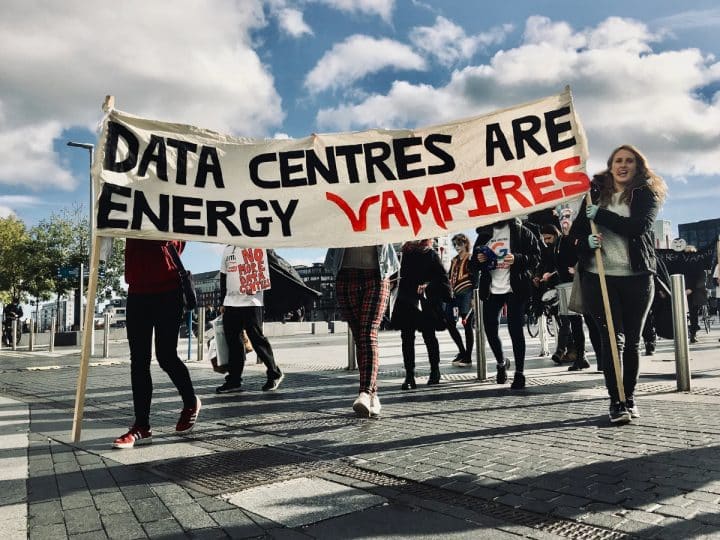
Protestors against AI data centres holding a banner that reads, "Data centres are energy vampires"

Protestors against AI data centres holding a banner that reads, "Data centres are energy vampires"

The “AI boom” has caused a surge in tech companies proposing to build massive data centres across the UK. Concerned about the resource use, disruption, noise, environmental impacts and the lack of public consent, local communities are pushing back.

Expansion and destruction

As the digital world expands so too does the amount of data that’s processed and stored. Data centres have become a key part of the physical infrastructure that enables this: they’re large – often huge – buildings that house arrays of servers, storage drives, cables, batteries and cooling systems.

Around 500 data centres have been built in the UK since the 1990s. But AI adoption is now driving a massive expansion, with the government expecting data centre capacity to double or even quadruple within the next few years. There are thought to be at least 100 proposed data centres angling to be given the go-ahead, and some of them are absolutely enormous ‘hyperscale’ developments.

It’s hard to overstate the demand AI expansion – and the data centres needed for it – is imposing on global resources: tech companies are sidelining their sustainability goals and using far more energy than ever before; drinkable water is being drained from places that desperately need it; hunger for minerals is driving yet more toxic and exploitative conditions for the people who mine them.

Advertisement

Concerned communities

Communities living near proposed data centres are increasingly worried about the noise, pollution and water stress their new neighbours would bring. They’re also seeing data centres consume space at the cost of agricultural land, local wildlife, housing and other valued infrastructure.

Nick Richards, who lives in east Cardiff where plans for a new data centre threaten a local hospital park and ride service, tells me:

The data centre will harm the community in many different ways. Staff and patients will have to spend up to an hour finding a parking space at the hospital. The gas turbines will have people living within a few miles breathing pollutants. Residents will be subjected to an intense humming noise continuously. My housing estate was only completed this year and most residents now fear they will never be able to sell their homes if the data centre goes ahead.

He also fears for how the community will fare as climate impacts intensify. He continues:

Then there’s the ‘heat island’ effect, where it’s understood that gas-powered data centres can raise the temperature of their surroundings by up to nine degrees. We’ve had a number of wildfires in that area this summer, and with 2027 set to be the hottest in a thousand years, I can’t picture things getting any better.

Communities respond

In Cardiff and beyond – including in London, Devon, Slough, Havering, Leeds, Selby and across Scotland – local people are organising their opposition to new data centres via campaigns and protests.

Advertisement

Local authorities are meant to inform residents who stand to be impacted by planning decisions and give them a chance to have their views considered. But campaigners are having to take on a lot of this work themselves, as Richards tells me:

I’ve spent two days walking door to door notifying the residents of the development; only 15% of them knew about it. The Local Authority’s public consultation consisted of four A4 notices on lampposts and three classifieds on page 38 of the Western Mail newspaper.

Communities have a huge challenge on their hands, especially as the government seems determined to fasttrack developments in the hope of becoming an AI ‘superpower’. Even when councils take positions against new data centres – for example, in Buckinghamshire, Slough and Tower Hamlets – they can find themselves overruled by ministers.

Momentum building?

Despite the hurdles, campaigners are buoyed by the groundswell in the USA where opposition to data centre expansion is becoming mainstream. Backlash there has blocked or delayed at least 75 major projects within a three-month window. New York and Texas now have temporary bans on new data centre approvals, with more than a dozen states considering similar action.

But could the grassroots organising and legal challenges we are seeing here in the UK replicate this momentum? All the campaigners I’ve spoken to hope it will, but also acknowledge how much effort it will take. According to Richards:

Advertisement

You can’t get disheartened… if you keep speaking to people, things will start to happen.

Featured image via The Commons / Climate Camp Ireland

By Abi Perrin

Source link

Advertisement
Continue Reading

Politics

UK cinema chain won’t screen new Ali G film

Published

on

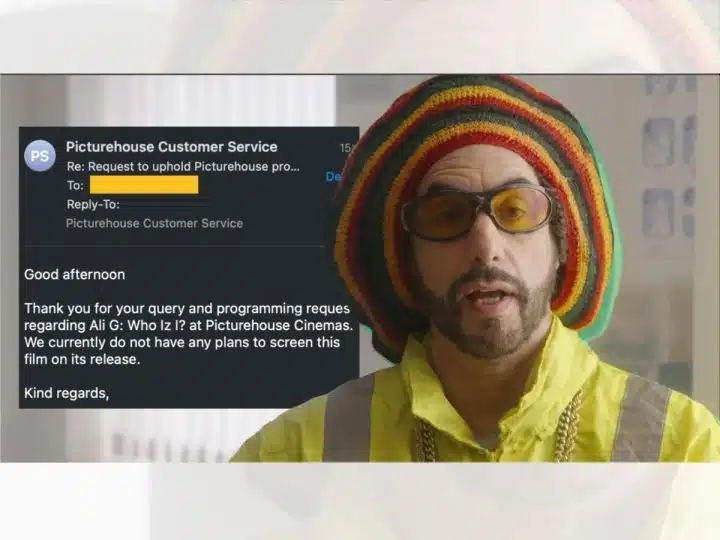
Sacha Baron Cohen playing Ali G and an email from the Picture House cinema chain saying they have no plans to screen the new movie

Sacha Baron Cohen playing Ali G and an email from the Picture House cinema chain saying they have no plans to screen the new movie

On 26 August, Sacha Baron Cohen and Sony Pictures showed off the new Ali G sequel. The response — it’s fair to say — has not been positive. And now, campaigners are asking cinemas to not show the film, with one UK chain already confirming the following:

Advertisement

Pushback

Cohen is receiving backlash for three primary reasons. The first is that the character is basically just Cohen doing blackface:

Advertisement

When Ali G first came out, the joke was seemingly pastiching white guys who appropriated what they saw as Black culture in London. Whether you bought that joke or not, it’s clearly worn thin to the point of being non-existent at this point, and as such people are understandably taking the character to be Cohen’s impression of Black people.

The new Ali G is also facing pushback because of Cohen’s support for Israel – especially as the trailer literally features an Israeli government talking point:

The comedy film is also receiving pushback for not looking very funny:

Advertisement

Campaign against Ali G

In response to all this, NewsCord have issued the following statement:

New campaign: demand cinemas worldwide refuse to screen the new Ali G film.

Sacha Baron Cohen retired Ali G in 2007. Amazon has revived him. On 23 October, Ali G: Who Iz I? opens in cinemas worldwide, and Sony Pictures is selling it to the public with the line “He iz back. We ain’t liable.”

Advertisement

The distributor is joking about liability. But the screens belong to the cinemas, and a booking is a choice.

In January 2000, the Guardian reported the verdict of Black British comedians under the headline “Comics find Ali G is an alibi for racism”. Felix Dexter said the act lets “the liberal middle classes laugh at black street culture” while keeping their sense of political correctness.

The catalogue behind it hurt community after community. The Kazakh American Association told Amazon that in Borat “a white person adorns a Kazakh persona” and belittles everything Kazakhs stand for. Kazakh children were bullied at school off the back of the joke.

On The Dictator, Jack Shaheen said “Arabs are being ridiculed again and again and again”, and Dean Obeidallah called it a “modern-day minstrel show”.

Advertisement

Studios sell films. Cinemas choose them. No film is owed a screen.

So we’ve created a campaign where you can voice your opinion to the cinemas.

One click sends up to 20 personalised letters in your name to the booking desks of Odeon, Cineworld, Regal, Vue, Everyman, Picturehouse, Showcase, Cinemark, Harkins, B&B, Landmark, Cineplex, Event, Kinepolis, VOX, Reel, Pathé, CinemaxX, Cinépolis, Cinemex and Nordisk Film.

Every address is verified on the chain’s own website.

Advertisement

Non-English chains get the letter in their own language.

You read every letter before it is sent. The chains decide their bookings in the next eight weeks.

The link to the email campaign can be found here.

Zionists and cinema

It’s unlikely cinemas will ever put a blanket ban on movies linked to Zionists. We say this because several prominent movie producers have supported Israel throughout the genocide.

Advertisement

For clarity’s sake, when we say ‘Zionists’, we mean people who actively support Israel existing as an expansionist colonial state – a state which serves as America’s foothold in the Middle East. One such supporter is Larry Ellison, who owns Paramount Studios and is a major donor to the IDF (a.k.a. the ‘IOF’ or ‘Israeli Occupation Forces’). Ellison also owns Oracle – a company which has continued to provide tech solutions to Israel throughout the genocide. He was additionally involved in the US takeover of TikTok:

Actor Mark Ruffalo recently spoke out against Paramount’s attempts to buy out Warner Bros, and he did so by pointing out Ellison’s links to the genocide. Paramount smeared Ruffalo as an ‘antisemite’. The response to that was an outpouring of support for Ruffalo from people who oppose the mass killings which Israel is continuing to perpetrate in Gaza.

Ali G loses his mojo

The backlash to the new Ali G movie is a sign that support for Israel is increasingly toxic. The reason for this is that the genocide has made it completely impossible to present Israel in a favourable light.

Of course, it’s possible many cinema chains aren’t going to show the movie purely because it doesn’t look very good. At the same time, it would have needed to be Citizen Kane levels of amazing to escape the backlash that now accompanies Cohen and his increasingly dated caricature.

Advertisement

Featured image via the Canary

By Willem Moore

Source link

Advertisement
Continue Reading

Politics

Burnham returns from Kyiv with war AI to ‘protect’ UK bases

Published

on

Burnham meets Zelensky during state visit

Burnham meets Zelensky during state visit

The ‘People’s Prime Minister’ Andy Burnham has struck a concerning deal with Ukraine. It will see Ukrainian-developed war-tested AI used to ‘protect’ UK military bases from protestors. It seems like Burnham is going to pick up where Keir Starmer left off – a spiral into anti-democratic authoritarianism.

A government press release published on 24 August claimed:

New partnership set to see the UK and Ukraine develop battle winning technology as Britain secures access to Ukraine’s Avengers AI Labs.

A landmark AI deal between the UK and Ukraine has been signed today as the two countries join forces to develop new military capabilities and the technology of the future.

Secreted lower down in the document, the government has said (author’s bold):

The first of the trial technology is about to be rolled out at a UK defence site to protect bases from protestors and hostile actors trying to gain intelligence.

The press release confirms:

Advertisement

The project, which uses Ukrainian data and UK technology, turns buried fibre-optic cables into a giant AI-enabled sensor. As well as military bases, the technology could be rolled out to protect airports, prisons and even railways and energy plants in the future.

Burnham’s state visit

Burnham has spent several days in Ukraine leading an official state visit. He also talked up giving Ukraine more missiles too:

To underline the strength of this commitment, the Prime Minister is set to announce that the Government has agreed that defence firm MBDA can release classified information on UK components for the long-range missile, SCALP, as Ukraine and France look to establish local assembly lines in Ukraine.

Burnham’s commitment to the war machine is evident. So is that of his cabinet. Defence secretary Wes Streeting gave a speech to arms firm leaders on 23 July, soon after being appointed, which:

promised new arms contracts worth over £11 billion and pledged unstinting support for rearmament in a speech that never deviated from Ministry of Defence approved themes.

The same report from Europe Says stated:

Also today his boss, Prime Minister Andy Burnham, committed to allowing the US to use RAF bases in the UK to bomb Iran.

The new boss, then, same as the old boss.

Advertisement

Burnham’s gimmicky politics and DJ sets might appeal to centrist dads and naive liberals. His branding might appeal to middle-class ‘left’ cosplayers. But the increasingly obvious truth is that whether or not he likes Joy Division, his underlying politics are perfectly in line with establishment consensus. Labour is still for war, still for capital and still for US empire. Let’s at least be frank about it.

Featured image via the Canary

By Joe Glenton

Source link

Advertisement
Continue Reading

Politics

Samantha Niblett Wants To Shift Overton Window On Sex

Published

on

The Rundown Podcast: Samantha Niblett Wants To Shift The Overton Window On Sex


4 min read

The Labour MP behind the campaign to make 2026 the “summer of sex” said she wants to talk about the subject so much in Parliament that it becomes “boring”.

Advertisement

The MP for South Derbyshire, Samantha Niblett, said she wanted to shift the Overton window – a term which means ideas being accepted as mainstream – so that talking about consent, intimacy and pleasure is entirely normalised.

Speaking on the latest episode of PoliticsHome podcast The Rundown, which will be published on Friday (28 August), Niblett said she hopes her campaign for lifelong sex education will help her MP colleagues feel more comfortable talking about the subject in the House of Commons.

“I have spoken to male MPs who are really supportive, but who are really scared about talking about it when it comes to the debate in the chamber, because they don’t want to be known as the ‘pervy male MP’, and that’s part of the problem,” Niblett said.

“But you know how we see the Overton window shift what we think of as normal in politics, I kind of want to be doing the same thing with sex. So, the more I talk about it, the more it’ll be boring, and when it’s boring, then won’t that be great?”

Advertisement

The Labour MP faced criticism, some of it from MPs in her own party, when in an interview with PoliticsHome earlier this year she announced her campaign to overhaul sex education in Britain.

Niblett said a more “inclusive” approach would encourage people to talk about sexual pleasure without feeling “ashamed”, as well as help people better understand consent, prevent abuse and violence, and raise awareness of how childbirth, the menopause, stress and other health conditions can impact sexual satisfaction.

She hosted a campaign launch party at a rooftop bar in London last month, where she told PoliticsHome that some MPs were “on a journey” to supporting it.

Advertisement

Speaking on the podcast, Niblett said the negative responses and becoming known as the “sex MP” have not put her off: “I am happy to take it on. I’m a belligerent swine.”

However, she admitted that some of the criticism had affected her, including a recent article which asked if she was “the most ridiculous MP in Britain”. “I am only human. Of course, there are going to be some times where it’s knocking me down,” she said.

Labour MP Samantha Niblett
Labour MP Samantha Niblett faced a backlash after announcing her ‘Summer Of Sex’ campaign (UK Parliament)

“But that’s also why it’s absolutely delightful when I have Thames Valley Police reach out to me to say, thank you so much for your campaign. When I have spoken to the first-ever occupational therapist to work in a sexual health clinic in a hospital, saying, brilliant, thanks for your campaign’.

“I feel I’m justified in the work that I am doing, but I don’t think I will be alone for long.

“I think there will be more and more MPs who feel that they can talk about it, and then we can share the load.”

Advertisement

The Labour backbencher has secured a debate in Parliament on the topic in the autumn, and is currently working on a briefing for her MP colleagues about her campaign, which hopes to normalise conversations about sex that politicians usually shy away.

“If we start to normalise it, then it’s going to hopefully make it easier for some of my colleagues,” she said.

“I know there are loads of them that feel the same. They’re just a bit uncomfortable about getting the conversation started because they are nervous about the pushback, because they are nervous about the single clips for headlines.”


The Rundown is presented by Alain Tolhurst, and is produced and edited by Lulu Goad and Ewan Cameron for Podot

Advertisement
  • Click here to listen to the latest episode of The Rundown, or search for ‘PoliticsHome’ wherever you get your podcasts.


Source link

Advertisement
Continue Reading

Politics

Manchester City sign Bouadi from Lille

Published

on

Man City signs Ayyoub Bouaddi

Man City signs Ayyoub Bouaddi

Manchester City have signed Morocco midfielder Ayyoub Bouaddi from Lille on a five-year deal. The Premier League club confirmed the move on 26 August 2026, posting images of the 18-year-old signing on the dotted line.

Manchester City did not disclose the fee, although Reuters, citing British media, reported it was EUR 86 million.

Bouaddi joined Lille’s first team in 2023, aged 16, becoming the club’s youngest senior player. He went on to make 96 appearances for the French side, including 30 in Ligue 1 last season with Lille finishing third.

He also caught the eye in Europe during Lille’s Champions League win over Real Madrid in 2024.

Advertisement

Although born in France to Moroccan parents, Bouaddi came through the French youth system before choosing Morocco for his senior international career.

He made his senior debut for the Atlas Lions last May and was part of their 2026 World Cup squad, starting five of their six matches as they reached the quarter-finals.

Known for his ability to dictate the tempo, Bouaddi can maintain possession under pressure and play the ball forward from midfield.

His move to Manchester City comes as the club reshapes its midfield following the departures of Rodri, Bernardo Silva and Tijani Reijnders. City also signed England midfielder Elliot Anderson from Nottingham Forest last month for a reported £116 million.

Advertisement

In his first interview since the signing, Bouaddi said:

It’s a dream come true to join this club and to be able to call myself a City player.

For me, Manchester City is the best club in the world.

City will look to Bouaddi to make his mark at the club and play a big part in what comes next.

Featured image via Manchester city / the Canary

Advertisement

By Alaa Shamali

Source link

Continue Reading

Politics

UEFA set to drop boycott threat after FIFA assurances

Published

on

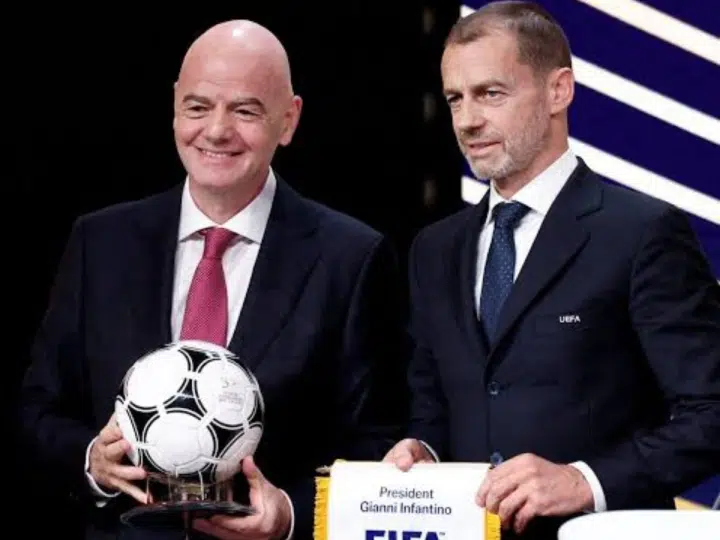
FIFA and UEFA presidents

FIFA and UEFA presidents

UEFA is poised to withdraw its threat to boycott FIFA competitions after receiving assurances that Gianni Infantino’s aborted plan to sell minority stakes in world cup commercial rights will not re‑emerge. The governing body is now ready to ease its stance. The matter is due to be discussed at Thursday’s executive committee meeting in Monaco.

The shift marks a significant moment in a dispute that has dominated global football politics for weeks. Earlier this month, UEFA insisted the conditions required to prevent a boycott had not been met. This was true even after Infantino apologised for errors and confirmed the FFE proposal was off the table.

Protecting UEFA players

UEFA’s position had been clear; guarantees were needed that FIFA would never again attempt to open governance or competitions to private ownership. The organisation has set the initial proposal as an attempt to disfigure the game. Europe’s 55 member associations voted to boycott all FIFA competitions until binding assurances were delivered.

Those assurances, sources say, have now been provided. While UEFA remains deeply critical of Infantino’s leadership, the governing body accepts that maintaining a boycott would risk harming players. In particular, it would affect those preparing for next month’s under‑20 women’s world cup.

Advertisement

Six European teams, including England, France, Italy, Portugal, Spain and hosts Poland are scheduled to compete in the tournament. UEFA insiders say the decision to step back from the boycott threat is not a concession. Instead, they describe it as a pragmatic move to avoid hurting young players and denying them a once‑in‑a‑lifetime opportunity.

One source close to discussions stressed that “this isn’t a climbdown”, insisting Infantino’s opponents “will continue until there are wholesale changes”. They added that the shift reflects “the reality of avoiding hurting young players” rather than any softening of Europe’s position on FIFA governance.

Infantino under sustained pressure

UEFA has led the backlash against Infantino since the FFE proposal emerged. The plan, which would have allowed private investors to buy stakes in a new commercial arm linked to World Cup rights, was met with widespread condemnation across Europe.

Infantino told national associations the proposal was “now off the table” and apologised for mistakes made during its development. However, UEFA maintained that assurances were still required to prevent similar attempts in future.

Advertisement

UEFA president Aleksander Ceferin has said he expects Infantino either to resign or face a challenge at FIFA’s presidential elections in March. European officials believe momentum is building behind calls for a change of leadership.

Europe’s long‑term strategy

Despite the expected withdrawal of the boycott threat, UEFA’s broader strategy remains unchanged. Senior figures say Europe will continue to push for structural reform within FIFA. This will include changes to leadership, governance and transparency.

The organisation believes the FFE proposal highlighted deeper concerns about FIFA’s direction under Infantino. While the immediate crisis may be easing, UEFA officials insist their campaign for reform will continue until there are wholesale changes.

What happens next

If the boycott threat is formally lifted on Thursday, preparations for the under‑20 Women’s World Cup will proceed without disruption. The tournament is scheduled to begin next month. Poland will host matches across multiple venues.

Advertisement

FIFA and UEFA have been approached for comment, though neither has publicly responded to the latest developments. Insiders expect both organisations to present a united front in the short term. Meanwhile, political tensions continue behind the scenes.

FIFA-UEFA’s fragile truce

The anticipated withdrawal of the boycott threat represents a fragile truce rather than a resolution. Europe remains deeply sceptical of Infantino’s leadership, and the assurances provided by FIFA are seen as a necessary step rather than a definitive solution.

UEFA’s stance reflects a balance between protecting players and maintaining pressure for reform. While the immediate threat to competitions may be receding, the underlying dispute over governance, transparency and leadership is far from settled.

UEFA’s readiness to drop its boycott threat marks a significant moment in football’s ongoing governance battle. Assurances from FIFA have eased the immediate crisis, allowing next month’s under‑20 women’s world cup to proceed as planned. Yet Europe’s push for change continues, driven by concerns over leadership and the future direction of the global game.

Advertisement

The dispute has exposed divisions among former players, drawn political attention and highlighted the fragility of trust between football’s major governing bodies. While the boycott may be lifted, the campaign for reform shows no sign of slowing. More importantly, the pressure on Infantino is set to intensify as March’s elections approach.

Featured image via the Canary

By Faz Ali

Source link

Advertisement
Continue Reading

Politics

Another Edinburgh Fringe Run Comes to an End

Published

on

I’m writing this on the train back to London from Edinburgh. I always feel rather melancholy at the end of a Fringe run in the city I have grown to love. Appearing at the Fringe is something I never though I would ever do, but when I look back on my 64 years I think it’s one of the most enjoyable things I have ever done. The feedback this year has been absolutely excellent. People have made a point of coming up to me and telling me that they love my conversational style and that they have been to several shows. One gentleman said he had bought tickets to all fourteen!

Gillian Robin

It’s been quite a test to do three shows a day, but nothing good was ever easy. It’s not that I do any prep for them – I don’t, because I want them to be conversations, not interviews. But with only a short time between the end of one show and the beginning of the next, there’s not much time to talk to the guest before we go on stage.

Nicola

Ticket sales were up more than ten per cent on average per show, which tells its own story. We only had two shows where I would describe the ticket sales as disappointing, but that’s inevitable when you do fourteen. The top five sellers were

1. Kemi Badenoch

Advertisement


2. Nicola Sturgeon


3. Zack Polanski

Advertisement


4. Sir John Curtice, Michael Crick, Brian Taylor


5. Nazanin Zaghari-Ratcliffe & Richard Ratcliffe

Advertisement

Many people asked which was my favourite show. I should probably say it’s an invidious question to answer, but will say it was the Nazanin Zaghari-Ratcliffe & Richard Ratcliffe show. It was quite an emotional moment for me because whenever I used to interview Richard on LBC I’d always end the interview saying the next time I would interview him I hoped it would be with Nazanin too. And so it came to pass. At times, you could hear a pin drop in the room. It was absolutely spellbinding.

Kemi

A final thanks to the Seabright Live team (below) who do all the work behind the scenes to put the shows on. James, Andrei, Ollie, Kate, Gaby, Reuban, Luke and Benji all did a fantastic job in getting all the guests there, handling their demands and making it look and sound good on stage. I never forget that without them all, it wouldn’t happen at all.

Advertisement


Edinburgh


And so the prep begins for next year’s shows. Who should I invite? Email me suggestions or leave a comment here.

Source link

Advertisement
Continue Reading

Politics

The primaries testing Democratic 2028ers

Published

on

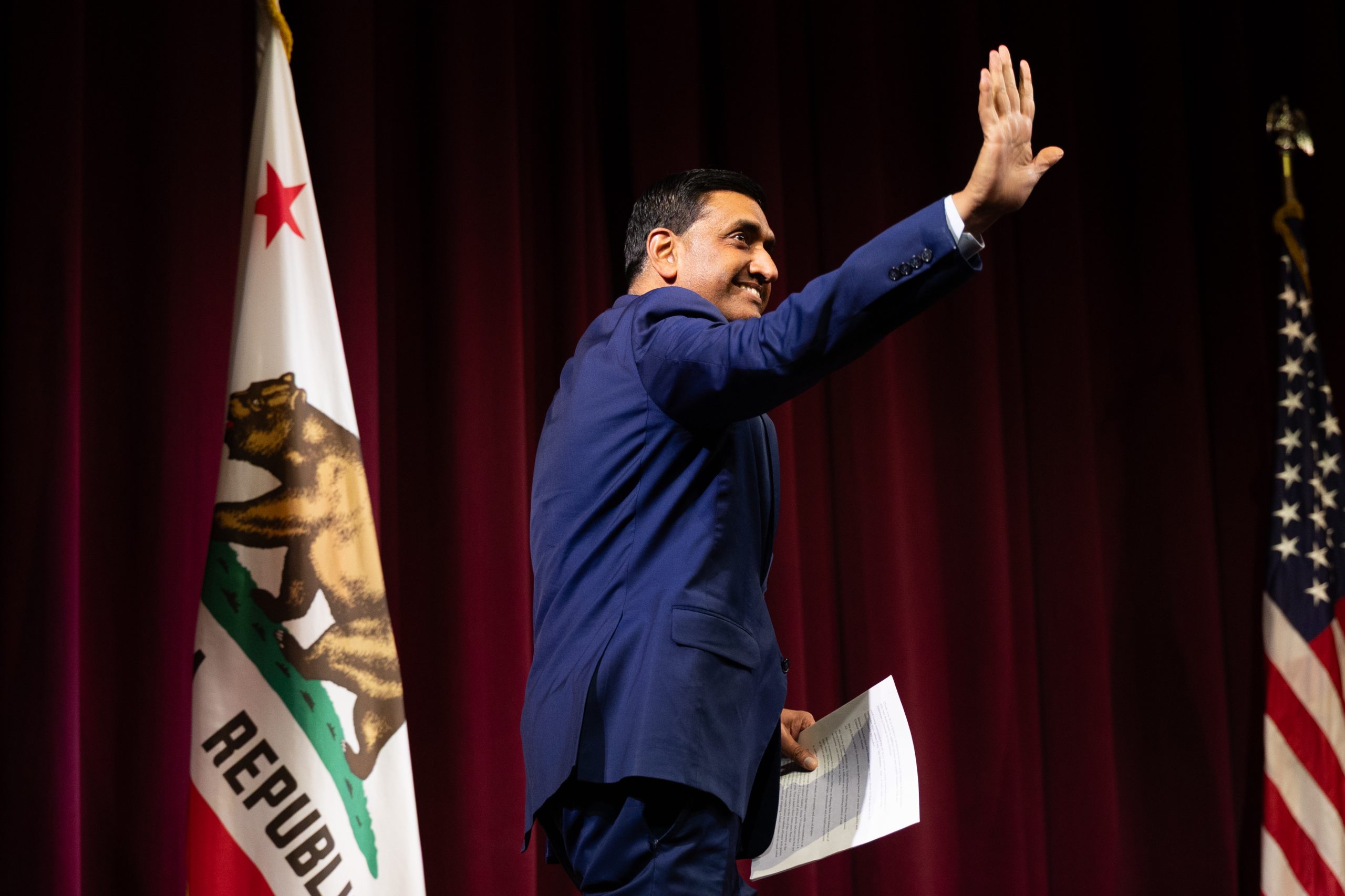
Rep. Ro Khanna (D-Calif.) gestures at a town hall event in February 2026 in Stanford, California.

Top Democrats are using 2026 as a launching pad for potential 2028 presidential runs.

From progressive Reps. Ro Khanna (D-Calif.) and Alexandria Ocasio-Cortez (D-N.Y.) to the more moderate Pete Buttigieg and Pennsylvania Gov. Josh Shapiro, Democrats have sought to shape their party by endorsing in contested primaries this year. They’ve traveled the country to raise their own profiles and elevate candidates they see as the future of the party.

Their strategies have not always been successful — but they have been revealing: Some endorsed against incumbents based on generational or ideological differences. Some weighed in early to give candidates credence, while others waited until the last minute to help them close out the race. And some have focused on purple districts and other competitive races that could determine control of Congress in the fall.

“If you’re thinking about running for president, you need allies,” said Mike Nellis, a Democratic strategist whose firm works with House and Senate campaigns across the country. “The more that you’re out there, trying to get people elected and making a meaningful difference, voters are going to remember that.”

Advertisement

Appearing with candidates on the campaign trail is an opportunity for potential 2028 candidates to create social media buzz, Nellis noted. Traveling gives them opportunities to connect with donors and elected officials across the country who might be helpful for a future presidential run and pressure test how messages work in various parts of the country. For those not up for an election of their own this year, it’s also a way to stay relevant.

Some potential presidential candidates have been particularly prolific, while others have been more cautious or stuck to their home states, according to a POLITICO review of endorsements in House, Senate and gubernatorial races. And a handful mostly stayed out of this year’s primaries.

The most prolific endorsers

Few members of Congress threw out as many endorsements as Khanna.

The California representative, who has said he is “seriously considering” running for president in 2028, endorsed in more than a dozen races, often serving as one of the earliest national backers of progressive candidates such as Kat Abughazaleh in Illinois’ 9th District and Analilia Mejia in New Jersey’s 11th District. Abughazaleh lost her race, while Mejia won.

Advertisement

Khanna also backed left-wing candidates that other national progressives shied away from, most notably democratic socialist state Rep. Francesca Hong in the Wisconsin gubernatorial race.

Rep. Ro Khanna (D-Calif.) gestures at a town hall event in February 2026 in Stanford, California.

His record is mixed. Hong lost and former Maine Senate Democratic nominee Graham Platner, who Khanna stood by despite a series of controversies, had to drop out after winning a primary but facing an allegation of sexual assault, which he denies — at which point Khanna, like many others, withdrew his endorsement.

Khanna told POLITICO he likes “endorsing early when an insurgent candidate is a bit of a longshot because that is when they need the endorsement most.” He looks for candidates who support Medicare for All and taxing billionaires and are opposed to foreign wars.

“My philosophy is to give those who are outsiders and have to scrape their way in — like I had to — a fair shot,” he said in a text message.

Advertisement

Ocasio-Cortez also endorsed a large slate of progressive candidates, but she’s been more selective than Khanna — a difference in approach that’s sparked some infighting within the Bernie Sanders wing of the progressive movement.

Critics have argued she’s played it too safe. But her selectivity has also meant she avoided high-profile stumbles.

Ocasio-Cortez has positioned herself as more of a closer this cycle. In California’s 22nd District, a battleground in the Central Valley, Khanna endorsed progressive professor Randy Villegas last September, while Ocasio-Cortez dropped her endorsement in May — about a month before the primary. Villegas ultimately defeated a moderate lawmaker backed by the Democratic Congressional Campaign Committee and is among the progressives who will now try to knock off an incumbent Republican in November.

Ocasio-Cortez actively campaigned for progressives in several contested battleground primaries, rallying with Sam Forstag in Montana and alongside Sanders with Abdul El-Sayed, who narrowly won the Democratic Senate nomination in Michigan.

Advertisement

She recently threw her support behind Sen. Ed Markey (D-Mass.), who faces a primary challenge from Rep. Seth Moulton next week.

The other most frequent endorser among potential Democratic 2028ers this cycle played in a different lane. Former Transportation Secretary Pete Buttigieg, a moderate, has been active on the campaign trail, visiting most presidential battleground states and endorsing in key Senate primaries, including Rep. Angie Craig in Minnesota’s Democratic Senate primary — which she lost to progressive Peggy Flanagan — and state Rep. Josh Turek in Iowa’s Democratic Senate primary, which he won.

Pete Buttigieg speaks at a General Election Kickoff Rally for Michigan Democrats at Renaissance High School Friday, Aug. 7, 2026, in Detroit.

Buttigieg, who has said he is “more inclined than not” to run for president again in 2028, has also notched endorsement wins with Rebecca Cooke in Wisconsin’s battleground 3rd District and former Hartford Mayor Luke Bronin in Connecticut, who defeated incumbent Rep. John Larson earlier this month.

Most governors stuck close to home

Governors eyeing White House runs kept their endorsements closer to home, largely trying to play kingmaker within state lines as they face their own reelection fights.

Advertisement

The local focus allows them to flex their influence while avoiding criticism for nationalizing their own states’ politics. And they’ve campaigned aggressively for their chosen candidates — political power plays that not only strengthen their standing on home turf but could also serve as springboards for national bids.

Illinois Gov. JB Pritzker pumped $10 million into a super PAC supporting his lieutenant governor, Juliana Stratton, in the contentious Senate primary to replace retiring Sen. Dick Durbin, and appeared alongside her on the campaign trail. He described the race as “personal” to him; Stratton won by 7 points.

Then-Illinois Democratic Senate candidate  Juliana Stratton and Gov. JB Pritzker speak to reporters at Manny's Cafeteria and Delicatessen on March 17, 2026, before the polls closed.

Pennsylvania Gov. Josh Shapiro expended significant political capital in one of Democrats’ top House targets in his state, helping recruit longtime ally and firefighter union chief Bob Brooks into the race against GOP Rep. Ryan Mackenzie in the state’s swingy 7th District and then working to elevate him out of a four-way primary. Shapiro fundraised for Brooks, cut an ad for him and joined him on the stump ahead of Election Day; Brooks won by nearly 20 points.

Shapiro was also one of a handful of Democratic attorneys-general-turned-governors who backed Colorado Attorney General Phil Weiser in his gubernatorial primary against Sen. Michael Bennet. Weiser won by 14 points.

Advertisement

In Maryland, Gov. Wes Moore backed state Del. Adrian Boafo in the crowded race to replace retiring Rep. Steny Hoyer and boosted Rep. April McClain Delaney in her bruising primary against former Rep. David Trone — including recording a robocall on her behalf. An adviser to Moore said the governor had preexisting relationships with both candidates he endorsed, and that he prioritizes local and in-state races as he seeks to make endorsement decisions that will benefit his constituents.

Michigan Gov. Gretchen Whitmer also stuck to her state, only really playing in Michigan’s high-profile Senate race. She endorsed Rep. Haley Stevens in the final stretch of the race, although she wasn’t active on the campaign trail in the same way Pritzker was for Stratton or Shapiro for Brooks.

Disagreements among moderates

Even among candidates occupying a more centrist lane heading into 2028, there was room for disagreement.

Sen. Elissa Slotkin (D-Mich.), a former national security official, endorsed retired Navy SEAL Matt Maasdam, a moderate in Michigan’s 7th district, which she previously represented. Several Democrats had hoped she’d back former foreign service officer Bridget Brink, a fellow moderate — and as they split the centrist vote, progressive William Lawrence ascended to the nomination in the toss-up district instead.

Advertisement

A person familiar with Slotkin’s thinking, granted anonymity to speak candidly about internal deliberations, said that she connected better with Maasdam and saw him as a stronger general election candidate.

The person also acknowledged that Slotkin’s decision to wait to issue her endorsement until three weeks before the primary didn’t leave enough time for voters and party leaders to coalesce around Maasdam.

Elissa Slotkin participated in an economic town hall in Overland Park, Kansas on November 12, 2025.

Sen. Mark Kelly (D-Ariz.) rolled out a slate of endorsements of veteran candidates, mostly for the general election, but has backed a range of other Democrats in primaries. That includes DCCC-backed political novice Marlene Galan-Woods in his home state, only for her to lose the primary in Arizona’s 1st District.

“As Navy combat veteran and former NASA astronaut, Mark Kelly knows the country is best served by leaders who represent their communities and bring a range of different backgrounds and experiences to the job. It’s why he’s endorsed candidates in competitive primaries and campaigned for Democrats up and down the ballot,” Kelly spokesperson Marisol Samayoa said.

Advertisement

In next week’s primary in New Hampshire’s 1st District, Kelly is supporting Stefany Shaheen, the daughter of his Senate colleague Jeanne Shaheen, praising her as a “fearless leader” who would stand up to President Donald Trump.

New Jersey Gov. Mikie Sherrill also went on a recent endorsement spree focused on military veterans. But she’s backing Maura Sullivan in the race against Shaheen next week, along with Rep. Seth Moulton in his primary against Sen. Ed Markey, who has gotten backing from progressives including Ocasio-Cortez.

“The fight isn’t moderates versus DSA candidates,” Sherrill told POLITICO earlier this month. “The fight is if we are going to have strong people in the Democratic Party that are going to actually make change to make people’s lives better, or people who you can just expect more of the same.”

The ones who (mostly) sat it out

Not every potential presidential candidate was eager to endorse this cycle.

Advertisement

Even after working to redraw boundaries in his home state to create more safely blue seats, California Gov. Gavin Newsom stayed out of the federal races — and the contest to succeed him. Kentucky Gov. Andy Beshear endorsed after primaries in his home state were complete. Former White House Chief of Staff Rahm Emanuel, who is considering his own White House bid, also eschewed endorsements.

And Kamala Harris declined to weigh in on the majority of competitive primaries because of her high profile, according to a person familiar with her thinking who was granted anonymity to speak candidly. The exceptions were “based on the closeness” of the former vice president’s relationships with the people she did endorse.

Kamala Harris, former Vice President and 2024 presidential candidate, arrives during the National Action Network (NAN) Convention in New York, April 10, 2026.

Harris recorded a robocall for Rep. Jasmine Crockett in the Texas Senate primary before Crockett eventually lost to James Talarico. She backed Del. Stacey Plaskett ahead of her U.S. Virgin Islands’ gubernatorial primary victory earlier this month. She has also endorsed Dan Koh in next week’s primary for Massachusetts’ 6th District.

All three candidates have close ties to Harris. Crockett served as co-chair of Harris’ 2024 presidential campaign, Plaskett endorsed Harris when she first ran for president in the 2020 primary, and Koh is a former Biden administration official.

Advertisement

Source link
Continue Reading

Trending

Copyright © 2025