
Politics
Wings Over Scotland | The Deaf Eyes

This email actually came in a couple of days ago, but we’ve been too dumbstruck to respond to it until now.

Because, like, wow.
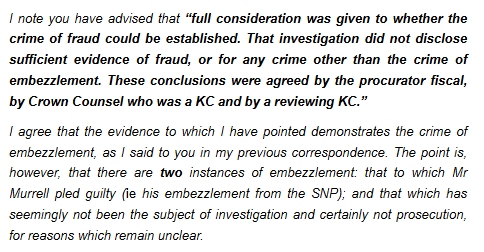
Firstly, let’s take a moment to note the weird font change halfway through that central paragraph, as though someone else entirely butted in. And let’s also note that those 93 words took COPFS 27 days to come up with, which makes it all the more shocking that they haven’t even read the question.
The letter we sent them on 3 July couldn’t have been any more explicit: we WEREN’T asking them about fraud. We acknowledged fraud was hard to prove. We said, with the starkest clarity, that the issue was embezzlement.


We’re sure they tried really hard to remember that.
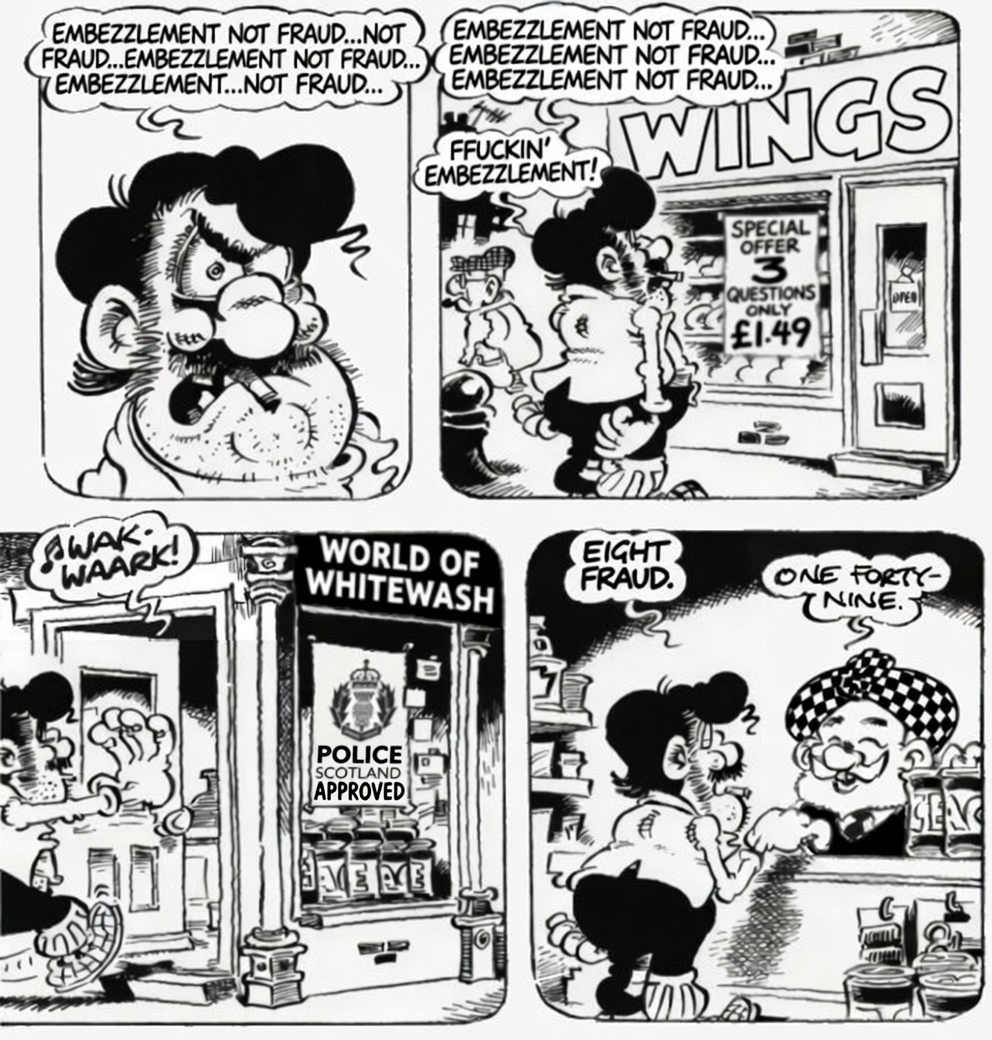
But the eventual response is an insult so crassly contemptuous (and therefore entirely in character for the Crown Office, which is answerable to no-one and can do whatever it likes in Scotland) that it’s hard to know what to do about it. Normally officialdom at least vaguely pretends that it cares about accountability to the people that pay its wages, but to be frank it’d have been less offensively dismissive if COPFS had just sent us a dog turd in a jiffy bag.
We’ll let you know where we go from here when we know ourselves.


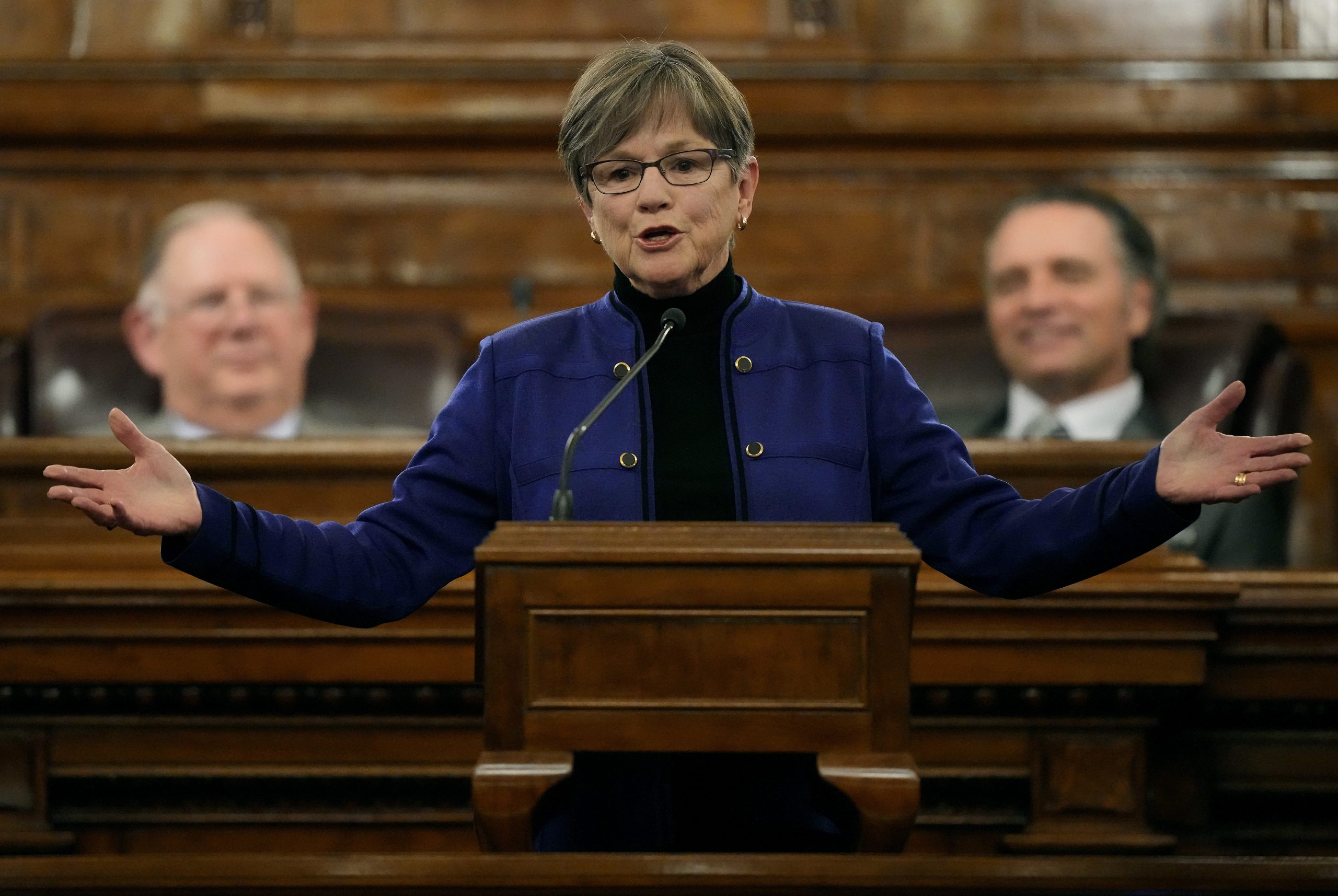

The fight over data centers has suddenly become a defining battle in the race to run Kansas — on both sides of the aisle.
Gubernatorial hopefuls are trying to leverage the issue to weaken their rivals in the final stretch before Tuesday’s primaries, with attack ads, dark money and accusations of flip-flopping roiling the race. Democratic state Sen. Cindy Holscher and GOP state Sen. Ty Masterson, two of the top contenders in their respective fields, are bearing the brunt of the criticism.
Republican businessman Philip Sarnecki has spent more than $300,000 on ads attacking Masterson for voting for a bill last year to expand data center construction and give 20-year tax breaks to developers, accusing him of being beholden to big tech.
On the Democratic side, Holscher voted for the same bill but has now staked out a populist stance calling for a moratorium on data centers — an appeal to the same grassroots base that has put her in a strong position to win. Her primary opponents are attacking her as a flip-flopper, and social media ads fueled by anonymous backers keep highlighting her past vote in support of data centers. She’s up against state Sen. Ethan Corson, whom Gov. Laura Kelly endorsed, and Overland Park Mayor Kurt Skoog.
The brawl shows just how divisive and complicated the politics of data centers has become, as politicians in both parties struggle to define a clear winning position on the mass hubs amid growing voter backlash. A July POLITICO Poll found that Americans are increasingly souring on data centers, a trend that’s especially evident among Democrats but crosses partisan lines.
Republican and Democratic candidates are harnessing that opposition to gain an edge in crowded primaries, a rare moment of partisan crossover that speaks to its potency.
In Kansas, a state with nearly 40 data centers and many pending proposals, local opposition to the industry has animated city council meetings from Wichita to Kansas City. Several towns, like Topeka, have chosen to pass one-year moratoriums to give leaders more time to study the proposals.
Now, the state’s top race is getting caught in the crossfire, as Democrats look for a way to hold onto the governor’s mansion after eight years under Kelly — and Republicans grow bullish about taking back the seat in a red state that voted for President Donald Trump by 16 points in 2024.
“It’s bleeding across both primaries and it’s blurring traditional party stances,” said Bob Beatty, a political science professor at Washburn University in Topeka, who said the rapidly shifting politics speak to a growing “fear around AI.”
Tuesday’s Kansas primaries will help show the party bases’ appetite for data centers — signaling whether voters are looking for a leader who takes a strong position against new developments or a middle-of-the-road approach aimed at bringing in more tax revenue.
Both Masterson’s and Holscher’s campaigns are dismissive that the attack ads will work.
“It’s a very kind of kitchen sink approach here at the end,” said a Masterson campaign adviser, granted anonymity to speak freely about the race. The aide argued that the attacks have been ineffective against the state Senate president, especially given he’s the Trump-endorsed candidate in a state the president won three times.
Holscher, who said in an interview she regrets her vote, argued her new position reflects where people across the state stand now: “This is a unifying issue in terms of where people are on it, urban and rural as well as young and old,” she said in an interview. “I’m the only Democrat in this race to call for a moratorium on data centers because we have to get these guardrails in place. We are having our people and our resources exploited.”
Data center construction — and hostility towards them — exploded after passage of the 2025 legislation backed by Holscher and Masterson, which saw widestrong bipartisan support and was signed by Kelly, a pro-business Democrat.
Masterson has said that “folks build here on our terms, or they don’t build here,” and that local communities should be in charge of deciding whether they want the infrastructure. He supports a Kansas version of the White House’s position on data centers — a voluntary commitment designed to prevent them from driving up utility bills.
But several of his Republican opponents take a more hardline approach by calling for an outright moratorium, like Sarnecki and Insurance Commissioner Vicki Schmidt, another candidate in the top tier of the field.
The Kansas Comeback PAC, linked to Sarnecki, has challenged Masterson’s vote for the 2025 bill. “After 20 years in politics, Ty Masterson has mastered the game,” the TV ad by Kansas Comeback PAC says. “Thousands from big tech. Rewarded them with tax breaks.”
On the Democratic side, it’s difficult to tell who’s leading the field given limited public polling. Holscher’s supporters have cast the race as a choice between a populist fighter and a safe establishment figure, and they believe she will be boosted by the national tailwinds propelling leftwing candidates in states like Colorado, New York and Michigan. One survey from June, conducted before the candidates began running ads, had Holscher up by 27 points.
Corson is also backed by former Gov. Kathleen Sebelius and Lt. Gov. David Toland, and supporters believe he has the necessary crossparty appeal to win the general election in conservative Kansas. Kelly cut a TV ad on his behalf that started to run in major media markets last week.
While Holscher now wants to pause construction to give time to develop regulations, Corson supports construction moving forward with data center development, with guardrails around energy costs and water usage.
“Cindy seems to think that we should just go along with her flip-flopping and not making up her mind and doing what’s politically convenient for her race, and that’s not what we’re going to do.” said Ty Dragoo, chair of the Working Kansas Alliance, a group of more than 23 unions. Corson has raked in endorsements from trades unions like those represented by Dragoo’s group.
“Our north star is to get jobs, to get high-paying jobs, and to get sustaining jobs, and we’re not going to deviate from that.”
Holscher says her experience holding town halls throughout the state, including in deep red areas, opened her eyes to the depth of the opposition to the developments, which have sparked concerns about human health and environmental harms like water usage.
“She’s been listening, and people just want to be heard,” said Democratic state Rep. Linda Featherston, a Holscher supporter. “You have to be out amongst the people listening to what they have to say and not just brushing them off.”
But Holscher’s push for a moratorium has alienated some county, state and labor leaders who see an opportunity for data centers to boost the state’s economy. Corson is advocating for a local-first approach where communities get to decide whether they want to welcome the industry, while at the same time instituting statewide regulations so that the facilities pay energy costs, minimize water usage and ease the tax burden on residents nearby.
“Ultimately, these decisions should be made by communities, not by politicians in Topeka,” Corson said in a statement. “I believe some communities will look at a potential project and decide to move forward, and when they do, my Department of Commerce will work side-by-side with them to make it as beneficial for the community as possible. But other communities will decide that a data center is not a good fit, and as governor, I will absolutely respect that decision.”
Corson’s war chest also puts him in a good position to face off against likely opponent Masterson, who will bring the force of the national GOP’s deep pockets. The Republican Governors Association has already placed a nearly $7 million TV ad reservation in major Kansas media markets starting immediately after the primary.


There has been public outrage over a horrific incident in which authorities gunned down 51 cattle in County Tyrone, in the north of Ireland, doing so in a publicly visible area.
Complaints from politicians have centred on why the brutal measures had to be carried out in an area viewable by locals. However, the obvious question this begs is the following: why would mass murder suddenly become justifiable if it is hidden out of sight?
The details of the incident are unquestionably distressing. According to Sinn Féin councillor, Eugene McConnell, the killing took almost 12 hours to complete. He told the Irish News:
The shooting started at 10:00 in the morning and the last animal was shot at 9:50 that evening.
McConnell also said:
It was like a Wild West scene — there were cars blocking the roads, there were people standing on ditches watching the marksmen shoot the animals dead in the field.
Deborah Erskine, South Tyrone MLA for the Democratic Unionist Party (DUP), said:
Members of the public shouldn’t have seen this. In one case I’m aware of a father and son driving past this field and witnessed this in broad daylight, that shouldn’t have happened.
County Tyrone: Cruel meat industry lacks transparency
Observers said cows fled in a distressed state following initial gunshots and that the gunman killed cattle in front of each other. The animals were part of a mixed breeding herd owned by 59-year-old Martin Beattie. The purpose of such a herd is to produce fresh cattle, most of whom would have been murdered at some point in a slaughterhouse.
These cattle suffered well before that, however, as many were diseased and “highly stressed” due to abandonment. The Irish News reported:
Beattie’s defence solicitor said his client had suffered from mental health issues and that he was isolated, while the judge said he was “overwhelmed” by the job of running the farm. The defence solicitor added the remaining 66 cattle, mainly cows and calves, were in a “reasonable state”.
Beattie had pleaded guilty to 21 offences related to his failure to properly care for the animals. Questions remain as to why the Department of Agriculture, Environment and Rural Affairs (DAERA) let things get to the point where the mass slaughter was necessary.
Only weeks previously, the cows were apparently in a “reasonable state”. Given DAERA carried out “four previous culls”, it’s unclear why they weren’t more attentive to potential deterioration among any remaining cows.
Agriculture Minister, Andrew Muir, was hardly transparent about what occurred on the day of the shooting, saying he was “not at liberty to discuss further” all the details of the incident.
Transparency hasn’t exactly been a strength of farming in the north of Ireland. It is only in the past week that the region has come in line with British laws around CCTV in abattoirs. This might lessen the chances of the most egregious cruelty to animals in these horrific places, but it can’t prevent the brutal truth: there is no humane method of mass murdering animals.
Pigs struggle to survive before throats are slit
Animal Equality thoroughly debunks this myth on their web page. They point out that stunning of animals in the moments before slaughter is ineffective and itself causes pain to those about to be killed. For example, they reveal the horrors suffered by pigs when carbon dioxide gas is used to stun them prior to death:
Carbon dioxide does not cause the pigs to become unconscious immediately and high concentrations of the gas can cause them significant pain and distress. Pigs have been shown in studies to gasp for air, squeal and struggle to escape for up to a minute before losing consciousness.
A UK Government report says: “There are longstanding concerns about the negative welfare impacts of high concentration CO2 stunning systems for pigs.”
After the pigs fall unconscious, a slaughterhouse worker slits their throats and the pigs bleed out until they die.
Meanwhile, abattoirs use electric baths to stun chickens.
[The birds are] painfully hung upside down by their legs and carried towards a bath containing electrified water. When the chicken’s head makes contact with the water, they’re electrocuted and become unconscious. The chickens are then carried towards a metal blade which slits their throats.
Yet they often suffer a painful death, due to cases where they are:
…not shocked strongly enough to render them unconscious.
The cruelty of farming animals for meat starts long before death, due to the brutal practices of factory farming that are still routine across Britain and Ireland.
[Dairy cows are] kept indoors and forced into a life of misery spent walking back and forth to the milking stations where they are attached to milking machines that take the milk intended for their calves.
No justification for brutal mass killing of animals
Animal Equality points out:
Cows are extremely maternal and social animals who can naturally live up to 20 years. However, on dairy farms, a cow is slaughtered when she is around three or four years old and sold for cheap meat or leather products.
Even in an imaginary world where we found a totally humane method of slaughter, we have no business ending the lives of these intelligent creatures so prematurely. In my opinion, it is not necessary to consume meat — a good plant-based diet is a healthier alternative.
The events in Tyrone were unquestionably horrific, and no one should be exposed to brutal violence without consent. However, the horror would still be present were it to take place within the confines of an abattoir. The gunning down of cows in public is simply a reminder of the obvious truism:
If slaughterhouses had glass walls, everyone would be vegetarian.
Featured image via BBC

Diane Abbott has been criticised after describing the Ukraine war as a “Nato campaign against Russia”.
The left-wing MP was readmitted into the Labour Party on Friday following a year-long suspension.
She lost the whip last year after saying she did not regret past remarks about racism – comments which triggered her first suspension from the party back in 2023.
She argued in a letter to The Observer in April 2023 that Jewish, Irish and Traveller communities experience prejudice rather than racism.
She also made a separate post on social media called the Israel Defence Forces the “Jewish Defence Force”.
In a statement on Friday, Abbott said she had returned to the party after a formal warning over that post, adding: “I am deeply sorry for any hurt caused by that conflation and apologise for any hurt caused by it.”
But her return to Labour sparked backlash on social media after it emerged she described Vladimir Putin’s illegal invasion of Ukraine as a “Nato campaign against Russia” back in June.
Speaking at an anti-war conference, Abbott said: “We meet at a crucial time for all those who are opposed to war and strive for peace.
“Because we are not trying to stop one war, we are having to fight to stop very many wars.”
She continued: “There is a military build-up against China, there is the war and blockade in Iran and, finally, there is one of the biggest wars in Europe since the Second World War – the Nato campaign against Russia.”
The revived video sparked backlash on social media, particularly from those who support the Ukraine war and Conservative MPs.
Abbott also wrote in the Morning Star last weekend: “The reason there is such a hue and cry about military spending now is not because Russian forces are in Ukraine; that happened well over four years ago.
“No, the reason for the outlandish claims about an imminent Russian invasion is simply because Trump demanded more military spending from Nato members…
“None of this is making us any safer. On the contrary. Russia is a major military power, but Nato is engaged in a war which is now striking deep into Russian territory, provoking widespread calls for retaliation against Nato countries.”
Labour declined to comment.
Abbott’s return to the party comes after new prime minister and Labour leader Andy Burnham pledged to end factionalism within the party.
Labour insists her reinstatement was unrelated to the party’s new leadership.
Listen to Commons People, the podcast that makes politics easy. Every week, Kevin Schofield and Kate Nicholson unpack the week’s biggest stories to keep you informed. Join us for straightforward analysis of what’s going on at Westminster.
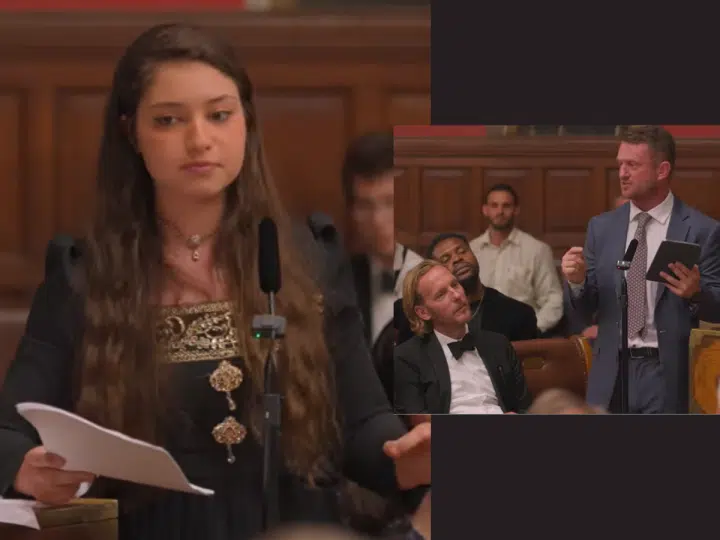

Six weeks after it took place, the Oxford Union has released footage of its debate on Islam, and it’s yet another spectacular humiliation and defeat for bigot, criminal and scam artist Tommy Robinson.
A diverse team, which included the incongruous pairing of Palestinian Oxford Union president Arwa Elrayess, and former Tory MP Jacob Rees-Mogg, easily put down the Islamophobes by a margin of 57 to 41.
Robinson’s team included fellow hatemongers and professional trolls, Lawrence Fox and Jonathan Sacerdoti.
The debate, titled This house believes that the West is right to be suspicious of Islam, was met with large protests back in June. Demonstrators were understandably irate at the Oxford Union offering an audience for Robinson (real name Stephen Yaxley-Lennon).
Alongside that, they argued with some justification that the motion was yet another platform for Islamophobia, when our legacy media grants just that every day of the week.
The counter-argument is that nothing harms charlatans like Robinson quite like exposing his hatred to scrutiny, and that’s exactly what happened as the opposing sides faced off.
Tommy Robinson challenged with facts and stats
Robinson began by attempting to claim that Islam is absolutist in nature, and incapable of finding common ground with others. He obviously is unaware that Muslims, along with Christians and Jews, lived in harmony for many years in places like Palestine. That is, until the creation of Robinson’s favourite exclusivist ethnostate, so-called ‘Israel’.
Likewise, contrary to what the far right would have us believe, there is no mass conflict led by Muslims against others in Britain or Ireland today. In reality, the worst violence that takes place is inflicted by intolerant non-Muslims against Muslims, migrants and people of colour, such as that carried out by loyalist thugs in Belfast.
Indeed, as Elrayess pointed out, Muslims are the most likely to be in favour of inclusive ways of organising society.
She said:
Eighty-five percent of British Muslims back democracy as the best system of government, [versus] the general public’s 71%. Ninety-four percent back equal treatment under the law for all faiths and none, [versus] the general public’s 80%.
Seven in 10 say they feel loyal to the United Kingdom; the general public – one in two. Eight in ten interact with non-Muslims at least weekly.
Nine in 10 say standing against bigotry, including antisemitism, matters to them. Four in ten have served themselves, or through family, in public service. On every single one of those measures, British Muslims are more committed to British values than the British average.
Of course these are universal human values rather than “British values”, but that aside, the stats certainly put Robinson’s divisive shit to rest.
Robinson went on to cite regressive attitudes to homosexuality in Muslim majority countries. He’s obviously forgotten that, in terms of the long stretch of human history, it’s the equivalent of an eye blink since being gay was illegal in most Christian majority countries.
Self-righteousness by a Briton on this topic is a bit like being a raging alcoholic for decades, then berating others for having a drink once you’ve been sober for a day.
Robinson runs down Britain from Spanish hideout
Tommy Robinson’s opponents picked up on his tendency to cite practices he claimed were Islamic, despite having no basis in the Qur’an itself. Though the fact that all religious texts are open to endless interpretation anyway, betrays the somewhat absurd premise of the motion, and much debate on religion. Such discussion is not a remotely scientific exercise, and there is no objective ‘Islam’ that can ever be identified, just as for any other faith.
Luton-based podcaster Michael Doward proceeded to further undermine Robinson. Doward points out that Robinson likes to bolster his street cred with references to his own time in the supposedly Muslim-dominated town, yet does so from the comfort of sunny Spain. There is a pattern of far-right figures who like to pontificate about Britain’s supposed ills from a safe distance several thousand miles away.
The generally odious Jacob Rees-Mogg managed one of his broken clock moments to finish the debate, telling Robinson and co:
I thought I was coming up against the hard men of the right of British politics. The people who have a reputation for being tough and forthright and powerfully patriotic, and it turns out that they are wee, sleekit, cowrin, tim’rous beasties!
Because they have no confidence in the West, in their nation, in the religion [Christianity, according to Mogg] that has made our nation fine and great and strong. Instead they’re sitting there in their homes at night, fretting that we’re suddenly going to be converted to Islam. Well I’m not.
Feeble far right quiver in the corner
Much as we hate to give Rees-Mogg any credit, this is an effective summary of the true nature of the far right. Fundamentally, they are a pathetic lot, characterised by fear more than anything.
Zionists live in a self-created imaginarium in which Jewish people are perpetually on the verge of suffering a new holocaust. Israeli Occupation Forces embark on racist, genocidal violence, in part to try and prevent this fictional outcome.
Loyalists live under a permanent siege mentality, forever terrified of Catholics, Muslims, migrants, people of colour, plus probably the shadows on the wall and creaking floorboards too at this point. The far right generally are constantly panicking about white genocide and Muslim takeovers, despite violence from white people against others being far more of an issue.
That feeble lack of confidence is clearly prompted in part by the paucity of their knowledge and ideas, embodied once again by the ridiculous Robinson on the debating stage.
Featured image via Oxford Union
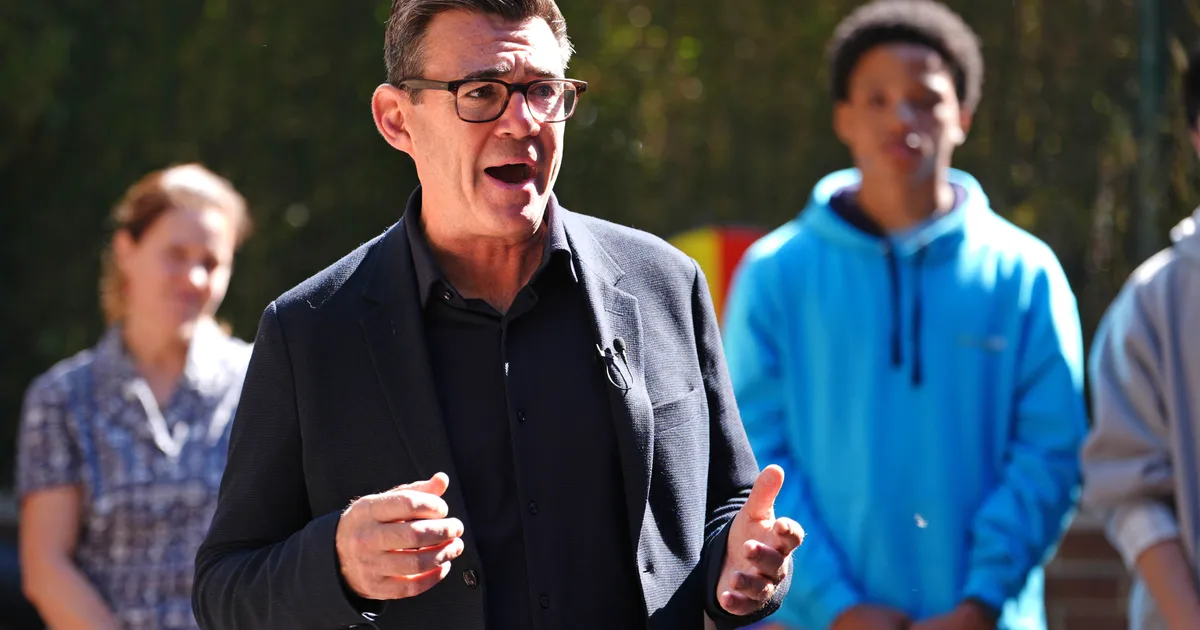
Andy Burnham has claimed his devolution plans strengthen his case for a written constitution for the UK.
The prime minister said the UK’s “antiquated” political system needs reform if equal opportunities are to be effectively shared out across the country.
Britain is one of the only major democracies without a codified arrangement which lays out how the country should be governed.
The UK’s constitution is currently established through history by common law, statutes and conventions.
Burnham has already decided to allow regional mayors to keep a proportion of income tax to spend on their local area by early 2028.
He has also set up No.10 North, an alternative to 10 Downing Street in the north of England, to symbolise his commitment to moving power out of Westminster.
He said his devolution plans “increase the case for a constitution because Britain is changing through this, England is certainly changing through this.”
He claimed the country needs to set up a codified model of devolution which works for Wales, Scotland, Northern Ireland and England.
“In the end, I think it does start to point towards a new constitutional settlement… with that commitment to equivalent living standards,” he said.
He added that his promise to implement “good growth in every postcode” was “more than just a sound bite”.
The prime minister did not outline any time frame for implementing such a historic change.
Countries usually adopt a written constitution following major events like revolution or war, when governments need to signal a departure from previous regimes.
The prime minister first floated the idea in his 2024 book Head North, co-written with Liverpool city region mayor Steve Rotherham.
He said deep inequality had become part of Britain because it had not moved on from the “feudal state” which held power in Westminster.
“Our failure fully to set out the rules for how the country should be run is one of the principal reasons why Britain is one of the most unequal major countries in the world,” he wrote.
“Our unwritten and murky constitutional arrangements have had the effect of hoarding power in a small number of hands – in Whitehall and Westminster and, by extension, in the powerful networks of institutions and vested interests that surround them.”.
Listen to Commons People, the podcast that makes politics easy. Every week, Kevin Schofield and Kate Nicholson unpack the week’s biggest stories to keep you informed. Join us for straightforward analysis of what’s going on at Westminster.


Jewish anti-genocide activist Tony Greenstein says that multiple “political debanking” attacks have forced him into the “cash economy”.
His trial under the Terrorism Act, for supporting Palestinians’ legal right to resist Israel’s occupation, begins on18 August.
In a statement, Greenstein explains the history of debanking — an attack also used against the Canary — and details how he has been a recurrent victim of debanking as the UK state represses pro-Palestine speech.
In full, the statement reads:
When Nigel Farage was debanked in June 2023 by Coutts for his political opinions it made the national headlines. Dame Alison Rose, CEO of the National Westminster Group, which owned Coutts was forced to resign.
In July 2024 I was debanked by Nationwide Bank for ‘regulatory reasons’. They refused to provide any reasons. I had been with Nationwide over a quarter of a century.
In July 2025 I was debanked by HSBC which closed the account which my wife and I had open for our son, who is autistic. The only transactions that were made on it were for my son’s care.
At the same time I was debanked by First Direct, the telephone bank owned by HSBC, which I had been with for 33 years, just three years less than the bank itself had been in existence. Again no explanation was provided by either bank and unlike Nigel Farage my debanking has attracted no publicity from the mainstream press.
In June 2026 Santander froze both my personal accounts and those of The Brighton Trust, a registered charity for which I am Treasurer. At the time of writing they are still frozen. No explanation has been given for their actions.
In July 2026 Kent Reliance (One Savings Bank) also froze the savings accounts of my family without giving any explanation. They have now closed them.
In December 2023 I was arrested for supporting the October 7 resistance operation by Palestinians in Gaza. I have been charged under s.12 of the Terrorism Act 2000 for what is an expression of opinion but which is classified as ‘terrorism’ today.
In much the same way over 3,000 people have been arrested for supporting the ‘terrorist’ group, Palestine Action.
It is clear that some national agency – either the National Crime Agency or the Counter-Terror Police has been feeding malicious allegations to the banks.
Under money laundering and anti-terrorist legislation if banks are told that someone is suspected of money laundering then they are forbidden to ‘tip off’ the customer for fear of jeopardising an investigation. That may make sense when someone is involved in financing the drugs trade or ISIS but makes no sense when the ‘terrorism’ alleged is an expression of free speech.
At my trial later in August I will be pleading not guilty to supporting a proscribed organisation, Hamas. Clearly certain agencies of the state cannot wait for the trial verdict and are actively seeking to destabilise me.
I make no apology for supporting Palestinian resistance against Israel’s genocidal occupation which is now 59 years old. As far as I am concerned Palestinian resistance is no different to the resistance of Black people during Apartheid in South Africa. The only difference is that conditions in Israel today for the Palestinians are far worse than they ever were in South Africa.
In the 1980s both Ronald Reagan and Margaret Thatcher called the ANC terrorists however neither of them went as far as to accuse their supporters of terrorism too. In today’s political climate any support for Palestinian resistance against Israel’s genocidal army is called ‘terrorism’.
Indeed the accusation of terrorism is being made against UN Rapporteur Francesca Albanese. We live in an era where opponents of Western wars and terrorism are themselves being accused of terrorism.
Debanking someone because of their political opinions is Financial Terrorism yet that is what the British State is doing today. Not only to me but Greater Manchester Friends of Palestine and Scottish Palestine Solidarity Campaign.
The BBC and British press, who were ready to cry foul when the leader of Britain’s racist Reform Party was debanked, are remarkably silent when it comes to opponents of racism being debanked.
Greenstein is holding a webinar exactly a week before the start of his trial to raise support for his legal fight. Speakers include Electronic Intifada‘s Ali Abunimah, Palestinian author Ghada Karmi, Jewish ANC veteran Ronnie Kasrils, Palestine Action co-founder Huda Ammori, and Greens for Palestine’s Lubna Speitan.
Featured image via YouTube
By Skwawkbox
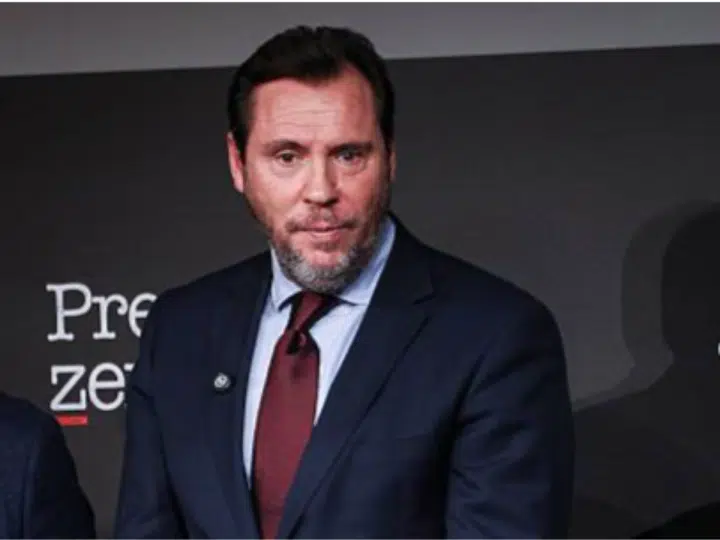

Spanish Transport Minister Óscar Puente has suggested Israel is behind the ‘immigration crisis’ in Spain’s Ceuta enclave in Morocco.
The Moroccan government is widely considered a US client state and is heavily dependent on Israeli weapons supply. Israel and the US have been accused of coordinating the Ceuta crisis, in which thousands of Moroccans poured into the enclave and at least 67 people have died, to punish Spain. Spain’s resistance to Israel’s genocide in Gaza, its refusal to allow US warplanes to use Spanish bases and airspace to attack Iran and Spain’s condemnation of Israel’s racist attack on footballer Lamine Yamal have infuriated the imperialist regimes.
Spanish response
Puente was responding to Israel’s UN Ambassador Danny Danon’s exploitation of the crisis to attack Spain. In an X post and a subsequent follow-up on he said:
Well, everything is starting to become quite clear.
You know what? I want Spain to be a sovereign nation in an interconnected world. I don’t want it to be a branch of Trump or Netanyahu.

As Al Jazeera has pointed out, Israel’s army of mouthpieces and bots have focused on fanning the flames around Ceuta for months.
In the months leading up to the crisis in Ceuta, pro-Israel voices conspicuously raised the issue of the enclave…[after] the Sanchez government has been increasingly critical of Israel, labelling it a “genocidal state” and cancelling major arms deals accordingly. In 2024, Spain recognised the State of Palestine.
Israel, of course, has no shame about the hypocrisy of criticising someone else’s enclaves while occupying the West Bank. And using Gaza as a concentration camp while it genocides Gaza’s indigenous population and other refugees from the Zionists’ theft of Palestinian land.
The Trump regime, meanwhile, has attacked Spain for months for not allowing the use of its airbases in the illegal war on Iran. Trump and his cronies are using Ceuta to fan anti-immigrant hate in the US, raising further suspicions that the US played a role in inciting the crisis as well:
View this post on Instagram
The ‘crisis’ does indeed look more like a punishment beating dished out to a country that dares to stand up against US imperialism and Israeli genocide and war crimes.
Spain has demanded an EU meeting and accused the EU of collaborating in the US-Israeli attack in its response.
Featured image via Paolo Blocco/ WireImage
By Skwawkbox

Narcissistic personality disorder (NPD) is a condition that affects up to 5% of adults (some research suggests it may be 50-75% likelier in men than women).
Per the Mayo Clinic, its symptoms include a high self-worth, expecting constant praise an/or attention, jealousy of others and believing people envy them too, arrogance, criticism, and feelings of superiority.
But writing for Forbes, Kathy Caprino, who often writes about narcissists, said: “Most adult children of narcissists never get the help they need to recover and heal, because they have no idea that what they’ve experienced as children is unhealthy and destructive”.
So how can you tell if you’ve been raised by narcissistic parents?
Here, Steven Buchwald, a therapist from Manhattan Mental Health Clinic, shared six potential signs:
1) You dread telling your parents good news
People who grew up with a narcissistic parent may have had their achievements ignored, minimised, overshadowed, and even mocked as a child, said Buchwald.
Fear that this may happen again could extend into adult milestones, like buying a house, getting a promotion, or becoming engaged.
“A child of a narcissistic parent often feels their success serves as a threat to someone’s self-importance. As a result, happiness in adulthood can lead a person to feel unsafe,” the therapist told us.
“Before sharing positive news, ask yourself if you’re more apprehensive about their reaction than you are about your success. If the answer is ‘yes’, initially celebrate with those that are supportive. This bides time for your nervous system to experience joy before it must navigate forms of negativity.”
2) When you plan events, it feels like crisis management
Whether you’re planning a wedding or trying to get a surprise birthday party together, children of narcissistic parents may feel they have to anticipate the actions of their mum and/or dad.
They could dread inviting them in the first place, feeling they have to walk a tightrope, Buchwald explained.
“Narcissistic parents may use the event to attention seek, play victim or create an atmosphere,” he added. “When planning your event, list the moments that mean the most to you. This can be walking down the aisle, the music played at your baby shower, or birthday decorations.
“Write down how you would like these aspects of the day to play out. If this sparks feelings of anxiety about others’ behaviour, build a plan of action. This may be assigning trusted friends as ‘buffers’ to redirect conversations and gently intervene in conflict or arranging parts of the day away from certain people.”
3) You’re hyper-aware of tiny shifts in people’s moods
The therapist added that children of narcissistic parents may have been subjected to sudden mood swings when they were young.
As a result, he said, they might have become experts in reading “micro-expressions” and minute changes in atmosphere.
However, this hypersensitivity isn’t always accurate in adulthood, he continued. Ask yourself whether there’s any actual evidence that your suspicions about others’ moods are true: if there isn’t, consider taking a more optimistic view.
4) You feel terrible when you do something just for yourself
Going on holiday, taking time off from a demanding job, or even having a cup of coffee to yourself might feel like “cheating” to children of narcissistic parents, who may have grown up believing their job was to look after everyone else’s needs.
If that sounds like you, Buchwald suggested, try journalling; write down statements like, “‘I’m not selfish as I have previously (insert examples of you helping others)’, ‘I deserve to go on holiday as I (insert reasoning).’”
5) You feel guilty about your friendships and non-family relationships
Sometimes, the therapist said, narcissistic parents can make their child feel guilty for building friendships or relationships outside of the family unit – partly because those with NPD may see healthy independence as rejection.
Adults who grew up in these conditions might struggle to post pictures with their mates online or tell their parents about group trips.
“Remember, someone voicing their disappointment doesn’t mean that you have done something wrong”, says Buchwald.
“Ask yourself whether your actions are harmful, or if someone is actually irritated as they weren’t the main focus.”
6) You feel like you have to justify every last decision you make
“Those who were raised in a narcissistic home often enter adulthood with a reflex to justify any choices they make,” partly because they were judged so often as kids, the therapist ended.
“For one week, pay close attention to how often you explain or justify your decision-making, even when unnecessary. Take a beat and ask yourself if you’re sharing the info out of choice or because you’re apprehensive that your decision will be judged.
“If the decision is the latter, challenge yourself to stop one sentence shorter than you normally would. It may initially feel uncomfortable, but after a short time become the norm.”


Donald Trump has admitted that the US’ attempt to destroy the International Criminal Court (ICC) is about protecting wanted Israel’s Prime Minister and wanted war criminal, Benjamin ‘Bibi’ Netanyahu.
Trump makes admission at press conference
Trump’s Secretary of State Marco Rubio first tried to spin a tale about US sovereignty and a supposedly arrogant court. But Trump blew his confection out of the water in one sentence, as journalist Ahmed Eldin spotted.
At a White House press conference on Friday (31 July), the US president said that they’re not “after me”, but that it was about “protecting Bibi”.
Like pretty much everything he does, then.
View this post on Instagram
Just as Trump is destroying international law to protect the genocidal settler state and its criminal leaders, Keir Starmer is destroying UK laws and rights. And his successor Andy Burnham shows no sign of slowing down that war.
Featured image via the Canary
By Skwawkbox
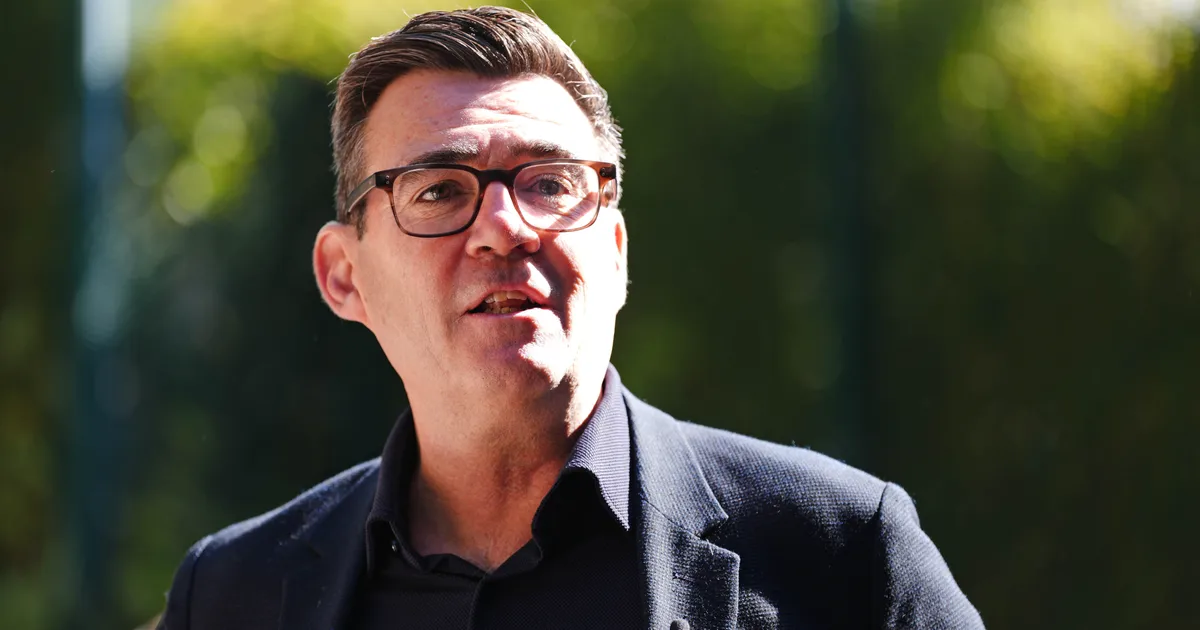
Andy Burnham has promised cost of living relief is “on its way” and hinted he might look at trying to bring down utility bills and rail fares.
Speaking to the Sunday Mirror, the prime minister said the worries of voters have been on his mind from his first moment in the job two weeks ago.
Alluding to his campaign to win the Makerfield by-election, Burnham said he was thinking of the “people on whose doors I was knocking only about five, six weeks ago… They did get over to me how tough life was. Can’t go for drink anymore. Can’t take the kids out. Not having a holiday this year.”
He added: “I heard those type of things being said throughout the campaign, and those comments were still ringing in my ears as I arrived in Downing Street.”
Burnham said he would not make “false promises” to the public but will do “whatever I can” to “take a little bit of pressure down”.
The prime minister indicated that he is looking at rail fares – some of which he described as “outrageously” high – and said water bills are an essential issue.
Burnham said: “I think rail fares are too high, outrageously so in some instances. So that’s something that’s in my sights.
“I mentioned VAT and electricity bills. It’s a short-term measure at this moment, but let’s see where we can go with that.
“Water is an issue as well, where I think the public pay high bills and they don’t see that money then going into infrastructure. There’s another area that needs reform.”
In his first fortnight as PM, Burnham has already promised to cap bus fares at £2 for journeys outside of London and announced plans to cut VAT from energy bills, saving approximately £45 from the energy price cap.
He also revealed pubs, social clubs and live music venues would get a 20% cut to business rates from April.
The chancellor John Healey also wrote in The Sunday Telegraph he would be watching for any supermarkets’ attempts to rip off customers.
He said: “We’ll be watching closely for any suggestions that customers are being taken for a ride at the pump or the till.”
He said Labour would not be afraid to “clamp down” in price-gouging begins.
However, the chancellor also warned that the government “can’t completely stop the squeeze that families and businesses will feel with a global shock of this scale”.
It comes after war in Iran triggered a 13% increase in household energy bills for Britain at the start of July.
Even so, Healey vowed the government will have a “ruthless focus on our own national interests” and work with allies to ease the impact from the crisis in the Middle East.
Ministers will also have to decide whether it wants to intervene and help Brits in the winter when the price cap is expected to rise again.
Burnham told the Sunday Mirror: “We’ll keep monitoring that situation and make sure we’re doing everything that we can do. People have raised issues like the standing charges on bills, and they kind of pushed me to go further on that.
“So I’ll take a look at that issue, alongside other issues and other things that we might be able to do to help people with the cost of living.
“It remains a very tough time for people, and I know the main thing people would like me to do if I can do it is to ease that pressure a little bit.”
Listen to Commons People, the podcast that makes politics easy. Every week, Kevin Schofield and Kate Nicholson unpack the week’s biggest stories to keep you informed. Join us for straightforward analysis of what’s going on at Westminster.
XRP Price Analysis: Is a Drop Below $1 Inevitable as Sellers Stay in Control?

2026’s Most Overlooked Horror Movie Is Officially Taking Over Apple TV

Commonwealth Games 2026: England head coach to ‘reassess’ future

Renter of Home in Anne Heche Crash Denies Settlement With Son

No Jackpot Winner as $257 Million Prize Rolls Over to $269 Million Monday Draw

Weekend Open Thread: Staud – Corporette.com

Power of money||#shorts #ytshorts #sigma #motivational #trendingshorts #trending #inspire

Crypto Trading For Beginners | Bitcoin Trading for Beginners | Crypto Trading kaise kare | App India

BITCOIN ON GCASH! | start your Crypto Journey! | kryptoinvestorph
-
 Sports7 days ago
Commonwealth Games boxing: Jadumani Singh seals dominant 5-0 win over Pakistan’s Sumama Rehman to enter quarter-finals | Commonwealth Games News
-

 Business4 days ago
Why Trees Belong on the Risk Register
-

 Fashion2 days ago
Weekend Open Thread: Wit & Wisdom
-

 Tech7 days ago
Intel is reversing course and bringing hyper-threading back to its server chips
-

 Politics2 days ago
Meta enters AI-training agreement with far-right ‘propaganda rag’ Newsmax
-

 Politics6 days ago
Luke Littler dismantles Gerwyn Price to retain title in Blackpool
-

 Crypto World23 hours ago
MicroStrategy Post-Earnings CLARITY Act Push Could Add New Catalyst for Its Stock
-

 Politics5 days ago
The Part of the Electric Transition Nobody Wants to Discuss
-
 Entertainment5 days ago
‘Stargate’ Creator’s New Sci-Fi Series Returns for Season 3 Tomorrow
-

 News Videos7 days ago
BITCOIN JUST ENTERED THIS CRITICAL ZONE…
-

 Business4 days ago
Major shareholder moves on Canyon
-

 News Videos3 days ago
Bitcoin Enters the 3rd Stage of the Bear Market
-

 Crypto World1 day ago
XRP Ledger v3.3.0 brings five institutional features
-

 Crypto World5 days ago
Kraken Enables Retail Access to Jersey Mike’s IPO via Tokenized Shares
-

 Tech6 days ago
New macOS Sequoia & Sonoma security updates for older Macs
-

 News Videos5 days ago
Claude: Build Financial Dashboards in Minutes (2026)
-

 Politics3 days ago
Luke Littler’s dominance sparks GOAT debate
-

 Sports3 days ago
Seema Kaliramna Wins Discus Throw Bronze, Takes India’s CWG Medals Tally To 17
-

 Business5 days ago
Johnson & Johnson agrees to $5.5B settlement over talc cancer claims
-

 Crypto World4 hours ago
Crypto PAC spending tops $2M in Michigan House race
You must be logged in to post a comment Login