At the conclusion of last week’s Houston Open, Augusta National officially invited the winner (Gary Woodland) as well as four pros who’d cemented their spots inside the OWGR top 50 (Nicolai Hojgaard, Jake Knapp, Matt McCarty, Daniel Berger) before the final deadline. (Here’s hoping they got overnight delivery on some green envelopes from Augusta. Plus maybe an email confirmation?)
Because Augusta invites every PGA Tour winner from a full-field event since last year’s Masters, this week’s Valero Texas Open includes the last-chance exemption. Should someone already exempt win this week — Tommy Fleetwood, say, or Ludvig Aberg, two pre-tournament favorites — that spot evaporates. But there are dozens of talented pros just four great rounds from earning the chance to play four more great rounds.
Advertisement
Here are five of those players.
1. Rickie Fowler
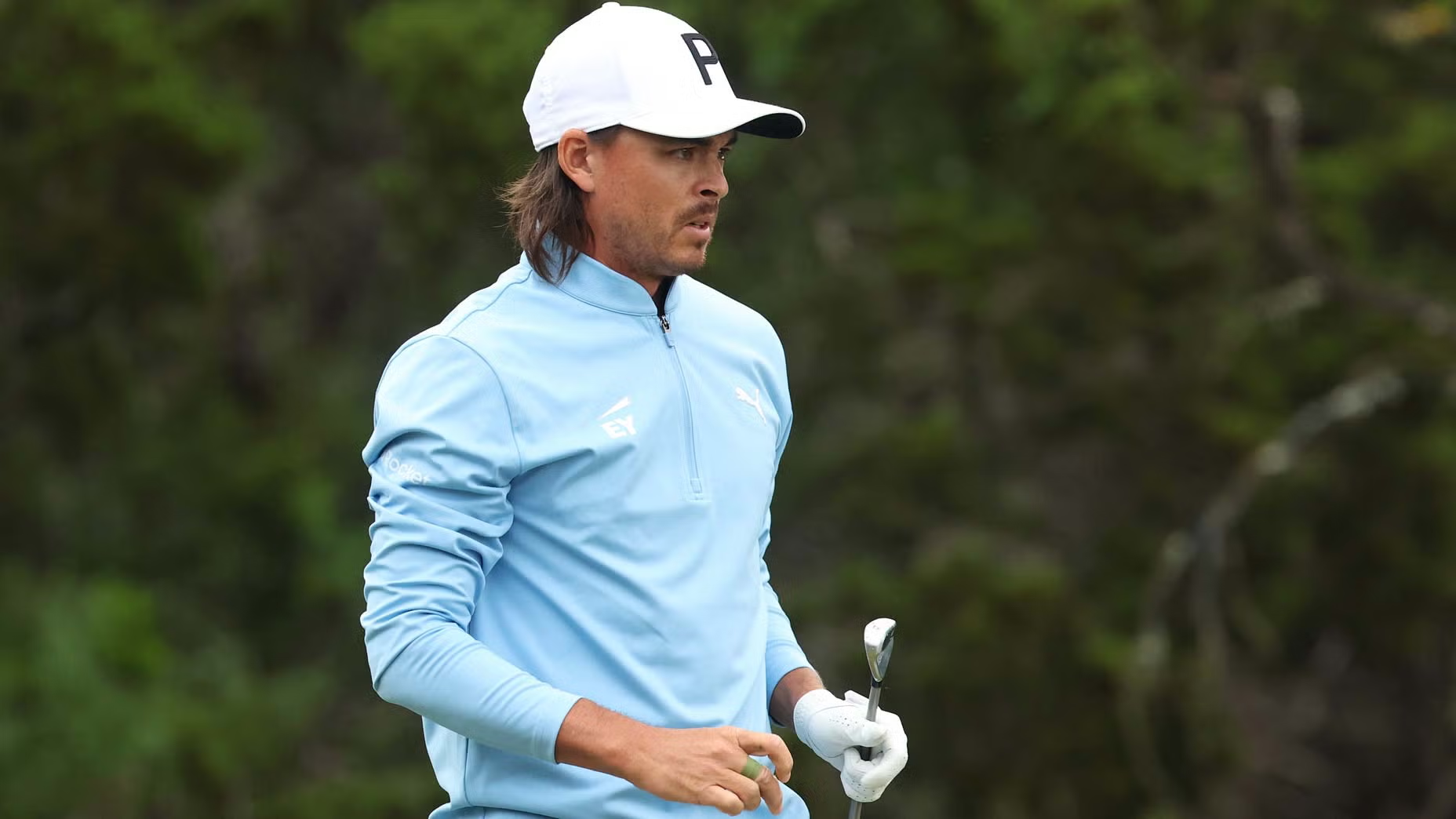
Fowler bogeyed two of his first four holes at TPC San Antonio, only steepening his climb — but as I type these words has bounced back with a four-under back nine to open in two-under 70. Fowler has quietly put together a very consistent stretch of golf dating back to last summer. Before he missed last week’s cut he’d logged six top-20s in eight starts. DataGolf still has him as the world’s 25th-ranked golfer, the highest of any player not in the Masters field. But the OWGR rewards very high finishes over consistency, and despite his run of strong play, Fowler doesn’t have a top five since 2024, so he’s No. 65 in the OWGR and on the outside looking in. Fowler has somehow played just one of the last five Masters tournaments; he’s hunting his final chance to make that two in six.
2. Will Zalatoris
Zalatoris just made eight birdies in an opening round of five-under 67 and sits just a shot off the lead. We’re only a quarter of the way through, so it’s early for anything besides what-ifs and wild speculation, but the golf world would be thrilled to see Zalatoris stamp his comeback with a victory and a major berth.
Zalatoris didn’t tee it up on the PGA Tour between the PGA Championship last May to this January’s American Express, where he finished T18. He withdrew from the Cognizant shortly before his first-round tee time with an ankle injury — reportedly unrelated to his previous back procedures. He’s No. 299 in the OWGR, so this would come from left field. What a story it would be.
Advertisement
3. Michael Thorbjornsen
Thorbjornsen looked like he might lock up his spot in the OWGR top 50 via the Players Championship, where he played his way into the final pairing but struggled to a Sunday 77 that sent him plummeting to T22. He also stalled out with a Sunday 72 at the Houston Open, leaving him T14 — and No. 54 in the OWGR.
Nobody’s doubting Thorbjornsen’s tremendous talent; he’s ascendant, he seems like he’ll be a central figure on the PGA Tour for years to come and it seems extremely likely that he’ll be at next year’s Masters. He just might not squeak into this one.
4. Tony Finau
As pointed out by Jeff Eisenband below, Tony Finau is on the verge of ending his streak of major championships played at 33. Finau is No. 107 in the OWGR, though he’s shown flashes of strong form with three top-20s in seven starts in 2026. It feels like there are more chapters of Finau’s major-championship story left to write; check out those nine top-10s from 2018-2021! That next rally could start this week.
Tony Finau has played in 33 straight major championships. He’s played in every @TheMasters since 2018. He hasn’t missed a major start since the 2017 U.S. Open.
Cashmere Keith is another pro in relatively strong form — he’s made 12 cuts in a row, including five top-20s — but although he’s No. 44 in DataGolf’s ranking he’s just No. 104 in the OWGR. There’s plenty of good news with Mitchell’s game; he’s been consistently excellent off the tee, his iron play has been strong, he’s top 20 on Tour from tee to green. If he finds a hot putter this week, who knows? Mitchell could be in his third career Masters.
Otherwise these five will look to next year. Plenty of others will, too.
The New York Knicks blasted the Cleveland Cavaliers on Thursday night, 109-93, to take a 2-0 series lead in the Eastern Conference Finals. This is no great surprise. The Knicks are a better team than the Cavs in every area. The Cavaliers let Game 1 slip through their fingers by squandering a 22-point lead with seven minutes to play. The odds of them picking themselves off the mat after that kind of emotional gut punch and rallying back to win Game 2 were very low.
So the Knicks won the game, and they are probably going to win the series to advance to their first NBA Finals since 1999 in search of their first championship since 1973. It’s good stuff. This is a very good team when clicking, and to say the Knicks have been clicking would be an understatement.
Thursday’s win was their ninth straight in these playoffs. That does not happen often. After going down 2-1 to the Hawks in a first-round series that appeared to have all the markings of what would have been a disastrous upset, the Knicks closed out Atlanta with three straight wins, swept the Sixers, and have now gone up 2-0 on the Cavs.
Over that stretch, they have outscored their opponents by 212 points. That is the most lopsided point differential over any nine-game stretch for any team in NBA history. Not just for the playoffs. For any nine-game stretch. That is legitimately crazy.
Advertisement
To the nines
Best point differential for a team over any nine-game stretch (regular season or playoffs) in NBA history
Look at those numbers. These are blowouts. Against playoff competition. It’s arguably the best nine-game stretch in NBA history.
And yet, the question has to be asked: How much of this do we attribute to the relative weakness of the Eastern Conference?
I understand I’m not going to be a popular man among the New York faithful for even asking this question, and I want to be clear I do not know the answer. I’m just wondering. That’s all. We all know the East has been weaker than the West, by an appreciable margin, for decades. I’m not going to go down the rabbit hole, it just is what it is. LeBron James does not go to eight straight Finals in the West. That’s all there is to it.
That said, having a couple viable championship contenders, or even just one of them, can create the illusion of conference balance. And maybe the Knicks are that team. They certainly have the look of a team that could win the whole thing. They’ve had a lot of talent for years. But now that talent feels, I don’t know, somehow sturdier. Built to withstand the postseason rigors. A team that erases huge leads rather than coughing them up.
Advertisement
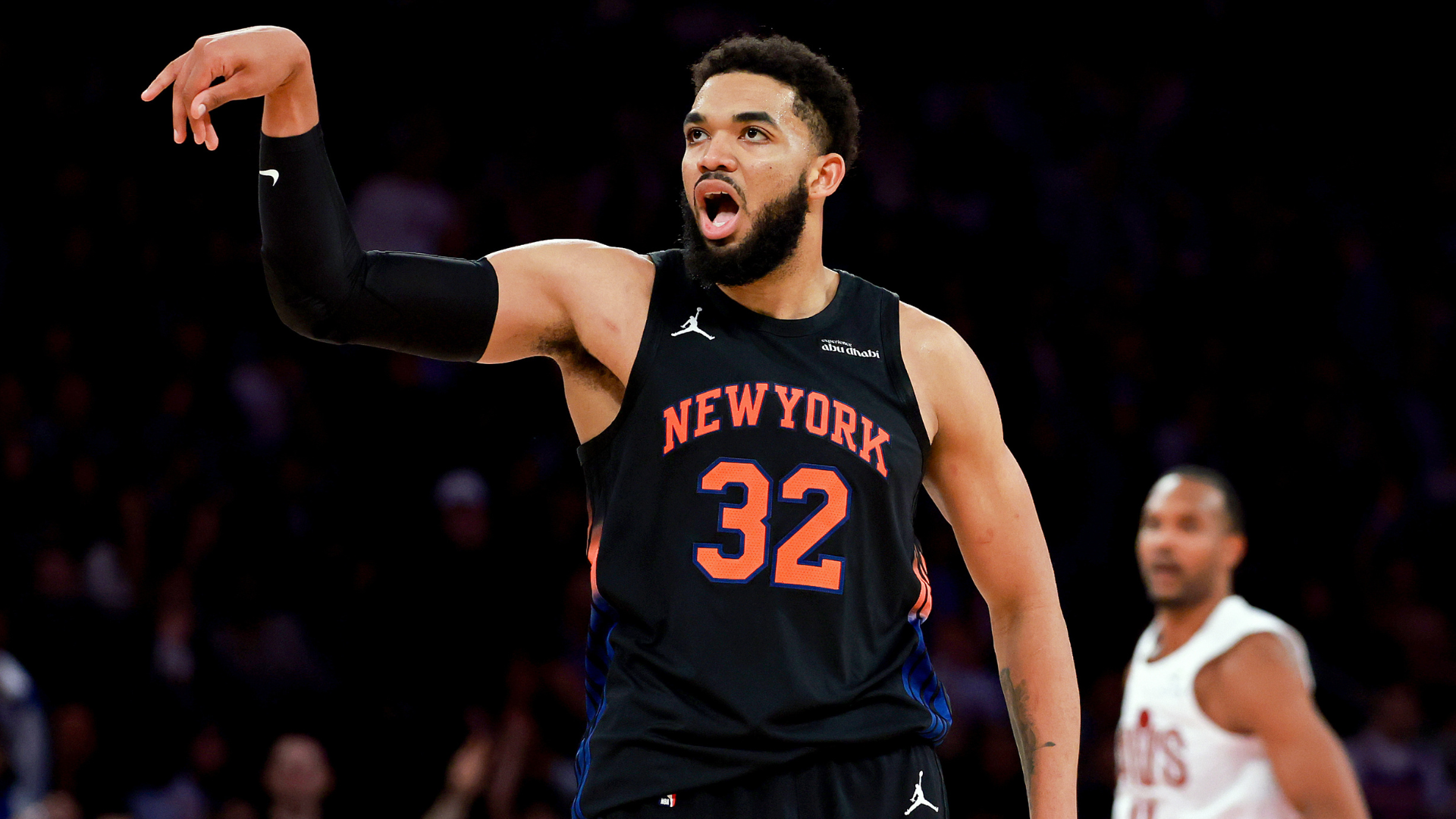
Jalen Brunson is a total beast. Karl-Anthony Towns is doing everything. Mikal Bridges has gone from a guy who was hardly playable early in the Atlanta series to averaging 18.7 points on 68/50/100 shooting splits. Josh Hart defines a winning player; the Cavs dared him to beat them on Thursday, and he obliged with 26 points and five 3s. OG Anunoby is healthy and basically a perfect playoff player.
They’re deep. They defend. They shoot. They dominate fourth quarters. Over these past nine games they are shooting 53.6% as a team with a 61.7 effective field-goal percentage. That first number is the best over a nine-game stretch since the 1987 Lakers. The second number is the best ever. You have to seriously squint to find anything that even closely resembles a true weakness on this team.
And yet, they’re doing it in the East. The Hawks are not any sort of honest gauge for a contender. The Sixers were a play-in team. The Cavs needed seven games to get past the Raptors, and are only here because they played an offensively challenged Pistons team that counts Tobias Harris as its second-biggest weapon and should’ve lost in the first round to the Magic. Perhaps Boston would have given the Knicks a genuine fight in the second round, but they couldn’t hold a 3-1 lead against the play-in Sixers.
I know how it works, that you can only play who’s in front of you and all that, but I’m looking at a team like Minnesota that is going to be totally forgotten about because they had to play the Nuggets and Spurs in these playoffs. This simply isn’t equitable. I have long believed conferences should be a thing of the past as we move to a 1-16 postseason bracket. It would open up all kinds of fresh matchups. It would get rid of the imbalance.
Advertisement
That’s not going to happen. I get it. And so we are left with trying to evaluate the legitimacy of these Eastern Conference teams through a relative lens. Take last year’s Pacers. They turned out to be an awesome team. They probably would’ve beaten the Thunder had Tyrese Haliburton not blown his Achilles. But that’s not really the point. Once you get to the Finals, anyone can win one series. It’s the path there that I’m wondering about.
Right now I’m watching the Spurs and Thunder beat the hell out of each other over in the West, and I don’t think there’s a reasonable NBA fan anywhere outside of New York right now that wouldn’t agree that whoever makes it out of that series is going to have a lot more wear and tear on their bodies than the Knicks will have after the way these last nine games have gone. The Knicks are on easy street right now.
Perhaps that’s a credit to how good they are. I’ll say again, they look awesome. I just don’t know how much to trust the competition. I assume they’ll make it to the Finals, and that’s when we’ll find out for real.
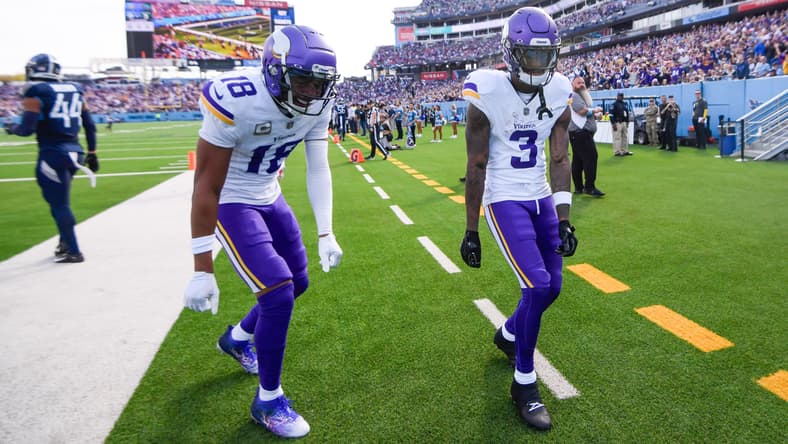
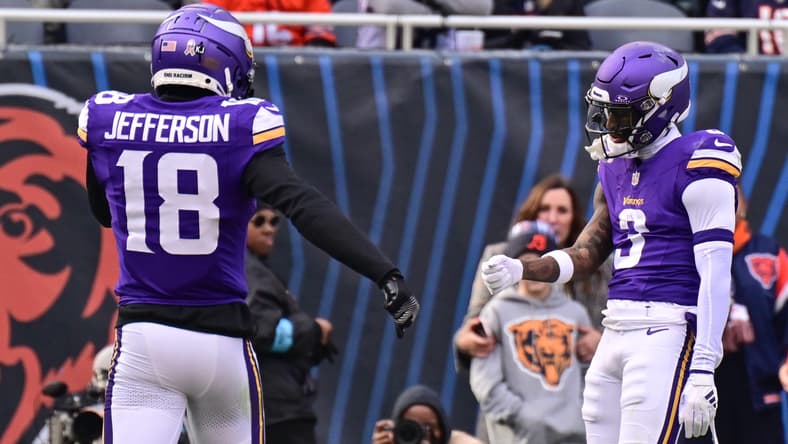
Minnesota Vikings wide receiver Justin Jefferson (18) celebrates with teammate Jordan Addison (3) after a touchdown against the Tennessee Titans during the first half at Nissan Stadium on Nov. 17, 2024, in Nashville. Jefferson sparked Minnesota’s offense with the scoring play as the Vikings built momentum on the road during an interconference matchup against the Titans. Mandatory Credit: Steve Roberts-Imagn Images.
FOX Sports decided to rank all NFL teams’ “supporting casts” this week — and your Minnesota Vikings have the NFL’s 11th-worst. Most fans perceive the team’s playmakers as one of the team’s strengths, but not everyone agrees.
Minnesota has star power at wide receiver, but national perception still lags behind the roster’s actual upside.
Lists of playmaker rankings really don’t mean anything, but they do provide a thermometer of public opinion. The public says the Vikings are mid.
Advertisement
National Skepticism Follows the Vikings’ Skill Players
Minnesota Vikings wide receivers Jordan Addison and Justin Jefferson celebrate a touchdown against the Chicago Bears during second-quarter action on Nov. 24, 2024, at Soldier Field in Chicago, Illinois. The pair formed one of the NFL’s most explosive receiving duos in 2024 as Minnesota continued leaning heavily on Kevin O’Connell’s aggressive passing attack. Mandatory Credit: Daniel Bartel-Imagn Images
MIN’s Ranking from FOX Sports
Ranking just ahead of the New Orleans Saints’ supporting cast, Ralph Vacchiano explained Minnesota at No. 22: “They certainly have given whomever is their quarterback some good receivers to work with. Justin Jefferson is as good as any in football when everything is working right with the offense, and Jordan Addison is a strong No. 2. The Vikings also went out and added the underrated Jauan Jennings to give the QB another option. And TE T.J. Hockenson is a big weapon in the passing game, too — at least when he’s healthy.”
“Beyond that, though, they really have to lean into the mind of head coach Kevin O’Connell because there are some issues. The offensive line was not good nor healthy last season.”
Advertisement
Because of Jefferson and Addison on the roster, most Vikings fans expected Minnesota to check in within this ranking’s Top 15. No cigar.
“And they lean way too much on 32-year-old, oft-injured RB Aaron Jones. That lack of a dependable running game is big. It’s why defenses could tee off on Vikings QBs, who were sacked 60 times last season — tied for second-most in the league,” Vacchiano concluded.
Lower Than the … Giants, Steelers, and Patriots?
Vacchiano strangely ranked the Vikings’ playmakers beneath the New York (Giants), Pittsburgh, and New England groups. The Giants have Malik Nabers (injured) and Cam Skattebo (injured). The Steelers showcase DK Metcalf and Jaylen Warren. The Patriots? Treveyon Henderson and Kayshon Boutte. What are we doing? What’s going on?
Advertisement
On the Patriots’ weaponry, Vacchiano noted, “The Pats currently have a bunch of role players in the passing game. Romeo Doubs is a solid No. 2. Kayshon Boutte is a deep threat. And Mack Hollins is a big target, but needs a reduced role at age 32. New England’s strength is in the potent 1-2 RB punch of TreVeyon Henderson and Rhamondre Stevenson.”
“But the real key for this team will be the offensive line. It improved from 2024 yet still gave up a ridiculous 47 sacks in the regular season and a record 21 in four playoff games. There’s a good argument about whether those crazy numbers were more the fault of Drake Maye or his line. But it doesn’t matter. The young QB won’t survive another year like that, especially against a much tougher schedule.”
Doubs, Henderson, and Boutte should not take the cake over Jefferson, Addison, Jennings, Aaron Jones, and Jordan Mason. It doesn’t make sense.
How Much Worse without Jennings?
Advertisement
The Vikings recently signed Jennings from free agency; in theory, had they not, the ranking on Vacchiano’s list might’ve been even more egregious, possibly three to five spots lower.
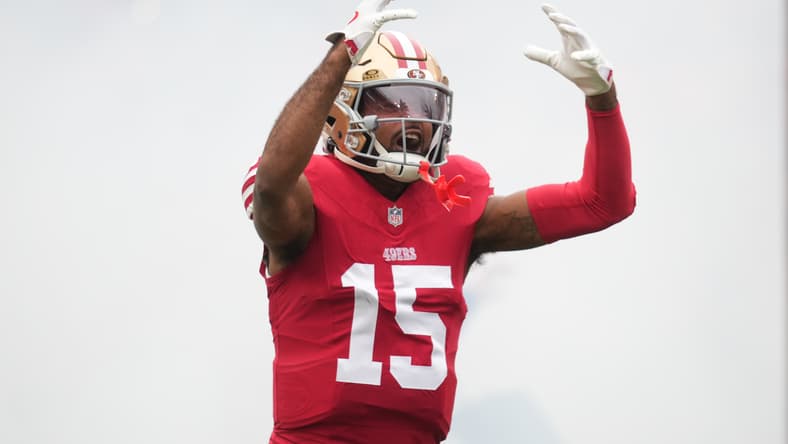
San Francisco 49ers wide receiver Jauan Jennings enters the field before kickoff against the Tennessee Titans on Dec. 14, 2025, at Levi’s Stadium in Santa Clara, California. Jennings continued carving out a larger offensive role in San Francisco after becoming known leaguewide for his physical blocking style and dependable production in key situations. Mandatory Credit: Cary Edmondson-Imagn Images
Still, Jennings is poised to make a significant impact in Minnesota. He’ll seamlessly integrate into three-receiver sets alongside Jefferson and Addison, presenting a formidable challenge for defenses on passing downs. With multiple threats, a favorable matchup would often emerge, and Jennings would be well-positioned to exploit it.
He’ll also likely see a substantial increase in targets within O’Connell’s offense compared to his time in San Francisco. Jennings already embodies the gritty, ‘dirty-work’ mentality Minnesota values, particularly as an elite blocker — a crucial asset for this offense. His role would be genuine, not merely ornamental.
Furthermore, should Jefferson or Addison miss any time, Jennings would immediately elevate to WR1-WR2 status.
The RB Effect?
Advertisement
The culprit behind the FOX Sports clunker regarding Minnesota must be the running backs. Jones is old, and Mason has never experienced an extended run as an RB1. For example, while the Vikings have Jones, Mason, and rookie Demond Claiborne, a team like the Denver Broncos has these options at RB:
JK Dobbins
RJ Harvey
Jonah Coleman
It’s also worth noting that Minnesota has not run the football particularly well under O’Connell.
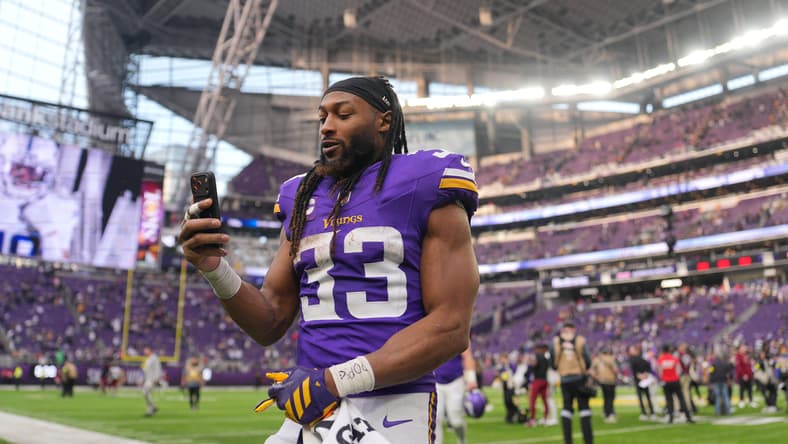
Minnesota Vikings running back Aaron Jones reacts after a game on Dec. 7, 2025, at U.S. Bank Stadium in Minneapolis, Minnesota. Jones remained a central piece of Minnesota’s offense during the 2025 campaign, providing veteran stability in the backfield while contributing as both a runner and pass-catching option for the Vikings. Mandatory Credit: Brad Rempel-Imagn Images
If you’re looking for an explanation for why the Vikings’ supporting cast must be so putrid compared to fans’ expectations, it must be the running backs. It’s the only thing that makes sense. It’s impossible to look at a WR room with Jefferson and Addison, and say, “Yeah, Romeo Doubs and Kayhson Boutte are better than that.”
Dustin Baker is a novelist and political scientist. His second novel, The Invaders , is out now. So is … More about Dustin Baker
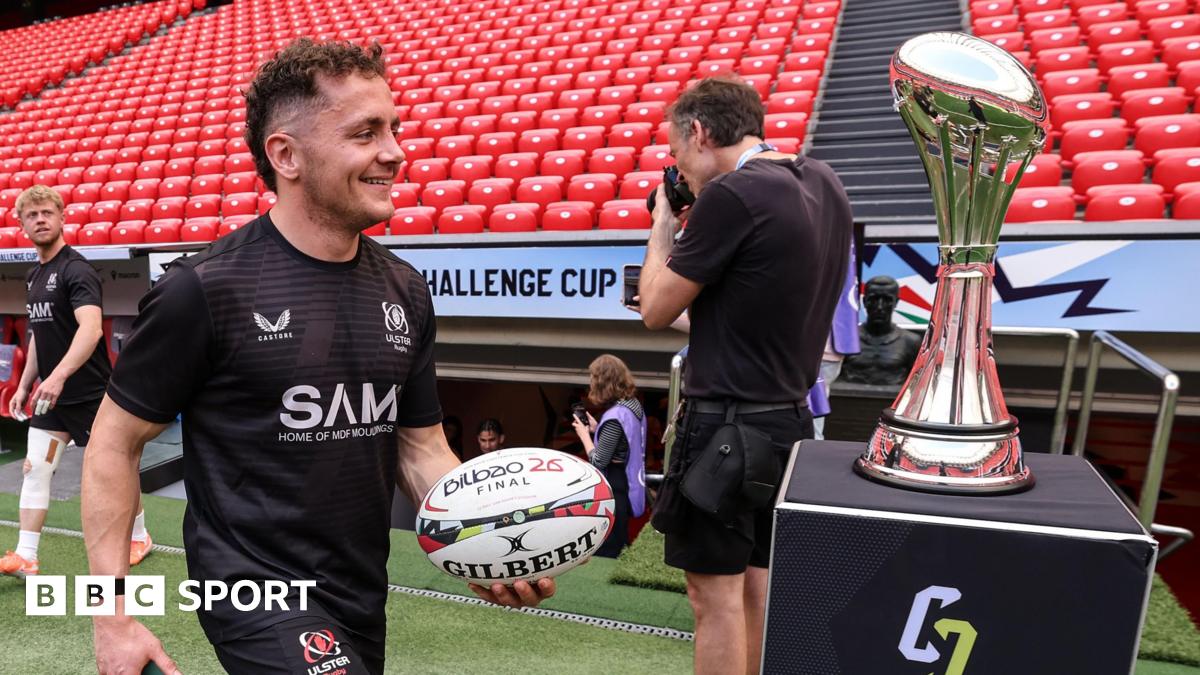
In the beautiful Basque city of Bilbao, in the north of Spain and which is hosting European rugby finals for the second time, Ulster got their first taste of the San Mames Stadium in the captain’s run on Thursday.
It is a huge occasion, but the session was full of smiles and laughter, rather than any visible nerves.
Ulster may be missing key players, such as Henderson and the injured trio of Stuart McCloskey, Jacob Stockdale and Rob Herring, and only 23 players will take to the pitch on Friday.
But there was unity as the wider group took part in the captain’s run, with players playing football as well as warming up with a rugby ball.
Advertisement
There were no signs of lingering disappointment from Friday’s late defeat by Glasgow Warriors, which ultimately led to them missing out on the top eight in the URC.
“It’s a week that’s not difficult to get up for,” said hooker Tom Stewart.
“We’ve all said it, being in a cup final doesn’t come around too often. It has been a special time for the boys.
“It has been special to get behind Nick and watch how he has taken the team, and watch boys grow into the opportunity that is in front of them.”
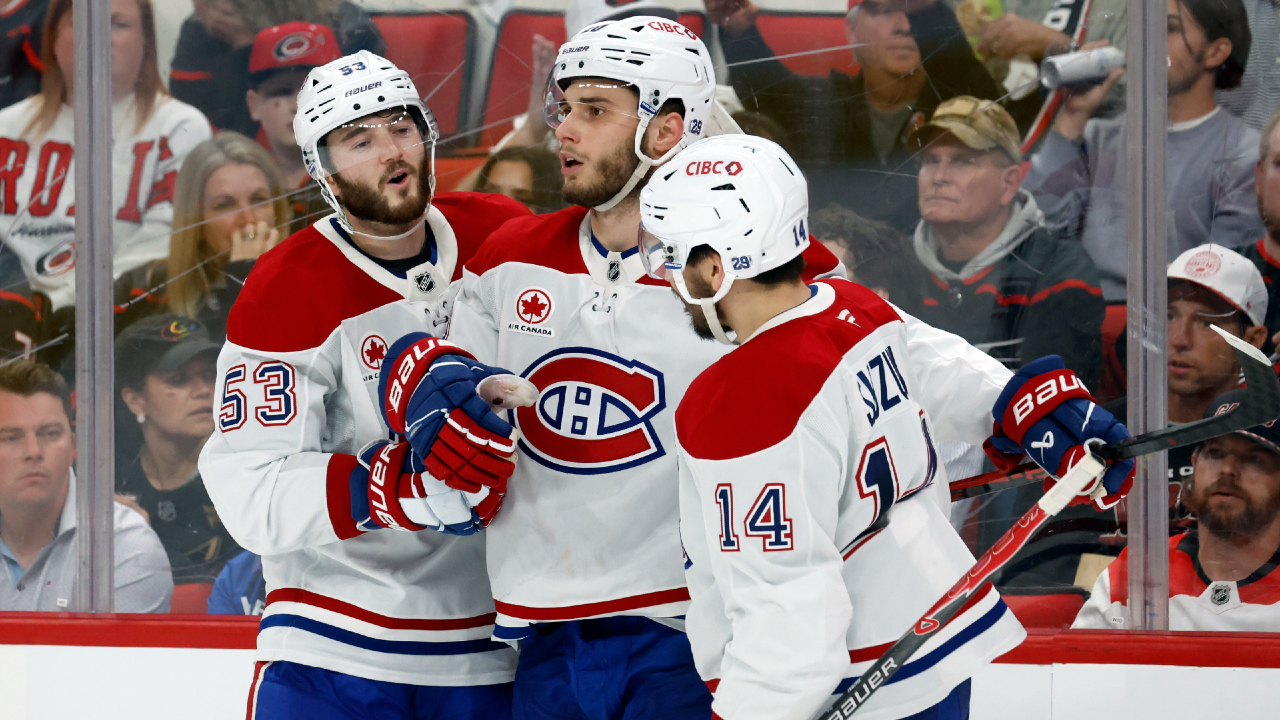
RALEIGH, N.C. — What we learned about the Montreal Canadiens in Game 1 of the Eastern Conference Final is they’re a quick study.
It’s not like the Canadiens had all the time in the world to prepare for this series against the Carolina Hurricanes. They barely had 72 hours after winning Game 7 in Buffalo, and at least six of those were spent travelling, while another 21, give or take, were spent sleeping.
Captain Nick Suzuki said the Canadiens had a long meeting Wednesday, one more Thursday morning, and one last one before Thursday’s game to absorb all the intelligence their coaching staff had gathered.
To see him and his teammates apply everything they learned to near perfection in a 6-2 win to open this series was yet another example of how they’ve defied their age.
Advertisement
“It shows the maturity of our team,” said elder statesman Phillip Danault, who’s played the second-most playoff games of anyone on the Canadiens.
He’s 33, but most of his teammates are between 20 and 26, with the last 14 games of these playoffs the most formative ones of their blossoming careers.
The lessons they learned over those two weeks came at a breakneck pace. And while they were guaranteed to have value in the long run, you couldn’t help but wonder if they could be applied as quickly as the Canadiens would need them to be.
If they couldn’t pull from that new knowledge base immediately after playing two seven-game series against the Tampa Bay Lightning and Buffalo Sabres, they’d have had little chance of handing the Hurricanes their first loss of these playoffs.
Advertisement
Not even Martin St. Louis was sure the Canadiens could do it immediately.
The coach said earlier on Thursday he “thought” they understood just how hard they needed to defend to win games at this time of year.
“I think we’ve learned that, yes, we’re gonna lose momentum, but we can’t get hurt so much, we can’t break,” St. Louis added. “We’re gonna bend, but we can’t break. I think we’ve done a good job of that. I think we’ve learned how important (it is) that we’ve gotta keep playing. Whether we’re up a goal, two goals, you’ve gotta keep playing, and it’s a hard thing to do when you’re playing against really good teams, in the sense that they bring their game, too. And sometimes the situation can overwhelm you, and you’ve just got to grab a hold of it and have poise and be confident that you can flip it again and go get that momentum…”
St. Louis must have known for sure after this game at the Lenovo Center.
Advertisement
It started on the wrong foot, with Mike Matheson buckling under the Hurricanes’ pressure and firing a puck up the wall of his own zone that Andrei Svechnikov picked off and fed to Seth Jarvis for the goal that made it 1-0 for the home team 33 seconds in.
It was one of the last times the Canadiens used the wall of their own zone in a period that ended with them up 4-1.
Part of the scouting work the coaches had done on Carolina, which started 12 days ago — after the Hurricanes had swept the Philadelphia Flyers — had focused on that, and it was unquestionably one of the few points of emphasis St. Louis and his staff drove home to the Canadiens before they exited their zone in control of the puck 92.9 per cent of the time through that opening period.
“You’ve gotta be careful trying to give so much information to players at a time,” St. Louis said. “You’ve gotta pick a couple things and trying to address that, and that’s what we did.”
Advertisement
When the Hurricanes pushed back in Period 2, the Canadiens bent without breaking, still managing to exit cleanly 56 per cent of the time while continuing to generate enough rush chances to extend their lead.
Cole Caufield, who scored 27 seconds after Jarvis to tie the game in the first, hit the post on one of those early second-period rushes before Eric Robinson countered to cut Montreal’s lead to 4-2.
But even if the Canadiens mismanaged the puck in the neutral zone through the rest of the second period, they managed the chaos the Hurricanes brought in their own zone.
“I thought we defended really well,” said St. Louis.
Advertisement
“We weathered the storm,” said Danault.
The Canadiens then throttled down in the third period, with Juraj Slafkovsky bookending perfectly-calculated plays from his team through the final 13 minutes with goals that put the game out of reach. They held the shoot-from-everywhere Hurricanes to one shot on net.
“They made some nice plays, give them credit. They finished,” said coach Rod Brind’Amour. “But I didn’t think we were very sharp, to put it bluntly. Our top guys had a tough night, and that’s not going to work this time of year… I think we just toss this game, to be honest. I hate that at this time of year that’s what we’ve gotta do, but there wasn’t much to grab onto there. I think if you get behind early like that, it’s tough, but we clearly were not ready for that pace. I’m not going to give the (12-day) layoff as an excuse, but we weren’t ready to play playoff hockey and that caught us.”
It took the Canadiens having the right type of engagement off the hop, and they had it for more than one reason.
Advertisement
Of course, one is that they were only three days removed from beating Buffalo and still in possession of that playoff edge.
But the other was from the lesson they learned in losing Game 1 to Buffalo. The one that wasn’t handed to them by St. Louis and the other Canadiens coaches, like the scouting report on Carolina was.
“It’s probably something I didn’t see,” he said. “The group felt after Game 1 in Buffalo that, emotionally, we weren’t where we needed to be if you compare it to the Tampa series. It’s not something that I personally felt because I’m not in the dressing room for that long. I come in, speak to the team, but I’m not in there. My guess is they handled that because that’s their own perception. They’re in the locker room, they know what they see and feel. My guess is they handled that on their own. As a coach, you don’t have to control everything. You have to lean on your group, your leaders and stuff, and they must have done that.”
Because that’s what a young team that’s come of age does.
Advertisement
These Canadiens, who keep accelerating their own development, took yet another step Thursday. Led by their top line, which had been outscored 10-3 at five-on-five through the first two rounds before combining for two goals at even-strength and one at five-on-six, they studied hard and aced the first test of the third round.
In the process, the Canadiens saddled the Hurricanes with the first adversity they’ve faced in months.
“It was great by everyone,” said Suzuki.
Now class is back in session until Saturday night.
Advertisement
“I think there’s a lot of learning and chatting with each other to figure out what the best plan of action is for Game 2,” said Jake Evans.
If they apply what they learned and discussed, they’ll give themselves a great chance to return to the Bell Centre with a lead in this series.
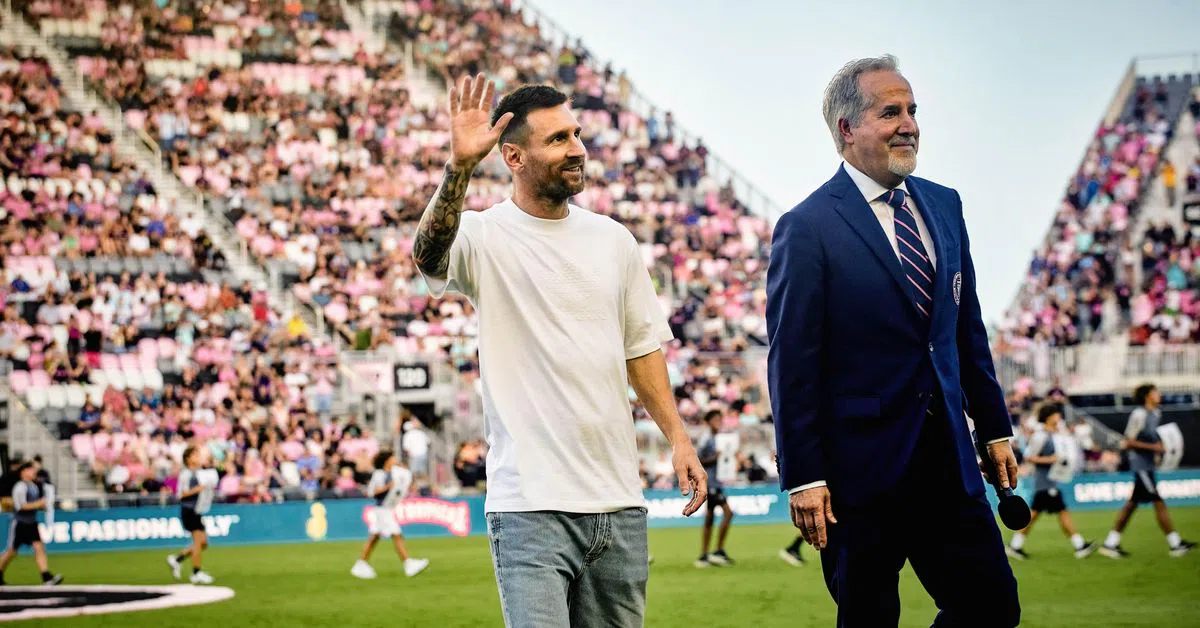
When Lionel Messi was a teenager he received a life-changing offer to join FC Barcelona’s youth team. Sketched out informally on a napkin, the contract included an unconventional clause: a commitment to pay the young footballer’s growth hormone treatment.
His local Argentine side, Newell’s Old Boys, had just taken a pass on the expense as too big a gamble on an unproven player. But for Barcelona, it might just be the best money ever spent: The therapy proved effective and Messi’s career later skyrocketed, catapulting him and the Spanish team to international glory. Off the pitch, he’s also just notched up another big milestone, becoming a rare sporting billionaire.
Advertisement
Messi, 38, has earned more than $700 million in salary and bonuses since 2007, according to a Bloomberg analysis. Adjusting for taxes, market performance and income from investments and sponsorships, his net worth has surpassed the $1 billion-mark, according to the Bloomberg Billionaires Index. That puts him alongside long-time rival Cristiano Ronaldo, the Portuguese striker who became the sport’s first billionaire after joining Saudi Pro League club Al-Nassr FC in 2023, as among the world’s wealthiest athletes.
While Ronaldo’s flamboyant persona has long proven a magnet for advertisers from oil products to sportswear, Messi’s marketing machine in the early years of his career at times struggled to match the heights of his on-field talent. But more recently — under the guiding hand of father Jorge — his business career has flourished. A massive pay check from current team Inter Miami, purported TV revenue-sharing deals, real estate holdings and even a stake in an Argentine restaurant chain have all helped land him in the 10-figure club.
Advertisement
It could easily have happened sooner. Many Messi-watchers were surprised when the player, fresh from leading Argentina to World Cup victory in 2022, turned down a huge contract worth $400 million annually to play in the Saudi Pro League. Instead, he opted to join Inter Miami, while Ronaldo signed his own Saudi contract during 2023, worth more than $200 million a year.
“Money was never a problem for me, nor an obstacle in anything,” Messi told Mundo Deportivo in an interview that year. “If it had been about money, I would have gone to Saudi Arabia or somewhere else.”
Historically, athletes who’ve made $1 billion or more have largely done so off the back of investments. Roger Federer earned more than $130 million in prize money during his playing career — but a deal to buy a 3% stake in Swiss running shoe brand On in 2019 became the largest source of his wealth after its shares soared.
Advertisement
Michael Jordan, despite being one of the highest-paid NBA players of his time, earned less than $100 million in career wages, with a stake in the Charlotte Hornets and endorsement deals contributing the bulk of his wealth. However, a recent surge in top athletes’ salaries, especially in football, has enabled the sport’s biggest stars to make $1 billion or more in wages alone.
The Miami deal also came with innovative perks for Messi, including an unusual equity option that gives him the right to purchase a stake in the club, where retired England star David Beckham is already a shareholder.
Advertisement
While it’s unclear what stake — if any — Messi has taken in his US team since joining, Inter Miami’s fortunes have been on the rise. The club’s value increased more than a fifth in the year to February to about $1.45 billion, according to Sportico. It’s now the US’s most valuable soccer team, ranking 16th globally and ahead of such teams as Newcastle United.
Apple Deal
Advertisement
Messi’s US move also opened up other innovative ways of being paid. During initial contract talks, the US football league and Apple discussed a revenue-sharing agreement that would see Messi earn a share of sales from new subscriptions to Apple TV+’s MLS Season Pass streaming package, The Athletic reported.
Jorge Mas, Inter Miami’s owner, said take-up for the streaming service doubled in the months after the player joined. Mas, in an interview earlier this year, signaled Messi’s total annual pay from the club comes to between $70 million and $80 million, taking into account equity rights and player compensation.
Bloomberg was unable to independently verify the financial details of Messi’s agreement with Apple. Attempts to reach the Messi family via a press officer were unanswered.
Advertisement
From a purely sporting point of view, the move to Inter was seen by some fans as a step down, following a well-trodden path by experienced stars to less-celebrated footballing nations ready to pay for brand-name talent. Before moving, Messi — considered by many the best player of all time — had spent two years at French powerhouse Paris Saint Germain, and prior to that led Barcelona to several Spanish and European titles. He’s also won more Ballon d’Or titles than any other player.
But even as he developed into star at the Catalan club in the 2000s, it took time before his pay really took off: when he signed a contract extension in 2009, Spanish media reported that he was earning about $12 million a year. As salaries have inflated, last season, ten players on the side were making more than that annually, according to data from analytics provider Capology.
Advertisement
Messi has spent more than half his life in Spain and still maintains strong roots in Barcelona, but is rarely interviewed by media outside Argentina. Widely acclaimed within his home country, especially after the 2022 victory, he struggled in the early years, partly due to his shyness and also because many fans drew tough comparisons with Diego Maradona.
It’s something he’s grappling with even today. In an interview with an Argentine streaming service earlier this year he described himself using a local term for a socially-awkward person, adding that he gets unsettled when daily plans change and watching TV at home alone is among his favorite pastimes.
Advertisement
Off-field Business
Messi has relied heavily on his father Jorge for much of his off-field dealings, turning to him as agent, business manager and adviser. Alfonso Nebot Armisen, a little-known Spanish banker, has run his private investment firm since 2009.
Advertisement
At times, though, his business has attracted the attention of Spanish tax authorities, along with peers including Ronaldo. A decade ago, he was found guilty along with Jorge of defrauding the Spanish government of about 4 million euros between 2007 and 2009 over income earned from image rights that went into shell companies. He was handed a prison sentence and fines, though ultimately avoided jail.
Since then, he’s been diversifying. In Dec. 2024, he listed a REIT on a small Spanish exchange, valued at $232 million. The company, Edificio Rostower Socimi, owns several hotels and other commercial real estate.
Advertisement
He’s also been expanding into consumer goods: in 2024, he released the Más+ by Messi sports drink in partnership with Mark Anthony International SRL, the beverage group behind Mike’s Hard Lemonade. He also joined Argentine restaurant chain El Club de la Milanesa, which specialises in the type of breaded steak that’s a staple in the Latin American nation and one of Messi’s favorite dishes, as an investor — in part to help with its international expansion.
Like Ronaldo, and perhaps with an eye to his post-playing days, he’s also building a portfolio of football clubs, with the recent announcement that he was acquiring the fifth-division Spanish Cornella team, adding to his stake in Deportivo LSM, the Uruguayan side he co-owns with his friend and former teammate Luis Suárez. Messi’s family also founded and run a lower-division club called Los Leones in their native city of Rosario.
There may be more to come as Messi starts to think about retirement, according to comments he made at a business forum in Miami last year.
Advertisement
“Football has an expiry date,” he said. “Business is something I like, and I am learning about.”
A former WWE star took a subtle dig at the company. She did so while reacting to a questionable picture.
Scarlett Bordeaux worked for the WWE for several years. However, she spent most of her time as the valet for her husband, Karrion Kross. Despite only competing in a few matches for the company, she was able to get over with the fans. After leaving the sports entertainment juggernaut, she and her husband have been working on the independent scene for various promotions.
Thanks for the submission!
Advertisement
Recently, Shotzi took to social media to share a picture of herself spanking Gigi Dolin while other former WWE stars, Scarlett Bordeaux, Karrion Kross, Matt Riddle, and The Good Brothers celebrate as they look on. Scarlett reacted to the picture by taking a subtle dig at her former employer.
Corporate could be a WWE reference since the company doesn’t allow its talent to post such pictures on public platforms.
Scarlett Bordeaux opened up about her time in WWE
When Scarlett arrived in World Wrestling Entertainment, the company was looking to move away from the divas era into the women’s revolution. Therefore, women were being involved in serious storylines and matches. However, Scarlett’s gimmick was a throwback to the previous era.
“I think they were pushing the Women’s Revolution in the way they were. And my character was the exact opposite of that. It was a throwback. It was a parody, ‘Bring sexy back to wrestling.’ Because all the girls were trying to be serious like the guys. I’m like, ‘No, no. Like, let’s just be a hot chick. Like, bring back bra and panty matches.’ And no one was doing that at the time. No one had their a**es out, no one was doing it, and it pi**ed a lot of people off, including women in the business,” she said.
It remains to be seen what’s next for Scarlett and Karrion Kross.
Why did you not like this content?
Advertisement
Was this article helpful?
Thank You for feedback
Get all the hottest wrestling news FIRST by clicking here
Zara Shaw has been named Liverpool F.C. Women’s Standard Chartered Player of the Month for April after her emotional return from injury.
The 18-year-old won the fan vote on Liverpool’s official website to claim the award for the first time.
Shaw made a huge impact after returning from a long injury layoff, scoring the winning goal against Charlton Athletic Women F.C. in extra-time of the Women’s FA Cup quarterfinal.
Advertisement
It was her first senior appearance in more than 400 days after recovering from the second ACL injury of her young career.
The goal secured Liverpool’s place in the FA Cup semifinals and quickly became one of the club’s most emotional moments of the season.
Advertisement
Speaking after receiving the award, Shaw admitted she did not expect it.
“It’s an amazing feeling,” she said. “I didn’t expect it, if I’m honest.”
“I’ve just enjoyed being back in with the girls and enjoying football again really.”
She also reflected on her dramatic return against Charlton.
Advertisement
“It was really, really special. It’s a day I’ll definitely never forget.”
Welcome to I Tried It, a GOLF.com series about golf items — apparel,gear, accessories, etc. — that we’ve recently taken out for a spin. We’re here to give our honest, no-frills takes on the latest and greatest golf or golf-adjacent items. So, scroll down to read about what we love about golf’s newest (or new to us) products.
***
The internet was set ablaze earlier this year when Shot Scope released its LM1 launch monitor for $199.
For the price of four cases of balls, the LM1 launch monitor couldn’t possibly be accurate enough to be a useful practice tool . . . could it?
Advertisement
I’m here to tell you that I — gasp! — think it can!
In testing the new LM1 at a range, I’ve found not only are the distances accurate but there also are a few cool features that give you some value over much higher-priced launch monitors.
At the lowest price in the market, ShotScope has delivered a worthy product for any golfers who want to improve their games.
Advertisement
Advertisement
Shot Scope LM1 Launch Monitor
The Shot Scope LM1 Launch Monitor is a compact training device designed for golfers who want reliable data without complexity. The LM1 delivers accurate, instant feedback on key metrics that are crucial to game improvement. This includes club speed, ball speed, smash factor, carry distance, and total distance. Test and measure how fast you are with the dedicated speed training mode, which works with clubs and speed sticks. Whether you’re working on speed training, dialling in distances on the range, or measuring shots on the course, the LM1 provides clear, easy-to-read data directly on the 3.5inch color screen that can be synced to the Shot Scope mobile app to view your session history. Designed for both indoor and outdoor use, the LM1 allows you to select any club in your bag directly on the device. This ensures all data is recorded for each club, making it easy to sync sessions and review performance history in detail.
What the LM1 can do
The LM1 offers you five data points: clubhead speed, ball speed, smash factor, carry distance and total distance via radar.
Advertisement
If there’s one thing most pros universally agree on, it’s that amateurs don’t know how far they actually hit the ball. They may know that they once reached the front of a green 170 yards away with their 6-iron, so they think their 6-iron is their 170 club.
The LM1 provides honest feedback about how far you carry the ball and how far it goes overall.
The data is displayed on a 3.5″ display that I have no issues seeing in bright sunlight. This is a big differentiator between other low-cost launch monitors that require the use of a smartphone or tablet to get the data. You don’t need any device to use the LM1.
But if you choose to utilize the Shot Scope app, you can keep track of all the data from your sessions, creating average distances and ball speeds for each one of your clubs. Not only can that be useful to see how far you actually hit your clubs but to also view your gapping. That data can also be used for the Shot Scope app’s MyStrategy function to create game plans for any golf course.
Advertisement
I tested the accuracy by hitting wedge shots to a clear driving range and then using a range finder to shoot the landing site. While unscientific, I found the accuracy to be pretty spot on. I tested with wedges because I find that when speeds get lower, lower-priced launch monitors tend to get a little wacky. The LM1 stayed tight.
The small size and lightning-fast setup (it takes just seconds to turn on) also make the LM1 perfect to take on the course and get your yardages in real-world situations.
What the LM1 can’t do
With the ultra-low price point, the LM1 can’t do everything, nor would we expect it to.
The unit isn’t able to measure launch angle, spin or any directional data like dispersion or club path.
Advertisement
It’s also not a simulator. This is purely a launch monitor.
Bottom line
The LM1 is a launch monitor that isn’t trying to be anything more than what it is: an affordable launch monitor that can give valuable practice data.
At a price cheaper than most rangefinders, it provides limited intel but it does it better than many other models in the price category, both more accurately and more easily.
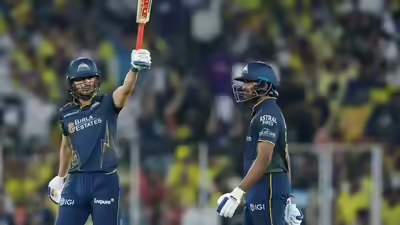
NEW DELHI: Sai Sudharsan and Shubman Gill continued their extraordinary IPL 2026 season by rewriting record books during Gujarat Titans’ crushing 89-run win over Chennai Super Kings in Ahmedabad on Thursday.The GT opening pair once again dominated proceedings at the Narendra Modi Stadium, stitching together a commanding 125-run stand that laid the foundation for Gujarat’s massive total of 229/4. Gill smashed 64 off just 37 deliveries, while Sudharsan followed it up with a brilliant 84 off 53 balls.But beyond the runs and boundaries, the night turned into another landmark occasion for the two batters as they shattered and matched a host of IPL and T20 records.Back-to-back 600-run seasons for both GT starsSudharsan and Gill both crossed the 600-run mark this season, becoming only the sixth pair in IPL history to have two batters from the same team score 600-plus runs in a single edition.They had already achieved the feat in IPL 2025, making them the first pair to do it in two seasons.600-plus runs by two different batters for a team in an IPL edition
Chris Gayle & Virat Kohli (RCB, 2013)
Virat Kohli & AB de Villiers (RCB, 2016)
Ruturaj Gaikwad & Faf du Plessis (CSK, 2021)
Virat Kohli & Faf du Plessis (RCB, 2023)
Shubman Gill & Sai Sudharsan (GT, 2025)
Shubman Gill & Sai Sudharsan (GT, 2026)
Sudharsan also entered an elite list of batters with consecutive 600-plus IPL campaigns. Only Chris Gayle, David Warner, KL Rahul and Kohli had achieved the feat before him.Gill joined the same list with his second straight 600-plus season, underlining the consistency of GT’s opening combination.600-plus aggregates in consecutive IPL editions
3 – Chris Gayle (2011, 2012, 2013)
3 – David Warner (2016, 2017, 2019)
3 – KL Rahul (2020, 2021, 2022)
3 – Virat Kohli (2023, 2024, 2025)
2 – Shubman Gill (2025, 2026)
2 – Sai Sudharsan (2025, 2026)
Sudharsan equals rare IPL milestoneSudharsan’s 84 was also his fifth consecutive 50-plus score in IPL 2026, equalling the all-time IPL record jointly held by Virender Sehwag, Jos Buttler and Warner.The stylish left-hander now has 638 runs from 14 matches this season and remains one of the frontrunners for the Orange Cap.Most consecutive 50-plus scores in the IPL
5 – Virender Sehwag in 2012
5 – Jos Buttler in 2018
5 – David Warner in 2019
5 – Sai Sudharsan in 2026
Gill reaches 6000 T20 runs in elite companyGill achieved another massive milestone during the innings by becoming the seventh-fastest batter in men’s T20 cricket to complete 6000 runs.The GT captain reached the landmark in just 185 innings, making him the second-fastest Indian after Rahul and placing him alongside some of the greatest T20 batters in history.Remarkably, only three other cricketers — Babar Azam, Rahmanullah Gurbaz and Will Jacks — had crossed 6000 T20 runs before turning 27.GT opening pair now among T20’s greatestGill and Sudharsan’s partnership numbers are now entering historic territory.The duo now have 10 century stands together in men’s T20 cricket, equalling legendary pairs like Gayle-Kohli, Kohli-AB de Villiers and Babar Azam-Mohammad Rizwan for the most 100-plus partnerships in the format.Most century stands Men’s T20 cricket (any wicket)
10 – Shubman Gill, Sai Sudharsan (46 inns)
10 – Chris Gayle, Virat Kohli (63 inns)
10 – Babar Azam, Mohammad Rizwan (75 inns)
10 – AB de Villiers, Virat Kohli (77 inns)
They also moved to second place in the list of highest opening partnership aggregates in IPL history with 1898 runs together, behind only the iconic Warner-Shikhar Dhawan pair.Another milestone followed as Gill and Sudharsan registered their 15th fifty-plus opening stand in just 31 innings — the joint second-most in IPL history.With playoffs approaching, Gujarat Titans’ destructive opening duo seem to be peaking at exactly the right time — and the records just keep coming.Highest opening partnership aggregates in the IPL
2220 – David Warner, Shikhar Dhawan (Avg: 47.23, RR: 8.59)
1898 – Shubman Gill, Sai Sudharsan (Avg: 67.78, RR: 9.87)

















































You must be logged in to post a comment Login