The 2026 FIFA World Cup marks a turning point for African football. With the tournament expanded from 32 to 48 teams, the African continent is enjoying unprecedented representation on soccer’s biggest stage.
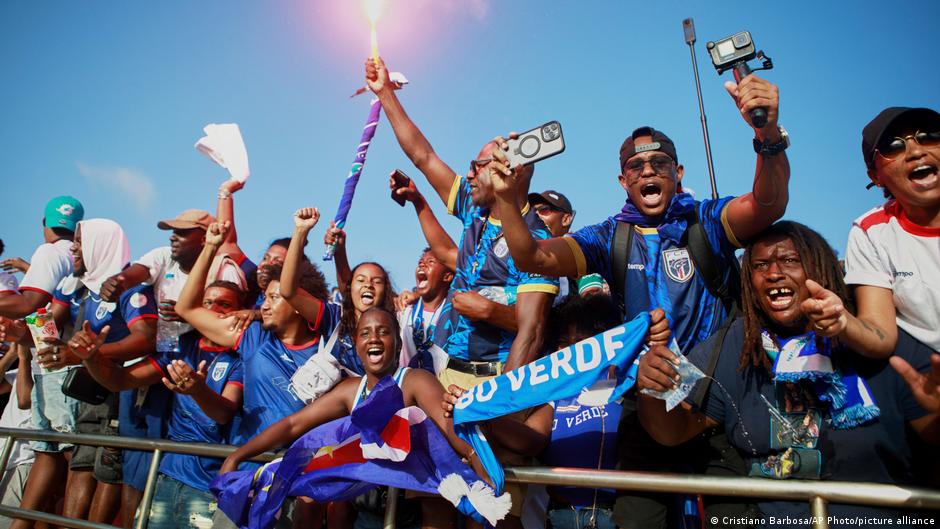
Ten African nations qualified for this year’s World Cup: Morocco, Senegal, Egypt, Cote d’Ivoire, South Africa, the Democratic Republic of Congo, Tunisia, Algeria, Ghana and Cape Verde.
In last week’s opening match against Mexico — one of three host nations alongside the United States and Canada — South Africa faced a huge challenge in front of one of the tournament’s loudest crowds.
Though Mexico secured a 2–0 victory, Bafana Bafana, the nickname of South Africa’s national football team, meaning “The Boys” in isiZulu, worked hard to move beyond their 2010 World Cup legacy.
Advertisement
The 2010 tournament in South Africa — the first World Cup hosted on the African continent — remains historic, despite the country becoming the first host nation to exit in the group stage.
Not all Africans rallied behind South Africa in the 2026 World Cup opening match last Thursday, though. Many backed Mexico amid lingering resentment over recent xenophobicattacks in South Africa.
Why Africans are turning against Bafana Bafana
Cote d’Ivoire coach Emerse Fae said, “We came here with ambitions, with high hopes,” after the Elephants’ dramatic 1–0 win over Ecuador.
Advertisement
Striker Sebastien Haller, one of the most important figures in the Elephants’ squad, who’s known for his strength, aerial ability and finishing, played a key role in Cote d’Ivoire’s triumph in the 2024 Africa Cup of Nations.
Morocco have transformed from outsiders into genuine contenders after their historic 2022 semi-final run. With players like Achraf Hakimi and Brahim Diaz, the Atlas Lions made a statement in their first 2026 World Cup match against Brazil on Saturday, earning a 1–1 draw.
And Ghana, yet to play their first match against Panama, hopes a new generation around midfielder Mohammed Kudus can restore the Black Stars’ reputation.
Drama in Tunisia first match
Further opening matches brought more drama: Egypt drew 1–1 with Belgium, with all eyes once again on forward and team captain Mohamed Salah.
Advertisement
Tunisia suffered a difficult start, losing 5–1 to Sweden.
“This is football, and results decide everything,” said Sabri Lamouchi, Tunisia’s head coach, after the match. The defeat led to his immediate dismissal, making him the first coach in World Cup history to be sacked after only one match.
Tunisia fired coach Sabri Lamouchi after the team was routed 5-1 by Sweden in its opening game on SundayImage: Daniel Becerril/REUTERS
“All of us, we are happy because we work a lot to be here. We deserve to be here,” said Vozinha. In the hours following the match, his Instagram following skyrocketed from 50,000 to over 6 million.
Advertisement
France vs. Senegal: the Francophone derby
Tuesday’s heated clash between France and Senegal, which France won 3–1, carried a deeper historical meaning: Senegal was a French colony until gaining independence in 1960, and the relationship between the two countries remains complex.
France remains one of Senegal’s key economic partners, with close links in areas such as infrastructure, investment, energy and business, while migration between the two countries has created large Senegalese communities in France.
Goalkeeper Vozinha became the new hero of Cape Verde during its surprise 0-0 draw against World Cup champion SpainImage: Jose Breton/Pics Action/NurPhoto/picture alliance
Senegal players such as Kalidou Koulibaly, born in France to Senegalese parents, and Edouard Mendy, who also has Senegalese heritage and grew up in France, reflect the shared history between the two countries.
Others, like Sadio Mane, built their careers internationally while representing Senegal’s identity and football ambitions.
And many of France’s biggest football stars, including Kylian Mbappe, Ousmane Dembele, Aurelien Tchouameni, Dayot Upamecano and Michael Olise, have African roots.
Advertisement
Ousmane Sonko, speaker of Senegal’s National Assembly and former prime minister, summarized it this way: “Whichever team wins, it is Africa that will have beaten Africa.”
Back after 50 years: DR Congo’s Leopards
Meeting Portugal in their first match on Wednesday, the DR Congo’s Leopards are back for the first time since the 1974 World Cup, led by a new generation including stars such as Yoane Wissa.
The team attracted attention even before playing a single match, with one of the tournament’s most distinctive arrival looks: tailored suits featuring leopard patterns, paired with matching leopard-inspired bags. The outfits were designed by Alvin Mak, a Congolese designer.
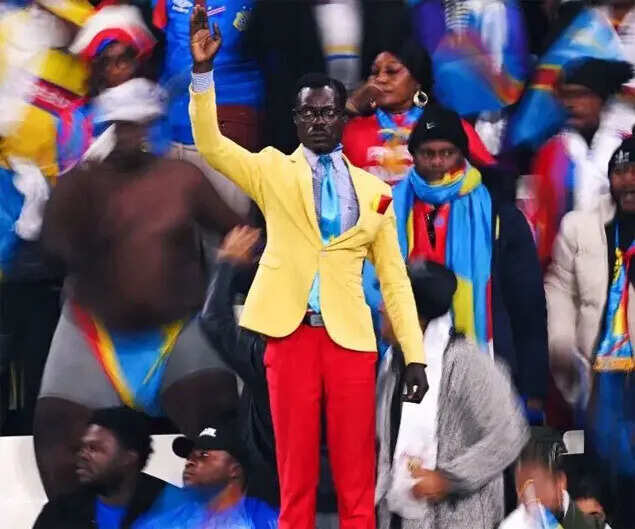
DR Congo’s probably also has the most famous football supporter: Michel Nkuka Mboladinga, better known as “Lumumba,” became instantly recognizable through his distinctive appearance.
Lumumba wore a bright blue, red and yellow suit matching the colors of the Congolese flag, combined with a hairstyle and glasses that closely resembled Patrice Lumumba, the first prime minister of independent Congo.
Advertisement
His unique matchday ritual, standing almost motionless during games, reminds many of the Lumumba statue in Kinshasa. Mboladinga says his silent presence is a way of supporting the team itself. “I remain still to give strength to the team, to give energy to the players,” he told The Associated Press.
While African teams are celebrating their biggest-ever presence at the World Cup, the tournament has also highlighted wider issues beyond the pitch.
The US State Department fully or partially suspended the issuance of travel visas to 39 countries, including Cote d’Ivoire and Senegal.
Somali referee Omar Artan was set to make history as the first official from his country to referee at a men’s World Cup. However, he was denied entry to the United States because of his supposed links to “suspected members of terror organizations,” the Trump administration said.
A spokesperson for the governing body FIFA told the German press agency dpa that Artan, the 2025 African referee of the year, would receive his full tournament fee despite not officiating any matches.
Advertisement
That, however, does not shrink the excitement surrounding the tournament — and the passion with which fans support their teams, even from afar.
Somali referee denied US entry before World Cup debut
NEW DELHI: One of the most recognisable faces of DR Congo football was missing from the stands when the African nation held Cristiano Ronaldo’s Portugal to a 1-1 draw in their opening World Cup match on Wednesday.Michel Nkuka Mboladinga, better known as Lumumba Vea, could not attend the match in Houston because he is currently undergoing a 21-day quarantine following an Ebola outbreak.Mboladinga has become famous around the football world for his unique support of the DR Congo national team. During the Africa Cup of Nations in 2025, television cameras repeatedly focused on the sharply dressed supporter who would stand perfectly still for entire matches, sometimes for 90 or even 120 minutes.His unusual appearance quickly went viral on social media, with many fans calling him “the statue fan”. Mboladinga’s pose is a tribute to Patrice Lumumba, the first Prime Minister of DR Congo and one of the country’s most important historical figures. His raised arm mirrors the famous Lumumba monument in Kinshasa, while the vintage glasses, tailored suit and rigid posture are all carefully chosen to honour the independence leader.After gaining worldwide attention during AFCON, DR Congo decided to include him as part of their official delegation for the World Cup.However, his quarantine meant he was unable to watch his country’s historic match against Portugal from the stands.His absence was felt by many supporters who had become accustomed to seeing him during DR Congo matches.
There is good news, though. Mboladinga is expected to complete his quarantine in time to attend DR Congo’s next World Cup match against Colombia on June 23.On the field, DR Congo produced one of the surprises of the tournament by holding Portugal to a 1-1 draw.Playing in their first World Cup in 52 years, DR Congo became the second African nation to impress against European opposition after Cape Verde’s goalless draw against Spain earlier in the week.Portugal coach Roberto Martinez admitted his side failed to produce their best performance.“The World Cup is a tournament where this happens,” Martinez said. “At times the performance is not up to the challenge.”In front of a crowd of 68,777 at NRG Stadium, most of whom were supporting Portugal, DR Congo earned the first World Cup point in their history after losing all three of their previous matches in the competition.While the result on the pitch was memorable, many fans will be hoping that when DR Congo face Colombia next, their famous “statue fan” will once again be back in his place in the stands.
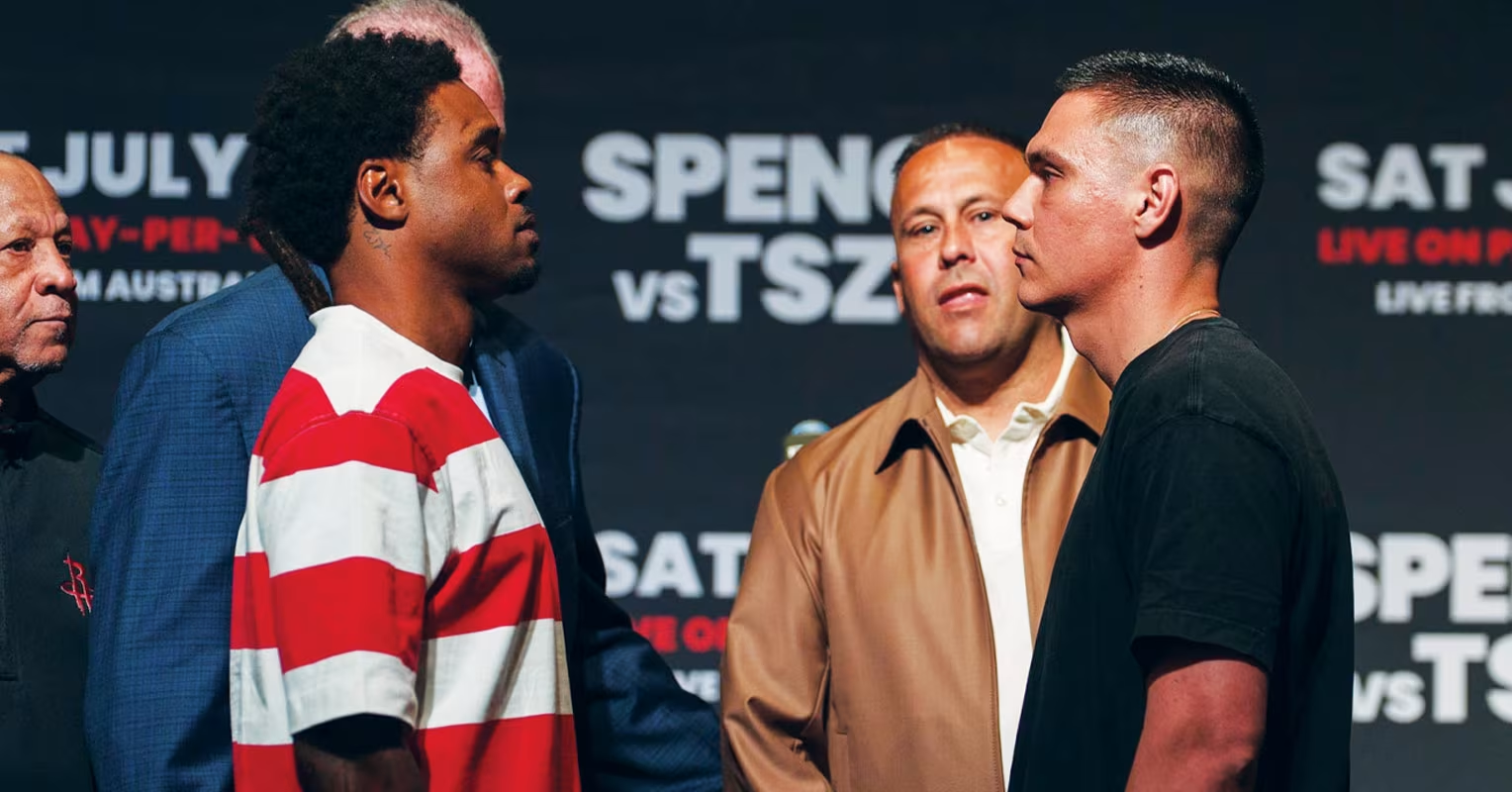
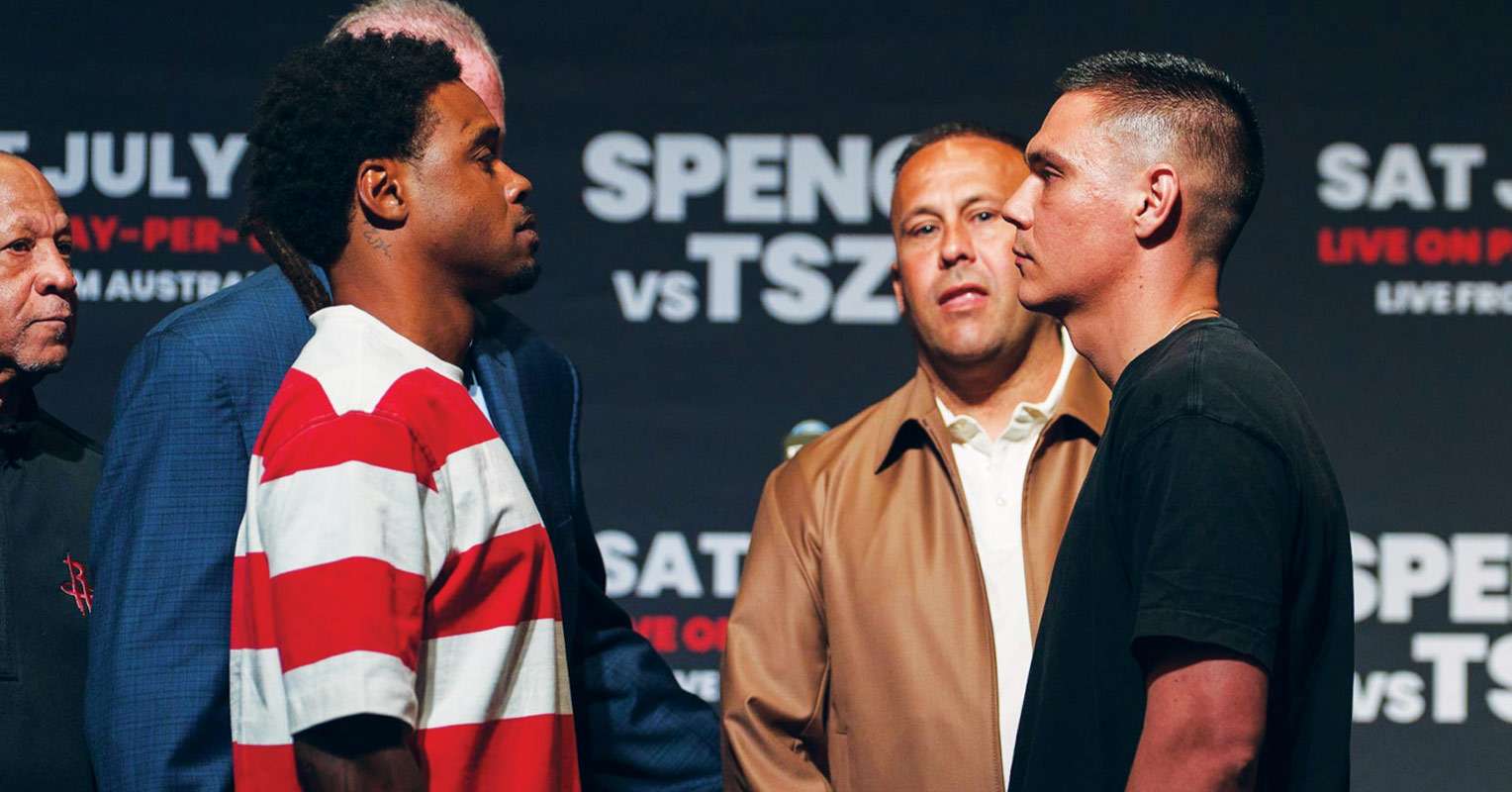
Next month, Errol Spence Jr heads Down Under as he ends three years of inactivity and debuts as a super-welterweight against Australian fan-favourite, Tim Tszyu.
Today a ‘USA vs. Australia’ theme has been confirmed for the undercard, as well as a venue for the event.
Whilst Spence-Tszyu was announced a while back, little was known about the fight other than the date of Sunday, July 26, with no other bouts or location being announced, aside from knowledge that it would be in Australia.
Advertisement
Last month, it was revealed that undefeated two-division world champion, Jermall Charlo (34-0, 23 KOs), would also appear on the bill, for what would be just his third fight since June 2021, looking to announce himself as a threat to the super-middleweight throne.
This morning, No Limit Boxing has unveiled that Charlo will take on Australian super-welterweight champion, Koen Mazoudier (15-4-1, 6 KOs), who will move up two weight divisions for the biggest opportunity of his career.
Boxing’s biggest names are coming to Sydney 🥊🔥
July 26 is shaping up to be one of the greatest nights Australian boxing has ever seen.
Meanwhile, continuing the America vs Australia theme, another two-division world champion, Stephen Fulton (23-2, 8 KOs) will take on Australia’s super-featherweight world title hopeful, Liam Wilson (18-3, 10 KOs), who came agonisingly close to dethroning Emanuel Navarrete back in 2023.
Fulton’s last fight took place at ‘lightweight’ on short-notice, after he missed weight ahead of a meeting with O’Shaquie Foster back in December, but the Philadelphian will attempt to make 130lbs once again when he takes on Wilson.
Additionally, away from the style of those fights, Paul Fleming and Ahmad Reda will collide in an all-Australian affair, whilst Paulo Aokuso (10-0, 5 KOs), Callum Peters (7-0, 6 KOs) and Tina Rahimi (0-0) will also appear, against opponents that are yet to be announced.
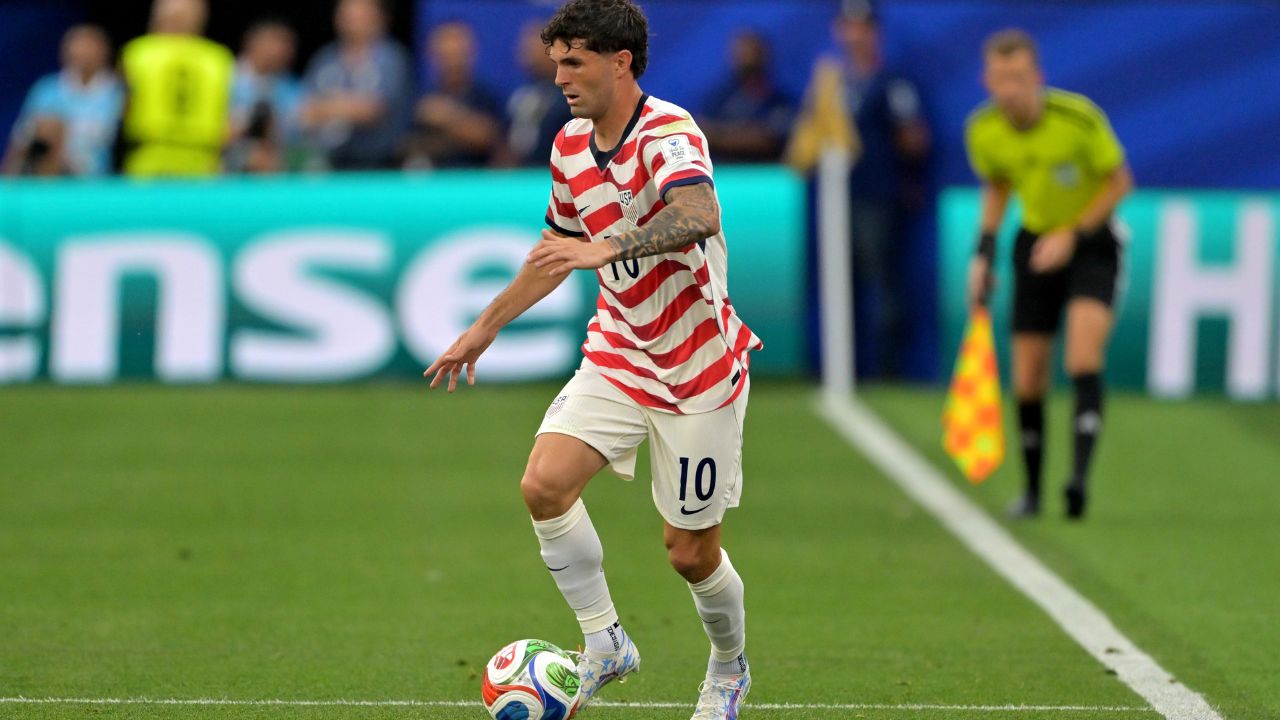
SEATTLE — Christian Pulisic trained apart from his U.S. teammates on Thursday for the fourth straight day because of his left calf injury, further raising concerns about his availability to face Australia on Friday in Seattle in the Americans’ second World Cup game.
Pulisic started last week’s 4-1 victory over Paraguay, but came off at halftime after feeling stiffness from a calf injury incurred in training. He did not work out with his teammates earlier in the week at their base in Orange County, nor did he Thursday morning at Husky Soccer Stadium on the University of Washington campus.
The Milan winger joined his U.S. teammates for a pre-warmup huddle while wearing a compression sleeve on his calf, then went inside to do individual work in the gym. Ahead of Thursday’s training session, midfielder Weston McKennie said he did not know much about Pulisic’s recovery, but that he hopes he will be able to play.
“I know he really wants to be in, and he’s doing everything that he can, and the staff is doing everything that they can as well,” McKennie said. “But, that’s also another question that’s better to ask him than me.”
Advertisement
The 27-year-old Pulisic is the most accomplished U.S. player. He helped create an own-goal by Paraguay in the opening minutes last Friday, and assisted on Folarin Balogun’s first of two goals.
His absence could hinder a team coming off its highest-scoring World Cup performance with a wave of momentum. Midfielder Cristian Roldan said the team is aware of the hype around the group and hopes to capitalize.
“What excites me is that the entire world, the entire nation is behind us,” Roldan said. “I think that they enjoyed watching us play, and at the end of the day what we want to do is inspire and motivate the next generation. … We have to build off it, and that’s the truth. We can’t just talk about it: we have to show out against Australia.”
Should Pulisic not be fit to play against the Socceroos, U.S. coach Mauricio Pochettino has a few options to replace him.
Advertisement
The most likely choices appear to be Brenden Aaronson, a winger who had four goals and five assists for Leeds last season, and Marseille forward Tim Weah, who can impact a game with his speed on either wing.
Pochettino’s other options for offense include Gio Reyna, who scored the Americans’ final goal against Paraguay and has provided moments of dynamic playmaking from the wing. Sebastian Berhalter came on at halftime for Pulisic in the opener, while starting midfielder Malik Tillman raised his already impressive game in Pulisic’s absence.
McKennie is hopeful the U.S. won’t have to turn to its reserves to replace Pulisic, and that he can continue to keep his head up during his recovery.
“I think mentally he’s great,” McKennie said. “I think it’s really hard for someone’s mental game to be messed up in these types of conditions in U.S. soccer, and all the guys around, we’re a big family. So, we’re always there to pick someone up if they’re down, and excel them even further if they’re not. So, I think he’s doing good mentally.”
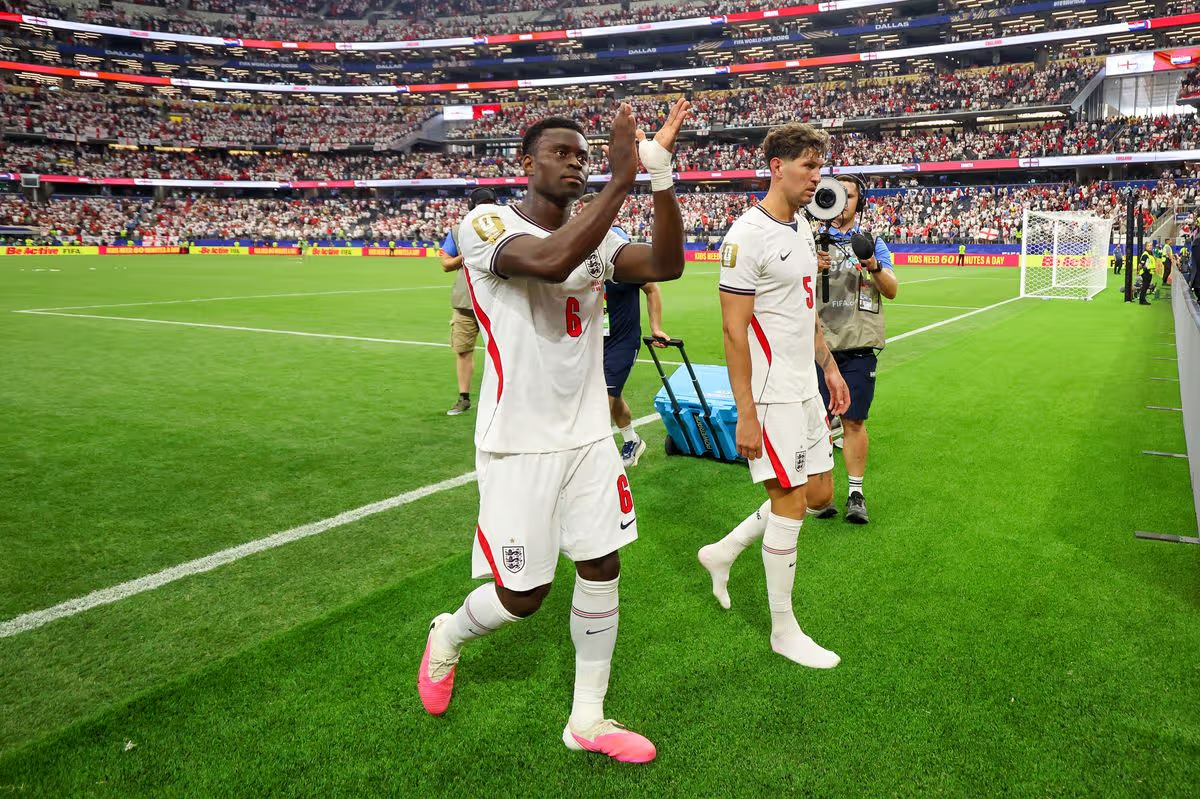
John Stones was the surprise starter at the heart of England’s defence in the 4-2 win over Croatia, with the man who has effectively replaced him at Manchester City, Marc Guehi, only a substitute in the World Cup opener
John Stones was not the only England player to “suffer” in their World Cup opener, as the outgoing Manchester City centre-half got the nod to kick off the tournament in the starting lineup.
But Three Lions defender Stones struggled against Croatia in the 4-2 win in Dallas, and looked like his lack of game time at club level had caught up with him.
Advertisement
It felt like England were given a timely reminder of Marc Guehi’s quality even though City’s January signing was only used as a late substitute. Stones and his defensive partner, Aston Villa’s Ezri Konsa, were exposed at times and Guehi is surely a strong candidate to start England’s next game against Ghana on Tuesday.
Click here to find out the latest Manchester City news in our daily newsletter
But England boss Thomas Tuchel insists it was not just Stones who struggled but other players too because of the energy-sapping conditions in Dallas and demands of a high-pressure game in a tournament.
Tuchel said: “Some players suffered because it was quite hot and humid and the game was very intense. That would be no surprise. I think he had cramps in both legs in the end because it was intense. We saw the numbers already. They really put a shift in.
Advertisement
“The players said it was quite humid and difficult to digest it so I think John was just like everyone else … Everyone was very tired in the dressing-room, which I like because then know that you did something. And we need this.
“Overcoming the tough moments. Stick together, then you get punished. But you have a reaction, twice. And yeah, it was a difficult moment to concede for 2-2 but again we came, we got the third lead and then finally we could finish the game because we created a lot.”
Declan Rice finished the game with a sore back but is expected to be fit to face Ghana while Harry Kane also had a strapping on one leg but insisted afterwards he felt in good shape.
Whether those pair are joined in the starting lineup in Boston by Stones again, or whether Guehi gets the nod, remains to be seen.
Advertisement
With Tuchel’s penchant for keeping his cards close to his chest and not telling his players his starting lineup until the morning of a match, both must simply wait and see.
Upgrade your World Cup TV setup with the Sky Glass ‘designed for football’
This article contains affiliate links, we will receive a commission on any sales we generate from it. Learn more
Sky is knocking 20% off its entire range of Glass TVs to mark the start of the 2026 FIFA World Cup. Until June 17, shoppers can upgrade to the Sky smart TV that’s ‘designed for football’ from £4.50 per month when taken alongside a Sky TV and Netflix package.
The bipartisan Protect College Sports Act cleared the Senate Commerce Committee 19-9 on Thursday, marking the first time a college sports reform bill has advanced this far in the Senate and setting up a potential floor vote before the August recess.
Committee Chairman Ted Cruz (R-Texas) and Ranking Member Maria Cantwell (D-Wash.), who co-wrote the legislation with Sens. Eric Schmitt (R-Mo.) and Chris Coons (D-Del.), have been pushing to get the bill to President Trump’s desk this summer. Trump urged Congress in early June to pass it “this summer,” and Cruz has said he wants it done before the fall season kicks off.
After Thursday’s vote, Cruz told reporters that Senate Majority Leader John Thune “intends” to bring the Protect College Sports Act to the Senate floor, and Cruz believes that will happen in July, according to Yahoo Sports. The Senate’s scheduled summer recess runs from Aug. 10 through Sept. 11, leaving a narrow window to reach the 60 votes needed for passage.
The bill would establish the first comprehensive federal framework for college athletics, codifying NIL rights into law, replacing the current state-by-state patchwork with a single national standard. It sets a five-year eligibility window beginning at age 19 or high school graduation, guarantees athletes one transfer without losing eligibility and requires a second transfer to sit out a year with limited exceptions, caps agent fees at 5% and gives athletes a private right of action to sue schools over NIL rights, health and safety standards and scholarship protections.
The biggest revenue play: an amendment to the Sports Broadcasting Act of 1961 that would allow schools to voluntarily pool and jointly negotiate their media rights, similar to the NFL’s model. Proponents say that could generate an additional $4 to $8 billion for college athletics, money backers want directed toward women’s and Olympic sports. The bill also bans the formation of a super conference, effectively blocking any potential SEC-Big Ten breakaway league.
More than 20 conferences, including the ACC and the Big 12, representing 228 colleges across 46 states, have publicly backed the legislation, along with the NFL, NFLPA, NBPA and the U.S. Olympic and Paralympic Committee.
Advertisement
“Today’s vote is a powerful statement to the growing bipartisan support for targeted intervention from Congress to stabilize college sports’ transfer, eligibility and agent rules,” NCAA president Charlie Baker said in a statement. “The NCAA looks forward to building on this important development to pass the most effective bill for all 550,000 student-athletes.”
Big Ten, SEC still not on board
The two most powerful conferences in college football remain opposed. In a joint statement released Thursday morning, the Big Ten and SEC said that despite “sustained engagement and good faith efforts,” their critical revisions to the bill had not been accepted.
“From the outset, we identified a set of essential revisions to the PCSA necessary for the long-term sustainability of college athletics,” the statement read. “We have worked with both majority and minority staff to advance those revisions, which focus on better supporting student-athletes and stabilizing the college sports environment. We continue to believe revisions are needed to secure our support for the bill.”
The conferences said they are “encouraged that several Commerce Committee members share our concerns” and pledged to keep pushing for changes.
Advertisement
Their core objections center on the media-pooling provision, which SEC commissioner Greg Sankey has warned could expose the SEC to lawsuits and effectively force the conference out of the College Football Playoff if non-pooling schools are excluded from postseason play. The Big Ten holds a major deal with CBS and FOX; the SEC is locked into an exclusive agreement with ESPN. The private right of action provision — which both conferences called too broad — also remained intact in the final markup version.
On a teleconference with reporters, New York Yankees president Randy Levine, a leader on President Trump’s college sports committee, urged opponents of the bill to “come back into the tent with us and the Senate to work through all of the problems you have because this is the last, best effort. If this does not go forward, there will be nothing that goes forward …”
Sen. Tommy Tuberville (R-Ala.), a former college football coach who spent 14 seasons in the SEC at Ole Miss and Auburn, went to the Senate floor Tuesday to announce his opposition.
“Two weeks ago, my colleagues here rolled out a bipartisan bill that aims to fix some of these problems,” Tuberville said. “I respect the work that they put into it. I know it all too well. I know they’re trying to solve a serious and very, very hard problem. It’s almost impossible. But I think their bill goes too far.
Advertisement
“Trust me, if I thought it’d work, I’d support it. Unfortunately, it gets too deep into the businesses of universities, conferences and athletics departments while doing far too little to give the student-athlete the stability and clarity that, actually, they need.”
What the amendments changed
The most significant revision ahead of Thursday’s markup strengthened protections for non-revenue and Olympic sports. Under the amended bill, any Division I school reporting at least $80 million in annual athletic revenue must maintain current scholarship and roster levels for women’s and Olympic sports at or above the 2024-25 levels. The earlier version applied that requirement only to schools that opted into media rights pooling; the amendment extends it to all large-revenue programs regardless of whether they opted in.
Senators also pushed for language restricting mid-season coaching changes, a debate sparked in part by Lane Kiffin’s move from Ole Miss to LSU while the Rebels were still alive in last season’s College Football Playoff.
The bill now faces its biggest test. A Senate floor vote requires 60 votes in a chamber with 53 Republicans, making bipartisan support essential.
India’s 1983 World Cup winner Kris Srikkanth criticised the team management over KL Rahul’s batting position amid the ODI series against Afghanistan. The Men in Blue have already pocketed the series 2-0 with a game to go.
In the first ODI, KL Rahul batted at five and scored an unbeaten 39 off just 19 balls to help India win the game. However, in the second game, he was demoted to number six, where he failed to score, being dismissed for a duck. Srikkanth reckoned that Rahul batting at six was not good for him or the team either.
Further, talking about the World Cup squad and the experimentation in testing out players, Srikkanth suggested going by a rotation policy.
Advertisement
“It is not good for KL Rahul and the team if he is batting at six. In my opinion, he must bat at four or five max. I think they can go by rotation policy. Rest the certainties in some games, give chances, and then pick the side,” he said on his YouTube channel.
The final ODI of the three-match series will be played on Saturday, June 20, in Chennai. India will aim for a clean sweep and could look to further test their bench strength.
Kris Srikkanth believes the men’s cricket team should have had a break rather than playing the Afghanistan ODIs
Following the second ODI in Lucknow, which was played under extreme heat, Kris Srikkanth reckoned that the Indian men’s cricket team must have a break in June rather than playing a side like Afghanistan.
Advocating the importance of family time, time off, and mental breaks, he added that there should be no cricket for the men’s team for at least a month post the IPL.
Advertisement
“Afghanistan is not a great team really. It is sad. Now they are going to play in Chennai where it will be very hot. I don’t know how they will play there. It is not fair. I don’t think they should be playing in June. The T20 World Cup and IPL just got over. Give them a break and the Women’s T20 World Cup is going on, why don’t we focus on that? There should be a one month break after the IPL to be honest. There is no family time, no holiday, and most importantly no mental break,” he stated.
Post the Afghanistan series, the Men in Blue will travel to England for a multi-format white-ball series in July, which involves five T20Is and three ODIs.
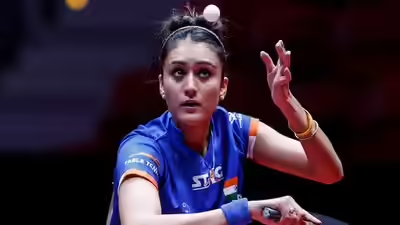
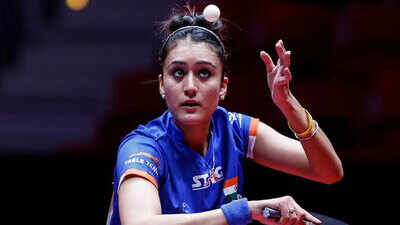
MUMBAI: India’s most recognisable table tennis player, Manika Batra, has been left out of the squad for the upcoming Asian Games after failing to meet the selection criteria laid down by the Table Tennis Federation of India (TTFI).In Manika’s absence, India’s women’s team will be led by Sreeja Akula and comprise Yashaswini Ghorpade, Diya Chitale, Sutirtha Mukherjee and 17-year-old Syndrela Das. Manika and Swastika Ghosh have been named among the reserves for the Games, scheduled to be held in Aichi-Nagoya, Japan, from September 19 to October 4.“The selection process ensured that India’s highest-ranked and most consistent performers earned the opportunity to represent the country at Asia’s biggest multi-sport event,” the TTFI said in a statement.Under the selection policy introduced in 2023, national rankings carry 50 percent weightage, world rankings account for 40 percent and the remaining 10 percent is left to the discretion of the selection committee. Players ranked inside the world’s top 50 earn automatic qualification irrespective of their national ranking.The omission is likely to spark debate, considering Manika narrowly missed the automatic qualification mark. The 31-year-old was ranked World No. 51 on the June 2 cut-off date, just three ranking points behind the player occupying the 50th spot.Sources told TOI that the nine-member selection committee was not unanimous in its decision to leave out Manika. National coach Massimo Costantini is also understood to have provided inputs before the selection meeting.The margins were razor-thin. A Round-of-64 appearance at a WTT Star Contender event — a stage Manika would have automatically qualified for — carries five ranking points, enough to have pushed her into the top 50.A multiple Commonwealth Games medallist and part of India’s historic mixed doubles bronze-medal-winning pair at the 2018 Asian Games, Manika remains India’s second-highest-ranked women’s player behind World No. 45 Sreeja Akula.Her absence from domestic tournaments this season also counted against her. According to her coach Aman Balgu, the selectors could have considered the difficult circumstances she faced over the past year.“Personally, she has gone through a lot over the last year. She also dealt with a serious injury, which affected the number of competitions she could participate in,” Balgu told TOI.Manika was also sidelined for nearly two months following the sudden death of her father.“As per our calculations, Manika will be the top-ranked Indian women’s player as soon as next month. She has had decent results this year and it’s sad that she won’t be in the squad,” Balgu added.In the men’s section, India’s challenge will be led by the country’s top-ranked paddlers, Manav Thakkar and Manush Shah. Experienced campaigners G. Sathiyan and Harmeet Desai have also been included, while youngster Payas Jain completes the five-member squad.
South Africa kept their hopes of reaching the FIFA World Cup knockout stages for the first time alive after battling to a 1-1 draw against the Czech Republic in their Group A clash in Atlanta on Thursday.
A late penalty from Teboho Mokoena rescued a point for Bafana Bafana after Michal Sadilek had given the Czech Republic an early lead.
The result leaves both teams on one point from two matches, with their hopes of progressing to the last 32 still intact. However, both nations will likely need victory in their final group matches to stand a realistic chance of advancing.
Advertisement
The Czech Republic made a bright start and nearly scored inside the opening minute when Patrik Schick headed wide from a promising position.
Their pressure paid off in the sixth minute. Adam Hlozek delivered a cross into the box, which Alexandr Sojka cleverly guided into the path of Sadilek. The midfielder calmly slotted past South Africa goalkeeper Ronwen Williams to put the Europeans ahead.
South Africa, appearing at the World Cup for the first time since 2002, struggled to create clear opportunities in the opening stages. Hugo Broos’ side, who finished third at the 2023 Africa Cup of Nations, found it difficult to break down a disciplined Czech defence.
Advertisement
The Czech Republic had chances to extend their advantage after the break but failed to make them count. Vladimir Darida hesitated when presented with a clear opening, while Lukas Cerv’s long-range strike was tipped over the bar by Williams.
With time running out, South Africa finally found a way back into the match. Seven minutes from the end, Thapelo Maseko’s effort struck the arm of Pavel Sulc inside the penalty area.
Referee Tori Penso immediately pointed to the spot, and Mokoena stepped up to confidently fire home South Africa’s first World Cup goal in 16 years.
Bafana Bafana nearly completed the comeback moments later, but Czech goalkeeper Matej Kovar produced a fine save to deny Relebohile Mofokeng.
Advertisement
In the end, both sides settled for a draw that keeps their qualification hopes alive heading into the final round of Group A fixtures.
South Africa will face South Korea in their final group match, while the Czech Republic must overcome co-hosts Mexico.
For now, South Africa’s dream remains alive, with everything still to play for.
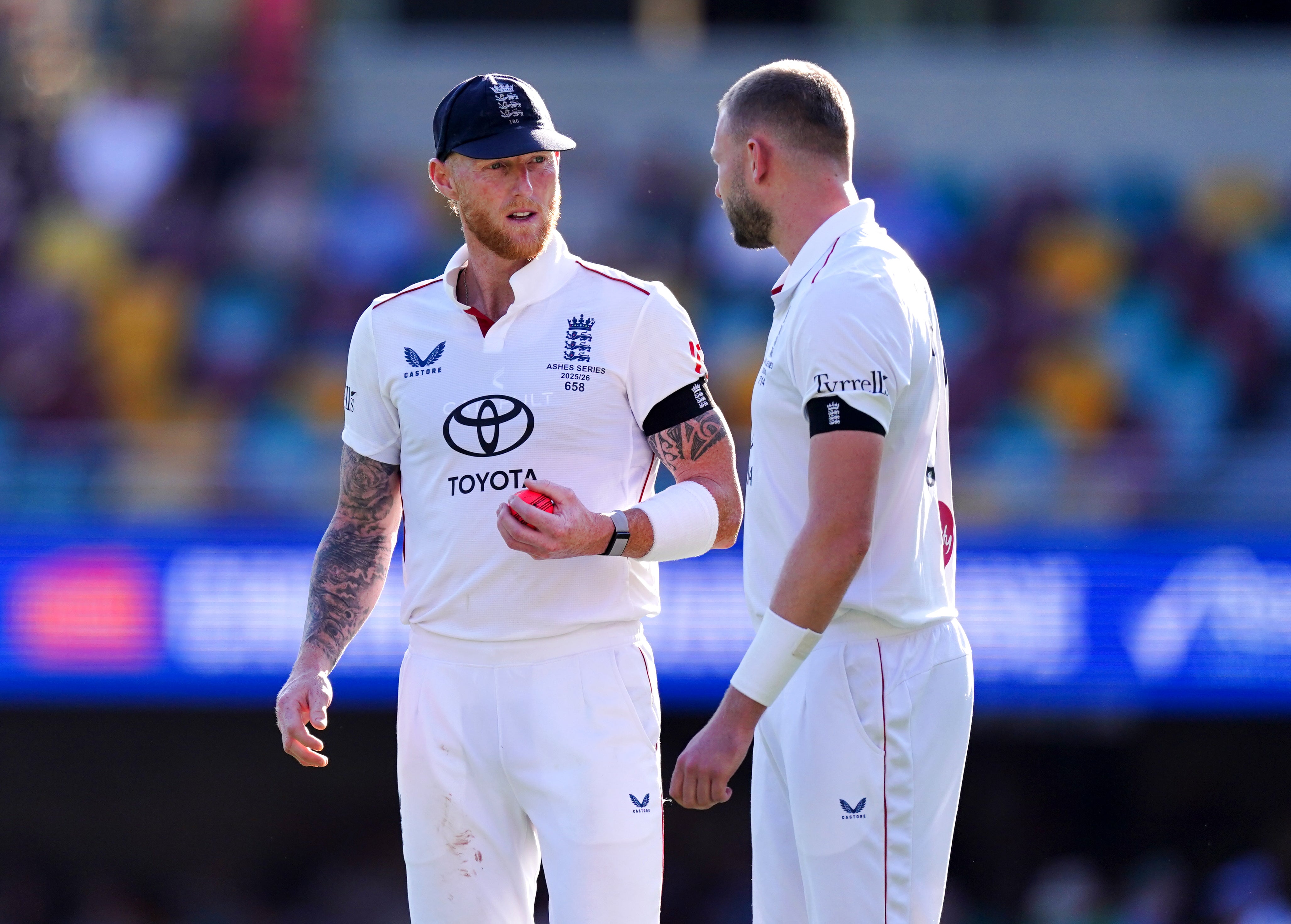
England captain Ben Stokes is close to returning in next week’s third Test against New Zealand, finally ending doubts over his international future.
Stokes was stood down from the second Test at the Kia Oval after breaking a team curfew on a night out in London, prompting fears he could be stripped of the captaincy, stand down of his own accord or even walk away permanently.
But the mood has calmed in recent days and the Press Association understands Stokes could now rejoin the squad at Trent Bridge, with twin investigations into the episode hurrying towards a conclusion.
Ben Stokes and Gus Atkinson missed the second Test (Robbie Stephenson/PA). (PA Wire)
Stokes and fast bowler Gus Atkinson, who was also involved in the protocol breach following victory in the series opener at Lord’s, were interviewed by the independent Cricket Regulator on Thursday and the England and Wales Cricket Board is now eager to conclude its own probe swiftly.
Having initially been keen to let the process breathe, the ECB now feels ready to move ahead and could act swiftly enough to bring Stokes back into the fold in time for next Thursday’s clash in Nottingham.
While no firm decisions have yet been taken, it appears a rapprochement is the likeliest outcome.
Advertisement
Stokes’ status as captain is another issue to resolve and it is thought ECB management are open to him continuing his four-year reign.
His close friend and predecessor Joe Root stepped back into the breach this week but viewed the role as being on a “game-by-game basis” and would not stand in the way.
In the immediate term, the 35-year-old is set to play for Durham on Friday, having made himself available for the four-day Rothesay County Championship match against Northamptonshire at Trent Bridge.
The ECB has the power to withdraw him from that fixture at any stage but, even though it is due to conclude on Monday and pre-Test training begins the next morning, is not inclined to do so.
Advertisement
Stokes has made only one public intervention since the episode blew up 11 days ago, wishing England and their three debutants well at the Kia Oval via a brief Instagram message.
Head coach Brendon McCullum appeared to raise concerns over his wellbeing in a pre-Test press conference, where he repeatedly voiced his “worry” and “concern” for the absent skipper.
But Durham’s coach Ryan Campbell offered a different perspective after working alongside Stokes in the nets.
He told BBC Radio Newcastle: “Ben knows he made a mistake and broke the curfew, but some of the reaction has been a little over (the top).
Advertisement
“From what I’ve seen, he’s in good spirits, he’s back in training, working hard and the rest will take care of itself. Ben is a competitor and he loves to play and he wants to play.”
England great Lord Ian Botham earlier suggested Stokes might decide to leave the sport should he be stripped of the captaincy.
“It wouldn’t surprise me, if Ben did lose the captaincy, he probably might walk away from the game, but I just don’t know,” Botham said on The Overlap and Betfair’s Stick to Cricket show, which will be broadcast in full on Tuesday morning.
“To be honest with you, it was an unnecessary procedure and one that I think he will regret.”
Advertisement
Botham feels there is no justification for the latest incident of ill-discipline.
“Some people just don’t learn, do they?” he added. “Everybody supported him, but I really can’t see how you can justify what happened after the game. We used to love going out for a drink, but we weren’t quite so obvious.”
NFL training camps begin next month, and after that are the preseason and the regular season. Between now and then, teams will make some final moves with trades, cuts or signings, although most will be small moves or final roster cuts in August.
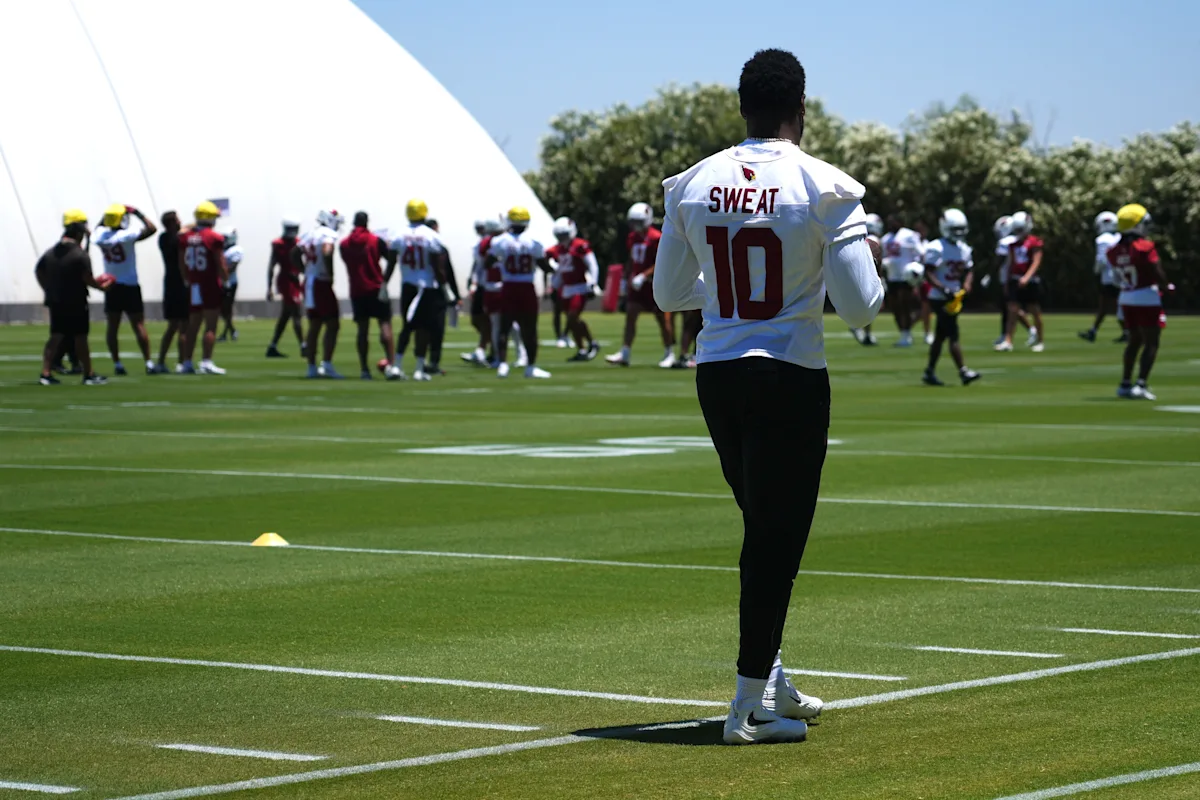
He thinks they should trade pass rusher Josh Sweat.
Sweat was connected to former coach Jonathan Gannon after playing for him in Philadelphia, but the Cardinals fired Gannon in January. Meanwhile, the Cardinals have almost no chance of contending this season given the quality of their three division rivals and the questions they have at quarterback. But they have a chance to turn a player who had 12 sacks last season into a significant 2027 draft pick. A Sweat trade would help any number of playoff contenders.
Sweat would help other teams, especially playoff contenders who need a little extra help off the edge. However, the Cardinals have no sack production off the edge outside of him. Sure, they are going to be bad anyway, but the Cardinals would have to net a really solid pick for a trade to make sense.
We already know the Cardinals have no intentions of trading him, even though there appears to be a level of unhappiness from Sweat. He has three years remaining on his contract and he is arguably their best defensive player.
Advertisement
Advertisement
A trade might make sense for another team or for Sweat individually, but there is no benefit for the Cardinals to trade him now. Come the trade deadline, they probably will net more than they could now, so it would be a foolish decision to make that move before the season, especially when the rest of the outside linebackers combined for 5.5 sacks in 2025.
Get more Cardinals and NFL coverage from Cards Wire’s Jess Root and others by listening to the latest on the Rise Up, See Red podcast. Subscribe on Spotify, YouTube or Apple podcasts.





































You must be logged in to post a comment Login