Some years ago, the chief executive officer of a cybersecurity firm, fresh off the biggest deal of his career, resolved to celebrate as avid golfers do: with a round at a course he’d long dreamed of playing. The name of that course was not Augusta National, which would have been an easier get.
After trying and failing to gain access through his tech-world contacts, the CEO turned to his last and best resort. His firm, the sponsor of a PGA Tour event, gave him a direct line to Ponte Vedra, where a top executive had pledged to help arrange an outing on any course he wished. In went the request, and back came the answer.
Sorry, that’s one place we can’t do.
“So, that gives you a sense of how we’ve operated here,” Randy Fry said the other day.
Advertisement
IT WAS A BLAZING AFTERNOON in June, and Fry was sitting on a shaded patio in the hills about an hour south of San Francisco. Behind him stretched the green folds of a course where he has hosted guests for decades — if only precious few.
Private enclaves are commonplace in golf. But even the stoutest barriers to entry seem quaint compared to those erected around Fry’s home club, The Institute. To call it exclusive leaves a lot unsaid. In the digital age, when even the most sequestered corners of the game eventually surface on a screen, The Institute has remained stubbornly invisible. Until recently, Googling it yielded almost nothing reliable. Images were scarce beyond a few distant drone shots. Unsubstantiated stories filled in for facts. One told of a course so meticulously maintained that fresh sod was laid the instant any divots were taken. Others were old-fashioned tales of woe involving business tycoons and globetrotting list-chasers who’d rapped at the gates and were turned away. Basic course information was elusive. The scorecard showed up nowhere. The architect’s identity was a subject of debate, the guest list a source of speculation.
What most everyone agreed on was that the usual currencies of access held no sway. Neither bloodlines nor bankroll mattered. An invite to play was a lottery-odds long shot. It depended on your having a specific kind of tie to a group of fewer than a dozen people. For everyone else, The Institute was less a private club than a rumor with a zip code, as enigmatic as it was out of reach.
That’s now changed.
Advertisement
“It’s exciting,” Fry said. “The cat’s out of the bag.”
Partly, anyway.
The Institute has not opened its tee sheet to the public. Far from it. But it has lifted its veil of secrecy, slightly, just enough to let a few more people and prying eyes in. The club is looking to add members — a tiny number, thank you — and exploring the possibility of hosting a professional tour event, potentially as early as next year.
All of this is part of a transition that began just before Covid lockdowns and has proceeded in a quiet, deliberate manner suited to the property’s reputation and the personality of the man spearheading the shift.
Advertisement
At 68, with white hair crowning a sun-ruddied face, Randy Fry has the tall, sturdy build of the tight end he once was and the self-assured mien of the executive he is. He has, for decades, steered clear of publicity. Before last month, he’d never spoken on the record about The Institute.
“To know me is to know that I don’t walk into a room and tell people who I am,” Fry said. “I just lay low. I listen. People ask me what I do, I say, ‘I’m semi-retired.’”
For much his career, he kept busy with Fry’s Electronics, the retail juggernaut he built with his brothers, John and David, using seed money from the sale of Fry’s Food and Drug, a supermarket chain their father co-founded and ran. From its birth in 1985 with a single store in Sunnyvale, Calif., Fry’s Electronics expanded to 36 locations in nine states, accounting, at their peak, for estimated annual sales of $3.2 billion. In the emergent digital age, the stores were fixtures of the zeitgeist, beloved by computer nerds and garage tinkerers, and promoted through near-ubiquitous radio ads whose tagline — “The best buys are always at Fry’s. Guaranteed!” punctuated by laser-gun fire — became a meme before “meme” entered the mainstream.
Gradually, then suddenly, business cratered. The rise of online shopping signaled trouble. Box-store sales sagged. In 2021, struggling in a retail landscape reshaped by Amazon, Fry’s Electronics folded and its outposts went dark.
Advertisement
But they left a grassy legacy behind.
The Institute is finally cracking open its gates.
Leo Sens/GOLF
ALONG WITH EARLY LESSONS in Business 101, the three Fry boys had received a childhood introduction to golf. Their father loved the game and sponsored the Tour pro Jackie Cupit, who would stay with the family when competitions brought him to Northern California.
“We grew up with golf all around us,” Randy said.
Advertisement
During college, at Santa Clara University, he mothballed his sticks, playing one year as a walk-on tight end before turning to crew. He picked up his clubs again after graduation but played only sporadically. Though he enjoyed the challenge and the recreation, he came to see another purpose for the game.
At many of the most exclusive golf clubs, deal-making is discouraged. Randy and his brothers flipped that script, setting out to build a course expressly for that purpose: a luxe retreat whose sole reason for existing was hosting clients. For that, they needed land, which they found in Morgan Hill, near San Jose, on a site once occupied by the Flying Lady, a giant aviation-themed restaurant, museum and resort with a modest nine-hole course beside it. When the Flying Lady went bankrupt in 1994, the Frys bought the property. Two years and $22 million later, The Institute welcomed its first rounds.
There was no ceremony, no ribbon-cutting. In wider industry circles, though, there were whispers. Jeff Sanchez, a Bay Area-born golf professional, first caught wind of them in the late 1990s, while working at a resort in the Carolinas.
“You heard about a handful of people that got to play,” said Sanchez, who now serves as The Institute’s general manager. “Stories about walking the fairways with caddies and these elegant meals after golf. You weren’t sure if they were real stories or if that was really happening.”
Advertisement
It was — on an extremely limited basis. The club’s policy was simple and restrictive. Aside from Randy, John and David Fry, eight top Fry’s executives were entitled to bring guests, but only if those guests were deemed important clients. Whether a candidate met the threshold was determined by the Frys. Without their sign-off, the answer was no — frequently delivered to people unaccustomed to hearing that word.
“The cat’s out of the bag,” Randy Fry says of his club.
Leo Sens/GOLF
As for those who cleared the bar, they found that “yes” could be disorienting, too. Take the Panasonic CEO. Invited for a round in the years before the iPhone existed, he arrived to find an empty parking lot, a desolate locker room and a host who explained, matter-of-factly, that they would be the only group on the property. For a course that averaged roughly eight rounds a week, that was not unusual. Still, the CEO was gobsmacked. As Randy Fry relays the story, the executive surveyed the silent, immaculate grounds, then announced that he would have to leave immediately. “I have to go buy a camera,” he said. “No one is going to believe this.”
Adding to the mystique was the club’s non-golfy name, which hinted at its intended dual purpose: It was meant to double as the new headquarters of the American Institute of Mathematics, which John Fry established to further research and education in the field. Plans included designs for a 164,000-square-foot clubhouse called the Castle, patterned on the Alhambra in Spain, a 13th-century marvel of Moorish engineering. Work crews went so far as to dig a giant hole for an underground parking garage that would sit below the Castle, where, as the Frys envisioned it, golf operations would share space with brainiacs engaged in high-brow cogitation.
Advertisement
Construction stalled, though, in the wake of tragedy. In 2010, a pipeline explosion in the South Bay city of San Bruno killed eight people. Due to the nearby location of two major gas lines, PG&E filed a lawsuit to stop the project. The case was settled 12 years later with a mutual walkaway. The giant hole was filled in and The Institute built a par-3 course called the ‘little i’ instead.
That marked a change, but it wasn’t the club’s most significant shift. For years, Fry’s Electronics more than justified the existence of the course and the millions of dollars required to maintain it. Given the business sums at stake, the balance sheet fell heavily in the brothers’ favor.
“If we were doing, say, $400 million with a vendor, and we could shave off three percentage points, and you times that by 40 vendors, next thing you know, you’re way ahead of the game,” Randy said. “And they just can’t wait to come back the next year and make another deal.”
Nothing, however, lasts forever. The Frys weren’t blind to that. As early as 2011, they’d begun to contemplate a different future for The Institute, with functions that extended beyond business. There was talk of morphing into a members club and maybe staging a PGA Tour event, which would not have been a stretch. At the time, Fry’s was the title sponsor of the Frys.com Open, which, after stints in Las Vegas and Arizona, had moved to Cordevalle, a 10-minute drive across the valley from The Institute.
Advertisement
Ultimately, it was determined that the course wasn’t yet ready for the big stage; its tournament infrastructure needed work. But that was then. If all goes as planned, the club will soon be holding a coming-out party.
“I’m not nervous about exposing The Institute,” Randy said. “I think it’s time.”
Which invites the question: What is there to see?
High points on the course give way to long, unspoiled views.
Channing Benjamin
Advertisement
THE ENTRANCE TO THE INSTITUTE sits a few miles and several turns off Highway 101 in Morgan Hill, where a narrow road dead ends at a security gate. Affixed to it is the club logo — a curvy lower-case “i” of the kind used in mathematical notations. Enter an access code and you’re in, up a hill and around a corner to a parking lot beside a white building with green trim, a color scheme reminiscent of the one found at the end of Magnolia Lane.
It’s one of multiple Augusta-like touches. The course itself spills across ample shifts in elevation, its layout ornamented with creeks and ponds and outsize alabaster bunkers. Pine trees line many holes — since its inception, the club has planted more than 25,000 trees — their lower branches trimmed to allow for swings, the ground beneath them strewn with pine straw brought in from Georgia. Conditioning, a point of pride from the start, has been taken to Masters-level refinement by Brad Owen, the former longtime Augusta National superintendent, who came aboard as a consultant in 2025, along with former USGA agronomist Adam Moeller.
Alister MacKenzie, who co-created Augusta with Bobby Jones, did not design The Institute. But neither did Robert Muir Graves nor Damian Pascuzzo, as online posts alternately assert. Those architects provided guidance, but, according to Randy Fry, the routing was dreamed up by his brother, John, and an associate, Steve Sorenson. In recent years, Bruce Charlton of Robert Trent Jones Jr.’s design firm, has been brought on to help with modifications.
“There is always something to do,” Randy said. “We will never really be finished.”
Advertisement
John Fry lived on property during construction and for years after, serving as a driving force behind the operation. But he has since relocated to Florida, closer to a golf project that the Frys are developing in the Bahamas. David Fry is an active Institute member but does not take part in club governance. Of the siblings, Randy is the most involved in the day to day. The head of the club’s three-person board, which includes John and a prominent Silicon Valley member, he drives down most mornings from San Francisco to tend to details large and small. He plays once or twice a week, shooting in the 80s when his form is right.
***
ON A RECENT JUNE AFTERNOON, Fry and a guest constituted the lone group on the course, joined by two caddies. Club policy calls for walking and for each golfer to have his own looper. Fry himself has a personal rule, which he cites as a refrain to guests.
“Whoever has the most fun wins,” he said. “That’s the game.”
Advertisement
At 441 yards, with a yawning fairway bunker on the left, The Institute’s 1st hole is a formidable test and a fitting introduction to a gut-check opening stretch that asks a lot of the driver. The back nine poses a different sort of challenge with what Jeff Sanchez describes as “the television holes” — water-laden and rich in risk and reward. Highlights include a par-5 14th that emulates the 13th at Augusta with its dogleg bend and crossing creek. The par-3 that precedes it so closely resembles the 12th at Augusta that a prominent golf-industry figure requested that the front bunker be removed to keep the hole from looking too much like a clone. The Institute obliged.
The design includes a nod to the 13th at Augusta National.
Leo Sens/GOLF
For all its allusions to other layouts — the green on the downhill, dogleg-right 10th is long and hourglass-shaped like the 4th at Spyglass, though set at a different angle, while the approach to the par-4 15th has steep false front inspired by the 10th at Shinnecock — The Institute is not a replica course. It has a Northern California character of its own, stitched into a live-oak studded canvas along hills that go from emerald to gold as spring gives way to summer. Nor, though, is it of the minimalist style that sets the hearts of today’s architectural tastemakers aflutter, with its celebration of tawny turf and sandy wastes and rustic, jagged edges. It is not a likely candidate for the World Top 100. But it is a stand-alone experience.
Fry, for his part, does not seem overly concerned with rankings. He is, however, consumed with details. He speaks at length of trees the club has planted, drainage work beneath a fairway, bunker edges and green runoffs that took painstaking efforts to perfect, among other projects that occupy his days. He is equally attentive to the course’s stories. Along the left side of the 15th hole sits a ranch house where John Fry lived during the club’s early years and where Tiger Woods stayed when he played the 2011 Frys.com Open at nearby CordeValle. (The club currently has six bedrooms, with eight more to come). Beside the finishing hole, a multi-colored flower bed has been planted in the shape of the club’s “i” logo, an idea Randy borrowed after seeing a similar display at Valderrama.
Advertisement
As golfers make the turn, the club treats them to another flourish. Staff members set out a linen-covered table with a mid-round snack and drink — on this recent afternoon, tempura asparagus and a beet-and-ginger energy shot — part of a culinary program that the club considers a calling card on par with its conditioning and exclusivity. The cuisine keeps coming after the round with an elegant, multi-course lunch.
The meal is served in a rotunda-shaped clubhouse that, in an earlier life, was a church. The Frys preserved its bones but repurposed the sanctuary into a light-filled space with windows, sliding glass doors, a kitchen and an intimate wood-paneled locker room. There is also a small pro shop — the hats on sale have math formulas scribbled underneath their brims — and an office for the longtime head professional, Greg Fitzgerald, an amiable, bearded redhead who has been likened lightheartedly around the club to the Maytag repairman — the handyman of TV commercial fame whose phone never rang because nothing ever broke. The joke being that Fitzgerald wasn’t exactly running himself ragged at a place that got so little play.
“Early in my career, when I I worked at a resort in South Carolina, our target on a good day was 200 rounds,” Sanchez said. At the same time, he noted, The Institute was hosting 250 rounds a year.
The math has long been different for the maintenance staff. Around 50 groundskeepers help tend to a course that might not see that many loops in a month.
Advertisement
***
THE METICULOUS CARE CONTINUED uninterrupted even after Fry’s Electronics shuttered in 2021. The course had lost its original business rationale, but by then it had evolved into something else. Just before the pandemic, the club admitted its first members — a class of 32 who each paid an initiation fee of $1.
“For the members we seem to attract, I don’t think money is that important,” Sanchez said. “It’s the experience they’re interested in.”
The $1 fee was symbolic — a thank-you of sorts to those who had helped shape the culture of the club. There was also an understanding that dues would rise. They have.
Advertisement
Existing members were able to convert to equity memberships for $150,000, a price that Fry said will climb closer to $200,000 as the club approaches its target of 50 members. Those ranks might eventually grow to 75, and Fry expects dues to rise with them,
Membership isn’t the club’s only ambition. Discussions about hosting a professional tournament have resumed, and the infrastructure that once wasn’t is now in place. Land beside the 4th hole has been graded for what could serve as a television compound. The club owns another 40 acres across the road that could accommodate tournament parking. Modular buildings that housed tournament operations during the Frys.com Open have been moved to the property, where they overlook the 18th green and the gentle waterfall that flanks it. Though they declined to discuss which tour is the leading candidate, Fry and Sanchez said there’s a chance the event will come together as early as next year.
In 2023, the club staged something of a dress rehearsal when it hosted an NCAA regional final. Given The Institute’s cloaked reputation, one might have expected that event to set off a wave of publicity. But it passed with surprisingly little notice.
Now the club is inviting a closer look. There’s a risk in that. For decades, The Institute’s greatest claim to fame was the mystery around it. It existed, for most people, in imagination only. Peel back the veil, and reality is left to compete with myth.
Advertisement
Fry knows as much. He just doesn’t seem to mind.
He’s not nostalgic for the days when the course sat empty except for the occasional client outing. Adding members — even just a smattering — and staging a big-time tournament might dispel the mystique around The Institute. But that has been replaced by what Fry sees as a different kind of magic.
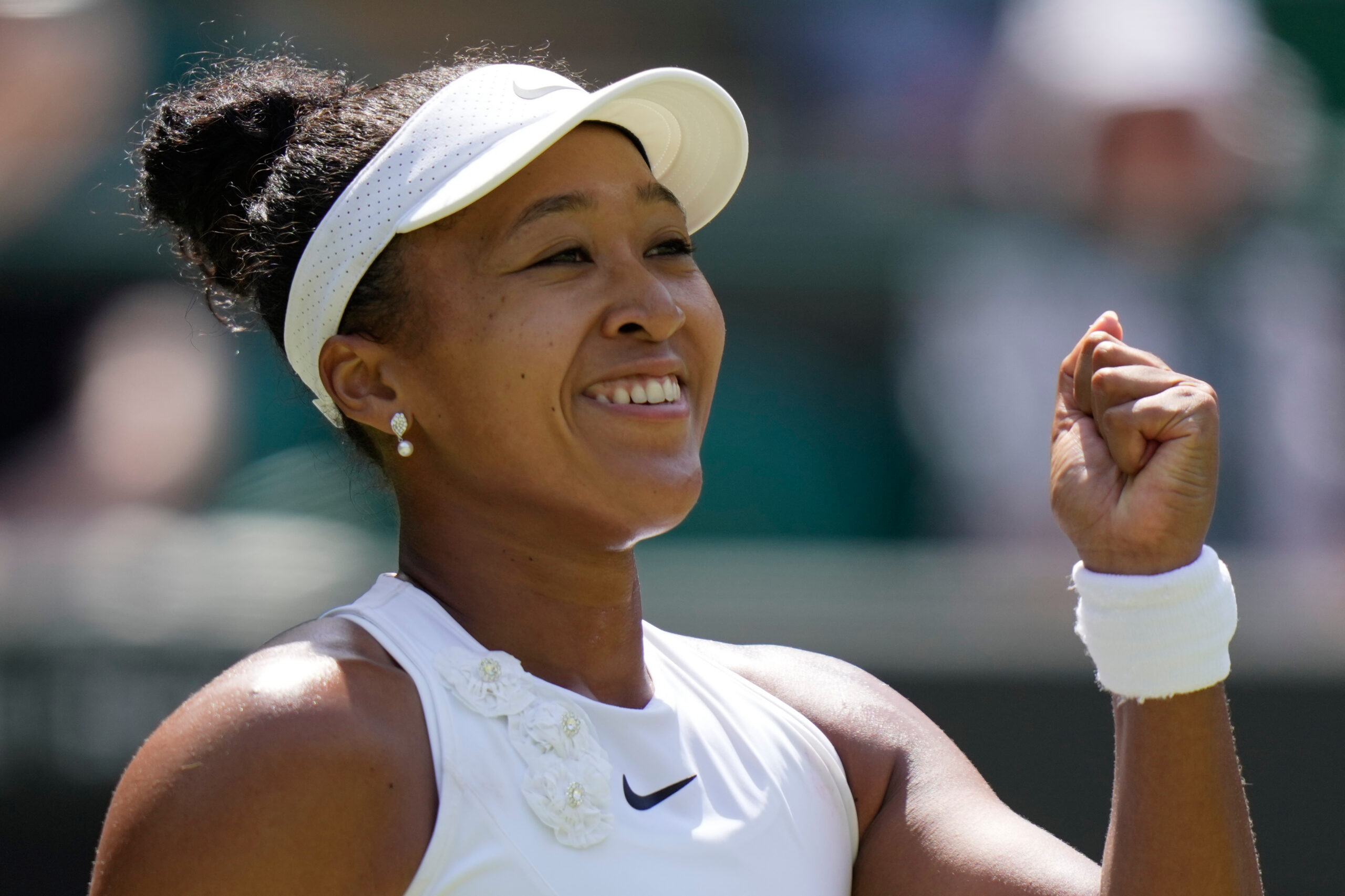
Naomi Osaka of Japan celebrates winning the third round women’s singles match against Daria Kasatkina of Australia at the Wimbledon Tennis Championships in London, Friday, July 3, 2026.(AP Photo/Brian Inganga)
LONDON–Japan’s Naomi Osaka ended her long wait to reach the Wimbledon fourth round for the first time with a 6-1, 6-3 win against Australian Daria Kasatkina on Friday.
Osaka has caused a stir at Wimbledon with her eye-catching outfits, but the 28-year-old is finally stealing the spotlight with her performances as well.
Article continues after this advertisement
Advertisement
After advancing no further than the third round in her five previous main draw appearances at the All England Club, Osaka finally made it to the last 16 with a dominant display on Court One.
She needed just 65 minutes to dispatch Kasatkina, setting up a fourth-round clash against world number one Aryna Sabalenka or former French Open champion Jelena Ostapenko.
“I’m really happy. In my career I’d never won on this court. I’m just glad to have made a really good memory here,” Osaka said.
“I’ve played a lot of matches on grass over the last few weeks. I’m feeling really confident. I hope I’m able to get further and further.”
Advertisement
Article continues after this advertisement
Osaka’s habit of wearing haute couture costumes on to court before removing them to play in her usual tennis attire has been the talk of Wimbledon.
She earned headlines with a kimono-inspired outfit prior to her first-round match and wore a long wedding-dress train for the second round.
And once again she struck a pose with her latest creation — an all-white layered Japanese ceremonial-style kimono — before facing Kasatkina.
Advertisement
Article continues after this advertisement
The outfit, by Tokyo fashion designer Hana Yagi, featured cherry blossoms in another nod to her native Japan.
She also wore a jelly-fish themed dress at the Australian Open this year and an Eiffel Tower-inspired costume at the recent French Open.
Osaka’s tennis has been as memorable as her cat-walk moments.
Osaka has maintained that grass-court excellence in south-west London, raising the prospect of a genuine challenge for her first Wimbledon title.
The four-time Grand Slam champion cruised to straight-sets wins over Elsa Jacquemot and Anastasia Gasanova before routing Kasatkina.
Osaka, the 14th seed, had only reached the last 16 at a Grand Slam twice since winning the Australian Open in 2021.
Advertisement
Having lost to Sabalenka in the fourth round of the French Open in June, Osaka is rounding into form just in time for a potential revenge mission against the Belarusian.
Your subscription could not be saved. Please try again.
Your subscription has been successful.
Advertisement
She was far too strong for world number 65 Kasatkina, whose ranking has slumped over the past 18 months due to poor form while she battled with a nagging hip injury.
The latest episode of Tour Validated was a personal one for me. I got to sit down with my dear friend Johnny Thompson, who is the current tour content manager at Callaway Golf. (Yes, my old gig.) Thompson is becoming known for his content, but on the Tour range, he’s still one of the most respected Tour fitters in golf. His wealth of knowledge and stories around working with the world’s best is unlimited.
We got to talking about Tour R&D — and the convo pivoted to Xander Schauffele. This is cool.
Let’s zero in on a specific part of that conversation that absolutely blew up my text messages after the episode aired: the real backstory of Schauffele’s driver struggles and how it forced Callaway to invent the Triple Diamond franchise.
For the gear junkies who think tour players just snap their fingers and magic happens, this is your ultimate reality check.
Advertisement
“>
The initial struggle
When Schuaffele first came over to Callaway, everyone assumed it would be an overnight, plug-and-play fit. It wasn’t. In fact, that first year was an absolute grind behind the scenes.
The truck was trying to fit him into the existing retail structures, running through the standard Rogue and Flash heads. On paper, everything looked fine. If you looked at the launch monitor, the ball speed was there, the launch was there, and the spin was exactly where the computers wanted it.
Advertisement
But out on the golf course, Schauffele was fighting it. He couldn’t find his start and fall line, which is HUGE for him. If it’s proper, it represents that most of the other tiles on a TrackMan are sound. Fitters know there is more to it than that, but Tour players are typically feel and sight oriented so that part is a non-negotiable.
Said Thompson: “It stung, man. We’d come home from weeks and just know we weren’t there with him with the current driver we had.”
Schauffele is a hyper-precise feel player who relies on an incredibly specific visual relationship with the face at address. If the club doesn’t sit on the turf perfectly, his brain subconsciously fights it. It got to the point where they built him a custom 440cc head just to try to trick his eye, but the consistency still wasn’t there. Schauffele actually went back to his old gamer from a previous OEM late in the year just to find comfort.
The optical illusion on the face — it’s not all numbers
So what was the actual problem? Through months of gathering data and getting feedback from Schauffele and his dad, Stefan, the R&D team diagnosed a visual conflict in how traditional drivers were being shaped.
To make a driver look appealing to a massive cross-section of players, standard heads often feature a blend of different visual vectors:
Advertisement
The bottom sole of the toe is rolled slightly “shut” or “squared-off”
The actual face angle line remains square
The top line is peeled away to look slightly open
For a normal amateur, you don’t even notice it. But for a world-class ball striker looking down at address, it was an optical illusion. If Schauffele looked at the toe, it looked shut; if he looked at the top line, it looked open. He was getting conflicting messages before he even started his takeaway. If Schauffele likes the “open” look, Jon Rahm is the polar opposite, he wants it shut. That makes sense — Schauffele is a drawer of the golf ball primarily, and Rahmbo is a cutter.
Callaway went back to Carlsbad and spent eight months building a tour-only prototype designed specifically to fix Schauffele’s eye.
They threw out the old face-shaping parameters and made the club face completely linear. They aligned the bottom sole line, the middle face vector and the top line perfectly parallel. When you set it on the ground, it sat PERFECT or linear. No illusions. No tricks.
To track these ultra-linear, low-spin heads on the truck, they stamped them with three small diamonds.
Validation in Maui
The confirmation of that entire process came at the season-opening event in Maui. Xander had put the fresh Epic Flash Sub Zero Triple Diamond prototype in the bag for its competitive debut.
Advertisement
On Sunday, he shot a final-round 62 to come from behind and win the tournament.
As the reps (and the company) watched on, seeing a club that caused you months of work win in its very first week out is the ultimate validation. It proved that the R&D shift worked. High-speed players across the tour immediately started demanding the same linear shape, and Callaway added the Triple Diamond to the retail lineup the following year.
Every time you see that Triple Diamond logo on a retail rack today, remember: It exists because a world-class player refused to compromise on how his driver sat on the grass.
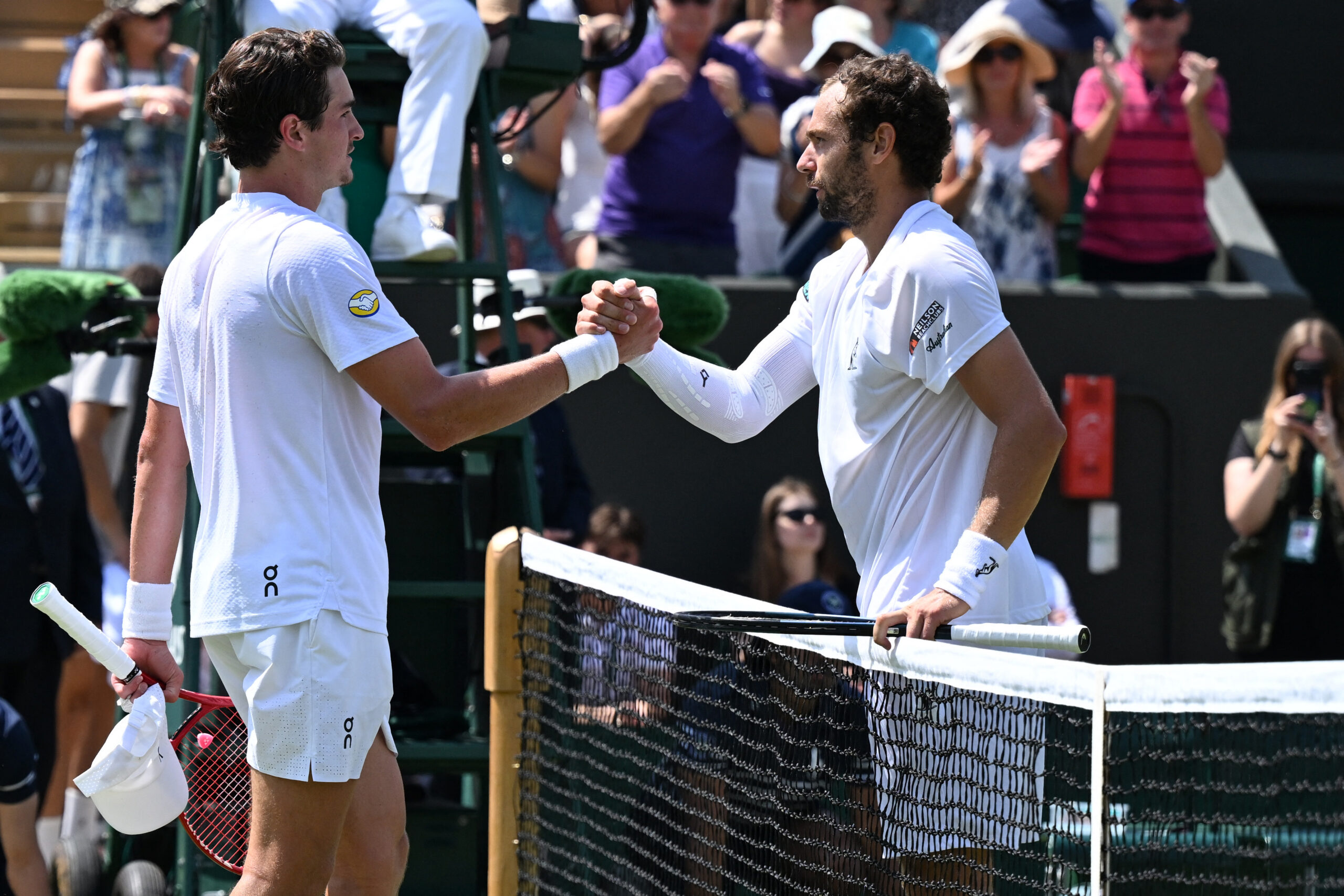
Russia’s Roman Safiullin (R) is congratulated by Brazil’s Joao Fonseca for winning their men’s singles third round tennis match on the fifth day of the 2026 Wimbledon Championships at The All England Lawn Tennis and Croquet Club on July 3, 2026. (Photo by Kirill KUDRYAVTSEV / AFP)
LONDON— Russian qualifier Roman Safiullin wiped away tears after beating Brazilian rising star João Fonseca 6-3, 6-3, 6-3 to reach the fourth round at Wimbledon on Friday.
Safiullin, ranked No. 132, dealt with a knee injury last year but this week has eliminated two seeded opponents at the All England Club. He surprised 12th-seeded Andrey Rublev in the first round. Fonseca was seeded No. 24.
Article continues after this advertisement
Advertisement
The 28-year-old Safiullin, a Wimbledon quarterfinalist in 2023, became emotional when he described his journey back.
“After the U.S. Open, I had to stop — for treating my injury,” he said in an on-court interview. “That time was super tough. Even let’s say half a year ago I didn’t know if I will be able to be back.”
Safiullin then paused and used his shirt to wipe away tears as fans applauded on No. 2 Court.
“I’m super happy to be back here,” he added.
Advertisement
Article continues after this advertisement
Safiullin will face either Novak Djokovic or Arthur Rinderknech for a spot in the quarterfinals.
Djokovic and Rinderknech were playing on Centre Court. Later, defending champion Jannik Sinner faces Jenson Brooksby of the United States on No. 1 Court.
In the women’s draw, top-ranked Aryna Sabalenka plays Jelena Ostapenko later on Centre Court.
Advertisement
Your subscription could not be saved. Please try again.
Vaibhav Sooryavanshi and Morne Morkel (Image credit: BCCI)
NEW DELHI: India bowling coach Morne Morkel has made it clear that the team management will continue to back openers Sanju Samson and Abhishek Sharma, despite growing calls for 15-year-old Vaibhav Sooryavanshi to make his international debut.Sooryavanshi has been one of the biggest talking points since being picked for India’s T20I squads against Ireland and England following his sensational IPL season. While Abhishek has scored a half-century and a 49 in his last three innings on the ongoing UK tour, Samson has struggled, managing scores of 5, 0 and 1.Even so, Morkel said the team believes in showing faith in players who have already delivered for India.“I think we just need to respect the fact that we’ve got the number one batter, or we had our number one batter in T20 cricket, Abhishek Sharma. You know, Sanju was the player of the World Cup,” Morkel said on the eve of the second T20I against England.“He (Samson) had a great IPL. So, I think as a coaching staff, it’s only fair to show faith and back your players. Yes, there’s a young man knocking on the door and it’s exciting. But I reckon for not just those two players at the top, but for the rest of the group, it’s a good sign that we show that we back you guys,” he said.
‘We don’t want to bat players out of position’
Morkel said selecting the playing XI is not simply about bringing in a new player. He stressed that the coaching staff also wants to avoid changing players’ batting positions.“In a day, it’s about putting performances on the board. That is the key. But we also don’t want to think too much and bat other players out of positions. So, I reckon it’s not straightforward, Ok, let’s play (Sooryavanshi).“It’s a matter of backing some of the guys who’ve won World Cups, who’ve done really well for you in tough situations, and then also from there, build and see how we can structure and make our top order as good as possible in these conditions,” he explained.
‘When he gets an opportunity, he’ll be ready’
Although Morkel did not reveal when Sooryavanshi could make his India debut, he praised the teenager for settling into the dressing room quickly.He also said the youngster has impressed everyone during training despite being only 15 years old.“I think he’s filled in very, very well. You know, I think if you follow the boys on Instagram, there’s already a lot of photos being posted, with him especially. At the nets as a 15-year-old at the international stage, it can be intimidating.“But, I think just the couple of nets we’ve had, it’s been very impressive. And, you know, we’re all excited to see how he goes. When he gets an opportunity, I’m pretty sure he’ll be ready. But in terms of coming into the squad and fitting in, it’s been very smooth,” he said.
Advertisement
Morkel praises Prince Yadav
The former South Africa fast bowler also had words of praise for young pacer Prince Yadav, who has taken six wickets in his first three international matches.Morkel revealed that he had worked with Prince during his time with the Lucknow Super Giants and had noticed his talent even then.“I was quite lucky to work with Prince while I was with Lucknow Super Giants. Prince at the time was a net bowler and there he was already marked as somebody who was highly skilled. I’m just blown away by how calm he keeps things.“I think he’s also a guy who is always looking for ways to improve his game. But at the end of the day, it’s about execution. If we talk about death bowling and that middle phase, how he reads the play, what decisions he makes under pressure and then executing that, for me, it’s great to see,” he noted.
Harshit Rana impresses after injury
Morkel also praised fast bowler Harshit Rana, saying it was encouraging to see him bowl with intensity after returning from an injury layoff.With the second T20I against England set to be played at Old Trafford, the India team management appears ready to continue backing its experienced players, while keeping a close eye on exciting youngsters like Sooryavanshi for future opportunities.
Matteo Berrettini’s former girlfriend, Vanessa Bellini, shared an emotional message about her struggles and the support she received from her loved ones amid the rumors of the Italian tennis player dating South Korean DJ Peggy Gou. Vanessa and Berrettini first met at a concert in Turin, Italy, where the Italian dancer was performing for rapper Marracash.
They both quickly connected and began dating before going public in October 2025. The Italian tennis player and dancer were seen enjoying a romantic beach getaway on a yacht in April 2026. Bellini also shared a warm message for Berrettini when he celebrated his 30th birthday on April 12, 2026. She was also seen cheering for him during his 2026 French Open appearance in May.
Thanks for the submission!
Advertisement
They reportedly broke up in late June. Soon after their breakup, rumors of Berrettini dating Gou started making rounds on social media after a few fans noticed Berrettini liking several of Peggy Gou’s recent Instagram posts. As the speculations about the tennis player and the DJ continued to grow, Bellini admitted that she had been struggling lately.
Advertisement
She shared a picture of herself crying, stating that although she usually posts happy moments, they don’t reflect her real feelings. She strongly wrote that while some people may enjoy seeing her struggle, she is focusing on who truly cares about her.
Peggy Gou is a South Korean DJ based in Berlin. She learned to DJ in London while studying fashion. She rose to fame following the release of her “It Makes You Forget (Itgehane)” song in 2018.
Matteo Berrettini opens up about his approach to injuries and fitness
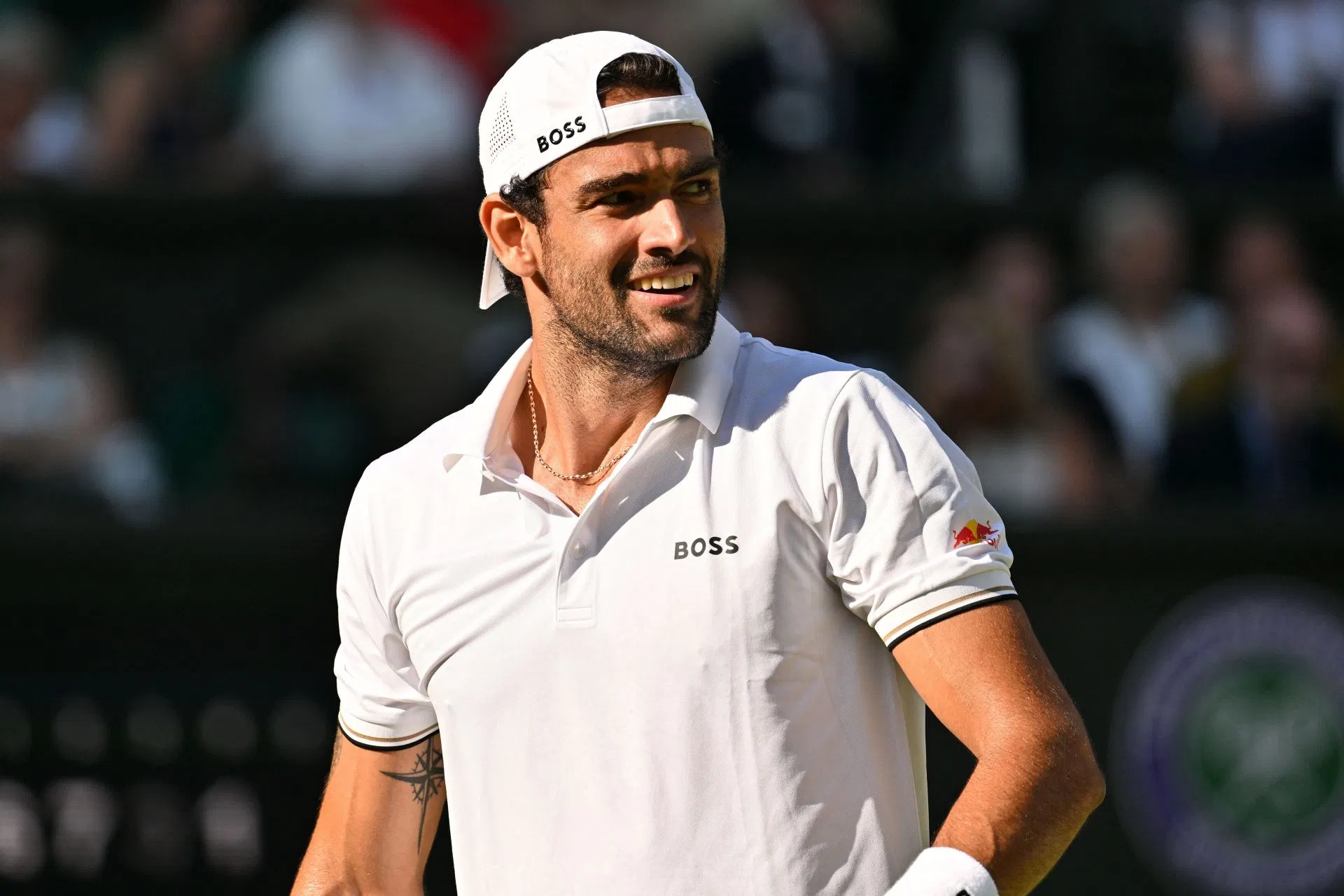
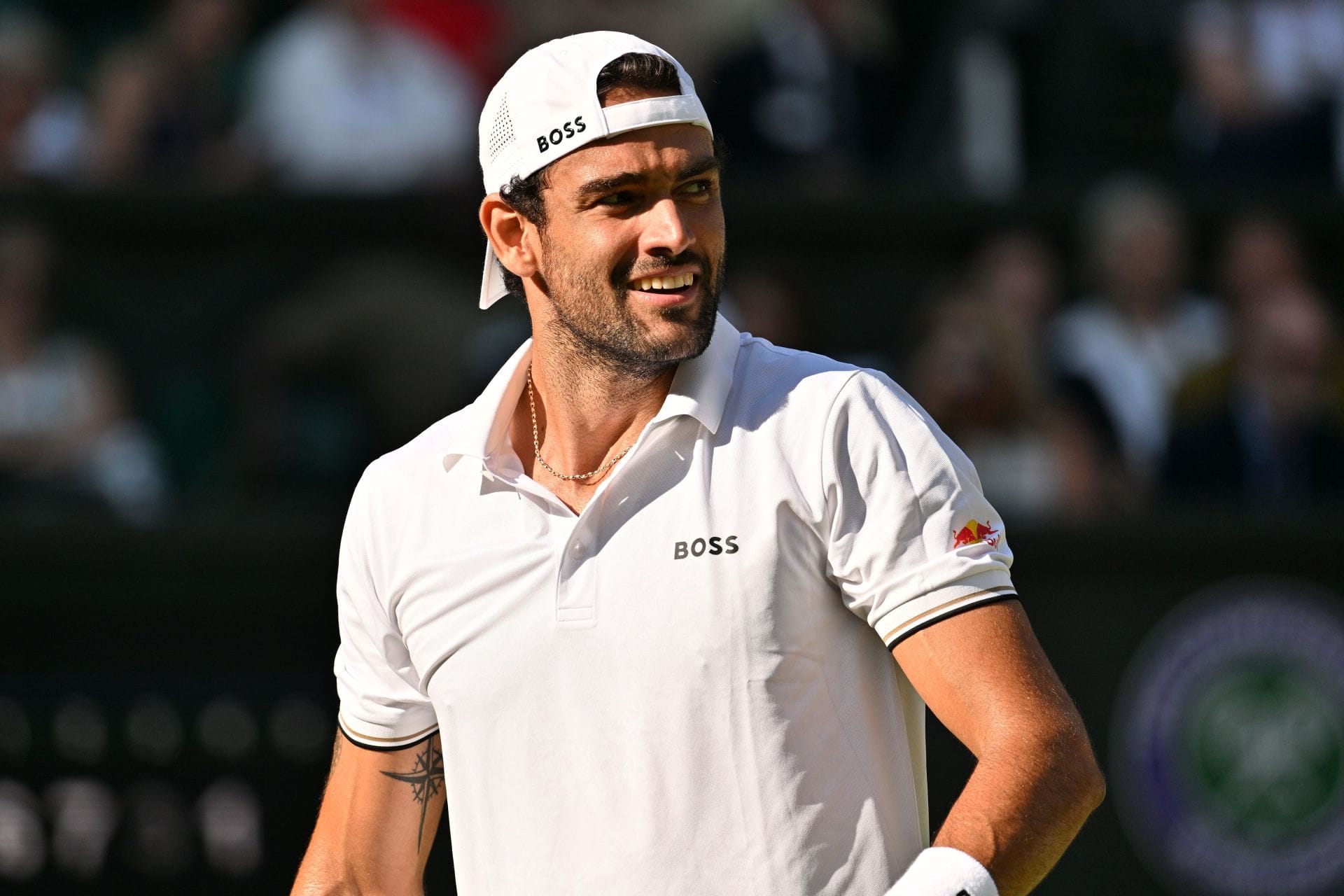
Matteo Berrettini of Italy at The Wimbledon Tennis Championships in London, United Kingdom. (Photo via Getty Images)
In a press conference at the 2026 Wimbledon Championships, Matteo Berrettini opened up about the transition in his approach towards injuries and fitness, stating that earlier he used to be concerned about staying healthy and worrying about injuries. However, now he focuses on giving his body rest when it needs to so as to make a strong comeback.
““For a long time I was just thinking about I want to be healthy, I want to feel free to serve, I don’t want to think about my body. Happiness goes through that, the fact that I don’t have to think about my body,” he said.
“Even if something is coming, I know it’s part of the journey. Before I was looking at it something that shouldn’t happen or couldn’t happen. I learned how to accept the fact that sometimes I have to stop, sometimes I have to say no, I can’t do it. This is my body, this is my career. I also know that I can get up. Instead of doing too many ups and downs, I’m a little bit more stable and balanced. I think this is really important.”
Matteo Berrettini reached the third round at the Wimbledon Championships, where he will face Grigor Dimitrov.
NEW DELHI: The excitement around Vaibhav Sooryavanshi continues to grow as India prepare to face England in the second T20I of the five-match series at Old Trafford on Saturday.The 15-year-old batting sensation was included in India’s squads for the T20I series against Ireland and England after a sensational IPL season. However, he is still waiting for his international debut. While fans and experts continue to call for his inclusion, India’s 1983 World Cup-winning captain Kapil Dev has urged everyone not to put too much pressure on the youngster.“I haven’t seen him play much. He is a huge talent, without any doubt. But I think we are talking too big about him. At the moment, give him some time. Don’t hype him so much. He is young at the moment and doesn’t have the age to understand everything,” Kapil Dev told Sports Tak.
‘As talented as Sachin and Virat’
Kapil believes Sooryavanshi possesses extraordinary talent and even compared him with two of India’s greatest batters – Sachin Tendulkar and Virat Kohli.However, he said the teenager still has to prove himself in the longer formats of the game.“If you talk about talent, yes, he is as good as Sachin (Tendulkar) and Virat Kohli. This much talent is visible in him, but only in T20 cricket. In the rest of the formats, he will have to prove himself,” he added.
‘Don’t count his age, count his ability’
Kapil also backed the youngster for an India debut if the team management believes he is ready.Drawing parallels with Sachin Tendulkar’s early international debut, the former India captain said ability should matter more than age.“He is fabulous in T20s. You would not find even one per cent of players making such an impact at such a tender age. We can talk about Sachin because he too was very young when we played him. We kept thinking if it was too early, but if you look at history, you fear you might be too late. If he is ready, don’t count his age, count his ability,” the former India captain said.Sooryavanshi scored 776 runs at a remarkable strike rate of 237.30, almost single-handedly taking Rajasthan Royals into the playoffs. His performances earned him a place in India’s squads for the T20I series against Ireland and England, as well as the Asian Games.Despite being selected, Sooryavanshi did not feature in either of the two T20Is against Ireland.Ahead of both matches, fans and former cricketers debated whether India should hand him his debut. Those calls became even louder after India suffered a shocking 2-0 series defeat, with the top order struggling in both games.The demand for Sooryavanshi’s inclusion continued into the England series as well.However, the 15-year-old remained on the bench in the rain-hit first T20I at Chester-le-Street, which ended in a no-result after persistent rain.
Advertisement
All eyes on Manchester
With the series still level after the washout, attention has now shifted to the second T20I at Old Trafford in Manchester.Whether India finally hand Sooryavanshi his much-awaited debut remains one of the biggest talking points ahead of Saturday’s clash.
Golf is a famously frustrating, stressful game. Like the old joke says: It’s called “golf” because all the other four-letter words were taken. But, #$%!, it doesn’t have to be that way — at least not so often. Maybe the smoothest of the smooth are born that way. The rest of us can still produce our best selves — free flowing — at the best times by following a few simple tips.
Check out below for nine tips you can lean on to shoot lower scores.
“>
Advertisement
1. Perfect the grip
Everything in golf, including effortlessness, starts with a good grip. Choking the club to death obviously isn’t the way to begin a buttery move — but neither is a soft grip that’s more in the palms. For effortless oomph, you need to hold the club more in the fingers, which activates the wrists, a key power source. Added bonus: Doing so will help all the slicers out there to square the clubface at impact and eliminate the banana ball. Think of it as an effortless double play.
2. Make smarter choices
A stress-free round isn’t a trouble-free round. You’re never going to hit every fairway and green. It’s not the bogeys that raise your blood pressure; it’s the angst of trying (and often failing) to pull off difficult recovery shots. Shot choice greatly affects our agita levels: Taking your medicine with a simple pitchout or layup instead of attempting the miraculous keeps golf a walk in the park and doubles and triples off the card.
3. Have a reliable warm-up
Does working yourself into a lather sound like the road to chill? The secret may be in the dirt, as Ben Hogan said, but beating lots of balls is for practice sessions, not for planting the seeds for a stressless round. Keep your warm-up to one bucket, maybe even a small one, and focus on being target-oriented. It may also help to make some practice swings with your eyes closed to feel your motion and get into a relaxed groove.
4. Develop a waggle
Sprinters burst out of the blocks, but an effortless swing isn’t a sprint—it’s more like a leisurely jog, in which you shake out your arms and legs before setting off. Develop a personalized movement as part of your pre-shot routine so that you’re not jolted from a static position. Whether it’s three little wrist wiggles or miming the first 18 inches of your takeaway, devise something that both relaxes and activates you.
Advertisement
5. Make a full turn …
Think about all the effortless swings that are short and quick … Okay, stop, because you won’t come up with one. (Tony Finau is the exception that proves the rule.) A big, full, complete, majestic, heroic backswing is needed to store the power that you’ll soon make look like rolling off a log. This may entail some gym work on hip and upper-body flexibility; in the meantime, consider lifting your front heel off the ground to help create that needed coil.
6. … then nail the transition
At the top is where so many effortless swings jump off the bridge. After a syrupy takeaway, suddenly the brain screams, “Now kill!” The hands go hurtling down toward the ball, speed is wasted early in the swing and smooth synchronization disintegrates. To keep the nice flow and gradual acceleration that yield easy power, think about pushing into the ground with your legs to start the downswing. Don’t worry about your hands; they’ll do what they need to on their own.
7. Stay balanced in the follow-through
Not to get too Zen master, but it can be hard to make an effortless swing when you’re thinking about making an effortless swing. One way to overcome the dreaded “paralysis by analysis” is to think instead about getting to a very specific follow-through position. At the range, hold that follow-through position for several seconds after each swing. You’ll be surprised how well your body soon reverse engineers an effortless move to get to that spot.
8. Don’t overthink in the sand
For many golfers, greenside sand is like quicksand — the more you struggle, the faster you’re swallowed up. To promote the quick wrist hinge and upright swing that makes escaping the bunker a breeze, do this drill: Stick a tee in the butt end of your grip and, during the backswing, hinge your wrists so the tee points directly at the ball. On your downswing, all you need to do is release that angle and let the clubhead glide underneath the ball to blast the ball out of the bunker.
Advertisement
9. Develop a smooth stroke
Effective putting strokes are repeatable putting strokes. If a jab-and-hit pop stroke works for you, fine. But an effortless, Ben Crenshaw stroke, well, looks like a Ben Crenshaw stroke: It has a longer backswing and a shorter follow-through. This ratio promotes the solid contact that produces effortless power and fewer yippy shorties. Practice a little recoil move soon after impact, which helps shorten the through-stroke and encourages purer impact too.
#WorldCup2026: AI-generated videos of French captain Kylian #Mbappé dressed as a #dictator and giving orders to his teammates have taken over social media – a joke which the French team have embraced by nicknaming Mbappé “Mobut”, in reference to the dictator #Mobutu Sese Seko.
World No. 1 Aryna Sabalenka has called on Wimbledon to reconsider its long-standing ban on dogs inside the All England Club, saying the rule makes it difficult to be separated from her pet during the tournament.
Sabalenka has travelled with her dog, Ash, for much of the 2026 season, but Wimbledon does not allow dogs on site.
While she said she understands the reasoning behind the rule, the Belarusian believes well-trained pets should be allowed.
Advertisement
“I don’t agree with that. I can understand why they made this decision.”
Sabalenka explained that her dog has become an important part of her routine away from the court.
“He really gets attached a lot. But he suffers staying alone. It really hurts my feelings.”
Advertisement
She also described spending time with Ash as a way to relax during tournaments.
“Going to the park with him, walking around, is also like some sort of meditation for me.”
The three-time Grand Slam champion ended her comments with a direct message to the tournament organisers.
“Wimbledon, please, I beg you, let the dogs inside.”
Advertisement
Sabalenka was not the only player to comment on the issue.
Alexander Zverev, who also travels with dogs, said he would welcome a change to the policy, while Coco Gauff took a more balanced view.
Although Gauff said she loves dogs, she believes there are areas where they should not be allowed because of safety concerns.
“I definitely think there’s a time and place.”
Advertisement
She pointed to busy spaces such as gyms and locker rooms, explaining that she had seen several close calls involving dogs around the tour.
For now, Wimbledon has not indicated that it plans to change its policy, meaning Ash will have to wait outside while Sabalenka continues her campaign at the All England Club.
The new competition pits the Six Nations sides against the four Rugby Championship competitors, plus Japan and Fiji, across six matches split evenly between the two months.
Advertisement
The results of those games will determine each of the 12 teams’ seedings for the finals weekend at Twickenham’s Allianz Stadium, with six matches contested over two days and both team and hemisphere silverware up for grabs.
Advertisement
Each entrant will be matched against the equivalent qualifier from the other pool to decide overall placings at the conclusion of a busy year of international action.
Here’s the full competition schedule, and how it will all work:
What is the Nations Championship?
Announced during the 2023 Rugby World Cup, the new competition will be held every other year and replaces the traditional summer tours and Autumn Nations Series. It is designed to add context to the international calendar, with Fiji and Japan invited to join the Six Nations and Rugby Championship sides to form a top 12. Promotion and relegation is planned for the future with the second-tier Nations Cup, though will not take place in 2026.
Advertisement
Advertisement
The entrants are:
Northern Hemisphere: France, Ireland, Scotland, Italy, England, Wales.
Southern Hemisphere: South Africa, New Zealand, Argentina, Australia, Fiji, Japan.
What about the finals weekend?
The first finals weekend will be held at Twickenham on the last weekend (27 to 29) of November. Three days of double-headers will be held at the ground, with the first-placed finisher of the Six Nations sides meeting whoever tops the other pool, and so on and so forth down the rankings.
Advertisement
The winner of that marquee match will lift the first Nations Championship trophy, while whichever hemisphere – a term used loosely with Japan included in the “southern” section and Fiji hosting their games in the United Kingdom – wins more final matches will also be crowned. The 1st vs 1st match is worth two points, with all other matches in the finals weekend worth one.
Advertisement
How can I watch it?
Viewers in the United Kingdom will be able to watch every game on ITV after the free-to-air broadcaster struck a deal to show the competition.
Fixtures:
Southern Hemisphere Series (July)
Round One – Saturday 4 July
New Zealand vs France (8.10am BST, Christchurch)
Advertisement
Japan vs Italy (kick off 9.40am BST, Tokyo)
Australia vs Ireland (11.10am BST, Sydney)
Fiji vs Wales (2.10pm BST, Cardiff)
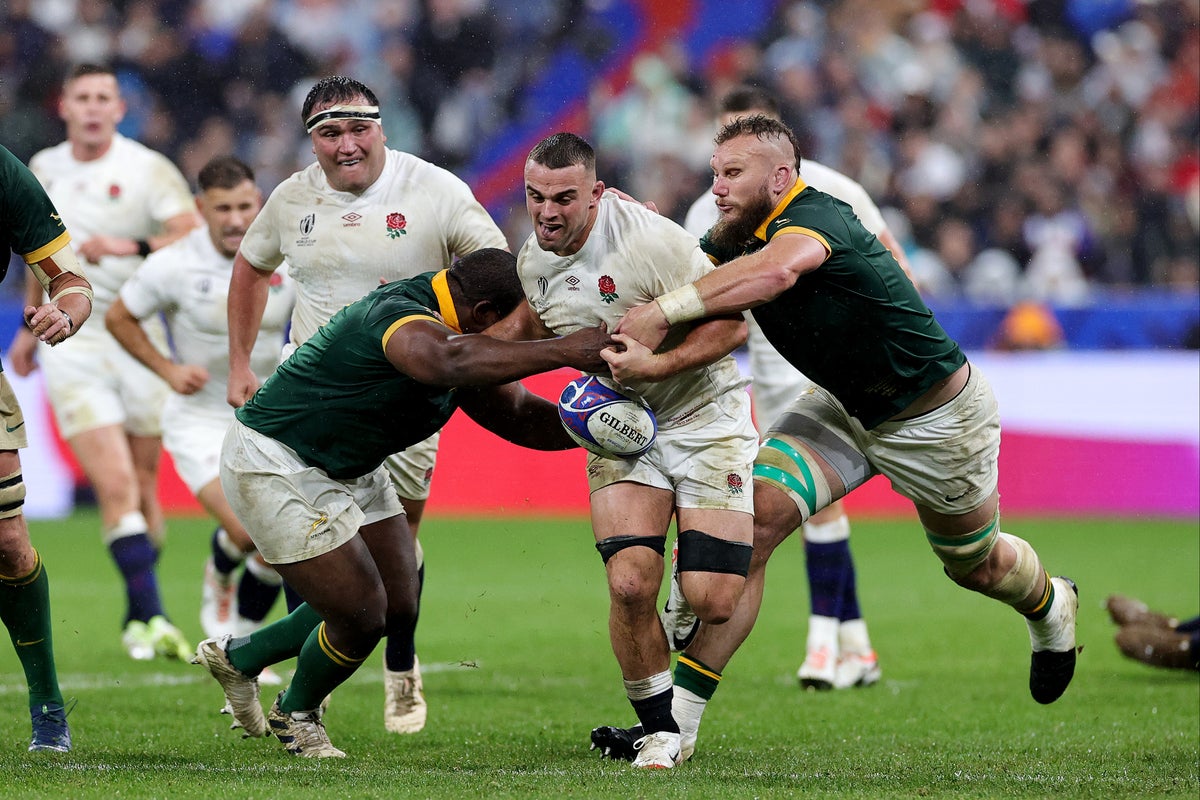
South Africa vs England (4.40pm BST, Johannesburg)
Advertisement
Argentina vs Scotland (8pm BST, Cordoba)
Round Two – Saturday 11 July
New Zealand vs Italy (8.10am BST, Wellington)
Australia vs France (11.10am BST, Brisbane)
Advertisement
Advertisement
Japan vs Ireland (11.10am BST, Newcastle, Australia)
Fiji vs England (2.10pm BST, Liverpool)
South Africa vs Scotland (4.40pm BST, Pretoria)
Argentina vs Wales (8pm BST, San Juan)
Advertisement
Round Three – Saturday 18 July
New Zealand vs Ireland (8.10am BST, Auckland)
Japan vs France (kick off 9.40am BST, Tokyo)
Australia vs Italy (11.10am BST, Perth)
Fiji vs Scotland (2.10pm BST, Edinburgh)
Advertisement
South Africa vs Wales (4.40pm BST, Durban)
Argentina vs England (8pm BST, Santiago del Estero)
Northern Hemisphere Series (November)
Round Four – 6/7/8 November
Friday 6 November
Ireland vs Argentina (8.10pm GMT, Dublin)
Advertisement
Saturday 7 November
Italy vs South Africa (TBC, TBC)
Advertisement
Scotland vs New Zealand (2.10pm GMT, Edinburgh)
Advertisement
Time of France vs Fiji (location TBC) and Wales vs Japan (in Cardiff) TBC



;)
;)
;)
;)























































You must be logged in to post a comment Login