

Sports
BCCI’s Strong Reaction On Rohit Sharma’s ‘Last ODI In Lord’s’ Buzz

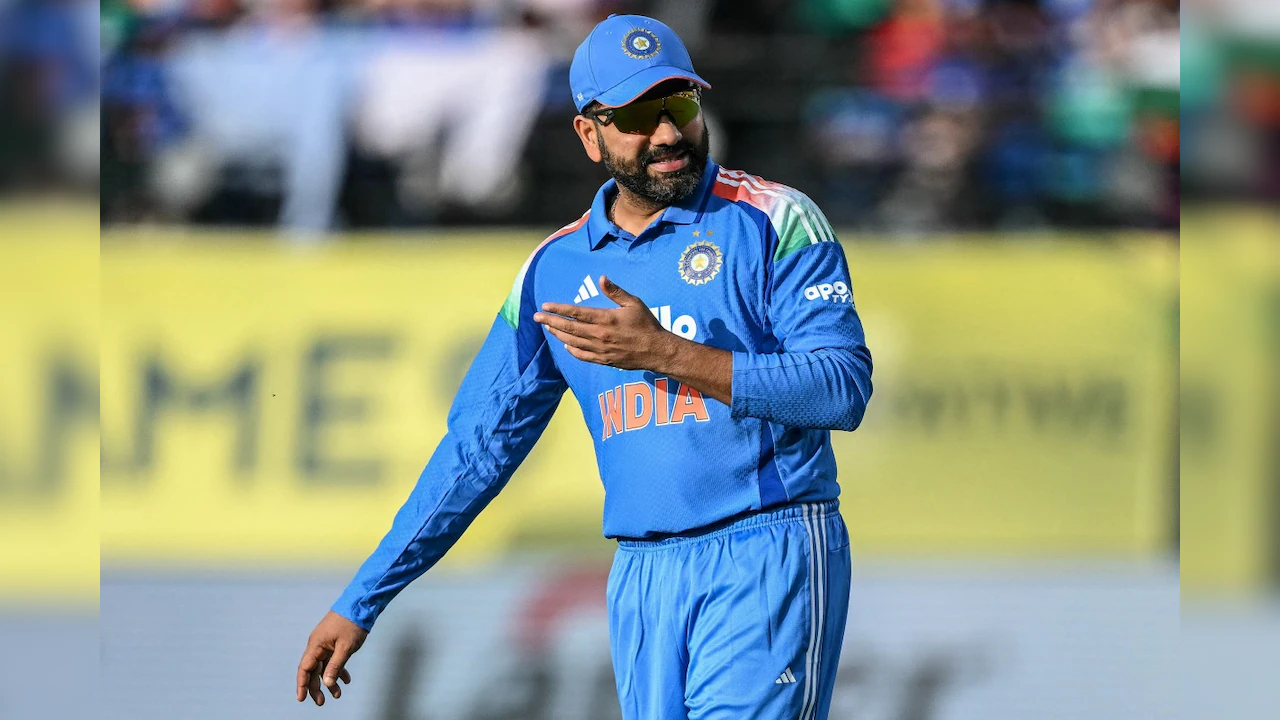
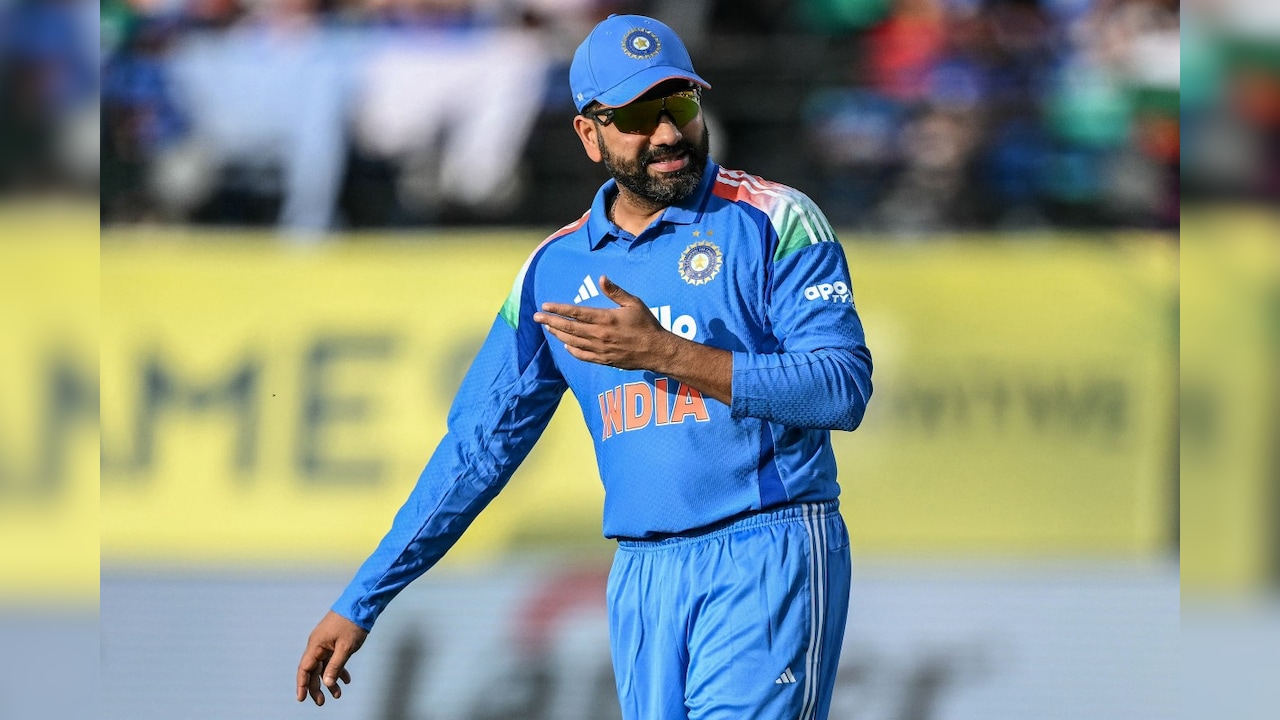
The Board of Control for Cricket in India (BCCI) secretary Devajit Saikia has revealed that India’s third and final ODI against England at Lord’s won’t be Rohit Sharma’s last for the team in the format. This comes after reports emerged that the series-decider could be Rohit’s swansong, sparking retirement talks on social media among fans and experts alike. However, the secretary has made it clear that the 39-year-old will continue to play as long as he is in the scheme of things.
“There are lot of speculations going on in media about Rohit Sharma’s future. I want to firmly assert that there has been no such discussion that Rohit will be playing his last match at Lord’s on Sunday,” Saikia told PTI in an exclusive interaction.
“Rohit is a regular member of the Indian ODI team and he will continue to represent the country as long as he is in the scheme of things. In other words, Lord’s ODI wont be his last match.”
Despite Rohit’s publicly stated desire to play until the 2027 ODI World Cup, his modest returns in the first two matches of the series — scores of 11 and 26 — have fuelled the debate.
After India’s defeat to England in the second ODI in Cardiff, batting coach Sitanshu Kotak said that while it is true that Rohit has not got runs in the first couple of matches, he is too good a player to be put under pressure over his future.
“See, I don’t think a big player like Rohit Sharma can have any sort of pressure. He’s too good a player to feel that. Yes, he didn’t get runs in the opening two matches, but I don’t think that makes any difference. But today, it also looked like he’d probably get a good innings going. But that’s okay,” Kotak told the media in the post-match press conference.
Several reports had claimed that head coach Gautam Gambhir and Agarkar are on the same page that Virat Kohli is an automatic choice given his form and fitness but not Rohit.
It also came to light that the selection committee and Rohit were not on the same page when it came to his Test retirement.
The 39-year-old made his ODI debut against Ireland in Belfast on June 23, 2007, and has already stepped away from both the T20I and Test formats.
Featured Video Of The Day
FIFA World Cup 2026 | Argentina Fans Sing & Dance After Dramatic Comeback Against Egypt
Topics mentioned in this article

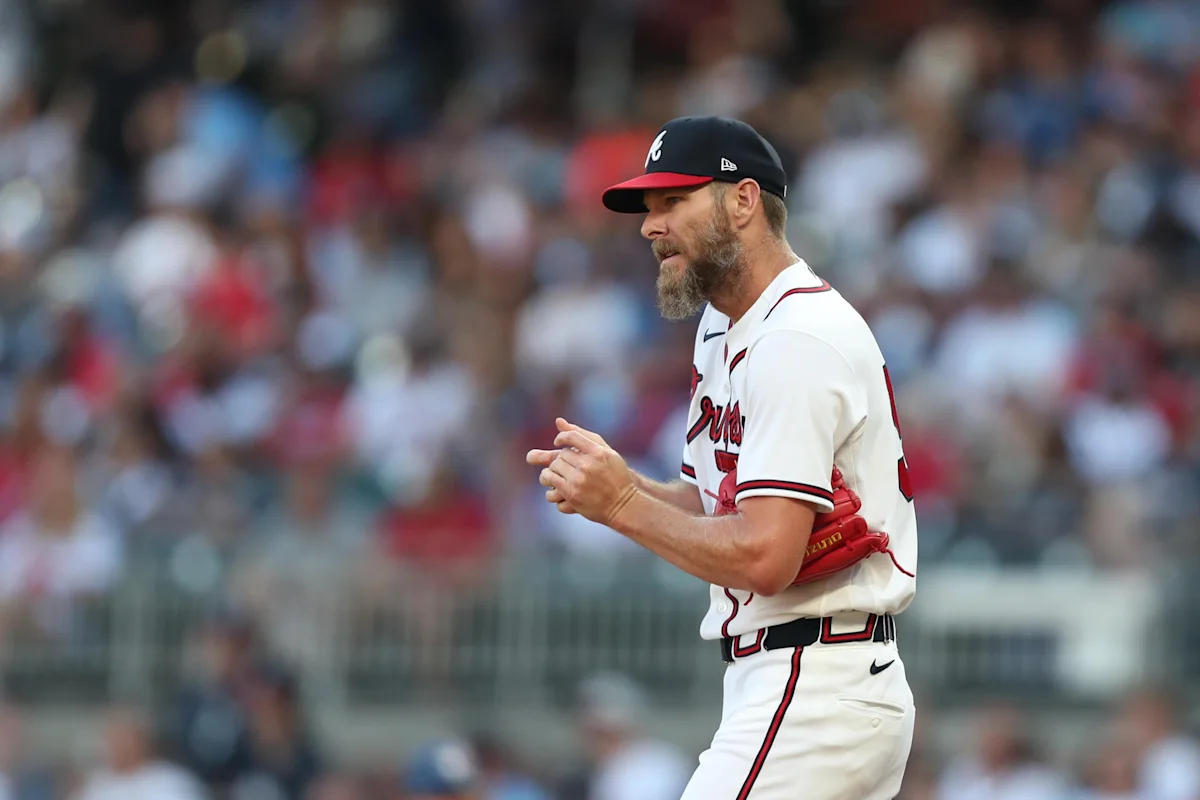
We’re back with Braves baseball. Let’s see if the Braves can take a dub and start off hot. First things first, the offense needs to step up. And consistency has to come through as well.
The Braves aren’t too far off from being great. They’re just missing pieces that need to be combined to get past slumps and find consistent success. Starting with tonight, we’ll see what version of the Braves we’re going to get.
Until 7:15 p.m. ET, happy race to October!
Sports
Super League: Huddersfield Giants 10-24 Wigan Warriors – Zach Eckersley hat-trick helps visitors to victory
Betfred Super League
Huddersfield (4) 10
Tries: Milne, Gagai Goal: Flanagan
Wigan (10) 24
Tries: Partington, Eckersley 3 Goals: Keighran 4
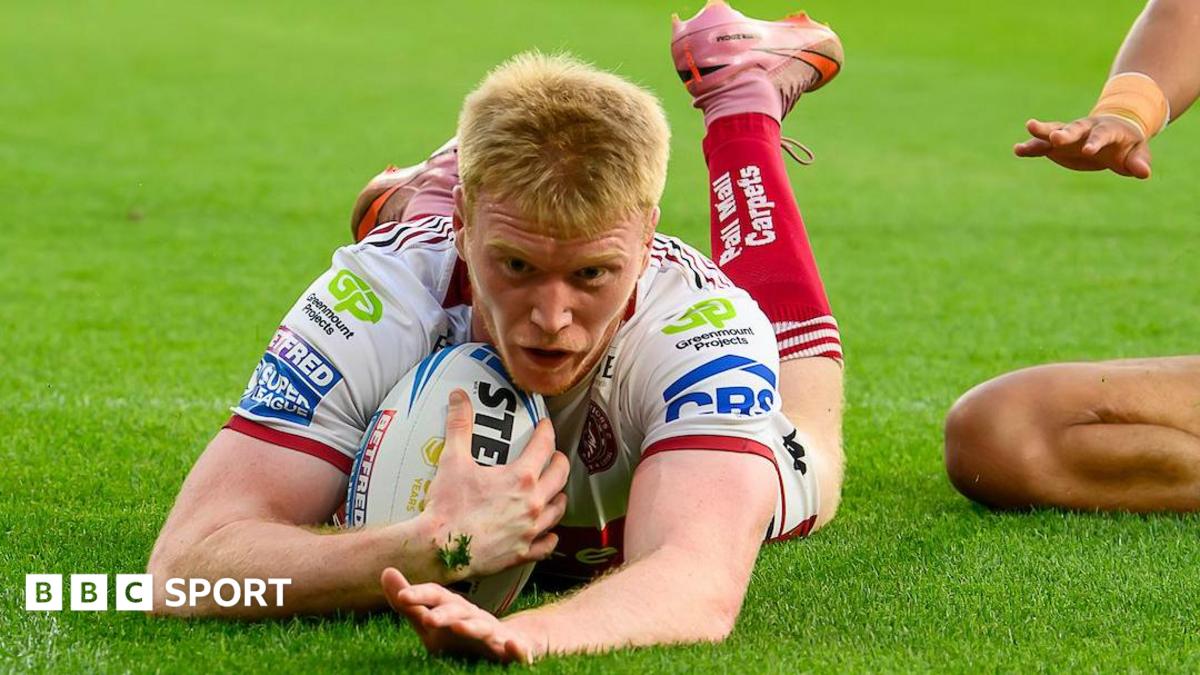
Zach Eckersley’s hat-trick broke Huddersfield Giants’ stiff resistance to send Wigan Warriors up to second and to within two points of the Super League summit.
Jim Lenihan’s side made a nonsense of the fact they had suffered 11 straight defeats going into the game and threatened to do the league double over the in-form Warriors after pulling off a shock victory at the Brick Community Stadium in March.
Taane Milne’s try put the league’s bottom side ahead, but Oliver Partington and Eckersley hit back with tries which had Matt Peet’s team 10-4 up at the break.
The hosts raised their game again in the second half to level through Jacob Gagai but as their discipline faltered and Joe Greenwood was sin-binned for dissent, Adam Keighran’s penalty and a late Eckersley double secured the win for Wigan.
Huddersfield have suffered another tough week, losing three players for the season through injury and having long-serving chairman Ken Davy step down, and the sight of Wigan rolling into town on the back of seven successive wins in all competitions had some supporters fearing the worst.
Lenihan has started to work a little magic, however, and after Huddersfield soaked up the expected early pressure, they struck first as Milne finished strongly.
Wigan have been in imperious form and they soon edged ahead as Partington stretched out to finish after evading two tackles following Keighran’s short, sharp pass.
Tanguy Zenon was forced off with a head injury after being knocked out cold, and Eckersley took advantage of a brilliant Keighran pass to score his first try of the evening and open a six-point gap at half-time.
Tempers flared throughout the game and referee Matty Lynn’s patience ran out just before the interval as he sent both Tui Lolohea and Shea O’Connor to the sin-bin for a tussle at the play-the-ball.
It started to look like the game would slip away from Huddersfield, but they muscled up again in the second half and levelled when Gagai finished a slick passing move and George Flanagan, on as the 18th man, kicked the extras.
Suddenly it was Wigan who looked unsure of themselves, but the game turned on moments of indiscipline.
Huddersfield thought they had scored a brilliant counter-attacking try after Wigan’s teenage half-back George Marsden had dropped the ball, but referee Lynn disallowed it for a forward pass.
To rub salt in the wound, Wigan challenged the decision and were awarded a penalty for a high challenge on Marsden, with Keighran converting the two points to restore the lead.
Huddersfield were still hunting the win but when they were penalised for a knock-on, Greenwood disputed the decision despite the captain’s challenge having been used, and he was sent to the sin-bin.
That ended the superb Huddersfield effort as Wigan went up the other end and Harry Smith, the calmest man on the pitch, dinked a beautiful kick for Eckersley to race through and collect for his second try.
With all resistance over, Eckersley claimed his hat-trick, and made it 19 tries for the season, from George O’Loughlin’s pass on the last tackle.
Sports
England vs Argentina HIGHLIGHTS FIFA World Cup SF: Messi inspires ARG to the final with late 2-1 win | FIFA World Cup 2026
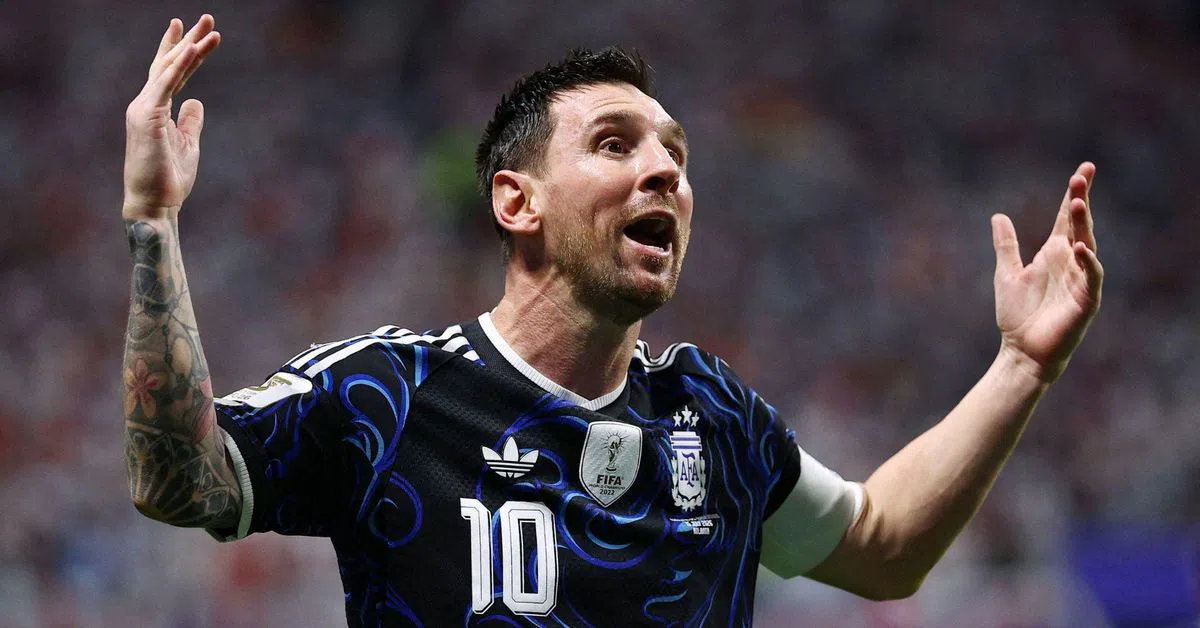
Lionel Messi once again proved why he remains Argentina’s talisman, producing two decisive assists as the defending champions came from behind to beat England 2-1 in a dramatic FIFA World Cup 2026 semifinal in Atlanta and book their place in a second successive World Cup final.
The first half lived up to the billing of one of international football’s fiercest rivalries. Both teams flew into challenges from the opening whistle, with Argentina repeatedly committing fouls to disrupt England’s rhythm. Referee Ismail Elfath had his hands full early, issuing warnings before eventually booking Elliot Anderson for a foul on Messi and Lisandro Martinez for bringing down Morgan Rogers.
Despite the heated atmosphere, clear-cut chances were scarce. England enjoyed more possession and looked the more composed side, with Jude Bellingham earning dangerous free-kicks and John Stones heading over from one of them. Argentina threatened mainly from set-pieces, while both goalkeepers remained largely untested as the teams went into the break locked at 0-0.
England finally broke the deadlock in the 55th minute. Cristian Romero switched off defensively, allowing Anthony Gordon to ghost in behind and tap home from close range, sending the England supporters into celebration.
Argentina responded by throwing bodies forward. Lionel Scaloni introduced Nico Gonzalez before later making a triple substitution, bringing on Gonzalo Montiel, Rodrigo De Paul and Nicolas Otamendi in a bid to inject fresh energy. England defended resolutely, with Jordan Pickford making an outstanding reaction save from close range after a dangerous Messi delivery, while Djed Spence produced a crucial last-ditch tackle to deny Giuliano Simeone.
The pressure eventually told. In the 85th minute, Messi found Enzo Fernandez on the edge of the area, and the midfielder unleashed a stunning long-range strike beyond Pickford to level the contest.
Nine minutes of stoppage time set up a dramatic finale. After John Stones required treatment, Argentina continued to pile forward and found the winner in the second added minute. Messi produced another moment of brilliance, delivering a perfectly weighted cross for Lautaro Martinez, who powered a header beyond Pickford to complete another remarkable comeback.
England pushed desperately for an equaliser in the closing moments but Argentina held firm to seal a famous victory.
Having survived scares against Egypt, Switzerland and now England, Scaloni’s side have once again found a way through adversity. Argentina will now face European champions Spain in the FIFA World Cup 2026 final, with Messi’s dream of leading his nation to consecutive world titles still very much alive.
England XI: Jordan Pickford, Reece James, Marc Guéhi, John Stones, Djed Spence, Declan Rice, Jude Bellingham, Elliot Anderson, Morgan Rogers, Anthony Gordon, Harry Kane Argentina XI: Emiliano Martinez; Nahuel ??Molina, Cristian Romero, Lisandro ??Martinez, Nicolas Tagliafico; Leandro Paredes, Giuliano Simeone, Enzo Fernandez, Alexis Mac Allister; Lionel Messi, Julian Alvarez
FIFA World Cup 2026 SF live telecast: The semi-final clashes will be available on the Unite8 Sports network in India.
FIFA World Cup 2026 SF live streaming: The semi-final clashes will be streamed on the Zee5 app and websites in India.
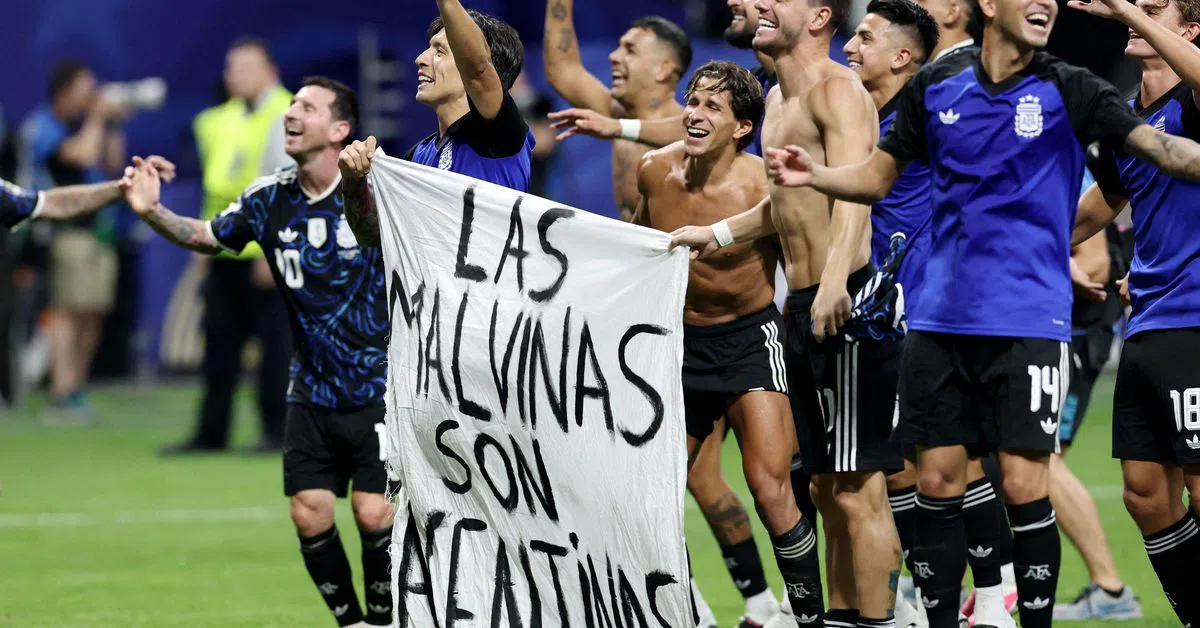
Argentina’s dramatic semifinal victory over England may have secured their place in the Fifa World Cup final, but the celebrations in Atlanta created a disciplinary question that could follow the defending champions into Sunday’s title match against Spain.
Several Argentina players displayed a banner reading “Las Malvinas son Argentinas” — “The Malvinas are Argentine” — on the pitch after their 2-1 win. Lisandro Martinez, Giovani Lo Celso and Nicolas Otamendi were among those pictured with it, while reports indicated that the banner may have been thrown from the stands before the players picked it up.
The message referred to Argentina’s sovereignty claim over the Falkland Islands, known in Argentina as the Malvinas. The islands remain a British Overseas Territory and were at the centre of the 1982 war between Argentina and the United Kingdom, in which more than 900 people died.
The central question is not whether Fifa has rules capable of covering the incident. It does.
The more difficult questions are which rule provides the strongest basis for action, whether a post-match display remains within Fifa’s jurisdiction and whether any punishment could be imposed before Argentina face Spain.
What exactly happened after Argentina beat England?
Argentina came from behind to defeat England through late goals from Enzo Fernandez and Lautaro Martinez. During the celebrations that followed, players held the white banner on the field and briefly placed it on the turf.
The display was particularly sensitive because Argentina’s security minister, Alejandra Monteoliva, had said before the match that political, racial or provocative banners would not be permitted inside the stadium.
The warning had been issued because of the historical tensions surrounding England-Argentina matches and the continuing sovereignty dispute. Argentina coach Lionel Scaloni had also attempted to separate the fixture from politics, describing the war as a tragic period that should not be confused with football.
What do football’s laws say about political messages?
The most frequently quoted provision is Law 4 of the Ifab Laws of the Game, which governs players’ equipment.
It states that equipment must not carry political, religious or personal slogans, statements or images. Players are also prohibited from revealing undergarments containing such material, with the player or team liable to sanctions imposed by the competition organiser, national association or Fifa.
The rule also explains how political content should be interpreted. It bars material connected to governments, political organisations, specific political acts or events, and messages that are provocative, derisory or inflammatory.
However, Law 4 may not be the most direct provision in this case.
The Argentina players did not display the slogan on their shirts, armbands, undergarments or other equipment. They held a separate banner after the final whistle.
Law 4 demonstrates football’s general prohibition on political statements, but the Stadium Code of Conduct, the World Cup regulations and the Fifa Disciplinary Code provide a stronger route for disciplinary action against a banner displayed on the pitch.
|
Which rules could apply to Argentina? |
||
|
Rule or regulation |
What it covers |
Relevance to the incident |
|
Ifab Law 4 |
Political, religious or personal slogans on players’ equipment |
Shows football’s general position, but the banner was not player equipment |
|
Fifa World Cup Stadium Code of Conduct |
Political banners and materials inside the stadium |
Directly relevant because the display occurred on the pitch |
|
World Cup regulations |
Obligations of participating associations and delegation members |
Requires Argentina to ensure players follow Fifa rules throughout the competition |
|
Fifa Disciplinary Code |
Misconduct by players, officials and associations in Fifa competitions |
Allows Fifa to investigate and sanction players or the Argentine association |
|
Association responsibility provisions |
Conduct of players, officials and representatives |
Argentina may be liable even if officials did not supply or approve the banner |
Does Fifa’s Stadium Code of Conduct apply to players?
The Stadium Code of Conduct is often described primarily as a set of rules for supporters, but its scope is wider.
It applies to all areas used in connection with the competition, including the stadium building, surrounding premises, entrances, exits and facilities under stadium control. It also applies to people entering through accreditation, a category that includes players and team officials.
Accredited persons must comply with the code while at the stadium unless a provision conflicts with their official duties or the specific terms of their accreditation. Holding a political banner would be difficult to characterise as part of a player’s official duties.
The code prohibits banners, flags, flyers, clothing and other material of a political, offensive or discriminatory nature. It separately prohibits displaying, distributing or promoting such material within the stadium.
That makes the stadium code directly relevant even though the banner did not form part of the players’ equipment.
However, the code’s usual enforcement measures — removal from the stadium or cancellation of a ticket or accreditation — are designed mainly for access and security management. For players, any sporting or financial punishment would more likely be imposed through the Fifa Disciplinary Code and tournament regulations.
Does the post-match timing give Argentina a defence?
Probably not.
The banner appeared after the referee had ended the match, but the incident still took place on the pitch during official celebrations and before the players had left the stadium.
The Stadium Code of Conduct requires attendees and accredited persons to comply with its provisions “at all times” while they are at the stadium. It also instructs them to leave promptly following the conclusion of a match unless their ticket, accreditation or the organisers permit them to remain.
The final whistle therefore does not immediately end the code’s application.
The Fifa Disciplinary Code is broader still. It applies to every match and competition organised by Fifa, and players and member associations fall within its personal jurisdiction.
Fifa has previously acted against conduct inside dressing rooms and during post-match activity, demonstrating that its disciplinary authority is not limited to the 90 minutes of play.
The fact that a supporter may have supplied the banner would not necessarily protect the Argentine Football Association. The disciplinary code permits associations to be held responsible for the conduct of their players, officials and representatives even when the association argues that it was not at fault.
Fans display a banner with a message referencing the Falkland Islands as they celebrate after England vs Argentina semifinal match. Photo: Reuters
Will Fifa sanction Argentina before the final?
Fifa can open proceedings immediately, seek written submissions from Argentina and impose a decision through its Disciplinary Committee.
Whether it will complete that process before the final is less certain.
Disciplinary cases can be handled rapidly during tournaments when player eligibility or match suspensions are involved. But political-message cases have generally resulted in financial sanctions or warnings rather than urgent bans.
There is also no indication yet that Fifa intends to prevent any of the players involved from facing Spain.
A punishment before the final would require the disciplinary body to establish the relevant offence, identify the responsible players, consider Argentina’s response and determine whether the repeat nature of the message is an aggravating factor.
Fifa’s current disciplinary framework allows it to sanction players, officials and member associations. The available measures include warnings, reprimands, fines and sporting sanctions, depending on the seriousness and circumstances of an offence. Fifa’s Disciplinary Committee is the body responsible for imposing such penalties.
Based on precedent, the likely sequence is:
-
Fifa reviews match reports and video evidence. -
Proceedings may be opened against the Argentine Football Association and possibly individual players. -
Argentina is invited to explain how the banner reached the pitch and who displayed it. -
A fine and formal reprimand are considered. -
A decision could be announced before or after the final.
A banner displaying a message referencing The Falkland Islands is seen on the pitch. Photo: Reuters
Could Argentina or its players be banned?
A suspension is possible in theory, but it would be a severe response when measured against comparable cases.
The banner made an explicit territorial and political claim during a match involving England. The incident also occurred despite pre-match restrictions and repeated a slogan for which Argentina had already been punished.
Those factors could make the case more serious than an accidental or ambiguous gesture.
However, Fifa has generally treated political displays as misconduct warranting fines and warnings unless they are combined with discrimination, violence, repeated disorder or other aggravating conduct.
An exclusion from the final, points penalty or annulment of the semifinal result would be extraordinarily disproportionate to previous political-message cases. There is no precedent in the examples below for a team being removed from a major tournament because players displayed a political banner.
Individual fines or warnings are more plausible. A player suspension would be possible only if Fifa concluded that the conduct was especially provocative or inflammatory and required an immediate sporting punishment.
The strongest inference from previous decisions is that Argentina will play the final with its sporting status unaffected, although the association could face a larger financial penalty because the message was identical to one punished in 2014.
Was this the first time Argentina displayed the Falklands banner?
No.
Before a friendly against Slovenia in La Plata on June 7, 2014, Argentina players stood behind a banner carrying the same words: “Las Malvinas son Argentinas.”
Fifa opened disciplinary proceedings and later reprimanded the Argentine Football Association and fined it 30,000 Swiss francs, worth about £20,000 at the time.
That precedent is directly relevant because it involved:
-
Argentina’s national team -
The same political claim -
The same wording -
A banner displayed on the field -
Players participating collectively
The 2026 incident differs mainly in timing and context. The 2014 banner was displayed before a warm-up match; the latest one appeared after a World Cup semifinal against England itself.
The repeat nature of the act could justify a higher fine. It also weakens any argument that the slogan’s political meaning was unclear.
|
Previous sanctions for political messages in football |
||
|
Incident |
Action |
Fifa response |
|
Argentina vs Slovenia, 2014 |
Players displayed an identical Falklands banner before the match |
AFA reprimanded and fined CHF 30,000 |
|
Switzerland vs Serbia, 2018 |
Granit Xhaka and Xherdan Shaqiri made Albanian double-eagle gestures after scoring |
Players warned and fined CHF 10,000 each; Stephan Lichtsteiner fined CHF 5,000 |
|
Serbia vs Brazil, 2022 |
A flag showing Kosovo as part of Serbia, with a “No Surrender” message, appeared in the dressing room |
Serbian association fined CHF 20,000 |
|
England and other British teams, 2016 |
Poppy symbols were displayed during World Cup qualifiers |
National associations fined, including about £35,000 for England |
The Serbian case is especially important for the post-match and off-field question. The flag was displayed in a dressing room rather than during open play, but Fifa still treated it as conduct falling within the tournament’s disciplinary framework.
The Swiss case shows that players can be sanctioned individually without being suspended from subsequent World Cup matches.
Could Fifa treat the banner as discriminatory?
The banner is primarily a political and territorial statement. It does not, by itself, target a protected group in the same way as racist or other discriminatory abuse.
Fifa could instead examine it under provisions concerning offensive behaviour, fair play, provocative conduct, team misconduct and breaches of competition or stadium regulations.
That distinction matters because discriminatory offences generally carry heavier minimum sanctions than political statements.
If Fifa found that the surrounding chants or conduct targeted people on the basis of nationality, the scope of the case could become wider. But the banner alone is most clearly a sovereignty message linked to a specific political dispute.
Does government support affect the case?
Argentina Vice-President Victoria Villarruel reinforced the message after the match, writing that “the Falklands are Argentine” and arguing that the semifinal was not merely a football match.
Those remarks provide political context, but Fifa’s disciplinary case would focus on the conduct of the players and association within the World Cup environment.
The Argentine government is not subject to Fifa’s sporting jurisdiction in the same way as the team.
However, public statements from senior political figures could make it harder for the association to portray the banner as an unplanned gesture devoid of political intent.
Fifa would still need to judge the evidence involving the players themselves rather than infer collective responsibility solely from government comments.
Could stadium security also face questions?
The incident raises a separate operational issue: how did a banner that had apparently been prohibited enter the stadium and reach the pitch?
Fifa’s Stadium Code allows organisers to screen attendees and confiscate political material. It also gives them broad discretion to decide which items present security or reputational risks.
If a supporter carried the banner through security, the incident suggests that screening failed or that the message was concealed.
But a security failure would not erase the players’ decision to display it. Fifa could investigate the source of the banner while separately considering disciplinary action against Argentina.
The two questions are distinct:
-
Who brought the banner into the stadium? -
Who chose to use it as part of an on-field celebration?
A banner displaying a message referencing The Falkland Islands is seen on the pitch after England vs Argentina semifinal. Photo: Reuters
What is the most likely outcome?
Argentina are exposed to disciplinary action because the incident occurred inside a Fifa-controlled stadium, involved accredited players and carried an unmistakable political claim.
The post-match timing is unlikely to remove the matter from Fifa’s jurisdiction.
Yet precedent points towards a financial rather than sporting penalty.
The 2014 case involving the identical slogan ended with a reprimand and a CHF 30,000 fine. Serbia’s Kosovo dressing-room flag and the Swiss players’ Albanian gestures also resulted in financial sanctions without tournament suspensions.
A repeat offence, the identity of the opponent and the pre-match prohibition could push the penalty above the 2014 level. Individual players may also receive warnings or fines if Fifa identifies them as active participants.
Unless additional evidence emerges — such as discriminatory conduct, refusal to follow officials’ instructions or organised involvement by the association — player bans before the Spain final appear unlikely.
Argentina’s place in Sunday’s match is therefore not in serious doubt.
Its celebrations, however, have given Fifa a test of consistency: whether a political message it punished 12 years ago will again draw action when displayed by the defending champions days before the sport’s biggest match.
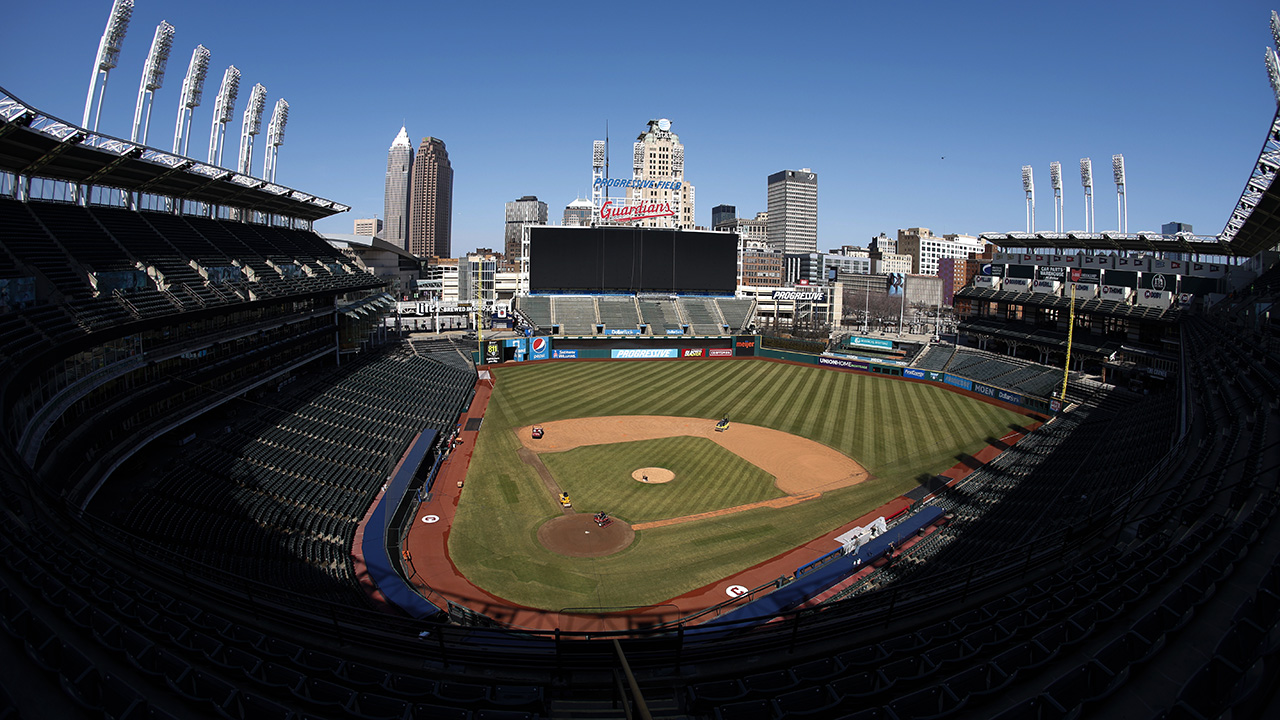
CLEVELAND — The game between the Pittsburgh Pirates and the Cleveland Guardians scheduled for Friday night has been postponed due to air quality concerns because of wildfire smoke from Canada and northern Minnesota.
Heavy, pungent wildfire smoke darkened skies in the U.S. from the Great Lakes to parts of the East Coast, reducing visibility and prompting warnings that breathing the air outside could be dangerous.
Officials in many cities urged residents to stay inside or wear masks outside as air quality reached unhealthy to hazardous levels, meaning it’s unhealthy for anyone, regardless of health conditions. The National Weather Service said a lingering high pressure system has trapped the smoke close to the ground.
The air quality index was 203 when the game was postponed at 4:45 p.m. ET, which is deemed to be very unhealthy and hazardous.
Northeast Ohio has been experiencing smoky and hazy skies for the past two days.
A split doubleheader is scheduled for Saturday, with the start times being 1:10 p.m. ET and 7:10 p.m. ET
Thursday night’s game in Philadelphia between the Mets and Phillies was moved to 6:10 p.m. ET from 7:10 p.m. It was the only game on the big league schedule coming out of this week’s all-star break.
Sports
Will Argentina stars miss World Cup final under FIFA rules? Decision looms over Falklands banner celebration | Football News
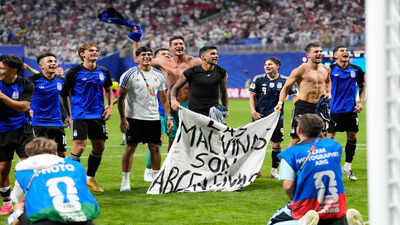
Argentina’s place in the 2026 FIFA World Cup final has been overshadowed by a growing disciplinary controversy after several players were involved in displaying a politically charged banner following their 2-1 semi-final victory over England, prompting questions over whether those involved could face sanctions, including potential suspension, ahead of Sunday’s showpiece against Spain.The incident unfolded during on-field celebrations in Atlanta, where Argentina secured a dramatic late win to reach a second consecutive World Cup final. In the aftermath, a group of players were seen holding a banner taken from supporters that read “Las Malvinas son Argentinas” (“The Falkland Islands are Argentine”), a message tied to the long-standing sovereignty dispute between Argentina and the United Kingdom. The banner references the 74-day Falklands War in 1982, when Argentina and the UK fought over the islands, resulting in the deaths of 255 British servicemen and 649 Argentine personnel.The involvement of multiple players, reportedly including Lisandro Martínez, Cristian Romero and Giovani Lo Celso among others, has led to scrutiny under FIFA’s regulations, with the possibility of disciplinary action now under formal consideration.
FIFA investigation and regulatory framework
FIFA has confirmed that its independent disciplinary committee is reviewing the incident as part of its standard procedures.In a statement, the governing body said:“As is standard procedure, FIFA’s independent disciplinary committee is currently assessing the match reports and considering the relevant circumstances before deciding on potential further steps based on the FIFA Disciplinary Code.”The review centres on Article 34.3 of the 2026 FIFA World Cup Match Protocol, which explicitly prohibits players and team officials from displaying political, religious or personal messages “before the match, during the national anthems, during the match and after the conclusion of the match.”The FIFA Disciplinary Code further classifies the use of a sporting event to stage demonstrations of a political or non-sporting nature as a potential offence, with sanctions ranging from warnings and fines to sporting penalties, depending on the severity and context.
Could players be suspended for the final?
The central question remains whether the players involved could be suspended in time for the World Cup final.Political figures in the United Kingdom have called for strong action. Liberal Democrat leader Ed Davey has urged FIFA to suspend all players involved in displaying or surrounding the banner. In an open letter to FIFA president Gianni Infantino, Davey referenced UEFA’s decision to impose a one-match ban on Spain internationals Álvaro Morata and Rodri after they chanted “Gibraltar is Spanish” during their Euro 2024 victory celebrations.British minister Peter Kyle also described the gesture as “totally inappropriate” in comments to the BBC, adding that politics should be kept out of football and that he expected FIFA to conduct a thorough investigation.However, while such calls have intensified scrutiny, FIFA’s disciplinary position remains unclear as the governing body has yet to announce any formal decision.Reports from Spanish outlet COPE and Argentine newspaper Clarín suggest that, although disciplinary action is expected, sporting suspensions, particularly ones affecting the World Cup final, are considered less likely. According to those reports, sanctions could instead take the form of warnings or financial penalties directed at either the players involved or the Argentine Football Association (AFA).Crucially, multiple outlets have reported that any formal decision by FIFA’s disciplinary committee is unlikely to be issued until after the conclusion of the tournament. If that timeline is followed, it would mean that even if sanctions are imposed, they would not affect player availability for the final against Spain.FIFA has not publicly confirmed the timing of its decision, leaving a degree of uncertainty until the disciplinary process is completed.
Precedents and possible outcomes
Previous cases provide some context for how FIFA and other governing bodies have handled similar incidents, though outcomes have varied.UEFA’s suspension of Morata and Rodri in 2024 is one of the most frequently cited comparisons. At the 2018 World Cup, Switzerland’s Granit Xhaka and Xherdan Shaqiri were fined, rather than suspended, for political gestures during a match against Serbia. South Korea’s Park Jong-woo received a suspension after displaying a political banner at the London Olympics.FIFA has also previously sanctioned Argentina in 2014 after a Falklands-related banner was displayed following a friendly match, though that case resulted in a financial penalty rather than sporting sanctions.These precedents suggest that while disciplinary action for political messaging is not uncommon, suspensions, particularly those affecting major fixtures, are typically reserved for cases deemed especially serious or repeated.
Situation remains unresolved ahead of final
With Argentina preparing to face Spain in the World Cup final, the disciplinary process remains ongoing and unresolved.While there is no confirmed indication at this stage that any player will be barred from participating, the possibility of sanctions, and the timing of any decision, continues to be closely monitored, leaving FIFA’s eventual ruling as one of the key outstanding issues ahead of the tournament’s conclusion.
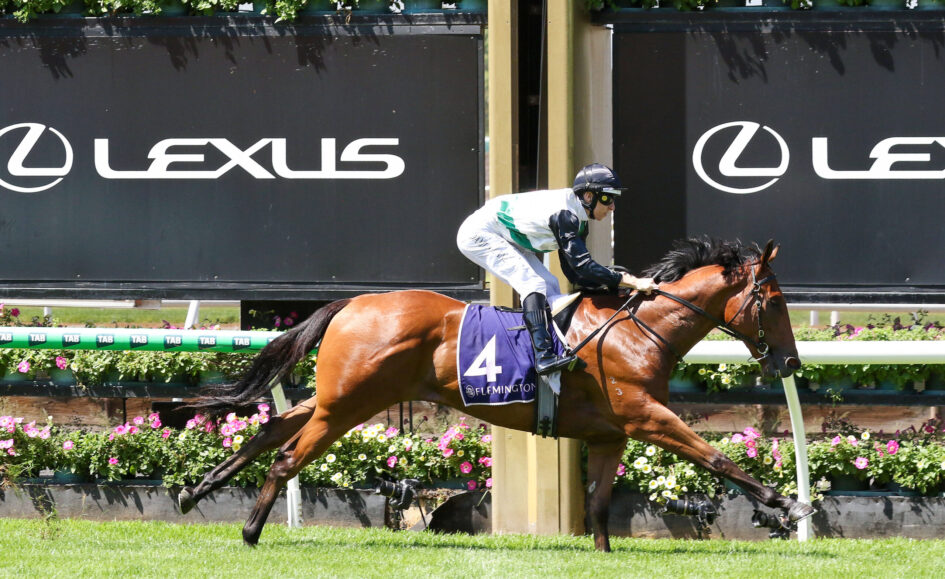
The Lindsay Park stable is looking to the long term with their impressive juvenile Hard Kick, who is set to resume racing at Flemington.
Having tasted success on debut in the Listed Talindert Stakes (1100m) at Flemington in February, Hard Kick will now contest the TAB We’re On (1000m) at Flemington this Saturday.
Lindsay Park trainers Ben, Will, and J D Hayes, in conjunction with their father David Hayes, the principal owner of Hard Kick, made the decision not to run the two-year-old in the Group 1 Blue Diamond Stakes (1200m) just a week after his strong Flemington performance.
The runner-up in that race, Zambales, went on to finish fourth in the Blue Diamond and later claimed second place in the VRC Sires’ Produce Stakes (1400m) before embarking on a campaign in Sydney.
Will Hayes explained that while bypassing the Blue Diamond was a difficult choice at the time, the team is encouraged by Hard Kick’s development during his spell from racing.
“He’s like an 18-year-old growing into a 20-year-old’s body,” Hayes explained.
“He has naturally gained strength and developed, and he is now ready for his three-year-old season. We weren’t entirely comfortable with the quick backup for a two-year-old, and consequently, he has emerged as a fantastic prospect, which was the ultimate goal.”
“It was a team decision, and it simplifies matters when David Hayes himself is the principal owner. It was a very internal discussion, and we adhered to our processes, benefiting from the excellent guidance of Dr. David McKellar, a superb vet at Lindsay Park.”
This 1000m race, a relatively new addition to the Flemington racing calendar, has previously been won by horses such as Giga Kick (2022), First Settler (2024), and Shining Smile last year.
Giga Kick subsequently won The Everest in Sydney after two more wins, while First Settler finished second in the Poseidon Stakes down the Flemington straight before winning the Danehill Stakes.
Hayes mentioned that Cruiserweight’s recent win at Caulfield last Saturday has instilled further confidence in the team ahead of Hard Kick’s return, particularly after the colt achieved a jump-out victory over Cruiserweight at Werribee on July 3.
He stated that the objective for Saturday’s race was to provide Hard Kick with a competitive outing before the commencement of the early season three-year-old races.
Hayes indicated that the Group 3 Vain Stakes (1100m) on August 15 and the Group 3 H D F McNeil Stakes (1200m), both at Caulfield and scheduled two weeks later, are the likely next assignments for Hard Kick.
“We’re going to have a run under our belt, which was our intention, as he did have a nice, long break,” Hayes concluded.
“The Vain, the McNeil, will all be races considered going forward, but we think he’s come up super and his trial form has been franked by Cruiserweight coming out and winning dominantly.”
Get involved with the upcoming race at Flemington by checking out the betting sites and apps with sign-up bonus in Australia.
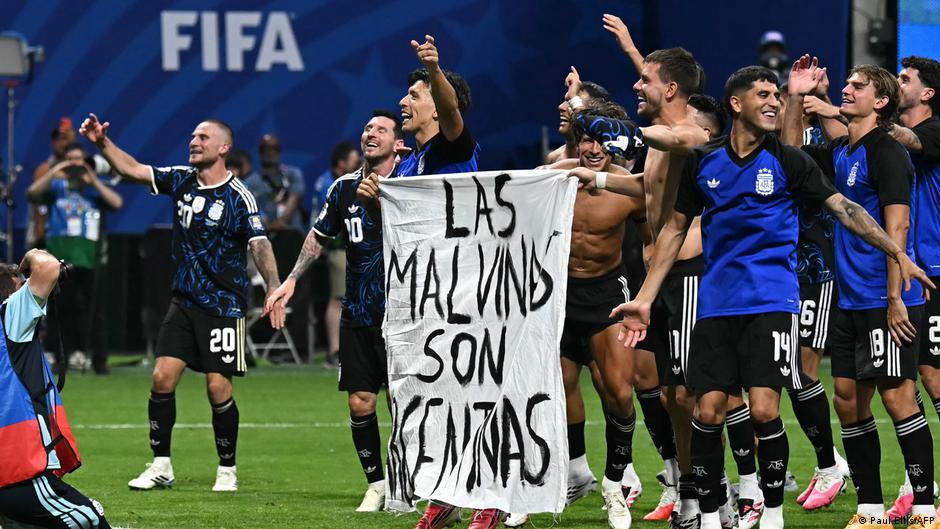
After the referee blew his whistle for fulltime at the end of Wednesday’s World Cup semifinal, Argentina players understandably celebrated their come-from-behind 2-1 win in injury time over their longtime bitter rivals England.
However, during the celebrations, Lisandro Martinez and Giovani Lo Celso waved to the fans and held up the banner, which read: “Las Malvinas Son Argentinas” (“The Falklands are Argentine”). It was unclear where the banner had come from, but there was a report that it had earlier been seen displayed in the stands.
“And they will always be Argentine,” midfielder Leandro Paredes told a reporter when asked about the banner.
“We were aware of what this match meant for the country. We tried to represent our nation and all those who lived through that sad moment in our history, so that they could identify with us and we could convey a positive image.”
Apparent violation of FIFA rules
The banner would appear to be in violation of tournament organizer FIFA’s Stadium Code of Conduct, which bans “banners, flags, flyers, apparel and paraphernalia that are of a political, offensive, and/or discriminatory nature.” It was not clear what, if any sanction football’s global governing body might impose on the players.
Ongoing diplomatic tensions
The question of sovereignty over the Falkland Islands in the South Atlantic has long been a source of tension between Argentina, which calls them “Las Malvinas”, and the United Kingdom.
This tension spilled over into war in the spring of 1982, when the leader of Argentina’s then-military junta ordered an invasion of the islands. Britain responded by sending a military task force to the islands, located a few hundred kilometers from Argentina’s eastern coast. In a conflict that lasted just over two months and claimed the lives of more than 900 soldiers on both sides, Britain repelled the invasion and reasserted control of the Falklands. While the islands’ residents voted overwhelmingly in a 2013 referendum to remain British, Argentines still claim the territory is rightfully theirs.
FIFA investigating incident
In response to the actions of the Argentine players on Wednesday night, the United Kingdom has called for FIFA to act.
UK Business Secretary Peter Kyle told the BBC that the behavior of the players was “entirely inappropriate” and that politics and football need to be kept separate.
“In fact, the World Cup has one of its central tenets that politics is separate from football,” he noted. “That is now a matter for FIFA. I expect FIFA to do its investigation thoroughly.”
On Thursday, FIFA released a statement confirming that it was looking into the incident.
“As is standard procedure, FIFA’s independent disciplinary committee is currently assessing the match reports and considering the relevant circumstances before deciding on potential further steps based on the FIFA disciplinary code,” it said.
In the match itself, England had their hopes set on reaching their first World Cup final since 1966, when they last won the competition. The Three Lions took the lead in the 55th minute, but relinquished control and Argentina took advantage with two late goals, both assisted by Lionel Messi.
The 39-year-old superstar now has the chance to defend the World Cup title with Argentina. In his way stand Spain, who delivered a dominating performance in their 2-0 win over France in the first semifinal on Tuesday.
This article was originally published on July 16, 2026. It was updated on July 17, 2026 with FIFA’s confirmation that it was investigating the incident.
Edited by: Jonathan Harding
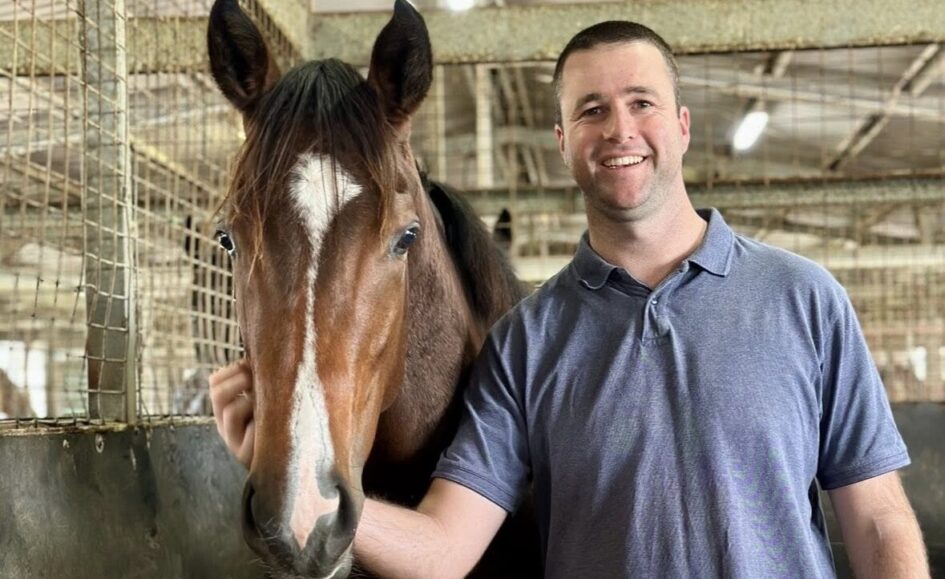
Jack Bruce has been pleasantly surprised by the early performances of Everybody Rise, and he’s eager for the revitalised gelding to achieve even more.
The brother to Russian Revolution is set to continue his unblemished record since joining Bruce’s Deagon stable in Thursday’s Barrier Reef Pools Class 4 Handicap at Ipswich.
The four-year-old Snitzel colt, who was acquired for $1.4 million as a yearling and began his career with Peter Snowden before transferring to Matt Vella after being bought by Blueblood Thoroughbreds for $75,000, has been with Bruce since early this year.
He secured consecutive victories on the Sunshine Coast poly track in his initial two outings for Bruce, followed by a win at the Ipswich track at his most recent outing.
“Sometimes horses have the talent but just need to win one and they can string a couple together,” Bruce commented.
“He won a modest maiden fresh up, but has gained confidence from that and has improved at each subsequent start.
“He is a happy horse in a good headspace at the minute and is really finding the line in his races.”
Everybody Rise broke his maiden over 1000m on May 1, followed by a triumph in an 1100m 0-62 event four weeks later, and then another 0-62 win over 1100m at Ipswich on June 25.
He now steps up to Class 4 company in Thursday’s 1100m event, where he is assigned 59kg and faces the challenge of the outside barrier in a field of 11 runners.
“That is certainly the challenge,” Bruce said regarding the draw, which Group 1 jockey Taylor Marshall is expected to overcome.
“We got away with it last start, but it gets harder up in grade to burn the candle at both ends. We need to get across comfortably to still be a winning chance.”
Bruce’s other entrant, Missile One, drew more favourably in barrier seven, however, Bruce would prefer an even closer inside gate and is contemplating scratching her to compete in a lesser race at the Sunshine Coast on Sunday.
Stay up-to-date with all the latest racing news at JustHorseRacing news.
The racing odds for Thursday’s Ipswich card are now available with top online bookmakers.
Sports
Messi’s magic on the biggest stage leaves little room for the GOAT debate | FIFA World Cup 2026
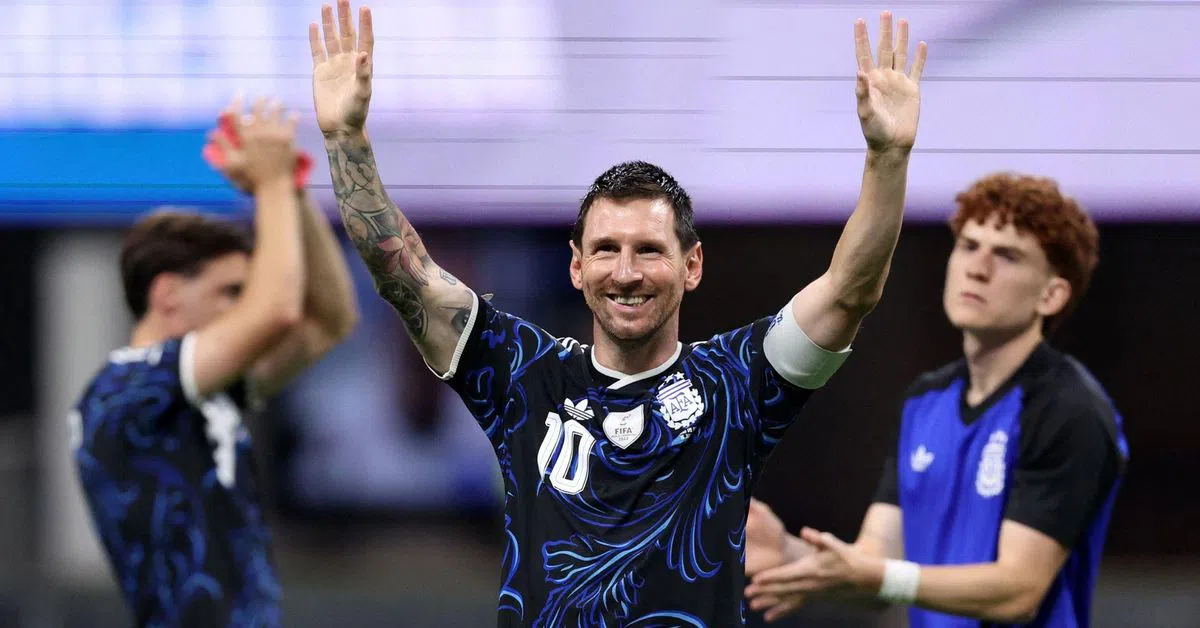
The argument over football’s greatest player has lasted for decades, surviving trophies, records, eras and rivalries. Yet as Lionel Messi continues to shape the biggest matches on the sport’s grandest stage, the debate increasingly feels less like an open question and more like a final reckoning.
When greatness becomes routine
The remarkable thing about Lionel Messi is no longer that he can produce moments of magic. It is that the football world has come to expect them even when logic suggests otherwise.
At 39, after nearly two decades at the summit of the game, Messi still walks onto a World Cup pitch carrying the same burden he did as a teenager: the expectation that he will decide the match. Against England, he did exactly that. He did not need a hat-trick, a 30-yard screamer or a viral dribble through five defenders. Instead, he controlled the rhythm of the contest, found spaces others could not see and created both Argentine goals with the calm precision that has defined his career.
That may be the strongest argument in his favour. The greatest players are not simply spectacular; they are inevitable.
More than goals and trophies
Football’s GOAT debate has often been reduced to numbers. Goals, assists, Ballons d’Or, league titles and Champions League medals are lined up like evidence in a courtroom. Messi’s collection is already overwhelming.
But statistics alone do not explain why teammates look calmer when he receives the ball, why defenders retreat half a step too far or why entire tactical plans are designed around limiting his influence.
Against England, Argentina’s attacks repeatedly flowed through him. One pass was simple, another exquisite, but both carried the same quality: clarity. Messi saw the decisive action before anyone else on the pitch.
That ability has survived every transformation of his career. He began as a devastating winger, evolved into a false nine, became a playmaker and now operates as a roaming conductor who chooses exactly when to accelerate a game. Few athletes in any sport have remained elite while reinventing themselves so completely.
The weight of the biggest moments
Critics once argued that Messi’s greatness belonged mainly to club football. That case has steadily collapsed.
He has delivered in Copa América finals, World Cup knockout matches and pressure-filled international campaigns where a single mistake can define a generation. More importantly, he has continued to do so while younger stars have emerged around him.
This World Cup has showcased extraordinary talent. Kylian Mbappé, Jude Bellingham, Vinícius Júnior, Erling Haaland and others have produced memorable performances. Yet when the tournament reached its most unforgiving stages, Messi remained the player opponents feared most.
Beyond comparisons
Any discussion of the greatest footballer inevitably includes other legends. Pelé transformed the sport’s global reach. Diego Maradona produced perhaps the most iconic World Cup campaign ever. Cristiano Ronaldo set extraordinary standards for longevity, ambition and goalscoring.
Messi’s claim does not require diminishing any of them.
What separates him is the breadth of his excellence. He scores, creates, dictates tempo, breaks defensive structures, withstands tactical evolution and continues performing at the highest level across multiple generations of teammates and opponents. Very few players have ever been the best passer, dribbler and chance creator on the field while also being among its most dangerous scorers.
The longer his career continues, the harder it becomes to identify a weakness significant enough to challenge the overall picture.
The final chapter may already be written
If Argentina were to lift another World Cup, the symbolism would be enormous. Back-to-back titles would place this team among the tournament’s most celebrated dynasties, and Messi would stand at the centre of both triumphs.
Yet perhaps the decisive shift has already happened.
The debate once revolved around whether Messi possessed enough international success, enough leadership or enough defining moments outside Barcelona. Those questions have largely been answered. What remains is an ever-growing catalogue of performances that continue to arrive when the stakes are highest.
Against England, Messi offered another reminder that greatness is not always loud. Sometimes it appears in a perfectly weighted pass, a subtle change of direction or a decision made half a second before everyone else.
For nearly twenty years, football has searched for new ways to measure Lionel Messi. Increasingly, the evidence points in only one direction.
The debate may not disappear overnight. Football supporters rarely surrender their loyalties that easily. But with every decisive World Cup performance, Messi is making the argument feel less like a conversation and more like a conclusion.
Icertis CEO is departing; contract management company names CFO and board member interim leaders

SK Hynix ADR Rebounds 4.29% to $158.84 as Its Wild Post-IPO Trading Volatility Persists Into Third Week

The Sci-Fi Show Revival That Proved Fans Should Move On


-

 Fashion7 days ago
Weekend Open Thread: Nutriplenish Leave-In Conditioner
-
 NewsBeat1 day ago
London Mayor Sadiq Khan handed a peerage by Keir Starmer alongside 15 other Labour figures… just days before the PM leaves No10
-

 Fashion5 hours ago
Weekend Open Thread – Corporette.com
-

 Politics2 days ago
Young campaigners urge incoming PM to act on outdoor junk food ads
-

 Crypto World2 days ago
CFTC blocks Kalshi from unwinding Michigan trades after court order
-

 Business2 days ago
Nvidia Stock Slips After Big Tuesday Rally as Huang Confirms Vera Rubin Chip Is Now in Production Today
-
 Entertainment2 days ago
Disney’s Most Ambitious Failed Star Wars Attraction Is Coming to SDCC
-

 News Videos3 days ago
XRP BOMBSHELL… XRP OMBOARDED FOR TRANSACTIONS!!!
-

 Crypto World1 day ago
Injective Submits SEC Transfer-Agent Registration to Onchain Ownership Records
-

 Tech4 days ago
Get Your ESP32 Sunny Side Up With This Solar Dev Board
-

 NewsBeat11 hours ago
Registration is now open for March for Men with Kev 2026
-

 Tech3 days ago
Dark Secrets Emerge When Jailbreaking LLMs
-

 Business2 days ago
Palantir Shares Rise After Expanded Nvidia Partnership and Fresh Analyst Upgrades Ahead of Earnings Day
-

 News Videos16 hours ago
Money | Class 12 Economics | CBSE Board Exam 2026-27
-
 Sports2 days ago
New Cornerback Enters Vikings Trade Rumor Mill
-

 Business21 hours ago
Banco Bilbao Vizcaya Argentaria, S.A. (BBVA) Discusses Global Macro Environment and Economic Outlook for Core Markets Transcript
-
 Tech4 days ago
Cloudflare Precursor Watches Your Mouse and Keyboard To Decide If You Are Human
-

 Business4 hours ago
Airlines warn Sunshine Protection Act could disrupt flight scheduling
-

 News Videos4 days ago
how to make coin bank box with cardboard #scienceproject #money #diy #shorts
-
 Entertainment2 days ago
Vicki Gunvalson Defends Discussing Heather Dubrow’s Money
You must be logged in to post a comment Login