
Sports
Cricket at Asian Games 2026: All that’s happening in Aichi-Nagoya | Asian Games 2023

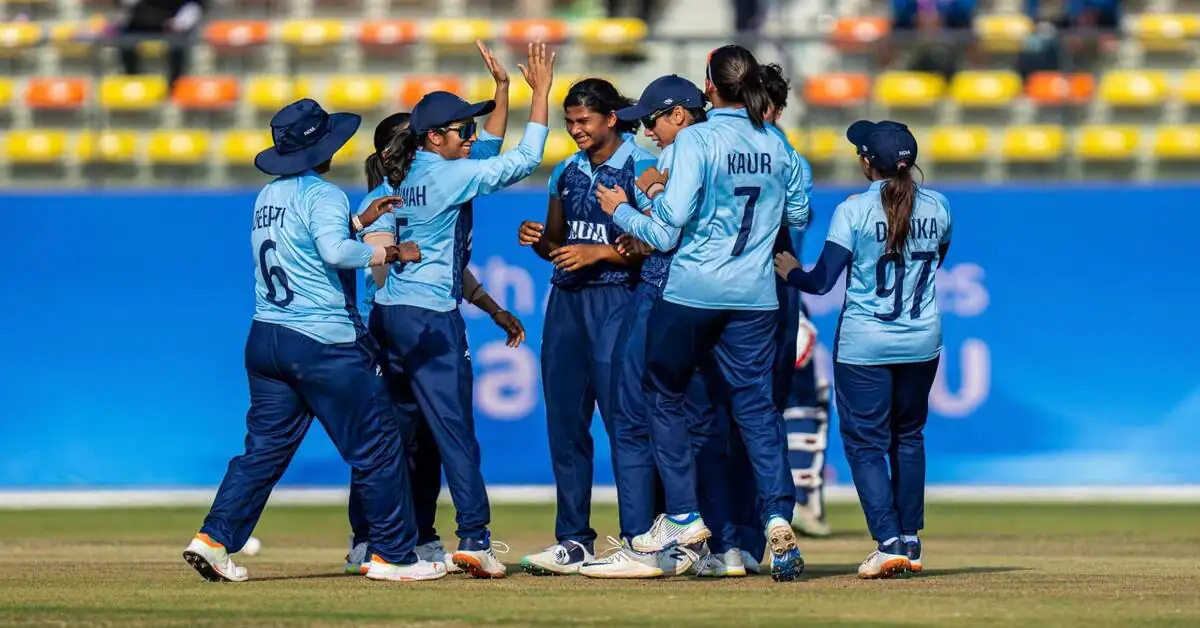
The Asian Games 2026 is all set to commence on Saturday, September 19, with cricket being one of the most talked-about sports at the event, as all the participating countries are sending near full-strength squads. However, just days before the start of the multi-nation event, the tension has started to stir up.
Even before a ball has been bowled, the tournament has been caught up in a debate over hotel rooms, dressing rooms, toilets and the playing surface.
The concerns have become serious enough for full-member cricket boards to seek a firsthand assessment of the arrangements in Japan, while the Asian Cricket Council is also expected to inspect the venue.
According to a media report from news agency ANI, India could consider sending a second-string side if the facilities were deemed inadequate.
However, a media report from NDTV suggests that while the concerns regarding the facilities are genuine, there is no talk in the BCCI about sending a B squad.
Still, the episode has exposed a rather unusual problem for a tournament in which India are among the strongest medal contenders.
Why are the facilities a concern?
The biggest complaints centre on the conditions being provided to the cricket teams.
According to reports, the dressing rooms at the venue have been set up in tents, while the washrooms are around 500 metres away. The hotel accommodation has also become a talking point, with concerns that rooms allocated to two players are too small to comfortably accommodate cricketers along with their kitbags and luggage.
One source described the room situation as a genuine problem, pointing out that there would be little space left once a player opened a kitbag.
The issue is not limited to India. Concerns have been raised among other full-member boards as well, prompting calls for representatives to travel to Japan, inspect the arrangements and report back to their respective boards.
The aim is not simply to assess whether the facilities look adequate on paper, but whether they are practical for international cricketers competing in a major multi-sport event.
The venue itself has raised questions
The accommodation is only one part of the concern. The cricket tournament will be staged at Korogi Sports Park, a baseball facility that has been adapted for cricket. The ground has only recently had its cricket surface installed, and questions have been raised over how much competitive cricket has been played on it.
There are also reports that the venue does not have conventional permanent dressing rooms.
The pitch is therefore another aspect that the cricket authorities want to assess before the tournament begins. The Asian Cricket Council is expected to send representatives to inspect the venue, with the quality and readiness of the playing surface among the issues under discussion.
The venue did host an ICC Men’s T20 World Cup East Asia-Pacific Qualifier earlier this year, but the Asian Games will bring a very different level of attention, with several of Asia’s leading cricket nations involved.
Why did the B-team talk start?
The possibility of India changing its squad emerged after the concerns over the facilities were discussed.
According to the media report from ANI, the BCCI and ACC were unhappy with the arrangements and a BCCI observer would be sent to Japan. If the observer’s report found the facilities inadequate, the source said the board could consider sending a B-team instead.
That report created the possibility of a remarkable change to India’s Asian Games plans.
The BCCI had initially named a strong men’s squad, led by Shreyas Iyer, with established internationals such as Jasprit Bumrah, Arshdeep Singh, Axar Patel and Washington Sundar, alongside young players including Vaibhav Sooryavanshi, Abhishek Sharma and Tilak Varma.
But the B-team possibility was subsequently denied, as a media report from NDTV said that the concerns about the facilities were valid, but India would not send a second-string side.
What is India’s squad for Asain Games 2026?
India had named a formidable men’s squad for the Asian Games. Shreyas Iyer is the captain, with Tilak Varma as vice-captain. The squad also includes Sanju Samson, Ishan Kishan, Abhishek Sharma, Shivam Dube, Axar Patel, Washington Sundar, Nitish Kumar Reddy, Varun Chakravarthy, Ravi Bishnoi, Harshit Rana, Arshdeep Singh, Vaibhav Sooryavanshi and Jasprit Bumrah.
The selection therefore suggested that India were taking the competition seriously. There is plenty of experience in the group, but also an obvious attempt to blend established international players with some of India’s most exciting younger talents.
For Sooryavanshi in particular, an Asian Games appearance would provide another significant step in his rapid rise.
When will cricket be played in Asian Games 2026?
The women’s tournament begins September 17, two days before the official opening of the Asian Games, and runs until September 22. The men’s competition begins on September 24 and concludes with the final on October 3.
India’s men, Pakistan, Bangladesh and Sri Lanka have been given direct entry into the quarter-finals based on their ICC rankings. India will play their quarter-final on September 28.
The women’s tournament follows a similar structure, with India entering at the quarter-final stage and facing Japan on September 18.
India look to defend Asian Games golds
India will arrive for Asian Games 2026 as the reigning champions in both men’s and women’s cricket.
At the 2023 Hangzhou Asian Games, the men’s final between India and Afghanistan was washed out. India were awarded the gold medal because of their higher seeding.
The women’s team also won gold in Hangzhou, making India the defending champions in both competitions.
A tournament with an unusual backdrop
The facility talk has become more prominent because of the broader accommodation challenges facing the Aichi-Nagoya Games.
Unlike the traditional model of a single athletes’ village, organisers are using a combination of hotels, temporary accommodation and a cruise ship to house participants. More than 17,000 athletes and officials have been registered, creating additional pressure on accommodation capacity. Organisers and the Olympic Council of Asia have said that arrangements have been secured despite the surge in entries.
For cricket teams, however, the question is more specific: are the arrangements suitable for international players? That is what the ACC and national boards now want to establish.

Sports
Deepti Sharma scripts history! Stunning 3/0 makes her world’s leading T20I wicket-taker | Cricket News
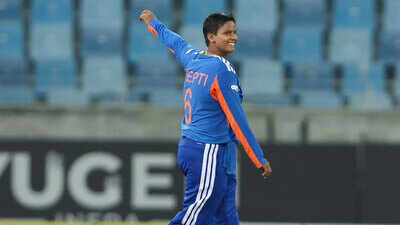
NEW DELHI: Deepti Sharma scripted history on Sunday, producing one of the most remarkable bowling spells in Women’s T20I cricket to become the highest wicket-taker in the format as India began their Women’s T20 Asia Cup campaign with a thumping 94-run victory over Thailand in Dubai.Playing her landmark 150th T20I, Deepti claimed three wickets without conceding a single run from seven deliveries, taking her career tally to 171 wickets and moving past Thailand’s Thipatcha Putthawong, who took one wicket in the match to reach 170 wickets.The veteran all-rounder first drew level with Putthawong when she took two wickets in the ninth over to leave Thailand reeling at 44/6. She returned in the 17th over and struck with her very first delivery, dismissing wicketkeeper-batter Nannapat Koncharoenkai to complete a stunning 3/0.Thailand were eventually bowled out for just 65 in 16.1 overs, giving India a winning start to their campaign.
Deepti enters record books with sensational spell
Deepti’s achievement was made even more remarkable by the fact that she became the first Indian bowler to claim three or more wickets without conceding a run in a Women’s T20I. Overall, there have now been 26 such spells in the format.Her figures of 3/0 are also the best for an Indian bowler taking at least three wickets in a T20I. Renuka Singh previously held the record for the fewest runs conceded with 3/5 against Sri Lanka in Sylhet in 2022.Deepti’s three wickets also took her past Putthawong at the top of the global wicket-taking charts. She now has 171 wickets, followed by Putthawong on 170, Rwanda’s Henriette Ishimwe on 164 and England’s Sophie Ecclestone on 154.The landmark came on a memorable day for Deepti, who had earlier become only the third Indian after Harmanpreet Kaur and Smriti Mandhana to reach 150 T20I appearances.Most wickets in Women’s T20Is
- 171* – Deepti Sharma (IND-W)
- 170 – Thipatcha Putthawong (THA-W)
- 164 – Henriette Ishimwe (RWA-W)
- 154 – Sophie Ecclestone (ENG-W)
- 153 – Kary Chan (HKG-W)
- 153 – Onnicha Kamchomphu (THA-W)
Shafali’s fireworks set up India’s win
Before Deepti’s record-breaking intervention, Shafali Verma had provided India with a flying start. The opener smashed 64 from 36 balls, hitting eight fours and three sixes, and brought up her 19th T20I half-century from just 26 deliveries.India raced past 100 in 10 overs and appeared set for a total in excess of 200. However, Thailand fought back through leg-spinner Suleeporn Laomi, whose variations triggered a dramatic Indian collapse.India slipped from 108/2 to 137/9, losing seven wickets for only 29 runs. Laomi finished with impressive figures of 3/26, including the wickets of Shafali and Richa Ghosh in successive deliveries. Off-spinner Sunida Chaturongrattana added 2/31.Smriti Mandhana had earlier scored 19 from 10 balls before being run out by a direct hit from Aphisara Suwanchonrathi. Pratika Rawal, making her T20I debut in place of injured Jemimah Rodrigues, contributed 22 from 18 balls before Laomi cleaned her up.Despite the collapse, India managed 159/9, with Kranti Gaud’s unbeaten 15 off eight balls providing a late boost.Least runs conceded for a 3-plus wicket haul for IND-W in a T20I
- 3/0 – Deepti Sharma vs THA-W, Dubai, 2026
- 3/5 – Renuka Singh vs SL-W, Sylhet, 2022
- 3/6 – Pooja Vastrakar vs MAS-W, Kuala Lumpur, 2018
- 3/6 – Titas Sadhu vs SL-W, Hangzhou, 2023
- 3/6 – Radha Yadav vs SA-W, Chennai, 2024
Thailand’s chase never got going. Kranti Gaud and Nandani Sharma removed the openers early, while Shree Charani and Deepti then dismantled the middle order. Charani finished with 2/10 and Nandani took 3/18.Nannapat offered the only significant resistance with 41, but Deepti ended her stay with the first ball of her final over.The comprehensive win gives India two points to begin their Group A campaign. They next face Hong Kong on Thursday.
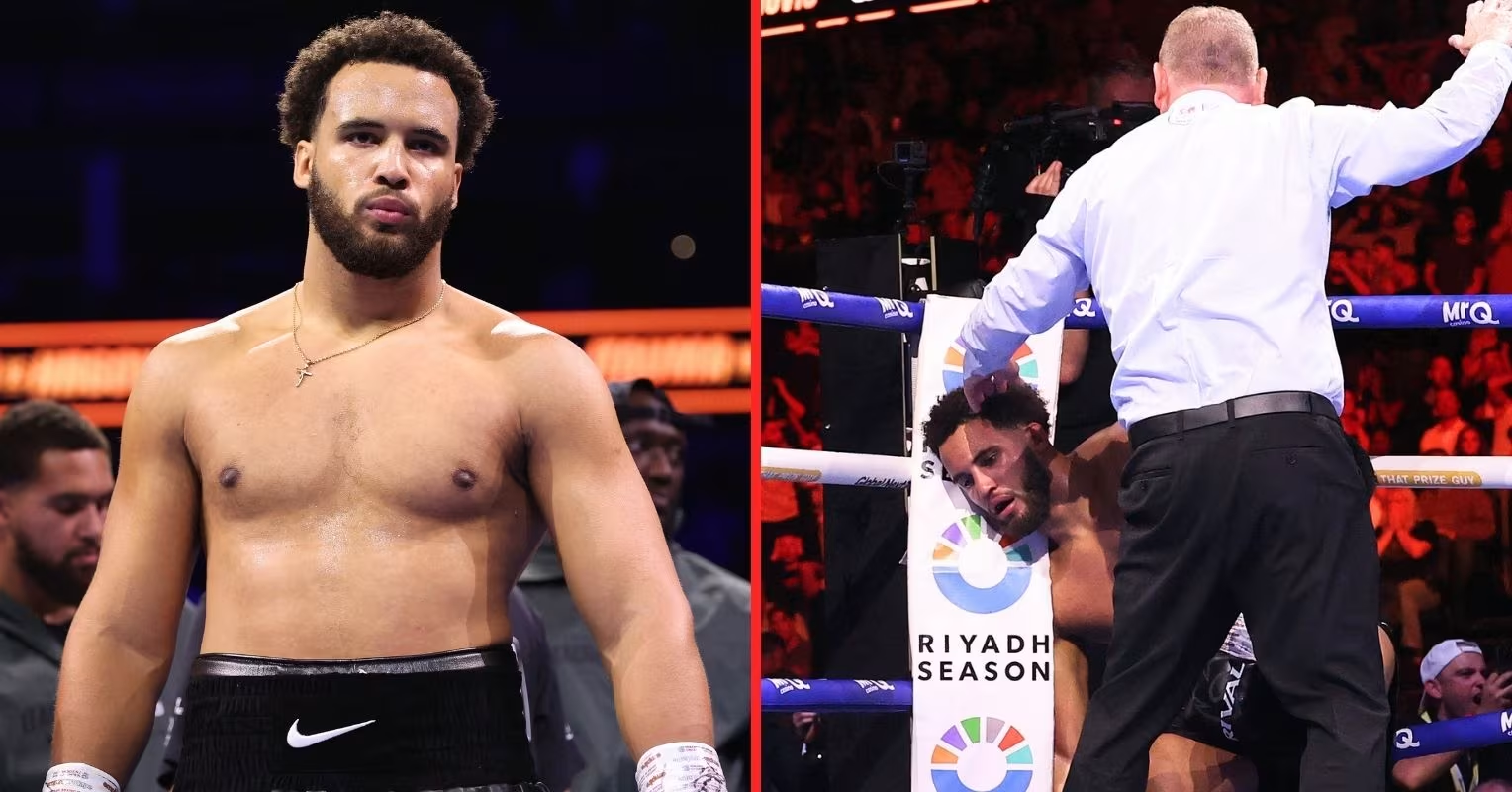

Moses Itauma has sent a message to Filip Hrgovic and fans following his defeat in London this weekend.
The rising heavyweight star was dealt the first loss of his career at the O2 as he challenged for the vacant IBF heavyweight world title. Despite a spectacular start, where he showcased incredible speed and agility, Itauma tired down the stretch and looked out on his feet by the ninth round.
Hrgovic, who showed one of the best chins in the business to get that far, took advantage and forced a stoppage from referee Howard Foster. The Croatian – now the first ever heavyweight world champion from the nation – said post-fight that Itauma is the best fighter he has come up against, and noted that his lack of experience played a major part in the result.
Speaking on social media, Itauma congratulated Hrgovic, took positives from the defeat and vowed to return.
“So, yesterday wasn’t my night. We attempted greatness and just fell short to the more experienced man. I want to say congratulations to Filip Hrgovic on the win, and although I never reached my desired outcome, I believe I gained experience that I’ll take to my future fights.
“I want to thank the fans, in and outside the arena. You guys made it a little bit more special and a little bit more electrified than I expected. It was a f***ing good fight, and I want to thank Queensberry and DAZN for putting this show on. God bless, take care, and I’ll be back.”
How long the 21-year-old now spends out of the ring remains to be seen, but time is on his side for a major return and successful career.

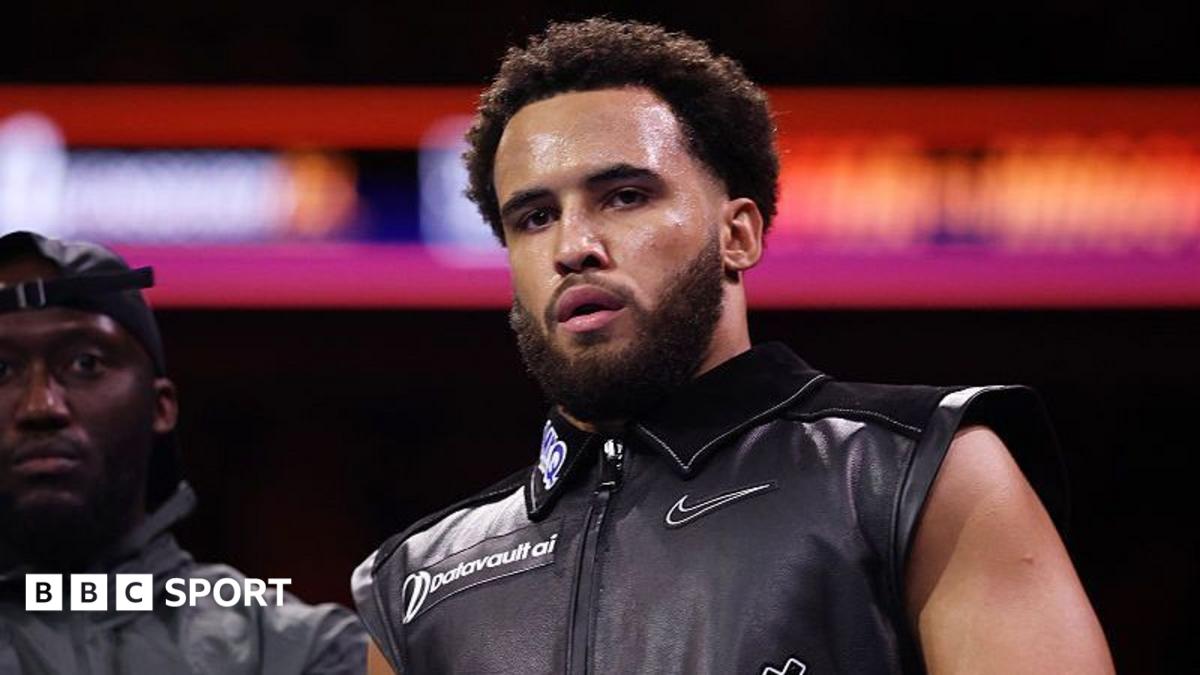
Moses Itauma vowed “I’ll be back” after failing in his attempt to become the second-youngest ever heavyweight world champion on Saturday.
Britain’s Itauma, 21, tore through his first 14 opponents but his team threw in the towel in the ninth round against Filip Hrgovic at O2 Arena, London.
Having appeared to punch himself out, Itauma was barely able to stand as Hrgovic, 34, applied pressure to end the fight.
“It wasn’t my night, we attempted greatness and just fell short to the more experienced man,” Itauma said on social media.
“I want to say congratulations to Filip Hrgovic on his win. And although I never reached my desired outcome, I believe I gained experience that I’ll take to my future fights.
“God bless, take care and I’ll be back.”

NORTON, Mass. — Ruoning Yin won the FM Championship on Sunday at the TPC Boston for her sixth career LPGA Tour victory, outlasting Hyo Joo Kim.
Yin ran in a 25-foot birdie putt on the par-5 12th for a share of the lead with playing partner Kim. The 23-year-old Chinese player parred the next five in breezy conditions and birdied the par-5 18th for a 2-under 70 and a two-stroke victory.
“I think this one definitely boost my confidence a little bit,” Yin said. “I just want to enjoy the moment.”
Kim shot 71. She dropped back with a three-putt bogey on the par-3 16th, missing a 9-foot par try. The South Korean player — a two-time winner this season — missed a 7-foot birdie attempt on the par-3 17th.
“At the end of the day it was Ronni,” Kim said.
Sei Young Kim chipped in for birdie on the par-3 11th to take a one-stroke lead in the final group, then dropped four shots on the next three holes with a double bogey and two bogeys. She shot 73 to tie for fourth.
Yin won twice in 2023 and three times in 2024, with a span of 672 days since her last win in the 2024 Maybank Championship.
“It’s just been so long since my last win,” Yin said. “I know I work hard and also my team, my mom is here. Just everything comes together.”
Allisen Corpuz was third at 11 under after a 68. Fellow U.S. Solheim Cup player Rose Zhang (68) was another shot back with Sei Young Kim.
Top-ranked Nelly Korda tied for 50th at 1 over after a 73 in the final event before the Sept. 11-13 Solheim Cup matches in the Netherlands.
European captain Anna Nordqvist finished her final final event on the LPGA Tour in tie for 38th. She was 1 under after a 72.
“I’m not really sure how to feel,” Nordqvist said. “Nothing ever prepares you for this moment. I’m definitely going to miss it.”
Sports
NFL roster cuts tracker 2026: Players released by all 32 teams, who are now subject to waivers


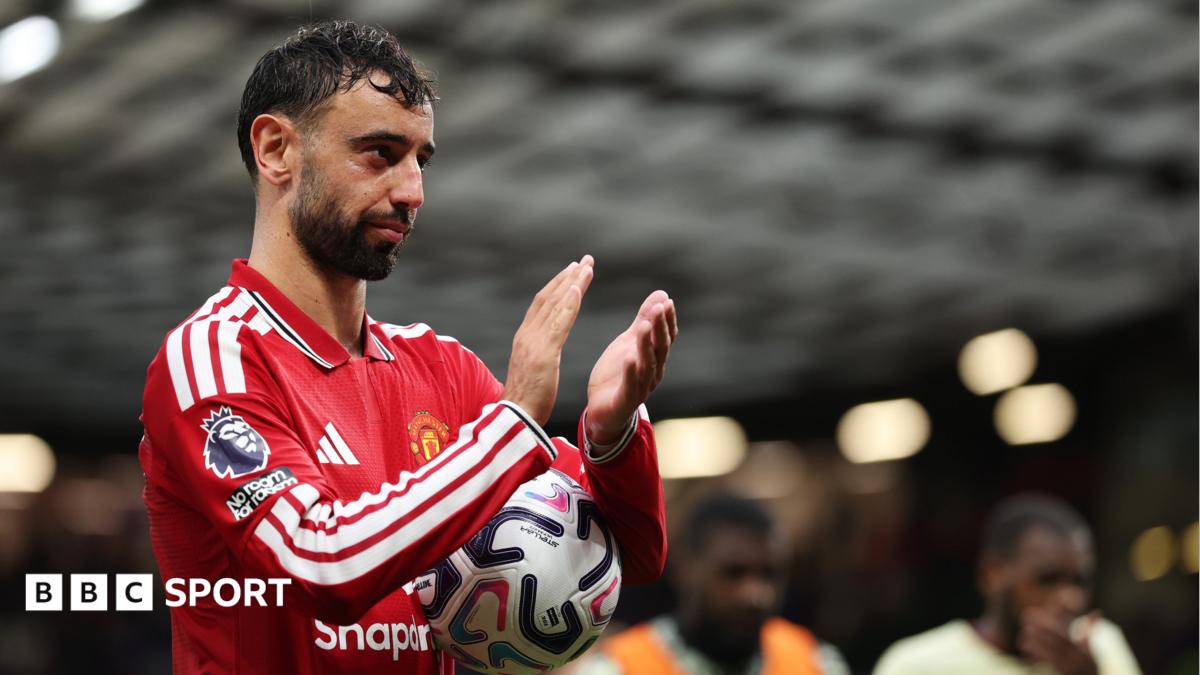
To sum up, the season started pretty badly for Fernandes, who was one of many players well below par in a shock 2-0 defeat at Hull City.
Matters improved significantly on Tuesday, as Fernandes collected the PFA Players’ Player of the Year award for his phenomenal contribution to United returning to the Champions League after a two-year absence.
Last season, he totted up a Premier League record of 21 assists.
Before the Ipswich game, he walked on to the pitch with the sons of PC Matthew Blades, who was tragically killed in a recent head-on collision on the A66 near Middlesbrough.
Once the match began, Fernandes was largely anonymous as the home side went a goal down to Gary O’Neil’s side.
But, when opportunity presented itself, Fernandes stepped up.
First, the 31-year-old fired home a blistering equaliser after Marcelino Nunez slipped under no pressure, presenting Matheus Cunha with a clear run at the Ipswich goal, which allowed him to set up his captain.
Fernandes then kept his cool to smash home a penalty in front of the Stretford End to make it 3-1 after an hour. Bearing in mind Fernandes missed two penalties in pre-season, there must have been a sizeable amount of personal pressure on the shot.
Fernandes completed his third United hat-trick seven minutes after that, although arguably all his previous efforts would have been overshadowed had he managed to find the net with an audacious 55-yard effort after Ipswich lost possession straight after the restart.
Goalkeeper Kjell Scherpen was backpedalling furiously and was relieved the ball ended up on top of his net rather than in it.
“He means a lot,” said Carrick, when asked to sum up Fernandes’ contribution.
“I mean, he’s the captain. He’s been here for a good number of years now and experienced a whole load of different emotions.
“Times like today, when you’re looking towards certain players to give us that little bit of something else, he did particularly well.”
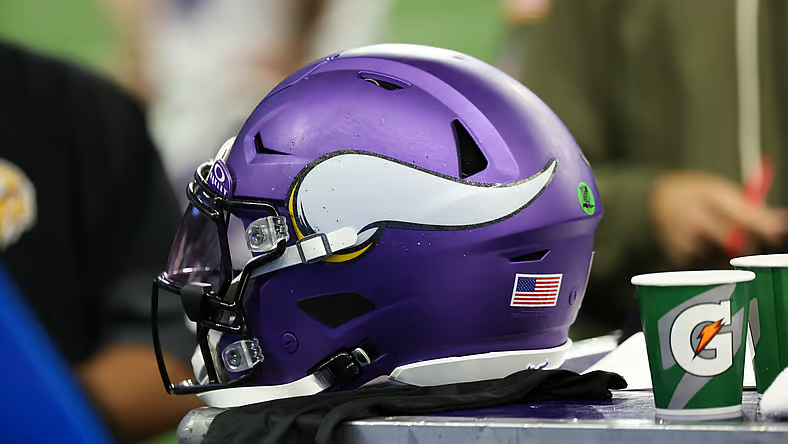

Recent years have seen the Minnesota Vikings do terribly when identifying talent in the draft. An update from earlier today isn’t going to make things look any better.
Walter Rouse played offensive tackle in college before getting shifted inside to offensive guard when he turned pro. He’s now looking for work despite boasting versatility, youth, and size. Tom Pelissero offers the news: “The Vikings informed OT Walter Rouse they’re waiving him, per source.”
Vikings See Yet Another Draftee Set Free
After the 2024 NFL Draft, GM Kwesi Adofo-Mensah referred to Rouse as a “bully.” If that’s true, then Rouse will be bullying within the trenches for a different football team.
A major part of what makes Minnesota a tough nut to crack is that the OT position is pretty loaded. LT1 Christian Darrisaw can be elite when he’s healthy. RT1 Brian O’Neill is the epitome of longstanding competence. Could these two become the envy of most of the NFL under the tutelage of new OL coach Keith Carter? Minnesota hopes so.

Similarly of note is the presence of OT3 Ryan Van Demark and new draftee Caleb Tiernan. In fairness, Tiernan could get kicked inside, but that’s something that will need to wait for the kid to overcome his ankle issue. Is Tiernan a new-and-improved version of Rouse?
Whoever signs Rouse is going to get somebody who boasts promise.
Indeed, Walter Rouse is a 25-year-old offensive lineman who played his college ball at Stanford and then Oklahoma. Nice mix of brains (Stanford) alongside knowing how to operate from within a football hotbed (Oklahoma). He stands at 6’6″ and weighs 330 pounds, meaning he was literally the Vikings’ biggest player prior to getting cut.
So far, Rouse has made a negligible impact on the field. He has only been involved in eight games across his pair of seasons, leading to 88 snaps on offense and 38 snaps on specials.
A team like the Philadelphia Eagles could make sense as a landing spot given that Chris Kuper is on their coaching staff, meaning there’s a built-in connection.

On Vikings Territory, there has been a recently published 53-man roster projection. So, too, is there a tracker to corral all of the day’s news. Check out that stuff.
Minnesota needs to be down to a maximum of 53 players by 5 p.m. CT.

Senior Editor for Vikings Territory & PurplePTSD . Twitter & Bluesky: @VikingsGazette. Email: k.joudry[at]vikingsterritory[dot]com. Canadian. Jude 1:24-25.
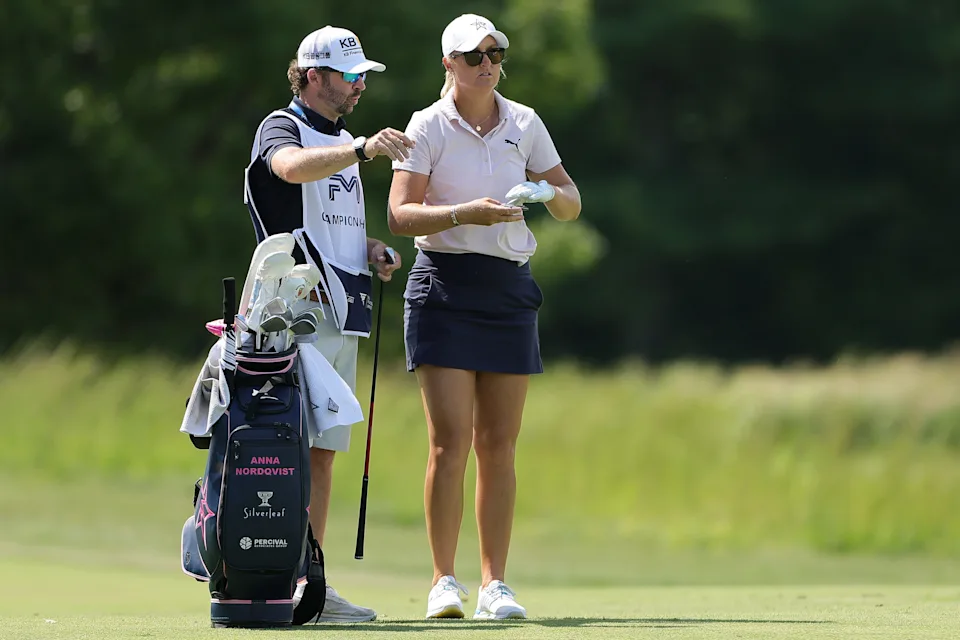
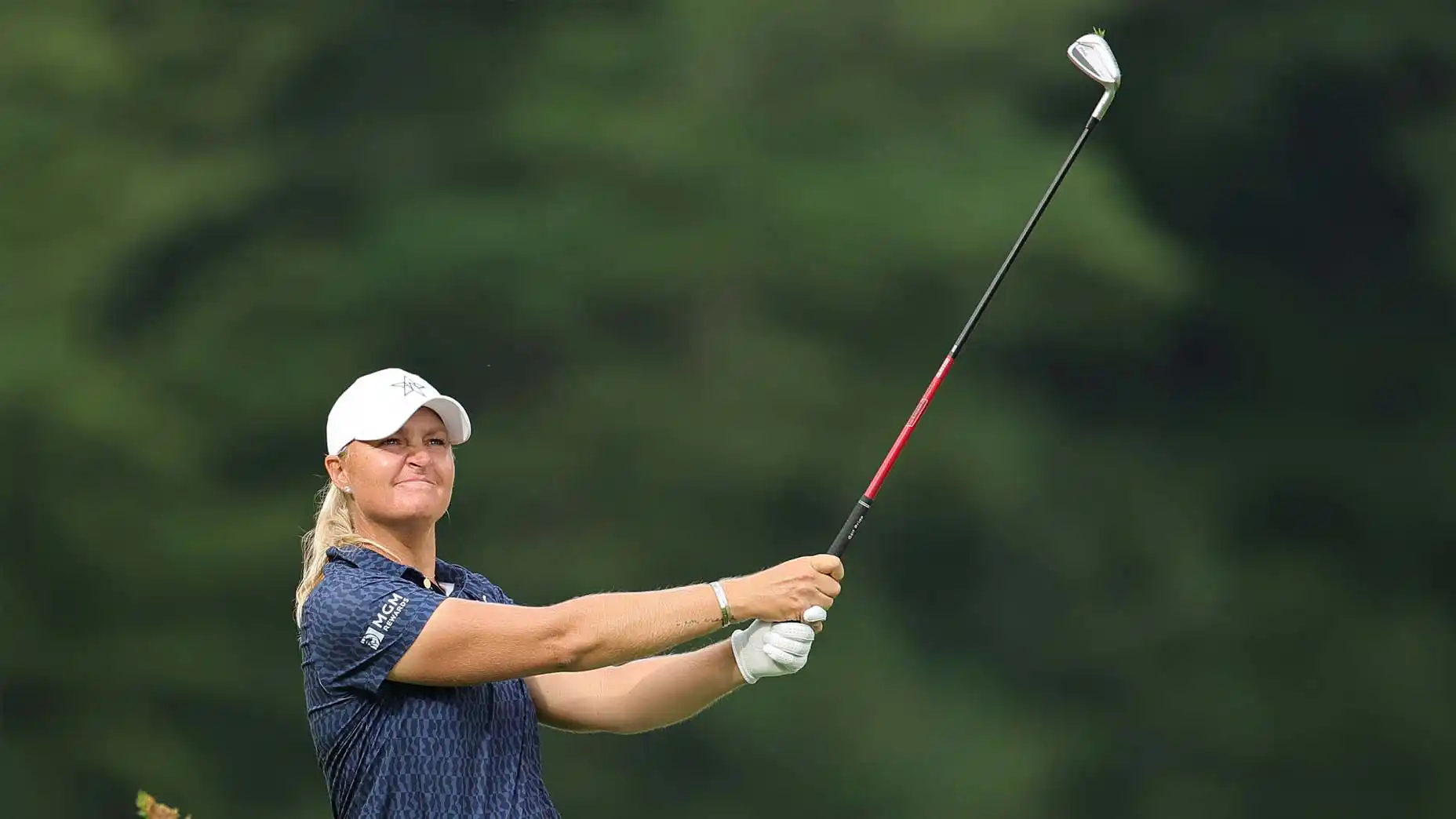
Anna Nordqvist opened the final round of the LPGA’s FM Championship with a birdie. It’s conceivably the last she’ll ever post on the tour that defined her.
Now 39, Nordqvist shot a 72 in her Sunday round, leaving her at 1 under for the tournament, which she announced earlier this week would be her last.
NORTON, MASSACHUSETTS – AUGUST 27: Anna Nordqvist of Sweden prepares to play her shot on the 13th hole during the first round of the FM Championship 2026 at TPC Boston on August 27, 2026 in Norton, Massachusetts. (Photo by Alex Slitz/Getty Images)

As she walked off the 18th green, she was greeted by a warm hug from fellow LPGA great Pat Bradley.
Advertisement
“She’s obviously been through this and know what it feels like,” Nordqvist said. “Obviously, no one else on Tour knows what it feels like to be here. I’ve always looked up to Pat Bradley, how she carries herself and everything she’s done for the game, how she keeps being around and showing up to Solheim Cups as a past captain.
“I feel like I’ve had a really good relationship over the years, so seeing her face just really made me smile.”
As Beth Ann Nichols chronicled earlier this week, after captaining Europe at the Solheim Cup in the Netherlands in two weeks, Nordqvist will close one chapter and begin another, this one away from the LPGA Tour spotlight. It’s a fitting endpoint for one of the most accomplished careers of her generation.
Nordqvist announced herself almost immediately after turning professional, capturing the 2009 LPGA Championship in just her fifth LPGA start following a decorated amateur career that included a brief stint at Arizona State. The tall, reserved Swede quickly became a fixture on Europe’s Solheim Cup teams, earning her first selection later that year and never missing another. Over the next 15 years, she compiled a 17-15-3 record, established herself as one of Europe’s most dependable competitors and even recorded the first hole-in-one in Solheim Cup history.
But Nordqvist admitted she’d grown weary of travel and knew this would be a good time to get out on her own terms.
Advertisement
“This week’s been quite hard. I played so well on Friday; had so much momentum; finished with a double bogey from really nowhere, and maybe feel like killed a little bit of momentum,” she said. “Yesterday I just felt so tired and exhausted mentally. Today I felt really good.
“So, yeah, just a lot of emotions. The tears are really close, but it’s obviously happy tears, too. I think like just having everyone’s support and Karen Stupples or the players and the caddies, was a lot of hugs this morning from guys who have been there throughout my whole journey. It just really means a lot that everyone is supporting me.”


Nordqvist was only the second player to win the British Girls’ Championship, the British Amateur and the Women’s British Open, joining England’s Georgia Hall.
For a player who rarely sought the spotlight, Nordqvist built a career defined by consistency, resilience and a knack for delivering on golf’s biggest stages. And truthfully, playing this long was never a part of her plan, but it ended up being exactly what she needed.
Advertisement
“Honestly, I never really thought I would still be playing at 39. I thought I would probably have been married and have kids by now, but my journey never really quite worked out that way,” she said. “Family has always been my number one priority and it always came before golf, so it was always something that I worked really hard to try to accomplish on the side. But, yeah, things didn’t quite work out the way maybe I thought, but my career kind of got a second chance.
“I feel like my life off the course is probably better, like it’s better than it’s ever been and I’m very happy and I have a very supportive boyfriend.
“So, yeah, I couldn’t be more grateful. I hope there is going to be a day when I get to be blessed to have my own family, too. That’s obviously part of why I’m stepping away now. Might not be an easy journey to get there, but I’m going to at least give myself a chance.”
This article originally appeared on Golfweek: Anna Nordqvist ends her storied LPGA career at 39
Sports
Six games, one defeat: How India produced a historic Women’s Hockey WC run | Other Sports News
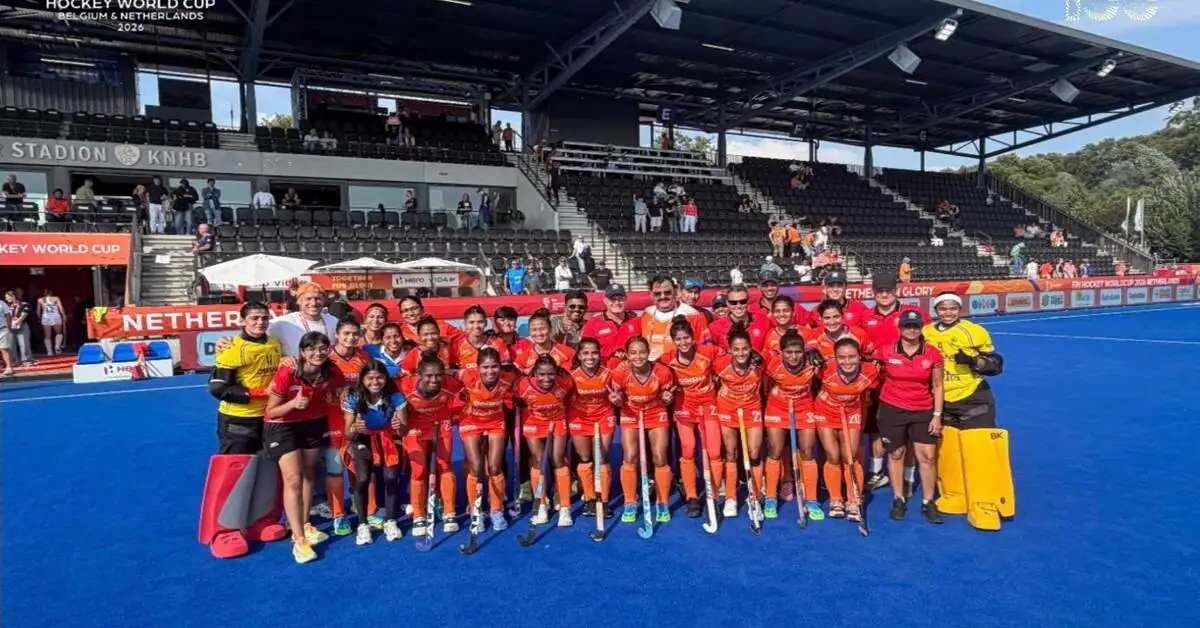
For more than five decades, India’s best finish at the Women’s Hockey World Cup had remained frozen in time. The fourth-place finish achieved by the inaugural Indian side in 1974 stood as the benchmark through generations of players, coaches and changing fortunes.
However, Salima Tete-led India’s women’s team have finally ended the wait with a historic campaign. Although they still failed to better or equal the 1974 result, the campaign proved that a new era of Indian women’s hockey is on the horizon.
India finished fifth at the 2026 Women’s Hockey World Cup, their second-best result in the history of the tournament and their best in 52 years. More significantly, they reached that position after playing six matches and losing just once, that too against the now-former defending champions and world No. 1 Netherlands.
There was no semi-final appearance and no medal at the end of the campaign. But the manner of the campaign suggested something potentially more important: India had begun to look comfortable against the world’s best, and the results tell the story — two wins, three draws and one defeat.
From holding Olympic silver medallists China to a draw in the opener to denying England and Australia, before ending the tournament with a 3-1 win over world No. 5 Germany, India consistently stayed in games that might once have slipped away.
A campaign built on resilience
India’s tournament began in Pool D for Phase 1 under the new format, with a 2-2 draw against China, a result that immediately offered encouragement.
China twice went ahead, but India twice found a response. It was an early indication that this was not going to be a team easily shaken by the reputation of its opponents.
The response was even stronger in the next game. India dismantled South Africa 6-1, producing their biggest win of the tournament and spreading the goals across the team. It was the sort of performance that demonstrated India’s attacking potential after the measured opening against China.
Then came England. The goalless draw may not have carried the excitement of a six-goal victory, but it said plenty about India’s changing identity. England piled on the pressure and won 12 penalty corners, yet India refused to concede.
The result took India through to the next stage and kept their maiden World Cup medal hopes alive.
A near-perfect second phase
India, after an undefeated run in the first phase, qualified for Phase 2 in Pool A alongside Netherlands, Australia and China.
India’s first game in the second phase was against Netherlands, who eventually supplied Salima Tete and her team with their only defeat.
The 2022 champions won the game 2-0, but even that scoreline carried a degree of encouragement for India. The Dutch controlled the contest and converted two penalty corners, yet India avoided the kind of collapse that can turn a contest against the world’s best into a rout.
It was the only time India left the field beaten. After that came another test of their defensive resolve against Australia. Again, India did not concede.
The 0-0 draw ended their hopes of reaching the semi-finals as they ended level on points with China and Australia at two points each, but the Kangaroos eventually sneaked ahead into the final four with a better goal difference.
The defence became India’s foundation
If there was one feature that defined India’s campaign, it was their ability to stay organised when matches became uncomfortable.
The clean sheet against England was particularly telling, given the sustained pressure and the number of penalty corners India had to defend.
The goalkeeping department also provided security, with Bichu Devi Kharibam making important interventions alongside the experience of Savita Punia.
India’s defensive discipline meant opponents had to work for almost every opening. That represented a significant change from some of India’s earlier World Cup campaigns, where moments of pressure could quickly become periods of sustained damage.
In 2026, India were increasingly capable of absorbing pressure without losing their shape.
The young players delivered when needed
The achievement becomes even more striking when viewed through the composition of the squad.
India had 11 World Cup debutants, meaning a significant part of the team was experiencing the tournament at this level for the first time.
Yet the newcomers did not look overawed. Players such as Ishika, Baljeet Kaur and Sunelita Toppo contributed alongside an experienced core that included Savita, Navneet Kaur, Deepika, Lalremsiami and captain Salima Tete.
That blend gave India something they have often lacked at major tournaments: the ability to combine youthful energy with the composure required when games become tight.
Salima and Navneet provided the spark
At the centre of India’s campaign was captain Salima Tete, whose speed and ability to carry the ball forward gave India an outlet whenever they came under pressure.
Her influence was not restricted to scoring goals. Salima repeatedly helped India move from defence into attack, giving the team a way to turn defensive situations into counter-attacking opportunities.
Then there was Navneet Kaur. The forward finished as India’s leading scorer at the World Cup with four goals, including two in the final match against Germany.
The 3-1 victory over Germany was the perfect way to close the campaign. Germany entered the match ranked fifth in the world. India responded with one of their most convincing performances of the tournament, with Navneet scoring twice and Ishika adding another to secure fifth place. It was not merely a victory. It was a statement about where India now belonged.
The change did not happen overnight
India’s fifth-place World Cup finish was not an isolated burst of form. They won the FIH Nations Cup earlier in the year, beating New Zealand 2-0 in the final. That triumph also earned them promotion back to the Pro League. The confidence from that campaign carried into the World Cup.
The return of Sjoerd Marijne as head coach has been another important part of the transformation. Marijne had previously guided India to their historic fourth-place finish at the Tokyo Olympics before returning to the women’s team in 2025.
His emphasis has been on rebuilding belief and creating a stronger team identity. That was visible throughout the World Cup. India did not always dominate possession or control matches, but they repeatedly showed an ability to remain in contests and find ways to survive difficult passages.
India’s World Cup history puts the finish in perspective
India’s fifth-place finish becomes even more significant when placed alongside their record at previous World Cups.
After finishing fourth in 1974, India were seventh in 1978 and 11th in 1983. They finished 12th in 1998, 11th in 2006, ninth in 2010, eighth in 2018 and ninth in 2022.
They also failed to qualify for five editions, i.e., 1986, 1990, 1994, 2002 and 2014, while missing the 1976 and 1981 tournaments.
For decades, the fourth-place finish from 1974 remained untouched. Now, only one Indian team has ever gone further.
The 2026 side has not matched that inaugural generation yet. But it has come closer than any Indian women’s team in more than half a century.
The bigger story
There is still room for India to improve. The biggest obvious area is scoring. They managed 11 goals across six matches, and their inability to turn more possession and opportunities into goals ultimately cost them a place in the semi-finals.
The draw against Australia was the clearest example. India defended well enough to keep a clean sheet, but could not find the goal that would have taken them into the last four.
So this was not a flawless campaign. But perhaps that is what makes it more encouraging. India did not need a string of unlikely upsets to finish fifth. They simply became extremely difficult to beat.
They drew with China. They beat South Africa. They held England. They lost to the Netherlands. They held Australia. And they finished by beating Germany.
Six games. One defeat. Five goals? No — five different opponents faced at the business end of the tournament, and only one team managed to beat them.
For a side that had spent decades searching for another World Cup breakthrough, India’s 2026 campaign offered something more valuable than a one-off result: evidence that the gap between India and the world’s leading hockey nations may finally be closing.

‘Castlevania’s New Release Officially Confirms the Return of a Fan-Favorite Fantasy Icon

Vigil stars Suranne Jones and Rosie Leslie on filming the new series
Deepti Sharma scripts history! Stunning 3/0 makes her world’s leading T20I wicket-taker | Cricket News





-

 Crypto World5 days ago
SpaceX stock could rise 75% to $240, JPMorgan says
-

 Fashion2 days ago
Weekend Open Thread: Maeve – Corporette.com
-

 Crypto World3 days ago
Bitcoin’s 22% rally now needs real demand to outlast Treasury liquidity boost
-

 Crypto World4 days ago
Warsh Jackson Hole keynote puts financial innovation first
-

 Crypto World6 days ago
A $30 Billion AI Fund Implodes, Now the SEC Is Investigating Wall Street’s Role
-

 Business3 days ago
Salesforce Stock Soars 19% as Blowout Earnings and Agentforce AI Growth Silence Software Skeptics
-

 Crypto World5 days ago
Did Trump Just Move SpaceX Stock With One Truth Social Post?
-

 Crypto World4 days ago
Elon Musk Grok Bot Promise: We Will Make You Whole if AI Loses Your Money
-

 Business4 days ago
Walmart takes aim at younger shoppers with new fashion brand
-
 NewsBeat4 days ago
Lindsay Clancy jury braces for closing arguments as judge tells court: ‘You’ve heard all the evidence’ – Live updates
-

 Crypto World2 days ago
Bitcoin price tests $82K resistance as Brandt stays long
-

 Business3 days ago
Apple Confirms September 9 Keynote and Reveals Its Full Pre-Order Schedule
-

 Crypto World4 days ago
NVIDIA revenue hits $96.2B as AI demand doubles
-

 Business6 days ago
Moderna CEO warns China is pouring state money into mRNA technology
-

 Business5 days ago
Thailand’s Eastern Economic Corridor Capital City (EECiti): Key Developments and Investment Opportunities
-

 Business6 days ago
NVIDIA Stock Drops Nearly 2 Percent to $210 on Seventh Losing Day Ahead of Critical AI Earnings
-

 Business2 days ago
iPhone 18 Pro Pre-Orders Could Shift to Saturday as Apple Reportedly Avoids September 11 Anniversary
-

 Business2 days ago
Onto Innovation Stock: AI’s Next Bottleneck Is Yield (NYSE:ONTO)
-
 Crypto World7 days ago
$92 Billion Nvidia Earnings Could Make or Break the AI Trade
-

 NewsBeat5 days ago
Trump’s trade truce with China faces test with Iran effort
You must be logged in to post a comment Login