
Sports
Detonator Jack’s drought-breaking win at Flemington in 2026


The VRC-CRV Winter Championship Series Final at Flemington saw an unexpected victor in Detonator Jack, who broke a long winless streak thanks to a favourable set of circumstances.
Previously winless for 952 days, Detonator Jack had struggled in the David Bourke Handicap at his prior start, finishing behind all other runners. However, he demonstrated a marked improvement third-up on Saturday to clinch the Listed mile feature by a short neck.
Sent out at odds of $20 with John Allen in the saddle, Detonator Jack recorded his first victory since capturing The Gong at Kembla Grange in November 2023. National assistant trainer Jack Turnbull explained that the stable had employed a variety of training methods to revive the horse’s old form.
“There were a lot of elements of the race today that worked for Jack in the sense of fitness, he was third up, blinkers were on, we got a nice cut in the ground and we drew low,” Turnbull remarked. “Still a little bit hesitant whether or not he wanted to be there or not, but credit to the whole team, we’ve been playing around them at home, tread, jumping, different track gallops, just trying to rejuvenate him and we got it done.”
“Tread training was a big factor, Track Kat (Katrina Anderson) had a bit to do with him there, and we’ve just schooled him down at Cranbourne. Obviously it’s been a long time between drinks, but we’ve kept saying that at home he’s wanted to be there, and he wants to do it, we just hadn’t seen it race day.”
Turnbull also highlighted the specific booking of jockey John Allen, who had previously guided the horse to three wins early in his career. Allen, however, confessed to being skeptical about the horse’s ability to turn his form around so swiftly.
“He’s always had good ability and he’s obviously won better races than today,” Allen said. “I was very sceptical looking at his run the last day, I thought it was very plain, but Ciaron said he’d changed a few things up during the week and done a bit of schooling with him and stuff, just trying to sharpen him up and it’s certainly done the trick.”
Check out the betting markets for the race at Australian betting sites.

Sports
IND vs ARG hockey live streaming: Where to watch today’s World Cup match? | Other Sports News

The Indian men’s hockey team will face Argentina in a must-win Pool E encounter of the 2026 Hockey World Cup at the Wagener Hockey Stadium in Amstelveen on Monday, August 24, with their semi-final hopes hanging by a thread.
India entered the second phase without any carryover points after finishing second in Pool D, while Argentina carried three points into Pool E after topping Pool A. However, the equation has changed after both teams suffered defeats in their opening Pool E matches. India went down 1-3 to defending champions the Netherlands, while Argentina lost 1-3 to England.
With the top two teams from Pool E advancing to the semi-finals, India must beat Argentina by atleast 3 goals margin and hope for a favourable result in the Netherlands-England match.
India face a do-or-die battle
India’s campaign has been marked by attacking quality but also moments of inconsistency. They bounced back from a 2-4 defeat to England in the pool stage by beating Pakistan 5-3 to secure second place in Pool D and progress to the second phase. Harmanpreet Singh and Abhishek scored twice each in that victory, while Hardik Singh also found the net.
Against the Netherlands, India showed considerable defensive resilience for long periods and went into half-time level at 0-0. However, the Dutch eventually broke through in the third quarter before adding two more goals in the final quarter. Harmanpreet converted a penalty corner to briefly bring India back into the contest, but Thijs van Dam’s goal four minutes later ended India’s hopes of a comeback.
Harmanpreet’s penalty-corner threat will again be crucial against Argentina. The Indian captain has been among his team’s leading performers at the tournament, while Abhishek’s pace and ability to attack space provide another major outlet.
Argentina remain a dangerous opponent
Argentina enter the contest with renewed confidence after beating England 3-1 in their second-phase match. The result kept their own campaign alive and, importantly for India, ensured that Harmanpreet Singh’s side still have a mathematical route to the semi-finals.
Argentina had also impressed during the first phase, winning all three of their matches. They defeated Japan 3-0 in their opening game before recording victories over the Netherlands and New Zealand, including a 7-1 demolition of New Zealand.
Their attacking depth and ability to create pressure inside the circle will present another stern test for India’s defence. Argentina’s speed in transition can also punish misplaced passes and turnovers, something India will need to guard against after conceding three goals to the Netherlands.
India’s recent record against Argentina will nevertheless offer some encouragement. The two sides have regularly produced competitive contests in the FIH Pro League, and India have the quality to trouble Argentina if they can maintain possession and execute their attacking moves with greater precision.
India have no room for error
The Netherlands have already put themselves in a commanding position in Pool E after beating India, while the result between Argentina and England has left India with a narrow route into the last four.
For Harmanpreet and his teammates, the equation is straightforward: they need to beat Argentina, preferably by a convincing margin, and then hope the Netherlands defeat England. Goal difference could determine which team finishes second in the pool.
India therefore face their biggest test of the tournament so far. Against an Argentina side that has already shown its attacking quality, India will need defensive discipline, better conversion from penalty corners and greater composure in possession.
Anything less than victory will end India’s hopes of reaching the semi-finals, making the Argentina clash a true do-or-die World Cup encounter.
India vs Argentina Men’s Hockey World Cup Phase 2: Live telecast and streaming
When will India vs Argentina men’s match in Phase 2 of Men’s Hockey World Cup be played?
The India vs Argentina FIH Men’s Hockey World Cup Phase 2 match will be played on Monday, August 24, 2026.
Where will India vs Argentina men’s match in Phase 2 of Men’s Hockey World Cup be played?
The match will take place at the Wagener Hockey Stadium in Amstelveen, Netherlands.
What time does India vs Argentina men’s hockey match in Phase 2 of Men’s Hockey World Cup start?
The India vs Argentina FIH Men’s Hockey World Cup Phase 2 match is scheduled to begin at 6:15 pm IST.
Where can I watch India vs Argentina men’s hockey match in Phase 2 of Men’s Hockey World Cup live on TV?
The FIH Men’s Hockey World Cup is being broadcast live on the Star Sports network in India.
Where can I watch India vs Argentina men’s hockey match in Phase 2 of Men’s Hockey World Cup live online?
The India vs Argentina FIH Men’s Hockey World Cup Phase 2 match will be available for live streaming on JioHotstar through its app and website.
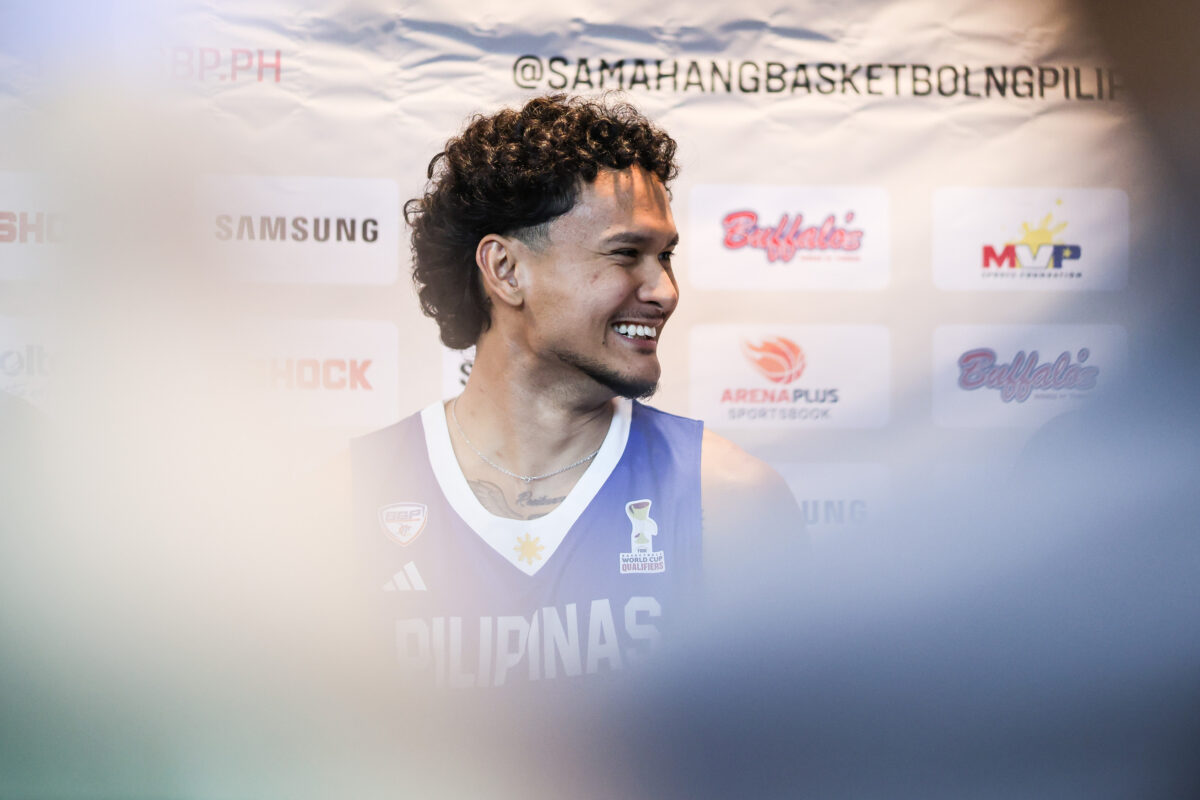

Gilas Pilipinas guard Juan Gomez de Liano during a press conference.–MARLO CUETO/INQUIRER.net
MANILA, Philippines—Converge now has three players in the Gilas Pilipinas pool.
And FiberXers guard Juan Gomez de Liano couldn’t be prouder to share the national team experience with his Converge teammates.
“This definitely means a lot to us, not just for our family but for our team,” said Gomez de Liano, who has been pushing for Arana’s national team inclusion.
READ: Juan Gomez de Liano backs Converge teammate Justin Arana for Gilas

Converge big man Justin Arana during the PBA Governors’ Cup.–MARLO CUETO/INQUIRER.net
“This is something the organization should be proud of. Me, Justin (Arana) and Balti (Baltazar) won’t take this for granted. Not everyone gets the opportunity to represent the country.”
Justine Baltazar was the first FiberXer to get a national team call-up before Gomez de Liano followed suit. Justin Arana could make his debut in the upcoming fourth window of the Fiba World Cup Asian Qualifiers if he makes the final cut.
“We’ll be taking it day by day, soaking in as much as we can from all the great teammates that we have,” said Gomez de Liano.
READ: Justin Arana eager to give his all for Gilas Pilipinas
“It’s truly an honor to represent not just Converge. Now we have the opportunity to represent the whole country. It’s a whole different field.”
The young trio helped the FiberXers post a 5-4 record in the PBA Governors’ Cup, good for third place in Group A before the league went on a break to give way to the national team’s campaigns in the qualifiers and Aichi-Nagoya Asian Games.
Gilas begin the second round of

SEATTLE — Seattle slugger Cal Raleigh homered in his first at-bat against the Philadelphia Phillies on Tuesday night and tied a Mariners’ record with homers in four consecutive at-bats.
Raleigh led off the second inning against Philadelphia’s Aaron Nola with a 362-foot shot to right field for his 18th homer of the season.
The four-homer streak matched the Seattle record set by Mike Cameron on May 2, 2002.
The homer came in Raleigh’s first at-bat after the switch-hitting catcher hit three homers in a 9-2 win against the Phillies on Monday night. Raleigh walked in his next plate appearance in the fourth inning, and the streak ended in the sixth with a strikeout against Nola.
The Mariners beat the Phillies 4-1.
Raleigh had struggled all season after finishing as the runner-up for the AL MVP last year with 60 home runs. He entered the series against Philadelphia with a .159 batting average and 14 homers. On Monday, he was 3 for 3 with a walk between the first and second homers.
The Mariners’ team record for homers in a two-game span is five, set by Edgar Martinez on May 17-18, 1999. The last Seattle player to hit four home runs over two consecutive games was Kenji Johjima on June 24-27, 2006.
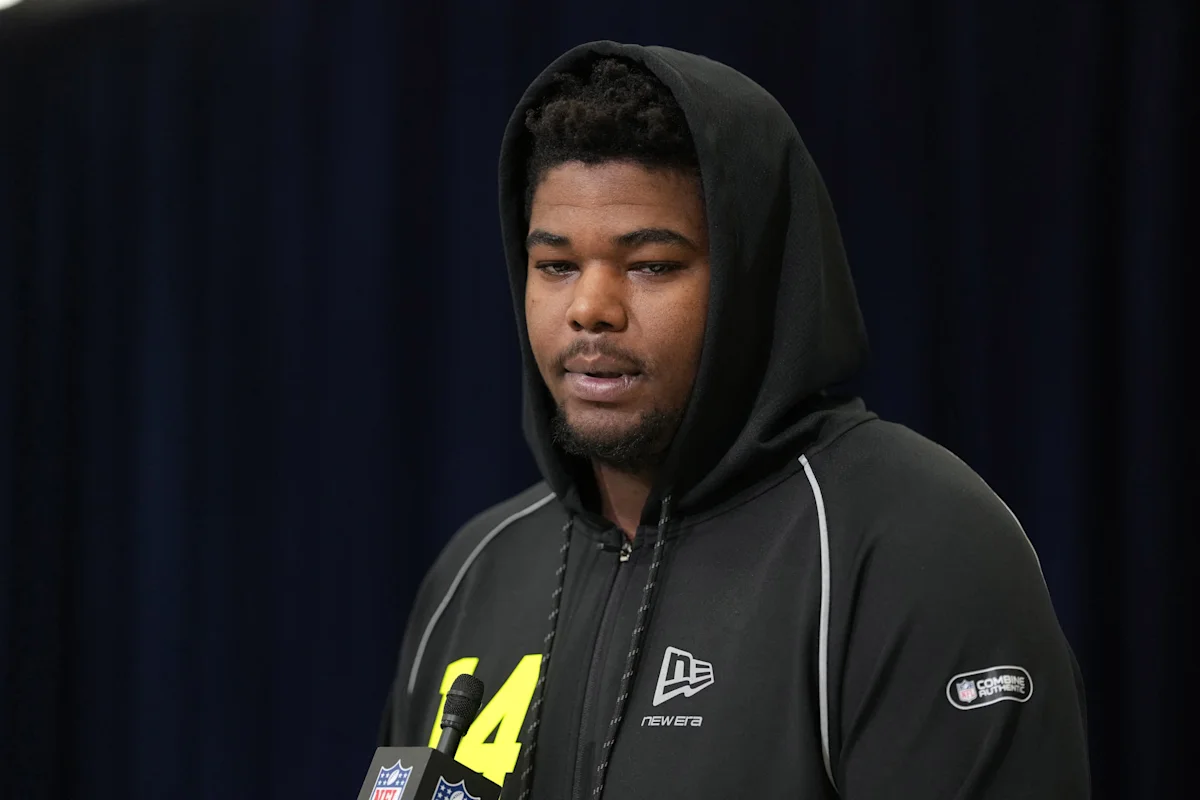
There is an odd loophole that Notre Dame has been included right as the season is set to begin, players gaining an extra year of eligibility that didn’t expect it.
We saw now former Irish defensive lineman Junior Tuihalamaka take advantage of this ruling committing to LSU, and others are doing the same, but with different circumstances. The edge wasn’t in an NFL camp, as Zxavian Harris and Dae’Quan Wright had been. They’ve both committed to the Tigers after being in the professional ranks.
Advertisement
Now, here’s where it gets interesting. Both the Big Ten and SEC have come out against “signing players who have been part of professional organization’s” according to Ross Dellenger. He’d go on to add that Notre Dame also is joining the two power conferences in opposing those kind of additions.
This is the right move for the Irish, as head coach Marcus Freeman has already spoken on the issue, and gave the reason why Tuihalamaka couldn’t rejoin the team. It’s the right move for every team honestly, as it doesn’t have the college football-feel to it. Hopefully this all gets resolved soon, but the good news is that this will be the only time it will ever happen due to the lateness of the court ruling.
Contact/Follow us @IrishWireND on X (Formerly Twitter), and like our page on Facebook to follow ongoing coverage of Notre Dame news, notes, and opinions.
Follow Mike on X: @MikeFChen
This article originally appeared on Fighting Irish Wire: Notre Dame makes its stance known on taking players from NFL rosters

Liverpool will not be allowed to host Real Madrid in the league phase of this year’s Champions League under new rules.
Real Madrid have visited Anfield during the group stage for the past two seasons running, with Alexis Mac Allister and Cody Gakpo sealing a 2-0 victory in the 2024-25 season and Mac Allister scoring the only goal of their encounter the following campaign.
However, Uefa has introduced a ruling to avoid the same exact fixture being repeated in the league phase of Europe’s premier competition – which was revamped to the current format for the 2024/25 season – for three years running.
Andoni Iraola’s side could still be drawn to visit the Bernabeu in the league phase, which would not fall foul of the regulations.
Paragraph 16.03 of last season’s Champions League regulations notes: “Uefa administration may determine alternative conditions for the draw in accordance with the principles set by the Club Competitions Committee and may adapt any of the conditions of the draw to avoid deadlock situations and/or take into account any relevant constraints in light of decisions taken by the UEFA Executive Committee.
“The Uefa Club Competitions Committee has determined an additional condition that may be applicable to the Uefa Champions League draw for the 2026/27 season, deciding that any individual fixture between the same two teams may not be repeated in the same competition with the same home team for three consecutive seasons.
“This means that if any teams that already played against each other in the league phase of the Uefa Champions League in the 2024/25 season are again drawn against each other, with the same home team, in the league phase of the Uefa Champions League in this 2025/26 season, those teams will not be able to be drawn against each other with the same home team in the 2026/27 season.”
The draw for this season’s league phase will be made on Thursday at a ceremony in Monaco.
The draw will arrange the eight matches each team contests in the 36-team first phase – facing two teams from pots one, two, three and four. Half of the matches will be at home, the other half away.
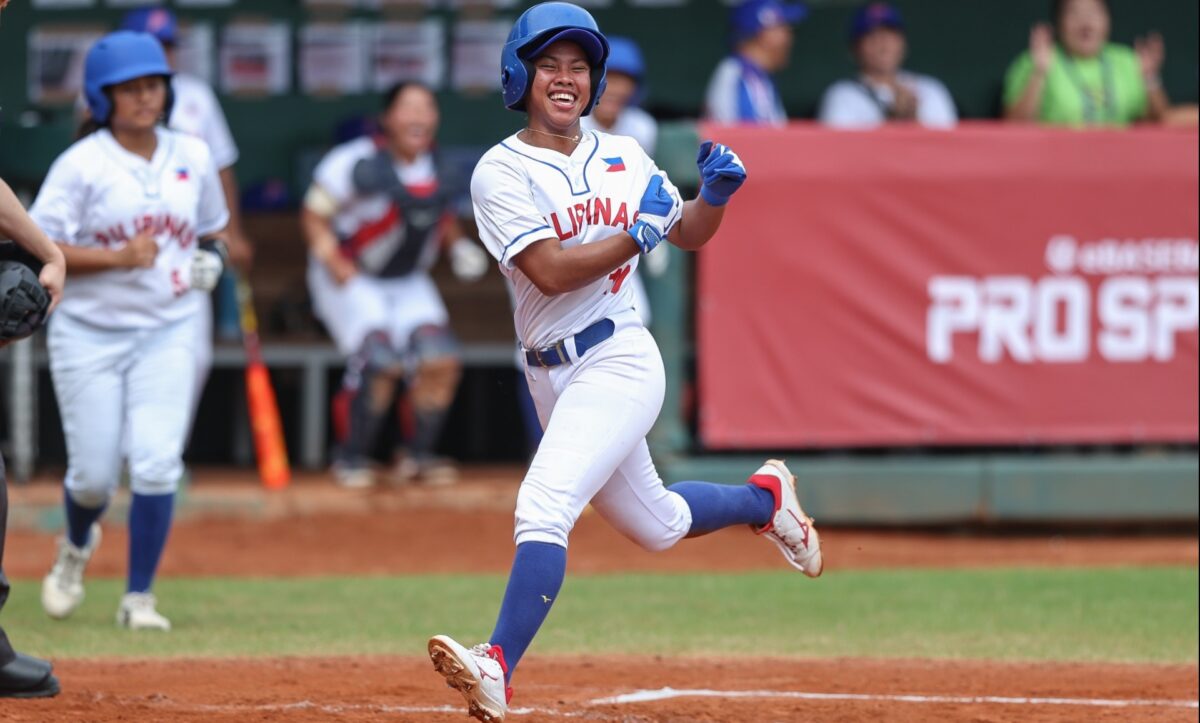

WBSC PHOTO
MANILA, Philippines–The Philippine women’s baseball team recorded its first-ever win in the WBSC Women’s Baseball World Cup after blanking Cuba, 6-0, on Wednesday in Tainan, Taiwan.
A five-run fourth inning enabled the Filipina batters to pull away and register a breakthrough result after being handed a 3-0 defeat by defending champion Japan to begin their debut campaign the other night.
Madaelene Domaug, Chastene Jover, Veronica Velasco and Mae Langga each had an RBI in that decisive inning to give winning pitcher Maria Christine Bautista enough run support.
READ: PH falls to Japan to start Women’s Baseball World Cup campaign
Bautista allowed just two hits and struck out two batters in 4 2/3 innings for coach Saki Bacarisas’ squad.
Team Philippines improved to 1-1 in the group, with a game at hand against Great Britain being played as of posting time.
Martine Dominique Francisco put the Philippines on board in the bottom half of the first when she singled off losing pitcher Adriana Carrazana Urquiza to score Richelle Toledo from second.
Toledo scored after reaching base on a fielding error by third baseman Jessica Herrera before stealing second during Mary Nichole Padasas’ at-bat.
READ: Philippines chases Finals berth in Women’s Baseball World Cup
The Philippines began to pull away with one out in the fourth when Angel Kaye Bedano drew a walk, stole second, and advanced to third on Helga Campos’ fielder’s choice.
Domaug, at-bat, reached safely at first on a bunt that scored Bedano. Jover also got to first on a bunt that enabled Domaug, who earlier reached second on a fielder’s choice, to reach home to make it 4-0.
Jover would score on the next at-bat on a sacrifice fly by Velasco before Langga capped off the onslaught two batters late with a single to center to drive in Toledo.
The Big Ten has passed a rule after meeting Tuesday that forbids players from returning from the NFL to play for a Big Ten program. Any underclassmen who declared for the NFL Draft and did not withdraw, signed a contract with a pro sports league or was officially on a professional roster is prohibited from returning.
“The Big Ten Conference announced Tuesday the unanimous adoption of a conference rule to prohibit football players who have signed a professional contract, were on a professional roster at any point or declared for the NFL Draft as an underclassman without withdrawing, from maintaining eligibility for athletic competition at a conference institution,” the conference said in a statement. “The conference continues to evaluate potential rules restricting professional athletes in other sports from conference competition.”
Sources confirmed to CBS Sports that the league and its athletic directors voted unanimously in its discussion concerning player eligibility.
The decision arrives amid growing legal uncertainty and a recent push from former college players seeking another opportunity through the transfer portal.
On the surface, the Big Ten’s stance protects roster stability and prevents college football from becoming a fallback option for professionals. .
Without federal legislation or a binding national standard, however, this issue will continue to surface in courtrooms. The Big Ten has made its position known, but the final answer remains beyond the conference’s control while college football waits for clarity.
Big Ten limiting its reign?
By choosing not to engage in discussions with NFL players seeking a return to the college ranks, some of the league’s top programs will not be competing for top-end talent against others in the championship conversation — namely LSU and Lane Kiffin.
Ohio State’s Ryan Day doesn’t like the idea of NFL athletes returning to college football, but he stopped short Monday of saying his program would not pursue them.
“I told myself I would stop saying this is crazy. So I’m not gonna say that,” Day said. “But to think that we’re in a situation where we’re this late in the season, and our rosters are not locked in is frustrating at the very least … So what does that mean for us? That’s the bottom line. In my opinion, the conferences have to decide if there’s a point where their rosters have to be locked in. Because once some of these guys become available, adding them to the roster is going to provide an advantage for certain teams. So we’re certainly having conversations; I’ve had conversations with (Big Ten Commissioner) Tony Petitti about this. I know he’s all over it and trying to do what’s best for the conference.
“But we also — if there are teams that have some players out there who are cut from NFL rosters that are gonna be on other teams, we (Ohio State) have to at least consider it and look at it. Do I like anything about it? Absolutely not. But we gotta do what’s right for Ohio State. So it’s sort of a day-to-day thing right now. And like anything, we’re just gonna try to adapt.”
The Big Ten’s decision to shut the door on former NFL players returning to college could create a talent-acquisition disadvantage for its top programs. If courts continue granting eligibility and other conferences leave the option open, contenders elsewhere may have access to older, physically developed players with professional experience.
That matters in the expanded playoff era, when depth and roster maturity often decide games in December. Ohio State, Oregon and the league’s other championship hopefuls will still recruit at an elite level, but voluntarily eliminating a potential player pool adds another restriction in an already competitive personnel market every offseason.
LSU taking advantage of broken system
Kiffin has defended LSU’s pursuit of players returning to the college ranks and has already added several pieces this week, including 6-8, 340-pound defensive tackle ZXavian Harris and potentially Cleveland Browns tight end Dae’Quan Harris, who also played for him at Ole Miss.
Kiffin’s job at LSU is to acquire talent, win football games and hunt championships, and his pursuit of Wright is another reminder that few coaches navigate college football’s lawless landscape better.
Wright’s decision to enter the transfer portal after reaching the NFL would have sounded absurd not long ago. Now, amid courtroom victories, temporary restraining orders and eligibility rulings that continue to erase the sport’s old boundaries, it represents another opportunity.
Kiffin is not responsible for cleaning up the NCAA’s mess. He is responsible for building LSU’s roster, and if the rules — or a judge — allow him to pursue an NFL player, he likely sees it as negligent not to make the call.
“Through (players) winning injunctions and entry into the portal, they are available to recruit,” Kiffin said Monday. “Ourselves and many places around the country are recruiting them. Because of the rulings, they are going to play for you or someone else. We made the decision to recruit them.
“It’s wrong to be critical of these kids. They were granted a fifth year, and a judge said they were wronged. In general, should NFL players come back to college? I believe it doesn’t matter what I believe; the answer would be no. I think every circumstance should be looked at differently. This is a very unique circumstance.”
Oregon’s Dan Lanning takes firm stance
Like the Big Ten’s opinion, Lanning wants opposes recruiting former college players back to the sport.
“I think there are a lot of negatives that are involved around this,” Lanning told reporters this week. “One, once you go to the NFL, to me, you’re in the NFL. You don’t get the opportunity to come back. Two, most of us have built our rosters. You have a limited roster now.
“So if you’ve invited somebody back to your team, that means you’re kicking somebody else off your team to match your roster limits. I don’t think that’s fair to players who worked all summer, all spring, and put themselves in position to be ready to work for a team.”
Alabama coach Kalen DeBoer’s take on the matter closely resembles Day’s words surrounding possible roster enhancement.
“There’s a possibility out there. I can’t control that. I can’t worry about that. Just got to see how things work,” DeBoer said Monday, when asked about ex-Alabama players from the 2022 cycle who could theoretically return to the SEC.
NEWYou can now listen to Fox News articles!
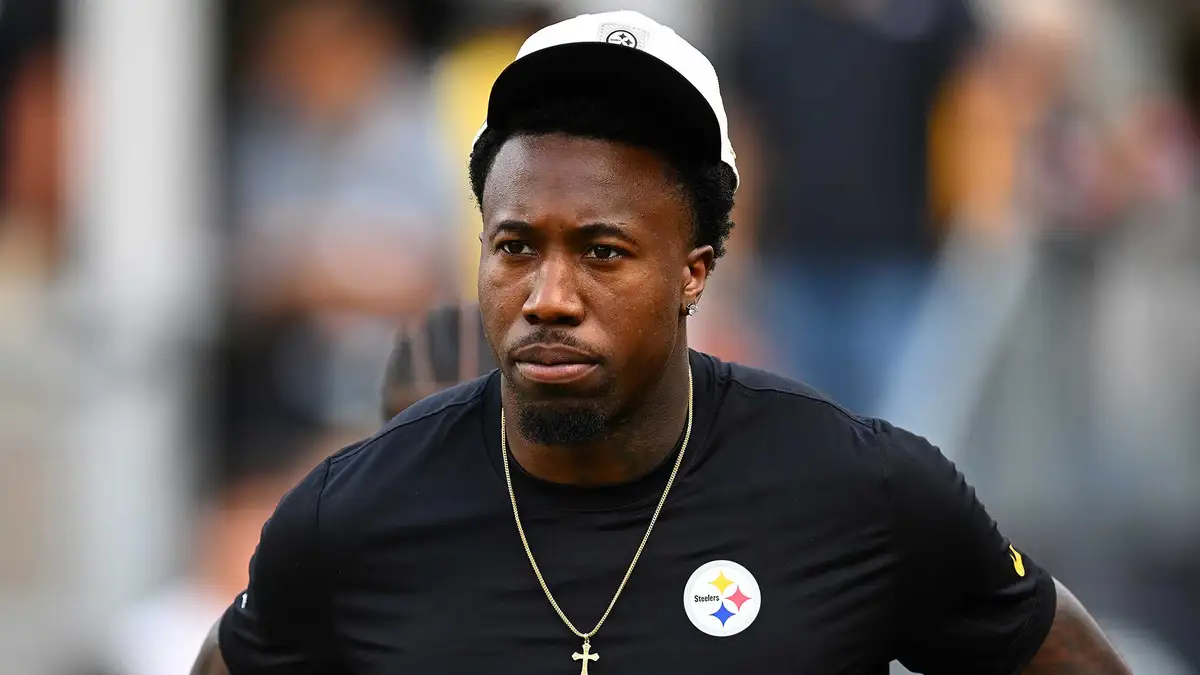
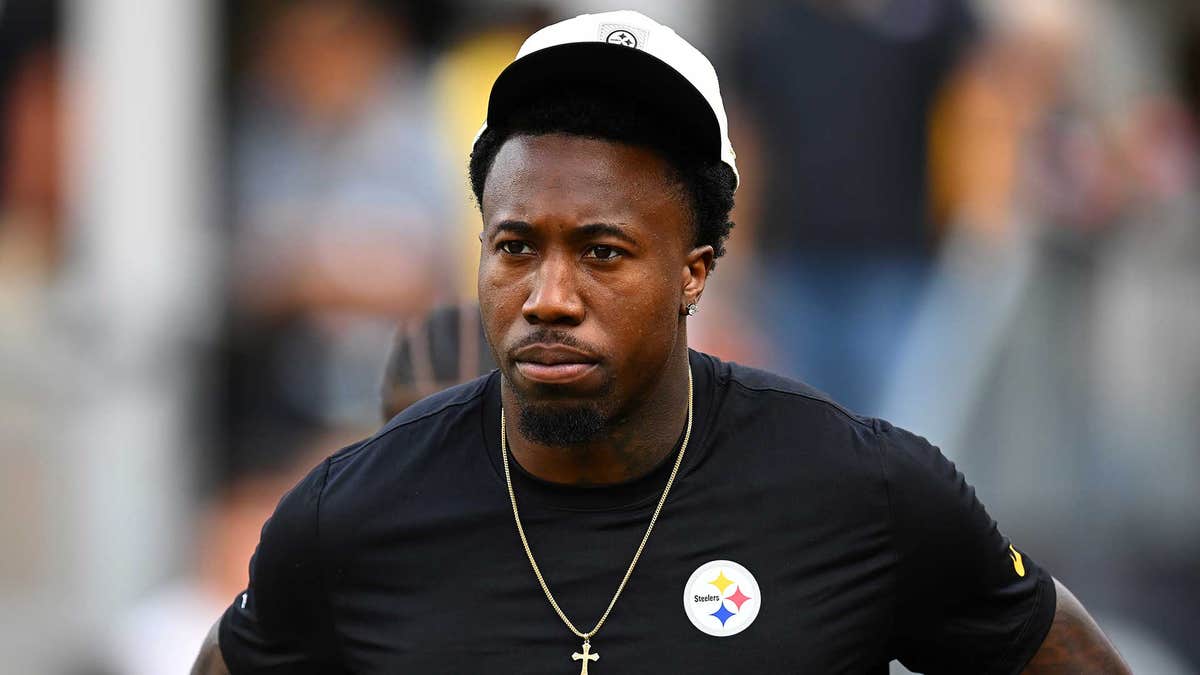
Mike McCarthy wants the chance to work with Joey Porter Jr. When McCarthy gets that chance is anyone’s guess, the Pittsburgh Steelers coach included.
McCarthy said Monday that the club and the fourth-year cornerback are at an impasse as the two sides try to work out a new deal. The Steelers placed Porter on the physically unable to perform list when training camp opened with what the team described as a back issue that flared up during a mobility test.
It seems Porter’s back problems are just part of the reason he has yet to take the practice field with the season opener against Atlanta less than three weeks away.
“I learned this in my early years as a head coach, you have to separate the business from the football,” McCarthy said. “Sometimes it’s easier than others.”
Porter is in the final season of the four-year deal he signed after the Steelers selected him with the first pick of the second round in 2023. While Pittsburgh has locked up other members of that draft class — including outside linebacker Nick Herbig and tight end Darnell Washington — Porter’s status seems a little more uncertain.
The 26-year-old is coming off his best season as a pro, and he said during minicamp in June that he long felt he’s one of the top players at his position and that he believes he will be paid that way.
The top of the cornerback market has been particularly hot of late, with Seattle’s Devon Witherspoon agreeing to a massive new deal and New England’s Christian Gonzalez getting offered one in recent weeks.
Though Porter, who has three interceptions across three seasons, might not be in that neighborhood yet, he also might not be far off. Though he has deep ties to Pittsburgh — he grew up in the city while his father, Joey Porter Sr., played and then later coached for the Steelers — he didn’t rush to sign his rookie deal in 2023, waiting until the eve of training camp to do it.
Porter essentially “held in” during minicamp, participating in individual drills but staying out of full 11-on-11 work, a not uncommon tactic by players seeking new contracts.
McCarthy described the situation as a challenge, in part because the entirety of Pittsburgh’s defensive staff is in its first season.
“Every one of us has a contract,” McCarthy said. “The organization, they have beliefs and so forth. So that’s where we are.”
While Porter remains out, veteran defensive back Jalen Ramsey and rookie first-round offensive tackle Max Iheanachor returned to practice on Monday.
Ramsey has been on the PUP list since the start of camp because of a knee injury sustained during minicamp in June. The eight-time Pro Bowler said the defense is still getting up to speed and it’s important for the entire secondary to be available when the Falcons visit on Sept. 13.
“They need to pay Joey Porter,” Ramsey said.
Iheanachor, taken 21st overall in the draft, hadn’t practiced since hurting his upper body on Aug. 6. McCarthy didn’t rule out Iheanachor making an appearance when Pittsburgh wraps up the preseason on Thursday night in Buffalo.
“We got two padded practices (this week), so it’ll be a really good indication of how much he’ll be able to play personally,” McCarthy said. “We’ll see how it goes.”
Reporting by the Associated Press.
Sports
Abid Mushtaq, Nishant Sindhu wrap up West Zone tail as North Zone reach Duleep Trophy semis | Cricket News

Left-arm spinners Abid Mushtaq and Nishant Sindhu needed only 6.3 overs on the day 4 morning to wrap up West Zone’s innings as North Zone completed a 52-run win and booked their place in the Duleep Trophy semi-finals.West, chasing 287 for victory, resumed the final day at 220/7 with Urvil Patel on 25 and Tanush Kotian yet to score. But they could add only 14 runs before being bowled out for 234 in 57.3 overs.Mushtaq, who had figures of 4/60 from 22 overs, got things moving by dismissing Kotian. He then removed Tushar Deshpande for five after the batter had faced 18 balls. Deshpande was caught by Abdul Samad.Mushtaq came close to completing a second five-wicket haul in the match, but it was Sindhu who ended West’s resistance by trapping Urvil Patel lbw.Mushtaq was named Player of the Match for his match figures of 9/99.The game had turned in North Zone’s favour on the third day when West captain Ruturaj Gaikwad was run out for 66 off 70 balls. Gaikwad had added 111 runs with Musheer Khan, who made 96.West were 195/3 at that stage and appeared to be in control of the chase. But they lost Gaikwad and Musheer among four wickets in less than seven overs, adding only 25 runs during that period. They ended the third day in a difficult position.With several deliveries keeping low on the pitch, West’s task on the final day was difficult. They needed 67 runs with only three wickets left.North Zone will now face South Zone in the semi-final, while East Zone will meet Central Zone. Both semi-finals begin at the COE from August 30.Before the match, North Zone coaches Ajay Sharma and Sarandeep Singh made a controversial selection call by leaving out Sanat Sangwan, the third-highest run-scorer in the last Ranji Trophy season with 828 runs.Yash Dhull was picked in his place despite having scored 381 runs in the previous Ranji Trophy season.Dhull made nine and zero in the two innings.Brief Scores: North Zone 251 and 222. West Zone 187 and 234 all out (Musheer Khan 96, Ruturaj Gaikwad 66; Abid Mushtaq 4/60).
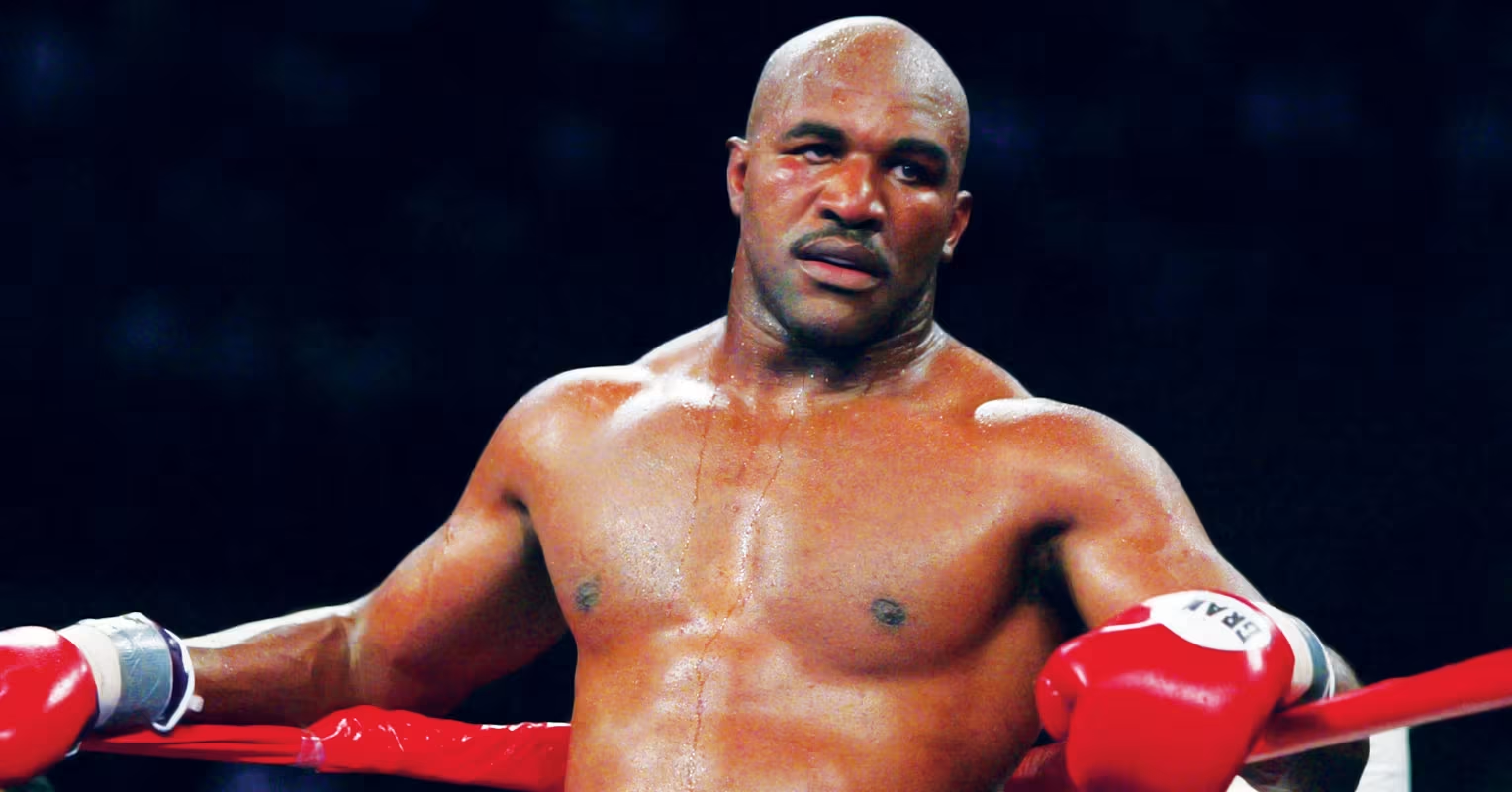

Evander Holyfield believes there is one active fighter that even he may have struggled against.
Holyfield is widely regarded as one of the greatest heavyweights of all time, having began his career in the cruiserweight division and becoming undisputed.
Until Oleksandr Usyk repeated the feat in 2024, Holyfield was the only man to be undisputed at both cruiserweight and heavyweight, with his success in the banner division seeing him defeat the likes of Mike Tyson, Riddick Bowe, George Foreman and Larry Holmes.
Holyfield remains the only fighter in history to be a four-time world heavyweight champion, but despite all of his accomplishments, he believes that Usyk himself would prove very difficult for him to beat.
Speaking to Boxing Social, ‘The Real Deal’ explained why he thinks it would have been so tough.
“It probably [would have] been difficult for me [to beat him]. Guys that I was real good with were bullies. A guy that was aggressive. I handle very aggressive fighters real well.”
“If you ever want to know how a guy would give a guy a problem – find somebody just like yourself. People who [weren’t] aggressive were difficult.”
After his own undisputed reign at cruiserweight, Usyk has established himself as the best heavyweight of this generation, defeating Tyson Fury, Anthony Joshua and Daniel Dubois all twice each to become a two-time undisputed champion.
After an underwhelming performance against kickboxing star Rico Verhoeven last time out, Usyk has announced he will compete just one more time before hanging up his gloves, with a new surprise opponent recently emerging as the potential dance partner.

Dallas Fed warns tokenized deposits could strip $700 billion from U.S. banks' lending capacity

Vanessa Hudgens’ Dress Is Flattering on Women 35+ — The Look

Gucci Primavera Falls Hard for Drama





-

 Fashion5 days ago
Weekend Open Thread: Madewell – Corporette.com
-

 Business4 days ago
Musk’s Tesla, SpaceX Confirm $16.8 Billion ‘Terafab’ Chip Plant as World’s Largest Building in Texas
-

 Crypto World4 days ago
anatomy of crypto’s biggest liquidation event since 2021
-

 Crypto World1 day ago
A $30 Billion AI Fund Implodes, Now the SEC Is Investigating Wall Street’s Role
-

 Politics4 days ago
6 months on, Irish renters crushed by effects of government housing bill
-
 NewsBeat4 days ago
The ‘Lucky Dip Gang’ causing carnage for clicks: After five thugs were killed speeding in the wrong direction on a motorway, GUY ADAMS investigates a sick new trend… and why police aren’t even allowed to pursue them
-

 Business3 days ago
Mystery AI Model ‘Ox Alpha’ Draws Developers With Free Access as Chinese Lab Origins Remain Debated
-

 News Videos6 days ago
Don’t Leave Your Financial Future To Chance | August 19, 2026
-

 Crypto World12 hours ago
SpaceX stock could rise 75% to $240, JPMorgan says
-

 Business7 days ago
Marvell Shares Jump 7% as Google Chip Deal Confirms Custom AI Silicon Partnership, Analysts
-

 Business6 days ago
Five Below: Kids Discount Retailer Reaps Rich Rewards
-

 Business2 days ago
Moderna CEO warns China is pouring state money into mRNA technology
-

 Business5 days ago
UK firms in critical financial distress rise 9% to 53,756
-

 Business2 days ago
NVIDIA Stock Drops Nearly 2 Percent to $210 on Seventh Losing Day Ahead of Critical AI Earnings
-

 Sports3 days ago
Deshaun Watson fires back at Browns fans after being booed: ‘It’s a disrespectful thing’
-

 Fashion7 days ago
Jimmy Choo Autumn 2026 collection
-
 Entertainment7 days ago
10 Most Perfect Fantasy Shows of the Last 25 Years
-

 Tech6 days ago
OpenAI confirms ChatGPT is down as logins and signups fail
-

 Crypto World6 days ago
Optimism-funded team's deciding vote shifts $49 million in OP tokens away from users
-

 Business6 days ago
PayPal and Venmo now accepted for tuition at several universities
You must be logged in to post a comment Login