Connect with us

Sports

Do FIFA really profit from WC hydration breaks? Infantino clears the air | FIFA World Cup 2026

Published

on


For the first time in World Cup history, hydration breaks have become a mandatory feature of every match at the 2026 FIFA World Cup. Regardless of whether games are played in extreme heat, inside climate-controlled stadiums, or in cooler evening conditions, referees are required to stop play twice per match for three-minute breaks.


Officially, the policy exists to protect player welfare and ensure equal conditions across all matches. Unofficially, however, the breaks have triggered one of the tournament’s biggest off-field debates.


Advertisement


Are hydration breaks genuinely about player safety, or have they quietly become valuable commercial inventory in football’s biggest event?


FIFA’s Position: “This Is Not A Financial Issue”


Advertisement


Facing growing criticism from fans and players, FIFA president Gianni Infantino directly addressed the controversy.


“There is no additional revenue for FIFA, as all commercial agreements were signed well in advance,” Infantino said.


Advertisement


“This is not a financial issue for us. For us, it is purely a sporting matter.”


According to FIFA, the breaks were introduced primarily because of the climate challenges posed by a summer tournament spread across the United States, Canada and Mexico.


Advertisement


Infantino argued that the policy is about consistency rather than temperature alone.


“What matters even more to us is ensuring that all teams, in every match, are playing under the same conditions.”


Advertisement


He added: “We want to ensure equal conditions for everyone and that’s why these breaks are implemented in every match.”


From FIFA’s perspective, allowing breaks only during hotter matches would create unequal tactical opportunities for coaches and players. 


Advertisement


Why Fans Remain Skeptical?


The skepticism stems from one unavoidable reality.


Advertisement


Television broadcasters have quickly turned hydration breaks into advertising windows.


In countries such as the United States, commercial breaks regularly appear during the stoppages. Industry estimates suggest a 30-second World Cup advertising slot on Fox Sports costs between $200,000 and $300,000 during regular matches, rising significantly for USA games and knockout fixtures.


Advertisement


With four advertising opportunities potentially available during every match, the breaks have created hundreds of additional commercial slots throughout the tournament.


That has led many supporters to wonder whether FIFA is indirectly benefiting even if it is not directly receiving extra payments.


Advertisement


Critics argue that while FIFA may not earn additional revenue from pre-existing contracts, broadcasters and commercial partners are undoubtedly extracting more value from the tournament.


The optics have led some fans to compare football’s hydration breaks to timeouts commonly seen in American sports.


Advertisement


Players with divided opinions


Not everyone inside the game is convinced the breaks are necessary in every match.


Advertisement


Several leading players have openly questioned the universal approach.


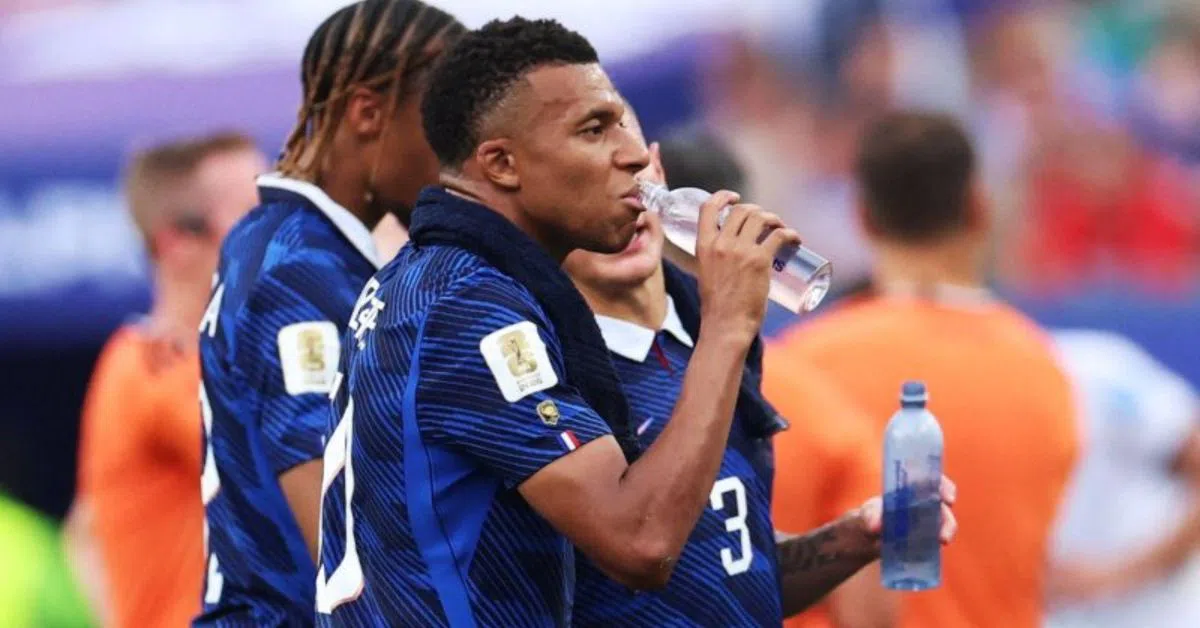
French superstar Kylian Mbappe has reportedly expressed concerns that the stoppages interrupt momentum, particularly when one team is dominating possession and building pressure.


Advertisement


Liverpool defender Virgil van Dijk has similarly suggested that conditions should be assessed on a case-by-case basis rather than applying the rule universally.


Belgium midfielder Youri Tielemans also questioned whether breaks are needed during matches played in cooler conditions. For many players, the issue is not hydration itself but the loss of rhythm in a sport built around continuous flow.


Advertisement


Coaches Have Discovered An Unexpected Advantage


While some players dislike the interruptions, many managers have quickly recognised their strategic value.


Advertisement


Hydration breaks effectively provide coaches with two additional opportunities per half to communicate directly with players during live matches.


England manager Thomas Tuchel admitted the pauses have had a bigger influence than he expected. “They change the characteristic of the match more than I thought.” Mexico coach Javier Aguirre has embraced them as football’s version of an official timeout.


Advertisement


France manager Didier Deschamps has gone even further, describing the breaks as turning matches into something resembling four quarters rather than two halves. The result is a subtle but significant shift in football tactics.


Managers can now reorganise shape, deliver instructions and adjust game plans without waiting for half-time.


Advertisement


The Commercial Reality


The truth likely lies somewhere between FIFA’s explanation and the concerns of critics.


Advertisement


There is currently no evidence that FIFA negotiated hydration breaks specifically to generate new revenue streams. Infantino’s claim that commercial agreements were signed before the tournament appears credible.


However, that does not mean the breaks lack commercial value.


Advertisement


Broadcasters are undeniably benefiting from the extra advertising inventory. Sponsors gain additional visibility. Networks gain more flexibility in scheduling commercials.


Even if FIFA is not directly earning extra money from the stoppages, the wider World Cup ecosystem is monetising them. That distinction may be technically correct from FIFA’s standpoint, but it has done little to silence criticism.


Advertisement


A Rule that may outlast 2026


The larger question is whether hydration breaks remain a temporary solution or become a permanent feature of major tournaments.


Advertisement


Climate concerns are unlikely to disappear. Summer temperatures continue to rise, and future World Cups may face similar challenges.


At the same time, coaches are discovering tactical advantages, broadcasters are finding commercial benefits, and governing bodies are seeing operational value in standardised match management.


Advertisement


For now, FIFA insists the breaks exist solely to protect players and create equal conditions.


But as television networks continue to sell advertising around those stoppages and coaches increasingly use them as strategic timeouts, the debate over whether hydration breaks are about welfare, tactics or commerce is unlikely to disappear anytime soon.

Source link

Advertisement
Continue Reading
Click to comment

You must be logged in to post a comment Login

Leave a Reply

Sports

Chris Newsome urges quick turnaround for Meralco after loss

Published

on

Meralco Bolts' Chris Newsome and Barangay Ginebra Gin Kings' Riley Grigsby during a game in the 2026 PBA Governors' Cup.Meralco Bolts' Chris Newsome and Barangay Ginebra Gin Kings' Riley Grigsby during a game in the 2026 PBA Governors' Cup.

Meralco Bolts’ Chris Newsome and Barangay Ginebra Gin Kings’ Riley Grigsby during a game in the 2026 PBA Governors’ Cup. –MARLO CUETO/INQUIRER.net

MANILA, Philippines—Meralco guard Chris Newsome knows the Bolts can’t afford to dwell on another setback in the 2026 PBA Governors’ Cup.

The veteran guard stressed the importance of moving on quickly after the Bolts fell to Barangay Ginebra, 84-75, at Mall of Asia Arena on Friday.

Article continues after this advertisement
Advertisement

“We got to have short-term memory. It’s tough when you lose a game like that. We didn’t have momentum, we didn’t shoot well, it was one of those nights that you want to try and forget quickly,” he told the Inquirer.

“With a game on Sunday, that’s exactly what we have to do. We have to find a way to erase this one.”

Playing with a depleted lineup, the Bolts trailed from start to finish after falling behind, 18-10, at the end of the first quarter and never matched the Gin Kings’ intensity.

With a 2-3 card and a long break looming, Newsome hopes Meralco quickly shifts its focus to Sunday’s matchup against a surging Rain or Shine squad at Araneta Coliseum.

Advertisement
Article continues after this advertisement

“We have to stay positive in the things that we do. We have to continue to trust what we do even if it didn’t show up today,” he said.

“Things aren’t gonna go your way all the time but we have to stay strong and keep pushing forward.”


Your subscription could not be saved. Please try again.
Advertisement


Your subscription has been successful.

Source link

Advertisement
Continue Reading

Sports

Judo gold rush, Neeraj Chopra claims silver, Tejaswin Shankar scripts decathlon history

Published

on

Team India enjoyed a landmark ninth day at the 2026 Commonwealth Games in Glasgow on Friday, July 31. Highlighted by a historic double gold sweep on the judo mat, a podium finish in the men’s javelin throw, and a groundbreaking medal in athletics, the Indian contingent added significantly to its collection as the Games hit their climax. Team India’s medal tally stands at 23 won medals after day 9, along with 10 guaranteed medals locked in for upcoming finals.

Here is a full breakdown of how Team India performed across venues on Day 9.


Judo: Twin Commonwealth Games golds and silver mark red-letter day for Indian combat sports

Judo - Glasgow 2026 Commonwealth Games: Day 8 - Source: GettyJudo - Glasgow 2026 Commonwealth Games: Day 8 - Source: Getty
Judo – Glasgow 2026 Commonwealth Games: Day 8 – Source: Getty

India’s judokas produced a standout performance at the venue, delivering one of the finest single-day displays in the country’s Commonwealth Games history.

Advertisement

Asmita Dey scripts Golden Score drama

In the women’s 48kg final, young judoka Asmita Dey displayed remarkable resilience against Canada’s Heidi Quach. After a tight bout during regulation time, the contest moved into Golden Score overtime, where Asmita executed a decisive throw to score a Yuko and secure India’s first judo gold medal in Glasgow.

Harsh Singh doubles the gold tally

Minutes later in the men’s 60kg final, Harsh Singh completed a flawless tournament run. Taking on Australia’s Joshua Katz, Harsh remained composed before scoring a crucial point in the closing moments to bag India’s second judo gold medal of the day.

Yamini Maurya earns silver

In the women’s 57kg final, Yamini Maurya added to India’s combat medal count with a hard-fought silver medal. Yamini reached the final following an emphatic 98-second Ippon victory in her semi-final bout before falling short against England’s Acelya Toprak.


Track & field: Javelin double podium and historic decathlon medal at Commonwealth Games

Neeraj Chopra takes silver; Yash Vir Singh claims bronze

The marquee event of the evening took place at the stadium in the men’s javelin throw final. Two-time Olympic medalist Neeraj Chopra registered a season-best effort of 85.83m to claim the silver medal. Sri Lanka’s Rumesh Pathirage captured gold with a massive 89.75m throw.

Advertisement

Joining Chopra on the podium was teammate Yash Vir Singh, who launched a personal best throw of 85.41m on his final attempt to snatch the bronze medal and secure a 2-3 finish for India.

Tejaswin Shankar scripts decathlon history

Multi-event athlete Tejaswin Shankar turned in a heroic two-day performance across ten grueling disciplines to claim the bronze medal in the men’s decathlon with a total of 7,976 points. Shankar’s podium finish marks India’s first-ever Commonwealth Games medal in the decathlon.


Boxing: Unbeaten semi-final sweep sends ten Indians into finals of Commonwealth Games 2026

India’s boxing squad put together a dominant session, winning all scheduled semi-final bouts to guarantee ten spots in the gold medal clashes:

  • Women’s 54kg: Preeti Pawar defeated Zambia’s Catherine Mwape via a unanimous 5-0 decision.
  • Men’s 80kg: Ankush Panghal controlled his bout against Canada’s Joshua Ofori to advance.

  • Women’s 57kg: Jaismine Lamboria notched a Referee Stops Contest (RSC) victory over Lesotho’s Rapelanf Maselela.
  • Women’s 70kg: Arundhati Chaudhary comfortably defeated Rosie Eccles of Wales.
  • Men’s 55kg: Jadumani Singh outpointed Namibia’s Philip Haoseb via unanimous decision.
  • Women’s 51kg & 60kg: Sakshi Chaudhary and Priya Ghanghas sealed victories over their respective semi-final opponents.
  • Heavyweight bouts: Lovlina Borgohain, Sachin Siwach, and Narender Berwal closed out the day with semi-final wins.

Lawn bowls and track cycling at Commonwealth Games

Here is the performance of Indian athletes at lawn bowls and track racing on day 9:

  • Lawn bowls: The men’s pairs duo of Navneet Singh and Dinesh Kumar extended their unbeaten run by defeating the Falkland Islands 2-0 in sectional play to move into the knockout rounds. In women’s singles, Nayanmoni Saikia posted a convincing 2-0 win over Zambia’s Mildred Mkandawire.
  • Track cycling: Harshveer Sekhon and Dinesh Kumar competed in the men’s 4000m individual pursuit qualification rounds but missed out on advancing to the final heat.