Connect with us
DAPA Banner
DAPA Coin
DAPA
COIN PAYMENT ASSET
PRIVACY · BLOCKDAG · HOMOMORPHIC ENCRYPTION · RUST
ElGamal Encrypted MINE DAPA
🚫 GENESIS SOLD OUT
DAPAPAY COMING

Sports

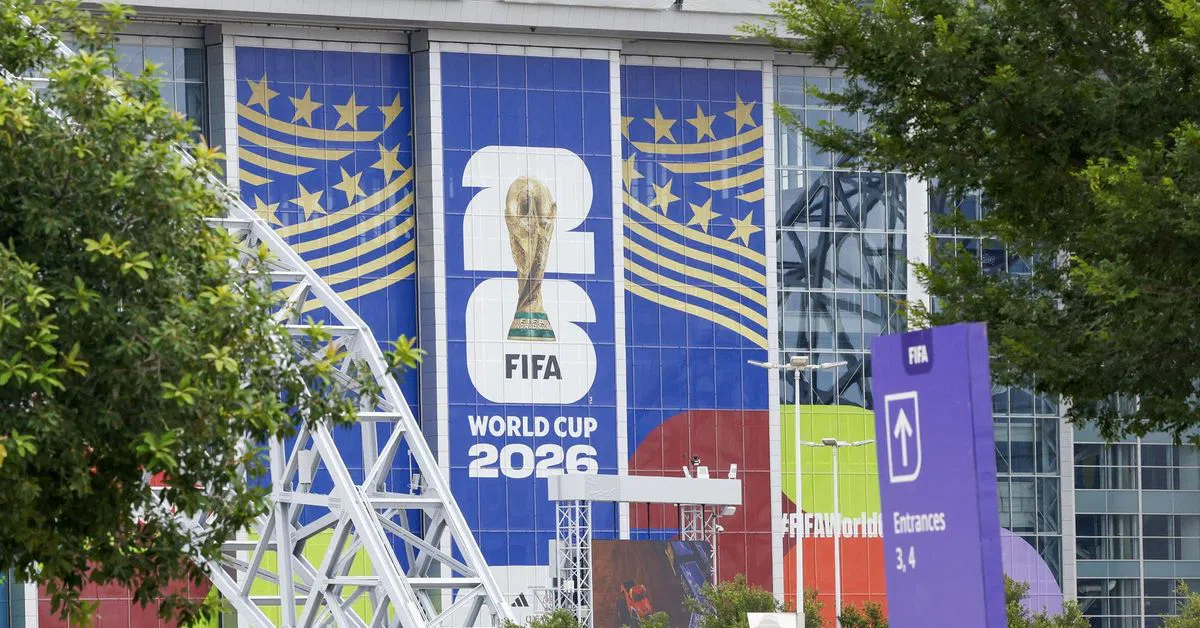
FIFA World Cup: The beautiful game meets ugly realities before kick-off | FIFA World Cup 2026

Published

on


The FIFA World Cup has always been more than football. For one month every four years, it becomes a celebration of national pride, cultural exchange and sporting excellence. It is one of the few events capable of bringing together people from almost every corner of the globe under a shared banner.


Yet, as the 2026 FIFA World Cup prepares to kick off across the United States, Canada and Mexico, the tournament finds itself engulfed in controversies that have little to do with football.


Advertisement


Referees have been deported. Players have been detained at airports. Fans have been denied entry despite securing tickets. Governments are trading accusations. Consumer groups are challenging FIFA’s ticketing policies. Environmental activists are warning about the event’s carbon footprint. And, on top of that, one of the three host nations is at war with one of the 48 participating countries.


Taken individually, none of these issues may be large enough to derail a tournament expected to attract billions of viewers worldwide. Together, however, they raise uncomfortable questions about whether football’s biggest spectacle can remain insulated from the political, economic and social tensions surrounding it.


Advertisement


This is not the first time a host nation has found itself at the centre of controversy. But unlike past World Cups, where criticism centred on a single issue — human rights in Qatar, corruption allegations in South Africa or Brazil, or labour concerns in Russia — the 2026 edition is facing multiple challenges simultaneously involving governments, FIFA, fans, players, referees and environmental groups.


The expanded 104-match World Cup begins on Thursday in Mexico and concludes on July 19 with the final in New Jersey. Of the total matches, 78 will be staged in the United States, including every fixture from the Round of 16 onwards.


Advertisement


And with the competition set to run for more than a month across three countries and 16 host cities, there is growing concern that many of these disputes could spill over into the tournament itself.


A World Cup host at war with a participant


Advertisement


For the first time in World Cup history, a host nation is involved in a military conflict with one of the participating countries. The United States’ confrontation with Iran has cast a long shadow over preparations.


Months before the tournament, US President Donald Trump publicly questioned whether Iran should even participate.


Advertisement


“The Iran National Soccer Team is welcome to The World Cup, but I don’t really believe it is appropriate that they be here, for their own life and safety. Thank you for your attention to this matter!”


Although Iran ultimately qualified and received assurances from FIFA, visa issues continued to plague the delegation. Iranian officials said visas were granted to players only days before their departure for the World Cup, while several administrative and managerial staff members were reportedly denied entry altogether.


Advertisement


The dispute has triggered accusations that the United States failed to fulfil the obligations expected of a World Cup host.


New York City Mayor Zohran Mamdani criticised restrictions affecting World Cup participants and media personnel, arguing that such measures run counter to the spirit of the tournament.


Advertisement


“The denial of visas for journalists from certain countries, or the rejection of a visa for a coach of a team, as well as single-day visas for specific foreign national teams, this is anathema to what this tournament is supposed to be about,” Mamdani said on Monday.


Responding to concerns over visa-related issues, a US State Department spokesperson said Washington was coordinating with multiple agencies and FIFA to facilitate travel for participating teams.


Advertisement


“The Department of State is working closely with the White House, the Department of Homeland Security, and FIFA to support qualifying national teams’ travel to participate in World Cup events through our visa process,” the spokesperson said in a statement issued on Monday.


The spokesperson added that national security considerations would remain paramount during the visa review process.


Advertisement


“At the same time, the Administration will not waver in upholding US law and the highest standards of national security and public safety in the conduct of our visa process. We adjudicate each visa application on a case-by-case basis after rigorous review and thorough vetting to determine whether the individual is eligible under US law.”


When geopolitics enters the dressing room


Advertisement


The most alarming controversies have centred on immigration and border controls.


The latest flashpoint involved Somali referee Omar Abdulkadir Artan, regarded as one of Africa’s leading match officials. Artan was reportedly denied entry at Miami International Airport and placed on a return flight despite travelling with valid documentation and diplomatic credentials.


Advertisement


The episode sparked outrage across African football circles and prompted a public intervention from Somali Prime Minister Hassan Ali Khaire.


“I am deeply disappointed by the news that Omar Artan, Africa’s finest referee and one of the best in the world, may be unable to officiate at the FIFA World Cup due to visa-related circumstances,” said Hassan Ali Khaire.


Advertisement


“Omar has earned his place through talent, hard work, professionalism, and integrity. Having officiated at the highest levels of African and international football, his credentials speak for themselves. He represents not only Somalia, but also the aspirations of millions of young Africans who believe excellence should be recognised on the world stage,” he added.


Meanwhile, Somalia is not the only country affected by US policies.


Advertisement


Iraq vice-captain Aymen Hussein, whose goal secured his country’s place at the World Cup, was reportedly detained and questioned for seven hours upon arrival in the United States. Another player and a team photographer were also held for questioning, while the photographer was ultimately denied entry.


Such episodes have intensified scrutiny of US immigration procedures ahead of the tournament.


Advertisement


The beautiful game meets ugly economics


If politics has become one source of controversy, money has become another.


Advertisement


World Cup tickets have never been cheap, but many supporters argue that FIFA has pushed pricing into unprecedented territory.


Consumer groups in Europe filed formal complaints alleging that FIFA abused its dominant market position by imposing excessive prices and opaque sales practices.


Advertisement


The numbers explain the outrage.


Ticket category

Reported price

Cheapest group-stage tickets

Around $140

Final tickets (standard categories)

Up to $8,680

Premium final packages

Around $11,000

Last remaining final seat reported on sale

$690,000


The biggest source of anger has been FIFA’s use of dynamic pricing, a model more commonly associated with airlines and concert promoters.

Advertisement


Under the system, prices rise as demand increases, meaning supporters purchasing identical seats may pay vastly different amounts.


For many fans, that feels fundamentally at odds with football’s tradition of accessibility.

Advertisement


Fans paying more — and seeing less


Supporters have also complained about long online queues, technical glitches and unclear seat allocations.

Advertisement


Some fans who purchased premium viewing locations later alleged that temporary structures and additional seating arrangements would partially obstruct their view of the pitch.


Others accused FIFA of encouraging speculation through its official resale platform.

Advertisement


Critics note that the governing body takes a commission on resold tickets while imposing few restrictions on resale values, creating incentives for ticket flipping rather than discouraging it.


The result is a growing perception among supporters that football’s biggest event has become increasingly inaccessible to ordinary fans.

Advertisement


The supporters left behind


Ticket prices are only part of the problem.

Advertisement


Even fans willing to spend thousands of dollars face uncertainty over whether they can enter the country.


Supporters from several nations have encountered visa complications or travel restrictions. Reports suggest that fans from countries including Iran, Haiti, Senegal and Ivory Coast face significant barriers to attending matches.

Advertisement


Scottish supporters have also reported cases in which travel authorisations appeared to have been approved before later being rejected, leaving many facing substantial financial losses on flights and accommodation.


For an event that markets itself as the world’s most inclusive sporting festival, the image of ticket-holding supporters stranded outside host nations presents a serious reputational challenge.

Advertisement


The climate bill arrives


Then there is the environmental debate.

Advertisement


The 2026 edition is the largest World Cup in history.


The tournament has expanded from 32 teams to 48, increasing the number of matches from 64 to 104.

Advertisement


That expansion has come with significant environmental costs.


Researchers estimate that the competition could generate more than nine million tonnes of carbon dioxide emissions, largely due to extensive air travel between host cities spread across North America.

Advertisement


Environmental groups have described the event as potentially the most climate-damaging World Cup ever staged.


Even local transport plans have attracted criticism.

Advertisement


Fans have complained about expensive train fares, costly shuttle services and parking charges that, at some venues, run into hundreds of dollars per vehicle.


The contrast between FIFA’s sustainability messaging and the tournament’s projected environmental footprint has become another point of contention.

Advertisement


FIFA’s neutrality under scrutiny


The governing body has also faced criticism over its relationship with the Trump administration.

Advertisement


FIFA President Gianni Infantino’s increasingly close public association with Trump has prompted questions about whether the organisation is maintaining its traditional stance of political neutrality.


Critics point to appearances alongside the US president and symbolic gestures, including the presentation of a FIFA Peace Prize, as evidence that football’s governing body risks becoming entangled in geopolitical narratives.

Advertisement


The challenge for FIFA is obvious.


Every future visa dispute, airport detention or diplomatic disagreement involving participating nations now risks becoming a World Cup story.

Advertisement


And with teams, officials and supporters continuing to arrive throughout the tournament, further incidents cannot be ruled out.


Historically, World Cups have often managed to leave pre-tournament disputes behind once the football begins. The 2026 edition may not enjoy that luxury.

Advertisement


Many of the issues dominating headlines today are not one-off controversies tied to construction delays or organisational mistakes. They are ongoing disputes rooted in immigration policy, international politics, consumer rights and environmental concerns.


A visa denied during the group stage. A supporter detained near a stadium. A diplomatic dispute involving a participating nation. Another ticketing controversy. Any of these could quickly overshadow events on the pitch.

Advertisement


The football itself is likely to be spectacular. The expanded format promises more matches, more nations and more stories than ever before. Stadiums are expected to be full. Television audiences will reach into the billions.


But as the countdown to kick-off nears its end, the tournament arrives carrying more baggage than perhaps any World Cup in modern history.

Advertisement


The question now is whether the football can become the story again.


Or whether the controversies that have defined the road to the World Cup will continue to follow the tournament long after the opening whistle.

Advertisement

Source link

Continue Reading
Click to comment

You must be logged in to post a comment Login

Leave a Reply

Sports

Richa Ghosh’s Valiant 68 Goes In Vain As India Lose Final T20 World Cup Warm-Up Game To England

Published

on


Richa Ghosh produced a breathtaking late assault but India’s brittle top-order batting proved costly as Dani Gibson’s sparkling all-round show powered England to a narrow five-run win in their final Women’s T20 World Cup warm-up match in Cardiff on Wednesday. After Harmanpreet Kaur opted to bowl, England rode on half-centuries from Amy Jones (64 off 45 balls) and skipper Nat Sciver-Brunt (57 off 45 balls) before Gibson’s unbeaten 30 off just 12 balls lifted them to 171 for 6. India’s chase never quite gathered momentum as wickets fell at regular intervals, but Richa’s stunning 68 off 36 balls nearly pulled off the impossible before left-arm spinner Linsey Smith (3/42) held her nerve to bowl India out for 166 in 19.5 overs.

Gibson also took the wickets of Bhatia and Fulmali in the crucial middle overs phase to return with 2/17 from her two overs, while Charlie Dean (2/1) and Tilly Corteen-Coleman (2/22) also provided fine support.

The defeat exposed a few concerns for India ahead of the T20 World Cup, with the top order misfiring once again, and fielding lapses allowing England crucial extra runs.

Advertisement

Gibson smashed Renuka Singh for two fours and one six to collect 19 runs in the last over, and that proved decisive.

Smriti Mandhana‘s lean run continued as she fell for one, extending a worrying sequence in which her highest score in seven innings since her 82 against Australia in February has been just 37.

Shafali Verma made a brisk 13 off six balls before miscuing Issy Wong, while Yastika Bhatia (15), skipper Harmanpreet (17) and Bharti Fulmali (18) also failed to convert their starts.

At 132 for 7 in 17.3 overs, India looked well out of the contest before Richa launched a spectacular counter-attack.

Advertisement

Needing 38 from the last two overs, the Bengal wicketkeeper-batter tore into Wong, smashing three fours and a six in a 21-run penultimate over to bring the equation down to 17 off the final over.

Richa continued her charge against Smith, first sweeping her for a four and then launching a massive straight six to reduce the target to six runs from three balls.

However, with victory within sight, Smith lured Richa out of her crease and wicketkeeper Alice Capsey completed the stumping.

Renuka then holed out while attempting a big hit as India were dismissed with one ball remaining.

Advertisement

Earlier, England’s innings was built around a 70-run stand between Jones and Sciver-Brunt after India had kept things tight in the opening phase.

Jones punished anything loose during her 45-ball 64, while Sciver-Brunt, returned to rhythm with a 57-run knock with eight fours.

India’s bowlers did well to control the scoring for large periods, especially around the rain interruption, but Gibson’s late blitz tilted the balance decisively.

Shreyanka Patil was India’s standout bowler, claiming 2/29 and striking twice in successive deliveries in the penultimate over to dismiss Sciver-Brunt and Dean.

Advertisement

Four other bowlers picked up a wicket each.

India also gave the new ball to Shafali Verma, an indication that the team management views her as a potential sixth bowler. The off-spinner returned figures of 1 for 18 from two overs, including the key wicket of Jones.

However, veteran spin all-rounder Deepti Sharma was not used with the ball as India rotated six bowling options, while Shreyanka and Radha Yadav (1/38) once again made strong cases with disciplined performances.

(Except for the headline, this story has not been edited by NDTV staff and is published from a syndicated feed.)

Advertisement


Featured Video Of The Day


IPL 2026 | Delhi Capitals Wins By 6 Wickets Against Mumbai Indians: Redemption For Sameer Rizvi

Topics mentioned in this article

Advertisement

Source link

Continue Reading

Sports

17-year-old Tanvi Sharma shocks world No. 11 to reach Australian Open last 16; PV Sindhu also makes winning start | Badminton News

Published

on

17-year-old Tanvi Sharma shocks world No. 11 to reach Australian Open last 16; PV Sindhu also makes winning start

India’s women shone at the Australian Open Super 500 badminton tournament on Wednesday, with PV Sindhu leading the charge and teenager Tanvi Sharma registering a notable win to reach the second round.Sindhu, Tanvi Sharma, Malvika Bansod, Isharani Baruah and Tanya Hemanth all advanced to the women’s singles round of 16. However, it was a disappointing day for the Indian men’s singles players as Kiran George, Tharun Mannepalli and qualifier Saneeth Dayanand exited in the opening round.Third seed Sindhu made a comfortable start to her campaign, beating Peru’s Ines Lucia Castillo Salazar 21-13, 21-11 in 32 minutes.The two-time Olympic medallist controlled the match throughout and did not allow her opponent to build any momentum.Sindhu will next face fellow Indian Isharani Baruah, who defeated China’s Han Qian Xi 22-20, 10-21, 21-14 in a match lasting one hour and three minutes.The standout result for India came from 17-year-old Tanvi Sharma. The world No. 36 defeated fifth seed and world No. 11 Chiu Pin-Chian of Chinese Taipei 21-12, 22-20 in 45 minutes.Tanvi will now face Malvika Bansod in the round of 16. Malvika recovered after losing the opening game to beat Thailand’s Tonrug Saeheng 15-21, 21-7, 21-13.Tanya Hemanth also moved into the next round after defeating USA’s Ishika Jaiswal 21-17, 21-18 in 39 minutes.She will next face Thailand’s second seed and world No. 8 Pornpawee Chochuwong.Indian men bow outIn men’s singles, Kiran George lost 19-21, 21-14, 15-21 to Malaysia’s Justin Hoh in a contest that lasted one hour and two minutes.Qualifier Saneeth Dayanand was beaten by China’s Hu Zhe’an 8-21, 10-21 in 35 minutes.Tharun Mannepalli came close to upsetting second seed and world No. 10 Lin Chun-Yi of Chinese Taipei before losing 21-18, 13-21, 23-25 in a match lasting one hour and 20 minutes.After winning the first game, Tharun fought back in the decider and earned match points, but Lin held on to seal victory.Dhruv-Manisha move aheadIn mixed doubles, Dhruv Rawat and Maneesha K progressed to the second round with a 21-13, 21-14 win over Australia’s Lim Jayden and Victoria Tjonadi in 27 minutes.Mohit Jaglan and Lakshita Jaglan, however, lost to second-seeded Chinese pair Guo Xin Wa and Chen Fang Hui 6-21, 5-21 in 20 minutes.

Source link

Continue Reading

Sports

Odel Kamara on choosing the pro ranks over Olympic glory to become ‘the future of boxing’

Published

on

As one of Great Britain’s brightest amateur prospects, Odel Kamara appeared destined for a shot at Olympic glory in Los Angeles in 2028. Instead, the Liverpool standout has opted to forgo the amateur route and turn professional at just 22 years old, believing the move will better serve his long-term ambitions.

Fighting out of Salisbury ABC, Kamara won seven national titles and the Senior Elite Championship. Meanwhile, for GB Boxing, he claimed gold medals at both the Dacal Memorial World Cup and the World Boxing Cup in late 2024, and could have retained the latter in 2025 were it not for an injury that forced him to withdraw from the final.

The highlight of Kamara’s amateur career came back in September, when the World Boxing Championships made their way to his hometown of Liverpool. In his backyard, Kamara picked up the bronze medal in the 70kg category at the age of just 21, beaten only by eventual gold medallist Torekhan Sabyrkhan of Kazakhstan in the semi-finals.

Advertisement

As a result, many tipped Kamara as one of Team GB’s strongest hopes of a boxing medal at the Los Angeles 2028 Olympic Games. Yet Kamara has decided that he won’t compete, instead favouring a move into the professional version of the sport.

Speaking with Boxing News, Kamara provided some insight into his decision, believing that additional professional experience will serve him better in the long run than the pursuit of a medal in L.A.

“I have decided to turn over in the end mainly for tactical reasons. A lot of people like to say being 24/25 when I turn over is perfect, I’ll have loads of experience, hopefully an Olympic gold medal and be pushed towards world title fights sooner. But, all of this ended up convincing me to go the other way because I believe in perfecting your craft, which can take years.

“At 22 years old I can perfect my pro boxing style and still be in contention for massive fights by time I’m 25/26 with a lot more experience then I would have had going the Olympics because, at the end of the day, pro and amateur boxing are different sports entirely.”

With that in mind, Kamara is content to bide his time and improve both his ability and profile before throwing himself in at the deep end of the super-welterweight division, where he confirmed he plans to campaign.

Advertisement

The Liverpudlian, managed by Sam Jones, has adopted a similar approach behind the scenes, planning to be patient when selecting who will be in his corner when he makes his professional debut.

“With me, I feel like there’s no actual rush. I would rather take a month or two to find the right coach, train hard and then whatever happens, happens. I’ll get some rounds in and when my team decide it’s the right time for titles, I won’t hesitate to take whatever one is in front of me.

“I am definitely going to travel around the UK, and possibly even the US [to identify the correct trainer], who knows? I just want the best guy possible for the job, I’m not taking anything lightly. I’m all in on becoming the best now, so whoever my team and I decide is the guy for the job will play a pivotal role.”

Still, despite not yet appointing a lead trainer, Kamara is aiming to make his professional debut before the end of 2026. There, he hopes to deliver a performance that puts the super-welterweight, middleweight and super-middleweight divisions on notice.

“Super-welterweight seems like the future of boxing right now with so many high-level contenders. I can see myself becoming top of the division someday and then transitioning through to middle and super-middle and doing the same there.

“I feel like my style will adapt perfectly to the pros. My speed, power and explosiveness will be expressed a lot easier and way more effectively with slower paced fights. I’m built for this.

Advertisement

“This year is going to be graft, but at the end of it, people will know I’m the future of boxing.”

News regarding Kamara’s promoter is expected imminently – he will not have been short of offers ahead of what could prove to be both a fascinating and fruitful professional career.

Source link

Advertisement
Continue Reading

Sports

Is FIFA World Cup 2026 becoming a dividing force instead of a unifying one? | FIFA World Cup 2026

Published

on


For decades, the FIFA World Cup has been celebrated as football’s greatest unifier, a tournament where borders blur, cultures come together and millions of supporters travel across continents to cheer for their nations.


Yet ahead of the 2026 edition, even some of the tournament’s participants have found themselves facing unexpected barriers. Players, team officials and referees from several countries have reported visa complications, extensive security screenings and travel-related difficulties simply to enter the host nation.


Advertisement


If qualified teams and accredited officials are encountering such challenges, it raises an obvious question: how difficult might the experience be for ordinary supporters hoping to make the same journey to support their countries?


From visa restrictions and travel bans to concerns over fan accessibility and the treatment of players and officials at US entry points, the first 48-team World Cup has become as much a story about geopolitics and immigration as it is about football. 
Advertisement


Fans facing barriers before they even arrive


The challenges have not been limited to teams. Supporters from several participating nations have encountered significant obstacles in securing permission to travel.


Advertisement


According to reports, citizens from dozens of countries remain subject to either full or partial travel restrictions under current US immigration policies.


Among the 48 participating nations, Haiti and Iran have reportedly faced full entry bans, while countries including Senegal and Côte d’Ivoire have encountered partial restrictions.


Advertisement


Even supporters from countries not subject to travel bans have faced uncertainty.


BBC Scotland reported cases involving Scottish supporters who had already received travel authorisation through the Electronic System for Travel Authorization (ESTA) process, only to see their approvals revoked days before departure.


Advertisement


The Speirs brothers from Kirkcaldy applied for their ESTAs in December and were initially approved. Months later, shortly before travelling to support Scotland at their first World Cup since 1998, their status reportedly changed to “travel not authorised.”


For many supporters, the financial burden has compounded the bureaucratic hurdles. While ESTA approvals cost around $40, supporters requiring standard visitor visas face fees of approximately $185 before even considering flights, accommodation or match tickets.


Advertisement
The result is growing concern that attending the tournament has become increasingly difficult for ordinary fans. 


A Tournament Built on Inclusion


Advertisement


When FIFA awarded hosting rights to the United States, Canada and Mexico, the decision was presented as a celebration of football’s global reach.


The expanded 48-team format was designed to make the World Cup more inclusive by allowing more nations to participate. Countries such as Haiti, Uzbekistan and Curacao qualified for the tournament for the first time, creating opportunities for new footballing communities to experience the sport’s biggest stage.


Advertisement


Yet critics argue that while qualification has become more accessible, physically attending the tournament has become increasingly difficult for many of the very people FIFA claims to be including.


Visa Issues Create Unprecedented Challenges


Advertisement


One of the biggest controversies surrounding the tournament has been access to the United States.


Iran has faced some of the most significant logistical difficulties. State media reported that at least 15 Iranian officials and team staff members, described as being “integral” to the national team’s campaign, were denied visas.


Advertisement


While US authorities maintained that all “necessary” support staff had been granted entry, the Iranian Football Federation alleged that authorities had also revoked portions of Iran’s ticket allocation for group-stage matches.


“We are upset about this behaviour,” Iran head coach Amir Ghalenoei said. “It has certainly never happened before.”


Advertisement


The complications forced Iran to establish its training base in Tijuana, Mexico, rather than inside the United States. Reports suggested the team could face repeated cross-border travel for group-stage matches, creating logistical challenges rarely seen at a World Cup.


For many observers, the situation represented a significant departure from FIFA’s long-standing principle that qualified teams should be able to participate without political or administrative obstacles.


Advertisement


Security screenings spark global debate


The treatment of some teams upon arrival in the United States has also generated criticism. According to multiple reports, members of the Senegal national team underwent detailed bag inspections directly on the airport tarmac after landing in San Antonio.


Advertisement


Uzbekistan’s squad reportedly encountered drug-sniffing dogs and extensive security checks upon arriving at their training base in New York. Images and videos quickly spread across social media, prompting strong reactions from supporters.


Critics accused authorities of treating players “like criminals” rather than welcoming them as participants in one of the world’s most prestigious sporting events.


Advertisement


One social media user questioned whether the treatment was selective, writing: “Did any white teams get treated like this, or is this treatment reserved for Senegal? Bizarre.”


The controversy deepened after reports emerged that Iraqi striker Aymen Hussein was detained for seven hours at Chicago O’Hare International Airport, while Iraq’s team photographer was reportedly denied entry following an extensive screening process.


Advertisement


In a separate incident, award-winning Somali referee Omar Artan was denied entry into the United States altogether.


These episodes have intensified concerns that some nations are facing significantly different experiences from others despite all being participants in the same tournament.


Advertisement


The cost of inclusion


While immigration issues have dominated headlines, financial accessibility has become another major point of contention. Ticket prices for many matches reached levels rarely associated with previous World Cups.


Advertisement


Premium tickets for the final were initially priced around $11,000, while FIFA’s dynamic pricing system meant supporters often paid vastly different amounts for identical seats.


As the tournament approached, reports indicated that some remaining final tickets were still being listed for thousands of dollars, with certain premium seats reaching extraordinary prices.


Advertisement


Critics argue that rising ticket costs, expensive travel requirements and hospitality-focused packages have transformed the World Cup from a global football festival into an event increasingly accessible only to wealthier supporters. For many fans, the barriers are no longer merely geographical, they are financial as well.


Can Football Still Unite?


Advertisement


The World Cup has historically provided moments that transcend politics. Fans from rival nations have shared celebrations in fan parks, communities have united behind underdog stories and players from vastly different backgrounds have inspired audiences across the globe.


Those moments still exist at the 2026 tournament. However, the surrounding controversies have created an uncomfortable contrast with FIFA’s messaging around inclusion and unity.


Advertisement


When some supporters struggle to obtain visas, when participating nations face travel complications, and when fans question whether the event remains financially accessible, the idea of the World Cup as football’s universal gathering place inevitably comes under scrutiny.


The bigger question facing FIFA


Advertisement


The central question is not whether football remains capable of uniting people. It clearly does.


The question is whether the structures surrounding the modern World Cup are making that unity harder to achieve. The expansion to 48 teams was intended to make the tournament more global than ever before. Yet for many supporters, journalists and even some participants, access has become more complicated, expensive and uncertain.

 

Advertisement


As the tournament unfolds across the United States, Canada and Mexico, the football itself may still deliver the drama and joy that have defined World Cups for generations.


But away from the pitch, FIFA faces an uncomfortable challenge: proving that the world’s biggest sporting event remains a force for bringing people together rather than another example of the divisions shaping the modern world.

Source link

Advertisement
Continue Reading

Sports

Champion who sparred Canelo and Mayweather says one active fighter is better than both

Published

on

Floyd Mayweather and Canelo Alvarez are credited with being two of boxing’s modern greats, but in the eyes of a shared former sparring partner, Jack Catterall, there is one active fighter who trumps them both as ‘the best he has shared the ring with’.

Last month, Catterall decisioned Shakhram Giyasov to get his hands on the WBA Regular welterweight world title; a win which he hopes will tee up a showdown for a shot at super champion, Rolando Romero.

Catterall, who boasts wins over both Josh Taylor and Regis Prograis, had been preparing for world level far before he arrived, sharing the ring with Mayweather and Canelo in the past.

Advertisement

In 2015, the Chorley operator was brought in as one of many sparring partners for Mayweather ahead of his long-awaited mega-fight with Manny Pacquiao. Then, just days later, Catterall ventured to San Diego to help Canelo prepare for his bout against James Kirkland.

Yet, speaking with Pro Boxing Fans, Catterall claimed to be more impressed by former stablemate Jaron Ennis, whom he expects to halt Xander Zayas when challenging for the unified super-welterweight world titles later this month.

“I would go as far as saying that he is one of… the best fighter that I have sparred or been in the ring with; the speed, the power, the timing, the footwork.

“So, I am excited for that fight. I am going to try and make the trip over there and support him. I think that it is a good night’s work for him.

“I believe [that he will stop Zayas].”

Advertisement

Ennis established himself as the leading welterweight of the post-Terence Crawford era, unifying the IBF and WBA world titles before moving up to 154lbs in search of further championships.

He faces on Zayas on June 27 at the Barclays Center in Brooklyn, New York, as Ennis seeks to capture the unified titles.

Source link

Advertisement
Continue Reading

Sports

John Stones’ next club after Man City exit: Bundesliga reunion, old club return, World Cup focus

Published

on

John Stones’ next club after Man City exit: Bundesliga reunion, old club return, World Cup focus – Manchester Evening News

reach logo

At Reach and across our entities we and our partners use information collected through cookies and other identifiers from your device to improve experience on our site, analyse how it is used and to show personalised advertising. You can opt out of the sale or sharing of your data, at any time clicking the “Do Not Sell or Share my Data” button at the bottom of the webpage. Please note that your preferences are browser specific. Use of our website and any of our services represents your acceptance of the use of cookies and consent to the practices described in our Privacy Notice and Terms and Conditions.

Source link

Advertisement
Continue Reading

Sports

5 Most Controversial Female Streamers of 2026

Published

on


From award show chaos to viral clip pile-ons, these five female streamers have dominated headlines for all the wrong reasons in 2025 and 2026. Here is what actually happened.

Source link

Continue Reading

Sports

Chelsea Green, Britt Baker, and others react as top AEW star shares major personal update

Published

on

A top AEW star has shared a major personal update and has received support from many pro-wrestling stars, including Chelsea Green and Britt Baker.

The star in question, Deonna Purrazzo, has competed under an All Elite Wrestling contract since January 2024. Although her tenure began brightly and includes a run in ROH as Women’s Pure Champion (still ongoing), the Virtuosa’s TV time in AEW has declined sharply since mid-2025. As Purrazzo continues to thrive in Ring of Honor and strives to return to All Elite Wrestling programming, the 32-year-old revealed that she and her husband, Steve Maclin, who was recently released by TNA, put on their own wrestling show.

Advertisement

On Instagram, Purrazzo revealed that having their own show had never been a dream for Maclin and her; instead, they used the opportunity to raise funds for the Tunnel to Towers Foundation. The event took place at the Rahway Rec Center in New Jersey. Her post received an outpouring of love from top wrestling stars, including WWE’s Chelsea Green, Mickie James, and AEW’s Britt Baker and Shane Taylor.

Check out the stars’ reactions below:

The star reactions (Screengrabs taken from Instagram/@deonnapurrazzo)The star reactions (Screengrabs taken from Instagram/@deonnapurrazzo)
The star reactions (Screengrabs taken from Instagram/@deonnapurrazzo)

AEW star Deonna Purrazzo’s emotional message to husband Steve Maclin following TNA release

Steve Maclin’s departure from TNA after a five-year tenure was one of the bigger developments in pro wrestling this month. Some time after Maclin’s release, Deonna Purrazzo took to X and shared a heartwarming message for her husband, calling him the epitome of wrestling before declaring her love for him.

“You are the epitome of a professional. You gave more blood than anyone I’ve ever seen. You have more heart than anyone I know. And you made the most of every minute you were given. This kind of feels like the end of era… but I know it’s the start of something even more magical. I love you,” she wrote.

Her post on X can be viewed here.

Steve Maclin is a respected veteran in professional wrestling. At 39, the former TNA International Champion still has plenty left in his locker, and if rumors are to be believed, Maclin could soon be declared ‘All Elite’.

Advertisement