

2026 NFL Free Agent Tracker
Sports
Grange: Knicks snap drought with one of NBA’s most impressive playoff runs

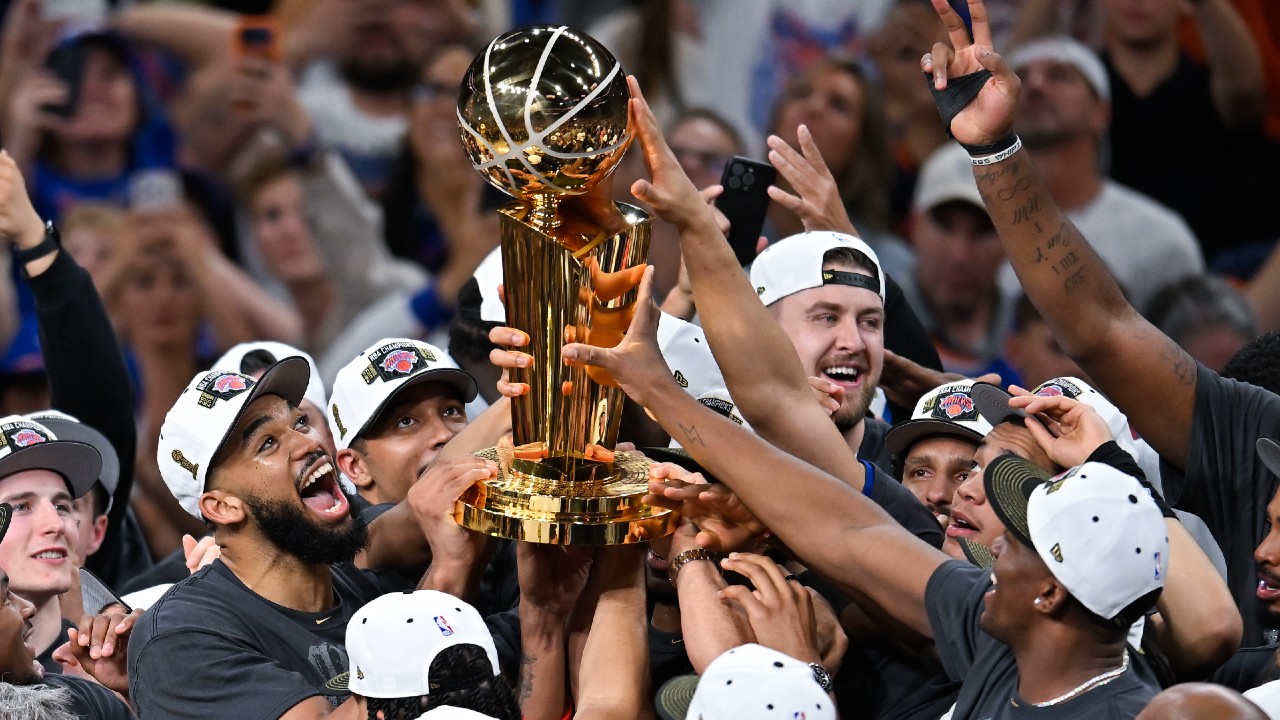
I’m not sure we’ll ever see a five-game NBA Finals that close any time soon. I’ll say we won’t.
It will go in the books as a win for the New York Knicks, which culminated in their first NBA championship in 53 years, breaking a drought that had seemed like a curse at times — for long stretches of time — for one of the NBA’s marquee franchises.
Hopefully, the island of Manhattan and the surrounding boroughs survive this, as Knicks fans’ joy levels will likely need to be measured on the Richter scale. And hopefully the good city of San Antonio — which hosted so many Knicks fans who made the trip to Texas for Game 5 — will survive this, too.
The hard-fought 94-90 win topped a hard-fought series for the Knicks over the up-and-coming San Antonio Spurs, with the Knicks completing one of the most impressive playoff runs in NBA history.
The team that won 53 games in the regular season and was the third seed in the Eastern Conference went 16-3 on their way to the title. And even with all five games in the Finals coming down to the final two minutes, and the two teams being separated by just 12 total points, the Knicks’ 15.5-point average victory margin for the playoffs was the largest in the 30 years that the NBA has tracked it.
But even at that, Game 5 was there for the Spurs to win, or the Knicks to lose. For the fifth straight game, the Spurs opened a double-digit lead in the first quarter and for the fifth straight game, the Spurs held a fourth-quarter lead.
San Antonio was up by 10 with 8:21 to play before the Knicks went on a 10-0 run to tie the game, with all 10 points coming from Jalen Brunson, who took his rightful place in both Knicks and NBA lore by scoring 15 of his 45 points in the final frame to lead the Knicks to the win.
Meanwhile, the Spurs stumbled and fumbled through the fourth quarter once again, the part of the game when the NBA’s most talented young team and a group that seems poised to make several Finals appearances over the next 10 years will need to figure out if they are going to win the number of titles their youthful talent suggests they can.
The Spurs shot 7-of-22 in the fourth quarter Saturday with Stephon Castle, De’Aaron Fox and Victor Wembanyama — their three primary scorers — combining to go 2-for-12. For the series, the Spurs’ offensive rating in the fourth quarter was 90.5 points per 100 possessions. For context, the Washington Wizards, a team trying to lose as many games as possible during the regular season, had a fourth-quarter offensive rating of 111.4.
The Spurs will deeply regret costly mistakes that burned them at the end of Game 2, and especially in Game 4 when the Spurs surrendered a 29-point lead in the second half and a 20-point lead in the fourth quarter in the biggest collapse in Finals history. But as the youngest Finals team since 1977, the Spurs should have plenty of time to learn and reflect.
They could do a lot worse than studying what the Knicks have built: a selfless, resilient team that rallies behind their clear leader, Brunson. The Knicks found a way to win games in any style and in any situation and are a worthy entry in the annals of NBA history.
The Knicks captain did what two-time MVP Shai Gilgeous-Alexander of the Oklahoma City Thunder could not do: solve the Spurs’ defence.
Over seven games against the Spurs, Gilgeous-Alexander averaged 25.9 points per game while shooting just 40.1 per cent from the floor, compared with 31.1 points on 55.3 per cent shooting as he won his second straight MVP award. He could never really crack the Spurs code.
Brunson got the same treatment as a ball-dominant offensive engine and it showed in the first two games of the series as he averaged just 25 points on 33.9 per cent shooting, each well below his regular-season averages.
But Brunson figured it out, scoring 32, 36 and then 45 points in the final three games, while connecting on 48 per cent of his shot attempts.
While OG Anunoby was getting plenty of well-deserved buzz as a potential Finals MVP candidate after his epic showing in Game 4, when he scored 33 points on 15 shots and hit the never-to-be-forgotten game winner on his tip-in, Brunson became an easy choice after his eye-popping showing in Game 5, where he kept the Knicks alive in the first half after they came out flat and and then made them immortal with his showing in the fourth quarter.
It was the kind of performance that any NBA great would be proud to have by his name, and will be the signature moment for what will prove to be a Hall-of-Fame career for the former second-round draft pick.
You can’t spell champion without OG
Well, you do, but let’s just say that having Anunoby in your starting lineup means your team has at least one championship-level player on your roster. The Raptors drafted Anunoby 24th overall in 2018, taking advantage of him falling down the board after missing most of his second season at Indiana with a torn ACL. He showed plenty of promise in his first two seasons in Toronto but was still very much a work in progress when he missed the Raptors’ championship run with appendicitis.
But by his third season, Anunoby was a starter on a Raptors team that was on a 60-win pace during a year shortened by the pandemic. It will forever be a Raptors ‘what-if’ around Anunoby being traded to New York midway through the 2023-24 season.
‘What if’ the Raptors had traded him, Pascal Siakam and Fred VanVleet during the 2022-23 season when it seemed like the centre wasn’t holding? Would the Raptors rebuild have gotten off to a better start? ‘What if’ the three prodigal Raptors had been more open to start a new chapter alongside rising youngsters Scottie Barnes and less interested in seeking out greener pastures, both financially and competitively, elsewhere? ‘What if’ the Raptors had prioritized keeping Anunoby — who seemed like the best fit alongside Barnes — and paid him accordingly?
We’ll never know, but anyone who has followed Anunoby’s career could see him as a starter for a championship team. But this? Anunoby averaged 21.2 points on 52.5/50.0/86.9 shooting splits and played defence as well as it can be played. He’s not a starter, he’s a star.
Wembanyama so close and yet…
The big Frenchman seemed more energized and more determined in Game 5. He allowed that his poor performance in the second half of Game 4 — he was 3-of-14 and missed two crucial free throws — was attributable to fatigue. In Game 5, he played 44 minutes with just one day’s rest after playing 39 minutes in Game 4. It was a lot for a player who averaged just 29 minutes in the regular season. But with two days off his feet, Wembanyama came out determined to impose himself and force Game 6.
He had five blocks in the first half. Three of his first four field goals were dunks or lay-ups. He had the Spurs on his shoulders. But he faded again late, scoring just three of his 19 points in the fourth quarter. He didn’t block a shot in the second half. He found himself isolated on Brunson late in the fourth quarter and was left bamboozled as the shifty Knicks guard, who is more than a foot shorter than him, wound his way into the paint for a crucial score.
Wembanyama finished the series averaging 26 points, 11.2 rebounds and 3.6 blocks per game. It was by any measure an impressive performance for any player, let alone one in his third season and in the playoffs for the first time. But he was exposed in some ways, too. The conditioning and ability to handle the extreme physicality of playoff basketball will need to improve. His ability to deliver as a go-to scorer needs some work. There’s no question in my mind that the work will be done and Wembanyama will be on a mission next season. Look how far he has come since having to miss the end of last season with a career-threatening blood clot? Most importantly, Wembanyama sounds like he’s already on it.
“I think that compared to anything before, this is the biggest lesson of my life, the biggest learning moment,” he said after the game. “I can’t tell you exactly what the lesson is, but we’re learning from that, for sure. I’m learning more than any other time in my life before.”
Not rookie of the year, but best rookie?
The 2025 rookie class was extraordinary, so much so that Toronto Raptors rookie and ninth overall pick Collin Murray-Boyles was good enough to help win playoff games and looks like a rotation player on a high-level team as a 20-year-old, and he barely made second-team all-rookie. The top three vote getters in the rookie of the year race were, in order: Cooper Flagg (taken first overall), Kon Knueppel (taken fourth) and VJ Edgecombe (taken third). Dylan Harper, the second overall pick, finished a distant fourth in the rookie-of-the-year race, with five third-place votes.
Voting for all NBA regular-season awards is completed before the playoffs start. But it’s pretty clear through the playoffs that Harper has an excellent chance of being the best player in the 2025 class, apologies to Flagg. His combination of physicality, poise and elusiveness off the dribble on offence and spectacular on-ball defence, along with his size at point guard, makes it easy to project multiple all-star and all-NBA nods in the 20-year-old’s future.
After Wembanyama, he was the Spurs’ most important player in the first half as his 11 points off the bench had an out-sized importance in such a close game. He was better in the third quarter. Facing elimination in Game 5, he finished with 25 points, five rebounds, four assists, a blocked shot and no turnovers.
But like so many of his teammates, the fourth quarter eluded him. He shot 1-of-6 down the stretch after his lay-up with 8:21 left in the fourth quarter gave the Spurs a 10-point lead. The lay-ups he was able to create for himself so successfully earlier in the game didn’t fall as the crowd in the paint got thicker. He was the Spurs breakout star of the playoffs, and given how poorly De’Aaron Fox played — the veteran guard was 3-of-15 from the floor when the Spurs needed him most, capping off a series where he shot just 34.3 per cent — Harper should be their starting point guard next season and for a decade to come, at least.
When road warriors are too much
One of my fondest memories from covering the Toronto Raptors’ 2019 championship was a healthy collection of Raptors fans gathered at one end of Oracle Arena, well after the win had been secured and the Golden State Warriors fans had left. And as I was doing post-game TV hits, the Raptors fans took a break from chanting ‘We the North’ and began singing O Canada. It was incredible and summed up why the Raptors’ title was different and special.
So it’s a bit rich for me to find fault with whatever circumstances exist that allow for fans of a road team to make themselves felt in the arena of their opponents. But the way Knicks fans have invaded their opponents’ arenas through this playoff run is at another level.
I’ll give credit to Marcus Thompson II, the brilliant columnist for The Athletic, for writing on this more eloquently than I can here, but his point was well made: as big time sports has morphed to a commercial and entertainment product above all else, fans without means — and we’re talking about Spurs season tickets holders not having the means to resist selling a pair of tickets for $40,000 or more to members of the incoming Knicks horde, themselves finding it more affordable to travel to San Antonio to see their team to pay than what it cost to attend games at Madison Square Garden — threaten to be left behind.
One report said 54 per cent of the tickets for Game 4 on the secondary market were from buyers in New York and New Jersey. As is their right. Commerce is commerce. But it does feel like the plot’s been lost somehow — and I don’t know how, to be honest — where fans from one of the NBA’s largest and wealthiest markets can overwhelm the fan base of one of the league’s smallest markets, in part because they can’t afford to support their team in their own market.
The smallish group of Raptors fans at Oracle after Game 6 back in 2019 — a few hundred maybe? — seemed charming. The Knicks invasion seemed less so, but that’s maybe more of a comment on the price of fandom in these bottom-line times.
Continue Reading
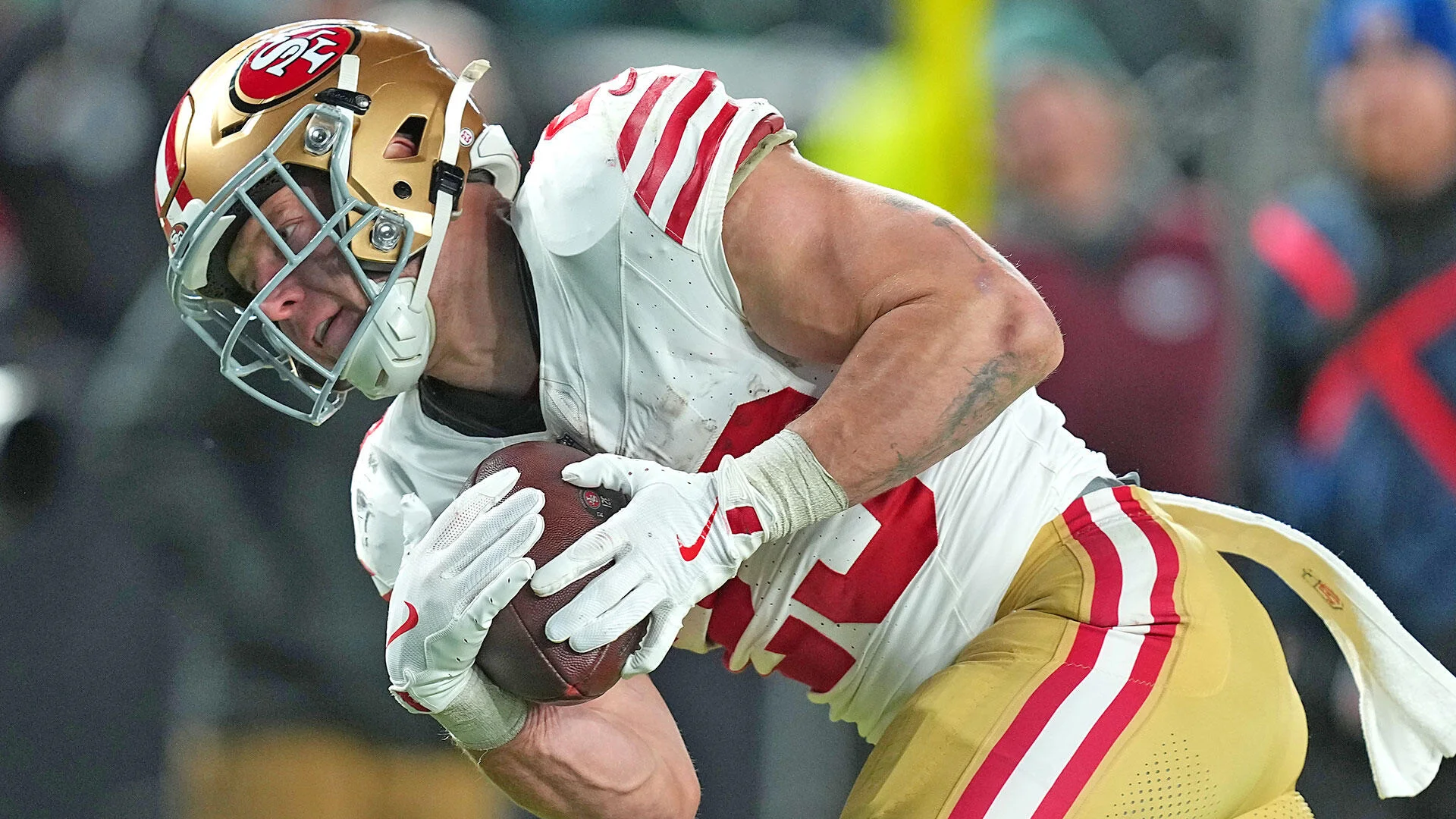
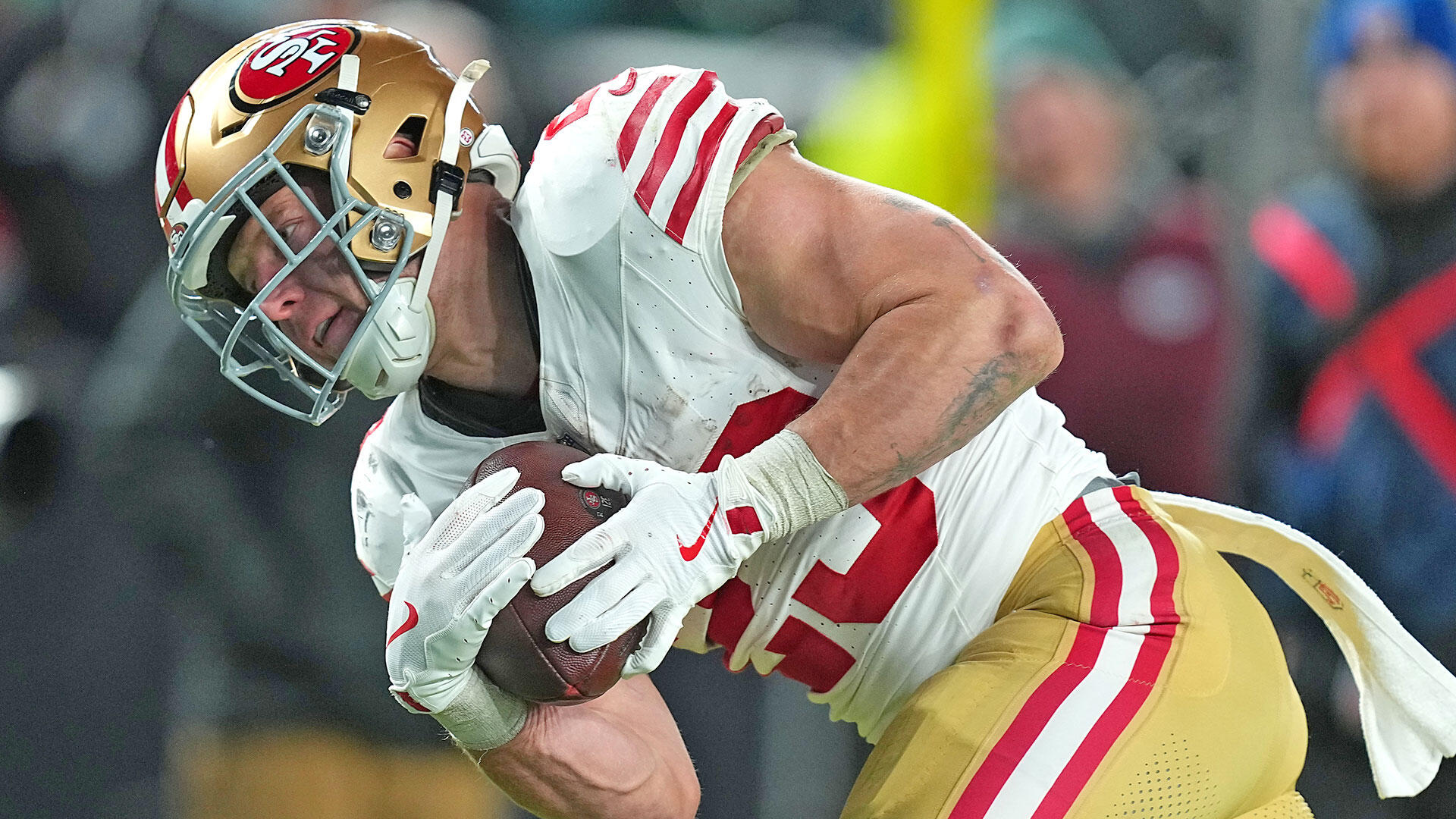
I think Fantasy drafts get tricky around pick 30, which means if you’re picking eighth in a 12-team league, you’re going to have some tough calls in Rounds 3 and 4. But first, let’s figure out how to start your draft! In this 3-WR, PPR league, my goal is to come away with one running back and one wide receiver with my first two picks. I’m open to drafting two RBs or WRs, but if I do that, I might feel pressure to draft the other position in Round 3, which could lead me to reach for a player. Starting your team with one RB and WR gives you balance and flexibility.
You’ll have so many options with your first two picks. I went with Christian McCaffrey and Rashee Rice. McCaffrey is McCaffrey. If he stays healthy, he’s going to be amazing. I’m willing to take the risk as early as sixth overall. Rice has been one of the most consistent performers since breaking out late in his rookie season. In his last 17 healthy regular season games (removing Week 4 of 2024 when he suffered a knee injury), Rice has averaged more than 18.5 PPR points per game. That’s borderline elite.
If I’m picking eighth in the draft, I know I’m never going to have Josh Allen, Brock Bowers or Trey McBride on my team unless they somehow fall to me in Round 3 (and I’d wait until Round 4 for Allen). The 17th pick is too early for those guys. At quarterback with this draft slot, I’d be open to drafting Lamar Jackson as early as Round 4, but I’d rather wait until Round 5 or 6 and see if any of Drake Maye, Joe Burrow or Jayden Daniels is available. If not, just keep waiting until you find the value you love. In this particular draft, I was lucky that Jackson fell to me in Round 5.
At tight end, how do you feel about Colston Loveland in Round 3? It’s a little early for me, but if he’s there in Round 4, I’m interested. Otherwise, there are plenty of tight ends throughout the draft that I’m fine drafting as fallback options.
It should be noted that my first four picks are unbelievably risky. I drafted a 30-year-old RB with injury history, two WRs with knee injuries and an RB dealing with serious off-field allegations. In each case, I felt the upside significantly outweighed the risk. If you’re not sure when to draft players you consider risky, ask yourself if the other options on the board have anywhere near that player’s upside. If the answer is no, it might be time to take the risk.
Here’s my team from the eighth pick:
1.8: Christian McCaffrey, RB, SF
2.5: Rashee Rice, WR, KC
3.8: Josh Jacobs, RB, GB
4.5: Malik Nabers, WR, NYG
5.8: Lamar Jackson, QB, BAL
6.5: David Montgomery, RB, HOU
7.8: Josh Downs, WR, IND
8.5: George Kittle, TE, SF
9.8: Blake Corum, RB, LAR
10.5: Stefon Diggs, WR
11.8: Dallas Goedert, TE, PHI
12.5: Jaxson Dart, QB, NYG
13.8: Marshawn Lloyd, RB, GB
14.5: De’Zhaun Stribling, WR, SF
I think it’s imperative to have two Top 26 WRs. For me, the back end of this list includes guys like Davante Adams, DJ Moore and Mike Evans. None of them were available to me in Round 5, so I was glad I drafted Rice and Nabers early. Otherwise, I would have hated my WR corps. Before you start drafting, come up with your own list of dependable WRs and try to get two of them. Use average draft position to determine whether or not you can get that second guy in Round 5 or if you are better off using two of your first four picks on WRs.
I like this team and have no issues with the build. I could have taken Loveland in Round 3, which probably would have prevented me from taking Jackson in Round 5. If I had taken Loveland, I likely would have spent that fifth-round pick on a RB or WR. In that case, I would have just waited on QB and grabbed great value in the later rounds.
Bottom line: With the eighth overall pick, plan on taking a RB/WR combo with your first two picks and making a tough call on Loveland in Rounds 3 and 4. Consider leaving your first four picks with two WRs because you may not like the options available to you late in Round 5.
Favorite pick: Lamar Jackson
Jackson scored more than 33 points (6 points per passing TD leagues) in four of his first five starts. This was after he averaged 30 points per game and was by far the best Fantasy QB in 2024. Lower body injuries hampered him in the second half of 2025, but he’s healthy now and seems excited about his new offensive coordinator Declan Doyle. This is one of the most obvious bounce-back candidates in Fantasy.
Pick I’m already regretting: David Montgomery
Honestly, I’m not an egotistical man (I’m short, bad at sports and my hair is graying), but I really do not regret any of my picks. I thought Montgomery was perfectly fine. It’s hard to find a running back with Montgomery’s projected workload in Round 6, but he was available and became a pretty obvious pick for me. However, I could have taken tight end Harold Fannin Jr. and been a little stronger at that position.
Player who could make or break my team: Malik Nabers
It’s hard to know what to expect from Nabers. Videos of him at training camp are encouraging, and there is actually a fairly good track record of elite wide receivers having big seasons after ACL tears (Jordy Nelson, Keenan Allen, Cooper Kupp and Chris Godwin to a lesser extent), but Nabers tore his ACL and meniscus. Plus, the Giants figure to be a run-heavy offense. I suspect we won’t see Nabers in Round 4 much longer. I’m still inclined to wait until late Round 3 for Nabers. He might struggle coming back from the injury, but he also could be the steal of your draft.

Several notable veterans remain on the market as the NFL offseason continues through the summer months

•
2 min read
NFL training camps are underway. The newcomers that arrived on their respective teams during the first major waves of free agency and the 2026 NFL Draft have settled into their new environments and will now spend the coming weeks gearing up for their debut seasons in new uniforms.
As teams introduce their rookies to the pros and weave in their veteran pickups, they also continue to look to improve on the periphery. Not every roster hole was filled in March and April, after all, and there is a notable advantage to signing free agents after the NFL Draft: They no longer count against the NFL’s compensatory picks formula. That resulted in a slight uptick in the spring, but most of the post-draft signings will continue to trickle in this summer as still-unsigned vets start finding new homes during training camp.
Each of the top 36 players on Pete Prisco’s annual free agent ranking has signed, but there is still plenty of quality talent available as the NFL calendar moves through its quietest months. Most recently, Deebo Samuel reportedly agreed on a one-year deal with the San Francisco 49ers worth up to $7 million.
Samuel’s return to the Bay Area comes after two years with the Washington Commanders and takes him back to the place where he emerged as a star. With his addition, the 49ers add necessary weapons around quarterback Brock Purdy with Brandon Aiyuk all but certainly done and Ricky Pearsall experiencing lingering effects from last season’s knee injury. The signing also leaves eight of the top 100 players still on the market.
We are keeping track of every top 100 signing below.
Breaking down every NFL team’s offseason spending and most expensive free agent
Garrett Podell
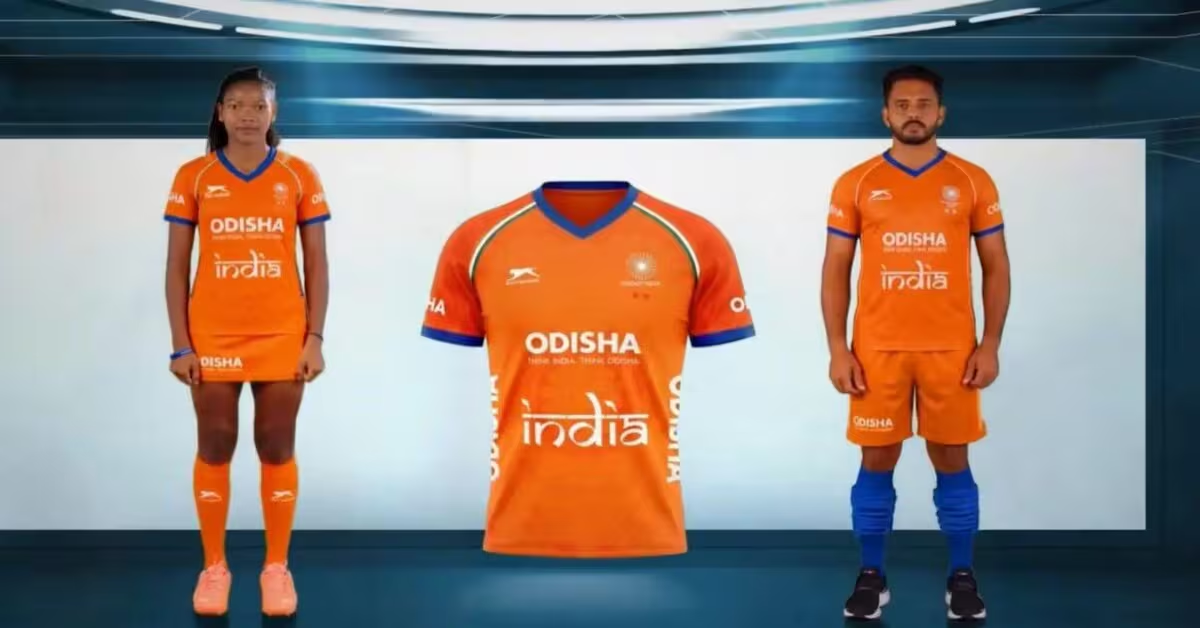
“Presenting the new India jersey! Every stitch tells a story. Every pattern, every colour carries India’s pride.”
That was Hockey India’s message as it unveiled the Indian men’s hockey team’s new saffron jersey ahead of the FIH Hockey World Cup 2026 later this month.
Instead of generating excitement, however, the announcement triggered one of the biggest controversies Indian hockey has witnessed in recent years.
The decision to replace the team’s iconic blue jersey with a predominantly saffron kit has drawn criticism from former captains, players, fans and politicians, many of whom have questioned both the rationale behind the change and the process that led to it.
While Hockey India has maintained that the move was driven by technical reasons and player feedback, several current players have reportedly denied being consulted. The organisation has also faced accusations that the change was politically motivated, a claim it has not acknowledged.
From Olympic gold medal-winning captain Vasudevan Baskaran and former India captain Viren Rasquinha to former Odisha chief minister Naveen Patnaik, several prominent voices have urged Hockey India to reconsider the move and restore the traditional blue jersey.
What is the controversy?
The debate began on Thursday after Hockey India released a promotional video unveiling the new saffron (Kesariya) jersey.
According to Hockey India, the design draws inspiration from the Indian tricolour and the rising sun, symbolising a “new beginning” for Indian hockey.
The announcement, however, was met with an immediate backlash on social media, with many supporters questioning why India was abandoning a jersey colour that has represented the national hockey team for decades.
The criticism intensified after former players publicly opposed the move.
Watch the jersey launch video here:
Presenting the new India jersey! ???????? Every stitch tells a story. Every pattern, every colour carries India’s pride. Our teams are ready to once again do the country proud at the FIH Hockey World Cup Belgium & Netherlands 2026. ????: Select 2 (SD+HD)+ Khel & JioHotstar ????️: August… pic.twitter.com/8GvwbByapq
— Hockey India (@TheHockeyIndia) July 27, 2026
Viren Rasquinha: “Blue is our identity”
Former India captain Viren Rasquinha was among the first prominent voices to question the decision.
He said that while Hockey India had done many positive things for Indian hockey, moving away from the traditional blue jersey was “embarrassing”.
Rasquinha said the blue jersey had always represented the identity and legacy of Indian hockey and added that he wore it with immense pride throughout his career. He also questioned the logic behind introducing the saffron jersey, saying supporters associated the Indian hockey team with blue.
After some social media users interpreted his comments politically, Rasquinha clarified that his criticism had nothing to do with politics.
Vasudevan Baskaran: “Blue is not just a colour, it is a legacy”
Former India captain Vasudevan Baskaran, who led the country to Olympic gold at Moscow 1980, also criticised the move.
Speaking to The Indian Express, Baskaran said he was not inspired by the new jersey and questioned why Hockey India had abandoned a colour that had been synonymous with Indian hockey since 1928.
He argued that such a significant decision should have been taken only after consulting both former and current players.
Baskaran also questioned whether the move had government approval or was solely Hockey India’s decision. Calling the episode a “tamasha”, he said he was deeply hurt by the change.
Players allege there was no consultation
The controversy escalated after The Indian Express reported that multiple current players from both the men’s and women’s national teams denied Hockey India’s claim that the decision followed consultations with players and support staff.
According to the report, five players told the newspaper that they were never asked for their views on changing the jersey colour.
The report also claimed that some members of Hockey India’s executive committee were unaware of the decision before the announcement.
Naveen Patnaik joins the criticism
Former Odisha chief minister Naveen Patnaik, under whose government Odisha became Indian hockey’s principal sponsor, also criticised the move.
Patnaik alleged that the decision was taken under pressure from the BJP government in Odisha and said the administration had become “obsessed” with changing the colours of public infrastructure before extending the same approach to the national hockey team’s jersey.
Why did Hockey India change the jersey?
Hockey India has defended the decision, saying the move was based on both technical requirements and player feedback.
According to the federation, the traditional blue jersey blended with the blue synthetic turf used in international hockey, reducing visibility for players during matches.
The federation said coaches and players suggested alternative colours, including yellow and saffron, before saffron was eventually selected.
Hockey India also argued that saffron carries national significance as one of the colours of the Indian flag, symbolising courage, sacrifice and national pride.
Despite the explanation, the controversy continues to gather momentum, with fans and several former players maintaining that the blue jersey is inseparable from Indian hockey’s identity and should remain the team’s primary colour.
What happens next?
With the FIH Hockey World Cup 2026 just around the corner, Hockey India will be hoping the focus shifts from the team’s jersey to its performances on the pitch. Instead, the federation finds itself dealing with mounting criticism over both the colour change and the alleged lack of consultation before the decision was taken.
While Hockey India has maintained that the switch was made for technical reasons, citing visibility issues on blue playing surfaces and suggestions from players and coaches, reports quoting current players have cast doubt on that claim.
The criticism from former captains such as Viren Rasquinha and Vasudevan Baskaran, along with opposition from former Odisha chief minister Naveen Patnaik, has only intensified the debate.
Whether the saffron jersey eventually becomes accepted as the team’s new identity or Hockey India is compelled to revisit its decision remains uncertain. For now, what was meant to mark a new chapter in Indian hockey has instead sparked a wider conversation about tradition, transparency and the importance of involving players in decisions that shape the identity of the national team.
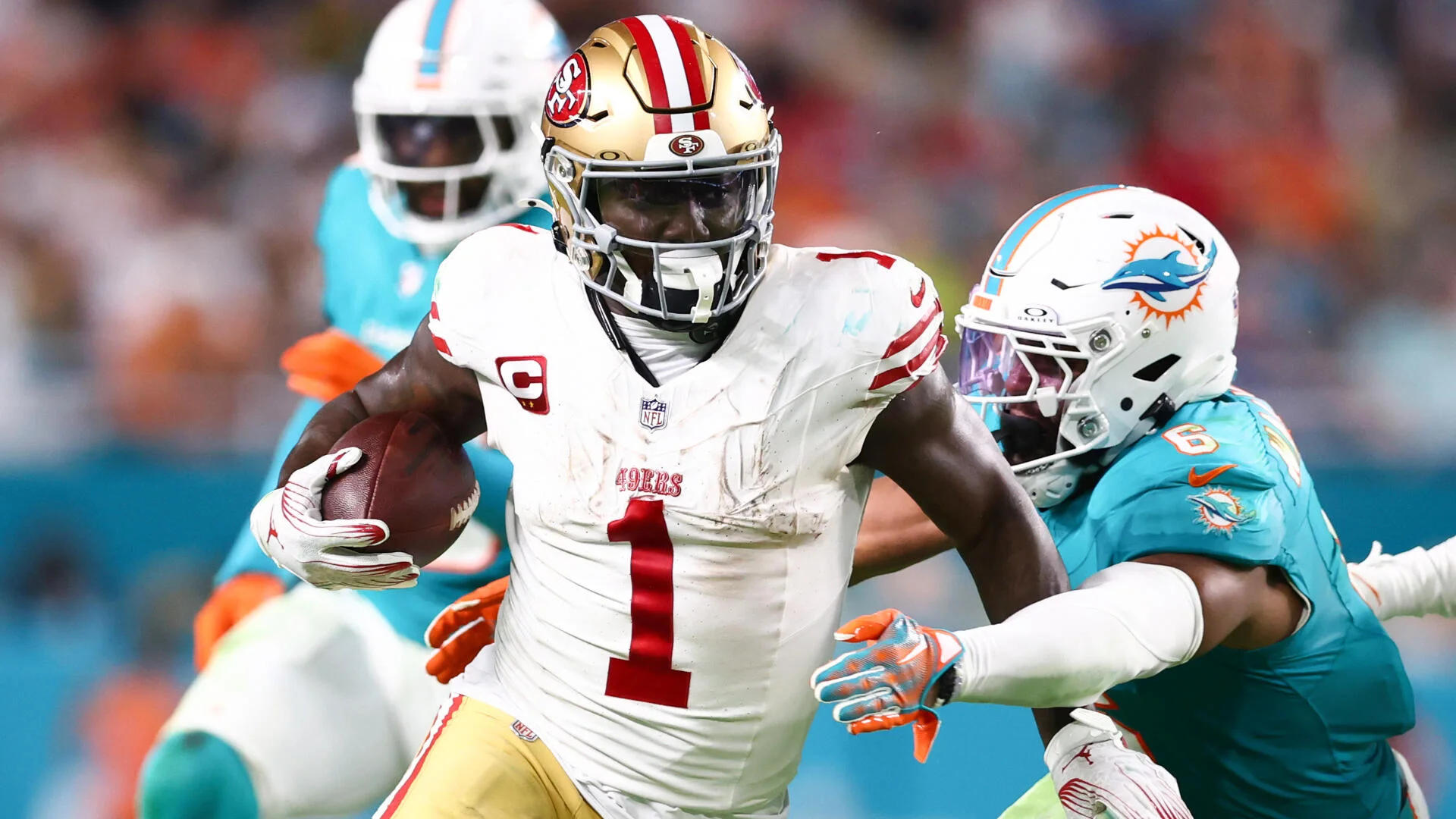
Deebo Samuel and the 49ers are reuniting, with the do-it-all offensive weapon agreeing to a one-year, $7 million deal with a San Francisco team in need of wide receiver reinforcements, per ESPN/NFL Network’s Ian Rapoport.
Samuel, 30, spent the first six years of his career with the 49ers, who selected him in the second round of the 2019 NFL Draft. Samuel’s outstanding ability with the ball in his hands came to a peak in 2021, when the South Carolina product had 1,405 receiving yards, 365 rushing yards and 14 total touchdowns, earning him All-Pro and Pro Bowl honors. Samuel was a key part of two NFC Championship-winning teams during his time in San Francisco.
Samuel spent last year with the Commanders, catching 72 passes — his most since 2021 — for 727 yards and five touchdowns. He led Washington in all three categories.
Samuel’s return to the Bay Area comes as the 49ers are dealing with multiple injuries in their receiving corps. Ricky Pearsall, a 2024 first-round pick, is dealing with knee swelling related to the PCL injury he sustained last year. He has appeared in just 20 of a possible 32 regular-season games since joining the team. Christian Kirk, acquired this offseason, suffered a calf injury on the opening day of training camp.
That’s left the 49ers with free-agent signing Mike Evans and second-round rookie De’Zhaun Stribling as the top wide receivers on the roster. Veteran Demarcus Robinson would likely be next in line.
Samuel is expected to slide into the “Z” receiver spot for the 49ers, per The Athletic’s Matt Barrows, where he thrived during his time in San Francisco. Though Samuel won’t handle as heavy a workload as he did during his prior stint with the team, he showed last year he can still bring value as a yards-after-catch receiver, and coach Kyle Shanahan has lined him up in the backfield plenty, too.
Samuel was the No. 53 free agent in this class according to Pete Prisco.

Fifa’s contentious proposal to sell stakes in a World Cup company appears to have been dealt a decisive blow, following the Asian Football Confederation’s (AFC) decision to join Uefa and Concacaf in rejecting the plan.
The future of Fifa president Gianni Infantino now seems increasingly uncertain. The AFC’s statement not only condemned the plan but also highlighted “fundamental weaknesses in Fifa’s consultation and decision-making processes that must now be addressed”.
It is understood that the 41 nations comprising Concacaf, representing North and Central America and the Caribbean, are losing, or have already lost, confidence in Infantino’s leadership. Meanwhile, Uefa has vowed to boycott Fifa competitions should the proposal not be withdrawn.
Infantino had previously stated that the creation of a new company to manage the World Cup and other Fifa competitions would require the approval of a majority of Fifa’s 211 member associations. With the collective opposition of the AFC’s 47 members, Concacaf’s 41, and Uefa’s 55, a formidable bloc of 143 nations now stands against the plan, making its passage highly improbable.
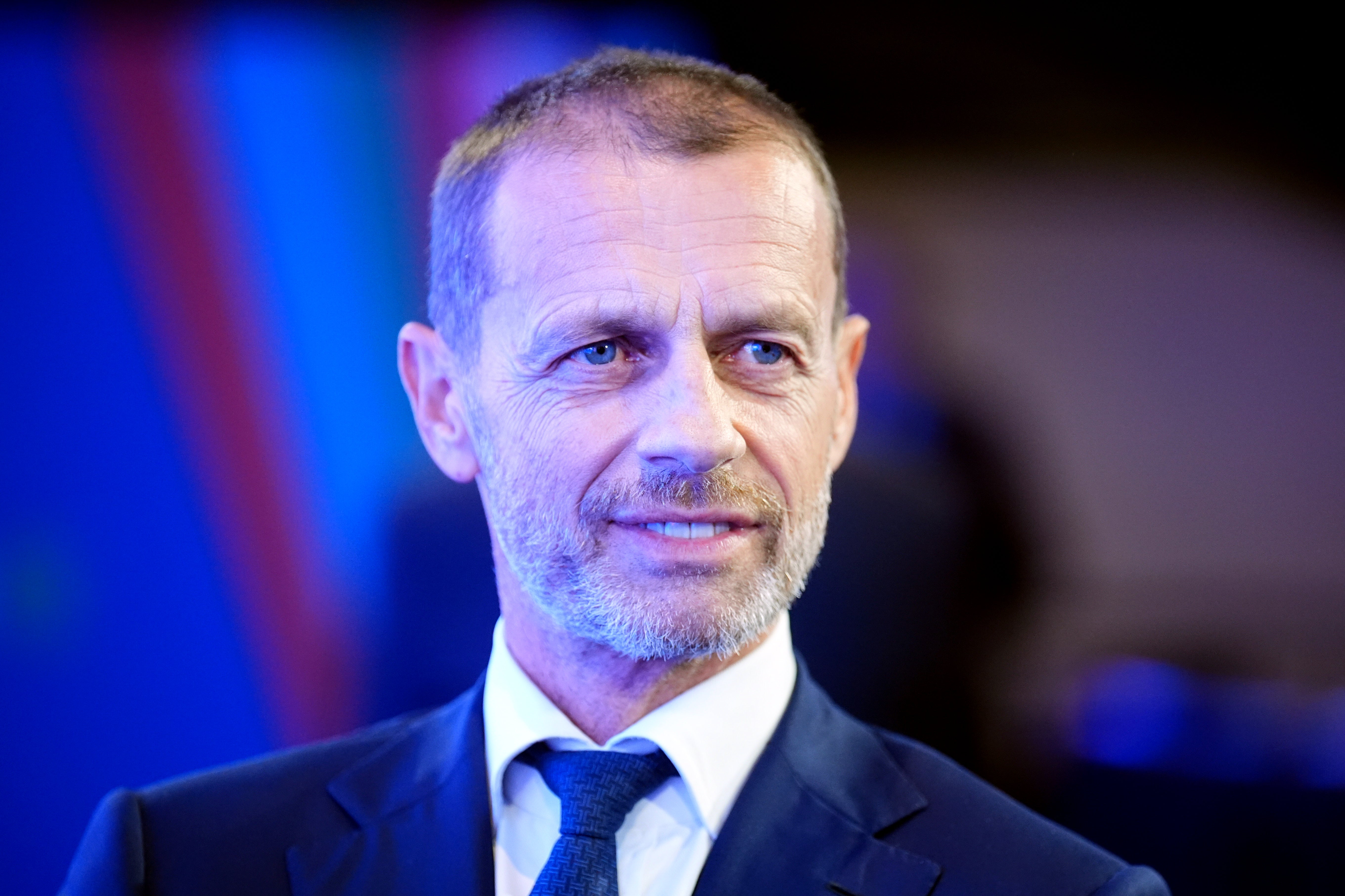
The proposal involved establishing Fifa Forward Enterprise (FFE) and selling a 20 per cent stake to private investors, with Joshua Kushner’s Thrive Eternal reportedly earmarked as the lead investor group. Joshua Kushner is the brother of Jared Kushner, who is the son-in-law of United States President Donald Trump.
Both the AFC and Uefa have expressed dismay that member associations were reportedly unaware of the plans until media reports surfaced.
The AFC’s statement read: “The AFC stands in solidarity with Uefa and Concacaf in expressing serious concerns over Fifa’s proposal to introduce private investment into Fifa’s flagship competitions and the decision-making process around FFE.”
It continued: “The fact that the situation has reached the point where the real possibility of a Fifa World Cup boycott has entered public discourse should concern everyone who cares about the future of our game. Football should never have been placed in such a position.”
The confederation further elaborated on its concerns: “While the immediate debate centres on FFE, the AFC considers this issue extends far beyond a single proposal. Rather, it has exposed fundamental weaknesses in Fifa’s consultation and decision-making processes that must now be addressed.
“While the AFC notes Fifa’s latest clarification on the proposal, the central concerns surrounding governance, institutional process and meaningful consultation remain unanswered.”
Fifa has been approached for comment regarding these developments.
Sports
Lovepreet Singh: Son Of A Tailor Who Clinched CWG Record In Weightlifting, Missed Gold By 1 Kg
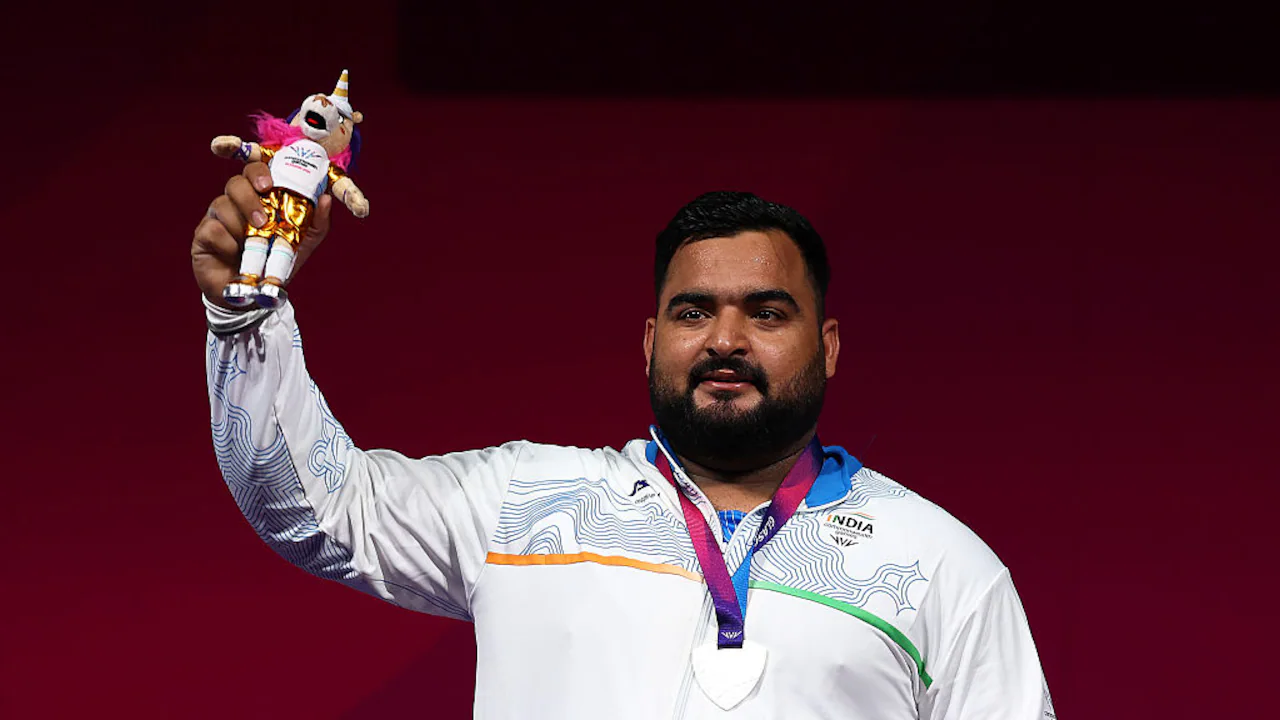
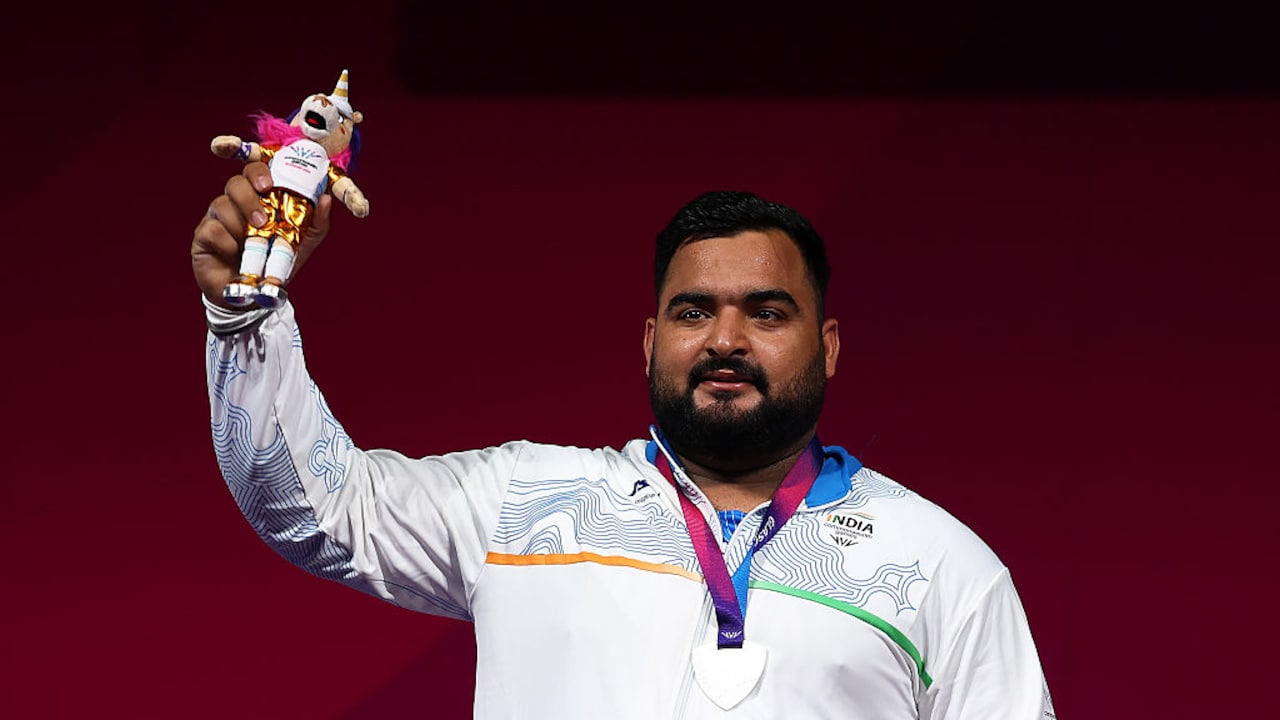
India’s Lovepreet Singh shattered the Commonwealth Games snatch record and came agonisingly close to gold before finishing just a kilogram behind New Zealand’s David Andrew Liti to claim silver in the men’s 110kg weightlifting competition on Thursday. The 28-year-old totalled 388kg (176kg in snatch and 212kg in clean and jerk), was pipped by Liti, who clinched gold with 389kg (166kg 223kg) after a Games record lift in clean and jerk. England’s Andrew Griffith claimed bronze with a distant 356kg (165kg 191kg). A bronze medallist at the previous edition, Lovepreet went one better this time, ending India’s run of three medal-less weightlifting events and capping a successful campaign for the contingent, which finished with eight medals — one gold, six silver and one bronze.
Hailing from Bal Sikander village in Punjab’s border district of Amritsar, Lovepreet comes from a humble family. His father is a tailor, while his grandfather earned a living selling vegetables. Encouraged by his family to pursue sport instead of the family profession, he took up weightlifting at the age of 13 at the DAV Ground and has since emerged as one of India’s leading heavyweight lifters.
The Punjab lifter was in sublime touch in the snatch, opening with a comfortable 168kg before effortlessly raising the bar to 173kg.
He then smashed the Games record with a flawless 176kg in his third attempt, taking a commanding 10kg lead into the clean and jerk.
The early exit of Samoa’s fancied Sanele Mao, who failed all three attempts at 175kg in the snatch, further strengthened Lovepreet’s position as he emerged the favourite for gold.
But Liti mounted a remarkable comeback in the clean and jerk.
The New Zealander began with 207kg to reduce the deficit before Lovepreet successfully matched his personal best of 212kg in his second attempt.
Roared on by chants of “Come on Jatta” and “Come on Singh”, Lovepreet opted for a bold 217kg in his final attempt, a lift that would have broken the Games record and secured gold.
He managed to clean the weight but could not summon enough strength to jerk it overhead.
That opened the door for Liti, who produced a massive 223kg, a new Games record in clean and jerk, to snatch the gold by the slimmest of margins.
Featured Video Of The Day
Spain’s Royal Family Welcomes World Cup Champions To Zarzuela Palace
Topics mentioned in this article
Sports
Quote of the day by Neeraj Chopra: “Medals are decided on the day, not before…” – why success is earned in the moment, not predicted in advance | Commonwealth Games News
Quote of the day by Neeraj Chopra (AP photo)
Sport is full of predictions made long before anyone actually competes, favourites picked out in advance, rankings treated almost like guarantees. Neeraj Chopra, India’s Olympic javelin champion, put it more simply than most. “Medals are decided on the day, not before that,” he said. Past results and world rankings can build confidence going in. None of it actually decides anything until the competition itself is over. Chopra’s own career has proved this point more than once, sometimes in his favour and sometimes against it, which is really what gives the quote its weight rather than treating it as a comforting slogan.
Quote of the day by Neeraj Chopra
“Medals are decided on the day, not before that”
What is the meaning behind Neeraj Chopra’s quote
Past achievements, world rankings and public expectation can all build genuine confidence, but none of them actually determine what happens on the day itself. The only thing that really counts is how well someone performs at the exact moment it matters. A champion cannot simply coast on what they did last year. Every new competition brings new conditions, new opponents and a fresh set of challenges that have to be met all over again.
Why reputation on its own never guarantees anything
Being seen as the favourite can build real confidence. It can also create real pressure, sometimes more than any athlete really expects going in. Plenty of highly ranked athletes have fallen short precisely because they assumed their past success would simply carry over automatically. Just as often, athletes given little chance beforehand have won by focusing entirely on the actual task in front of them rather than what anyone expected of them.
Why staying present matters so much in competition
Plenty of people get distracted thinking about the outcome long before the moment actually arrives, worrying about failure before they have even taken the first step. Elite performers tend to focus somewhere much narrower, one throw, one race, one decision at a time. Chopra has described this directly himself, saying he prefers to take each competition as it comes rather than thinking ahead to milestones or medals.
Why real preparation is what actually creates confidence
Performance on competition day rarely happens by accident. It reflects months, sometimes years, of disciplined training, recovery, nutrition and mental preparation, all of it happening long before the actual event. Chopra has spoken about knowing almost instantly how a throw has gone, from the rhythm and technique alone, a kind of instinct built entirely through that accumulated preparation rather than something that simply appears on the day itself.
Why respecting every competitor genuinely matters
Chopra has spoken often about taking every rival seriously regardless of their ranking or reputation. Every competitor training at that level has put in serious work and deserves to be approached with real respect rather than assumed inferiority. Underestimating anyone tends to breed exactly the kind of complacency that costs athletes results, sometimes at the worst possible moment.
Why this lesson clearly reaches beyond sport
The same principle shows up everywhere. Students prepare for exams, but the actual mark depends entirely on performance during the exam itself. Professionals might spend months preparing a presentation, but success still comes down to delivering it well on the day. Preparation matters enormously. Execution, in the actual moment, tends to matter even more.
Why humility is such a large part of real greatness
Despite Olympic gold, an Olympic silver, and a World Championship title, Chopra consistently avoids assuming victory before he has actually competed. After his Tokyo win, he presented his own medal to his parents, Saroj Devi and Satish, saying in Hindi, “Ye medal mera nahi hai, ye desh ka medal hai,” this is not my medal, this is our country’s medal. That same humility runs directly through today’s quote. Past medals provide experience. They were never meant to provide entitlement to the next one.
Other famous quotes by Neeraj Chopra
- “Personally, I don’t think about milestones or medals, but like to take each competition as it comes and focus on doing my best and becoming better with each competition.”
- “Once I throw, I immediately know how well I have done, or how badly, from the effort I have put in and the way the rhythm and technique comes together.”
- “I will never say this, the greatest of all time.”
- “This is not my medal, this is our country’s medal.”
Why this quote continues to inspire millions of people
People today spend a lot of time preoccupied with rankings, forecasts and public expectation, none of which actually decides a real result. Chopra’s words are a reminder that what matters is preparation, composure, and the ability to actually deliver once the moment genuinely arrives, whether that moment happens on a track, in an exam hall, or anywhere else something real is finally on the line.
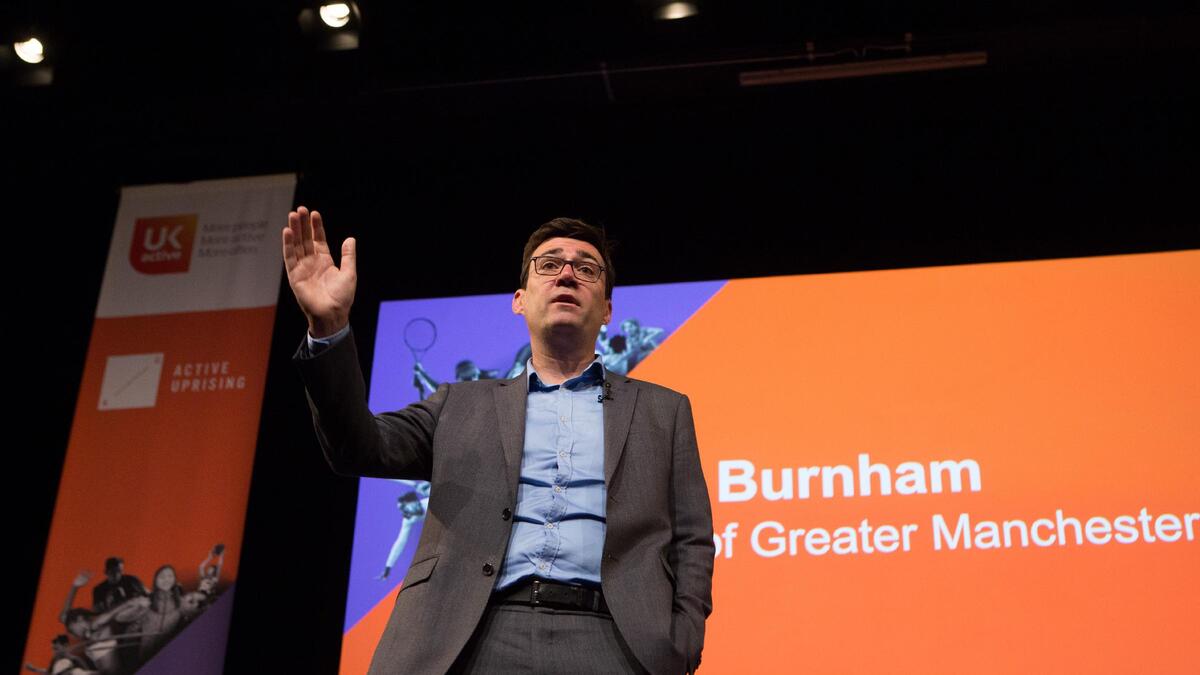
By Kath Hudson 31 Jul 2026
UK Active CEO, Cameron Saunders, has written an open letter to the UK’s new Prime Minister, Andy Burnham, congratulating him on his appointment and expressing a willingness to work with his government.
There’s hope Burnham could be a gift for the sector, as he fully understands the importance of physical activity – as explained in an interview with HCM’s sister publication, Sports Management in 2019.
Burnham has repeatedly advocated for integrating leisure facilities into primary care and recognised the sector as a driver of economic productivity.
As mayor of Greater Manchester, he made systemic changes to get 75 per cent of the city’s population active by 2025, including investing in active travel infrastructure.
During the pandemic he repeatedly lobbied central government for emergency relief funds to prevent the closure of leisure centres and swimming pools across the city.
During his tenure as Health Secretary in 2009-2010, he was one of the first politicians to frame physical activity as a core pillar of preventative medicine. In this role he was the primary architect of the national Free Swimming Scheme and Change4Life campaign.
Burnham says he wants to disrupt the status quo, create growth in every postcode and to give back hope. “Our job won’t be done until people aren’t just living, but living well,” he says.
In his first week as Prime Minister he launched a national drive to end rough sleeping; announced a tax cut on energy bills, a £2 cap on bus fares and a 20 per cent cut on business rates on pubs, clubs and music venues, as well as opened Number 10 North.
Here is Saunders’ letter in full:
Dear Prime Minister,
I am writing as the CEO of UK Active, to congratulate you on your appointment as Prime Minister and set out how the physical activity sector can work with your Government to drive change.
During your speech as Mayor of Greater Manchester at our ‘Active Uprising’ conference in 2018, you spoke passionately about the national role and importance of physical activity. We welcomed your commitment to “put physical activity at the heart of everything we do”, and your recognition of it as “the most cost-effective way of dealing with some of biggest challenges we face”. I hope these beliefs still ring true and you will build on your track record, helping us to scale nationally your work embedding physical activity across Greater Manchester.
Gyms, swimming pools and leisure centres are critical in tackling the nation’s most pressing challenges: relieving pressure on the NHS, tackling economic inactivity and driving economic growth. In the face of an overburdened health service with unsustainable waiting lists, rising levels of unemployment, stubborn inequalities and sluggish national growth, physical activity delivered by these facilities can form a central part of the solution.
Our sector is already producing results across these priorities, with the UK Health and Fitness Market Report showing a record 12.2 million members of health and fitness clubs and 679 million visits in 2025, equating to £15.9bn in healthcare savings annually.
These clubs also provide important employment opportunities, particularly for young people aged 16-24, who are most at risk of long-term unemployment and make up 30 per cent of the sector’s workforce.
Our vision is of a gym on every high street, a leisure centre serving every place, improving the health and social cohesion of communities up and down the country, but also driving local regeneration and footfall to other local businesses.
However, major barriers prevent services from reaching the underserved communities where health inequalities persist. The ageing stock of public leisure facilities calls for a long-term strategy, with around 60% of sports halls and swimming pools beyond their expected lifespans or in need of refurbishment. The £400m of grassroots funding announced by DCMS will do little to address this crisis.
Meanwhile, private sector growth is hamstrung by operating conditions, with successive Autumn Budgets raising employment costs and business taxation. These force higher prices, limited expansion plans, reduced services and closures, undermining the chance for healthier, wealthier places.
Pro-growth and pro-prevention, you have a generational opportunity to help people of all ages to be active and we invite your team to meet and discuss how we can help you deliver change.
Yours sincerely,
Cameron Saunders, CEO, UK Active
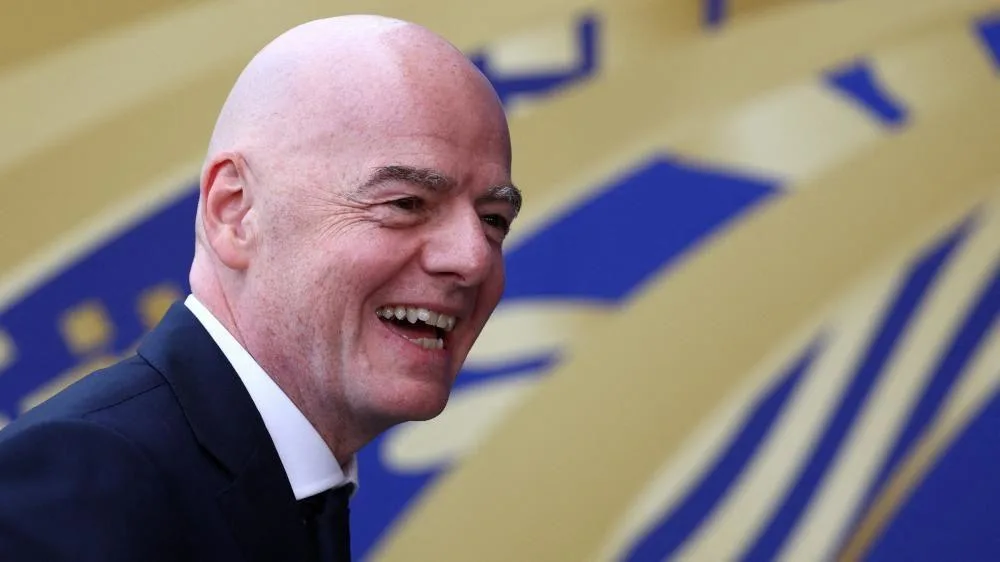
Fifa says that “nobody is selling football” as it vowed to continue with the controversial plan to sell stakes in its competitions to private investors.
Uefa – the body that governs European football – voted on Thursday to boycott World Cups if the plan proceeded.
Advertisement
Concacaf, which governs football in North and Central America and hosted this year’s World Cup, said its 41 member associations also “rejected” the proposal made by Fifa president Gianni Infantino.
Fifa oversees world football and Infantino would need 106 of its 211 members to vote in favour for the proposal to go through. Uefa and Concacaf members combined make up 96 of those votes.
In a statement released on Friday, Fifa claimed the consultation process had been “disrupted by incorrect media reports”.
“We respect the feedback and concern aired in public and reaffirm our commitment to an open and democratic consultation,” the statement read.
Advertisement
“We will proceed with this consultation process to ensure that each MA (member association) has the ability to express its vote based on facts.
“Nobody is selling football. This is not something Fifa would ever entertain.”
What are Infantino’s plans?
Fifa wants to create a commercial subsidiary to run its main events, including its World Cups, and external investors will be able to buy stakes in it.
It said it would “invite third parties to make minority, non-controlling investments” in a new subsidiary – Fifa Forward Enterprise (FFE).
In a 25-page document created by investment bank JP Morgan, it is made clear that Fifa’s tournaments will expand to hit an estimated increased pay-out of 24m euros per member association in the 2035-2039 cycle.
Advertisement
It mentions “new business initiatives” and “attracting top talent with incentive-driven compensation”.
The World Cup is described in it as the “most widely viewed” sporting event but Fifa, by contrast, is said to be “under-monetised”.
There is no mention in the document of the women’s game.
On Friday, Fifa said FFE had been proposed “to ensure all Fifa member associations have the opportunity to take meaningful ownership of the commercial opportunity of football in their respective countries”.
“This does not come at the cost of either the spirit or the governance of Fifa or football itself,” it added.
Advertisement
Infantino previously wrote to Fifa members saying they will receive $40m (£30m) if they back his controversial proposal. He set a deadline of 19 September for federations to accept his plans if they want to access an initial $20m (£15m).
However, Uefa has accused Fifa of using football “to enrich themselves and their friends”.
If approval is granted, Fifa says Thrive Eternal is expected to lead the proposed investor group for FFE.
Thrive is an American venture capital firm founded by Joshua Kushner – the brother of US President Donald Trump’s son-in-law Jared.
What did Uefa and Concacaf say?
Uefa and Concacaf have led the opposition to Infantino’s plan.
Advertisement
“The World Cup cannot be treated as an investment product,” Uefa’s statement on Thursday read.
“It is one of football’s greatest sporting legacies. It has been built over generations by players, national teams and supporters across every continent.
“No part of it should ever be surrendered to private investors. The World Cup is not for sale.
“This is not merely a profound failure of leadership, but an abdication of Fifa’s duty as the custodian of world football.”
Concacaf said its members “expressed deep concerns about the lack of due process surrounding the proposal” and the “artificially short deadline imposed”.
Advertisement
It also questioned the need for private investment after what Fifa claimed was the most profitable World Cup in history.
The Asian Football Confederation (AFC) said that it is “deeply concerned that Fifa’s unilateral actions appear to undermine the very foundations of continental football”.
The AFC also said it was “unacceptable” that it had not been consulted before the proposal was publicly announced, nor provided with “detailed governance, financial or legal analysis”.
The governing body overseeing football in South America, Conmebol, is yet to publicly comment on the proposals. The governing bodies in Africa (CAF) and Oceania (OFC) have said they will discuss Fifa’s plan in August.
Advertisement
Chelsea manager and 2010 World Cup winner Xabi Alonso was asked about the situation during his side’s pre-season tour of Australia.
“I think that football has to be for the people, not in private hands and I think that the way we love it is this way and we have seen a great World Cup and it’s good to defend the interests of all the people,” he said.
“Hopefully it won’t happen and we will do it – we will keep the game as attractive and as authentic as we like it and that’s why it creates these emotions, these passions.”
What happens now?
It feels as though no-one who matters knows how this situation is going to play out just yet.
Advertisement
“Not sure the detail was considered when deciding the overall policy,” was the response from a senior European football source when asked what this decision means for the U20 Women’s World Cup, starting on 5 September, being hosted by Poland and featuring plenty of European nations.
Uefa’s boycott threat will be activated if Infantino’s funding deal is accepted.
Given 19 September is the deadline for countries to accept Fifa’s deal and bank $20m (£15m) on 1 January, in theory, countries could be pulling out of that tournament in the middle of the quarter-finals and before the semis.
After that, the next senior matches in a Fifa competition are the Women’s World Cup play-offs in October, which feature England, Scotland, Wales and Northern Ireland among others.
Advertisement
Infantino became Fifa president in 2016 when he beat Asian Football Confederation president Sheikh Salman al-Khalifa by 115 votes to 88. The Swiss is due to stand for a fourth term in March.
Prior to this week, it had been anticipated he would be re-elected unopposed. FAs around the world, including some in Europe, have already confirmed their intention to support the 56-year-old.
But sources say in addition to rejecting Infantino’s plan, the vast majority of the Concacaf members are either losing faith in the Fifa president’s ability to govern the game, or have lost it altogether.
Do ‘smaller’ nations need more support?
While Uefa members are among the richest on the planet, many nations elsewhere rely on Fifa funding for basic infrastructure.
Advertisement
“There are the aspirations and needs of small nations, but you’ve also got large nations who have the power,” former Football Association chief executive Mark Palios told BBC Breakfast.
“It’s not dissimilar to the attempts to form a European Super League. On one end you’ve got the people who create the cash, but on the other end you still need competition.”
Rogers Byamukama of the Ugandan Football Federation argued that any avenue that could lead to more resources for nations like his should be explored.
“First and foremost, you need to understand that football is a very expensive venture, especially on the African continent where the resources are not easy to come by,” he told Newsday on BBC World Service.
Advertisement
“For instance in Uganda, the number of infrastructure projects that have been funded by Fifa from the resources generated by Fifa, especially at the World Cup, both from ticket sales as well as sponsors.
“On top of that, there are many grassroot programmes that have been funded by Fifa, including schools for football.
“From my perspective, any avenue that brings in more resources is good because those resources would be distributed and given to federations, especially on the African continent and that would inspire growth.”
Byamukama acknowledged Uefa’s right to speak out, but suggested that its members are not reliant on Fifa funding like many associations in the rest of the world where Infantino remains popular.
Advertisement
In the first two cycles of the Fifa Forward development programme, through to 2022, $2.8bn (£2.08bn) was made available for investment across the 211 member associations.
Fifa Forward 3.0 – covering the years 2023 through to 2026 – has produced a 30% increase in funding.
Fifa has provided a further $5m (£3.7m) for every member association, with another $60m (£44.48m) paid to each confederation for their own projects.
After being re-elected unopposed in 2019 and 2023, Infantino is expected to win another term in 2027.
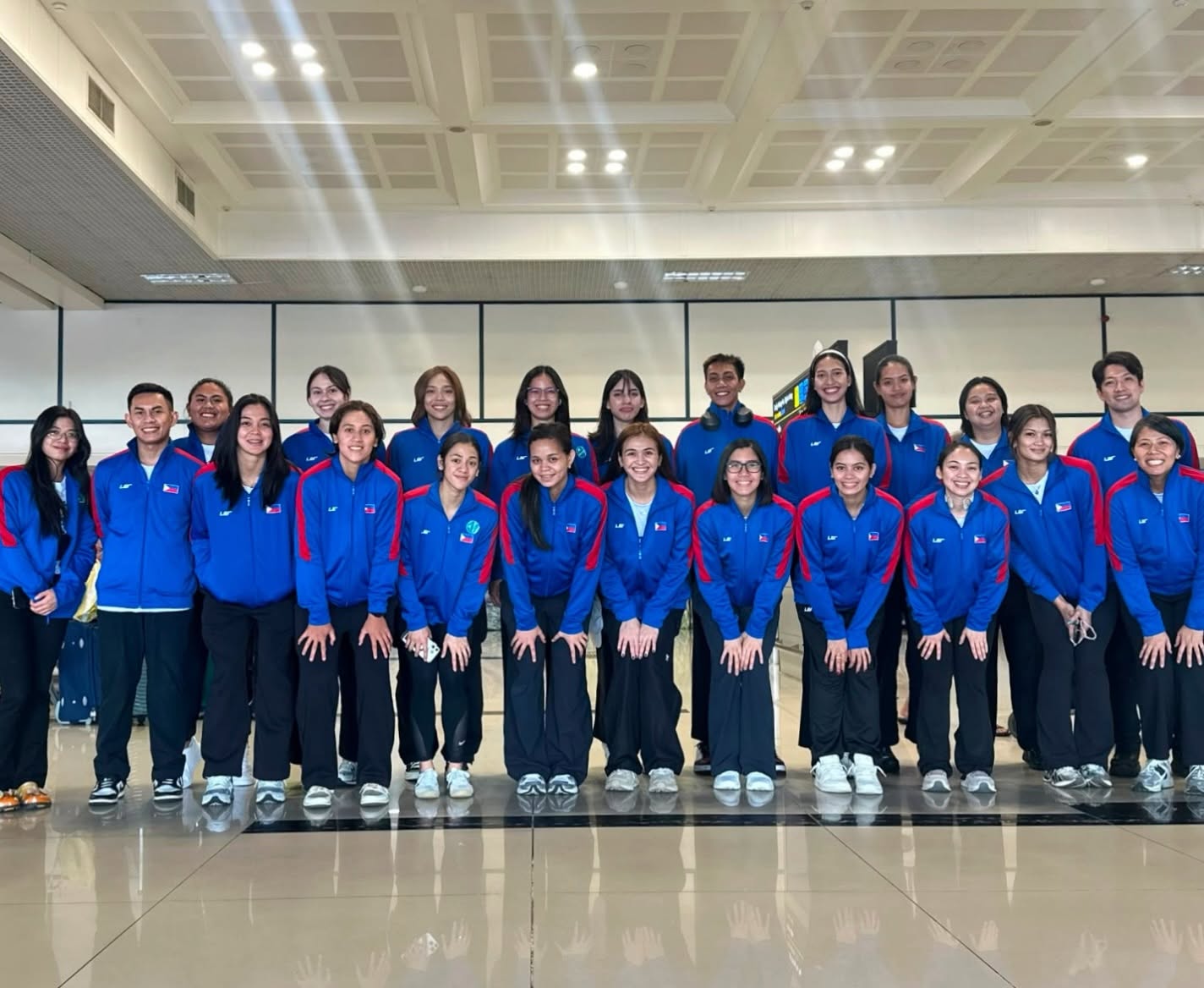

MANILA, Philippines–Alas Pilipinas women’s volleyball team opens a new era under Japanese coach Taka Minowa in the SEA V Cup Leg 1 at Dong Anh Gymnasium in Hanoi Vietnam.
The Filipinos will play a single round-robin tournament, in which the records of four participating nations, including Vietnam, Thailand, and Indonesia, will determine their rankings.
The best record will rule the tournament.
Article continues after this advertisement
In the past four editions, the same core, led by captain Jia De Guzman, won bronze, beating Indonesia in their past meetings.
Alas Pilipinas women at SEA V Cup Leg 1 – schedule
July 31, Friday
- 5pm – Indonesia vs Thailand
- 8pm – Alas Pilipinas vs Vietnam
August 1, Saturday
- 5pm – Alas Pilipinas vs Thailand
- 8pm – Indonesia vs Vietnam
August 2, Sunday
- 5pm – Alas Pilipinas vs Indonesia
- 8pm – Thailand vs Vietnam

Sports32 seconds ago
Fantasy drafts: How to build the perfect team from No. 8 overall

Tech2 minutes ago
High iPhone demand won’t be met by supply in Q4

NewsBeat4 minutes ago
Southport killer Axel Rudakubana is charged with multiple assaults on prison staff at HMP Belmarsh


-

 Fashion7 days ago
Weekend Open Thread: Brooks Brothers
-
 Sports5 days ago
Commonwealth Games boxing: Jadumani Singh seals dominant 5-0 win over Pakistan’s Sumama Rehman to enter quarter-finals | Commonwealth Games News
-

 Business2 days ago
Why Trees Belong on the Risk Register
-

 Tech4 days ago
Intel is reversing course and bringing hyper-threading back to its server chips
-

 Crypto World6 days ago
Ripple bought a bank in pieces. The $4 billion audit
-

 Politics4 days ago
Luke Littler dismantles Gerwyn Price to retain title in Blackpool
-
 Entertainment7 days ago
A New Post-Apocalyptic Gundam Anime Series Blasts Into SDCC
-

 Politics3 days ago
The Part of the Electric Transition Nobody Wants to Discuss
-

 News Videos5 days ago
BITCOIN JUST ENTERED THIS CRITICAL ZONE…
-

 Business2 days ago
Major shareholder moves on Canyon
-

 Crypto World5 days ago
XRP Ledger adds $2.6B as RWA inflows rank second
-

 News Videos22 hours ago
Bitcoin Enters the 3rd Stage of the Bear Market
-

 Politics5 days ago
Spain sweeps the board at 2026 World Cup with individual awards
-
 Entertainment3 days ago
‘Stargate’ Creator’s New Sci-Fi Series Returns for Season 3 Tomorrow
-

 Entertainment5 days ago
Sara Gilson Killed By Husband After Viral “Pedophile” TikTok Video
-

 Crypto World2 days ago
Kraken Enables Retail Access to Jersey Mike’s IPO via Tokenized Shares
-

 Tech6 days ago
Anthropic launches Claude Opus 5, a cheaper AI model for coding, agents and enterprise workflows
-

 News Videos3 days ago
Claude: Build Financial Dashboards in Minutes (2026)
-

 Politics18 hours ago
Luke Littler’s dominance sparks GOAT debate
-

 Tech3 days ago
New macOS Sequoia & Sonoma security updates for older Macs
You must be logged in to post a comment Login