

Sports
Here’s how West Asia conflict can disrupt Dukes cricket ball supply | Cricket News

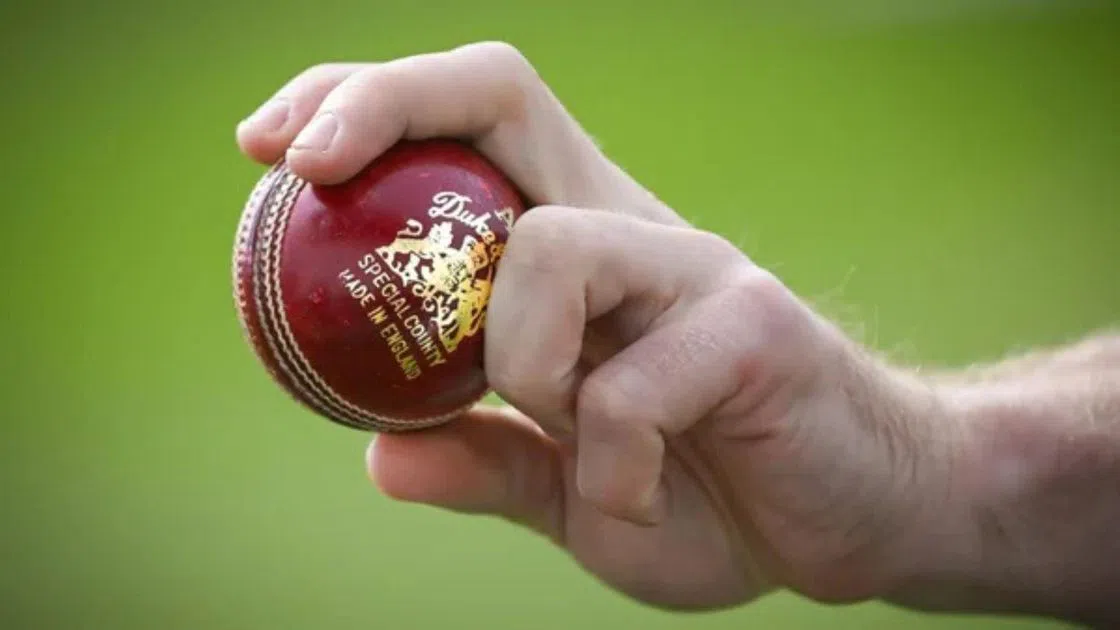
The ongoing conflict in West Asia is beginning to ripple through global supply chains, and even cricket has not remained untouched. Among the latest concerns is the availability of the Dukes cricket ball — a staple of Test and county cricket in England — whose complex manufacturing process makes it particularly vulnerable to international disruptions.
With England’s domestic season approaching, questions have emerged around supply consistency. While Dukes owner Dilip Jajodia has assured that provisions are in place to meet top-level demand, early signs suggest that the broader ecosystem of the sport could feel the strain.
Global supply chain exposed to disruption
Unlike many other cricket balls, Dukes is produced through a highly internationalised process. The leather is sourced from Aberdeen Angus cattle in Scotland and undergoes tanning locally before being shipped to South Asia — primarily India and Pakistan — where skilled artisans hand-stitch each ball. The semi-finished products are then sent back to England for final finishing and quality checks.
This multi-stage, cross-border chain is efficient under stable conditions but becomes fragile when global logistics are disrupted. The ongoing conflict in West Asia has affected key air corridors and cargo routes, forcing the rerouting of shipments, increasing transit times, and raising freight costs.
Priority given to elite cricket
Despite these challenges, Dukes has moved to protect the most critical segment of the game — first-class and Test cricket. Jajodia has indicated that the company anticipated potential disruptions and built sufficient inventory to ensure that top-tier matches proceed without interruption.
This prioritisation reflects the central role of the Dukes ball in England’s cricketing identity, where its pronounced seam and sustained swing are integral to match conditions. Ensuring uninterrupted supply for these fixtures has become the company’s primary objective.
However, this approach has had a knock-on effect. Reports suggest that some county teams have received reduced allocations, particularly for practice sessions and second-tier matches. While not severe enough to halt cricketing activities, these adjustments highlight the pressure building beneath the surface.
Seasonal demand intensifies pressure
The timing of the disruption has further complicated matters. England’s cricket season begins in April, a period when demand for Dukes balls rises sharply across all levels — from international fixtures to club cricket.
Typically, Dukes produces between 4,000 and 5,000 balls for first-class and Test cricket each summer, in addition to supplying leagues and recreational competitions. Even in normal conditions, this surge places considerable stress on the supply chain.
The current logistical uncertainty has amplified that pressure. Clubs and leagues, which rely on consistent access to match balls, are particularly vulnerable. Dukes has acknowledged the challenge and indicated that while supply may be stretched, efforts are being made to ensure minimum allocations across stakeholders.
Skilled craftsmanship limits rapid expansion
One of the defining characteristics of the Dukes ball is its craftsmanship. Each ball is hand-stitched by experienced workers, and maintaining consistency requires precision at every stage of production.
This reliance on skilled labour makes rapid scaling difficult. Unlike mass-produced goods, output cannot simply be increased at short notice without risking variations in quality. The process is also dependent on natural leather, which introduces its own variability.
As a result, even if demand rises due to supply gaps, Dukes cannot significantly accelerate production without compromising the very qualities that define the ball. This structural limitation makes the current disruption harder to offset through increased manufacturing alone.
Concerns persist over durability
The supply concerns come against the backdrop of recent criticism surrounding the Dukes ball’s performance. During India’s tour of England in 2025, players from both sides repeatedly raised issues about the ball losing hardness earlier than expected.
Even so, the overlap of supply concerns and performance debates has placed the ball under increased scrutiny ahead of a crucial season.
Limited alternatives for English conditions
While Dukes remains the standard in England and the West Indies, other manufacturers dominate different regions. The Kookaburra ball is widely used in Australia, South Africa, and ICC events, while the SG ball is preferred in India.
However, switching to an alternative is not a straightforward solution. Each ball behaves differently, shaped by its construction and the conditions it is designed for. The Dukes ball, with its prominent seam and ability to swing for extended periods, is uniquely suited to English pitches and weather.
Any shift away from Dukes would fundamentally alter the balance between bat and ball, impacting everything from swing to seam movement. For this reason, despite the current challenges, the ECB and counties are unlikely to consider a change unless absolutely necessary.


Former MLB All-Star Yasiel Puig wasted absolutely no time making headlines in his debut with the Toronto Maple Leafs of the independent Canadian Baseball League. And honestly, it looked like vintage Puig. Playing at Christie Pits Park against the Kitchener Panthers, Puig put on a show in Toronto’s 8-6 win.
His final line: 2-for-2, 2 home runs, 4 RBI, and 2 walks. For one afternoon at least, it felt like the electric version of Puig baseball fans remember from his MLB days.
Advertisement
MORE: Brewers star pitcher makes MLB history Friday night against Yankees

Yasiel Puig guilty
Career Overshadowed by Serious Legal Issues
Unfortunately, Puig’s baseball comeback comes alongside a major legal cloud. He is currently awaiting sentencing after pleading guilty earlier this year to:
-
Making false statements to federal investigators
The charges stem from a federal investigation into an illegal sports gambling operation in Southern California. According to reports, Puig allegedly placed hundreds of sports bets and accumulated nearly $1 million in gambling losses that were never repaid.
He faces a potential sentence of up to 15 years in prison, though many legal experts believe the actual punishment could be far less severe.

A Former MLB Star Still Has Pop
Puig spent seven seasons in Major League Baseball with the:
Advertisement
At his peak, he was one of baseball’s most exciting and polarizing stars:
The talent has never been questioned.

Toronto Took a Massive Gamble
Despite the legal situation, the Toronto Maple Leafs moved forward with signing Puig anyway.
For an independent league, the move is enormous. Puig instantly becomes:
-
The biggest name in the league
-
A major attraction for fans
-
A credibility boost for the CBL
Reports even suggest his deal is the largest contract in league history.

A Legacy Defined by Talent and Turmoil
Few players in recent MLB history have had a career as complicated as Puig’s. At times, he looked like a future superstar capable of becoming one of baseball’s faces. But throughout his career, inconsistency and controversy repeatedly followed him.
Advertisement
Now, this latest chapter may be the most uncertain of all. Yasiel Puig reminded everyone Sunday that he can still electrify a baseball crowd with a star-level performance. But as impressive as the debut was, the bigger questions surrounding his future still remain unanswered.
— Enjoy free coverage of the top news & trending stories on The Big Lead —


Daniel Dubois secured a phenomenal victory over Fabio Wardley at the weekend, but one of the most viral moments of the bout came in-between rounds, when ‘Triple D’ was slapped by lead trainer, Don Charles. Reflecting on his performance, Dubois revealed how Charles’ approach helped him in the fight.
Dubois was dropped in round one and three, looking set to become the latest to succumb to the power of Fabio Wardley, who had knocked out all 19 of his opponents since his 2017 debut until that point.
Additionally, Dubois has been accused of ‘quitting’ in the past, due to him taking a knee in defeats to both Joe Joyce and Oleksandr Usyk. Although, after being dealt a slap from his cornerman, Charles, the 28-year-old showed no such weakness and instead rallied to an extraordinary win to become a two-time world champion.
DUBOIS CORNER JUST SLAPPED HIM 👀😅
🎟️Buy WARDLEY vs DUBOIS HERE –>https://t.co/FoiaUucafv#WardleyDubois | Live NOW on DAZN pic.twitter.com/qeXugfWo0w
— DAZN Boxing (@DAZNBoxing) May 9, 2026
Speaking in the post-fight press conference, Dubois admitted that Charles’ two-slap combination helped him to focus and ‘stay in reality’, as captured by iFL TV.
“I needed that slap just to wake up and stay in reality, you know. I’ve got to dig deep, as a warrior, you have to dig deep. You have to go to that dark place and come out on top.”
Now in possession of the WBO heavyweight world title, ‘Triple D’ has proven that he is amongst the heavyweight elite and that any lack of mental fortitude has been extinguished.
For Dubois, Moses Itauma is expected to be named as his mandatory challenger, but it remains to be seen whether the 21-year-old will pursue the WBO crown or a seek an alternate route to world honours.
Sports
IPL 2026 | ‘You die from that cramp’: Ex-CSK star’s remark on Krunal Pandya sparks fan outrage | Cricket News

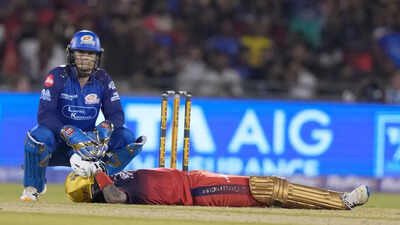
NEW DELHI: Royal Challengers Bengaluru all-rounder Krunal Pandya battled cramps on a difficult Raipur surface where stroke-making remained challenging throughout the thrilling IPL 2026 clash against Mumbai Indians in Raipur. Krunal anchored RCB’s tense chase with a fighting 73 while wickets kept falling regularly at the other end. Battling cramps in the latter half of his innings, the left-hander combined resilience with calculated aggression to keep RCB alive before Bhuvneshwar Kumar sealed the tense chase with a six in the final over.His innings was applauded by many fans, cricketers and former cricketers as well.
But former Chennai Super Kings and India batter Subramaniam Badrinath grabbed attention for a comment he made during the RCB vs MI match.As Krunal struggled in pain due to cramps and fell to the ground holding his leg during the game, Badrinath jokingly remarked that he would have thought about “letting him die”.“Look there, he already had a cramp in his leg… it’s as if the opposition said, ‘Hey, you die from that cramp!’ – but even then, it’s okay (Rickleton helped him),” Badrinath said while watching Krunal fall due to cramps.Badrinath’s commentary during the match did not go down well with fans, with the former cricketer facing criticism on social media.After RCB’s win, Krunal also spoke to the broadcasters.“Obviously, later on, cramps were very, very painful. I mean, it started from calf, hamstring, glutes and both legs. I was cramping,” Krunal said after the game. “But again, I was very clear that I’m not going to go out. I’ll fight through that pain, and I’ll make sure that whatever I can contribute for the team, I’ll do it.”“Plus, this was a very, very crucial game for us. Especially at the fag end of the tournament, every game matters,” he said.“So it was very clear that I’ll fight through that pain and make sure that whatever and whichever way I can contribute, I’ll contribute in that.”
Poll
What was the most impressive aspect of Krunal Pandya’s performance?
When asked how he managed to continue despite severe cramps, Krunal said it came down to mentality and his ability to remain focused in pressure situations.“I mean, sheer willpower, I’ll say,” he said. “Again, if you see over a period of time how I’ve played my cricket, I’ve always played without giving up, and I always cherish those tough situations. It was sheer willpower and courage that I did not want to give up,” he added.
Sports
IPL 2026: ‘Bhuvneshwar Kumar should be back in India colours’- Ex-India cricketer urges selectors for recall | Cricket News


It has been four years since Bhuvneshwar Kumar last played for India in a T20I, a quiet outing against New Zealand in Napier that came soon after India’s semi-final exit in the 2022 T20 World Cup in Australia. Following that tournament, he was phased out during India’s transition in the shortest format and has not featured since.However, his performances in IPL 2026 have reopened the debate about an international return. Now leading the Purple Cap race, Bhuvneshwar has taken 21 wickets in 11 matches at an average of 15.28 and an economy rate of 7.46, underlining a remarkable resurgence at the age of 36.
His most recent standout performance came against Mumbai Indians, where he produced a match-winning spell of 4/23, dismissing key batters including Rohit Sharma, Ryan Rickelton and Suryakumar Yadav. He also contributed with the bat, hitting a crucial six that helped his team recover in a tense phase of the innings.Former cricketer Aakash Chopra has strongly backed a recall, pointing to both form and consistency. Speaking on his YouTube channel, he said, “Bhuvneshwar Kumar, you have been absolutely outstanding. I am saying a place should be made for him again in the Indian T20I team. He picked up four wickets. He has taken three or more wickets six times this season. Before this, in the 19-year history, only one bowler had taken three wickets six times. That was Harshal Patel in the 2021 season. Bhuvi has already done that here. He is bowling at an economy of less than eight.”Chopra also highlighted India’s busy T20I calendar, suggesting that consistent domestic form should be rewarded with opportunities at the international level.With sustained performances, match-winning spells, and elite economy control, Bhuvneshwar’s IPL 2026 season has forced selectors to at least revisit a conversation that once seemed closed.




Spectators take out their phones as Antoine Huby of 7-Eleven Roadbike Philippines zooms past during Stage 12 of the MPTC Tour of Luzon.–CONTRIBUTED PHOTO
MANGATAREM, Pangasinan—Antoine Huby ruled Stage 12 of the MPTC Tour of Luzon at mountainous Daang Kalikasan here to move into second behind overall leader Nikita Shulchenko.
The French rider of local team 7-Eleven Roadbike Philippines crossed the finish line in three hours, 17 minutes and 37 seconds to register his second lap win after topping the punishing Stage 10 that ended at Bessang Pass in Cervantes, Ilocos Sur.
Shulchenko of LCW UAE Cycle placed second by 1:20 while Dreyna’s Erickson delos Santos was third, 1:41 behind Huby.
READ: Antoine Huby wins Stage 10, Shulchenko widens overall lead
Huby leapfrogged LCW’s Ibrahiem Alrefai, who finished by 2:02, to close in on Shulchenko with two stages remaining.
Shulchenko remains on top with an aggregate of 36:16:21, but Huby narrowed the gap to 2:30 following his victory that came after breaking away from six riders in the lead pack during the ascent to the mountainous area of the country’s cycling hotbed.
Alrefai dropped to third in the standings, trailing Shulchenko by 4:29 and Huby by 1:59.
The last two stages will be an individual time trial in Lingayen before the Tour concludes on Wednesday with a decider from Lingayen to Baguio through Kennon Road.
Stage 12 began in Agoo, La Union, exactly at the landmark Eagle of the North, before entering Pangasinan, including twice in Urbiztondo, after also going to Tarlac.

Sabres’ Jordan Greenway draws ire for penalty killing without a stick originally appeared on The Sporting News. Add The Sporting News as a Preferred Source by clicking here.
The Buffalo Sabres were down a man when they allowed the Montreal Canadiens goal that put the Habs in front on Sunday night.
Advertisement
But they weren’t just on the penalty kill. One of their players on the ice, Jordan Greenway, was without his stick.
It didn’t take long for social media to all share their takes on that. Yes, sticks can break, but then there are options for what can happen next.
Usually when it happens on the penalty kill, the player without a stick stays on the ice and just tries to put his body in the way however he can.
On this particular goal, it made Greenway pretty much a traffic cone to be navigated around by Lane Hutson:
MORE: The Mitch Marner irony of Auston Matthews’ future with the Maple Leafs
Advertisement
The reality is that there’s an alternative option here where Greenway sprints to get a new stick from the bench and, in the meantime, the Sabres have to deal with a 5-on-3 for a short period.
But maybe taking a brief 5-on-3 is worth it if the rest of the penalty kill can happen with everyone armed with a stick.
Obviously, there’s risk in taking another skater out of the play.
But there’s also clear risk in leaving the guy out there with no stick.
This isn’t Greenway’s fault. He just happens to be in the middle of this debate for Buffalo hockey fans at the moment.
Odds are, nothing will change about this approach. But it’d be fascinating to see a team try the alternative route here, because it probably has merit.
Advertisement
More NHL news:
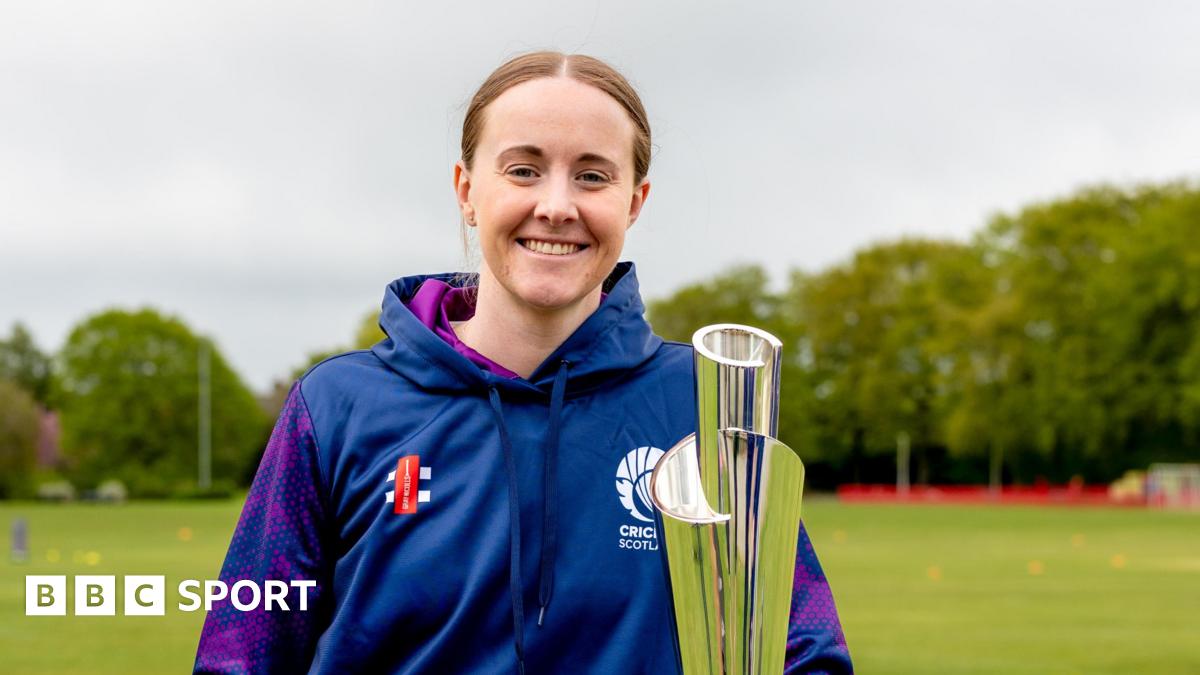
Former England spinner Kirsty Gordon is set to make her first Scotland appearance in almost nine years after being named in their squad for the T20 World Cup.
Gordon, 28, played 60 times for Scotland before pursuing a full-time career in the English professional system.
Born in Huntly, Aberdeenshire, she played in five matches at the 2018 Women’s T20 World Cup as England finished runners-up and also played a Test match against Australia in 2019.
She committed her future to Scotland last December, but has only recently recovered from a back injury.
Kathryn Bryce captains a group that has three changes from the World Cup qualifier in Nepal earlier this year.
Young seam duo Gabriella Fontenla and Maisie Maceira are both included, along with Gordon, as Niamh Robertson-Jack, Mollie Parker and Hannah Rainey – who left the squad in Nepal because of injury – miss out.
Robertson-Jack and Ellen Watson will join a wider squad for a pre-tournament tri-series against the Netherlands and Bangladesh, before the Scots travel to Manchester for their opening World Cup match against Ireland at Old Trafford on 13 June.
Scotland also play England, West Indies, New Zealand and Sri Lanka in Group B.

 May 10, 2026; Anaheim, California, USA; Anaheim Ducks right wing Beckett Sennecke (45) skates with the puck against Vegas Golden Knights during the second period in game four of the second round of the 2026 Stanley Cup Playoffs at Honda Center. Mandatory Credit: Corinne Votaw-Imagn Images
 Beckett Sennecke and Alex Killorn both netted one goal and one assist to pace the host Anaheim Ducks to a 4-3 victory over the Vegas Golden Knights on Sunday night and even their Stanley Cup playoff series.
Mikael Granlund and Ian Moore also scored for Anaheim, which tied the best-of-seven Western Conference semifinal at 2-2.
Goaltender Lukas Dostal made 18 saves and Cutter Gauthier collected three assists.
“We’ve got momentum and things are going good as long as you can keep it,” Ducks coach Joel Quenneville said. “That’s better than chasing it.”
Pavel Dorofeyev, Brett Howden and Tomas Hertl scored for the Golden Knights, who will host Game 5 on Tuesday.
Goalie Carter Hart stopped 19 shots, Mitch Marner collected three assists and Jack Eichel contributed two assists.
The score was tied 2-2 late in the second period when Killorn gave Anaheim its third lead with its second power-play tally of the tilt. Killorn gained the puck at the bottom of the right circle and squeezed a shot into the net with 2:02 remaining in the second period.
The Ducks failed to score on the power play in the first three games of the series, blanked during 11 opportunities.
Moore extended the Anaheim lead with his first career playoff goal. Shortly after Anaheim killed a penalty, Moore found the twine with a point shot at 3:43 of the third period.
“Going down a couple of goals is always tough to come back,” Vegas forward Colton Sissons said. “We’ve done a pretty good job throughout the year and playoffs, too. Yeah, it’s tough.”
Hertl snapped a 29-game goal drought dating back to early March by tucking into the cage a loose puck with 64 seconds remaining in regulation to make it a one-goal game, but the Golden Knights could not complete the comeback.
After losing the last game, the Ducks were looking to have a strong early pushback and were rewarded when Sennecke opened the scoring by unloading a shot from the top of the right circle for the power-play goal at the 8:43 mark. “That was a big focus for us. … It was nice to see a couple of those go in and get our power play rolling again,” Sennecke said.
Dorofeyev responded with a power-play goal of his own just past the period’s midway point. Dostal could not catch the point shot and Dorofeyev pounced on the loose puck.
Granlund made it a 2-1 game five minutes later when a turnover resulted in him gaining the puck in the slot and his shot ricocheted off a defender’s stick and bounded past Hart.
Vegas tied the game again when William Karlsson slipped a nifty pass to the front of the net for Howden, and it was easily converted at 4:04 of the second period. The Golden Knights were without captain Mark Stone, who suffered an undisclosed injury late in the first period of Game 3. Brandon Saad drew into the lineup.
“I have zero worry about this team, as far as how we’re going to go about the next few games here,” Vegas coach John Tortorella said. “Wherever it goes to, I have total trust.”
–Field Level Media


Bitmine buys 26K ether (ETH) after Tom Lee said to slow down accumulation

Celtic 3-1 Rangers: Maeda’s overhead kick keeps title race alive

Former MLB star facing 15 years in prison makes Canadian Baseball League debut

Manchester United reach agreement with Casemiro over contract clause amid transfer speculation

US brings back mandatory military draft registration

Steven Gerrard disagrees with Gary Neville over ‘shock’ Chelsea and Arsenal claim | Football


-
 Crypto World3 days ago
HarrisX Poll Found 52% of Registered Voters Support the CLARITY Act
-

 Crypto World4 days ago
Upbit adds B3 Korean won pair as Base token gains Korea access
-

 Fashion3 days ago
Weekend Open Thread: Marianne Dress
-

 Tech7 days ago
Image AI models now drive app growth, beating chatbot upgrades
-
 NewsBeat4 days ago
NCP car park operator enters administration putting 340 UK sites at risk of closure
-

 Politics2 days ago
Politics Home Article | Starmer Enters The Danger Zone
-
 Business2 days ago
Ignore market noise, India’s long-term story intact, say D-Street bulls Ramesh Damani and Sunil Singhania
-

 Tech1 day ago
Auto Enthusiast Carves Functional Two-Stroke Engine from Solid Metal
-

 Tech6 hours ago
GM Agrees To Pay $12.75 Million To Settle California Lawsuit Over Misuse Of Customers’ Driving Data
-

 Crypto World6 days ago
UAE Free Zone Deploys Blockchain IDs to Verify Registered Firms
-
 Sports7 days ago
2026 NHL playoff picks: Second-round predictions, series odds, Stanley Cup bracket
-

 Crypto World5 days ago
BlackRock CEO Larry Fink Discusses a New Asset Class
-

 Crypto World4 days ago
Robinhood says Wall Street is building onchain
-
Entertainment7 days ago
Serena Williams hits Met Gala in metallic dress after GLP-1 reveal
-

 Entertainment7 days ago
Skai Jackson Responds To AI Baklash After Viral Snapchat Photos
-

 Tech5 days ago
Apple and Samsung are dominating smartphone sales so thoroughly that only one other company makes the top 10
-

 Tech5 days ago
I tested the Xiaomi 17 Ultra’s camera and I don’t think I’ll ever go back to an iPhone
-

 Politics6 days ago
Met Gala 2026: Madonna’s Dramatic Red Carpet Look Steals The Show
-

 Fashion5 days ago
The Best Work Pants for Women in 2026
-
 Sports7 days ago
Hearts v Rangers LIVE: Prediction, team news and line-ups as Scottish Premiership title rivals meet at Tynecastle
You must be logged in to post a comment Login