Connect with us
DAPA Banner

Sports

Man City’s Premier League fixture change request to be denied as Arsenal get ideal scenario

Published

on

Manchester City’s bid to reschedule two Premier League fixtures during the title run-in is set to be rejected by the league, handing Arsenal a boost in the Premier League title race

Advertisement

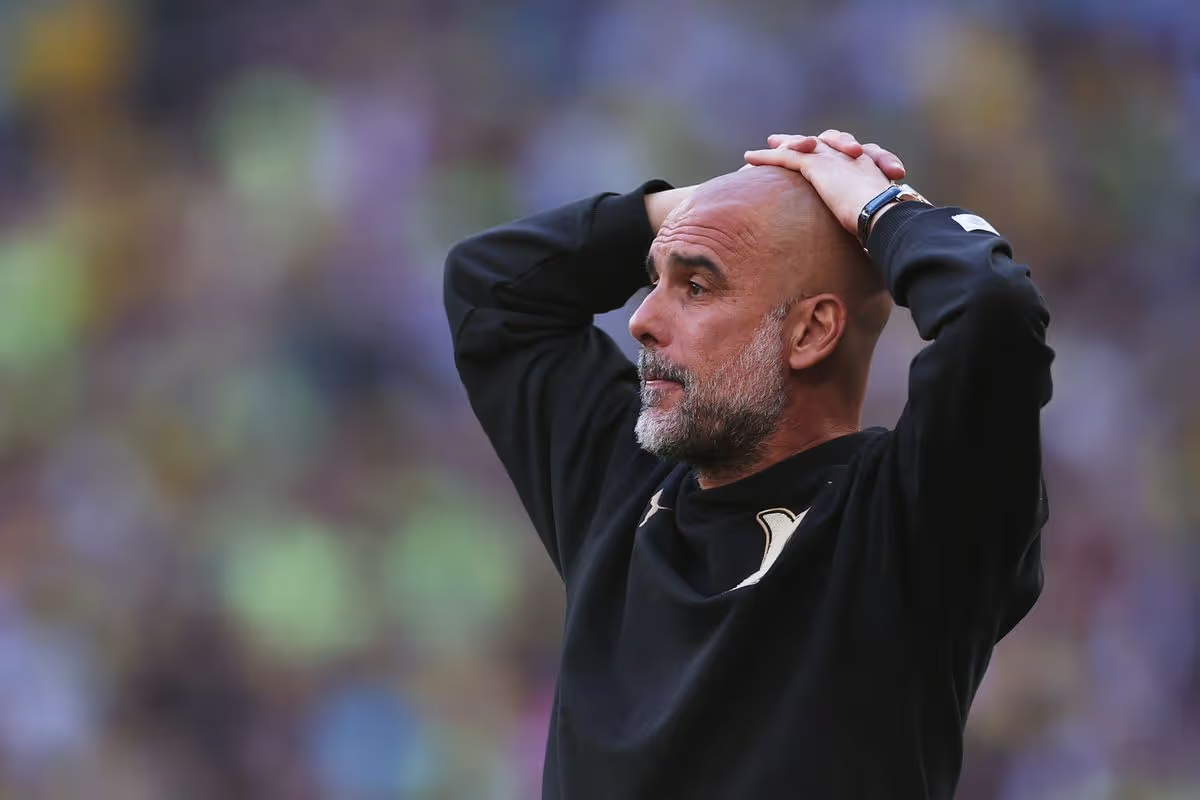
The Premier League are poised to turn down Manchester City’s attempts to rearrange two top-flight fixtures. Pep Guardiola’s side sought to switch their meetings with Bournemouth and Crystal Palace to prevent a sequence of three matches in seven days.

The trio of fixtures arrive at the crucial stage of the season with an FA Cup final against Chelsea squeezed in between on May 16. City requested special dispensation from the top-flight governing body to reschedule their home encounter with Palace and the journey to the Vitality Stadium to face Andoni Iraola’s side.

It has been reported that the preference to play Bournemouth first would enable them to spread the matches across eight days rather than seven, thereby reducing the physical and mental strain of the demanding Premier League calendar.

Get MEN Premium now for just £1 HERE – or get involved in our City WhatsApp group by clicking HERE. You can also join our City Facebook page by clicking HERE and don’t miss out on our brilliant selection of newsletters HERE.

Advertisement

According to the Mirror, City are scheduled to play four matches in 12 days, prompting officials to request a change from the league, but it has been suggested that they will maintain their position, forcing a demanding schedule on Arsenal’s title challengers.

Premier League standard protocols stipulate that the Palace home fixture should take priority on May 13, three days before the FA Cup showpiece, while the rearrangement has been further complicated by UEFA owing to Palace’s participation in the Conference League. The European body are understood to be eager to avoid conflicting with Palace’s packed schedule.

Following the collapse of negotiations, City now face a Wednesday-Saturday-Tuesday fixture schedule, meaning they will make the trip to the South Coast just 48 hours after their afternoon at Wembley Stadium.

City, who took part in the Club World Cup last summer, have experienced a surge in injuries of late, with Ruben Dias and Rodri both facing time on the treatment table.

Advertisement

Guardiola had previously voiced his concerns over their participation in the post-season tournament, from which they were eliminated at the quarter-final stage, after it wrapped up just weeks before the resumption of the top-flight season.

Speaking at the end of June, the Catalan said: “I try to relax, enjoy the days here and the good vibes that we have, the competition and we try to win it. The most important thing is to recover and find within ourselves what we were.

“That’s my main target in this tournament. I want them to feel that this is our path again to be competitive like we have been in eight of the last nine years.

“After this, let’s see what happens. Let’s see what happens after the final. We will rest for the time the Premier League allow us. Maybe in November, December or January it will be a disaster, we are exhausted and the World Cup has destroyed us.

Advertisement

“I don’t know, it’s the first time in our lives that this has happened. We will see when we come back.”

City closed the gap on Arsenal with a crucial 2-1 victory over the Gunners last weekend, before climbing to the top of the table on goal difference following a midweek triumph at Burnley.

Their FA Cup semi-final commitment at the weekend, in which they defeated Southampton, afforded Mikel Arteta’s side the opportunity to reclaim top spot as they narrowly overcame Newcastle United.

Nevertheless, Guardiola acknowledged that the Premier League title race was taking a heavy toll on his squad. He said: “Arsenal was so demanding emotionally, it’s normal.

Advertisement

“Three days later [Burnley], three days later [Southampton]. Our people were so, so tired. Then take a train, three hours from here to the hotel. Always the grass is thick [at Wembley]. Many thoughts I still have in my mind.”

Source link

Continue Reading
Click to comment

You must be logged in to post a comment Login

Leave a Reply

Sports

Bundesliga games abroad unlikely, but for how long?

Published

on

After the news that FIFA is set to allow domestic football leagues to play one game a season abroad, German football faces a familiar battle between tradition and growth.

English newspaper The Guardian exclusively reported that new FIFA proposals will allow domestic leagues to have one game a season hosted in a foreign country. The host country will reportedly be allowed to host a maximum of five games from other countries, with the US the favored target.

“I think the German members would object to that and there would be mass protests in the stadium,” Martin Endemann, head of policy at Football Supporters Europe, who advocate for fans on the continent, told DW. “Any football official who would try to do this would have a very, very hard time with those fans in the stadium as well as the members of the respective clubs.”

The discussion of playing domestic league games abroad is not new. Last October, UEFA gave La Liga (Spain) and Serie A (Italy) permission to play a game abroad, but the games were scrapped after local authorities raised concerns. The fallout was ugly.

Advertisement

Germany’s Dortmund invests in Ghana’s emerging players

To view this video please enable JavaScript, and consider upgrading to a web browser that supports HTML5 video

The new FIFA protocol for moving a competitive game abroad would require approval from all major stakeholders, and FIFA would still have the right to reject the switch.

“It is the formalization of something that has been economically inevitable for years,” Dominik Schreyer, a professor of sports economics at Germany’s Otto Beisheim School of Management, told DW.

“Football has been shifting from a locally anchored product to a globally monetized media asset, and once that transition happens, geography becomes flexible,” Schreyer added. 

Advertisement

“FIFA is not leading here, it is reacting under pressure and trying to regulate a development that was already underway through preseason tours and earlier league attempts to stage games abroad. Framing it as one game per season makes it politically digestible, but economically it starts to normalize the idea that domestic competitions are no longer strictly domestic. You could say, the product has already gone global, now the matches are catching up,” he said.

German football structure different to rest of Europe

While many believe such developments have long been an inevitability for clubs in England, Spain and Italy, German club ownership structure differs to other major European leagues, presenting a more complex conversation.

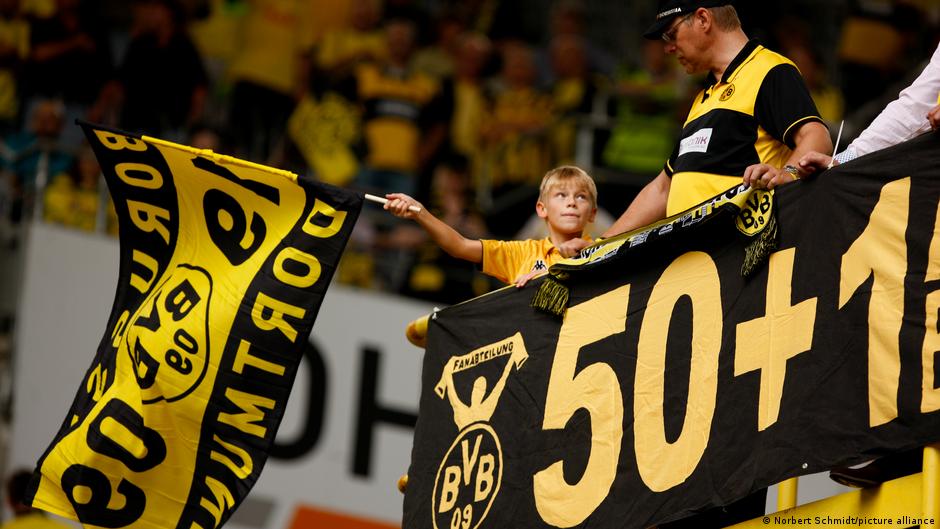
The 50+1 rule essentially guarantees that 50% plus one share of a club’s total shares must be owned by members, ruling out ownership by rich individuals or even nation states. The power of German fans is not to be underestimated, as was recently seen by the failed attempt to secure investment from a private equity partner.

Advertisement

However, if domestic league games abroad become a reality for clubs in Europe, then the Bundesliga will likely return to walking along the familiar tightrope of tradition and growth.

“Financially, the upside exists but should not be overstated,” Schreyer said of playing league games abroad. The example of the National Football League (NFL) in the US playing competitive games abroad is proof of this. Ahead of the first league game in Germany in 2022, the head of NFL Germany said they could have sold over 3 million tickets. Business and finance source BNN Bloomberg explained that when the Jacksonville Jaguars play in London, the team generates roughly $35 to 50 million (€30 to €42.5 million) in revenue each time they play.

“A competitive match abroad carries more commercial weight than a pre-season game because it combines scarcity, sporting relevance and global media attention. As such, a club like Bayern or Dortmund could maybe expect a low double-digit million euro uplift for a match in the US,” Schreyer said, adding that an exact number is hard to come by. Figures released by Sport Bild in late 2025 suggest that Bayern reportedly makes around €5.7 million per home game in revenue.

“This is about positioning, not payday. That becomes even clearer once you factor in compensation for local fans, especially season ticket holders, who would miss out on a high-value fixture at their home stadium.”

Opposed to the idea, but for how long?

Herein lies the major challenge for German football. The tradition that many football clubs are rooted in in Germany, combined with the 50+1 structure, mean that maintaining the local market remains imperative even in the face of football’s global growth.

Advertisement

The DFL (German Football League), the organization that operates the Bundesliga, have publicly spoken out against the idea, and have been as far back as 2018 when Christian Seifert was boss. More recently, Hans-Joachim Watzke, the chairman of the DFL supervisory board and a former Dortmund CEO, couldn’t have been clearer when speaking on the topic.

“As long as I am responsible for this league, there will be no match abroad, when it comes to competitive matches. Full stop,” said Watzke.

Bayern Munich’s CEO Jan-Christian Dreesen is also opposed to the idea, but what if these games become a regular reality for the likes of Manchester City, Paris Saint Germain and Real Madrid?

A Tampa Bay Buccaneers fan gets excited ahead of the game in Munich
The NFL has shown how to take a domestic product and not only market it, but play it across the worldImage: Douglas DeFelice/USA TODAY Network/IMAGO

“For German clubs, the real constraint is cultural,” argued Schreyer. “German football still defines itself through local identity, while competitors have fully embraced global market logic. In the short term, Bundesliga clubs will not fall behind simply by abstaining, because media rights still carry the bulk of revenues. But if others consistently monetize international demand through premium events and German clubs opt out, the gap in global relevance will widen, and the money will follow.”

For Germany, this possibility is only really a concern for a handful of clubs.

Advertisement

“Fans are buying a spectacle, not a league fixture. Nobody will fill an arena in the US for Hoffenheim versus Augsburg. So, this will work for a handful of clubs, not for the league as a whole,” Schreyer said, with Bayern Munich and Borussia Dortmund the obvious two candidates.

While Bundesliga games being played abroad remains extremely unlikely, pressure will grow if other major clubs do take the step.

Edited by: Matt Pearson

Source link

Advertisement
Continue Reading

Sports

‘We had Malinga, then we got Pathirana’: Tabraiz Shamsi shares hilarious ‘final boss’ clip – Watch | Cricket News

Published

on

'We had Malinga, then we got Pathirana': Tabraiz Shamsi shares hilarious 'final boss' clip - Watch

NEW DELHI: South Africa spinner Tabraiz Shamsi sent social media into a frenzy with a hilarious post that perfectly captured cricket’s knack for producing uncanny similarities. Sharing a clip from a local match, possibly played in India, Shamsi highlighted a young boy bowling with a distinctly slingy action, reminiscent of two of Sri Lanka’s most unique pacers.

Watch

Axar Patel shares big update on Mitchell Starc

“We had Malinga.. then we got Pathirana… Meet the final boss now,” Shamsi captioned the video, cheekily extending the comparison to the next generation. The post quickly went viral, with fans amused by how closely the youngster’s action mirrored that of Lasith Malinga and Matheesha Pathirana, both known for their unorthodox, round-arm slinging deliveries.Malinga, a legend of the modern game, built his reputation on a unique low-arm release that made him one of the most feared death bowlers in world cricket. Years later, Pathirana emerged with a strikingly similar action, earning the nickname “Baby Malinga” and carving out his own identity in T20 leagues around the world. The timing of Shamsi’s post coincided with Pathirana’s much-anticipated arrival to join Kolkata Knight Riders in IPL 2026. After days of waiting, the Sri Lankan pacer finally linked up with the squad, offering a ray of hope for a side struggling badly this season. Pathirana’s delayed entry was due to a calf strain he suffered during the ICC Men’s T20 World Cup earlier this year. Following his recovery, he successfully cleared a fitness test conducted by Sri Lanka Cricket and received the necessary clearance to participate in the league. His inclusion had been eagerly anticipated, especially given the hefty Rs 18 crore investment made by the franchise at the IPL auction.While his arrival boosts morale, the team management is expected to take a cautious approach. Pathirana is unlikely to be rushed straight into the playing XI, with the medical staff set to evaluate his readiness over multiple training sessions. The franchise will be keen to ensure he is fully match-fit before exposing him to the rigours of competitive cricket.

Source link

Continue Reading

Sports

Jamie Carragher names the major issue he’s spotted from Arsenal in recent weeks

Published

on

Jamie Carragher said the major issue Arsenal have been dealing with recently is fatigue rather than a lack of mental composure

Arsenal defeated Newcastle United 1-0 on Saturday to return to the top of the table. But the Gunners were the second-best in most attacking stats against the Magpies.

Speaking on Sky Sports’ Monday Night Football, Carragher claimed Mikel Arteta’s men looked leggy against Newcastle and lacked their usual high-pressing intensity. He argued that it was ‘too easy’ for Sandro Tonali and Bruno Guimaraes to dictate the game at the Emirates, which he found ‘worrying’.

Advertisement

“My worry watching Arsenal is not nerves – it hasn’t been for a few weeks – mine is fatigue,” Carragher said. “It was far too easy for Newcastle to make passes and get to the edge of the box. They couldn’t create too much when they got there which is a sign of the Arsenal back four but it looked leggy to me. It was too easy for Tonali and Guimaraes to dictate the game. To see Newcastle play with ease at the Emirates, I thought was a little worrying. It smacked of fatigue for me.”

Meanwhile, the former Liverpool defender insisted that Arsenal are still the best team in the league and attributed their fatigue to fixture congestion, saying they play three games in six days.

Carragher picks game that could cost Arsenal the Premier League title

Speaking further, Carragher said he is worried that the Gunners will throw away their Premier League title hopes when they face Fulham this weekend. For Carragher, the hectic schedule could cost them the title when they face the Cottagers in their next league outing.

“I feel Arsenal have been unfortunate, and I know this playing Champions League semi-finals, when you play Wednesday then Tuesday that’s a big difference between Tuesday then Wednesday,” Carragher continued. “You’re actually playing three games in six days, rather than three games in eight days. It’s a massive difference at this stage of the season.

“That’s why I really worry for Arsenal about this (the Fulham game). You play away and have to travel, Fulham are a good and decent side and then you’ve got to go again on the Tuesday night. They’ve been very unfortunate the way the games have fallen. Three games in six days is really tough.”

Next up for the Gunners is a Champions League clash against Atletico Madrid on Wednesday, April 29.