Betting sign up offers and free bets are available from betting sites for signing up and betting online.
At The Independent, our experts have used their impartial and detailed analysis to find new and existing customers the best betting sign up offers and free bets on the market.
We have stringent criteria when it comes to picking our top betting offers available. Our experts focus on accessibility, flexibility, fairness, key terms and conditions and regularity when selecting the best options out there.
Every betting site that we recommend is licensed and regulated by United Kingdom Gambling Commission, ensuring that new and existing customers are using a reputable betting operator.
Advertisement
Free bets can be claimed from betting sites by new and existing customers, allowing bettors to bet without risking their own money.
Terms and conditions are attached to free bets and betting offers. Usually, bettors must deposit or stake a qualifying amount to claim a free bet, which can be used on selected sports and events.
Wagering requirements can be attached to free bet offers, which means winnings must be played through a set number of times before you can withdraw funds as cash, but this is more common on casino sites.
Types of free bets
Advertisement
Bet & Get: The most common betting sign-up offer, bet a minimum amount, meet the T&Cs and receive a free bet bonus.
Moneyback specials: Typically an ongoing free bet promo, whereby punters get their money back as a free bet if there’s an underwhelming outcome such as a 0-0 draw.
Free bet clubs: Loyalty reward schemes aimed at those who bet regularly with one bookmaker in particular.
Enhanced odds with free bet winnings: A bookmaker offers a wildly inflated price on a popular market, such as 40/1 on Man City to win, with winnings paid out as free bets.
No deposit free bets: These are rare, but can be obtained via free-to-play prediction games on several online bookmakers.
Free bets are straightforward to use for customers, although the way they can be deployed may differ depending on your chosen bookmaker.
Usually, betting sites will have a box or toggle on your bet slip that users can tick or move to confirm free bets on their bet.
An important note. If your bet wins, you only keep the profit, the free bet stake itself isn’t returned.
Bookmakers may require you to use free bets in precise portions, such as £5 or £10, while others will allow you to bet with amounts of your choosing until you’ve used up your balance.
Here are the latest betting sign up offers and free bets available for this week’s major sporting events.
Advertisement
William Hill: Wales World Cup Epic Boost
William Hill are offering an Epic Boost price for Wales to qualify for the World Cup play-off final on Thursday.
Customers can claim the Epic Boost price of evens boosted from 2/5 for Wales to advance from their World Cup play-off semi-final clash against Bosnia-Herzegovina.
Qualifying bets must be placed before kick-off and customers are limited to a maximum £10 stake.
Advertisement
Paddy Power: Free Bet Builder Czech Republic vs Republic of Ireland
Paddy Power are offering customers a free bet builder for users that place a qualifying bet builder on Czech Republic vs Republic of Ireland on Thursday.
To qualify, customers must opt-in on the free bet offer before placing a £2 bet builder on the World Cup play-off clash with three selections or more and odds of evens or greater.
Once the qualifying bet has settled, customers will receive a free bet builder worth £2 to use on football. Free bet builder expires within seven days.
Advertisement
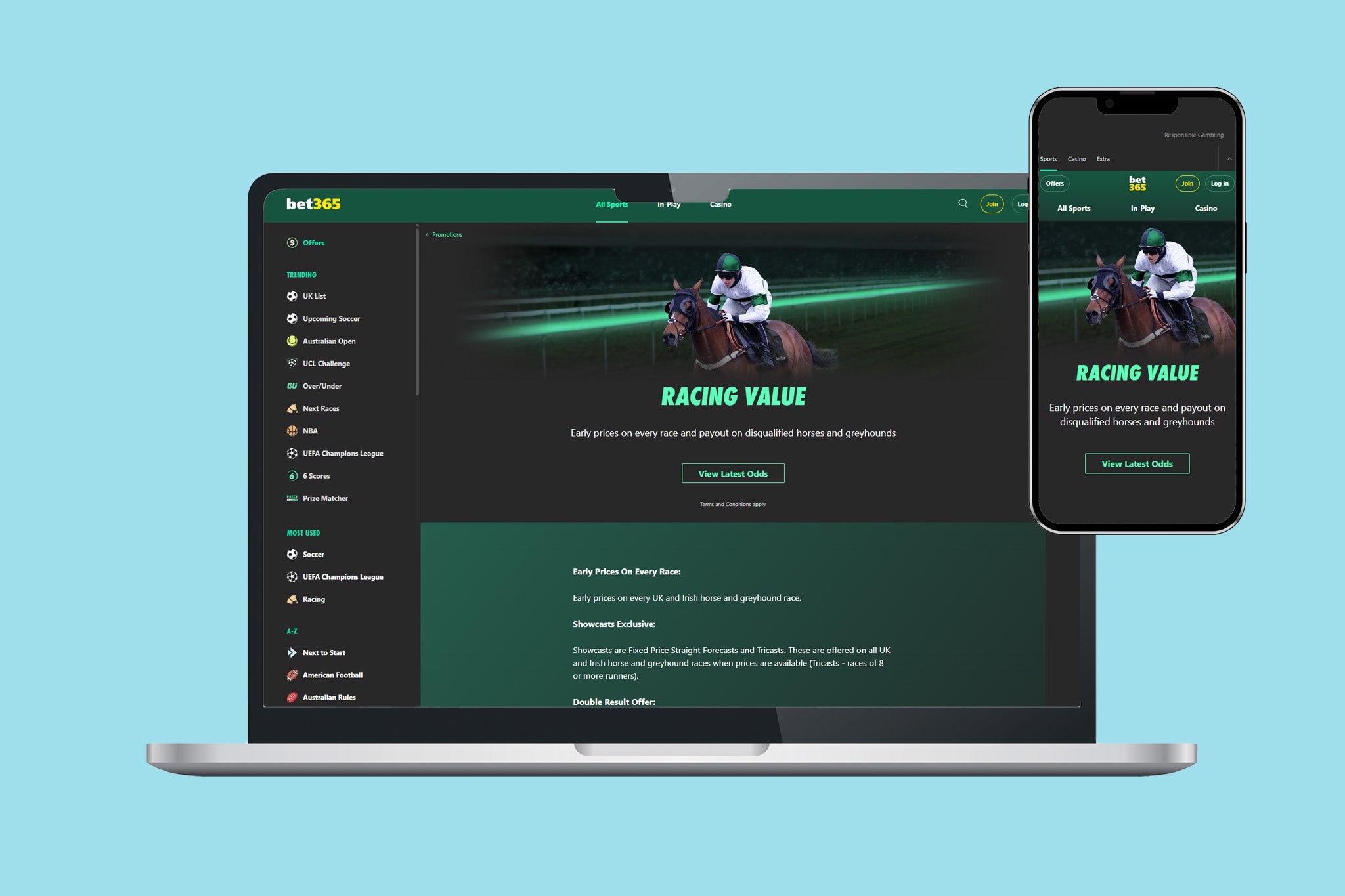
Bet365: Bet Builder Boost 25% World Cup Playoffs
Bet365 are offering 25 per cent bet builder boosts on select games for tonight’s round of World Cup play-off matches.
Customers can claim the betting offer for matches including Italy vs Northern Ireland, Wales vs Bosnia-Herzegovina and Czech Republic vs Northern Ireland.
Qualifying bet builders must include three selections or more and odds of evens or greater, with users selecting the bet builder boost option in their bet slip.
Advertisement
Winning bet builders will be paid out with the 25 per cent boost.
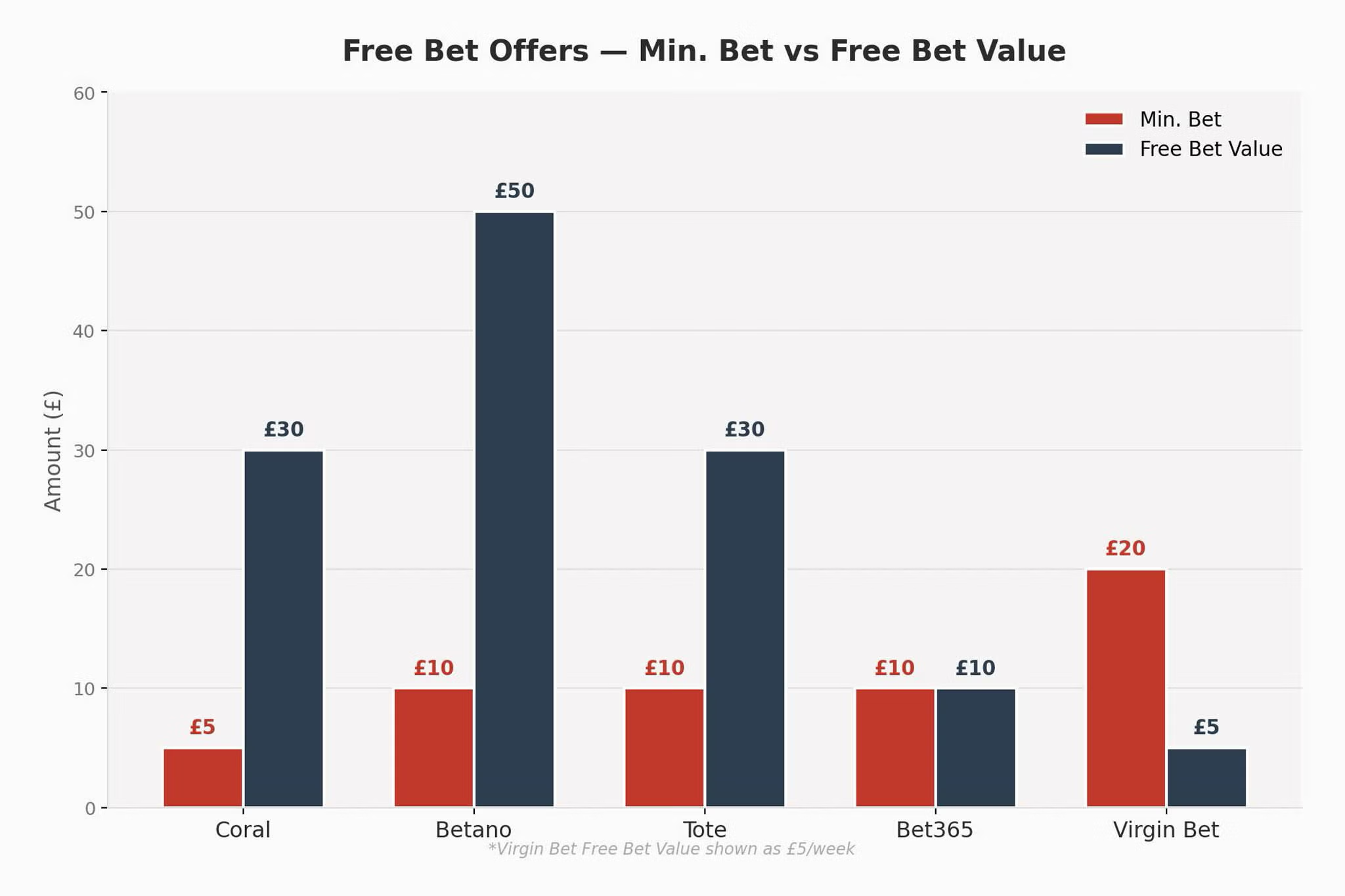
Betting Site
Offer Type
Min. Bet
Advertisement
Free Bet Value
Best For
Coral
Welcome bonus
Advertisement
£5
£30
Low-stake sign up value
Betano
Advertisement
Welcome bonus
£10
£50
Football free bets
Advertisement
Tote
Welcome bonus
£10
£30
Advertisement
Horse racing free bets
Bet365
Moneyback special
£10
Advertisement
£10
Ongoing money-back as free bet offers
Virgin Bet
Free Bet Club
Advertisement
£20
£5 weekly
Ongoing rewards for regular bettors
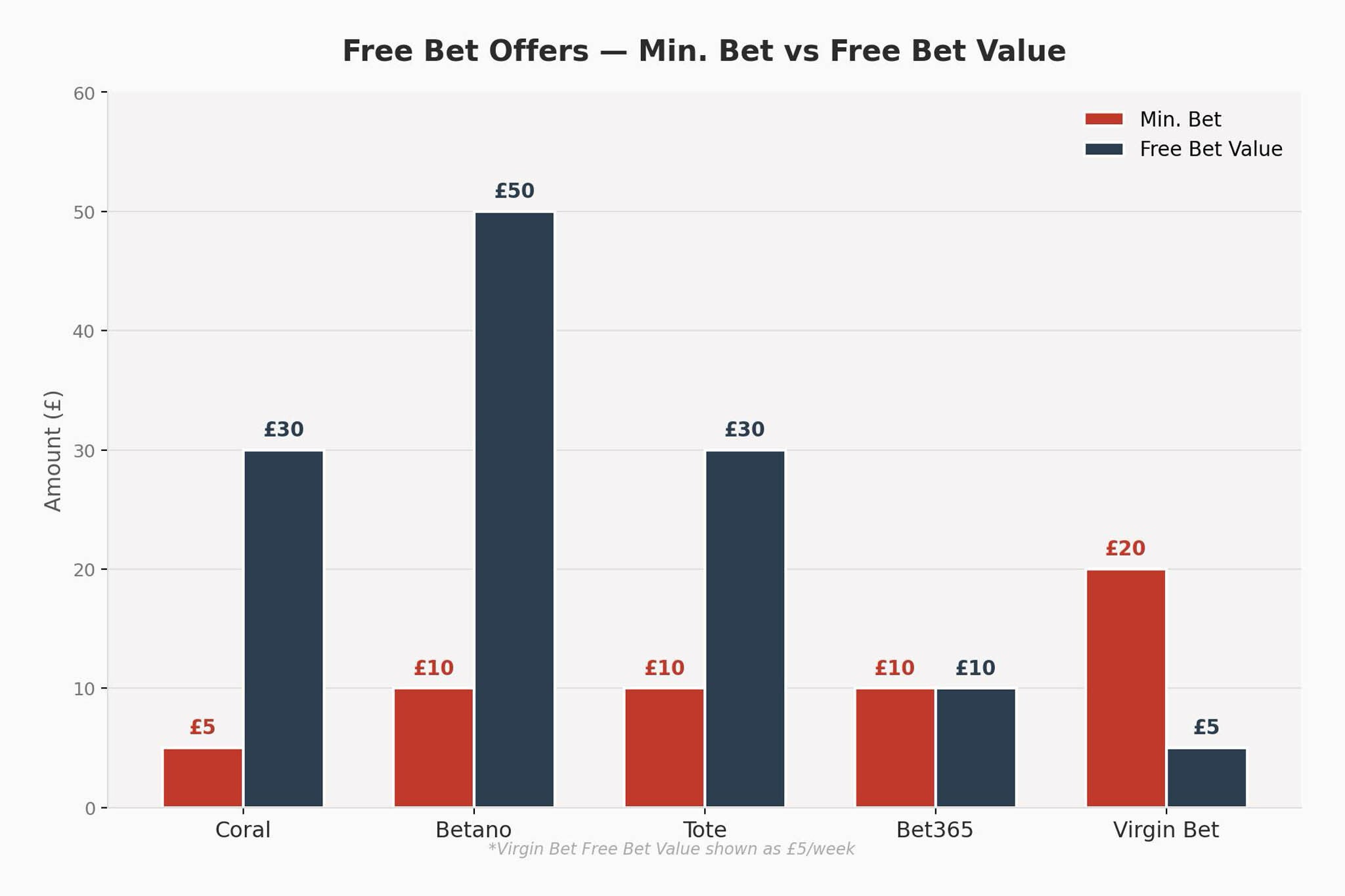
Free bets value for money (Independent)
Here are the standout betting offers on the market for users broken down into strength of category.
Coral – Best low-stake betting sign up offer
Advertisement
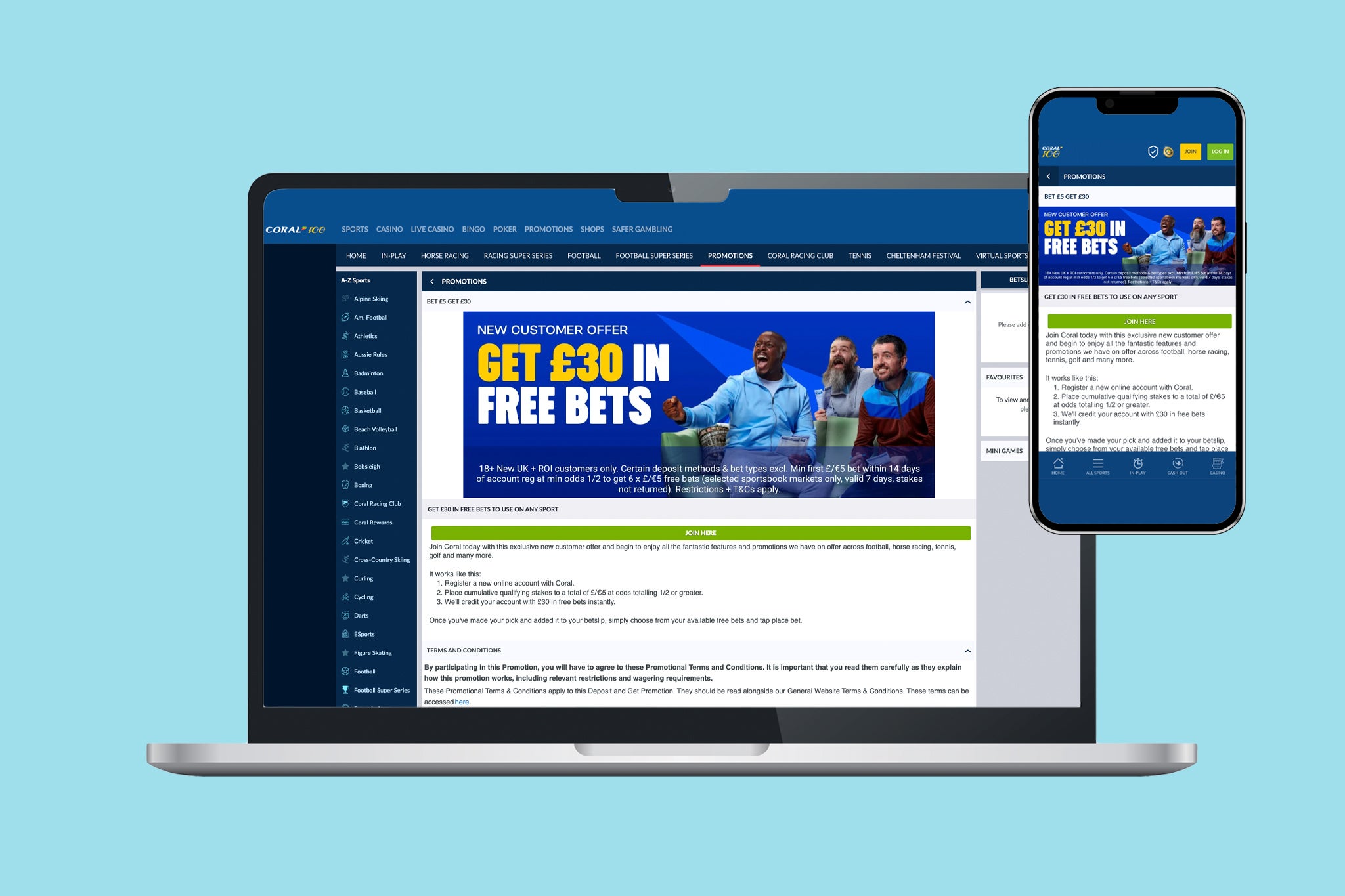
Coral offer the best low stake betting sign up offer allowing new customers to secure £30 in free bets after signing up and betting just £5 on any sports bet of their choice.
There’s plenty of flexibility over where users can place their qualifying bet. Customers can choose any sport with odds of 1/2 odds or greater, only Bet365 has a lower threshold among welcome offers, but their value is not as high as Coral’s.
Time is also on your side using Coral. Customers can take up to 14 days after sign up to make their first bet and still qualify for the betting sign up offer.
Coral rewards customers with £30 in free bets for betting just £5 online (The Independent)
Payout is also prompt as soon as your qualifying bet settles. Coral will credit your account with £30 in free bets within 24 hours. These free bets are paid out in 6 x £5 free bets, giving customers plenty of scope to use their funds.
These free bets are fairly flexible as 4 x £5 free bets available to use on any sport on Coral, while the remaining £10 free bet balance is reserved for 1 x £5 football bet builder and a 1x £5 horse racing bet builder.
Advertisement
It’s arguaaly the best £5 deposit betting site around as customers secure a 600% return from their first deposit and bet. For first-time bettors it’s a perfect betting sign up offer for value.
Betano – Best football betting sign up offer
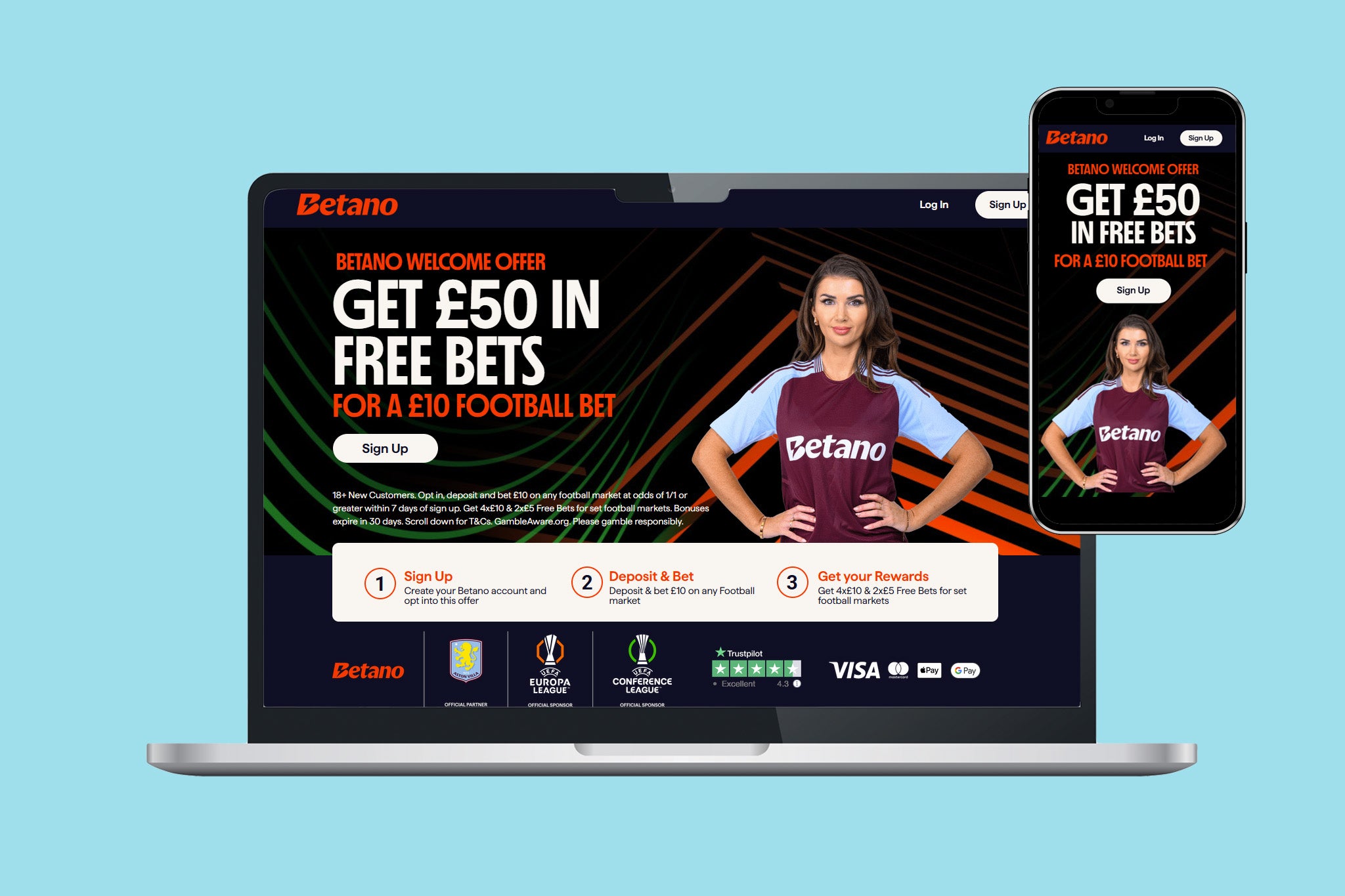
Betano is the best option for punters looking for free bets at leading football betting sites, with the Betano sign up offer providing £50 in free bets with an initial wager of just £10 (an excellent return for a low entry stake).
The offer includes a straightforward qualifying bet with minimum odds of evens and no accumulator required, while the 30-day expiry on free bets gives users flexibility, with plenty of time to use bonuses.
Advertisement
Newcomers can get £50 in free bets after an initial £10 bet (iStock/The Independent)
This new betting site provides great variety on its football markets – from match odds and BTTS to goalscorers, correct scores and much more – and users will also find regular offers and promotions once signed up to the site.
Tote – Best for horse racing free bets
The Tote betting sign up offer is an excellent choice for horse racing fans, with a £10 bet returning £30 in racing value – a strong 3x reward for such a low qualifying stake.
The offer provides £20 in Tote Credit for horse racing – which is ideal for pools, exotics, and Tote-only markets – as well as £10 in free bets to use on the sportsbook, offering plenty of flexibility for new customers.
The Tote website performs equally well on mobile and desktop (iStock/The Independent)
The qualifying bet simply need to be a £10 wager on any sport (with some exclusions, though win, place, or pool bets all count) at odds of evens or greater, and winnings are fully withdrawable, with Tote Credit profits available to be cashed out, keeping risk low.
Tote also guarantee boosts payouts paid at SP or better, adding an extra upside for horse racing bettors and making Tote the best choice among horse racing betting sites.
Advertisement
Bet365 – Best for moneyback as a free bet
Bet365 have recently launched its moneyback specials across a number of sports, including football and horse racing, as well as a range of major events.
Customers can wager up to £10 and will receive their stake back in free bets if their bet fails. The system is simple for claiming the betting offer, with users ticking the ‘Money Back As Free Bets’ box on their bet slip to qualify.
Free bets are usually credited within a matter of hours, but it can take up to 24 hours. Free bet credits can be used anywhere on one of the best betting sites in the business with no limit on where and how your credits can be spent.
Advertisement
Bet365 customers can get up to £10 back as a free bet on losing racing and football bets (iStock/The Independent)
Bet365 moneyback specials are most common on football, and notably the Premier League where the highlight games of the week are covered with a moneyback special notably on Saturday and Sunday evenings, although Champions League and Europa League midweek games have also featured this betting offer.
The nuts and bolts of the requirements are as follows. Customers must place a qualifying bet builder on the eligible game or event, with bet builders needing only evens (2.0) or higher odds.
Bet365 also attaches its Sub Play On feature on football bet builders in conjunction with the moneyback special, which keeps bets alive even if a player is subbed.
Virgin Bet – Best free bet club
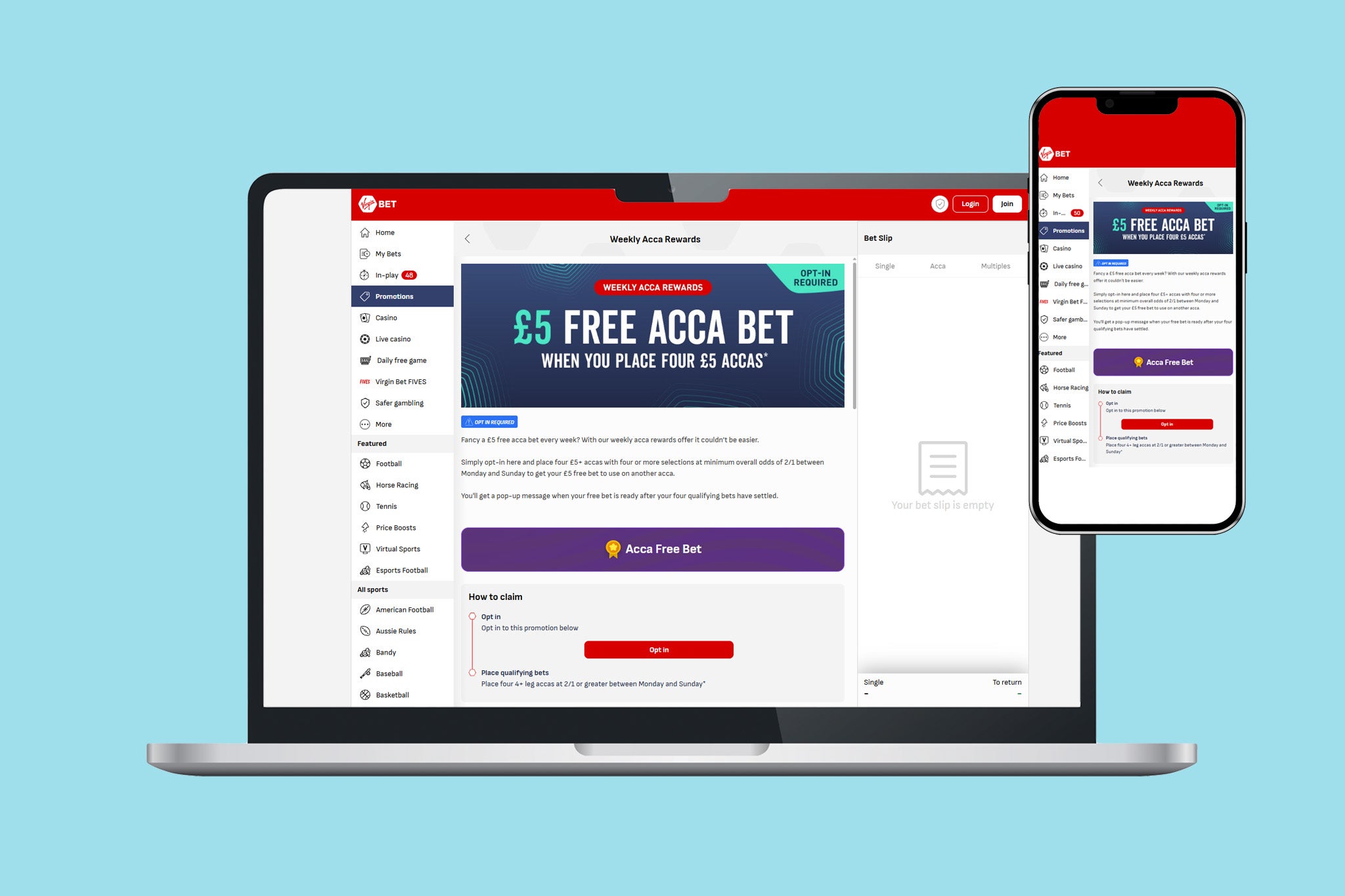
Existing customers can use the weekly Virgin Bet rewards club to claim £5 in free bets for placing qualifying accas.
Advertisement
Users only need to opt-in on the promotion before placing four £5 accas with odds of 2/1 or greater between Monday to Sunday, making these qualifying stakes smaller than most rival free bet clubs.
Virgin Bet have an extremely low minimum odds requirement to use your free bet at 1/100.
Claim £5 in free bets for placing qualifying accas on Virgin Bet (iStock/The Independent)
You’re spoiled for choice, and better yet, there are no restrictions where you can use your bonus.
In addition, the seven-day expiry gives plenty of time to use the bonus, meaning the free bet club offers huge flexibility.
After the qualifying bets have settled, Virgin Bet pays out the £5 free acca bet into your account and to activate the free bet offer, simply use the toggle on your bet slip to use up the credits.
Advertisement
Below, we’ve provided some detail on common traps that users can fall into when claiming free bets:
Stake not returned on free bets
Not all free bet offers return the original stake if your bet wins. For example, a £10 free bet at 3/1 pays £30 profit, not £40; always factor this in when comparing headline free bet amounts.
Short expiry windows
Advertisement
Free bets usually expire within 5-7 days of being credited, and occasionally less. Unused free bets are removed automatically once they expire, so casual or infrequent bettors can lose value this way.
Remember to always check the expiry date as soon as the free bet is added.
Bet builder or market restrictions
Some free bets are limited to certain types of use. For example, some are football bet builders only, accumulator bets or bets fixed to specific sports, leagues or events. These restrictions reduce flexibility and can increase risk.
Advertisement
Bet builder-only free bets often require multiple selections to win, meaning long odds, and it is the same with accas. Remember to check eligible markets before placing your qualifying bet.
Minimum odds requirements
Betting offers may require minimum odds on either the qualifying bet or the free bet itself, and sometimes both. Higher odds thresholds can push bettors toward riskier selections, while a smaller free bet with low odds requirements can offer better value.
Cash-Out and In-Play exclusions
Advertisement
Remember that cashing out a qualifying bet often voids eligibility for the offer. Some free bets also cannot be used on in-play markets.
These exclusions are commonly hidden in the T&Cs, so avoid cashing out unless you’re sure it won’t affect the promotion.
Wagering requirements and bonus conditions
Wagering is uncommon on free bets, but it is not unheard of. Some promotions attach extra conditions to winnings or follow-on bonuses instead.
Advertisement
Offers requiring winnings to be wagered multiple times reduce real value, while simpler “bet and get” free bets are usually the safest option.
Before a bookmaker makes our list of free bet offers, they must meet key criteria to ensure a high-quality betting experience.
1. Licensing
Only sites with a valid UK Gambling Commission (UKGC) licence are considered on our list of recommended operators.
Advertisement
The UKGC ensures fair play and consumer protection, working alongside independent testing agencies like eCOGRA. If a bookmaker isn’t regulated, it’s not safe – anyone can verify a licence via the UKGC register.
2. Security
Every bookmaker we recommend must implement high-quality security measures such as SSL encryption and two-factor authentication to protect customer data.
3. Reputation
Advertisement
Reputation also plays a role – established brands like Betfred, William Hill and Bet365 consistently rank highly with us, but we also highlight new, reputable operators such as BetMGM when their free bet offers meet our expectations.
4. Mobile
With most bets now placed on phones and tablets, mobile betting functionality is essential.
Bookmakers with dedicated betting apps that mirror the desktop experience are given preference, and we also consider user app reviews from the Apple and Google Play stores.
Advertisement
5. Experience
The customer experience is equally crucial – we rigorously test bookmaker support channels, favouring those that provide fast, effective resolutions.
Ultimately, our rankings focus on the quality of the free bet offers, but we also take into account matters including odds restrictions, timeframe to both unlock free bet offers and use your bonus funds, wagering requirements and available payment methods.
6. Value
Advertisement
Operators that provide valuable betting sign up offers, competitive terms, and ongoing free bet promotions for returning customers get the highest ratings.
Why trust us?
Chris Wilson is a betting content producer and sports reporter who has been working at The Independent since 2023.
He writes betting tips across a range of sporting events as well as reviewing dozens of betting sites and casino sites across the UK.
Chris has extensively tested and reviewed offers from established operators and new betting sites to find the best free bet offers for readers of The Independent.
Advertisement
Responsible gambling is always at the forefront of his research, ensuring customers have a fair and secure experience claiming and using betting offers online.
If you decide to engage with any of the online betting sites highlighted on this page, remember to gamble responsibly, even when using free bets and betting sign up offers.
When betting, always assume you’ll lose and therefore, only bet what you can afford to lose. Even free bets still involve a level of risk.
Make sure you use the responsible gambling tools offered by betting companies such as deposit limits, reality checks, loss limits and time outs. These can stop gambling from getting out of hand.
If you have gambling-related concerns, then seek independent help. There are several UK charities and institutions that offer support, advice and information, with a few listed below:
Are free bets withdrawable?
No, it is not possible to withdraw a free bet. It must be used according to the terms and conditions of the free bet offer or it will be forfeited.
Advertisement
Can you cash out free bets?
In most cases, bookmakers will not allow punters to cash out a free bet before the bet has run its course, so you will likely have to wait for your bet to settle before receiving any winnings.
What does money back in free bets mean?
This means you can get a refund on your stake, but not as withdrawable cash – only as a free bet, meaning you have to stake the same cash again on a different bet.
Advertisement
What is the best betting sign up offer available now?
In the Independent’s view, Coral provides the best betting sign up offer on the market at present. New customers need only sign up and deposit £5 before betting £5 on any sports market with odds of 1/2 or greater to unlock £30 in free bets.
What betting sites give free bets without a deposit?
Few bookmakers hand out free bets for nothing, but you can earn free bets by entering free-to-play prediction games on Bet365, BetVictor, NetBet, Betway, Betfred, Ladbrokes, Coral and BetMGM.
Advertisement
We may earn commission from some of the links in this article, but we never allow this to influence our content. This revenue helps to fund journalism across The Independent.
Fernando Mendoza was not present during his alma mater’s visit to the White House on Monday, and at least one person was disappointed at it.
While commemorating the Indiana Hoosiers’ undefeated run to the national college football title, Donald Trump said about not seeing the No. 1 pick of the 2026 draft around:
Thanks for the submission!
Advertisement
“I’m not happy, but that’s okay. The reason he didn’t is because he’s at spring training, right? And I actually said, ‘Let him! He’s got to win.’”
•
Advertisement
Looking to predict NFL playoff Scenarios? Try our NFL Playoff Predictor for real-time simulations and stay ahead of the game!
During the Las Vegas Raiders’ rookie minicamp, Mendoza had been candid about missing the visit to focus on training for the first time as a pro:
Advertisement
“I’m on the bottom of the totem pole here. I’ve got to prove myself. I can’t miss practice. I don’t have the calendar, but as a rookie, I don’t think that’s a good look. I want to try to best serve my teammates, and I don’t know if that’d be accomplishing that goal.”
Raiders owner Mark Davis gets candid on Fernando Mendoza leading franchise rebuild
For most of the Raiders’ fanbase, the Fernando Mendoza era is one of optimism. After Derek Carr’s departure and three straight years of floundering veterans, the franchise finally has a young quarterback it could rally around.
Owner Mark Davis is well aware of that notion, as he put it when speaking to Raider Nation Radio’s JT The Brick last Thursday:
Advertisement
“With Fernando Mendoza coming in as potentially the starting quarterback is just so exciting. We’ve got the pieces in place, it’s going to take a while to get all the players and everything, but I believe we’re at the forefront of getting this thing going again.”
He added:
“We continually win the offseason, it’s time to now make it translate to the regular season. I do feel a different vibe around this building right now. Everybody really is working together. Everybody seems to be on the same page. It seems like we’re ready to go for a long-term, sustained growth now.”
The Raiders’ OTAs begin on May 18 and will last until June 4. Mandatory minicamp will be from June 6 to 11.
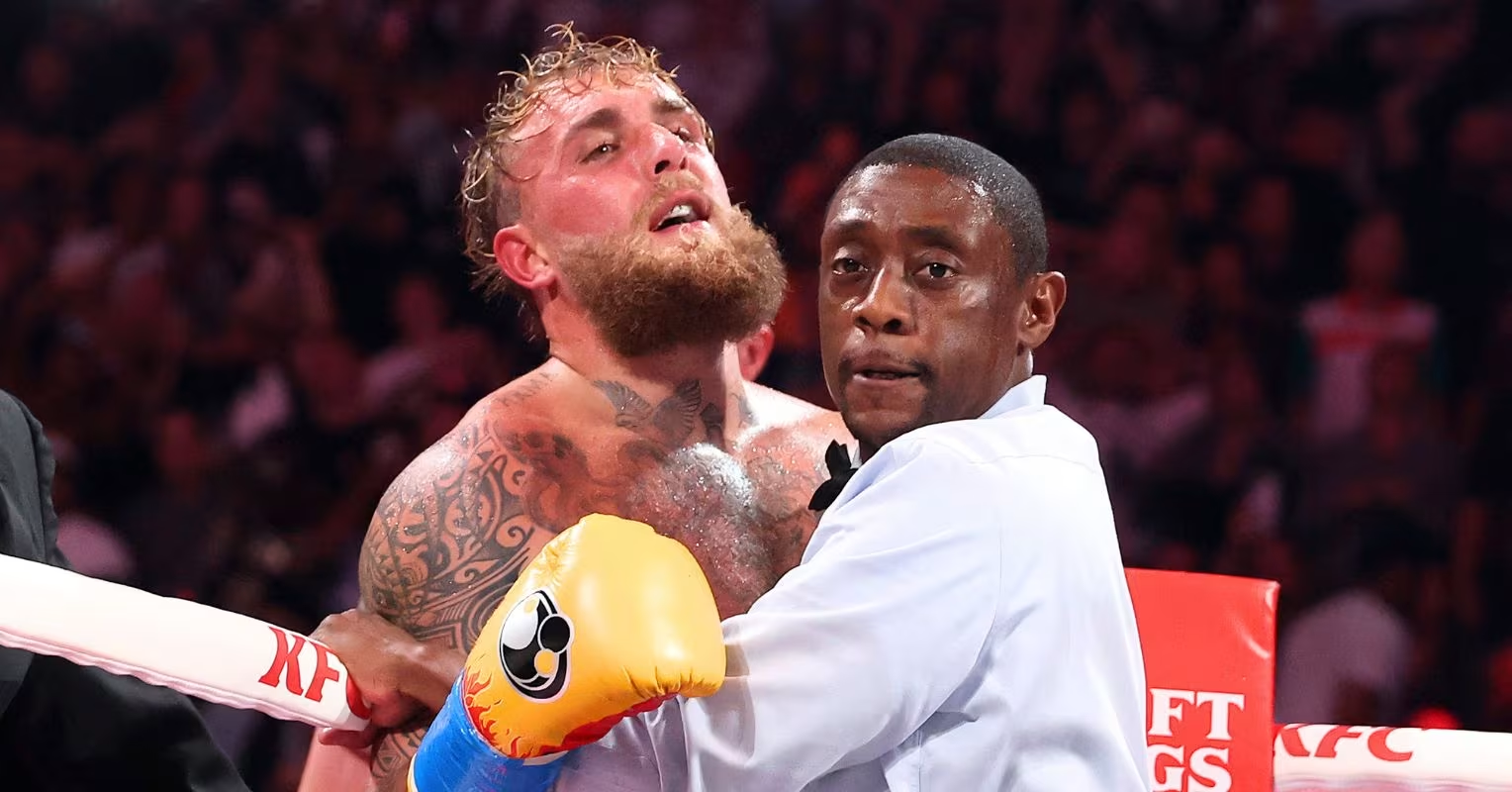
Jake Paul’s controversial and money-spinning boxing career could end after 14 fights.
The YouTuber and businessman turned his hand to boxing professionally back in 2020, though competed against men at a similar level to his. He then made a name for himself by beating former UFC fighters, including Nate Diaz, Ben Askren and Anderson Silva.
Paul suffered his first loss when he faced Tommy Fury, but it was not damaging. That much, however, cannot be said about the second defeat of his campaign, which came in December last year when he stepped up against two-time unified heavyweight champion Anthony Joshua.
Speaking on the Ariel Helwani show, he has now said that the ‘AJ’ fight – which many rightly said was dangerous when it was announced – could be his last.
“I’m getting some new scans in a couple of days, of the jaw, to get an update on the healing process. We’ll see what the doctors say. I think I’ll be able to get a more accurate timeframe, or can I even fight again? That is definitely in the realm of possibility.
“It does feel a lot better as weeks go by, but I definitely need to get cleared to be able to spar. I’m sort of staying in shape. I’m always in the gym regardless … Yeah [my fighting future is in doubt.] Most definitely. I think it just depends on how the bone heals. And also, there’s a tooth missing here, I’m pretty sure I’m gonna have to get an implant of some sort. I don’t know how much time that adds to things. We’re just going to have to see and figure out what’s the smartest thing for me.”
While Paul, 29, admitted that he has considered that this might be the end, he says that he feels like he still has things to accomplish in the sport and, if cleared to do so, will return.
Advertisement
A broken jaw can be one of the most serious injuries a boxer suffers, not only because of the immediate pain and slow recovery, but because of the long-term physical and psychological effects it can leave behind.
The injury becomes an issue to doctors and governing bodies due to concerns over durability, nerve damage or the jaw’s ability to withstand further heavy impact – particularly if surgery involving plates, screws or other metal fixation to stabilise the fracture is required.
If competing is out of the question for Paul, his time in boxing as a whole is unlikely to come to an end, as MVP has become the standout promotional company for women’s boxing.
Jan 15, 2023; Minneapolis, Minnesota, USA; Minnesota Vikings fans cheer during the second quarter of a wild card game against the New York Giants at U.S. Bank Stadium. Mandatory Credit: Jeffrey Becker-USA TODAY Sports.
The Minnesota Vikings acquired nine players as reinforcements in last month’s draft, especially Brian Flores’ defensive unit, which added some much-needed youth on all three levels. All eyes are on big defensive tackles Caleb Banks and Domonique Orange, or on versatile linebacker Jake Golday.
It’s no coincidence that those three were the first three players selected by interim GM Rob Brzezinski. Another guy, however, could make some noise in the upcoming season and that’s third-round safety Jakobe Thomas.
The Miami product was the 98th overall pick in the draft and will forever be connected to Jonathan Greenard. Minnesota landed the pick for him by shipping the 2024 Pro Bowler to the NFC East. Another third-rounder next year, as well as a significant salary cap relief, was part of the deal, too.
Advertisement
Regardless, the Vikings have to nail some draft picks after failing to find enough contributors in recent years.
Dec 31, 2025; Arlington, TX, USA; Miami Hurricanes defensive back Jakobe Thomas (8) celebrates after the 2025 Cotton Bowl and quarterfinal game of the College Football Playoff at AT&T Stadium. Mandatory Credit: Jerome Miron-Imagn Images
ESPN’s Field Yates forecasts Thomas to help the Vikings rather quickly. He named Day 2 and Day 3 picks that will have an immediate impact, including Thomas. Yates wrote this week, “The exact impact Thomas will make on the Vikings’ defense is difficult to forecast, but that’s a testament to defensive coordinator Brian Flores’ creativity. Thomas has excellent size for a safety (6-foot-2, 200 pounds) and plays with an ultra-physical mentality.”
Indeed, physicality is one of his prime attributes. A true heat-seeking missile, Thomas is known for hard hits. Perhaps fitting that he could replace Harrison The Hitman Smith in the starting lineup.
Flores uses his safeties in various roles. Some function almost as linebackers, others play a classic free safety role as the last line of defense in the deep passing game. Thomas is more of the former, playing in the box and making plays on the ball rather than anchoring the secondary.
Advertisement
The good news is that Flores has deployed Smith and Joshua Metellus in a way that could be a good fit for the rookie.
Miami Hurricanes defensive back Jakobe Thomas remains on the field after suffering an injury during second-quarter action against the SMU Mustangs at Gerald J. Ford Stadium. On Nov. 1, 2025, Thomas was hurt following a defensive stop as Miami’s defense battled through a physical road matchup in Dallas. Mandatory Credit: Jerome Miron-Imagn Images.
“His on-ball production last season spoke for itself, as he had five interceptions and 3.5 sacks,” Yates added. “Minnesota is in the process of reshaping its secondary, and Thomas will be a key part of that transition.”
For the first time in years, the cornerback duo remains intact from one season to the next, but the safety rotation could be altered by Smith’s potential retirement. Metellus returns, and so do last year’s third and fourth safeties, Jay Ward and Theo Jackson.
Head coach Kevin O’Connell said about the rookie after the draft, “His play style jumps off the tape. He’s a very, very highly intelligent player that we were able to really dive into. Jakobe’s a good blitzer, he’s a good tackler, and I know Flo’ (Brian Flores) is incredibly excited about him as a communicator and his upside football I.Q.”
Thomas will likely compete with Ward and Jackson for the jobs in Flores’ crew. Without Smith, there will be two spots with heavy snaps for the trio; if Smith is back, that number likely drops to one opening.
Advertisement
Jan 19, 2026; Miami Gardens, FL, USA; Miami Hurricanes defensive back Jakobe Thomas (8) against the Indiana Hoosiers during the College Football Playoff National Championship game at Hard Rock Stadium. Mandatory Credit: Mark J. Rebilas-Imagn Images.
Of course, a rookie is never guaranteed to emerge as a starter early in his career. Thomas is no different. The Vikings could just roll with the more experienced Ward and Jackson, while Thomas develops behind the scenes.
The fact that he was drafted earlier than many expected indicates that the coaching staff has a plan, though. After five college seasons with 53 games, including the final season on an elite Miami defense, he might be ready to compete earlier than some other first-year players.
Thomas and the other safeties will be worth monitoring in training camp.
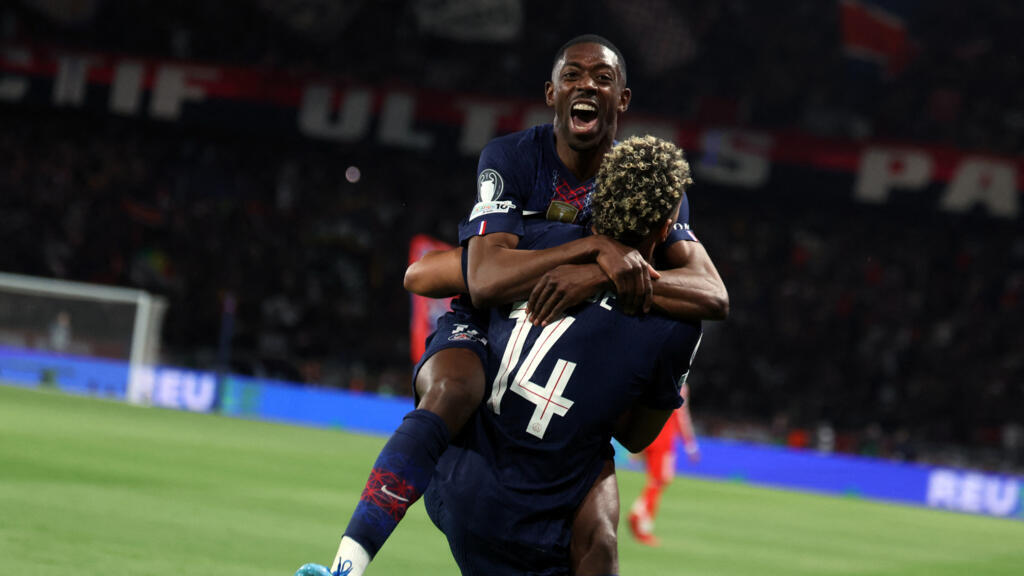
The 28-year-old becomes just the fifth player to win back-to-back awards, the last being Zlatan Ibrahimovic in 2014.
Dembélé last year succeeded Kylian Mbappe who won the prize five times in a row before departing for Real Madrid.
“It’s an individual trophy but all the individual trophies I’ve won are thanks to this team,” Dembélé said.
Advertisement
The forward retained the honour despite having had an injury-plagued season.
He has started just nine matches in Ligue 1, notching up 960 minutes of gametime, compared to 20 starts and 1,736 minutes last season.
Despite the reduced time on the pitch, Dembélé has scored 10 goals and six assists — still down on the 21 and eight he achieved last year.
Paris Saint-Germain effectively wrapped up another Ligue 1 title on Sunday as a 1-0 win over Brest left them six points clear of nearest rivals Lens.
Advertisement
With just two games remaining, Luis Enrique’s side also boast a superior goal difference.
PSG will be officially crowned French champions for the fifth season running, and the 12th time in the last 14 years, if they avoid defeat away to second-placed Lens on Wednesday.
PSG are also preparing for the Champions League final against Arsenal later this month after edging Bayern 6-5 on aggregate in their semi-final.
The award for best young player went to Dembélé’s teammate Desiré Doué, while Pierre Sage picked up the honours for best coach after establishing Lens as a direct challenger to PSG.
Aug 16, 2025; Arlington, Texas, USA; Baltimore Ravens quarterback Cooper Rush (15) rolls out to throw a touchdown against the Dallas Cowboys during the second quarter at AT&T Stadium. Mandatory Credit: Jerome Miron-Imagn Images
Minnesota Vikings rookie minicamp got underway last week, and out of the blue, veteran quarterback Cooper Rush showed up in Eagan.
The Vikings’ latest minicamp name came with real NFL starting experience.
It is unclear where Rush might fit on the current roster if he parleyed the visit into a contract, but Minnesota may keep him on speed dial in 2026 if injuries rear their ugly head once again.
Advertisement
Rush Adds a Veteran Twist to Minnesota’s QB Possibilities
Baltimore Ravens quarterback Cooper Rush throws against the Kansas City Chiefs on Sep. 28, 2025, during fourth-quarter action at GEHA Field at Arrowhead Stadium. Rush spent years carving out a reputation as one of the NFL’s steadier reserve quarterbacks, earning trust from coaching staffs because of his experience, composure, and ability to operate offenses in relief situations. Mandatory Credit: Jay Biggerstaff-Imagn Images.
Rush in Eagan
There’s no contract yet, but Rush is in the Vikings’ orbit. NBC Sports‘ Mike Florio wrote, “Rookie minicamps routinely include more than rookies. In Minnesota, veteran quarterback Cooper Rush will participate on a tryout basis. The team has announced 57 attendees for the weekend session. Of that number, 23 have been invited to the weekend practices on a tryout basis.”
“Rush, 32, has played in 42 regular-season games with 16 starts. He has a 9-7 record. The Ravens cut him earlier this year, after making Tyler Huntley the primary backup to Lamar Jackson. Before that, Rush spent seven seasons with the Cowboys, starting eight games in 2024 and five in 2022.”
Advertisement
Rush infamously helped the Dallas Cowboys beat the Vikings in a 2021 game, so purple fans remembered the name on the spot.
The Career Biography
Rush has appeared in 42 games since 2017, starting 16. His teams have a 9-7 record on his watch, and he’s totaled 3,766 passing yards, 20 passing touchdowns, and 14 interceptions in his career.
Dallas Cowboys quarterback Cooper Rush lines up for a snap on Nov. 24, 2024, during a matchup against the Washington Commanders at Northwest Stadium in Landover. Rush developed into a dependable backup option throughout his NFL career, routinely stepping into starting duties for stretches and helping stabilize offenses during injury-related absences at quarterback. Mandatory Credit: Geoff Burke-Imagn Images.
Scaled exactly to a 17-game starter’s sample, Rush would produce this stat line, on average:
3,409 Passing Yards
19 Passing TDs
13 Interceptions
60.5% Completion Rate
His career-long EPA+CPOE suggests efficiency between Desmond Ridder and Joshua Dobbs. Here’s Rush’s NFL resume to date:
Dallas Cowboys (2017–2019)
New York Giants (2020)
Dallas Cowboys (2020–2024)
Baltimore Ravens (2025)
Possible Role?
The Vikings already have this full house at quarterback:
Advertisement
Kyler Murray
J.J. McCarthy
Carson Wentz
Max Brosmer
But last year, for example, Minnesota was forced to explore multiple veteran quarterbacks because of injuries to McCarthy and Wentz, including stints with the aforementioned Ridder and John Wolford. Inviting Rush to minicamp is likely a method to forge a relationship just in case injuries arise again.
For example, if the injury bug infects the club three or four passers deep, Rush can be the first guy the Vikings call on the free-agent wire or steal off another team’s practice squad.
Head coach Kevin O’Connell said about Rush’s unexpected presence, “As I told Cooper, it’s almost like a free agent visit. He gets to know us, we get to know him. He’s played a lot of football over the years in the National Football League.”
“I think it can open up that world to him, or if there’s an opportunity in the future, he can make that a really positive situation for himself and become our first phone call.”
Cooper Rush throws a pass for the Baltimore Ravens on Aug. 16, 2025, during preseason action at AT&T Stadium in Arlington against the Dallas Cowboys. Rush continued building his NFL resume through reliability and veteran experience, traits that frequently kept him in demand as a reserve quarterback capable of handling spot-start responsibilities when needed. Mandatory Credit: Jerome Miron-Imagn Images.
Our Kyle Joudry also noted over the weekend, “O’Connell has already seen quite a lot via quarterback injury (especially if we remember Kirk Cousins, Nick Mullens, and Jaren Hall all getting hurt in 2023). Not only has the response been to beef up the in-house quarterback options, but to establish a good line of communication with an external depth option should a need arise.”
Full List of Attendees
Advertisement
Here’s the full list of every rookie and veteran who attended Vikings’ rookie minicamp:
Marcus Allen (CB)
Derek Anderson (TE)
Tony Anyanwu (OLB)
Da’Veawn Armstead (CB)
Caleb Banks (DL)
Dillon Bell (WR)
Drew Biber (TE)
Jordan Botelho (OLB)
Aidan Bouman (QB)
Max Bredeson (FB)
Tyreek Chappell (CB)
Anthony Chideme-Alfaro (CB)
Demond Claiborne (RB)
Joaquin Davis (WR)
Charles Demmings (CB)
Jalil Farooq (WR)
Bryan Felter (OL)
Dontae Fleming (WR)
Gavin Gerhardt (C)
Jake Golday (LB)
Monkell Goodwine (DL)
Brylan Green (S)
Trenton Irwin (WR)
Bangally Kamara (LB)
Shaleak Knotts (WR)
Matt Lauter (TE)
Keli Lawson (LB)
Shomari Lawrence (RB)
Vershon Lee (G)
Tristan Leigh (OL)
Delby Lemieux (OL)
Zach Lewis (S)
Gavin Lipkin (LS)
Bryson Nesbit (TE)
Domonique Orange (DL)
Kejon Owens (RB)
Zaire Patterson (DL)
Tomas Rimac (OL)
Jacob Roberts (LB)
Cooper Rush (QB)
Marcus Sanders Jr. (WR)
Atticus Sappington (K)
Cam’Ron Stewart (OLB)
Jake Tafelski (RB)
Jacob Thomas (S)
Jakobe Thomas (S)
Tra Thomas (OLB)
Brett Thorson (P)
Caleb Tiernan (OL)
Zemaiah Vaughn (CB)
Edward Vesterinen (DL)
Smith Vilbert (DL)
Brandon Walton (OL)
Arden Walker (OLB)
Jeremiah Williams (DL)
Luke Wysong (WR)
Offseason organized team activities (OTAs) and workouts are next for the Vikings, beginning on May 26th.
Rush will turn 33 in November.
Dustin Baker is a novelist and political scientist. His second novel, The Invaders , is out now. So is … More about Dustin Baker
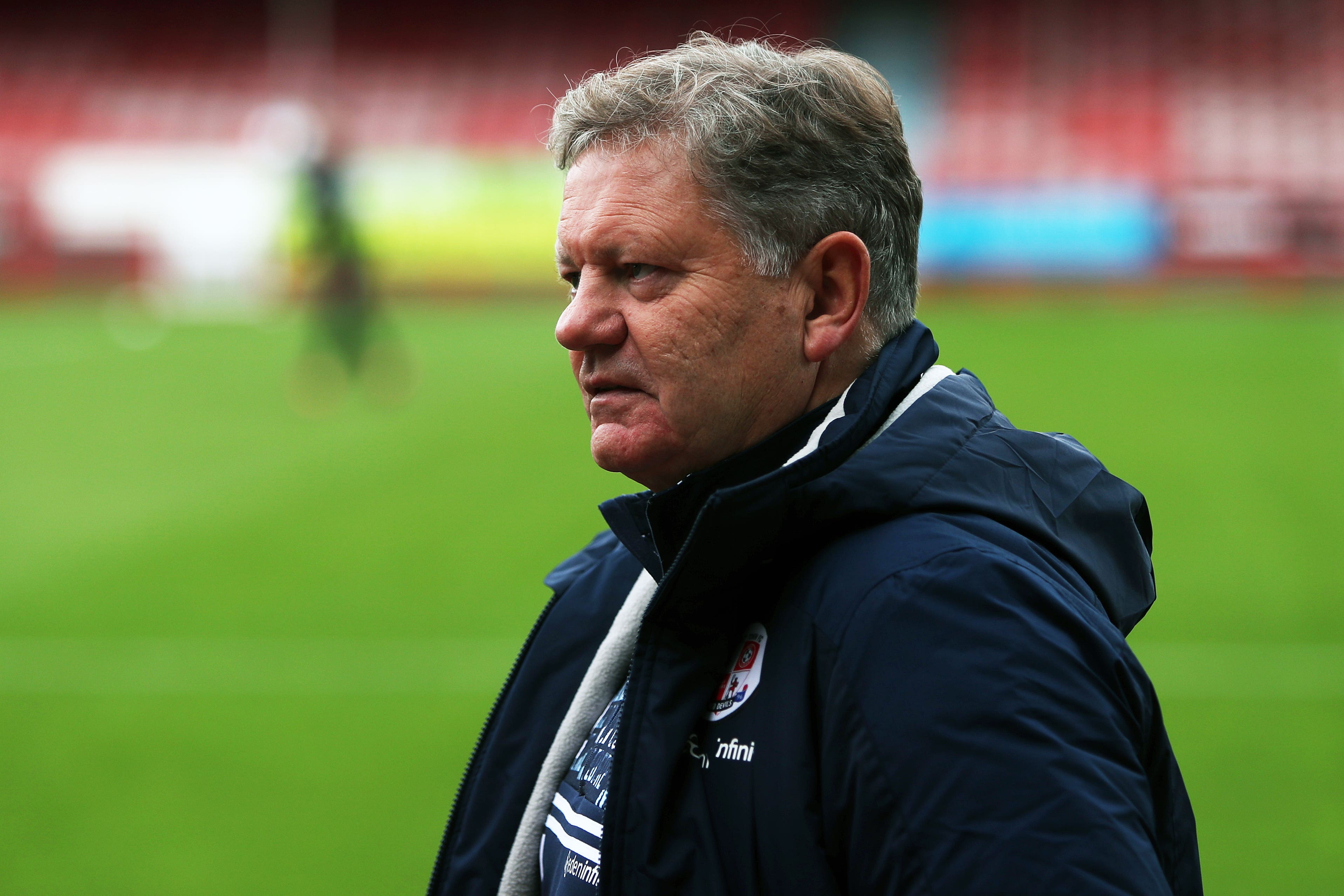
Three claims of racial harassment against former Crawley manager John Yems have been upheld by an employment tribunal.
Amrit Bansal-McNulty, an ex-Northern Ireland Under-21 international, is suing former clubs QPR and Crawley for around £12 million.
He alleged the clubs failed to protect him from Yems’ abuse during his 2021-22 loan spell at Crawley.
An employment tribunal judgment on Monday noted Mr Bansal-McNulty was “partially successful” in his claims against Yems, whose conduct from 2019-2022 left Crawley “vicariously liable”.
One of the charges upheld involved Yems calling Bansal-McNulty a “curry muncher” and then asking whether the midfielder was unhappy that pizzas being supplied did not include a “curry pizza”.
Advertisement
Yems had attempted to characterise such remarks as “banter”, according to the tribunal judgment.
Yems finished serving a three-year ban in January (Kieran Cleeves/PA)
However, the claims against QPR, who Bansal-McNulty joined in 2014 aged 14 and left in 2022 without playing for the first team having had a number of loan spells at other clubs, have failed.
Bansal-McNulty is seeking compensation after claiming that the abuse he suffered caused “psychiatric, and career-ending, injury”. The issue of a remedy hearing will involve only Yems and Crawley.
In its final observations, the tribunal noted: “Unfortunately there are no real winners in this case. Whilst the Claimant has been partially successful in his claims against Mr Yems, and vicariously Crawley Town, his claims against QPR have failed.
“Mr Yems has not, and realistically was never going to, obtain the exoneration of his conduct and character he was seeking.”
Advertisement
In January Yems finished serving a three-year ban, increased from 17 months following an appeal by the Football Association, after being found guilty of 11 charges of discrimination while at Crawley.
The ban was the longest ever handed out for discrimination by the FA although four charges were dismissed, while the original commission concluded Yems was “not a conscious racist”.
Yet another game dictated by VAR now, rather fittingly, looks set to bring the 2025-26 relegation battle down to the tightest of margins. That, however, is only going to cause emotions to waver as wildly – and as cruelly – as we saw in this 1-1 draw between Tottenham and Leeds.
A big week for officials somehow had another crescendo. Some might say a nadir, given it makes for an even bigger season for officials.
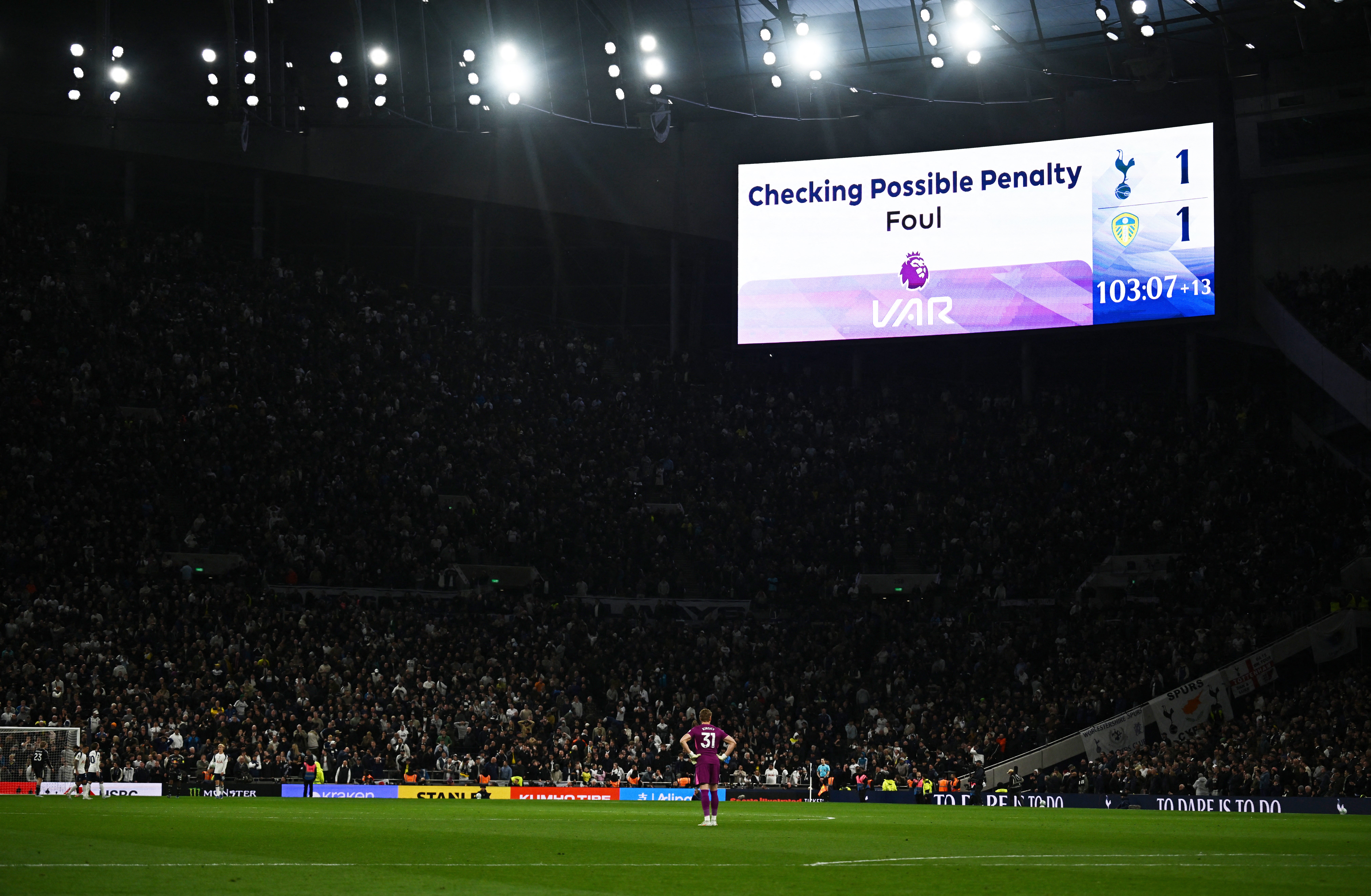
Two successive VAR calls saw Roberto De Zerbi and most of the Tottenham Hotspur Stadium quickly go from exhilaration to exasperation.
James Maddison, finally returning as a sub after Dominic Calvert-Lewin had equalised from a VAR-granted penalty, was denied what would have almost been a deus ex machina of an intervention. He ghosted into the box to be felled by Lukas Nmecha… only for Jared Gillett to quickly rule that it wasn’t a foul.
VAR again had a pivotal role to play at the climax of the Premier League season (Reuters)
Just 28 hours before this, the West Ham United manager was philosophically lamenting the “duality” of Premier League directives on grappling. He now might be left musing – a little more hopefully – on the duality of VAR. It takes away. It gives. A bit like Mathys Tel with his performance here.
Advertisement
Referee Gillet was almost as big a character as Chris Kavanagh had been at the London Stadium on Sunday.
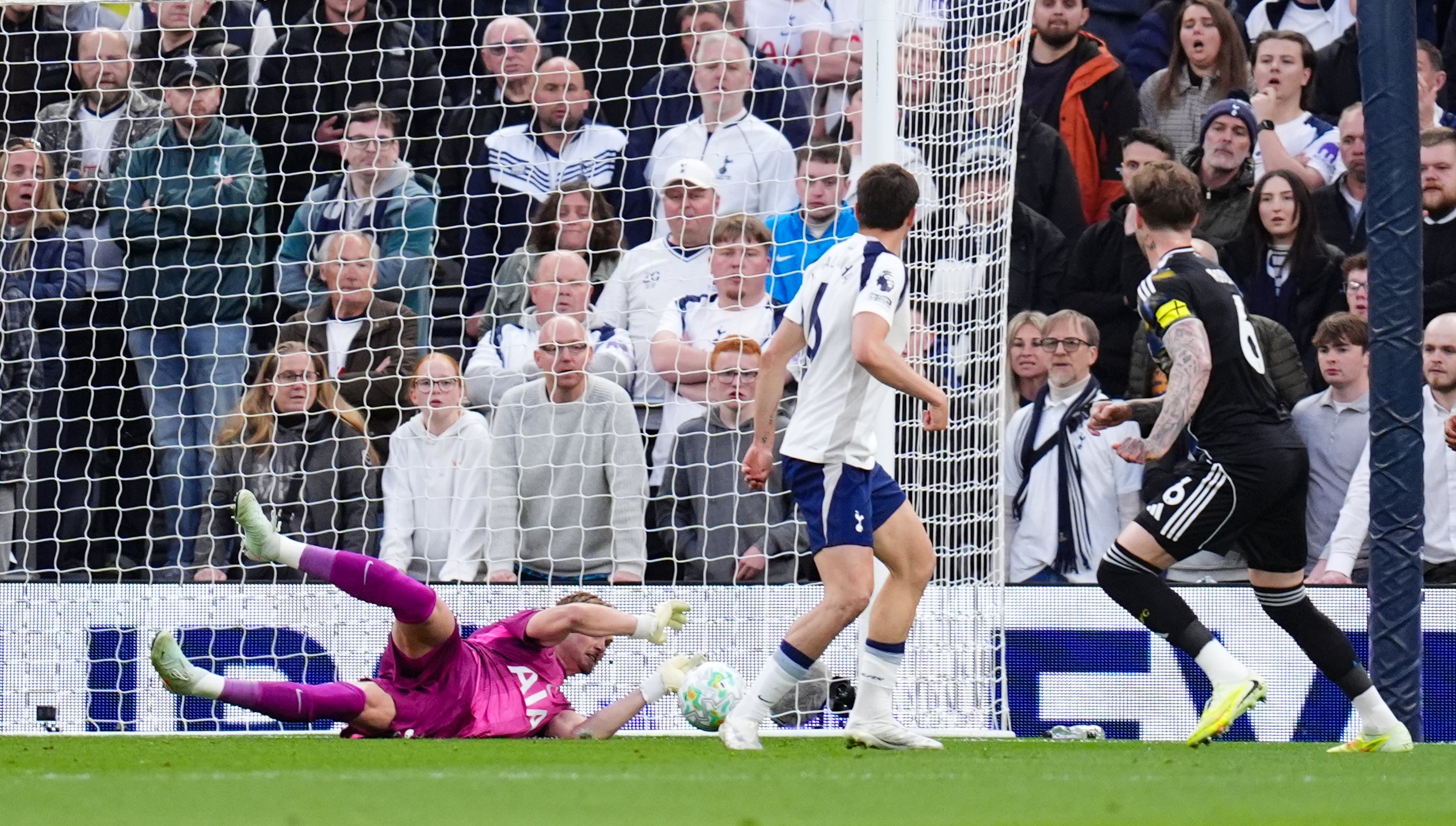
There should be significant mention of Antonin Kinsky, however, who offered a brilliant save that could yet be as important as David Raya’s – and was probably even more difficult.
Antonin Kinsky made several stunning saves for Spurs (PA)
For now, two successive decisions have ultimately granted West Ham a huge reprieve after Sunday’s dejection against Arsenal. The 1-1 draw from Calvert-Lewin’s penalty and that Maddison decision now leaves West Ham a mere two points behind Spurs rather than four.
That can turn in one match, rather than requiring two. And next up is Newcastle United away for West Ham, and Chelsea away for Spurs. This is going to be nerve-shredding.
This one was bad enough for Spurs, if also so frustrating in its own way.
Advertisement
They saw glimpses of what this season could have been, what Tel might yet be, without all the immense weight of this campaign.
Leeds only added to that by not letting any satisfaction at survival dim their intensity.
That was the other twist to that West Ham result. The 1-0 Arsenal win ensured Leeds secured survival, but they looked in the mood to build on it right now rather than rest on it.
They were up for it. Their fans were even up for goading Spurs by singing “Leeds are staying up”.
Advertisement
This was just another game under De Zerbi, however, which showed how Spurs should never have been in this situation in the first place.
When you see how aggressive they look now, how tactically coherent they are, a proper identity already, it’s impossible not to wonder why they wasted such time with the Igor Tudor experiment. Why not go bigger for De Zerbi earlier, if this was what it meant?
Long before Tel’s supreme opener, they were laying siege to the Leeds goal. Joao Palhinha burst through for a shot that was somehow blazed over. Rodrigo Bentancur had a header he should have scored. Pedro Porro was creating chaos from one side, Tel from the other.
It looked like something had to give – only for Spurs to give up space at the other end. This obviously remains a flawed and stretched squad, which is why they were always going to be stretched on the actual pitch, too.
Advertisement
There was already one warning when Calvert-Lewin got through shortly before half-time, only to be felled by Destiny Udogie. It looked a certain penalty – until it was shown that Calvert-Lewin had trailed offside by a toe. That’s how much there was in it.
If only the gaps in the Spurs team were as tight.
A further issue for De Zerbi was that he was fighting against time in another way. With so few attacking options on the bench beyond Maddison, the Italian essentially had to bank on his forwards producing before they significantly flagged. Just another exasperation on the night was that they did that.
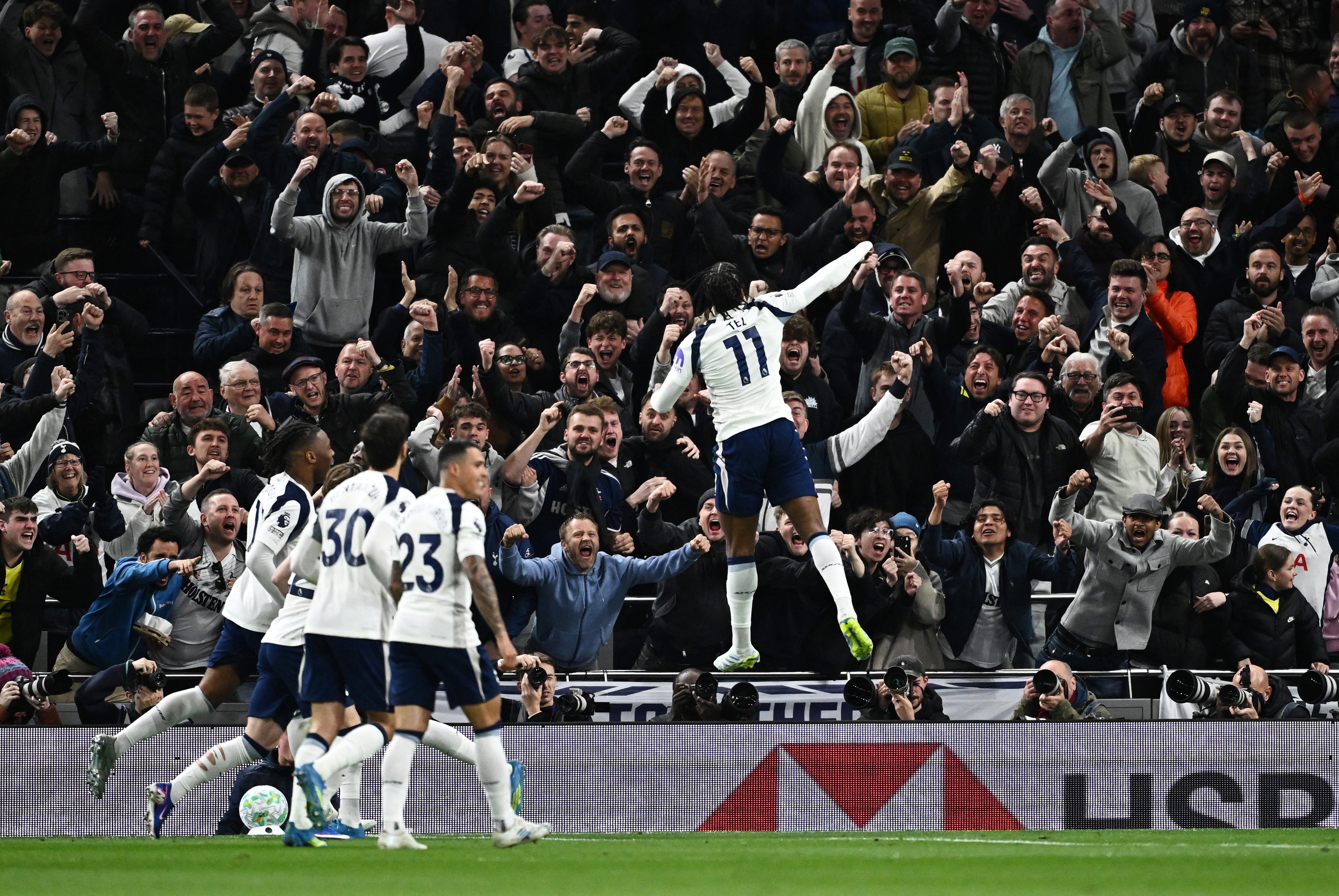
On 50 minutes, Tel fulfilled some of the potential he has shown in an occasionally frustrating spell at the club. He scored a goal that would have been worthy of keeping them up. Opportunistically placed to receive the ball in plenty of space from a deflected corner, the winger still had a lot to do. And how he did it.
Advertisement
Mathys Tel produced a superb curling opener (Reuters)
Tel guided a supreme shot into the top corner of Karl Darlow’s net. It was gloriously soaring, and suggested that Spurs might just keep going with it. They of course tired, however, and came down with a bang.
Or, rather, Tel did.
On 73 minutes, after a spell where Leeds had started to get on the front foot again, Ethan Ampadu looked like he might get in behind. All that was blocking him was Tel. And if the winger’s first major moment made you wonder how he did it, the question here was again what was he thinking.
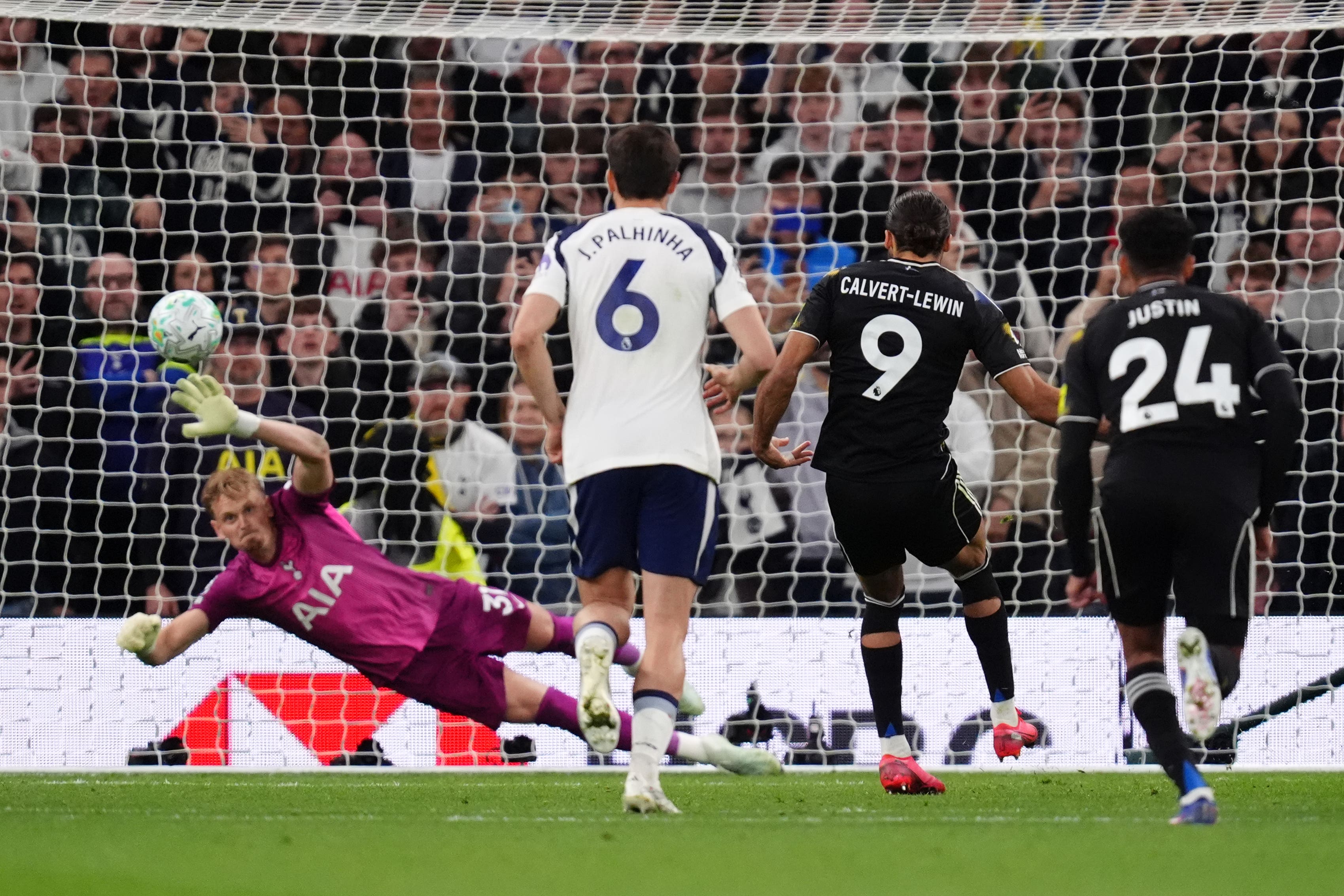
Dominic Calvert-Lewin scores Leeds’ equaliser from the penalty spot (PA Wire)
Tel inexplicably tried to bicycle kick the ball away with Ampadu so close, ensuring he also made contact with the midfielder’s head.
Referee Jarred Gillett really had no choice, even though a needlessly long wait eventually saw him have to make a very definite choice by going through the protocol of looking at the monitor.
There was no such hesitation about Calvert-Lewin. He finished the penalty brilliantly, to reignite this survival battle.
Advertisement
There was one more VAR call to come, and one huge Kinsky save to come. As regards what will tell more by the season’s end, the margins are now so thin.
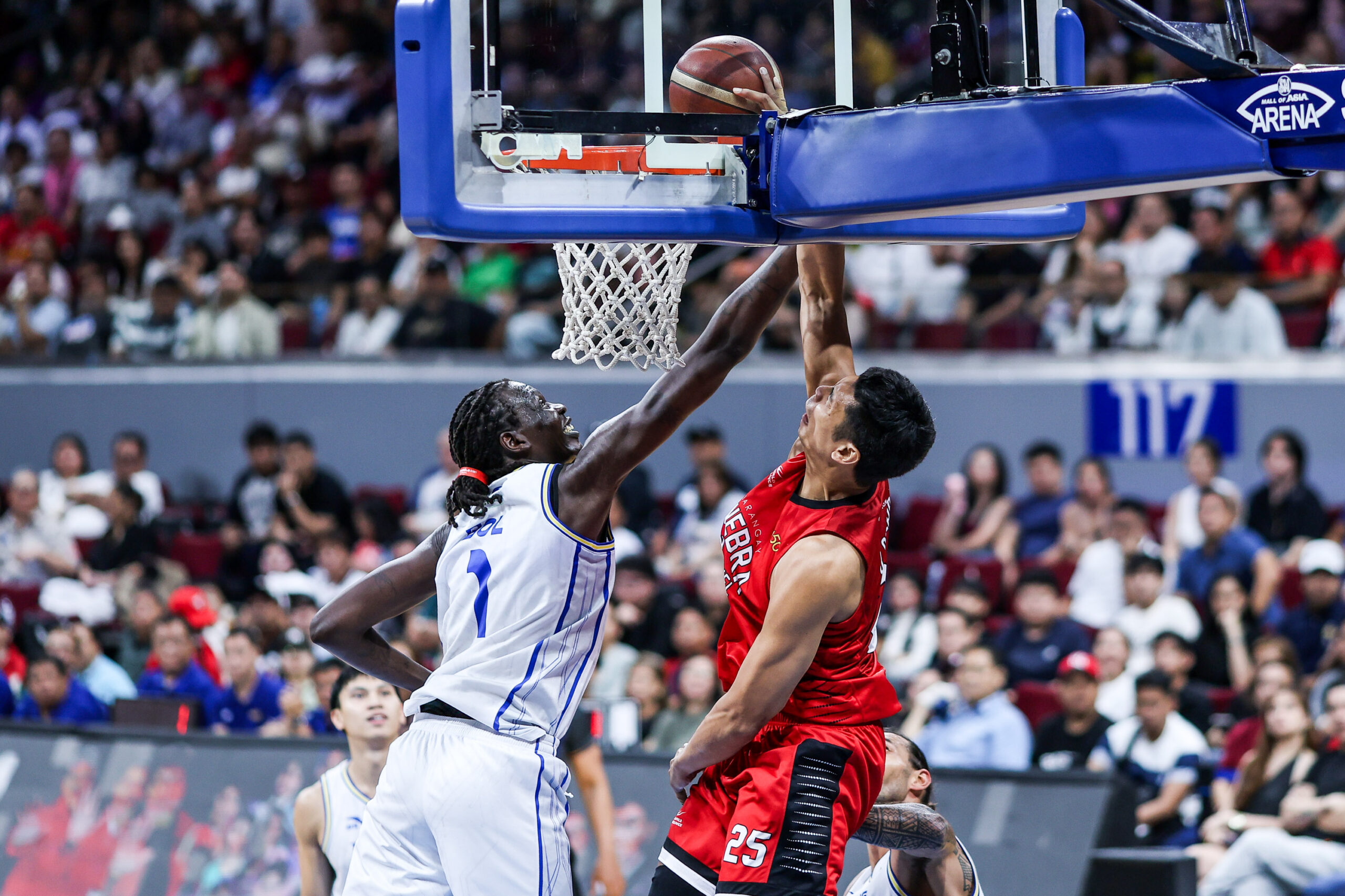
Barangay Ginebra big man Japeth Aguilar gets blocked as he tries to dunk on TNT import Bol Bol during a PBA Commissioner’s Cup game at Mall of Asia Arena.–MARLO CUETO/INQUIRER.net
Barangay Ginebra showed a lot of healthy respect for TNT import Bol Bol after closing the elimination round with a 93-86 victory over the Tropang 5G on Sunday night at the Mall of Asia Arena.
“He’s such a force in the game, especially here in our game,” Kings coach Tim Cone said. “They talk about him so much in the NBA, too, when he was out there playing. We had the honor of watching him for 12 games here and I think it’s an honor to go up against him here in the country and give him a challenge.”
Article continues after this advertisement
Advertisement
The 7-foot-4 TNT import finished with 33 points and 10 rebounds, drawing admiration from both Cone and guard RJ Abarrientos.
“I think whoever guards or tries to get a rebound over Bol will have a hard time, so we just did our best to get our momentum and the win,” said Abarrientos, who finished with 17 points, four rebounds and three assists.
More important for the Gin Kings, though, is that they managed to build some momentum and a roster boost heading into the playoffs, where they will battle Phoenix armed with twice-to-beat protection.
Japeth Aguilar returned after missing three games because of a lung problem that required hospitalization.
Advertisement
Article continues after this advertisement
The veteran forward played limited minutes and finished with six points and three rebounds, but Cone said the numbers mattered less than getting Aguilar reacclimated before the playoffs.
“We certainly wanted him to be comfortable getting back to play,” Cone said. “We didn’t want to extend his minutes too long, but we really wanted him to get in and feel the competition.”
Aguilar spent stretches defending Bol, a difficult assignment for anyone in the league. Cone, though, liked what he saw from the former Gilas Pilipinas big man as the game progressed.
Advertisement
Article continues after this advertisement
“That was a tough assignment, but I thought he got better and better,” Cone said. “He’ll be a force for us in the playoffs.”
TNT, meanwhile, will face an uphill battle after dropping to No. 8, where it will face No. 1 NLEx in a duel between sister teams. The Tropang 5G need to win twice and avoid a loss to upset the Road Warriors, who have been on a roll so far this conference.
But Cone remains wary of TNT, a side teams may have to reckon with if they have championship plans.
Advertisement
Your subscription could not be saved. Please try again.
Your subscription has been successful.
“TNT can turn it around in a heartbeat and find themselves in the Finals easily,” he said. “That’s a team everybody’s eyes have to be on.” —ROMMEL FUERTES JR. INQ
As a result, Benavidez has placed himself in the conversation for a showdown with former world cruiserweight champion Jai Opetaia, or possibly even Oleksandr Usyk.
Advertisement
Jumping up to heavyweight, or even remaining at 200lbs, would certainly be a bold move, especially given that Benavidez admitted to only weighing 202lbs on the night of his triumph over Ramirez.
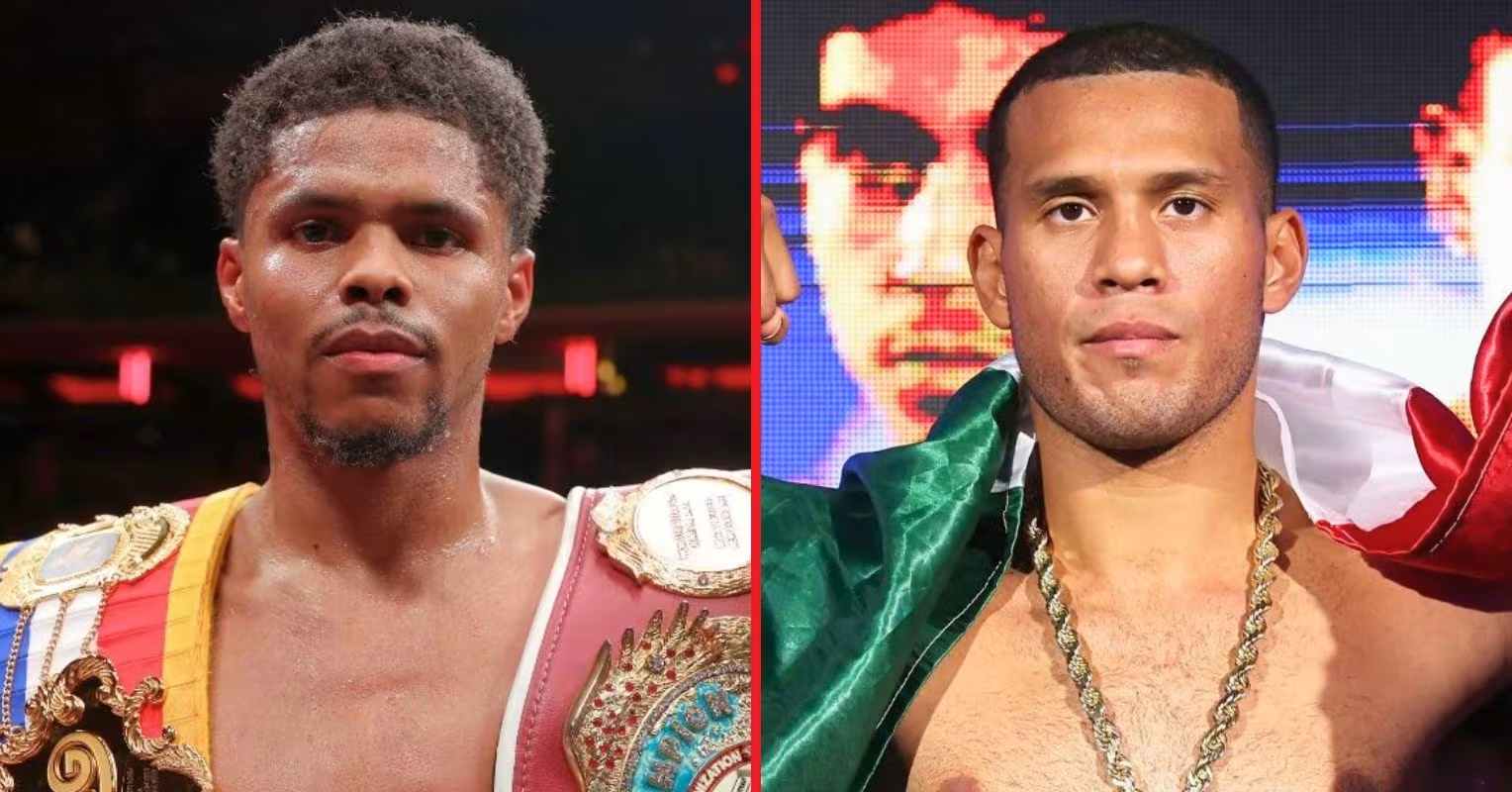
Based on this information, four-weight world champion Stevenson has said he would much rather see the 29-year-old drop back down to 175lbs.
He does, after all, hold the WBC light-heavyweight title, which he gained after Dmitry Bivol vacated the belt following his undisputed victory over Artur Beterbiev in February 2025.
This was because the Russian chose to undergo back surgery, rather than face his then-mandatory challenger, with Benavidez ultimately being elevated from ‘interim’ to full world champion.
Advertisement
But now that Bivol is gearing up to face mandatory challenger Michael Eifert on May 30, perhaps he will soon wish to become a two-time undisputed king.
For Stevenson, this represents the best-case scenario as he tells The Agnew Podcast that he hopes to see Benavidez compete at his more natural weight.
“I don’t think I want to see him fight at the 200lb weight class. I would rather see him fight [at 175lbs against] Bivol [or] Beterbiev.”
“I think [Bivol-Benavidez is] the best fight in boxing.”
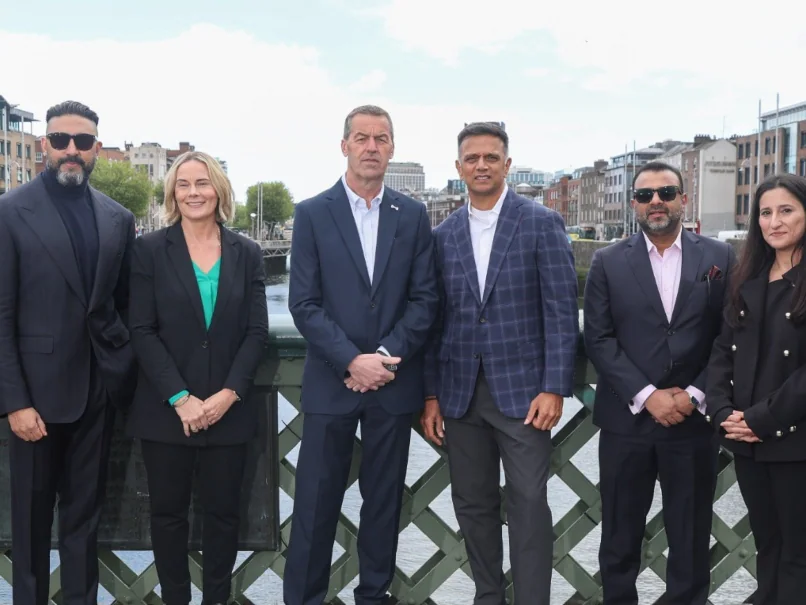
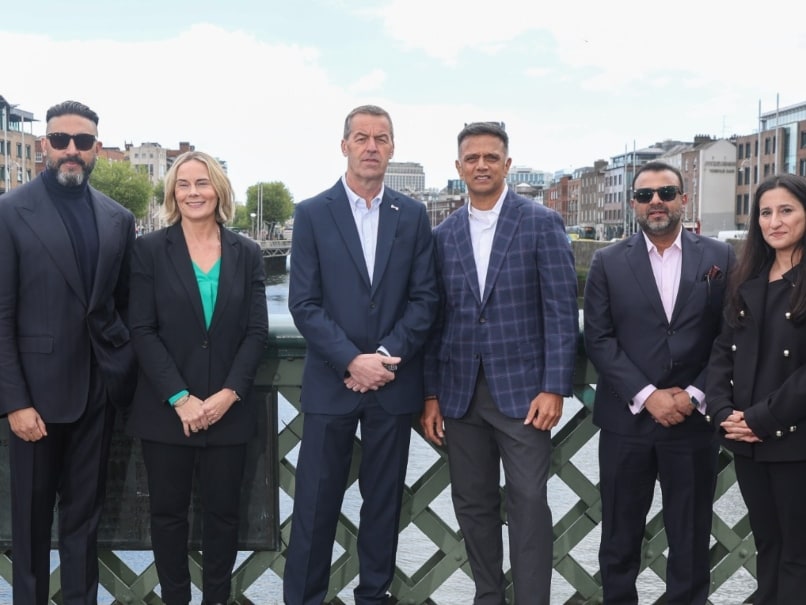
India great Rahul Dravid was on Monday announced as the owner of Dublin Guardians ahead of launch of the European T20 Premier League. ETPL completed its six-team franchise line-up at a landmark event here which was attended by franchise owners from across the tournament. “What attracted me to ETPL was the larger vision behind it, the opportunity to help grow cricket in Europe by strengthening grassroots development and creating pathways for emerging talent across Ireland and Europe,” Dravid said in a release.
Former India all-rounder R Ashwin is set to captain the Guardians, who will compete against teams from Belfast, Edinburgh, Glasgow, Rotterdam and Amsterdam.
“Dublin already has a passionate cricketing community and enormous potential for growth. Nurturing the next generation has always been important to me, and I believe ETPL can play a meaningful role in that journey.” The event was attended by Vipul Aggarwal of Glasgow Franchise, and Jonty Rhodes and Madhukar Shree of Rotterdam Franchise, alongside ETPL co-founders Abhishek Bachchan, Saurav Banerjee, Priyanka Kaul and Dhiraj Malhotra.
Advertisement
In attendance were senior leaders from European cricket, including Brian MacNeice, Chair of Cricket Ireland; Sarah Keane, CEO of Cricket Ireland; Roland Lefebvre, Director of High Performance of Cricket Netherlands; and Trudy Lindblade, CEO of Cricket Scotland.
Launched in partnership with Cricket Ireland, Cricket Scotland and the Royal Dutch Cricket Association, ETPL introduces a cross-border franchise model featuring teams from Dublin, Belfast, Edinburgh, Glasgow, Rotterdam and Amsterdam.
The league is expected to feature international stars including Mitchell Marsh, Tim David, Mitchell Santner, Liam Livingstone, Glenn Maxwell, Faf du Plessis, Heinrich Klaasen among others.
The inaugural season is scheduled between August 26 and September 20.
Advertisement
ETPL’s franchise ownership: Dublin franchise – Rahul Dravid, Belfast franchise – Glenn Maxwell and Rohan Lund, Edinburgh franchise – Kyle Mills, Nathan McCullum & Rachel Wiseman, Glasgow franchise –Vipul Aggarwal and Chris Gayle, Amsterdam franchise – Steve Waugh, Jamie Dwyer and Tim Thomas, Rotterdam franchise – Jonty Rhodes, Faf du Plessis, Glashin and Samir Shah, with Madhukar Shree as Managing Partner.
(Except for the headline, this story has not been edited by NDTV staff and is published from a syndicated feed.)
Featured Video Of The Day
IPL 2026 News | Shami’s Sensation Leads Lucknow to First Win of Season
























































You must be logged in to post a comment Login