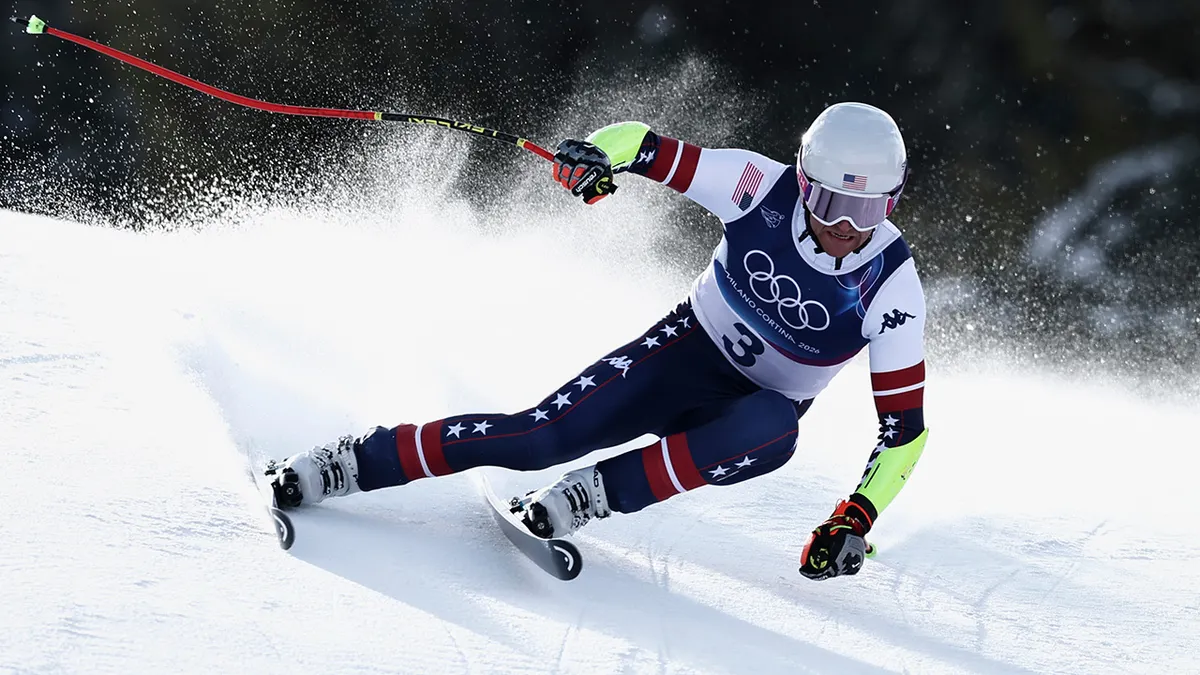
Olympic skier Ryan Cochran-Siegle picked up Team USA’s latest medal on Wednesday, capturing a silver in the alpine skiing men’s super-G.
Cochran-Siegle put together a time of 1:25.45 and finished 0.13 seconds behind Swiss skiing star Franjo von Allmen, who picked up his third gold medal of the Milan Cortina Games. Switzerland’s Marco Odermatt won the bronze.
United States’ Ryan Cochran Siegle speeds down the course during an alpine ski, men’s super-G race, at the 2026 Winter Olympics, in Bormio, Italy, Wednesday, Feb. 11, 2026.(AP Photo/Gabriele Facciotti)
For Cohran-Siegle, it’s his second Olympic medal of his career. He won a silver medal in the same event at the Beijing Olympics in 2022. He came in 14th in super-G at his first appearance in the Games in 2018 in Pyeongchang.
He finished 18th in downhill earlier in this Olympics.
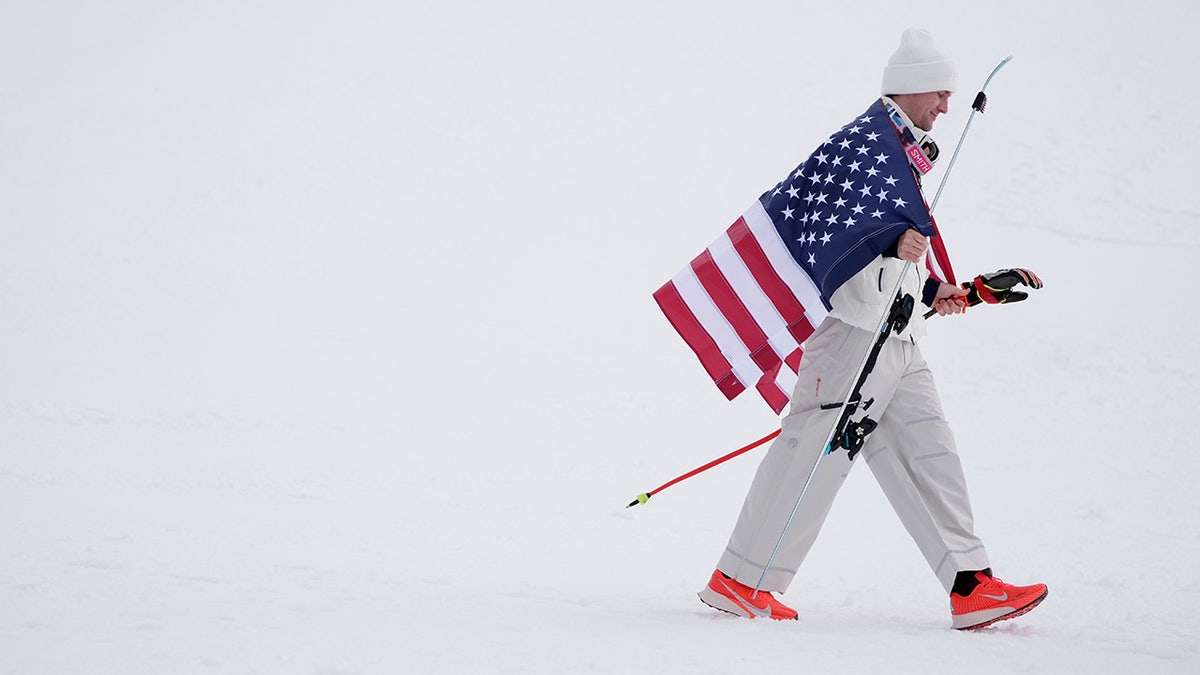
United States’ Ryan Cochran Siegle wears a flag as he walks away from the medal ceremony after winning the silver medal in an alpine ski, men’s super-G race, at the 2026 Winter Olympics, in Bormio, Italy, Wednesday, Feb. 11, 2026.(AP Photo/Rebecca Blackwell)
Americans Sam Morse, Kyle Negomir and River Radamus also competed in the super-G. Morse finished in 23rd place with a time of 1:27.12, and Negomir finished in 26th with a time 1:28.62. Radamus didn’t complete the course, as he slipped and fell out of position. He appeared to be frustrated with himself as he skied toward officials that were near his part of the hill.
Advertisement
Read More About The 2026 Winter Olympics
Cochran-Siegle, who is from Vermont and skis out of the Mount Mansfield club, made his World Cup debut when he was 19. But he hasn’t finished better than seventh in the super-G in his career. He is finished for these Games and will cheer on his skiing teammates the rest of the way.
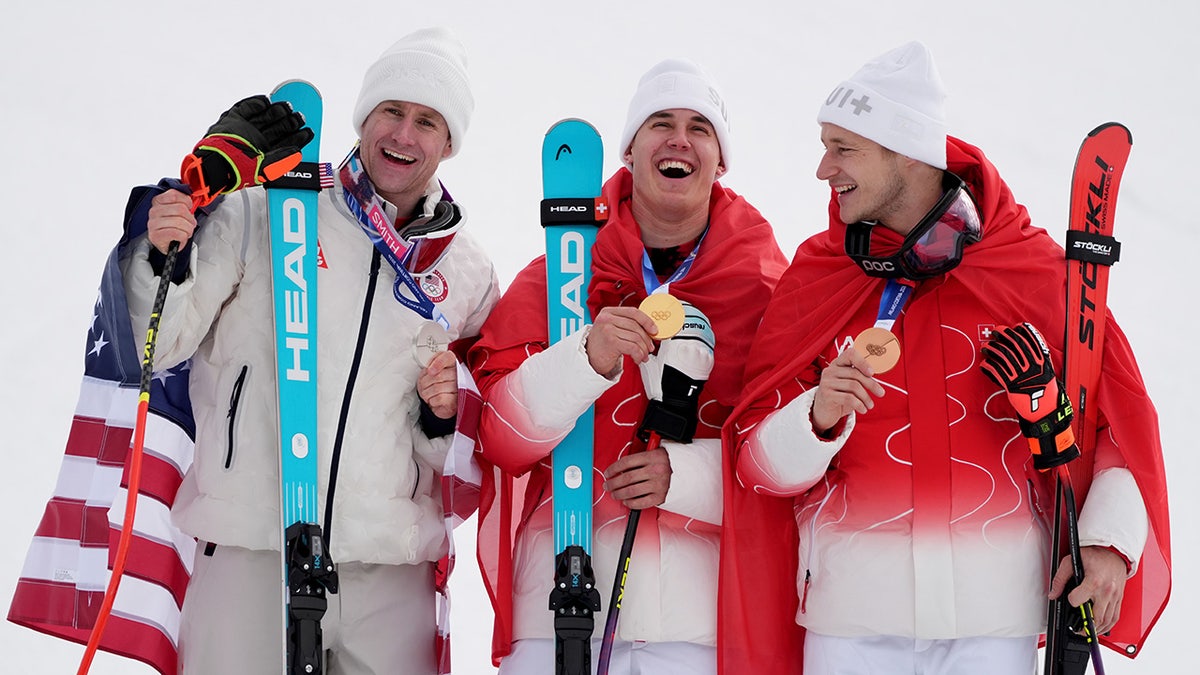
Switzerland’s Franjo von Allmen, gold medalist in an alpine ski, men’s super-G race, center, celebrates on the podium with silver medalist United States’ Ryan Cochran Siegle, left, and bronze medalist Switzerland’s Marco Odermatt, at the 2026 Winter Olympics, in Bormio, Italy, Wednesday, Feb. 11, 2026.(AP Photo/Rebecca Blackwell)
Negomir will compete in the giant slalom and team combined later in these Games. Ryder Sarchett will also compete in the giant slalom. Negomir and Radamus competed in the team combined and finished 18th.
Are NFL teams supposed to trade up the draftboard for running backs? Absolutely not — it’s taboo. Should the Minnesota Vikings do it anyway? Maybe — if the temptation is to grab Notre Dame’s Jeremiyah Love. And thanks to some reporting from NFL insider Jason La Canfora, one trade partner might just do the trick if the Vikings want Love.
Cleveland could be the pivot point if Minnesota wants the Notre Dame star.
That team is the Cleveland Browns, a franchise apparently open to trading down at the No. 6 spot.
Advertisement
Cleveland Could Hold the Key to a Love Deal
How much would you give up to Love?
Jeremiyah Love breaks into the open field after a catch, gaining extra yards during second-half action on Sep. 30, 2023, at Wallace Wade Stadium in Durham. The Notre Dame running back showcased acceleration and balance against Duke, turning a routine play into a chunk gain while stressing the Blue Devils’ defensive pursuit angles. Mandatory Credit: Jim Dedmon-USA TODAY Sports.
La Canfora: The Browns Are Open for Business
Jot the Browns down as a likely trade listener. La Canfora wrote this week, “With so many holes and wanting to stockpile picks, this may end up being a prime opportunity to trade down. In all likelihood, Indiana quarterback Fernando Mendoza will be the only offensive skill player off the board when Cleveland is up to pick, and with many executives identifying Washington as a prime spot for Notre Dame running back Jeremiyah Love, and the Browns being connected with Ohio State running back Carnell Tate.”
“Perhaps they are sitting in a bit of a sweet spot in which some other team will be motivated to move up to grab their pick on the best pass catcher or runner in this draft.”
Advertisement
Cleveland pulled off a blockbuster deal in the last draft, too, allowing the Jacksonville Jaguars to spend big in their pursuit of Travis Hunter.
La Canfora added, “The Browns have long been in the rebuilding business and the ‘asset relocation’ business, putting together an analytically-minded front office with execs from other sports involved that has left a lasting impression on owner Jimmy Haslam, even as some of those individuals have moved on.”
“Cleveland just hired an older head coach in Todd Monken, who has never done the job before, and the team seems years from contending. Even in more times of more robust rosters, the Browns were generally seen as willing listeners at the very least in regards to trades, and draft trades.”
There’s a path to Love if the Vikigns want him, at least in the rumor mill.
Advertisement
Jumping in Front of the Commanders
For a while in March, the Tennessee Titans became a mock-draft darling to pick Love at No. 4. While that remains in play until draft night, the tide has turned a bit in favor of Tennessee taking the plunge with Ohio State linebacker Sonny Styles.
If the Titans don’t take Love, and the New York Giants decide Cam Skattebo and Tyrone Tracy are enough for the 2026 backfield, the Commanders are the next logical spot for Love — at pick No. 7.
With the Browns trade, the Vikings would jump ahead of Washington, disqualifying them from the Love pick and making him a Viking. That’s the working theory behind a trade up the draftboard so high; a team might have to box out the Commanders, who have Jacory Croskey-Merritt and Rachaad White on tap for running back duty in 2026.
Advertisement
The Trade Price
This is the part where you avert your eyes. A trade all the way up to No. 6 in Round 1 won’t be cheap for the Vikings or any franchise.
Stacey Dales conducts an on-field interview with Jeremiyah Love during NFL Scouting Combine activities on Feb. 28, 2026, at Lucas Oil Stadium in Indianapolis. The Notre Dame running back discussed preparation and performance while evaluators observed closely, as prospects navigated media sessions alongside drills during one of the league’s most visible pre-draft events. Mandatory Credit: Kirby Lee-Imagn Images.
Minnesota could also sell next year’s 1st-Rounder while possibly getting a late-rounder back from Cleveland. There are options.
Advertisement
A Vikings Playground with Love, Murray, Jefferson, Addison, and Hockenson
The Vikings’ rushing offense has never been solved by head coach Kevin O’Connell, although it improves each year. Trading for and drafting Love would immediately fix the problem, so long as O’Connell committed to using him like a bellcow RB1 in a balanced offense.
A Cleveland Browns helmet sits on display near the sideline ahead of kickoff on Jan. 4, 2025, at M&T Bank Stadium in Baltimore. The close-up captures team branding and game-day readiness as players prepared to take the field against the Ravens in a divisional matchup with late-season implications. Mandatory Credit: Tommy Gilligan-Imagn Images.
Minnesota already boasts a Top 3 defense over the last couple of seasons under Brian Flores; adding Love to an offense with Kyler Murray, Justin Jefferson, Jordan Addison, and T.J. Hockenson would strike fear into the hearts of, well, everybody.
If the offensive line stayed healthy — it did no such thing in 2025 — the Vikings’ roster wouldn’t really have any weaknesses, and the club would flirt with Super Bowl aspirations.
That’s the upside of dreaming big about Love in purple and gold. The Browns could hold the key.
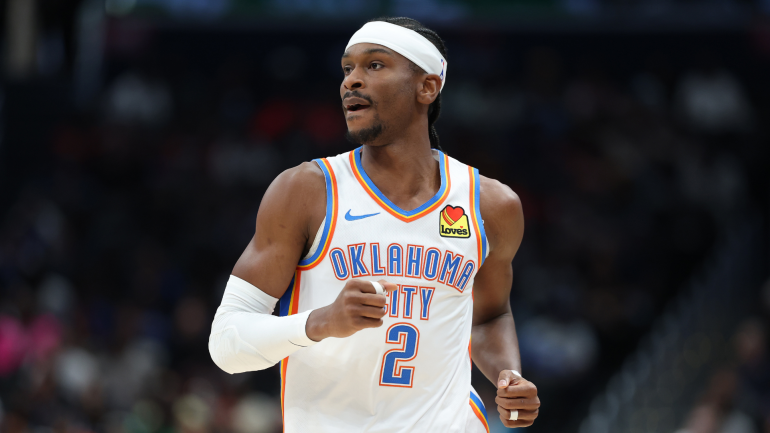
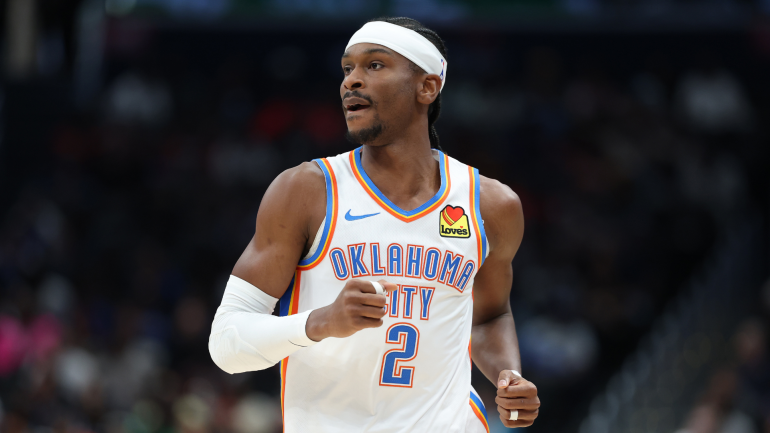
This week, reporters asked Shai Gilgeous-Alexander and Luka Dončić to make their respective cases for the Most Valuable Player award. Both MVP candidates declined to do so.
“I never [made a case for myself],” Dončić said after scoring 42 points in the Los Angeles Lakers‘ 127-113 win against the Cleveland Cavaliers on Tuesday. “I’m not the one voting. But I think I’ve been playing pretty good, we’ve been winning, so that’s it. That’s all I got to say.”
This year’s MVP race is particularly tight. Rational arguments can be made in favor of Gilgeous-Alexander, Dončić, Victor Wembanyama and Nikola Jokić. Since Jokić is averse to self-promotion, it appears that Wembanyama will be the only one who publicly states why he believes he should win. Last week, he told reporters in Miami that he’s the right choice because defense is 50% of the game (and he’s the league’s most impactful defender), his San Antonio Spurs almost swept the Thunder in the regular season and his impact on offense goes beyond scoring.
The only other thing Gilgeous-Alexander said about the MVP race is that it’s “good for the league” because it drives interest.
“I think it’s good chatter,” Gilgeous-Alexander told reporters. “It gives people something to talk about. There’s a lot of good players in this league and a lot of guys in the conversation because of that.”
Advertisement
That doesn’t mean, however, that he wants to participate in that conversation.
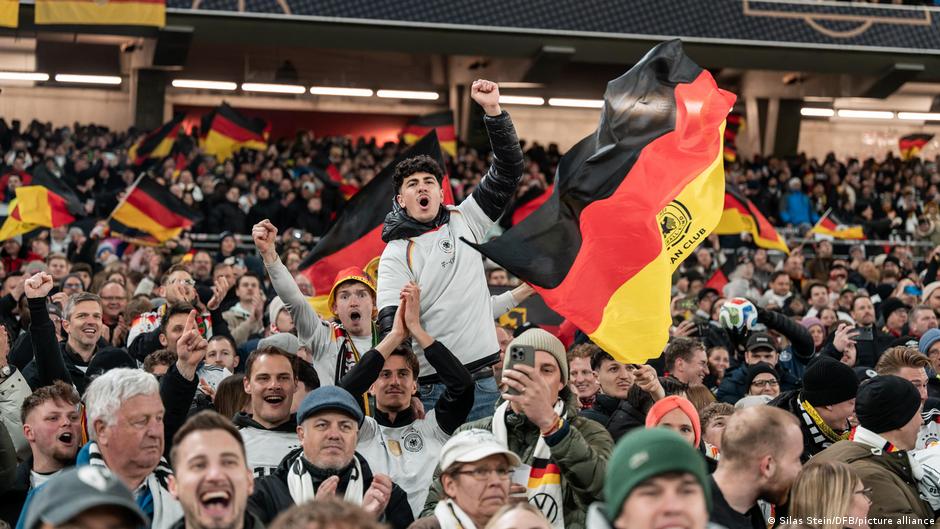
On one of the last days of March, Germany play Ghana in the final international break before World Cup preparations begin. Many fans started their journey first thing in the morning, including Dennis and Kai.
The two friends from the north of Germany put on their kits and boarded the train early, keen to support the team in person that evening in Stuttgart.
For Dennis in particular, trips like this are routine; he has been following the national team since 2015, and the 40-year-old has hardly missed a game since. Kai has been a regular since Euro 2024 on home soil.
Advertisement
“Wearing the eagle on your chest and singing the national anthem is something special,” Dennis told DW. “You always meet up with other fans, travel to tournaments — it always gives you goosebumps.”
The two are what are known as regulars, fans who accompany the team to every match — wherever the location.
The buzz before the tournament
No wonder, then, that the upcoming FIFA World Cup is firmly marked in their calendars.
“I’m really looking forward to it,” said Kai, his eyes lighting up as he speaks. “I want to soak up everything that’s going on in the cities. Dennis has always talked so much about it.”
Advertisement
The anticipation begins long before the tournament, added his mate Dennis: “The excitement starts two years in advance; you start saving up and thinking about what the trip might look like.”
Both have already bought tickets for Germany’s group games, and their itinerary is all planned out. They’re really looking forward to it, and the current political situation in the United States isn’t dampening their spirits.
“Politics should really stay out of sport. Sport is meant to build bridges and bring people together, but politics often likes to exploit tournaments like this,” said Dennis.
How big will Germany’s support be in the USA?Image: Maximilian Koch/picture alliance
Löw warns against traveling
Not everyone is as relaxed, though. Most recently, former Germany head coach Joachim Löw warned against traveling to North America.
“We had debates even before the 2018 World Cup in Russia and calls for a boycott ahead of the 2022 World Cup in Qatar. But playing in a country that is currently actively at war is even more dangerous,” warned Löw at an event in Cologne.
Advertisement
Löw, who led Germany to victory at the 2014 FIFA World Cup in Brazil, was referring to the policies of US President Donald Trump, who started war with Iran at the end of February. On top of this, operations by immigration agency ICE and other geopolitical conflicts are causing unrest and uncertainty. The political situation is “completely overshadowing the tournament,” said Löw.
Green party politician worried about personal freedom
There has also been, and continues to be, strong criticism from the political sphere.
“What FIFA is organising there together with Donald Trump is not something that makes my heart beat faster,” Green Party politician and human rights activist Boris Mijatovic told DW.
Advertisement
Green party politician Boris Mijatovic has warned against traveling to the USA this summerImage: dts-Agentur/picture alliance
“The disclosure of personal data, such as email addresses, mobile phones, computers or social media accounts, should not be ignored. These are all infringements on personal freedom that I would not tolerate,” Mijatovic said. “A state that snoops into your privacy in this way should not be rewarded with a visit.”
Mijatovic also fears further “bizarre moments of vicarious embarrassment” such as FIFA President Gianni Infantino presenting the newly created FIFA Peace Prize to Trump during the World Cup draw.
“I find it utterly grotesque the way one has to pay homage to this president to win his favor. This applies just as much to Gianni Infantino as it does to [German] Chancellor Friedrich Merz,” added the politician, including DFB German FA President Bernd Neuendorf in his criticism.
Mijatovic feels there is a lack of courage to voice criticism of FIFA.
“I miss that stance,” he said. “What we once built, with respect and fair play, has gone down the drain.”
For Germany fan Bengt Kunkel this year’s World Cup will be one he watches on television at home rather than in person. Kunkel, who has worked hard to generate a great atmosphere at Germany games for several years, will not be traveling to the US.Bengt Kunkel (center) was one of many fans cheering at Germany games at Euro 2024Image: Matthias Koch/picture alliance
“I take a very critical view of the World Cup,” he said. Trump is a huge problem, he added, because he is trying to make the World Cup his own and exploit it for his political agenda.
“On top of that, there are the restrictions on press freedom and freedom of expression, plus FIFA’s political pandering in awarding the Peace Prize to Donald Trump,” said Kunkel, who is also critical of the cost to fans.
“We worked out that for the group stage alone, we would probably have had to spend between €5,000 and €8,000 ($5,800-$9,280),” explained the Germany fan. “This isn’t a fan-friendly tournament. Nothing about this World Cup appeals to me, so it was clear I wouldn’t be going.”
Advertisement
The stricter entry requirements for fans are also a cause for concern for the 27-year-old.
“When it comes to saying, ‘we’re going to check all social media activity of people wanting to enter the US and see if anyone has liked or posted anything against Donald Trump,’ then that has nothing to do with inviting the world into your home and wanting to celebrate a football festival.”
Germany fans are hopeful the country can seal their fifth star at the 2026 World CupImage: Matthias Schrader/AP Photo/dpa/picture alliance
Can the team win the World Cup together?
Kunkel knows that the 2026 World Cup is currently dividing fans.
“But I understand anyone who goes there,” said Kunkel, adding that he does not believe a boycott is the answer.
“It has to be OK to support the national team, despite everything. So let’s just make the best of it and have a brilliant World Cup summer.”
Advertisement
Even Dennis and Kai admit it’s “not a fan-friendly World Cup.” Nevertheless, they’re confident that the US will ensure everyone’s safety and that it will be a fantastic football festival.
“We want to become world champions,” Dennis said. “We have to be a team and act as a team, and if we fans stand behind the team, we can go a long way.”
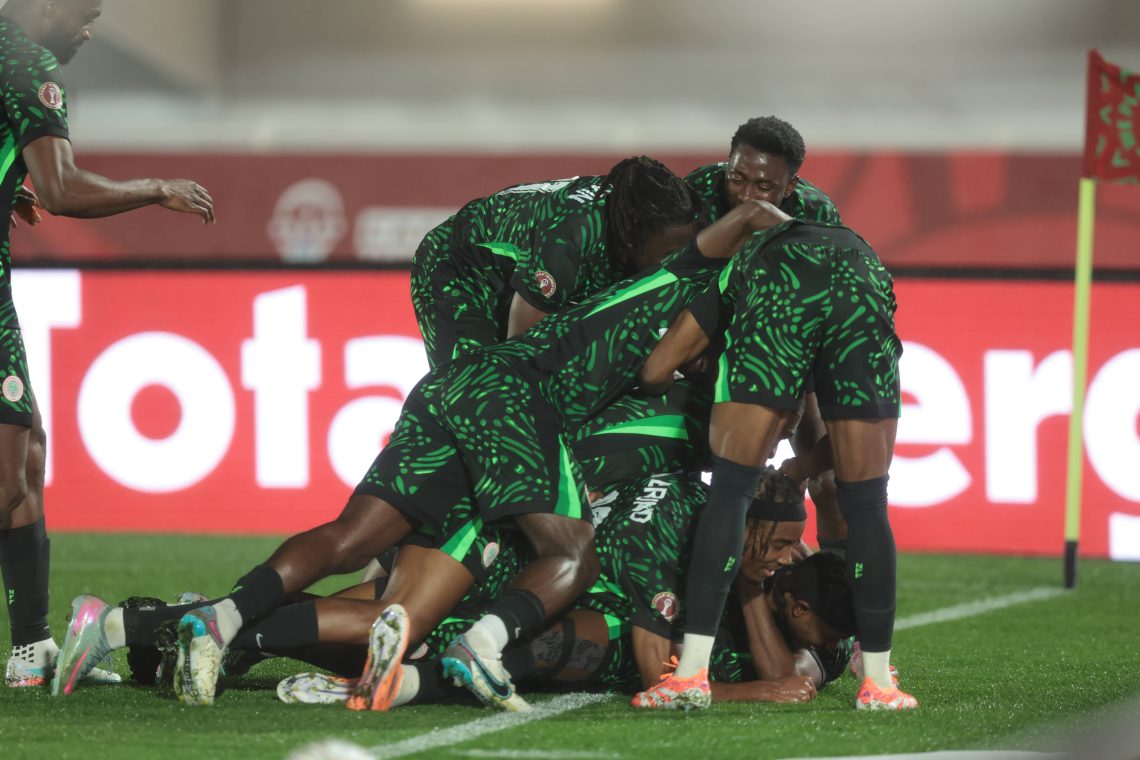
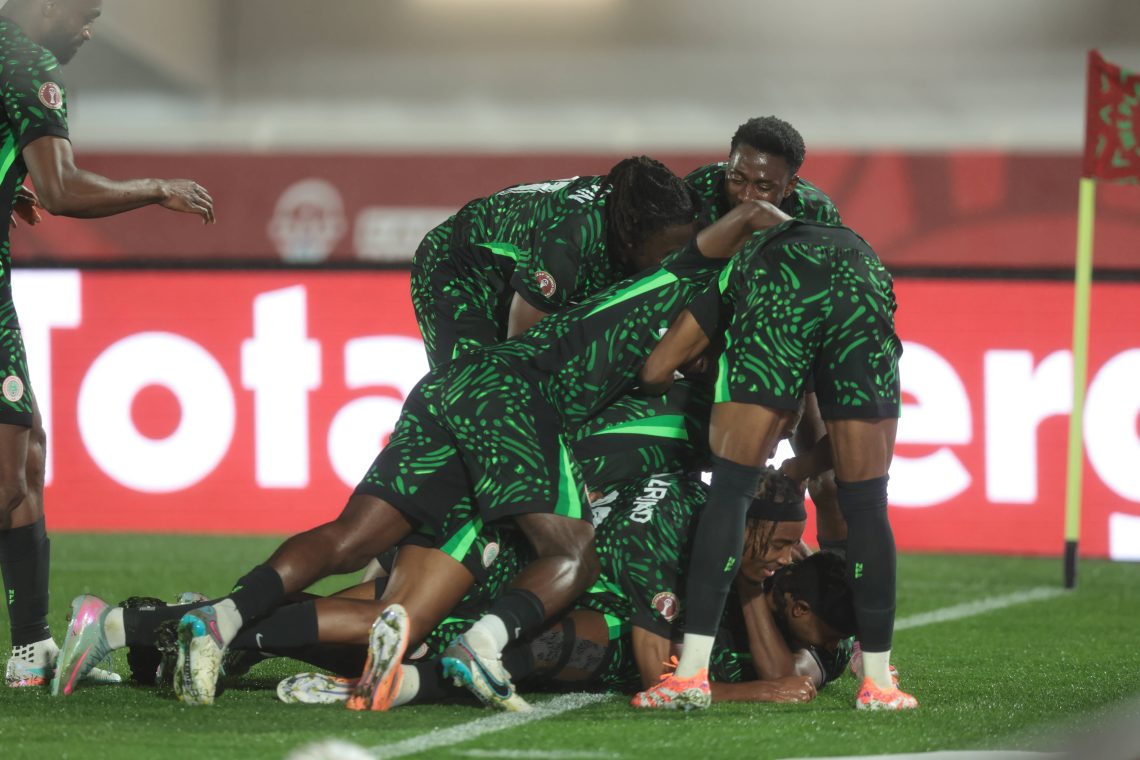
The Nigeria national football team have remained in 26th place in the latest men’s world ranking released by FIFA on Wednesday.
The team, led by Éric Chelle, played two matches in March. They recorded a 2-1 win over Iran national football team and later settled for a 2-2 draw against Jordan national football team.
Despite their results, the Super Eagles remain the third highest ranked team in Africa. Morocco national football team are still the continent’s top side in 8th place, followed by Senegal national football team in 14th.
Advertisement
Algeria national football team and Egypt national football team complete the top five teams in Africa.
At the global level, France national football team have moved to the top of the ranking, replacing Spain national football team.
The next FIFA men’s world ranking is expected to be released on June 10, 2026.
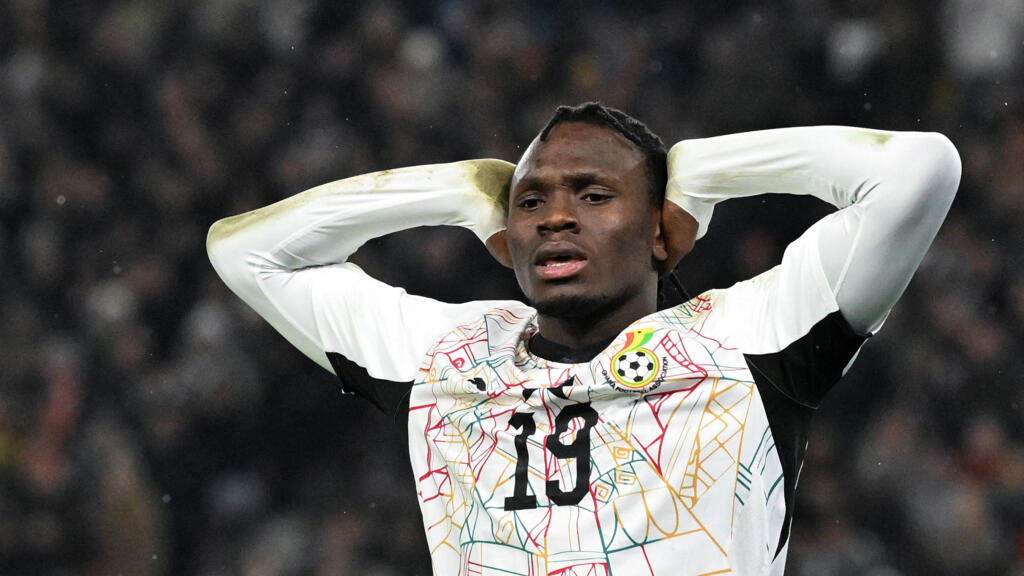
Ghana lost 2-1 to Germany in a friendly match in Stuttgart. Ghana will kick off their World Cup campaign on June 18 against Panama, before facing England and Croatia.
The final piece of the FIFA World Cup puzzle has fallen into place for Canada.
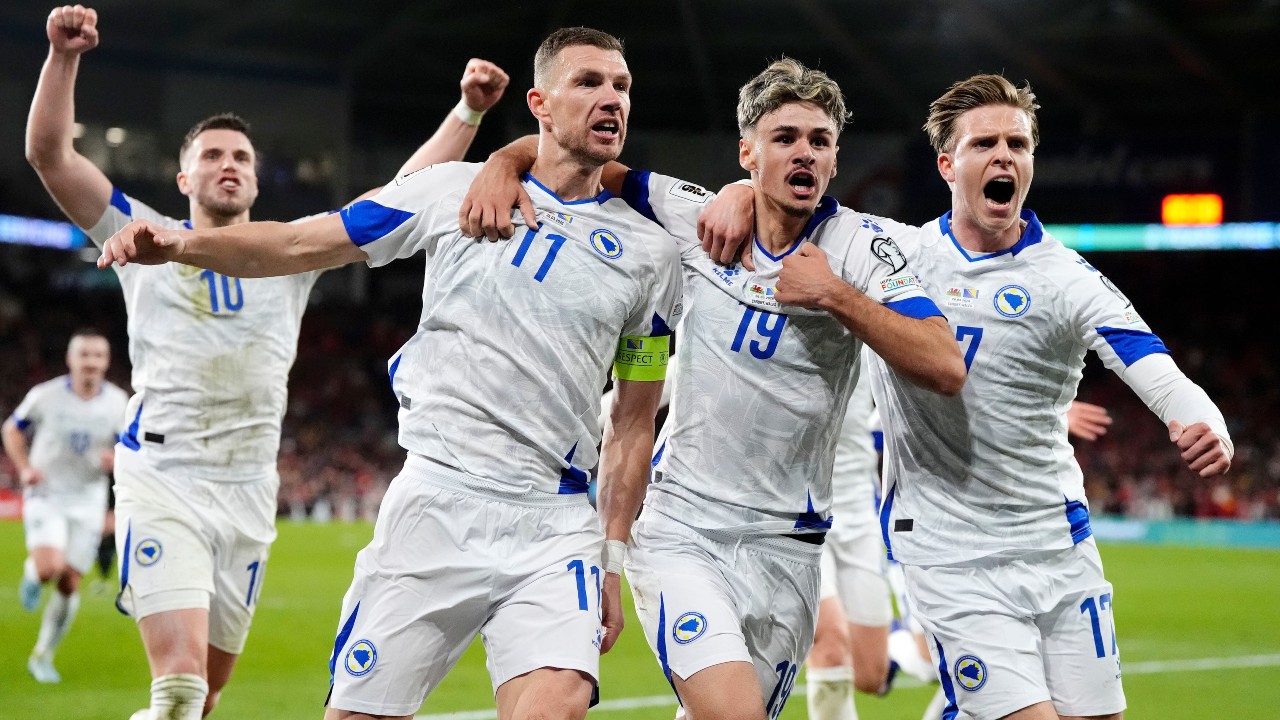
Bosnia and Herzegovina upset Italy on Tuesday in a European playoff to clinch a berth at this summer’s tournament, marking its return to the World Cup for the first time in 12 years.
Canada already knew it would be hosting Qatar on June 18 and Switzerland on June 24 at BC Place in Vancouver in Group B action at the World Cup. Bosnia’s victory over the Italians means Canada will face them in its group stage opener on June 12 at BMO Field in Toronto.
What kind of team is Bosnia? What should Canada expect from their Balkan nation?
Advertisement
Here’s a look at Canada’s first opponent at the 2026 FIFA World Cup.
Nickname: Zmajevi (The Dragons) FIFA world ranking: No. 65 All-time caps leader: Edin Džeko (148) All-time to scorer: Edin Džeko (73) Current coach: Sergej Barbarez
How Bosnia qualified for the 2026 World Cup.
Bosnia posted a 5-2-1 record during the first round, finishing behind Group H winners Austria and beating out Romania for second place, and a spot in Path A of the European Playoffs.
Advertisement
Down 1-0 against Wales in Cardiff, Bosnia was on the verge of elimination when Edin Džeko scored a late equalizer. After a goalless extra time, Bosnia completed the comeback, winning 4-2 on penalties.
The Bosnians trailed 10-man Italy by a goal in the finale of the Path A playoffs before drawing level and then winning 4-1 on penalties to send the hometown fans at Zenica’s Bilino Polje Stadium into a state of delirium.
Bosnia’s World Cup history
Bosnia competed at the World Cup as part of Yugoslavia from 1930 to 1990. The breakup of the country saw Bosnia become an independent country that first took part in World Cup qualifying for the 1998 tournament in France.
Advertisement
After four failed attempts, the Bosnians qualified for the World Cup for the first time in 2014 in Brazil, where they bowed out in the group stage.
The Dragons will be back at the World Cup this summer for the first time in 12 years after failing to qualify in 2018 and 2022.
Scouting report on Bosnia
Canada’s opening match will be a tricky one, considering the form that Bosnia and Herzegovina have been on — seven wins, three draws and only two losses since March 2025. This is also a team that can score and is hard to break down, with 24 goals scored and three clean sheets in that same period.
Advertisement
Although Bosnia has deployed a 4-2-3-1 formation at times, coach Sergej Barbarez tends to rely on a traditional 4-4-2 setup with forward Ermedin Demirović forming an attacking partnership up top with Džeko.
Key to Bosnia’s attacking success are wingbacks Amar Memić and Esmir Bajraktarević, who prefer to deliver dangerous crosses into the penalty area, rather than cutting into the middle off the wing. Typically, Memić and Bajraktarević look to penetrate deep before crossing into the box, where one striker attacks the near post and the other goes towards the back post, thus making life difficult for opposing defenders.
Džeko provides a tall target man (he stands six-feet-four) and is renowned for winning his aerial battles against opposing centre backs. Most of Bosnia’s best scoring chances come off Džeko’s attempts on goal or from his headed passes. How Canadian centre backs Moïse Bombito and Derek Cornelius deal with the Bosnian dangerman will be one of the more important tactical questions that Jesse Marsch’s side will have to answer.
It’ll also be important for Canada to shut down Memić and Bajraktarević and prevent them from supplying crosses into the box. Bosnia is also dangerous from set pieces, so Canada would be well advised to limit the number of fouls they commit in and around the box.
Advertisement
Bosnia’s major weakness is its lack of experience. Džeko has 148 caps for his country, but only three other players on the squad who took part in this month’s pair of qualifying matches have played in 30 games for their country. The overwhelming majority of players on the roster have fewer than 20 caps. That lack of experience often leads to inconsistent performances across 90 minutes.
And while Džeko is an experienced campaigner who is capable of conjuring a magical moment, the team is far too reliant on him; it lacks variation in its attacking play and fails to provide consistent support for the veteran striker.
Most recognizable name on Bosnia’s team
At 40 years of age, Edin Džeko is still going strong for Bosnia.
Advertisement
The veteran striker was his country’s top scorer during European qualifying with six goals, accounting for over one-third of his country’s offence.
Džeko has a wealth of experience at international and club level, having previously turned out for some of Europe’s top outfits, including Manchester City and Inter Milan. He’s currently playing for FC Schalke 04 in Germany’s second division.
What Canada is saying about Bosnia
“Their players grew up in a war-torn country, and a lot of them were lucky to escape, found their ways to different countries. I coached Amar Dedić (at Red Bull Salzburg) — his family moved to Austria and had to find a new life there,” said head coach Jesse Marsch. “So, these players have been through a lot in life, and I think it really served them well in the (European playoffs) where they were in difficult situations.
Advertisement
“I have a lot of respect for what Bosnia has achieved, what those people have been through, what those players have been through, and I’m happy for them to be at the World Cup. I know we’re in for a really difficult first match.”
Midfielder Ismaël Koné added that “to be fair, Bosnia is a very good team. I didn’t know this was their level. I’m very surprised Italy didn’t go through. I thought with the experience they have, with the high-quality players they have, by now, after missing two World Cups, they would be here, but you know, it’s football.”
Winger Liam Miller noted that while watching the game against Italy, “you could tell Bosnia were a good team. They had more passes, obviously. I know Italy had a red card. But even before Italy got their red card, I felt like (Bosnia) were the better team in the game. So, they’re a good team. We can’t underestimate them. They’re going to come here with energy.”
Goalkeeper Maxime Crépeau echoed those sentiments, saying “Bosnia was pretty much the team that was most in form (in Path A) of the four that could have been a possibility (for Canada). It’s going to be a very tough opponent.”
Advertisement
Editor’s note
John Molinaro is one of the leading soccer journalists in Canada, having covered the game for over 27 years for several media outlets, including Sportsnet, CBC Sports and Sun Media. He is currently the editor-in-chief of TFC Republic, a website dedicated to in-depth coverage of Toronto FC and Canadian soccer.
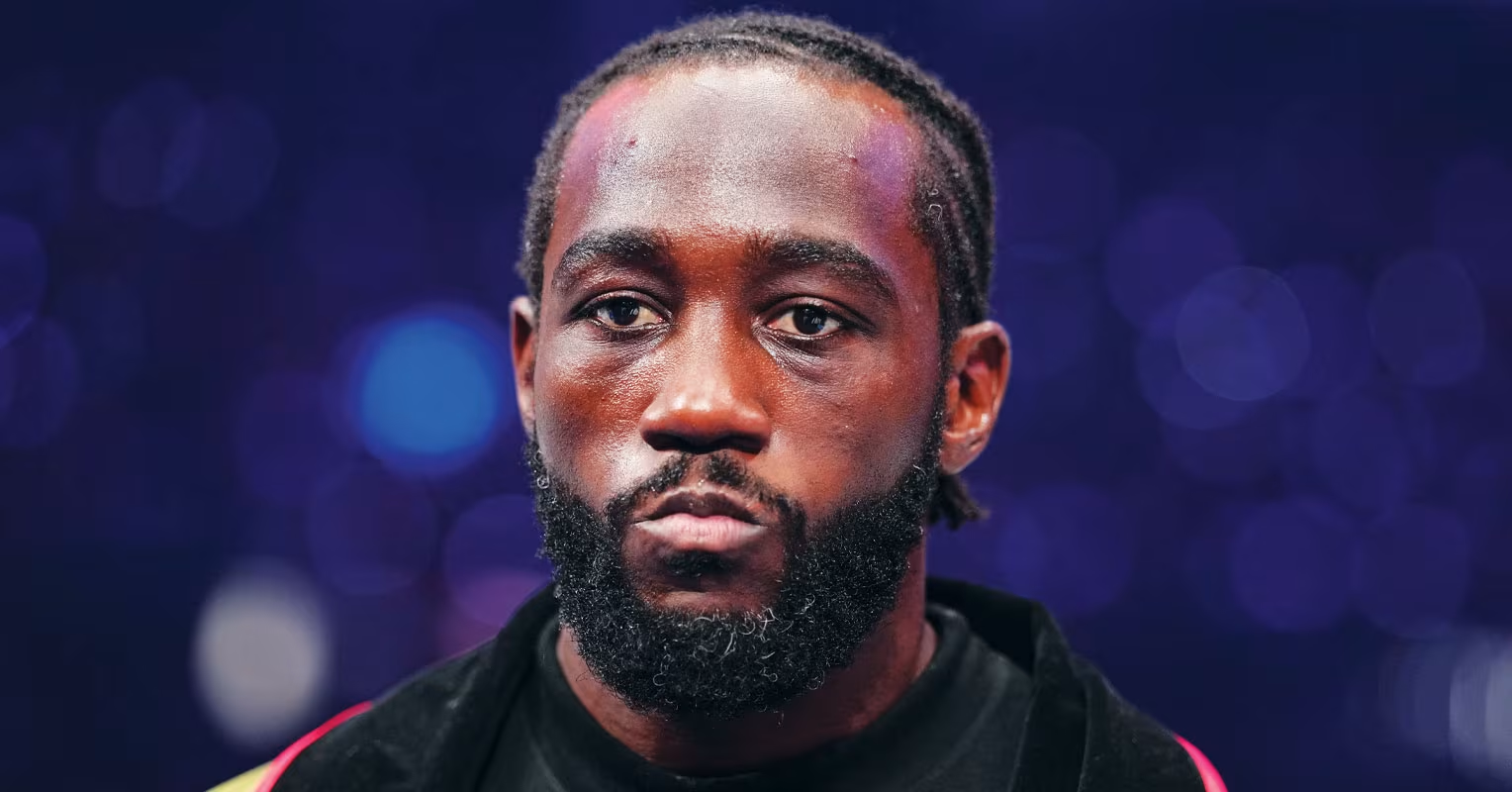
Famed for his willingness to fight and his desperation for legacy, Terence Crawford retired as an undefeated pound-for-pound great just a few months ago.
However, when reflecting on his career, there is one opponent whom ‘Bud’ wishes he could have fought.
Crawford became boxing’s third four-belt undisputed champion when he trumped Julius Indongo to take control of all four titles back in August 2017, before repeating the feat up at welterweight six years later with a dominant beatdown of Errol Spence Jr.
Advertisement
Last September, Crawford then made the sizeable jump up to super-middleweight, where he dethroned long-reigning 168lb superstar Canelo Alvarez to become the first three-division undisputed titleholder since Henry Armstrong in 1938.
Soon after, the Omaha operator announced his retirement from the sport, hanging up the gloves with a record of 42-0 at the age of 38 years old.
Despite all of his success, Crawford admitted that the man he most wishes he could have fought is boxing’s only eight-division champion, Manny Pacquiao, in a clip captured by Jai McAllister.
“Pacquiao, for sure. 1000%.
Man, I tried to fight Pacquiao for [so long]. That was a fight that I was chasing for years, since I was 140lbs.
Advertisement
“To see him fight [Adrien] Broner, Tim Bradley, Keith Thurman and all of those fights. I was like, man, what is going on. These guys is not [on my level].
“I am [up] here, [on a level above,] and he was fighting these guys. I just couldn’t understand it.”
While Crawford has retired, Pacquiao remains active, still competing at 47.
The 2026 Augusta National Women’s Amateur begins Wednesday morning with the first round at Champions Retreat in Georgia. Here’s everything you need to know to watch the tournament on Wednesday, including full Augusta National Women’s Amateur TV coverage, streaming info and Round 1 tee times.
How to watch ANWA on Wednesday
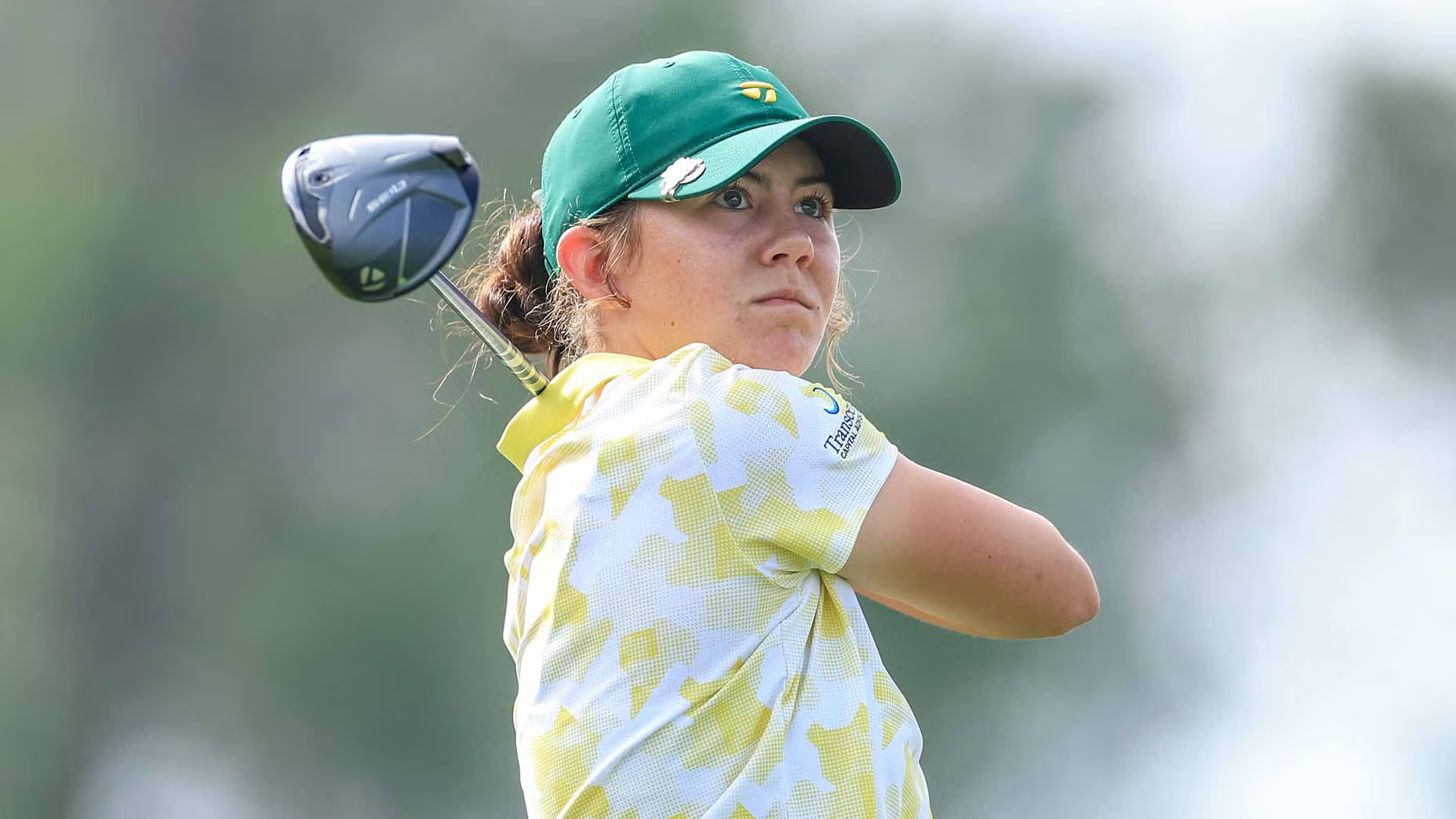
American amateur star Asterisk Talley is only 17 years old, but she’s already become a fixture at the Augusta National Women’s Amateur. First, she finished 8th in her ANWA debut in 2024. Then last year, Talley came oh-so-close to claiming the title, finishing one shot short of 2025 ANWA champion Carla Bernat Escuder.
Now ranked No. 10 in the women’s world amateur ranking, Talley is hoping this week’s event sees her finally lift the tophy on Saturday at Augusta National.
But first, Talley and the rest of the 72-player field, which features two former Augusta National Women’s Amateur winners, have to contest the first and second rounds at Champions Retreat to earn the right to compete at Augusta this weekend.
Advertisement
NEWSLETTER
Sign up for GOLF’s Top Stories Newsletter!
Get the latest golf news and our most-read stories delivered to your inbox daily!
And the action gets started Wednesday morning with Round 1.
You can watch the first round of the Augusta National Women’s Amateur on TV via Golf Channel, which will air coverage beginning at 1:30 p.m. ET on Wednesday. You can also watch a live simulcast Golf Channel’s TV coverage via ANWA.com.
Below you will find everything you need to know to watch the first round of the 2026 Augusta National Women’s Amateur.
How to watch on TV Wednesday
Golf Channel will air first-round TV coverage of the 2026 Augusta National Women’s Amateur on Wednesday from 1:30-3:30 p.m. ET.
Advertisement
How to stream online Wednesday
You can stream the first round of the 2026 Augusta National Women’s Amateur via Peacock and ANWA.com, both of which will offer live simulcasts of Golf Channel’s Wednesday TV coverage.
2026 Augusta National Women’s Amateur Round 1 tee times for Wednesday (ET)
Tee No. 1
8:00 a.m. – Brooke Biermann, Ai Goto, Emily Odwin 8:12 a.m. – Rocio Tejedo, Catherine Rao, Charlotte Back 8:23 a.m. – Grace Kilcrease, Vanessa Borovilos, Yurina Hiroyoshi 8:35 a.m. – Huai-Chien Hsu, Catherine Park, Dianna Lee 8:46 a.m. – Nikki Oh, Raegan Denton, Elise Lee 8:58 a.m. – Seojin Park, Mackenzie Lee, Clarisa Temelo 9:09 a.m. – Prim Prachnakorn, Sara Brentcheneff, Chloe Kovelesky 9:21 a.m. – Amanda Sambach, Arianna Lau, Elizabeth Rudisill 9:32 a.m. – Marie Eline Madsen, Jasmine Koo, Camille Min-Gaultier 9:44 a.m. – Kiara Romero, Andrea Revuelta, Eila Galitsky 9:55 a.m. – Soomin Oh, Rianne Malixi, Megha Ganne 10:07 a.m. – Tsubasa Kajitani, Lily Reitter, Reagan Zibilski
Tee No. 10
Advertisement
8:00 a.m. – Andie Smith, Eunseo Choi, Aira Nagasawa 8:12 a.m. – Paula Martin Sampedro, Maria Jose Marin, Anna Davis 8:23 a.m. – Patience Rhodes, Asterisk Talley, Aphrodite Deng 8:35 a.m. – Megan Streicher, Megan Propeck, Kary Hollenbaugh 8:46 a.m. – Avery Weed, Veronika Kedronova, Beth Coulter 8:58 a.m. – Louise Landgraf, Karen Tsuru, Katelyn Kong 9:09 a.m. – Bailey Shoemaker, Gyubeen Kim, Amelie Zalsman 9:21 a.m. – Anna Fang, Anna Iwanaga, Ava Merrill 9:32 a.m. – Ashley Yun, Macy Pate, Yunseo Yang 9:44 a.m. – Meja Örtengren, Cayetana Fernandez Garcia-Poggio, Farah O’Keefe 9:55 a.m. – Scarlett Schremmer, Lauren Kim, Yujie Liu 10:07 a.m. – Kyra Ly, Achiraya Sriwong, Kelly Xu
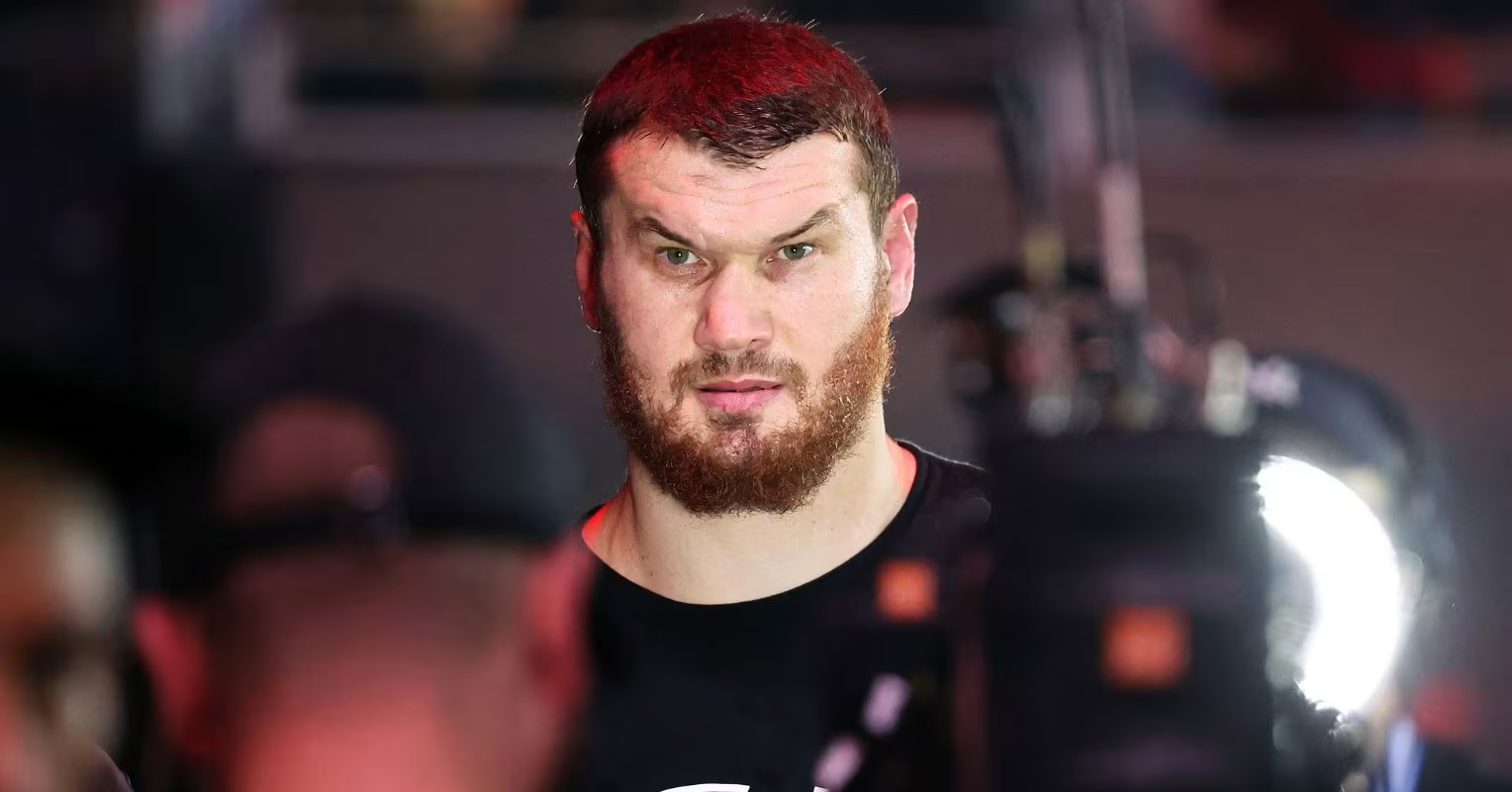
Arslanbek Makhmudov has the chance to re-establish his reputation as a man to avoid in the heavyweight division as he takes on two-time world champion Tyson Fury next weekend. After a successful training camp, his coach Marc Ramsay believes the Russian is well prepared to pull off the upset.
An amateur standout with fearsome punching power, Makhmudov had been recognised as something of a divisional boogeyman throughout much of his professional career, with many heavyweight rivals unwilling to risk a fight with the Mozdok-born contender.
That changed in December 2023, when the previously overlooked Agit Kabayel produced a stunning stoppage win in Riyadh to hand Makhmudov his first career defeat. Makhmudov bounced back with another early finish, but was then halted by Guido Vianello in August 2024 – a loss which led many to question his standing in the division.
Advertisement
Since then, Makhmudov has had a point to prove, looking to show that those defeats were setbacks rather than a sign of decline, and that he remains a dangerous contender at the top level.
Recent victories over Ricardo Brown (TKO 1) and Dave Allen (UD) are his only consecutive wins since suffering that first defeat and, ahead of a fight with Fury – who returns from a 16-month retirement – Makhmudov appears to have regained his confidence.
Speaking exclusively to Boxing News, head trainer Marc Ramsay admitted that the opportunity to face ‘The Gypsy King’ came as a surprise, but one that the 36-year-old simply had to take.
“Everything is going very good. We have had a very good training camp here in Montreal, lots of different sparring partners and a lot of challenges. To be honest, this is a fun fight for us, it is a fight that we didn’t expect at all.
“We are going there to challenge, we have no pressure, nothing to lose, just everything to gain. We can feel an atmosphere in the training camp, we are enjoying this moment.”
Advertisement
“We have already fought good boxers, but after the last win with Arslanbek, we created a little bit of publicity. We didn’t expect a fight like this. They offered us the fight and it was a no-brainer for us – especially with the age of Arslanbek, we want to go and try for real.”
Ramsay also noted a renewed sense of motivation in camp.
“The motivation is better. Arslanbek always has a good work ethic but you can feel that extra push from the team and from the boxer.”
Continuing, Ramsay highlighted that the fight with Allen was ideal preparation for this clash with Fury, allowing Makhmudov to experience being the away fighter and deal with a hostile and vocal UK crowd.
Advertisement
“That Dave Allen fight was a really good experience and I found that as a coach myself. You can talk about the feeling of the crowd in the U.K., but you have to live it to understand exactly what it is and how passionate the fans are.
“To go there, to win there, to feel the atmosphere was fantastic. We understand that there is going to be a big crowd again, but it is about preparing the boxer mentally for those things.”
“[It was also] the first time reaching 12 rounds. We focused a lot on that in sparring during training camp. Even for 10-round fights in the past, we always prepare for 12.
“But to do that in the gym every day and to do it in competition are two different things and I am very happy that he has had that experience before we go into this kind of fight.”
Preparing for Tyson Fury, however, brings its own challenges. Standing at 6’9” with a unique style, the Brit is difficult to replicate in sparring, particularly given the uncertainty surrounding his form after a lengthy lay-off.
Advertisement
Ramsay explained that the approach has been to break Fury down into individual attributes and replicate them collectively in camp.
“You cannot find sparring partners who are going to be that good – Fury is at the top of the division. What you need to do is isolate a little bit of the technique he brings, a little bit of the size, and with a couple of sparring partners you can work on those qualities. That is the way to prepare for this kind of challenge.
“He could be a little bit rusty, but we have to prepare for the best version of Tyson Fury that we have seen. We have looked at almost all of his fights as a professional and we expect him to show his quality.
“He already looks leaner than he did for his fights with Ngannou and Usyk, so I believe he will show up in good shape and we are prepared for him.”
Despite Fury reportedly training himself for his return, Ramsay has no issue with that approach.
Advertisement
“I have no problem with that. A lot of people speak against it, but with the experience he has, he knows what he is doing.
“Sometimes we overanalyse the role of a coach. Of course, he will have people around him to help with certain things, but we are focused on what we are doing here in Montreal, not on what he is doing.”
For the fight itself, many believe Makhmudov’s best chance lies in his power, particularly early on. Seventeen of his 19 knockouts have come inside the opening three rounds, and Fury could be vulnerable before settling into the contest.
Ramsay, however, insists that Makhmudov’s power will be present throughout.
“Arslanbek can carry his power deep into the fight. He can generate it early, but also in rounds eight, nine, ten – it is not a problem.
“He has the experience to manage things round by round, but at some point we are looking to land that shot – and we have plenty of time to do it in a 12-round fight.”
Advertisement
Team Makhmudov will travel to London this weekend as they prepare for the opportunity of a lifetime, hoping to make a major statement in the heavyweight division – and force further questions about Fury’s future in the sport.
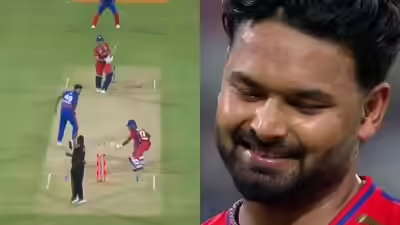
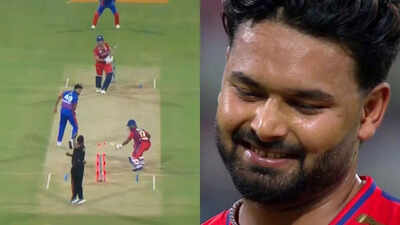
NEW DELHI: Lucknow Super Giants skipper Rishabh Pant endured a frustrating start to his opening experiment as Lucknow Super Giants took on Delhi Capitals in their first IPL 2026 clash on Wednesday, with a bizarre run-out cutting short his innings.The incident unfolded in the third over when Mukesh Kumar delivered a full ball that Mitchell Marsh struck firmly back towards the bowler. Mukesh got a fingertip to the ball in his follow-through, inadvertently deflecting it onto the stumps at the non-striker’s end.
Watch
Angkrish Raghuvanshi focused only on team’s wins
Pant, who had backed up too far, was caught well short of his crease with no chance of recovery. Visibly disappointed, he walked off without waiting for the third umpire’s confirmation after scoring 7 off 9 balls.Watch:Pant’s early dismissal dealt a blow to LSG’s strategy, as the team had opted to promote him to the top in a bold tactical move. The wicket also validated Delhi’s decision to bowl first after Axar Patel won the toss, expecting assistance from the fresh surface.Earlier, Axar explained the call, citing potential help for bowlers in the powerplay despite data favouring teams batting first. Delhi fielded a balanced XI featuring the likes of KL Rahul, David Miller and Kuldeep Yadav, while LSG relied on a strong overseas core including Marsh, Nicholas Pooran and Anrich Nortje.Adding to the talking points, Arjun Tendulkar remained absent from both the playing XI and the bench despite being part of LSG’s squad this season.With Pant’s gamble backfiring early, the contest quickly tilted in Delhi’s favour in the opening exchanges.
LSG vs DC Playing XI
Lucknow Super Giants (Playing XI): Aiden Markram, Mitchell Marsh, Nicholas Pooran, Rishabh Pant(w/c), Ayush Badoni, Abdul Samad, Mukul Choudhary, Mohsin Khan, Mohammed Shami, Anrich Nortje, Prince YadavLucknow Super Giants Impact subs: Digvesh Rathi, Avesh Khan, Himmat Singh, Shahbaz Ahmed, Akshat RaghuvanshiDelhi Capitals (Playing XI): KL Rahul(w), Pathum Nissanka, Nitish Rana, Axar Patel(c), Tristan Stubbs, David Miller, Vipraj Nigam, Lungi Ngidi,Kuldeep Yadav, T Natarajan, Mukesh KumarDelhi Capitals Impact subs: Ashutosh Sharma, Auqib Nabi, Sameer Rizvi, Dushmantha Chameera, Karun Nair














































You must be logged in to post a comment Login