Jack Floydd, this week at the Le Vaudreuil Golf Challenge, walked over 28,000 yards worth of course.
And he rode a train about 400 miles.
“Very eventful, yeah,” he said.
In the end, Floydd tied for 44th at the event on the HotelPlanner Tour, the circuit below the DP World Tour. But the events that got him to that point were, as he said, “eventful.” After two rounds, he had been at even par at Golf PGA France du Vaudreuil golf course in Le Vaudreuil, France, and, believing his week was done, the Englishman boarded the bullet train back home.
Advertisement
Of course, this site probably wouldn’t be writing about a basic missed cut.
“So we just had to go to England because there’s no way we could get out. And then we got off, we literally got onto the motorway, did a U-ey at the first junction and back to France.”
From there, he returned to France at about 1 a.m. on Saturday, and he was able to rebook a room at the hotel where he had been staying. “They had rooms available so I went straight back and checked back in,” Floydd told the HotelPlanner Tour.
Advertisement
“So yeah, been a bit crazy.”
During his third round on Saturday, things started rough, with double bogeys on his second and fifth holes and a bogey on his sixth, before he played four-under golf from there. Floydd followed that one-over round with a two-under 70 during Sunday’s final round, which included a pair of eagles — a three on a par-5, and a hole in one on a par-3.
Is Floydd the first golfer to misjudge his fate? Of course not. Memorably, Bryson DeChambeau thought he, too, had missed the cut at the 2021 Wells Fargo Championship on the PGA Tour, and in his case, he flew from Charlotte, N.C., to his home in Dallas — only to fly back early the next morning.
DeChambeau ended up finishing tied for ninth.
Advertisement
“It was worth it. It no doubt was worth it,” he told ESPN at the time. “That’s what I was hoping to do this weekend when I was on that plane at 2:45 a.m. [Saturday]. Yeah, I wanted to make it worth it. I didn’t want to come out here and finish 60-whatever, close to last.”
Obstacle course racing (OCR) has become a popular adventure sport for fitness enthusiasts. The unique race combines running and multiple physical obstacles, testing the strength, agility, balance, and resilience of participants.
Some of the popular obstacle course races include Spartan Race, Devil’s Circuit, and Tough Mudder. These events attract thousands of athletes annually.
The sport demands a lot more than just cardiovascular endurance. Athletes have to face challenges like climbing ropes, crawling under barriers, carrying heavy objects, and navigating uneven terrain. Obstacle course races need a proper training approach that focuses on various aspects.
Basics are key for new athletes and also for those looking to improve their performance. Let’s take a look at three basics every obstacle athlete should know.
Advertisement
#1 Training obstacle-specific skills
Many beginners tend to ignore obstacle-specific training. However, athletes may struggle if they have never trained for common obstacles before race day. Learning techniques for common obstacles can make a substantial difference.
Participants must practice obstacles such as rope climbs, wall climbs, and monkey bars, along with balance and crawling drills. They should also learn how to maintain composure in case of a failed attempt at an obstacle. Moving on to the next obstacle quickly without thinking about the previous mistakes is the ideal strategy.
Advertisement
#2 Developing functional strength
Athletes need to use their entire bodies in obstacle course racing. Functional strength is one of the most important factors, especially for obstacles such as wall climbs, rope climbs, and monkey bars.
Exercises like pull-ups, push-ups, farmer carries, lunges, squats, and kettlebell movements help prepare the body for common race obstacles. The grip strength is another crucial aspect. Some obstacles could feel more challenging due to fatigue.
#3 Building a strong endurance base
With obstacle races typically covering several kilometers and featuring multiple obstacles, maintaining energy is as important as pace. Several athletes start well, but their performance dips towards the end due to fatigue.
New athletes should work on building aerobic fitness through regular running. Combining long-distance runs and interval training can help improve stamina and recovery.
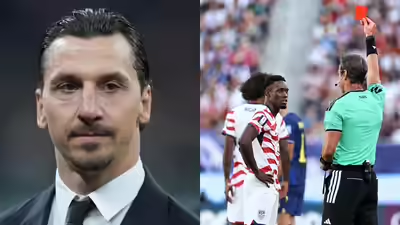
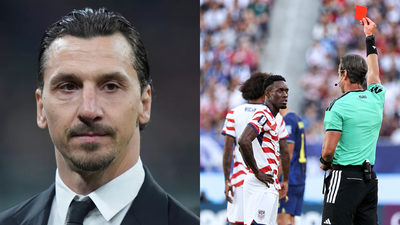
Zlatan Ibrahimović faced criticism after supporting FIFA’s decision to let Folarin Balogun play against Belgium despite his red card suspension
Zlatan Ibrahimović has come under fire after publicly supporting FIFA’s controversial decision to suspend the one-match ban handed to United States striker Folarin Balogun, allowing him to face Belgium in the FIFA World Cup Round of 16. The decision, announced just days after Balogun’s straight red card against Bosnia and Herzegovina, has sparked a major controversy across football, with reports suggesting political pressure may have influenced the outcome. The situation intensified after Donald Trump publicly claimed that he personally contacted FIFA president Gianni Infantino to request that the decision be overturned, with allegations of political interference quickly spreading and fuelling widespread debate about FIFA’s independence and integrity. While FIFA has insisted the ruling was made independently, the timing of the decision and Trump’s own comments have only increased scrutiny.
FIFA overturns Balogun suspension before Belgium clash
Balogun had been expected to miss the United States’ Round of 16 meeting with Belgium after receiving a straight red card in the 64th minute of the Americans’ 2-0 victory over Bosnia and Herzegovina.The Arsenal striker, who had already opened the scoring before being dismissed for a challenge on Tarik Muharemović, automatically incurred a one-match suspension under FIFA’s competition regulations.However, FIFA later announced that the sanction would not be enforced immediately.In a statement, world football’s governing body said:“In line with Article 27 of the FIFA Disciplinary Code, the implementation of the match suspension is suspended for a probationary period of one year.”The decision means Balogun, who has scored three goals and provided three assists across the tournament, remains available to face Belgium as the United States chase a first World Cup quarter-final appearance since 2002.
Ibrahimović backs FIFA’s decision
Working as a pundit for FOX Sports during the World Cup, Ibrahimović welcomed FIFA’s intervention and argued that Balogun should never have been dismissed in the first place.“What I want to say is I’m happy for the US,” Ibrahimović said.“Like Thierry said, first of all he should not have had a red card, then this decision should have come quicker.“But I’m happy for the US team because they have been amazing, but Balogun has been super amazing and with him it’s an extra force.”His comments quickly divided opinion online.One supporter wrote: “These guy’s aren’t allowed to criticise FIFA. This is blatant home cooking.”Another posted: “Zlatan fakes this big macho persona constantly but look at him with zero spine on live television when it actually matters.”
Advertisement
Henry agrees with the outcome but questions the timing
Ibrahimović’s fellow FOX Sports analyst Thierry Henry also maintained that Balogun should not have been sent off, but stressed that FIFA’s delayed decision had unfairly affected Belgium’s preparations.“Yeah, that’s exactly what it is for Belgium, the breaking news,” Henry said in a video shared by FOX Sports on X.“That must have broken their spirit a tiny bit because you also prepare the game to play a certain way and then suddenly you have to change your preparation of the game.“This is also what it does when you do something like that. Three, four days to take a decision.”Henry reiterated his belief that the original dismissal was incorrect.“Now we need to go back to the point. I do not think it was a red card, and we all said it. We all know that it was not… he didn’t do that on purpose.”He nevertheless acknowledged the disruption created by FIFA’s late intervention.“I have to say that if you’re Belgium, to prepare the game, it does change everything.”Henry added that while similar situations may have occurred previously, referencing Garrincha’s case from decades ago, the central issue remained the timing rather than the final verdict.“I was kind of like okay, it is the right call, but why so late?”
Neville, Keane and Wright condemn FIFA’s handling
The reaction on ITV Sport was considerably more critical, with Gary Neville, Roy Keane and Ian Wright all questioning both the process and FIFA’s consistency.Keane said:“It seems unfair because it is unfair.“You’ve got to look at the opposition team in terms of their preparation and it seems like a bit of a pal’s act shall we say.”Neville reserved his strongest criticism for FIFA itself.“It absolutely stinks, let’s be really clear.“The thing that stinks the most is there should be a review process in place because I actually didn’t think it was a red card.“I think there should be a process which allows it to be overturned, but if there’s no process for it to be overturned and then somehow FIFA, from nowhere, have decided to basically let a player play… and the rules are the same for everybody.“I would be absolutely raging if I was Belgium and every other team in the tournament that’s had a player sent off that might think it’s a little bit hard done by.“Do you know something? Are we surprised? No, not with this lot.”Wright also questioned the integrity of FIFA’s handling of the incident.“Suspensions are meant to be served during the tournament.“This one being suspended, it doesn’t normally happen, but we’re talking about integrity, people talking about transparency, but you look at some of the things that have happened at this tournament with certain teams… it’s shameful, especially as he’s an American player.“Whether he’s guilty of what he done, whether we think he should have got the red card or not, some of the things that have happened at this World Cup have been shameful.”With Belgium already exploring its legal options over the decision and criticism continuing from across the football world, Balogun’s availability has become one of the tournament’s most contentious talking points before the Round of 16 clash in Seattle.
True to form, Cameron Young arrives early and well prepared.
Our production crew is finishing its setup behind the clubhouse at Dutchman’s Pipe, a well-to-do West Palm Beach golf club just a few miles south of Young’s home, when the cover star himself, the third-ranked golfer in the world, pulls up in a cart and offers a wave to our photographer. He looks more casual than we’re accustomed to seeing him at Tour events, wearing an unbuttoned white polo untucked over gray shorts. Several hangers swing from the back of his cart.
“I brought options,” he says sheepishly, gesturing to a handful of logoed golf shirts and checked button-downs. He hops from the cart and shakes hands with each member of the GOLF team. For the next couple hours, he’s engaged and engaging — direct and forthright through a photo shoot, a sit-down chat and a one-sided battle with a bucket of balls.
That Young is here at all is an encouraging sign for those of us intrigued by his game and what makes him tick. His first several years on Tour were marked by a Teddy Roosevelt — like approach to the media and his on-course performance, speaking softly and carrying a big stick while leaving us to guess the rest. We got to know him, in part, from what we saw on TV — the beard, the game-time scowl, the prodigious power, the trademark pause at the top of his backswing — but not much else. Young seemed, from the outside, a reluctant star, notably declining to create even an Instagram account — almost unheard of in this multi-platform, brand-building era.
Advertisement
So who is Cameron Young? Let’s start here: He was born in New York’s Westchester County and now lives in Palm Beach Gardens, Fla. He doesn’t care if you call him Cameron or Cam. He and his wife Kelsey have two boys and a girl. They travel just about everywhere together. He’s quicker to smile in real life than in competition (or photos). His teammates at Wake Forest included Will Zalatoris and Alex Fitzpatrick. He’s sponsored by Major League Baseball but doesn’t watch much Major League Baseball. His first pro tournament win came as an amateur, at Bethpage Black, at the 2017 New York State Open. Last year he became the 1,000th unique winner in PGA Tour history. Before the biggest drive of his life, he gave himself the first pep talk of his life. As he hit the biggest one-foot putt of his life, he couldn’t feel his hands.
Thanks to his series of breakthroughs on the game’s biggest stages — his long-awaited first Tour win at the 2025 Wyndham; a starring role a month later at the Ryder Cup; victory at this year’s Players and a validating follow-up win at the Cadillac Championship; his ascent to World No. 3 — something has changed.
He’s being asked better questions and giving more interesting answers. The door has cracked open a bit wider, offering glimpses of the 29-year-old on the rise, of where he came from and how he now finds himself among the game’s elite.
Young poses for photos at Dutchman’s Pipe in West Palm Beach, Fla.
Michael Schwartz
YOUNG’S ORIGIN STORY will make you nostalgic for a childhood you never even had. You can picture how he would have looked: the little kid at the big golf club, chasing his ball into the fading sun, not a care in the world besides impending dusk, night after night after night.
Advertisement
“It was a dream place to grow up,” Young says.
That dream place was Sleepy Hollow Country Club, where his father, David, took the head pro job when his son was three or four.
“By that point, I already loved going out there and smacking it around.”
Sleepy, as it’s known, is a landmark club just north of New York City, famous for its Golden Age course design, Vanderbilt-mansion clubhouse and entrancing Hudson River views. It’s rarefied turf, but Young felt welcomed from the start. His father or his mother (Barbara, an accomplished player too) would take him out to play nearly every evening, and he could chase to his heart’s content.
Advertisement
About a decade into his dad’s tenure, the family moved on property, into a house off the fourth hole of Sleepy’s nine-hole short course. Cam developed a ritual: He’d take the train home from school, change into his golf clothes and head straight out.
“I’d get out on the course as much as I could, especially late in the afternoon — see how many holes we could play,” he says. “It’s one of the most beautiful pieces of [land] you could ever find.”
He continues to get membership emails. That’s how he knows about the occasional watch parties and clubhouse meetups supporting the kid who climbed to the top — even as every rung of the ladder brings a reminder that he’s not that kid anymore.
Cameron and his father, David.
Courtesy Cameron Young
Advertisement
A YEAR AGO AT THIS TIME, Young’s career was still defined — at least publicly — by what he hadn’t quite accomplished. He’d jacked up expectations with a red-hot rookie year in 2022 but still hadn’t been able to win a PGA Tour event. Sure, he’d almost gotten across the line, dating back to that Rookie of the Year campaign and its extremely near-misses at the PGA Championship and Open Championship as part of a season with seven top-three finishes. But no dice. He also hadn’t made a Ryder Cup team, and even that omission barely registered. When the 2023 U.S. team was announced, the spotlighted snub in Netflix’s Full Swing was Keegan Bradley, who’d finished 11th in qualifying, while Young, 9th in the standings, was passed over with significantly less fanfare.
By those lofty standards, he floundered in the years that followed, sliding from top 15 in the world to outside the top 50. By early 2025, he was off the Ryder Cup radar for Bethpage Black, the course and career goal he’d circled since high school.
But then he made changes — some essential, others sharpened by experience — that added up to something special.
Young changed caddies. After shuffling through a series of more established loopers, he passed his bag to Wake Forest pal Kyle Sterbinsky.
Advertisement
“Some of it is just grinding through tougher times and finding better ones,” Young said at the time. “[Kyle is] one of my best friends, a college teammate, and he’s great at reading greens.” Whatever the alchemy, the results were immediate: his putting stats soared, as did his iron play — and his scores dropped accordingly.
Young changed ballflights. Rather, he committed to a single ballflight. Instead of adjusting from shot to shot, he decided to lean into the draw he’d grown up with around Sleepy, a return to his swing DNA. “You watched Tiger in his prime and he hit all of them. Every shot,” Young says. “And, in theory, if you want to be as good as you can be, you want to be able to hit every shot. But for most people, it probably just isn’t practical.”
Young tweaked his mindset too, choosing to think bigger picture and stating plainly his intention to make the Ryder Cup team at Bethpage. With that as his North Star, everything else found its place.
Finally, he changed his golf ball, putting a mysterious Titleist Pro V1 prototype into play ahead of the 2025 Wyndham, which immediately helped him flight the ball better and control his distance accordingly. It had the desired effect. In his first week with the new rock, Young won the event by six strokes, putting an emphatic end to the chatter about his conspicuous winless streak on Tour.
Advertisement
To hear him describe it, it all was a massive relief.
“It was nice to just not have it be the conversation anymore,” Young says.
Young has vaulted to No. 3 in the World Ranking.
Michael Schwartz
THAT FIRST TOUR TRIUMPH proved to be a springboard. Young finished fifth the following week, 11th a week later and T4 at the 2025 Tour Championship, earning a Ryder Cup captain’s pick in the process.
He acquitted himself so well in the first two days at Bethpage that U.S. captain Keegan Bradley sent him out first in Sunday singles in front of his New York faithful. He finished a back-and-forth showdown against Justin Rose with a must-make birdie putt on the 18th green for a 1-up victory and the biggest fist pump of his golfing life, knowing he’d toppled the first domino in a rowdy comeback that the U.S. side nearly pulled off.
Advertisement
“It was maybe more rewarding, in a sense, to make the putt on Sunday knowing that there was another guy behind me and one behind him and another one behind him,” Young says, remembering the momentum. His 3-1-0 record was Team U.S.A.’s best.
In early 2026, Young picked up where he left off in 2025, finishing T7 at Riviera and T3 at Bay Hill before unleashing late heroics at TPC Sawgrass, where he chased down Sunday’s leaders, birdied the island par-3 17th, stepped to the terrifying 18th tee with a pep talk to himself — I’m going to hit the best shot of my life right here — and pummeled the longest drive in the hole’s recorded history. When he won the Players Championship outright (Matt Fitzpatrick bogeyed No. 18, the sort of help he’d never seemed to get from competitors in the past) the tee shot seemed emblematic of this new, assertive, self-believing Young — a golfer in full.
There were still more positive signs at the Masters. Young’s first point of pride was bouncing back from four bogeys in his first seven holes on Thursday to ultimately finish the event T3 behind winner Rory McIlroy and runner-up Scottie Scheffler. McIlroy-Scheffler-Young, at the biggest tournament on the calendar? Company noted.
Two starts later, Young won again, six shots clear of second-place finisher Scheffler at the Cadillac Championship.
Advertisement
“I’m just playing better,” he says. “And I think you could argue all day about which piece has influenced that the most.”
“I always thought, If I can just get to top 10 in the world, things will be easier. And they’re not,” Young says.
Michael Schwartz
THERE ARE PERKS that come with joining this club, with winning, with making the Ryder Cup, with being the world’s third best player. Youngarrived on Tour as something of a loner. Now he talks about playing at home with Sunshine State neighbors Justin Thomas, Xander Schauffele, Patrick Cantlay, Keegan Bradley and more.
Still, winning isn’t the game changer he imagined it to be.
Advertisement
“I always thought, If I can just get to top 10 in the world, things will be easier. And they’re not,” Young says. “You still start over every day, every week. I have a better handle on what I’m doing and how to approach things than I did probably a year or two ago. But, like, is it easier? Less stressful? No. I mean, golf is still really hard. You still have to hit all the shots. So,yeah, my self-belief is higher. I have more tools to deal with things that come my way. But at the same time, it doesn’t feel as different as I would have thought.”
Nevertheless, full-circle moments keep materializing. His three- and four-year-old sons have begun taking an interest in golf at about the age their father was when he first toddled along the fairways at Sleepy. Recently, on a whim, Young’s wife asked the boys if they wanted to go to the golf course.
“I thought it would be five minutes, and they’d get bored and go do something else,” Young says. “But they sat there and hit balls forever. We went and had lunch, then they both said, ‘Can we go back out and hit more?’ ”
Young and family celebrate a Players Championship title.
Getty Images
Advertisement
The Youngs travel everywhere as a unit, an achievement in patience and logistics Cam credits to his wife, Kelsey. Their presence makes weeks on the road more meaningful — even if it has the effect of ratcheting down post-win celebrations.
“My wife does a family photo album each year,” Young says. “And in this year’s, we have a picture from the Players, late that night, while I was still [at TPC Sawgrass]. Right next to it is a picture of our kids on swings at the park. The two pictures are taken, like, 11 hours apart. We drove home in the rain [from Sawgrass to South Florida], fought the kids to bed, then got up and they were ready for the park. And we’re like, ‘Okay, let’s go.’ ”
With family his first priority, Young has had to double down on fundamentals, on discipline, on managing time and energy. “It’s not glamorous and fun, but simple is the most effective [approach], I think,” he says, adding with a chuckle: “In our household, we joke about ‘being committed to your process,’ whatever it is. Making eggs, whatever.”
Outside the house, Young’s process is focused on making birdies. Does he still love the game? He does. But to get the most out of himself, he’s learned to treat it like a job.
Advertisement
“To be good at golf, I probably do a lot more things now that I don’t love,” he says. “I love the process of trying to get better, but it doesn’t mean I love endlessly hitting putts on a chalk line with a mirror.”
Does he ever chase daylight for old time’s sake?
“This past December, for probably the first time in three years, I played one round of casual golf with my friends,” he says. His Wake Forest teammates were in town for a wedding.
And that was that. But he’s at peace with the trade-off.
Advertisement
“I talk to my wife about this on a relatively regular basis, just making sure that we stop and appreciate where we are,” Young says. “It’s much easier to do when things are going well, but [it’s important] even if I was playing poorly. It’s been my dream to compete on the PGA Tour, really, for a very long time. And the opportunity to do that is something to be grateful for.”
Young knows he’s raised expectations. That winning is now the standard, that the question When will he win? has been ramped up to When will he win a major? That’s okay. He’s comfy there: under pressure late on a Sunday, the best players around him, the world watching.
It’s a chance to remind himself of the thing he learned as a kid: It’s good to be on a golf course, late in the afternoon, with something to chase.
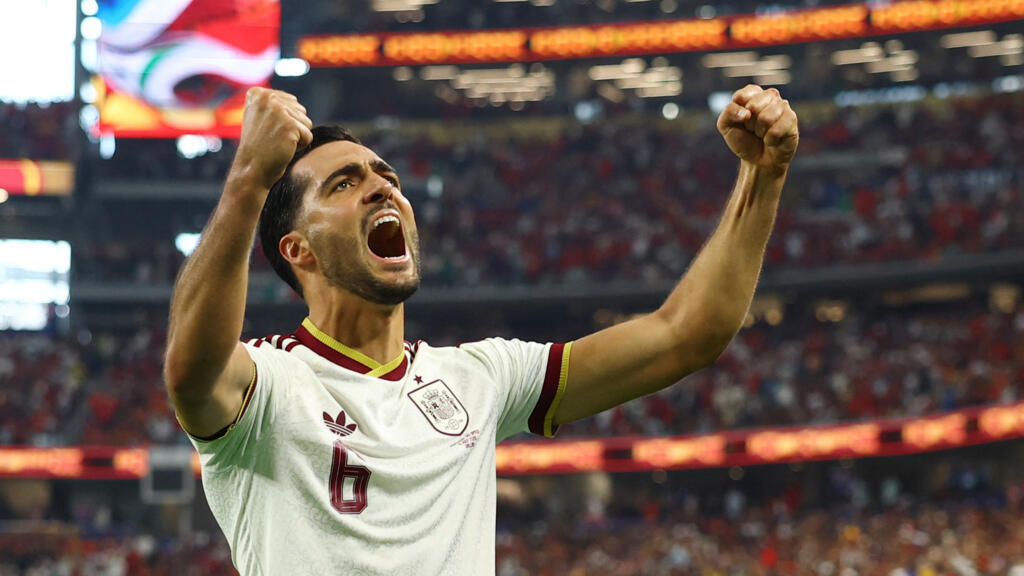
Mikel Merino scored an injury-time winner as European champions Spain beat Iberian rivals Portugal in a tense last-16 encounter to book a place in the quarter-finals and end Cristiano Ronaldo’s World Cup career.
SAN FRANCISCO – In the midst of the winter meetings frenzy last December, the Toronto Blue Jays’ baseball operations department gathered in a team suite to consider their pro scouting group’s annual Rule 5 draft presentation.
Coming off a World Series appearance and determined to make another run, the notion that they would select and carry a pick all season long seemed far-fetched. The club had plenty on the go, too, between signing Dylan Cease and Cody Ponce, working through health concerns for Shane Bieber and Jose Berrios, and the pursuits of Tyler Rogers and Kazuma Okamoto, while also monitoring the Kyle Tucker and Bo Bichette markets.
Still, their scouts were so intrigued by Spencer Miles during the Arizona Fall League that they pushed for his implausible selection. Despite just 10 games and 14.2 innings since the San Francisco Giants made him a fourth-round pick in 2022, they argued that he was ready to get outs in the majors.
“It’s the job of scouting and baseball operations to present opportunities, no matter what’s going on with the roster. Miles was that,” said Ryan Mittleman, the club’s vice-president, pro scouting. “The raw stuff was impressive to us. … We had multiple looks, multiple scouts to say, ‘Hey, the raw data is good, but also, he’s carrying it out into a pretty good league.’ We didn’t let the lack of innings be an impediment. We believed in the stuff. And it carried him to the top of our list.”
Advertisement
Manager John Schneider was in the room for the presentation and remembers “looking at his numbers and I was like, ‘He has how many innings? And what are we doing? And huh?’ They were like his sinker can do this, we think he can develop a slider. I think I said, ‘This guy better be pretty (expletive) good.”
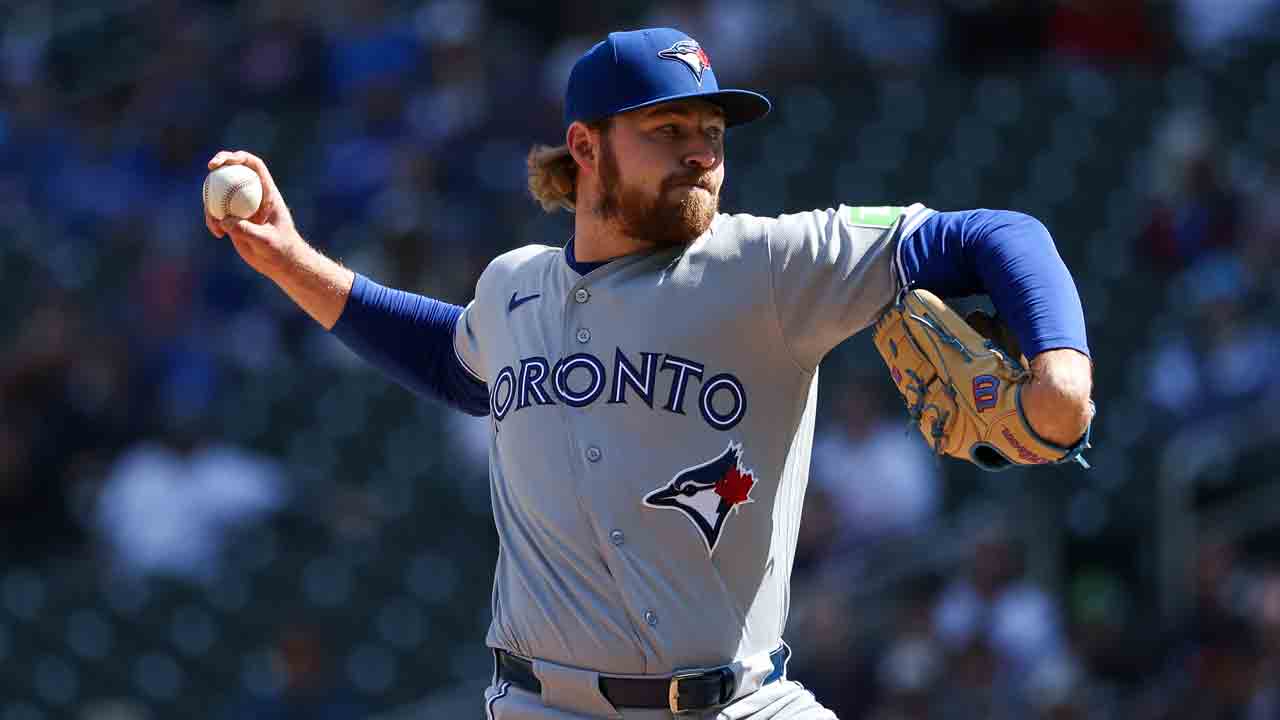
The Blue Jays made Miles the 10th pick of the Rule 5 draft on Dec. 10 and it turns out that he is indeed pretty, ahem, good, emerging into a pitcher that, in Mittleman’s words, “has been huge for us.”
Originally envisioned as an occasional mop-up man at the very end of the bullpen, the 25-year-old has steadily earned more trust in a variety of roles, including eight starts/bulk outings, a needed solution in what’s been a season filled with problems.
His next outing comes Tuesday, when he’ll be the featured arm, possibly the starter, for the Blue Jays in San Francisco, facing the Giants team that helped him through the back and shoulder surgeries that sidelined him for nearly all of the last three years. Some staffers who were close to him are trying to make it out to watch.
Advertisement
“It’s super exciting, but it’s not any different than any other outing,” said Miles laughing when asked if he hears from Giants people wondering how he got away. “Frequently, but that’s OK. Here we are and this org is awesome. So it’s worked out.”
Far more than the Blue Jays imagined, prompting them to again consider building him up with the rotation in continued flux as Max Scherzer continues to rehab from a back issue and Patrick Corbin works out of the bullpen, leaving them short a starter.
How much work Miles can reasonably handle given his lack of volume in recent years – his career high for innings is 77 in 2022 between Missouri and rookie ball – is the Blue Jays’ constant conundrum. There’s no real baseline for the player and no case studies on similar pitchers to draw from, leaving them to feel their way through in the dark.
Given that he’s already at 54 innings in 24 games and has become someone the club feels grow into a viable option for the 2027 rotation, when they project to have several openings with Kevin Gausman, Bieber and Scherzer all pending free agents, the stakes are suddenly higher given what he may become.
Advertisement
Miles, however, shows no signs of slowing down.
Physically, he said he’s holding up and during his last outing, he set a personal best hitting 99.4 m.p.h. against the New York Mets. He threw a season-high 73 pitches June 6 against Baltimore and has pitched 4.1 innings three times. Where he goes from here isn’t uncertain but even with Scherzer on track to be an option after the all-star break, the Blue Jays want to keep Miles going.
Without an objective measure of what is too much, part of the approach is avoiding too much, too fast, both in innings and in velocity.
“I got up to 73 pitches and then kind of deloaded, so I think that, in a way, gave me a new floor. I don’t think we really know what the ceiling is, but we’re just going to keep pushing it and find out,” said Miles. “My volume has reached a certain point now where my body is starting to accept the force. In years past, 98ish has been my peak. But with a new floor, your body adapts.
Advertisement
“So now your brain and your body are like, ‘OK, I can settle in here. I know what that feels like, I can accept the force.’ Then your body’s saying like, ‘Alright, maybe we can go one step above that and break a chain off that prior peak in exertion of force.’ I don’t really know what the limit is. I think there’s still another one or two ticks in a volume floor that we can get to. So, maybe there’s more in there.”
That any of this is in play at all underlines how significant a Rule 5 pick Miles has turned out to be, against the odds.
“Whenever you’re coming off a World Series, you’re usually not taking a Rule 5 pick. You’re usually pretty set. But with the uncertainty of (Yimi) Garcia, some of our starters, it was like, OK, let’s take a chance, bring him into camp and see,” said Schneider. “It’s an amazing job of scouting and trying to predict upside. A lot of that comes into the person, too, not just the stuff. Can this dude handle this? The way it’s worked out has been remarkable, really.”
In setting up 40-man rosters ahead of the Rule 5 draft, teams try to measure the likelihood of other clubs being willing to select and carry a player for a full season in order to lock in their rights.
Advertisement
The Blue Jays in recent years have taken off-the-board swings in the Rule 5 draft, selecting Elvis Luciano out of rookie ball in the Kansas City Royals system in 2018 and carrying him all season, and a post-Tommy-John Angel Bastardo from the Boston Red Sox in 2024. Luciano is now pitching with Yomiuri in Japan, while the Blue Jays returned Bastardo to the Red Sox in April, after Miles beat him out for a roster spot in spring training.
No pick required as much imagination as Miles, given where the Blue Jays had come from and all the other markets they were involved in. But Mittleman credited GM Ross Atkins for being willing to consider all avenues, when “it can be tougher to make a Rule 5 pick when there’s not as much open road for opportunity.”
“He, obviously, hadn’t pitched a ton and was pitching well in Arizona Fall League,” Mittleman continued. “So it was really just a case of our entire group of scouting, R-and-D putting the pieces together and in the end, it was really Ross trusting the process that moved Miles to the top of the list. …
Royal Birkdale returns to the spotlight as the world’s finest golfers gather for another edition of The Open Championship.
Renowned for demanding precision, patience, and adaptability, the famous links venue consistently rewards complete players capable of handling changing weather and strategic shot-making.
Several established stars arrive with compelling credentials, while recent performances have reshaped expectations ahead of the season’s final major. Four contenders, in particular, stand out as leading names capable of lifting the Claret Jug.
Scottie Scheffler Enters as the Odds Favourite
2026 Open Odds: +500
Scottie Scheffler arrives at Royal Birkdale as the leading name in The Open 2026 odds, reflecting both his position atop the world rankings and another remarkably consistent campaign. Few players have matched his week-to-week reliability, with regular contention across the PGA Tour reinforcing why bookmakers continue to place him ahead of the field.
Advertisement
His recent form includes multiple victories and high finishes against elite competition, extending a run that has already produced an impressive collection of major championship performances. Scheffler’s résumé now includes multiple major victories alongside countless appearances near the top of leaderboards, highlighting his ability to thrive under the greatest pressure. That consistency remains one of his defining strengths.
Royal Birkdale demands disciplined golf rather than constant aggression, making Scheffler’s exceptional ball-striking particularly valuable. He ranks strongly across key areas such as driving accuracy, greens in regulation, strokes gained approach, and scoring average. His thoughtful course management also minimises costly mistakes, a quality that has repeatedly separated Open champions from the chasing pack.
Compared with the other favourites, Scheffler offers perhaps the highest combination of consistency and statistical excellence. While several rivals possess comparable talent, few maintain such a high baseline every tournament. A victory at Royal Birkdale would further strengthen his standing among golf’s modern greats while adding another Open Championship to an already outstanding major championship legacy.
Rory McIlroy Chases Links Glory
2026 Open Odds: +800
Advertisement
Rory McIlroy once again enters The Open among the leading contenders after producing another strong season across golf’s biggest tournaments. His major championship form has remained competitive, and his combination of experience and proven ability on links courses continues to attract significant attention.
McIlroy’s history with The Open Championship includes memorable victories, close calls, and several weekends spent challenging for a top-10 finish. Growing up playing links golf has given him an instinctive understanding of how to control ball flight, adapt to unpredictable winds, and embrace the unique demands that distinguish this championship from every other major.
Recent tournament performances suggest McIlroy arrives with positive momentum. His combination of length from the tee and exceptional shot-shaping ability allows him to attack difficult holes while remaining flexible when weather conditions change throughout the week. Those strengths have repeatedly translated into success on links layouts that reward creativity alongside technical excellence.
Broader Golf narratives point out that the pursuit of another Claret Jug adds historical significance for one of Northern Ireland’s greatest sporting figures. Public interest inevitably follows McIlroy wherever he competes, but success at Royal Birkdale will depend on disciplined strategy rather than emotion. Limiting mistakes, controlling trajectory in challenging conditions, and capitalising on scoring opportunities remain the tactical ingredients required to stay firmly in contention through Sunday’s closing round.
Advertisement
Justin Rose Brings Experience and Consistency
2026 Open Odds: +2,700
Justin Rose enters Royal Birkdale backed by years of elite-level consistency and an impressive record across golf’s biggest championships. Although younger rivals often dominate pre-tournament headlines, Rose continues to demonstrate the qualities that make experienced competitors dangerous whenever major championships demand patience and strategic execution.
Throughout his career, Rose has regularly featured near the top of Open Championship leaderboards while building one of the strongest major championship résumés of his generation. His experience handling pressure over four demanding rounds gives him an important advantage, particularly on a links course where composure often proves just as valuable as raw power.
Royal Birkdale rewards precise iron play, intelligent decision-making, and disciplined course management, all longstanding strengths of Rose’s game. Recent tournament performances indicate that his swing remains dependable, while his ability to adapt to varying weather conditions keeps him competitive throughout championship week.
Advertisement
A strong performance would also resonate with British supporters, who have followed Rose throughout an accomplished international career. Remaining patient during difficult stretches and positioning himself within striking distance entering the weekend could once again place him firmly in contention. Capturing the Claret Jug would represent another defining achievement, adding one of golf’s most prestigious titles to an already distinguished career.
Jordan Spieth Returns With Open Pedigree
2026 Open Odds: +4,500
Jordan Spieth returns to Royal Birkdale carrying one of the tournament’s most compelling storylines. While his recent form has fluctuated compared with earlier stages of his career, his proven success on this course continues to influence expectations. Few players in the field possess stronger memories of Royal Birkdale than the American.
His unforgettable 2017 Open Championship victory remains one of golf’s greatest major triumphs. Spieth closed with a final-round 69 to secure a three-shot victory after surviving one of the most dramatic championship rounds in modern Open history. The performance demonstrated resilience, imagination, and an ability to respond under extraordinary pressure.
Advertisement
Early in that final round, Spieth surrendered a three-shot advantage before producing the tournament’s defining moment at the 13th hole. Following a wayward drive, officials spent nearly twenty minutes determining relief options before Spieth played his remarkable recovery from a driving range adjacent to the course. A gritty bogey preserved his hopes when disaster seemed likely.
While Spieth may be a longshot for this year’s Open Championship, what followed in 2017 became Open Championship folklore. Spieth nearly aced the 14th, rolled in a spectacular 50-foot eagle putt on the 15th, then added consecutive birdies at the 16th and 17th holes to seize complete control. That extraordinary finish remains central to his Royal Birkdale legacy and continues to shape his standing among the leading contenders as he returns to this historic venue.
Four Players, One Historic Championship
Royal Birkdale promises another demanding examination of every aspect of championship golf. Scottie Scheffler, Rory McIlroy, Justin Rose, and Jordan Spieth each arrive with unique strengths, compelling storylines, and realistic ambitions of lifting the Claret Jug.
Whether through recent dominance, proven links expertise, unforgettable history, or veteran consistency, each contender has earned serious consideration. As tournament week unfolds, their performances will help define another memorable chapter in one of golf’s most celebrated major championships.
Advertisement
Content reflects information available as of 2026/07/06; subject to change.
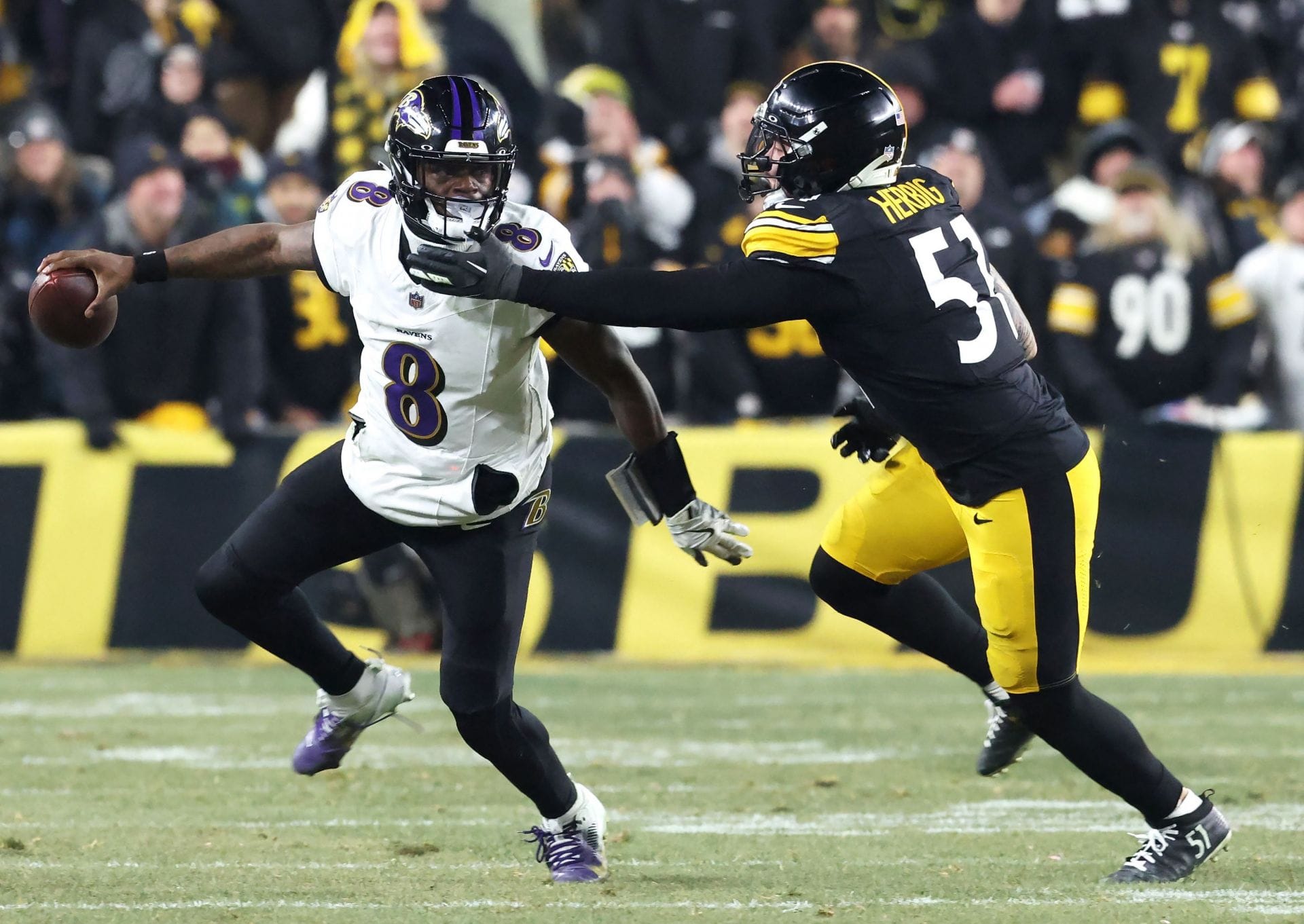
ESPN released its 2026 roster rankings this week, grading every team’s strengths and weaknesses. Analyst Seth Walder covered the Ravens’ offense and had a take on their quarterback, Lamar Jackson.
The rankings, published Monday, named Baltimore’s interior offensive line as the team’s biggest weakness. It’s the same issue the Ravens had last season, when they won the AFC North but lost in the wild-card round.
Thanks for the submission!
Advertisement
Advertisement
•
“Interior offensive line. The coaching staff is new, but this is the same weakness the Ravens had in the previous two seasons,” Walder wrote.
Looking to predict NFL playoff Scenarios? Try our NFL Playoff Predictor for real-time simulations and stay ahead of the game!
Baltimore could start three new players on the interior line this year. That’s because center Tyler Linderbaum left in free agency and signed with the Las Vegas Raiders. Danny Pinter, who has played just 264 snaps over the past three seasons, is set to replace him.
Advertisement
The Ravens also signed guard John Simpson, a small upgrade over Andrew Vorhees. Rookie Olaivavega Ioane will compete at the other guard spot.
Receivers could help take the pressure off for Lamar Jackson
NFL: Baltimore Ravens at Pittsburgh Steelers – Source: Imagn
Walder also flagged the receiver room. Zay Flowers is the clear No. 1 option, with Rashod Bateman listed as the No. 2 receiver.
“X factors for 2026: WRs Devontez Walker, Ja’Kobi Lane and Elijah Sarratt. It’s hard to get too excited about the receivers room behind Zay Flowers (Rashod Bateman is the team’s No. 2 WR on paper),” Walder wrote.
Walker is entering his second season. Lane and Sarratt are rookies trying to earn playing time under new coordinator Declan Doyle.
Advertisement
If one of them breaks out, it would give Lamar Jackson more targets beyond Flowers and Bateman. That would help Doyle build a more effective passing game after Baltimore missed the playoffs last season.
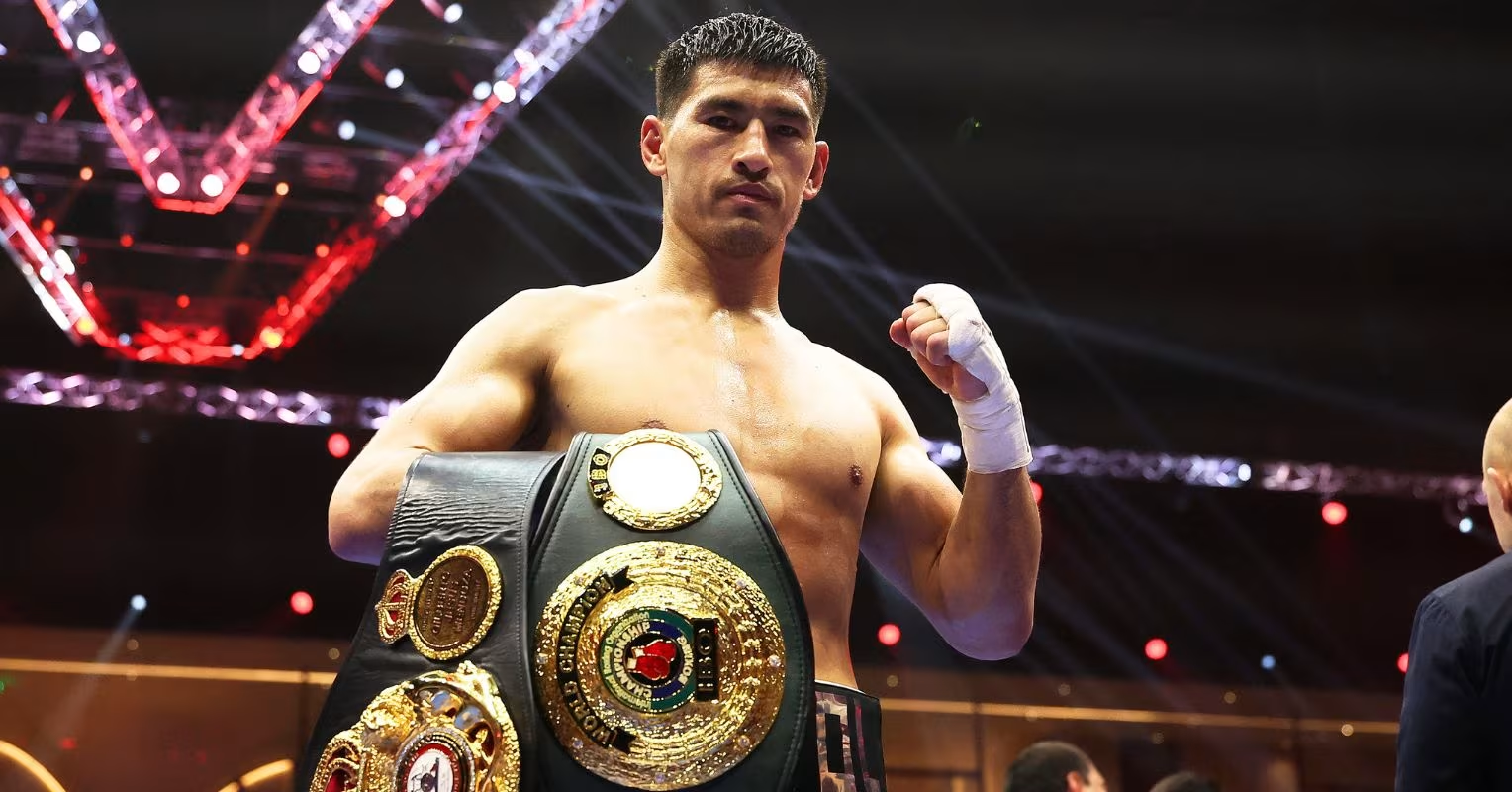
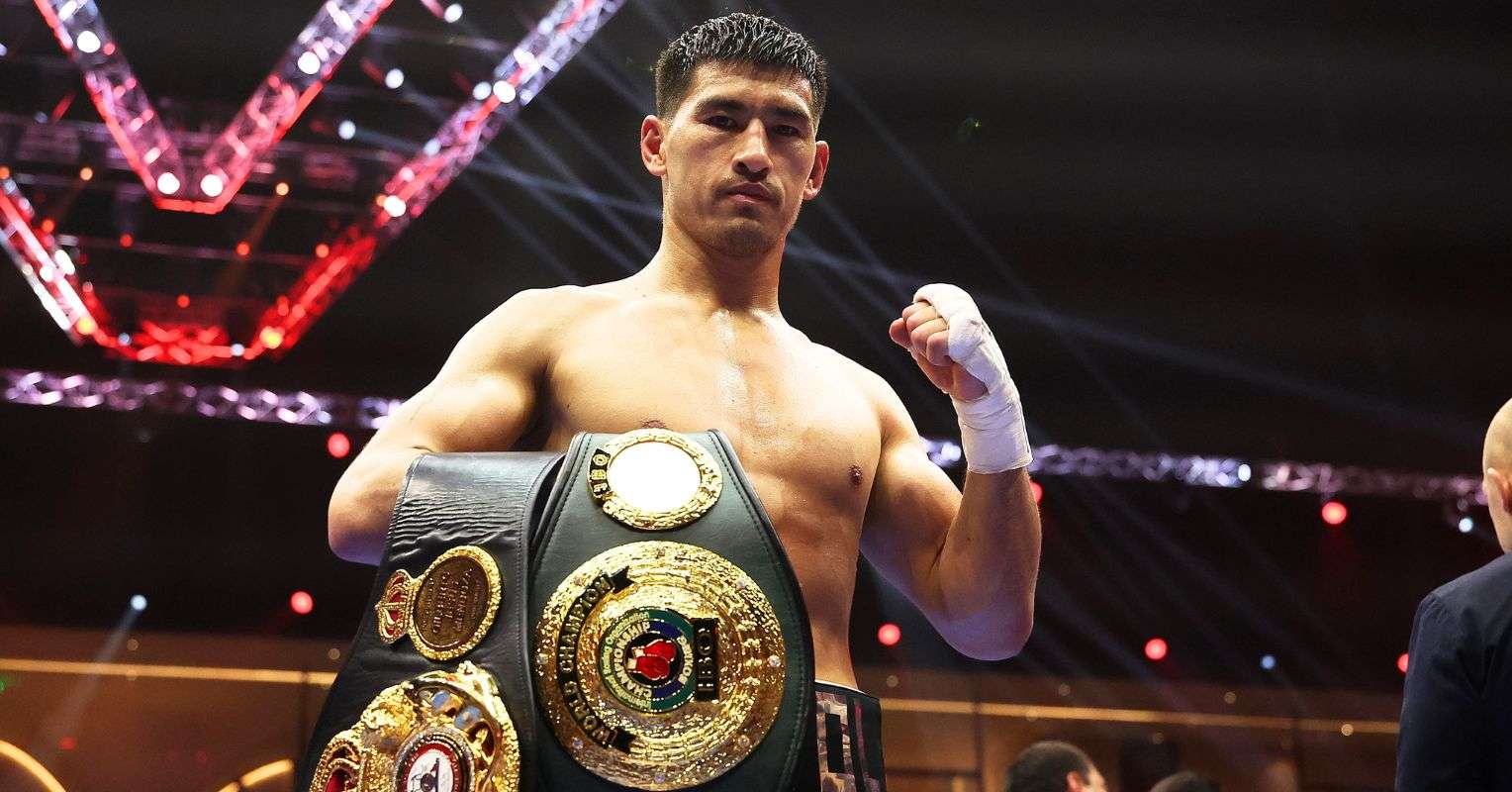
“The WBO World Championship Committee has officially ordered the commencement of negotiations for the WBO Light Heavyweight Championship between WBO World Champion Dmitrii Bivol & Interim World Champion Callum Smith.
“Consistent with the WBO Regulations and our longstanding One Champion Policy, the purpose of this mandatory championship contest is to discharge the mandatory title defence obligation & terminate the Interim Championship status. The parties have twenty (20) days to reach terms, failing which purse bid proceedings may be ordered. Official order notice to be published today.”
Smith last competed in February 2025, outpointing Joshua Buatsi via unanimous decision in a hard-fought contest that was widely regarded as one of the fights of the year. He had been due to face David Morrell in April but withdrew through injury, leading to late replacement Zach Chelli producing a major upset by stopping the Cuban.
Should Bivol and Smith reach an agreement, the winner would likely find themselves firmly in the sights of the division’s other world champion, David Benavidez, who has repeatedly made it clear that a showdown with the Russian remains one of his top priorities.
England produced their finest performance of the 2026 FIFA World Cup to defeat co-hosts Mexico 3-2 in a dramatic last-16 clash at the iconic Azteca Stadium, strengthening belief that football may finally be coming home.
In one of the most thrilling matches of the tournament, Thomas Tuchel’s side overcame a hostile atmosphere, severe weather delays and a second-half red card to secure a memorable victory and book a quarter-final meeting with Norway.
The match was delayed by an hour due to severe storms, but England showed composure and quality from the opening whistle against a Mexico side that had lost only two of their previous 89 competitive matches at the Azteca.
Advertisement
England took control just before half-time thanks to an outstanding display from Jude Bellingham. The midfielder scored twice in the space of 98 seconds to stun the home crowd and give the Three Lions a commanding advantage.
Mexico responded through Julian Quinones, who fired home a powerful effort three minutes before the interval to reduce the deficit and lift the atmosphere inside the packed stadium.
England goalkeeper Jordan Pickford then produced one of the greatest performances of his international career. The Everton shot-stopper made two superb saves to deny Raul Jimenez and kept England ahead during Mexico’s strongest periods.
Advertisement
The game changed again early in the second half when defender Jarell Quansah was shown a red card for a high challenge on Jesus Gallardo, forcing England to play with ten men for the remainder of the match.
Despite the setback, England restored their two-goal advantage when captain Harry Kane calmly converted a penalty after Anthony Gordon was brought down by goalkeeper Raul Rangel.
However, the drama continued when Kane conceded a penalty at the other end after fouling Brian Gutierrez. Jimenez converted from the spot to make it 3-2 and set up a tense finale.
With Mexico pushing desperately for an equaliser, Tuchel introduced Dan Burn and Djed Spence and switched to a five-man defence. England showed remarkable discipline and determination to survive 11 minutes of stoppage time and secure one of their greatest World Cup victories in recent history.
Advertisement
Bellingham was undoubtedly the star of the night. In addition to his two goals, he produced a crucial last-ditch tackle to deny Cesar Montes when Mexico threatened to level the score before half-time.
Tuchel also deserves enormous credit for his tactical approach. England remained calm under immense pressure, absorbed Mexico’s attacking waves and demonstrated the maturity expected of genuine World Cup contenders.
Pickford’s display was equally important. Making his 17th World Cup appearance, he equalled Peter Shilton’s record for the most World Cup matches played by an England men’s goalkeeper and reminded everyone why he remains England’s undisputed number one.
After defeating the tournament co-hosts in one of football’s most intimidating stadiums, England have shown they possess the quality, resilience and belief required to lift the trophy. With a quarter-final against Norway now awaiting them, the question many fans are beginning to ask is simple:
Mexico-England ended in a 3-2 victory for the Three Lions at the Azteca Stadium in Mexico City. In Chelsea, on the outskirts of Boston, the Mexican community turned out in force to watch the game.






;)
;)
;)
;)
;)
;)
;)













































You must be logged in to post a comment Login