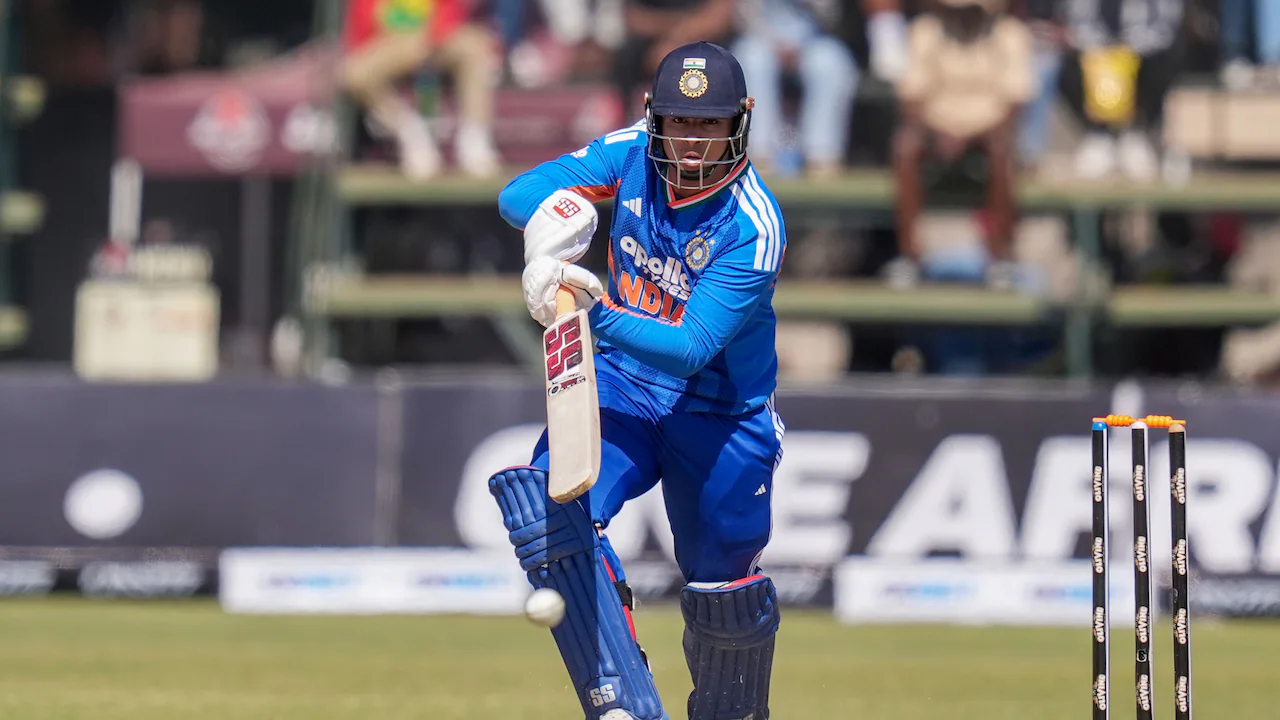
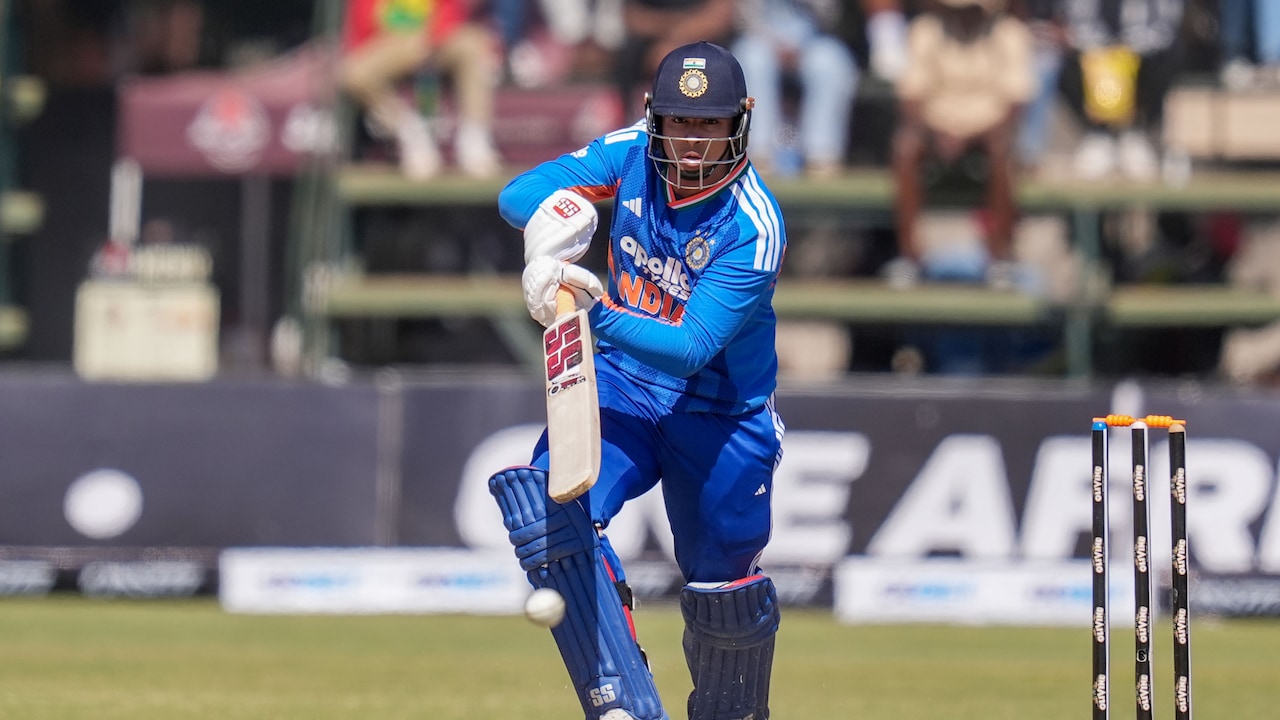
India captain Shubman Gill on Wednesday reclaimed the No. 1 spot in ICC rankings for batters in ODI cricket while young batting sensation Vaibhav Sooryavanshi moved up a whopping 230 places to 48th in T20Is after his recent exploits against Zimbabwe. Gill has replaced New Zealand batting mainstay Daryl Mitchell at the top spot in the ODI chart. Mitchell had held the top spot since January this year. “There was some change at the top of the latest ODI rankings following the completion of the recent series between the West Indies and New Zealand as the absence of Black Caps’ right-hander Daryl Mitchell saw Shubman Gill move back to become the No.1 ranked batter in 50-over cricket,” the ICC said.
“Mitchell had held the top billing since January this year,” it added.
Sooryavanshi, who smacked two half-centuries in the recently-concluded India’s tour of Zimbabwe for three T20Is, scored 151 runs at 50.33 in his side’s 3-0 victory.
Advertisement
The 15-year-old batter rose as many as 230 spots to reach 48th in the list of T20I batters, which is led by compatriot Ishan Kishan with 910 rating points.
Kishan had recorded the third highest batting rating of all time behind Abhishek Sharma (931) and Dawid Malan (919) when he reached 916 points after the end of the second T20I against Zimbabwe.
Despite losing some rating points, Kishan maintains a healthy lead over the second-ranked Sahibzada Farhan (848).
“Sooryavanshi’s rating of 536 points is well adrift of his more experienced teammates, but Kishan can now boast of having a better career batter rating than more accomplished Indian players like Suryakumar Yadav (912) and Virat Kohli (909),” the ICC said.
Advertisement
Meanwhile, Tilak Varma moved up two positions to reach sixth while T20I skipper Shreyas Iyer jumped seven places to 24th.
Leg-spinner Ravi Bishnoi gained 31 positions to move to 41st in the list of T20I bowlers but Varun Chakravarthy, who missed the Zimbabwe tour due to an injury, dropped three places but remained in the top 10 rankings.
Zimbabwe’s Ryan Burl rose six positions to reach 85th in rankings for batters while Blessing Muzarabani jumped 10 spots to reach 26th among bowlers.
West Indies’ Justin Greaves was also rewarded for his impressive showing against Pakistan in the first Test. Greaves recorded five consecutive wicket-maidens in Tarouba as the West Indies beat Pakistan by 90 runs to take an unassailable 1-0 lead in the series.
Advertisement
Greaves rose 21 spots to move to the 48th position among Test bowlers, and ninth in the list of all-rounders in the longest format.
Jayden Seales moved up to the 24th position while Pakistan’s Mohammad Abbas, who also recorded a five-for, jumped to the 17th spot.
Babar Azam reached 15th after his unbeaten fifty in the second innings.
(Except for the headline, this story has not been edited by NDTV staff and is published from a syndicated feed.)
Advertisement
Featured Video Of The Day
Spain’s Royal Family Welcomes World Cup Champions To Zarzuela Palace
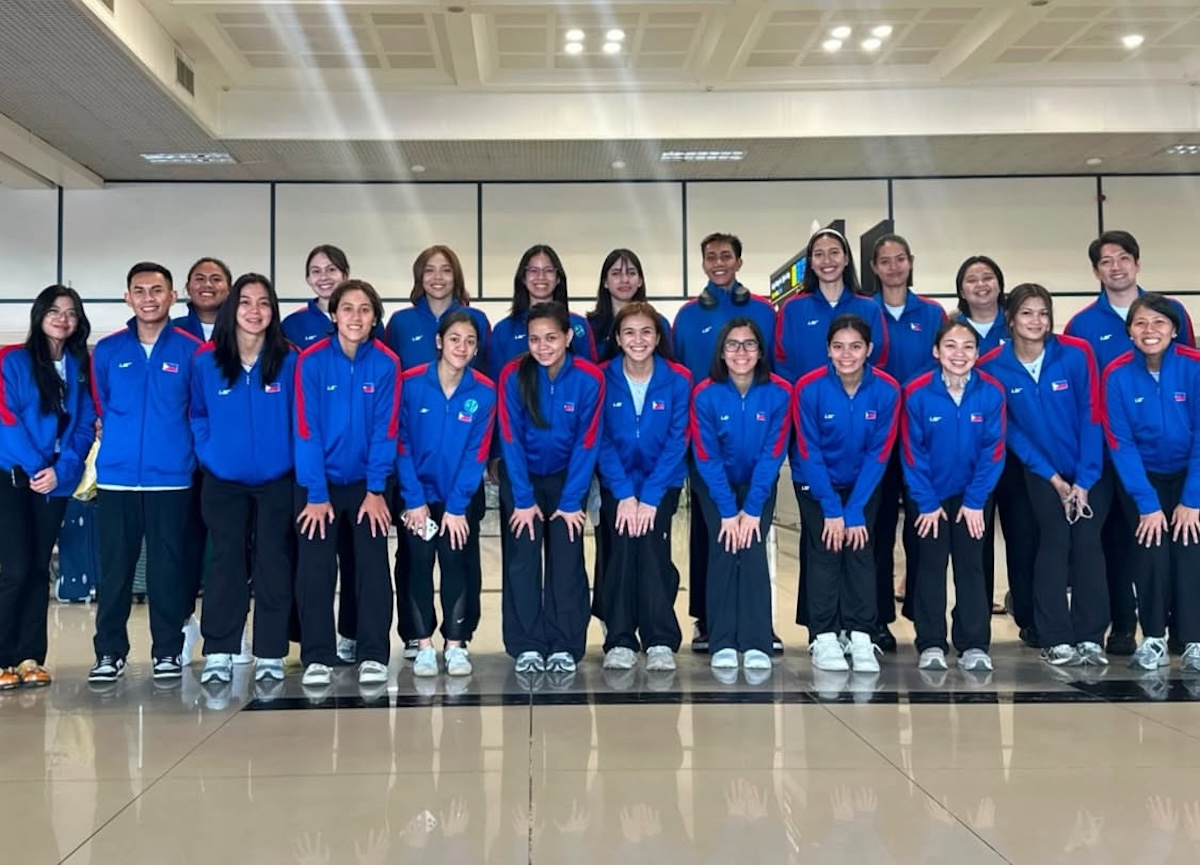
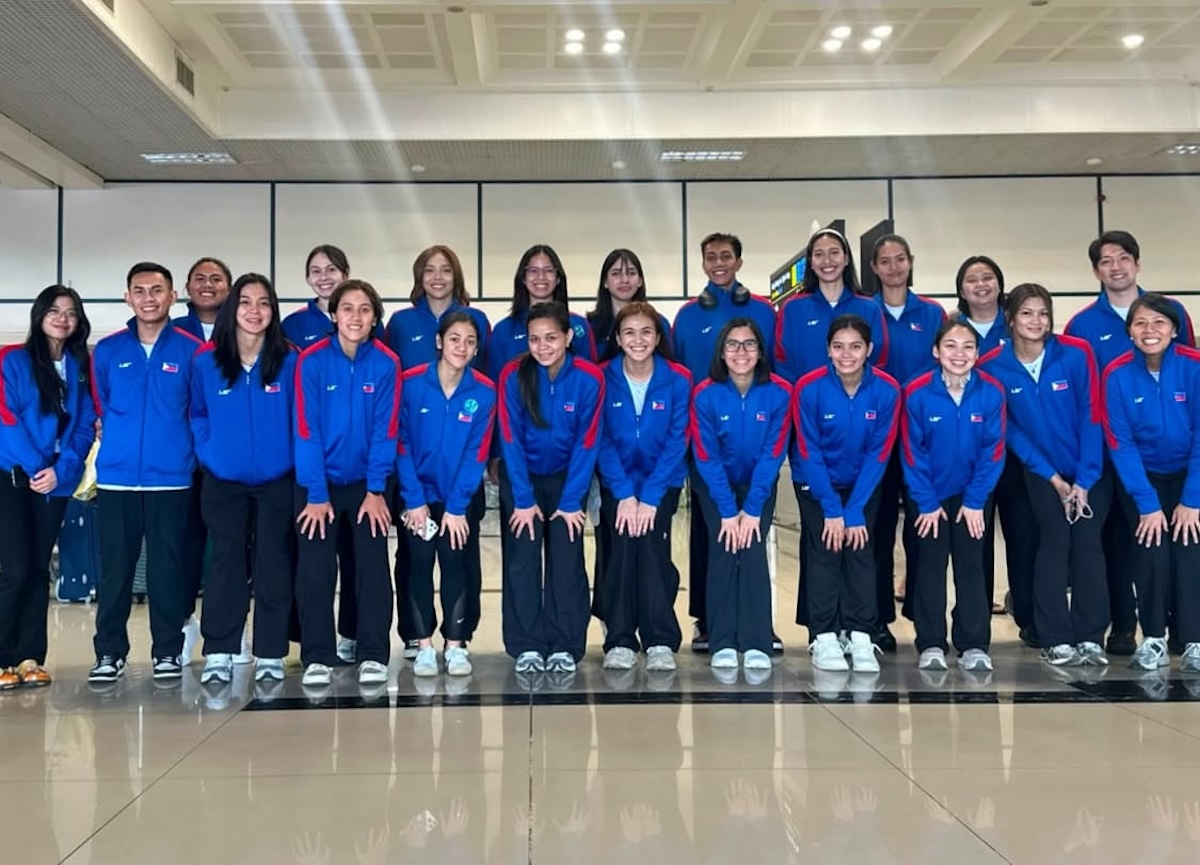
Alas Pilipinas women land in Vietnam for the SEA V Cup leg 1 in Hanoi.–ALAS PILIPINAS PHOTO
MANILA, Philippines — Alas Pilipinas women’s team has arrived in Vietnam ahead of the SEA V Cup Leg 1, which starts Friday at the Dong Anh Gymnasium in Hanoi.
The team’s social media page on Wednesday afternoon posted a photo of the squad arriving safely in Vietnam two days before the opener.
Article continues after this advertisement
Advertisement
Japanese coach Taka Minowa makes his debut as the new women’s national volleyball team coach on Friday against host Vietnam, the champion of last year’s second leg and runner-up for six legs.
Bannering the team are returning mainstays Jia De Guzman, Alyssa Solomon, Bella Belen, Eya Laure, Vanie Gandler, Dell Palomata, Fifi Sharma, Thea Gagate, Mars Alba, Justine Jazareno, Jen Nierva, and Dawn Catindig.
The Alas team, with the same core, has won four straight bronze medals since 2024.
Also making their Alas debut are last year’s PVL on Tour MVP Erika Santos and National University’s Vange Alinsug and Celine Marsh. Niña Ytang, who debuted in Candon last June in the AVC Women’s Cup, also joined the squad.
The Philippines will play a single round robin, which determines the podium finishers.
Alas takes on Thailand on Saturday, before facing Indonesia on Sunday in its first international tournament ahead of the Asian Games in September. Leg 2 is set next week in Thailand.
Your subscription could not be saved. Please try again.
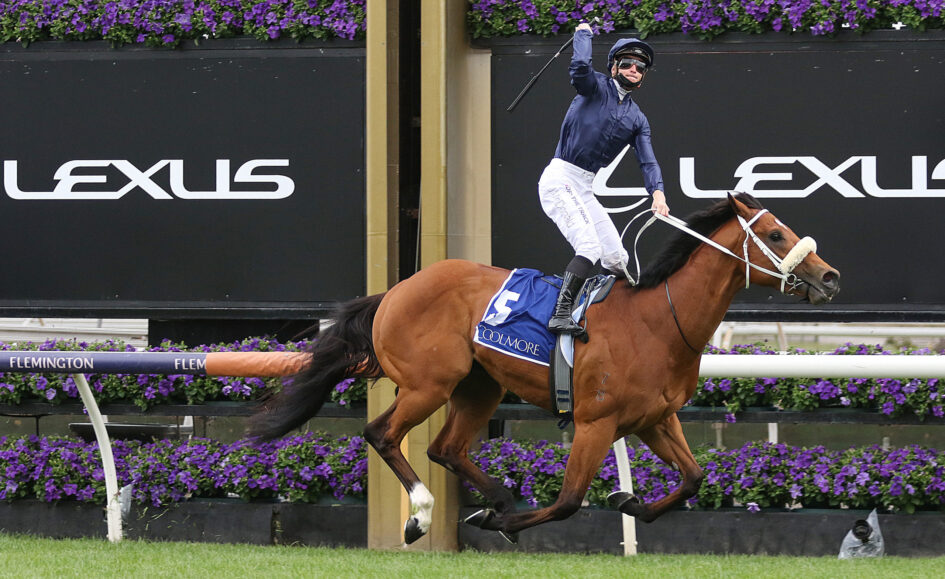
Home Affairs is poised to finish the 2026 racing season as Australia’s premier freshman sire, following a dominant debut crop from Coolmore’s exciting young stallion that has surpassed all expectations.
While the exact number of stallion premierships he will secure won’t be finalised until the season’s final day, one significant title has effectively been locked away for months.
The son of I Am Invincible has joined the elite company of Danehill and Extreme Choice by siring a Golden Slipper winner from his first crop, with Guest House clinching this year’s juvenile feature. Even without the $2.95 million prize money from that victory, Home Affairs would still comfortably lead the first-season sires’ premiership by prizemoney.
Entering the final four days of the season, Home Affairs had already produced 16 winners – the most of any first-season sire – from 44 runners who had amassed $4,948,300 in prizemoney.
Advertisement
His closest rival is Newgate’s Golden Slipper winner Stay Inside, whose progeny have earned $950,833.
Home Affairs’ inaugural crop comprised 145 foals conceived off an introductory service fee of $110,000 (inc GST), and Coolmore Australia principal Tom Magnier commented that the stallion had delivered everything the ownership group had hoped for.
“I’m delighted for our partners in Home Affairs as he’s crowned Champion First-Season Sire,” Magnier said.
“He was purchased as a yearling in the first year we went out and sourced colts to race and to be able to reward their trust in such a way gives us all a great thrill.
Advertisement
“Home Affairs has been followed on by the likes of Shinzo, Switzerland and Private Life, so our partners have got a few irons in the fire yet, but to land Home Affairs straight away is what we dreamed of.
“We think he is a Champion Sire of the future and that his stock are only going to improve from two years to three years, so the future is bright.”
Beyond Guest House, his headline performer, Home Affairs has also produced Listed Redoute’s Choice Stakes winner Gin Twist as his other Australian black-type winner.
Magic Millions National 2YO Classic runner-up Natural Fling and VOBIS Gold Rush winner and Listed placegetter Marffiano have also made significant contributions to the stallion’s outstanding first-season earnings.
Advertisement
Home Affairs also remains a chance of claiming the Champion 2YO Sire title for 2026, trailing Snitzel by just $32,445 entering the final days of the season.
His hopes suffered a setback when Saturday Party was scratched from Wednesday’s Randwick meeting, while Snitzel still has representatives at Randwick and Kembla Grange before Home Affairs relies on three youngsters nominated to race at Geelong and Scone on Friday.
Regardless of the outcome, Home Affairs has already been rewarded in the breeding barn, with his service fee increasing from $82,500 over the past two seasons to $176,000 for 2026.
He is also set to cover an elite book of mares, including Guest House’s dam Flamboyant Lass, alongside Group 1 performers Zougotcha, Learning To Fly and Nimalee.
Advertisement
Check out the latest racing odds available on Australian betting sites for the upcoming season.
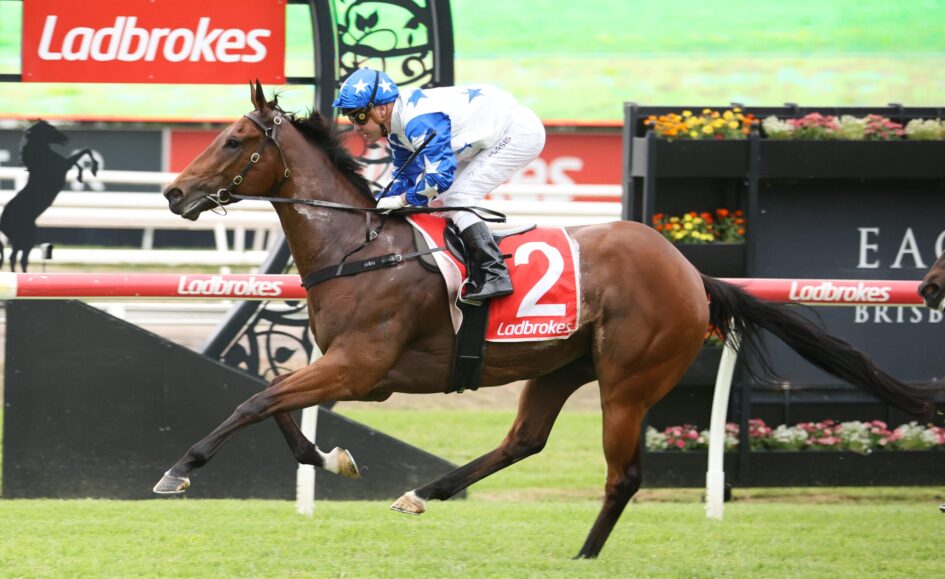
Trainer Tony Gollan of Brisbane has dispatched talented gelding Boomtown Boss south to Flemington for the Aurie’s Star Handicap this Saturday. The move is intended to take the horse out of his usual environment before his first-up run.
The Group 3 Aurie’s Star Handicap, a 1200-metre race, could potentially serve as the starting point for an extended Melbourne stay or simply be a stepping stone on the way back to Queensland for the Summer Carnival.
Gollan is relying on the residual fitness Boomtown Boss acquired during the Brisbane Winter Carnival to give him a strong chance in his first attempt at Flemington’s famous straight track.
“I was having a preparation with him in the winter that started off well and then I really just ran out of luck with him,” Gollan commented. “I decided to abort it and it’s a long time to our summer. He’s a horse that I think a bit of travel will bring him on quite a lot. He’s a very busy horse at home and very comfortable in his own environment and I’ve noticed with a few of the horses that are like him, if you can get them away and get them into a new area, it brings them on mentally and that’s what I feel like I can do with this bloke. On his best form he is up to a race like this, as you can see by his runs during the winter, and I just thought travelling him would be ideal for him.”
Advertisement
Gollan does not foresee any issues with the straight track for Boomtown Boss.
He suggested that the sprinter is well-suited to expansive tracks and distances around 1300m to 1400m, believing Flemington’s 1200m straight course would play to these strengths.
“He’s a horse that likes a bit of room, that can get into his gallop and unleash a good turn of foot,” Gollan said. “Without him being down the straight, and it being an unknown, he probably profiles well enough from what we’ve seen on big tracks like Eagle Farm, to really enjoy the straight.”
The trainer confirmed that Boomtown Boss has been in Melbourne for some time, based at Ciaron Maher’s stable in Cranbourne, and has shown improvement during his stay.
Advertisement
A recent trial at Caulfield Heath was conducted to provide the gelding with more exposure to Melbourne racing conditions, and he appears to be thriving.
“We know the residual fitness of the winter carnival up here carries over in the early stages of the carnival down there.”
Gollan stated that no firm plans are in place beyond Saturday, with the horse’s performance in the Aurie’s Star Handicap to dictate his future racing plans.
“It’s a run at a time and it’s more about the experience of him being away,” Gollan remarked. “Hopefully he runs really well, as we expect, and maybe we could look to go to another race, but we could also bring him home for the summer. It really is a week-by-week thing for the horse.”
Advertisement
Daniel Moor, a jockey who previously rode in Melbourne and frequently rides for Gollan in Brisbane, has been booked to partner Boomtown Boss.
A total of 14 horses are entered for the Aurie’s Star Handicap, with final acceptances scheduled for Wednesday morning. Consider the racing odds for the event.
While the rest of college basketball sleeps as the calendar flips from Nov. 5 to Nov. 6, a 1,000-seat gym on Elm Street in sleepy Greenville, Illinois, will be gearing up for an unhinged round-robin series involving a group of hoops madmen pushing the game beyond its perceived limits.
At midnight, the first allowable moment for the Division III season to begin, the two fastest teams at any level of college basketball will tip-off off their season to little external fanfare.
The Grinnell vs. Greenville game isn’t scheduled to be nationally televised, and it won’t be contested between players on seven-figure NIL deals. There will be no NBA scouts in attendance and no pyrotechnics accompanying the starting lineup introductions.
Besides, the starters won’t last more than a couple minutes anyway. Their lungs will be burning 90 seconds into a matchup between two programs that have co-authored the Division III record book with a blistering strategy known simply as the “System.”
Advertisement
The game might approach 300 total points, and its style would seem extreme anywhere else. But the constant full-court pressure, stream of astoundingly quick shots and mass substitutions will be normal for two teams playing at a pace that makes even the fastest Division I programs look slow.
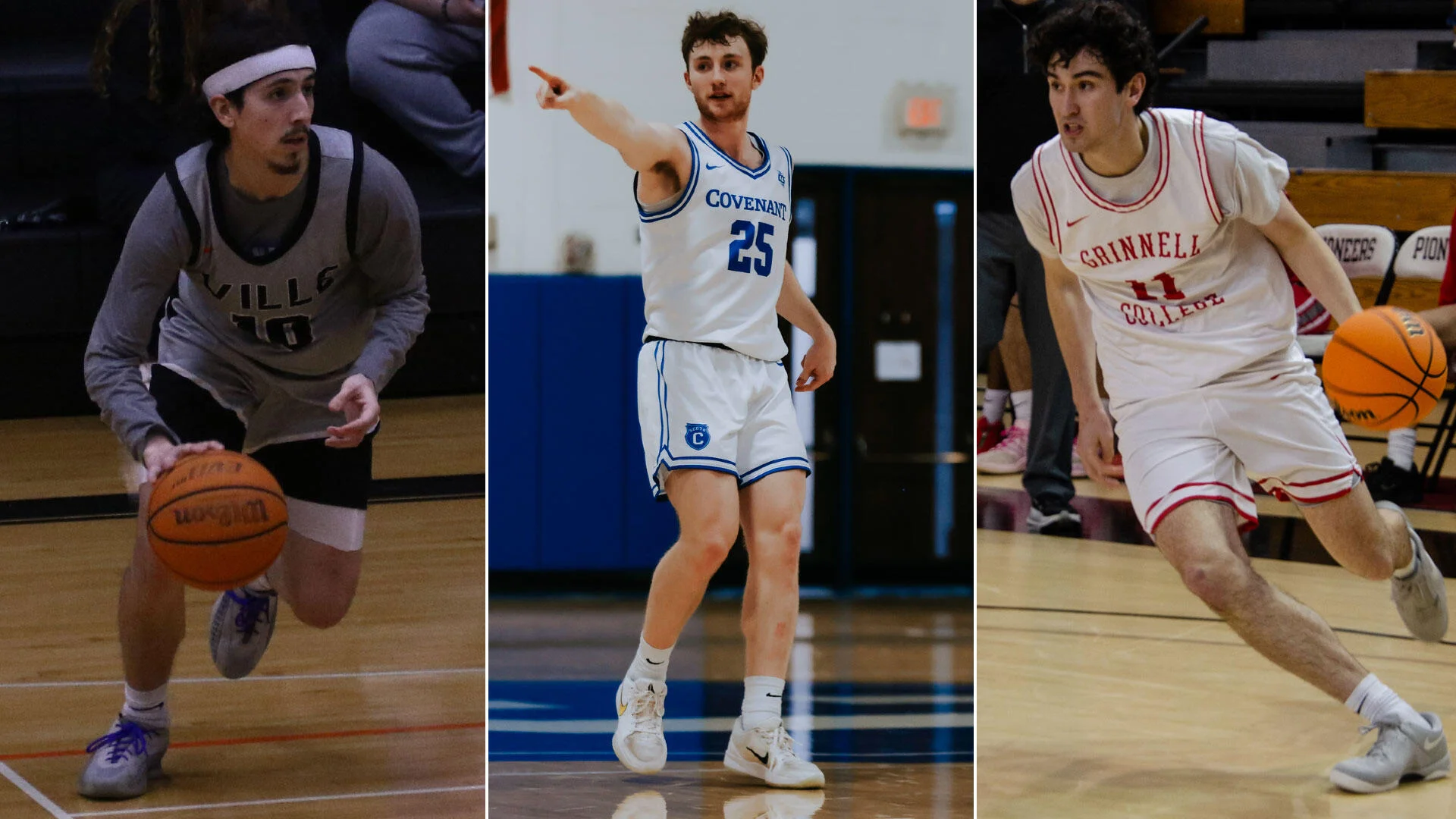
Then, after their track meet is complete sometime in the middle of the night, they’ll both gear up to do it against fellow System program Covenant College over the ensuing 36 hours. The Scots are a relatively new adherent to the philosophy, which calls for possessions to last no longer than 12 seconds.
It made them them the perfect candidate to round out a three-game, season-opening showcase celebrating a style of play that most believe will never be fully adopted in Division I.
“No one else except the guy at Covenant College would even think about coming out to play two System teams in 36 hours,” said Covenant coach Josh Brown. Covenant ranked 268th in Division III in possessions per game during the 2023-24 season before Brown decided his program needed an identity.
Advertisement
He found one after calling an estimated 35-40 coaches, brainstorming about the merits and pitfalls of adopting the System.
“Every single one of them was like, ‘you’re going to get called crazy,’” Brown recalled. “It’s just a part of it. I was OK with being crazy. I’m already crazy for being in this profession. So being called crazy for wanting to play fast is a small price to pay.”
The next season, Covenant, which sits atop Lookout Mountain in Georgia, surged from 81.2 possessions per game to 105.2 and more than doubled its win total. Thus, the Scots became new residents in an enclave of speed demons where Grinnell and Greenville are the landords.
Programs such as Alabama, Texas A&M and Cal Poly are finding success utilizing elements of the System that have been pared down to fit within the outer limits of what most believe could be sustainable at the Division I level.
Advertisement
But they are snails compared to the three who will assemble in Greenville for a lab session on college basketball’s speed frontier. As the most extreme of the bunch, Greenville attempted 100+ shots in 14 of its 26 games last season.
The last time a Division I team attempted 100+ shots against another Division I opponent was in 2016 when the Citadel did it in a double-overtime loss at UMBC.
Alabama, commonly viewed as the standard for playing fast at the high-major level, has reached 90 shot attempts once in coach Nate Oats’ seven seasons. That was in a four-overtime game. It took the Crimson Tide 60 minutes to come within 10 attempts of the shot threshold that Greenville aims for in every 40-minute game.
System standard bearers
Grinnell, located between Iowa City and Des Moines, is the Division III standard for System success. The Pioneers are 61-19 over the past three seasons with consecutive NCAA Tournament appearances. Their nickname is fitting since their former coach, David Arseneault Sr., is widely credited with pioneering the System at Grinnell in the 1990s.
Advertisement
His son, David Arseneault Jr., is now in charge and putting his own stamp on the System for a program that is humming. Grinnell is still running and gunning, averaging 102.9 points per game in 2025-26. But the Pioneers also finished in the top-50 nationally in defensive efficiency within the 400+ team Division III landscape last season. While they beat Greenville 161-130 head-to-head last season, they didn’t catch the Panthers in the season-long scoring race.
When it comes to points, everyone is chasing Greenville coach George Barber, who adopted the System from Grinnell and has pushed it even further. The Panthers averaged 113.2 points in 2025-26, which was 22 points more than Division I leader Alabama.
Since surpassing Grinnell atop the Division III points chart in 2015-16, Greenville has not relinquished the scoring crown.
“I keep asking Dr. Barber when he’s going to retire so that we can lead the country in scoring again,” Arseneault Jr. said. “Or I’m going to have to figure out a way for us to increase our tempo and pace and perhaps be more liberal with our shot selection.”
Advertisement
Grinnell players have bought into the ‘System’ taught by coach David Arseneault.
Getty Images
Excluding the COVID-impacted 2020-21 season, when Greenville played several non-Division III opponents, the Panthers are 145-121 since adopting the System and taking the scoring belt. That winning record has come with a distinct feast-or-famine pattern that has brought both brutal seasons and conference titles.
“In my opinion, there’s so much emphasis, almost too much emphasis, on winning,” Barber said. “We’ve reduced giving it your best shot and challenging yourself. I go to these high school games and both teams are playing zone, and the score is 32 to 31, and we’re in the fourth quarter, I’m going, ‘these poor kids don’t even want pizza. after the game.’ They haven’t even worked hard because the coaches are afraid to lose.”
System ball isn’t for everyone
Around Greenville, a town of 7,000 that sits 50 miles east of St. Louis, Barber is known as the mayor. It’s not just because he has been Greenville’s basketball coach for over a quarter-century. He’s actually the town’s mayor.
He’s also a kinesiology professor at Greenville University, which boasts an enrollment of around 1,100. Within the academic tentacles of his brain percolate thoughts on why the System is a worthy philosophy and not the cheap carnival trick that its detractors claim.
Advertisement
“My theory is that young people have a ton of energy,” Barber said. “They want to be pushed. They want to be challenged.”
You will be challenged in the System. Over the past two combined seasons, Greenville, Grinnell and Covenant have ranked first, second and third, respectively, in possessions per game at any level of NCAA-sanctioned basketball. All three far outpace their most high-octane Division I peers.
To make it work, they regularly employ 13-17 player rotations with line changes coming on nearly a minute-by-minute basis to fuel a never-ending marathon of full-court traps. Last season, Grinnell’s minutes leader logged just 17.8 minutes per game on a 22-4 team that reached the NCAA Tournament.
In addition to calling for a goal of 100+ shot attempts (a threshold rarely reached by anyone other than Greenville), relentless full-court defense and regular mass substitutions, System principles also include:
Advertisement
a dogged “3-pointers or layups” offensive mantra
offensive rebounds on 30%+ of misses
creation of 30+ turnovers per game
a shot margin of 25+
“It’s not for certain people,” Barber said. “It’s just not for them because you have to sub in and out so quickly. You have to be a real team player. It weeds out selfishness, it weeds out lack of hustle. You’re so exposed if you don’t do those things. If somebody ever comes out of the game and says ‘I’m not tired,’ I call that a weed in the garden, and I’m gonna stomp on that weed for about three days.”
Mathematical absurdities come along with the System. Grinnell’s Jack Taylor famously scored an NCAA-record 138 points in a win over Faith Baptist Bible College in 2012. But the statistical marvels also bring political complexities. Greenville once scored 200 points in a game. That got Barber accused of poor sportsmanship. The Panthers have also scored 160 points in a loss while running the System, and they once lost a game by 92 points.
For better or worse, playing more possessions brings more volatility, which Barber views as one of the System’s positives.
“There needs to be more reward or risk taking,” he said. “I think the fans would like it. I know the kids would like it. Every team we play, the kids like to play us because somebody is going to score 40, and they like to play with this freedom. We are giving them that opportunity.”
Division I complications
Adopting the System at any level without university-level authorization is ill-advised. What if a ball-knowing booster starts withholding checks when the coach employing a nutty looking 15-man rotation takes a 40-point loss?
Advertisement
“It’s hard for people to step out of their comfort zone, especially at a higher level where there’s more pressure to win and not put an embarrassing product on the floor,” Arseneault Jr. said.
Ugly defeats can happen when your goal is to speed up the game, which naturally gives a talented opponent ample opportunity to pour it on.
Grinnell’s basketball identity has been tethered to the System for more than three decades. Conversely, Barber picked it up mid-tenure at Greenville. That’s what Brown is now doing at Covenant — but only after heeding warnings from peers like Barber and Cal Poly’s Mike DeGeorge about the risks.
“You have to have serious administrative support,” said DeGeorge, who employed the System at Division III Rhodes College before climbing to the Division I ranks.
Advertisement
For programs that have been struggling, there is evidence that a jolt of System-style pace can bring revival.
After inheriting a 4-28 program at Cal Poly, DeGeorge has guided the Mustangs to 30 victories over the past two seasons, including road wins over Stanford and Utah, with a scheme that incorporates System philosophies. He’s won more Big West games in two years than Cal Poly had in its previous seven seasons combined.
Even still, he’s stopped well short of playing at the pace maintained by the System’s Division III standard bearers.
“Anytime you’re doing something that extreme, that’s different from the rest of the world, you’re putting yourself at risk because if it doesn’t go well, they’re just going to blame the style you chose,” DeGeorge said. “It’s a pretty risky strategy in Division I, where there’s not a lot of job security. Just plain and simple.”
Advertisement
System overload
The teams with the fastest pace in NCAA basketball since 2024-25 and how they compare to fastest Division I teams.
Division III fastest teams
Rank
Team
Possesions per game
1
Greenville
131.45
2
Grinnell
112.95
3
Covenant
104.45
Division I fastest teams
Rank
Team
Possesions per game
1
Alabama
87.26
2
Cal State Northridge
86.48
3
Winthrop
86.11
Source: Synergy
DeGeorge is still employing a deep rotation and playing fast offensively at Cal Poly, ranking first in adjusted tempo at KenPom this past season. But he’s not using a full-court press or hockey-style substitution patterns.
In addition to the potential perils that come with heightened fan and media scrutiny in Division I, there are questions about whether a hardcore version of the System would be viable on the court in Division I. Paul Westhead’s high-octane and highly successful Loyola Marymount teams of the late 1980s are often viewed as a forerunner to the System. But no Division I team has averaged 85+ shots in a game since LMU did in 1989-90, per Sports Reference.
Advertisement
DeGeorge apprenticed under System pioneer David Arseneault Sr. as a Grinnell assistant in 1999-2000 and was a head coach at multiple levels on his path to Cal Poly. The journey has revealed some insights.
“I don’t know if it’s going to have broad-based appeal because of the defensive component,” DeGeorge said. “To me, you lack some analytical ability to be successful long-term doing it that way.”
Then, there’s the recruiting piece. Even at the Division III level, Barber knows he’s lost prospects at Greenville who scoffed at the notion of maxing out at 20 minutes per game.
What’s that DI booster going to say — or what check might he choose not to write — if the last player he stroked a big check to land only plays 19 minutes per game?
Advertisement
Furthermore, running the System at the Division I level would have been particularly challenging from a sheer numbers standpoint before the scholarship limit increased from 13 to 15 with the finalization of the House settlement last year. Walk-ons would have been required to carry significant weight in a team’s third wave for any DI program going all-in on System principles.
Why the System can work in Division III
In a 400+ team Division III landscape made up of eclectic institutions trying to maintain enrollment levels and differentiate themselves, Grinnell and Greenville have proven the System can work over the long run, leading others, like Covenant, to give it a shot.
Forget NIL. Division III doesn’t even have athletic scholarships. Yet, athletes comprise significant percentages of many DIII student bodies. Those who run the System can realistically provide a pathway to playing time for every player on a 20-man roster, keeping players who might be buried on the bench at other schools engaged — and enrolled — for multiple years.
“We’re able to have great team chemistry in large part because we are playing a lot of guys,” Arsenault said.
Advertisement
Grinnell, Greenville and Covenant are each somewhat isolated geographically. They are rooted in either elite academic standards, a deep affiliation with a Christian denomination or both. Running the System meshes with their already distinct cultures and gives them an on-court identity that can transcend fluctuating talent levels.
“Covenant is so unique,” Brown said. “I love that our style of play mirrors that. If we’re going to be a different college than anyone else in the country, then why are we trying to do the same thing everyone else is doing from a basketball standpoint?”
Ideological convention
Arseneault spent two seasons coaching the Reno Bighhorns of the G League, leading the team to a 34-16 mark in 2015-16 before returning to Grinnell to succeed his father as head coach. At the time, he was still in his late 20s and had shown he could get winning results at the professional level using a modified version of the System.
Even now, he’s young by industry standards and has proven himself to be a consistent winner over the past decade. But the blind ambition that so commonly overtakes many in his profession has never taken root. Arseneault and his wife are raising three kids five blocks from campus and building upon on the family’s pioneering legacy.
Advertisement
“I just love everything about Grinnell,” he said. “We get to have fun. We get to test the limits of the game. I get guys that want to come in and and play and compete really for the love of the sport. I don’t have any interest in going anywhere.”
On his desk, Arseneault keeps a box. When an unorthodox basketball idea creeps into his mind, he’ll jot it down on a scrap of paper and drop it in.
“Some of those never see the light of day because they might be too crazy,” he said.
Occasionally, he’ll look through the ideas to see if any seem worth trying. Before Grinnell heads to Greenville for its season-opening showdowns with two System teams, Arseneault is going to open the box.
Advertisement
If there were ever a time to add some wrinkles to the System, the “Fastest Weekend in Basketball” would be it.
Barber and Brown are two of the only people who won’t call him crazy, and the rest of college basketball will be fast asleep, oblivious as ever to the anarchy of college basketball’s hidden fast lane.
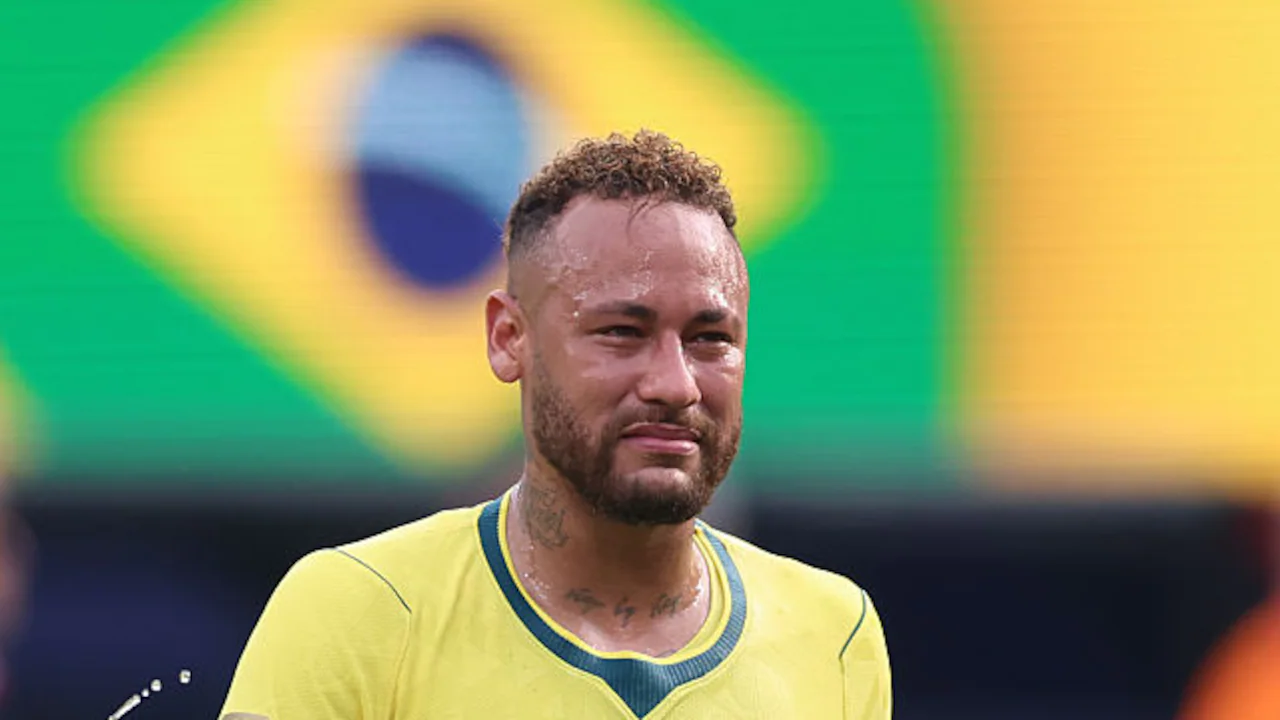
Brazil’s all-time leading scorer Neymar has officially confirmed his retirement from international football, bringing the curtain down on a career that spanned more than 16 years with the national team. The 34-year-old gave an update on the decision after Santos secured a 4-2 victory over Venezuela’s Universidad Central in the Copa Sudamericana, ending speculation over his international future following Brazil’s exit from the 2026 FIFA World Cup. Brazil’s campaign ended in the Round of 16 after a defeat to Norway, with Neymar making what turned out to be his final appearance for the five-time world champions.
The veteran forward said he leaves the national team with no regrets, insisting he had always given everything while representing his country.
“My time with the national team is over. I made history, I was very happy, I gave my blood, my life, I always fought for the yellow jersey, but now I don’t want to anymore,” Neymar said after the match as quoted by Goal.com
Advertisement
The announcement marks the end of one of the most decorated international careers in Brazilian football. Neymar finishes as Brazil’s all-time leading goalscorer and represented the country in multiple FIFA World Cups, Copa America tournaments and Olympic competitions.
Attention has now shifted fully to his club career with Santos, where he also addressed recent reports claiming he had criticised and intimidated younger teammates in the dressing room following a league match.
The former Brazil captain dismissed those reports, saying his comments after the game were aimed only at demanding higher standards from the team.
“It is sad and annoying, but it is not my fault. These stories reach a lot of people,” Neymar said.
Advertisement
“I spoke after the match, demanded better, and said we could not afford to be so careless. You cannot give away a draw like that. As captain, I have every right to say that. Lucas Verissimo and Gabigol also spoke to the players,” he added.
Despite the off-field speculation, Neymar played his part in Santos’ 4-2 win over Universidad Central, helping the Brazilian club advance to the Round of 16 of the Copa Sudamericana, where they will face Ecuadorian side Macara.
(Except for the headline, this story has not been edited by NDTV staff and is published from a syndicated feed.)
Featured Video Of The Day
Yamal Laughs At Paredes vs Gavi ‘Fight Of The Year’ Poster During Parade
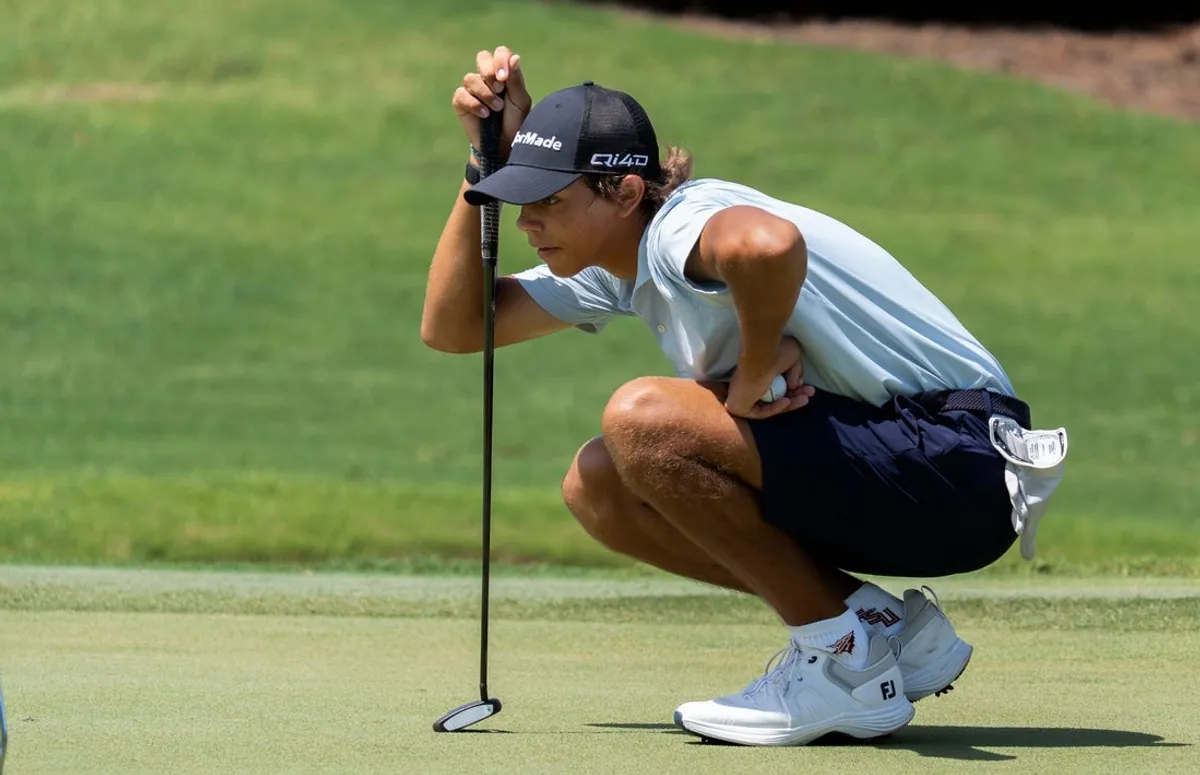
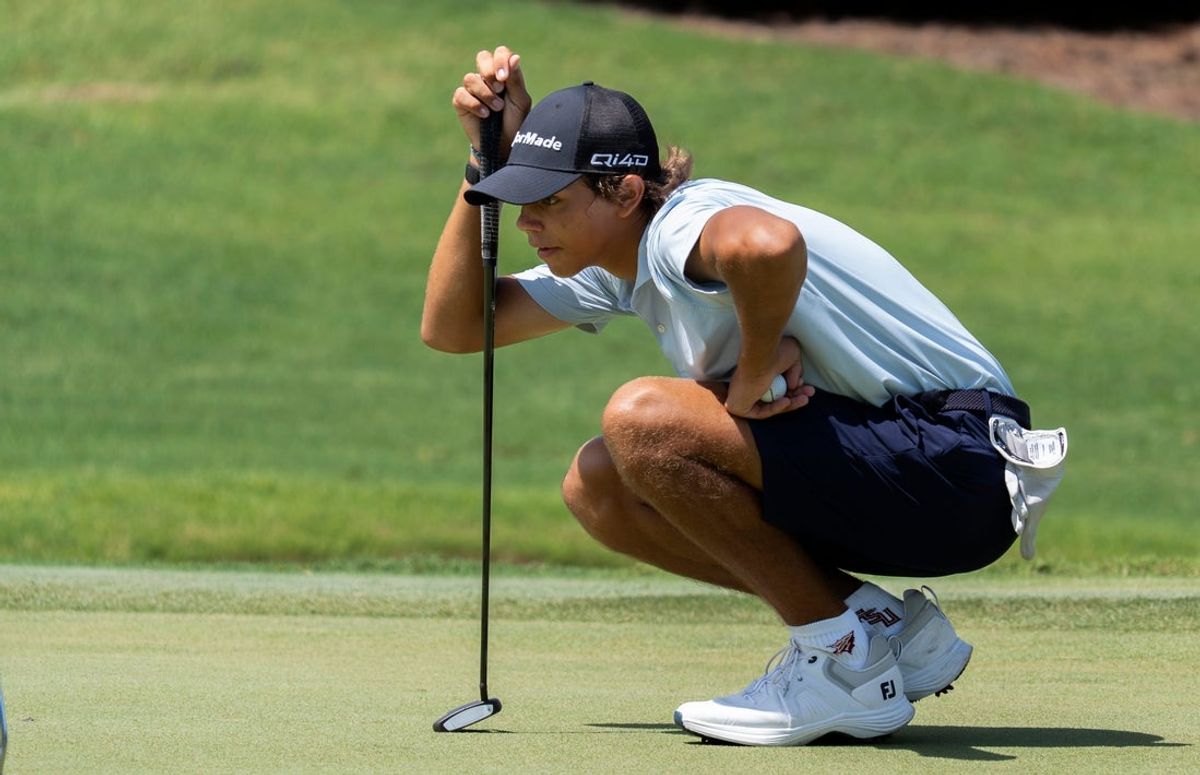
Charlie Woods lines up a putt during the 109th Florida Amateur Championship at The Club at Admiral’s Cove on June 11, 2026 in Jupiter, Florida.
Charlie Woods, the 17-year-old son of Tiger Woods, sits just above the cut line after the first round of the Junior PGA Championships on Tuesday in Frisco, Texas.
Woods, from Jupiter, Fla., is tied for 53rd place after shooting a 3-over-par 75 at Fields Ranch’s East Course. The top 60 players and ties will advance after the second round, and currently 71 players are in position to move on.
Looking to build on a tie for ninth at the event last year, Woods started slowly on Tuesday, making bogeys on two of the first four holes. He ended the day with three birdies, four bogeys and a double bogey at the par-4 ninth hole.
That added up to leave Woods seven strokes behind the leader, Kailer Stone of Alameda, Calif., who carded a 68. Maxwell Milton of Polson, Mont.; Theodore Snyder of Gig Harbor, Wash.; and Rory Asselta of Ramsey, N.J.; all sit one stroke behind Stone.
Advertisement
The second round will be played on Fields Ranch’s West Course.
Last week, Woods failed to reach the match-play portion of the U.S. Junior Amateur, coming up short in a playoff after stroke play at Saucon Valley Country Club in Bethlehem, Pa.
PSG’s Bradley Barcola verbally agrees to join Liverpool, but clubs apart on valuation, Real Madrid have no plans to sell Vinicius Jr and Everton want around £70m for Iliman Ndiaye.
Paris St-Germain and France forward Bradley Barcola, 23, has verbally agreed to join Liverpool, but there is no certainty over a move as there is a significant gap between the two clubs on the fee. (L’Equipe – in French), external
Barcola’s possible move to Liverpool could lead to Ligue 1 champions PSG trying to beat Real Madrid to the signing of Ivory Coast winger Yan Diomande, 19, from RB Leipzig.(L’Equipe – in French), external
Real Madrid do not intend to sell 26-year-old Brazil forward Vinicius Jr, whose contract with the Spanish club runs out next summer, and are confident he will agree a new deal with the club. (Sky Sports), external
Advertisement
Newcastle Unitedsources insist the club are not in talks with Arsenal over a deal to sell Magpies skipper Bruno Guimaraes, 28, to the Gunners and the Tyneside club expect the Brazil international to return to training on Friday. (Northern Echo), external
Bayern Munich have no plans to sell Colombia forward Luis Diaz, despite reported interest from Al-Hilal, and the 29-year-old has told the German champions he wants to stay with them. (Sky Sports Germany), external
Former Arsenal defender Takehiro Tomiyasu, 27, is training with Crystal Palace having left Ajax in the summer, but no talks have taken place about the Japan international joining the Eagles. (Talksport), external
Every successful era in WWE has been defined by stars the company was determined to build. Sometimes those decisions resonate with fans, while other times it becomes a matter of frustration for them. Ever since Triple H took creative control of WWE, he has pushed several superstars into the spotlight. But not every superstar received a good response from fans.
It has been mainly because of how manufactured their push felt. There have been times when fans resisted seeing certain superstars in the big spots and marquee storylines. However, the creative team continued to thrust them into major programs, leading to frustrations among fans. The current roster of RAW and SmackDown faces the same recurring issue in recent times.
Thanks for the submission!
Advertisement
Here are five WWE superstars that Triple H is shoving down fans’ throats:
Advertisement
#5. Jade Cargill
The push behind Jade Cargill has been relentless from the moment she arrived in WWE. Triple H has booked her as an unstoppable force, positioning The Storm in marquee spots and giving her major championship reigns. Despite her relative inexperience, WWE has constantly given Cargill prominent feuds, high-profile matches and big storylines. Even when fans showed disinterest, the company forcibly kept pushing her on major spots and title reigns.
The Storm receives champion-level exposure and creative protection even when her character has started to lose its spark. Rather than allowing her to refine her craft organically and improve her promo skills, management continues to feature Jade Cargill in dominant wins over seasoned veterans. Her constant mainevent showcase therefore feels heavily manufactured, giving off the impression that WWE is prioritizing her marketability and physical aura.
#4. Danhausen
Danhausen is one of the most fascinating characters in WWE right now, and there’s no denying it. His eccentric cursed persona has received an unexpected mainstream boost, becoming a major attraction in recent times. But there was a time when Danhausen’s segment looked actually fresh and exciting. However, Triple H has been featuring the 35-year-old excessively across all platforms to the point where his segments and TV times look superfluous.
The company has been showcasing the same backstage segments where Danhausen is experimenting in his lab. Besides, his “You are cursed” gimmick has been exploited to the point where it no longer feels like a major thing. WWE’s overexposure of Danhausen has eroded the uniqueness of his character, making a lot of fans frustrated. The constant cursing bits and redundant occupying of screentime every week make it feel like forced comedy relief.
Advertisement
#3. Austin Theory & #2. Bron Breakker (The Vision)
Bron Breakker and Austin Theory are two superstars that Triple H is arguably shoving down our throats. As the central focal point of The Vision, they have dominated Monday Night Raw’s main event landscape. Triple H has protected Breakker by constantly booking him as an unstoppable force. Meanwhile, Theory continuously lands in prominent storylines and tag team gold despite receiving mixed crowd reactions.
The perception of them being forcibly pushed comes from how heavily scripted their dominance feels. Week after week, The Vision wreaks havoc and stands tall on Monday Night Raw, eclipsing everyone under their shadow. The amount of push The Vision receives does not quite align with the individual members’ character. While Austin Theory doesn’t look believable, Bron Breakker has lost his credibility of late by suffering setbacks when it mattered the most.
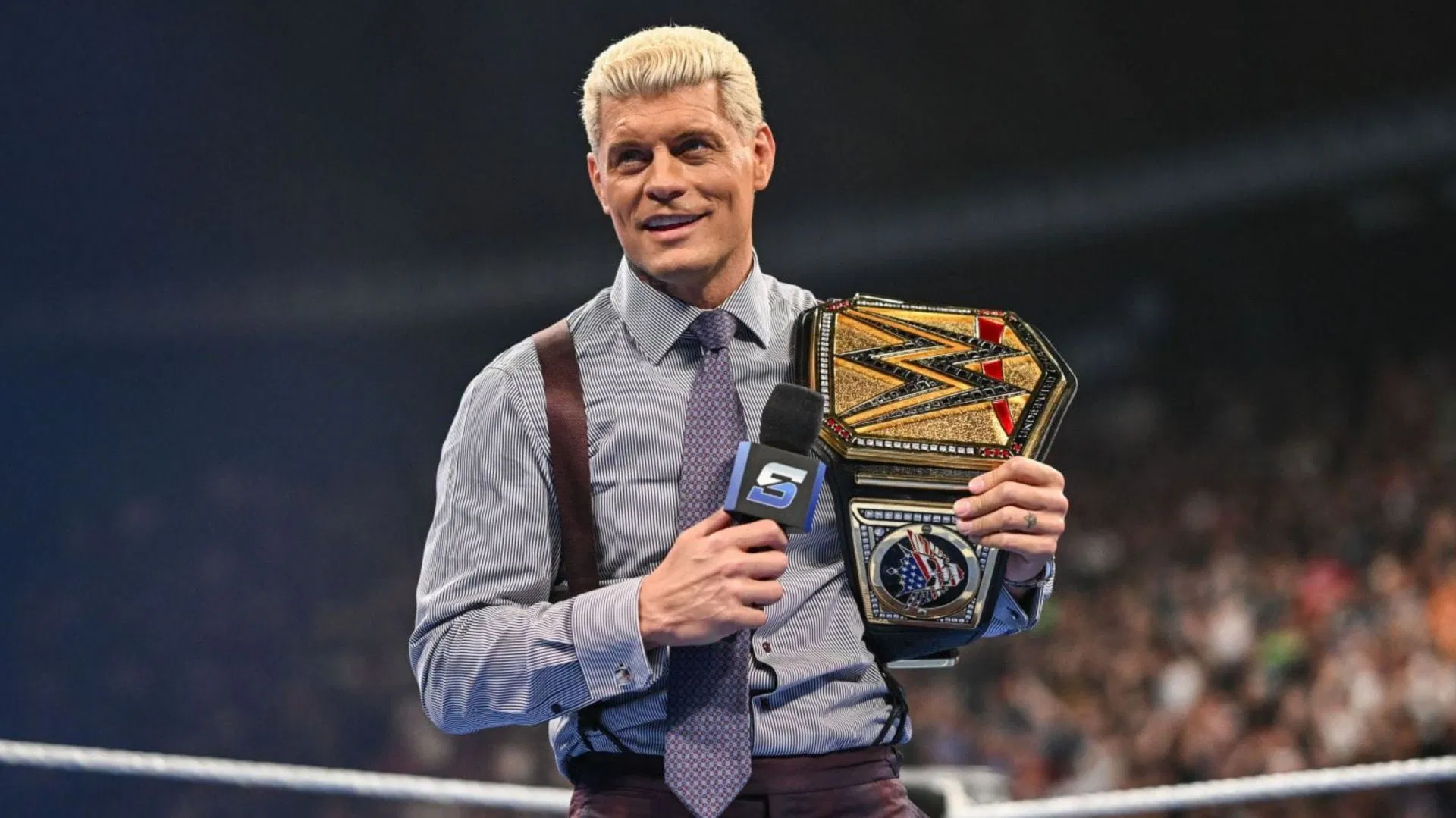
#1. WWE star Cody Rhodes
Cody Rhodes remains Triple H’s ultimate pet project, often centered in main event title chases and marquee matches. As the undisputed face of the company, the 41-year-old occupies an overwhelming amount of WWE’s weekly television, promotional material and many event slots. Hunter’s booking treats Rhodes as a nearly invincible hero who rarely loses and regularly closes PLEs. The core issue lies in how WWE sacrifices every other superstar just for the sake of The American Nightmare.
Drew McIntyre had to drop his world title just because Triple H wanted Cody Rhodes to walk into WrestleMania 42 as champion. Sami Zayn had to lose his world title in just nine days only because the company wanted to put Cody in the title picture with Punk at SummerSlam. It gave rise to a collective perception as if the company revolves only around The American Nightmare. This is a clear example of how Triple H has been shoving Cody Rhodes down fans’ throats.
Advertisement
Why did you not like this content?
Advertisement
Was this article helpful?
Thank You for feedback
Get all the hottest wrestling news FIRST by clicking here
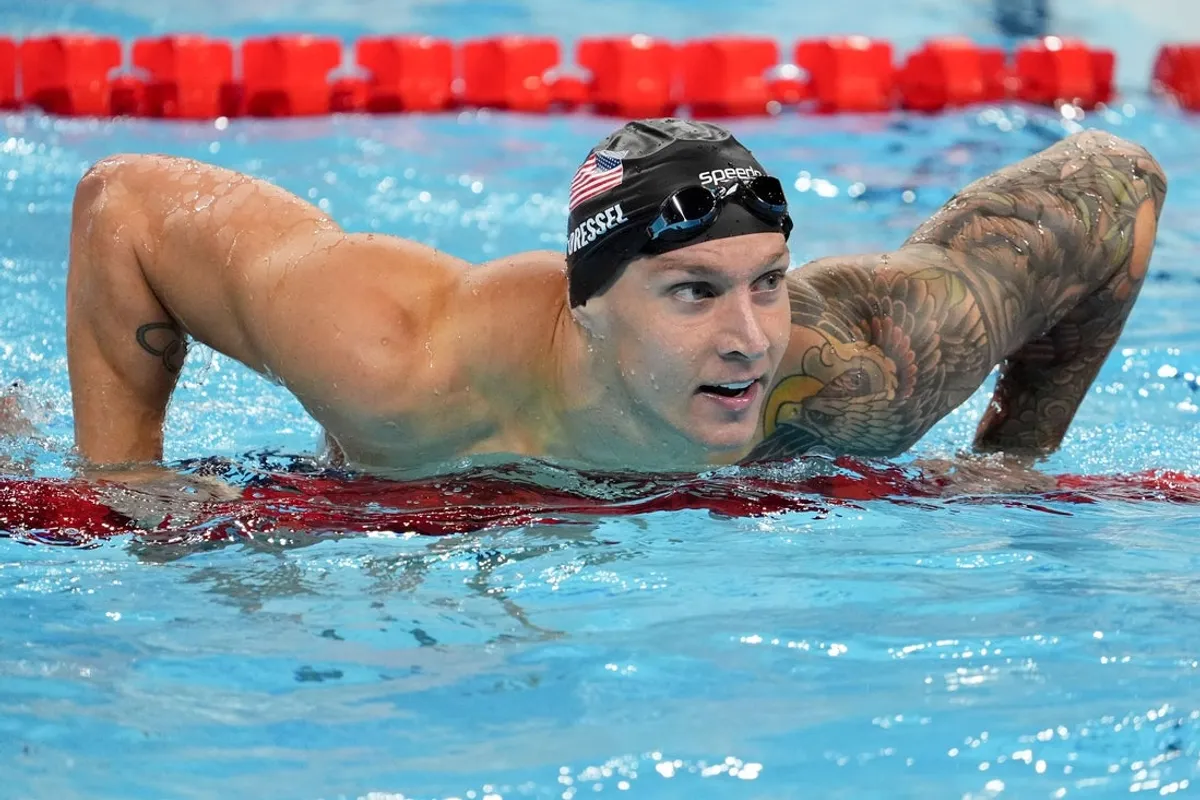
Aug 4, 2024; Nanterre, France; Caeleb Dressel (USA) in the men’s 4 x 100-meter medley relay final during the Paris 2024 Olympic Summer Games at Paris La Défense Arena. Mandatory Credit: Rob Schumacher-Imagn Images
Anna Moesch topped her own national record while winning the women’s 100-meter freestyle on Tuesday as the U.S. Swimming Championships got underway in Irvine, Calif.
Moesch finished in 51.88 seconds, topping the U.S. mark of 51.93 that she established in London two months ago. Her time was also a meet record, besting the 52.04 mark set by Torri Huske last year.
Speaking about her improvement this year, the 20-year-old told NBC Sports, “Think I’ve changed a lot about every part of my stroke, my kick, … my underwaters, my start. I’m really learning how to piece them all together.”
Rylee Erisman was the runner-up at 52.92, and Liberty Clark captured third place in 52.97.
Caeleb Dressel won the men’s 100-meter freestyle in 47.70, with the nine-time Olympic gold medalist prevailing in an individual event for the first time in two years.
Advertisement
His last major solo win was in the 100-meter butterfly at the 2024 U.S. Olympic Trials, and the 29-year-old last won the U.S. title in the 100 freestyle in 2022, per NBC Sports.
“I haven’t seen a one next to my name in a long time, so it feels good,” Dressel told NBC Sports. “I love this sport so much. It feels good to be back swimming, enjoying myself. It feels like freshman year right now, pretty good time for freshman year.”
Brooks Curry (47.81) and Patrick Sammon (47.87) finished just behind Dressel.
Advertisement
In the men’s 200-meter butterfly, Luca Urlando prevailed while competing in the event for the first time since he captured the world championship in 2025. Urlando won in 1 minute, 54.45 seconds, topping Ilya Kharun (1:54.59) and Enzo Solitario (1:54.99).
Hannah Bellard earned the women’s 200-meter butterfly crown in 2 minutes, 6.86 seconds. Bella Sims (2:07.19) and Lindsay Looney (2:07.26) took second and third place, respectively.
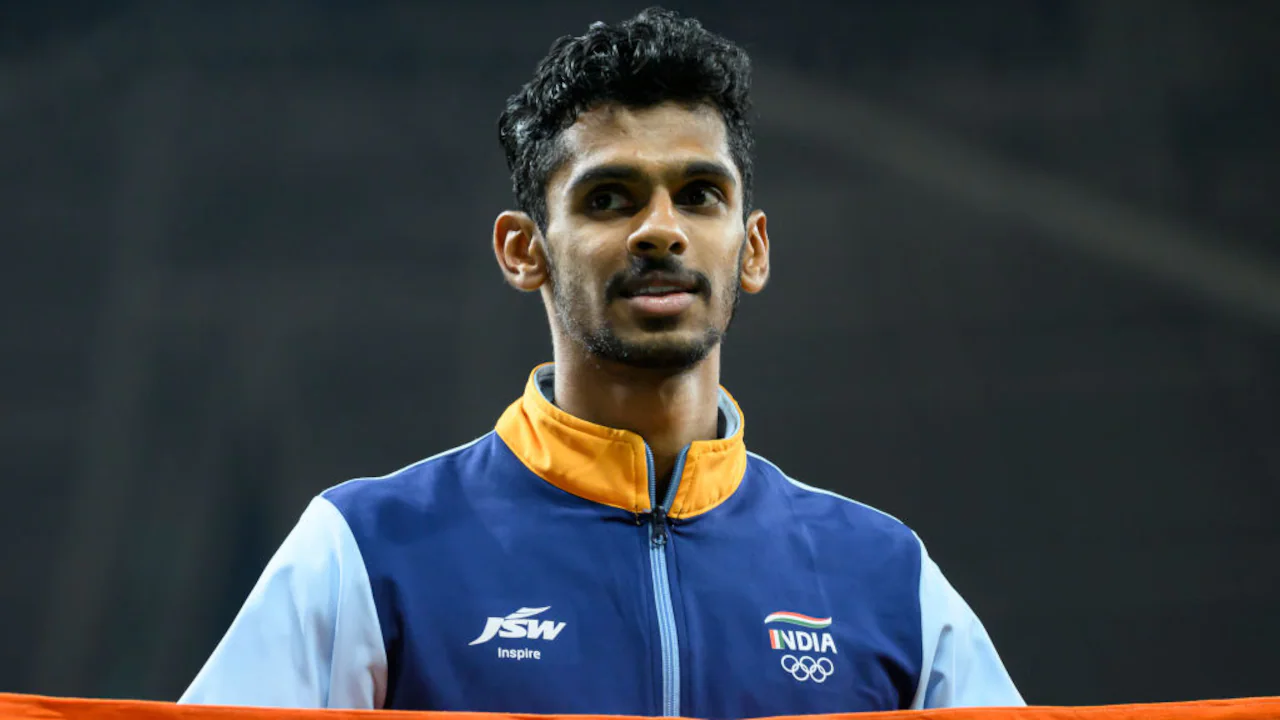
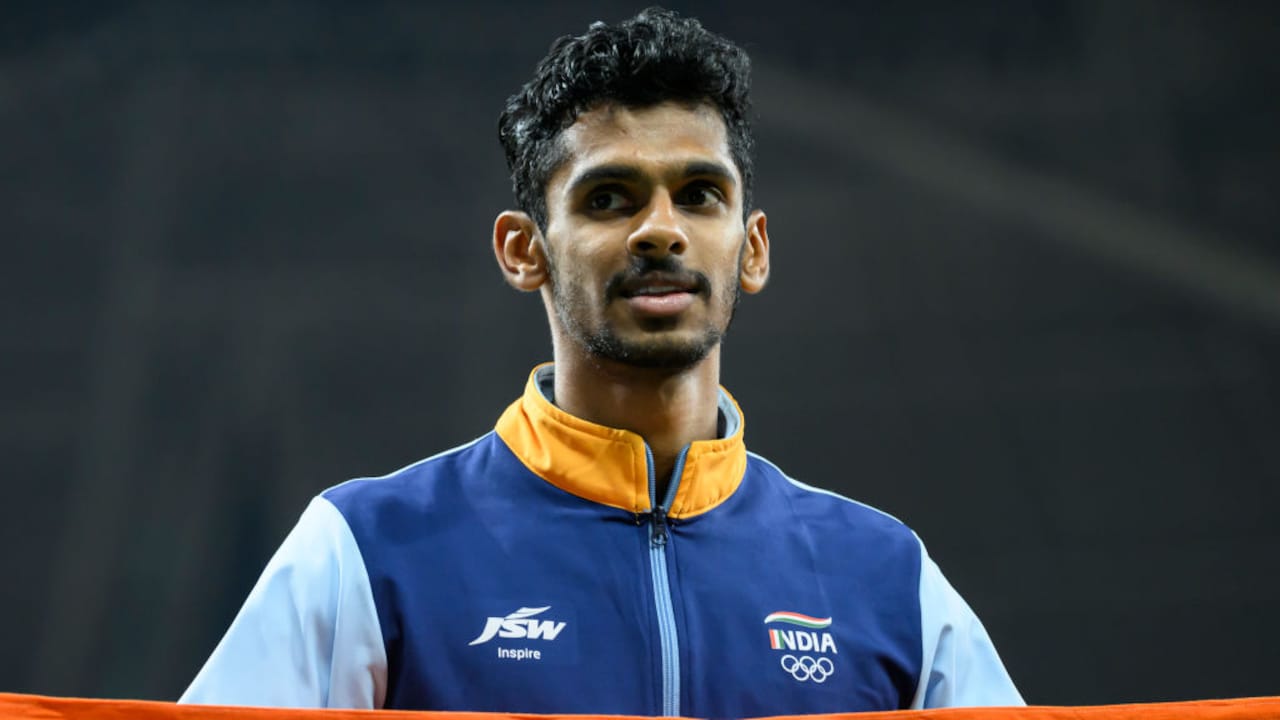
Commonwealth Games 2026 LIVE Updates Day 7: After adding two more medals to their tally, Indian contingent aims for more on Day 7 of Commonwealth Games 2026 in Glasgow.










































You must be logged in to post a comment Login