Who will Enzo Maresca bring with him to Man City? Guardiola coach, trusted ally, returning star – Manchester Evening News
Need to know
Manchester City head coach Enzo Maresca will bring in his own backroom team as he replaces Pep Guardiola
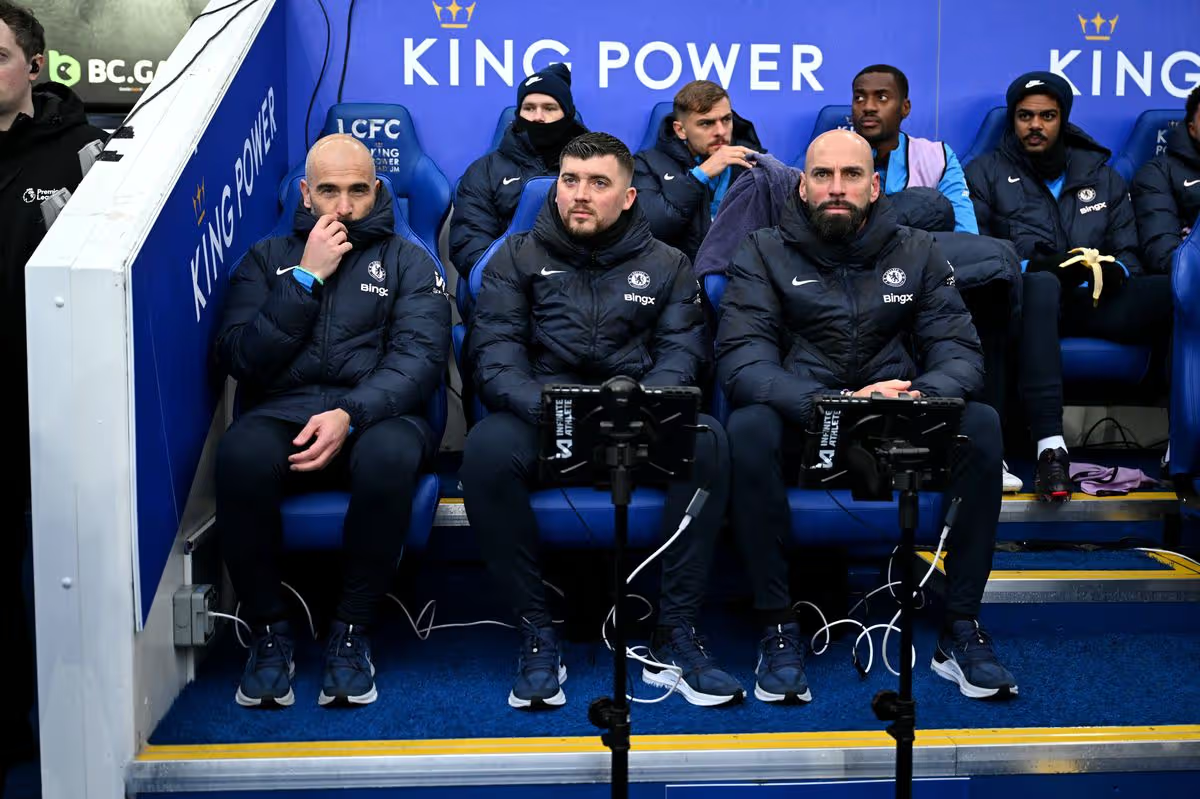
New Manchester City head coach Enzo Maresca, joined by his assistants Danny Walker and Willy Caballero, at Leicester when returning as Chelsea boss(Image: Darren Walsh/Chelsea FC via Getty Images)
Everything you need to know about Enzo Maresca’s backroom staff after Manchester City arrival:
Maresca has become the new City head coach with his arrival being confirmed earlier this week.
The Italian, who previously served as Pep Guardiola’s assistant, has signed a three-year deal at the Etihad Stadium.
City’s players who aren’t at the World Cup will report for pre-season on Monday, July 20. However, Maresca is already hard at work behind the scenes to get the Blues prepared for the new campaign.
Maresca is set to confirm his backroom team before the players return and it is expected he will appoint six new members of staff.
Manel Estiarte, Lorenzo Buenaventura, Xabi Mancisidor, Pep Lijnders and Kolo Toure all left City when Guardiola departed. However, set-piece coach James French, who joined from Liverpool last summer, remains from the Guardiola era.
Roberto Vitiello is the first name expected to join Maresca. He worked with the new manager at Chelsea and Leicester having played alongside him at Palermo in Italy.
A familiar face also set to return is Willy Caballero. He made 48 appearances for the Blues and played alongside Maresca at Malaga.
Danny Walker worked with Maresca during his days with the City academy. Maresca hired him at Chelsea and Leicester, meaning he could return to City this summer.
Goalkeeper coach Michele De Bernardin and fitness coach Marcos Alvarez first worked with Maresca at Parma. Javier Molina Caballero was also an analyst for the Italian club and worked with Maresca at Chelsea and Leicester.
All six men are currently out of work since Maresca left Chelsea in January. Read the full story here.
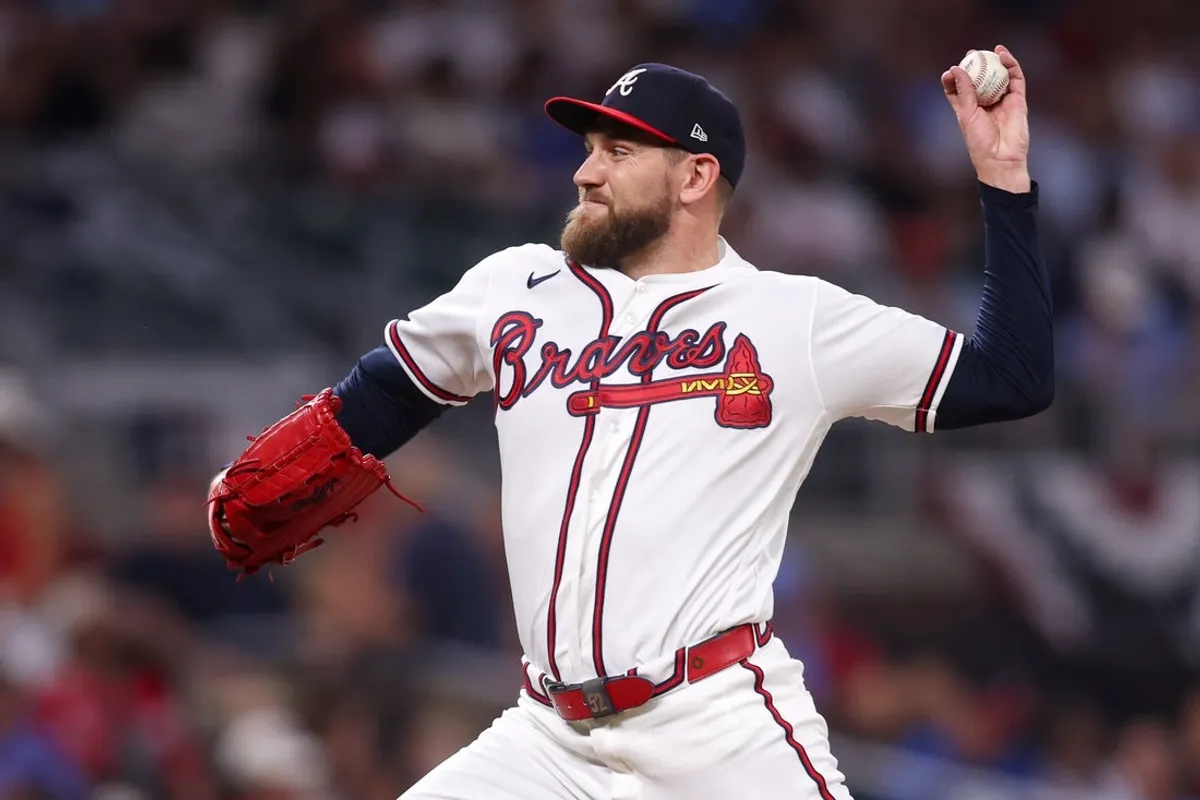
Jul 2, 2026; Atlanta, Georgia, USA; Atlanta Braves pitcher Dylan Lee (52) throws against the St. Louis Cardinals in the seventh inning at Truist Park. Mandatory Credit: Brett Davis-Imagn Images
The Atlanta Braves’ recent struggles may be spilling into the bullpen, an area of the team that has been solid for most of the season.
Atlanta, which will open a four-game series on Friday night against the visiting New York Mets, saw its relievers melt down on Thursday and allow eight runs in an 11-5 loss to the St. Louis Cardinals.
The Braves have lost 14 of their last 19 games to see their lead in the National League East shrink to 2 1/2 games over the Philadelphia Phillies.
New York, which is in last place in the division, did not play on Thursday. The Mets lost a three-game series at Toronto and have dropped 10 of their last 12 games.
The Atlanta bullpen, which posted a 2.14 ERA in June, finished the final four innings on Wednesday without allowing a hit.
Advertisement
It was a different story on Thursday.
Dylan Lee, who entered the game with an 0.95 ERA, allowed three runs in one-third of an inning and saw his ERA grow to 1.64. Reliable Tyler Kinley gave up three runs in two-thirds of an inning, and Ian Hamilton and James Karinchak each gave up one run.
“Dylan has pitched a lot, so it’s something we’ve got to keep an eye on,” Atlanta manager Walt Weiss said. “We always talk about trying to keep those guys strong all the way through. (Lee) was good to go, and he’s been virtually untouchable this year.”
Atlanta setup man Robert Suarez is out with right elbow inflammation and won’t return until after the All-Star break.
Advertisement
This will be the second series between Atlanta and New York this season. The Mets won two of three games from June 12-14 in New York.
The Mets will send Christian Scott (2-0, 3.20 ERA) to the mound on Friday to face fellow right-hander Grant Holmes (4-4, 3.96) of the Braves.
Scott will make his second start since spending two weeks on the injured list with a hip impingement. He returned on Saturday to start against Philadelphia and threw 4 1/3 innings, allowing two runs on three hits while striking out six in New York’s 6-2 victory.
Advertisement
“I feel great,” Scott said afterward. “Felt like I attacked the zone pretty well for the most part. Just established my off-speed stuff early in the game and then kind of just rode the wave off of that.”
Scott, who made nine starts as a rookie in 2024, missed all of 2025 after undergoing Tommy John surgery.
Since his return this spring, Scott has been reliable. In 10 starts, he has allowed more than three runs just one time — when he gave up four in 4 2/3 innings against St. Louis on June 11 before going on the injured list.
He has made one career start against the Braves, taking a loss after allowing three runs over six innings in 2024.
Advertisement
Holmes has made 15 starts, but his inability to pitch past the fifth inning in four of his last five starts caused the Braves to temporarily move him into a long relief role. In his last appearance against San Francisco on Saturday, he allowed just one hit over four scoreless innings in his team’s 5-0 loss.
Holmes has made two career starts against the Mets, going 0-1 with a 2.00 ERA and striking out 13 in nine innings.
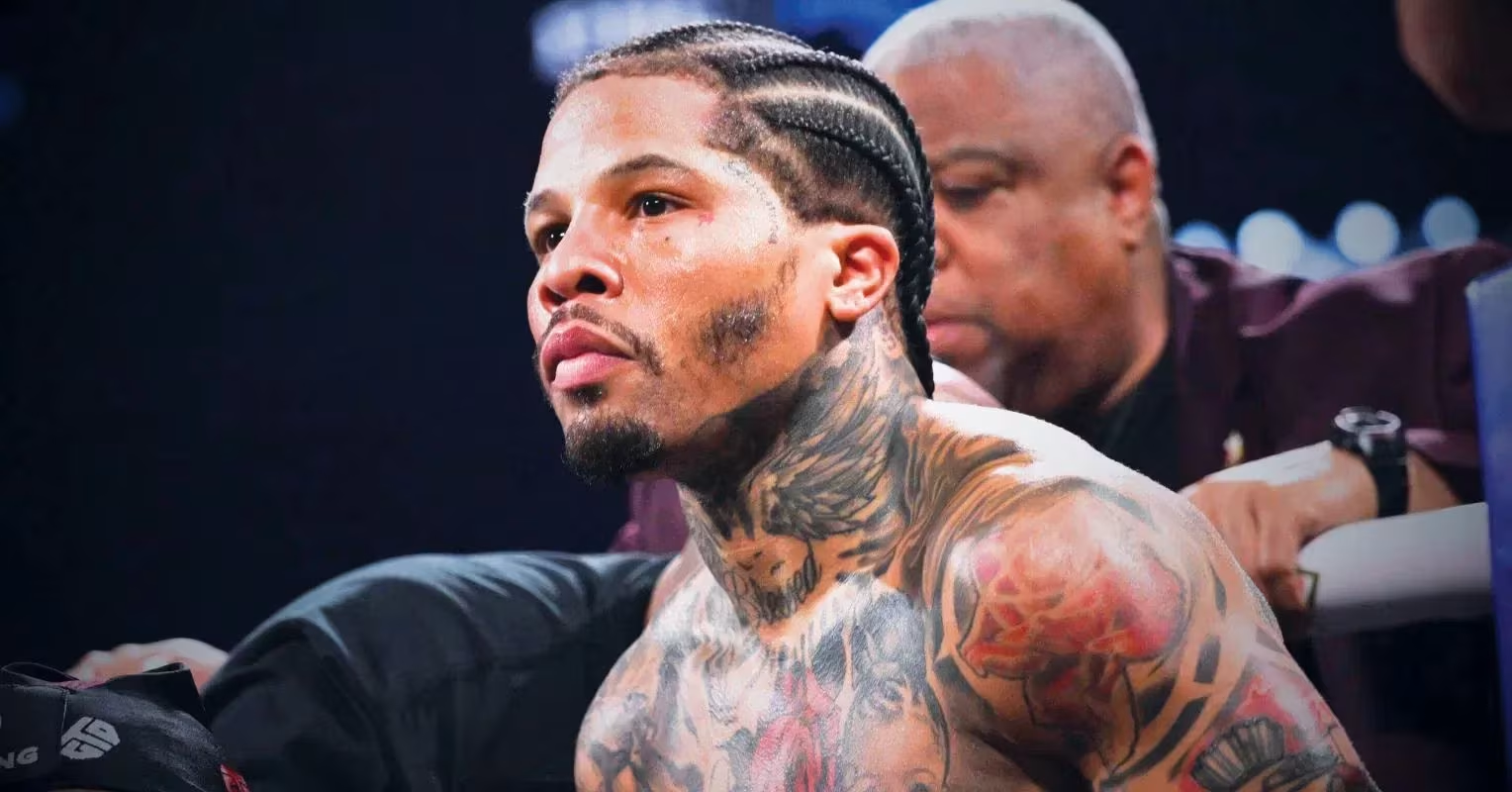
Gervonta Davis has revealed the name of a past legend that he would have loved to have shared the ring with.
Davis has competed throughout multiple divisions in his career, claiming world honours at super featherweight, lightweight and super lightweight.
Since first becoming world champion just under a decade ago, ‘Tank’ has beaten the likes of Ryan Garcia, Rolly Romero and Isaac Cruz, winning 30 professional fights, with 28 of those coming by knockout.
While those are options for the future, a resurfaced clip has seen Davis reflect on one big name from history that he would have loved to have tested his skills against.
“In the past? My weight class? Pernell Whitaker.”
Whitaker was a four weight world champion from lightweight to light middleweight, and is widely viewed as one of the greatest defensive boxers of all time, prompting his induction in the International Boxing Hall of Fame in 2006.
Advertisement
His final record stood at 40 wins from 46 professional fights, and a clash against Davis would have certainly been an intriguing match-up of styles.
Wimbledon is well underway and the upsets are starting to come thick and fast, with French Open champion and women’s fifth seed Mirra Andreeva the latest top seed to fall.
On the men’s side, fourth seed and title contender Ben Shelton lost in a match tiebreak against Finnish qualifier Otto Virtanen on Tuesday in the biggest upset of the tournament so far, while former semi-finalist Elina Svitolina has also made a premature exit.
Reigning champion and third seed Iga Swiatek survived an almighty scare in her first-round match against Taylor Townsend, while top seed Aryna Sabalenka now faces a tough third-round against Jelena Ostapenko.
Advertisement
Reigning men’s champion and top seed Jannik Sinner survived a scare of his own in the first round as he needed five sets to see off Serbia’s Miomir Kecmanovic, while seventh seed Novak Djokovic remains a possible semi-final opponent for the Italian.
Follow the top players’ progress with our seed tracker here:
Men’s seeds
after second round
Advertisement
Advertisement
Jannik Sinner (ITA) – ✅ plays Jenson Brooksby (USA) in third round
Alexander Zverev (GER) – ✅ plays Marcos Giron (USA) in third round
Felix Auger-Aliassime (CAN) – ✅ plays Michael Zheng (USA) in third round
Alex de Minaur (AUS) – ✅ plays Zachary Svajda (USA) in third round
Taylor Fritz (USA) – ✅ plays Lorenzo Sonego (ITA) in third round
Novak Djokovic (SRB) – ✅ plays Arthur Rinderknech [26] (FRA) in third round
Daniil Medvedev – ✅ plays Jan-Lennard Struff in third round
Flavio Cobolli (ITA) ✅ plays Karen Khachanov [19] in third round
Alexander Bublik (KAZ) ✅ – plays Frances Tiafoe [17] (USA) in third round
Casper Ruud (NOR) ❌ – knocked out first round by Hubert Hurkacz 4-6 2-6 6-7(7)
Andrey Rublev ❌ – knocked out first round by Roman Safiullin (Q) 4-6 7-6(6) 6-3 3-6 6-7(12)
Jiri Lehecka (CZE) ✅ – plays Jaume Munar (ESP) in third round
Luciano Darderi (ITA) ❌ – knocked out first round by Ethan Quinn 7-6 7-5 6-2
Jakub Mensik (CZE) ❌ – knocked out second round by Grigor Dimitrov 7-6, 4-6, 7-5, 6-4
Learner Tien (USA) ❌ – knocked out by second round by Marton Fucsovics 6-7 6-4 7-6 6-3
Frances Tiafoe (USA) – ✅ plays Alexander Bublik [10] (KHZ) in third round
Francisco Cerundolo (ARG)❌ knocked out first round by Jaume Munar 6-1 6-4 6-3
Karen Khachanov – ✅ plays Flavio Cobolli [9] in third round
Arthur Fils (FRA) ❌ – knocked out second round by Matteo Berrettini 6-4 7-5 3-6 6-3
Tommy Paul (USA) – ✅ plays Hubert Hurkacz (POL) in third round
Alejandro Davidovich Fokina (ESP) – ✅ plays Marton Fucsovics (HUN) in third round
Rafael Jodar (ESP) – ✅ plays Shintaro Mochizuki (JPN) in third round
Joao Fonseca (BRA) – ❌ knocked out by Roman Safiullin (Q) in third round 6-3 6-3 6-3
Arthur Rinderknech (FRA) – ✅ plays Novak Djokovic [7] (SRB) in third round
Cameron Norrie (GBR) ❌ knocked out first round by Michael Zheng (Q) 6-7 6-2 6-7 6-3 7-6
Ugo Humbert (FRA) ❌ knocked out by Zizou Bergs 6-2 7-5 4-6 3-6 6-3
Brandon Nakashima (USA) ❌ knocked out second round by Jan-Lennard Struff 6-4 6-7(6) 6-7(5) 7-6(6) 6-7(7)
Tomas Martin Etcheverry (ARG) ❌ knocked out first round by Lorenzo Sonego 4-6 4-6 7-6(2) 6-7(4)
Alejandro Tabilo (CHI) ❌ knocked out first round by Kamil Majchrzak 6-3 7-5 7-5
Ignacio Buse (PER) ❌ knocked out second round by Jenson Brooksby 6-2 6-2 6-3
Matteo Arnaldi (ITA) ❌ knocked out first round by Quentin Halys 6-3 1-6 6-7(5) 3-6
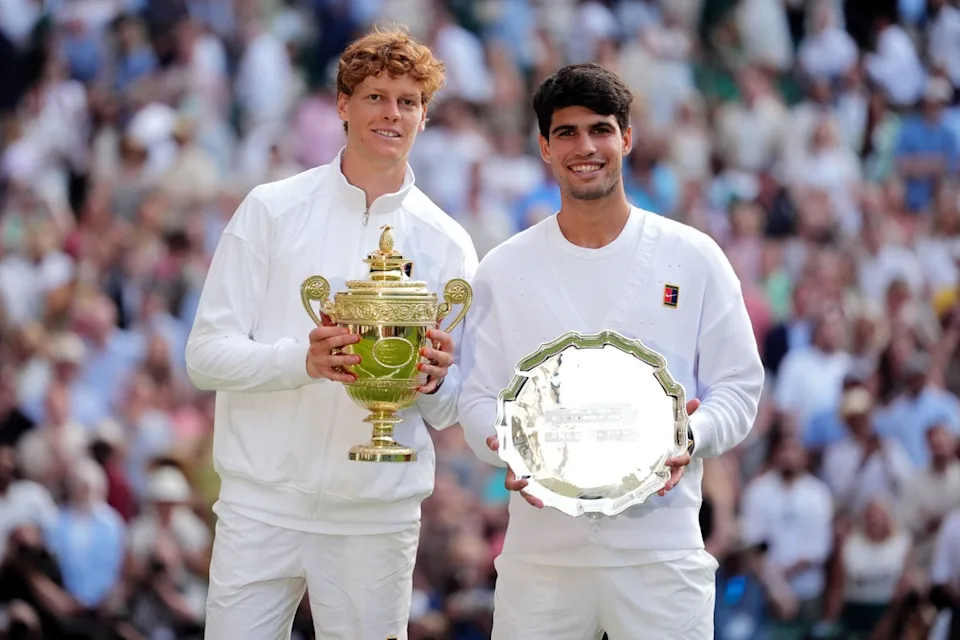
Jannik Sinner defeated Carlos Alcaraz in last year’s final (PA Wire)
Iga Swiatek is the defending women’s champion and the third seed (Getty)
Women’s seeds
after second round
Aryna Sabalenka – ✅ plays Jelena Ostapenko (LAT) in third round
Elena Rybakina (KAZ) – ✅ plays Elise Mertens [25] (BEL) in third round
Iga Swiatek (POL) – ✅ plays Alexandra Eala [29] (PHI) in third round
Jessica Pegula (USA) – ✅ plays Jessica Bouzas Maneiro (ESP) in third round
Mirra Andreeva ❌ knocked out second round by Barbora Krejcikova 4-6 7-5 6-4
Amanda Anisimova (USA) – ✅ plays Madison Keys [26] (USA) in third round
Coco Gauff (USA) – ✅ plays Clare Liu (USA) in third round
Elina Svitolina (UKR) ❌ – knocked out first round by Daria Snigur 5-7 2-6
Linda Noskova (CZE) – ✅ plays Sorana Cirstea [17] (ROM) in third round
Karolina Muchova (CZE) – ✅ plays Mananchaya Sawangkaew (THA) in third round
Belinda Bencic (SUI) – ✅ plays Anna Kalinskaya [19] in third round
Marta Kostyuk (UKR) – ✅ plays Emma Navarro [23] (USA) in third round
Jasmine Paolini (ITA) – ✅ plays Maria Sakkari (GRE) in third round
Naomi Osaka (JPN) – ✅ plays Daria Kasatkina (AUS) in third round
Diana Shnaider ❌ – knocked out second round by Liudmila Samsonova 4-6 6-4 2-6
Iva Jovic (USA) – ✅ plays Ekaterina Alexandrova [18] in third round
Sorana Cirstea (ROU) ✅ – plays Linda Noskova [9] (CHZ) in third round
Ekaterina Alexandrova – ✅ plays Iva Jovic [16] (USA) in third round
Anna Kalinskaya – ✅ plays Belina Bencic [11] (SUI) in third round
Maja Chwalinska (POL) ❌ – knocked out first round by Mananchaya Sawangkaew 2-6 7-5 6-2
Marie Bouzkova (CZE) – ✅ plays Liudmila Samsonova in third round
Leylah Fernandez (CAN) ❌ – knocked out first round by Janice Tjen 6-1 7-6
Emma Navarro (USA) – ✅ – plays Marta Kostyuk [12](UKR) in third round
Clara Tauson (DEN) ❌ – knocked out first round by Maria Sakkari 6-3 6-3
Elise Mertens (BEL) – ✅ plays Elena Rybakina [2] (KHZ) in third round
Madison Keys (USA) – ✅ plays Amanda Anisimova [6](USA) in third round
Anastasia Potapova ❌ – knocked out first round by Jessica Bouzas Maneiro 6-2 6-3
Ann Li (USA) ❌ – knocked out first round by Zeynep Sonmez 5-7 6-1 4-6
Alexandra Eala (PHI) – ✅ plays Iga Swiatek [3] (POL) in third round
Emma Raducanu (GBR) ❌ – withdrew due to injury
Donna Vekic (CRO) ❌ – knocked out first round by Ashlyn Krueger 6-3 6-7(3) 4-6
Katerina Siniakova (CZE) ❌ – knocked out second round by Nikola Bartunkova 6-3 3-6 7-5
A top Athletics outfield prospect still can’t feel his lower half after spinal surgery was needed to repair fractured vertebrae following a scary collision with a teammate in Double-A ball.
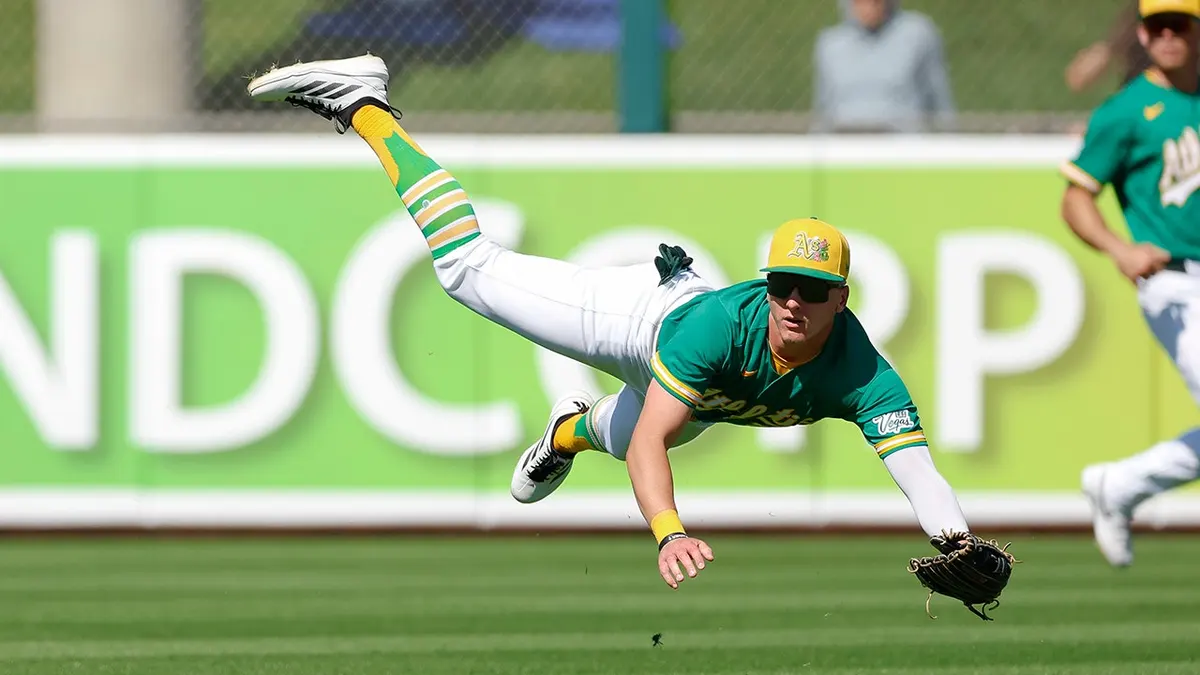
Ryan Lasko, a 24-year-old outfielder in the Athletics system, was injured during a game with Double-A Midland RockHounds after diving to catch a ball while playing center field.
The problem was Lasko’s right field teammate was also barreling down to catch the ball. They both gave up their bodies for the potential catch and collided as they hit the turf.
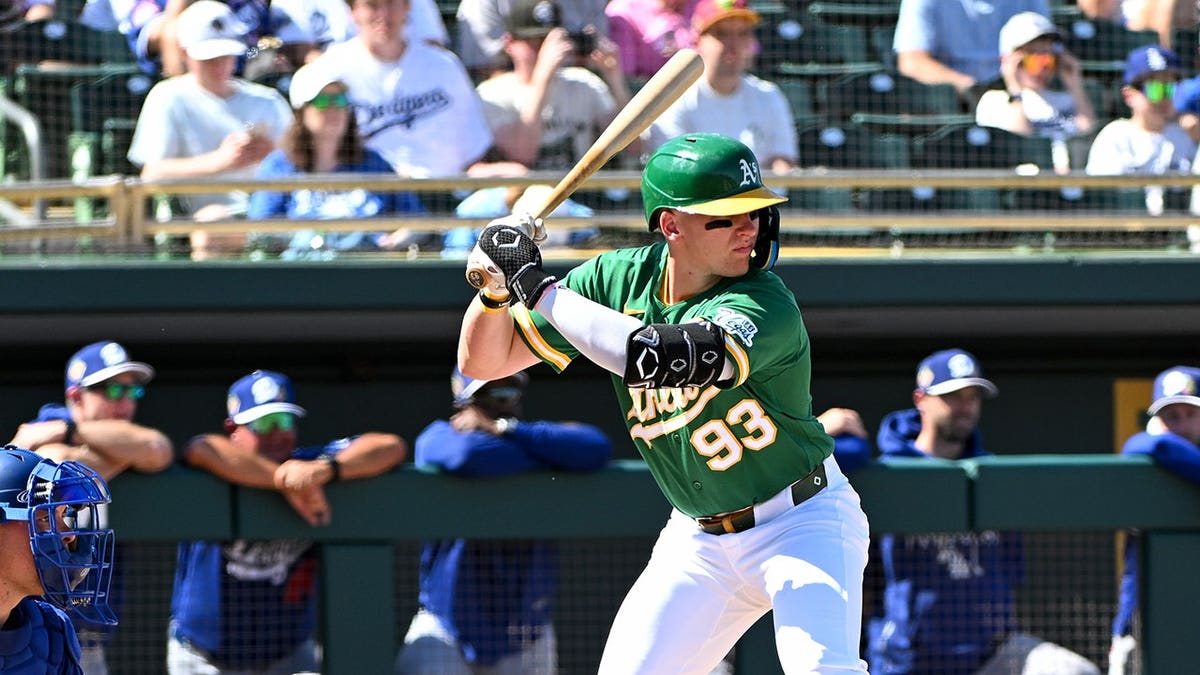
Ryan Lasko of the Athletics makes a jumping throw during a Spring Training game against the Los Angeles Dodgers at HoHoKam Stadium on March 8, 2026, in Mesa, Arizona.(Brandon Sloter/Getty Images)
Lasko’s teammate, Devin Taylor, was able to get up and field the rolling ball that split the two defenders, but Lasko stayed on the ground in what was a pretty ugly crash.
After he was carted off, it was found that Lasko fractured his C6-C7 vertebra, according to MLB.com. He needed spinal decompression and stabilization surgery to repair the injury, and he was in stable condition.
However, due to swelling, Lasko still doesn’t have feeling in his lower half just yet.
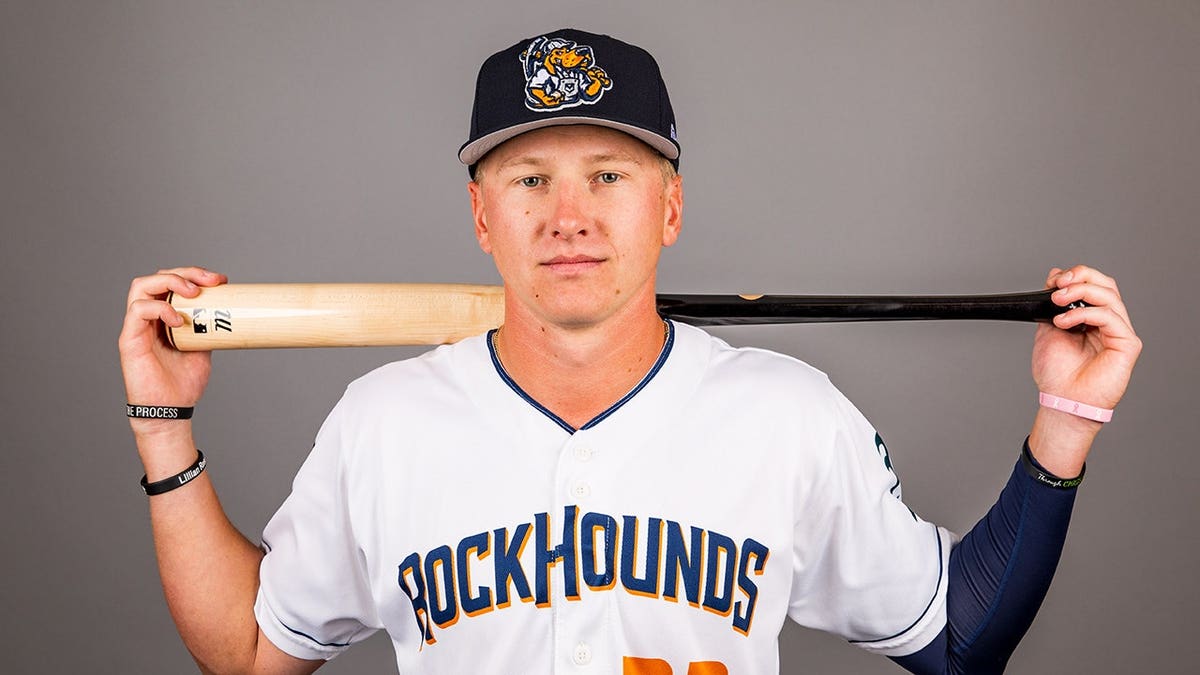
Ryan Lasko of the Midland Rockhounds poses for a photo during the Midland Rockhounds photo day at Momentum Bank Ballpark on Monday, March 30, 2026, in Midland, Texas.(John E. Moore III/MLB Photos)
Athletics manager Mark Kotsay discussed Lasko’s injury on Wednesday, saying that “there’s hope the feeling comes back.”
Lasko is one of the Athletics’ top prospects, entering the season as the franchise’s No. 18 prospect, per MLB Pipeline. He was taken by the Athletics’ in the 2023 MLB Draft in the second round.
While he opened the season in Double-A, Lasko made it to Triple-A Las Vegas last season.
Advertisement
Ryan Lasko of the Athletics bats during the second inning of a spring training game against the Los Angeles Dodgers at Hohokam Stadium on March 8, 2026, in Mesa, Arizona.(Diamond Images/Getty Images)
Some years ago, the chief executive officer of a cybersecurity firm, fresh off the biggest deal of his career, resolved to celebrate as avid golfers do: with a round at a course he’d long dreamed of playing. The name of that course was not Augusta National, which would have been an easier get.
After trying and failing to gain access through his tech-world contacts, the CEO turned to his last and best resort. His firm, the sponsor of a PGA Tour event, gave him a direct line to Ponte Vedra, where a top executive had pledged to help arrange an outing on any course he wished. In went the request, and back came the answer.
Sorry, that’s one place we can’t do.
“So, that gives you a sense of how we’ve operated here,” Randy Fry said the other day.
Advertisement
IT WAS A BLAZING AFTERNOON in June, and Fry was sitting on a shaded patio in the hills about an hour south of San Francisco. Behind him stretched the green folds of a course where he has hosted guests for decades — if only precious few.
Private enclaves are commonplace in golf. But even the stoutest barriers to entry seem quaint compared to those erected around Fry’s home club, The Institute. To call it exclusive leaves a lot unsaid. In the digital age, when even the most sequestered corners of the game eventually surface on a screen, The Institute has remained stubbornly invisible. Until recently, Googling it yielded almost nothing reliable. Images were scarce beyond a few distant drone shots. Unsubstantiated stories filled in for facts. One told of a course so meticulously maintained that fresh sod was laid the instant any divots were taken. Others were old-fashioned tales of woe involving business tycoons and globetrotting list-chasers who’d rapped at the gates and were turned away. Basic course information was elusive. The scorecard showed up nowhere. The architect’s identity was a subject of debate, the guest list a source of speculation.
What most everyone agreed on was that the usual currencies of access held no sway. Neither bloodlines nor bankroll mattered. An invite to play was a lottery-odds long shot. It depended on your having a specific kind of tie to a group of fewer than a dozen people. For everyone else, The Institute was less a private club than a rumor with a zip code, as enigmatic as it was out of reach.
That’s now changed.
Advertisement
“It’s exciting,” Fry said. “The cat’s out of the bag.”
Partly, anyway.
The Institute has not opened its tee sheet to the public. Far from it. But it has lifted its veil of secrecy, slightly, just enough to let a few more people and prying eyes in. The club is looking to add members — a tiny number, thank you — and exploring the possibility of hosting a professional tour event, potentially as early as next year.
All of this is part of a transition that began just before Covid lockdowns and has proceeded in a quiet, deliberate manner suited to the property’s reputation and the personality of the man spearheading the shift.
Advertisement
At 68, with white hair crowning a sun-ruddied face, Randy Fry has the tall, sturdy build of the tight end he once was and the self-assured mien of the executive he is. He has, for decades, steered clear of publicity. Before last month, he’d never spoken on the record about The Institute.
“To know me is to know that I don’t walk into a room and tell people who I am,” Fry said. “I just lay low. I listen. People ask me what I do, I say, ‘I’m semi-retired.’”
For much his career, he kept busy with Fry’s Electronics, the retail juggernaut he built with his brothers, John and David, using seed money from the sale of Fry’s Food and Drug, a supermarket chain their father co-founded and ran. From its birth in 1985 with a single store in Sunnyvale, Calif., Fry’s Electronics expanded to 36 locations in nine states, accounting, at their peak, for estimated annual sales of $3.2 billion. In the emergent digital age, the stores were fixtures of the zeitgeist, beloved by computer nerds and garage tinkerers, and promoted through near-ubiquitous radio ads whose tagline — “The best buys are always at Fry’s. Guaranteed!” punctuated by laser-gun fire — became a meme before “meme” entered the mainstream.
Gradually, then suddenly, business cratered. The rise of online shopping signaled trouble. Box-store sales sagged. In 2021, struggling in a retail landscape reshaped by Amazon, Fry’s Electronics folded and its outposts went dark.
Advertisement
But they left a grassy legacy behind.
The Institute is finally cracking open its gates.
Leo Sens/GOLF
ALONG WITH EARLY LESSONS in Business 101, the three Fry boys had received a childhood introduction to golf. Their father loved the game and sponsored the Tour pro Jackie Cupit, who would stay with the family when competitions brought him to Northern California.
“We grew up with golf all around us,” Randy said.
Advertisement
During college, at Santa Clara University, he mothballed his sticks, playing one year as a walk-on tight end before turning to crew. He picked up his clubs again after graduation but played only sporadically. Though he enjoyed the challenge and the recreation, he came to see another purpose for the game.
At many of the most exclusive golf clubs, deal-making is discouraged. Randy and his brothers flipped that script, setting out to build a course expressly for that purpose: a luxe retreat whose sole reason for existing was hosting clients. For that, they needed land, which they found in Morgan Hill, near San Jose, on a site once occupied by the Flying Lady, a giant aviation-themed restaurant, museum and resort with a modest nine-hole course beside it. When the Flying Lady went bankrupt in 1994, the Frys bought the property. Two years and $22 million later, The Institute welcomed its first rounds.
There was no ceremony, no ribbon-cutting. In wider industry circles, though, there were whispers. Jeff Sanchez, a Bay Area-born golf professional, first caught wind of them in the late 1990s, while working at a resort in the Carolinas.
“You heard about a handful of people that got to play,” said Sanchez, who now serves as The Institute’s general manager. “Stories about walking the fairways with caddies and these elegant meals after golf. You weren’t sure if they were real stories or if that was really happening.”
Advertisement
It was — on an extremely limited basis. The club’s policy was simple and restrictive. Aside from Randy, John and David Fry, eight top Fry’s executives were entitled to bring guests, but only if those guests were deemed important clients. Whether a candidate met the threshold was determined by the Frys. Without their sign-off, the answer was no — frequently delivered to people unaccustomed to hearing that word.
“The cat’s out of the bag,” Randy Fry says of his club.
Leo Sens/GOLF
As for those who cleared the bar, they found that “yes” could be disorienting, too. Take the Panasonic CEO. Invited for a round in the years before the iPhone existed, he arrived to find an empty parking lot, a desolate locker room and a host who explained, matter-of-factly, that they would be the only group on the property. For a course that averaged roughly eight rounds a week, that was not unusual. Still, the CEO was gobsmacked. As Randy Fry relays the story, the executive surveyed the silent, immaculate grounds, then announced that he would have to leave immediately. “I have to go buy a camera,” he said. “No one is going to believe this.”
Adding to the mystique was the club’s non-golfy name, which hinted at its intended dual purpose: It was meant to double as the new headquarters of the American Institute of Mathematics, which John Fry established to further research and education in the field. Plans included designs for a 164,000-square-foot clubhouse called the Castle, patterned on the Alhambra in Spain, a 13th-century marvel of Moorish engineering. Work crews went so far as to dig a giant hole for an underground parking garage that would sit below the Castle, where, as the Frys envisioned it, golf operations would share space with brainiacs engaged in high-brow cogitation.
Advertisement
Construction stalled, though, in the wake of tragedy. In 2010, a pipeline explosion in the South Bay city of San Bruno killed eight people. Due to the nearby location of two major gas lines, PG&E filed a lawsuit to stop the project. The case was settled 12 years later with a mutual walkaway. The giant hole was filled in and The Institute built a par-3 course called the ‘little i’ instead.
That marked a change, but it wasn’t the club’s most significant shift. For years, Fry’s Electronics more than justified the existence of the course and the millions of dollars required to maintain it. Given the business sums at stake, the balance sheet fell heavily in the brothers’ favor.
“If we were doing, say, $400 million with a vendor, and we could shave off three percentage points, and you times that by 40 vendors, next thing you know, you’re way ahead of the game,” Randy said. “And they just can’t wait to come back the next year and make another deal.”
Nothing, however, lasts forever. The Frys weren’t blind to that. As early as 2011, they’d begun to contemplate a different future for The Institute, with functions that extended beyond business. There was talk of morphing into a members club and maybe staging a PGA Tour event, which would not have been a stretch. At the time, Fry’s was the title sponsor of the Frys.com Open, which, after stints in Las Vegas and Arizona, had moved to Cordevalle, a 10-minute drive across the valley from The Institute.
Advertisement
Ultimately, it was determined that the course wasn’t yet ready for the big stage; its tournament infrastructure needed work. But that was then. If all goes as planned, the club will soon be holding a coming-out party.
“I’m not nervous about exposing The Institute,” Randy said. “I think it’s time.”
Which invites the question: What is there to see?
High points on the course give way to long, unspoiled views.
Channing Benjamin
Advertisement
THE ENTRANCE TO THE INSTITUTE sits a few miles and several turns off Highway 101 in Morgan Hill, where a narrow road dead ends at a security gate. Affixed to it is the club logo — a curvy lower-case “i” of the kind used in mathematical notations. Enter an access code and you’re in, up a hill and around a corner to a parking lot beside a white building with green trim, a color scheme reminiscent of the one found at the end of Magnolia Lane.
It’s one of multiple Augusta-like touches. The course itself spills across ample shifts in elevation, its layout ornamented with creeks and ponds and outsize alabaster bunkers. Pine trees line many holes — since its inception, the club has planted more than 25,000 trees — their lower branches trimmed to allow for swings, the ground beneath them strewn with pine straw brought in from Georgia. Conditioning, a point of pride from the start, has been taken to Masters-level refinement by Brad Owen, the former longtime Augusta National superintendent, who came aboard as a consultant in 2025, along with former USGA agronomist Adam Moeller.
Alister MacKenzie, who co-created Augusta with Bobby Jones, did not design The Institute. But neither did Robert Muir Graves nor Damian Pascuzzo, as online posts alternately assert. Those architects provided guidance, but, according to Randy Fry, the routing was dreamed up by his brother, John, and an associate, Steve Sorenson. In recent years, Bruce Charlton of Robert Trent Jones Jr.’s design firm, has been brought on to help with modifications.
“There is always something to do,” Randy said. “We will never really be finished.”
Advertisement
John Fry lived on property during construction and for years after, serving as a driving force behind the operation. But he has since relocated to Florida, closer to a golf project that the Frys are developing in the Bahamas. David Fry is an active Institute member but does not take part in club governance. Of the siblings, Randy is the most involved in the day to day. The head of the club’s three-person board, which includes John and a prominent Silicon Valley member, he drives down most mornings from San Francisco to tend to details large and small. He plays once or twice a week, shooting in the 80s when his form is right.
***
ON A RECENT JUNE AFTERNOON, Fry and a guest constituted the lone group on the course, joined by two caddies. Club policy calls for walking and for each golfer to have his own looper. Fry himself has a personal rule, which he cites as a refrain to guests.
“Whoever has the most fun wins,” he said. “That’s the game.”
Advertisement
At 441 yards, with a yawning fairway bunker on the left, The Institute’s 1st hole is a formidable test and a fitting introduction to a gut-check opening stretch that asks a lot of the driver. The back nine poses a different sort of challenge with what Jeff Sanchez describes as “the television holes” — water-laden and rich in risk and reward. Highlights include a par-5 14th that emulates the 13th at Augusta with its dogleg bend and crossing creek. The par-3 that precedes it so closely resembles the 12th at Augusta that a prominent golf-industry figure requested that the front bunker be removed to keep the hole from looking too much like a clone. The Institute obliged.
The design includes a nod to the 13th at Augusta National.
Leo Sens/GOLF
For all its allusions to other layouts — the green on the downhill, dogleg-right 10th is long and hourglass-shaped like the 4th at Spyglass, though set at a different angle, while the approach to the par-4 15th has steep false front inspired by the 10th at Shinnecock — The Institute is not a replica course. It has a Northern California character of its own, stitched into a live-oak studded canvas along hills that go from emerald to gold as spring gives way to summer. Nor, though, is it of the minimalist style that sets the hearts of today’s architectural tastemakers aflutter, with its celebration of tawny turf and sandy wastes and rustic, jagged edges. It is not a likely candidate for the World Top 100. But it is a stand-alone experience.
Fry, for his part, does not seem overly concerned with rankings. He is, however, consumed with details. He speaks at length of trees the club has planted, drainage work beneath a fairway, bunker edges and green runoffs that took painstaking efforts to perfect, among other projects that occupy his days. He is equally attentive to the course’s stories. Along the left side of the 15th hole sits a ranch house where John Fry lived during the club’s early years and where Tiger Woods stayed when he played the 2011 Frys.com Open at nearby CordeValle. (The club currently has six bedrooms, with eight more to come). Beside the finishing hole, a multi-colored flower bed has been planted in the shape of the club’s “i” logo, an idea Randy borrowed after seeing a similar display at Valderrama.
Advertisement
As golfers make the turn, the club treats them to another flourish. Staff members set out a linen-covered table with a mid-round snack and drink — on this recent afternoon, tempura asparagus and a beet-and-ginger energy shot — part of a culinary program that the club considers a calling card on par with its conditioning and exclusivity. The cuisine keeps coming after the round with an elegant, multi-course lunch.
The meal is served in a rotunda-shaped clubhouse that, in an earlier life, was a church. The Frys preserved its bones but repurposed the sanctuary into a light-filled space with windows, sliding glass doors, a kitchen and an intimate wood-paneled locker room. There is also a small pro shop — the hats on sale have math formulas scribbled underneath their brims — and an office for the longtime head professional, Greg Fitzgerald, an amiable, bearded redhead who has been likened lightheartedly around the club to the Maytag repairman — the handyman of TV commercial fame whose phone never rang because nothing ever broke. The joke being that Fitzgerald wasn’t exactly running himself ragged at a place that got so little play.
“Early in my career, when I I worked at a resort in South Carolina, our target on a good day was 200 rounds,” Sanchez said. At the same time, he noted, The Institute was hosting 250 rounds a year.
The math has long been different for the maintenance staff. Around 50 groundskeepers help tend to a course that might not see that many loops in a month.
Advertisement
***
THE METICULOUS CARE CONTINUED uninterrupted even after Fry’s Electronics shuttered in 2021. The course had lost its original business rationale, but by then it had evolved into something else. Just before the pandemic, the club admitted its first members — a class of 32 who each paid an initiation fee of $1.
“For the members we seem to attract, I don’t think money is that important,” Sanchez said. “It’s the experience they’re interested in.”
The $1 fee was symbolic — a thank-you of sorts to those who had helped shape the culture of the club. There was also an understanding that dues would rise. They have.
Advertisement
Existing members were able to convert to equity memberships for $150,000, a price that Fry said will climb closer to $200,000 as the club approaches its target of 50 members. Those ranks might eventually grow to 75, and Fry expects dues to rise with them,
Membership isn’t the club’s only ambition. Discussions about hosting a professional tournament have resumed, and the infrastructure that once wasn’t is now in place. Land beside the 4th hole has been graded for what could serve as a television compound. The club owns another 40 acres across the road that could accommodate tournament parking. Modular buildings that housed tournament operations during the Frys.com Open have been moved to the property, where they overlook the 18th green and the gentle waterfall that flanks it. Though they declined to discuss which tour is the leading candidate, Fry and Sanchez said there’s a chance the event will come together as early as next year.
In 2023, the club staged something of a dress rehearsal when it hosted an NCAA regional final. Given The Institute’s cloaked reputation, one might have expected that event to set off a wave of publicity. But it passed with surprisingly little notice.
Now the club is inviting a closer look. There’s a risk in that. For decades, The Institute’s greatest claim to fame was the mystery around it. It existed, for most people, in imagination only. Peel back the veil, and reality is left to compete with myth.
Advertisement
Fry knows as much. He just doesn’t seem to mind.
He’s not nostalgic for the days when the course sat empty except for the occasional client outing. Adding members — even just a smattering — and staging a big-time tournament might dispel the mystique around The Institute. But that has been replaced by what Fry sees as a different kind of magic.
As we count down to the first college football game of the 2026 season, we continue our new series: The records of each top CFB program in the West against all the others in the region.
Some schools have met many times over the years, while others are beginning new rivalries in the wake of recent realignment.
For each opponent in the table below, we provide the total games played, wins, losses, ties, winning percentage, first year played, and most recent contest.
We continue with Nevada, which has played 447 games against regional foes, winning 187, losing 249, with 11 ties for a winning percentage of .430.
Advertisement
The Wolf Pack have recorded the most wins (28) against UNLV. They have played the most games (57) and lost the most games (34) against Fresno State.
Here is a breakdown of Nevada’s records vs. the region’s teams.
Nevada Football Wins vs. the Top Programs in the West
Formula 1 is bringing back one of its most popular fan experiences this weekend, with all 22 drivers set to take part in a LEGO minicar parade before the British Grand Prix.
The special parade returns after last year’s Miami Grand Prix, where drivers turned the traditional pre-race lap into a hilarious race that quickly went viral on social media.
This time, Formula 1 and LEGO are going even bigger.
Advertisement
Each of the 22 drivers will have their own LEGO minicar for Sunday’s parade at Silverstone. According to Formula 1, every car is built from 28,000 LEGO bricks, weighs 280 kilograms, and can reach speeds of up to 25 km/h.
The minicars were designed and built by a team of 20 designers and engineers at LEGO’s factory in the Czech Republic, with the entire project taking more than 6,400 hours to complete.
Formula 1 Chief Commercial Officer Emily Prazer said the success of last year’s event made bringing it back an easy decision.
Advertisement
“Last year’s F1 drivers’ parade in Miami with the LEGO big build cars was one of the most memorable and talked-about moments of the season, capturing the imagination of fans around the world and showing a different side of the sport.”
She added:
“This year, we’re building on that moment to create an incredible spectacle for fans attending the British Grand Prix and those watching globally.”
LEGO also expects this year’s event to be even bigger.
Advertisement
Chief Product and Marketing Officer Julia Goldin said fans and drivers had been asking for the return of the minicars.
“Fans and drivers alike asked, so now we are delivering. We wanted to go even bigger than last year and ensure we continue to surprise and delight our fans.”
The parade will take place 90 minutes before Sunday’s British Grand Prix, with drivers swapping their Formula 1 cars for LEGO creations before returning to business when the racing begins.
If last year’s Miami event is anything to go by, the parade could once again become one of the most memorable moments of the race weekend.
SportsLine’s team of experts have revealed their World Cup parlay and soccer predictions for Friday’s matches
•
1 min read
Advertisement
The last three Round of 32 contests at the 2026 World Cup will take place on Friday, July 3 with defending champions Argentina in action against upstarts Cape Verde headlining the day’s matches. Egypt and Australia get the party started in the afternoon, while Colombia face Ghana in the final game of the day.
SportsLine experts like Jon Eimer, Martin Green and Brad Thomas have given their analysis for Friday’s game, and we’ve taken that into account when putting together a parlay with odds from FanDuel. Anyone following their World Cup betting advice at sportsbooks and on betting apps could have seen huge returns.
World Cup parlay for Friday
Egypt to qualify for the next round vs. Australia (-148)
Argentina-Cape Verde Under 3.5 goals (-215)
Colombia-Ghana both teams to score: No (-182)
FanDuel parlay price: +280
Egypt to qualify for the next round vs. Australia
Australia were able to stun Turkiye for a 2-0 win but did not score a goal in either of their other group stage games. Meanwhile, Egypt put together strong performances across their three matches and found the back of the net at least once each time. Mohamed Salah is the best player on the pitch, and while I expect Australia to hold their own for some time, Egypt will ultimately prevail.
Argentina-Cape Verde Under 3.5 goals
There’s a good argument to be made to take Under 2.5 goals, but I’d recommend adding the extra goal to the total here. Cape Verde have been overlooked in this entire World Cup, and all they’ve done is stay in matches. They haven’t lost a match yet and they aren’t simply going to roll over just because Lionel Messi is on the pitch. I expect Argentina to win, but I can see this being a frustrating contest for La Albiceleste for about an hour or so. Eventually, Messi and Co. will break through this Cape Verde back line but I’d take the Under on 3.5 goals.
Advertisement
Colombia-Ghana both teams to score: No
This particular wager has hit in two of Colombia’s three group stage games, and they only allowed one goal to Uzbekistan. Ghana have scored two goals across their three group stage games, but they really should’ve done better against both England and Panama. Colombia’s back line has been one of the most underrated units over the last few years and I think they clamp down once again in the Round of 32.
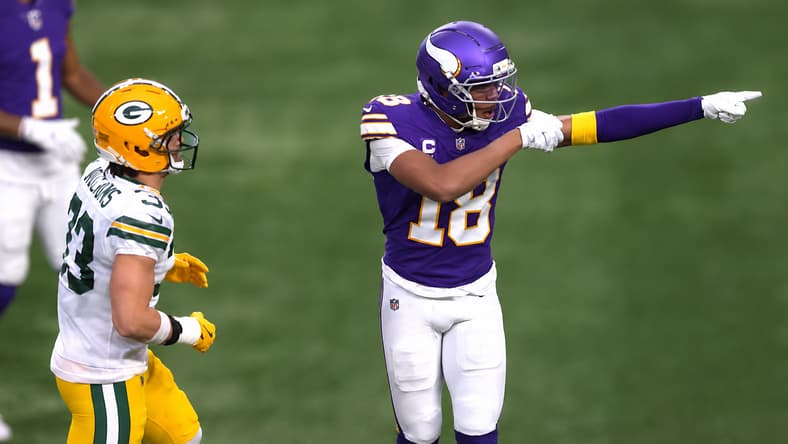
Minnesota Vikings wide receiver Justin Jefferson points across the field after a play against the Green Bay Packers during Week 18 action at U.S. Bank Stadium in Minneapolis, Minnesota, on Jan. 4, 2026, as Jefferson reacted during game highlights from the 2025 NFL season finale between the longtime NFC North rivals in a late regular-season showdown. Mandatory Credit: YouTube.
Sportsbooks expect the Minnesota Vikings to finish in last place inside the NFC North this season, but ESPN came along this week and threw a wrench into that plan, claiming Minnesota will top the Detroit Lions, Green Bay Packers, and Chicago Bears to win the divison.
It came as part of a group of “bold predictions” from Benjamin Solak, with Minnesota winning the NFC North for the first time in four years.
Brian Flores Gives Vikings Cleanest Chance to Win the NFC North
Minnesota Vikings linebacker Eric Wilson (55) celebrates after a defensive play against the Atlanta Falcons at U.S. Bank Stadium in Minneapolis, Minnesota, on Sep. 14, 2025, energizing the home crowd after a key first-half stop as Minnesota’s defense worked to control tempo during early-season NFC action under Brian Flores’ direction that afternoon. Mandatory Credit: Jeffrey Becker-Imagn Images.
Solak’s Bold Take
Solak unveiled 10 bold predictions on Wednesday, and the Vikings were represented. He wrote, “The Vikings will win the NFC North. If the Vikings’ defense remains a needle-moving unit, then a functional offense could return them to their 2024 status under QB Sam Darnold. Minnesota went 14-3 that year, losing the division in Week 17 to the Lions.”
Advertisement
“It’s unreasonable to expect another 14 wins in a division this tough, but Kyler Murray easily has the requisite talent to improve on Minnesota’s 9-8 season in 2025. Kevin O’Connell’s aptitude for adjusting his offense to his quarterback remains one of the league’s more impressive skills. It wasn’t just the Darnold year. He did it for Joshua Dobbs as a midseason trade acquisition in 2023.”
Minnesota stumbled into Murray in March for $1.3 million when the Arizona Cardinals released him.
“He did it for McCarthy last season, giving him far more out-breaking routes than he had given other passers. I have questions about the Vikings’ offensive line and running game, and Murray’s inconsistencies might prove too much for the offense to be truly trustworthy,” Solak continued.
Advertisement
“But I’m confident O’Connell will set him up for success, and Murray has huge earning potential on the free agent market in 2027. He’ll be motivated to perform.’
How It Could Happen
Here’s the easy way to agree with Solak’s take:
The Vikings’ defense ranks second-best in the NFL since Flores arrived in 2023. The defense will be there, and it will be good. Even if the group regressed a bit without Jonathan Greenard, who was traded to the Philadelphia Eagles in April, it likely won’t fall out of the Top 10.
Minnesota has the weapons: Justin Jefferson, Jordan Addison, Jauan Jennings, T.J. Hockenson, Aaron Jones, and Jordan Mason. Most teams don’t have weapons of that caliber.
Last season, the Vikings needed competent quarterback productivity. They didn’t get it. But they still finished with a 9-8 record. A competent Murray can drive the win total from nine to at least 11.
And there’s O’Connell. He enters Year No. 5 as a head coach with zero playoff wins. To a degree, he must win now or risk being put on the hot seat.
Why It May Not
Advertisement
What if Solak’s bold prognosication is wrong, and the Vikings finish closer to the NFC North basement than the pinnacle? It will mean that Murray did not take off in Minnesota, and his teammate, J.J. McCarthy, didn’t do much of anything, either.
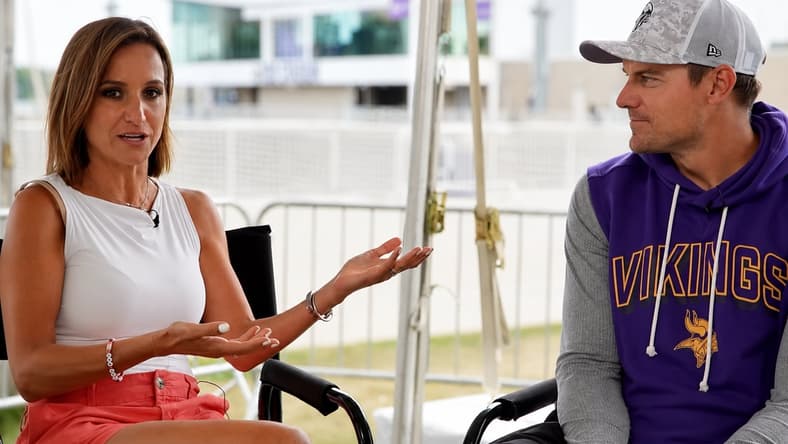
The Athletic’s Senior NFL Insider Dianna Russini interviews Minnesota Vikings head coach Kevin O’Connell for an exclusive conversation in Eagan, Minnesota, on Aug. 15, 2025, discussing his Coach of the Year season and Minnesota’s next steps as training camp carried heavy focus on the team’s quarterback plan under a national spotlight that summer. Mandatory Credit: YouTube.
The defense, too, would have to drop off further than most envision. Perhaps All-Pro kicker Will Reichard would lose some of his magic in this doomsday scenario.
Missing the playoffs would basically feel like a redo of last year — a competitive NFC North too tough to crack and an offense that never hit a groove.
That’s really the only blueprint for non-success.
At Least Reach the Postseason
Advertisement
Since his arrival in 2022, O’Connell’s winning percentage ranks among the league’s best. He even secured the NFL Coach of the Year award in 2024, and under his leadership, the Vikings have invariably performed as a legitimate contender.
Minnesota has played disciplined football under O’Connell, complemented by Flores’ powerhouse defense. Unlike teams influenced by poor coaching, the Vikings have played at a high level.
However, the next challenge is clear: O’Connell needs a playoff win. While he has proven capable of building a winning team from September to January, the benchmark has shifted to sustaining that success into January football.
Minnesota Vikings running back Aaron Jones (33) fights through contact as Chicago Bears defender Dominique Robinson (90) brings him down at U.S. Bank Stadium in Minneapolis, Minnesota, on Dec. 16, 2024, during third-quarter action while Jones handled a heavy late-season workload and Minnesota evaluated its backfield plans for another pivotal offseason. Mandatory Credit: Jeffrey Becker-Imagn Images.
Beyond that, expectations will evolve further. Can Minnesota defeat a formidable opponent like the Los Angeles Rams? Can O’Connell’s offense deliver on such a grand stage? Those questions set the stage for a compelling 2026 season. O’Connell has earned trust, but he has reached a point where that trust requires a January payoff.
Should the Vikings fail to qualify for the postseason, fans will undoubtedly be scrutinizing Black Monday for potential changes, including O’Connell. It’s the nature of the beast.
Advertisement
But according to Solak, they’ll win the division, and that’ll be that.
Dustin Baker is a novelist and political scientist. His second novel, The Invaders , is out now. So is … More about Dustin Baker
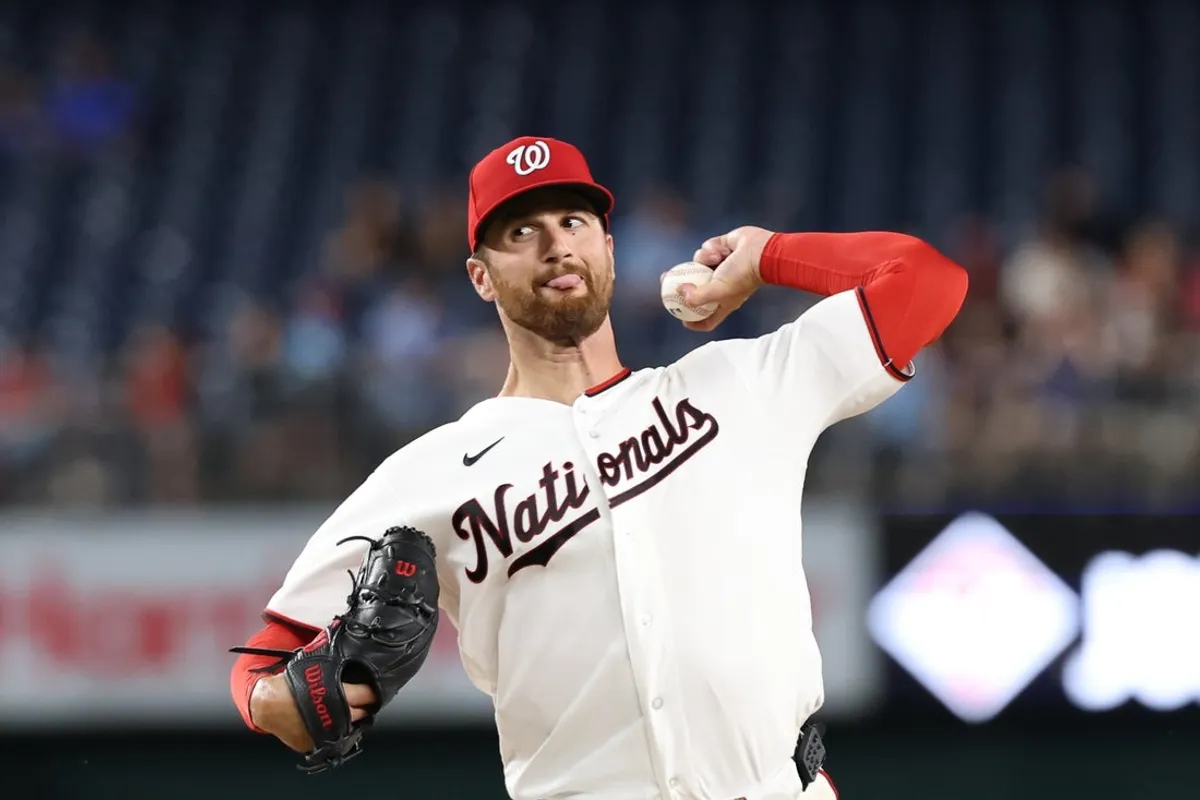
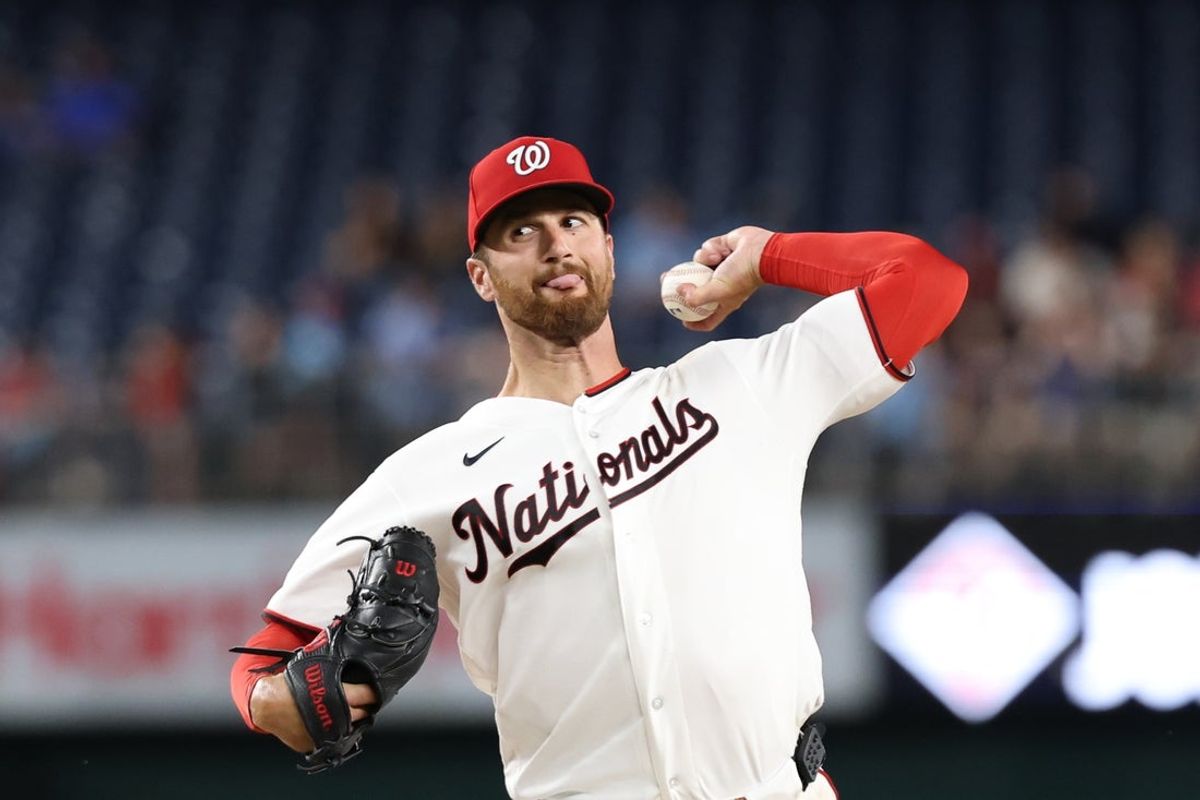
Jun 22, 2026; Washington, District of Columbia, USA; Washington Nationals starting pitcher Foster Griffin (22) pitches against the Philadelphia Phillies during the seventh inning at Nationals Park. Mandatory Credit: Geoff Burke-Imagn Images
Washington Nationals starting pitcher Foster Griffin no longer has the high-velocity stuff that made him a first-round selection in the 2014 draft.
Instead, the 30-year-old left-hander is having a breakout season with a seven-pitch repertoire he will deploy when the Nationals open a three-game home series against the Pittsburgh Pirates on Friday.
A self-described “journeyman, four-A player spending time between Triple-A and the big leagues,” Griffin (8-2, 2.93 ERA) has learned to throttle back his approach and set up hitters.
“For me, I am not going for a strikeout from the start of the at-bat, I am letting it develop,” Griffin said. “If I get into an 0-2, 1-2 situation and I want to go for a kill count, and go for a swing and miss, I will. As soon as I get to even or behind, though, I am not really going for a punchout. I don’t want those free passes.”
On Saturday against the Baltimore Orioles, Griffin threw 112 pitches, allowing one unearned run on three hits and two walks while matching his career high with nine strikeouts. He didn’t factor into the decision as Washington earned a 4-3, 10-inning victory.
Advertisement
Griffin went 2-0 with a 1.15 ERA in five June starts. His only career start against the Pirates came on the road on April 16, a no-decision in which he gave up four runs on eight hits with one walk and seven strikeouts in 5 1/3 innings.
Nationals manager Blake Butera has quickly developed belief in Griffin.
“I appreciate every time he’s on the mound,” Butera said. “We all have a ton of confidence in Foster. He pitches his tail off for us and leaves it all out there every single time.”
Advertisement
Washington had Thursday off after winning two of three games at Boston. The Nationals cruised to a 10-2 victory over the Red Sox on Wednesday behind James Wood’s 22nd home run, a three-run shot in the seventh. Andres Chaparro added a two-run bomb and Nasim Nunez hit a solo shot, the first homers of the season for both players.
The Pirates are set to counter with right-hander Mitch Keller (6-5, 4.87 ERA). After going 0-3 with an 8.25 ERA in his previous five starts, Keller earned his lone win of June on Sunday, a 9-4 home decision against the Cincinnati Reds. He allowed five hits and four runs (three earned) with one walk and four strikeouts.
Keller made his second straight six-inning start, and he feels things are pointed in the right direction.
“I’m starting to feel like I am getting in a little more of a rhythm,” Keller said. “Obviously, there’s still a lot more that I can clean up and just execute a little better.”
Advertisement
In eight career starts against Washington, Keller is 1-4 with a 5.31 ERA. He lost 5-4 to the Nationals on April 14 in Pittsburgh after yielding five runs on six hits and four walks with three strikeouts in four innings.
The Pirates’ offense is trending in the right direction. Rookie right fielder Esmerlyn Valdez continues to establish his place in the batting order.
Pittsburgh split a four-game road series against the Philadelphia Phillies this week, and Valdez was 2-for-4 with a run and three RBIs in a 6-1 win on Thursday.
Valdez homered in four consecutive games — including the series opener against the Phillies on Monday after going deep in each game of Pittsburgh’s previous three-game set against the Reds — a stretch that has highlighted his impressive start in the majors. Since his big league debut on May 22, Valdez has a .316 batting average, six homers and 15 RBIs in 19 games.
Advertisement
“The staff plays a big role,” Valdez said. “Even when you fail, they are right by your side. They bring the energy and give you the information you need to succeed.”






;)
;)
;)
;)


 Some schools have met many times over the years, while others are beginning new rivalries in the wake of recent realignment.












































You must be logged in to post a comment Login