Connect with us

Sports

Why Fifa’s private investment plan has pushed the World Cup towards crisis | FIFA World Cup 2026

Published

on


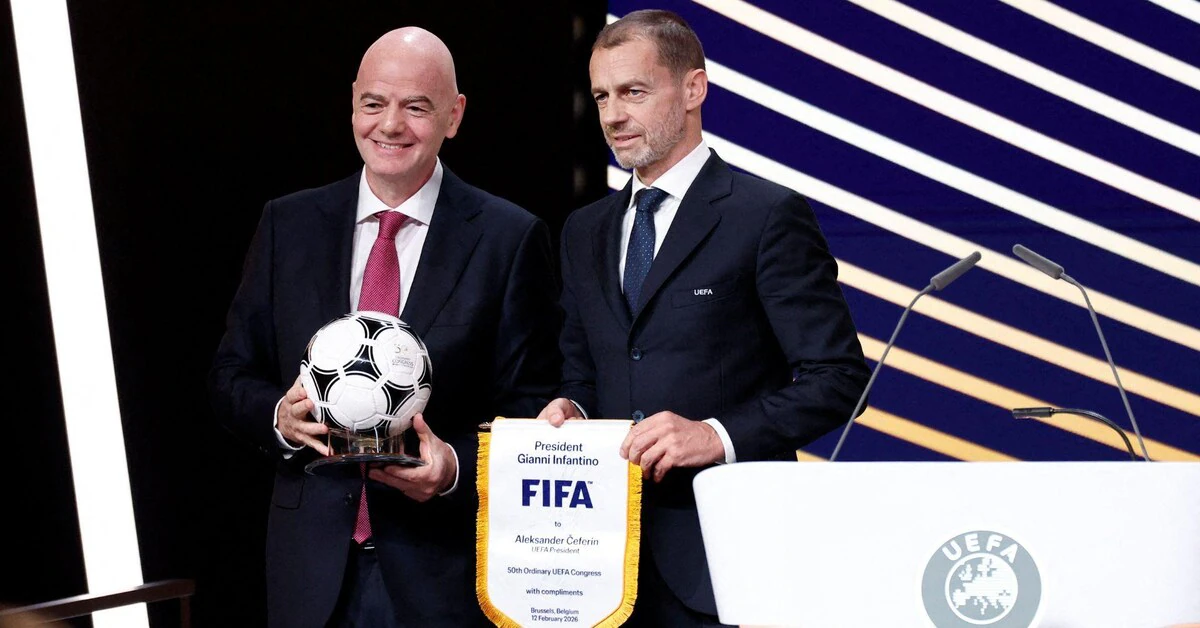
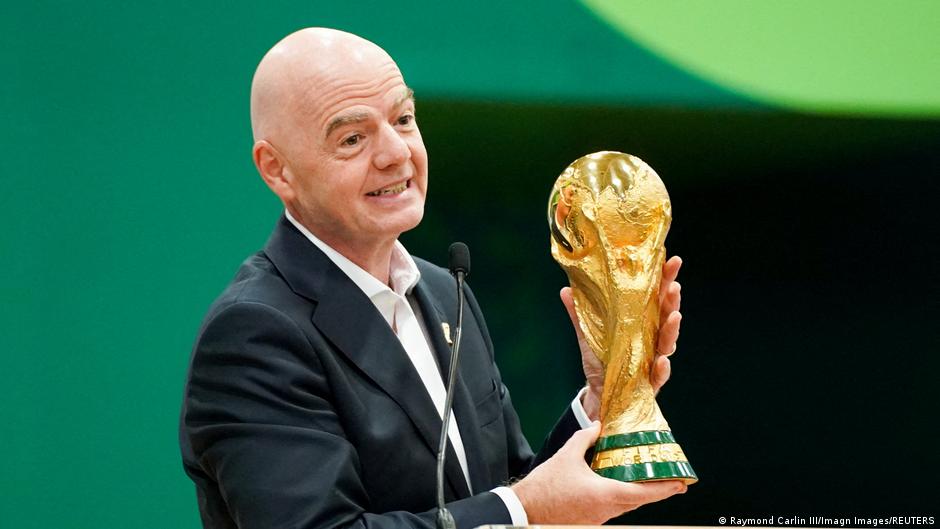
Fifa’s plan to bring private investors into the commercial operation of the World Cup was intended to release billions of dollars for football development. Instead, it has produced one of the most serious challenges to the authority of president Gianni Infantino.


European nations have threatened to boycott all Fifa competitions unless the proposal is withdrawn completely. Concacaf, representing North America, Central America and the Caribbean, has rejected the plan. The Asian Football Confederation has criticised the process, while questions have emerged over Fifa’s need for external capital, the limited consultation with its own members and the identity of the investors expected to benefit.


At the centre of the dispute is a proposed company called Fifa Forward Enterprise, or FFE. It would take over the commercial operations attached to Fifa’s tournaments, including the men’s and women’s World Cups and the Club World Cup.

Advertisement


Fifa would retain majority control, but plans to sell as much as 21 per cent of the company to outside investors for up to $4.2 billion. The organisation has valued FFE at $20 billion.


Fifa argues that it is not selling the World Cup or surrendering its regulatory authority. Its opponents argue that the distinction is largely technical: investors would be buying a permanent economic interest in the competitions from which Fifa derives its power and income.


The difference between those two interpretations has now placed the future of the World Cup, Fifa’s governance and Infantino’s leadership at the centre of an unprecedented institutional confrontation.


What exactly is Fifa proposing?


Fifa currently functions as world football’s governing body and commercial organiser. It sets rules, manages the international calendar, stages tournaments and sells the broadcasting, sponsorship, ticketing and licensing rights attached to them.

Advertisement


Under the proposed structure, those commercial functions would be placed inside FFE.


The company would manage broadcasting rights, sponsorship agreements, ticketing, licensing and the operational delivery of Fifa competitions. It would be run as a specialised commercial business, while Fifa would remain the sport’s non-profit global governing body.


Fifa says it would continue to control competition formats, regulations, sporting decisions and the international calendar. Outside investors would hold only a minority, non-controlling stake and would have no formal role in running football.


That is the legal and structural defence of the proposal: investors would be purchasing shares in a Fifa subsidiary, not in Fifa itself.

Advertisement


The political objection is that FFE’s entire value would come from the World Cup and other competitions built by national associations, players, clubs and supporters. Investors might not control football’s laws, but their returns would depend on how Fifa structures and commercialises its tournaments.


Once shareholders are introduced, critics argue, Fifa would acquire a permanent responsibility to produce returns for them.


How the proposed FFE model would operate


Element

Fifa’s proposal

Main concern raised

New company

Fifa Forward Enterprise would manage Fifa’s commercial and tournament operations

Commercial control over the World Cup would be separated from Fifa’s traditional governing structure

Ownership

Fifa would retain the majority stake and sell up to 21 per cent

Even a minority holding gives investors a lasting financial claim over Fifa competitions

Valuation

FFE has been valued at $20 billion

Critics question how the valuation was reached and what future revenue assumptions it contains

Capital raised

Up to $4.2 billion from private investors

Fifa has substantial revenue and reserves, raising doubts over why private equity is needed

Investor role

No formal operational or sporting authority

Commercial pressure could still influence calendars, formats, prices and tournament expansion

Use of funds

Increased development payments to 211 member associations

The financial offer could encourage members to approve a long-term structural change without adequate scrutiny

Approval process

Majority support from 211 associations and approval by the 37-member Fifa Council

Uefa and Concacaf say the process lacked consultation and imposed an artificially short deadline


Why has Fifa created the proposal?


Infantino’s central argument is that football’s global popularity has not translated into equal financial development across Fifa’s 211 member associations.


The richest football nations possess established leagues, broadcasters, sponsors, academies and infrastructure. Many smaller associations remain dependent on Fifa grants to build pitches, training centres, women’s competitions and grassroots programmes.

Advertisement


Fifa says FFE would unlock the full commercial value of its competitions by bringing in capital, financial expertise and long-term investors. The organisation believes a specialised commercial company could generate more from broadcast rights, sponsorships, ticketing and licensing than the existing structure.


Infantino has described this as the democratisation of football: using the enormous income generated by the World Cup to provide substantially more money to every member association.


The idea is also consistent with the direction of his presidency. Since taking office in 2016, Infantino has repeatedly sought to expand Fifa’s competitions and revenues. The World Cup has grown, the Club World Cup has been enlarged and the organisation has pursued new commercial events and markets.


This is not Fifa’s first attempt to attract private investment. A similar Infantino-backed proposal involving approximately $25 billion and an expanded Club World Cup was rejected in 2019.

Advertisement


FFE is more carefully constructed. Rather than appearing to sell direct influence over competition decisions, Fifa is proposing a separate company in which investors would hold a minority economic interest.


But the underlying ambition remains the same: transform the long-term commercial value of Fifa’s tournaments into immediate capital. 


What would member associations receive?


The financial offer is essential to understanding how Infantino hopes to secure approval.


Each of Fifa’s 211 member associations has one vote, regardless of the size of its population, the strength of its national team or the value it contributes to the World Cup.

Advertisement


Under the proposed arrangement, every association could receive a one-off allocation worth $20 million. Existing development funding would also increase sharply.


The regular payments envisaged under the plan are:


  • $20 million for the 2027-30 cycle

  • $22 million for the 2031-34 cycle

  • $24 million for the 2035-38 cycle


Together with the initial $20 million allocation, an association could receive as much as $86 million through 2038.


For the first four-year cycle alone, the combination of the one-off payment and increased funding could be worth $40 million to each participating association.


For England, France or Germany, that amount would not fundamentally alter football development. For smaller or poorer associations, it could finance stadiums, national training centres, professional leagues and youth systems that would otherwise be impossible to build.

Advertisement


That is where the proposal acquires political force.


Uefa has 55 members, barely more than a quarter of Fifa’s electorate. European countries provide much of the World Cup’s sporting and commercial strength, but every Fifa member has an equal vote.


Infantino does not necessarily need to persuade the countries that contribute the most revenue. He needs to secure a majority among associations for which the promised funding could be transformational.


Why is Uefa opposing the proposal?


Uefa’s opposition is based on two separate arguments: how the plan was developed and what it could ultimately do to football.

Advertisement


The first is procedural.


According to The Athletic, the proposal became public through media reporting before many confederations and national associations had been formally consulted. Fifa then gave members only 53 days to consider the plan, with approval sought by September 19.


Uefa described the approach as secretive, coercive and incompatible with responsible governance. Its members believe a decision involving the future commercial ownership of the World Cup should have been examined through Fifa’s established bodies before being presented to national associations with a deadline and a substantial financial incentive.


The second objection is more fundamental.

Advertisement


Uefa says the World Cup cannot be treated as an investment product. It argues that Fifa does not own the competition in the same sense that a company owns a private asset. Fifa administers the tournament on behalf of the wider game.


“The World Cup cannot be treated as an investment product,” Uefa said. “It is one of football’s greatest sporting legacies.”


Its concern is that the commercial obligation to investors would never disappear. Even without formal control, shareholders would expect revenue growth, rising valuations and returns on their capital.


That could place pressure on Fifa to:

Advertisement

  • expand tournaments further

  • add more matches

  • introduce new competitions

  • increase ticket prices

  • create additional advertising and sponsorship inventory

  • alter the international calendar

  • stage events in markets offering the largest commercial returns


Fifa would formally retain every sporting power. But critics fear those powers would increasingly be exercised within a structure shaped by shareholder expectations.


That is why Uefa says the proposal crosses a line. The issue is not merely whether private investment can improve Fifa’s business. It is whether the interests of players, supporters, clubs and national associations could eventually become secondary to financial returns.


Why has Uefa threatened a World Cup boycott?


Uefa’s 55 member associations have agreed that their national teams will not participate in any Fifa competition while the proposal remains active.


The threat covers men’s, women’s and youth tournaments. Uefa has demanded that the proposal be abandoned entirely and that Fifa provide binding assurances against reopening its competitions to private ownership.


The boycott is designed to attack the plan at its weakest point: FFE may be valued at $20 billion, but that valuation depends on the participation of the world’s strongest teams and most commercially valuable players.

Advertisement


European nations have won 13 of the 23 men’s World Cups, including six of the past eight. According to the figures presented by The Athletic, Uefa teams have accounted for 69 per cent of World Cup quarter-finalists and 71 per cent of semifinalists historically.


A men’s World Cup without France, Spain, England, Germany, Portugal, Italy and the Netherlands would lose many of its leading teams and players.


The women’s competition would be similarly diminished. Spain are the reigning world champions, while England are among the strongest teams in the game. A European boycott could remove six of the top 10 women’s teams and many of the leading players in world football.


This produces a central contradiction in Fifa’s proposal.

Advertisement


FFE is meant to increase the World Cup’s commercial value. But attempting to establish it could remove the teams and markets responsible for much of that value.


Which competitions could be affected first?


The immediate consequences would be felt in women’s and youth football rather than at the next men’s World Cup.


The European play-offs for the 2027 Women’s World Cup are due to take place in October. If Uefa intends to boycott Fifa tournaments, its countries cannot logically compete in qualifiers for an event they have pledged not to enter.


The play-offs involve 32 teams, including England, the Netherlands, Wales, Italy, Sweden, Switzerland and Norway.

Advertisement


Four of the next five Fifa competitions are in the women’s game. The Women’s Under-20 World Cup is due to be hosted by Poland, a Uefa member, followed by the Women’s Under-17 World Cup in Morocco.


A total European boycott could therefore force Fifa to find replacement hosts, restructure qualifying competitions or stage tournaments without leading nations.


The longer-term impact would extend to the 2030 men’s World Cup, scheduled to be staged principally in Spain, Portugal and Morocco. Two of the main hosts would belong to a confederation refusing to participate.


A boycott would therefore create problems not only for team participation but also for hosting, broadcasting, sponsorship and tournament organisation.

Advertisement


How have the other confederations responded?


Concacaf’s rejection has made the crisis more difficult for Fifa to dismiss as another institutional battle with Europe.


All 41 Concacaf associations met to discuss the plan and expressed concern over the absence of due process, the limited deadline and the failure to secure prior review from the relevant Fifa governance bodies.


They also questioned why an organisation coming off what was described as the most profitable World Cup in history needed private investment to finance development.


Concacaf has not joined Uefa’s boycott, but it has rejected the proposal and instructed its Fifa Council representatives to examine whether the organisation’s existing reserves could fund increased development payments.

Advertisement


The confederation also wants any future proposal to pass through the formal processes required under Fifa’s statutes.


According to The Athletic, concerns expressed during the Concacaf meeting extended beyond the FFE proposal to the organisation’s leadership and transparency. Some members were said to have lost confidence in Infantino, though accounts differed over the strength of that sentiment.


The Asian Football Confederation said it was disappointed that a proposal of such importance entered the public domain before its members were allowed to examine it through established channels.


The African confederation has taken a less confrontational position. It acknowledged involvement in the consultation process and encouraged its associations to study the proposal.

Advertisement


That difference matters. Infantino has historically relied on support from Africa, Asia and smaller associations to overcome opposition from Europe. The plan can survive only if that coalition remains intact.


Does Fifa need $4.2 billion from investors?


This is one of the most difficult questions for Fifa to answer.


The governing body has generated extraordinary income from its tournaments. The material provided indicates that revenue connected to the latest World Cup and the current four-year cycle was expected to be in the region of $13 billion to $15 billion, compared with about $7.6 billion in the previous cycle.


Fifa has also accumulated reserves and expects further increases in broadcasting and sponsorship income.

Advertisement


Concacaf’s position is that the organisation should first explain why those resources cannot finance higher development payments without selling equity.


Fifa’s answer is likely to be that raising money immediately would allow it to accelerate investment rather than distribute funds gradually as tournament revenues arrive. Private investors could also bring expertise in media, technology, sponsorship and global commercial expansion.


But equity is not a temporary loan. An investor who contributes capital would receive a lasting stake in future income.


Fifa would gain $4.2 billion now but surrender up to 21 per cent of the commercial company’s future value. If FFE grows significantly, investors could receive returns worth far more than the initial investment.

Advertisement


The debate is therefore not simply about whether Fifa needs money. It is about whether selling a permanent economic interest is the best and most responsible way to obtain it.


Who are the proposed investors?


According to The Athletic, Thrive Capital, founded by Joshua Kushner, is expected to lead the proposed investor group.


Joshua Kushner is the younger brother of Jared Kushner, who is married to US President Donald Trump’s daughter Ivanka Trump and has been a close political adviser to him.


Former Liberty Media chief executive Greg Maffei has served as a commercial adviser to Fifa, while JPMorgan has worked on the proposed company’s structure and valuation.

Advertisement


The involvement of a Joshua Kushner-led investment group would not in itself establish any wrongdoing. But it has intensified demands for transparency because of Infantino’s unusually close public relationship with Trump.


Is there a connection between Infantino and the proposed investor?


The connection is indirect rather than evidence of a direct financial arrangement.


Joshua Kushner is connected to Trump through his brother Jared. Infantino, meanwhile, has developed a close and highly visible relationship with the US president.


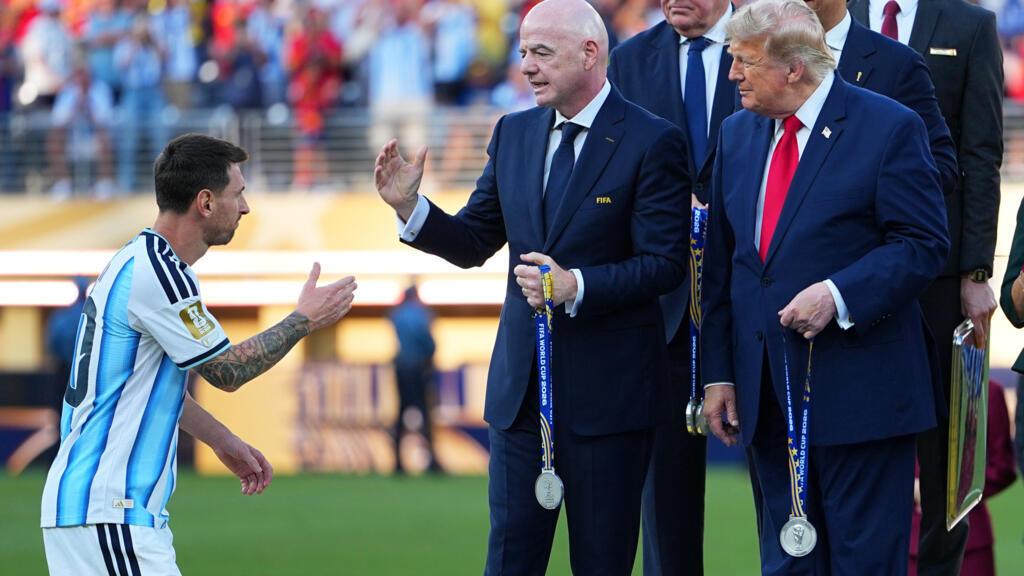
The supplied material refers to Infantino creating a Fifa Peace Prize and presenting its first edition to Trump. It also notes criticism over Trump’s intervention in the disciplinary case involving US forward Folarin Balogun.

Advertisement


Those events do not demonstrate that Trump, Jared Kushner or Infantino has a financial interest in FFE. Nor do they prove that Thrive Capital was selected improperly.


They do, however, create an obvious appearance problem.


When the likely lead investor is run by a member of a family closely connected to a political leader with whom the Fifa president has cultivated a strong relationship, the selection process requires exceptional openness.


Fifa would need to explain:

Advertisement

  • how the investor group was chosen

  • whether a competitive process was conducted

  • which other investors were considered

  • what rights the investors would receive

  • how conflicts of interest would be managed

  • whether Infantino or other Fifa officials could hold future positions in FFE


The problem is magnified by the way the proposal emerged. Had the plan been developed through an open and established process, the Kushner connection might have attracted scrutiny without becoming central to the controversy.


Because the process appeared secretive, every personal and political relationship surrounding the transaction now carries greater significance.


Can investors influence football without controlling it?


This is the key unresolved issue.


Fifa says minority investors would have no authority over football governance. They could not directly decide tournament formats, qualification rules or the international calendar.


But commercial influence rarely requires formal sporting control.

Advertisement


Suppose investors expect FFE’s value to rise. Their returns would benefit from more matches, larger television audiences, higher ticket income and expanded sponsorship opportunities.


Fifa might then face pressure to introduce more teams, additional tournament stages, longer competitions or new events.


It could still claim that every decision had been taken independently by its sporting bodies. Yet the commercial structure would reward decisions generating the highest income.


The concern is therefore not that investors would immediately select World Cup hosts or rewrite football’s laws. It is that the line between sporting and commercial decisions would become increasingly difficult to maintain.

Advertisement


A tournament format is both a sporting decision and a revenue decision. The calendar is both a player-welfare issue and a commercial asset. Ticket pricing affects supporters, but also determines income and shareholder returns.


FFE would attempt to separate those functions legally. Uefa’s argument is that they cannot be separated in practice.


Why the plan may not survive


FFE needs approval from a majority of Fifa’s 211 associations and the 37-member Fifa Council.


In voting terms, Uefa cannot block it alone. But the boycott has transformed the economic calculation.

Advertisement


An investor considering a multibillion-dollar commitment must assess whether the World Cup will continue to feature Europe’s leading teams and players. Without them, the tournament would lose sporting prestige, broadcast audiences, sponsorship value and commercial predictability.


Concacaf’s rejection further weakens the plan. If resistance spreads through Asia, Fifa may struggle to assemble even a numerical majority.


The Athletic has compared the confrontation to the collapse of the proposed European Super League. In both cases, opponents understood that allowing the project to gather momentum could make it difficult to reverse.


Uefa has therefore chosen the strongest possible response before Fifa’s September deadline: withdraw the proposal or lose Europe.

Advertisement


Its strategy depends on unity. If some European associations decide that the promised funding is too valuable to reject, the boycott could fragment. Infantino would then regain leverage.


But if Uefa remains united, the proposed commercial company has little of value left to sell.


What happens to Infantino now?


The dispute has also become a test of Infantino’s leadership.


Before the FFE controversy, he appeared unlikely to face a serious challenge in the next Fifa presidential election. He retained strong support among associations outside Europe, and potential opponents doubted whether they could construct a winning coalition.

Advertisement


That calculation may now change.


According to The Athletic, members of both Uefa and Concacaf questioned his leadership during their meetings. The criticism is no longer limited to his commercial ambitions. It concerns transparency, consultation and whether Fifa’s formal institutions exercise meaningful oversight.


Infantino could retreat and describe the proposal as a consultation that did not receive sufficient support. He has abandoned or reshaped controversial ideas before without losing control of Fifa.


He could also redesign FFE as a wholly owned commercial subsidiary, retaining specialist management but removing private equity.

Advertisement


The most confrontational option would be to continue with the plan in the expectation that Uefa’s unity eventually breaks. That would turn the dispute into a contest between Infantino’s voting coalition and Europe’s commercial power.


The larger question: Who owns the World Cup?


Fifa’s case is that it is modernising the commercial structure of world football while retaining complete sporting authority.


Its opponents argue that the World Cup is not an asset Fifa has the right to monetise through a permanent equity sale.


Both sides agree that the competition has enormous economic value. They disagree over who has the authority to convert that value into private ownership.

Advertisement


The World Cup was built through the participation of national teams, players, supporters and host countries over almost a century. Fifa administers it, owns its commercial rights and collects its income. But Uefa’s position is that Fifa holds those rights in trust rather than possessing an unrestricted right to sell them.


That is why the argument cannot be resolved merely by stating that Fifa would retain 79 per cent of FFE.


A minority stake may not confer control, but it would create a permanent class of private beneficiaries whose financial interests are tied to the future direction of the World Cup.


Fifa sees $4.2 billion that could be invested immediately in global football. Uefa sees the first irreversible step towards making football’s greatest competition answerable to shareholders.

Advertisement


The proposed transaction was designed to unlock the World Cup’s commercial potential. It has instead forced football to confront a more fundamental issue: whether the game’s most valuable competition belongs to the organisation running it, the countries contesting it or the wider public that gives it meaning.

Source link

Continue Reading
Click to comment

You must be logged in to post a comment Login

Leave a Reply

Sports

U.S. Olympian David Hearn’s felony vandalism case dismissed by DOJ

Published

on

NEWYou can now listen to Fox News articles!

Federal prosecutors moved Friday to dismiss a felony vandalism case against former U.S. Olympian David Hearn, after he was accused of vandalizing the Reflecting Pool in Washington, D.C., as seen in a court filing obtained by Fox News Digital.

Hearn was indicted July 2 on one count of felony destruction of property. U.S. Park Police alleged Hearn grabbed and tugged at a loose section of the pool’s coating on June 19, continuing after a National Park Service employee told him to stop. Officials initially claimed he caused more than $1,000 in damage.

However, U.S. Attorney Jeanine Pirro’s office said the Department of the Interior initially provided prosecutors with “barebones” reports and failed to disclose records documenting extensive problems with the coating’s installation.

Advertisement

FORMER US OLYMPIAN DAVID HEARN INDICTED IN ALLEGED REFLECTING POOL VANDALISM

David Hearn canoes

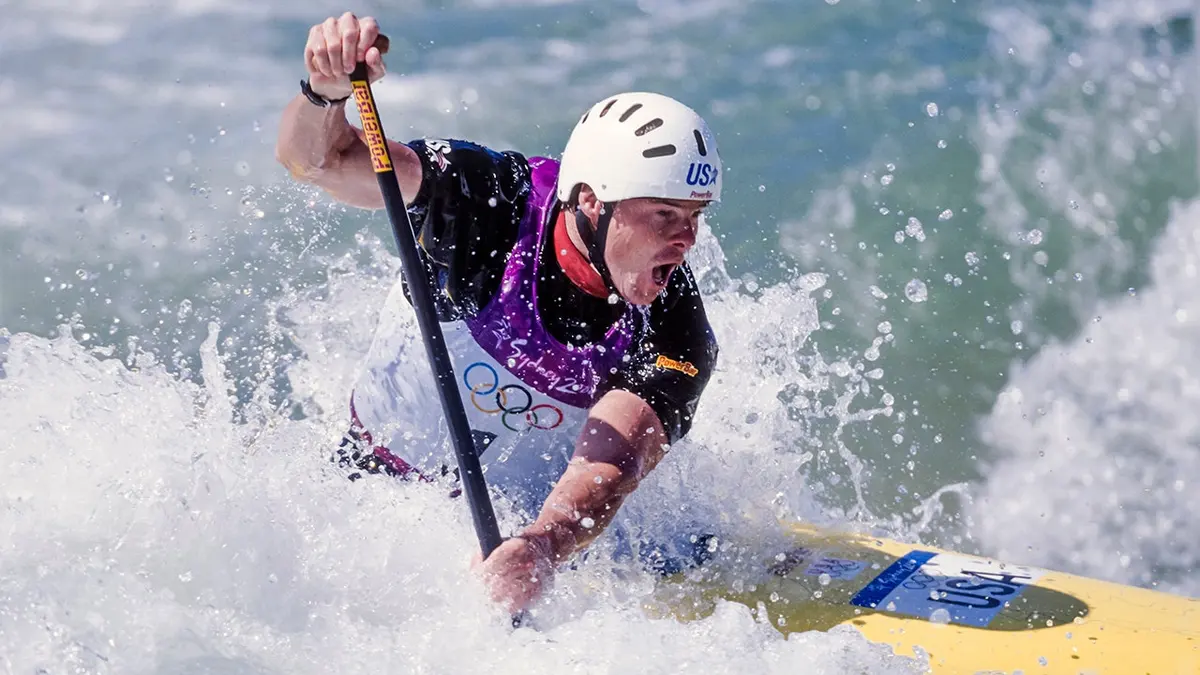
David Hearn of the United States competes in the men’s C1 whitewater canoeing final of the 2000 Summer Olympics at the Penrith Whitewater Stadium. Penrith, Australia, on Sept. 18, 2000. (David Madison/Getty Images)

“Had DOI been forthcoming with the information clearly in its possession, the government would not have sought a grand jury indictment,” prosecutors wrote.

“It was not until after the return of the indictment, that the DOI provided additional documents to the USAO-DC indicating that damage to the Lincoln Memorial Reflecting Pool in June 2026 was the result of flawed installation by the contractor, Atlantic Industrial Coatings (‘AIC’), and the rush to complete the project prior to events associated with the America 250 celebration in the weeks surrounding Independence Day 2026.”

WHITE HOUSE CONDEMNS ‘TARGETED SABOTAGE’ OF REFLECTING POOL AS REPAIRS PUSHED PAST JULY 4 CELEBRATION

Advertisement
2000 Olympics - Men's C1

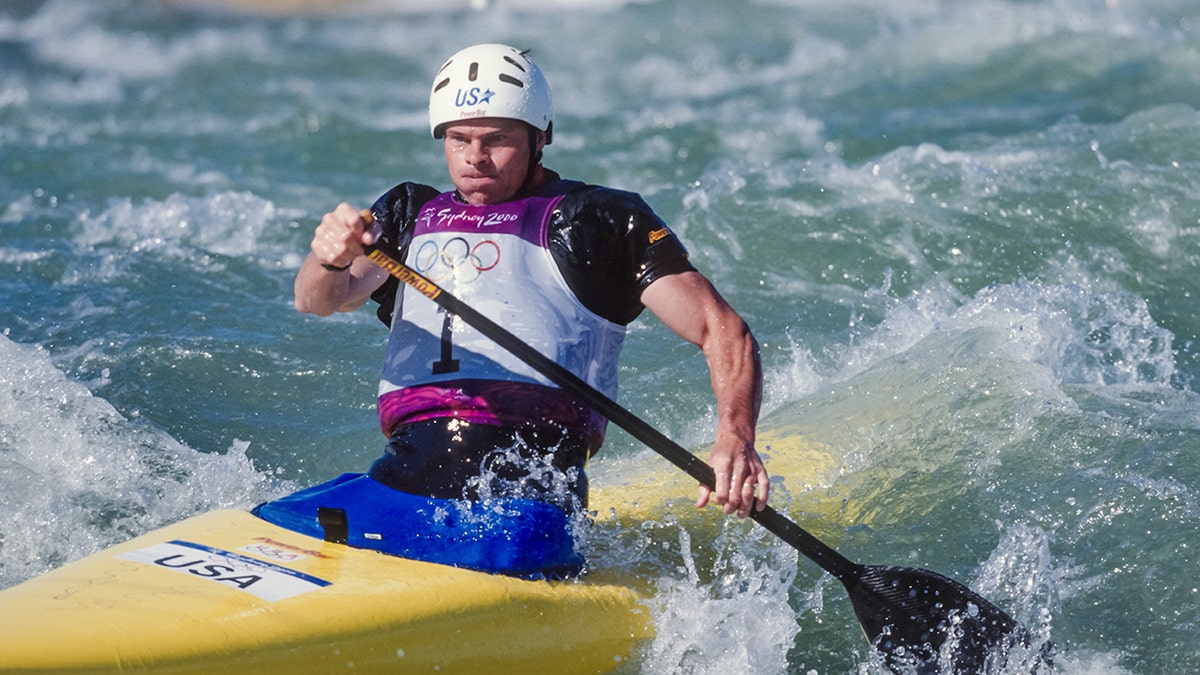
David Hearn of the USA competes in the Men’s C1 whitewater canoeing final of the 2000 Summer Olympics on September 18, 2000, at Penrith Whitewater Stadium in Penrith, Australia.  (David Madison/Getty Images)

The DOJ said the new evidence made it difficult to prove beyond a reasonable doubt that Hearn caused the damage. Prosecutors asked the court to dismiss the indictment without prejudice, which would leave open the possibility of bringing the charge again.

Hearn has previously beaten federal charges.

Hearn was arrested by the U.S. Park Police nearly 30 years ago and ended up beating the charges, according to a 1996 Washington Post article.

That year, the Potomac River turned violent, as intense, heavy rains pushed the water to a terrifying, near-record flood level of 60,000 cubic feet per second.

Advertisement

Authorities immediately issued an emergency river closure. But Hearn took his whitewater canoe straight into the raging rapids, where officers later swooped in and arrested him.

He was charged with failing to obey a lawful order. But Hearn fought the case in court and won on a stunning technicality. But a federal judge dismissed the charges, ruling the Potomac River is controlled by the state of Maryland, meaning the federal Park Police had zero jurisdiction over the water.

Hearn’s arrest became a viral sensation after it was captured by journalist Emily Miller. Miller filmed a two-minute video of Hearn being detained, which quickly went viral on X.

Miller accused Hearn of grabbing a hose that female National Park Service workers were using to clear the algae. Hearn denied the accusation, though he admitted his bike tire might have bumped it.

Advertisement

Hearn’s attorneys are demanding an apology on behalf of the Olympian.

CLICK HERE TO DOWNLOAD THE FOX NEWS APP

David Hearn competes in the Men's C1 whitewater canoeing event.

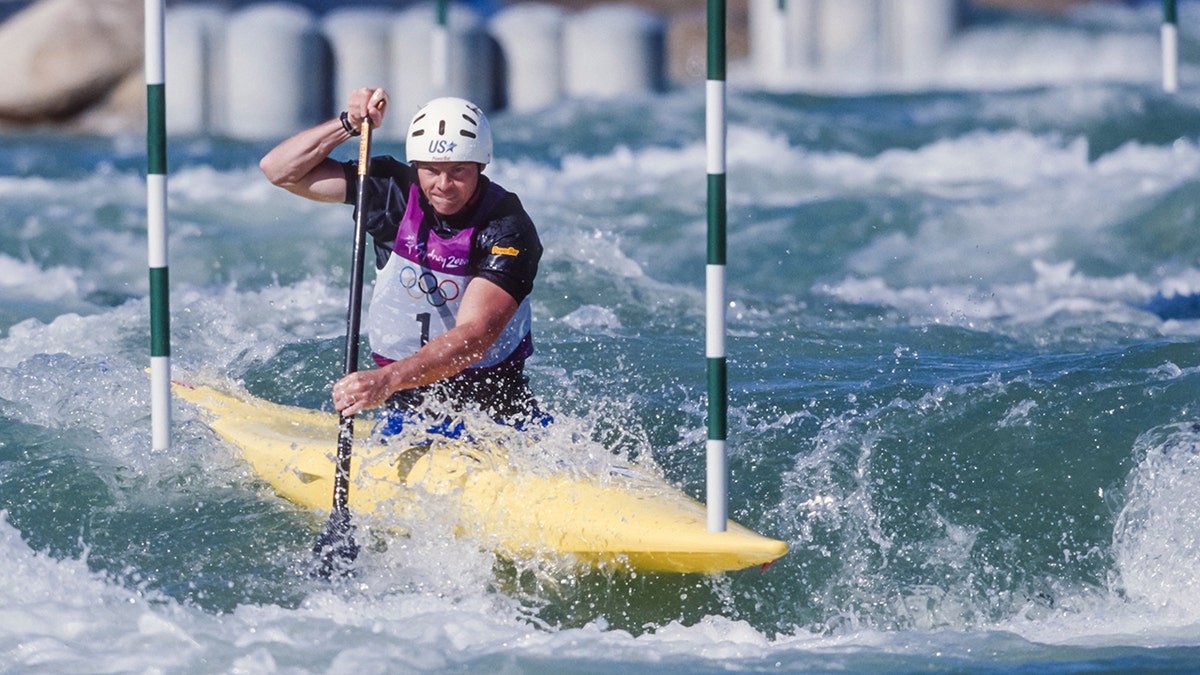
David Hearn of the USA competes in the Men’s C1 whitewater canoeing final of the 2000 Summer Olympics on September 18, 2000, at Penrith Whitewater Stadium in Penrith, Australia. (Photo by David Madison/Getty Images)

“The Trump administration’s case against Davey Hearn should never have been brought. Its dismissal today does not erase the abuse of government power in arresting and charging a patriotic American who did nothing wrong. The government’s approach was ready, fire, aim. The administration owes Mr. Hearn an apology,” said Hearn’s attorneys Norm Eisen, Mary Dohrmann and Steve Levin in a statement, per The New York Post.

Fox News Digital has reached out to the DOI for comment.

Advertisement

Source link

Advertisement
Continue Reading

Sports

CWG 2026: Neeraj, Yash hand India double podium as medal tally rises to 23 | Other Sports News

Published

on


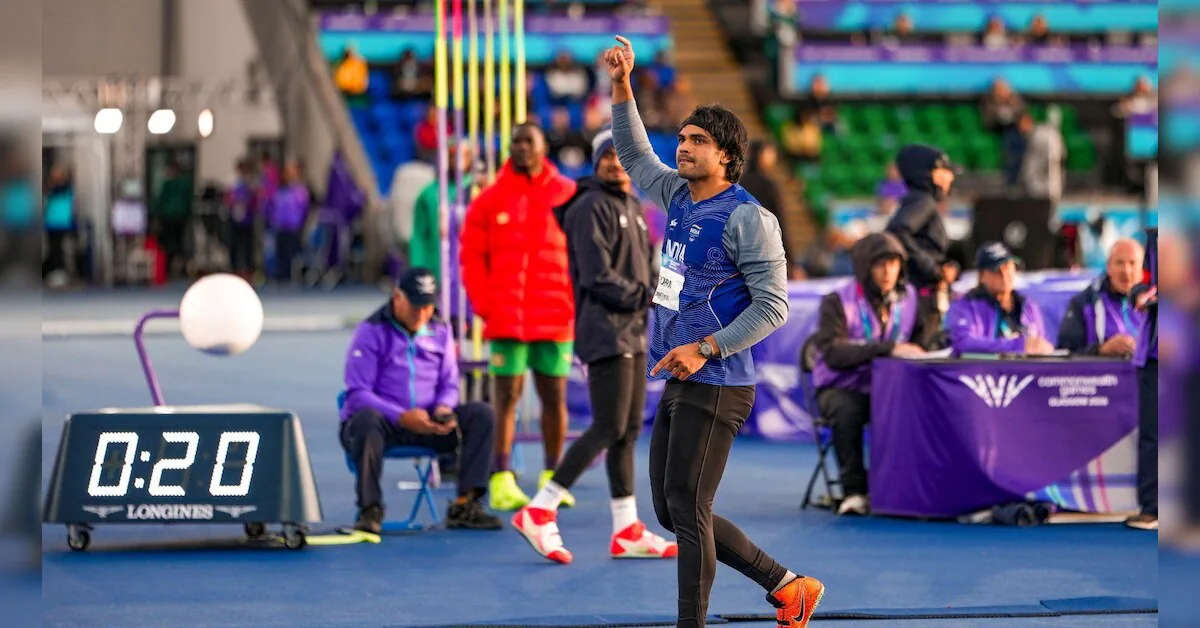
India’s athletics contingent produced another memorable night at the Commonwealth Games 2026 as Neeraj Chopra clinched the silver medal and Yash Vir Singh claimed bronze in the men’s javelin throw final, handing the country a sensational double podium finish in one of the marquee events of the Games.


The two medals lifted India’s overall tally to 23 medals (5 gold, 12 silver and 6 bronze), keeping the nation in 10th place on the medal standings heading into the penultimate day of competition.


Advertisement


Double delight in Glasgow


All eyes were on India’s star athelete Neeraj Chopra as he renewed his rivalry with Pakistan’s Arshad Nadeem, but it was Sri Lanka’s Rumesh Pathirage who stole the show with a Games-winning throw of 89.75m.


Advertisement


Neeraj responded with a season-best effort of 85.83m, which proved enough for the silver medal after a consistent series of throws in difficult conditions. While he narrowly missed out on adding another Commonwealth Games gold to his collection, the former Olympic champion once again demonstrated why he remains among the world’s elite javelin throwers.


The bigger surprise came from Yash Vir Singh, who produced the performance of his career when it mattered most. The young Indian uncorked a personal-best 85.41m on his final attempt to leap onto the podium and secure the bronze medal, completing India’s memorable two-three finish behind Pathirage. 
Advertisement


Neeraj Chopra (PIC: Reuters)

    Indian medal winners on Day 8 


Medal

Athlete

Event

Gold

Asmita Dey

Judo – Women’s 48kg

Gold

Harsh Singh

Judo – Men’s 60kg

Silver

Yamini Mourya

Judo – Women’s 57kg

Silver

Neeraj Chopra

Athletics – Men’s Javelin Throw

Bronze

Tejaswin Shankar

Athletics – Men’s Decathlon

Bronze

Yash Vir Singh

Athletics – Men’s Javelin Throw


Yash Vir announces himself on the big stage

Advertisement


While Neeraj’s medal came as little surprise, Yash Vir’s bronze could prove to be one of the defining moments of India’s athletics campaign.


The 24-year-old held his nerve against an elite field featuring former world champions Anderson Peters and Keshorn Walcott to register the biggest international result of his career.

Advertisement


His late surge highlighted India’s growing depth in men’s javelin, with three Indians reaching the final and two eventually standing on the podium. 


Medal tally reaches 23

Advertisement


The twin athletics medals capped another rewarding day for the Indian contingent.


India’s medal tally now stands at:

Advertisement


  • Gold: 5

  • Silver: 12

  • Bronze: 6

  • Total: 23


The haul keeps India 10th in the overall standings while setting up an exciting final day, with several medal opportunities still to come.


Historic day beyond the javelin

Advertisement


Friday had already turned into one of India’s finest days of the Games even before the javelin final.


Indian judo celebrated a historic breakthrough as Asmita Dey became the country’s first-ever Commonwealth Games judo champion before Harsh Singh followed suit to win a second historic gold. Yamini Mourya added a silver medal in the women’s 57kg category.

Advertisement


Athletics also witnessed another milestone with Tejaswin Shankar scripting history by becoming the first Indian to win a Commonwealth Games medal in the decathlon after claiming bronze.


Meanwhile, Indian boxing enjoyed a flawless outing as all 10 semifinalists won their respective bouts, ensuring India will contest 10 gold medal matches on the final day of competition.

Advertisement


With momentum firmly on its side, India heads into the concluding day of the Commonwealth Games looking to add several more medals and potentially climb the standings. 


Judoka Asmita Dey (PIC: PTI)

Advertisement


CWG 2026 medal tally after Day 8

Rank

Team

Gold

Silver

Bronze

Total

1

Australia

55

30

43

128

2

England

17

34

29

80

3

Canada

17

15

21

53

4

Scotland

10

8

16

34

5

Nigeria

9

6

3

18

6

New Zealand

7

10

8

25

7

South Africa

7

9

9

25

8

Malaysia

7

3

3

13

9

Wales

6

6

12

24

10

India

5

12

6

23

11

Jamaica

5

2

4

11

12

Kenya

2

4

2

8

13

Northern Ireland

1

2

7

10

14

Sri Lanka

1

1

0

2

14

Samoa

1

1

0

2

14

Jersey

1

1

0

2

17

Cameroon

1

0

1

2

17

Fiji

1

0

1

2

19

Grenada

1

0

0

1

19

Dominica

1

0

0

1

19

The Bahamas

1

0

0

1

22

Cyprus

0

5

3

8

23

Uganda

0

2

1

3

24

Singapore

0

2

0

2

25

Mauritius

0

1

1

2

25

Ghana

0

1

1

2

27

Trinidad and Tobago

0

0

3

3

28

Namibia

0

0

2

2

28

Nauru

0

0

2

2

28

Zambia

0

0

2

2

28

Lesotho

0

0

2

2

32

Isle of Man

0

0

1

1

32

Rwanda

0

0

1

1

32

Tuvalu

0

0

1

1

32

Papua New Guinea

0

0

1

1

32

Pakistan

0

0

1

1

32

Malta

0

0

1

1


Source link

Advertisement
Continue Reading

Sports

Panthers fans get first look at team during Fan Fest

Published

on

The Carolina Panthers took the field in front of a stadium full of fans for the first time this season on Friday night.

It was their first open practice of training camp, and fans got a peek at what’s in store this year.

Advertisement

Players got in reps while 6-year-old Asher Harvey ran in a walk-off touchdown. Ashe, who is battling through congenital heart disease, signed a one-day contract through Make-A-Wish.

Advertisement

Source link

Advertisement
Continue Reading

Sports

The 10 Manchester United players who could leave this summer

Published

on

Man Utd U21s lost 1-0 against Altrincham in a pre-season friendly, and the squad was full of players who are set to leave.

Manchester United’s academy played against Altrincham on Friday, their first public pre-season friendly of the summer.

Advertisement

Academy games offer clues on which young talents could bridge the gap to the first-team, however, the Under-21 squad at Moss Lane offered more clues on which players will be leaving United this summer.

Toby Collyer, Chido Obi, Dan Gore and Jacob Devaney each had some involvement either against Wrexham or Rosenborg with the first-team, but they did not make the cut for Saturday’s trip to Sweden.

Collyer wants to play senior football. He would already have left if United had finalised their midfield earlier, but his future will be addressed once Michael Carrick knows what his options will look like next season.

The midfielder suffered bad luck during his loan stint with Hull in the second half of last season. He was named man of the match after making his first start for Hull against eventual Championship champions Coventry, but he picked up an injury in a training session when a goalkeeper fell onto his ankle.

The ankle injury prevented Collyer from being involved in Hull’s successful promotion charge, which included a play-off final win at Wembley.

Sources close to Collyer feel he will take off with a clear run of games. He has been tipped by coaches he has worked with on his journey to become an established Premier League player, and could leave on a permanent transfer this summer if the right offer is received.

Obi’s situation is interesting. There were positives to take from his first-team performance in Norway last weekend, but it was a clear hint of his future that he was not included in the senior squad again this weekend.

Advertisement

Although the young striker almost scored a brilliant goal in the first half against Altrincham, testing goalkeeper Owen Evans after bringing the ball down on his chest, he still has plenty to work on.

It’s telling that Obi still needs to receive constant instructions from coaches on the touchline throughout a game. It has become a running joke that no other player’s name is heard more often than Obi’s during academy fixtures.

During a sit-down with Adam Lawrence toward the end of last season, he said the shouts of ‘Chido!’ were evidence of “really believing” in him, pushing him for more, but the penny should have dropped by now.

Advertisement

There was talk of FC Köln being interested in Obi on loan earlier in the window, but sources squashed those reports. Another loan is on the cards, though a permanent transfer might also be considered.

Devaney should be sent on another loan after impressing for St Mirren last term. St Mirren maintained their Scottish top-flight status and Devaney started in both relegation play-off matches, which meant his loan spell in Scotland ended with him having not started just two games.

Rangers and Celtic fans spoke highly of Devaney when their clubs played St Mirren. The midfielder also impressed in first-team friendlies against Wrexham and Rosenborg, earning praise from Carrick.

Devaney played in defensive midfield, his strongest position, against Altrincham, after playing as an auxiliary centre-back for the first-team. He certainly did his reputation no harm by excelling in a different role.

Advertisement

Gore should be sold to the bank to bring in some cash this summer. He was excellent on loan at Rotherham last season and clearly needs another move away, which may be more beneficial if it’s permanent.

The 21-year-old starred alongside Kobbie Mainoo in the 2021/22 FA Youth Cup-winning United side, but he hasn’t had the rub of the green over the last few years, with a few unfortunate injuries curtailing his progress.

There were others in the starting team, the likes of Habeeb Ogunneye, Louis Jackson, Diego Leon and Jack Moorhouse, who will leave before the end of the transfer window. Leon’s development probably hasn’t gone as planned so far, and a loan abroad seems the best option for next season.

Leon was unveiled alongside Bryan Mbeumo, Matheus Cunha and Benjamin Sesko after his arrival from Paraguay last summer, but he played exclusively in academy fixtures for the second half of last season.

Advertisement

Enzo Kana-Biyik and Ethan Wheatley were introduced at half-time. United were trailing 1-0, which prompted Lawrence to freshen up the attack by replacing Obi and Moorhouse with that pair.

Both players will be loaned again before the end of the window. Wheatley spent the first half of last season with Northampton and the second half with Bradford City, who just failed to clinch promotion.

Kana-Biyiki was sent to Ineos-owned Lausanne Sport following his arrival from Le Havre on a free transfer. The Frenchman played on the left wing in the second half, and there were hints of quality, but another loan may be the best option for him to play senior football in 2026/2027.

Source link

Advertisement
Continue Reading

Sports

FaZe Clan, Astralis reach semis at BLAST Bounty Summer finals

Published

on

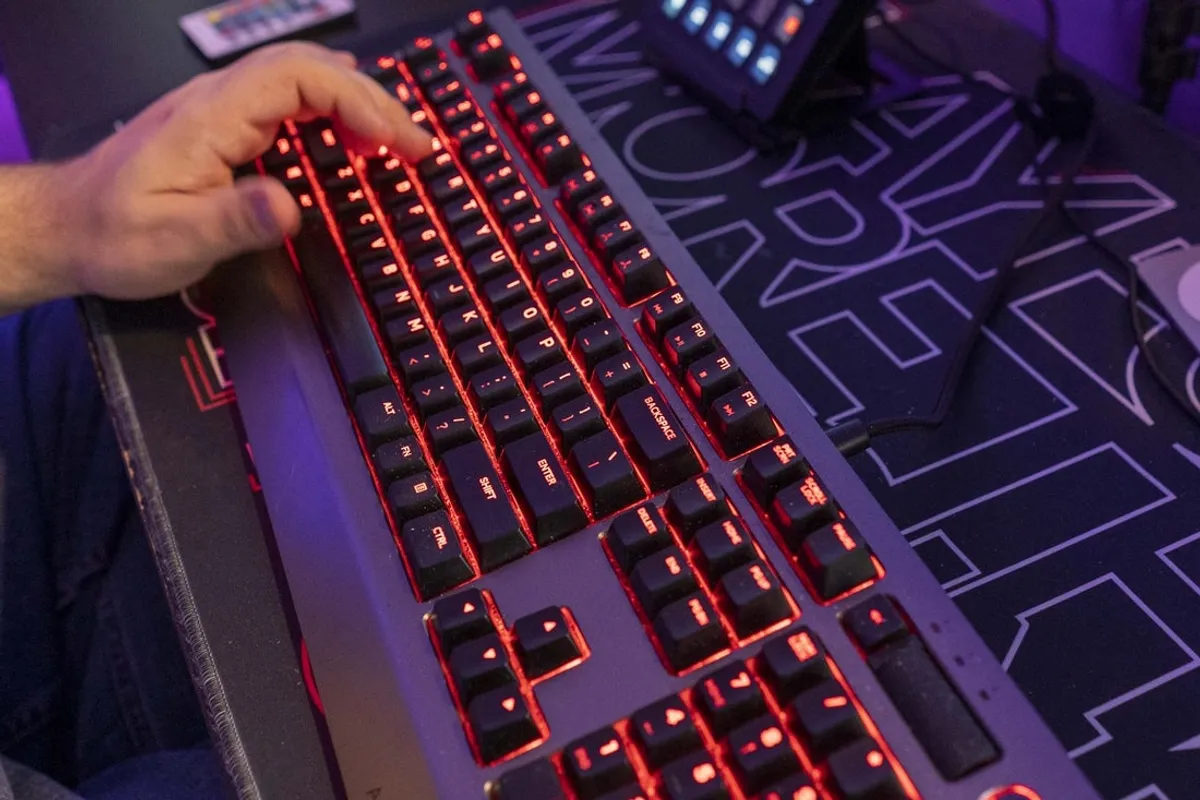
A backlit keyboard is part of the gear online video game streamer Jordan Woodruff uses in his Gilbert home.

Jordan WoodruffA backlit keyboard is part of the gear online video game streamer Jordan Woodruff uses in his Gilbert home.

Jordan Woodruff

FaZe Clan and Astralis earned matching 2-1 decisions on Friday to advance to the semifinals of the BLAST Bounty Summer 2026 event in Attard, Malta.

FaZe defeated The MongolZ and Astralis rallied past paiN Gaming to fill out the semis. Team Spirit and MOUZ were already in the semis thanks to their wins Thursday.

Eight teams are playing in the BLAST Bounty Summer finals after advancing from a pool of 32 clubs in the closed qualifier. Of the $740,000 prize pool, $410,000 was awarded to participants in the closed qualifier.

The finals are a single-elimination bracket where the quarters and semis are best-of-three and the grand final is best-of-five. The champions will also earn three BLAST Frequent Flyer Tokens, while the other seven teams will collect one.

Advertisement

On Friday, FaZe Clan opened with a 16-12 overtime win on Nuke, absorbed a 13-7 loss to The MongolZ on Mirage and went on to win 13-8 on Ancient. Jason “JBOEN” Boe Nielsen of Denmark led FaZe with 56 kills against a team-low 41 deaths and a 1.16 match rating.

Astralis fell 13-10 to paiN on Nuke but responded with a pair of overtime wins, 19-17 on Inferno and 16-14 on Mirage. Denmark’s Victor “Staehr” Staehr (1.23 match rating) and Lithuania’s Gytis “ryu” Glusauskas (1.14) had 66 kills apiece to pace Astralis.

The tournament continues Saturday with the semifinal matches:

Advertisement

–Team Spirit vs. FaZe Clan

–MOUZ vs. Astralis

BLAST Bounty Summer 2026 prize pool (player prize, team share)

1. TBD

Advertisement

2. TBD

3-4. TBD

5-8. Team Liquid ($41,250, $40,000); 3DMAX ($21,250, $40,000); The MongolZ ($11,250, $40,000); paiN Gaming ($11,250, $40,000)

–Field Level Media

Advertisement

Source link

Continue Reading

Sports

Jessica Pegula, Naomi Osaka book DC Open semifinal berths

Published

on

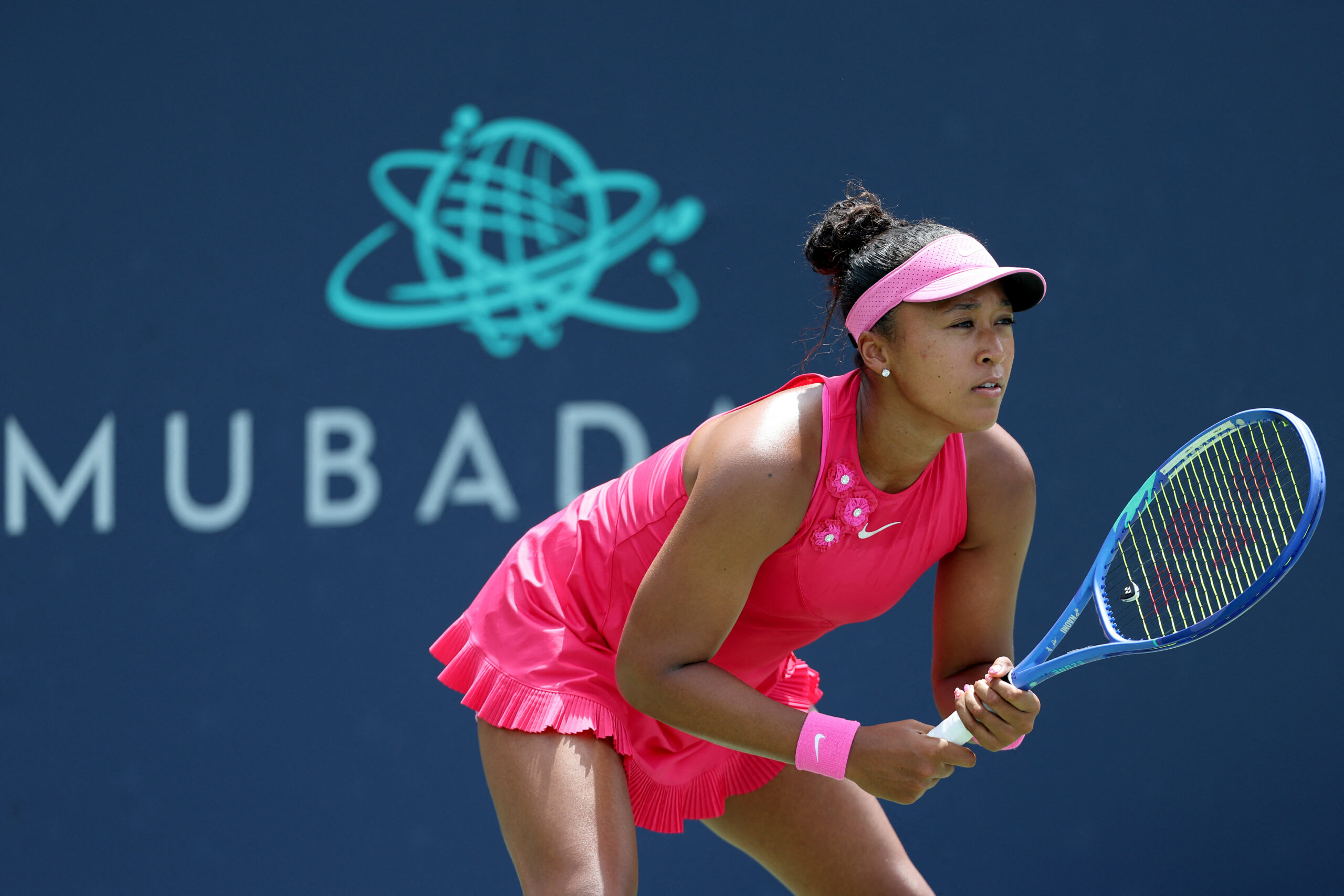
Naomi Osaka of Japan waits for the serve during a women's singles match against Elisabetta Cocciaretto of Italy on day five of the Mubadala DC Open 2026

Naomi Osaka of Japan waits for the serve during a women’s singles match against Elisabetta Cocciaretto of Italy on day five of the Mubadala DC Open 2026 at William H.G. FitzGerald Tennis Center on July 31, 2026 in Washington, DC. Emilee Chinn/Getty Images/AFP

WASHINGTON–Women’s top seed Jessica Pegula and third seed Naomi Osaka reached the semifinals of the 2026 Mubadala DC Open after separate wins on Friday.

Pegula, who won her first career WTA title at Washington in 2019, eliminated 20th-ranked Anna Kalinskaya 6-3, 7-5, to reach her sixth WTA semi-final of the year.

Article continues after this advertisement

“Since the beginning of the year I’m finding more confidence in matches hitting different spots,” Pegula said. “I was focusing on that a lot today.”

Advertisement

Pegula will play for a berth in the final against fourth seed Diana Shnaider, who ousted Russian compatriot Liudmila Samsonova 6-3, 6-4.

Osaka, a four-time Grand Slam winner, rallied to eliminate Italy’s Elisabetta Cocciaretto 4-6, 6-4, 6-3 after two hours and 11 minutes.

World number 13 Osaka next faces either Ukraine’s second-seeded Elina Svitolina or Alexandra Eala of the Philippines.

Article continues after this advertisement
Advertisement

“In the first set, I had low energy and I kept trying to pump myself up but something was a little flat,” Osaka said. “In the second, I just wanted to give it my best shot even though I wasn’t playing too good.”

Jessica Pegula of the United States hugs Anna Kalinskaya after a women's singles match on day five of the Mubadala DC Open 2026Jessica Pegula of the United States hugs Anna Kalinskaya after a women's singles match on day five of the Mubadala DC Open 2026

Jessica Pegula of the United States hugs Anna Kalinskaya after a women’s singles match on day five of the Mubadala DC Open 2026 at William H.G. FitzGerald Tennis Center on July 31, 2026 in Washington, DC. Emilee Chinn/Getty Images/AFP 

Pegula seeks her 12th career WTA crown and third of the year after triumphs in Dubai and Charleston.

She broke in the fourth game and held from there to take the first set in 37 minutes then broke in the 11th game of the second set and held at love to advance.

Article continues after this advertisement
Advertisement

Meanwhile, Osaka was undone by 18 unforced errors, three times as many as her rival, in dropping the first set after 41 minutes.

She reached a third set when Cocciaretto double-faulted away a break in the 10th game of set two.


Your subscription could not be saved. Please try again.


Your subscription has been successful.
Advertisement

Osaka hit a backhand winner to break in the second game of the final set and held from there.

Advertisement

Source link

Continue Reading

Sports

Alex Eala beats Elina Svitolina again, reaches DC Open semifinals

Published

on

Alex Eala alexandra eala 2026 Mubadala DC Open tennis Elina Svitolina

Alexandra Eala of the Philippines celebrates during a women’s singles match against Elina Svitolina of Ukraine on day five of the Mubadala DC Open 2026 at William H.G. FitzGerald Tennis Center on July 31, 2026 in Washington, DC. Emilee Chinn/Getty Images/AFP

MANILA, Philippines–Alex Eala repeated her victory over world No. 10 Elina Svitolina, beating the Ukrainian in straight sets once again, 6-3, 6-4, to advance to the semifinals of the 2026 Mubadala DC Open.

Eala continued to have Svitolina’s number after also defeating her on the grass courts of the Berlin Open in June by the same 6-3, 6-4 scoreline.

Article continues after this advertisement
Advertisement

LIVE: Alex Eala vs Elina Svitolina – Mubadala DC Open quarterfinals

I don’t think that it’s specifically because of who I’m up against. I think I came in with a great mindset today. I think I was playing really well,” Eala said when asked about her matchup with Svitolina, the tournament’s second seed.

“Of course, Elina hit some good shots. She was being aggressive, especially in that second set, so I’m really happy that I was able to keep my rhythm kind of.”

Eala overcame a 3-1 deficit in the second set after Svitolina, looking to force a decider, came out strong and consolidated an early break.

The 21-year-old Filipino tennis star strung together three straight games to take a 4-3 lead. Svitolina held to level at 4-4, but Eala responded by winning the final two games, breaking serve to seal the match.

READ: Alex Eala humbled by growing fan support, embraces responsibility

Advertisement
Article continues after this advertisement

She faces third-seeded Naomi Osaka, who advanced earlier Saturday, in the semifinals.

The victory was Eala’s sixth over a Top 10 player on the WTA Tour, further cementing her reputation as one of the tour’s rising stars.

“There are so many things that I’ve learned about the tour, about myself, about kind of what it takes to sustain this level, both physically and mentally, and just the effort you need to have to hang with these top players and stay there,” Eala said.

Advertisement
Alex Eala alexandra eala 2026 Mubadala DC Open tennis Elina Svitolina

 Alexandra Eala of the Philippines shakes hands with Elina Svitolina of Ukraine after a women’s singles match on day five of the Mubadala DC Open 2026 at William H.G. FitzGerald Tennis Center on July 31, 2026 in Washington, DC. Emilee Chinn/Getty Images/AFP 

The world No. 28 came out firing and traded breaks with Svitolina through the opening five games before holding for a 4-2 lead in the first set.


Your subscription could not be saved. Please try again.


Your subscription has been successful.
Advertisement

Svitolina held for the first time to pull within 4-3 and was on the verge of leveling the set before Eala rallied from 0-40 down to hold for a 5-3 advantage, then broke serve to close it out.

Eala continues her buildup for the US Open, the year’s final Grand Slam tournament, later this month.

Advertisement

Source link

Continue Reading

Sports

FIFA vows to proceed with private investor plan consultation as opposition spreads

Published

on

World football governing body FIFA hit back at critics on Friday, vowing to press ahead with an “open and democratic” consultation with stakeholders on a proposed private investment plan.

European football’s governing body UEFA said it was ready to boycott the World Cup over the proposal to create a commercial subsidiary to run FIFA’s biggest events and allow private investors to acquire stakes in the company.

Carlos ⁠Cordeiro, senior ​advisor to FIFA ​president Gianni Infantino, resigned with immediate effect on ​Friday ‌to protest the proposal, calling the plan “a bad deal ​for football”.

“Let ‌me be clear: I had no involvement in ‌this proposal, and I ​oppose it unequivocally,” Cordeiro said in a statement. “It ​is a bad ​deal for FIFA’s ​Member Associations, a bad ​deal for football, and a bad deal for the long-term future ⁠of the game.”

Advertisement

In a statement, FIFA said all of its member associations should have a chance to consider the plan.

“Nobody is selling football,” FIFA said in the statement.

“This is not something FIFA would ever entertain.”

Read moreInfantino defends FIFA investment plan amid mounting backlash

Advertisement

FIFA said it had heard the feedback from confederations including UEFA and CONCACAF – the governing body for North and Central America. 

“We respect the feedback and concern aired in public and reaffirm our commitment to an open and democratic consultation,” the statement said.

“Our planned consultation process was disrupted by incorrect media reports. We will proceed with this consultation process to ensure that each (member association) has the ability to express its vote based on facts.”

FIFA has said the plan could raise up to $4.2 billion based on a valuation of $20 billion for the FIFA Forward Enterprise (FFE) initiative.

Advertisement

Potential investors reportedly include Thrive Capital, an investment company founded and led by Joshua Kushner, brother of US President Donald Trump‘s son-in-law Jared, as well as an arm of JP Morgan Chase, the US bank that attempted to finance the failed breakaway European Super League.

If approved, the project could provide each of FIFA’s 211 member associations with a one-off payment of $20 million in early 2027 and increase their funding allocation for the 2027-2030 cycle from $8.0 million to $20 million.

(FRANCE 24 with AFP and Reuters)

Advertisement

Source link

Continue Reading

Sports

FIFA chief Infantino abandons World Cup sell-off plans

Published

on

FIFA President Gianni Infantino has withdrawn his plans to sell stakes in FIFA competitions to private investors.

Infantino’s plans had been met with widespread condemnation from across the football world.

In a statement on Saturday, Infantino said: “Having listened carefully to all the views, it has become clear that the project has created divisions of a nature that, regardless of the level of support, are no longer in the interest of the objective set out in the first place.”

What were FIFA chief’s Infantino’s private investor plans?

Infantino’s proposal would have created a commercial subsidiary, the FIFA Forward Enterprise (FFE), to run competitions like the World Cup, selling broadcasting and sponsorship, tickets and hospitality.

Advertisement

Under the plans, FIFA would sell minority stakes in FFE to private equity investors. The proposed investor consortium was to be led by “Thrive Eternal,” a fund run by “Thrive Capital,” which was founded by Joshua Kushner, the brother of US ​President Donald Trump’s son-in-law, Jared Kushner.

Infantino, who has faced criticism for his close ties to the US president, had asked federations to approve the measure by September 19, reportedly offering the associations $40 million (€35 million) if they backed the proposal.

FIFA unveils controversial World Cup investor plan

To view this video please enable JavaScript, and consider upgrading to a web browser that supports HTML5 video

Infantino’s plans met with global backlash

UEFA, the governing body of European football, said on Thursday that its members had unanimously agreed to boycott all FIFA tournaments, including the World Cup, unless the plan was withdrawn.

Advertisement

“The World Cup is not for sale,” UEFA said.

European teams are the reigning champions of FIFA’s three leading competitions, the men’s and women’s World Cup, and the Club World Cup.

The Asian Football Confederation (AFC) and CONCACAF, which runs the sport in North America and the Caribbean, soon joined UEFA in condemning and rejecting FIFA’s plans, although they stopped short of threatening a boycott.

As the opposition to Infantino’s plans grew, his senior advisor Carlos Cordeiro resigned in protest on Friday.

Advertisement

Later on Friday, the world governing body’s chief operating officer, Kevin Lamour, slammed Infantino, saying the plans were “the project of one person” who had “deceived” FIFA staff.

Edited by: Dmytro Hubenko

Don’t let the algorithm hide the news. If you rely on our team for trusted reporting, please take a moment to select us as your Preferred Source on Google by clicking here and hitting the “star” or “preferred” button, so you’ll always see our verified news first.

Source link

Advertisement
Continue Reading

Sports

Bruno Fernandes decision made as Man United ‘discuss’ striker transfer option

Published

on

Manchester United are looking to be active in the summer transfer window as Michael Carrick strengthens his squad.

The new Premier League season is quickly approaching, with the summer transfer window hotting up as clubs look to strengthen their squads. It’s no different at Manchester United, who have been active in the window.

In terms of incomings, midfield has been a priority with both Andrey Santos and Youri Tielemans arriving from Chelsea and Aston Villa, respectively. Tielemans returned from his post-World Cup break for his first day at the club on Friday.

Advertisement

United are still looking for a third midfield incoming with the likes of Manu Kone, Aurelien Tchouameni, and Alex Scott linked. The club are also said to be looking at left-backs and strikers between now and the end of the window.

There is still a lot of talk about possible outgoings too, with Marcus Rashford and Joshua Zirkzee two players who could leave before the deadline. There has also been some talk around the future of Bruno Fernandes.

With that in mind, here’s a look at some of the latest rumours doing the rounds over the last 24 hours…

Advertisement

Bruno Fernandes decision

United captain Bruno Fernandes is of interest to Galatasaray, who have made a decision over their pursuit of the midfielder. HT Spor, via Fanatik claims that the Turkish side are willing to meet Fernandes’ salary demands.

It’s added that Fernandes and his representatives have been informed, with the plan for Galatasaray to sit down with both the player and United ‘in the coming days’.

The United captain has less than a year remaining on his contract, but the club have the option to extend it by another year. It’s however, said that Fernandes has a £56 million release clause in his contract, which can be triggered by clubs outside of England.

United have no plans to offer the 31-year-old a new deal, although that could change once the new season gets underway.

Advertisement

Transfer move ‘discussed’

United have ‘discussed’ making a move for Bournemouth striker Igor Thiago. The club are expected to be on the lookout for a new striker between now and the end of the season, especially with Joshua Zirkzee looking likely to leave.

Speaking to The United Stand, Journalist Ben Jacobs has claimed that there has been an ‘internal conversation’ about Thiago, as well as a ‘call to understand his situation’.

The Brazilian scored 22 goals in 38 appearances for the Cherries last season and was one of the standout strikers in the Premier League.

Advertisement

Dusan Vlahovic and Ollie Watkins are also names that have been mentioned in the striker search over the last few days.

Thousands of Man United fans upgraded their matchday last season. This is how they did it.

This article contains affiliate links, we will receive a commission on any sales we generate from it. Learn more
Content Image

Various Prices

Seat Unique

Buy official packages at Seat Unique

Official premium experiences at Old Trafford are available now for the 26/27 Premier League season. Make it easier than ever to turn a regular fixture into something genuinely unforgettable.

Advertisement

Source link

Continue Reading

Trending

Copyright © 2025